EP4354757A2 - Procédé de commande de transmission, procédé de transmission de signal de référence de sondage, terminal, station de base et support - Google Patents
Procédé de commande de transmission, procédé de transmission de signal de référence de sondage, terminal, station de base et support Download PDFInfo
- Publication number
- EP4354757A2 EP4354757A2 EP24161375.1A EP24161375A EP4354757A2 EP 4354757 A2 EP4354757 A2 EP 4354757A2 EP 24161375 A EP24161375 A EP 24161375A EP 4354757 A2 EP4354757 A2 EP 4354757A2
- Authority
- EP
- European Patent Office
- Prior art keywords
- packet
- channels
- resource set
- reference signal
- reference signals
- Prior art date
- Legal status (The legal status is an assumption and is not a legal conclusion. Google has not performed a legal analysis and makes no representation as to the accuracy of the status listed.)
- Pending
Links
Images



Classifications
-
- H—ELECTRICITY
- H04—ELECTRIC COMMUNICATION TECHNIQUE
- H04W—WIRELESS COMMUNICATION NETWORKS
- H04W16/00—Network planning, e.g. coverage or traffic planning tools; Network deployment, e.g. resource partitioning or cells structures
- H04W16/24—Cell structures
- H04W16/28—Cell structures using beam steering
-
- H—ELECTRICITY
- H04—ELECTRIC COMMUNICATION TECHNIQUE
- H04L—TRANSMISSION OF DIGITAL INFORMATION, e.g. TELEGRAPHIC COMMUNICATION
- H04L5/00—Arrangements affording multiple use of the transmission path
- H04L5/0091—Signalling for the administration of the divided path, e.g. signalling of configuration information
-
- H—ELECTRICITY
- H04—ELECTRIC COMMUNICATION TECHNIQUE
- H04B—TRANSMISSION
- H04B7/00—Radio transmission systems, i.e. using radiation field
- H04B7/02—Diversity systems; Multi-antenna system, i.e. transmission or reception using multiple antennas
- H04B7/04—Diversity systems; Multi-antenna system, i.e. transmission or reception using multiple antennas using two or more spaced independent antennas
- H04B7/06—Diversity systems; Multi-antenna system, i.e. transmission or reception using multiple antennas using two or more spaced independent antennas at the transmitting station
- H04B7/0613—Diversity systems; Multi-antenna system, i.e. transmission or reception using multiple antennas using two or more spaced independent antennas at the transmitting station using simultaneous transmission
- H04B7/0615—Diversity systems; Multi-antenna system, i.e. transmission or reception using multiple antennas using two or more spaced independent antennas at the transmitting station using simultaneous transmission of weighted versions of same signal
- H04B7/0619—Diversity systems; Multi-antenna system, i.e. transmission or reception using multiple antennas using two or more spaced independent antennas at the transmitting station using simultaneous transmission of weighted versions of same signal using feedback from receiving side
- H04B7/0621—Feedback content
- H04B7/0626—Channel coefficients, e.g. channel state information [CSI]
-
- H—ELECTRICITY
- H04—ELECTRIC COMMUNICATION TECHNIQUE
- H04B—TRANSMISSION
- H04B7/00—Radio transmission systems, i.e. using radiation field
- H04B7/02—Diversity systems; Multi-antenna system, i.e. transmission or reception using multiple antennas
- H04B7/04—Diversity systems; Multi-antenna system, i.e. transmission or reception using multiple antennas using two or more spaced independent antennas
- H04B7/06—Diversity systems; Multi-antenna system, i.e. transmission or reception using multiple antennas using two or more spaced independent antennas at the transmitting station
- H04B7/0686—Hybrid systems, i.e. switching and simultaneous transmission
- H04B7/0691—Hybrid systems, i.e. switching and simultaneous transmission using subgroups of transmit antennas
-
- H—ELECTRICITY
- H04—ELECTRIC COMMUNICATION TECHNIQUE
- H04B—TRANSMISSION
- H04B7/00—Radio transmission systems, i.e. using radiation field
- H04B7/02—Diversity systems; Multi-antenna system, i.e. transmission or reception using multiple antennas
- H04B7/04—Diversity systems; Multi-antenna system, i.e. transmission or reception using multiple antennas using two or more spaced independent antennas
- H04B7/06—Diversity systems; Multi-antenna system, i.e. transmission or reception using multiple antennas using two or more spaced independent antennas at the transmitting station
- H04B7/0686—Hybrid systems, i.e. switching and simultaneous transmission
- H04B7/0695—Hybrid systems, i.e. switching and simultaneous transmission using beam selection
- H04B7/06952—Selecting one or more beams from a plurality of beams, e.g. beam training, management or sweeping
- H04B7/06956—Selecting one or more beams from a plurality of beams, e.g. beam training, management or sweeping using a selection of antenna panels
-
- H—ELECTRICITY
- H04—ELECTRIC COMMUNICATION TECHNIQUE
- H04B—TRANSMISSION
- H04B7/00—Radio transmission systems, i.e. using radiation field
- H04B7/02—Diversity systems; Multi-antenna system, i.e. transmission or reception using multiple antennas
- H04B7/04—Diversity systems; Multi-antenna system, i.e. transmission or reception using multiple antennas using two or more spaced independent antennas
- H04B7/08—Diversity systems; Multi-antenna system, i.e. transmission or reception using multiple antennas using two or more spaced independent antennas at the receiving station
- H04B7/0868—Hybrid systems, i.e. switching and combining
- H04B7/088—Hybrid systems, i.e. switching and combining using beam selection
-
- H—ELECTRICITY
- H04—ELECTRIC COMMUNICATION TECHNIQUE
- H04L—TRANSMISSION OF DIGITAL INFORMATION, e.g. TELEGRAPHIC COMMUNICATION
- H04L25/00—Baseband systems
- H04L25/02—Details ; arrangements for supplying electrical power along data transmission lines
- H04L25/0202—Channel estimation
- H04L25/0224—Channel estimation using sounding signals
- H04L25/0226—Channel estimation using sounding signals sounding signals per se
-
- H—ELECTRICITY
- H04—ELECTRIC COMMUNICATION TECHNIQUE
- H04L—TRANSMISSION OF DIGITAL INFORMATION, e.g. TELEGRAPHIC COMMUNICATION
- H04L5/00—Arrangements affording multiple use of the transmission path
- H04L5/003—Arrangements for allocating sub-channels of the transmission path
- H04L5/0048—Allocation of pilot signals, i.e. of signals known to the receiver
-
- H—ELECTRICITY
- H04—ELECTRIC COMMUNICATION TECHNIQUE
- H04L—TRANSMISSION OF DIGITAL INFORMATION, e.g. TELEGRAPHIC COMMUNICATION
- H04L5/00—Arrangements affording multiple use of the transmission path
- H04L5/003—Arrangements for allocating sub-channels of the transmission path
- H04L5/0048—Allocation of pilot signals, i.e. of signals known to the receiver
- H04L5/0051—Allocation of pilot signals, i.e. of signals known to the receiver of dedicated pilots, i.e. pilots destined for a single user or terminal
-
- H—ELECTRICITY
- H04—ELECTRIC COMMUNICATION TECHNIQUE
- H04L—TRANSMISSION OF DIGITAL INFORMATION, e.g. TELEGRAPHIC COMMUNICATION
- H04L5/00—Arrangements affording multiple use of the transmission path
- H04L5/0001—Arrangements for dividing the transmission path
- H04L5/0014—Three-dimensional division
- H04L5/0023—Time-frequency-space
Definitions
- Embodiments of the present disclosure relate to, but are not limited to, a transmission control method, a sounding reference signal transmission method, a terminal, a base station and a medium.
- the ultra-wide-bandwidth high-frequency band communication namely millimeter wave communication
- the advantages of millimeter waves have become increasingly attractive.
- Many standard organizations such as an Institute of Electrical and Electronics Engineers (IEEE) and a 3rd Generation Partnership Project (3GPP) have started corresponding standardization efforts.
- 3GPP standard groups high-frequency band communications have become an important innovation point of the New Radio Access Technology (New RAT) of the 5th Generation mobile communication system (5G) because of its significant advantage in wide bandwidths.
- New RAT New Radio Access Technology
- each antenna panel may generate multiple beams, and the similar phenomenon also exists at the user equipment (UE) side.
- UE user equipment
- the analog beam is assumed not to collide.
- RSs reference signals
- channels and reference signals (RSs) with different spatial relationships or under different uplink sending spatial filters can be simultaneously sent for different antenna panels. Therefore, for the case of supporting multiple antenna panels or under multi-panel, the problem of insufficient flexibility for the uplink multi-beam collision needs to be solved.
- the embodiments of the present application provide a transmission control method, a sounding reference signal transmission method, a terminal, and a computer-readable storage medium.
- At least one embodiment of the present application provides a transmission control method.
- the method includes the steps described below.
- Configuration information sent from a network side is received, where the configuration information includes an association relationship between a packet index and first information, and the first information has an association relationship with a channel or a reference signal.
- a receiving mode or a sending mode of the channel or the reference signal associated with the first information is determined according to the packet index.
- At least one embodiment of the present application provides a transmission control method.
- the method includes the steps described below.
- Configuration information of information elements sent from a network side is received, where the configuration information satisfies at least one of the following conditions in response to the information elements being transmitted simultaneously: spatial relationships or spatial filters associated with the information elements are the same, or spatial relationships or spatial filters associated with the information elements under the same packet are the same.
- the information elements are transmitted according to the configuration information.
- At least one embodiment of the present application provides a transmission control method.
- the method includes the steps described below.
- Configuration information is sent to a terminal, where the configuration information includes an association relationship between a packet index and first information, and the first information has an association relationship with a channel or a reference signal.
- a receiving mode or a sending mode of the channel or the reference signal associated with the first information is determined according to the packet index.
- At least one embodiment of the present application provides a transmission control method.
- the method includes the steps described below.
- Configuration information of information elements is sent to a terminal, where the configuration information satisfies at least one of the following conditions in response to the information elements being transmitted simultaneously: spatial relationships or spatial filters associated with the information elements are the same, or spatial relationships or spatial filters associated with the information elements under the same packet are the same.
- the information elements are transmitted according to the configuration information.
- At least one embodiment of the present application provides a terminal.
- the terminal includes a memory and a processor, where the memory stores a program which, when read and executed by the processor, implements the transmission control method described in any one of the above embodiments.
- At least one embodiment of the present application provides a base station.
- the base station includes a memory and a processor, where the memory stores a program which, when read and executed by the processor, implements the transmission control method described in the above embodiment.
- At least one embodiment of the present application provides a computer-readable storage medium.
- the computer-readable storage medium stores one or more programs executable by one or more processors to implement the transmission control method described in any one of the above embodiments.
- At least one embodiment of the present application provides a sounding reference signal (SRS) transmission method.
- the method includes the steps described below.
- Configuration information sent from a network side for an SRS is received, where the configuration information indicates that the SRS includes N SRS resource sets, and each of the N SRS resource sets includes at least one SRS resource, where N is a positive integer greater than or equal to 1.
- the SRS is sent to the network side according to the configuration information.
- At least one embodiment of the present application provides an SRS transmission method.
- the method includes the steps described below.
- Configuration information for an SRS is sent to a terminal, where the configuration information indicates that the SRS includes N SRS resource sets, and each of the N SRS resource sets includes at least one SRS resource, where N is a positive integer greater than or equal to 1.
- the SRS sent by the terminal according to the configuration information is received.
- At least one embodiment of the present application provides a terminal.
- the terminal includes a memory and a processor, where the memory stores a program which, when read and executed by the processor, implements the SRS transmission method described in any one of the above embodiments.
- At least one embodiment of the present application provides a base station.
- the base station includes a memory and a processor, where the memory stores a program which, when read and executed by the processor, implements the SRS transmission method described in the above embodiment.
- At least one embodiment of the present application provides a computer-readable storage medium.
- the computer-readable storage medium stores one or more programs executable by one or more processors to implement the SRS transmission method described in any one of the above embodiments.
- a packet index related to a physical resource is associated with first information so that the physical resource can be refined or the physical resource conflict can be avoided.
- the spatial relationship also referred to as spatial relationship information, carries one or more reference RSs to represent or indicate an uplink spatial filter of an associated RS or a channel (also referred to as target RS or target channel).
- the RS or the channel (also referred to as target RS or target channel) is configured with one piece of spatial relationship information so that a UE determines the uplink spatial filter of the RS or the channel.
- That the spatial relationships are different means that the reference RSs in spatial relationships associated with multiple RSs or channels are different.
- the spatial relationships are the same means that the reference RSs in spatial relationships associated with multiple RSs or channels are the same or that these RSs themselves are the same. Furthermore, when the reference RS is configured with the spatial relationship information, the reference RSs in the associated spatial relationship are reference RSs after the spatial relationship information is nested one or more times.
- the reference RS consists of at least one of: an RS resource index, an RS set index, an RS configuration index, or a packet index.
- the beam may be a kind of resource (such as a sending end spatial filter, a receiving end spatial filter, sending end precoding, receiving end precoding, an antenna port, an antenna weight vector, and an antenna weight matrix), and the beam sequence number may be replaced with a resource index (such as a reference signal resource index) since the beam may be bound to some time-frequency code resources for transmission.
- the beam may also be a transmission (sending or receiving) manner, and the transmission manner may include spacedivision multiplexing, frequency domain or time domain diversity and the like.
- the second frequency band also referred to as Frequency Range 2 (FR2), represents a frequency band greater than 6 GHz.
- the packet index is associated with an SRS resource set, a demodulation reference signal (DMRS) port group, a cell group, or a physical uplink control channel (PUCCH) group that is used for beam management.
- DMRS demodulation reference signal
- PUCCH physical uplink control channel
- an embodiment of the present application provides a transmission control method.
- the method includes steps described below.
- step 101 configuration information sent from a network side is received, where the configuration information includes an association relationship between a packet index and first information, and the first information has an association relationship with a channel or a reference signal.
- a receiving mode or a sending mode of the channel or the reference signal associated with the first information is determined according to the packet index.
- the physical resource group may be a packet consisting one or more beams, a packet consisting of spatial filters, a packet consisting of panels, or a packet consisting of antennas.
- the physical resource can be refined or the physical resource conflict can be avoided through the association between the first information and the packet.
- the physical resource is an antenna panel
- each panel since each panel can only generate a unique sending beam at one time point or receive beam at one time point, the antenna panel may be directly associated with a transmission node during the transmission of multiple Transmission and Reception Points (TRPs), thereby effectively avoiding collision of beam scheduling between nodes.
- TRPs Transmission and Reception Points
- the step in which the receiving mode or the sending mode of the channel or the reference signal associated with the first information is determined according to the packet index includes: transmitting the channel or the reference signal associated with the first information using a physical resource group associated with the packet index.
- the first information includes at least one of: spatial relationship information, an SRS resource, an SRS resource set, a channel state information RS resource, a channel state information RS resource set, a DMRS port group, a cell group, a control resource set, or an uplink control channel group.
- the reference signal includes at least one of: an uplink reference signal or a downlink reference signal.
- the uplink reference signal includes at least one: an SRS, a phase-tracking reference signal (PT-RS), or a demodulation reference signal (DMRS).
- SRS SRS
- PT-RS phase-tracking reference signal
- DMRS demodulation reference signal
- the downlink reference signal includes at least one of: a channel state information reference signal (CSI-RS), a phase-tracking reference signal (PT-RS), a synchronization signal block (SSB), a synchronization signal/physical broadcast channel (SS/PBCH), a downlink DMRS, or a CSI-RS for tracking.
- CSI-RS channel state information reference signal
- PT-RS phase-tracking reference signal
- SSB synchronization signal block
- SS/PBCH synchronization signal/physical broadcast channel
- DMRS downlink DMRS
- CSI-RS CSI-RS for tracking.
- the packet index includes at least one of: an RS resource index, an RS port set index, an RS resource set index, an RS configuration index, an RS packet index in a channel state information report, or a control resource set index.
- the RS resource index for example, is an SRS index or a CSI-RS index
- the RS port set index for example, is an SRS or CSI-RS port set index
- the RS resource set index for example, is an SRS or CSI-RS resource set index
- the RS configuration index for example, is an SRS or CSI-RS configuration index
- the RS packet index in the channel state information report for example, is an SRS or CSI-RS packet index in the channel state information report.
- a packet associated with the packet index includes at least one of: a class A packet, a class B packet, or a class C packet.
- One packet is one physical resource group.
- the physical resource group may only be the class A packet, or may only be the class B packet, or may only be the class C packet, or the packet may be partly the class packet and partly the class B packet.
- Each packet in the class A packet includes one or more antenna panels or includes one or more panels or one or more antenna matrices.
- Each packet in the class B packet includes one or more antenna sub-panels or includes one or more sub-panels or one or more antenna sub-matrices.
- the class C packet is referred to as beam packet, and each packet in the class C packet includes one or more beams.
- a reference channel or a signal associated with the class A packet satisfies at least one of: RSs or channels associated with different packets are capable of being sent simultaneously, where the RS or channel associated with the packet is an RS or a signal transmitted by using this packet; RSs or channels associated with different packets are capable of being received simultaneously; RSs or channels associated with the same packet are not capable of being sent simultaneously, or RSs or channels that are associated with the same packet and that have different spatial relationships or different spatial filters are not capable of being sent simultaneously; or RSs or channels associated with the same packet are not capable of being received simultaneously, or RSs or channels that are associated with the same packet and that have different spatial relationships or different spatial filters are not capable of being received simultaneously.
- the RS or channel associated with the first panel and the RS or channel associated with the second panel can be sent or received simultaneously while multiple RSs or channels associated with the first panel cannot be sent or received simultaneously.
- the reference channel or signal associated with the class A packet satisfies at least one of: no more than E RSs or channels associated with the same packet are capable of being sent simultaneously, or no more than E RSs or channels that are associated with the same packet and that have different spatial relationships or different spatial filters are capable of being sent simultaneously; no more than E RSs or channels associated with the same packet are capable of being received simultaneously, or no more than E RSs or channels that are associated with the same packet and that have different spatial relationships or different spatial filters are capable of being received simultaneously; more than E RSs or channels associated with the same packet are not capable of being sent simultaneously, or more than E RSs or channels that are associated with the same packet and that have different spatial relationships or different spatial filters are not capable of being sent simultaneously; or more than E RSs or channels associated with the same packet are not capable of being received simultaneously, or more than E RSs or channels that are associated with the same packet and that have different spatial relationships or different spatial filters are not capable of being received simultaneously.
- the class A packet includes E class B packets, where E is an integer greater than or equal to 1.
- E is an integer greater than or equal to 1.
- the reference channel or signal associated with the class B packet satisfies at least one of: RSs or channels associated with different packets are capable of being sent simultaneously; RSs or channels associated with different packets are capable of being received simultaneously; RSs or channels associated with the same packet are not capable of being sent simultaneously, or RSs or channels that are associated with the same packet and that have different spatial relationships or different spatial filters are not capable of being sent simultaneously; or RSs or channels associated with the same packet are not capable of being received simultaneously, or RSs or channels that are associated with the same packet and that have different spatial relationships or different spatial filters are not capable of being received simultaneously.
- the reference channel or signal associated with the class C packet satisfies at least one of: RSs or channels associated with different packets are not capable of being sent simultaneously; RSs or channels associated with different packets are not capable of being received simultaneously; RSs or channels associated with the same packet are capable of being sent simultaneously, or RSs or channels that are associated with the same packet and that have different spatial relationships or different spatial filters are capable of being sent simultaneously; or RSs or channels associated with the same packet are capable of being received simultaneously, or RSs or channels that are associated with the same packet and that have different spatial relationships or different spatial filters are capable of being received simultaneously.
- FIG. 2 is a schematic diagram illustrating the association between a packet index and a cell group according to the present application.
- the UE end has two antenna panels, that is, panel-a and panel-b.
- the UE ends informs the base station of its capability, and the base station configures two SRS resource sets (set-a and set-b in this embodiment) to the UE end so that beam training is performed for two panels on the UE end.
- two SRS resources are configured, that is, two different beams, where set-a includes SRS resources a1 and a2 and set-b includes SRS resources b1 and b2.
- the base station Based on the measurement of SRS receiving quality, the base station chooses to use panel-a for subsequent transmission, and the base station configures SRS resource set-c (including four SRS resources: c1, c2, c3, and c4) and associates the SRS resources set-c with set-b to refine beams under the antenna panel associated with set-b. Therefore, the UE end uses the antenna panel (or antenna group) associated with set-b to send the SRS resource set-c. That is, in the embodiment, the first information is an SRS resource set (set-c), and the packet index is set-b.
- the beam refinement is performed on the panel by associating set-c and set-b (set-b has two SRS resources, set-c has four resources, to refine beams under the antenna panel associated with set-b).
- the base station may first configure a small amount of SRS resources to determine to use which panel and then perform beam refinement under one or more panels relatively ideally. Therefore, the overhead of panel choosing can be effectively saved, thereby improving the efficiency of beam training.
- set-b is transmitted on panel-a
- set-c is also transmitted on panel-a after set-b and set-c are associated with each other, and since set-c has four SRS resources, panel-a can be refined.
- FIG. 3 is a schematic diagram illustrating the association between a packet index and a cell group according to the present application.
- NR-NR new radio-new radio
- DC direct communication
- the base station first configures two SRS resource sets for two panels of the UE, and according to results measured in real time, the base station end may associate a master cell group (MCG) and a secondary cell group (SCG) with panels of the UE, respectively, and since beams generated by two panels of the UE end are decoupled, these beams can cooperate well with the independent beam management and transmission under MCG and SCG.
- MCG master cell group
- SCG secondary cell group
- the base station sends signaling to the UE to make MCG associate with the packet index set-a and SCG associate with the packet index set-b.
- an RS resource set index (representing an antenna panel index on the UE side) is associated with a cell group so that all transmissions of the cell group are performed based only on physical resources indicated by the RS resource set index. Therefore, as long as the base station side configures different RS resource set indexes for different cell groups, use conflicts of physical resources of the same user side between different cells can be avoided.
- DL/UL multi-layer downlink/uplink
- ID the first layer RS index/bandwidth part
- an embodiment of the present application provides a transmission control method.
- the method includes the steps described below.
- step 401 configuration information of information elements sent from a network side is received, where the configuration information satisfies at least one of the following conditions in response to the information elements being transmitted simultaneously: spatial relationships associated with the simultaneously transmitted information elements are the same, or spatial filters associated with the simultaneously transmitted information elements are the same; or spatial relationships associated with the simultaneously transmitted information elements under the same packet are the same, or spatial filters associated with the simultaneously transmitted information elements under the same packet are the same.
- step 402 the information elements are transmitted according to the configuration information.
- the packet refers to the physical resource group.
- the spatial relationships are restricted, and when the channel or signal is associated with a multi-layer spatial relationship, the channel or signal can be back to the same spatial relationship or the same spatial filter, thereby avoiding the collision.
- a spatial relationship or a spatial filter associated with the part of information elements not being configured with the spatial relationship information in the information elements is determined according to at least one of the following: determining the spatial relationship of the part of information elements not being configured with the spatial relationship according to spatial relationship information of information elements configured with spatial relationship information; determining the spatial filter of the part of information elements not configured with the spatial relationship according to spatial relationship information of information elements configured with spatial relationship information; or determining the spatial filter of the part of information elements not configured with the spatial relationship according to a spatial filter associated with spatial relationship information of information elements configured with spatial relationship information.
- the network side for example, is a base station.
- the information elements include at least one of: A1 RSs, A2 data channels, or A3 control channels, where A1, A2, and A3 are integers greater than or equal to 1, or values of A1, A2, and A3 may be set according to requirements.
- the spatial relationships being the same includes the presence of at least one RS that simultaneously is an RS associated with the information elements.
- the RS is located in a preset cell, a preset carrier, a preset BWP, a preset control resource set, a preset uplink control channel group, a preset packet, or a preset RS resource set. In an embodiment, the RS is located in a master cell or a master carrier.
- the information elements for example, are uplink information elements.
- the RS associated with the information elements includes at least one of: the uplink RS, or an RS associated with spatial relationship information of the uplink RS.
- the RS associated with the information elements includes at least one of: an uplink RS associated with the uplink data channel; an RS associated with spatial relationship information of an uplink RS associated with the uplink data channel; or an RS associated with spatial relationship information of an uplink control channel associated with the uplink data channel.
- the uplink RS associated with the uplink data channel is used for a codebook mode, or the uplink RS associated with the uplink data channel is used for a non-codebook mode.
- the RS associated with the information elements in response to the information elements including an uplink control channel, includes an RS associated with a spatial relationship of the uplink control channel.
- FIG. 5 is a schematic diagram illustrating spatial relationship management under multiple layers according to the present application.
- the base station configures a first layer of beam training RSs, that is, ID-0 to ID-5 in FIG. 5 , where each ID can be used for identifying a measurement RS.
- a basic back-off pool is established between the base station and the UE.
- the beam refinement is then performed for Pcell and a secondary cell (Scell) under the RS indexes that are favorable to Pcell and Scell.
- Scell secondary cell
- ID-0 is associated with IDa and ID-b
- ID-2 is associated with ID-c and ID-d
- ID-3 is associated with ID-e and ID-f
- ID-4 is associated with ID-g, ID-h, and ID-k.
- Pcell In subsequent data transmissions, Pcell generally uses the IDs at the second layer to indicate the spatial relationship.
- ID-0 is associated with ID-I and ID-II
- ID-2 is associated with ID-III, ID-IV, ID-Y, and ID-VI.
- Scell In subsequent data transmissions, Scell generally uses the IDs at the second layer to indicate the spatial relationship.
- the spatial relationship of the Pcell and Scell channel transmissions may fall back to the associated beam index pool at the first layer.
- Pcell and Scell need to fall back to the same index or fall back to the requirement of a different index, where the requirement cannot exceed the capability of the UE side (for example, for the same UE panel, the same spatial relationship is required while for different UE panels, there is no requirement).
- the uplink data channels of Scell and Pcell are instructed to use ID-II and ID-a, respectively, as spatial relationship information for determining their corresponding spatial filters. Since the spatial relationship information of the uplink data channel of Scell falls back to ID-0, the spatial relationship information of the uplink control channel of Pcell falls back to ID-0. Therefore, in the perspective of the UE side, the spatial relationship is determined according to ID-0, that is, a corresponding spatial filter is generated, for sending the uplink data channels of Pcell and Scell.
- an embodiment of the present application provides an SRS transmission method.
- the method includes the steps described below.
- step 601 configuration information of a network side for an SRS is received, where the configuration information indicates that the SRS includes N SRS resource sets, and each of the N SRS resource sets includes at least one SRS resource, where N is a positive integer greater than or equal to 1.
- step 602 the SRS is sent to the network side according to the configuration information.
- the network side for example, is a base station.
- the value of N may be set according to requirements.
- the at least one SRS resource in the same SRS resource set is associated with different spatial relationship information, or the at least one SRS resource in the same SRS resource set is associated with different spatial filters. That is, spatial relationships or spatial filters associated with SRS resources in the same SRS resource set are different. For example, for three SRS resources, that is, SRS1, SRS2, and SRS3, SRS 1 is associated with a first spatial relationship, SRS2 is associated with a second spatial relationship, and SRS3 is associated with a third spatial relationship, and the first spatial relationship, the second spatial relationship, and the third spatial relationship are different from each other.
- the utilization rate of the SRS can be improved.
- the SRS is used for uplink channel measurement
- the SRS resources are configured with the same spatial relationship
- the measurement capability of measurement for different spatial relationships is restricted while the same spatial relationship is repeatedly measured, which is not conducive to improving the performance of uplink transmission.
- the two SRS resources are configured with the same spatial relationship, which means that the spatial filters used by the two SRS are the same, and thus the measurement and channel estimation for different spatial filters cannot be improved well.
- the measurement can be performed based on different spatial relationships, thereby improving the utilization rate of the SRS.
- the at least one SRS resource in the same SRS resource set is each configured with spatial relationship information or is not configured with spatial relationship information.
- the at least one SRS resource in the same SRS resource set being associated with different spatial filters includes: in response to the at least one SRS resource in the same SRS resource set each not being configured with the spatial relationship information, the at least one SRS resource in the same SRS resource set is associated with different spatial filters.
- the SRS is used for at least one of: a codebook transmission, a non-codebook transmission, or beam management.
- At least one of the following is included: if each SRS resource is configured with spatial relationship information, spatial relationship information associated with each SRS resource is different; or if no SRS resource is configured with spatial relationship information, the spatial filter associated with each SRS resource is different.
- each SRS resource being associated with different spatial relationship information includes: each SRS resource in the same SRS resource set is associated with different spatial relationship information.
- each SRS resource in the same SRS resource set is associated with different spatial filters.
- the method further includes: in response to the SRS being used for the non-codebook transmission, at least one of the following in the SRS needs to be configured: spatial relationship information or associated CSI-RS information.
- the number of SRS resources in each SRS resource set is less than or equal to the maximum number of SRS resources in each associated SRS resource set in user capability information.
- SRS resources are associated with different spatial filters.
- the SRS is used for beam management and SRS resources in the same SRS resource set are associated with different spatial filters.
- the method further satisfies at least one of the following conditions: a quasi co-location spatial parameter is capable of being configured, spatial relationship information is capable of being configured, or the SRS is in a second frequency band. That is, the terminal supports the quasi co-location spatial parameter, or the terminal supports the spatial relationship information.
- a packet is bound to a transmission resource through an uplink RS or a channel packet, and spatial relationships (or spatial filters) under multiple layers can fall back through the configuration constraint of spatial relationship information, thereby effectively relieving the contradiction between the uplink beam scheduling conflict and the excessive limitation of uplink resource scheduling and thus effectively improving the system performance.
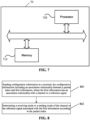
- an embodiment of the present disclosure provides a terminal 70.
- the terminal 70 includes a memory 710 and a processor 720, where the memory 710 stores a program which, when read and executed by the processor 720, implements the transmission control method described in any one of the above embodiments.
- an embodiment of the present application provides a transmission control method.
- the method includes the steps described below.
- step 801 configuration information is sent to a terminal, where the configuration information includes an association relationship between a packet index and first information, and the first information has an association relationship with a channel or a reference signal.
- step 802 a receiving mode or a sending mode of the channel or the reference signal associated with the first information is determined according to the packet index.
- the step in which the receiving mode or the sending mode of the channel or the reference signal associated with the first information is determined according to the packet index includes: transmitting the channel or the reference signal associated with the first information using a physical resource group associated with the packet index.
- the first information includes at least one of: spatial relationship information, an SRS resource, an SRS resource set, a CSI-RS resource, a CSI-RS resource set, a DMRS port group, a cell group, a control resource set, or an uplink control channel group.
- the packet index includes at least one of: an RS resource index, an RS port set index, an RS resource set index, an RS configuration index, an RS packet index in a CSI report, or a control resource set index.
- the step in which the receiving mode or the sending mode of the channel or the reference signal associated with the first information is determined according to the packet index includes: transmitting the channel or the reference signal associated with the first information using a physical resource group associated with the packet index.
- a packet associated with the packet index includes at least one of: a class A packet, a class B packet, or a class C packet.
- each packet in the class A packet includes one or more antenna panels.
- each packet in the class B packet includes one or more antenna sub-panels.
- each packet in the class C packet includes one or more beams.
- the reference channel or signal associated with the class A packet satisfies at least one of: RSs or channels associated with different packets are capable of being sent simultaneously; RSs or channels associated with different packets are capable of being received simultaneously; RSs or channels associated with the same packet are not capable of being sent simultaneously, or RSs or channels that are associated with the same packet and that have different spatial relationships or different spatial filters are not capable of being sent simultaneously; or RSs or channels associated with the same packet are not capable of being received simultaneously, or RSs or channels that are associated with the same packet and that have different spatial relationships or different spatial filters are not capable of being received simultaneously.
- the reference channel or signal associated with the class A packet satisfies at least one of: no more than E RSs or channels associated with the same packet are capable of being sent simultaneously, or no more than E RSs or channels that are associated with the same packet and that have different spatial relationships or different spatial filters are capable of being sent simultaneously; no more than E RSs or channels associated with the same packet are capable of being received simultaneously, or no more than E RSs or channels that are associated with the same packet and that have different spatial relationships or different spatial filters are capable of being received simultaneously; more than E RSs or channels associated with the same packet are not capable of being sent simultaneously, or more than E RSs or channels that are associated with the same packet and that have different spatial relationships or different spatial filters are not capable of being sent simultaneously; or more than E RSs or channels associated with the same packet are not capable of being received simultaneously, or more than E RSs or channels that are associated with the same packet and that have different spatial relationships or different spatial filters are not capable of being received simultaneously; where E is an integer greater than or equal
- the class A packet includes E class B packets, where E is an integer greater than or equal to 1.
- the reference channel or signal associated with the class B packet satisfies at least one of: RSs or channels associated with different packets are capable of being sent simultaneously; RSs or channels associated with different packets are capable of being received simultaneously; RSs or channels associated with the same packet are not capable of being sent simultaneously, or RSs or channels that are associated with the same packet and that have different spatial relationships or different spatial filters are not capable of being sent simultaneously; or RSs or channels associated with the same packet are not capable of being received simultaneously, or RSs or channels that are associated with the same packet and that have different spatial relationships or different spatial filters are not capable of being received simultaneously.
- the reference channel or signal associated with the class C packet satisfies at least one of: RSs or channels associated with different packets are not capable of being sent simultaneously; RSs or channels associated with different packets are not capable of being received simultaneously; RSs or channels associated with the same packet are capable of being sent simultaneously, or RSs or channels that are associated with the same packet and that have different spatial relationships or different spatial filters are capable of being sent simultaneously; or RSs or channels associated with the same packet are capable of being received simultaneously, or RSs or channels that are associated with the same packet and that have different spatial relationships or different spatial filters are capable of being received simultaneously.
- An embodiment of the present application provides a base station.
- the base station includes a memory and a processor, where the memory stores a program which, when read and executed by the processor, implements the transmission control method described above.
- FIG. 7 For the schematic diagram of the architecture of the memory and the processor, reference is made to FIG. 7 .
- an embodiment of the present application provides a transmission control method.
- the method includes the steps described below.
- step 901 configuration information of information elements is sent to a terminal, where the configuration information satisfies at least one of the following conditions in response to the information elements being transmitted simultaneously: spatial relationships or spatial filters associated with the information elements are the same, or spatial relationships or spatial filters associated with the information elements under the same packet are the same.
- the information elements are transmitted according to the configuration information.
- the information elements include at least one of: A1 RSs, A2 data channels, or A3 control channels, where A1, A2, and A3 are integers greater than or equal to 1.
- the spatial relationships being the same includes the presence of at least one RS that simultaneously is an RS associated with the information elements.
- the RS is located in a preset cell, a preset carrier, a preset BWP, a preset control resource set, a preset uplink control channel group, a preset packet, or a preset RS resource set. In an embodiment, the RS is located in a master cell or a master carrier.
- the RS associated with the information elements includes at least one of: the uplink RS, or an RS associated with spatial relationship information of the uplink RS.
- the RS associated with the information elements includes at least one of: an uplink RS associated with the uplink data channel, an RS associated with spatial relationship information of an uplink RS associated with the uplink data channel, or an RS associated with spatial relationship information of an uplink control channel associated with the uplink data channel.
- the uplink RS associated with the uplink data channel is used for a codebook mode, or the uplink RS associated with the uplink data channel is used for a non-codebook mode.
- the RS associated with the information elements in response to the information elements including an uplink control channel, includes an RS associated with spatial relationship information of the uplink control channel.
- a spatial relationship or a spatial filter associated with the part of information elements not being configured with the spatial relationship information in the information elements is determined according to at least one of the following: determining the spatial relationship of the part of information elements not being configured with the spatial relationship according to spatial relationship information of information elements configured with spatial relationship information; determining the spatial filter of the part of information elements not configured with the spatial relationship according to spatial relationship information of information elements configured with spatial relationship information; or determining the spatial filter of the part of information elements not configured with the spatial relationship according to a spatial filter associated with spatial relationship information of information elements configured with spatial relationship information.
- the base station includes a memory and a processor, where the memory stores a program which, when read and executed by the processor, implements the transmission control method described above.
- the memory stores a program which, when read and executed by the processor, implements the transmission control method described above.
- FIG. 7 For the schematic diagram of the memory and the processor, reference is made to FIG. 7 .
- An embodiment of the present application provides a computer-readable storage medium.
- the computer-readable storage medium stores one or more programs executable by one or more processors to implement the transmission control method described in any one of above embodiments.
- an embodiment of the present application provides an SRS transmission method.
- the method includes the steps described below.
- step 1001 configuration information of an SRS is sent to a terminal.
- step 1002 the SRS sent by the terminal according to the configuration information is received, where the SRS includes N SRS resource sets, and each of the N SRS resource sets includes at least one SRS resource, where N is a positive integer greater than or equal to 1.
- the at least one SRS resource in the same SRS resource set is associated with different spatial relationship information, or the at least one SRS resource in the same SRS resource set is associated with different spatial filters.
- the at least one SRS resource in the same SRS resource set is each configured with spatial relationship information or is not configured with spatial relationship information.
- the at least one SRS resource in the same SRS set being associated with different spatial filters includes: In response to the at least one SRS resource in the same SRS resource set each not being configured with the spatial relationship information, the at least one SRS resource in the same SRS resource set is associated with different spatial filters.
- the SRS is used for at least one of: a codebook transmission, a non-codebook transmission, or beam management.
- the method further includes: in response to the SRS being used for the non-codebook transmission, at least one of the following in the SRS needs to be configured: spatial relationship information or associated CSI-RS information.
- the number of SRS resources in each SRS resource set is less than or equal to the maximum number of SRS resources in each associated SRS resource set in user capability information.
- the method further satisfies at least one of the following conditions: a quasi co-location spatial parameter is capable of being configured, spatial relationship information is capable of being configured, or the SRS is in a second frequency band.
- An embodiment of the present application provides a base station.
- the base station includes a memory and a processor, where the memory stores a program which, when read and executed by the processor, implements the SRS transmission method described in the above embodiment.
- FIG. 7 For the schematic diagram of the architecture of the memory and the processor, reference is made to FIG. 7 .
- An embodiment of the present application provides a terminal.
- the terminal includes a memory and a processor, where the memory stores a program which, when read and executed by the processor, implements the SRS transmission method described in any one of the above embodiments.
- FIG. 7 For the schematic diagram of the architecture of the memory and the processor, reference is made to FIG. 7 .
- An embodiment of the present application provides a computer-readable storage medium.
- the computer-readable storage medium stores one or more programs executable by one or more processors to implement the SRS transmission method described in any one of the above embodiments.
- all or some of the steps and systems in the methods disclosed herein and all or some of the functional modules/units in the apparatuses disclosed herein may be implemented as software, firmware, hardware or a suitable combination thereof.
- the division of the functional modules/units mentioned above may not correspond to the division of physical components.
- one physical component may have multiple functions, or one function or step may be performed jointly by several physical components.
- Some or all of the components may be implemented as software executed by a processor such as a digital signal processor or a microprocessor, may be implemented as hardware, or may be implemented as an integrated circuit such as an applicationspecific integrated circuit. Such software may be distributed over computer-readable media.
- the computer-readable media may include computer storage media (or non-transitory media) and communication media (or transitory media).
- computer storage media include volatile and non-volatile as well as removable and nonremovable media implemented in any method or technology for storing information (such as computer-readable instructions, data structures, program modules or other data).
- the computerstorage medium includes, but is not limited to, a random access memory (RAM), a read-only memory (ROM), an electrically erasable programmable read-only memory (EEPROM), a flash memory, or other memory technologies, a compact disc read-only memory (CD-ROM), a digital versatile disc (DVD) or other optical disc storage, a magnetic cassette, a magnetic tape, disk storage or other magnetic storage apparatus, or any other medium used to store the desired information and accessible by a computer.
- communication media typically include computer-readable instructions, data structures, program modules or other data in modulated data signals such as carrier waves or other transport mechanisms and may include any information delivery medium.
Landscapes
- Engineering & Computer Science (AREA)
- Signal Processing (AREA)
- Computer Networks & Wireless Communication (AREA)
- Power Engineering (AREA)
- Mobile Radio Communication Systems (AREA)
Applications Claiming Priority (3)
| Application Number | Priority Date | Filing Date | Title |
|---|---|---|---|
| CN201810899214.5A CN110535580B (zh) | 2018-08-08 | 2018-08-08 | 传输控制方法、探测参考信号传输方法、终端、基站及介质 |
| EP19846612.0A EP3836462B1 (fr) | 2018-08-08 | 2019-08-06 | Procédé de commande de transmission, procédé de transmission de signal de référence de sondage, terminal. |
| PCT/CN2019/099444 WO2020029956A1 (fr) | 2018-08-08 | 2019-08-06 | Procédé de commande de transmission, procédé de transmission de signal de référence de sondage, terminal, station de base et support |
Related Parent Applications (1)
| Application Number | Title | Priority Date | Filing Date |
|---|---|---|---|
| EP19846612.0A Division EP3836462B1 (fr) | 2018-08-08 | 2019-08-06 | Procédé de commande de transmission, procédé de transmission de signal de référence de sondage, terminal. |
Publications (2)
| Publication Number | Publication Date |
|---|---|
| EP4354757A2 true EP4354757A2 (fr) | 2024-04-17 |
| EP4354757A3 EP4354757A3 (fr) | 2024-07-31 |
Family
ID=68657991
Family Applications (2)
| Application Number | Title | Priority Date | Filing Date |
|---|---|---|---|
| EP24161375.1A Pending EP4354757A3 (fr) | 2018-08-08 | 2019-08-06 | Procédé de commande de transmission, procédé de transmission de signal de référence de sondage, terminal, station de base et support |
| EP19846612.0A Active EP3836462B1 (fr) | 2018-08-08 | 2019-08-06 | Procédé de commande de transmission, procédé de transmission de signal de référence de sondage, terminal. |
Family Applications After (1)
| Application Number | Title | Priority Date | Filing Date |
|---|---|---|---|
| EP19846612.0A Active EP3836462B1 (fr) | 2018-08-08 | 2019-08-06 | Procédé de commande de transmission, procédé de transmission de signal de référence de sondage, terminal. |
Country Status (5)
| Country | Link |
|---|---|
| US (2) | US11910202B2 (fr) |
| EP (2) | EP4354757A3 (fr) |
| CN (1) | CN110535580B (fr) |
| CA (2) | CA3109005C (fr) |
| WO (1) | WO2020029956A1 (fr) |
Families Citing this family (15)
| Publication number | Priority date | Publication date | Assignee | Title |
|---|---|---|---|---|
| CN110535580B (zh) * | 2018-08-08 | 2022-08-23 | 中兴通讯股份有限公司 | 传输控制方法、探测参考信号传输方法、终端、基站及介质 |
| CN114424610B (zh) * | 2019-10-11 | 2024-03-08 | 联想(北京)有限公司 | 确定用于ul信号的默认空间关系 |
| WO2021155572A1 (fr) * | 2020-02-07 | 2021-08-12 | Lenovo (Beijing) Limited | Relation spatiale par défaut destinée à la transmission de ressources srs |
| WO2021159257A1 (fr) * | 2020-02-10 | 2021-08-19 | Oppo广东移动通信有限公司 | Procédé et appareil de configuration d'informations, et terminal |
| WO2021163822A1 (fr) * | 2020-02-17 | 2021-08-26 | Qualcomm Incorporated | Association d'indicateurs de configuration de transmission et de précodeurs dans des transmissions en liaison montante |
| JP7589221B2 (ja) * | 2020-02-28 | 2024-11-25 | 株式会社Nttドコモ | 端末、無線通信方法、基地局及びシステム |
| KR20220157934A (ko) * | 2020-03-24 | 2022-11-29 | 엘지전자 주식회사 | 무선 통신 시스템에서 공간 파라미터 기반 상향링크 송수신 방법 및 장치 |
| CN113498180B (zh) * | 2020-04-02 | 2024-08-30 | 维沃移动通信有限公司 | 无线通信方法、网络设备和终端设备 |
| CN113517965B (zh) * | 2020-04-10 | 2023-04-25 | 维沃移动通信有限公司 | 信道状态信息报告的获取方法及终端 |
| JP7530977B2 (ja) * | 2020-07-17 | 2024-08-08 | 株式会社Nttドコモ | 端末、無線通信方法、基地局及びシステム |
| CN114337963B (zh) * | 2020-10-10 | 2025-03-18 | 中兴通讯股份有限公司 | 信息反馈、接收方法、装置、设备和存储介质 |
| CN113242068B (zh) * | 2021-05-10 | 2022-04-01 | 东南大学 | 一种基于深度强化学习的智能通信波束碰撞避免方法 |
| WO2023205995A1 (fr) * | 2022-04-25 | 2023-11-02 | Lenovo (Beijing) Limited | Procédés et appareils de transmission pusch non basée sur livre de codes |
| WO2024026644A1 (fr) * | 2022-08-01 | 2024-02-08 | 北京小米移动软件有限公司 | Procédé et appareil de configuration de ressources srs, support et produit |
| CN118473614A (zh) * | 2023-02-09 | 2024-08-09 | 中兴通讯股份有限公司 | 信号接收方法及发送方法、通信设备、存储介质 |
Family Cites Families (27)
| Publication number | Priority date | Publication date | Assignee | Title |
|---|---|---|---|---|
| KR101943821B1 (ko) * | 2011-06-21 | 2019-01-31 | 한국전자통신연구원 | 무선 통신 시스템에서 제어채널 송수신 방법 |
| KR20140067780A (ko) * | 2012-11-27 | 2014-06-05 | 삼성전자주식회사 | 무선 통신 시스템에서 간섭 제거를 위한 mimo 전송 방법 및 장치 |
| KR102199693B1 (ko) * | 2013-11-01 | 2021-01-07 | 후아웨이 테크놀러지 컴퍼니 리미티드 | 무선 통신 시스템에서 셀 간 간섭을 제거하는 장치 및 방법 |
| US10158465B2 (en) * | 2014-04-10 | 2018-12-18 | Lg Electronics Inc. | Method for transceiving signal in wireless communication system and apparatus therefor |
| WO2017039166A1 (fr) * | 2015-09-01 | 2017-03-09 | 엘지전자 주식회사 | Procédé de signalisation d'état de canal et appareil associé |
| WO2017192889A1 (fr) * | 2016-05-04 | 2017-11-09 | Intel Corporation | Commutation de panneau d'antenne et indication de faisceau |
| CN109565805B (zh) * | 2016-08-12 | 2023-08-25 | 联发科技股份有限公司 | 波束形成系统中的波束管理方法与用户设备 |
| JP7183047B2 (ja) * | 2016-11-11 | 2022-12-05 | 株式会社Nttドコモ | 端末、無線通信方法、基地局及びシステム |
| WO2018137397A1 (fr) * | 2017-01-26 | 2018-08-02 | 华为技术有限公司 | Procédé, dispositif et système de configuration d'informations |
| WO2018147060A1 (fr) * | 2017-02-10 | 2018-08-16 | 株式会社Nttドコモ | Station de base et dispositif d'utilisateur |
| DE112018000358T5 (de) * | 2017-03-07 | 2019-09-26 | Intel IP Corporation | Techniken für verbessertes strahlmanagement |
| WO2018174609A2 (fr) * | 2017-03-22 | 2018-09-27 | Samsung Electronics Co., Ltd. | Procédé et équipement utilisateur pour effectuer un alignement de faisceau initial pendant une procédure d'accès aléatoire (rach) |
| US10321412B2 (en) * | 2017-03-23 | 2019-06-11 | Htc Corporation | Uplink power control using beamforming to compensate for path loss |
| EP3603265B1 (fr) * | 2017-03-24 | 2026-04-15 | Apple Inc. | Procédés et agencements pour communications à grande largeur de bande |
| US11122544B2 (en) * | 2017-05-01 | 2021-09-14 | Ntt Docomo, Inc. | User terminal and radio communication method |
| CN110710281B (zh) * | 2017-05-04 | 2022-06-14 | Lg 电子株式会社 | 无线通信系统中发送和接收上行链路的方法及其装置 |
| CN108111267B (zh) * | 2017-05-05 | 2022-05-20 | 中兴通讯股份有限公司 | 信号的传输方法和系统及控制信息的发送方法和装置 |
| CA3064628C (fr) * | 2017-05-27 | 2022-05-24 | Guangdong Oppo Mobile Telecommunications Corp., Ltd. | Procede et dispositif de communication sans fil |
| WO2018231141A1 (fr) * | 2017-06-16 | 2018-12-20 | Telefonaktiebolaget Lm Ericsson (Publ) | Transmission de signaux de sondage de liaison montante multi-ressource et de sous-ensemble d'antenne |
| CN113541909A (zh) * | 2017-08-11 | 2021-10-22 | 中兴通讯股份有限公司 | 参考信号的配置方法及装置 |
| CN112929139B (zh) * | 2017-08-11 | 2022-05-20 | 中兴通讯股份有限公司 | 信息上报方法及装置、信息传输方法及装置 |
| CN108093480B (zh) * | 2017-09-30 | 2024-02-13 | 中兴通讯股份有限公司 | 一种信号传输的方法及装置 |
| US11025388B2 (en) * | 2017-10-10 | 2021-06-01 | Futurewei Technologies, Inc. | System and method for control signaling |
| US10574321B2 (en) * | 2017-11-14 | 2020-02-25 | Telefonaktiebolaget Lm Ericsson (Publ) | UE reporting aggregated channel state information based on multiple P3 sweeps |
| CN113922938B (zh) * | 2017-11-17 | 2024-02-02 | 中兴通讯股份有限公司 | 一种参考信号信道特征配置方法和装置、及通信设备 |
| CN112567785B (zh) * | 2018-08-03 | 2024-04-02 | 株式会社Ntt都科摩 | 用户终端以及无线通信方法 |
| CN110535580B (zh) * | 2018-08-08 | 2022-08-23 | 中兴通讯股份有限公司 | 传输控制方法、探测参考信号传输方法、终端、基站及介质 |
-
2018
- 2018-08-08 CN CN201810899214.5A patent/CN110535580B/zh active Active
-
2019
- 2019-08-06 CA CA3109005A patent/CA3109005C/fr active Active
- 2019-08-06 CA CA3232515A patent/CA3232515A1/fr active Pending
- 2019-08-06 EP EP24161375.1A patent/EP4354757A3/fr active Pending
- 2019-08-06 EP EP19846612.0A patent/EP3836462B1/fr active Active
- 2019-08-06 US US17/266,988 patent/US11910202B2/en active Active
- 2019-08-06 WO PCT/CN2019/099444 patent/WO2020029956A1/fr not_active Ceased
-
2024
- 2024-01-19 US US18/417,377 patent/US12212979B2/en active Active
Also Published As
| Publication number | Publication date |
|---|---|
| EP3836462A1 (fr) | 2021-06-16 |
| CA3109005C (fr) | 2024-04-30 |
| EP3836462A4 (fr) | 2022-05-11 |
| US12212979B2 (en) | 2025-01-28 |
| US20240155372A1 (en) | 2024-05-09 |
| WO2020029956A1 (fr) | 2020-02-13 |
| EP4354757A3 (fr) | 2024-07-31 |
| CN110535580A (zh) | 2019-12-03 |
| CN110535580B (zh) | 2022-08-23 |
| CA3109005A1 (fr) | 2020-02-13 |
| EP3836462B1 (fr) | 2024-03-06 |
| US20210314784A1 (en) | 2021-10-07 |
| US11910202B2 (en) | 2024-02-20 |
| CA3232515A1 (fr) | 2020-02-13 |
Similar Documents
| Publication | Publication Date | Title |
|---|---|---|
| US12212979B2 (en) | Transmission control method, sounding reference signal transmission method, terminal, base station and medium | |
| US12369167B2 (en) | Methods and apparatuses for transmitting and receiving control signaling, and method for determining information | |
| US11637667B2 (en) | Method and apparatus for transmitting and receiving uplink signal, storage medium, and electronic device | |
| US20250047438A1 (en) | Method for transmitting information element, communication node, system and storage medium | |
| US11764929B2 (en) | Method and apparatus for information reporting, and method and apparatus for information transmission | |
| US12108344B2 (en) | Method and device for indicating path loss reference signal, terminal, base station and storage medium | |
| US20180131426A1 (en) | Apparatus and method for beam management in wireless communication system | |
| CN110650001A (zh) | 传输方法、装置、第一通信节点、第二通信节点及介质 | |
| US11659403B2 (en) | Method and apparatus for sharing frequency resource dynamically in wireless communication system | |
| KR20240014629A (ko) | 채널 구성 방법 및 장치, 전력 제어 방법 및 장치, 사용자 장비, 기지국 및 저장 매체 | |
| US11252611B2 (en) | Apparatus and method for determining bandwidth in wireless communication system | |
| US12431993B2 (en) | Communication method and device in wireless communication system having cross-link interference | |
| CN116134933A (zh) | 用于控制动态共享频谱中共享资源的冲突的方法和装置 | |
| US11595829B2 (en) | Method and device for transmitting information element | |
| KR20250056065A (ko) | 자원을 할당하기 위한 장치 및 방법 |
Legal Events
| Date | Code | Title | Description |
|---|---|---|---|
| PUAI | Public reference made under article 153(3) epc to a published international application that has entered the european phase |
Free format text: ORIGINAL CODE: 0009012 |
|
| STAA | Information on the status of an ep patent application or granted ep patent |
Free format text: STATUS: REQUEST FOR EXAMINATION WAS MADE |
|
| 17P | Request for examination filed |
Effective date: 20240305 |
|
| AC | Divisional application: reference to earlier application |
Ref document number: 3836462 Country of ref document: EP Kind code of ref document: P |
|
| AK | Designated contracting states |
Kind code of ref document: A2 Designated state(s): AL AT BE BG CH CY CZ DE DK EE ES FI FR GB GR HR HU IE IS IT LI LT LU LV MC MK MT NL NO PL PT RO RS SE SI SK SM TR |
|
| PUAL | Search report despatched |
Free format text: ORIGINAL CODE: 0009013 |
|
| AK | Designated contracting states |
Kind code of ref document: A3 Designated state(s): AL AT BE BG CH CY CZ DE DK EE ES FI FR GB GR HR HU IE IS IT LI LT LU LV MC MK MT NL NO PL PT RO RS SE SI SK SM TR |
|
| RIC1 | Information provided on ipc code assigned before grant |
Ipc: H04B 7/06 20060101ALI20240621BHEP Ipc: H04W 72/04 20230101ALI20240621BHEP Ipc: H04L 5/00 20060101AFI20240621BHEP |
|
| STAA | Information on the status of an ep patent application or granted ep patent |
Free format text: STATUS: EXAMINATION IS IN PROGRESS |