EP4354784A1 - Verfahren und benutzervorrichtung zur unterstützung eines automatischen verstärkungsregelungssymbols für sidelink-positionierungsreferenzsignalempfang in der mobilen kommunikation - Google Patents
Verfahren und benutzervorrichtung zur unterstützung eines automatischen verstärkungsregelungssymbols für sidelink-positionierungsreferenzsignalempfang in der mobilen kommunikation Download PDFInfo
- Publication number
- EP4354784A1 EP4354784A1 EP23202995.9A EP23202995A EP4354784A1 EP 4354784 A1 EP4354784 A1 EP 4354784A1 EP 23202995 A EP23202995 A EP 23202995A EP 4354784 A1 EP4354784 A1 EP 4354784A1
- Authority
- EP
- European Patent Office
- Prior art keywords
- prs
- symbol
- agc
- resource
- referred
- Prior art date
- Legal status (The legal status is an assumption and is not a legal conclusion. Google has not performed a legal analysis and makes no representation as to the accuracy of the status listed.)
- Pending
Links
Images



Classifications
-
- H—ELECTRICITY
- H04—ELECTRIC COMMUNICATION TECHNIQUE
- H04W—WIRELESS COMMUNICATION NETWORKS
- H04W52/00—Power management, e.g. Transmission Power Control [TPC] or power classes
- H04W52/04—Transmission power control [TPC]
- H04W52/52—Transmission power control [TPC] using AGC [Automatic Gain Control] circuits or amplifiers
-
- H—ELECTRICITY
- H04—ELECTRIC COMMUNICATION TECHNIQUE
- H04L—TRANSMISSION OF DIGITAL INFORMATION, e.g. TELEGRAPHIC COMMUNICATION
- H04L5/00—Arrangements affording multiple use of the transmission path
- H04L5/003—Arrangements for allocating sub-channels of the transmission path
- H04L5/0048—Allocation of pilot signals, i.e. of signals known to the receiver
-
- H—ELECTRICITY
- H04—ELECTRIC COMMUNICATION TECHNIQUE
- H04L—TRANSMISSION OF DIGITAL INFORMATION, e.g. TELEGRAPHIC COMMUNICATION
- H04L27/00—Modulated-carrier systems
- H04L27/26—Systems using multi-frequency codes
- H04L27/2601—Multicarrier modulation systems
- H04L27/2602—Signal structure
- H04L27/261—Details of reference signals
-
- H—ELECTRICITY
- H04—ELECTRIC COMMUNICATION TECHNIQUE
- H04L—TRANSMISSION OF DIGITAL INFORMATION, e.g. TELEGRAPHIC COMMUNICATION
- H04L5/00—Arrangements affording multiple use of the transmission path
- H04L5/003—Arrangements for allocating sub-channels of the transmission path
- H04L5/0053—Allocation of signalling, i.e. of overhead other than pilot signals
-
- H—ELECTRICITY
- H04—ELECTRIC COMMUNICATION TECHNIQUE
- H04W—WIRELESS COMMUNICATION NETWORKS
- H04W52/00—Power management, e.g. Transmission Power Control [TPC] or power classes
- H04W52/04—Transmission power control [TPC]
- H04W52/30—Transmission power control [TPC] using constraints in the total amount of available transmission power
- H04W52/32—TPC of broadcast or control channels
- H04W52/325—Power control of control or pilot channels
-
- H—ELECTRICITY
- H04—ELECTRIC COMMUNICATION TECHNIQUE
- H04W—WIRELESS COMMUNICATION NETWORKS
- H04W64/00—Locating users or terminals or network equipment for network management purposes, e.g. mobility management
-
- H—ELECTRICITY
- H04—ELECTRIC COMMUNICATION TECHNIQUE
- H04W—WIRELESS COMMUNICATION NETWORKS
- H04W76/00—Connection management
- H04W76/10—Connection setup
- H04W76/14—Direct-mode setup
-
- H—ELECTRICITY
- H04—ELECTRIC COMMUNICATION TECHNIQUE
- H04W—WIRELESS COMMUNICATION NETWORKS
- H04W92/00—Interfaces specially adapted for wireless communication networks
- H04W92/16—Interfaces between hierarchically similar devices
- H04W92/18—Interfaces between hierarchically similar devices between terminal devices
Definitions
- the present disclosure is generally related to mobile communications and, more particularly, to supporting automatic gain control (AGC) symbol for sidelink-positioning reference signal (SL-PRS) reception in mobile communications.
- AGC automatic gain control
- S-PRS sidelink-positioning reference signal
- SL-PRS is a reference signal (RS) used in the SL transmission between user equipments (UEs), for reception (Rx) UE(s) to determine relative position information with respect to transmission (Tx) UE(s).
- RS reference signal
- the SL signal transmission in a slot generally contains a AGC symbol in the front to facilitate Rx UEs for receiving the SL signal.
- the SL transmission in a slot may be transited to reception in the next slot, such that the Tx-Rx turnaround time may be needed to facilitate the transition when SL positioning is operated.
- the AGC symbol is supported for physical channel transmission in SL communication, with a general rule that the first orthogonal frequency division modulation (OFDM) symbol of a physical channel is duplicated in the OFDM symbol immediately preceding the first OFDM symbol of the physical channel.
- OFDM orthogonal frequency division modulation
- the details of introducing AGC symbol for SL-PRS have not been fully discussed yet and some issues need to be solved.
- One of the issues relates to what content needs to be included in the AGC symbol.
- Another issue relates to where the AGC symbol should be allocated with respect to the staggering structure of the SL-PRS pattern. Therefore, there is a need to provide proper schemes to support AGC symbol for SL-PRS reception.
- An objective of the present disclosure is to propose solutions or schemes that address the aforementioned issues pertaining to supporting AGC symbol for SL-PRS reception in mobile communications.
- Methods according to the invention are defined in the independent claims.
- the dependent claims define preferred embodiments thereof.
- a method may involve a Rx UE receiving a first configuration for an SL-PRS resource.
- the method may also involve the Rx UE receiving one AGC symbol for the SL-PRS resource.
- the method may further involve the Rx UE receiving the SL-PRS resource based on the first configuration.
- a reference signal in the AGC symbol and an SL-PRS in a last SL-PRS symbol of the SL-PRS resource correspond to a same set of one or more subcarriers.
- a method may involve a Tx UE transmitting a first configuration for an SL-PRS resource.
- the method may also involve the Tx UE transmitting one AGC symbol for the SL-PRS resource.
- the method may further involve the Tx UE transmitting the SL-PRS resource based on the first configuration.
- a reference signal in the AGC symbol and an SL-PRS in a last SL-PRS symbol of the SL-PRS resource correspond to a same set of one or more subcarriers.
- a Rx UE may comprise a transceiver which, during operation, wirelessly communicates with a Tx UE.
- the Rx UE may also comprise a processor communicatively coupled to the transceiver.
- the processor may perform operations comprising receiving, via the transceiver, a first configuration for an SL-PRS resource.
- the processor may also perform operations comprising receiving, via the transceiver, one AGC symbol for the SL-PRS resource.
- the processor may further perform operations comprising receiving, via the transceiver, the SL-PRS resource based on the first configuration.
- a reference signal in the AGC symbol and an SL-PRS in a last SL-PRS symbol of the SL-PRS resource correspond to a same set of one or more subcarriers.
- LTE Long-Term Evolution
- LTE-Advanced LTE-Advanced Pro
- 5th Generation 5G
- New Radio NR
- Internet-of-Things IoT
- Narrow Band Internet of Things NB-loT
- Industrial Internet of Things lloT
- beyond 5G B5G
- 6th Generation 6G
- the proposed concepts, schemes and any variation(s)/derivative(s) thereof may be implemented in, for and by other types of radio access technologies, networks and network topologies.
- the scope of the present disclosure is not limited to the examples described herein.
- Implementations in accordance with the present disclosure relate to various techniques, methods, schemes and/or solutions pertaining to supporting AGC symbol for SL-PRS reception in mobile communications.
- a number of possible solutions may be implemented separately or jointly. That is, although these possible solutions may be described below separately, two or more of these possible solutions may be implemented in one combination or another.
- FIG. 1 illustrates an example scenario 100 of NR SL framework under schemes in accordance with implementations of the present disclosure.
- Scenario 100 involves a Tx UE and a plurality of Rx UEs, which may be a part of a wireless communication network (e.g., an LTE network, a 5G/NR network, an loT network or a 6G network).
- Scenario 100 illustrates the current NR SL (i.e., NR vehicle-to-everything (V2X)) framework.
- the Tx UE may communicate with the Rx UEs.
- the Tx UE may transmit SL-PRS(s) to the Rx UEs.
- Each Rx UE may measure the corresponding SL-PRS and report the measurement results to a computation entity.
- FIG. 2 illustrates an example scenario 200 of configuring AGC symbol and SL-PRS resource under schemes in accordance with implementations of the present disclosure.
- Scenario 200 involves a Tx UE and a plurality of Rx UEs, which may be a part of a wireless communication network (e.g., an LTE network, a 5G/NR network, an loT network or a 6G network).
- the Tx UE may transmit an SL-PRS configuration and an AGC symbol to the Rx UEs.
- the SL-PRS configuration may be transmitted via the physical sidelink control channel (PSCCH) and physical sidelink shared channel (PSSCH).
- PSCCH physical sidelink control channel
- PSSCH physical sidelink shared channel
- the Rx UEs may perform AGC tuning/adjustment based on the AGC symbol(s), and perform measurement for SL positioning based on the SL-PRS resource.
- the Rx UE may allow the Rx UE to further perform frequency offset estimation to estimate the relative speed between itself and the Tx UE.
- the PSCCH of scheduling the SL-PRS also has corresponding AGC symbol, i.e., the Rx UE may use the AGC symbol of PSCCH for gain adjustment to receive both PSCCH and SL-PRS.
- the Rx UE may also measure the gain on the AGC symbol for PSCCH and SL-PRS, respectively, to identify the gain difference.
- the Rx UE does not always need to use the AGC symbol for SL-PRS to perform reception gain adjustment.
- the AGC symbol may still be used together with the last SL-PRS symbol for relative speed estimation.
- the phase difference between the RSs in two different OFDM symbols may be used to extract the frequency offset.
- the phase difference between the RSs in different OFDM symbols but in the same subcarrier will not be influenced seriously by the channel, since the channel response may have different phases in different subcarriers.
- the RS in the AGC symbol and the SL-PRS in the last SL-PRS symbol of the SL-PRS resource correspond to the same set of subcarriers, i.e., the RS in the AGC symbol and the SL-PRS in the last SL-PRS symbol are configured/transmitted with the same resource element (RE) offset (or called frequency offset).
- RE resource element
- the AGC symbols and the last two SL-PRS symbols in the SL-PRS resource correspond to the same set of subcarriers, i.e., the RS in the AGC symbols and the SL-PRS in the last two SL-PRS symbols are configured/transmitted with the same RE offset (or called frequency offset).
- each AGC symbol may include an SL-PRS.
- the SL-PRS may include a sequence that is initialized based on a symbol index of the AGC symbol within a slot.
- the RS in the AGC symbol and the SL-PRS in the SL-PRS symbols of the SL-PRS resource may be transmitted/received via the same spatial filter.
- the RS in the AGC symbol(s) and the SL-PRS in the SL-PRS symbols of the SL-PRS resource may be quasi co-located (QCLed).
- the AGC symbol may be disabled by another configuration received from the wireless communication network (e.g., an LTE network, a 5G/NR network, an loT network or a 6G network).
- the wireless communication network e.g., an LTE network, a 5G/NR network, an loT network or a 6G network.
- the AGC symbol for SL-PRS is enabled by default, and if such configuration is received, the AGC symbol for SL-PRS is disabled. This configuration may be received via higher layer message carried by the PSSCH.
- the OFDM symbol following the last SL-PRS symbol may serve as a guard symbol for Tx-Rx turnaround.
- FIG. 3 illustrates an example scenario 300 of AGC symbol allocation before an SL-PRS resource under schemes in accordance with implementations of the present disclosure.
- Scenario 300 illustrates an SL-PRS resource with comb size 4 and four OFDM symbols length, and the AGC symbol has one OFDM symbol length.
- the SL-PRS symbols are arranged in a full staggering structure according to the RE offsets of the SL-PRS symbols.
- the RE offset values may be given by 3GPP technical specification (TS) 38.211, clause 7.4.1.7.3, where in the case of comb size 4, the RE offsets for the SL-PRS symbols from symbol number 0 to symbol number 11 are ⁇ 0, 2, 1, 3, 0, 2, 1, 3, 0, 2, 1, 3, 0, 2, 1, 3 ⁇ . As shown in FIG.
- FIG. 4 illustrates an example scenario 400 of AGC symbol allocation before an SL-PRS resource under schemes in accordance with implementations of the present disclosure.
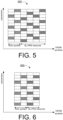
- FIG. 5 illustrates an example scenario 500 of AGC symbol allocation before an SL-PRS resource under schemes in accordance with implementations of the present disclosure.
- Scenario 500 illustrates an SL-PRS resource with comb size 4 and four OFDM symbols length, and the AGC symbol has two OFDM symbols length. Similar to scenario 300 in FIG. 3 , the SL-PRS symbols in scenario 500 are arranged with the same RE offset pattern. As shown in FIG.
- FIG. 6 illustrates an example scenario 600 of AGC symbol allocation before an SL-PRS resource under schemes in accordance with implementations of the present disclosure.
- Scenario 600 illustrates an SL-PRS resource with comb size 4 and two OFDM symbols length, and the AGC symbol has two OFDM symbols length. Similar to scenario 300 in FIG. 3 , the SL-PRS symbols in scenario 600 are arranged with the same RE offset pattern. As shown in FIG.
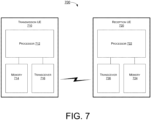
- FIG. 7 illustrates an example communication system 700 having an example Tx UE 710 and an example Rx UE 720 in accordance with an implementation of the present disclosure.
- Tx UE 710 and Rx UE 720 may perform various functions to implement schemes, techniques, processes and methods described herein pertaining to supporting AGC symbol for SL-PRS reception in mobile communications, including scenarios/schemes described above as well as processes 800 and 900 described below.
- Tx UE 710 may be a part of an electronic apparatus such as a portable or mobile apparatus, a wearable apparatus, a wireless communication apparatus or a computing apparatus.
- Tx UE 710 may be implemented in a smartphone, a smartwatch, a personal digital assistant, a digital camera, or a computing equipment such as a tablet computer, a laptop computer or a notebook computer.
- Tx UE 710 may also be a part of a machine type apparatus, which may be an IoT, NB-loT, or IloT apparatus such as an immobile or a stationary apparatus, a home apparatus, a wire communication apparatus or a computing apparatus.
- Tx UE 710 may be implemented in a smart thermostat, a smart fridge, a smart door lock, a wireless speaker or a home control center.
- Tx UE 710 may be implemented in the form of one or more integrated-circuit (IC) chips such as, for example and without limitation, one or more single-core processors, one or more multi-core processors, one or more reduced-instruction set computing (RISC) processors, or one or more complex-instruction-set-computing (CISC) processors.
- RISC reduced-instruction set computing
- CISC complex-instruction-set-computing
- Tx UE 710 may include at least some of those components shown in FIG. 7 such as a processor 712, for example.
- Tx UE 710 may further include one or more other components not pertinent to the proposed scheme of the present disclosure (e.g., internal power supply, display device and/or user interface device), and, thus, such component(s) of Tx UE 710 are neither shown in FIG. 7 nor described below in the interest of simplicity and brevity.
- other components e.g., internal power supply, display device and/or user interface device
- Rx UE 720 may be a part of an electronic apparatus such as a portable or mobile apparatus, a wearable apparatus, a wireless communication apparatus or a computing apparatus.
- Rx UE 720 may be implemented in a smartphone, a smartwatch, a personal digital assistant, a digital camera, or a computing equipment such as a tablet computer, a laptop computer or a notebook computer.
- Rx UE 720 may also be a part of a machine type apparatus, which may be an IoT, NB-loT, or IIoT apparatus such as an immobile or a stationary apparatus, a home apparatus, a wire communication apparatus or a computing apparatus.
- Rx UE 720 may be implemented in a smart thermostat, a smart fridge, a smart door lock, a wireless speaker or a home control center.
- Rx UE 720 may be implemented in the form of one or more IC chips such as, for example and without limitation, one or more single-core processors, one or more multi-core processors, one or more RISC processors, or one or more CISC) processors.
- Rx UE 720 may include at least some of those components shown in FIG. 7 such as a processor 722, for example.
- Rx UE 720 may further include one or more other components not pertinent to the proposed scheme of the present disclosure (e.g., internal power supply, display device and/or user interface device), and, thus, such component(s) of Rx UE 720 are neither shown in FIG. 7 nor described below in the interest of simplicity and brevity.
- other components e.g., internal power supply, display device and/or user interface device
- Tx UE 710 may have the functions of Rx UE and be operated as a Rx UE while Rx UE 720 having the functions of Tx UE and being operated as a Tx UE.
- each of processor 712 and processor 722 may be implemented in the form of one or more single-core processors, one or more multi-core processors, or one or more CISC processors. That is, even though a singular term "a processor" is used herein to refer to processor 712 and processor 722, each of processor 712 and processor 722 may include multiple processors in some implementations and a single processor in other implementations in accordance with the present disclosure.
- each of processor 712 and processor 722 may be implemented in the form of hardware (and, optionally, firmware) with electronic components including, for example and without limitation, one or more transistors, one or more diodes, one or more capacitors, one or more resistors, one or more inductors, one or more memristors and/or one or more varactors that are configured and arranged to achieve specific purposes in accordance with the present disclosure.
- each of processor 712 and processor 722 is a special-purpose machine specifically designed, arranged and configured to perform specific tasks including supporting AGC symbol for SL-PRS reception in a UE (e.g., as represented by Tx UE 710) and another UE (e.g., as represented by Rx UE 720) in accordance with various implementations of the present disclosure.
- Tx UE 710 may also include a transceiver 716 coupled to processor 712 and capable of wirelessly transmitting and receiving data.
- Tx UE 710 may further include a memory 714 coupled to processor 712 and capable of being accessed by processor 712 and storing data therein.
- Rx UE 720 may also include a transceiver 726 coupled to processor 722 and capable of wirelessly transmitting and receiving data.
- Rx UE 720 may further include a memory 724 coupled to processor 722 and capable of being accessed by processor 722 and storing data therein. Accordingly, Tx UE 710 and Rx UE 720 may wirelessly communicate with each other via transceiver 716 and transceiver 726, respectively.
- processor 722 may receive, via transceiver 726, a first configuration for an SL-PRS resource. Then, processor 722 may receive, via transceiver 726, one AGC symbol for the SL-PRS resource. Also, processor 722 may receive, via transceiver 726, the SL-PRS resource based on the first configuration. An RS in the AGC symbol and an SL-PRS in a last SL-PRS symbol of the SL-PRS resource correspond to a same set of one or more subcarriers.
- the RS in the AGC symbol and the SL-PRS in the last SL-PRS symbol of the SL-PRS resource may be configured with a same RE offset.
- the AGC symbol may be disabled by a second configuration (e.g., received via higher layer message carried by the PSSCH).
- the AGC symbol may include an SL-PRS. Additionally, or optionally, the SL-PRS may include a sequence that is initialized based on a symbol index of the AGC symbol within a slot.
- processor 722 may also adjust a reception gain based on the AGC symbol.
- processor 722 may also perform a relative speed estimation based on the AGC symbol and the last SL-PRS symbol of the SL-PRS resource.
- processor 712 may transmit, via transceiver 716, a first configuration for an SL-PRS resource. Then, processor 712 may transmit, via transceiver 716, one AGC symbol for the SL-PRS resource. Also, processor 712 may transmit, via transceiver 716, the SL-PRS resource based on the first configuration.
- An RS in the AGC symbol and an SL-PRS in a last SL-PRS symbol of the SL-PRS resource correspond to a same set of one or more subcarriers.
- the RS in the AGC symbol and the SL-PRS in the last SL-PRS symbol of the SL-PRS resource may be transmitted with a same RE offset.
- the AGC symbol may be disabled by a second configuration (e.g., transmitted via higher layer message carried by the PSSCH).
- the AGC symbol may include an SL-PRS. Additionally, or optionally, the SL-PRS may include a sequence that is initialized based on a symbol index of the AGC symbol within a slot.
- the RS in the AGC symbol and the SL-PRS in the SL-PRS symbols of the SL-PRS resource may be transmitted via a same spatial filter.
- the RS in the AGC symbol and the SL-PRS in the SL-PRS symbols of the SL-PRS resource may be QCLed.
- FIG. 8 illustrates an example process 800 in accordance with an implementation of the present disclosure.
- Process 800 may be an example implementation of above scenarios/schemes, whether partially or completely, with respect to supporting AGC symbol for SL-PRS reception in mobile communications.
- Process 800 may represent an aspect of implementation of features of Rx UE 720.
- Process 800 may include one or more operations, actions, or functions as illustrated by one or more of blocks 810 to 830. Although illustrated as discrete blocks, various blocks of process 800 may be divided into additional blocks, combined into fewer blocks, or eliminated, depending on the desired implementation. Moreover, the blocks of process 800 may be executed in the order shown in FIG. 8 or, alternatively, in a different order.
- Process 800 may be implemented by Rx UE 720 or any suitable UE or machine type devices. Solely for illustrative purposes and without limitation, process 800 is described below in the context of Rx UE 720.
- Process 800 may begin at block 810.
- process 800 may involve processor 722 of Rx UE 720 receiving, via transceiver 726, a first configuration for an SL-PRS resource. Process 800 may proceed from 810 to 820.
- process 800 may involve processor 722 receiving, via transceiver 726, one AGC symbol for the SL-PRS resource. Process 800 may proceed from 820 to 830.
- process 800 may involve processor 722 receiving, via transceiver 726, the SL-PRS resource based on the first configuration.
- An RS in the AGC symbol and an SL-PRS in a last SL-PRS symbol of the SL-PRS resource correspond to a same set of one or more subcarriers.
- the RS in the AGC symbol and the SL-PRS in the last SL-PRS symbol of the SL-PRS resource may be configured with a same RE offset.
- the AGC symbol may be disabled by a second configuration (e.g., received via higher layer message carried by the PSSCH).
- the AGC symbol may include an SL-PRS. Additionally, or optionally, the SL-PRS may include a sequence that is initialized based on a symbol index of the AGC symbol within a slot.
- process 800 may further involve processor 722 adjusting a reception gain based on the AGC symbol.
- process 800 may further involve processor 722 performing a relative speed estimation based on the AGC symbol and the last SL-PRS symbol of the SL-PRS resource.
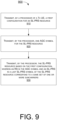
- FIG. 9 illustrates an example process 900 in accordance with an implementation of the present disclosure.
- Process 900 may be an example implementation of above scenarios/schemes, whether partially or completely, with respect to supporting AGC symbol for SL-PRS reception in mobile communications.
- Process 900 may represent an aspect of implementation of features of Tx UE 710.
- Process 900 may include one or more operations, actions, or functions as illustrated by one or more of blocks 910 to 930. Although illustrated as discrete blocks, various blocks of process 900 may be divided into additional blocks, combined into fewer blocks, or eliminated, depending on the desired implementation.
- Process 900 may be implemented by Tx UE 710 or any suitable UE or machine type devices. Solely for illustrative purposes and without limitation, process 900 is described below in the context of Tx UE 710.
- process 900 may involve processor 712 of Tx UE 710 transmitting, via transceiver 716, a first configuration for an SL-PRS resource.
- Process 900 may proceed from 910 to 920.
- process 900 may involve processor 712 transmitting, via transceiver 716, one AGC symbol for the SL-PRS resource.
- Process 900 may proceed from 920 to 930.
- process 900 may involve processor 712 transmitting, via transceiver 716, the SL-PRS resource based on the first configuration.
- An RS in the AGC symbol and an SL-PRS in a last SL-PRS symbol of the SL-PRS resource correspond to a same set of one or more subcarriers.
- the RS in the AGC symbol and the SL-PRS in the last SL-PRS symbol of the SL-PRS resource may be transmitted with a same RE offset.
- the AGC symbol may be disabled by a second configuration (e.g., transmitted via higher layer message carried by the PSSCH).
- the AGC symbol may include an SL-PRS. Additionally, or optionally, the SL-PRS may include a sequence that is initialized based on a symbol index of the AGC symbol within a slot.
- the RS in the AGC symbol and the SL-PRS in the SL-PRS symbols of the SL-PRS resource may be transmitted via a same spatial filter.
- the RS in the AGC symbol and the SL-PRS in the SL-PRS symbols of the SL-PRS resource may be QCLed.
- any two components so associated can also be viewed as being “operably connected”, or “operably coupled”, to each other to achieve the desired functionality, and any two components capable of being so associated can also be viewed as being “operably couplable”, to each other to achieve the desired functionality.
- operably couplable include but are not limited to physically mateable and/or physically interacting components and/or wirelessly interactable and/or wirelessly interacting components and/or logically interacting and/or logically interactable components.
Landscapes
- Engineering & Computer Science (AREA)
- Signal Processing (AREA)
- Computer Networks & Wireless Communication (AREA)
- Mobile Radio Communication Systems (AREA)
- Circuits Of Receivers In General (AREA)
Applications Claiming Priority (2)
| Application Number | Priority Date | Filing Date | Title |
|---|---|---|---|
| US202263379002P | 2022-10-11 | 2022-10-11 | |
| US18/372,680 US20240121731A1 (en) | 2022-10-11 | 2023-09-25 | Method And User Equipment For Supporting Automatic Gain Control Symbol For Sidelink Positioning In Mobile Communications |
Publications (1)
| Publication Number | Publication Date |
|---|---|
| EP4354784A1 true EP4354784A1 (de) | 2024-04-17 |
Family
ID=88372270
Family Applications (1)
| Application Number | Title | Priority Date | Filing Date |
|---|---|---|---|
| EP23202995.9A Pending EP4354784A1 (de) | 2022-10-11 | 2023-10-11 | Verfahren und benutzervorrichtung zur unterstützung eines automatischen verstärkungsregelungssymbols für sidelink-positionierungsreferenzsignalempfang in der mobilen kommunikation |
Country Status (3)
| Country | Link |
|---|---|
| US (1) | US20240121731A1 (de) |
| EP (1) | EP4354784A1 (de) |
| TW (1) | TW202431821A (de) |
Families Citing this family (1)
| Publication number | Priority date | Publication date | Assignee | Title |
|---|---|---|---|---|
| US20250007546A1 (en) * | 2023-06-30 | 2025-01-02 | Qualcomm Incorporated | Adaptive automatic gain control allocation |
Citations (1)
| Publication number | Priority date | Publication date | Assignee | Title |
|---|---|---|---|---|
| EP3198894B1 (de) * | 2014-09-25 | 2020-04-22 | Intel Corporation | Ressourcenzuweisung und -verwendung zur vorrichtung-zu-vorrichtung-unterstützten positionierung in drahtlosen zellularen technologien |
Family Cites Families (1)
| Publication number | Priority date | Publication date | Assignee | Title |
|---|---|---|---|---|
| US12225482B2 (en) * | 2022-02-11 | 2025-02-11 | Qualcomm Incorporated | Using automatic gain control to indicate target sidelink receiving UE |
-
2023
- 2023-09-25 US US18/372,680 patent/US20240121731A1/en active Pending
- 2023-10-11 EP EP23202995.9A patent/EP4354784A1/de active Pending
- 2023-10-11 TW TW112138719A patent/TW202431821A/zh unknown
Patent Citations (1)
| Publication number | Priority date | Publication date | Assignee | Title |
|---|---|---|---|---|
| EP3198894B1 (de) * | 2014-09-25 | 2020-04-22 | Intel Corporation | Ressourcenzuweisung und -verwendung zur vorrichtung-zu-vorrichtung-unterstützten positionierung in drahtlosen zellularen technologien |
Non-Patent Citations (3)
| Title |
|---|
| 3GPP TECHNICAL SPECIFICATION (TS) 38.211 |
| MEDIATEK INC: "The potential solutions for sidelink positioning", vol. RAN WG1, no. e-Meeting; 20221010 - 20221019, 30 September 2022 (2022-09-30), XP052259568, Retrieved from the Internet <URL:https://ftp.3gpp.org/tsg_ran/WG1_RL1/TSGR1_110b-e/Docs/R1-2210097.zip> [retrieved on 20220930] * |
| MODERATOR (QUALCOMM): "Moderator Summary #2 on potential solutions for SL positioning", vol. RAN WG1, no. Toulouse, France; 20220822 - 20220826, 28 August 2022 (2022-08-28), XP052275903, Retrieved from the Internet <URL:https://ftp.3gpp.org/tsg_ran/WG1_RL1/TSGR1_110/Docs/R1-2207974.zip> [retrieved on 20220828] * |
Also Published As
| Publication number | Publication date |
|---|---|
| US20240121731A1 (en) | 2024-04-11 |
| TW202431821A (zh) | 2024-08-01 |
Similar Documents
| Publication | Publication Date | Title |
|---|---|---|
| US11652595B2 (en) | Tracking reference signal and framework thereof in mobile communications | |
| US12034677B2 (en) | Methods and devices for reference signal configuration | |
| CN110291762B (zh) | 减少无线通信系统中的干扰的系统和方法 | |
| TWI688284B (zh) | 行動通訊之探測參考信號設計方法及其裝置 | |
| EP3513514B1 (de) | Verfahren und vorrichtung zur handhabung eines synchronisationssignalblocks in der mobilkommunikation | |
| US11082107B2 (en) | Frequency-selective precoding for uplink transmissions in mobile communications | |
| US10868626B2 (en) | Synchronization signal block raster shift in mobile communications | |
| US20180367346A1 (en) | Cross-Link Interference Measurement In Mobile Communications | |
| WO2018228584A1 (en) | Sounding reference signal and channel state information-reference signal co-design in mobile communications | |
| EP3616454B1 (de) | Verfolgung eines referenzsignals und rahmen dafür in der mobilen kommunikation | |
| JP7306568B2 (ja) | 通信方法 | |
| EP4354784A1 (de) | Verfahren und benutzervorrichtung zur unterstützung eines automatischen verstärkungsregelungssymbols für sidelink-positionierungsreferenzsignalempfang in der mobilen kommunikation | |
| WO2019157981A1 (en) | Downlink control information format design in mobile communications | |
| EP4210267A1 (de) | Verfahren und vorrichtung zur beschränkungsplanung mit höherem unterträgerabstand in der mobilen kommunikation | |
| US20220060233A1 (en) | Reference Signal Sharing In Mobile Communications | |
| US20240089056A1 (en) | Method And User Equipment For Sidelink-Positioning Reference Signal Transmission In Mobile Communications | |
| WO2026032077A1 (en) | Methods and apparatus for determining csi report associated with non-contiguous csi-rs resource in mobile communications | |
| WO2024230711A1 (en) | Method and apparatus for pusch transmission over multiple slots in mobile communications | |
| CN117880989A (zh) | 支持用于sl-prs接收的agc符号的方法和用户设备 | |
| WO2025148551A1 (en) | Method and apparatus for operations associated with uplink only cell in mobile communications | |
| WO2018130133A1 (en) | Alert signal design in mobile communications | |
| WO2025077818A1 (en) | Method and apparatus for scheduling request and sounding reference signal transmission in mobile communications | |
| WO2025223174A1 (en) | Methods and apparatus for enhancements on structure and pattern designs of synchronization block in wireless communications | |
| CN117675150A (zh) | 移动通信中侧行链路定位参考信号传输的方法和用户设备 |
Legal Events
| Date | Code | Title | Description |
|---|---|---|---|
| PUAI | Public reference made under article 153(3) epc to a published international application that has entered the european phase |
Free format text: ORIGINAL CODE: 0009012 |
|
| STAA | Information on the status of an ep patent application or granted ep patent |
Free format text: STATUS: THE APPLICATION HAS BEEN PUBLISHED |
|
| AK | Designated contracting states |
Kind code of ref document: A1 Designated state(s): AL AT BE BG CH CY CZ DE DK EE ES FI FR GB GR HR HU IE IS IT LI LT LU LV MC ME MK MT NL NO PL PT RO RS SE SI SK SM TR |
|
| STAA | Information on the status of an ep patent application or granted ep patent |
Free format text: STATUS: REQUEST FOR EXAMINATION WAS MADE |
|
| 17P | Request for examination filed |
Effective date: 20241007 |
|
| RBV | Designated contracting states (corrected) |
Designated state(s): AL AT BE BG CH CY CZ DE DK EE ES FI FR GB GR HR HU IE IS IT LI LT LU LV MC ME MK MT NL NO PL PT RO RS SE SI SK SM TR |