EP4356929A1 - Antifibrotische formulierung zur ophthalmischen behandlung - Google Patents
Antifibrotische formulierung zur ophthalmischen behandlung Download PDFInfo
- Publication number
- EP4356929A1 EP4356929A1 EP22202619.7A EP22202619A EP4356929A1 EP 4356929 A1 EP4356929 A1 EP 4356929A1 EP 22202619 A EP22202619 A EP 22202619A EP 4356929 A1 EP4356929 A1 EP 4356929A1
- Authority
- EP
- European Patent Office
- Prior art keywords
- saccharide
- composition
- cyclodextrin
- crosslinked
- drug
- Prior art date
- Legal status (The legal status is an assumption and is not a legal conclusion. Google has not performed a legal analysis and makes no representation as to the accuracy of the status listed.)
- Withdrawn
Links
Images


Classifications
-
- A—HUMAN NECESSITIES
- A61—MEDICAL OR VETERINARY SCIENCE; HYGIENE
- A61K—PREPARATIONS FOR MEDICAL, DENTAL OR TOILETRY PURPOSES
- A61K9/00—Medicinal preparations characterised by special physical form
- A61K9/0012—Galenical forms characterised by the site of application
- A61K9/0048—Eye, e.g. artificial tears
-
- A—HUMAN NECESSITIES
- A61—MEDICAL OR VETERINARY SCIENCE; HYGIENE
- A61K—PREPARATIONS FOR MEDICAL, DENTAL OR TOILETRY PURPOSES
- A61K31/00—Medicinal preparations containing organic active ingredients
- A61K31/33—Heterocyclic compounds
- A61K31/395—Heterocyclic compounds having nitrogen as a ring hetero atom, e.g. guanethidine or rifamycins
- A61K31/40—Heterocyclic compounds having nitrogen as a ring hetero atom, e.g. guanethidine or rifamycins having five-membered rings with one nitrogen as the only ring hetero atom, e.g. sulpiride, succinimide, tolmetin, buflomedil
- A61K31/407—Heterocyclic compounds having nitrogen as a ring hetero atom, e.g. guanethidine or rifamycins having five-membered rings with one nitrogen as the only ring hetero atom, e.g. sulpiride, succinimide, tolmetin, buflomedil condensed with other heterocyclic ring systems, e.g. ketorolac, physostigmine
-
- A—HUMAN NECESSITIES
- A61—MEDICAL OR VETERINARY SCIENCE; HYGIENE
- A61K—PREPARATIONS FOR MEDICAL, DENTAL OR TOILETRY PURPOSES
- A61K31/00—Medicinal preparations containing organic active ingredients
- A61K31/70—Carbohydrates; Sugars; Derivatives thereof
- A61K31/7042—Compounds having saccharide radicals and heterocyclic rings
- A61K31/7048—Compounds having saccharide radicals and heterocyclic rings having oxygen as a ring hetero atom, e.g. leucoglucosan, hesperidin, erythromycin, nystatin, digitoxin or digoxin
-
- A—HUMAN NECESSITIES
- A61—MEDICAL OR VETERINARY SCIENCE; HYGIENE
- A61K—PREPARATIONS FOR MEDICAL, DENTAL OR TOILETRY PURPOSES
- A61K47/00—Medicinal preparations characterised by the non-active ingredients used, e.g. carriers or inert additives; Targeting or modifying agents chemically bound to the active ingredient
- A61K47/50—Medicinal preparations characterised by the non-active ingredients used, e.g. carriers or inert additives; Targeting or modifying agents chemically bound to the active ingredient the non-active ingredient being chemically bound to the active ingredient, e.g. polymer-drug conjugates
- A61K47/69—Medicinal preparations characterised by the non-active ingredients used, e.g. carriers or inert additives; Targeting or modifying agents chemically bound to the active ingredient the non-active ingredient being chemically bound to the active ingredient, e.g. polymer-drug conjugates the conjugate being characterised by physical or galenical forms, e.g. emulsion, particle, inclusion complex, stent or kit
- A61K47/6903—Medicinal preparations characterised by the non-active ingredients used, e.g. carriers or inert additives; Targeting or modifying agents chemically bound to the active ingredient the non-active ingredient being chemically bound to the active ingredient, e.g. polymer-drug conjugates the conjugate being characterised by physical or galenical forms, e.g. emulsion, particle, inclusion complex, stent or kit the form being semi-solid, e.g. an ointment, a gel, a hydrogel or a solidifying gel
-
- A—HUMAN NECESSITIES
- A61—MEDICAL OR VETERINARY SCIENCE; HYGIENE
- A61K—PREPARATIONS FOR MEDICAL, DENTAL OR TOILETRY PURPOSES
- A61K47/00—Medicinal preparations characterised by the non-active ingredients used, e.g. carriers or inert additives; Targeting or modifying agents chemically bound to the active ingredient
- A61K47/50—Medicinal preparations characterised by the non-active ingredients used, e.g. carriers or inert additives; Targeting or modifying agents chemically bound to the active ingredient the non-active ingredient being chemically bound to the active ingredient, e.g. polymer-drug conjugates
- A61K47/69—Medicinal preparations characterised by the non-active ingredients used, e.g. carriers or inert additives; Targeting or modifying agents chemically bound to the active ingredient the non-active ingredient being chemically bound to the active ingredient, e.g. polymer-drug conjugates the conjugate being characterised by physical or galenical forms, e.g. emulsion, particle, inclusion complex, stent or kit
- A61K47/6949—Medicinal preparations characterised by the non-active ingredients used, e.g. carriers or inert additives; Targeting or modifying agents chemically bound to the active ingredient the non-active ingredient being chemically bound to the active ingredient, e.g. polymer-drug conjugates the conjugate being characterised by physical or galenical forms, e.g. emulsion, particle, inclusion complex, stent or kit inclusion complexes, e.g. clathrates, cavitates or fullerenes
- A61K47/6951—Medicinal preparations characterised by the non-active ingredients used, e.g. carriers or inert additives; Targeting or modifying agents chemically bound to the active ingredient the non-active ingredient being chemically bound to the active ingredient, e.g. polymer-drug conjugates the conjugate being characterised by physical or galenical forms, e.g. emulsion, particle, inclusion complex, stent or kit inclusion complexes, e.g. clathrates, cavitates or fullerenes using cyclodextrin
-
- A—HUMAN NECESSITIES
- A61—MEDICAL OR VETERINARY SCIENCE; HYGIENE
- A61K—PREPARATIONS FOR MEDICAL, DENTAL OR TOILETRY PURPOSES
- A61K9/00—Medicinal preparations characterised by special physical form
- A61K9/0012—Galenical forms characterised by the site of application
- A61K9/0019—Injectable compositions; Intramuscular, intravenous, arterial, subcutaneous administration; Compositions to be administered through the skin in an invasive manner
-
- A—HUMAN NECESSITIES
- A61—MEDICAL OR VETERINARY SCIENCE; HYGIENE
- A61K—PREPARATIONS FOR MEDICAL, DENTAL OR TOILETRY PURPOSES
- A61K9/00—Medicinal preparations characterised by special physical form
- A61K9/06—Ointments; Bases therefor; Other semi-solid forms, e.g. creams, sticks, gels
-
- A—HUMAN NECESSITIES
- A61—MEDICAL OR VETERINARY SCIENCE; HYGIENE
- A61P—SPECIFIC THERAPEUTIC ACTIVITY OF CHEMICAL COMPOUNDS OR MEDICINAL PREPARATIONS
- A61P27/00—Drugs for disorders of the senses
- A61P27/02—Ophthalmic agents
-
- A—HUMAN NECESSITIES
- A61—MEDICAL OR VETERINARY SCIENCE; HYGIENE
- A61P—SPECIFIC THERAPEUTIC ACTIVITY OF CHEMICAL COMPOUNDS OR MEDICINAL PREPARATIONS
- A61P27/00—Drugs for disorders of the senses
- A61P27/02—Ophthalmic agents
- A61P27/06—Antiglaucoma agents or miotics
-
- A—HUMAN NECESSITIES
- A61—MEDICAL OR VETERINARY SCIENCE; HYGIENE
- A61K—PREPARATIONS FOR MEDICAL, DENTAL OR TOILETRY PURPOSES
- A61K47/00—Medicinal preparations characterised by the non-active ingredients used, e.g. carriers or inert additives; Targeting or modifying agents chemically bound to the active ingredient
- A61K47/30—Macromolecular organic or inorganic compounds, e.g. inorganic polyphosphates
- A61K47/36—Polysaccharides; Derivatives thereof, e.g. gums, starch, alginate, dextrin, hyaluronic acid, chitosan, inulin, agar or pectin
- A61K47/40—Cyclodextrins; Derivatives thereof
Definitions
- the present invention relates to a formulation of josamycin or a related compound in a crosslinked poly- or oligosaccharide, and the use of this formulation in ophthalmic treatment of infection and fibrosis.
- Glaucoma is one of the most common causes of blindness and affects more than 3% of people over the age of 40 worldwide. The prevalence is only expected to increase in the future with rapidly increasing elderly populations. A major cause of glaucoma related blindness is increased intraocular pressure, which is the only treatable cause. It can be treated by the surgical creation of a drainage site in the eye, called a trabeculectomy. However, excessive fibrotic response after surgery can cause occlusion of these drainage pathways. Antifibrotic drugs are commonly used during and after the surgery to limit the fibrotic response.
- cytotoxic drugs such as mitomycin C or 5-fluorouracil during or after surgery, usually topically via a sponge or with sub-conjunctival injections. These substances inhibit the proliferation of all types of cells, not just the fibroblasts, which can lead to undesirable side effects. Additionally, repetitive application is required to maintain therapeutic levels of drug, which can lead to inconsistent drug dosing and high rates of patient non-compliance.
- ⁇ CD ⁇ -Cyclodextrin
- JM Josamycin
- JM is poorly water soluble, making it difficult to administer locally in physiologically effective doses. Therefore, some type of biocompatible carrier is needed to facilitate the delivery of sufficiently high quantities of JM to the eye after glaucoma surgery.
- Degradable solid drug eluting implants for use in the eye are known to a person skilled in the art.
- Example products include OZURDEX ® , DEXYCU ® and DEXTENZA ® , which are all used to deliver the anti-inflammatory drug, dexamethasone.
- OZURDEX ® OZURDEX ®
- DEXYCU ® DEXTENZA ®
- these products are not geared toward antifibrotic or glaucoma treatment.
- solid drug delivery devices Haley et al. 2020; Mach ⁇ n et al. 2013.
- yCD as a delivery vehicle for topical drug delivery to the eye in the form of eye drops
- WO2016193810A1 discloses methods of forming cyclosporin/cyclodextrin complex nanoparticles and microparticles, and administration of the nano- and microsuspension formed to an eye of a human or animal in the form of aqueous eye drops.
- Document US8128954B2 discloses sustained-release biodegradable polymeric drug-eluting fiber.
- US8999953B2 discloses an ophthalmic composition, which is an aqueous suspension comprising drug, cyclodextrin and water.
- ophthalmic composition which is an aqueous suspension comprising drug, cyclodextrin and water.
- CD-based hydrogels there are no commercial products composed of CD-based hydrogels.
- the objective of the present invention is to provide means and methods for an ophthalmic formulation for treatment of fibrosis.
- This objective is attained by the subject-matter of the independent claims of the present specification, with further advantageous embodiments described in the dependent claims, examples, figures and general description of this specification.
- a first aspect of the invention relates to a composition
- a composition comprising:
- a further aspect of the invention relates to a composition according to the first aspect for use as a medicament.
- a further aspect of the invention relates to a composition according to the first aspect for use in treatment or prevention of fibrosis of the eye and/or the conjunctiva.
- a further aspect of the invention relates to a composition according to the first aspect for use in treatment or prevention of infection of the eye and/or the conjunctiva.
- references to "about” a value or parameter herein includes (and describes) variations that are directed to that value or parameter per se. For example, description referring to "about X” includes description of "X.”
- crosslinking agent in the context of the present specification relates to an agent being capable of forming a cross-link.
- a cross-link is a bond or a short sequence of bonds that links one molecule to another.
- the crosslinking agent covalently links the poly- or oligosaccharide subunits.
- josamycin in the context of the present specification relates to a compound of CAS-Number 16846-24-5 .
- the efficacy of josamycin in prevention or treatment of fibrosis is disclosed in WO2021186041 which is incorporated by reference herein.
- kitasamycin in the context of the present specification relates to a compound of CAS-Number 22875-15-6 .
- the efficacy of kitasamycin in prevention or treatment of fibrosis is disclosed in WO2021186041 which is incorporated by reference herein.
- mitomycin C in the context of the present specification relates to a compound of CAS-Number 50-07-7 .
- cyclodextrin in the context of the present specification relates to a family of cyclic oligosaccharides, consisting of a macrocyclic ring of glucose subunits joined by ⁇ -1,4 glycosidic bonds.
- One ring comprises 6 glucose subunits in the case of ⁇ -cyclodextrin, 7 glucose subunits in the case of ⁇ -cyclodextrin, and 8 glucose subunits in the case of ⁇ -cyclodextrin.
- dry crosslinked saccharide in the context of the present specification relates to the weight of the saccharide only, not including the weight of the water associated with the saccharide.
- hydrogel in the context of the present specification relates to a crosslinked hydrophilic polymer that does not dissolve in water.
- Hydrogels have two main regimes of mechanical properties: rubber elasticity and viscoelasticity.
- Rubber elasticity refers to a property of crosslinked rubber: it can be stretched by up to a factor of 10 from its original length and, when released, returns very nearly to its original length.
- Viscoelasticity is the property of materials that exhibit both viscous and elastic characteristics when undergoing deformation.
- molar ratio in the context of the present specification relates to the quotient between the number of molecules of the firstly mentioned entity and the number of molecules of the secondly mentioned entity.
- ocular injection in the context of the present specification relates to the method of administration of drugs into the eye by injection with a fine needle.
- the term pharmaceutical composition refers to a compound of the invention, or a pharmaceutically acceptable salt thereof, together with at least one pharmaceutically acceptable carrier.
- the pharmaceutical composition according to the invention is provided in a form suitable for topical, parenteral or injectable administration.
- the term pharmaceutically acceptable carrier includes any solvents, dispersion media, coatings, surfactants, antioxidants, preservatives (for example, antibacterial agents, antifungal agents), isotonic agents, absorption delaying agents, salts, preservatives, drugs, drug stabilizers, binders, excipients, disintegration agents, lubricants, sweetening agents, flavoring agents, dyes, and the like and combinations thereof, as would be known to those skilled in the art (see, for example, Remington: the Science and Practice of Pharmacy, ISBN 0857110624 ).
- treating or treatment of any disease or disorder refers in one embodiment, to ameliorating the disease or disorder (e.g. slowing or arresting or reducing the development of the disease or at least one of the clinical symptoms thereof).
- treating or treatment refers to alleviating or ameliorating at least one physical parameter including those which may not be discernible by the patient.
- treating or treatment refers to modulating the disease or disorder, either physically, (e.g., stabilization of a discernible symptom), physiologically, (e.g., stabilization of a physical parameter), or both.
- a first aspect of the invention relates to a composition
- a composition comprising:
- the cyclodextrin is selected from the group consisting of ⁇ -cyclodextrin, ⁇ -cyclodextrin, and ⁇ -cyclodextrin. In certain embodiments, the cyclodextrin is ⁇ -cyclodextrin.
- the crosslinked saccharide forms a hydrogel.
- the hydrogel permits release of the compound in the course of several days.
- the crosslinked saccharide additionally comprises another saccharide than cyclodextrin.
- the crosslinked saccharide additionally comprises a saccharide selected from the group consisting of dextrin, dextran, starch, chitosan, chitin, cellulose, pectin, alginate, hyaluronic acid, agar, pullulan, and gellan gum.
- the crosslinked saccharide additionally comprises dextran.
- the active pharmaceutical drug compound is josamycin.
- the crosslinking agent is selected from the group consisting of epichlorohydrin, bis[2-(succinimidyloxycarbonyloxy)ethyl]sulfone (BSOCOES), disuccinimidyl suberate (DSS), di-(N-succinimidyl)-carbonate (DCS), ethylenediaminetetraacetic acid (EDTA), sodium trimetaphosphate, divinyl sulfone, glutaraldehyde, 1-ethyl-3-(-3-dimethylaminopropyl) carbodiimide hydrochloride, hexamethylene diisocyanate (HDI) and N', N'-dicyclohexyl carbodiimide.
- the crosslinking agent is epichlorohydrin.
- the molar ratio before crosslinking of the saccharide:crosslinking agent is in a range of 1:1 to 1:50. In certain embodiments, the molar ratio before crosslinking of the saccharide:crosslinking agent is in a range of 1:2 to 1:35. In certain embodiments, the molar ratio before crosslinking of the saccharide:crosslinking agent is in a range of 1:5 to 1:20.
- the composition comprises 1-500 ⁇ g of the drug compound per 1000 ⁇ g of dry crosslinked saccharide. In certain embodiments, the composition comprises 5-100 ⁇ g of the drug compound per 1000 ⁇ g of dry crosslinked saccharide. In certain embodiments, the composition comprises -20-40 ⁇ g of the drug compound per 1000 ⁇ g of dry crosslinked saccharide.
- a further aspect of the invention relates to a composition according to the first aspect for use as a medicament.
- a further aspect of the invention relates to a composition according to the first aspect for use in treatment or prevention of fibrosis of the eye and/or the conjunctiva.
- the fibrosis is caused by, or occurs subsequent to, glaucoma surgery.
- a further aspect of the invention relates to a composition according to the first aspect for use in treatment or prevention of infection of the eye and/or the conjunctiva.
- the composition is administered during or after glaucoma surgery.
- the composition is administered via ocular injection.
- the composition is administered as an implant or as a drug delivery system to ensure local and sustained drug release over several days.
- the composition is administered via placement on the site of surgery by the surgeon.
- the implant is placed into the subconjunctival space.
- the subconjunctival space is the hydrophilic, fluid-filled space between the conjunctiva and the sclera.
- a drug delivery system is a combination of a carrier or vehicle with a therapeutic agent, which enables the controlled release of the therapeutic agent to suit the temporal or spatial requirements of the specific treatment.
- a method or treating fibrosis or infection of the eye and/or the conjunctiva in a patient in need thereof comprising administering to the patient a formulation comprising a crosslinked saccharide and a compound selected from the group comprising josamycin, kitasamycin, and mitomycin C according to the above description.
- the compound according to the invention is provided as a pharmaceutical composition, pharmaceutical administration form, or pharmaceutical dosage form, said pharmaceutical composition, pharmaceutical administration form, or pharmaceutical dosage form comprising at least one of the compounds of the present invention or a pharmaceutically acceptable salt thereof and at least one pharmaceutically acceptable carrier, diluent or excipient.
- any specifically mentioned drug compound mentioned herein may be present as a pharmaceutically acceptable salt of said drug.
- Pharmaceutically acceptable salts comprise the ionized drug and an oppositely charged counterion.
- Non-limiting examples of pharmaceutically acceptable anionic salt forms include acetate, benzoate, besylate, bitatrate, bromide, carbonate, chloride, citrate, edetate, edisylate, embonate, estolate, fumarate, gluceptate, gluconate, hydrobromide, hydrochloride, iodide, lactate, lactobionate, malate, maleate, mandelate, mesylate, methyl bromide, methyl sulfate, mucate, napsylate, nitrate, pamoate, phosphate, diphosphate, salicylate, disalicylate, stearate, succinate, sulfate, tartrate, tosylate, triethiodide and valerate.
- the compound of the present invention is typically formulated into pharmaceutical dosage forms to provide an easily controllable dosage of the drug and to give the patient and/or the surgeon an elegant and easily handleable product.
- a dosage form for the prevention or treatment of fibrosis or infection of the eye and/or the conjunctiva comprising a formulation according to any of the above aspects or embodiments of the invention.
- the invention further encompasses a pharmaceutical composition
- a pharmaceutical composition comprising a compound of the present invention, or a pharmaceutically acceptable salt thereof, and a pharmaceutically acceptable carrier.
- the composition comprises at least two pharmaceutically acceptable carriers, such as those described herein.
- the dosage regimen for the drug compounds of the present invention will vary depending upon known factors, such as the pharmacodynamic characteristics of the particular agent and its mode and route of administration; the species, age, sex, health, medical condition, and weight of the recipient; the nature and extent of the symptoms; the kind of concurrent treatment; the frequency of treatment; the route of administration, the renal and hepatic function of the patient, and the effect desired.
- the drug compounds of the invention may be administered in a single dose, a single monthly dose, a single weekly dose, a single daily dose, or the total daily dosage may be administered in divided doses of two, three, or four times daily.
- the therapeutically effective dosage of a drug compound, the pharmaceutical composition, or the combinations thereof is dependent on the species of the subject, the body weight, age and individual condition, the disorder or disease or the severity thereof being treated.
- a physician, clinician or veterinarian of ordinary skill can readily determine the effective amount of each of the active ingredients necessary to prevent, treat or inhibit the progress of the disorder or disease.
- compositions of the present invention can be subjected to conventional pharmaceutical operations such as sterilization and/or can contain conventional inert diluents, lubricating agents, or buffering agents, as well as adjuvants, such as preservatives, stabilizers, wetting agents, emulsifiers and buffers, etc. They may be produced by standard processes, for instance by conventional mixing, granulating, dissolving or lyophilizing processes. Many such procedures and methods for preparing pharmaceutical compositions are known in the art, see for example L. Lachman et al. The Theory and Practice of Industrial Pharmacy, 4th Ed, 2013 (ISBN 8123922892 ).
- the invention further encompasses, as an additional aspect, the use of a formulation comprising a crosslinked saccharide and an active pharmaceutical drug compound selected from the group comprising josamycin, kitasamycin, and mitomycin C, or its pharmaceutically acceptable salt, as specified in detail above, for use in a method of manufacture of a medicament for the treatment or prevention of fibrosis or infection of the eye and/or the conjunctiva.
- a formulation comprising a crosslinked saccharide and an active pharmaceutical drug compound selected from the group comprising josamycin, kitasamycin, and mitomycin C, or its pharmaceutically acceptable salt, as specified in detail above, for use in a method of manufacture of a medicament for the treatment or prevention of fibrosis or infection of the eye and/or the conjunctiva.
- the invention encompasses methods of treatment of a patient having been diagnosed with a disease associated with fibrosis or infection of the eye and/or the conjunctiva.
- This method entails administering to the patient an effective amount of a formulation comprising a crosslinked saccharide and an active pharmaceutical drug compound selected from the group comprising josamycin, kitasamycin, and mitomycin C as identified herein, or its pharmaceutically acceptable salt, as specified in detail herein.
- the first formulation developed is a solution of yCD and JM.
- Solutions of JM and yCD can be made up to 18.9 mg/ml JM with 200 mg/ml yCD. These solutions are formed by simply mixing the JM and yCD in water or PBS until dissolved. This liquid formulation can then be sterilized via syringe filter before use. The solution is suitable for application to the eye as an eye drop or injection during or after surgery.
- the second formulation developed is in the form of a solid implantable hydrogel.
- the formulation still capitalizes on the interaction of yCD and JM, but crosslinks the yCD molecules together to form a gel.
- ⁇ CD can be crosslinked directly with epichlorohydrin (EPI).
- EPI epichlorohydrin
- the crosslinking process first forms long polymer chains of cyclodextrins and then crosslinking between chains forms a hydrogel ( figure 1 ).
- the protocol developed for this formulation was based on parameters which demonstrated gel formation in other published works (Wintgens und Amiel 2010).
- yCD was dissolved in 30% w/v NaOH to form a final 50% w/v solution.
- EPI was added to a final molar ratio of ⁇ CD:EPI of 1:10. The mixture was stirred at room temperature until homogeneous and then cured overnight at room temperature. The mixture could be dispensed into glass or silicone molds to create hydrogels of a controlled size and shape.
- the final hydrogels were rinsed in deionized water at 37°C.
- the washing procedure consists of two 1-hour rinses followed by an overnight rinse which was found to be sufficient to remove the unreacted EPI.
- Several rinsing procedures were tested and all were found to remove EPI based on residual chorine amounts in the washed gels ( Figure 2 ).
- ⁇ CD is a biocompatible and biodegradable cyclic oligosaccharide. Its ring-like structure has a hydrophilic outer surface, making it highly water soluble, and a hydrophilic inner surface, which can form inclusion complexes with hydrophobic drugs. ⁇ CD can form an inclusion complex with JM and significantly increase the concentration of the poorly water-soluble JM in aqueous solutions. The effect of yCD on JM concentration is shown in Figure 3 .
- yCD was crosslinked with EPI to form hydrogels.
- -12 mm x 1 mm disks of hydrogel were loaded with drug and then placed in PBS at 37°C to generate a release curve.
- the release of JM from the hydrogel can be seen in Figure 4 .
- the drug was released over the first 96 hrs and more than 90% of the total loaded drug was released over the course of 8 days.
- the swelling percent of ⁇ CD hydrogels made as described previously was measured. Water uptake is a defining characteristic of hydrogels and critical to drug loading and release properties.
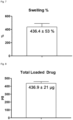
- the ⁇ CD gels showed an average swelling of 436.4 ⁇ 53 %.
- Hydrogels can span a very wide range of swelling percentages which the inventors would be able to influence by adjusting the chosen materials, crosslinking method and crosslinking amount. It would be reasonable to expect final gel swelling percentages between 5-5000% ( Fig. 7 ).
- the yCD gels were loaded with josamycin by soaking them overnight in a saturated solution of josamycin in water.
- the amount of drug loaded into the ⁇ CD gels was measured and resulted in an average of 436.9 ⁇ 21 ⁇ g josamycin loaded into an approximately 12 mm x 1 mm cylindrical hydrated ⁇ CD gel. Normalized to the mass of the gel, this is 19.87 ⁇ g of josamycin loaded per 1000 ⁇ g of dried ⁇ CD gel ( Fig. 8 ).
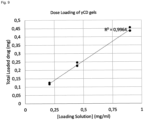
- the inventors have also shown that the amount of josamycin loaded into ⁇ CD gels is linearly proportional to the concentration of the josamycin in the loading solution. Therefore, the total amount of loaded drug can be easily adjusted based on this linear relationship by adjusting the drug loading solution concentration and the total loaded amount could be theoretically increased beyond what was measured here by increasing the loading solution concentration ( Fig. 9 ).
- the novelty of this invention is in creating a topical or injectable solution and implantable drug delivery system specifically for Josamycin after glaucoma surgery to prevent fibrosis.
- Local delivery and extended release from a drug depot would eliminate the need for multiple drug applications after surgery through injection or eye drops.
- Utilizing ⁇ CD as a carrier molecule targets the current limitation of JM, which is its low solubility.
- Using ⁇ CD in solution with JM or the form of an implantable hydrogel should improve drug loading efficacy because ⁇ CD forms an inclusion complex with JM. Additionally, JM may prove to be less cytotoxic than current standard treatment, while providing both antibiotic and antifibrotic effects.
Landscapes
- Health & Medical Sciences (AREA)
- Life Sciences & Earth Sciences (AREA)
- Public Health (AREA)
- Veterinary Medicine (AREA)
- Chemical & Material Sciences (AREA)
- Medicinal Chemistry (AREA)
- Pharmacology & Pharmacy (AREA)
- Animal Behavior & Ethology (AREA)
- General Health & Medical Sciences (AREA)
- Epidemiology (AREA)
- Ophthalmology & Optometry (AREA)
- Engineering & Computer Science (AREA)
- Bioinformatics & Cheminformatics (AREA)
- Chemical Kinetics & Catalysis (AREA)
- General Chemical & Material Sciences (AREA)
- Nuclear Medicine, Radiotherapy & Molecular Imaging (AREA)
- Organic Chemistry (AREA)
- Dermatology (AREA)
- Molecular Biology (AREA)
- Pharmaceuticals Containing Other Organic And Inorganic Compounds (AREA)
- Medicinal Preparation (AREA)
Priority Applications (3)
| Application Number | Priority Date | Filing Date | Title |
|---|---|---|---|
| EP22202619.7A EP4356929A1 (de) | 2022-10-19 | 2022-10-19 | Antifibrotische formulierung zur ophthalmischen behandlung |
| PCT/EP2023/079074 WO2024083956A1 (en) | 2022-10-19 | 2023-10-18 | Antifibrotic formulation for ophthalmic treatment |
| EP23793753.7A EP4605017A1 (de) | 2022-10-19 | 2023-10-18 | Antifibrotische formulierung zur ophthalmischen behandlung |
Applications Claiming Priority (1)
| Application Number | Priority Date | Filing Date | Title |
|---|---|---|---|
| EP22202619.7A EP4356929A1 (de) | 2022-10-19 | 2022-10-19 | Antifibrotische formulierung zur ophthalmischen behandlung |
Publications (1)
| Publication Number | Publication Date |
|---|---|
| EP4356929A1 true EP4356929A1 (de) | 2024-04-24 |
Family
ID=83899677
Family Applications (2)
| Application Number | Title | Priority Date | Filing Date |
|---|---|---|---|
| EP22202619.7A Withdrawn EP4356929A1 (de) | 2022-10-19 | 2022-10-19 | Antifibrotische formulierung zur ophthalmischen behandlung |
| EP23793753.7A Pending EP4605017A1 (de) | 2022-10-19 | 2023-10-18 | Antifibrotische formulierung zur ophthalmischen behandlung |
Family Applications After (1)
| Application Number | Title | Priority Date | Filing Date |
|---|---|---|---|
| EP23793753.7A Pending EP4605017A1 (de) | 2022-10-19 | 2023-10-18 | Antifibrotische formulierung zur ophthalmischen behandlung |
Country Status (2)
| Country | Link |
|---|---|
| EP (2) | EP4356929A1 (de) |
| WO (1) | WO2024083956A1 (de) |
Citations (5)
| Publication number | Priority date | Publication date | Assignee | Title |
|---|---|---|---|---|
| EP0730869B1 (de) * | 1994-09-24 | 2001-06-27 | Nobuhiko Yui | Biodegradierbare medizinische polymer-anordnung mit supermolekularer-struktur |
| US8128954B2 (en) | 2004-06-07 | 2012-03-06 | California Institute Of Technology | Biodegradable drug-polymer delivery system |
| US8999953B2 (en) | 2005-07-22 | 2015-04-07 | Oculis Ehf | Cyclodextrin nanotechnology for ophthalmic drug delivery |
| WO2016193810A1 (en) | 2015-05-29 | 2016-12-08 | Oculis ehf. | Formation of cyclosporin a/cyclodextrin nanoparticles |
| WO2021186041A1 (en) | 2020-03-19 | 2021-09-23 | Universität Rostock | Josamycin for use in prevention and treatment of fibrosis |
-
2022
- 2022-10-19 EP EP22202619.7A patent/EP4356929A1/de not_active Withdrawn
-
2023
- 2023-10-18 WO PCT/EP2023/079074 patent/WO2024083956A1/en not_active Ceased
- 2023-10-18 EP EP23793753.7A patent/EP4605017A1/de active Pending
Patent Citations (5)
| Publication number | Priority date | Publication date | Assignee | Title |
|---|---|---|---|---|
| EP0730869B1 (de) * | 1994-09-24 | 2001-06-27 | Nobuhiko Yui | Biodegradierbare medizinische polymer-anordnung mit supermolekularer-struktur |
| US8128954B2 (en) | 2004-06-07 | 2012-03-06 | California Institute Of Technology | Biodegradable drug-polymer delivery system |
| US8999953B2 (en) | 2005-07-22 | 2015-04-07 | Oculis Ehf | Cyclodextrin nanotechnology for ophthalmic drug delivery |
| WO2016193810A1 (en) | 2015-05-29 | 2016-12-08 | Oculis ehf. | Formation of cyclosporin a/cyclodextrin nanoparticles |
| WO2021186041A1 (en) | 2020-03-19 | 2021-09-23 | Universität Rostock | Josamycin for use in prevention and treatment of fibrosis |
Non-Patent Citations (13)
| Title |
|---|
| AUSUBEL ET AL.: "Short Protocols in Molecular Biology", 2002, JOHN WILEY & SONS, INC |
| CAS, no. 22875-15-6 |
| EL HARTI J. ET AL: "Improvement of Water Solubility of Josamycin by Inclusion Complex with -Cyclodextrin", ISRN ANALYTICAL CHEMISTRY, vol. 2012, 4 March 2012 (2012-03-04), pages 1 - 6, XP093031012, ISSN: 2090-7311, DOI: 10.5402/2012/673564 * |
| GAMI PRATIK ET AL: "Chemically crosslinked xylan-[beta]-Cyclodextrin hydrogel for the in vitro delivery of curcumin and 5-Fluorouracil.", INTERNATIONAL JOURNAL OF BIOLOGICAL MACROMOLECULES, vol. 158, 30 April 2020 (2020-04-30), pages 18 - 31, XP002808819 * |
| HALEY, REBECCA M.ZUCKERMAN, SEAN T.DAKHLALLAH, HASSANCAPADONA, JEFFERY R.RECUM, HORST A. VONEREIFEJ, EVON S.: "Resveratrol Delivery from Implanted Cyclodextrin Polymers Provides Sustained Antioxidant Effect on Implanted Neural Probes", INTERNATIONAL JOURNAL OF MOLECULAR SCIENCES, vol. 21, no. 10, 2020 |
| KOJIMA SHOTA ET AL: "Effects of Gelatin Hydrogel Loading Mitomycin C on Conjunctival Scarring in a Canine Filtration Surgery Model", INVESTIGATIVE OPTHALMOLOGY & VISUAL SCIENCE, vol. 56, no. 4, 29 April 2015 (2015-04-29), US, pages 2601, XP093031325, ISSN: 1552-5783, DOI: 10.1167/iovs.15-16486 * |
| LIU JIAYUE ET AL: "Cyclodextrin-Containing Hydrogels: A Review of Preparation Method, Drug Delivery, and Degradation Behavior", INTERNATIONAL JOURNAL OF MOLECULAR SCIENCES, vol. 22, no. 24, 16 December 2021 (2021-12-16), Basel, CH, pages 13516, XP093031340, ISSN: 1661-6596, DOI: 10.3390/ijms222413516 * |
| LOFTSSON, T.STEFANSSON, E.: "Cyclodextrins in ocular drug delivery: theoretical basis with dexamethasone as a sample drug", JOURNAL OF DRUG DELIVERY SCIENCE AND TECHNOLOGY, vol. 17, no. 1, 2007, pages 3 - 9 |
| LOFTSSON, THORSTEINNSTEFANSSON, EINAR: "Cyclodextrins and topical drug delivery to the anterior and posterior segments of the eye", INTERNATIONAL JOURNAL OF PHARMACEUTICS, vol. 531, no. 2, 2017, pages 413 - 423, XP085205769, DOI: 10.1016/j.ijpharm.2017.04.010 |
| MACHIN, RUBENISASI, JOSE RAMONVELAZ, ITZIAR: "Hydrogel matrices containing single and mixed natural cyclodextrins. Mechanisms of drug release", EUROPEAN POLYMER JOURNAL, vol. 49, no. 12, 2013, pages 3912 - 3920, XP028780398, DOI: 10.1016/j.eurpolymj.2013.08.020 |
| SAMBROOK ET AL.: "Molecular Cloning: A Laboratory Manual", 2012, COLD SPRING HARBOR LABORATORY PRESS |
| WINTGENS, VERONIQUEAMIEL, CATHERINE: "Water-soluble y-cyclodextrin polymers with high molecular weight and their complex forming properties", EUROPEAN POLYMER JOURNAL, vol. 46, no. 9, 2010, pages 1915 - 1922, XP027243358 |
| ZHOU XINGWU ET AL: "Biodegradable [beta] -Cyclodextrin Conjugated Gelatin Methacryloyl Microneedle for Delivery of Water-Insoluble Drug", ADVANCED HEALTHCARE MATERIALS, vol. 9, no. 11, 4 May 2020 (2020-05-04), DE, pages 2000527, XP055864327, ISSN: 2192-2640, DOI: 10.1002/adhm.202000527 * |
Also Published As
| Publication number | Publication date |
|---|---|
| WO2024083956A1 (en) | 2024-04-25 |
| EP4605017A1 (de) | 2025-08-27 |
Similar Documents
| Publication | Publication Date | Title |
|---|---|---|
| Kaur et al. | Hydrogels as a potential biomaterial for multimodal therapeutic applications | |
| Nguyen et al. | Advancing the stimuli response of polymer-based drug delivery systems for ocular disease treatment | |
| Madan et al. | In situ forming polymeric drug delivery systems | |
| Barbu et al. | Polymeric materials for ophthalmic drug delivery: trends and perspectives | |
| EP1499361B1 (de) | Neue biomaterialien, deren herstellung und gebrauch | |
| Zhang et al. | Antimicrobial activity and biocompatibility of slow-release hyaluronic acid-antibiotic conjugated particles | |
| Lai et al. | Chitosan-g-poly (N-isopropylacrylamide) copolymers as delivery carriers for intracameral pilocarpine administration | |
| US10272098B2 (en) | Chelated drug delivery systems | |
| SG11202110514RA (en) | Dissolvable polymeric eye inserts and method of using same | |
| Das et al. | The gamut of perspectives, challenges, and recent trends for in situ hydrogels: A smart ophthalmic drug delivery vehicle | |
| JP7716996B2 (ja) | 薬剤を含む水性組成物のpHを安定化させるための方法 | |
| Bisen et al. | A review on polymers in ocular drug delivery systems | |
| US11285189B2 (en) | Compositions and uses of locally-applied antimicrobial synthetic cationic polypeptide(s) with enhanced performance and safety | |
| Topete et al. | High hydrostatic pressure as sterilization method for drug-loaded intraocular lenses | |
| Pawar et al. | A review on topical ophthalmic drug delivery system: reference to viscosity enhancer | |
| Datta et al. | Self-assembled sodium alginate polymannuronate nanoparticles for synergistic treatment of ophthalmic infection and inflammation: preparation optimization and in vitro/vivo evaluation | |
| Hatamie et al. | Carbohydrate polymers, polymeric nano drugs, and nanoparticles are used for advanced drug delivery and therapeutics in ocular diseases | |
| Sha et al. | In situ gels: The next new frontier in ophthalmic drug delivery system | |
| Sau et al. | Chitosan-based delivery systems for ocular therapeutics: Advances, challenges, and future perspectives | |
| Li et al. | An overview on pharmacokinetics, disposition, and safety of nanoparticles in ocular applications | |
| Chattopadhyay et al. | Stimuli-Responsive Hydrogels for Ophthalmic Drug Delivery | |
| EP4356929A1 (de) | Antifibrotische formulierung zur ophthalmischen behandlung | |
| El Maghraby et al. | Alginate-chitosan combinations in controlled drug delivery | |
| KR20100129263A (ko) | 다당류 미립자상 겔 함유 수분산체 및 그 제조 방법 | |
| Polat et al. | Development of besifloxacin HCL loaded ocular in situ gels; in vitro characterization study |
Legal Events
| Date | Code | Title | Description |
|---|---|---|---|
| PUAI | Public reference made under article 153(3) epc to a published international application that has entered the european phase |
Free format text: ORIGINAL CODE: 0009012 |
|
| STAA | Information on the status of an ep patent application or granted ep patent |
Free format text: STATUS: THE APPLICATION HAS BEEN PUBLISHED |
|
| AK | Designated contracting states |
Kind code of ref document: A1 Designated state(s): AL AT BE BG CH CY CZ DE DK EE ES FI FR GB GR HR HU IE IS IT LI LT LU LV MC ME MK MT NL NO PL PT RO RS SE SI SK SM TR |
|
| STAA | Information on the status of an ep patent application or granted ep patent |
Free format text: STATUS: THE APPLICATION HAS BEEN WITHDRAWN |
|
| 18W | Application withdrawn |
Effective date: 20241015 |