EP4357384A1 - N-typ konjugiertes polymer, herstellungsverfahren dafür und anwendung davon - Google Patents
N-typ konjugiertes polymer, herstellungsverfahren dafür und anwendung davon Download PDFInfo
- Publication number
- EP4357384A1 EP4357384A1 EP21945739.7A EP21945739A EP4357384A1 EP 4357384 A1 EP4357384 A1 EP 4357384A1 EP 21945739 A EP21945739 A EP 21945739A EP 4357384 A1 EP4357384 A1 EP 4357384A1
- Authority
- EP
- European Patent Office
- Prior art keywords
- formula
- type
- conjugated polymer
- enol
- solvent
- Prior art date
- Legal status (The legal status is an assumption and is not a legal conclusion. Google has not performed a legal analysis and makes no representation as to the accuracy of the status listed.)
- Pending
Links
Images
Classifications
-
- H—ELECTRICITY
- H10—SEMICONDUCTOR DEVICES; ELECTRIC SOLID-STATE DEVICES NOT OTHERWISE PROVIDED FOR
- H10N—ELECTRIC SOLID-STATE DEVICES NOT OTHERWISE PROVIDED FOR
- H10N10/00—Thermoelectric devices comprising a junction of dissimilar materials, i.e. devices exhibiting Seebeck or Peltier effects
- H10N10/80—Constructional details
- H10N10/85—Thermoelectric active materials
- H10N10/856—Thermoelectric active materials comprising organic compositions
-
- C—CHEMISTRY; METALLURGY
- C07—ORGANIC CHEMISTRY
- C07D—HETEROCYCLIC COMPOUNDS
- C07D517/00—Heterocyclic compounds containing in the condensed system at least one hetero ring having selenium, tellurium, or halogen atoms as ring hetero atoms
- C07D517/02—Heterocyclic compounds containing in the condensed system at least one hetero ring having selenium, tellurium, or halogen atoms as ring hetero atoms in which the condensed system contains two hetero rings
-
- C—CHEMISTRY; METALLURGY
- C07—ORGANIC CHEMISTRY
- C07D—HETEROCYCLIC COMPOUNDS
- C07D519/00—Heterocyclic compounds containing more than one system of two or more relevant hetero rings condensed among themselves or condensed with a common carbocyclic ring system not provided for in groups C07D453/00 or C07D455/00
-
- C—CHEMISTRY; METALLURGY
- C08—ORGANIC MACROMOLECULAR COMPOUNDS; THEIR PREPARATION OR CHEMICAL WORKING-UP; COMPOSITIONS BASED THEREON
- C08G—MACROMOLECULAR COMPOUNDS OBTAINED OTHERWISE THAN BY REACTIONS ONLY INVOLVING UNSATURATED CARBON-TO-CARBON BONDS
- C08G61/00—Macromolecular compounds obtained by reactions forming a carbon-to-carbon link in the main chain of the macromolecule
- C08G61/02—Macromolecular compounds containing only carbon atoms in the main chain of the macromolecule, e.g. polyxylylenes
-
- C—CHEMISTRY; METALLURGY
- C08—ORGANIC MACROMOLECULAR COMPOUNDS; THEIR PREPARATION OR CHEMICAL WORKING-UP; COMPOSITIONS BASED THEREON
- C08G—MACROMOLECULAR COMPOUNDS OBTAINED OTHERWISE THAN BY REACTIONS ONLY INVOLVING UNSATURATED CARBON-TO-CARBON BONDS
- C08G61/00—Macromolecular compounds obtained by reactions forming a carbon-to-carbon link in the main chain of the macromolecule
- C08G61/12—Macromolecular compounds containing atoms other than carbon in the main chain of the macromolecule
-
- C—CHEMISTRY; METALLURGY
- C08—ORGANIC MACROMOLECULAR COMPOUNDS; THEIR PREPARATION OR CHEMICAL WORKING-UP; COMPOSITIONS BASED THEREON
- C08G—MACROMOLECULAR COMPOUNDS OBTAINED OTHERWISE THAN BY REACTIONS ONLY INVOLVING UNSATURATED CARBON-TO-CARBON BONDS
- C08G61/00—Macromolecular compounds obtained by reactions forming a carbon-to-carbon link in the main chain of the macromolecule
- C08G61/12—Macromolecular compounds containing atoms other than carbon in the main chain of the macromolecule
- C08G61/122—Macromolecular compounds containing atoms other than carbon in the main chain of the macromolecule derived from five- or six-membered heterocyclic compounds, other than imides
- C08G61/123—Macromolecular compounds containing atoms other than carbon in the main chain of the macromolecule derived from five- or six-membered heterocyclic compounds, other than imides derived from five-membered heterocyclic compounds
- C08G61/124—Macromolecular compounds containing atoms other than carbon in the main chain of the macromolecule derived from five- or six-membered heterocyclic compounds, other than imides derived from five-membered heterocyclic compounds with a five-membered ring containing one nitrogen atom in the ring
-
- C—CHEMISTRY; METALLURGY
- C08—ORGANIC MACROMOLECULAR COMPOUNDS; THEIR PREPARATION OR CHEMICAL WORKING-UP; COMPOSITIONS BASED THEREON
- C08G—MACROMOLECULAR COMPOUNDS OBTAINED OTHERWISE THAN BY REACTIONS ONLY INVOLVING UNSATURATED CARBON-TO-CARBON BONDS
- C08G61/00—Macromolecular compounds obtained by reactions forming a carbon-to-carbon link in the main chain of the macromolecule
- C08G61/12—Macromolecular compounds containing atoms other than carbon in the main chain of the macromolecule
- C08G61/122—Macromolecular compounds containing atoms other than carbon in the main chain of the macromolecule derived from five- or six-membered heterocyclic compounds, other than imides
- C08G61/123—Macromolecular compounds containing atoms other than carbon in the main chain of the macromolecule derived from five- or six-membered heterocyclic compounds, other than imides derived from five-membered heterocyclic compounds
- C08G61/125—Macromolecular compounds containing atoms other than carbon in the main chain of the macromolecule derived from five- or six-membered heterocyclic compounds, other than imides derived from five-membered heterocyclic compounds with a five-membered ring containing one oxygen atom in the ring
-
- C—CHEMISTRY; METALLURGY
- C08—ORGANIC MACROMOLECULAR COMPOUNDS; THEIR PREPARATION OR CHEMICAL WORKING-UP; COMPOSITIONS BASED THEREON
- C08G—MACROMOLECULAR COMPOUNDS OBTAINED OTHERWISE THAN BY REACTIONS ONLY INVOLVING UNSATURATED CARBON-TO-CARBON BONDS
- C08G61/00—Macromolecular compounds obtained by reactions forming a carbon-to-carbon link in the main chain of the macromolecule
- C08G61/12—Macromolecular compounds containing atoms other than carbon in the main chain of the macromolecule
- C08G61/122—Macromolecular compounds containing atoms other than carbon in the main chain of the macromolecule derived from five- or six-membered heterocyclic compounds, other than imides
- C08G61/123—Macromolecular compounds containing atoms other than carbon in the main chain of the macromolecule derived from five- or six-membered heterocyclic compounds, other than imides derived from five-membered heterocyclic compounds
- C08G61/126—Macromolecular compounds containing atoms other than carbon in the main chain of the macromolecule derived from five- or six-membered heterocyclic compounds, other than imides derived from five-membered heterocyclic compounds with a five-membered ring containing one sulfur atom in the ring
-
- C—CHEMISTRY; METALLURGY
- C08—ORGANIC MACROMOLECULAR COMPOUNDS; THEIR PREPARATION OR CHEMICAL WORKING-UP; COMPOSITIONS BASED THEREON
- C08G—MACROMOLECULAR COMPOUNDS OBTAINED OTHERWISE THAN BY REACTIONS ONLY INVOLVING UNSATURATED CARBON-TO-CARBON BONDS
- C08G65/00—Macromolecular compounds obtained by reactions forming an ether link in the main chain of the macromolecule
-
- C—CHEMISTRY; METALLURGY
- C08—ORGANIC MACROMOLECULAR COMPOUNDS; THEIR PREPARATION OR CHEMICAL WORKING-UP; COMPOSITIONS BASED THEREON
- C08L—COMPOSITIONS OF MACROMOLECULAR COMPOUNDS
- C08L65/00—Compositions of macromolecular compounds obtained by reactions forming a carbon-to-carbon link in the main chain; Compositions of derivatives of such polymers
-
- C—CHEMISTRY; METALLURGY
- C09—DYES; PAINTS; POLISHES; NATURAL RESINS; ADHESIVES; COMPOSITIONS NOT OTHERWISE PROVIDED FOR; APPLICATIONS OF MATERIALS NOT OTHERWISE PROVIDED FOR
- C09D—COATING COMPOSITIONS, e.g. PAINTS, VARNISHES OR LACQUERS; FILLING PASTES; CHEMICAL PAINT OR INK REMOVERS; INKS; CORRECTING FLUIDS; WOODSTAINS; PASTES OR SOLIDS FOR COLOURING OR PRINTING; USE OF MATERIALS THEREFOR
- C09D165/00—Coating compositions based on macromolecular compounds obtained by reactions forming a carbon-to-carbon link in the main chain; Coating compositions based on derivatives of such polymers
-
- C—CHEMISTRY; METALLURGY
- C09—DYES; PAINTS; POLISHES; NATURAL RESINS; ADHESIVES; COMPOSITIONS NOT OTHERWISE PROVIDED FOR; APPLICATIONS OF MATERIALS NOT OTHERWISE PROVIDED FOR
- C09K—MATERIALS FOR MISCELLANEOUS APPLICATIONS, NOT PROVIDED FOR ELSEWHERE
- C09K11/00—Luminescent materials, e.g. electroluminescent or chemiluminescent
- C09K11/06—Luminescent materials, e.g. electroluminescent or chemiluminescent containing organic luminescent materials
-
- H—ELECTRICITY
- H05—ELECTRIC TECHNIQUES NOT OTHERWISE PROVIDED FOR
- H05K—PRINTED CIRCUITS; CASINGS OR CONSTRUCTIONAL DETAILS OF ELECTRIC APPARATUS; MANUFACTURE OF ASSEMBLAGES OF ELECTRICAL COMPONENTS
- H05K9/00—Screening of apparatus or components against electric or magnetic fields
- H05K9/0073—Shielding materials
- H05K9/0081—Electromagnetic shielding materials, e.g. EMI, RFI shielding
-
- H—ELECTRICITY
- H10—SEMICONDUCTOR DEVICES; ELECTRIC SOLID-STATE DEVICES NOT OTHERWISE PROVIDED FOR
- H10K—ORGANIC ELECTRIC SOLID-STATE DEVICES
- H10K85/00—Organic materials used in the body or electrodes of devices covered by this subclass
-
- H—ELECTRICITY
- H10—SEMICONDUCTOR DEVICES; ELECTRIC SOLID-STATE DEVICES NOT OTHERWISE PROVIDED FOR
- H10K—ORGANIC ELECTRIC SOLID-STATE DEVICES
- H10K85/00—Organic materials used in the body or electrodes of devices covered by this subclass
- H10K85/10—Organic polymers or oligomers
- H10K85/111—Organic polymers or oligomers comprising aromatic, heteroaromatic, or aryl chains, e.g. polyaniline, polyphenylene or polyphenylene vinylene
- H10K85/113—Heteroaromatic compounds comprising sulfur or selene, e.g. polythiophene
-
- H—ELECTRICITY
- H10—SEMICONDUCTOR DEVICES; ELECTRIC SOLID-STATE DEVICES NOT OTHERWISE PROVIDED FOR
- H10K—ORGANIC ELECTRIC SOLID-STATE DEVICES
- H10K85/00—Organic materials used in the body or electrodes of devices covered by this subclass
- H10K85/10—Organic polymers or oligomers
- H10K85/151—Copolymers
-
- C—CHEMISTRY; METALLURGY
- C08—ORGANIC MACROMOLECULAR COMPOUNDS; THEIR PREPARATION OR CHEMICAL WORKING-UP; COMPOSITIONS BASED THEREON
- C08G—MACROMOLECULAR COMPOUNDS OBTAINED OTHERWISE THAN BY REACTIONS ONLY INVOLVING UNSATURATED CARBON-TO-CARBON BONDS
- C08G2261/00—Macromolecular compounds obtained by reactions forming a carbon-to-carbon link in the main chain of the macromolecule
- C08G2261/10—Definition of the polymer structure
- C08G2261/11—Homopolymers
-
- C—CHEMISTRY; METALLURGY
- C08—ORGANIC MACROMOLECULAR COMPOUNDS; THEIR PREPARATION OR CHEMICAL WORKING-UP; COMPOSITIONS BASED THEREON
- C08G—MACROMOLECULAR COMPOUNDS OBTAINED OTHERWISE THAN BY REACTIONS ONLY INVOLVING UNSATURATED CARBON-TO-CARBON BONDS
- C08G2261/00—Macromolecular compounds obtained by reactions forming a carbon-to-carbon link in the main chain of the macromolecule
- C08G2261/10—Definition of the polymer structure
- C08G2261/12—Copolymers
-
- C—CHEMISTRY; METALLURGY
- C08—ORGANIC MACROMOLECULAR COMPOUNDS; THEIR PREPARATION OR CHEMICAL WORKING-UP; COMPOSITIONS BASED THEREON
- C08G—MACROMOLECULAR COMPOUNDS OBTAINED OTHERWISE THAN BY REACTIONS ONLY INVOLVING UNSATURATED CARBON-TO-CARBON BONDS
- C08G2261/00—Macromolecular compounds obtained by reactions forming a carbon-to-carbon link in the main chain of the macromolecule
- C08G2261/10—Definition of the polymer structure
- C08G2261/12—Copolymers
- C08G2261/122—Copolymers statistical
-
- C—CHEMISTRY; METALLURGY
- C08—ORGANIC MACROMOLECULAR COMPOUNDS; THEIR PREPARATION OR CHEMICAL WORKING-UP; COMPOSITIONS BASED THEREON
- C08G—MACROMOLECULAR COMPOUNDS OBTAINED OTHERWISE THAN BY REACTIONS ONLY INVOLVING UNSATURATED CARBON-TO-CARBON BONDS
- C08G2261/00—Macromolecular compounds obtained by reactions forming a carbon-to-carbon link in the main chain of the macromolecule
- C08G2261/10—Definition of the polymer structure
- C08G2261/12—Copolymers
- C08G2261/124—Copolymers alternating
-
- C—CHEMISTRY; METALLURGY
- C08—ORGANIC MACROMOLECULAR COMPOUNDS; THEIR PREPARATION OR CHEMICAL WORKING-UP; COMPOSITIONS BASED THEREON
- C08G—MACROMOLECULAR COMPOUNDS OBTAINED OTHERWISE THAN BY REACTIONS ONLY INVOLVING UNSATURATED CARBON-TO-CARBON BONDS
- C08G2261/00—Macromolecular compounds obtained by reactions forming a carbon-to-carbon link in the main chain of the macromolecule
- C08G2261/10—Definition of the polymer structure
- C08G2261/14—Side-groups
-
- C—CHEMISTRY; METALLURGY
- C08—ORGANIC MACROMOLECULAR COMPOUNDS; THEIR PREPARATION OR CHEMICAL WORKING-UP; COMPOSITIONS BASED THEREON
- C08G—MACROMOLECULAR COMPOUNDS OBTAINED OTHERWISE THAN BY REACTIONS ONLY INVOLVING UNSATURATED CARBON-TO-CARBON BONDS
- C08G2261/00—Macromolecular compounds obtained by reactions forming a carbon-to-carbon link in the main chain of the macromolecule
- C08G2261/10—Definition of the polymer structure
- C08G2261/14—Side-groups
- C08G2261/141—Side-chains having aliphatic units
- C08G2261/1412—Saturated aliphatic units
-
- C—CHEMISTRY; METALLURGY
- C08—ORGANIC MACROMOLECULAR COMPOUNDS; THEIR PREPARATION OR CHEMICAL WORKING-UP; COMPOSITIONS BASED THEREON
- C08G—MACROMOLECULAR COMPOUNDS OBTAINED OTHERWISE THAN BY REACTIONS ONLY INVOLVING UNSATURATED CARBON-TO-CARBON BONDS
- C08G2261/00—Macromolecular compounds obtained by reactions forming a carbon-to-carbon link in the main chain of the macromolecule
- C08G2261/10—Definition of the polymer structure
- C08G2261/14—Side-groups
- C08G2261/146—Side-chains containing halogens
-
- C—CHEMISTRY; METALLURGY
- C08—ORGANIC MACROMOLECULAR COMPOUNDS; THEIR PREPARATION OR CHEMICAL WORKING-UP; COMPOSITIONS BASED THEREON
- C08G—MACROMOLECULAR COMPOUNDS OBTAINED OTHERWISE THAN BY REACTIONS ONLY INVOLVING UNSATURATED CARBON-TO-CARBON BONDS
- C08G2261/00—Macromolecular compounds obtained by reactions forming a carbon-to-carbon link in the main chain of the macromolecule
- C08G2261/10—Definition of the polymer structure
- C08G2261/14—Side-groups
- C08G2261/148—Side-chains having aromatic units
-
- C—CHEMISTRY; METALLURGY
- C08—ORGANIC MACROMOLECULAR COMPOUNDS; THEIR PREPARATION OR CHEMICAL WORKING-UP; COMPOSITIONS BASED THEREON
- C08G—MACROMOLECULAR COMPOUNDS OBTAINED OTHERWISE THAN BY REACTIONS ONLY INVOLVING UNSATURATED CARBON-TO-CARBON BONDS
- C08G2261/00—Macromolecular compounds obtained by reactions forming a carbon-to-carbon link in the main chain of the macromolecule
- C08G2261/10—Definition of the polymer structure
- C08G2261/18—Definition of the polymer structure conjugated
-
- C—CHEMISTRY; METALLURGY
- C08—ORGANIC MACROMOLECULAR COMPOUNDS; THEIR PREPARATION OR CHEMICAL WORKING-UP; COMPOSITIONS BASED THEREON
- C08G—MACROMOLECULAR COMPOUNDS OBTAINED OTHERWISE THAN BY REACTIONS ONLY INVOLVING UNSATURATED CARBON-TO-CARBON BONDS
- C08G2261/00—Macromolecular compounds obtained by reactions forming a carbon-to-carbon link in the main chain of the macromolecule
- C08G2261/30—Monomer units or repeat units incorporating structural elements in the main chain
- C08G2261/31—Monomer units or repeat units incorporating structural elements in the main chain incorporating aromatic structural elements in the main chain
- C08G2261/314—Condensed aromatic systems, e.g. perylene, anthracene or pyrene
-
- C—CHEMISTRY; METALLURGY
- C08—ORGANIC MACROMOLECULAR COMPOUNDS; THEIR PREPARATION OR CHEMICAL WORKING-UP; COMPOSITIONS BASED THEREON
- C08G—MACROMOLECULAR COMPOUNDS OBTAINED OTHERWISE THAN BY REACTIONS ONLY INVOLVING UNSATURATED CARBON-TO-CARBON BONDS
- C08G2261/00—Macromolecular compounds obtained by reactions forming a carbon-to-carbon link in the main chain of the macromolecule
- C08G2261/30—Monomer units or repeat units incorporating structural elements in the main chain
- C08G2261/32—Monomer units or repeat units incorporating structural elements in the main chain incorporating heteroaromatic structural elements in the main chain
- C08G2261/322—Monomer units or repeat units incorporating structural elements in the main chain incorporating heteroaromatic structural elements in the main chain non-condensed
- C08G2261/3223—Monomer units or repeat units incorporating structural elements in the main chain incorporating heteroaromatic structural elements in the main chain non-condensed containing one or more sulfur atoms as the only heteroatom, e.g. thiophene
-
- C—CHEMISTRY; METALLURGY
- C08—ORGANIC MACROMOLECULAR COMPOUNDS; THEIR PREPARATION OR CHEMICAL WORKING-UP; COMPOSITIONS BASED THEREON
- C08G—MACROMOLECULAR COMPOUNDS OBTAINED OTHERWISE THAN BY REACTIONS ONLY INVOLVING UNSATURATED CARBON-TO-CARBON BONDS
- C08G2261/00—Macromolecular compounds obtained by reactions forming a carbon-to-carbon link in the main chain of the macromolecule
- C08G2261/30—Monomer units or repeat units incorporating structural elements in the main chain
- C08G2261/32—Monomer units or repeat units incorporating structural elements in the main chain incorporating heteroaromatic structural elements in the main chain
- C08G2261/324—Monomer units or repeat units incorporating structural elements in the main chain incorporating heteroaromatic structural elements in the main chain condensed
- C08G2261/3241—Monomer units or repeat units incorporating structural elements in the main chain incorporating heteroaromatic structural elements in the main chain condensed containing one or more nitrogen atoms as the only heteroatom, e.g. carbazole
-
- C—CHEMISTRY; METALLURGY
- C08—ORGANIC MACROMOLECULAR COMPOUNDS; THEIR PREPARATION OR CHEMICAL WORKING-UP; COMPOSITIONS BASED THEREON
- C08G—MACROMOLECULAR COMPOUNDS OBTAINED OTHERWISE THAN BY REACTIONS ONLY INVOLVING UNSATURATED CARBON-TO-CARBON BONDS
- C08G2261/00—Macromolecular compounds obtained by reactions forming a carbon-to-carbon link in the main chain of the macromolecule
- C08G2261/30—Monomer units or repeat units incorporating structural elements in the main chain
- C08G2261/32—Monomer units or repeat units incorporating structural elements in the main chain incorporating heteroaromatic structural elements in the main chain
- C08G2261/324—Monomer units or repeat units incorporating structural elements in the main chain incorporating heteroaromatic structural elements in the main chain condensed
- C08G2261/3242—Monomer units or repeat units incorporating structural elements in the main chain incorporating heteroaromatic structural elements in the main chain condensed containing one or more oxygen atoms as the only heteroatom, e.g. benzofuran
-
- C—CHEMISTRY; METALLURGY
- C08—ORGANIC MACROMOLECULAR COMPOUNDS; THEIR PREPARATION OR CHEMICAL WORKING-UP; COMPOSITIONS BASED THEREON
- C08G—MACROMOLECULAR COMPOUNDS OBTAINED OTHERWISE THAN BY REACTIONS ONLY INVOLVING UNSATURATED CARBON-TO-CARBON BONDS
- C08G2261/00—Macromolecular compounds obtained by reactions forming a carbon-to-carbon link in the main chain of the macromolecule
- C08G2261/30—Monomer units or repeat units incorporating structural elements in the main chain
- C08G2261/32—Monomer units or repeat units incorporating structural elements in the main chain incorporating heteroaromatic structural elements in the main chain
- C08G2261/324—Monomer units or repeat units incorporating structural elements in the main chain incorporating heteroaromatic structural elements in the main chain condensed
- C08G2261/3243—Monomer units or repeat units incorporating structural elements in the main chain incorporating heteroaromatic structural elements in the main chain condensed containing one or more sulfur atoms as the only heteroatom, e.g. benzothiophene
-
- C—CHEMISTRY; METALLURGY
- C08—ORGANIC MACROMOLECULAR COMPOUNDS; THEIR PREPARATION OR CHEMICAL WORKING-UP; COMPOSITIONS BASED THEREON
- C08G—MACROMOLECULAR COMPOUNDS OBTAINED OTHERWISE THAN BY REACTIONS ONLY INVOLVING UNSATURATED CARBON-TO-CARBON BONDS
- C08G2261/00—Macromolecular compounds obtained by reactions forming a carbon-to-carbon link in the main chain of the macromolecule
- C08G2261/30—Monomer units or repeat units incorporating structural elements in the main chain
- C08G2261/33—Monomer units or repeat units incorporating structural elements in the main chain incorporating non-aromatic structural elements in the main chain
- C08G2261/334—Monomer units or repeat units incorporating structural elements in the main chain incorporating non-aromatic structural elements in the main chain containing heteroatoms
-
- C—CHEMISTRY; METALLURGY
- C08—ORGANIC MACROMOLECULAR COMPOUNDS; THEIR PREPARATION OR CHEMICAL WORKING-UP; COMPOSITIONS BASED THEREON
- C08G—MACROMOLECULAR COMPOUNDS OBTAINED OTHERWISE THAN BY REACTIONS ONLY INVOLVING UNSATURATED CARBON-TO-CARBON BONDS
- C08G2261/00—Macromolecular compounds obtained by reactions forming a carbon-to-carbon link in the main chain of the macromolecule
- C08G2261/30—Monomer units or repeat units incorporating structural elements in the main chain
- C08G2261/34—Monomer units or repeat units incorporating structural elements in the main chain incorporating partially-aromatic structural elements in the main chain
- C08G2261/344—Monomer units or repeat units incorporating structural elements in the main chain incorporating partially-aromatic structural elements in the main chain containing heteroatoms
-
- C—CHEMISTRY; METALLURGY
- C08—ORGANIC MACROMOLECULAR COMPOUNDS; THEIR PREPARATION OR CHEMICAL WORKING-UP; COMPOSITIONS BASED THEREON
- C08G—MACROMOLECULAR COMPOUNDS OBTAINED OTHERWISE THAN BY REACTIONS ONLY INVOLVING UNSATURATED CARBON-TO-CARBON BONDS
- C08G2261/00—Macromolecular compounds obtained by reactions forming a carbon-to-carbon link in the main chain of the macromolecule
- C08G2261/30—Monomer units or repeat units incorporating structural elements in the main chain
- C08G2261/35—Macromonomers, i.e. comprising more than 10 repeat units
- C08G2261/352—Macromonomers, i.e. comprising more than 10 repeat units containing only carbon atoms
-
- C—CHEMISTRY; METALLURGY
- C08—ORGANIC MACROMOLECULAR COMPOUNDS; THEIR PREPARATION OR CHEMICAL WORKING-UP; COMPOSITIONS BASED THEREON
- C08G—MACROMOLECULAR COMPOUNDS OBTAINED OTHERWISE THAN BY REACTIONS ONLY INVOLVING UNSATURATED CARBON-TO-CARBON BONDS
- C08G2261/00—Macromolecular compounds obtained by reactions forming a carbon-to-carbon link in the main chain of the macromolecule
- C08G2261/30—Monomer units or repeat units incorporating structural elements in the main chain
- C08G2261/35—Macromonomers, i.e. comprising more than 10 repeat units
- C08G2261/354—Macromonomers, i.e. comprising more than 10 repeat units containing hetero atoms
-
- C—CHEMISTRY; METALLURGY
- C08—ORGANIC MACROMOLECULAR COMPOUNDS; THEIR PREPARATION OR CHEMICAL WORKING-UP; COMPOSITIONS BASED THEREON
- C08G—MACROMOLECULAR COMPOUNDS OBTAINED OTHERWISE THAN BY REACTIONS ONLY INVOLVING UNSATURATED CARBON-TO-CARBON BONDS
- C08G2261/00—Macromolecular compounds obtained by reactions forming a carbon-to-carbon link in the main chain of the macromolecule
- C08G2261/40—Polymerisation processes
- C08G2261/43—Chemical oxidative coupling reactions, e.g. with FeCl3
-
- C—CHEMISTRY; METALLURGY
- C08—ORGANIC MACROMOLECULAR COMPOUNDS; THEIR PREPARATION OR CHEMICAL WORKING-UP; COMPOSITIONS BASED THEREON
- C08G—MACROMOLECULAR COMPOUNDS OBTAINED OTHERWISE THAN BY REACTIONS ONLY INVOLVING UNSATURATED CARBON-TO-CARBON BONDS
- C08G2261/00—Macromolecular compounds obtained by reactions forming a carbon-to-carbon link in the main chain of the macromolecule
- C08G2261/50—Physical properties
- C08G2261/51—Charge transport
- C08G2261/514—Electron transport
-
- C—CHEMISTRY; METALLURGY
- C08—ORGANIC MACROMOLECULAR COMPOUNDS; THEIR PREPARATION OR CHEMICAL WORKING-UP; COMPOSITIONS BASED THEREON
- C08G—MACROMOLECULAR COMPOUNDS OBTAINED OTHERWISE THAN BY REACTIONS ONLY INVOLVING UNSATURATED CARBON-TO-CARBON BONDS
- C08G2261/00—Macromolecular compounds obtained by reactions forming a carbon-to-carbon link in the main chain of the macromolecule
- C08G2261/90—Applications
-
- C—CHEMISTRY; METALLURGY
- C08—ORGANIC MACROMOLECULAR COMPOUNDS; THEIR PREPARATION OR CHEMICAL WORKING-UP; COMPOSITIONS BASED THEREON
- C08G—MACROMOLECULAR COMPOUNDS OBTAINED OTHERWISE THAN BY REACTIONS ONLY INVOLVING UNSATURATED CARBON-TO-CARBON BONDS
- C08G2261/00—Macromolecular compounds obtained by reactions forming a carbon-to-carbon link in the main chain of the macromolecule
- C08G2261/90—Applications
- C08G2261/91—Photovoltaic applications
-
- H—ELECTRICITY
- H10—SEMICONDUCTOR DEVICES; ELECTRIC SOLID-STATE DEVICES NOT OTHERWISE PROVIDED FOR
- H10K—ORGANIC ELECTRIC SOLID-STATE DEVICES
- H10K50/00—Organic light-emitting devices
- H10K50/10—OLEDs or polymer light-emitting diodes [PLED]
- H10K50/14—Carrier transporting layers
- H10K50/16—Electron transporting layers
-
- H—ELECTRICITY
- H10—SEMICONDUCTOR DEVICES; ELECTRIC SOLID-STATE DEVICES NOT OTHERWISE PROVIDED FOR
- H10K—ORGANIC ELECTRIC SOLID-STATE DEVICES
- H10K85/00—Organic materials used in the body or electrodes of devices covered by this subclass
- H10K85/10—Organic polymers or oligomers
- H10K85/111—Organic polymers or oligomers comprising aromatic, heteroaromatic, or aryl chains, e.g. polyaniline, polyphenylene or polyphenylene vinylene
-
- Y—GENERAL TAGGING OF NEW TECHNOLOGICAL DEVELOPMENTS; GENERAL TAGGING OF CROSS-SECTIONAL TECHNOLOGIES SPANNING OVER SEVERAL SECTIONS OF THE IPC; TECHNICAL SUBJECTS COVERED BY FORMER USPC CROSS-REFERENCE ART COLLECTIONS [XRACs] AND DIGESTS
- Y02—TECHNOLOGIES OR APPLICATIONS FOR MITIGATION OR ADAPTATION AGAINST CLIMATE CHANGE
- Y02E—REDUCTION OF GREENHOUSE GAS [GHG] EMISSIONS, RELATED TO ENERGY GENERATION, TRANSMISSION OR DISTRIBUTION
- Y02E10/00—Energy generation through renewable energy sources
- Y02E10/50—Photovoltaic [PV] energy
- Y02E10/549—Organic PV cells
Definitions
- the present invention belongs to an n-type organic semiconductor materials technical field, and specifically, relates to an n-type conjugated polymer, a preparation method and a use thereof.
- a structure of a conjugated polymer contains a conjugated system composed of delocalized ⁇ -electrons. Therefore, the conjugated polymer exhibits special optical and electrical properties, and has drawn widespread attention from scientists.
- Photoelectric materials and semiconductor materials applied to devices have not only electronic properties of metals or semiconductors, but also the characteristics of low costs, light weight, low-temperature processing, and easy large-area preparation. They meet the requirements of large-scale industrial production and large-area promotion, and have broad commercial prospects.
- OCV organic photovoltaic
- OLED organic light emitting diodes
- OFET organic field effect transistors
- OTE organic thermoelectrics
- PEDOT:PSS as one of the p-type materials currently commercially applied, has achieved great success in semiconductors due to its characteristics of high conductivity and printability.
- an n-type organic material especially an organic n-type conjugated polymer with high conductivity, lacks a corresponding synthesis strategy. Due to the limitation of factors, such as low electron mobility, poor air stability, and a need for a long insulating alkyl chain for allowing solution processing, of the n-type organic semiconductor material, development of an n-type organic semiconductor material that has high conductivity, simple synthesis process, and low costs and that is applicable to solution processing is a hotspot in the current research.
- a 3,7-dihydrobenzo[1,2-b:4,5-b']difuran-2,6-dione molecule contains two strong electron-withdrawing functional groups, which can effectively reduce the lowest unoccupied molecular orbital (LUMO) of a polymer. Therefore, the electron mobility of the polymer is improved, and the stability of n-type doping of the polymer is ensured.
- LUMO lowest unoccupied molecular orbital
- a document High Conductivity and Electron-Transfer Validation in an n-Type Fluoride-Anion-Doped Polymer for Thermoelectrics in Air. Adv. Mater. 2017, 29, 1606928 ) reports an n-type thermoelectric material that has good air stability and is obtained by doping a benzodifurandione-based polymer with tetrabutylammonium fluoride.
- a document Rigid Coplanar Polymers for Stable n-Type Polymer Thermoelectrics.
- the patent application CN108699073 discloses a semiconductor polymer and a synthesis method thereof.
- a structure of the semiconductor polymer is .
- tetraketone A is employed as a raw material, which is an intermediate after oxidation reaction. Synthesis of this intermediate needs additional processing costs, so the synthesis route is uneconomical, and synthesis is difficult to commercialize.
- a preparation method is not disclosed in the prior art, so a polymer preparation method suitable for commercialization is difficult to obtain from the disclosed documents.
- the foregoing disclosed polymers do not involve any n-type conductive properties, or the relevant data are not ideal. All the disclosed polymer structures contain an alkyl side chain, and there is no report on a polymer structure that allows solution processing in the absence of an alkyl chain and a preparation method.
- an objective of the present invention is to provide an n-type conjugated polymer and a preparation method thereof.
- an aromatic diketone substance having active methylene is employed as a raw material, and an n-type conjugated polymer is directly prepared through a polymerization reaction in the presence of an oxidant.
- the reaction does not require noble metal catalysis and is not sensitive to the reaction atmosphere, the process is simple, and the cost is low, so the preparation method is suitable for commercial application.
- the n-type conjugated polymer prepared by the method of the present invention has good solubility in a general organic solvent, thus allowing solution processing. Moreover, when applied in an organic photoelectric device, the n-type conjugated polymer can achieve an excellent photoelectric effect.
- Another objective of the present invention is to provide a use of the n-type conjugated polymer prepared by the foregoing method.
- the n-type conjugated polymer is applied in an organic photoelectric device.
- the n-type conjugated polymer of the present invention is applied in an organic photovoltaic cell as an electron transport layer, or as a thermoelectric material, or as an electromagnetic shielding material.
- An n-type conjugated polymer is a homopolymer or copolymer.
- the n-type conjugated polymer includes one or more polymerization units.
- the polymerization unit is a structure represented by formula I and/or a structure represented by formula II, and/or a corresponding enol-type transformation form thereof:
- a structure of the n-type conjugated polymer is specifically formula I, formula II, a structure composed of formula I and formula II, a structure composed of formula I and formula I, a structure composed of formula II and formula II, an enol-type transformation form corresponding to formula I, an enol-type transformation form corresponding to formula II, a structure composed of formula I and the corresponding enol-type transformation form thereof, a structure composed of formula II and the corresponding enol-type transformation form thereof, or a structure composed of formula I, formula II, and the corresponding enol-type transformation forms.
- formula I is different from formula I.
- formula II is different from formula II.
- the structure composed of formula I and formula II contains one or more formulae I, and contains one or more formulae II, formulae I are the same or different, and formulae II are the same or different.
- X is independently selected from O, S, Se, Te or N-R 1 ;
- the heteroaromatic ring refers to a ring structure that has a conjugated planar ring system and in which a bond between atoms is covered by a delocalized ⁇ -electron cloud and atoms forming the ring further contain at least one heteroatom (such N, O or S) in addition to a carbon atom.
- the heteroaromatic ring is thiophene, furan or pyrrole.
- the fused aromatic ring refers to a structure formed by fusing (that is, sharing a ring edge) two or more aromatic rings that have a conjugated planar ring system and in which a bond between atoms is covered by a delocalized ⁇ -electron cloud.
- the fused aromatic ring is naphthalene, anthracene, or a derivative thereof.
- the fused heteroaromatic ring refers to a structure formed by fusing two or more aromatic rings that have a conjugated planar ring system and in which a bond between atoms is covered by a delocalized ⁇ -electron cloud, and furthermore, constituent atoms in at least one ring further contain at least one heteroatom (such N, O or S) in addition to a carbon atom.
- the fused heteroaromatic ring is quinoline, indole, or a derivative thereof.
- the n-type highly conductive conjugated polymer has a plurality of resonance forms.
- the n-type highly conductive conjugated polymer includes, but is not limited to, the following resonance forms: ; and moreover, due to the presence of the enol-type transformation form, in a case that M is a benzene ring structure, the n-type highly conductive conjugated polymer includes, but is not limited to, the following resonance forms:
- the different resonance forms may form the following supramolecules through self-assembly under the intermolecular interaction:
- the prepared compound further has the following tautomers: and the break line indicates a chain segment of the conjugated polymer.
- the structure of M is selected from the following structures:
- a dotted line (---) in the aromatic ring indicates mutual fusion of the aromatic ring and an adjacent five-membered ring or four-membered ring at this place, namely, a shared ring edge.
- an actual structure of the n-type conjugated polymer is: or or a corresponding enol-type transformation form thereof.
- n-type conjugated polymer is a homopolymer or copolymer.
- the structure of the n-type conjugated polymer is selected from one of the following structures or corresponding enol-type transformation forms thereof:
- the n-type conjugated polymer is a copolymer
- the n-type conjugated polymer includes at least two kinds of polymerization units
- a preparation method for an n-type conjugated polymer includes the following steps: using a solvent as a reaction medium, a reaction monomer reacting under the action of a substance having oxidability to obtain an n-type conjugated polymer.
- the reaction monomer is and/or , and/or a corresponding enol-type transformation form thereof.
- the corresponding enol-type transformation form is selected from one or more of the following structures:
- M and X in the structures have the same definitions as those in the foregoing n-type conjugated polymer.
- the reaction monomers are compounds with the same structure.
- the reaction monomers are compounds with different structures. That is, the reaction monomers are more than two kinds of compounds represented by formula I' or more than two kinds of compounds represented by formula II', or corresponding enol-type transformation forms thereof; or the reaction monomers are a compound represented by formula I' and a compound represented by formula II', and/or corresponding enol-type transformation forms thereof.
- the preparation method for the n-type conjugated polymer can also comprise the following steps:
- the different polymerization units are preferably more than two of the following structures, and/or corresponding enol-type transformation forms thereof:
- the n-type conjugated polymer is a copolymer
- the copolymer may be a bipolymer or multipolymer. Different polymerization units may be polymerized with each other to form a new long-chain copolymer.
- a structure of the copolymer may be, but is not limited to, the following structures:
- the substance having oxidability is selected from a mixture of one or more of organic substances having oxidability and inorganic substance having oxidability.
- the substance having oxidability is more than one of oxygen, a peroxide, a metal halide, a persulfate, a perborate, a hypohalite, a chlorite, a bromite, a quinone compound, and a perbenzoate compound.
- the foregoing substance having oxidability may be, but is not limited to, more than one of oxygen, hydrogen peroxide, sodium peroxide, potassium peroxide, calcium peroxide, zinc peroxide, copper peroxide, iron nitrate, zinc nitrate, nickel nitrate, aluminium nitrate, magnesium nitrate, ammonium nitrate, iron fluoride, iron chloride, iron bromide, iron iodide, sodium perchlorate, potassium perchlorate, sodium perbromate, potassium perbromate, sodium periodate, potassium periodate, potassium perchlorate, sodium perchlorate, potassium perbromate, sodium perbromate, magnesium perchlorate, sodium persulfate, potassium persulfate, magnesium persulfate, zinc persulfate, iron persulfate, copper persulfate, calcium persulfate, potassium perborate, zinc perborate, magnesium perborate, calcium perborate, sodium hypofluorite, potassium hypofluorite
- the solvent is selected from a solvent 1, a solvent 2, or a mixture of the solvent 1 and the solvent 2;
- the foregoing solvent 1 is preferably a polar solvent, and may be, but is not limited to, more than one of tetrahydrofuran, methyltetrahydrofuran, dichloromethane, chloroform, ethyl acetate, propyl acetate, butyl acetate, ethyl propionate, propyl propionate, butyl propionate, methyl methacrylate, ethyl methacrylate, propyl methacrylate, toluene, xylene, trimethylbenzene, chlorobenzene, dichlorobenzene, trichlorobenzene, methanol, ethanol, propanol, ethylene glycol, isobutanol, propylene glycol, acetonitrile, formic acid, acetic acid, propionic acid, trifluoroacetic acid, dimethylformamide, dimethylacetamide, dimethyl sulfoxide, dimethylacetamide,
- the foregoing solvent 2 is a deuterated solvent corresponding to the foregoing solvent 1.
- the solvent 2 may be, but is not limited to, deuterated chloroform, deuterated chlorobenzene, deuterated ethanol, and the like.
- the solvent is selected from the solvent 1.
- the foregoing n-type conjugated polymer is applied in an organic photoelectric device.
- the n-type conjugated polymer is applied in an electron transport layer.
- the electron transport layer includes the foregoing n-type conjugated polymer.
- the n-type conjugated polymer is applied in a thermoelectric material.
- the thermoelectric material includes the foregoing n-type conjugated polymer.
- the n-type conjugated polymer is applied in an electromagnetic shielding material.
- the electromagnetic shielding material includes the foregoing n-type conjugated polymer.
- the present invention has the following advantages and beneficial effects.
- 3,7-dihydrobenzo[1,2-b:4,5-b']difuran-2,6-dione, serving as a raw material in the examples of the present invention is prepared with reference to the document ( A BDOPV-Based Donor-Acceptor Polymer for High-Performance n-Type and Oxygen-Doped Ambipolar Field-Effect Transistors. Adv. Mater. 2013, 25 (45), 6589 ).
- a substance having oxidability in the examples is duroquinone or coenzyme Q10 and is purchased from Shanghai Bidepharmatech Co., Ltd.
- usage amounts of the aromatic diketone substance serving as a raw material and the substance having oxidability may be in any ratio.
- the molar ratio is 1: 1, 0.01: 1, or 1: 0.01.
- the usage amounts of the aromatic diketone and the substance having oxidability are not 0.
- the reaction temperature is from room temperature to 150°C.
- post-processing is performed.
- the post-processing is performed by a conventional post-processing method, such as filtering and dialyzing, or filtering, washing, and drying, or precipitating in a precipitant.
- Example 1 The preparation of n-type conjugated polymer NCPO
- Example 7 The preparation of n-type conjugated polymer NCP
- Example 8 The preparation of n-type conjugated polymer
- Example 10 The preparation of n-type conjugated polymer NCPO0.5-NCPS0.5
- Example 11 The preparation of n-type conjugated polymer NCPO0.7-NCPN0.3
- Example 12 The preparation of n-type conjugated polymer NCPS0.5-NCPN0.5
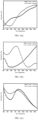
- FIG. 1(a), FIG. 1(b), and FIG. 1(b) are absorption spectrograms of the n-type conjugated polymers of Example 1, Example 6, and Example 7 in a solution or thin film state, respectively. It can be seen from the figures that the prepared n-type conjugated polymers have broad and strong absorption in the near-infrared band, which corresponds to their n-type polarons, and demonstrates the remarkable behavior of n-type conjugated polymers. It indicates that in situ doping of n-type polymers can be realized by the preparation method of the present invention without using commonly used n-type dopants to prepare conductive n-type polymers.
- n-type conjugated polymers of Example 1 and Example 2 were adjusted to a solute concentration of 15 mg/mL with DMF (for NCPO of Example 1) and DMSO (for NCPO of Example 2), and the foregoing solutions were spin-coated to form films, and after the films were dried, the conductivity of the thin films was measured by the four-point probe method.
- DMF for NCPO of Example 1
- DMSO for NCPO of Example 2
- a quartz glass sheet was washed in an ultrasonic cleaner by using acetone, a special detergent for micron-level semiconductors, deionized water, and isopropanol as washing solvents in sequence, and after the washing was completed, the surface of the glass sheet was blow-dried with nitrogen, oven-dried by using an infrared lamp, and placed in a constant temperature oven for later use. Before being used, the glass sheet was bombarded with plasma in a plasma etching instrument for 10 min.
- the glass sheet was placed on a heating table, heated at 110°C, transferred to a spin coater (KW-4A), and spin-coated with the foregoing prepared n-type conjugated polymer (with a mass concentration of the conjugated polymer solution of 15 mg/mL) at high speed, and the thickness of the film was measured and monitored by using a step profiler.
- the square resistance of the film was tested by using a four-point probe conductivity tester (RTS-8 model four-point tester), and the conductivity was calculated. The results are shown in Table 1.
- Example 1 The results of the conductivity of the n-type conjugated polymers of Example 1 and Example 2 Conjugated polymer Square resistance ( ⁇ / ⁇ ) Thickness (nm) Conductivity (S/cm) Example 1 360 54 514 Example 2 180 68 817
- the n-type conjugated polymer of Example 1 was applied in an organic photovoltaic cell as an electron transport layer, and relevant device data was tested.
- ZnO was employed as an electron transport layer at the same time and tested under the experimental conditions of the same device structure.
- the organic photovoltaic cell device was prepared by a conventional method, and prepared in a glove box with levels of oxygen and water being less than 1 ppm.
- An effective area of a single device was 0.0516 cm 2 .
- ZnO was purchased from Sigma-Aldrich with the catalog No. 544906.
- PM6 and Y6 were purchased from VAC. Structural formulas of PM6 and Y6 are as follows:
- the energy for simulating sunlight was calibrated to 100 mW/cm 2 by using a silicon photoelectric diode calibrated by US National Renewable Energy Laboratory (NREL) and a KG5 filter before the test.
- the energy conversion efficiency of the device was measured by using a standard solar spectrum AM1.5 solar simulator (the catalog No. 91192, Oriel, USA), and current-voltage (J-V) characteristics of the photovoltaic cell device were recorded by using Keithley 2410 and Keithley 236 source-measure units, respectively.
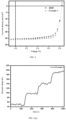
- FIG. 2 is a J-V curve chart of the organic photovoltaic cells in which ZnO and the n-type conjugated polymer of Example 1 were employed as an electron transport layer. It can be seen that the short-circuit current of the latter is obviously superior to that of the former. Obtained photoelectric conversion efficiency of the devices is shown in Table 2. Table 2 Performance of organic photovoltaic cells based on different interface layers Electron transport layer of photovoltaic cell Open-circuit voltage (V) Short-circuit current (mA/cm 2 ) Fill factor (%) Photoelectric conversion efficiency (%) ZnO 0.84 25.51 71.90 15.38 Example 1 0.84 26.12 74.62 16.30
- thermoelectric test was performed on NCPO of Example 1 and Example 2.
- ZT thermoelectric figure of merit
- PF power factor
- Example 1 and Example 2 were taken as examples, and used to prepare a thin film on a glass substrate by drop-casting.
- the conductivity and the Seebeck coefficient of the films were tested to characterize the thermoelectric performance of the film.
- the conductivity was tested by the four-point probe method.
- a processing method of a device for testing the Seebeck coefficient was similar to the processing method of the device for testing the conductivity, glass was employed as a substrate, and a gold electrode was prepared by photoetching and used as a test electrode.
- the glass substrate was washed with deionized water and isopropanol in sequence, and the surface was blow-dried with nitrogen.
- the glass was bombarded with plasma in a plasma etching instrument for 5 min. Then, different n-type conjugated polymer solutions were drop-coated on the substrates, and the substrates were annealed at 80°C for 15 min.
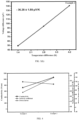
- FIG. 3(a) is a thermal voltage difference change trend diagram of the n-type conjugated polymer of Example 2
- FIG. 3(b) is a fitted change trend diagram of the thermal voltage difference with temperature of the n-type conjugated polymer of Example 2.
- a corresponding thermoelectromotive force was measured by changing the temperature difference between two ends of the device, and then the Seebeck coefficient was measured. It can be seen from FIG. 3(a) and FIG. 3(b) that the polymer of the example of the present invention exhibits the Seebeck effect of n-type polymers under the condition of a slight temperature difference, and produces a thermoelectromotive force exceeding 30 ⁇ V/K.
- FIG. 4 is a conductivity-Seebeck coefficient-power factor performance diagram of the n-type conjugated polymers of Example 1 and Example 2.
- a dielectric constant and the electromagnetic shielding performance of NCPO of Example 2 were tested by a coaxial method and a waveguide method in a band of 1-18 GHz.
- Experimental sample powder of NCPO of Example 2 was mixed with paraffin in a proportion by weight of 50%, and ground to prepare a powder material, and the powder material was pressed into a coaxial ring with an outer diameter of 7 mm, an inner diameter of 3.04 mm, and a thickness of 2 mm by using a mold. The sample was placed in a waveguide tube.
- a DR-S01 vector network analyzer was employed as a host machine.
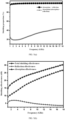
- FIG. 5(a) The electromagnetic shielding efficiency and absorption ratio of the powder material of NCPO of Example 2 are shown in FIG. 5(a) .
- the powder material can shield more than 96% of electromagnetic waves in the broadband range of 1-18 GHz, and about 40% of electromagnetic waves are absorbed by the powder material.
- FIG. 5(b) is an electromagnetic shielding efficiency diagram of the polymer of Example 2 at different frequencies.
- FIG. 5(b) shows that the shielding effectiveness of the powder material on electromagnetic waves exceeds 20 dB, and the powder material exhibits an excellent shielding effect on broadband electromagnetic waves.
- the absorption shielding effectiveness corresponding to absorption of electromagnetic waves by the material exceeds 15 dB, and the average reflection shielding effectiveness corresponding to reflection of the surface of the sample is 4.2 dB. Therefore, NCPO can realize excellent electromagnetic shielding in a broadband, and thus has good application potential in electromagnetic shielding applications.
- n-type conjugated polymer of the present invention can be widely applied in various organic photoelectric devices.
Landscapes
- Chemical & Material Sciences (AREA)
- Organic Chemistry (AREA)
- Chemical Kinetics & Catalysis (AREA)
- Health & Medical Sciences (AREA)
- Medicinal Chemistry (AREA)
- Polymers & Plastics (AREA)
- Engineering & Computer Science (AREA)
- Materials Engineering (AREA)
- Physics & Mathematics (AREA)
- Electromagnetism (AREA)
- Microelectronics & Electronic Packaging (AREA)
- Life Sciences & Earth Sciences (AREA)
- Wood Science & Technology (AREA)
- Polyoxymethylene Polymers And Polymers With Carbon-To-Carbon Bonds (AREA)
Applications Claiming Priority (2)
| Application Number | Priority Date | Filing Date | Title |
|---|---|---|---|
| CN202110679959.2A CN115490835B (zh) | 2021-06-18 | 2021-06-18 | 一种n型共轭聚合物及其制备方法与应用 |
| PCT/CN2021/124880 WO2022262159A1 (zh) | 2021-06-18 | 2021-10-20 | 一种n型共轭聚合物及其制备方法与应用 |
Publications (2)
| Publication Number | Publication Date |
|---|---|
| EP4357384A1 true EP4357384A1 (de) | 2024-04-24 |
| EP4357384A4 EP4357384A4 (de) | 2025-07-02 |
Family
ID=84465246
Family Applications (1)
| Application Number | Title | Priority Date | Filing Date |
|---|---|---|---|
| EP21945739.7A Pending EP4357384A4 (de) | 2021-06-18 | 2021-10-20 | N-typ konjugiertes polymer, herstellungsverfahren dafür und anwendung davon |
Country Status (4)
| Country | Link |
|---|---|
| US (1) | US20240301132A1 (de) |
| EP (1) | EP4357384A4 (de) |
| CN (1) | CN115490835B (de) |
| WO (1) | WO2022262159A1 (de) |
Families Citing this family (12)
| Publication number | Priority date | Publication date | Assignee | Title |
|---|---|---|---|---|
| CN115651448B (zh) * | 2021-07-07 | 2024-04-09 | 华南理工大学 | 一种具备n型导电的导电油墨及其制备与应用 |
| WO2024165173A1 (en) * | 2023-02-10 | 2024-08-15 | N-Ink Ab | A method for obtaining water-soluble n-type conducting polymer |
| JP2026506473A (ja) * | 2023-02-10 | 2026-02-25 | ウエストラ、マテリアルズ、アクチボラグ | 溶液処理されたn型導電性ポリマーを含む電極用スラリー組成物 |
| KR20250156697A (ko) | 2023-02-10 | 2025-11-03 | 웨스트라 머티리얼즈 에이비 | 용액-처리된 n형 전도성 폴리머를 포함하는 폴리머 커패시터 |
| EP4683958A1 (de) * | 2023-05-17 | 2026-01-28 | Westra Materials AB | Einstufiges verfahren zur herstellung einer tinte mit einem leitfähigen polymer vom n-typ |
| TW202504474A (zh) * | 2023-05-17 | 2025-01-16 | 瑞典商恩印克公司 | 包含n摻雜傳導性聚合物之電極 |
| CN116554735B (zh) * | 2023-05-31 | 2024-08-02 | 深圳市光羿科技有限公司 | 一种导电油墨及其制备方法和应用 |
| WO2025237521A1 (en) * | 2024-05-15 | 2025-11-20 | Westra Materials Ab | A novel water-processable n-type conducting polymer |
| CN118755093B (zh) * | 2024-06-25 | 2025-06-27 | 聚镕光电(广州)新材料科技有限公司 | 一种电子传输型有机离子电子混合导体、制备方法及其应用 |
| CN119241819B (zh) * | 2024-10-23 | 2025-04-22 | 聚镕光电(广州)新材料科技有限公司 | 一种n型导电聚合物及其大规模制备方法 |
| CN119800385B (zh) * | 2024-12-31 | 2025-10-24 | 聚镕光电(广州)新材料科技有限公司 | 一种基于电化学聚合的高致密性高稳定性的导电聚合物薄膜的制备方法 |
| CN121405909B (zh) * | 2025-12-29 | 2026-04-21 | 北京大学深圳研究生院 | 一种透明导电材料、制备方法及应用 |
Family Cites Families (6)
| Publication number | Priority date | Publication date | Assignee | Title |
|---|---|---|---|---|
| DE3618838A1 (de) * | 1985-06-11 | 1986-12-11 | Basf Ag, 67063 Ludwigshafen | Copolykondensate vom typ der polyindophenine |
| GB2494607B (en) * | 2010-07-09 | 2018-05-02 | Merck Patent Gmbh | Semiconducting polymers |
| EP2917261A4 (de) * | 2012-11-09 | 2016-11-16 | Yuning Li | Monomere, oligomere und polymere halbleiter mit kondensierten ringen und vorrichtungen damit |
| TWI717468B (zh) * | 2016-02-29 | 2021-02-01 | 南韓商Clap股份有限公司 | 半傳導性聚合物 |
| CN110862517A (zh) * | 2018-08-28 | 2020-03-06 | 北京大学 | 基于苯并二呋喃二酮及其衍生物的刚性共轭聚合物及其制备和应用 |
| CN115651448B (zh) * | 2021-07-07 | 2024-04-09 | 华南理工大学 | 一种具备n型导电的导电油墨及其制备与应用 |
-
2021
- 2021-06-18 CN CN202110679959.2A patent/CN115490835B/zh active Active
- 2021-10-20 EP EP21945739.7A patent/EP4357384A4/de active Pending
- 2021-10-20 WO PCT/CN2021/124880 patent/WO2022262159A1/zh not_active Ceased
- 2021-10-20 US US18/571,477 patent/US20240301132A1/en active Pending
Also Published As
| Publication number | Publication date |
|---|---|
| US20240301132A1 (en) | 2024-09-12 |
| EP4357384A4 (de) | 2025-07-02 |
| CN115490835B (zh) | 2024-06-18 |
| CN115490835A (zh) | 2022-12-20 |
| WO2022262159A1 (zh) | 2022-12-22 |
Similar Documents
| Publication | Publication Date | Title |
|---|---|---|
| EP4357384A1 (de) | N-typ konjugiertes polymer, herstellungsverfahren dafür und anwendung davon | |
| Li et al. | Non-fullerene acceptors based on fused-ring oligomers for efficient polymer solar cells via complementary light-absorption | |
| JP7587778B2 (ja) | n型共役ポリマーブレンド及びその製造方法と使用 | |
| CN106905306B (zh) | 六氟代喹喔啉化合物和六氟代喹喔啉类共聚物及应用 | |
| CN104045657B (zh) | 五元杂环衍生物桥联的苝二酰亚胺二聚体、其制备方法及其在有机光伏器件中的应用 | |
| Guo et al. | Design, synthesis and photovoltaic properties of a new D–π–A polymer with extended π-bridge units | |
| CN104177378A (zh) | 四取代的苝二酰亚胺二聚体、其制备方法及其在有机光伏器件中的应用 | |
| KR102291239B1 (ko) | N-형 유기 반도체 화합물, 이의 제조방법 및 이를 함유하는 유기 태양전지 | |
| EP2581399B1 (de) | Konjugiertes polymer auf der basis von perylentetracarbonsäure-diimid und benzodithiophen, verfahren zu seiner herstellung und anwendung | |
| Dang et al. | Synthesis and characterization of DAA type regular terpolymers with narrowed band-gap and their application in high performance polymer solar cells | |
| Huang et al. | A low-cost and green-solvent-processable hole-transport material enabled by a traditional bidentate ligand for highly efficient inverted perovskite solar cells | |
| Fan et al. | Enhancing the photovoltaic properties of low bandgap terpolymers based on benzodithiophene and phenanthrophenazine by introducing different second acceptor units | |
| Dang et al. | A1-A-A1 type small molecules terminated with naphthalimide building blocks for efficient non-fullerene organic solar cells | |
| Sathiyan et al. | Synthesis and studies of carbazole-based donor polymer for organic solar cell applications | |
| EP2615097B1 (de) | Organisches halbleitermaterial aus perylentetracarbonsäurediimid, herstellungsverfahren und verwendung | |
| KR101828012B1 (ko) | 유기 태양전지용 공액 고분자 및 이의 제조방법 | |
| Liang et al. | Developing perylene diimide based acceptor polymers for organic photovoltaics | |
| Wei et al. | Effect of backbone structure on the thermoelectric performance of indacenodithiophene-based conjugated polymers | |
| Yin et al. | Acceptor manipulation of bisalkylthiothienyl benzo [1, 2-b: 4, 5-b'] dithiophene core-structured oligomers for efficient organic photovoltaics | |
| KR101183528B1 (ko) | 반도체성 유기 고분자 재료 및 이를 포함하는 광기전력 소자 | |
| KR101043627B1 (ko) | 플러렌 유도체를 함유한 유기태양전지 소자 | |
| CN110818729B (zh) | 基于多元芳香环的酰亚胺类共轭小分子及其制备方法与在有机光电器件中的应用 | |
| CN108467401B (zh) | 含有烷基硫代噻吩亚乙烯基噻吩基的有机光电化合物及其制备方法与应用 | |
| Fan et al. | Synthesis and photovoltaic properties of two star-shaped molecules involving phenylquinoxaline as core and triphenylamine and thiophene units as arms | |
| Fang et al. | The enhanced photovoltaic performance of fluorinated acenaphtho [1, 2-b] quinoxaline based low band gap polymer |
Legal Events
| Date | Code | Title | Description |
|---|---|---|---|
| STAA | Information on the status of an ep patent application or granted ep patent |
Free format text: STATUS: THE INTERNATIONAL PUBLICATION HAS BEEN MADE |
|
| PUAI | Public reference made under article 153(3) epc to a published international application that has entered the european phase |
Free format text: ORIGINAL CODE: 0009012 |
|
| STAA | Information on the status of an ep patent application or granted ep patent |
Free format text: STATUS: REQUEST FOR EXAMINATION WAS MADE |
|
| 17P | Request for examination filed |
Effective date: 20231227 |
|
| AK | Designated contracting states |
Kind code of ref document: A1 Designated state(s): AL AT BE BG CH CY CZ DE DK EE ES FI FR GB GR HR HU IE IS IT LI LT LU LV MC MK MT NL NO PL PT RO RS SE SI SK SM TR |
|
| DAV | Request for validation of the european patent (deleted) | ||
| DAX | Request for extension of the european patent (deleted) | ||
| A4 | Supplementary search report drawn up and despatched |
Effective date: 20250602 |
|
| RIC1 | Information provided on ipc code assigned before grant |
Ipc: C09J 165/00 20060101ALI20250527BHEP Ipc: C08L 65/00 20060101ALI20250527BHEP Ipc: C07D 519/00 20060101ALI20250527BHEP Ipc: C08G 61/12 20060101AFI20250527BHEP |
|
| STAA | Information on the status of an ep patent application or granted ep patent |
Free format text: STATUS: EXAMINATION IS IN PROGRESS |
|
| 17Q | First examination report despatched |
Effective date: 20260206 |