EP4357441A1 - Procédé et installation de production de benzène - Google Patents
Procédé et installation de production de benzène Download PDFInfo
- Publication number
- EP4357441A1 EP4357441A1 EP22020498.6A EP22020498A EP4357441A1 EP 4357441 A1 EP4357441 A1 EP 4357441A1 EP 22020498 A EP22020498 A EP 22020498A EP 4357441 A1 EP4357441 A1 EP 4357441A1
- Authority
- EP
- European Patent Office
- Prior art keywords
- fraction
- gasoline
- processing
- separation
- subjected
- Prior art date
- Legal status (The legal status is an assumption and is not a legal conclusion. Google has not performed a legal analysis and makes no representation as to the accuracy of the status listed.)
- Withdrawn
Links
- UHOVQNZJYSORNB-UHFFFAOYSA-N Benzene Chemical compound C1=CC=CC=C1 UHOVQNZJYSORNB-UHFFFAOYSA-N 0.000 title claims abstract description 90
- 238000000034 method Methods 0.000 title claims abstract description 78
- 239000003502 gasoline Substances 0.000 claims abstract description 100
- 238000012545 processing Methods 0.000 claims abstract description 64
- 239000000203 mixture Substances 0.000 claims abstract description 62
- 229930195733 hydrocarbon Natural products 0.000 claims abstract description 54
- 150000002430 hydrocarbons Chemical class 0.000 claims abstract description 54
- 238000000197 pyrolysis Methods 0.000 claims abstract description 48
- 230000008569 process Effects 0.000 claims abstract description 40
- 238000004230 steam cracking Methods 0.000 claims abstract description 23
- 238000005336 cracking Methods 0.000 claims abstract description 21
- 239000004215 Carbon black (E152) Substances 0.000 claims abstract description 8
- 238000009833 condensation Methods 0.000 claims abstract description 7
- 230000005494 condensation Effects 0.000 claims abstract description 7
- 238000000926 separation method Methods 0.000 claims description 95
- 239000007789 gas Substances 0.000 claims description 53
- 125000004432 carbon atom Chemical group C* 0.000 claims description 42
- 238000011144 upstream manufacturing Methods 0.000 claims description 17
- 238000005984 hydrogenation reaction Methods 0.000 claims description 13
- 238000000605 extraction Methods 0.000 claims description 11
- CURLTUGMZLYLDI-UHFFFAOYSA-N Carbon dioxide Chemical compound O=C=O CURLTUGMZLYLDI-UHFFFAOYSA-N 0.000 claims description 10
- RWSOTUBLDIXVET-UHFFFAOYSA-N Dihydrogen sulfide Chemical compound S RWSOTUBLDIXVET-UHFFFAOYSA-N 0.000 claims description 7
- 125000003118 aryl group Chemical group 0.000 claims description 6
- 229910000037 hydrogen sulfide Inorganic materials 0.000 claims description 6
- 239000001569 carbon dioxide Substances 0.000 claims description 5
- 229910002092 carbon dioxide Inorganic materials 0.000 claims description 5
- 238000011084 recovery Methods 0.000 claims description 4
- 238000009434 installation Methods 0.000 claims 1
- 239000000463 material Substances 0.000 description 28
- UFHFLCQGNIYNRP-UHFFFAOYSA-N Hydrogen Chemical compound [H][H] UFHFLCQGNIYNRP-UHFFFAOYSA-N 0.000 description 22
- 229910052739 hydrogen Inorganic materials 0.000 description 22
- 239000001257 hydrogen Substances 0.000 description 22
- 239000007788 liquid Substances 0.000 description 11
- 125000001931 aliphatic group Chemical group 0.000 description 10
- 125000000217 alkyl group Chemical group 0.000 description 9
- 230000006835 compression Effects 0.000 description 8
- 238000007906 compression Methods 0.000 description 8
- VNWKTOKETHGBQD-UHFFFAOYSA-N methane Chemical compound C VNWKTOKETHGBQD-UHFFFAOYSA-N 0.000 description 8
- 238000004519 manufacturing process Methods 0.000 description 7
- YXFVVABEGXRONW-UHFFFAOYSA-N Toluene Chemical compound CC1=CC=CC=C1 YXFVVABEGXRONW-UHFFFAOYSA-N 0.000 description 6
- 230000006870 function Effects 0.000 description 6
- XLYOFNOQVPJJNP-UHFFFAOYSA-N water Substances O XLYOFNOQVPJJNP-UHFFFAOYSA-N 0.000 description 6
- NINIDFKCEFEMDL-UHFFFAOYSA-N Sulfur Chemical compound [S] NINIDFKCEFEMDL-UHFFFAOYSA-N 0.000 description 5
- 150000001336 alkenes Chemical class 0.000 description 5
- 238000001816 cooling Methods 0.000 description 5
- 125000002534 ethynyl group Chemical class [H]C#C* 0.000 description 5
- 239000008246 gaseous mixture Substances 0.000 description 5
- 229910052717 sulfur Inorganic materials 0.000 description 5
- 239000011593 sulfur Substances 0.000 description 5
- OTMSDBZUPAUEDD-UHFFFAOYSA-N Ethane Chemical compound CC OTMSDBZUPAUEDD-UHFFFAOYSA-N 0.000 description 4
- VGGSQFUCUMXWEO-UHFFFAOYSA-N Ethene Chemical compound C=C VGGSQFUCUMXWEO-UHFFFAOYSA-N 0.000 description 4
- 239000005977 Ethylene Substances 0.000 description 4
- 239000002253 acid Substances 0.000 description 4
- 150000001335 aliphatic alkanes Chemical class 0.000 description 4
- 238000006243 chemical reaction Methods 0.000 description 4
- 238000006477 desulfuration reaction Methods 0.000 description 4
- 230000023556 desulfurization Effects 0.000 description 4
- 150000001993 dienes Chemical class 0.000 description 4
- ZUOUZKKEUPVFJK-UHFFFAOYSA-N diphenyl Chemical compound C1=CC=CC=C1C1=CC=CC=C1 ZUOUZKKEUPVFJK-UHFFFAOYSA-N 0.000 description 4
- 238000011282 treatment Methods 0.000 description 4
- 150000001491 aromatic compounds Chemical class 0.000 description 3
- 235000010290 biphenyl Nutrition 0.000 description 3
- 238000009835 boiling Methods 0.000 description 3
- 150000001875 compounds Chemical class 0.000 description 3
- 238000005194 fractionation Methods 0.000 description 3
- 230000006641 stabilisation Effects 0.000 description 3
- 238000011105 stabilization Methods 0.000 description 3
- 239000000126 substance Substances 0.000 description 3
- 239000004305 biphenyl Substances 0.000 description 2
- 238000007700 distillative separation Methods 0.000 description 2
- 238000001035 drying Methods 0.000 description 2
- 238000010438 heat treatment Methods 0.000 description 2
- 239000003208 petroleum Substances 0.000 description 2
- 238000005191 phase separation Methods 0.000 description 2
- 239000007858 starting material Substances 0.000 description 2
- 125000003011 styrenyl group Chemical class [H]\C(*)=C(/[H])C1=C([H])C([H])=C([H])C([H])=C1[H] 0.000 description 2
- 150000003738 xylenes Chemical class 0.000 description 2
- 150000001412 amines Chemical class 0.000 description 1
- 230000015572 biosynthetic process Effects 0.000 description 1
- 150000004074 biphenyls Chemical class 0.000 description 1
- 230000003197 catalytic effect Effects 0.000 description 1
- 238000001833 catalytic reforming Methods 0.000 description 1
- 230000008859 change Effects 0.000 description 1
- 239000004927 clay Substances 0.000 description 1
- 239000003245 coal Substances 0.000 description 1
- 238000007796 conventional method Methods 0.000 description 1
- 230000001419 dependent effect Effects 0.000 description 1
- 230000000779 depleting effect Effects 0.000 description 1
- 238000004821 distillation Methods 0.000 description 1
- 238000011143 downstream manufacturing Methods 0.000 description 1
- 230000000694 effects Effects 0.000 description 1
- -1 ethylene, propylene Chemical group 0.000 description 1
- 230000004992 fission Effects 0.000 description 1
- 239000000446 fuel Substances 0.000 description 1
- 150000002431 hydrogen Chemical class 0.000 description 1
- 230000010354 integration Effects 0.000 description 1
- 125000001997 phenyl group Chemical group [H]C1=C([H])C([H])=C(*)C([H])=C1[H] 0.000 description 1
- 238000006116 polymerization reaction Methods 0.000 description 1
- 238000002360 preparation method Methods 0.000 description 1
- 101150025733 pub2 gene Proteins 0.000 description 1
- 238000004064 recycling Methods 0.000 description 1
- 229930195735 unsaturated hydrocarbon Natural products 0.000 description 1
- 239000008096 xylene Substances 0.000 description 1
Images

Classifications
-
- C—CHEMISTRY; METALLURGY
- C10—PETROLEUM, GAS OR COKE INDUSTRIES; TECHNICAL GASES CONTAINING CARBON MONOXIDE; FUELS; LUBRICANTS; PEAT
- C10G—CRACKING HYDROCARBON OILS; PRODUCTION OF LIQUID HYDROCARBON MIXTURES, e.g. BY DESTRUCTIVE HYDROGENATION, OLIGOMERISATION, POLYMERISATION; RECOVERY OF HYDROCARBON OILS FROM OIL-SHALE, OIL-SAND, OR GASES; REFINING MIXTURES MAINLY CONSISTING OF HYDROCARBONS; REFORMING OF NAPHTHA; MINERAL WAXES
- C10G69/00—Treatment of hydrocarbon oils by at least one hydrotreatment process and at least one other conversion process
- C10G69/02—Treatment of hydrocarbon oils by at least one hydrotreatment process and at least one other conversion process plural serial stages only
- C10G69/06—Treatment of hydrocarbon oils by at least one hydrotreatment process and at least one other conversion process plural serial stages only including at least one step of thermal cracking in the absence of hydrogen
-
- C—CHEMISTRY; METALLURGY
- C10—PETROLEUM, GAS OR COKE INDUSTRIES; TECHNICAL GASES CONTAINING CARBON MONOXIDE; FUELS; LUBRICANTS; PEAT
- C10G—CRACKING HYDROCARBON OILS; PRODUCTION OF LIQUID HYDROCARBON MIXTURES, e.g. BY DESTRUCTIVE HYDROGENATION, OLIGOMERISATION, POLYMERISATION; RECOVERY OF HYDROCARBON OILS FROM OIL-SHALE, OIL-SAND, OR GASES; REFINING MIXTURES MAINLY CONSISTING OF HYDROCARBONS; REFORMING OF NAPHTHA; MINERAL WAXES
- C10G2400/00—Products obtained by processes covered by groups C10G9/00 - C10G69/14
- C10G2400/30—Aromatics
Definitions
- the present invention relates to a process and a plant for producing benzene according to the preambles of the independent patent claims.
- Benzene can be produced by hydrodealkylation (HDA) of starting compounds such as toluene, xylenes and alkylated aromatics with nine carbon atoms. These starting compounds are often obtained in the form of a so-called BTX fraction, which can be produced, for example, using so-called pyrolysis gasoline, such as that produced in steam cracking.
- Alternative sources include the reformate from catalytic reforming and the hydrogenation gasoline from the liquefaction of coal.
- Pyrolysis gasoline from steam cracking typically contains predominantly or exclusively hydrocarbons with five to ten carbon atoms, of which the majority are aromatics. The smaller proportion of aliphatics is predominantly unsaturated and contains a high proportion of acetylenes and dienes.
- the pyrolysis gasoline is therefore unstable and cannot be stored due to the tendency of the components mentioned to polymerize. It is therefore further treated in several process steps, namely in the so-called gasoline route or the so-called gasoline processing.
- selective hydrogenation can first be carried out to convert acetylenes, dienes and styrenes into olefins. After separating out higher molecular weight components, ie hydrocarbons with nine or more carbon atoms, the appropriately treated pyrolysis gasoline can then be fed to a separation process in which, among other things, a fraction is typically formed that predominantly or exclusively contains hydrocarbons with six to eight or, if remaining after the previous separation, up to nine carbon atoms. This is the so-called heart cut.
- the core cut can be subjected to hydrodesulfurization, in which olefins are converted to paraffins and naphthenes and organically bound sulfur is converted to hydrogen sulfide.
- the hydrogen sulfide can be expelled in a downstream stripper.
- the correspondingly treated core cut can then be subjected to aromatics extraction, in which the BTX fraction is separated from the aliphatics.
- benzene or a benzene-containing fraction that predominantly or exclusively contains hydrocarbons with six carbon atoms can also be separated first.
- the benzene-containing fraction that predominantly or exclusively contains hydrocarbons with six carbon atoms and a fraction that predominantly or exclusively contains hydrocarbons with seven and eight carbon atoms are formed.
- the latter can be subjected to an extractive separation of aromatics and only finally to hydrodesulfurization.
- the specific sequence of the separation steps depends in particular on the desired products.
- hydrodealkylation the alkyl radicals are usually split off from the benzene ring, consuming one hydrogen molecule each and forming the corresponding alkanes.
- Catalytic and thermal hydrodealkylation processes are known. What these processes have in common is that hydrogen must be provided for the hydrodealkylation.
- hydrodealkylation requires further process steps, as explained below.
- the present invention proposes a method and a plant for producing benzene with the features of the independent patent claims.
- Embodiments are the subject of the dependent patent claims and the following description.
- hydrodealkylation and hydrogen production please refer to relevant literature, for example the article “ Benzene” in Ullmann's Encyclopedia of Industrial Chemistry, online since 15 June 2000, DOI 10.1002/14356007.a03_475 , in particular Section 5.3.1, "Hydrodealkylation", and the Article “ Hydrogen” in Ullmann's Encyclopedia of Industrial Chemistry, online edition 15 June 2000, DOI: 10.1002/14356007.a13_297 .
- Methods and devices for steam cracking are described, for example, in the article “ Ethylene” in Ullmann's Encyclopedia of Industrial Chemistry, online since 15 April 2007, DOI 10.1002/14356007.a10_045.pub2 , described.
- Liquid and gaseous mixtures may be rich or poor in one or more components, where “rich” may mean a content of at least 50%, 75%, 90%, 95%, 99%, 99.5%, 99.9%, or 99.99% and “poor” may mean a content of at most 50%, 25%, 10%, 5%, 1%, 0.1%, or 0.01% on a molar, weight, or volume basis.
- the term “predominantly” may meet the definition of "rich.”
- Liquid and gaseous mixtures, as used herein may also be enriched or depleted in one or more components, where these terms refer to a corresponding content in a starting mixture from which the liquid or gaseous stream was obtained.
- the liquid or gaseous mixture is "enriched” if it contains at least 1.1 times, 1.5 times, 2 times, 5 times, 10 times, 100 times or 1,000 times the content of a corresponding component, based on the initial mixture, and "depleted” if it contains at most 0.9 times, 0.5 times, 0.1 times, 0.01 times or 0.001 times the content of a corresponding component, based on the initial mixture.
- “methane” or “hydrogen” or a corresponding fraction this also includes a mixture that is rich in the corresponding component. However, it can also be the respective pure gas.
- the statement "essentially free from” is to be understood here in particular to mean that in a certain composition, a material stream, etc., one or more correspondingly designated components are present in such a small amount that the essential characteristics of the composition do not significantly change.
- an alkyl aromatic fraction "essentially free from other hydrocarbons with five or more carbon atoms” is not significantly influenced in its separation properties by the content of the other hydrocarbons with five or more carbon atoms, and the content of other hydrocarbons with five or more carbon atoms does not significantly influence the yield of the process.
- the statement “essentially free from” can also be understood as a synonym for the statement “poor in” in the sense explained.
- a liquid or gaseous mixture is "derived” from another liquid or gaseous mixture (also referred to as starting mixture) or “formed” from this mixture or using this mixture if it has at least some components contained in the starting stream or obtained from it.
- a mixture formed in this sense can be formed from the starting mixture by separating or branching off a partial stream or one or more components, enriching or depleting with respect to one or more components, chemically or physically reacting one or more components, heating, cooling, pressurizing and the like.
- "forming" for example a feed mixture for a subsequent separation process can also simply represent guiding a corresponding mixture in a suitable line and feeding it to the separation process.
- the present invention is based on the finding that a far-reaching integration of a hydrodealkylation and a steam cracking process, more precisely the processing of a product mixture from the hydrodealkylation in the so-called gasoline route or gasoline processing, which is carried out in a Steam cracking process is integrated into the separation sequence, especially from a specifically selected feed point, offers particular advantages and at least partially overcomes the disadvantages mentioned at the beginning.
- Such a mixture of substances is referred to as "cracked gas” or “raw gas”, although it contains compounds that are condensable even at moderate temperatures and are not gaseous under normal conditions.
- This is first subjected to cooling, for example in a linear cooler (Transfer Line Exchanger, TLE). Heavier components are then separated, typically using an oil and water circuit.
- a pyrolysis gasoline fraction can be formed and water recovered. Further pyrolysis gasoline is separated from the product mixture in a subsequent compression.
- acid gas is typically removed, typically using an amine and/or alkaline wash.
- the appropriately prepared cracked gas or raw gas is then dried and pre-cooled before it is subjected to thermal separation.
- the thermal separation which typically involves the use of cryogenic temperatures, can be designed, for example, in the form of a so-called “front end deethanizer” or “deethanizer first", a so-called “front end demethanizer” or “demethanizer first” or a so-called “front end depropanizer” or “depropanizer first” process.
- a so-called “front end deethanizer” or “deethanizer first” a so-called “front end demethanizer” or “demethanizer first” or a so-called “front end depropanizer” or “depropanizer first” process.
- Fractions that can be formed in a corresponding thermal separation are, for example, a fraction that predominantly or exclusively contains hydrocarbons with two carbon atoms, in particular ethane and ethylene. Ethylene fractions can be separated from this and made available as a product. The ethane can be returned to steam cracking, for example. With regard to the production of further fractions, reference is made to the state of the art.
- a thermal separation or individual steps thereof can in particular be preceded, interposed or followed by hydrogenation. This serves in particular to convert acetylenes contained in the product mixture into the corresponding olefins.
- a further pyrolysis gasoline fraction can also be formed. All of the pyrolysis gasoline fractions can be combined or treated separately.
- the present invention is based, as already briefly indicated, on the realization that the process steps that must conventionally be implemented in addition to the actual hydrodealkylation reaction as part of a hydrodealkylation process are partly similar or identical to the process steps that are already typically implemented for processing the pyrolysis gasoline from a steam cracking process in the gasoline route. This will now be explained.
- the separation of heavier components, ie components with nine or more carbon atoms, from the pyrolysis gasoline, as explained at the beginning, can also be used to process the product mixture of the hydrodealkylation.
- This separation of heavier components in the gasoline path can, as was recognized by the invention, replace the removal of tar-like components (tar rejection).
- tar rejection tar rejection
- the latter is conventionally provided for in a hydrodealkylation process or in the process steps accompanying the actual hydrodealkylation. It can be accepted that that biphenyl passes into the separated heavy fraction and is possibly discarded with it.
- the significantly lower investment costs achieved within the scope of the present invention more than compensate for this.
- the separation in the gasoline path used to form the heart cut in which hydrocarbons with five carbon atoms are separated, among other things, can also be used to process the product mixture of the hydrodealkylation. As was recognized according to the invention, this can replace the condensate stripping conventionally implemented to process the product mixture of the hydrodealkylation.
- the product mixture of the hydrodealkylation is conventionally condensed by cooling to remove lighter hydrocarbons. Lighter hydrocarbons remaining in the condensate are expelled by a gas in the condensate stripping mentioned.
- the process steps implemented to form the heart cut in the gasoline path essentially fulfill the same function, the separation of lighter components.
- the separation step explained at the beginning can be provided, in which a benzene-containing fraction which predominantly or exclusively contains hydrocarbons with six carbon atoms and a fraction which predominantly or exclusively contains hydrocarbons with seven and eight carbon atoms are formed.
- This separation step essentially fulfills the same function as the benzene separation in a so-called benzene column which is conventionally associated with hydrodealkylation and can therefore replace this, as was recognized according to the invention.
- the product mixture of the hydrodealkylation and the component mixtures formed from it are contaminated with sulfur. Since desulfurization by hydrodesulfurization is provided in the gasoline route, this can, as was recognized according to the invention, also be advantageously used to process the product mixture of the hydrodealkylation.
- the present invention includes the fact that the process steps which already exist in the gasoline route in a similar function or are needed anyway are used instead of setting them up separately for the hydrodealkylation.
- the additional load on the corresponding components, in particular the hydrodesulfurization and the extraction stage, is Furthermore, as mentioned, a certain loss of benzene production capacity due to the discarding of biphenyl in the heavy fraction can be accepted within the scope of the present invention.
- the condensed portion of the product mixture is returned at a suitable point in the separation path to which the crude petroleum from the separation part of the steam cracking is fed.
- Crude petroleum is a fraction with five or more carbon atoms.
- the admixture or return takes place at a point or in a process step which is upstream of a hydrogen sulphide removal or a removal of light gases by stripping.
- the return can also take place at a point or in a process step which is upstream of a benzene separation or the separation step in which a benzene-containing fraction which predominantly or exclusively contains hydrocarbons with six carbon atoms and a fraction which predominantly or exclusively contains aromatic compounds with seven and eight carbon atoms are formed.
- the recycling can take place at a location or in a process step which is located upstream of a separation of high-boiling components, i.e. hydrocarbons with nine carbon atoms.
- the process steps specified in the three alternatives can be provided in a different order as required.
- the recirculation advantageously takes place in the furthest upstream.
- the stripping specified in the first alternative can be an integral part of one of the process steps specified in the other two alternatives.
- the separation to form the benzene-containing fraction, which predominantly or exclusively contains hydrocarbons with six carbon atoms, and the fraction which predominantly or exclusively contains aromatic compounds with seven and eight carbon atoms, and the separation of high-boiling components, i.e. hydrocarbons with nine carbon atoms, can be integrated in one process unit.
- the condensed portion of the hydrodealkylation product mixture can be fed in both before and after the usually first in the gasoline path. It is particularly advantageous to feed it in before or in the first distillative separation step, to which the crude gasoline or a fraction forming the crude gasoline is subjected. If the first separation step takes place in a vacuum, it is advisable to subject the condensate to a stripping function beforehand, as otherwise the vacuum system will be excessively loaded with the light gas components dissolved in the condensate (e.g. hydrogen and methane). In such a case, the condensate would be advantageously fed into the gasoline stripping upstream of the selective hydrogenation.
- the condensate e.g. hydrogen and methane
- the present invention proposes a process for producing benzene in which, as is known and customary in this respect, a hydrocarbon-containing feed mixture is processed by steam cracking to obtain a cracking gas.
- the cracking gas contains hydrocarbons with five or more carbon atoms, including benzene and alkyl aromatics, but also a considerable proportion of lighter components.
- the alkyl aromatics are in particular those with seven and eight carbon atoms, in particular toluene and various xylene isomers.
- the hydrocarbon-containing feed mixture can, for example, contain gaseous hydrocarbons or liquid hydrocarbons. It can also be a mixture of corresponding feed mixtures. For example, naphtha can be used as the feed mixture in the context of the present invention. However, gaseous feed mixtures such as ethane can also be used. Corresponding feed mixtures can be processed in different cracking furnaces by steam cracking, whereby certain product fractions can be separated from a cracking gas obtained during steam cracking and returned. For further details regarding steam cracking processes, please refer to the above explanations and the specialist literature cited there.
- the present invention mainly relates to the production of benzene, although other products of the steam cracking process can also be obtained in a corresponding process, in particular unsaturated hydrocarbons such as ethylene, propylene and the like.
- the present invention is therefore not limited to the production of benzene, but can also include the production of such other components.
- the cracked gas or a portion thereof is subjected to cracked gas processing to obtain a pyrolysis gasoline
- the pyrolysis gasoline or a portion thereof is subjected to gasoline processing to obtain an alkyl aromatic fraction.
- the cracked gas processing and/or the gasoline processing can include not only separation steps in the narrower sense, for example absorptive, absorptive and distillative separation steps, but also any other processing steps, for example hydrogenation steps, compression steps, drying steps and the like.
- the pyrolysis gasoline contains in particular the hydrocarbons with five or more carbon atoms from the cracked gas (a part of this or essentially the entire amount of these hydrocarbons) and is in particular poor in or free of the lighter components.
- the third component mixture is therefore a typical crude gasoline fraction, as can be formed in known separation sequences of steam cracking processes.
- the corresponding pyrolysis gasoline can be produced in a so-called water wash and/or during compression of the cracked gas, namely as so-called heavy pyrolysis gasoline, but a part is formed by distillation in a so-called debutanizer after lighter components have been separated from the corresponding cracked gas.
- a so-called water wash and/or during compression of the cracked gas namely as so-called heavy pyrolysis gasoline, but a part is formed by distillation in a so-called debutanizer after lighter components have been separated from the corresponding cracked gas.
- the corresponding crude gasoline needs to be stabilized in order to be usable as fuel.
- the processing of the pyrolysis gasoline takes place in the so-called gasoline route, here as usual referred to as gasoline processing.
- gasoline processing an alkyl aromatic fraction is formed using the pyrolysis gasoline or a part thereof, which contains the alkyl aromatics mentioned and is essentially free of other hydrocarbons with five or more carbon atoms.
- the alkyl aromatics are separated from other components of the third pyrolysis gasoline in order to be able to subsequently be subjected to hydrodealkylation to obtain benzene.
- the alkyl aromatic fraction is in particular the the so-called BTX fraction mentioned above or a mixture of components remaining after separation of benzene from a corresponding BTX fraction.
- the alkyl aromatic fraction or a part thereof is processed by hydrodealkylation, forming a product mixture which contains benzene, which is formed by the hydrodealkylation, and also alkyl aromatics, i.e. compounds not reacted during the hydrodealkylation, as well as hydrogen and lighter aliphatics.
- Hydrogen and lighter aliphatics are contained in a corresponding product mixture because hydrogen is deliberately added to carry out the hydrodealkylation, but is not completely consumed, and the lighter aliphatics are formed during the hydrodealkylation by splitting off the alkyl radicals from the alkyl aromatics.
- a second step in the processing of a product mixture from hydrodealkylation is conventionally the stripping of the lighter aliphatics and hydrogen contained in the product mixture, as well as possibly other lighter compounds.
- this separation step is advantageously no longer carried out separately, but takes place during processing in the gasoline route, i.e. gasoline processing.
- the present invention therefore proposes that the condensate fraction or a part thereof is returned as a recycle stream to the gasoline processing plant in which the pyrolysis gasoline is formed.
- gasoline processing particularly includes one or more separation steps in which a so-called heart cut is obtained, which contains hydrocarbons with six to eight or six to nine carbon atoms and is depleted of other hydrocarbons.
- This separation step or these separation steps is or are also referred to here as heart cut extraction.
- the heart cut or a part thereof can be subjected to hydrodesulfurization and expulsion of hydrogen sulfide to obtain a hydrodesulfurized heart cut.
- hydrodesulfurized heart cut can be followed by a total aromatics extraction, to which the hydrodesulfurized heart cut or a part thereof is subjected to obtain a total aromatics fraction.
- the total aromatics fraction or a part thereof can in turn be subjected to alkyl aromatics separation to obtain the alkyl aromatics fraction.
- the condensate fraction or at least a part thereof can be returned to the gasoline processing upstream of the heart cut recovery, the hydrodesulfurization and/or the aromatics extraction. Partial streams can also be returned accordingly.
- the separation steps mentioned can be implemented in different orders in a corresponding separation or processing sequence. Furthermore, as already mentioned, these separation steps can also be combined in individual process units or groups of process units if necessary.
- the product mixtures from hydrodealkylation in the conventional process are typically contaminated with sulfur, so that desulfurization is necessary.
- this is also advantageously carried out during the gasoline preparation.
- the gasoline processing comprises in particular a selective hydrogenation, wherein advantageously at least a part of the condensate fraction is returned to the gasoline processing upstream of the selective hydrogenation.
- a gaseous fraction remaining after condensation or a part thereof is returned to the cracked gas processing. In this way, components can be recovered therefrom in a particularly advantageous manner.
- the cracked gas processing can in particular comprise carbon dioxide separation, with at least part of the gaseous fraction being recycled to the cracked gas processing upstream of the carbon dioxide separation. In this way, a separate carbon dioxide separation can be dispensed with.
- the present invention also extends to a plant for producing benzene, with regard to which reference is made to the corresponding patent claim.
- a corresponding plant is set up in particular to carry out a process as explained above and has appropriately designed means for this purpose. With regard to the features and advantages of a corresponding plant, reference is therefore made to the above explanations regarding the process according to the invention and its embodiments.
- Different embodiments of the invention may include, have, consist of, or consist essentially of other useful combinations of the described elements, components, features, parts, steps, means, etc., even if such combinations are not specifically described herein.
- the disclosure may include other inventions that are not currently claimed, but that may be claimed in the future, particularly if they are included within the scope of the independent claims.
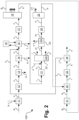
- Figure 1 illustrates a method according to an embodiment not according to the invention.
- the method is designated overall by 90 and corresponds to largely in the EP 3 293 169 A1 with reference to the Figure 1 described processes. If process features or process steps are explained below, these explanations equally apply to elements provided for in a corresponding system. Therefore, if the process is described below, the corresponding explanations apply to a corresponding system in the same way.
- a hydrocarbon-containing feed mixture a and a steam stream b are fed to a steam cracking furnace 11.
- a cracking gas is formed and discharged from the steam cracking furnace 11 in the form of a cracking gas stream c.
- the illustration is greatly simplified here in particular insofar as in practice several feed streams and/or steam streams as well as additional recirculated material streams and the like can be used, which can be fed to one or more steam cracking furnaces that can be operated under the same or different conditions.
- one or more steam cracking furnaces designed for (completely, predominantly or partially) liquid feed streams and/or one or more steam cracking furnaces designed for (completely, predominantly or partially) gaseous feed streams can also be provided.
- several cracking gas streams can also be formed, which can be combined, for example.
- the material streams and plant components explained below can also be present one or more times.
- the cracked gas stream which is still designated c in the further course despite increasingly different composition, is fed in the example shown to a cooling system 12, for example using a linear cooler.
- a primary fractionation 13 heavy components with a boiling point of typically more than 200 °C are separated from the cracked gas, for example using an oil circuit or by means of other methods known from the prior art, and in the example shown are withdrawn in the form of a pyrolysis oil stream d.
- the cracked gas which has been freed of heavy components accordingly, is fed in the form of the cracked gas stream, still designated c, to a water wash 14, where it is freed from components of the pyrolysis gasoline fraction using wash water and separated from the steam used in the cracking by condensation.
- These hydrocarbon components can also for example, it can be returned to the primary fractionation 13 and used there to wash out the heavy components.
- at least part of the pyrolysis gasoline fraction is withdrawn in the form of a pyrolysis gasoline stream e.
- a corresponding collective flow is still designated c here.
- This is fed to a compression 15, to which an acid gas removal 16 is assigned.
- the compression 15 takes place over several stages, with the compressed material flow being fed to an intermediate stage for acid gas removal 16.
- Other configurations are also possible.
- further components of the pyrolysis gasoline fraction separate out and are withdrawn in the form of a further pyrolysis gasoline flow f.
- the gas mixture freed of acid gases is now fed to a pre-cooling and drying 17 in the form of a material flow still designated c, where it is freed of residual water and pre-cooled before it is fed to a thermal separation 18.
- thermal separation 18 For details of the thermal separation 18, please refer to the specialist literature cited at the beginning.
- the thermal separation 18 is only illustrated here in the form of a single unit for the sake of clarity. In practice, a corresponding thermal separation includes 18 sequentially arranged separation units and other devices (e.g. deethanizer, demethanizer, depropanizer, etc.).
- a series of fractions are formed from the cracked gas, of which in the present case only a hydrogen fraction and a further pyrolysis gasoline fraction are explained in more detail. These are carried out in the form of a hydrogen stream g and a further pyrolysis gasoline stream h from the thermal separation 18.
- the hydrogen fraction can, for example, be separated from a gas mixture containing predominantly or exclusively hydrogen and methane, which is formed in the thermal separation 18 in a demethanizer. It contains, for example, as mentioned, 90% hydrogen.
- the pyrolysis gasoline fraction is formed, for example, in a debutanizer, in which hydrocarbons with four carbon atoms are separated from a mixture of substances containing these hydrocarbons with four carbon atoms and heavier hydrocarbons.
- the hydrogen fraction formed in the debutanizer Pyrolysis gasoline fraction therefore contains the heavier hydrocarbons mentioned, especially hydrocarbons with five to ten carbon atoms.
- fractions formed in the thermal separation 18, include, for example, a fraction that predominantly or exclusively contains methane, a fraction that predominantly or exclusively contains hydrocarbons with two carbon atoms, a fraction that predominantly or exclusively contains hydrocarbons with three carbon atoms and a fraction that predominantly or exclusively contains hydrocarbons with two carbon atoms.
- Subfractions of corresponding fractions can also be formed, for example, from the fraction that predominantly or exclusively contains hydrocarbons with two carbon atoms, a fraction that predominantly or exclusively contains ethylene and a fraction that predominantly or exclusively contains ethane can be formed. The latter can, for example, be returned to the cracking furnace 11 or one of several such cracking furnaces, in particular a separate cracking furnace designed for gaseous feed.
- the thermal separation 18 can, for example, also comprise hydrogenation steps or such hydrogenation steps can be arranged upstream and/or downstream of the low-temperature separation 18.
- the pyrolysis gasoline streams e, f and h are combined to form a pyrolysis gasoline collective stream i in the embodiment of the invention illustrated here, but can also be used separately.
- the pyrolysis gasoline fraction (or "the pyrolysis gasoline") comprises predominantly or exclusively hydrocarbons with five to ten carbon atoms, predominantly aromatics.
- the aliphatics contained are predominantly unsaturated and comprise a high proportion of acetylenes and dienes.
- the pyrolysis gasoline fraction is therefore unstable and cannot be stored due to the polymerization tendency of the components mentioned.
- the pyrolysis gasoline fraction can therefore be further treated in several steps.
- the entire treatment of the pyrolysis gasoline fraction takes place in the so-called gasoline route or the gasoline processing of a corresponding process.
- the appropriately treated pyrolysis gasoline fraction can be fed to a separation 22 in the form of a material stream k.
- three fractions are formed in separation 22 and withdrawn in the form of corresponding material streams.
- This is a fraction that contains predominantly or exclusively hydrocarbons with five carbon atoms (material stream I), a fraction that contains predominantly or exclusively hydrocarbons with six to eight carbon atoms (so-called heart cut, material stream m), and a fraction that contains predominantly or exclusively heavier hydrocarbons (material stream n).
- a separation step in separation 22 in which the fraction that contains predominantly or exclusively heavier hydrocarbons (material stream n) is separated is indicated here with 23a.
- the core section i.e. the material flow m
- the core section can be subjected to a hydrodesulfurization 23 in which olefins are converted to paraffins and naphthenes and bound sulfur is converted to hydrogen sulfide, which can be expelled in a downstream stripping.
- the stripping is illustrated here as being integrated into the hydrodesulfurization 23 and is designated 23a. It is also referred to here as the "third separation step.”
- the correspondingly treated heart section is subjected to an aromatic extraction 24, in which an aromatic fraction (the already mentioned BTX fraction) is separated from the aliphatics in a manner known per se.
- an aromatic stream o is discharged from the aromatic extraction 24; the aliphatics are not shown.
- a separation step 25 is provided in the example shown.
- a fraction which predominantly or exclusively contains hydrocarbons with six carbon atoms and a fraction which predominantly or exclusively contains hydrocarbons with seven and eight carbon atoms are formed.
- the former is illustrated in the form of a material stream j, the latter in the form of a material stream p.
- the material stream p contains predominantly or exclusively alkyl aromatics.
- the material stream p, together with the hydrogen stream g compressed in a hydrogen compressor 31, designated here by q, is fed, if required, to a processing step 32, which may include, for example, heating and possibly hydrogenation, and then to a hydrodealkylation 33 in the form of a feed stream r.
- a processing step 32 which may include, for example, heating and possibly hydrogenation
- the hydrogen stream g can optionally be removed from the thermal separation 18.
- a product mixture formed in the hydrodealkylation 33 is cooled (not shown) and fed to a phase separation 34 in the form of a product stream s. In the phase separation 34, a liquid fraction is separated, leaving a gas fraction.
- the gas fraction which predominantly or exclusively contains the alkanes split off from the alkylated aromatics in the hydrodealkylation 33, residual hydrogen and traces of aromatics, is withdrawn in the form of a material stream t.
- the liquid fraction which predominantly contains aromatics, is transferred in the form of a stream u to a stabilization 35, in which remaining hydrogen and alkanes are expelled.
- the expelled fraction is withdrawn in gaseous form in the form of a stream v.
- a liquid fraction remains which can be fed in the form of a material stream w, for example, to a clay treatment 36 and, further designated by w, then to a separation 37.
- a fraction which predominantly or exclusively contains dealkylated aromatics can be withdrawn in the form of a material stream x.
- Non-dealkylated aromatics can be fed back to the processing 32 or the hydrodealkylation 33 in the form of a material stream y which predominantly or exclusively contains such aromatics.
- the material streams t and v are combined to form a collective stream z which can be combined with the cracked gas stream c upstream or in the compression 15.
- Processing steps 12 to 18 are also referred to as cracked gas processing in the language used here, and processing steps 21 to 24 are also referred to as gasoline processing.
- the present invention is based on the finding that some of the process steps associated with the actual hydrodealkylation 33 are functionally and/or apparatus-wise similar or identical to the process steps implemented in gasoline processing.
- the separation of heavy components that are Figure 1 in the form of the separation step 22a in gasoline processing ie of components with nine or more carbon atoms, must also be required and provided for processing the product mixture of the hydrodealkylation 33.
- the separation of the fraction which predominantly or exclusively contains dealkylated aromatics in the separation 37 has a similar effect and is carried out in a comparable manner to the separation step 25 in gasoline processing.
- All material flows which are present downstream of the hydrodealkylation 32 are also contaminated with sulfur and are therefore advantageously subjected to desulfurization, as is carried out in the form of the hydrodesulfurization 23 in gasoline processing.
- the stabilization 35 in which remaining residues of hydrogen and alkanes are expelled, is also comparable to the third separation step 23a after the hydrodesulfurization in gasoline processing.
- the material flow u is fed back into the gasoline path upstream of the separation 22 and thus upstream of the first separation step 22a, the second separation step 25 and the third separation step 23a.
- Alternatives to a feed-back at the illustrated position have already been explained above with the corresponding advantages.
- a separation of heavier components from the product mixture of the hydrodealkylation 33 can also be carried out in the separation step 22a, as is conventionally done in a (in Figure 1 not shown) tar removal unit.
- dealkylated aromatics ie benzene
- Benzene can therefore be withdrawn from the separation step 25 and provided as a product.
- a separate benzene separation, as in the separation step 37 according to Figure 1 is therefore no longer required and can be saved.
- the stabilization step 35 which here takes place together with the removal of hydrogen sulfide in the separation step 23a. A corresponding process unit can therefore also be saved.
Landscapes
- Chemical & Material Sciences (AREA)
- Oil, Petroleum & Natural Gas (AREA)
- Physics & Mathematics (AREA)
- Thermal Sciences (AREA)
- Engineering & Computer Science (AREA)
- Chemical Kinetics & Catalysis (AREA)
- General Chemical & Material Sciences (AREA)
- Organic Chemistry (AREA)
- Production Of Liquid Hydrocarbon Mixture For Refining Petroleum (AREA)
Priority Applications (1)
| Application Number | Priority Date | Filing Date | Title |
|---|---|---|---|
| EP22020498.6A EP4357441A1 (fr) | 2022-10-20 | 2022-10-20 | Procédé et installation de production de benzène |
Applications Claiming Priority (1)
| Application Number | Priority Date | Filing Date | Title |
|---|---|---|---|
| EP22020498.6A EP4357441A1 (fr) | 2022-10-20 | 2022-10-20 | Procédé et installation de production de benzène |
Publications (1)
| Publication Number | Publication Date |
|---|---|
| EP4357441A1 true EP4357441A1 (fr) | 2024-04-24 |
Family
ID=83903315
Family Applications (1)
| Application Number | Title | Priority Date | Filing Date |
|---|---|---|---|
| EP22020498.6A Withdrawn EP4357441A1 (fr) | 2022-10-20 | 2022-10-20 | Procédé et installation de production de benzène |
Country Status (1)
| Country | Link |
|---|---|
| EP (1) | EP4357441A1 (fr) |
Citations (4)
| Publication number | Priority date | Publication date | Assignee | Title |
|---|---|---|---|---|
| US4244808A (en) * | 1978-09-21 | 1981-01-13 | Linde Aktiengesellschaft | Method of processing a high-boiling fraction obtained in the cracking of hydrocarbons |
| EP3293169A1 (fr) | 2016-09-08 | 2018-03-14 | Linde Aktiengesellschaft | Procede et installation destines a la fabrication de benzol |
| US20190161683A1 (en) * | 2016-09-22 | 2019-05-30 | Sabic Global Technologies B.V. | An integrated process configuration involving the steps of pyrolysis, hydrocracking, hydrodealkylation and steam cracking |
| CN112745926A (zh) * | 2019-10-30 | 2021-05-04 | 中国石油化工股份有限公司 | 处理催化裂解汽油的方法和系统、多产低碳烯烃和轻质芳烃的工艺和装置 |
-
2022
- 2022-10-20 EP EP22020498.6A patent/EP4357441A1/fr not_active Withdrawn
Patent Citations (4)
| Publication number | Priority date | Publication date | Assignee | Title |
|---|---|---|---|---|
| US4244808A (en) * | 1978-09-21 | 1981-01-13 | Linde Aktiengesellschaft | Method of processing a high-boiling fraction obtained in the cracking of hydrocarbons |
| EP3293169A1 (fr) | 2016-09-08 | 2018-03-14 | Linde Aktiengesellschaft | Procede et installation destines a la fabrication de benzol |
| US20190161683A1 (en) * | 2016-09-22 | 2019-05-30 | Sabic Global Technologies B.V. | An integrated process configuration involving the steps of pyrolysis, hydrocracking, hydrodealkylation and steam cracking |
| CN112745926A (zh) * | 2019-10-30 | 2021-05-04 | 中国石油化工股份有限公司 | 处理催化裂解汽油的方法和系统、多产低碳烯烃和轻质芳烃的工艺和装置 |
Non-Patent Citations (1)
| Title |
|---|
| "Ullmann's Encyclopedia of Industrial Chemistry", 15 April 2007 |
Similar Documents
| Publication | Publication Date | Title |
|---|---|---|
| EP2406349B1 (fr) | Procédé de préparation de composés aromatiques purs a partir de fractions d'hydrocarbure renfermant des composés aromatiques | |
| DE3872255T2 (de) | Behandlung stickstoffreicher, wasserstofffreier und olefinreicher gas mittels physikalischer lösungsmittel. | |
| EP2867337B1 (fr) | Procédé de fabrication d'oléfines par craquage thermique à la vapeur d'eau dans des fours de craquage | |
| EP1357166A1 (fr) | Procédé et appareil pour la production d'oléfines | |
| EP3652138A1 (fr) | Procédé et installation de production de propylène par combinaison d'une déshydrogénation de propane et d'un procédé de vapocraquage comprenant des étapes de séparation préalable dans les deux procédés pour l'élimination partielle d'hydrogène et de méthane | |
| EP3312261B1 (fr) | Procédé de séparation d'un mélange d'hydrocarbures | |
| WO2013020675A1 (fr) | Séquence de séparation d'hydrocarbures provenant d'une dissociation thermique douce | |
| DE102012111292A1 (de) | Verfahren zur Isolierung von Benzol, Toluol und Xylol aus einem aromatenreichen Einsatzgasstrom | |
| DE1770575A1 (de) | Verfahren zum Hydrieren von Kohlenwasserstoffen | |
| EP1357165A1 (fr) | Procédé et appareil pour la production d'oléfines | |
| EP0009236B1 (fr) | Procédé de craquage d'hydrocarbures | |
| EP3652137B1 (fr) | Procédé et installation de fabrication de propylène par combinaison de déshydrogénation de propane et procédé de vapocraquage avec recyclage de propane au procédé de vapocraquage | |
| EP3510008B1 (fr) | Procédé et installation de production de benzène | |
| EP4357441A1 (fr) | Procédé et installation de production de benzène | |
| EP3640231B1 (fr) | Procédé destiné à l'obtention d'éthylène | |
| EP3714023B1 (fr) | Procédé et installation permettant d'obtenir des composés aromatiques polymérisables | |
| DE2026693C3 (de) | Verfahren zur Gewinnung von Rein benzol durch Extraktivdestillation | |
| EP3350287B1 (fr) | Procédé et installation destinés au traitement technique de séparation d'hydrocarbures et de mélange de matière comprenant des combinaisons sulfurées | |
| WO2023031284A1 (fr) | Procédé et appareil de préparation d'un composé cible | |
| DE102019135889A1 (de) | Verfahren und eine Anlage zur Gewinnung von Kohlenwasserstoffen | |
| DE2046976C3 (de) | Verfahren zur Gewinnung von Benzol, Toluol und C tief 8 -Aromaten aus aromatenreichen Kohlenwasserstoffgemischen | |
| DE2638080C2 (fr) | ||
| DE1948951C3 (de) | Verfahren zur Trennung von Kohlenwasserstoffen | |
| DE102014006327A1 (de) | Verfahren und Anlage zur Gewinnung von Rohölprodukten | |
| DE102015208943A1 (de) | Verfahren und Anlage zur Bearbeitung eines Stoffgemischs |
Legal Events
| Date | Code | Title | Description |
|---|---|---|---|
| PUAI | Public reference made under article 153(3) epc to a published international application that has entered the european phase |
Free format text: ORIGINAL CODE: 0009012 |
|
| STAA | Information on the status of an ep patent application or granted ep patent |
Free format text: STATUS: THE APPLICATION HAS BEEN PUBLISHED |
|
| AK | Designated contracting states |
Kind code of ref document: A1 Designated state(s): AL AT BE BG CH CY CZ DE DK EE ES FI FR GB GR HR HU IE IS IT LI LT LU LV MC ME MK MT NL NO PL PT RO RS SE SI SK SM TR |
|
| STAA | Information on the status of an ep patent application or granted ep patent |
Free format text: STATUS: THE APPLICATION IS DEEMED TO BE WITHDRAWN |
|
| 18D | Application deemed to be withdrawn |
Effective date: 20241025 |