EP4358456A2 - Procédés de transmission de liaison latérale sur un spectre sans licence - Google Patents
Procédés de transmission de liaison latérale sur un spectre sans licence Download PDFInfo
- Publication number
- EP4358456A2 EP4358456A2 EP23200276.6A EP23200276A EP4358456A2 EP 4358456 A2 EP4358456 A2 EP 4358456A2 EP 23200276 A EP23200276 A EP 23200276A EP 4358456 A2 EP4358456 A2 EP 4358456A2
- Authority
- EP
- European Patent Office
- Prior art keywords
- pscch
- slot
- pssch
- channel
- starting symbol
- Prior art date
- Legal status (The legal status is an assumption and is not a legal conclusion. Google has not performed a legal analysis and makes no representation as to the accuracy of the status listed.)
- Pending
Links
- 238000000034 method Methods 0.000 title claims abstract description 49
- 230000005540 biological transmission Effects 0.000 title claims abstract description 48
- 238000001228 spectrum Methods 0.000 title description 4
- 101100399876 Homo sapiens LRRC26 gene Proteins 0.000 claims abstract 2
- 102100022842 Structural maintenance of chromosomes protein 4 Human genes 0.000 claims abstract 2
- 101150106760 smc-4 gene Proteins 0.000 claims abstract 2
- 239000003999 initiator Substances 0.000 claims description 4
- 238000001514 detection method Methods 0.000 claims description 3
- 238000012544 monitoring process Methods 0.000 claims description 2
- 101150055297 SET1 gene Proteins 0.000 description 15
- 238000004891 communication Methods 0.000 description 15
- 238000010586 diagram Methods 0.000 description 13
- 239000000872 buffer Substances 0.000 description 6
- 241000700159 Rattus Species 0.000 description 5
- 238000011161 development Methods 0.000 description 3
- 238000013468 resource allocation Methods 0.000 description 2
- 230000006978 adaptation Effects 0.000 description 1
- 125000004122 cyclic group Chemical group 0.000 description 1
- 238000013461 design Methods 0.000 description 1
- 230000009365 direct transmission Effects 0.000 description 1
- 230000007774 longterm Effects 0.000 description 1
- 230000007246 mechanism Effects 0.000 description 1
- 238000012986 modification Methods 0.000 description 1
- 230000004048 modification Effects 0.000 description 1
- 230000008450 motivation Effects 0.000 description 1
- 230000003252 repetitive effect Effects 0.000 description 1
Images




Classifications
-
- H—ELECTRICITY
- H04—ELECTRIC COMMUNICATION TECHNIQUE
- H04W—WIRELESS COMMUNICATION NETWORKS
- H04W72/00—Local resource management
- H04W72/20—Control channels or signalling for resource management
- H04W72/25—Control channels or signalling for resource management between terminals via a wireless link, e.g. sidelink
-
- H—ELECTRICITY
- H04—ELECTRIC COMMUNICATION TECHNIQUE
- H04L—TRANSMISSION OF DIGITAL INFORMATION, e.g. TELEGRAPHIC COMMUNICATION
- H04L5/00—Arrangements affording multiple use of the transmission path
- H04L5/003—Arrangements for allocating sub-channels of the transmission path
- H04L5/0053—Allocation of signalling, i.e. of overhead other than pilot signals
-
- H—ELECTRICITY
- H04—ELECTRIC COMMUNICATION TECHNIQUE
- H04L—TRANSMISSION OF DIGITAL INFORMATION, e.g. TELEGRAPHIC COMMUNICATION
- H04L5/00—Arrangements affording multiple use of the transmission path
- H04L5/0001—Arrangements for dividing the transmission path
- H04L5/0003—Two-dimensional division
- H04L5/0005—Time-frequency
- H04L5/0007—Time-frequency the frequencies being orthogonal, e.g. OFDM(A) or DMT
- H04L5/001—Time-frequency the frequencies being orthogonal, e.g. OFDM(A) or DMT the frequencies being arranged in component carriers
-
- H—ELECTRICITY
- H04—ELECTRIC COMMUNICATION TECHNIQUE
- H04L—TRANSMISSION OF DIGITAL INFORMATION, e.g. TELEGRAPHIC COMMUNICATION
- H04L5/00—Arrangements affording multiple use of the transmission path
- H04L5/003—Arrangements for allocating sub-channels of the transmission path
- H04L5/0044—Allocation of payload; Allocation of data channels, e.g. PDSCH or PUSCH
-
- H—ELECTRICITY
- H04—ELECTRIC COMMUNICATION TECHNIQUE
- H04W—WIRELESS COMMUNICATION NETWORKS
- H04W72/00—Local resource management
- H04W72/04—Wireless resource allocation
- H04W72/044—Wireless resource allocation based on the type of the allocated resource
- H04W72/0453—Resources in frequency domain, e.g. a carrier in FDMA
Definitions
- the disclosed embodiments relate generally to wireless communication, and, more particularly, to transmission for sidelink communication on unlicensed spectrum.
- SL Sidelink
- UE user equipment
- D2D device-to-device
- V2X vehicle-to-everything
- SL-U sidelink
- LBT listen-before-talk
- Improvements and enhancements are required for sidelink resource allocation and resource usage in unlicensed frequency bands.
- SL sidelink
- SL-U SL unlicensed frequency bands
- the physical sidelink control channel (PSCCH) is configured to be transmitted on each starting symbol within a slot.
- PSSCH physical sidelink shared channel
- the control indicator indicates the PSSCH in a current full slot when PSCCH is preconfigured to start at any candidate starting symbol within a slot.
- control indicator indicates the PSSCH in a past partial slot when the PSCCH is preconfigured to only start at a first starting symbol within a slot.
- control indicator is carried in at least one of control information comprising a first sidelink control information (SCI), and a second SCI.
- control indicator further indicates one or more elements comprising: symbol length, repetition configuration, combining configuration, and PSSCH demodulation reference signal (DMRS).
- PSCCH is transmitted within one sub-channel.
- the PSCCH is transmitted on a fixed subchannel of each RB set of the occupied BWP.
- the PSCCH is transmitted on a fixed subchannel of one preconfigured RB set.
- the one preconfigured RB set is the lowest RB set occupied by the UE.
- the UE establishes SL connection with another device in SL-U, performs LBT, and sets the CAPC value to be one for the physical sidelink feedback channel (PSFCH).
- type-1 channel access is performed for the PSFCH.
- a first aspect of the invention relates to a method for a user equipment (UE), comprising: determining a bandwidth part (BWP) for a sidelink (SL) transceiving on unlicensed bands (SL-U), wherein the BWP is configured with one or more resource block (RB) sets each with multiple subchannels; preparing a physical sidelink shared channel (PSSCH) transmission on one or more RB sets to communicate with a second UE through an SL connection; and transmitting or receiving a physical sidelink control channel (PSCCH) of the corresponding PSSCH at a subset of the one or more RB sets occupied by the PSSCH transmission.
- BWP bandwidth part
- SL-U unlicensed bands
- RB resource block
- PSSCH physical sidelink shared channel
- PSCCH physical sidelink control channel
- the PSCCH is transmitted on a lowest subchannel of each RB set of the corresponding PSSCH, or the PSCCH is transmitted on a lowest subchannel of a lowest RB set of the corresponding PSSCH.
- the method further comprises: detecting a PSCCH by the UE based on the PSCCH location regarding the corresponding PSSCH.
- one or more positions for PSCCH are further determined based on a channel occupancy time (COT) indication, wherein the PSCCH is for an in-COT operation, and the PSCCH starts from a sub-channel of one RB set or across multiple RB sets of the corresponding PSSCH scheduled by a COT initiator UE.
- COT channel occupancy time
- a second aspect of the invention relates to a method for a user equipment (UE), comprising: determining a first starting symbol and a second starting symbol within a slot for an SL transceiving in a wireless network, wherein the SL transceiving is on unlicensed frequency bands (SL-U); performing a channel access procedure before the SL-U transceiving; and transmitting or receiving a physical sidelink control channel (PSCCH) at the first starting symbol or the second starting symbol within the slot upon success of the channel access procedure.
- PSCCH physical sidelink control channel
- transmitting the PSCCH on the first starting symbol within the slot, and the SL transceiving on the first starting symbol further includes a physical sidelink shared channel (PSSCH) transmission.
- PSSCH physical sidelink shared channel
- the SL transceiving on the second starting symbol within the slot includes the PSCCH and a PSSCH transmission.
- the SL transceiving on the second starting symbol within the slot includes a PSSCH transmission only.
- the PSCCH and a PSSCH transmission on the second starting symbol is a TB different from the TB transmitted in the following full slot, or the PSCCH and the PSSCH transmission on the second starting symbol is a repetition of a sub-set of the TB transmitted in the following full slot.
- the PSCCH is preconfigured to include a control indicator, the control indicator indicates the PSSCH in a partial slot where the channel access procedure is finished.
- the PSCCH is preconfigured to include a control indicator, the control indicator indicates the PSSCH in both a partial slot where the channel access procedure is finished and the PSSCH in a following full slot.
- at least one starting symbol is used for automatic gain control (AGC) purpose.
- the UE monitors each starting symbol within the slot for PSCCH detection, or the UE stops monitoring following starting symbols in a slot upon successful detecting a former PSCCH within the slot.
- a third aspect of the invention relates to a method for a user equipment (UE), comprising: establishing, by the UE, a sidelink (SL) connection on unlicensed frequency bands (SL-U) for an SL-U transceiving in a wireless network; performing a Type 1 channel access procedure before a transmission for a physical sidelink feedback channel (PSFCH) without a shared channel occupancy time (COT), and one of Type 2A/2B/2C channel access procedure before a transmission for a PSFCH with a shared COT; and transmitting the PSFCH upon success of the channel access procedure.
- a channel access priority class (CAPC) for Type 1 channel access is configured as 1.
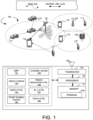
- FIG. 1 illustrates a schematic system diagram illustrating an exemplary wireless network for sidelink data communication in unlicensed frequency bands in accordance with embodiments of the current invention.
- Wireless network 100 includes multiple communication devices or mobile stations, such as user equipment (UEs) 111, 112, 113, 114, and 115, which are configured with sidelink in unlicensed frequency bands.
- the exemplary mobile devices in wireless network 100 have sidelink capabilities.
- Sidelink communications refer to the direct communications between terminal nodes or UEs without the data going through the network. For example, UE 113 communicates with UE 114 directly without going through links with the network units.
- sidelink transmission also supports UE-to-network relay to extend the service range of an eNB/gNB, where the in-coverage UE acts as the relay node between an eNB/gNB and an out-of-coverage UE.
- UE 112 is connected with base station 101 through an access link.
- UE 112 provides network access for out-of-coverage UE 111 through sidelink relay.
- the base station such as base station 101, may also be referred to as an access point, an access terminal, a base station, a Node-B, an eNode-B (eNB), a gNB, or by other terminology used in the art.
- the network can be a homogeneous network or heterogeneous network, which can be deployed with the same frequency or different frequencies.
- Base station 101 is an exemplary base station. With the demands for more capacity and the development of sidelink communication, it is important for the sidelink devices to use the unlicensed frequency bands and be harmoniously coexistence with devices with other RATs operating in the same unlicensed frequency bands. For example, neighboring UEs 116 and 117 communicate with base station 102 through other RATs, such as Wi-Fi, sharing the same unlicensed frequency band. Neighboring UEs 118 and 119 communicate with base station 103 through other RATs, such as NR, sharing the same unlicensed frequency band.
- RATs such as Wi-Fi
- SL sidelink
- SL-U sidelink
- the channel access operation such as LBT
- the gNB/UE can access the channel at symbol-level after the channel access is finished, which can improve the channel access efficiency when it competes with other RAT(s), e.g., WiFi.
- the minimum unit for scheduling is a slot, which means even if the LBT is finished within a slot, the transmission can only be started at the next slot boundary.
- the gap between the LBT end position and the transmission start position increase the risk of COT loosing. That is the motivation of introducing additional starting symbol(s) within a slot for SL-U to improve its channel access opportunity.
- the essential enhanced mechanisms e.g., slot structure, PSCCH/PSSCH channel
- Figure 1 further illustrates simplified block diagrams of a mobile device/UE for operating in the unlicensed frequency band.
- UE 111 has an antenna 125, which transmits and receives radio signals.
- An RF transceiver circuit 123 coupled with the antenna, receives RF signals from antenna 125, converts them to baseband signals, and sends them to processor 122.
- the RF transceiver may comprise two RF modules (not shown).
- RF transceiver 123 also converts received baseband signals from processor 122, converts them to RF signals, and sends out to antenna 125.
- Processor 122 processes the received baseband signals and invokes different functional modules to perform features in UE 111.
- Memory (or storage medium or computer-readable medium) 121 stores program instructions and data 126 to control the operations of UE 111.
- Antenna 125 sends uplink transmission and receives downlink transmissions to/from base stations.
- UE 111 also includes a set of control modules that carry out functional tasks. UE 111 may only include a subset of the control modules to perform one or more functional tasks. These control modules can be implemented by circuits, software, firmware, or a combination of them.
- a bandwidth part (BWP) module 191 determines a BWP for a sidelink (SL) transceiving on unlicensed bands (SL-U), wherein the BWP is configured with one or more resource block (RB) sets each with multiple subchannels.
- PSCCH configuration module 192 prepares a physical sidelink control channel (PSCCH) transmission on one or more RB sets to communicate with a second UE through an SL connection.
- PSCCH physical sidelink control channel
- PSCCH controller 193 transmits the PSCCH at one or more preconfigured locations based on an occupied BWP configuration, wherein a subset or a whole RB sets of the configured BWP is occupied by the UE.
- Starting symbol configuration module 194 determines multiple candidate starting symbols within a slot for an SL transceiving in a wireless network, wherein the SL transceiving is on unlicensed bands. In one embodiment, the starting symbols are determined based on the network configuration. In another embodiment, the starting symbols are determined by the UE.
- the configuration module 194 determines the first candidate starting symbol and the second candidate starting symbol within a slot for an SL transceiving in a wireless network, wherein the SL transceiving is on unlicensed frequency bands (SL-U).
- Channel access module 195 performs channel access before the SL-U transceiving.
- PSCCH indication controller 196 transmits physical sidelink control channel (PSCCH) at a preconfigured starting symbol upon success of the channel access procedure, wherein a control indicator indicates a physical sidelink shared channel (PSSCH) starting position based on a preconfigured starting symbol for the PSCCH.
- SL-U controller 197 establishes SL connection for an SL-U transceiving in a wireless network.
- PSFCH controller 198 configures a CAPC value for the PSFCH to be one and transmits the PSFCH upon success of the channel access.
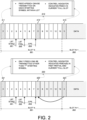
- Figure 2 illustrates exemplary diagrams for starting symbol configuration with multiple starting symbols and PSSCH handling in accordance with embodiments of the current invention.
- one or multiple starting symbols within a slot are supported for SL-U.
- Exemplary symbol #0 and #8 are configured as candidate starting symbols.
- Exemplary slot N 201 has fourteen symbols. In slot N 201, starting symbols 211 and 212 are configured. The next slot following slot N 201 is Slot N+1 202. Similarly, symbols #0 (213) and #8 (not shown) are configured as starting symbols.
- LBT starts at symbol #3 in slot N 201.
- the LBT ended/succeeded.
- cyclic prefix extension (CPE) 233 is transmitted between the end of the LBT success and the next starting symbol.
- CPE operation can be implemented to achieve us-to-symbol boundary alignment, thus SL-U UE can start a transmission on the channel as soon as the LBT procedure is finished.
- at least one starting symbol is used for automatic gain control (AGC) purpose.
- AGC automatic gain control
- PSCCH can be transmitted on each starting symbol within a slot.
- PSCCH is preconfigured to start at any candidate starting symbol within a slot that is closest to the success of the LBT procedure.
- PSCCH can start on symbols 211, 212, and 213.
- the control indicator can indicate the PSSCH in current full slot.
- PSCCH is preconfigured to only start at a first starting symbol within a slot.
- LBT succeeds in slot N 201 with starting symbols 221 and 222 configured.
- the following slot N+1 202 has starting symbols at symbol #0 (223) and #8 (not shown) configured.
- only starting symbols 221 and 223 can be used for PSCCH.
- Starting symbol 222 which is not the first candidate starting symbol of the slot, can only be used for PSSCH.
- the UE can configure multiple starting symbols within a slot to achieve an equivalent channel access ability for SL-U compared to the other RATs (e.g., WiFi and/or NR-U).
- the control indicator indicates the PSSCH in a past partial slot.
- the PSCCH which is in the 1st starting symbol of the full slot, such as starting symbol 223, indicates the information and/or configuration of the PSSCH in both the past (partial) slot, such as slot N 201 from starting symbol 222, and the current (slot N+1 202) and/or the following full slot(s).
- the PSCCH and PSSCH transmission on the second starting symbol is a TB different from the TB transmitted in the following full slot.
- the PSCCH and PSSCH transmission on the second starting symbol is a repetition of a sub-set of the TB transmitted in the following full slot.
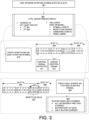
- Figure 3 illustrates exemplary diagrams of starting symbol configurations and corresponding control indications in accordance with embodiments of the current invention.
- the UE determines one or more starting symbols within a slot. In one embodiment, one or two starting symbols are configured.
- control indicator indicates corresponding PSSCH according to the configuration for the starting symbols.
- the control indicator is carried in a 1 st sidelink control indicator (SCI) and/or 2 nd SCI.
- SCI sidelink control indicator
- the configuration of the PSSCH(s) in partial and/or one and/or multiple slot(s) can be indicated with additional bit (s) (in the reserved bit) of 1 st SCI and/or 2 nd SCI separately.
- 1 st SCI 1 st SCI
- 2 nd SCI 2 nd SCI
- one additional bit in the 1 st SCI can be used to indicate whether the current control is used to indicate only the PSSCH in the current slot or the PSSCH(s) in both the current slot and the past (partial) slot.
- the indication of the other configurations of the PSSCH(s) is carried and can be found in the 2 nd SCI.
- a bitmap, and/or a table can be (pre-)configured and/or indicated to show the PSSCH(s) configurations.
- control indicator and/or the configuration include one or more elements comprising the starting position/offset of the symbol, and/or the starting symbols, and/or symbol length, and/or the configuration of automatic gain control (AGC), repetition, combining, and demodulation reference signal (DMRS).
- AGC automatic gain control
- DMRS demodulation reference signal
- the starting symbols can be indicated for AGC/combining purpose.
- the UE configured with PSCCH can start on any candidate starting symbol.
- the UE ignores control signals on a candidate starting symbol in a time slot when the UE detects and decodes a control signal in the time slot in another candidate starting symbol of the time slot.
- the control signal/channel can be (pre)configured to be sent at multiple fixed symbols and/or at each starting symbols. For example, slot N 305 and slot N+1 306 are two consecutive slots for a SL resource. More than one candidate starting symbols, such as symbol #0, #5, and #10, are configured.
- the UE can be configured to monitor each starting symbol within a slot.
- the UE is (pre-)configured to monitor more than one starting symbol, such as symbols #0, #5, and #10
- the UE only decodes (the first) M control signal(s) in one slot as (pre-)configuration.
- the UE can be (pre-)configured to only decode one control signal in each starting symbol.
- the UE detects control signal.
- the UE ignores possible control signals at symbols #5 and #10.
- the UE is configured with PSCCH can only on the first candidate starting symbol of a slot.
- the control indicator indicates the PSSCH in a past partial slot.
- slot N 307 and slot N+1 308 are two consecutive slots for a SL resource. More than one candidate starting symbols, such as symbol #0, #5, and #10, are configured.
- symbol #0, #5, and #10 are configured.
- PSCCH starts on symbol #0 of slot N+1 308.
- PSCCH from slot N+1 308 indicates past partial slot, which is symbols #10 to #13 of slot N 307.
- repetitive data is transmitted on the past partial slot.
- the UE is (pre)configured with one or more additional PSSCH elements comprising whether to buffer PSSCH, how many PSSCH to be buffered in the past partial slot.
- the additional PSSCH elements are determined based on one or more factors including UE capability, UE capability report, and UE implementation.
- the UE buffers down all the data/PSSCH in both past (partial) slot and current full slot to gain an optimal combining performance.
- the UE buffers down a part of the data/ PSSCH in the past (partial) slot and all data/PSSCH in current full slot to achieve a trade-off between performance and buffer storage.
- the UE buffers down only the PSSCH in current full slot to achieve low buffer.
- one sub-channel can be used as the granularity of frequency domain.
- one sub-channel equals K interlace(s) within one RB set for interlace RB-based transmission, where K is (pre)configured.
- K is (pre)configured.
- one sub-channel equals N continuous RB within one RB set for contiguous RB-based transmission. In one embodiment, N is (pre)configured.
- Figure 4 illustrates exemplary diagrams sub-channel and RB set configuration for PSCCH for a UE configured with occupied BWP for SL-U transceiving in accordance with embodiments of the current invention.
- the UE is configured with a bandwidth part (BWP) for the SL transceiving in SL-U.
- BWP bandwidth part
- the BWP is configured by the network.
- the UE receives BWP configuration from the network and determines the BWP accordingly.
- the UE determines the BWP.
- UE-1 establishes SL connection with UE-2.
- the SL BWP has three resource block (RB) sets, RB set-0 401, RB set-1 402, RB set-2 403.
- UE-1 and UE-2 each is configured with occupied BWP of UE-1 BWP 411, and UE-2 BWP 412, respectively.
- BWP 411 and BWP 412 both occupies RB set-0 401 and RB set-1 402.
- UE-1 and UE-2 can detects the PSCCH.
- UE-1 and UE-2 each is configured with occupied BWP of UE-1 BWP 421, and UE-2 BWP 422, respectively.
- BWP 421 occupies RB set-1 402 and RB set-2 403.
- BWP 422 occupies RB set-0 401 and RB set-1 402.
- UE-1 and UE-2 may not be able to detect PSCCH of the other UE.
- UE-1 and UE-2 each is configured with occupied BWP of UE-1 BWP 431, and UE-2 BWP 432, respectively.
- BWP 431 occupies RB set-0 401 and RB set-1 402.
- BWP 432 occupies RB set-1 402.
- UE-1 and UE-2 may not be able to detect PSCCH of the other UE.
- the UE transmits the PSCCH at one or more preconfigured locations based on an occupied BWP configuration, wherein a subset or a whole RB sets of the configured BWP is occupied by the UE.
- PSCCH should be transmitted within one fixed sub-channel.
- PSCCH can be transmitted within 1 fixed sub-channel (e.g., the 1 st /lowest sub-channel) of one RB set (e.g., the 1 st /lowest RB set) of the occupied multiple RB sets, and/or PSCCH can be transmitted within 1 fixed sub-channel (e.g., the 1 st /lowest sub-channel) of each RB set of the occupied bandwidth.
- PSCCH should be located in the sub-channel with the lowest index of the sub-channel(s) of the corresponding PSSCH.
- the PSCCH is transmitted on a lowest subchannel of each RB set of the corresponding PSSCH.
- the PSCCH is transmitted on a lowest subchannel of a lowest RB set of the corresponding PSSCH.
- the UE configures a BWP for a SL transceiving on SL-U, wherein the BWP is configured with one or more RB sets each with multiple subchannels.
- the BWP is configured based on UE capability.
- the occupied BWP is further based on the configuration for the SL transceiving.
- the UE prepares/preconfigures PSCCH transmission on one or more RB sets to communicate with a second UE through an SL connection.
- the PSCCH is transmitted on a fixed sub-channel of each occupied RB set of the one or more RB sets.
- the PSCCH is transmitted on the lowest subchannel of each RB set. In one embodiment, the PSCCH is transmitted on a fixed subchannel of one preconfigured RB set. In one embodiment, the preconfigured RB set is the lowest RB set occupied by the UE. In another embodiment, the one or more preconfigured positions are further determined based on COT. For example, for out-of-COT operation and/or for the transmission immediately after and/or closest to the LBT end, the PSSCH should start from the 1 st /lowest sub-channel of the occupied (overall) bandwidth.
- the PSSCH can be scheduled (e.g., by COT initiator) to start from the 1 st /lowest sub-channel of the indicated/scheduled/allocated bandwidth.
- the PSCCH starts from a sub-channel of one RB set or across multiple RB sets of the corresponding PSSCH scheduled by a COT initiator UE.
- the UE monitors the preconfigured PSCCH location for control information.
- UE can detect a PSCCH based on the PSCCH location regarding the corresponding PSSCH.
- the UE ignores subsequent PSCCH locations when a PSCCH is detected.
- Figure 5 illustrates exemplary diagrams PSCCH configuration with one or more RB sets in an occupied BWP for the UE for the SL-U transceiving in accordance with embodiments of the current invention.
- the SL-U bandwidth is configured with three RB sets, RB set-0 501, RB set-1 502, and RB set-2 503.
- the PSCCH is transmitted on a fixed subchannel one preconfigured RB set, and wherein preconfigured RB set is a lowest RB set occupied by the UE.
- the UE with occupied BWP 510 occupies RB set-0 501 and RB set-1 502, with the PSCCH configured at sub-channel 511, which is the lowest subchannel of the lowest RB of BWP 510.
- UE with occupied BWP 520 occupies RB set-1 502 and RB set-2 503, with the PSCCH configured at sub-channel 521, which is the lowest subchannel of the lowest RB of BWP 520.
- UE with occupied BWP 530 occupies RB set-1 502, with the PSCCH configured at sub-channel 531, which is the lowest subchannel of the lowest RB of BWP 530.
- UE with occupied BWP 540 occupies RB set-0 501, RB set-1 502, RB set-2 503, with the PSCCH configured at sub-channel 541, which is the lowest subchannel of the lowest RB of BWP 540.
- the PSCCH is transmitted on a fixed subchannel each of occupied RB set of the one or more RB sets.
- the fixed subchannel is the lowest subchannel of the RB set.
- the UE with occupied BWP 550 occupies RB set-0 501 and RB set-1 502, with the PSCCH configured at sub-channel 551 and 552.
- UE with occupied BWP 560 occupies RB set-1 502 and RB set-2 503, with the PSCCH configured at sub-channel 561 and 562.
- UE with occupied BWP 570 occupies RB set-1 502, with the PSCCH configured at sub-channel 571.
- UE with occupied BWP 580 occupies RB set-0 501, RB set-1 502, RB set-2 503, with the PSCCH configured at sub-channel 581, 582, and 583.
- Figure 6 illustrates an exemplary diagram for the PSFCH configuration for SL-U transceiving in accordance with embodiments of the current invention.
- the UE establishes SL connection on SL-U, performs channel access before transmitting a PSFCH, configures a channel access priority class (CPAC) value for the PSFCH to be one and transmits the PSFCH upon success of the channel access.
- CPAC channel access priority class
- the CAPC value for PSFCH can be set as '1'.
- the CPAC is set to be same as the corresponding PSSCH based on the (pre)configuration.
- the UE performs channel access.
- the UE upon the success of channel access, the UE prepares PSFCH transmission.
- the CAPC value is set to be '1'.
- the UE determines if it is shared channel occupancy. If step 620 determines no, the UE performs type-1 channel access. In one embodiment, when UE performs type-1 channel access for PSFCH, the CAPC for the PSFCH is set to be '1'. If step 620 determines yes, the UE performs one of type-2A/2B/2C/ channel access.
- it can be (pre)configured that the S-SSB can be transmitted without sensing the channel.
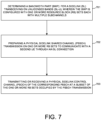
- FIG. 7 illustrates an exemplary flow chart for the UE configuring PSCCH with occupied BWP for the SL-U transceiving in accordance with embodiments of the current invention.
- the UE determines a bandwidth part (BWP) for a sidelink (SL) transceiving on unlicensed bands (SL-U), wherein the BWP is configured with one or more resource block (RB) sets each with multiple subchannels.
- the UE prepares a physical sidelink shared channel (PSSCH) transmission on one or more RB sets to communicate with a second UE through an SL connection.
- the UE transmits or receives a physical sidelink control channel (PSCCH) of the corresponding PSSCH at a subset of the one or more RB sets occupied by the PSSCH transmission.
- PSSCH physical sidelink shared channel
- Figure 8 illustrates an exemplary flow chart for UE configuring PSSCH with multiple starting symbols for the SL-U transceiving in accordance with embodiments of the current invention.
- the UE determines a first starting symbol and a second starting symbol within a slot for an SL transceiving in a wireless network, wherein the SL transceiving is on unlicensed frequency bands (SL-U).
- the UE performs a channel access procedure before the SL-U transceiving.
- the UE transmits or receives a physical sidelink control channel (PSCCH) at the first starting symbol or the second starting symbol within the slot upon success of the channel access procedure.
- PSCCH physical sidelink control channel
- FIG. 9 illustrates an exemplary flow chart for the UE configuring PSFCH for the SL-U transceiving in accordance with embodiments of the current inventions.
- the UE establishes a sidelink (SL) connection on unlicensed frequency bands (SL-U) for an SL-U transceiving in a wireless network.
- the UE performs a Type 1 channel access procedure before a transmission for a physical sidelink feedback channel (PSFCH) without a shared channel occupancy time (COT), and one of Type 2A/2B/2C channel access procedure before a transmission for a PSFCH with a shared COT.
- the UE transmits the PSFCH upon success of the channel access procedure.
- PSFCH physical sidelink feedback channel
- COT shared channel occupancy time
Landscapes
- Engineering & Computer Science (AREA)
- Signal Processing (AREA)
- Computer Networks & Wireless Communication (AREA)
- Mobile Radio Communication Systems (AREA)
Applications Claiming Priority (2)
| Application Number | Priority Date | Filing Date | Title |
|---|---|---|---|
| PCT/CN2022/123392 WO2024065730A1 (fr) | 2022-09-30 | 2022-09-30 | Procédés de transmission de sl-u |
| CN202311223057.3A CN117812716A (zh) | 2022-09-30 | 2023-09-20 | 用于无线通信的方法及用户设备 |
Publications (2)
| Publication Number | Publication Date |
|---|---|
| EP4358456A2 true EP4358456A2 (fr) | 2024-04-24 |
| EP4358456A3 EP4358456A3 (fr) | 2024-08-21 |
Family
ID=88207765
Family Applications (1)
| Application Number | Title | Priority Date | Filing Date |
|---|---|---|---|
| EP23200276.6A Pending EP4358456A3 (fr) | 2022-09-30 | 2023-09-28 | Procédés de transmission de liaison latérale sur un spectre sans licence |
Country Status (3)
| Country | Link |
|---|---|
| US (1) | US20240114529A1 (fr) |
| EP (1) | EP4358456A3 (fr) |
| TW (1) | TW202416738A (fr) |
Families Citing this family (2)
| Publication number | Priority date | Publication date | Assignee | Title |
|---|---|---|---|---|
| US12302393B2 (en) * | 2022-06-14 | 2025-05-13 | Qualcomm Incorporated | Rate matching for unlicensed sidelink channel access |
| US12507264B2 (en) * | 2023-05-12 | 2025-12-23 | Qualcomm Incorporated | Physical sidelink feedback channel transmissions for wideband transmission opportunities in shared frequency bands |
Family Cites Families (4)
| Publication number | Priority date | Publication date | Assignee | Title |
|---|---|---|---|---|
| WO2021237654A1 (fr) * | 2020-05-29 | 2021-12-02 | Qualcomm Incorporated | Multiplexage d'un bloc de signal de synchronisation de liaison latérale (s-ssb) et d'un canal de commande de liaison latérale physique/canal partagé de liaison latérale physique (pscch/pscch) et gestion optimale d'une largeur de bande de canal d'occupation (ocb) pour une liaison latérale de nouvelle radio sans licence (nr-u) |
| EP4518539A4 (fr) * | 2022-04-28 | 2026-04-22 | Lg Electronics Inc | Procédé et dispositif pour la réalisation d'une communication de liaison latérale dans une bande sans licence |
| CN117042168A (zh) * | 2022-04-29 | 2023-11-10 | 华为技术有限公司 | 通信方法和通信装置 |
| WO2023212835A1 (fr) * | 2022-05-02 | 2023-11-09 | Nokia Shanghai Bell Co., Ltd. | Procédé et appareil de transmission de rétroaction pendant une communication sans fil |
-
2023
- 2023-09-26 TW TW112136789A patent/TW202416738A/zh unknown
- 2023-09-27 US US18/476,183 patent/US20240114529A1/en active Pending
- 2023-09-28 EP EP23200276.6A patent/EP4358456A3/fr active Pending
Also Published As
| Publication number | Publication date |
|---|---|
| US20240114529A1 (en) | 2024-04-04 |
| TW202416738A (zh) | 2024-04-16 |
| EP4358456A3 (fr) | 2024-08-21 |
Similar Documents
| Publication | Publication Date | Title |
|---|---|---|
| US11483803B2 (en) | Autonomous sidelink over unlicensed band | |
| US12302395B2 (en) | Multiple starting points in relation to a channel occupancy time (COT) for sidelink communication | |
| US10880889B2 (en) | Narrowband user equipment (UE) support with multi-channel listen-before-talk (LBT) | |
| US20210409993A1 (en) | Interference management for sidelink on resources shared with direct link | |
| US20240031999A1 (en) | Method and Apparatus of Partial Sensing for Resource Selection in Sidelink Communications | |
| US12389455B2 (en) | Multi-transmitter scheduling using slot-based and sub-slot based physical sidelink shared channels | |
| EP4358456A2 (fr) | Procédés de transmission de liaison latérale sur un spectre sans licence | |
| US11032818B2 (en) | Radio-unlicensed (NR-U) channel reservation at slot boundary | |
| US20250056612A1 (en) | Resource determining method and apparatus | |
| EP4340525A1 (fr) | Procédés et dispositif de détection rlf de liaison latérale sur un spectre sans licence | |
| EP4583601A1 (fr) | Procédé, appareil et système de communication | |
| CN115136709A (zh) | 终端及通信方法 | |
| US12010721B2 (en) | Initial signal detection method and apparatus | |
| US20260122673A1 (en) | Methods and apparatus of channel occupancy time (cot) sharing in sidelink unlicensed communication systems | |
| US20240040479A1 (en) | Synchronization signal pattern for sidelink in unlicensed bands (sl-u) | |
| TWI853446B (zh) | 通道佔用時間共用方法及其使用者設備 | |
| US20240196432A1 (en) | Terminal and communication method | |
| WO2023123519A1 (fr) | Procédés et appareils d'allocation de ressources pour des systèmes de communication de liaison latérale | |
| CN117812716A (zh) | 用于无线通信的方法及用户设备 | |
| US20240089938A1 (en) | Transmission methods of sidelink on unlicensed spectrum | |
| EP4287679A1 (fr) | Terminal et procédé de communication | |
| US20260025844A1 (en) | Method for transmitting request messages, terminal device, and chip | |
| EP4387128A1 (fr) | Procédé et dispositif de communication | |
| US20250150992A1 (en) | Synchronization signal block configurations for sidelink communications |
Legal Events
| Date | Code | Title | Description |
|---|---|---|---|
| PUAI | Public reference made under article 153(3) epc to a published international application that has entered the european phase |
Free format text: ORIGINAL CODE: 0009012 |
|
| STAA | Information on the status of an ep patent application or granted ep patent |
Free format text: STATUS: THE APPLICATION HAS BEEN PUBLISHED |
|
| AK | Designated contracting states |
Kind code of ref document: A2 Designated state(s): AL AT BE BG CH CY CZ DE DK EE ES FI FR GB GR HR HU IE IS IT LI LT LU LV MC ME MK MT NL NO PL PT RO RS SE SI SK SM TR |
|
| PUAL | Search report despatched |
Free format text: ORIGINAL CODE: 0009013 |
|
| AK | Designated contracting states |
Kind code of ref document: A3 Designated state(s): AL AT BE BG CH CY CZ DE DK EE ES FI FR GB GR HR HU IE IS IT LI LT LU LV MC ME MK MT NL NO PL PT RO RS SE SI SK SM TR |
|
| RIC1 | Information provided on ipc code assigned before grant |
Ipc: H04W 72/25 20230101ALI20240717BHEP Ipc: H04L 5/00 20060101AFI20240717BHEP |
|
| STAA | Information on the status of an ep patent application or granted ep patent |
Free format text: STATUS: REQUEST FOR EXAMINATION WAS MADE |
|
| 17P | Request for examination filed |
Effective date: 20250221 |