EP4361288A1 - Personalisierte immuntherapie bei nierenkarzinomen - Google Patents
Personalisierte immuntherapie bei nierenkarzinomen Download PDFInfo
- Publication number
- EP4361288A1 EP4361288A1 EP22383026.6A EP22383026A EP4361288A1 EP 4361288 A1 EP4361288 A1 EP 4361288A1 EP 22383026 A EP22383026 A EP 22383026A EP 4361288 A1 EP4361288 A1 EP 4361288A1
- Authority
- EP
- European Patent Office
- Prior art keywords
- expression
- antibody
- arhgap42
- mocs1
- usf1
- Prior art date
- Legal status (The legal status is an assumption and is not a legal conclusion. Google has not performed a legal analysis and makes no representation as to the accuracy of the status listed.)
- Withdrawn
Links
Images






Classifications
-
- C—CHEMISTRY; METALLURGY
- C12—BIOCHEMISTRY; BEER; SPIRITS; WINE; VINEGAR; MICROBIOLOGY; ENZYMOLOGY; MUTATION OR GENETIC ENGINEERING
- C12Q—MEASURING OR TESTING PROCESSES INVOLVING ENZYMES, NUCLEIC ACIDS OR MICROORGANISMS; COMPOSITIONS OR TEST PAPERS THEREFOR; PROCESSES OF PREPARING SUCH COMPOSITIONS; CONDITION-RESPONSIVE CONTROL IN MICROBIOLOGICAL OR ENZYMOLOGICAL PROCESSES
- C12Q1/00—Measuring or testing processes involving enzymes, nucleic acids or microorganisms; Compositions therefor; Processes of preparing such compositions
- C12Q1/68—Measuring or testing processes involving enzymes, nucleic acids or microorganisms; Compositions therefor; Processes of preparing such compositions involving nucleic acids
- C12Q1/6876—Nucleic acid products used in the analysis of nucleic acids, e.g. primers or probes
- C12Q1/6883—Nucleic acid products used in the analysis of nucleic acids, e.g. primers or probes for diseases caused by alterations of genetic material
- C12Q1/6886—Nucleic acid products used in the analysis of nucleic acids, e.g. primers or probes for diseases caused by alterations of genetic material for cancer
-
- C—CHEMISTRY; METALLURGY
- C12—BIOCHEMISTRY; BEER; SPIRITS; WINE; VINEGAR; MICROBIOLOGY; ENZYMOLOGY; MUTATION OR GENETIC ENGINEERING
- C12Q—MEASURING OR TESTING PROCESSES INVOLVING ENZYMES, NUCLEIC ACIDS OR MICROORGANISMS; COMPOSITIONS OR TEST PAPERS THEREFOR; PROCESSES OF PREPARING SUCH COMPOSITIONS; CONDITION-RESPONSIVE CONTROL IN MICROBIOLOGICAL OR ENZYMOLOGICAL PROCESSES
- C12Q2600/00—Oligonucleotides characterized by their use
- C12Q2600/106—Pharmacogenomics, i.e. genetic variability in individual responses to drugs and drug metabolism
-
- C—CHEMISTRY; METALLURGY
- C12—BIOCHEMISTRY; BEER; SPIRITS; WINE; VINEGAR; MICROBIOLOGY; ENZYMOLOGY; MUTATION OR GENETIC ENGINEERING
- C12Q—MEASURING OR TESTING PROCESSES INVOLVING ENZYMES, NUCLEIC ACIDS OR MICROORGANISMS; COMPOSITIONS OR TEST PAPERS THEREFOR; PROCESSES OF PREPARING SUCH COMPOSITIONS; CONDITION-RESPONSIVE CONTROL IN MICROBIOLOGICAL OR ENZYMOLOGICAL PROCESSES
- C12Q2600/00—Oligonucleotides characterized by their use
- C12Q2600/118—Prognosis of disease development
-
- C—CHEMISTRY; METALLURGY
- C12—BIOCHEMISTRY; BEER; SPIRITS; WINE; VINEGAR; MICROBIOLOGY; ENZYMOLOGY; MUTATION OR GENETIC ENGINEERING
- C12Q—MEASURING OR TESTING PROCESSES INVOLVING ENZYMES, NUCLEIC ACIDS OR MICROORGANISMS; COMPOSITIONS OR TEST PAPERS THEREFOR; PROCESSES OF PREPARING SUCH COMPOSITIONS; CONDITION-RESPONSIVE CONTROL IN MICROBIOLOGICAL OR ENZYMOLOGICAL PROCESSES
- C12Q2600/00—Oligonucleotides characterized by their use
- C12Q2600/158—Expression markers
Definitions
- the present invention refers to the medical field. Particularly, the present invention refers to an in vitro method for predicting the prognosis of renal carcinoma, for predicting the benefit of patients suffering from renal carcinoma from a treatment with antibody-based immunotherapy and/or for deciding or recommending whether to treat patients suffering from renal carcinoma with antibody-based immunotherapy.
- Renal cell carcinoma also known as kidney cancer or renal cancer, is one of the most frequently diagnosed type of cancer (sixth in males and ninth in females in the USA in 2022). RCC is approximately twice as prevalent in males compared to females, and the peak of prevalence by age is in the 75-79 range.
- RCC all RCC originate from the epithelial cells of the proximal tubule of the nephron, but despite the common origin, RCC can manifest in different subtypes with particular histological, molecular and clinical features. Of the histological subtypes, clear cell RCC (ccRCC) is by far the most commonly diagnosed, representing about 75% of the cases. Other less common types are papillary type 1 (15%), chromophobe (5%) and clear cell papillary RCC (1-4%).
- ccRCC commonly present an inactivation of the gene VHL, which causes an overexpression of the pro-angiogenic factor VEGF and thus an increased vascularity in the tumour.
- ccRCC commonly presents loss of tumour suppressor genes associated with the short arm of chromosome 3 (PBRM1, 40%; BAP1, 10%; and SETD2, 10%).
- Type-1 papillary RCC presents mutations in MET (13% of cases) that lead to an increased proliferation rate and resistance to apoptosis.
- ccRCC tumours One important characteristic of ccRCC tumours is the presence of a considerable immune infiltration and expression of Programmed cell Death 1 (PD-1) and Cytotoxic T-lymphocyte-Associated protein 4 (CTLA-4), as detected in pan-cancer analyses.
- PD-1, Programmed Death Ligand 1 (PD-L1) and CTLA-4 are immune checkpoint proteins, which mediate the inactivation of T cells. This mechanism exists to avoid the hyperactivation of the immune system and therefore prevents autoimmune reactions against the individual's own tissues. For cancer cells, these molecules represent a highly advantageous way to avoid the normal anti-tumoural response of the immune system.
- ccRCC has been considered a great candidate for the use of immune checkpoint inhibitors (ICI): monoclonal antibodies that block PD-1 (or its ligand PD-L1) or CTLA-4 receptors.
- ICI immune checkpoint inhibitors
- ICI-based regimens which have been approved by US Food and Drug Administration and the European Medicines Agency after demonstrating significant overall survival improvements in randomised, phase 3 clinical trials: pembrolizumab with either axitinib or lenvatinib (both tyrosine kinase inhibitors), nivolumab with cabozantinib (tyrosine kinase inhibitor), and nivolumab with ipilimumab (this combination only for those patients with intermediate or poor-risk mRCC).
- pembrolizumab with either axitinib or lenvatinib (both tyrosine kinase inhibitors), nivolumab with cabozantinib (tyrosine kinase inhibitor), and nivolumab with ipilimumab (this combination only for those patients with intermediate or poor-risk mRCC).
- nivolumab is approved as a standard treatment option for mRCC patients following prior antiangiogenic therapy. This approval was based on the positive results of the CheckMate 025 (CM-025) trial, a randomised open-label phase 3 study where patients treated with nivolumab achieved significant survival and response improvements compared to those treated with everolimus.
- CM-025 CheckMate 025
- pembrolizumab is indicated for the treatment of adults with RCC at increased risk of recurrence following nephrectomy or following nephrectomy and resection of metastatic lesions.
- Gene expression-based biomarkers for RCC patients are a current subject of research, for example, analyses of the IMmotion150 phase 2 clinical trial comparing atezolizumab (anti-PD-L1) alone or in combination with bevacizumab (anti-VEGF) against sunitinib (tyrosine kinase receptor inhibitor) revealed gene expression signatures strongly associated with differences in progression free survival (PFS) between the arms of the study.
- PFS progression free survival
- new gene expression signatures have been studied that were correlated with a higher PFS in patients from the phase 3 JAVELIN Renal 101 trial treated with avelumab (anti-PD-L1) plus axitinib (tyrosine kinase inhibitor) compared to sunitinib.
- the present invention refers to an in vitro method for predicting the prognosis of renal carcinoma, for predicting the benefit of patients suffering from renal carcinoma from a treatment with antibody-based immunotherapy and/or for deciding or recommending whether to treat patients suffering from renal carcinoma with antibody-based immunotherapy.
- the inventors of the present invention knowing that, unfortunately, not all patients suffering from renal carcinoma benefit from immunotherapy, and that there is indeed a lack of reliable prognostic and predictive biomarkers to guide treatment decisions in the clinical setting, have focused their efforts on identifying not only prognostic biomarkers but also biomarkers able to predict the benefit to immunotherapy, particularly anti-PD-1 antibodies.
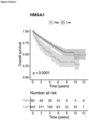
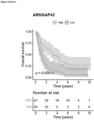
- HGNC: 7609 seven genes MYO9B (HGNC: 7609), AUP1 (HGNC: 891), HMGA1 (HGNC: 5010), USF1 (HGNC: 12593), NUP62 (HGNC: 8066), ARHGAP42 (HGNC: 26545) or MOCS1 (HGNC: 7190) were found with prognostic significance for overall survival in nivolumab-treated patients, which in addition, were significantly correlated with either disease control, response, or both. Then, the prognostic significance of these selected genes was validated in The Cancer Genome Atlas Kidney Renal Clear Cell Carcinoma cohort. Finally, the interaction of the treatment and the expression level of the genes was tested and proved to be statistically significant for overall survival for the seven genes.
- the inventors of the present invention were able to identify and validate the prognostic and predictive significance for overall survival of the above cited seven genes in patients diagnosed with advanced or metastatic renal carcinoma treated, as a proof of concept, with nivolumab.
- the first embodiment of the present invention refers to an in vitro method for predicting the prognosis of renal carcinoma in a patient which comprises: a) Assessing the level of expression of at least one of the following genes included in the group consisting of: MYO9B, AUP1, HMGA1, USF1, NUP62, ARHGAP42 and/or MOCS1 (or any combination thereof comprising of between 2 and 7 genes), in a biological sample, such as tumor sample, obtained from the patient, b) wherein the identification of a higher level of expression of MYO9B, AUP1, HMGA1, USF1 and/or NUP62 (or any combination thereof comprising of between 2 and 5 genes) which respect to a pre-established threshold value is indicative of poor prognosis; or wherein the identification of a lower level of expression of MY09B, AUP1, HMGA1, USF1 and/or NUP62 (or any combination thereof comprising of between 2 and 5 genes) which respect to a pre-established threshold value is indicative of good prognos
- the second embodiment of the present invention refers to an in vitro method for predicting the benefit of patients suffering from renal carcinoma from a treatment with antibody-based immunotherapy which comprises: a) assessing the level of expression of at least one of the following genes included in the group consisting of: MYO9B, AUP1, HMGA1, USF1, NUP62, ARHGAP42 and/or MOCS1 (or any combination thereof comprising of between 2 and 7 genes), in a biological sample obtained from the patient, b) wherein the identification of a lower level of expression of MY09B, AUP1, HMGA1, ARHGAP42 and/or MOCS1 (or any combination thereof comprising of between 2 and 5 genes) which respect to a pre-established threshold value is indicative that the patient is benefitting from the therapy; or c) wherein the identification of a higher level of expression of USF1 and/or NUP62 which respect to a pre-established threshold value is indicative that the patient is benefitting from the therapy.
- the third embodiment of the present invention refers to an in vitro method for deciding or recommending whether to treat patients suffering from renal carcinoma with antibody-based immunotherapy which comprises: a) assessing the level of expression of at least one of the following genes included in the group consisting of: MYO9B, AUP1, HMGA1, USF1, NUP62, ARHGAP42 and/or MOCS1 (or any combination thereof comprising of between 2 and 7 genes) in a biological sample obtained from the patient, b) wherein if a lower level of expression of MYO9B, AUP1, HMGA1, ARHGAP42 and/or MOCS1 (or any combination thereof comprising of between 2 and 5 genes) is identified which respect to a pre-established threshold value a treatment with antibody-based immunotherapy is recommended; or c) wherein if a higher level of expression of USF1 and/or NUP62 is identified which respect to a pre-established threshold value a treatment with antibody-based immunotherapy is recommended.
- the antibody-based immunotherapy comprises an anti-PD-1 or an anti-PD-L1 antibody.
- the antibody-based immunotherapy comprises an anti-PD-1 or an anti-PD-L1 antibody selected from: nivolumab, pembrolizumab, dostarlimab, sintilimab, cemiplimab, atezolizumab, durvalumab or avelumab.
- the fourth embodiment of the present invention refers to the in vitro use of at least one of the following genes included in the group consisting of: MYO9B, AUP1, HMGA1, USF1, NUP62, ARHGAP42 and/or MOCS1 (or any combination thereof comprising of between 2 and 7 genes), for predicting the prognosis of renal carcinoma or for predicting the benefit of patients suffering from renal carcinoma from a treatment with antibody-based immunotherapy.
- the present invention refers to the in vitro use of at least one of the following genes included in the group consisting of: MYO9B, AUP1, HMGA1, USF1, NUP62, ARHGAP42 and/or MOCS1 (or any combination thereof comprising of between 2 and 7 genes) for predicting the benefit of patients suffering from renal carcinoma from a treatment with antibody-based immunotherapy comprising an anti-PD-1 antibody.
- the present invention refers to the in vitro use of at least one of the following genes included in the group consisting of: MYO9B, AUP1, HMGA1, USF1, NUP62, ARHGAP42 and/or MOCS1 (or any combination thereof comprising of between 2 and 7 genes) for predicting the benefit of patients suffering from renal carcinoma from a treatment with antibody-based immunotherapy comprising an anti-PD-1 or an anti-PD-Ll antibody selected from: nivolumab, pembrolizumab, dostarlimab, sintilimab, cemiplimab, atezolizumab, durvalumab or avelumab.
- the fifth embodiment of the present invention refer to a kit for performing any of the above methods which consist of reagents or tools to assess the level of expression of the genes: MYO9B, AUP1, HMGA1, USF1, NUP62, ARHGAP42 and/or MOCS1 (or any combination thereof comprising of between 2 and 7 genes).
- the sixth embodiment of the present invention refers to anti-PD-1 or anti-PD-L1 antibody for use in the treatment of renal carcinoma in a patient, wherein the patient is characterized by a lower expression level of at least one of the following genes included in the group consisting of: MYO9B, AUP1, HMGA1, ARHGAP42 and/or MOCS1 (or any combination thereof comprising of between 2 and 5 genes); or by a higher level of expression level of at least one of the following genes included in the group consisting of: USF1 and/or NUP62, which respect to a pre-established threshold value.
- the present invention refers to anti-PD-1 or anti-PD-Ll antibody for use in the treatment of renal carcinoma in a patient wherein the patient is characterized by a lower expression level of at least one of the following genes included in the group consisting of: MYO9B, AUP1, HMGA1, ARHGAP42 and/or MOCS1 (or any combination thereof comprising of between 2 and 5 genes); or by a higher level of expression of at least one of the following genes included in the group consisting of: USF1 and/or, which respect to a pre-established threshold value, and wherein the method comprises the step of determining whether the patient has a lower expression level of at least one of the following genes included in the group consisting of: MYO9B, AUP1, HMGA1, ARHGAP42 and/or MOCS1 (or any combination thereof comprising of between 2 and 5 genes), or a higher level expression level of at least one of the following genes included in the group consisting of: USF1 and/or NUP62, which respect to a pre
- the anti-PD-1 or anti-PD-Ll antibody is selected from: nivolumab, pembrolizumab, dostarlimab, sintilimab, cemiplimab, atezolizumab, durvalumab or avelumab.
- the present invention also refers to: Method for detecting the level of expression of at least one of the following genes included in the group consisting of: MYO9B, AUP1, HMGA1, USF1, NUP62, ARHGAP42 and/or MOCS1 (or any combination thereof comprising of between 2 and 7 genes), previous to the prediction of the prognosis of renal carcinoma, the prediction of the benefit of patients suffering from renal carcinoma from a treatment with antibody-based immunotherapy, or previous to deciding or recommending whether to treat patients suffering from renal carcinoma with antibody-based immunotherapy, which comprises: a) contacting the biological sample with a reagent capable of specifically binding the genes and b) measuring the level of expression of the genes.
- Method for analysing a biological sample previous to the prediction of the prognosis of renal carcinoma, the prediction of the benefit of patients suffering from renal carcinoma from a treatment with antibody-based immunotherapy, or previous to deciding or recommending whether to treat patients suffering from renal carcinoma with antibody-based immunotherapy comprising analysing the biological sample to assess the level of expression of at least one of the following genes included in the group consisting of: MYO9B, AUP1, HMGA1, USF1, NUP62, ARHGAP42 and/or MOCS1 (or any combination thereof comprising of between 2 and 7 genes)
- the present invention is a computer-implemented invention, wherein a processing unit (hardware) and a software are configured to:
- Method for treating patients suffering from renal carcinoma which comprises the administration of a therapeutically effective amount of treatment known in the prior art to treat renal carcinoma, the method comprising performing, as a first step, the methods of the invention describe above.
- Method for treating renal carcinoma in a patient which comprises the administration of a therapeutically effective amount of an anti-PD-1 or anti-PD-Ll antibody, wherein the patient is characterized by a lower expression level of at least one of the following genes included in the group consisting of: MYO9B, AUP1, HMGA1, ARHGAP42 and/or MOCS1 (or any combination thereof comprising of between 2 and 5 genes); or by a higher level of expression level of at least one of the following genes included in the group consisting of: USF1 and/or NUP62, which respect to a pre-established threshold value.
- Method for treating renal carcinoma in a patient which comprises the administration of a therapeutically effective amount of an anti-PD-1 or anti-PD-Ll antibody, wherein the patient is characterized by a lower expression level of at least one of the following genes included in the group consisting of: MYO9B, AUP1, HMGA1, ARHGAP42 and/or MOCS1 (or any combination thereof comprising of between 2 and 5 genes); or by a higher level of expression level of at least one of the following genes included in the group consisting of: USF1 and/or NUP62, which respect to a pre-established threshold value, and wherein the method comprises the step of determining whether the patient has a lower expression level of at least one of the following genes included in the group consisting of: MYO9B, AUP1, HMGA1, ARHGAP42 and/or MOCS1 (or any combination thereof comprising of between 2 and 5 genes), or a higher level expression level of at least one of the following genes included in the group consisting of: USF1 and/or NUP62, which
- Example 1.1 Study design and patient population
- CM-010 was a phase II dose-finding study of nivolumab, which found no dose-dependent correlation with PFS.
- CM-025 was a randomised phase III trial that demonstrated an improved overall survival with nivolumab over the mTOR inhibitor everolimus.
- CM-009, CM-010 and CM-025 cohorts provided by Braun et al. (Braun et al. 2020) [ Braun, David A., Yue Hou, Ziad Bakouny, Miriam Ficial, Miriam Sant' Angelo, Juliet Forman, Petra Ross-Macdonald, et al. 2020. "Interplay of Somatic Alterations and Immune Infiltration Modulates Response to PD-1 Blockade in Advanced Clear Cell Renal Cell Carcinoma.” Nature Medicine 26 (6, 6): 909-18 ], which were previously corrected for batch effect by the authors, were used for the analysis.
- TPMs Transcripts per Million
- FPKM Fragments Per Kilobase of transcript per Million mapped reads
- Example 1.3 Identification of genes with prognostic significance for overall survival in the nivolumab-treated cohort
- the P values of the two-sided Wald tests were corrected for False Discovery Rate (FDR) using the Bonferroni method.
- FDR False Discovery Rate
- Genes with Q ⁇ 0.05 were selected (from now on as selected genes ) for subsequent analyses.
- the PH assumption was tested for the selected genes using the cox.zph() function.
- Kaplan-Meier curves and Log-Rank tests were calculated using the survminer package.
- Example 1.4 Validation of the prognostic significance for overall survival of the selected genes in the TCGA KIRC cohort
- Cox PH models were constructed using the CM-025 cohort for each selected gene considering the interaction term between the gene expression category (high vs low) and therapy (nivolumab vs everolimus). The HR for each interaction with nivolumab and the associated P value was reported. The models for interaction's overall goodness-of-fit was measured using the Likelihood Ratio Test (LTR). P values ⁇ 0.05 were considered statistically significant.
- Example 2.1 Identification of genes with prognostic significance for overall survival in the nivolumab-treated cohort
- Example. 2.2 Correlation between the expression level of the selected genes and disease control and response in the nivolumab-treated cohort
- Example. 2.5 Interaction between the selected genes and the therapeutic regimen in the CM-025 phase 3 trial
Landscapes
- Chemical & Material Sciences (AREA)
- Life Sciences & Earth Sciences (AREA)
- Health & Medical Sciences (AREA)
- Organic Chemistry (AREA)
- Proteomics, Peptides & Aminoacids (AREA)
- Engineering & Computer Science (AREA)
- Immunology (AREA)
- Pathology (AREA)
- Analytical Chemistry (AREA)
- Zoology (AREA)
- Genetics & Genomics (AREA)
- Wood Science & Technology (AREA)
- Physics & Mathematics (AREA)
- Biotechnology (AREA)
- Microbiology (AREA)
- Molecular Biology (AREA)
- Hospice & Palliative Care (AREA)
- Biophysics (AREA)
- Oncology (AREA)
- Biochemistry (AREA)
- Bioinformatics & Cheminformatics (AREA)
- General Engineering & Computer Science (AREA)
- General Health & Medical Sciences (AREA)
- Measuring Or Testing Involving Enzymes Or Micro-Organisms (AREA)
Priority Applications (3)
| Application Number | Priority Date | Filing Date | Title |
|---|---|---|---|
| EP22383026.6A EP4361288A1 (de) | 2022-10-25 | 2022-10-25 | Personalisierte immuntherapie bei nierenkarzinomen |
| PCT/EP2023/079704 WO2024089063A1 (en) | 2022-10-25 | 2023-10-25 | Personalized immunotherapy in renal carcinoma |
| EP23798162.6A EP4608993A1 (de) | 2022-10-25 | 2023-10-25 | Personalisierte immuntherapie bei nierenkarzinomen |
Applications Claiming Priority (1)
| Application Number | Priority Date | Filing Date | Title |
|---|---|---|---|
| EP22383026.6A EP4361288A1 (de) | 2022-10-25 | 2022-10-25 | Personalisierte immuntherapie bei nierenkarzinomen |
Publications (1)
| Publication Number | Publication Date |
|---|---|
| EP4361288A1 true EP4361288A1 (de) | 2024-05-01 |
Family
ID=84047757
Family Applications (2)
| Application Number | Title | Priority Date | Filing Date |
|---|---|---|---|
| EP22383026.6A Withdrawn EP4361288A1 (de) | 2022-10-25 | 2022-10-25 | Personalisierte immuntherapie bei nierenkarzinomen |
| EP23798162.6A Pending EP4608993A1 (de) | 2022-10-25 | 2023-10-25 | Personalisierte immuntherapie bei nierenkarzinomen |
Family Applications After (1)
| Application Number | Title | Priority Date | Filing Date |
|---|---|---|---|
| EP23798162.6A Pending EP4608993A1 (de) | 2022-10-25 | 2023-10-25 | Personalisierte immuntherapie bei nierenkarzinomen |
Country Status (2)
| Country | Link |
|---|---|
| EP (2) | EP4361288A1 (de) |
| WO (1) | WO2024089063A1 (de) |
Citations (4)
| Publication number | Priority date | Publication date | Assignee | Title |
|---|---|---|---|---|
| US20070237770A1 (en) * | 2001-11-30 | 2007-10-11 | Albert Lai | Novel compositions and methods in cancer |
| US9828643B2 (en) * | 2011-05-18 | 2017-11-28 | Dana-Farber Cancer Institute, Inc. | Chromosome copy number gain as a biomarker of urothelial carcinoma lethality |
| US20210101980A1 (en) * | 2017-03-31 | 2021-04-08 | Bristol-Myers Squibb Company | Methods of treating tumor |
| US11015190B2 (en) * | 2013-09-17 | 2021-05-25 | Lucence Life Sciences Pte Ltd | Method of treating a patient having renal cancer |
-
2022
- 2022-10-25 EP EP22383026.6A patent/EP4361288A1/de not_active Withdrawn
-
2023
- 2023-10-25 EP EP23798162.6A patent/EP4608993A1/de active Pending
- 2023-10-25 WO PCT/EP2023/079704 patent/WO2024089063A1/en not_active Ceased
Patent Citations (4)
| Publication number | Priority date | Publication date | Assignee | Title |
|---|---|---|---|---|
| US20070237770A1 (en) * | 2001-11-30 | 2007-10-11 | Albert Lai | Novel compositions and methods in cancer |
| US9828643B2 (en) * | 2011-05-18 | 2017-11-28 | Dana-Farber Cancer Institute, Inc. | Chromosome copy number gain as a biomarker of urothelial carcinoma lethality |
| US11015190B2 (en) * | 2013-09-17 | 2021-05-25 | Lucence Life Sciences Pte Ltd | Method of treating a patient having renal cancer |
| US20210101980A1 (en) * | 2017-03-31 | 2021-04-08 | Bristol-Myers Squibb Company | Methods of treating tumor |
Non-Patent Citations (4)
| Title |
|---|
| "Affymetrix GeneChip Human Genome U133 Array Set HG-U133A", GEO,, 11 March 2002 (2002-03-11), XP002355386 * |
| BRAUN, DAVID A.YUE HOUZIAD BAKOUNYMIRIAM FICIALMIRIAM SANT' ANGELOJULIET FORMANPETRA ROSS-MACDONALD ET AL.: "Interplay of Somatic Alterations and Immune Infiltration Modulates Response to PD-1 Blockade in Advanced Clear Cell Renal Cell Carcinoma", NATURE MEDICINE, vol. 26, no. 6, 2020, pages 909 - 18, XP037173393, DOI: 10.1038/s41591-020-0839-y |
| LIU ZHENG ET AL: "Circ_0035483 Functions as a Tumor Promoter in Renal Cell Carcinoma via the miR-31-5p-Mediated HMGA1 Upregulation", CANCER MANAGEMENT AND RESEARCH, vol. Volume 13, 25 January 2021 (2021-01-25), pages 693 - 706, XP093040175, Retrieved from the Internet <URL:https://www.ncbi.nlm.nih.gov/pmc/articles/PMC7846871/pdf/cmar-13-693.pdf> DOI: 10.2147/CMAR.S282806 * |
| NATSUKI TAKAHA ET AL: "Expression and Role of HMGA1 in Renal Cell Carcinoma", JOURNAL OF UROLOGY, vol. 187, no. 6, 1 June 2012 (2012-06-01), pages 2215 - 2222, XP028484189, ISSN: 0022-5347, [retrieved on 20120125], DOI: 10.1016/J.JURO.2012.01.069 * |
Also Published As
| Publication number | Publication date |
|---|---|
| EP4608993A1 (de) | 2025-09-03 |
| WO2024089063A1 (en) | 2024-05-02 |
Similar Documents
| Publication | Publication Date | Title |
|---|---|---|
| Salem et al. | Relationship between MLH1, PMS2, MSH2 and MSH6 gene‐specific alterations and tumor mutational burden in 1057 microsatellite instability‐high solid tumors | |
| Budczies et al. | Tumour mutational burden: clinical utility, challenges and emerging improvements | |
| Addeo et al. | TMB or not TMB as a biomarker: That is the question | |
| Voorwerk et al. | Immune induction strategies in metastatic triple-negative breast cancer to enhance the sensitivity to PD-1 blockade: the TONIC trial | |
| Shah et al. | Randomized, open-label, phase 2 study of andecaliximab plus nivolumab versus nivolumab alone in advanced gastric cancer identifies biomarkers associated with survival | |
| EP3047040B1 (de) | Multigentest zur prognose von nierenkrebs | |
| US20170166973A1 (en) | Nucleic acid biomarker and use thereof | |
| Yin et al. | Genomic and transcriptomic analysis of breast cancer identifies novel signatures associated with response to neoadjuvant chemotherapy | |
| Barata et al. | Renal cell carcinoma histologic subtypes exhibit distinct transcriptional profiles | |
| Hu et al. | The role of ERBB4 mutations in the prognosis of advanced non-small cell lung cancer treated with immune checkpoint inhibitors | |
| Ouchi et al. | A modified MethyLight assay predicts the clinical outcomes of anti‐epidermal growth factor receptor treatment in metastatic colorectal cancer | |
| Chen et al. | A high homologous recombination deficiency score is associated with poor survival and a non-inflamed tumor microenvironment in head and neck squamous cell carcinoma patients | |
| Hirsch et al. | Clinical responses to PD-1 inhibition and their molecular characterization in six patients with mismatch repair-deficient metastatic cancer of the digestive system | |
| Vij et al. | The prognostic impact of subclonal IDH1 mutation in grade 2–4 astrocytomas | |
| Lin et al. | Decoding the prognostic significance of integrator complex subunit 9 (INTS9) in glioma: links to TP53 mutations, E2F signaling, and inflammatory microenvironments | |
| EP4361288A1 (de) | Personalisierte immuntherapie bei nierenkarzinomen | |
| AU2008286407A1 (en) | Predictive markers for EGFR inhibitor treatment | |
| CN101855364B (zh) | Egfr抑制剂治疗的预测性标记物 | |
| Saqi et al. | Tumor characteristics impact prognosis in dMMR/MSI-H localized colorectal cancer—a systematic review and meta-analysis | |
| EP2188393B1 (de) | Prognosemarker zur behandlung mit egfr-hemmern | |
| Withers et al. | Intratumoral B cell and interferon signatures in newly diagnosed glioblastoma are associated with longer survival in patients treated with SurVaxM | |
| US20110195982A1 (en) | Predictive marker for egfr inhibitor treatment | |
| JP2010535523A (ja) | Egfrインヒビター処理のための予測マーカー | |
| Tan et al. | Concurrent predictors of an immune responsive tumor | |
| Sharma et al. | Evaluation of immuno-oncologic biomarkers and β-catenin expression in response of hepatocellular carcinomas to immunotherapy |
Legal Events
| Date | Code | Title | Description |
|---|---|---|---|
| PUAI | Public reference made under article 153(3) epc to a published international application that has entered the european phase |
Free format text: ORIGINAL CODE: 0009012 |
|
| STAA | Information on the status of an ep patent application or granted ep patent |
Free format text: STATUS: THE APPLICATION HAS BEEN PUBLISHED |
|
| AK | Designated contracting states |
Kind code of ref document: A1 Designated state(s): AL AT BE BG CH CY CZ DE DK EE ES FI FR GB GR HR HU IE IS IT LI LT LU LV MC ME MK MT NL NO PL PT RO RS SE SI SK SM TR |
|
| STAA | Information on the status of an ep patent application or granted ep patent |
Free format text: STATUS: THE APPLICATION IS DEEMED TO BE WITHDRAWN |
|
| 18D | Application deemed to be withdrawn |
Effective date: 20241105 |