EP4362586A1 - Vorrichtung, verfahren und computerprogramm - Google Patents
Vorrichtung, verfahren und computerprogramm Download PDFInfo
- Publication number
- EP4362586A1 EP4362586A1 EP22204166.7A EP22204166A EP4362586A1 EP 4362586 A1 EP4362586 A1 EP 4362586A1 EP 22204166 A EP22204166 A EP 22204166A EP 4362586 A1 EP4362586 A1 EP 4362586A1
- Authority
- EP
- European Patent Office
- Prior art keywords
- resource allocation
- module
- pseudo
- sidelink
- manager
- Prior art date
- Legal status (The legal status is an assumption and is not a legal conclusion. Google has not performed a legal analysis and makes no representation as to the accuracy of the status listed.)
- Pending
Links
- 238000000034 method Methods 0.000 title claims description 32
- 238000004590 computer program Methods 0.000 title description 4
- 238000013468 resource allocation Methods 0.000 claims abstract description 360
- 238000004891 communication Methods 0.000 claims abstract description 187
- 238000005516 engineering process Methods 0.000 claims abstract description 68
- 230000004044 response Effects 0.000 claims description 6
- 230000006870 function Effects 0.000 description 23
- 230000008569 process Effects 0.000 description 8
- 238000010586 diagram Methods 0.000 description 7
- 230000005540 biological transmission Effects 0.000 description 5
- 238000010295 mobile communication Methods 0.000 description 5
- 230000001413 cellular effect Effects 0.000 description 4
- 238000007726 management method Methods 0.000 description 4
- 230000003278 mimic effect Effects 0.000 description 4
- 230000003068 static effect Effects 0.000 description 4
- 238000005259 measurement Methods 0.000 description 3
- 230000007246 mechanism Effects 0.000 description 3
- 238000012986 modification Methods 0.000 description 3
- 230000004048 modification Effects 0.000 description 3
- 101150069124 RAN1 gene Proteins 0.000 description 2
- 101100355633 Salmo salar ran gene Proteins 0.000 description 2
- 230000007774 longterm Effects 0.000 description 2
- 230000003287 optical effect Effects 0.000 description 2
- 230000011664 signaling Effects 0.000 description 2
- 101100411667 Arabidopsis thaliana RAN4 gene Proteins 0.000 description 1
- 101150014328 RAN2 gene Proteins 0.000 description 1
- 230000006978 adaptation Effects 0.000 description 1
- 239000000969 carrier Substances 0.000 description 1
- 238000006243 chemical reaction Methods 0.000 description 1
- 238000013523 data management Methods 0.000 description 1
- 238000013500 data storage Methods 0.000 description 1
- 238000012913 prioritisation Methods 0.000 description 1
- 239000004065 semiconductor Substances 0.000 description 1
- 230000007723 transport mechanism Effects 0.000 description 1
- 230000001960 triggered effect Effects 0.000 description 1
Images






Classifications
-
- H—ELECTRICITY
- H04—ELECTRIC COMMUNICATION TECHNIQUE
- H04W—WIRELESS COMMUNICATION NETWORKS
- H04W72/00—Local resource management
- H04W72/04—Wireless resource allocation
-
- H—ELECTRICITY
- H04—ELECTRIC COMMUNICATION TECHNIQUE
- H04W—WIRELESS COMMUNICATION NETWORKS
- H04W72/00—Local resource management
- H04W72/40—Resource management for direct mode communication, e.g. D2D or sidelink
-
- H—ELECTRICITY
- H04—ELECTRIC COMMUNICATION TECHNIQUE
- H04W—WIRELESS COMMUNICATION NETWORKS
- H04W72/00—Local resource management
- H04W72/50—Allocation or scheduling criteria for wireless resources
- H04W72/54—Allocation or scheduling criteria for wireless resources based on quality criteria
- H04W72/541—Allocation or scheduling criteria for wireless resources based on quality criteria using the level of interference
-
- H—ELECTRICITY
- H04—ELECTRIC COMMUNICATION TECHNIQUE
- H04W—WIRELESS COMMUNICATION NETWORKS
- H04W72/00—Local resource management
- H04W72/12—Wireless traffic scheduling
- H04W72/1215—Wireless traffic scheduling for collaboration of different radio technologies
-
- H—ELECTRICITY
- H04—ELECTRIC COMMUNICATION TECHNIQUE
- H04W—WIRELESS COMMUNICATION NETWORKS
- H04W76/00—Connection management
- H04W76/10—Connection setup
- H04W76/14—Direct-mode setup
Definitions
- the present disclosure relates to an apparatus, a method, and a computer program for managing sidelink communications in a heterogeneous communication system.
- a communication system can be seen as a facility that enables communication sessions between two or more entities such as communication devices, base stations and/or other nodes by providing carriers between the various entities involved in the communications path.
- the communication system may be a wireless communication system.
- wireless systems comprise public land mobile networks (PLMN) operating based on radio standards such as those provided by 3GPP, satellite based communication systems and different wireless local networks, for example wireless local area networks (WLAN).
- PLMN public land mobile networks
- WLAN wireless local area networks
- the wireless systems can typically be divided into cells, and are therefore often referred to as cellular systems.
- the communication system and associated devices typically operate in accordance with a given standard or specification which sets out what the various entities associated with the system are permitted to do and how that should be achieved. Communication protocols and/or parameters which shall be used for the connection are also typically defined. Examples of standard are the so-called 5G standards.
- an apparatus comprising: means for determining, by a sidelink manager, a first resource allocation used by a first module for performing sidelink communications via a first radio access technology; means for determining, by the sidelink manager, a second resource allocation used by a second module for performing sidelink communications via a second radio access technology; means for determining, by the sidelink manager, a resource allocation conflict based on the first resource allocation and the second resource allocation; means for converting, by the sidelink manager, the first resource allocation into a converted first resource allocation compatible with the second radio access technology or the second resource allocation into a converted second resource allocation compatible with the first radio access technology; and means for sending, by the sidelink manager, the converted first resource allocation to the second module or the converted second resource allocation to the first module.
- the apparatus may be core network element; or the apparatus may be a user equipment capable of performing sidelink communications via the first radio access technology and capable of performing sidelink communications via the second radio access technology.
- the first module and the second module may be part of the apparatus.
- the first module may be part of a first apparatus capable of performing sidelink communications via the first radio access technology and not capable of performing sidelink communications via the second radio access technology; and the second module may be part of a second apparatus not capable of performing sidelink communications via the first radio access technology and capable of performing sidelink communications via the second radio access technology.
- the first radio access technology may comprise long term evolution.
- the second radio access technology may comprise new radio.
- the first resource allocation may be received from the first module in first sidelink control information or first inter-user equipment coordination information or derived from sensing results from the first module; and/or the second resource allocation may be received from the second module in second sidelink control information or second inter-user equipment coordination information or derived from sensing results from the second module.
- the apparatus may comprise: means for generating, by the sidelink manager, a first pseudo sidelink control information or a first pseudo inter-user equipment coordination information including the converted first resource allocation; or means for generating, by the sidelink manager, a second pseudo sidelink control information or a second pseudo inter-user equipment coordination information including the converted second resource allocation.
- the first pseudo sidelink control information or the first pseudo inter-user equipment coordination information may mimic the second sidelink control information or the second inter-user equipment coordination information. That is, the first pseudo sidelink control information or the first pseudo inter-user equipment coordination information may appear to have been sent from the second module.
- the first pseudo sidelink control information or the first pseudo inter-user equipment coordination information may have the same format as the second sidelink control information or the second inter-user equipment coordination information.
- the second pseudo sidelink control information or the second pseudo inter-user equipment coordination information may mimic the first sidelink control information or the first inter-user equipment coordination information. That is, the second pseudo sidelink control information or the second pseudo inter-user equipment coordination information may appear to have been sent from the first module.
- the second pseudo sidelink control information or the second pseudo inter-user equipment coordination information may have the same format as the first sidelink control information or the first inter-user equipment coordination information.
- the first pseudo sidelink control information or the first pseudo inter-user equipment coordination information may not comprise an indication that the first pseudo sidelink control information or the first pseudo inter-user equipment coordination information originates from the apparatus; or the second pseudo sidelink control information or the second pseudo inter-user equipment coordination information may not comprise an indication that the second pseudo sidelink control information or the second pseudo inter-user equipment coordination information originates from the apparatus.
- the first module may not be aware that the first pseudo sidelink control information or the first pseudo inter-user equipment coordination information is a pseudo sidelink control information or pseudo inter-user equipment coordination information originating from the apparatus rather than an original sidelink control information or inter-user equipment coordination information originating from another first module.
- the second module may not be aware that the second pseudo sidelink control information or the second pseudo inter-user equipment coordination information is a pseudo sidelink control information or pseudo inter-user equipment coordination information originating from the apparatus rather than an original sidelink control information or inter-user equipment coordination information originating from another second module.
- the first pseudo sidelink control information or the first pseudo inter-user equipment coordination information may comprise an indication that the first pseudo sidelink control information or the first pseudo inter-user equipment coordination information originates from the apparatus rather than from another first module; or the second pseudo sidelink control information or the second pseudo inter-user equipment coordination information may comprise an indication that the second pseudo sidelink control information or the second pseudo inter-user equipment coordination information originates from the apparatus rather than from another second module.
- the first module may be aware that the first pseudo sidelink control information or the first pseudo inter-user equipment coordination information is a pseudo sidelink control information or pseudo inter-user equipment coordination information originating from the apparatus rather than an original sidelink control information or inter-user equipment coordination information originating from another first module.
- the second module may be aware that the second pseudo sidelink control information or the second pseudo inter-user equipment coordination information is a pseudo sidelink control information or pseudo inter-user equipment coordination information originating from the apparatus rather than an original sidelink control information or inter-user equipment coordination information originating from another second module.
- the indication may be conveyed via a flag (single bit indicator).
- the apparatus may comprise: means for sending, by the sidelink manager, the first pseudo sidelink control information or the first pseudo inter-user equipment coordination information to the second module; or means for sending, by the sidelink manager, the second pseudo sidelink control information or the second pseudo inter-user equipment coordination information to the first module.
- the apparatus may comprise: means for determining, by the sidelink manager, a need to address the resource allocation conflict based on at least one of: a distance between receivers associated with the first module and the second module, an interference level experienced by receivers associated with the first module and the second module or a probability of retransmission at the first module and the second module; and means for converting, by the sidelink manager, the first resource allocation or the second resource allocation in response to determining the need to address the resource allocation conflict.
- the apparatus may comprise: means for determining whether to convert the first resource allocation or the second resource allocation in response to determining the need to address the resource allocation conflict based on a priority between the first module and the second module.
- the apparatus may comprise: means for determining, by the sidelink manager, the distance between receivers associated with the first module and the second module based on basic safety messages or cooperative awareness messages received from the first module and the second module.
- the means may comprise: at least one processor; and at least one memory storing instructions that, when executed by the at least one processor, cause the performance of the apparatus.
- an apparatus comprising at least one processor and at least one memory storing instructions that, when executed by the at least one processor, cause the apparatus at least to: determine, by a sidelink manager, a first resource allocation used by a first module for performing sidelink communications via a first radio access technology; determine, by the sidelink manager, a second resource allocation used by a second module for performing sidelink communications via a second radio access technology; determine, by the sidelink manager, a resource allocation conflict based on the first resource allocation and the second resource allocation; convert, by the sidelink manager, the first resource allocation into a converted first resource allocation compatible with the second radio access technology or the second resource allocation into a converted second resource allocation compatible with the first radio access technology; and send, by the sidelink manager, the converted first resource allocation to the second module or the converted second resource allocation to the first module.
- an apparatus comprising circuitry configured to: determine, by a sidelink manager, a first resource allocation used by a first module for performing sidelink communications via a first radio access technology; determine, by the sidelink manager, a second resource allocation used by a second module for performing sidelink communications via a second radio access technology; determine, by the sidelink manager, a resource allocation conflict based on the first resource allocation and the second resource allocation; convert, by the sidelink manager, the first resource allocation into a converted first resource allocation compatible with the second radio access technology or the second resource allocation into a converted second resource allocation compatible with the first radio access technology; and send, by the sidelink manager, the converted first resource allocation to the second module or the converted second resource allocation to the first module.
- a method comprising: determining, by a sidelink manager, a first resource allocation used by a first module for performing sidelink communications via a first radio access technology; determining, by the sidelink manager, a second resource allocation used by a second module for performing sidelink communications via a second radio access technology; determining, by the sidelink manager, a resource allocation conflict based on the first resource allocation and the second resource allocation; converting, by the sidelink manager, the first resource allocation into a converted first resource allocation compatible with the second radio access technology or the second resource allocation into a converted second resource allocation compatible with the first radio access technology; and sending, by the sidelink manager, the converted first resource allocation to the second module or the converted second resource allocation to the first module.
- a computer program comprising computer executable code which when run on at least one processor is configured to: determine, by a sidelink manager, a first resource allocation used by a first module for performing sidelink communications via a first radio access technology; determine, by the sidelink manager, a second resource allocation used by a second module for performing sidelink communications via a second radio access technology; determine, by the sidelink manager, a resource allocation conflict based on the first resource allocation and the second resource allocation; convert, by the sidelink manager, the first resource allocation into a converted first resource allocation compatible with the second radio access technology or the second resource allocation into a converted second resource allocation compatible with the first radio access technology; and send, by the sidelink manager, the converted first resource allocation to the second module or the converted second resource allocation to the first module.
- an apparatus comprising: means for sending, from a first module performing sidelink communications via a first radio access technology to a sidelink manager, a first resource allocation or first sensing results; means for receiving, by the first module from the sidelink manager, a converted second resource allocation compatible with the first radio access technology; and means for determining, by the first module, to adjust the first resource allocation based on the converted second resource allocation.
- the apparatus may be a user equipment capable of performing sidelink communications via the first radio access technology and capable of performing sidelink communications via the second radio access technology or the apparatus may be a user equipment capable of performing sidelink communications via the first radio access technology and not capable of performing sidelink communications via the second radio access technology.
- the apparatus may comprise: means for adjusting, by the first module, the first resource allocation based on the converted second resource allocation; and means for using, by the first module, the adjusted first resource allocation.
- Adjusting the first resource allocation based on the converted second resource allocation may comprise excluding resources from the first resource allocation that are included in the converted second resource allocation.
- the means may comprise: at least one processor; and at least one memory storing instructions that, when executed by the at least one processor, cause the performance of the apparatus.
- an apparatus comprising at least one processor and at least one memory including computer code for one or more programs, the at least one memory and the computer code configured, with the at least one processor, to cause the apparatus at least to: send, from a first module performing sidelink communications via a first radio access technology to a sidelink manager, a first resource allocation or first sensing results; receive, by the first module from the sidelink manager, a converted second resource allocation compatible with the first radio access technology; and determine, by the first module, to adjust the first resource allocation based on the converted second resource allocation.
- an apparatus comprising circuitry configured to: send, from a first module performing sidelink communications via a first radio access technology to a sidelink manager, a first resource allocation or first sensing results; receive, by the first module from the sidelink manager, a converted second resource allocation compatible with the first radio access technology; and determine, by the first module, to adjust the first resource allocation based on the converted second resource allocation.
- a method comprising: sending, from a first module performing sidelink communications via a first radio access technology to a sidelink manager, a first resource allocation or first sensing results; receiving, by the first module from the sidelink manager, a converted second resource allocation compatible with the first radio access technology; and determining, by the first module, to adjust the first resource allocation based on the converted second resource allocation.
- a computer program comprising computer executable code which when run on at least one processor is configured to: send, from a first module performing sidelink communications via a first radio access technology to a sidelink manager, a first resource allocation or first sensing results; receive, by the first module from the sidelink manager, a converted second resource allocation compatible with the first radio access technology; and determine, by the first module, to adjust the first resource allocation based on the converted second resource allocation.
- a computer readable medium comprising program instructions stored thereon for performing at least one of the above methods.
- a non-transitory computer readable medium comprising program instructions stored thereon for performing at least one of the above methods.
- non-volatile tangible memory medium comprising program instructions stored thereon for performing at least one of the above methods.
- FIG. 1 shows a schematic representation of a 5G system (5GS).
- the 5GS may comprises a user equipment (UE), a (radio) access network ((R)AN), a 5G core network (5GC), one or more application functions (AF) and one or more data networks (DN).
- UE user equipment
- R radio access network
- GC 5G core network
- AF application functions
- DN data networks
- the 5G (R)AN may comprise one or more gNodeB (gNB) distributed unit functions connected to one or more gNodeB (gNB) centralized unit functions.
- gNB gNodeB
- gNB gNodeB
- the 5GC may comprise an access and mobility management function (AMF), a session management function (SMF), an authentication server function (AUSF), a user data management (UDM), a user plane function (UPF) and/or a network exposure function (NEF).
- AMF access and mobility management function
- SMF session management function
- AUSF authentication server function
- UDM user data management
- UPF user plane function
- NEF network exposure function
- FIG 2 illustrates an example of a control apparatus 200 for controlling a function of the (R)AN or the 5GC as illustrated on Figure 1 .
- the control apparatus may comprise at least one random access memory (RAM) 211a, at least on read only memory (ROM) 211b, at least one processor 212, 213 and an input/output interface 214.
- the at least one processor 212, 213 may be coupled to the RAM 211a and the ROM 211b.
- the at least one processor 212, 213 may be configured to execute an appropriate software code 215.
- the software code 215 may for example allow to perform one or more steps to perform one or more of the present aspects.
- the software code 215 may be stored in the ROM 211b.
- the control apparatus 200 may be interconnected with another control apparatus 200 controlling another function of the 5G (R)AN or the 5GC.
- each function of the (R)AN or the 5GC comprises a control apparatus 200.
- two or more functions of the (R)AN or the 5GC may share a control apparatus.
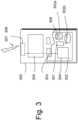
- FIG 3 illustrates an example of a UE 300, such as the UE illustrated on Figure 1 .
- the UE 300 may be provided by any device capable of sending and receiving radio signals.
- Non-limiting examples comprise a user equipment, a mobile station (MS) or mobile device such as a mobile phone or what is known as a 'smart phone', a computer provided with a wireless interface card or other wireless interface facility (e.g., USB dongle), a personal data assistant (PDA) or a tablet provided with wireless communication capabilities, a machine-type communications (MTC) device, a Cellular Internet of things (CloT) device or any combinations of these or the like.
- the UE 300 may provide, for example, communication of data for carrying communications.
- the communications may be one or more of voice, electronic mail (email), text message, multimedia, data, machine data and so on.
- the UE 300 may receive signals over an air or radio interface 307 via appropriate apparatus for receiving and may transmit signals via appropriate apparatus for transmitting radio signals.
- transceiver apparatus is designated schematically by block 306.
- the transceiver apparatus 306 may be provided for example by means of a radio part and associated antenna arrangement.
- the antenna arrangement may be arranged internally or externally to the mobile device.
- the UE 300 may be provided with at least one processor 301, at least one memory ROM 302a, at least one RAM 302b and other possible components 303 for use in software and hardware aided execution of tasks it is designed to perform, including control of access to and communications with access systems and other communication devices.
- the at least one processor 301 is coupled to the RAM 302b and the ROM 302a.
- the at least one processor 301 may be configured to execute an appropriate software code 308.
- the software code 308 may for example allow to perform one or more of the present aspects.
- the software code 308 may be stored in the ROM 302a.
- the processor, storage and other relevant control apparatus can be provided on an appropriate circuit board and/or in chipsets. This feature is denoted by reference 304.
- the device may optionally have a user interface such as keypad 305, touch sensitive screen or pad, combinations thereof or the like.
- a user interface such as keypad 305, touch sensitive screen or pad, combinations thereof or the like.
- one or more of a display, a speaker and a microphone may be provided depending on the type of the device.
- One or more aspects of this disclosure relates to managing sidelink (SL) communications in a heterogeneous communication network.
- SL sidelink
- RP-221798 lists various objectives for managing SL communications in a heterogeneous communication network and reads as follows.
- R1-2208096 provides a summary of the submitted contributions, email discussion topics and outcomes during RAN1#110 meeting for AI 9.4.2
- LTE UEs and NR UEs may coexist in a heterogeneous communication system.
- the LTE UEs may perform direct SL communications via LTE with other LTE UEs over a PC5 interface.
- the NR UEs may perform direct SL communications via NR with other NR UEs over a PC5 interface.
- the LTE UEs may not perform direct SL communications via LTE with other NR UEs over a PC5 interface.
- the NR UEs may not perform direct SL communications via NR with other LTE UEs over a PC5 interface.
- the resource allocation for SL communications via LTE and the resource allocation for SL communications via NR may overlap causing a resource allocation conflict and interference at the LTE UEs and the NR UEs.
- the NR UEs may send NR SL control information (SCI).
- the NR SCI may include an indication of the resource allocation for SL communications via NR.
- the NR SCI may comprise a first stage and a second stage.
- the first stage of the NR SCI format 1-A is defined in 3GPP TS 38.212 section 8.3.1.1 by the following information fields.
- the LTE UEs may send LTE SCI.
- the LTE SCI may include an indication of the resource allocation for SL communication via UE.
- the LTE SCI format 0 is defined in 3GPP TS 36.212 section 5.4.3.1.1 by the following information fields.
- the LTE SCI format 1 is defined in 3GPP TS 36.212 section 5.4.3.1.2 by the following information fields.
- SL communications via LTE and SL communications via NR may comprise incompatibilities which makes it difficult, if not impossible for the LTE UEs to decode (i.e. understand) the NR SCI and for the NR UEs to decode (i.e. understand) the LTE SCI.
- the frame structure of SL communications via LTE may be different than the frame structure of SL communications via NR.
- the waveform of SL communications via LTE may be different than the waveform of SL communications via NR.
- SL communications via LTE may use single carrier frequency division multiple access (SC-FDMA) whereas SL communications via NR may use digital Fourier transform spread orthogonal frequency division multiplexing (DFT-s-OFDM).
- SC-FDMA single carrier frequency division multiple access
- DFT-s-OFDM digital Fourier transform spread orthogonal frequency division multiplexing
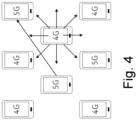
- Figure 4 shows a heterogenous communication network comprising type B UEs and type C UEs.
- a type B UE may be capable of performing SL communications via NR only.
- a type C may be capable of performing SL communication via LTE only.
- a type A UE (not illustrated) may be capable of performing SL communications via LTE and NR.
- SL communications via NR may be unicast, groupcast or broadcast SL communications.
- SL communications via LTE may be broadcast SL communications only.
- Figures 4 shows a scenario wherein type B UEs use a resource allocation to perform unicast SL communications via NR and wherein type C UEs use a resource allocation to perform broadcast SL communications via LTE.
- the type B UEs may not be aware of the resource allocation used by the type C UEs to perform broadcast SL communications via LTE.
- the type B UEs may not be aware of sensing results from the type C UEs.
- the type C UEs may not be aware of the resource allocation used by the type B UEs to perform unicast SL communications via NR.
- the type C UEs may not be aware of sensing results from the type B UEs.
- the resource allocation used by the type B UEs to perform unicast SL communications via NR and the resource allocation used by the type C UEs to perform broadcast SL communications via LTE may overlap causing a resource allocation conflict.
- Figure 5 shows a schematic representation of a resource allocation conflict in an heterogeneous communication system.
- Type B UEs and type C UEs may operate on a same carrier and the resource allocation used by type B UEs for performing SL communications via NR may overlap with the resource allocation used by type C UEs for performing SL communications via LTE.
- Type B UEs and type C UEs may operate on a same carrier and the resource allocation used by type B UEs for performing SL communications via NR may overlap entirely or partially with the resource allocation used by type C UEs for performing SL communications via LTE.
- Type B UEs and type C UEs may operate on a same carrier and the resource allocation used by type B UEs for performing SL communications via NR may overlap in the time domain or in the frequency domain with the resource allocation used by type C UEs for performing SL communications via LTE.
- the resource allocation used by type B UEs for sending a physical sidelink shared channel (PSSCH) and a physical sidelink control channel (PSCCH) via NR may fully or partially overlap with the resource allocation used by type C UEs for sending a PSSCH via LTE causing a resource allocation conflict
- the resource allocation used by the type B UEs to perform unicast SL communications via NR and the resource allocation used by the type C UEs to perform broadcast SL communications via LTE may be static, semi-static or dynamic.
- Figure 6 shows a schematic representation of static, semi-static or dynamic resource allocations to perform SL communications via NR and SL communications via LTE in a heterogeneous communication system (see R1-2205841).
- Using static or semi-static resource allocation may be a simple solution to address the problem of resource allocation conflict. However, it does not provide flexibility and does not accommodate different load and/or traffic conditions for the SL communications via LTE and the SL communications via NR.
- Using dynamic resource allocation may be a more complex solution to address the problem of resource allocation conflict. However, it provides flexibility and accommodates different load and/or traffic conditions for the SL communications via LTE and the SL communications via NR.
- One or more aspects of this disclosure provides a mechanism using dynamic resource allocation to avoid resource allocation conflict.
- One or more aspects of this disclosure provide a mechanism for sharing resource allocation and/or sensing results between UEs using incompatible radio access technologies (RATs) (e.g. LTE/ NR).
- RATs radio access technologies
- UEs using incompatible RATs e.g. LTE/ NR
- may not perform direct SL communications with each other i.e. over PC5
- UEs using compatible RATs e.g. LTE/ LTE or NR/NR
- One or more aspects of this disclosure provide a new logical function referred to as "SL manager”.
- the SL manager may be configured to determine a first SL resource allocation from a first module for performing SL communications via a first RAT (e.g. LTE) .
- the first SL resource allocation may be received from the first module.
- the first SL resource allocation may be included in a first sidelink control information (SCI) or a first inter UE coordination (IUC) information received from the first module.
- the IUC information may be carried in SCI format 2C or MAC-CE.
- the first SL resource allocation may be derived from first sensing results received from the first module.
- the SL manager may be configured to determine a second SL resource allocation from a second module for performing SL communication via a second RAT (e.g. NR).
- the second SL resource allocation may be received from the second module.
- the second SL resource allocation may be included in a second SCI or a second IUC information received from the second module.
- the IUC information may be carried in SCI format 2C or MAC-CE.
- the second SL resource allocation may be derived from second sensing results received from the second module.
- the SL manager may be configured to determine a resource allocation conflict based on the first SL resource allocation and the second SL resource allocation.
- the SL manager may be configured to determine a need to address the resource allocation conflict.
- the SL manager may be configured to determine a need to address the resource allocation conflict based on a distance between receivers associated with the first module and the second module being below a (pre)configurable threshold.
- the SL manager may be configured to determine that a distance between receivers associated with the first module and the second module based on basic safety messages or cooperative awareness messages received from the first module and the second module. These messages contain location information of the receivers associated with the first module and the second module.
- Figure 7 shows a schematic representation a heterogeneous communication system with a resource allocation conflict, when a distance between receivers associated with the first module and the second module is below a threshold.
- Figure 8 shows a schematic representation a heterogeneous communication system with a resource allocation conflict, when a distance between receivers associated with the first module and the second module is not below a threshold.
- the SL manager may be configured to determine a need to address the resource allocation conflict based on an interference level experienced by receivers associated with the first module and the second module being above a threshold.
- the SL manager may determine an interference level experienced by receivers associated with the first module and the second module based on a reference signal received power (RSRP) measurement or reference signal received quality (RSRQ) measurement at the first module and the second module.
- RSRP reference signal received power
- RSSQ reference signal received quality
- the SL manager may receive these measurements from the first module and the second module.
- the SL manager may be configured to determine a need to address the resource allocation conflict based on a probability of retransmission at the first module and the second module being above a threshold.
- the SL manager may determine need to address the resource allocation conflict based on a probability of retransmission at the first module and the second module based on a channel busy ratio at the first module and the second module.
- the channel busy ratio may define occupancy level of a SL frequency carrier (e.g. the percentage of used/reserved/allocated radio resources).
- the SL manager may be configured to determine whether the first module should adjust the first SL resource allocation or the second module should adjust the second SL resource allocation to address the resource allocation conflict.
- the SL manager may be configured to determine whether the first module should adjust the first SL resource allocation or the second module should adjust the second SL resource allocation based on an inter RAT prioritization.
- the SL manager may be configured to convert the first SL resource allocation into a converted first SL resource allocation compatible with the second RAT.
- the SL manager may be configured to generate a first pseudo SCI or first pseudo IUC information including the converted first SL resource allocation and mimicking the second SCI or the second IUC information including the second SL resource allocation.
- the first pseudo SCI or first pseudo IUC information has the same format as the second SCI or the second IUC information.
- the first pseudo SCI or the first pseudo IUC information may comprise an indication that the first pseudo SCI or the first pseudo IUC information originates from the SL manager rather than from another first module. That is, the first module may be aware that the first pseudo SCI or the first pseudo IUC information is a first pseudo SCI or a first pseudo IUC information originating from the SL manager rather than an original SCI or original IUC information originating from another first module.
- the indication may comprise a flag (i.e. one bit indicator).
- the first pseudo SCI or the first pseudo IUC information may not comprise an indication that the first pseudo SCI or the first pseudo IUC information originates from the SL manager rather than from another first module. That is, the first module may not be aware that the first pseudo SCI or the first pseudo IUC information is a first pseudo SCI or a first pseudo IUC information originating from the SL manager rather than an original SCI or original IUC information originating from another first module.
- the SL manager may be configured to send the first pseudo SCI or first pseudo IUC information to the second module.
- the second module may receive the first pseudo SCI or first pseudo IUC information from the SL manager.
- the second module may adjust the second SL resource allocation based on the converted first SL resource allocation. For example, the second module may exclude resources included in the second SL resource allocation that are included in the converted first SL resource allocation.
- the second module may use the adjusted second SL resource allocation to perform SL communication via the second RAT.
- the PHY layer of the second module may receive (directly or indirectly) the first pseudo SCI or first pseudo IUC information from the SL manager.
- the PHY layer may enable adjusting the second SL resource allocation based on the first pseudo SCI or first pseudo IUC information.
- the PHY layer of the second module may adjust the second SL resource allocation based on the converted first SL resource allocation and may send the adjusted second SL resource allocation to the MAC layer of the second module.
- the MAC layer of the second module may then select resources within the adjusted second SL resource allocation to use for performing SL communications via the second RAT.
- the MAC layer of the second module may receive directly or indirectly) the first pseudo SCI or first pseudo IUC information from the SL manager.
- the MAC layer may enable adjusting the second SL resource allocation based on the first pseudo SCI or first pseudo IUC information.
- the MAC layer of the second module may adjust the second SL resource allocation based on the converted first SL resource allocation.
- the MAC layer of the second module may then select resources within the adjusted second SL resource allocation to use for performing SL communications via the second RAT.
- the SL manager may be configured to convert the second SL resource allocation into a converted second SL resource allocation compatible with the first RAT.
- the SL manager may be configured to generate a second pseudo SCI or second pseudo IUC information including the converted second SL resource allocation and mimicking the first SCI or the first IUC information including the first SL resource allocation.
- the second pseudo SCI or second pseudo IUC information has the same format as the first SCI or the first IUC information.
- the second pseudo SCI or the second pseudo IUC information may comprise an indication that the second pseudo SCI or the second pseudo IUC information originates from the SL manager rather than from another second module. That is, the second module may be aware that the second pseudo SCI or the second pseudo IUC information is a second pseudo SCI or a second pseudo IUC information originating from the SL manager rather than an original SCI or original IUC information originating from another second module.
- the indication may comprise a flag (i.e. one bit indicator).
- the second pseudo SCI or the second pseudo IUC information may not comprise an indication that the second pseudo SCI or the second pseudo IUC information originates from the SL manager rather than from another second module. That is, the second module may not be aware that the second pseudo SCI or the second pseudo IUC information is a second pseudo SCI or a second pseudo IUC information originating from the SL manager rather than an original SCI or original IUC information originating from another second module.
- the SL manager may be configured to send the second pseudo SCI or second pseudo IUC information to the first module.
- the first module may receive the second pseudo SCI or second pseudo IUC information from the SL manager.
- the first module may adjust the first SL resource allocation based on the converted second SL resource allocation. For example, the first module may exclude resources included in the first SL resource allocation that are included in the converted second SL resource allocation.
- the first module may use the adjusted first SL resource allocation to perform SL communication via the first RAT.
- the PHY layer of the first module may receive (directly or indirectly) the second pseudo SCI or second pseudo IUC information from the SL manager.
- the PHY layer may enable adjusting the first SL resource allocation based on the second pseudo SCI or second pseudo IUC information.
- the PHY layer of the first module may adjust the first SL resource allocation based on the converted second SL resource allocation and may send the adjusted first SL resource allocation to the MAC layer of the first module.
- the MAC layer of the first module may then select resources within the adjusted first SL resource allocation to use for performing SL communications via the first RAT.
- the MAC layer of the first module may receive directly or indirectly) the second pseudo SCI or second pseudo IUC information from the SL manager.
- the MAC layer may enable adjusting the first SL resource allocation based on the second pseudo SCI or second pseudo IUC information.
- the MAC layer of the first module may adjust the first SL resource allocation based on the converted second SL resource allocation.
- the MAC layer of the first module may then select resources within the adjusted first SL resource allocation to use for performing SL communications via the first RAT.
- the first module and the second module may be part of different UEs.
- the first module may be part of a first UE (e.g. type C UE) and the second module may be part of a second UE (e.g. type B UE).
- the first UE or the second UE may perform resource reselection to address the resource allocation conflict.
- the first UE or the second UE may be triggered to perform resource reselection to address the resource allocation conflict via an IUC scheme 2.
- the IUC information sent from a UE to another UE is the preferred or non-preferred SL resource allocation for the other UE.
- the IUC information sent from a UE to another UE is the presence of a resource conflict on the SL resource allocation indicated by the other UE.
- the SL manager may be part of a third UE (e.g. type A UE) comprising a first module for performing SL communications via the first RAT and a second module for performing SL communications via the second RAT.
- the SL manager may be implemented in an application layer (e.g. vehicle to everything (V2X) layer).
- the first module may use a first resource allocation for performing SL communications via the first RAT.
- the second module may use a second resource allocation for performing SL communications via the second RAT.
- the first module and the second module may not share the first resource allocation and the second resource allocation at the physical layer (PHY) level or the medium access control (MAC) level.
- the first module and the second module may share the first resource allocation and the second resource allocation at the application layer.
- the SL manager may be part of the 5GC. This may only be possible for SL resource allocation mode 1.
- the first module and the second module may be part of a same UE.
- the first module and the second module may be part of a UE (e.g. type A UE).
- the UE may perform resource reselection to address the resource allocation conflict.
- the SL manager may be part of the same UE (e.g. type A UE) comprising the first module for performing SL communications via the first RAT and the second module for performing SL communications via the second RAT.
- the SL manager may be implemented in an application layer (e.g. vehicle to everything (V2X) layer).
- the first module may use a first resource allocation for performing SL communications via the first RAT.
- the second module may use a second resource allocation for performing SL communications via the second RAT.
- the first module and the second module may not share the first resource allocation and the second resource allocation at the physical layer (PHY) level or the medium access control (MAC) level.
- the first module and the second module may share the first resource allocation and the second resource allocation at the application layer.
- the SL manager may be part of the 5GC. This may only be possible for SL resource allocation mode 1.
- modules may be deployed at the same time in a UE (e.g. a vehicle).
- a UE e.g. a vehicle
- the product life cycle of a UE is longer than that of the modules and therefore it may happen that the modules need to be upgraded and changed occasionally.
- Each module may send module properties to the SL manager.
- the module properties may comprise at least one of: a presence, a version, a RAT or capabilities.
- the SL manager may know what kind of conversions may be needed. For example, a vehicle may comprise 4G modules and 5G modules initially but after upgrade the vehicle may comprise 6G modules. Therefore, the SL manager may need to convert between 4G, 5G and 6G RATs. It is expected that 4G will be phased out at some point in the future resulting into disposal of 4G modules. After the removal of 4G modules the SL manager may only need to convert between 5G and 6G RATs.
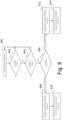
- Figure 9 shows a chart of a process for managing sidelink communications in a heterogeneous communication system.
- a SL manager may monitor SCI.
- the SL manager may receive a LTE SCI from a first module for performing SL communications via LTE.
- LTE SCI may include a first SL resource allocation.
- the SL manager may receive a NR SCI from a second module for performing SL communications via NR.
- the NR SCI may include a second SL resource allocation.
- the SL manager may determine if there is a resource allocation problem (i.e. co-channel coexistence problem) based on the first SL resource allocation and the second SL resource allocation.
- a resource allocation problem i.e. co-channel coexistence problem
- the process goes to step 904.
- a resource allocation problem i.e. co-channel coexistence problem
- the process goes back to step 900.
- the SL manager may determine if there is a need to address the resource allocation conflict.
- the SL manager may determine if the distance between the receivers associated with the first module and the second module is below a threshold.
- step 906 If the SL manager determines that there is a need to address the resource allocation conflict, the process goes to step 906.
- step 906 the SL manager may determine if the first module should adjust the first SL resource allocation of if the second module should adjust the second SL resource allocation to address the resource allocation conflict based on a priority between the first module and the second module.
- the process goes to steps 908 and 910.
- SL manager determines that the second module should adjust the first SL resource allocation to address the resource allocation conflict, the process goes to steps 912 and 914.
- the SL manager may convert the second SL resource allocation into a converted second SL resource allocation and may send a pseudo LTE SCI including the converted second SL resource allocation to the first module.
- the first module may adjust the first resource allocation based on the converted second SL resource allocation.
- the first module may vacate resources of the first resource allocation that are included in the converted second SL resource allocation.
- the first module may use the adjusted first SL resource allocation to perform SL communications via LTE.
- the SL manager may convert the first SL resource allocation into a converted first SL resource allocation and may send a pseudo NR SCI including the converted first SL resource allocation to the second module.
- the second module may adjust the second resource allocation based on the converted first SL resource allocation.
- the second module may vacate resources of the second resource allocation that are included in the converted first SL resource allocation.
- the second module may use the adjusted second SL resource allocation to perform SL communications via NR.
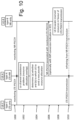
- Figure 10 shows a signalling diagram of a method for managing sidelink communications in a heterogeneous communication system.
- a type A UE may include the SL manager, a first module for performing SL communication via NR and a second module for performing SL communication via LTE.
- a type B UE may include a first module for performing SL communication via NR.
- a type C UE may include a second module for performing SL communication via LTE.
- a type A may monitor SCI from neighbouring UEs.
- the type A UE may receive a LTE SCI from a type C UE.
- the LTE SCI may include a first SL resource allocation.
- the SL manager may receive a NR SCI from a type B UE.
- the NR SCI may include a second SL resource allocation.
- the type A UE may determine if there is a resource allocation problem (i.e. co-channel coexistence problem) based on the first SL resource allocation and the second SL resource allocation.
- a resource allocation problem i.e. co-channel coexistence problem
- step 1004(a) the type A UE may determine that there is a need to address the resource allocation conflict.
- the type A UE may determine that the type C UE has priority and therefore that the type B should adjust the second SL resource allocation.
- the type A UE may convert the first SL resource allocation into a converted first SL resource allocation.
- the type A UE may send a NR physical sidelink control channel (PSCCH) to the type B UE.
- PSCCH may comprise a pseudo NR SCI including the converted first resource allocation.
- the pseudo NR SCI may comprise an indication that the pseudo NR SCI is a pseudo NR SCI originating from the type A UE rather than an original NR SCI originating from another type B UE.
- the type B UE may adjust the second SL resource allocation based on the converted first SL resource allocation.
- the type B UE may vacate resources of the second SL resource allocation that are included in the converted first SL resource allocation.
- the type B UE may use the adjusted second SL resource allocation to perform SL communications via NR on the NR physical sidelink shared channel (PSSCH).
- PSSCH physical sidelink shared channel
- the type B UE may vacate all resources of the second SL resource allocation and therefore the type B UE may stop performing SL communications via NR on the NR PSSCH.
- the type B UE may continue performing SL communications via LTE on the LTE PSSCH using the first SL resource allocation.
- Figure 11 shows a block diagram of a method for managing SL communications in a heterogeneous communication system.
- the method may be performed by an apparatus, such as a CN element or a type A UE.
- the apparatus may comprise a SL manager.
- the apparatus may determine, by the SL manager, a first resource allocation used by a first module for performing SL communications via a first RAT.
- the apparatus may determine, by the SL manager, a second resource allocation used by a second module for performing SL communications via a second RAT.
- the apparatus may determine, by the SL manager, a resource allocation conflict based on the first resource allocation and the second resource allocation.
- the apparatus may convert, by the SL manager, the first resource allocation into a converted first resource allocation compatible with the second RAT or the second resource allocation into a converted second resource allocation compatible with the first RAT.
- the apparatus may send, by the SL manager, the converted first resource allocation to the second module or the converted second resource allocation to the first module.
- the apparatus may be CN element.
- the apparatus may be a UE capable of performing SL communications via the first RAT and capable of performing SL communications via the second RAT.
- the first module and the second module may be part of the apparatus.
- the first module may be part of a first apparatus capable of performing SL communications via the first RAT and not capable of performing SL communications via the second RAT.
- the second module may be part of a second apparatus not capable of performing SL communications via the first RAT and capable of performing SL communications via the second RAT.
- the first RAT may comprise LTE.
- the second RAT may comprise NR.
- the first resource allocation may be received from the first module in first SCI or first IUC information or derived from sensing results from the first module.
- the second resource allocation may be received from the second module in second SCI or second IUC information or derived from sensing results from the second module.
- the apparatus may generate, by the SL manager, a first pseudo SCI or a first pseudo IUC information including the converted first resource allocation.
- the apparatus may generate, by the SL manager, a second pseudo SCI or a second pseudo IUC information including the converted second resource allocation.
- the first pseudo SCI or the first pseudo IUC information may mimic the second SCI or the second IUC information. That is, the first pseudo SCI or the first pseudo IUC information may appear to have been sent from the second module.
- the first pseudo SCI or the first pseudo IUC information may have the same format as the second SCI or the second IUC information.
- the second pseudo SCI or the second pseudo IUC information may mimic the first SCI or the first IUC information. That is, the second pseudo SCI or the second pseudo IUC information may appear to have been sent from the first module.
- the second pseudo SCI or the second pseudo IUC information may have the same format as the first SCI or the first IUC information.
- the first pseudo SCI or the first pseudo IUC information may not comprise an indication that the first pseudo SCI or the first pseudo IUC information originates from the apparatus.
- the second pseudo SCI or the second pseudo IUC information may not comprise an indication that the second pseudo SCI or the second pseudo IUC information originates from the apparatus.
- the first module may not be aware that the first pseudo SCI or the first pseudo IUC information is a pseudo SCI or pseudo IUC information originating from the apparatus rather than an original SCI or IUC information originating from another first module.
- the second module may not be aware that the second pseudo SCI or the second pseudo IUC information is a pseudo SCI or pseudo IUC information originating from the apparatus rather than an original SCI or IUC information originating from another second module.
- the first pseudo SCI or the first pseudo IUC information may comprise an indication that the first pseudo SCI or the first pseudo IUC information originates from the apparatus rather than from another first module.
- the second pseudo SCI or the second pseudo IUC information may comprise an indication that the second pseudo SCI or the second pseudo IUC information originates from the apparatus rather than from another second module.
- the first module may be aware that the first pseudo SCI or the first pseudo IUC information is a pseudo SCI or pseudo IUC information originating from the apparatus rather than an original SCI or IUC information originating from another first module.
- the second module may be aware that the second pseudo SCI or the second pseudo IUC information is a pseudo SCI or pseudo IUC information originating from the apparatus rather than an original SCI or IUC information originating from another second module.
- the indication may be conveyed via a flag (single bit indicator).
- the apparatus may sending, by the SL manager, the first pseudo SCI or the first pseudo IUC information to the second module.
- the apparatus may send, by the SL manager, the second pseudo SCI or the second pseudo IUC information to the first module.
- the apparatus may determine, by the SL manager, a need to address the resource allocation conflict based on at least one of: a distance between receivers associated with the first module and the second module, an interference level experienced by receivers associated with the first module and the second module or a probability of retransmission at the first module and the second module.
- the apparatus may convert, by the SL manager, the first resource allocation or the second resource allocation in response to determining the need to address the resource allocation conflict.
- the apparatus may determine whether to convert the first resource allocation or the second resource allocation in response to determining the need to address the resource allocation conflict based on a priority between the first module and the second module.
- the apparatus may determine, by the SL manager, the distance between receivers associated with the first module and the second module based on basic safety messages or cooperative awareness messages received from the first module and the second module.
- Figure 12 shows a block diagram of a method for managing SL communications in a heterogeneous communication system. The method may be performed by an apparatus, such as a type A UE, a type B UE or a type CUE.
- Figure 13 shows a schematic representation of non-volatile memory media 1300 storing instructions and/or parameters which when executed by a processor allow the processor to perform one or more of the steps of the methods of Figures 11 and 12 .
- the apparatus may send, from a first module performing SL communications via a first RAT to a SL manager, a first resource allocation or first sensing results.
- the apparatus may receive, by the first module from the SL manager, a converted second resource allocation compatible with the first RAT.
- the apparatus may determine, by the first module, to adjust the first resource allocation based on the converted second resource allocation.
- the apparatus may be a UE capable of performing SL communications via the first RAT and capable of performing SL communications via the second RAT.
- the apparatus may be a UE capable of performing SL communications via the first RAT and not capable of performing SL communications via the second RAT.
- the apparatus may adjust, by the first module, the first resource allocation based on the converted second resource allocation.
- the apparatus may use, by the first module, the adjusted first resource allocation.
- Adjusting the first resource allocation based on the converted second resource allocation may comprise excluding resources from the first resource allocation that are included in the converted second resource allocation.
- some embodiments may be implemented in hardware or special purpose circuits, software, logic or any combination thereof.
- some aspects may be implemented in hardware, while other aspects may be implemented in firmware or software which may be executed by a controller, microprocessor or other computing device, although embodiments are not limited thereto.
- firmware or software which may be executed by a controller, microprocessor or other computing device, although embodiments are not limited thereto. While various embodiments may be illustrated and described as block diagrams, flow charts, or using some other pictorial representation, it is well understood that these blocks, apparatus, systems, techniques or methods described herein may be implemented in, as non-limiting examples, hardware, software, firmware, special purpose circuits or logic, general purpose hardware or controller or other computing devices, or some combination thereof.
- the embodiments may be implemented by computer software stored in a memory and executable by at least one data processor of the involved entities or by hardware, or by a combination of software and hardware. Further in this regard it should be noted that any procedures, e.g., as in Figures 11 and 12 , may represent program steps, or interconnected logic circuits, blocks and functions, or a combination of program steps and logic circuits, blocks and functions.
- the software may be stored on such physical media as memory chips, or memory blocks implemented within the processor, magnetic media such as hard disk or floppy disks, and optical media such as for example DVD and the data variants thereof, CD.
- the memory may be of any type suitable to the local technical environment and may be implemented using any suitable data storage technology, such as semiconductor-based memory devices, magnetic memory devices and systems, optical memory devices and systems, fixed memory and removable memory.
- the data processors may be of any type suitable to the local technical environment, and may include one or more of general purpose computers, special purpose computers, microprocessors, digital signal processors (DSPs), application specific integrated circuits (ASIC), gate level circuits and processors based on multi-core processor architecture, as non-limiting examples.
- circuitry may be configured to perform one or more of the functions and/or method steps previously described. That circuitry may be provided in the base station and/or in the communications device.
- circuitry may refer to one or more or all of the following:
- circuitry also covers an implementation of merely a hardware circuit or processor (or multiple processors) or portion of a hardware circuit or processor and its (or their) accompanying software and/or firmware.
- circuitry also covers, for example integrated device.
Landscapes
- Engineering & Computer Science (AREA)
- Computer Networks & Wireless Communication (AREA)
- Signal Processing (AREA)
- Quality & Reliability (AREA)
- Mobile Radio Communication Systems (AREA)
Priority Applications (2)
| Application Number | Priority Date | Filing Date | Title |
|---|---|---|---|
| EP22204166.7A EP4362586A1 (de) | 2022-10-27 | 2022-10-27 | Vorrichtung, verfahren und computerprogramm |
| US18/383,615 US20240147505A1 (en) | 2022-10-27 | 2023-10-25 | Apparatus, method, and computer program |
Applications Claiming Priority (1)
| Application Number | Priority Date | Filing Date | Title |
|---|---|---|---|
| EP22204166.7A EP4362586A1 (de) | 2022-10-27 | 2022-10-27 | Vorrichtung, verfahren und computerprogramm |
Publications (1)
| Publication Number | Publication Date |
|---|---|
| EP4362586A1 true EP4362586A1 (de) | 2024-05-01 |
Family
ID=84043778
Family Applications (1)
| Application Number | Title | Priority Date | Filing Date |
|---|---|---|---|
| EP22204166.7A Pending EP4362586A1 (de) | 2022-10-27 | 2022-10-27 | Vorrichtung, verfahren und computerprogramm |
Country Status (2)
| Country | Link |
|---|---|
| US (1) | US20240147505A1 (de) |
| EP (1) | EP4362586A1 (de) |
Families Citing this family (1)
| Publication number | Priority date | Publication date | Assignee | Title |
|---|---|---|---|---|
| US20240292434A1 (en) * | 2023-02-27 | 2024-08-29 | Qualcomm Incorporated | Method for nr sidelink and lte sidelink co-channel coexistence |
Citations (2)
| Publication number | Priority date | Publication date | Assignee | Title |
|---|---|---|---|---|
| EP3849275A1 (de) * | 2018-09-05 | 2021-07-14 | NTT DoCoMo, Inc. | Benutzervorrichtung und basisstationsvorrichtung |
| US11172508B2 (en) * | 2018-11-01 | 2021-11-09 | Qualcomm Incorporated | Methods to avoid transmission collisions for NR V2X and LTE V2X within the same device |
Family Cites Families (2)
| Publication number | Priority date | Publication date | Assignee | Title |
|---|---|---|---|---|
| US20250008549A1 (en) * | 2021-10-26 | 2025-01-02 | Electronics And Telecommunications Research Institute | Method and device for transmitting sidelink resource coordination information |
| EP4427520A4 (de) * | 2021-11-05 | 2025-09-17 | Qualcomm Inc | Koordinationsinformationen zwischen benutzergeräten |
-
2022
- 2022-10-27 EP EP22204166.7A patent/EP4362586A1/de active Pending
-
2023
- 2023-10-25 US US18/383,615 patent/US20240147505A1/en active Pending
Patent Citations (2)
| Publication number | Priority date | Publication date | Assignee | Title |
|---|---|---|---|---|
| EP3849275A1 (de) * | 2018-09-05 | 2021-07-14 | NTT DoCoMo, Inc. | Benutzervorrichtung und basisstationsvorrichtung |
| US11172508B2 (en) * | 2018-11-01 | 2021-11-09 | Qualcomm Incorporated | Methods to avoid transmission collisions for NR V2X and LTE V2X within the same device |
Non-Patent Citations (3)
| Title |
|---|
| 3GPP TS 36.212 |
| 3GPP TS 38.212 |
| INTEL CORPORATION: "Coexistence Mechanisms for eV2X Services", vol. RAN WG1, no. Chengdu, China; 20181008 - 20181012, 29 September 2018 (2018-09-29), XP051518186, Retrieved from the Internet <URL:http://www.3gpp.org/ftp/tsg%5Fran/WG1%5FRL1/TSGR1%5F94b/Docs/R1%2D1810781%2Ezip> [retrieved on 20180929] * |
Also Published As
| Publication number | Publication date |
|---|---|
| US20240147505A1 (en) | 2024-05-02 |
Similar Documents
| Publication | Publication Date | Title |
|---|---|---|
| US12348438B2 (en) | Wireless communication method and terminal device | |
| EP3791646B1 (de) | Bestimmung des starts einer funkrufgelegenheit | |
| US10313993B2 (en) | Synchronization signal detection and transmission for radio system | |
| EP2222128A1 (de) | Verfahren zum senden, übertragen und scheduling einer systemnachricht in einem langzeit-evolutions-system | |
| CN113595706B (zh) | 数据传输的方法、终端设备和网络设备 | |
| US12101801B2 (en) | Method performed by user equipment, and user equipment | |
| CN112217618B (zh) | 信息传输方法及装置 | |
| US20220232566A1 (en) | Method and device for determining time-domain resource | |
| WO2024005024A1 (en) | User equipments and methods for determining time-frequency resource set for enhanced duplex operation | |
| CN112242884A (zh) | 信息传输方法及装置 | |
| WO2020177040A1 (zh) | 无线通信的方法、终端设备和网络设备 | |
| JP2026053330A (ja) | 通信方法及び通信装置 | |
| US20210195587A1 (en) | Broadcast operation with bi-directional subframe slots in multibeam deployment | |
| US20240147505A1 (en) | Apparatus, method, and computer program | |
| WO2020061954A1 (zh) | 区分寻呼消息的方法、网络设备和终端设备 | |
| CN110830402B (zh) | 一种同步广播信息的发送、检测方法及装置 | |
| WO2024005026A1 (en) | User equipments and methods for determining time-frequency resource set for enhanced duplex operation | |
| WO2021063909A1 (en) | Apparatus, method and computer program | |
| US20230345466A1 (en) | User equipments and methods for determining time-frequency resource set for enhanced duplex operation | |
| US20250159697A1 (en) | Methods and apparatuses of resource allocation for sidelink communication | |
| CN115150950B (zh) | 一种uss的检测及其控制方法及装置 | |
| US20250097964A1 (en) | Apparatus, method, and computer program | |
| WO2024171687A1 (en) | Network controlled repeater (ncr) control information for dynamic scheduled transmissions | |
| WO2020206622A1 (zh) | 无线通信的方法和设备 | |
| US11374727B2 (en) | Methods and apparatus for configuring TDD operation of a narrowband internet of things communications system |
Legal Events
| Date | Code | Title | Description |
|---|---|---|---|
| PUAI | Public reference made under article 153(3) epc to a published international application that has entered the european phase |
Free format text: ORIGINAL CODE: 0009012 |
|
| STAA | Information on the status of an ep patent application or granted ep patent |
Free format text: STATUS: REQUEST FOR EXAMINATION WAS MADE |
|
| 17P | Request for examination filed |
Effective date: 20230404 |
|
| AK | Designated contracting states |
Kind code of ref document: A1 Designated state(s): AL AT BE BG CH CY CZ DE DK EE ES FI FR GB GR HR HU IE IS IT LI LT LU LV MC ME MK MT NL NO PL PT RO RS SE SI SK SM TR |
|
| STAA | Information on the status of an ep patent application or granted ep patent |
Free format text: STATUS: EXAMINATION IS IN PROGRESS |
|
| 17Q | First examination report despatched |
Effective date: 20250113 |