EP4364752A1 - Verbesserter impfstoff - Google Patents
Verbesserter impfstoff Download PDFInfo
- Publication number
- EP4364752A1 EP4364752A1 EP22205884.4A EP22205884A EP4364752A1 EP 4364752 A1 EP4364752 A1 EP 4364752A1 EP 22205884 A EP22205884 A EP 22205884A EP 4364752 A1 EP4364752 A1 EP 4364752A1
- Authority
- EP
- European Patent Office
- Prior art keywords
- nucleotides
- segment
- molecule
- pool
- rna
- Prior art date
- Legal status (The legal status is an assumption and is not a legal conclusion. Google has not performed a legal analysis and makes no representation as to the accuracy of the status listed.)
- Withdrawn
Links
Images



Classifications
-
- C—CHEMISTRY; METALLURGY
- C12—BIOCHEMISTRY; BEER; SPIRITS; WINE; VINEGAR; MICROBIOLOGY; ENZYMOLOGY; MUTATION OR GENETIC ENGINEERING
- C12N—MICROORGANISMS OR ENZYMES; COMPOSITIONS THEREOF; PROPAGATING, PRESERVING, OR MAINTAINING MICROORGANISMS; MUTATION OR GENETIC ENGINEERING; CULTURE MEDIA
- C12N15/00—Mutation or genetic engineering; DNA or RNA concerning genetic engineering, vectors, e.g. plasmids, or their isolation, preparation or purification; Use of hosts therefor
- C12N15/09—Recombinant DNA-technology
- C12N15/63—Introduction of foreign genetic material using vectors; Vectors; Use of hosts therefor; Regulation of expression
- C12N15/79—Vectors or expression systems specially adapted for eukaryotic hosts
- C12N15/85—Vectors or expression systems specially adapted for eukaryotic hosts for animal cells
-
- A—HUMAN NECESSITIES
- A61—MEDICAL OR VETERINARY SCIENCE; HYGIENE
- A61K—PREPARATIONS FOR MEDICAL, DENTAL OR TOILETRY PURPOSES
- A61K39/00—Medicinal preparations containing antigens or antibodies
- A61K2039/51—Medicinal preparations containing antigens or antibodies comprising whole cells, viruses or DNA/RNA
- A61K2039/53—DNA (RNA) vaccination
-
- C—CHEMISTRY; METALLURGY
- C07—ORGANIC CHEMISTRY
- C07K—PEPTIDES
- C07K2319/00—Fusion polypeptide
- C07K2319/01—Fusion polypeptide containing a localisation/targetting motif
-
- C—CHEMISTRY; METALLURGY
- C12—BIOCHEMISTRY; BEER; SPIRITS; WINE; VINEGAR; MICROBIOLOGY; ENZYMOLOGY; MUTATION OR GENETIC ENGINEERING
- C12N—MICROORGANISMS OR ENZYMES; COMPOSITIONS THEREOF; PROPAGATING, PRESERVING, OR MAINTAINING MICROORGANISMS; MUTATION OR GENETIC ENGINEERING; CULTURE MEDIA
- C12N2830/00—Vector systems having a special element relevant for transcription
- C12N2830/50—Vector systems having a special element relevant for transcription regulating RNA stability, not being an intron, e.g. poly A signal
Definitions
- the present disclosure concerns the use of short epitopes, preferably in a pool, for vaccination.
- the present disclosure refers to a process for the production of a DNA molecule able to be transcribed into a RNA vaccine, wherein the encoded epitope is purposedly short.
- Document US2015038373A1 provides a method for de novo gene synthesis.
- the document provides methods, devices and systems that can quickly synthesize large gene libraries or relatively longer oligonucleotide fragments efficiently with less error.
- the substrate used for de novo gene synthesis is silicon.
- RNA cancer vaccine provides a ribonucleic acid (RNA) cancer vaccine that can safely direct the body's cellular machinery to produce nearly any cancer protein or fragment thereof of interest.
- This document exemplified a cancer vaccine having 20 epitopes or 52 epitopes.
- the document describes a mRNA cancer vaccine having an open reading frame encoding a concatemer of epitopes.
- the document WO2020/097291 describes a method for treating a patient's cancer with an mRNA vaccine where the vaccine nucleic acid has maximum anti-cancer efficacy for a given length.
- the document WO2018/183922 describes a method and compositions for a vaccine against malaria, wherein the vaccine can comprise a cocktail of several antigens produced using plasmids or adenoviral expression vectors.
- the present invention discloses a synthetic DNA molecule, a pool of synthetic DNA molecules and their corresponding RNAs for use in vaccination as defined in the claims.
- RNA-based vaccine formulations have developed RNA-based vaccine formulations and, to their surprise, when a pool of RNA molecules with short epitope segment is administered in vivo, the immune response is very strong (as compared with concatemers), whereas a dilution would have been expected.
- a first aspect of the present invention is a (synthetic) DNA molecule comprising :
- the encoded epitope has a size between 7 and 50 amino acids, preferably between 8 and 45 amino acids, more preferably a size between 12 and 40 amino acids, still more preferably a size between 16 and 35 amino acids, such as between 20 (or 21, 22, 23, 24, 25) and 31 (or 30, 29, 28, 27) amino acids.
- These epitopes can be designed with flanking residues, at their C or N terminus, for instance one or two amino acids, such as glycine.
- the epitope does not comprise a signal peptide nor an endosomial addressing sequence
- the epitope comprises a methionine residue at its N terminal, either because the epitope as designed (from its target) comprises a methionine, or because a methionine is added at the N terminal flanking residue.
- epitopes can be designed, starting from a target (peptide from an infectious agent, neoantigen; peptide causing an unwanted immune response in a patient), for a preferred loading by MHC Type I (sequence prediction and the design of an epitope of a minimal size of 7 amino acids), MHC Type 2 (sequence prediction and the design of a minimal size of 12 amino acids), or by other presentation systems, including the CD1(d) molecule of the NKT cells (prediction; minimal size of 7 amino acids).
- MHC Type I sequence prediction and the design of an epitope of a minimal size of 7 amino acids
- MHC Type 2 sequence prediction and the design of a minimal size of 12 amino acids
- other presentation systems including the CD1(d) molecule of the NKT cells (prediction; minimal size of 7 amino acids).
- CD1(d) molecule of the NKT cells prediction; minimal size of 7 amino acids.
- such short epitopes while potentially designed for the loading by one class of receptor of immune cells (e.
- Preferred promoters are from a viral origin, and/or generate mRNA with a 5'end Cap structure, such as the T7 promotor and/or sequences sharing at least 93% of identity with the segment between nucleotides 1 and 15 of SEQ ID NO:1.
- the Open Reading Frame of this synthetic DNA molecule comprises a segment being an endosomal signal sequence having a size between 60 and 99 nucleotides and/or this segment shares at least 95% of identity with the segment between nucleotides 66 and 158 of SEQ ID NO:1 and/or this segment after translation shares at least 95% of identity with the encoded corresponding peptide.
- This endosomal signal sequence segment is in-frame with this epitope. However, in the above-mentioned sizes (size of the epitope), this endosomal signal sequence is not part of the epitope.
- This sequence element addresses the epitope in the endosomes, possibly in proximity to nascent MHC Type I molecules (or MHC, Type 2 molecules), which will advantageously increase the probability of being loaded by an MHC Type I (or Type 2) molecule.
- this sequence element can be omitted or a different peptide signal sequence is preferred, so as to no longer address the epitope in the proximity to nascent MHC Type I molecule.
- an ATG codon methionine
- the Open Reading Frame of this synthetic DNA molecules further comprises a (second) segment (in-frame with the epitope, preferably downstream the epitope) for addressing the encoded epitope to MHC molecules, such as nascent MHC Type I molecule.
- this segment has a size comprised between 60 and 300, preferably between 90 and 120 nucleotides and/or this segment shares at least 95% of identity with the segment between nucleotides 162 and 284 of SEQ ID NO:1 and/or this segment shares at least 95% of identity with the encoded corresponding peptide and/or this segment shares the same function as the peptide encoded by the segment between nucleotides 162 and 284 of SEQ ID NO:1.
- this sequence element is advantageously omitted.
- the synthetic DNA molecule further comprises a segment for (improving) the translation being at the 5' of (i.e. before) the epitope (and/or Open Reading Frame) and/or a segment for improving the stability within a Eukaryotic cell of the said transcribed mRNA molecule, which is at the 3' (downstream) of this Open Reading Frame.
- this segment for improving the stability within a Eukaryotic cell of the said transcribed mRNA molecule which is at the 3' of this Open Reading Frame, has a size comprised between 50 and 200 nucleotides, more preferably between 100 and 150 nucleotides and/or this segment shares at least 95% of identity with the segment located between nucleotides 285 and 419 of SEQ ID NO:1.
- the 5' segment for (improving) the translation has a size between 10 and 100 nucleotides, preferably between 20 et 75 nucleotides and/or shares at least 95% of identity with the segment spanning between nucleotides 16 and 65 of SEQ ID NO:1.
- the 3'Poly A tail segment comprises at least 15 consecutive adenosine residues.
- the 3' Poly A tail segment has a size of at least 50 nucleotides, preferably of at least 70 nucleotides, such as at least about 100 nucleotides and/or comprises more than 90% of adenosine residues (preferably more than 95% of adenosine residues).
- Poly-A tails are either engineered using only adenosine residues, yet, alternative, poly A tails can be segmented and are still working.
- this 3' Poly A tail segment consists of 100% of adenosine, or consists essentially of adenosine; for instance the poly A tail segment consists of (i) stretches of at least 10 consecutive adenosine residues, preferably at least 20, 30, 40 consecutive adenosine residues, (ii) separated by other nucleotides (a stretch of less than 20, preferably less than 10 residues, preferably less than 5 residues not forming the above stretch), and (iii) followed by a second stretch of at least 10 consecutive adenosine residues (independently of the length of the first stretch, preferably at least 20, 30, 40 consecutive adenosine residues), possibly followed again by separating nucleotides (less than 20, preferably less than 10, less than 5 residues not forming an homo-adenosine stretch) and subsequent adenosine stretches.
- segmented poly adenosine stretches are also comprised by the terminology 'Poly A segment', provided that at least 50, preferably at least 90 adenosine residues, or even preferably at least 120 adenosine residues are present in these stretches, to form the 'Poly A tail segment'.
- the Open Reading Frame and the 3' segment for improving the stability within a Eukaryotic cell of the transcribed mRNA molecule, bridging the Open Reading Frame and the 3' PolyA tail segment have together a size comprised between 200 and 700 nucleotides, preferably between 300 and 600 nucleotides, more preferably between 400 and 500 nucleotides.
- the synthetic DNA molecule of the present invention is not identical to any one of the SEQ ID NO:2 to 61.
- the synthetic DNA molecule of the present invention (while being different of SEQ IDs Nos 2 to 61) shares similarities with SEQ ID NO:1 and comprises one epitope ("nnn”; hence the triplet "nnn” does not encode only one amino acid, but has a size as defined here below) encoding a peptide having a size between 7 and 50 amino acids, preferably between 8 and 45 amino acids, more preferably a size between 12 and 40 amino acids, still more preferably a size between 16 and 35 amino acids, such as between 20 (or 21, 22, 23, 24, 25) and 31 (or 30, 29, 28, 27) amino acids, and a Poly A-tail and
- cytotoxic response and/or cellular and/or the loading by nascent MHC Type I class is to be elicited, all the above elements are present.
- the sorting sequence element is advantageously omitted, but the promoter and enhancer elements are still incorporated in the construct.
- a peptide signal sequence, ora codon fora flanking N-terminal methionine, or even the endosomal targeting region is advantageously present.
- a related aspect of the present invention is a pool of at least 10, preferably at least 15, preferably at least 20 or at least 50 DNA molecules as above.
- Such a pool is very useful for vaccination purposes as the inventors have shown a very robust immune response, despite the dilution effect: dilution of the molecules upon mixing, competition during the i n vitro translation competition for the cellular effectors involved in the immune response.
- the inventors have found that the possibility to elicit a desired immune response, which is built epitope-by-epitope (or even peptide sequence by peptide sequence), allows several advantageous features, such as:
- short epitopes of the present invention overcome this.
- the inventors consider that the ability to elicit a CD8 response, or a non-CD4 response, is advantageous for cancer therapies and also for infectious diseases. For instance, in AIDS-affected patients, the pool of CD4 cells is reduced, but the amount of CD8 cells is still maintained: a specific vaccine triggering a robust cytotoxic response is therefore a therapeutic tool to specifically attack the reservoirs of such virus.
- the wording "elicit a CD8 response” refers to a relative abundance of the CD8 T cells in a sample (number of the CD8 T cells:total number of the T cells) increased (not treated sample vs treated sample) by at least 10%, preferably by at least 20%, more preferably by at least 30% or even by at least about 50%, and/or by a proportion of CD8 T cells expressing CD44 marker increased (CD8 T cells of a not treated sample vs CD8 T cells of a treated sample) by at least 10%, preferably by at least 20%, more preferably by at least 30% (advantageously, the proportion of CD4 T cells expressing CD44 does not show an increase of 10% or more in the same settings and sample).
- the co-expression of CD8 (or CD4) and CD44 levels, in this test, is preferably measured by Fluorescence Associated Cell Sorting (FACS).
- the sample is a from a body fluid, or from an affected ( ex vivo) tissue (biopsy of a tissue infected by an infectious agent, tumor biopsy).
- the same definition advantageously is applicable for vaccination aiming at increasing the level or the activity of CD4 cells or even for inducing specific Treg cells (the proportion of CD4 cells expressing CD25).
- all the DNA molecules of this pool share the same promoter for the transcription, being preferably a promoter sharing more than 93% of identity with the full length of the segment of the nucleotides 1 to 15.
- the pool of synthetic DNA molecules does not comprise all the sequences SEQ ID NO:2 to 61, more preferably comprises less than 90% (less than 80%, less than 50%, less than 20%, less than 10% or even none) of the sequences SEQ ID NO:2 to 61.
- RNA a mRNA molecule obtained upon transcription of the above DNA molecule.
- the transcribed RNA comprises a 5' Cap (see below in the translation process).
- a closely related aspect of the present invention is a pool of RNA (mRNA) molecules obtained upon transcription of the above pool of the DNA molecules.
- this (m)RNA molecule or the (m)RNA molecules of this pool comprise modified nucleotides.
- Pseudouridine and/or of N1-Methylpseudouridine, 15-methyluridine (m5U), and/or 2-thiouridine (s2U) are among the advantageous modifications.
- These nucleotide analogs are advantageously incorporated during the transcription, using nucleotide mixes with such analog, possibly at the expense of the uridine content.
- Another related aspect of the present invention is a vaccine composition comprising this pool of the (m)RNA molecules.
- This vaccine is advantageous against infectious diseases, for instance with epitopes targeting different infectious agents, and/or different epitopes present on different proteins from one infectious agent.
- This vaccine is similarly advantageous against cancer, wherein at least 10%, preferably at least 20%, more preferably at least 50% of the identified neoepitopes are covered by the vaccine.
- the status of the tumor and/or the capacity of the immune system to attack it is advantageously checked and, if needed, anti PDL1 (or PD1) therapies are advantageously considered together with the present vaccine.
- Other molecules boosting the immune system are also advantageously used in synergy with the vaccine of the present invention, especially in a patient having a depressed immune response.
- chemotherapeutic treatments affecting the immune response are stopped before the administration of the vaccine of the present invention (or replaced by another chemotherapeutic regimen, allowing an increased immune response), or at least the level of the immune response is monitored and considered as sufficient before administration of the vaccine of the present invention.
- the inventors since the inventors have shown the potential to elicit a very robust and specific CD8 cytotoxic response, the problems associated to a potential downregulation of the immune system in a patient, or in the tumor microenvironment are reduced.
- this vaccine is also advantageous to turn-off an unwanted immune response.
- This vaccine is also advantageous, as above-mentioned, to selectively boost an immune cellular response or, conversely, to selectively boost an immune humoral response.
- this vaccine is advantageously to elicit CD4+ and/or CD8+ T cells specific for the encoded epitopes. This is especially advantageous for patients having an unbalanced immunity, for instance towards infectious diseases, cancer, or inflammatory diseases. Especially the generation (or loss) of a strong cellular (cytotoxic) response is, as above described, a clear advantage disclosed by the present invention.
- Another related aspect of the present invention is a process to obtain a vaccine composition
- a process to obtain a vaccine composition comprising the step of obtaining a pool of synthetic DNA molecules, to perform in vitro the transcription into (m)RNA of the DNA molecules comprised in this pool and to formulate the (m)RNA molecules into a vaccine composition.
- this process allows the addition of a 5' Cap to the transcribed (m)RNA, this Cap being preferably a sequence comprising two nucleotides linked in 5'-3' by a triphosphate stretch (preferably G-PiPiPi-N1, the first nucleotide to be transcribed) and/or comprising a 2'-O-Me residue.
- a 5' Cap to the transcribed (m)RNA, this Cap being preferably a sequence comprising two nucleotides linked in 5'-3' by a triphosphate stretch (preferably G-PiPiPi-N1, the first nucleotide to be transcribed) and/or comprising a 2'-O-Me residue.
- the mix for in vitro transcription preferably comprises the starting molecule able to form the Cap, advantageously the so-called Anti-Reverse Cap Analog, which preferably comprises a 3'O-Me modification to favor the correct orientation (i.e. mG-PiPiPi-N1; N1 being the first nucleotide of the translated mRNA, if uncapped).
- this 3'O-Me is advantageously (enzymatically) removed.
- the 5' Cap can thus be inserted during the transcription step.
- the 5' Cap can be grafted on the formed mRNA in a separate capping step, for instance using the Vaccinia capping system together with GTP and S adenosine methionine.
- a further 2'O methylation near the Cap is advantageous, which is preferably achieved enzymatically, advantageously using a Cap 2'-O-Methyltransferase and S-adenosine methionine.
- this process further comprises the step of verifying the integrity of the obtained mRNA.
- the inventors have noticed that the full-length mRNAs obtained through the settings of the present invention are much better translated ( in vivo) by the patient's cells.
- the inventors have noticed a very large proportion of full-length (m)RNA.
- the Poly A tail is incorporated by PCR (see below), the inventors have noticed an higher proportion of errors. This explains the advantage of this additional step.
- the (synthetic) DNA molecules of this pool are obtained as described above, by combining (upon chemical synthesis) 5' elements, optionally (but preferably) a coding sequence targeting an epitope to the endosome, a coding sequence (in-frame with the optional endosomal targeting sequence) being the epitope, optionally a sequence for the correct trafficking of the epitope(also in-frame with the epitope), optional 3' untranslated elements (e.g. stabilization) and a poly A tail.
- This approach is described, for instance in PCT/EP2022/075375 and/or in PCT/EP2022/075374, both filed on September 13, 2022 .
- the synthesis can advantageously be performed in a multi-step scheme, where (i) the 5' (truncated) part of the (final) DNA molecule is synthetized as a sense molecule, (ii) the 3' (truncated) part of the (same strand of the final) DNA molecule is synthetized as an antisense molecule, both sense and antisense molecules presenting an overlap big enough to allow pairing and an in vitro elongation, and (iii) the elongation of the two 'truncated' strands, so as to form a regular double stranded molecule, each truncated strand acting as the template for the other strand.
- this scheme no specific ligation step is performed.
- the antisense strand comprises trafficking and/or stabilizing elements (including the Poly A tail), 3' of the epitope, which are segment that are advantageously common for several synthetic constructs.
- the antisense strand is thus common to all the constructs (same trafficking and/or stabilizing elements), which simplifies the synthesis procedure.
- different cellular trafficking sequences can be used, depending on the intracellular processing intended for a given peptide. In this case, the synthesis scheme will be more complex.
- the poly A tail is added on the (elongated) double stranded DNA in a subsequent step by PCR, instead of being part of the antisense strand described here above), relying on a sense template, for instance being derived from the most 5' extremity, preferably the (common) promoter (such as the T7) and on an antisense template, being a PolyT having further a 3' fragment complementary to the other extremity of the double stranded DNA.
- a sense template for instance being derived from the most 5' extremity, preferably the (common) promoter (such as the T7) and on an antisense template, being a PolyT having further a 3' fragment complementary to the other extremity of the double stranded DNA.
- This pool of epitope is advantageously administered to the patient by inhalation, subcutaneous injection, or intramuscular injection ; Intravascular administration is also possible, if the right encapsulating lipids (i.e. lipids designed for intravascular administration of nucleic acids) are selected.
- the inventors have engineered 96 synthetic DNA molecules and mRNA vaccines by in vitro transcription (all the DNA molecules pooled in a single tube) as in PCT/EP2022/075375 and/or in PCT/EP2022/075374, both filed on September 13, 2022 .
- LNP lipidic nanoparticles
- mice Female Balb/CJ mice (24) have been selected, and injected (Gastrocnemius) at Days 0 and 7, before analysis at Day 21. Body temperature, weight and clinical examination are performed once a week.
- mice were sorted in 4 groups (6 mice per group) buffer injection; 0.1 ⁇ g of the mRNA pool in the LNP composition; 1 ⁇ g of mRNA pool in the LNP composition and 5 ⁇ g of the mRNA pool in the LNP composition.
- the inventors have combined the mRNA pools with a molar excess of lipids of 8 to 13 times, so as to form nanoparticles having a diameter of about 100 nm.
- the inventors have noticed an increase in temperature on Days 1 and 8 (1 day post-injection, in the 4 conditions, but more marked for group 4 at Day 8). All the animals gain weight.
- the first reading was a Fluorospot (readout IFN ⁇ /IL-2 and TNF ⁇ ), where spleen or lymph node cells from the mice are plated in vitro then challenged with the peptides corresponding to the epitopes, and the level of cytokines production is measured.
- the inventors have used three 15 aminoacids peptides per epitope: one starting at the N terminal; one ending at the C terminal and one spanning in the intermediate region.
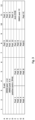
- readout solutions have been firstly organized on multiwells, then pooled (the pools A-H being the lines A1 to A12, B1 to B12, C1 and C12,... H1 and H12, and the pools 1-12 being the columns A1 to H1, A2 to H2,...A12 to H12) and added to the cells according to the scheme of Figure 3 on a specific multiwell comprising sample from lymph node or the samples from spleen cells.
- mice For the spleen cell samples and for the lymph node samples, 200000 cells, have been seeded per well, including for the controls.
- the negative controls are solutions without the peptides and the positive controls are peptides known to trigger high immune responses in mice.
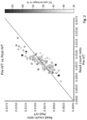
- the proportion of myeloid cells remains constant, regardless the mRNA amount (SPC1 being 0; SPC2 being 0.1 ⁇ g; SPC3 being 1 ⁇ g and SPC4 being 5 ⁇ g). See Figure 5 .
- the activity level of these CD8 cells is increased by about 50% ( Figure 7 , lower panel), whereas the activity level of the CD4 cells remains constant.
- the activity level of the Treg is not increased.
Landscapes
- Genetics & Genomics (AREA)
- Health & Medical Sciences (AREA)
- Engineering & Computer Science (AREA)
- Life Sciences & Earth Sciences (AREA)
- Chemical & Material Sciences (AREA)
- Wood Science & Technology (AREA)
- Organic Chemistry (AREA)
- Biotechnology (AREA)
- General Engineering & Computer Science (AREA)
- Biomedical Technology (AREA)
- Zoology (AREA)
- Bioinformatics & Cheminformatics (AREA)
- Molecular Biology (AREA)
- Microbiology (AREA)
- Plant Pathology (AREA)
- Physics & Mathematics (AREA)
- Biochemistry (AREA)
- General Health & Medical Sciences (AREA)
- Biophysics (AREA)
- Medicines Containing Antibodies Or Antigens For Use As Internal Diagnostic Agents (AREA)
- Medicines That Contain Protein Lipid Enzymes And Other Medicines (AREA)
Priority Applications (3)
| Application Number | Priority Date | Filing Date | Title |
|---|---|---|---|
| EP22205884.4A EP4364752A1 (de) | 2022-11-07 | 2022-11-07 | Verbesserter impfstoff |
| PCT/EP2023/080965 WO2024100025A1 (en) | 2022-11-07 | 2023-11-07 | Improved vaccine |
| EP23801763.6A EP4615491A1 (de) | 2022-11-07 | 2023-11-07 | Verbesserter impfstoff |
Applications Claiming Priority (1)
| Application Number | Priority Date | Filing Date | Title |
|---|---|---|---|
| EP22205884.4A EP4364752A1 (de) | 2022-11-07 | 2022-11-07 | Verbesserter impfstoff |
Publications (1)
| Publication Number | Publication Date |
|---|---|
| EP4364752A1 true EP4364752A1 (de) | 2024-05-08 |
Family
ID=84329922
Family Applications (2)
| Application Number | Title | Priority Date | Filing Date |
|---|---|---|---|
| EP22205884.4A Withdrawn EP4364752A1 (de) | 2022-11-07 | 2022-11-07 | Verbesserter impfstoff |
| EP23801763.6A Pending EP4615491A1 (de) | 2022-11-07 | 2023-11-07 | Verbesserter impfstoff |
Family Applications After (1)
| Application Number | Title | Priority Date | Filing Date |
|---|---|---|---|
| EP23801763.6A Pending EP4615491A1 (de) | 2022-11-07 | 2023-11-07 | Verbesserter impfstoff |
Country Status (2)
| Country | Link |
|---|---|
| EP (2) | EP4364752A1 (de) |
| WO (1) | WO2024100025A1 (de) |
Citations (5)
| Publication number | Priority date | Publication date | Assignee | Title |
|---|---|---|---|---|
| US20150038373A1 (en) | 2013-08-05 | 2015-02-05 | Twist Bioscience Corporation | De novo synthesized gene libraries |
| WO2018183922A1 (en) | 2017-03-30 | 2018-10-04 | The Henry M. Jackson Foundation For The Advancement Of Military Medicine, Inc. | Methods and compositions for vaccinating against malaria |
| EP3576751A1 (de) | 2017-02-01 | 2019-12-11 | ModernaTX, Inc. | Rna-krebsimpfstoffe |
| WO2020097291A1 (en) | 2018-11-07 | 2020-05-14 | Modernatx, Inc. | Rna cancer vaccines |
| WO2021095838A1 (ja) * | 2019-11-15 | 2021-05-20 | 第一三共株式会社 | HPV mRNAを封入した核酸脂質粒子ワクチン |
-
2022
- 2022-11-07 EP EP22205884.4A patent/EP4364752A1/de not_active Withdrawn
-
2023
- 2023-11-07 EP EP23801763.6A patent/EP4615491A1/de active Pending
- 2023-11-07 WO PCT/EP2023/080965 patent/WO2024100025A1/en not_active Ceased
Patent Citations (5)
| Publication number | Priority date | Publication date | Assignee | Title |
|---|---|---|---|---|
| US20150038373A1 (en) | 2013-08-05 | 2015-02-05 | Twist Bioscience Corporation | De novo synthesized gene libraries |
| EP3576751A1 (de) | 2017-02-01 | 2019-12-11 | ModernaTX, Inc. | Rna-krebsimpfstoffe |
| WO2018183922A1 (en) | 2017-03-30 | 2018-10-04 | The Henry M. Jackson Foundation For The Advancement Of Military Medicine, Inc. | Methods and compositions for vaccinating against malaria |
| WO2020097291A1 (en) | 2018-11-07 | 2020-05-14 | Modernatx, Inc. | Rna cancer vaccines |
| WO2021095838A1 (ja) * | 2019-11-15 | 2021-05-20 | 第一三共株式会社 | HPV mRNAを封入した核酸脂質粒子ワクチン |
Non-Patent Citations (5)
| Title |
|---|
| DATABASE EMBL [online] 30 September 2021 (2021-09-30), "WO 2021095838-A/10: Nucleic acid lipid particle vaccine in which HPV mRNA is encapsulated.", retrieved from EBI accession no. EM_PAT:PA264667 Database accession no. PA264667 * |
| KREITER SEBASTIAN ET AL., THE JOURNAL OF IMMUNOLOGY, vol. 180, 2008, pages 309 - 318 |
| KREITER SEBASTIAN ET AL: "Increased antigen presentation efficiency by coupling antigens to MHC class I trafficking signals", THE JOURNAL OF IMMUNOLOGY, WILLIAMS & WILKINS CO, US, vol. 180, no. 1, 1 January 2008 (2008-01-01), pages 309 - 318, XP002527745, ISSN: 0022-1767 * |
| NIELSEN ET AL., JOURNAL OF IMMUNOLOGICAL METHODS, vol. 360, 2010, pages 149 - 156 |
| NIELSEN J S ET AL: "An in vitro-transcribed-mRNA polyepitope construct encoding 32 distinct HLA class I-restricted epitopes from CMV, EBV, and Influenza for use as a functional control in human immune monitoring studies", JOURNAL OF IMMUNOLOGICAL METHODS, ELSEVIER SCIENCE PUBLISHERS B.V.,AMSTERDAM, NL, vol. 360, no. 1-2, 31 August 2010 (2010-08-31), pages 149 - 156, XP027222180, ISSN: 0022-1759, [retrieved on 20100715] * |
Also Published As
| Publication number | Publication date |
|---|---|
| EP4615491A1 (de) | 2025-09-17 |
| WO2024100025A1 (en) | 2024-05-16 |
Similar Documents
| Publication | Publication Date | Title |
|---|---|---|
| KR102858623B1 (ko) | 신규 인공 핵산 분자 | |
| CN109152830B (zh) | 用于免疫疗法的核/壳结构平台 | |
| CN105849269B (zh) | Rna转录载体及其用途 | |
| WO2023227124A1 (zh) | 一种构建mRNA体外转录模板的骨架 | |
| US20230126093A1 (en) | Synthetic dna template for in vitro mrna transcription | |
| US9125845B2 (en) | DNA vaccines, uses for unprocessed rolling circle amplification product and methods for making the same | |
| CN119307525A (zh) | 基于i型内含子的rna体外环化与滚环翻译的方法及其应用 | |
| JP2025114633A (ja) | インビトロトランスクリプトmrna及びこれを含有する薬学組成物 | |
| EP4364752A1 (de) | Verbesserter impfstoff | |
| EP4655398A1 (de) | Künstliche polynukleotidmoleküle zur verbesserten stabilität und translation | |
| WO2023014724A2 (en) | Scaffold matrix attachment regions for gene therapy | |
| JP2023554111A (ja) | 遺伝子発現および抑制が同時に可能な核酸構造体 | |
| JP7836267B2 (ja) | 多細胞形質転換用の修飾mRNA | |
| US20090060889A1 (en) | Ii-RNAi involved Ii suppression in cancer immunotherapy | |
| US6395714B1 (en) | Expressing gp140 fragment of primary HIV-1 isolate | |
| WO2023037000A2 (en) | A rna vaccine comprising an rna pool generated from a double-stranded dna pool | |
| TW202548019A (zh) | 癌症疫苗及其用途 | |
| EP4147713A1 (de) | Rna-impfstoff mit einem aus einem doppelsträngigen dna-pool erzeugten rna-pool | |
| US20210163989A1 (en) | Transduction of innate immunocompetent cells using aav6 | |
| WO2025253381A1 (en) | Cyclic gmp-amp synthase variants and use thereof | |
| JP2026070504A (ja) | 修飾筋肉標的化組成物 | |
| WO2025219365A1 (en) | Repression of cargo expression | |
| WO2003089453A2 (en) | INHIBITION OF Ii EXPRESSION IN MAMMALIAN CELLS |
Legal Events
| Date | Code | Title | Description |
|---|---|---|---|
| PUAI | Public reference made under article 153(3) epc to a published international application that has entered the european phase |
Free format text: ORIGINAL CODE: 0009012 |
|
| STAA | Information on the status of an ep patent application or granted ep patent |
Free format text: STATUS: THE APPLICATION HAS BEEN PUBLISHED |
|
| AK | Designated contracting states |
Kind code of ref document: A1 Designated state(s): AL AT BE BG CH CY CZ DE DK EE ES FI FR GB GR HR HU IE IS IT LI LT LU LV MC ME MK MT NL NO PL PT RO RS SE SI SK SM TR |
|
| STAA | Information on the status of an ep patent application or granted ep patent |
Free format text: STATUS: THE APPLICATION IS DEEMED TO BE WITHDRAWN |
|
| 18D | Application deemed to be withdrawn |
Effective date: 20241109 |