EP4365589A2 - Chimiorésistance à composite de nanotubes de carbone liquides ioniques pour détection chimique sans fil - Google Patents
Chimiorésistance à composite de nanotubes de carbone liquides ioniques pour détection chimique sans fil Download PDFInfo
- Publication number
- EP4365589A2 EP4365589A2 EP23217019.1A EP23217019A EP4365589A2 EP 4365589 A2 EP4365589 A2 EP 4365589A2 EP 23217019 A EP23217019 A EP 23217019A EP 4365589 A2 EP4365589 A2 EP 4365589A2
- Authority
- EP
- European Patent Office
- Prior art keywords
- radio frequency
- stimulus
- reader
- chemical
- tag
- Prior art date
- Legal status (The legal status is an assumption and is not a legal conclusion. Google has not performed a legal analysis and makes no representation as to the accuracy of the status listed.)
- Withdrawn
Links
Images








Classifications
-
- G—PHYSICS
- G06—COMPUTING OR CALCULATING; COUNTING
- G06K—GRAPHICAL DATA READING; PRESENTATION OF DATA; RECORD CARRIERS; HANDLING RECORD CARRIERS
- G06K19/00—Record carriers for use with machines and with at least a part designed to carry digital markings
- G06K19/06—Record carriers for use with machines and with at least a part designed to carry digital markings characterised by the kind of the digital marking, e.g. shape, nature, code
- G06K19/067—Record carriers with conductive marks, printed circuits or semiconductor circuit elements, e.g. credit or identity cards also with resonating or responding marks without active components
- G06K19/07—Record carriers with conductive marks, printed circuits or semiconductor circuit elements, e.g. credit or identity cards also with resonating or responding marks without active components with integrated circuit chips
- G06K19/0716—Record carriers with conductive marks, printed circuits or semiconductor circuit elements, e.g. credit or identity cards also with resonating or responding marks without active components with integrated circuit chips at least one of the integrated circuit chips comprising a sensor or an interface to a sensor
- G06K19/0717—Record carriers with conductive marks, printed circuits or semiconductor circuit elements, e.g. credit or identity cards also with resonating or responding marks without active components with integrated circuit chips at least one of the integrated circuit chips comprising a sensor or an interface to a sensor the sensor being capable of sensing environmental conditions such as temperature history or pressure
-
- G—PHYSICS
- G01—MEASURING; TESTING
- G01N—INVESTIGATING OR ANALYSING MATERIALS BY DETERMINING THEIR CHEMICAL OR PHYSICAL PROPERTIES
- G01N27/00—Investigating or analysing materials by the use of electric, electrochemical, or magnetic means
- G01N27/02—Investigating or analysing materials by the use of electric, electrochemical, or magnetic means by investigating impedance
- G01N27/04—Investigating or analysing materials by the use of electric, electrochemical, or magnetic means by investigating impedance by investigating resistance
- G01N27/12—Investigating or analysing materials by the use of electric, electrochemical, or magnetic means by investigating impedance by investigating resistance of a solid body in dependence upon absorption of a fluid; of a solid body in dependence upon reaction with a fluid, for detecting components in the fluid
- G01N27/122—Circuits particularly adapted therefor, e.g. linearising circuits
-
- A—HUMAN NECESSITIES
- A61—MEDICAL OR VETERINARY SCIENCE; HYGIENE
- A61B—DIAGNOSIS; SURGERY; IDENTIFICATION
- A61B5/00—Measuring for diagnostic purposes; Identification of persons
- A61B5/08—Measuring devices for evaluating the respiratory organs
- A61B5/082—Evaluation by breath analysis, e.g. determination of the chemical composition of exhaled breath
-
- A—HUMAN NECESSITIES
- A61—MEDICAL OR VETERINARY SCIENCE; HYGIENE
- A61B—DIAGNOSIS; SURGERY; IDENTIFICATION
- A61B5/00—Measuring for diagnostic purposes; Identification of persons
- A61B5/48—Other medical applications
- A61B5/4845—Toxicology, e.g. by detection of alcohol, drug or toxic products
-
- G—PHYSICS
- G01—MEASURING; TESTING
- G01N—INVESTIGATING OR ANALYSING MATERIALS BY DETERMINING THEIR CHEMICAL OR PHYSICAL PROPERTIES
- G01N27/00—Investigating or analysing materials by the use of electric, electrochemical, or magnetic means
- G01N27/26—Investigating or analysing materials by the use of electric, electrochemical, or magnetic means by investigating electrochemical variables; by using electrolysis or electrophoresis
- G01N27/403—Cells and electrode assemblies
- G01N27/414—Ion-sensitive or chemical field-effect transistors, i.e. ISFETS or CHEMFETS
- G01N27/4146—Ion-sensitive or chemical field-effect transistors, i.e. ISFETS or CHEMFETS involving nanosized elements, e.g. nanotubes, nanowires
-
- G—PHYSICS
- G01—MEASURING; TESTING
- G01N—INVESTIGATING OR ANALYSING MATERIALS BY DETERMINING THEIR CHEMICAL OR PHYSICAL PROPERTIES
- G01N33/00—Investigating or analysing materials by specific methods not covered by groups G01N1/00 - G01N31/00
- G01N33/0004—Gaseous mixtures, e.g. polluted air
- G01N33/0009—General constructional details of gas analysers, e.g. portable test equipment
- G01N33/0073—Control unit therefor
- G01N33/0075—Control unit therefor for multiple spatially distributed sensors, e.g. for environmental monitoring
-
- G—PHYSICS
- G06—COMPUTING OR CALCULATING; COUNTING
- G06Q—INFORMATION AND COMMUNICATION TECHNOLOGY [ICT] SPECIALLY ADAPTED FOR ADMINISTRATIVE, COMMERCIAL, FINANCIAL, MANAGERIAL OR SUPERVISORY PURPOSES; SYSTEMS OR METHODS SPECIALLY ADAPTED FOR ADMINISTRATIVE, COMMERCIAL, FINANCIAL, MANAGERIAL OR SUPERVISORY PURPOSES, NOT OTHERWISE PROVIDED FOR
- G06Q50/00—Information and communication technology [ICT] specially adapted for implementation of business processes of specific business sectors, e.g. utilities or tourism
- G06Q50/10—Services
- G06Q50/26—Government or public services
- G06Q50/265—Personal security, identity or safety
-
- A—HUMAN NECESSITIES
- A61—MEDICAL OR VETERINARY SCIENCE; HYGIENE
- A61B—DIAGNOSIS; SURGERY; IDENTIFICATION
- A61B2562/00—Details of sensors; Constructional details of sensor housings or probes; Accessories for sensors
- A61B2562/02—Details of sensors specially adapted for in-vivo measurements
- A61B2562/0285—Nanoscale sensors
-
- A—HUMAN NECESSITIES
- A61—MEDICAL OR VETERINARY SCIENCE; HYGIENE
- A61B—DIAGNOSIS; SURGERY; IDENTIFICATION
- A61B2562/00—Details of sensors; Constructional details of sensor housings or probes; Accessories for sensors
- A61B2562/02—Details of sensors specially adapted for in-vivo measurements
- A61B2562/029—Humidity sensors
-
- G—PHYSICS
- G01—MEASURING; TESTING
- G01N—INVESTIGATING OR ANALYSING MATERIALS BY DETERMINING THEIR CHEMICAL OR PHYSICAL PROPERTIES
- G01N27/00—Investigating or analysing materials by the use of electric, electrochemical, or magnetic means
- G01N27/02—Investigating or analysing materials by the use of electric, electrochemical, or magnetic means by investigating impedance
- G01N27/04—Investigating or analysing materials by the use of electric, electrochemical, or magnetic means by investigating impedance by investigating resistance
- G01N27/12—Investigating or analysing materials by the use of electric, electrochemical, or magnetic means by investigating impedance by investigating resistance of a solid body in dependence upon absorption of a fluid; of a solid body in dependence upon reaction with a fluid, for detecting components in the fluid
- G01N27/125—Composition of the body, e.g. the composition of its sensitive layer
- G01N27/127—Composition of the body, e.g. the composition of its sensitive layer comprising nanoparticles
-
- G—PHYSICS
- G01—MEASURING; TESTING
- G01N—INVESTIGATING OR ANALYSING MATERIALS BY DETERMINING THEIR CHEMICAL OR PHYSICAL PROPERTIES
- G01N33/00—Investigating or analysing materials by specific methods not covered by groups G01N1/00 - G01N31/00
- G01N33/0004—Gaseous mixtures, e.g. polluted air
- G01N33/0009—General constructional details of gas analysers, e.g. portable test equipment
- G01N33/0027—General constructional details of gas analysers, e.g. portable test equipment concerning the detector
- G01N33/0036—General constructional details of gas analysers, e.g. portable test equipment concerning the detector specially adapted to detect a particular component
- G01N33/0057—Warfare agents or explosives
Definitions
- This invention relates to wireless chemical sensors.
- Such systems can be used for point-of-care diagnosis of disease, detection of explosives and chemical warfare agents, prevention of spoilage of food and increasing efficiency in agriculture, analysis of oil and gas, detection of petrochemical leaks and spills, monitoring of environmental pollution, detection of radiation, and monitoring of temperature or heat energy exposure.
- Traditional improvements in this area increase performance through modification or re-engineering of existing platforms.
- Such strategies may include miniaturizing components to increase portability (e.g., portable gas chromatograph or mass spectrometer) or reducing cost (e.g., increasing the efficiency of the manufacturing).
- a device for detecting a stimulus can include a radio frequency identification tag including a sensor portion including an integrated circuit and a chemiresistor, where the integrated circuit and the chemiresistor are connected in parallel, where the sensor portion is configured to change resistivity when the radio frequency identification tag contacts or interacts with the stimulus, whereby the resistivity change alters an output of the radio frequency identification tag, and where the sensor portion is configured to activate the circuit or deactivate the circuit when contacted or having interacted with the stimulus.
- the chemiresistor can include a plurality of nanotubes.
- the chemiresistor can further include an ionic liquid.
- the chemiresistor can include a plurality of conducting polymers.
- the device can be a badge wearable by a person.
- the badge can be for a single-use.
- the nanotubes can be single walled carbon nanotubes.
- the ionic liquid can be 1-butyl-3-methylimidazolium chloride.
- the stimulus can include an analyte.
- the analyte can be diethyl chlorophosphate.
- the sensor portion can further comprise a resistor in series with the integrated circuit.
- the resistor can set a threshold at which the integrated circuit is activated.
- a system for detecting a stimulus can include the device described above and a reader detecting the output from the radio frequency identification tag.
- the reader can be a handheld reader.
- the handheld reader can be a smartphone.
- the system can include a dosimeter.
- the system can include a plurality of tags.
- each of the plurality of tags can be capable of detecting at least one stimulus.
- a food packaging including the device described above.
- a breath analysis detector can include the device described above.
- a method of detecting a stimulus can include detecting an output from a radio frequency identification tag including a sensor portion including an integrated circuit and a chemiresistor, where the integrated circuit and the chemiresistor are connected in parallel, where the sensor portion is configured to change resistivity when the radio frequency identification tag contacts or interacts with the stimulus, whereby the resistivity change alters an output of the radio frequency identification tag, and where the sensor portion is configured to activate the circuit or deactivate the circuit when contacted or having interacted with the stimulus.
- the method can further include detecting the output of the radio frequency identification by a reader.
- the reader can be a hand-held reader.
- the reader can include a smartphone.
- the chemiresistor can include a plurality of nanotubes.
- the chemiresistor can further include an ionic liquid.
- the nanotubes can be single walled carbon nanotubes.
- the ionic liquid can be a solid.
- the ionic liquid can be 1-butyl-3-methylimidazolium chloride.
- the stimulus can include an analyte.
- the analyte can be diethyl chlorophosphate.
- the method can further include producing a readable signal in a reader as a result of the resistivity change.
- the method can further include turning off a readable signal in a reader as a result of the resistivity change.
- the output can be detectable by a reader after the output is shifted by detection of the stimulus.
- the output can be detectable by a reader after the output going through a physical object.
- the stimulus can contact or interact with a portion of the surface of the radio frequency identification tag.
- the radio frequency identification tag does not require a power source.
- the method can further include altering an electrical connection within the radio frequency identification tag.
- a single-use wearable hazard badge that dosimetrically detects diethylchlorophosphate (DCP), a model organophosphorous cholinesterase inhibitor simulant.
- DCP diethylchlorophosphate
- CARDs Improved Chemically Actuated Resonant Devices
- an ionic liquid-mediated single walled carbon nanotube based chemidosimetric scheme with DCP limits of detection of 28 ppb was developed.
- the chemiresistor in this platform can further include conducting polymers.
- an 8-hour workday time weighted average equivalent exposure of 10 ppb DCP effects an irreversible change in smartphone readout.
- Sensing platforms that have the characteristics of being simple, inexpensive, yet sensitive and quantitative can be created.
- One approach to the area of chemical and physical sensing can be the development of sensing materials and devices that have the characteristics of being modular (i.e., easily modified for specific applications), wirelessly readable, and easily used and interpreted by individuals with no prior technical training.
- NFC Near Field Communication
- Many modern smartphones and similar devices can be equipped with NFC readers operating at peak frequency of 13.56 MHz. These readers can be tuned to interact with many types of commercially available wireless "tags" -simple electrical circuits comprising an inductor (L), a capacitor (C), and an integrated circuit (resistor (R)) supported on the surface of a substrate, such as a polymeric sheet.
- the phone can achieve communication by powering the tag via electromagnetic induction at the specified frequency and then receiving reflected attenuated signal back from the tag. See, for example, Curty, J.P.
- This technology can be used in controlling access to facilities, ticketing of events, prevention of theft, and management of inventory.
- This technology can be applied to chemical sensing by introducing chemiresistive materials into the circuitry of the tag. Exposure of the modified tag to chemical vapors can alter the resistance of the sensing materials, and thus the resonant frequency of the modified tag, such that it becomes readable or unreadable when probed by a smartphone reader. With this method, vapors of nitric acid, ammonium hydroxide and cyclohexanone, can be detected.
- This technology can be extended to physical sensors as well, such as applications in temperature, heat energy exposure or radiation sensing.
- the sensing platform can be available to anyone, including those without a technical background. This platform has advantages over existing methods of chemical and physical sensing.
- the sensing method can be non-line-of-sight (high frequency radio waves), and can receive information from the sensor tag through solid objects such as packages, walls, wood, and other non-metallic objects.
- the sensing tag does not require a power source, as it receives its power from the incoming radio waves.
- the data-acquiring device can be any commercially available smartphone equipped with near field communication (NFC) reader capabilities, including but not limited to Samsung, LG, Google, Blackberry, etc. manufacturers. The method is simple: no technical knowledge is required to perform a measurement.
- This technology can be extended to temperature, heat energy exposure and radiation sensing as well.
- the modification of the tag can involve integration of chemiresistive sensing materials by drawing or dropcasting onto the surface of the tag. Depending on the design, the tag can become readable or unreadable when exposed to vapors of chemicals or physical stimulus.
- a stimulus can include an analyte.
- the stimulus can include a vapor, a gas, a liquid, a solid, a temperature change, heat energy exposure and so on.
- the stimulus can include an ethylene, a mold, an acid, a ketone, a thiol, an amine, and so on.
- a stimulus can be detected; for example, vapors of nitric acid and cyclohexanone can be detected; and ethylene and mold can be detected; and biological warfare agents can be detected. Cumulative exposure of analytes can be detected and quantified with a dosimeter.
- a stimulus can include a physical stimulus.
- the physical stimulus can include light, heat, or radiation.
- a stimulus can be detected for example, exposure of a tag to heat can be detected.; and radiation and light can be detected. Cumulative exposure of physical stimulus can be detected and quantified with an RFID dosimeter.
- a sensing material can produce detectable change in resistance and/or capacitance upon chemical, biological, or physical changes around the sensing device.
- a property of a sensing material that can change upon exposure to the environment includes, but is not limited to, change in capacitance, change in resistance, change in thickness, change in viscoelasticity, or a combination thereof.
- a sensing material can include a metal, an organic material, a dielectric material, a semiconductor material, a polymeric material, a biological material, a nanowire, a semiconducting nanoparticle, a carbon nanotube, a carbon nanotube network, a nanofiber, a carbon fiber, a carbon particle, carbon paste, or conducting ink, or combination thereof.
- sensing materials can be introduced into two different locations within a commercial RFID tags.
- Sensing materials include variable resistors that alter their resistance in response to a stimulus.
- a stimulus can be a chemical stimulus, a physical stimulus, a biological stimulus, etc.
- the detection of a stimulus can be achieved by switching the tag between a "readable” and “not readable” state, by exposure to a stimulus, such as chemical vapors or changes in temperature or heat energy exposure, for example.
- the resistivity can change.
- the contact or interaction can produce a readable signal in a hand held frequency reader as a result of the resistivity change.
- the contact or interaction can turn off a readable signal in a hand held frequency reader as a result of the resistivity change.
- Output can be detected after the output is shifted by detection of the stimulus. Even after going through a physical object, the output can still be detected.
- Detecting the stimulus is not limited to the frequency output, but can include, but is not limited to, a change in frequency, a change in q factor, a change in bandwidth, and a combination of these. These changes can result in increasing or decreasing the power transferred between the reader and radio frequency identification tag. Increasing or decreasing the power transferred between the reader and radio frequency identification tag can result in a change of the readout of the tag.
- a specific electric connection within an RFID tag can be disrupted, for example by cutting, and this connection can be reestablished by deposition of a chemiresistive sensing material by either drawing or dropcasting.
- An RFID tag can include an integrated circuit (IC) containing magnetic memory material where the tag identification is stored. Depending on the sensing material and the stimulus, the tag can become readable and is classified as a "turn ON sensor,” or become unreadable and is classified as a "turn OFF sensor”.
- the tag is not readable by a reader when no stimulus is present, because the resistance of the sensor is too high.
- the tag When the tag is placed in the presence of a stimulus that causes the sensor to change its resistance, the tag can become readable once the resistance value crosses a threshold value. This is a turn-on sensing method.
- the tag in another method, can be readable by a reader when no analyte is present, because the resistance of the sensor is high enough to allow current to flow through the integrated circuit.
- the tag When the tag is placed in the presence of a stimulus that causes the sensor to change its resistance, the tag can become unreadable once the resistance value drops below a certain threshold value. This is a turn-off sensing method.
- a series of data can be collected, which can provide a quantitative analysis of a stimulus.
- parallel integration can be used to integrate a sensing material into a portion of the tag containing the integrated circuit by drawing or dropcasting.
- This approach can "turn ON” or “turn OFF” detection of a stimulus, and can be complimentary to the first approach because requirements for resistance of the deposited sensing material can be different (which may have an effect on the dynamic range and the detection limit of chemical sensors towards different analytes).
- RFID tags can be either passive, active or battery-assisted passive.
- An active tag has an on-board battery and periodically transmits its signal.
- a battery-assisted passive has a small battery on board and is activated when in the presence of a RFID reader.
- a passive tag has no battery.
- the stimulus When detecting a stimulus comprising detecting an output from a radio frequency identification tag including a sensor portion, the stimulus does not have to contact or interact with the entire surface of the tag.
- the sensor portion has a surface area less than the surface area of the radio frequency identification tag.
- the sensor portion can be located on a portion of a surface of the radio frequency identification tag, and the stimulus can contact a portion of the surface of the radio frequency identification tag.
- the sensor portion can have multiple sensing locations, and a single tag can be used to detect more than one stimulus.
- a system for detecting a stimulus comprising a radio frequency identification tag can include a sensor portion, the sensor portion configured to change resistivity when the radio frequency identification tag contacts or interacts with the stimulus, whereby the resistivity change alters an output of the radio frequency identification tag, and a detector detecting the output from the radio frequency identification tag.
- the detector can include a reader.
- the reader can include a hand held frequency reader.
- a method of detecting a stimulus can include detecting an output from a radio frequency identification tag including a sensor portion.
- the system can include a real time sensor.
- the system can include a dosimeter, such as a radiation dosimeter, a chemical warfare agent dosimeter, or an analyte dosimeter, such as, for example, an ethylene dosimeter, a sulfur dosimeter, or an ozone dosimeter.
- the system can be used to monitor pollutants or chemicals relevant to occupational safety. Pollutants or chemicals can include fumes from automotive/equipment exhaust, volatiles from manufacturing, painting, or cleaning, or vapors in underground mines.
- a sensor can include an electronic circuit comprising electronic components.
- Electronic components can include resistors, transistors, capacitors, inductors and diodes, connected by conductive wires or traces through which electric current can flow.
- the electrical connection within the radio frequency identification tag can be altered.
- the resistivity of the sensor can change when the sensor is exposed to a stimulus. Contacting or interacting with a stimulus can close the circuit or open the circuit, or otherwise alter the properties of the circuit.
- a sensor can include a sensing material such as a metal, an organic material, a dielectric material, a semiconductor material, a polymeric material, a biological material, a nanowire, a semiconducting nanoparticle, a carbon nanotube, a nanofiber, a carbon fiber, a carbon particle, carbon paste, or conducting ink, or combination thereof.
- a sensing material can include organic electronics materials, doped conjugated polymers, or inorganic materials.
- a sensing material can include biological molecule receptors, living cells, antibodies, aptamers, nucleic acids, functionalized biological molecules, and so on.
- a tag for detecting a stimulus comprising a radio frequency identification tag can include a sensor portion, the sensor portion configured to change resistivity when the radio frequency identification tag contacts or interacts with the stimulus, whereby the resistivity change alters an output of the radio frequency identification tag, wherein the sensor portion includes a circuit, and wherein the sensor portion is configured to close the circuit or open the circuit when contacted or having interacted with the stimulus.
- the tag can be worn as a badge for occupational health and safety personnel, military personnel, etc., detecting a hazardous analyte or radiation.
- a tag can include a substrate material.
- the substrate can include paper, plastic, a polymer, a metal, a metal oxide, a dielectric material, wood, leaves, skin, tissue, and so on.
- the substrate can include a metal oxide material.
- the substrate can be flexible; the substrate can be flat.
- the tag can also be embedded inside other objects (e.g., inside a capsule or a wall) or inside living systems (e.g., implanted inside a body).
- a tag can include an antenna, providing a link between a frequency reader and a tag, receiving and transmitting a signal, and serving as a conduit that moves data back and forth.
- the antenna can include coils surrounding a sensor; the antenna can include a dipole antenna.
- a tag can include an antenna group including a plurality of antennas or an antenna array.
- a system using a portable reader such as a smartphone, enables everyone to determine the status of certain analytes anywhere without complicated analysis of a signal.
- a handheld frequency reader can turn on or turn off a signal, sending a notification of the presence or absence of the analyte.
- Another advantage of using a smartphone is that it carries within it many additional capabilities that can be coupled with chemical sensing to increase utility. For instance, a smartphone reader can identify a chemical spill and immediately send an emergency text or email alert identifying position of a spill using GPS. Another example could be wireless networks that monitor spatiotemporal changes in concentrations of chemical emissions and send emergency alerts when safe thresholds are exceeded. Coupling of such capabilities can enable unprecedented utility of chemical sensors in everyday life.
- a tag can serve as a binary logic element providing either a "1" or a "0" as pre-defined by functional sensor material, which offers advantages in terms of simplicity of implementation and does not require any sophistication by the end user. If viewed as a binary logic element, the tag could be used in further elaborations of that logic. For instance, a unique combination of the readout of multiple tags could be assigned to a specific meaning. For example, if three separate tags are "coded" for three separate analytes by virtue of the sensor materials used to make them, then 2 ⁇ 3 possible combinations exist, which could each mean something unique and significant.
- analytes were food related, then one could possibly determine which type of food the sensors are attached based on a combination of tag read-out, within a certain probability.
- Another example would be three tags that are "coded" with the same sensor material that has been designed to react at different concentrations of analyte. The combination of tag readout would allow one to determine, within some margin of error, the concentration of the analyte of interest.
- the binary on/off readability of CARDs by the smartphone can be a powerful approach for converting analog physical inputs (presence or absence of a chemical vapor within a defined threshold) into a digitized output (1 and 0, respectively) that conveys meaningful information about the local chemical environment of the CARDs.
- the advantage of a binary-readout is that it is the simplest possible output representation of input information, and hence allows modular multiplexing of different CARD combinations. Taken together, discrimination and identification of multiple analytes can be achieved with a smartphone by converting the output of binary CARDs ("on"/"off") into multi-CARD logic (sequences of 0s and 1s).
- This analytical approach has practical limitations in its implementation; however, it may be particularly useful in resource-constrained scenarios or high throughput applications where information about the presence or absence of specific chemicals at specified thresholds is critically important.
- Such applications may include detection of an acceptable threshold (e.g., permissible exposure limit for a chemical) that provides valuable actionable information in dynamic, complex environments (e.g., chemical release within a public space).
- an acceptable threshold e.g., permissible exposure limit for a chemical
- complex environments e.g., chemical release within a public space.
- An inexpensive, simple, rapid, and modular approach for converting commercially available NFC tags into chemically actuated devices can communicate with a smartphone via radio waves.
- This approach enables electronic wireless, non-line-of-sight detection and discrimination of gases and vapors at part-per-million and part-per-thousand concentrations.
- This technology provides binary ("on"/"off') information about the presence or absence of a chemical analyte regarding designated concentration thresholds, (e.g., NIOSH STEL) within the local environment of the sensor tag, and is capable of differentiating multiple concentrations of one analyte or multiple analytes using multi-tag logic.
- concentration thresholds e.g., NIOSH STEL
- the general sensing strategy involving wireless communication between NFC tags and smartphones is modular and can be generalized to incorporate many types of chemiresponsive materials to enable selective detection of diverse chemical changes. Nevertheless, the significant challenges that remain to realize the full potential of this wireless sensing approach includes: (i) chemical and materials science innovations to improve the sensitivity and selectivity of chemiresponsive materials to chemical analytes; (ii) improving device-to-device performance reproducibility by advancing the state-of-the-art of nanostructured carbon deposition techniques and; (iii) enabling continuum measurement CARD readout capabilities.
- the combination of chemical sensing with other capabilities within the smartphone may enable additional utility in applications involving tracking and tracing.
- this platform can enable applications in personalized and widely distributed chemical sensing wherein the acquisition of chemical or physical information was previously unattainable.
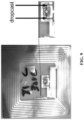
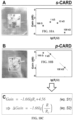
- the chemiresistor ( R s ) is incorporated in series with the NFC integrated circuit ( IC ) in a two-step method. This method involves the disruption and recompletion of the circuit ( FIG. 2A ).
- a hole is punched removing some of the aluminum lead material and disrupting the circuit, which is reconnected by the chemiresistor.
- a p-CARD the material is deposited on the aluminum leads connecting the IC. Note that the p-CARD photograph has opposite contrast (aluminum metal is bright) to reveal the deposited chemiresistor.
- the raw chemical information that the chemiresistor collects is converted and wirelessly transmitted, mainly in the form of device resonant frequency ( f 0 ) amplitude, gain (in dB).
- the s-CARD proved successful in selectively detecting chemically-diverse analytes at parts-per-million (ppm) levels, its circuit structure can introduce physical constraints to the response magnitude corresponding to a certain change in the sensor resistance ( ⁇ Gain/ ⁇ R s ).
- the gain readout of a series of s-CARDs with fixed resistors ( R s ) was systemically examined in place of chemiresistors. These resistors ranged from 100 ⁇ to 100 k ⁇ , which encompassed the typical dynamic range of the CNT-based chemiresistors (1 k ⁇ to 100 k ⁇ ). As shown in FIG.
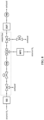
- a wearable, battery free, single-use chemical hazard badge that costs less than $1, is combustible or recyclable and therefore environmentally friendly, and is smartphone-communicable ( FIG. 1B ).
- Quantification of hazardous chemical 'dose' with a smartphone enables facile information collection to a centralized database, via 'the cloud.' Standardized decisions can be informed by pre-defined protective action criteria levels associated with equivalent exposure time weighted average hazardous chemical concentration.
- Passive radio frequency communication devices such as Near Field Communication (NFC) tags, meet these requirements. See, V. Coskun, B. Ozdenizci, K. Ok, Wirel. Pers. Commun. 2013, 71, 2259-2294 , which is incorporated by reference in its entirety.
- NFC Near Field Communication
- the p -CARD design is advantageous; it does not require disruption of the existing RFID circuit and is a single step to fabricate.
- the p -CARD is created by simple deposition of chemiresistive material between the leads connecting the IC ( FIG. 2A ). This non-disruptive modification method not only results in more consistent device performance but also makes p -CARDs amenable to inkjet printing and roll-to-roll manufacturing processes. See, L. Yang, R. Zhang, D. Staiculescu, C. P. Wong, M. M. Tentzeris, Antenna Wirel. Propag. Lett.
- Diethyl chlorophosphate (DCP) was targeted in the development of a prototype chemical hazard dosimeter.
- DCP has been studied as a target analyte for chemical sensors mainly as a chemical warfare nerve agent (NA) simulant.
- NA chemical warfare nerve agent
- TWA time-weighted-average
- Ideal chemical hazard dosimeters allow instantaneously assess of a TWA exposure based on temporally-correlated chemical dose information. For instance, the US Department of Energy has established 'protective action criteria' levels (PAC) for over 3,000 hazardous substances, including DCP. See, Temporary Emergency Exposure Limits for Chemicals: Methods and Practice, U.S. Dept.
- hazard badges can be designed to display scenario-informed options on a smartphone at dosage levels that induce mild, transient health effects (PAC-1), serious health effects that could inhibit ability to further protect oneself (PAC-2), or life threatening health effects (PAC-3).
- PAC-1 mild, transient health effects
- PAC-2 serious health effects that could inhibit ability to further protect oneself
- PAC-3 life threatening health effects
- personal exposure information can be synchronized with a cloud database to expose spatio-temporal trends (see N. Cressie, C. K.
- the device disclosed herein can be used to detect any chemicals in liquid or gaseous fluids.
- Chemical sensors are of interest for applications in homeland security, public safety, occupational health and safety, industrial fluid analysis, food and beverage analysis, and in human healthcare and therapeutic applications.
- the sensor can be incorporated into food packaging.
- the sensor can be incorporated in a breath analysis detector to analyze and determine what a person has been exposed to or if they have a disease.
- a breath analysis detector can detect volatile compounds in breath, such as alcohol, ketones and other volatile compounds that can indicate physiological condition of an individual.
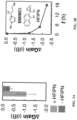
- HFIPN 2-(2-hydroxy-1, 1, 1,3,3,3-hexa-fluoropropyl)-1-naphthol
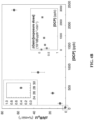
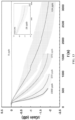
- a true test of a dosimeter is based on the response behavior across all combinations of time and concentration. Ideally the response of a dosimeter is proportional to the exposure dose, the product of analyte concentration, and exposure time ([analyte] ⁇ t). It was determined across three orders of concentration magnitude that the exposure dose-normalized response (gain) of all p -CARDs tested fell within a relatively narrow range ( FIG. 4B , lower inset), indicating concentration-independent dosimetry of the optimized system.
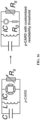
- the integrated circuit (IC) of a p-CARD can be designed to activate at a specific threshold by incorporation of a fixed resistor in series with the IC ( FIG. 16 ).
- the ability to modify the IC activation threshold in this straightforward fashion allows the practitioner to tune the p-CARD to activate at pre-determined chemical concentration or chemical dose thresholds. This is reduced to practice in FIG. 5 , wherein the practitioners designed a p-CARD to activate at a pre-determined chemical dose.
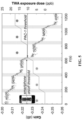
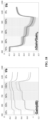
- FIG. 5 shows that the NA simulant-triggered smartphone binary switch of this system was demonstrated wherein a p -CARD was repeatedly exposed to DCP vapor (2 ppm) for 50 s followed by 170 s N 2 .
- DCP vapor 2 ppm
- a p-CARD's gain (left axis, blue points) was measured while it was iteratively exposed to DCP (2 ppm in N2) (shaded bars).
- the equivalent exposure TWA (right axis, blue line) was calculated, and the p-CARD was addressed with a smartphone once per cycle.
- Below the PAC-1 threshold p-CARD is unreadable (green dots).
- Above the PAC-1 threshold the p-CARD becomes readable (red dots).
- chemiresistor selectivity to the target analyte over commonly encountered interferent chemicals is critical for minimizing the occurrence of false alarms. See, Y. Seto, M. Kanamori-Kataoka, K. Tsuge, I. Ohsawa, K. Matsushita, H. Sekiguchi, T. Itoi, K. Iura, Y. Sano, S. Yamashiro, Sens. Actuators B-Chem. 2005, 108, 193-197 , which is incorporated by reference in its entirety. Toward this end, a series of potential interferent chemicals were evaluated.
- the responses ( ⁇ Gain/ ⁇ t) of the p -CARD DCP dosimeter toward NA simulants (DCP and diisopropyl fluorophosphate, DFP) at ppb or low-ppm level were at least one order of magnitude larger than those resulted from the highly concentrated interferent vapors (100 ppm ⁇ 1000 ppm) ( FIG. 6A ).
- This good selectivity can be better characterized by the exposure dose-normalized responses ( FIG. 6B ).
- ketone, ester, or hydroxyl functional group containing compounds afforded detectable sensor resistance increase, presumably via hydrogen-bonding. Hydrocarbon/halogenated hydrocarbons were essentially inert to the sensor.
- DMMP dimethyl methylphosphonate
- p -CARDs did not respond significantly to low concentrations of water vapor ( ⁇ 10% relative humidity) and the response to DCP was not significantly affected under such level of humidity.
- a continuous flow 0.5-1.5 L/min of moisture vapor of elevated humidity (30% to 100% of the saturation humidity) could compromise the sensor.
- a highly sensitive and selective disposable wireless dosimetric chemical hazard badge can reliably detect NA simulants down to 28 ppb.
- This badge allows the quantification of chemical hazard dose in a temporally correlated fashion and transmission of that information wirelessly, enabling real-time hazard assessment that is relevant to widely employed chemical hazard regulation standards.
- diethyl chlorophosphate Diethyl chlorophosphate (DCP) and diisopropyl fluorophosphate (DFP) are powerful cholinesterase inhibitors and should be treated with great care and respect. All experiments were conducted in a fume hood with appropriate safety equipment and safety measures, including chemical goggles, long-sleeved chemically resistant lab coat, and gloves (nitrile and SilverShield ® ). In addition to conducting all handling of DCP and DFP in a well ventilated fume hood, a canister gas mask was used any time an open container was being handled.
- a bath of aqueous sodium hydroxide (NaOH) was kept at the ready, and any glass, syringes, needles, or other apparatus that came in contact with DCP or DFP were immersed in the solution and allowed to soak for several days prior to submission to appropriate waste streams.
- MSDS material safety data sheets
- SWCNTs purified ⁇ 95% as SWCNT were kindly provided by Nano-C, Inc. (Westwood, MA).
- 2-(2-Hydroxy-1,1,1,3,3,3-hexafluoropropyl)-1-naphthol (CAS: 2092-87-7 ) was purchased from Santa Cruz Biotechnology (Dallas, TX).
- 1- n- butyl-3-methylimidazolium chloride ( CAS: 79917-90-1 ) (BMIMCl) and diethylchlorophosphate ( CAS: 814-49-3 ) (DCP) was purchased from Alfa Aesar (Heysham, Lancashire, UK). DCP was stirred vigorously over poly-4-vinylpyridine (P4VP) with active nitrogen flow for 24 hours prior to use in sensing experiments to reduce in situ hydrochloric acid.
- P4VP poly-4-vinylpyridine
- NFC tag All near field communication (NFC) tags used in this study (hereafter referred to generically as "NFC tag”) were Texas Instruments HF-I Tag-It 13.56 MHz RFID transponder square in-lays (MFG: RI-11 1-1 14A-01), purchased from DigiKey (Thief River Falls, MN).
- MFG Texas Instruments HF-I Tag-It 13.56 MHz RFID transponder square in-lays
- a sensing enclosure was fabricated with a ProJet ® 6000 3D printer (3D Systems, Andover, MA).
- the enclosure comprises of an inlet, outlet, and CARD receptacle ( Fig. 11 ).
- the receptacle opening can be closed off with electrical tape or putty prior to use.
- TI-Tag Texas Instruments HF-I Tag-It Plus Transponder Inlays
- a wireless hazard badge's utility is dependent upon its selectivity in responding to the target chemical hazard over other analytes.
- the method disclosed herein does not employ data analysis or computationally-intensive interpretation.
- the selective detection of DCP over other analytes can be probable concern in a broad array of contexts, including agricultural and military settings.
- Cyclohexanone is a known solvent used in the recrystallization of explosives. See, H. Lai, A. Leung, M. Magee, J.R. Almirall Anal. Bioanal. Chem. 2010, 396, 2997-3007 , which is incorporated by reference in its entirety.
- Acetone is a commonly encountered solvent present in pure form as well as a component of consumer products and commercial formulations.
- Hexane was employed as an analog of saturated hydrocarbons, used as industrial solvents as well as to simulate petroleum fuels (i.e. gasoline and diesel). Chloroform is a commonly encountered organic solvent.
- Dimethyl methylphosphonate (DMMP) is a non-reactive phosphonate.
- Diisopropyl fluorophosphonate (DFP) is a nerve agent simulant that is of close chemical relation to the 'real' chemical warfare agents sarin, soman, and cyclosarin. See, H. P. Benschop, L. P. A. De Jong, Acc. Chem. Res. 1988, 21, 368-374 , which is incorporated by reference in its entirety. In addition to their relevance as potential interferents and alternative nerve agent simulants, each analyte was tested to define the functional group reactivity space of the optimized nerve agent hazard badges.
- the Samsung Galaxy TM S4 (SGS4) was utilized to demonstrate wireless chemical dosimetry for two reasons: (i) the Samsung's Galaxy series are amongst the most widely distributed "smart" mobile devices in history; (ii) the SGS4 runs on Android, one of the most widely distributed operating systems that supports NFC applications. Previously, we've demonstrated wireless chemical sensing via NFC with other smartphone models.
- the smartphone-embedded NFC chip comprises an antenna for inductive coupling with NFC tags, a transmission module with microcontroller for 13.56 MHz carrier signal generation and tag signal demodulation, as well as embedded and external (Subscriber Identity Module (SIM) card) security elements.
- SIM Subscriber Identity Module
- the SGS4 can read tags at ⁇ 5 cm standoff distance through solid, non-metallic objects such as paper, plastic, and liquids. See, J. M. Azzarelli, K. A. Mirica, J. B. Ravnsb ⁇ k, T. M. Swager, Proc. Natl. Acad. Sci. 2014, 111, 18162-18166 , which is incorporated by reference in its entirety.
- the ⁇ NFC Reader' (Adam Nybburg; 5 July 2013) was used to read the tags, and is freely available from the Google Play TM Store at the time of this report. This application was chosen because it displays the tag's unique identification number without invoking other time- or energy-intensive functions of the smartphone.
- the tag is considered “on” or “readable” if the unique identification number can be retrieved within 5 seconds or less of holding the smartphone at ⁇ 2.5 cm distance away from the tag. Conversely, the tag is considered “off' or "unreadable” if the unique identification number cannot be retrieved under the same conditions.
- p -CARDs were fabricated by dropcasting ' A ' (1 ⁇ L) at the location indicated in Figure S1, followed immediately by solvent removal by subjecting the device to a high vacuum environment in a vacuum desiccator for 10 minutes. This process was repeated (in total 2 ⁇ L A was employed). Finally, the p -CARDs were allowed to sit under ambient atmosphere for 12 - 24 hours before being tested or characterized.
- the RF signal response of the modified NFC tags was monitored from 10 - 20 MHz with a custom-made loop probe connected via a BNC cable to a vector network analyzer (VNA) (Agilent E5061B) by measuring reflection coefficient ( S 11 ) at ⁇ 50 ⁇ port impedance and 0 dBm input power.
- VNA vector network analyzer
- the S 11 -determined resonant frequency ( f 0 ) minimum gain value (dB) was measured and acquired using a custom-built LabView program (Marshall Craft, MIT) that executed a minimum-search algorithm at specified time intervals and tabulated the data into an exportable comma separated value (.csv) file.
- Microsoft Excel was used to calculate change in gain, relative change in resistance, and change in gain per exposure dose.
- FIG. 10A A series of modified NFC tags, each with a different fixed resistor ( R fixed ), were built in the p - and s -CARD architecture ( FIG. 10A ).
- R fixed is a reasonable approximation for R s .
- the fixed-resistor-NFC tags' RF response was characterized according to the method described above and their respective f 0 minimum gain values were recorded. Gain values are then plotted as a function of log(R s ) ( FIG. 10B ), from which the relationship between gain and R s was empirically derived ( FIG. 10C ).
- p -CARD response to gas exposure was determined accordingly: a p -CARD was placed in the sensing enclosure, and the enclosure was sealed with electrical tape ( FIG. 11 ). House-supplied nitrogen was delivered to the p -CARD via the enclosure inlet for a pre-determined period of time (typically between 200 s - 1200 s). Then, the p -CARD was exposed to the analyte of interest at a known concentration; depending on the experiment, the duration of exposure was either for a pre-determined period of time, or until the device response 'saturated' (i.e. as (gain n -gain n-1 )/gain n-1 approaches zero). Following analyte exposure, the p -CARD was exposed to house-supplied nitrogen for a pre-determined period of time (typically 200 s - 1200 s).
- SEM Scanning electron microscopy
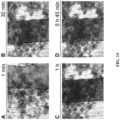
- Optical microscope images were collected with a Leica DMRXP microscope (Buffalo Grove, IL) equipped with a CCD video camera (Sony Power HD, DXC-970 MD) using a 10x objective ( FIG. 14 ).
- a p -CARD went through a series of exposure cycles and was continuously monitored using a VNA.
- the p -CARD was first exposed to 50 s of 2 ppm DCP in N 2 followed by 170 s pure N 2 .
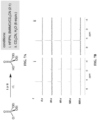
- the p -CARD was read by a SGS4 ( ⁇ 3) to determine its readability (OFF/unreadable or ON/readable) and then the corresponding resonance-frequency trace was captured. In each cycle all the three readability tests gave the same result ( FIG. 15 ).
- p -CARDs derived from one-step modification of commercial NFC tags have a readability threshold around -0.2 dB. While these p -CARDs proved successful in smartphone binary switch experiments, methods that would allow one to customize the readability threshold of the device to adapt to different situations have not been developed. This can be achieved by the incorporation of an additional resistor ( R 0 ) in series with the integrated circuit ( IC ), as illustrated in FIG. 16 . By increasing the resistance of R 0 , a customizable threshold can be obtained. For instance, modified p -CARDs had threshold around -0.4 dB using this method.
- a p -CARD was first exposed to 100 s pure N 2 , followed by 300 s exposure of the analyte vapor, and finally 200 s pure N 2 (except for DFP), while continuously monitored using a VNA.
- DFP 100 s pure N 2 , followed by 500 s exposure of DFP vapor, and finally 200 s pure N 2 ( FIG. 17).
- p -CARDs did not respond significantly to low concentrations of water vapor ( ⁇ 10% relative humidity) and the response to DCP was not significantly affected under such level of humidity. This is consistent with the fact that the fabrication, maturing (12 h ⁇ 1d) and storage (>3d) of these devices was performed under ambient conditions (typically 20% ⁇ 50% relative humidity).
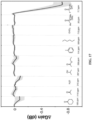
- FIG. 18 shows p-CARD responses to a continuous flow (0.5-1.5 L/min) of moisture vapor (0% ⁇ 100% of saturated vapor pressure, 23 °C).
- Left gain traces of 4 individual devices.
- Right average relative gain change based on initial gain. The shaded area indicates standard deviation.
- This response to high content of water is very different from that to DCP in three aspects: (1) the device saturated at different levels under different humidity; (2) the response was largely reversible; (3) ⁇ Gain/Gain 0 , instead of ⁇ Gain, was the consistent variable among tested devices. This response can be resulted from the ionic-liquid microcrystals being dissolved. This would lead to the destruction of the sensor network. To test this, the devices were exposed from the high water content experiments to DCP vapor and found a substantially attenuated response was obtained. This is consistent with a compromised sensor. Similarly, the response was attenuated when the device was exposed a mixed flow of high water content vapor and DCP vapor.
Landscapes
- Health & Medical Sciences (AREA)
- Engineering & Computer Science (AREA)
- Life Sciences & Earth Sciences (AREA)
- Chemical & Material Sciences (AREA)
- Physics & Mathematics (AREA)
- General Health & Medical Sciences (AREA)
- General Physics & Mathematics (AREA)
- Business, Economics & Management (AREA)
- Pathology (AREA)
- Immunology (AREA)
- Biochemistry (AREA)
- Analytical Chemistry (AREA)
- Tourism & Hospitality (AREA)
- Molecular Biology (AREA)
- Microelectronics & Electronic Packaging (AREA)
- Theoretical Computer Science (AREA)
- Electrochemistry (AREA)
- Chemical Kinetics & Catalysis (AREA)
- Biomedical Technology (AREA)
- Biophysics (AREA)
- Veterinary Medicine (AREA)
- Public Health (AREA)
- Animal Behavior & Ethology (AREA)
- Surgery (AREA)
- Computer Hardware Design (AREA)
- Medical Informatics (AREA)
- Heart & Thoracic Surgery (AREA)
- Marketing (AREA)
- Economics (AREA)
- General Business, Economics & Management (AREA)
- Development Economics (AREA)
- Educational Administration (AREA)
- Primary Health Care (AREA)
- Strategic Management (AREA)
- Computer Security & Cryptography (AREA)
- Human Resources & Organizations (AREA)
- Combustion & Propulsion (AREA)
- Food Science & Technology (AREA)
- Medicinal Chemistry (AREA)
- Pulmonology (AREA)
Applications Claiming Priority (3)
| Application Number | Priority Date | Filing Date | Title |
|---|---|---|---|
| US201662351881P | 2016-06-17 | 2016-06-17 | |
| PCT/US2017/038043 WO2017219002A1 (fr) | 2016-06-17 | 2017-06-16 | Chimiorésistance à composite nanotubes de carbone/liquide ionique permettant une détection chimique sans fil |
| EP17761936.8A EP3507595B8 (fr) | 2016-06-17 | 2017-06-16 | Chimiorésistance à composite nanotubes de carbone permettant une détection chimique sans fil |
Related Parent Applications (2)
| Application Number | Title | Priority Date | Filing Date |
|---|---|---|---|
| EP17761936.8A Division EP3507595B8 (fr) | 2016-06-17 | 2017-06-16 | Chimiorésistance à composite nanotubes de carbone permettant une détection chimique sans fil |
| EP17761936.8A Division-Into EP3507595B8 (fr) | 2016-06-17 | 2017-06-16 | Chimiorésistance à composite nanotubes de carbone permettant une détection chimique sans fil |
Publications (2)
| Publication Number | Publication Date |
|---|---|
| EP4365589A2 true EP4365589A2 (fr) | 2024-05-08 |
| EP4365589A3 EP4365589A3 (fr) | 2024-06-12 |
Family
ID=59791112
Family Applications (2)
| Application Number | Title | Priority Date | Filing Date |
|---|---|---|---|
| EP23217019.1A Withdrawn EP4365589A3 (fr) | 2016-06-17 | 2017-06-16 | Chimiorésistance à composite de nanotubes de carbone liquides ioniques pour détection chimique sans fil |
| EP17761936.8A Active EP3507595B8 (fr) | 2016-06-17 | 2017-06-16 | Chimiorésistance à composite nanotubes de carbone permettant une détection chimique sans fil |
Family Applications After (1)
| Application Number | Title | Priority Date | Filing Date |
|---|---|---|---|
| EP17761936.8A Active EP3507595B8 (fr) | 2016-06-17 | 2017-06-16 | Chimiorésistance à composite nanotubes de carbone permettant une détection chimique sans fil |
Country Status (3)
| Country | Link |
|---|---|
| US (3) | US20170364785A1 (fr) |
| EP (2) | EP4365589A3 (fr) |
| WO (1) | WO2017219002A1 (fr) |
Families Citing this family (3)
| Publication number | Priority date | Publication date | Assignee | Title |
|---|---|---|---|---|
| WO2017219002A1 (fr) * | 2016-06-17 | 2017-12-21 | Massachusetts Institue Of Technology | Chimiorésistance à composite nanotubes de carbone/liquide ionique permettant une détection chimique sans fil |
| US12119462B2 (en) * | 2018-01-04 | 2024-10-15 | Lyten, Inc. | Sensing device for detecting analytes in batteries |
| EP4237807A4 (fr) * | 2020-10-28 | 2024-12-25 | The Kroger Co. | Dispositifs capteurs de fraîcheur et procédés associés |
Family Cites Families (17)
| Publication number | Priority date | Publication date | Assignee | Title |
|---|---|---|---|---|
| US5571401A (en) | 1995-03-27 | 1996-11-05 | California Institute Of Technology | Sensor arrays for detecting analytes in fluids |
| US6783989B1 (en) * | 1999-06-11 | 2004-08-31 | Physical Sciences, Inc. | Toxic substance detection |
| WO2008018853A2 (fr) * | 2005-05-24 | 2008-02-14 | Chemmotif, Inc. | Détection d'agent de guerre chimique (agc) et de substance chimique toxique industrielle (scti) par une dégradation combinée avec des colorants indicateurs acide-base |
| US8951473B2 (en) * | 2008-03-04 | 2015-02-10 | Massachusetts Institute Of Technology | Devices and methods for determination of species including chemical warfare agents |
| US7911345B2 (en) * | 2008-05-12 | 2011-03-22 | General Electric Company | Methods and systems for calibration of RFID sensors |
| US8159347B2 (en) * | 2008-09-25 | 2012-04-17 | General Electric Company | Sensors having gap based sensing devices and methods of making and using the same |
| JP5448623B2 (ja) * | 2009-07-29 | 2014-03-19 | アルパイン株式会社 | 通信装置 |
| US8438905B2 (en) | 2010-05-03 | 2013-05-14 | Sensorbit Systems, Inc. | Method and apparatus for vapor signature with heat differential |
| US20120183949A1 (en) * | 2011-01-19 | 2012-07-19 | Searete Llc, A Limited Liability Corporation Of The State Of Delaware | Method, device, or system using lung sensor for detecting a physiological condition in a vertebrate subject |
| ITRM20110685A1 (it) * | 2011-12-23 | 2013-06-24 | Internat Ct For Genetic En Gineering And | Microrna per la rigenerazione cardiaca attraverso l induzione della proliferazione dei miociti cardiaci |
| US9759688B2 (en) * | 2012-03-01 | 2017-09-12 | Georgia Tech Research Corporation | Highly sensitive standoff gas sensing using carbon nanotubes and integrated wireless devices |
| CN105101922B (zh) * | 2013-03-05 | 2019-01-04 | 捷波科技公司 | 无线传感器系统和方法 |
| CN103435849B (zh) * | 2013-08-23 | 2016-03-02 | 华南理工大学 | 一种用于氨气检测的纤维素基复合材料及其制备方法 |
| CA2964861A1 (fr) * | 2013-10-30 | 2015-07-30 | Massachusetts Institute Of Technology | Detection chimique et physique a l'aide d'un lecteur et d'etiquettes rfid |
| WO2015160830A1 (fr) * | 2014-04-15 | 2015-10-22 | Chemisense, Inc. | Système de capteur pouvant être porté sur soi externalisé |
| CA2955168A1 (fr) * | 2014-07-15 | 2016-01-21 | C2Sense Llc | Formulations permettant d'ameliorer la detection chimioresistive |
| WO2017219002A1 (fr) * | 2016-06-17 | 2017-12-21 | Massachusetts Institue Of Technology | Chimiorésistance à composite nanotubes de carbone/liquide ionique permettant une détection chimique sans fil |
-
2017
- 2017-06-16 WO PCT/US2017/038043 patent/WO2017219002A1/fr not_active Ceased
- 2017-06-16 EP EP23217019.1A patent/EP4365589A3/fr not_active Withdrawn
- 2017-06-16 EP EP17761936.8A patent/EP3507595B8/fr active Active
- 2017-06-16 US US15/626,041 patent/US20170364785A1/en not_active Abandoned
-
2019
- 2019-12-31 US US16/732,095 patent/US11200474B2/en active Active
-
2021
- 2021-12-01 US US17/539,803 patent/US12277464B2/en active Active
Non-Patent Citations (55)
| Title |
|---|
| "Drager-Tubes & CMS-Handbook Soil, Water, and Air Investigations as Well as Technical Gas Analysis", 2001, DRAGER SAFETY AG & CO. |
| "Toxicology of Organophosphate & Carbamate Compounds", 2006, ELSEVIER ACADEMIC PRESS, pages: 103 - 160,209-217,599-655 |
| A. D. WILSONM. BAIETTO, SENSORS, vol. 9, 2009, pages 5099 - 5148 |
| A. H. MIGUELT. W. KIRCHSTETTERR. A. HARLEYS. V. HERING, ENVIRON. SCI. TECHNOL, vol. 32, 1998, pages 450 - 455 |
| A. M. COSTEROM. PARRAS. GILR. GOTORR. MARTINEZ-MANEZF. SANCENONS. ROYO, EUROPEAN J. ORG. CHEM., 2012, pages 4937 - 4946 |
| A. VALET. C. MARRSP. RICE, MEDICINE, vol. 44, 2012, pages 106 - 108 |
| ANGEW. CHEM. INT. ED, vol. 49, 2010, pages 9737 - 9739 |
| ANGEW. CHEM., vol. 127, 2015, pages 6894 - 6898 |
| B. ERICKSON, EN, vol. 94, 2016, pages 30 - 34 |
| BENSCHOPL. P. A. DE JONG, ACC. CHEM. RES, vol. 21, 1988, pages 368 - 374 |
| C. BELGERJ. G. WEISE. EGAPT. M. SWAGER, MACROMOLECULES, vol. 48, 2015, pages 7990 - 7994 |
| E. LOPEZ-MAYAC. MONTOROL. M. RODRIGUEZ-ALBELOS. D. A. CERVANTESA. A. LOZANO-PEREZJ. L. CENISE. BAREAJ. A. R. NAVARRO, ANGEW. CHEM. INT. ED., vol. 54, 2015, pages 6790 - 6794 |
| F. WANGT. M. SWAGER, J. AM. CHEM. SOC, vol. 133, 2011, pages 11181 - 11193 |
| FIDDES LKCHANG JYAN N: "Electrochemical detection of biogenic amines during food spoilage using an integrated sensing RFID tag", SENSORS ACTUATORS B CHEM, vol. 202, 2014, pages 1298 - 1304, XP055417287, DOI: 10.1016/j.snb.2014.05.106 |
| FIDDES LKYAN N: "RFID tags for wireless electrochemical detection of volatile chemicals", SENSORS ACTUATORS B CHEM, vol. 186, 2013, pages 817 - 823, XP055276456, DOI: 10.1016/j.snb.2013.05.008 |
| H. J. KIMJ. H. LEEH. LEEJ. H. LEEJ. H. LEEJ. H. JUNGJ. S. KIM, ADV. FUNCT. MATER, vol. 21, 2011, pages 4035 - 4040 |
| H. LAIA. LEUNGM. MAGEEJ.R. ALMIRALL, ANAL. BIOANAL. CHEM, vol. 396, no. 174501-64-5, 2010, pages 2997 - 3007 |
| H. SOHNS. LETANTM. J. SAILORW. C. TROGLER, J. AM. CHEM. SOC., vol. 122, 2000, pages 5399 - 5400 |
| I. M. WARNER, B. EL-ZAHAB, N. SIRAJ, CHEM., vol. 86, 2014, pages 7184 - 7191 |
| J. F. FENNELLS. F. LIUJ. M. AZZARELLIJ. G. WEISS. ROCHATK. A. MIRICAJ. B. RAVNSBASKT. M. SWAGER, ANGEW. CHEMIE INT. ED, vol. 55, 2015, pages 1266 - 1281 |
| J. M. AZZARELLIK. A. MIRICAJ. B. RAVNSBASKT. M. SWAGER, PROC. NATL. ACAD. SCI., vol. 111, 2014, pages 18162 - 18166 |
| J.-P. BEGUED. BONNET-DELPONB. CROUSSE, SYNLETT, 2004, pages 18 - 29 |
| K. A. MIRICAJ. M. AZZARELLIJ. G. WEISJ. M. SCHNORRT. M. SWAGER, PROC. NATL. ACAD. SCI, vol. 110, 2013, pages E3265 - E3270 |
| K. KIMO. G.TSAYD. A. ATWOODD. G. CHURCHILL, CHEM. REV., vol. 111, 2011, pages 5345 - 5403 |
| K. KORDAST. MUSTONENG. TOTHH. JANTUNENM. LAJUNENC. SOLDANOS. TALAPATRAS. KARR. VAJTAIP. M. AJAYAN, SMALL, vol. 2, 2006, pages 1021 - 1025 |
| L. YANGR. ZHANGD. STAICULESCUC. P. WONGM. M. TENTZERIS: "Antenna Wirel. Propag. Lett", IEEE, vol. 8, 2009, pages 653 - 656 |
| LEE H ET AL.: "Carbon-nanotube loaded antenna-based ammonia gas sensor", MICROW THEORY TECH IEEE TRANS, vol. 59, 2011, pages 2665 - 2673, XP055417282, DOI: 10.1109/TMTT.2011.2164093 |
| M. AZZARELLIK. A. MIRICAJ. B. RAVNSBASKT. M. SWAGER, PROC. NATL. ACAD. SCI, vol. 111, 2014, pages 18162 - 18166 |
| M. JUNG, J. KIM, J. NOH, N. LIM, C. LIM, G. LEE, J. KIM, H. KANG, K. JUNG, A. D. LEONARD, IEEE TRANS. ELECTRON DEVICES, vol. 57, 2010, pages 571 - 580 |
| M. TUNCKOLJ. DURANDP. SERP, CARBON, vol. 50, 2012, pages 4303 - 4334 |
| MARTINEZ, A. W ET AL., ANAL. CHEM., vol. 80, 2008, pages 3699 - 3707 |
| OCCHIUZZI CRIDA AMARROCCO GTENTZERIS MM: "Passive ammonia sensor: RFID tag integrating carbon nanotubes", IEEE INT SYMP ANTENNAS PROPAG, 2011, pages 1413 - 1416, XP032191272, DOI: 10.1109/APS.2011.5996557 |
| P. PAVEZD. MILLANC. COCQJ. G. SANTOSF. NOME, NEW J. CHEM, vol. 39, 2015, pages 1953 - 1959 |
| P. PAVEZD. MILLANC. J. I. MORALESE. A. CASTROC. LOPEZ A.J. G. SANTOS, J. ORG. CHEM., vol. 78, 2013, pages 9670 - 9676 |
| POTYRAILO RA: "Development of radio-frequency identification sensors based on organic electronic sensing materials for selective detection of toxic vapors", J APPL PHYS, vol. 106, 2009, pages 124902, XP012127463, DOI: 10.1063/1.3247069 |
| POTYRAILO RASURMAN CNAGRAJ NBURNS A: "Materials and transducers toward selective wireless gas sensing", CHEM REV, vol. 111, 2011, pages 7315 - 7354, XP055417277, DOI: 10.1021/cr2000477 |
| POTYRAILO, R. A ET AL., ANAL. CHEM, vol. 79, 2006, pages 45 - 51 |
| POTYRAILO, R. A ET AL., BATTERY-FREE RADIO FREQUENCY IDENTIFICATION (RFID) SENSORS FOR FOOD QUALITY AND SAFETY, 2012 |
| Q. JII. HONMAS.-M. PAEKM. AKADAJ. P. HILLA. VINUK. ARIGA, ANGEW. CHEM., vol. 122, 2010, pages 9931 - 9933 |
| R. A. POTYRAILOA. BURNSC. SURMAND. J. LEEE. MCGINNISS, ANALYST, vol. 737, 2012, pages 2777 |
| S. FANF. XIAOL. LIUF. ZHAOB. ZENG, SENS. ACTUATORS B-CHEM, vol. 132, 2008, pages 34 - 39 |
| S. GOSWAMIS. DASK. AICH, RSC ADV, vol. 5, 2015, pages 28996 - 29001 |
| S. STEINLES. REISC. E. SABEL, SCI. TOTAL ENVIRON, vol. 443, 2013, pages 184 - 193 |
| S. ZHANGQ, ZHANGY. ZHANGZ. CHENM. WATANABEY. DENG, PROG. MATER. SCI, vol. 77, 2016, pages 80 - 124 |
| S.-W. ZHANGT. M. SWAGER, J. AM. CHEM. SOC., vol. 125, 2003, pages 3420 - 3421 |
| S.-Y. MOONY. LIUJ. T. HUPPO. K. FARHA, ANGEW. CHEM. INT. ED, vol. 54, 2015, pages 6795 - 6799 |
| T. FUKUSHIMAA. KOSAKAY. ISHIMURAT. YAMAMOTOT. TAKIGAWAN. ISHIIT. AIDA, SCIENCE, vol. 300, 2003, pages 2072 - 2074 |
| T. FUKUSHIMAT. AIDA, CHEM. EUR. J, vol. 13, 2007, pages 5048 - 5058 |
| T. WELTON, CHEM. REV., vol. 99, 1999, pages 2071 - 2083 |
| TAO, H ET AL., ADV. MATER, vol. 24, 2012, pages 1067 - 72 |
| V. COSKUNB. OZDENIZCIK. OK, WIREL. PERS. COMMUN, vol. 71, 2013, pages 2259 - 2294 |
| W. LEEH. KOOJ. SUNJ. NOHK.-S. KWONC. YEOMY. CHOIK. CHENA. JAVEYG. CHO, SCI. REP, vol. 5, 2015, pages 17707 |
| X. ZHOUY. ZENGC. LIYANX. WUJ. YOON, ANGEW. CHEM. INT. ED, vol. 55, 2016, pages 4729 - 4733 |
| Y. SETOM. KANAMORI-KATAOKAK. TSUGEI. OHSAWAK. MATSUSHITAH. SEKIGUCHIT. ITOIK. IURAY. SANOS. YAMASHIRO, SENS. ACTUATORS B-CHEM, vol. 108, 2005, pages 193 - 197 |
| Z. LEIY. YANG, J. AM. CHEM. SOC, vol. 136, 2014, pages 6594 - 6597 |
Also Published As
| Publication number | Publication date |
|---|---|
| WO2017219002A1 (fr) | 2017-12-21 |
| EP3507595B8 (fr) | 2024-03-06 |
| US11200474B2 (en) | 2021-12-14 |
| EP4365589A3 (fr) | 2024-06-12 |
| US20170364785A1 (en) | 2017-12-21 |
| US20200394485A1 (en) | 2020-12-17 |
| US20220343126A1 (en) | 2022-10-27 |
| EP3507595A1 (fr) | 2019-07-10 |
| EP3507595B1 (fr) | 2024-01-24 |
| US12277464B2 (en) | 2025-04-15 |
Similar Documents
| Publication | Publication Date | Title |
|---|---|---|
| US20250028923A1 (en) | Chemical and Physical Sensing with a Reader and RFID Tags | |
| US12277464B2 (en) | System for detecting a stimulus including a radio frequency device responsive to an analyte and a portable reader | |
| US7492254B2 (en) | Radio frequency identification (RFID) based sensor networks | |
| US9494541B2 (en) | Sensors for gas dosimetry | |
| KR100814545B1 (ko) | 진단 라디오 주파수 식별 센서 및 그 애플리케이션 | |
| US20210080419A1 (en) | 2h to 1t phase based transition metal dichalcogenide sensor for optical and electronic detection of strong electron donor chemical vapors | |
| US20090212918A1 (en) | Radio Frequency Identification (RFID) Based Sensor Networks | |
| US10719755B2 (en) | Wireless oxygen dosimeter | |
| US11333663B2 (en) | Dynamic resonant circuits for chemical and physical sensing with a reader and RFID tags | |
| JP2011524974A (ja) | Rfidセンサの較正のための方法及びシステム | |
| US20140144994A1 (en) | Analysis of stimulus by rfid | |
| US20180052130A1 (en) | Sensor device and methods | |
| US20140144995A1 (en) | Analysis of stimulus by rfid | |
| Nam et al. | Smart Acrylic Coating, Incorporated with PAN/MOF/CNT Composite, for Real-Time and Noncontact Detection of Accidental Acid/Base Contamination | |
| US20140147579A1 (en) | Analysis of stimulus by rfid |
Legal Events
| Date | Code | Title | Description |
|---|---|---|---|
| PUAI | Public reference made under article 153(3) epc to a published international application that has entered the european phase |
Free format text: ORIGINAL CODE: 0009012 |
|
| STAA | Information on the status of an ep patent application or granted ep patent |
Free format text: STATUS: THE APPLICATION HAS BEEN PUBLISHED |
|
| REG | Reference to a national code |
Ref country code: DE Ref legal event code: R079 Free format text: PREVIOUS MAIN CLASS: G01N0033000000 Ipc: G01N0027120000 |
|
| AC | Divisional application: reference to earlier application |
Ref document number: 3507595 Country of ref document: EP Kind code of ref document: P |
|
| AK | Designated contracting states |
Kind code of ref document: A2 Designated state(s): AL AT BE BG CH CY CZ DE DK EE ES FI FR GB GR HR HU IE IS IT LI LT LU LV MC MK MT NL NO PL PT RO RS SE SI SK SM TR |
|
| PUAL | Search report despatched |
Free format text: ORIGINAL CODE: 0009013 |
|
| AK | Designated contracting states |
Kind code of ref document: A3 Designated state(s): AL AT BE BG CH CY CZ DE DK EE ES FI FR GB GR HR HU IE IS IT LI LT LU LV MC MK MT NL NO PL PT RO RS SE SI SK SM TR |
|
| RIC1 | Information provided on ipc code assigned before grant |
Ipc: G01N 33/00 20060101ALI20240503BHEP Ipc: G01N 27/12 20060101AFI20240503BHEP |
|
| STAA | Information on the status of an ep patent application or granted ep patent |
Free format text: STATUS: REQUEST FOR EXAMINATION WAS MADE |
|
| 17P | Request for examination filed |
Effective date: 20241212 |
|
| STAA | Information on the status of an ep patent application or granted ep patent |
Free format text: STATUS: EXAMINATION IS IN PROGRESS |
|
| 17Q | First examination report despatched |
Effective date: 20250403 |
|
| STAA | Information on the status of an ep patent application or granted ep patent |
Free format text: STATUS: THE APPLICATION IS DEEMED TO BE WITHDRAWN |
|
| 18D | Application deemed to be withdrawn |
Effective date: 20250805 |