EP4366249A1 - Signalverarbeitungsvorrichtung und kommunikationsvorrichtung für ein fahrzeug damit - Google Patents
Signalverarbeitungsvorrichtung und kommunikationsvorrichtung für ein fahrzeug damit Download PDFInfo
- Publication number
- EP4366249A1 EP4366249A1 EP22833690.5A EP22833690A EP4366249A1 EP 4366249 A1 EP4366249 A1 EP 4366249A1 EP 22833690 A EP22833690 A EP 22833690A EP 4366249 A1 EP4366249 A1 EP 4366249A1
- Authority
- EP
- European Patent Office
- Prior art keywords
- processor
- message
- data
- signal processing
- processing device
- Prior art date
- Legal status (The legal status is an assumption and is not a legal conclusion. Google has not performed a legal analysis and makes no representation as to the accuracy of the status listed.)
- Pending
Links
Images









Classifications
-
- H—ELECTRICITY
- H04—ELECTRIC COMMUNICATION TECHNIQUE
- H04L—TRANSMISSION OF DIGITAL INFORMATION, e.g. TELEGRAPHIC COMMUNICATION
- H04L63/00—Network architectures or network communication protocols for network security
- H04L63/14—Network architectures or network communication protocols for network security for detecting or protecting against malicious traffic
- H04L63/1408—Network architectures or network communication protocols for network security for detecting or protecting against malicious traffic by monitoring network traffic
- H04L63/1425—Traffic logging, e.g. anomaly detection
-
- H—ELECTRICITY
- H04—ELECTRIC COMMUNICATION TECHNIQUE
- H04L—TRANSMISSION OF DIGITAL INFORMATION, e.g. TELEGRAPHIC COMMUNICATION
- H04L63/00—Network architectures or network communication protocols for network security
- H04L63/14—Network architectures or network communication protocols for network security for detecting or protecting against malicious traffic
- H04L63/1441—Countermeasures against malicious traffic
-
- B—PERFORMING OPERATIONS; TRANSPORTING
- B60—VEHICLES IN GENERAL
- B60R—VEHICLES, VEHICLE FITTINGS, OR VEHICLE PARTS, NOT OTHERWISE PROVIDED FOR
- B60R16/00—Electric or fluid circuits specially adapted for vehicles and not otherwise provided for; Arrangement of elements of electric or fluid circuits specially adapted for vehicles and not otherwise provided for
- B60R16/02—Electric or fluid circuits specially adapted for vehicles and not otherwise provided for; Arrangement of elements of electric or fluid circuits specially adapted for vehicles and not otherwise provided for electric constitutive elements
- B60R16/023—Electric or fluid circuits specially adapted for vehicles and not otherwise provided for; Arrangement of elements of electric or fluid circuits specially adapted for vehicles and not otherwise provided for electric constitutive elements for transmission of signals between vehicle parts or subsystems
-
- G—PHYSICS
- G06—COMPUTING OR CALCULATING; COUNTING
- G06F—ELECTRIC DIGITAL DATA PROCESSING
- G06F9/00—Arrangements for program control, e.g. control units
- G06F9/06—Arrangements for program control, e.g. control units using stored programs, i.e. using an internal store of processing equipment to receive or retain programs
- G06F9/44—Arrangements for executing specific programs
- G06F9/455—Emulation; Interpretation; Software simulation, e.g. virtualisation or emulation of application or operating system execution engines
-
- G—PHYSICS
- G06—COMPUTING OR CALCULATING; COUNTING
- G06F—ELECTRIC DIGITAL DATA PROCESSING
- G06F9/00—Arrangements for program control, e.g. control units
- G06F9/06—Arrangements for program control, e.g. control units using stored programs, i.e. using an internal store of processing equipment to receive or retain programs
- G06F9/44—Arrangements for executing specific programs
- G06F9/455—Emulation; Interpretation; Software simulation, e.g. virtualisation or emulation of application or operating system execution engines
- G06F9/45533—Hypervisors; Virtual machine monitors
- G06F9/45558—Hypervisor-specific management and integration aspects
-
- G—PHYSICS
- G06—COMPUTING OR CALCULATING; COUNTING
- G06F—ELECTRIC DIGITAL DATA PROCESSING
- G06F9/00—Arrangements for program control, e.g. control units
- G06F9/06—Arrangements for program control, e.g. control units using stored programs, i.e. using an internal store of processing equipment to receive or retain programs
- G06F9/46—Multiprogramming arrangements
- G06F9/54—Interprogram communication
- G06F9/544—Buffers; Shared memory; Pipes
-
- G—PHYSICS
- G06—COMPUTING OR CALCULATING; COUNTING
- G06F—ELECTRIC DIGITAL DATA PROCESSING
- G06F9/00—Arrangements for program control, e.g. control units
- G06F9/06—Arrangements for program control, e.g. control units using stored programs, i.e. using an internal store of processing equipment to receive or retain programs
- G06F9/46—Multiprogramming arrangements
- G06F9/54—Interprogram communication
- G06F9/546—Message passing systems or structures, e.g. queues
-
- H—ELECTRICITY
- H04—ELECTRIC COMMUNICATION TECHNIQUE
- H04L—TRANSMISSION OF DIGITAL INFORMATION, e.g. TELEGRAPHIC COMMUNICATION
- H04L12/00—Data switching networks
- H04L12/28—Data switching networks characterised by path configuration, e.g. LAN [Local Area Networks] or WAN [Wide Area Networks]
- H04L12/40—Bus networks
- H04L12/40006—Architecture of a communication node
- H04L12/40013—Details regarding a bus controller
-
- H—ELECTRICITY
- H04—ELECTRIC COMMUNICATION TECHNIQUE
- H04L—TRANSMISSION OF DIGITAL INFORMATION, e.g. TELEGRAPHIC COMMUNICATION
- H04L12/00—Data switching networks
- H04L12/66—Arrangements for connecting between networks having differing types of switching systems, e.g. gateways
-
- H—ELECTRICITY
- H04—ELECTRIC COMMUNICATION TECHNIQUE
- H04L—TRANSMISSION OF DIGITAL INFORMATION, e.g. TELEGRAPHIC COMMUNICATION
- H04L41/00—Arrangements for maintenance, administration or management of data switching networks, e.g. of packet switching networks
- H04L41/08—Configuration management of networks or network elements
-
- H—ELECTRICITY
- H04—ELECTRIC COMMUNICATION TECHNIQUE
- H04L—TRANSMISSION OF DIGITAL INFORMATION, e.g. TELEGRAPHIC COMMUNICATION
- H04L41/00—Arrangements for maintenance, administration or management of data switching networks, e.g. of packet switching networks
- H04L41/08—Configuration management of networks or network elements
- H04L41/0803—Configuration setting
- H04L41/084—Configuration by using pre-existing information, e.g. using templates or copying from other elements
-
- H—ELECTRICITY
- H04—ELECTRIC COMMUNICATION TECHNIQUE
- H04L—TRANSMISSION OF DIGITAL INFORMATION, e.g. TELEGRAPHIC COMMUNICATION
- H04L41/00—Arrangements for maintenance, administration or management of data switching networks, e.g. of packet switching networks
- H04L41/50—Network service management, e.g. ensuring proper service fulfilment according to agreements
- H04L41/5041—Network service management, e.g. ensuring proper service fulfilment according to agreements characterised by the time relationship between creation and deployment of a service
- H04L41/5054—Automatic deployment of services triggered by the service manager, e.g. service implementation by automatic configuration of network components
-
- H—ELECTRICITY
- H04—ELECTRIC COMMUNICATION TECHNIQUE
- H04L—TRANSMISSION OF DIGITAL INFORMATION, e.g. TELEGRAPHIC COMMUNICATION
- H04L41/00—Arrangements for maintenance, administration or management of data switching networks, e.g. of packet switching networks
- H04L41/50—Network service management, e.g. ensuring proper service fulfilment according to agreements
- H04L41/5058—Service discovery by the service manager
-
- H—ELECTRICITY
- H04—ELECTRIC COMMUNICATION TECHNIQUE
- H04L—TRANSMISSION OF DIGITAL INFORMATION, e.g. TELEGRAPHIC COMMUNICATION
- H04L47/00—Traffic control in data switching networks
- H04L47/10—Flow control; Congestion control
- H04L47/28—Flow control; Congestion control in relation to timing considerations
-
- H—ELECTRICITY
- H04—ELECTRIC COMMUNICATION TECHNIQUE
- H04L—TRANSMISSION OF DIGITAL INFORMATION, e.g. TELEGRAPHIC COMMUNICATION
- H04L67/00—Network arrangements or protocols for supporting network services or applications
- H04L67/01—Protocols
- H04L67/12—Protocols specially adapted for proprietary or special-purpose networking environments, e.g. medical networks, sensor networks, networks in vehicles or remote metering networks
-
- H—ELECTRICITY
- H04—ELECTRIC COMMUNICATION TECHNIQUE
- H04L—TRANSMISSION OF DIGITAL INFORMATION, e.g. TELEGRAPHIC COMMUNICATION
- H04L67/00—Network arrangements or protocols for supporting network services or applications
- H04L67/34—Network arrangements or protocols for supporting network services or applications involving the movement of software or configuration parameters
-
- H—ELECTRICITY
- H04—ELECTRIC COMMUNICATION TECHNIQUE
- H04L—TRANSMISSION OF DIGITAL INFORMATION, e.g. TELEGRAPHIC COMMUNICATION
- H04L69/00—Network arrangements, protocols or services independent of the application payload and not provided for in the other groups of this subclass
- H04L69/18—Multiprotocol handlers, e.g. single devices capable of handling multiple protocols
-
- H—ELECTRICITY
- H04—ELECTRIC COMMUNICATION TECHNIQUE
- H04W—WIRELESS COMMUNICATION NETWORKS
- H04W12/00—Security arrangements; Authentication; Protecting privacy or anonymity
- H04W12/40—Security arrangements using identity modules
-
- H—ELECTRICITY
- H04—ELECTRIC COMMUNICATION TECHNIQUE
- H04W—WIRELESS COMMUNICATION NETWORKS
- H04W4/00—Services specially adapted for wireless communication networks; Facilities therefor
- H04W4/30—Services specially adapted for particular environments, situations or purposes
- H04W4/40—Services specially adapted for particular environments, situations or purposes for vehicles, e.g. vehicle-to-pedestrians [V2P]
-
- H—ELECTRICITY
- H04—ELECTRIC COMMUNICATION TECHNIQUE
- H04W—WIRELESS COMMUNICATION NETWORKS
- H04W4/00—Services specially adapted for wireless communication networks; Facilities therefor
- H04W4/30—Services specially adapted for particular environments, situations or purposes
- H04W4/40—Services specially adapted for particular environments, situations or purposes for vehicles, e.g. vehicle-to-pedestrians [V2P]
- H04W4/48—Services specially adapted for particular environments, situations or purposes for vehicles, e.g. vehicle-to-pedestrians [V2P] for in-vehicle communication
-
- H—ELECTRICITY
- H04—ELECTRIC COMMUNICATION TECHNIQUE
- H04W—WIRELESS COMMUNICATION NETWORKS
- H04W88/00—Devices specially adapted for wireless communication networks, e.g. terminals, base stations or access point devices
- H04W88/08—Access point devices
- H04W88/10—Access point devices adapted for operation in multiple networks, e.g. multi-mode access points
-
- G—PHYSICS
- G06—COMPUTING OR CALCULATING; COUNTING
- G06F—ELECTRIC DIGITAL DATA PROCESSING
- G06F9/00—Arrangements for program control, e.g. control units
- G06F9/06—Arrangements for program control, e.g. control units using stored programs, i.e. using an internal store of processing equipment to receive or retain programs
- G06F9/44—Arrangements for executing specific programs
- G06F9/455—Emulation; Interpretation; Software simulation, e.g. virtualisation or emulation of application or operating system execution engines
- G06F9/45533—Hypervisors; Virtual machine monitors
- G06F9/45558—Hypervisor-specific management and integration aspects
- G06F2009/45595—Network integration; Enabling network access in virtual machine instances
-
- H—ELECTRICITY
- H04—ELECTRIC COMMUNICATION TECHNIQUE
- H04L—TRANSMISSION OF DIGITAL INFORMATION, e.g. TELEGRAPHIC COMMUNICATION
- H04L12/00—Data switching networks
- H04L12/28—Data switching networks characterised by path configuration, e.g. LAN [Local Area Networks] or WAN [Wide Area Networks]
- H04L12/40—Bus networks
- H04L2012/40208—Bus networks characterized by the use of a particular bus standard
- H04L2012/40215—Controller Area Network CAN
-
- H—ELECTRICITY
- H04—ELECTRIC COMMUNICATION TECHNIQUE
- H04L—TRANSMISSION OF DIGITAL INFORMATION, e.g. TELEGRAPHIC COMMUNICATION
- H04L12/00—Data switching networks
- H04L12/28—Data switching networks characterised by path configuration, e.g. LAN [Local Area Networks] or WAN [Wide Area Networks]
- H04L12/40—Bus networks
- H04L2012/40267—Bus for use in transportation systems
- H04L2012/40273—Bus for use in transportation systems the transportation system being a vehicle
-
- H—ELECTRICITY
- H04—ELECTRIC COMMUNICATION TECHNIQUE
- H04L—TRANSMISSION OF DIGITAL INFORMATION, e.g. TELEGRAPHIC COMMUNICATION
- H04L45/00—Routing or path finding of packets in data switching networks
- H04L45/76—Routing in software-defined topologies, e.g. routing between virtual machines
Definitions
- the present disclosure relates to a signal processing device and a vehicle communication device including the same, and more particularly to a signal processing device capable of reducing latency and performing high-speed data transmission during inter-processor communication, and a vehicle communication device including the signal processing device.
- a vehicle is a machine that allows a user to move in a desired direction.
- a representative example of the vehicle is a car.
- a vehicle communication device is mounted in the vehicle for user convenience.
- a gateway which is a high-speed router may be used for data communication between a plurality of in-vehicle processors.
- Korean Patent No. 10-1020948 (hereinafter referred to as "related art") relates to a vehicle network gateway and a network system, in which a mobile terminal supports wireless LAN via the internet by using a vehicle telematics module.
- the related art has a problem in that the vehicle network gateway uses communication protocols, such as UART, SPI, etc., such that due to a low bandwidth and unnecessary memory copy, real-time data transmission and large data transmission may not be accomplished.
- communication protocols such as UART, SPI, etc.
- a signal processing device and a vehicle communication device including the same, which include: a first processor configured to receive a first message based on a first communication scheme and to perform signal processing of the received first message, wherein the first message includes a sensor signal in a vehicle; a second processor configured to receive a second message based on a second communication scheme and to perform signal processing of the received second message, wherein the second message includes a communication message received from an external source; and a shared memory configured to operate to transmit the first message or the second message between the first processor and the second processor, wherein the first processor or the second processor is configured to receive the first message or the second message stored in the shared memory based on an interrupt signal.
- the signal processing device may further include an interrupt router configured to output an interrupt signal to the first processor or the second processor.
- the interrupt router may be configured to output an interrupt signal to each core of the first processor or each core of the second processor.
- the interrupt router may be configured to dynamically adjust the number of triggering of the interrupt signal.
- the first processor or the second processor may operate based on a lock-free queue.
- the first processor or the second processor may be configured to transmit or receive the first message or the second message based on a dynamic bandwidth according to a clock or memory access performance.
- the first processor may be configured to transmit the first message to the shared memory based on a first dynamic bandwidth according to a first clock; and the second processor may be configured to transmit the second message to the shared memory based on a second dynamic bandwidth according to a second clock.
- the first processor may be configured to execute a first server and a first driver for inter-processor communication (IPC), wherein the second processor may be configured to execute a second server and a second driver for the inter-processor communication (IPC), wherein the interrupt signal may be transmitted between the first server and the second server, and the first server or the second server may be configured to transmit or receive data to or from the shared memory.
- IPC inter-processor communication
- the interrupt signal may be transmitted between the first server and the second server
- the first server or the second server may be configured to transmit or receive data to or from the shared memory.
- an application executed in the second processor may be configured to access the shared memory to receive the first message.
- an application executed in the first processor may be configured to access the shared memory to receive the second message.
- the shared memory may be divided into areas based on each application executed in the first processor or the second processor.
- the interrupt router may be configured to: in response to a transmitted message being event-based data, operate in an interrupt-driven mode; and in response to the transmitted message being periodic data, operate in a polling mode.
- the first processor may be configured to: in response to the transmitted first message being event-based data, operate in an interrupt-driven mode; and in response to the transmitted first message being periodic data, operate in a polling mode.
- the second processor may be configured to divide the data and transmit the divided data to the first memory.
- the first processor may be configured to receive the first message through a plurality of channels and transmit the first message through the shared memory.
- the second processor may be configured to receive the first message through the shared memory, to convert the first message into data based on the second communication scheme, and to transmit the converted data to an external server.
- the first processor may include a first manager including a first cache for inter-processor communication (IPC); and the second processor may include a second manager including a timer and a second cache for the IPC.
- IPC inter-processor communication
- the first processor may store the first message in the first cache or may manage the first message, and upon receiving the first message, the first processor may compare the first message with a value stored in the first cache, and in response to a difference between the first message and the stored value being greater than or equal to a predetermined value, the first processor may transmit the first message to the second processor through the IPC.
- a signal processing device and a vehicle communication device including the same may further include: a first memory including an IPC channel; and a second memory configured to store sensor data including vehicle speed data, wherein the shared memory may be selected from the first memory or the second memory based on an available size of the first memory or the second memory.
- a signal processing device and a vehicle communication device including the same include: a first processor configured to receive a first message based on a first communication scheme and to perform signal processing of the received first message, wherein the first message includes a sensor signal in a vehicle; a second processor configured to receive a second message based on a second communication scheme and to perform signal processing of the received second message, wherein the second message includes a communication message received from an external source; and a shared memory configured to operate to transmit the first message or the second message between the first processor and the second processor, wherein the first processor or the second processor is configured to receive the first message or the second message stored in the shared memory based on an interrupt signal. Accordingly, latency may be reduced and high-speed data transmission may be performed during inter-processor communication. Particularly, messages based on different communication schemes may be rapidly transmitted.
- the signal processing device may further include an interrupt router configured to output an interrupt signal to the first processor or the second processor.
- the interrupt router may be configured to output an interrupt signal to each core of the first processor or each core of the second processor. Accordingly, the processor may be used efficiently based on the interrupt signal.
- the interrupt router may be configured to dynamically adjust the number of triggering of the interrupt signal. Accordingly, the processor may be used efficiently based on the interrupt signal.
- the first processor or the second processor may operate based on a lock-free queue, thereby allowing operation without a locking mechanism for the processor.
- the first processor or the second processor may be configured to transmit or receive the first message or the second message based on a dynamic bandwidth according to a clock or memory access performance. Accordingly, latency may be reduced and high-speed data transmission may be performed during inter-processor communication. Further, data transmission loss may be significantly reduced based on a processor clock or memory access performance.
- the first processor may be configured to transmit the first message to the shared memory based on a first dynamic bandwidth according to a first clock; and the second processor may be configured to transmit the second message to the shared memory based on a second dynamic bandwidth according to a second clock. Accordingly, latency may be reduced and high-speed data transmission may be performed during inter-processor communication. Further, data transmission loss may be significantly reduced based on a processor clock or memory access performance.
- the first processor may be configured to execute a first server and a first driver for inter-processor communication (IPC), wherein the second processor may be configured to execute a second server and a second driver for the inter-processor communication (IPC), wherein the interrupt signal may be transmitted between the first server and the second server, and the first server or the second server may be configured to transmit or receive data to or from the shared memory. Accordingly, latency may be reduced and high-speed data transmission may be performed during inter-processor communication.
- IPC inter-processor communication
- IPC inter-processor communication
- an application executed in the second processor may be configured to access the shared memory to receive the first message. Accordingly, messages based on different communication schemes may be rapidly received.
- an application executed in the first processor may be configured to access the shared memory to receive the second message. Accordingly, messages based on different communication schemes may be rapidly received.
- the shared memory may be divided into areas based on each application executed in the first processor or the second processor. Accordingly, the shared memory may be stably used.
- the interrupt router may be configured to: in response to a transmitted message being event-based data, operate in an interrupt-driven mode; and in response to the transmitted message being periodic data, operate in a polling mode. Accordingly, the message may be efficiently transmitted.
- the first processor may be configured to: in response to the transmitted first message being event-based data, operate in an interrupt-driven mode; and in response to the transmitted first message being periodic data, operate in a polling mode. Accordingly, the message may be efficiently transmitted.
- the second processor may be configured to divide the data and transmit the divided data to the first memory. Accordingly, it is possible to prevent performance degradation due to an excessive interrupt.
- the first processor may be configured to receive the first message through a plurality of channels and transmit the first message through the shared memory. Accordingly, the message may be efficiently transmitted.
- the second processor may be configured to receive the first message through the shared memory, to convert the first message into data based on the second communication scheme, and to transmit the converted data to an external server. Accordingly, the message may be efficiently transmitted.
- the first processor may include a first manager including a first cache for inter-processor communication (IPC); and the second processor may include a second manager including a timer and a second cache for the IPC. Accordingly, latency may be reduced and high-speed data transmission may be performed during inter-processor communication.
- IPC inter-processor communication
- the first processor may store the first message in the first cache or may manage the first message, and upon receiving the first message, the first processor may compare the first message with a value stored in the first cache, and in response to a difference between the first message and the stored value being greater than or equal to a predetermined value, the first processor may transmit the first message to the second processor through the IPC. Accordingly, by minimizing cache occupancy or buffer occupancy of the same data, latency may be reduced and high-speed data transmission may be performed during the inter-processor communication.
- a signal processing device and a vehicle communication device including the same may further include: a first memory including an IPC channel; and a second memory configured to store sensor data including vehicle speed data, wherein the shared memory may be selected from the first memory or the second memory based on an available size of the first memory or the second memory. Accordingly, the shared memory may be efficiently used.
- suffixes “module” and “unit” are given only in consideration of ease in preparation of the specification, and do not have or serve different meanings. Accordingly, the suffixes “module” and “unit” may be used interchangeably.
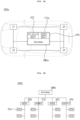
- FIG. 1 is a view showing an example of the exterior and interior of a vehicle.
- the vehicle 200 is moved by a plurality of wheels 103FR, 103FL, 103RL,... rotated by a power source and a steering wheel 150 configured to adjust an advancing direction of the vehicle 200.
- the vehicle 200 may be provided with a camera 195 configured to acquire an image of the front of the vehicle.
- the vehicle 200 may be further provided therein with a plurality of displays 180a and 180b configured to display images and information.
- a cluster display 180a and an audio video navigation (AVN) display 180b are illustrated as the plurality of displays 180a and 180b.
- AVN audio video navigation
- HUD head up display
- the audio video navigation (AVN) display 180b may also be called a center information display.
- the plurality of displays 180a and 180b may display the same images in a synchronized state.
- a signal processing device 170 in the vehicle display apparatus 100 may transmit the same data to a plurality of virtual machines in a synchronized state, and may be configured to display the same images on the displays.
- the vehicle 200 described in this specification may be a concept including all of a vehicle having an engine as a power source, a hybrid vehicle having an engine and an electric motor as a power source, and an electric vehicle having an electric motor as a power source.
- FIGS. 2A to 2C are diagrams illustrating various architectures of a vehicle communication gateway according to an embodiment of the present disclosure.
- FIG. 2A is a diagram illustrating a first architecture of a vehicle communication gateway according to an embodiment of the present disclosure.
- the first architecture 300a may correspond to a zone-based architecture.
- in-vehicle sensor devices and processors may be mounted in each of a plurality of zones Z1 to Z4, and a signal processing device 170a including a vehicle communication gateway GWDa may be disposed at the center of the plurality of zones Z1 to Z4.
- the signal processing device 170a may further include a self-driving control module ACC, a cockpit control module CPG, etc., in addition to the vehicle communication gateway GWDa.
- the vehicle communication gateway GWDa in the signal processing device 170a may be a High Performance Computing (HPC) gateway.
- HPC High Performance Computing
- the signal processing device 170a of FIG. 2A may exchange data with an external communication module (not shown) or processors (not shown) in the plurality of zones Z1 to Z4.
- FIG. 2B is a diagram illustrating a second architecture of a vehicle communication gateway according to an embodiment of the present disclosure.
- a second architecture 300b may correspond to a domain integrated architecture.
- a body chassis control module (BSG), a power control module (PTG), an ADAS control module (ADG), and a cockpit control module (CPG) are connected in parallel to a gateway GWDb, and a plurality of processors ECU may be electrically connected to the respective modules BSG, PTG, ADG, and CPG.
- the respective processors ECU may be connected to the gateway GWDb while being integrated therein.
- the signal processing device 170 including the gateway GWDb of FIG. 2B may function as a domain integrated signal processing device.
- FIG. 2C is a diagram illustrating a third architecture of a vehicle communication gateway according to an embodiment of the present disclosure.
- a third architecture 300c may correspond to a distributed architecture.
- the body chassis control module (BSG), the power control module (PTG), the ADAS control module (ADG), and the cockpit control module (CPG) are connected in parallel to a gateway GWDc, and particularly a plurality of processors ECU in the respective control modules may be electrically connected in parallel to the gateway GWDc.
- the third architecture has a difference in that the respective processors ECU are connected directly to the gateway GWDc without being connected to another module.
- the signal processing device 170 including the gateway GWDc of FIG. 2C functions as a distributed signal processing device.
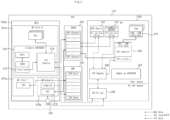
- FIG. 3 is an internal block diagram illustrating a signal processing device according to an embodiment of the present disclosure.
- the signal processing device 170 includes: a first processor 732a, which based on a first communication scheme, is configured to receive a first message including a sensor signal in a vehicle and to perform signal processing on the received first message; and a second processor 732b, which based a second communication scheme, is configured to receive a second message including a communication message received from an external source and to perform signal processing of the received second message.
- the second communication scheme may have a faster communication speed or a wider bandwidth than the first communication scheme.
- the second communication scheme may be Ethernet communication
- the first communication scheme may be CAN communication
- the first message may be a CAN message
- the second message may be an Ethernet message
- the signal processing device 170 further includes: a first memory 320 having an IPC channel; and a second memory 330 storing sensor data including vehicle speed data.
- the first memory 320 may be a Static RAM (SRAM), and the second memory 330 may be a DDR memory.
- the second memory 330 may be a Double data rate synchronous dynamic random access memory (DDR SDRAM).
- the signal processing device 170 includes a shared memory 508 which operates for transmitting the first message or the second message between the first processor 732a and the second processor 732b.
- the shared memory 508 is provided in the first memory 320. Accordingly, latency may be reduced and high-speed data transmission may be performed during inter-processor communication.
- the first processor 732a may include a plurality of processor cores 317o, 317a, and 317b disposed therein.
- the first processor 732a may further include an interface 319 for receiving the CAN message from external vehicle sensors.
- a first processor core 317o included in the first processor 732a may execute a plurality of applications or may execute a first AUTomotive Open System Architecture (AUTOSAR) 312.
- AUTOSAR AUTomotive Open System Architecture
- the first processor core 317o may execute an inter-processor communication (IPC) handler 314.
- IPC inter-processor communication
- the IPC handler 314 may exchange data with the first memory 320 or may exchange IPC data with an application executed on the core 317o.
- the IPC handler 314 may exchange an interrupt signal with an IPC driver 348 included in the second processor 732b.
- a second processor core 317a included in the first processor 732a may execute IDS and may receive CAN data from the second memory 330.
- a third core 317b included in the first processor 732a may execute Logging, and may store the CAN data, received through the interface 319, in the second memory 330.
- the third processor core 317b included in the first processor 732a may execute an IPC module 318 to exchange IPC data with the first memory 320.
- the third processor core 317b included in the first processor 732a may transmit an interrupt signal to the IPC driver 348 in the second processor 732b.
- the first memory 320 may exchange the IPC data with the IPC handler 314 or the IPC module 318.
- the second processor 732b may execute an application 343, the IPC handler 345, an IPC daemon 346, the IPC driver 348, and the like.
- the second processor 732b may further execute a service oriented architecture (SOA) adapter 341, a diagnosis server 342, and the second AUTOSAR 347.
- SOA service oriented architecture
- the second AUTOSAR 347 may be an adaptive AUTOSAR, and the first AUTOSAR 312 may be a classic AUTOSAR.
- the IPC daemon 346 may exchange an interrupt signal with the SOA adapter 341, the diagnosis server 342, the IPC handler 345, the IPC driver 348, and the like.
- the first memory 320 may exchange IPC data with the SOA adapter 341, the diagnosis server 342, the IPC handler 345, and the like.
- the IPC data described with reference to FIG. 3 may be the CAN message or Ethernet message.
- the IPC handler 345 may function as a service provider providing data such as diagnosis, firmware, upgrade, system information, etc., based on the second AUTOSAR 347.
- the first processor 732a implements a message router (not shown), and the message router may convert a frame of the first message, such as the CAN message, into a frame format of the second message, such as the Ethernet message, and may transmit the converted message to the second processor 732b.
- the message router may convert a frame of the first message, such as the CAN message, into a frame format of the second message, such as the Ethernet message, and may transmit the converted message to the second processor 732b.
- the first processor 732a may further implement a CAN driver (not shown) and a CAN interface (not shown).
- the CAN interface (not shown) may be implemented by a total of 16 channels, with eight channels of each of a fourth processor core (not shown) and a fifth processor core (not shown) in the first processor 732a.
- a first CAN interface (not shown) implemented on the fourth processor core (not shown) may correspond to a first queue (PTb) during inter-processor communication
- a second CAN interface (not shown) implemented on the fifth processor core (not shown) may correspond to a second queue (PTb), having a higher priority than the first queue (PTb), during inter-processor communication.
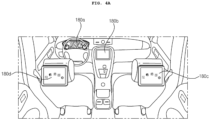
- FIG. 4A is a diagram illustrating an example of an arrangement of a vehicle display apparatus in a vehicle according to an embodiment of the present disclosure.
- a cluster display 180a an audio video navigation (AVN) display 180b, rear seat entertainment displays 180c and 180d, and a rear-view mirror display (not shown) may be mounted in the vehicle.
- APN audio video navigation
- rear seat entertainment displays 180c and 180d rear seat entertainment displays
- rear-view mirror display (not shown)
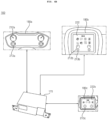
- FIG. 4B is a diagram illustrating another example of an arrangement of a vehicle display apparatus in a vehicle according to an embodiment of the present disclosure.
- the vehicle display apparatus 100 may include a plurality of displays 180a and 180b and a signal processing device 170 configured to perform signal processing in order to display images and information on the plurality of displays 180a and 180b.
- the first display 180a which is one of the plurality of displays 180a and 180b, may be a cluster display 180a configured to display a driving state and operation information
- the second display 180b may be an audio video navigation (AVN) display 180b configured to display vehicle driving information, a navigation map, various kinds of entertainment information, or an image.
- APN audio video navigation
- the signal processing device 170 may have a processor 175 provided therein, and first to third virtual machines (not shown) may be executed by a hypervisor 505 in the processor 175.
- the second virtual machine (not shown) may be operated for the first display 180a, and the third virtual machine (not shown) may be operated for the second display 180b.
- the first virtual machine (not shown) in the processor 175 may be configured to set a shared memory 508 based on the hypervisor 505 for transmission of the same data to the second virtual machine (not shown) and the third virtual machine (not shown). Consequently, the first display 180a and the second display 180b in the vehicle may display the same information or the same images in a synchronized state.
- the first virtual machine (not shown) in the processor 175 shares at least some of data with the second virtual machine (not shown) and the third virtual machine (not shown) for divided processing of data. Consequently, the plurality of virtual machines for the plurality of displays in the vehicle may divide and process data.
- the first virtual machine (not shown) in the processor 175 may receive and process wheel speed sensor data of the vehicle, and may transmit the processed wheel speed sensor data to at least one of the second virtual machine (not shown) or the third virtual machine (not shown). Consequently, at least one virtual machine may share the wheel speed sensor data of the vehicle.
- the vehicle display apparatus 100 may further include a rear seat entertainment (RSE) display 180c configured to display driving state information, simple navigation information, various kinds of entertainment information, or an image.
- RSE rear seat entertainment
- the signal processing device 170 may further execute a fourth virtual machine (not shown), in addition to the first to third virtual machines (not shown), on the hypervisor 505 in the processor 175 to control the RSE display 180c.
- some of the plurality of displays 180a to 180c may be operated based on a Linux Operating System (OS), and others may be operated based on a Web Operating System (OS).
- OS Linux Operating System
- OS Web Operating System
- the signal processing device 170 may be configured to display the same information or the same images in a synchronized state on the displays 180a to 180c to be operated under various operating systems.
- FIG. 4B illustrates that a vehicle speed indicator 212a and an in-vehicle temperature indicator 213a are displayed on the first display 180a, a home screen 222 including a plurality of applications, a vehicle speed indicator 212b, and an in-vehicle temperature indicator 213b is displayed on the second display 180b, and a second home screen 222b including a plurality of applications and an in-vehicle temperature indicator 213c is displayed on the third display 180c.
- FIG. 5 is an internal block diagram illustrating the vehicle display apparatus of FIG. 4B according to the embodiment of the present disclosure.
- the vehicle display apparatus 100 may include an input device 110, a transceiver 120 for communication with an external device, a plurality of communication modules EMa to EMd for internal communication, a memory 140, a signal processing device 170, a plurality of displays 180a to 180c, an audio output device 185, and a power supply 190.
- the plurality of communication modules EMa to EMd may be disposed in a plurality of zones Z1 to Z4, respectively, in FIG. 2A .
- the signal processing device 170 may be provided therein with an Ethernet switch 736b for data communication with the respective communication modules EM1 to EM4.
- the respective communication modules EM1 to EM4 may perform data communication with a plurality of sensor devices SN or an ECU 770.
- each of the plurality of sensor devices SN may include a camera 195, a lidar sensor 196, a radar sensor 197, or a position sensor 198.
- the input device 110 may include a physical button or pad for button input or touch input.
- the input device 110 may include a microphone (not shown) for user voice input.
- the transceiver 120 may wirelessly exchange data with a mobile terminal 400 or a server 900.
- the transceiver 120 may wirelessly exchange data with a mobile terminal of a vehicle driver.
- Any of various data communication schemes such as Bluetooth, Wi-Fi, WIFI Direct, and APIX, may be used as a wireless data communication scheme.
- the transceiver 120 may receive weather information and road traffic situation information, such as transport protocol expert group (TPEG) information, from the mobile terminal 400 or the server 900. To this end, the transceiver 120 may include a mobile communication module (not shown).
- TPEG transport protocol expert group
- the plurality of communication modules EM1 to EM4 may receive sensor information from an electronic control unit (ECU) 770 or a sensor device SN, and may transmit the received information to the signal processing device 170.
- ECU electronice control unit
- the sensor information may include at least one of vehicle direction information, vehicle position information (global positioning system (GPS) information), vehicle angle information, vehicle velocity information, vehicle acceleration information, vehicle inclination information, vehicle forward/backward movement information, battery information, fuel information, tire information, vehicle lamp information, in-vehicle temperature information, and in-vehicle humidity information.
- vehicle position information global positioning system (GPS) information
- GPS global positioning system
- the sensor information may be acquired from a heading sensor, a yaw sensor, a gyro sensor, a position sensor, a vehicle forward/backward movement sensor, a wheel sensor, a vehicle velocity sensor, a car body inclination sensor, a battery sensor, a fuel sensor, a tire sensor, a steering-wheel-rotation-based steering sensor, an in-vehicle temperature sensor, or an in-vehicle humidity sensor.
- the position module may include a GPS module configured to receive GPS information or a position sensor 198.
- At least one of the plurality of communication modules EM1 to EM4 may transmit position information data sensed by the GPS module or the position sensor 198 to the signal processing device 170.
- At least one of the plurality of communication modules EM1 to EM4 may receive front-of-vehicle image data, side-of-vehicle image data, rear-of-vehicle image data, and obstacle-around-vehicle distance information from the camera 195, the lidar sensor 196, or the radar sensor 197, and may transmit the received information to the signal processing device 170.
- the memory 140 may store various data necessary for overall operation of the vehicle display apparatus 100, such as programs for processing or control of the signal processing device 170.
- the memory 140 may store data about the hypervisor and first to third virtual machines executed by the hypervisor in the processor 175.
- the audio output device 185 may convert an electrical signal from the signal processing device 170 into an audio signal, and may output the audio signal. To this end, the audio output device 185 may include a speaker.
- the power supply 190 may supply power necessary to operate components under control of the signal processing device 170.
- the power supply 190 may receive power from a battery in the vehicle.
- the signal processing device 170 may control overall operation of each device in the vehicle display apparatus 100.
- the signal processing device 170 may include a processor 175 configured to perform signal processing for the vehicle displays 180a and 180b.
- the processor 175 may execute the first to third virtual machines (not shown) on the hypervisor 505 (see FIG. 10 ) in the processor 175.
- the first virtual machine (not shown) may be called a server virtual machine
- the second and third virtual machines (not shown) and (not shown) may be called guest virtual machines.
- the first virtual machine (not shown) in the processor 175 may receive sensor data from the plurality of sensor devices, such as vehicle sensor data, position information data, camera image data, audio data, or touch input data, and may process and output the received sensor data.
- sensor data such as vehicle sensor data, position information data, camera image data, audio data, or touch input data
- the first virtual machine may process most of the data, whereby 1:N data sharing may be achieved.
- the first virtual machine may directly receive and process CAN data, Ethernet data, audio data, radio data, USB data, and wireless communication data for the second and third virtual machines (not shown).
- first virtual machine may transmit the processed data to the second and third virtual machines (not shown).
- the first virtual machine among the first to third virtual machines (not shown), may receive sensor data from the plurality of sensor devices, communication data, or external input data, and may perform signal processing, whereby load in signal processing by the other virtual machines may be reduced and 1:N data communication may be achieved, and therefore synchronization at the time of data sharing may be achieved.
- the first virtual machine may be configured to write data in the shared memory 508, whereby the second virtual machine (not shown) and the third virtual machine (not shown) share the same data.
- the first virtual machine may be configured to write vehicle sensor data, the position information data, the camera image data, or the touch input data in the shared memory 508, whereby the second virtual machine (not shown) and the third virtual machine (not shown) share the same data. Consequently, 1:N data sharing may be achieved.
- the first virtual machine (not shown) may process most of the data, whereby 1:N data sharing may be achieved.
- the first virtual machine (not shown) in the processor 175 may be configured to set the shared memory 508 based on the hypervisor 505 in order to transmit the same data to the second virtual machine (not shown) and the third virtual machine (not shown).
- the signal processing device 170 may process various signals, such as an audio signal, an image signal, and a data signal.
- the signal processing device 170 may be implemented in the form of a system on chip (SOC).
- the signal processing device 170 included in the display apparatus 100 of FIG. 5 may be the same as the signal processing device 170 of a vehicle communication device 700 of FIG. 7A and the like.
- FIG. 6A is an internal block diagram illustrating a vehicle communication device associated with the present disclosure.
- a vehicle communication device 600x associated with the present disclosure may include a first communication gateway 630a and a second communication gateway 630b.
- the first communication gateway 630a may include a body module 610, a chassis module 614, a CAN diagnostic tester 616, a CAN transceiver 636a for exchanging a CAN signal by CAN communication with at least one CAN ECU 618 and the like, and a first processor 632a for performing signal processing on the CAN signal received from the CAN transceiver 636a.
- the first processor 632a may include an IPC manager 634a for inter-processor communication with a second processor 632b in the second communication gateway 630b.
- the second communication gateway 630b may include a telematics control module 620, a head module 622, an Ethernet diagnostic tester 624, an Ethernet switch 636b for exchanging an Ethernet message by Ethernet communication with at least one Ethernet ECU 626, and a second processor 632b for performing signal processing on the Ethernet message received from the Ethernet switch 636b.
- the second processor 632b may include an IPC manager 634b for inter-processor communication with the first processor 632a in the first communication gateway 630a.
- the IPC manager 634a in the first processor 632a and the IPC manager 643b in the second processor 632b may perform inter-processor communication based on the Ethernet communication.
- FIG. 6B is a diagram referred to in the description of FIG. 6A .
- a first processor 632a may execute an IPC manager 634a for inter-processor communication with a second processor 632b, a device driver 636a for data transmission, and an application 638a.
- the first processor 632a may receive a CAN signal from a CAN ECU 618 through the device driver 636a, and may perform UART, SPI, or Ethernet communication 631 with the second processor 632b through inter-processor communication.
- the second processor 632b may execute an IPC manager 634b for inter-processor communication with the first processor 632a, a device driver 636b for data transmission, and an application 638b.
- the second processor 632b may receive an Ethernet signal from an Ethernet ECU 626 through the device driver 636b, and may perform UART, SPI, or Ethernet communication 631 with the first processor 632a through inter-processor communication.
- data is transmitted between the first processor 632a and the second processor 632b via the device drivers 636a and 636b, respectively, such that data copy is required for each step, thereby limiting real-time data transmission or high-speed data transmission.
- a delay occurs when CAN data is transmitted from the first processor 632a to the second processor 632b and is converted into Ethernet data.
- a processing delay is more problematic in the first processor 632a which has a slower processing speed than the second processor 632b.
- the present disclosure proposes a method of reducing latency and performing high-speed data transmission during inter-processor communication, which will be described below with reference to FIG. 7A and subsequent figures.
- FIG. 7A is an example of an internal block diagram illustrating a vehicle communication device according to an embodiment of the present disclosure.
- the vehicle communication device 700 may include: a first processor 732a, which based on a first communication scheme along with a first communication gateway 730a and a second communication gateway 730b, is configured to receive a first message including a sensor signal in a vehicle and to perform signal processing on the received first message; a second processor 732b, which based a second communication scheme, is configured to receive a second message including a communication message received from an external source and to perform signal processing of the received second message; and a shared memory 508 configured to operate to transmit the first message or the second message between the first processor 732a and the second processor 732b.
- IPC inter-processor communication
- the first processor 732a, the second processor 732b, and the shared memory 508 may be integrated into the signal processing device 170 implemented as a single chip, latency may be reduced and high-speed data transmission may be performed during the inter-processor communication.
- the second communication scheme has a faster communication speed or a wider bandwidth than the first communication scheme.
- the second communication scheme may be Ethernet communication
- the first communication scheme may be CAN communication
- the first message may be a CAN message
- the second message may be an Ethernet message
- the signal processing device 170 and the vehicle communication device 700 including the same may further include: a transceiver 736a, which based on the first communication scheme, is configured to receive a first message including a sensor signal in a vehicle and to transmit the first message to the first processor 732a; and the switch 736b, which based on the second communication scheme, is configured to receive a second message including a communication message received from an external source, and to transmit the second message to the second processor 732b, such that the first and second messages may be transmitted stably to the first processor 732a and the second processor 732b.
- a transceiver 736a which based on the first communication scheme, is configured to receive a first message including a sensor signal in a vehicle and to transmit the first message to the first processor 732a
- the switch 736b which based on the second communication scheme, is configured to receive a second message including a communication message received from an external source, and to transmit the second message to the second processor 732b, such that the first and second messages may be
- the first processor 732a or the transceiver 736a may exchange a CAN signal by CAN communication with the body module 610, the chassis module 614, the CAN diagnostic tester 616, at least one CAN ECU 618, and the like.
- the first processor 732a may include a first manager 734a for inter-processor communication (IPC) with the second processor 732b.
- the first manager 734a may be referred to as an IPC manager.
- the first manager 734a may include a first cache 735a.
- the second processor 732b or the switch 736b may exchange an Ethernet message by Ethernet communication with the telematics control module 620, the head module 622, the Ethernet diagnostic tester 624, at least one Ethernet ECU 626, and the like.
- the switch 736b may be referred to as an Ethernet switch.
- the second processor 732b may include a second manager 734b for inter-processor communication (IPC) with the first processor 732a.
- the second manager 734a may be referred to as an IPC manager.
- the second manager 734b may include the second manager 734b including a second cache 735b and a timer 737.
- the second processor 723b may receive a request for periodic subscription to the first message from the Ethernet processor or the Ethernet ECU 626.
- the second processor 732b may send the request for periodic subscription to the first message to the first processor 732a.
- the second processor 732b may transmit the subscription request through the inter-processor communication (IPC). Accordingly, the inter-processor communication may be performed.
- IPC inter-processor communication
- the first processor 732a may periodically receive CAN data from the at least one CAN ECU 618 and the like.
- the first processor 732a periodically receives the first message, predefined in a CAN database (DB), from the at least one CAN ECU 618 and the like.
- DB CAN database
- the periodic first message which is sensor information
- the periodic first message may include at least one of vehicle direction information, vehicle position information (GPS information), vehicle angle information, vehicle acceleration information, vehicle tilt information, forward/backward movement information, battery information, fuel information, tire information, vehicle lamp information, in-vehicle temperature information, and in-vehicle humidity information.
- the first processor 732a may select a first message, for which the subscription is requested, among the periodically received CAN data or first messages, and may transmit the first message, for which the subscription is requested, to the second processor 732b.
- the first processor 732a may separately process a first message, for which the subscription is not requested, among the periodically received CAN data or first messages, without transmitting the message to the second processor 732b.
- the first processor 732a may store the first message in the first cache 735a or may manage the first message. Upon receiving the first message, the first processor 732a may compare the first message with a value stored in the first cache 735a, and when a difference between the first message and the stored value is greater than or equal to a predetermined value, the first processor 732a may transmit the first message to the second processor 732b through the inter-processor communication.
- the first processor 732a may store the first message in the first cache 735a or may manage the first message. Upon receiving the first message, the first processor 732a may compare the first message with a value stored in the first cache 735a, and when a difference between the first message and the stored value is greater than or equal to a predetermined value, the first processor 732a may transmit the first message to the second processor 732b through the inter-processor communication using the shared memory 508.
- the first processor 732a may compare the message with a value stored in the first cache 735a, and if the two are not the same, the first processor 732a may transmit the first message to the second processor 732b through the inter-processor communication using the shared memory 508.
- the first processor 732a may compare the message with the value stored in the first cache 735a, and if the two are the same, the first processor 732a may not transmit the first message to the second processor 732b.
- the second processor 732b may store the first message in the second cache 735b, and upon subsequently receiving the first message, the second processor 732b may update the second cache 735b. Accordingly, latency may be reduced and high-speed data transmission may be performed during inter-processor communication.
- the second processor 732b may generate a thread of the timer 737, and each time the thread terminates, the second processor 732b may send a value in the second cache 735b to the Ethernet processor or the Ethernet ECU 626. Accordingly, latency may be reduced and high-speed data transmission may be performed during inter-processor communication.
- the second processor 732b may send a value in the second cache 735b to the Ethernet processor or the Ethernet ECU 626.
- the cache value stored in the second processor 732b may be sent to the Ethernet processor 626 without the inter-processor communication.
- the second processor 732b may send a value in the updated second cache 735b to the Ethernet processor or the Ethernet ECU 626. Accordingly, latency may be reduced and high-speed data transmission may be performed during inter-processor communication.
- the shared memory 508 may transmit data between the first processor 732a and the second processor 732b through a first queue PTb and a second queue PTa having a higher priority than the first queue PTb.
- the shared memory 508 may transmit only the data, corresponding to events allocated for the second queue PTa, through the second queue PTa. Accordingly, real-time transmission of a high priority event may be ensured during the inter-processor communication.
- the first PTb may be a normal priority queue
- the second queue PTa may be a high priority queue
- the shared memory 508 may transmit most of the data through the first queue PTb during the inter-processor communication.
- the share memory 508 may transmit only time sensitive-critical data without delay through the second queue PTa which is a higher priority queue than the first queue PTb.
- the time sensitive-critical data may be speed data, position information data, or the like.
- the shared memory 508 may transmit the speed data or position information data between the first processor 732a or the second processor 732b through the second queue PTa. Accordingly, real-time transmission of the speed data or the position information data having a high priority may be ensured during the inter-processor communication.
- the first processor 732a or the second processor 732b may manage a list of applications capable of using the second queue PTa.
- the second processor 732b may include an application for displaying speed information, as an application capable of using the second queue PTa, in a second list 738b and may manage the list.
- the shared memory 508 may reduce latency and may perform high-speed data transmission by assigning at least two queues.
- the fist manager 734a in the first processor 732a manages a first list 738a which is a whitelist
- the second manager 734b in the second processor 732b manages a second list 738b which is a whitelist, thereby ensuring the real-time transmission of a high-priority event during the inter-processor communication.
- FIG. 7B is a diagram referred to in the description of FIG. 7A .
- the first processor 732a may execute an IPC manager 734a for inter-processor communication with the second processor 732b, and an application 738a. Unlike FIG. 6B , the first processor 732a does not execute a device driver.
- the first processor 732a may receive a CAN signal from the CAN ECU 618 through the IPC manager 734a, and may perform inter-processor communication (IPC) with the second processor 732b through the shared memory 508 based on the first memory 320 or the second memory 330.
- IPC inter-processor communication
- the second processor 732b may execute an IPC manager 734b for inter-processor communication with the first processor 732a, and an application 638b. Unlike FIG. 6B , the second processor 732b does not execute a device driver.
- the second processor 632b may receive an Ethernet signal from the Ethernet ECU 626 via the IPC manager 734b, and may perform inter-processor communication (IPC) with the first processor 732a via the shared memory 508 based on the first memory 320 or the second memory 330.
- IPC inter-processor communication
- data is transmitted between the first processor 732a and the second processor 732b via the shared memory 508, thereby allowing real-time data transmission or high-speed data transmission.
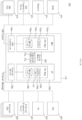
- FIG. 8 is another example of an internal block diagram illustrating a vehicle communication device according to an embodiment of the present disclosure.
- a vehicle communication device 700b includes a signal processing device 170 implemented in the form of a system on chip (SOC).
- SOC system on chip
- the signal processing device 170 in the vehicle communication device 700b includes: a first processor 732a configured to receive a first message based on a first communication scheme and to perform signal processing of the received first message, wherein the first message includes a sensor signal in a vehicle; a second processor 732b configured to receive a second message based on a second communication scheme and to perform signal processing of the received second message, wherein the second message includes a communication message received from an external source; and a shared memory 508 configured to operate to transmit the first message or the second message between the first processor 732a and the second processor 732b.
- the first processor 732a or the second processor 732b receives the first message or the second message, which is stored in the shared memory 508, based on an interrupt signal. Accordingly, latency may be reduced and high-speed data transmission may be performed during inter-processor communication. Particularly, messages based on different communication schemes may be rapidly transmitted.
- the first processor 732a may include the first processor core 3170 and the second processor core 317a.
- the first processor core 3170 may execute a Software Component 738aa including an IPC interface, and an IPC handler 314.
- the IPC handler 314 may execute an interrupt mitigator IMa, a data throttling handler DTa, and a Quality of Service handler (QoS handler) QHa.
- QoS handler Quality of Service handler
- the second processor core 317a may execute a Software Component 738ab including an IPC interface, and an IPC handler 314b.
- the IPC handler 314b may execute an interrupt mitigator IMb, a data throttling handler DTb, and a QoS handler QHb.
- the second processor 732b may include a plurality of processor cores.
- the number of cores of the second processor 732b is preferably greater than the number of cores of the first processor 732a.
- the second processor 732b may execute the IPC driver 348 including the interrupt mitigator IMC that receives an interrupt signal, an IPC service 345, and a plurality of applications 738ba and 738bb.
- the IPC service 345 may execute a data throttling handler DTc and a QoS handler QHc.
- the plurality of applications 738ba and 738bb may receive data from the first memory 320 or the second memory 330.
- the signal processing device 170 in the vehicle communication device 700b may include the first memory 320 and the second memory 330 which are used as the shared memory 508.
- the first memory 320 may be a Static RAM (SRAM), and the second memory 330 may be a DDR memory.
- the second memory 330 may be a Double data rate synchronous dynamic random access memory (DDR SDR_AM).
- DDR SDR_AM Double data rate synchronous dynamic random access memory
- the first memory 320 may store a control channel and a plurality of lock-free queues.
- the second memory 330 may store a control channel and a plurality of CAN data.
- the first memory 320 may store an IPC channel
- the second memory 330 may include CAN data which is sensor data including vehicle speed data.
- the signal processing device 170 in the vehicle communication device 700b may further include an interrupt router ROT configured to output an interrupt signal to the first processor 732a or the second processor 732b.
- the interrupt router ROT may output the interrupt signal to the respective cores 3170 and 317a in the first processor 732a or the respective cores CR0 to CR2 in the second processor 732b. Accordingly, the processor may be used efficiently based on the interrupt signal.
- the interrupt router ROT may dynamically adjust the number of triggering of the interrupt signal. Accordingly, the processor may be used efficiently based on the interrupt signal.
- the second processor core 317a may store CAN data, which is a first message, in the second memory 330, and a first application 738ba of the plurality of applications 738ba and 738bb may access the second memory 330, acting as a shared memory, to receive the CAN data which is the first message.
- a second application 738bb of the plurality of applications 738ba and 738bb may store Ethernet data, which is a second message, in a lock-free queue of the first memory 320, and the application 738aa running in the first processor 732a may access the lock-free queue in the first memory 320, acting as a shared memory, to receive the Ethernet data which is the second message.
- the first processor 732a or the second processor 732b may operate based on the lock-free queue, thereby allowing operation without a locking mechanism for the processor.
- the shared memory 508 may be divided into areas based on each application executed in the first processor 732a or the second processor 732b.
- the second application 738bb of the plurality of applications 738ba and 738bb uses the second memory 330 of the shared memory 508, and the first application 738ba uses the first memory 320 of the shared memory 508. Accordingly, the shared memory 508 may be stably used.
- the shared memory 508 may be divided into areas according to types of messages transmitted to the first processor 732a or the second processor 732b.
- the second memory 330 of the shared memory 508 may be used, and if a transmitted message is Ethernet data, the first memory 320 of the shard memory 508 may be used. Accordingly, the shared memory 508 may be stably used.
- the first processor 732a or the second processor 732b may transmit or receive the first message or the second message based on a dynamic bandwidth according to a processor clock or memory access performance. Accordingly, latency may be reduced and high-speed data transmission may be performed during inter-processor communication. Further, data transmission loss may be significantly reduced based on a processor clock or memory access performance.
- the first processor 732a may transmit the first message to the shared memory 508 based on a first dynamic bandwidth according to a first clock
- the second processor 732b nay transmit the second message to the shared memory 508 based on a second dynamic bandwidth according to a second clock. Accordingly, latency may be reduced and high-speed data transmission may be performed during inter-processor communication. Further, data transmission loss may be significantly reduced based on a processor clock or memory access performance.
- the second processor 732b may transmit the second message to the shared memory 508 based on the second dynamic bandwidth which is greater than the first dynamic bandwidth. Accordingly, the second message, which is a large message, may be rapidly transmitted.
- FIGS. 9A to 13B are diagrams referred to in the description of FIG. 8 .
- FIG. 9A is a diagram illustrating an example of transmitting CAN data, input from an external source, to an Ethernet interface.
- the CAN data input from an external source may be transmitted to an external Ethernet interface 738b via the first processor 732a, the first memory 320 which is a shared memory, and the second processor 732b.
- the CAN data input from an external source may be input to the second processor 732b via the interface 319 for receiving a CAN message and the IPC module 318 in the first processor 732a, and then via the first memory 320.
- the second processor 732b may transfer the CAN data to the external Ethernet interface 738b via a diagnosis server application 342 executed in the second processor 732b.
- the camera data may be transferred to the external Ethernet interface 738b. Further, the display 180b connected to the Ethernet interface 738b may display a camera image based on the camera data.
- the vehicle speed data may be transferred to the external Ethernet interface 738b. Further, the display 180b connected to the Ethernet interface 738b may display vehicle speed information based on the vehicle speed data.
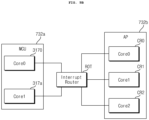
- FIG. 9B is a diagram illustrating an example of outputting an interrupt signal to the first processor 732a and the second processor 732b.
- the first processor 732a may include the first processor core 3170 and the second processor core 317a
- the second processor 732b may include a first processor core CR0, a second processor core CR1, and a third processor core CR2.
- the interrupt router ROT may output an interrupt signal to the respective cores 3170 and 317a in the first processor 732a and the respective cores CR0 to CR2 in the second processor 732b, or may receive the interrupt signal. Accordingly, the processor may be used efficiently based on the interrupt signal.
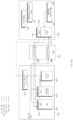
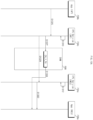
- FIGS. 10A and 10B are diagrams explaining Dynamic Interrupt Mitigation.
- FIG. 10A is a diagram illustrating an example of Dynamic Interrupt Mitigation.
- the first application 738aa running in the processor 732a transmits data multiple number of times (e.g., five times) to the IPC service 314 implemented in the first processor 732a (S1010), and the IPC service 314 transmits an interrupt signal multiple number of times (e.g., five times) to the interrupt router ROT (S1015).
- the interrupt router ROT transmits a first interrupt signal, corresponding to some number of times (e.g., first time) among the multiple number of times, to an IPC service 314c implemented in the second processor 732b (S1020), and the IPC service 314c transmits data to an application 738bb running in the second processor 732b. Accordingly, the application 738bb reads first data from the IPC service 314c and transmits a first return signal (S1030).
- the interrupt router ROT transmits a second interrupt signal to the IPC service 314c (S1032), and the application 738bb reads second data from the IPC service 314c and transmits a second return signal (S1036).
- the interrupt router ROT transmits a third interrupt signal to the IPC service 314c (S1042), and the application 738bb reads third data from the IPC service 314c (S1044) and transmits a third return signal (S1046).
- the interrupt router ROT transmits a fourth interrupt signal to the IPC service 314c (S1052), and the application 738bb reads fourth data from the IPC service 314c (S1054) and transmits a fourth return signal (S1056).
- the interrupt router ROT transmits a fifth interrupt signal to the IPC service 314c (S1062), and the application 738bb reads fifth data from the IPC service 314c (S1064) and transmits a fifth return signal (S1066).
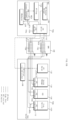
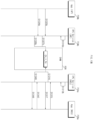
- FIG. 10B is a diagram illustrating another example of Dynamic Interrupt Mitigation.
- the first application 738aa running in the processor 732a transmits data multiple number of times (e.g., five times) to the IPC service 314 implemented in the first processor 732a (S1010b), and the IPC service 314 transmits an interrupt signal multiple number of times (e.g., five times) to the interrupt router ROT (S1015b).
- the interrupt router ROT transmits a first interrupt signal, corresponding to some number of times (e.g., first time) among the multiple number of times, to the IPC service 314c implemented in the second processor 732b (S1020b), and the IPC service 314c checks the shared memory 508 for data for reading (S1070), and receives a result about remaining data for reading (S1072).
- a first interrupt signal corresponding to some number of times (e.g., first time) among the multiple number of times, to the IPC service 314c implemented in the second processor 732b (S1020b)
- the IPC service 314c checks the shared memory 508 for data for reading (S1070), and receives a result about remaining data for reading (S1072).
- the IPC service 314c outputs a disable interrupt signal to the interrupt router ROT (S1074).
- the IPC service 314c if a result about the data for reading corresponds to enable data read, the IPC service 314c outputs a clear interrupt signal to the interrupt router ROT (S1076).
- the IPC service 314c transmits data, corresponding to the multiple number of times, all at once to the application 738bb running in the second processor 732b. Accordingly, the application 738bb reads first to fifth data from the IPC service 314c (S1078) and transmits a return signal (S1080).
- the IPC service 314c transmits an enable interrupt signal to the interrupt router ROT (S1082).
- the method of FIG. 10B allows efficient data transmission based on Dynamic Interrupt.
- FIG. 10C is a diagram referred to in the description of data throttling.
- an application executed in the second processor 732b transmits data corresponding to the second message (S1110), and the IPC service 734b implemented in the second processor 732b writes the received data to the shared memory 508 (S1115).
- the application executed in the first processor 732a may read the data written to the shared memory 508 (S1118).
- the IPC service 734b implemented in the second processor 732b outputs an interrupt signal to the IPC service 734a implemented in the first processor 732a (S1120), and the IPC service 734a checks read performance (S1120).
- the IPC service 734b implemented in the second processor 732b also checks write performance (S1122).
- an application executed in the first processor 732a transmits data corresponding to the first message (S1125), and the IPC service 734a implemented in the first processor 732a writes the received data to the shared memory 508 (S1127).
- an application executed in the second processor 732b may read the data written to the shared memory 508 (S1129).
- the IPC service 734a implemented in the first processor 732a outputs an interrupt signal to the IPC service 734b implemented in the second processor 732b (S1132), and the IPC service 734b checks read performance (S1136).
- the IPC service 734a implemented in the first processor 732a also checks write performance (S1134).
- the first processor 732a or the second processor 732b may operate based on a lock-free queue, thereby allowing operation without a locking mechanism for the processor.
- the first processor 732a or the second processor 732b may transmit or receive a first message or a second message based on a dynamic bandwidth according to a processor clock or memory access performance.
- the first processor 732a may transmit a first message to the shared memory 508 based on a first dynamic bandwidth according to a first clock
- the second processor 732b may transmit a second message to the shared memory 508 based on a second dynamic bandwidth according to a second clock. Accordingly, latency may be reduced and high-speed data transmission may be performed during inter-processor communication. Further, data transmission loss may be significantly reduced based on a processor clock or memory access performance.
- FIGS. 11A and 11B are diagrams referred to in the description of zero copy.
- FIG. 11A is a diagram illustrating an example in which a first message is stored in a first area MMb of the shared memory 508, and a second message is stored in a second area MMa of the shared memory 508.
- the first processor 732a executes a first server 1152 and a first driver 1154 for inter-processor communication (IPC).
- IPC inter-processor communication
- the first processor 732a may further execute a system manager 1156, the AUTOSAR 312, and a router 1158.
- the second processor 732b executes a second server 1162 and a second driver 348 for inter-processor communication (IPC).
- IPC inter-processor communication
- the second processor 732b may further execute a system manager 1164 and a Vehicle Detection System (VDS) 1168.
- VDS Vehicle Detection System
- an interrupt signal is transmitted between the first server 1152 and the second server 1162, and the first server 1152 or the second server 1162 may transmit or receive data to/from the shared memory 508. Accordingly, latency may be reduced and high-speed data transmission may be performed during inter-processor communication.
- the first driver 1154 may transmit an interrupt signal to the second driver 348.
- data corresponding to the first message transmitted from the system manager 1156 in the first processor 732a may pass through the first server 1152 and the first area MMb of the shared memory 508, to be transmitted to IP interfaces 1165 and 1169 of the system manager 1164 and the VDS 1168 implemented in the second processor 732b.
- the second driver 348 may transmit an interrupt signal to the first driver 1154.
- data corresponding to the second message transmitted from the IP interface 1165 or 1169 of the system manager 1164 or the VDS 1168 in the second processor 732b may pass through the second area MMa of the shared memory 508, to be transmitted to the system manager 1156 in the first processor 732a.
- unnecessary memory copy operations may be removed, and applications running in the respective processors 732a and 732b may directly access the shared memory 508 using zero copy functionality.
- the shared memory 508 may be divided into areas based on each application, causing no problem of intrusion in memory areas, such that the shared memory 508 may be stably used.
- FIG. 11B illustrates an example of transmitting the first message and the second message in a manner similar to FIG. 11A
- analysis data as the second message, is further transmitted from the second processor 732b to the first processor 732a.
- the following description will focus on the difference.
- analysis data transmitted from an IP interface 1172 of an analysis service 1170 in the second processor 732b, may be stored in a portion 1182 of the second area MMa of the shared memory 508, the portion 1182 having no data of the second message being stored therein.
- the analysis data may pass through the shared memory 508 to be transmitted to the first server 1152 executed in the first processor 732a.
- the first server 1152 may transmit the analysis data to an analysis application 1159 via the router 1158.
- the first server 1152 may store the analysis data in a portion 1184 of the second area MMM of the shared memory 508, the portion 1184 having no data of the first message being stored therein.
- the analysis data may pass through the shared memory 508 to be transmitted to the analysis service 1170 implemented in the second processor 732b.
- the shared memory 508 is divided into areas based on each application, causing no problem of intrusion in memory areas, such that the shared memory 508 may be stably used.
- FIG. 12 is a diagram referred to in the description of various modes of an interrupt.
- the first processor 732a or the second processor 732b boots up (S1410) and checks an IPC configuration (S1415).
- the first processor 732a or the second processor 732b determines whether data transmitted from the first processor 732a or the second processor 732b is event data (S1420), and if the data is the event data, the first processor 732a or the second processor 732b operates in an interrupt driven mode (S1425), and if the data is not the event data, the first processor 732a or the second processor 732b operates in a polling mode (S1430).
- the interrupt router ROT may operate in the interrupt driven mode, and if the transmitted message is periodic data, the interrupt router ROT may operate in the polling mode. Accordingly, the message may be efficiently transmitted.
- the first processor 732a may operate in the interrupt driven mode, and if the transmitted first message is periodic data, the first processor 732a may operate in the polling mode. Accordingly, the message may be efficiently transmitted.
- the second processor 732b may operate in the interrupt driven mode, and if the transmitted second message is periodic data, the second processor 732b may operate in the polling mode. Accordingly, the message may be efficiently transmitted.
- an interrupt mode may be selected based on data characteristics of the transmitted data, such that data may be efficiently transmitted.
- the second processor 732b divides the data to transmit the data multiple number of times to the first memory 320. Accordingly, it is possible to prevent performance degradation due to an excessive interrupt.
- the first processor 732a may receive the first message through a plurality of channels and transmit the first message through the shared memory 508. Accordingly, the message may be efficiently transmitted.
- the second processor 732b may be configured to receive the first message through the shared memory 508, convert the first message into data based on the second communication scheme, and transmit the converted data to an external server 900. Accordingly, the message may be efficiently transmitted.
- FIGS. 13A and 13B are diagrams referred to in the description of FIG. 12 .
- FIG. 13A is a diagram explaining an interrupt driven mode.
- an IPC service 734b implemented in the second processor 732a checks an IPC configuration (S1310).
- the IPC service 734a implemented in the first processor 732a checks an IPC configuration (S1312).
- the first processor 732a and the second processor 732b may operate in the interrupt driven mode.
- the interrupt router ROT may operate in the interrupt driven mode.
- an application 738b running in the second processor 732b transmits data to the IPC service 734b (S1325), and the IPC service 734b writes the data to the shared memory 508 (S1327) and transmits an interrupt signal to the IPC service 734a implemented in the first processor 732a (S1329).
- an application 738a running in the first processor 732a reads data stored in the shared memory 508 (S1322).
- FIG. 13B is a diagram explaining a polling mode.
- the IPC service 734b implemented in the second processor 732a checks an IPC configuration (S1310b).
- the IPC service 734a implemented in the first processor 732a checks an IPC configuration (S1312b).
- the first processor 732a and the second processor 732b may operate in the polling mode.
- the interrupt router ROT may operate in the polling mode.
- an application 738a running in the first processor 732a reads data from the IPC service 734a (S1315), and the IPC service 734a accesses the shared memory 508 to check the data (S1316). In this case, if there is no data to read, the application 738a receives an error (S1317).
- the application 738b running in the second processor 732b transmits first data to the IPC service 734b (S1325b), and the IPC service 734b writes the first data to the shared memory 508, and the application 738b transmits second data to the IPC service 734b, and the IPC service 734b writes third data to the shared memory 508 (S1328b).
- the application 738a running in the first processor 732a reads data from the IPC service 734a (S1342), and the IPC service 734a accesses the shared memory 508 to check the data (S1346). In this case, if there is no data to read, the application 738a receives data from the shared memory 508 (S1348).
Landscapes
- Engineering & Computer Science (AREA)
- Computer Networks & Wireless Communication (AREA)
- Signal Processing (AREA)
- Software Systems (AREA)
- Computer Security & Cryptography (AREA)
- Theoretical Computer Science (AREA)
- General Engineering & Computer Science (AREA)
- Computing Systems (AREA)
- Physics & Mathematics (AREA)
- General Physics & Mathematics (AREA)
- Computer Hardware Design (AREA)
- Health & Medical Sciences (AREA)
- Medical Informatics (AREA)
- General Health & Medical Sciences (AREA)
- Mechanical Engineering (AREA)
- Small-Scale Networks (AREA)
Applications Claiming Priority (2)
| Application Number | Priority Date | Filing Date | Title |
|---|---|---|---|
| KR20210086549 | 2021-07-01 | ||
| PCT/KR2022/009478 WO2023277637A1 (ko) | 2021-07-01 | 2022-06-30 | 신호 처리 장치 및 이를 구비하는 차량용 통신 장치 |
Publications (2)
| Publication Number | Publication Date |
|---|---|
| EP4366249A1 true EP4366249A1 (de) | 2024-05-08 |
| EP4366249A4 EP4366249A4 (de) | 2025-07-09 |
Family
ID=84691867
Family Applications (4)
| Application Number | Title | Priority Date | Filing Date |
|---|---|---|---|
| EP22833685.5A Pending EP4366247A4 (de) | 2021-07-01 | 2022-06-30 | Signalverarbeitungsvorrichtung und kommunikationsvorrichtung für ein fahrzeug damit |
| EP22833687.1A Pending EP4366248A4 (de) | 2021-07-01 | 2022-06-30 | Signalverarbeitungsvorrichtung und fahrzeugkommunikationsvorrichtung damit |
| EP22833684.8A Pending EP4366246A4 (de) | 2021-07-01 | 2022-06-30 | Kommunikationsvorrichtung für ein fahrzeug und fahrzeug damit |
| EP22833690.5A Pending EP4366249A4 (de) | 2021-07-01 | 2022-06-30 | Signalverarbeitungsvorrichtung und kommunikationsvorrichtung für ein fahrzeug damit |
Family Applications Before (3)
| Application Number | Title | Priority Date | Filing Date |
|---|---|---|---|
| EP22833685.5A Pending EP4366247A4 (de) | 2021-07-01 | 2022-06-30 | Signalverarbeitungsvorrichtung und kommunikationsvorrichtung für ein fahrzeug damit |
| EP22833687.1A Pending EP4366248A4 (de) | 2021-07-01 | 2022-06-30 | Signalverarbeitungsvorrichtung und fahrzeugkommunikationsvorrichtung damit |
| EP22833684.8A Pending EP4366246A4 (de) | 2021-07-01 | 2022-06-30 | Kommunikationsvorrichtung für ein fahrzeug und fahrzeug damit |
Country Status (4)
| Country | Link |
|---|---|
| US (4) | US12592951B2 (de) |
| EP (4) | EP4366247A4 (de) |
| KR (3) | KR20240032067A (de) |
| WO (4) | WO2023277631A1 (de) |
Families Citing this family (4)
| Publication number | Priority date | Publication date | Assignee | Title |
|---|---|---|---|---|
| JP7585953B2 (ja) * | 2021-04-28 | 2024-11-19 | 株式会社オートネットワーク技術研究所 | 車載装置、情報処理方法及びプログラム |
| JP7609914B2 (ja) * | 2023-03-31 | 2025-01-07 | 本田技研工業株式会社 | 車両制御システムおよび通信処理方法 |
| US12375351B2 (en) * | 2023-11-30 | 2025-07-29 | Adriano Monteiro Marques | Unified programmable dynamic context-aware configuration |
| WO2025159227A1 (ko) * | 2024-01-26 | 2025-07-31 | 엘지전자 주식회사 | 신호 처리 장치 및 이를 구비하는 차량용 디스플레이 장치 |
Family Cites Families (48)
| Publication number | Priority date | Publication date | Assignee | Title |
|---|---|---|---|---|
| US6006301A (en) * | 1997-09-30 | 1999-12-21 | Intel Corporation | Multi-delivery scheme interrupt router |
| US6374321B2 (en) * | 1997-12-23 | 2002-04-16 | Intel Corporation | Mechanisms for converting address and data signals to interrupt message signals |
| US6401154B1 (en) * | 2000-05-05 | 2002-06-04 | Advanced Micro Devices, Inc. | Flexible architecture for an embedded interrupt controller |
| KR100463823B1 (ko) * | 2002-11-11 | 2004-12-29 | 에스케이 텔레콤주식회사 | 리거시 시스템 및 콘텐츠 프로바이더(cp) 연동용soap 기반 통신 게이트웨이 시스템 및 이를 이용한프로토콜 변환 방법 |
| US20050216770A1 (en) | 2003-01-24 | 2005-09-29 | Mistletoe Technologies, Inc. | Intrusion detection system |
| US8335909B2 (en) * | 2004-04-15 | 2012-12-18 | Raytheon Company | Coupling processors to each other for high performance computing (HPC) |
| US7950023B2 (en) * | 2005-02-04 | 2011-05-24 | Microsoft Corporation | Utilizing abstract descriptions to generate, exchange, and configure service and client runtimes |
| US7962771B2 (en) * | 2007-12-31 | 2011-06-14 | Intel Corporation | Method, system, and apparatus for rerouting interrupts in a multi-core processor |
| US8589338B2 (en) | 2008-01-24 | 2013-11-19 | Oracle International Corporation | Service-oriented architecture (SOA) management of data repository |
| KR20090092370A (ko) * | 2008-02-27 | 2009-09-01 | 삼성전자주식회사 | 프로세서들 간의 데이터 이동 이벤트를 감소시키는멀티포트 반도체 메모리 장치 및 그를 채용한 멀티프로세서 시스템과 멀티포트 반도체 메모리 장치의구동방법 |
| KR101020948B1 (ko) | 2008-04-22 | 2011-03-09 | 현대자동차주식회사 | 차량용 네트워크 게이트웨이 및 네트워크 시스템 |
| KR101100336B1 (ko) | 2009-04-06 | 2011-12-30 | 동의대학교 산학협력단 | 지능형 통합 게이트웨이를 갖는 차량 네트워크 시스템 및 그의 데이터 처리 방법 |
| KR101206894B1 (ko) | 2009-11-24 | 2012-11-30 | 한국전자통신연구원 | 이더넷-캔 프레임 변환 전송 장치 및 방법 |
| KR101250024B1 (ko) | 2011-09-21 | 2013-04-03 | 엘에스산전 주식회사 | 네트워크 시스템 및 네트워크 경로 설정방법 |
| KR101280910B1 (ko) | 2011-12-15 | 2013-07-02 | 한국전자통신연구원 | 고속 패킷 처리를 위한 네트워크 프로세서 기반 2단계 침입탐지장치 및 방법 |
| KR101446525B1 (ko) | 2013-09-27 | 2014-10-06 | 주식회사 유라코퍼레이션 | 차량 해킹 방지 시스템, 방법, 및 상기 방법을 실행시키기 위한 컴퓨터 판독 가능한 프로그램을 기록한 매체 |
| WO2015103376A1 (en) | 2014-01-06 | 2015-07-09 | Johnson Controls Technology Company | Vehicle with multiple user interface operating domains |
| US9575911B2 (en) * | 2014-04-07 | 2017-02-21 | Nxp Usa, Inc. | Interrupt controller and a method of controlling processing of interrupt requests by a plurality of processing units |
| KR101612825B1 (ko) * | 2014-11-20 | 2016-04-15 | 현대자동차주식회사 | Can 컨트롤러, 차량 내부 통신을 위한 게이트웨이 및 그 제어 방법 |
| US9563431B2 (en) * | 2014-12-26 | 2017-02-07 | Intel Corporation | Techniques for cooperative execution between asymmetric processor cores |
| US11165851B2 (en) * | 2015-06-29 | 2021-11-02 | Argus Cyber Security Ltd. | System and method for providing security to a communication network |
| US10798114B2 (en) | 2015-06-29 | 2020-10-06 | Argus Cyber Security Ltd. | System and method for consistency based anomaly detection in an in-vehicle communication network |
| US10116528B2 (en) * | 2015-10-02 | 2018-10-30 | Keysight Technologies Singapore (Holdings) Ptd Ltd | Direct network traffic monitoring within VM platforms in virtual processing environments |
| US11040186B2 (en) * | 2015-10-28 | 2021-06-22 | Becton, Dickinson And Company | Pinch clamp device |
| JP6566400B2 (ja) | 2015-12-14 | 2019-08-28 | パナソニックIpマネジメント株式会社 | 電子制御装置、ゲートウェイ装置、及び検知プログラム |
| KR20170099701A (ko) | 2016-02-24 | 2017-09-01 | (주)제이엔디 | 차량 간 정보 수집 및 공유 시스템 |
| EP3264711B1 (de) | 2016-06-28 | 2018-09-19 | Virtual Open Systems | Virtueller schalter für gemischte kritische mehrkammernetzwerkkommunikation |
| WO2018016142A1 (ja) | 2016-07-21 | 2018-01-25 | ソニー株式会社 | 情報処理システム、情報処理装置、情報処理方法、およびプログラム |
| EP3566400B1 (de) | 2017-01-05 | 2022-08-17 | Guardknox Cyber Technologies Ltd. | Speziell programmierte datenverarbeitungssysteme mit zugeordneten vorrichtungen zur implementierung einer ecu für zentralisierte dienste auf der basis einer dienstorientierten architektur und verfahren zur verwendung davon |
| KR102431044B1 (ko) * | 2017-03-30 | 2022-08-09 | 엘지전자 주식회사 | 차량용 통신 장치 및 차량 |
| EP3402172B1 (de) * | 2017-05-12 | 2021-02-17 | Xilinx, Inc. | Datenverarbeitungssystem |
| US20210075800A1 (en) * | 2017-12-15 | 2021-03-11 | GM Global Technology Operations LLC | Ethernet network-profiling intrusion detection control logic and architectures for in-vehicle controllers |
| KR102524290B1 (ko) * | 2017-12-26 | 2023-04-21 | 현대자동차주식회사 | 이더넷 스위치, 차량 내 네트워크 구성 방법 및 차량 |
| JP7118757B2 (ja) * | 2018-01-22 | 2022-08-16 | パナソニック インテレクチュアル プロパティ コーポレーション オブ アメリカ | サーバ、プログラム、及び、方法 |
| US10834207B2 (en) | 2018-02-27 | 2020-11-10 | Excelfore Corporation | System and method for updating software in an electronic device |
| US11981339B2 (en) * | 2018-08-30 | 2024-05-14 | Sumitomo Electric Industries, Ltd. | Vehicle-mounted communication system, data acquisition device, management device, and monitoring method |
| KR102244569B1 (ko) * | 2018-11-26 | 2021-04-26 | 한국전자통신연구원 | 오토모티브 이더넷에 기초하여 차량 내부 네트워크에서 차량 내 디바이스간 통신 방법 및 장치 |
| US20200274851A1 (en) * | 2019-02-22 | 2020-08-27 | Juniper Networks, Inc. | Full featured packet-based automotive network security gateway |
| US11475169B2 (en) * | 2019-03-04 | 2022-10-18 | Hewlett Packard Enterprise Development Lp | Security and anomaly detection for Internet-of-Things devices |
| KR20210134634A (ko) * | 2019-03-29 | 2021-11-10 | 인텔 코포레이션 | 자율 주행 차량 시스템 |
| US10904167B2 (en) | 2019-04-25 | 2021-01-26 | Red Hat, Inc. | Incoming packet processing for a computer system |
| KR102823999B1 (ko) | 2019-06-07 | 2025-06-23 | 현대자동차주식회사 | Can에 기반한 파셜 네트워크 장치 및 그의 동작 방법과 그를 포함하는 차량 |
| US11407381B2 (en) * | 2019-08-07 | 2022-08-09 | Keep Technologies, Inc. | Multi-device vehicle intrusion detection |
| WO2021062328A1 (en) * | 2019-09-27 | 2021-04-01 | The Regents Of The University Of Michigan | Automated can message translator |
| WO2021094967A1 (en) * | 2019-11-15 | 2021-05-20 | Marvell Asia Pte, Ltd. | Automotive gateway providing secure open platform for guest applications |
| US11797333B2 (en) * | 2019-12-11 | 2023-10-24 | Intel Corporation | Efficient receive interrupt signaling |
| US11423145B2 (en) | 2019-12-26 | 2022-08-23 | Intel Corporation | Methods and arrangements for multi-layer in-vehicle network intrusion detection and characterization |
| US11816057B2 (en) | 2021-10-19 | 2023-11-14 | Citrix Systems, Inc. | User space driver for I/O traffic distribution and packet processing |
-
2022
- 2022-06-30 US US18/574,596 patent/US12592951B2/en active Active
- 2022-06-30 EP EP22833685.5A patent/EP4366247A4/de active Pending
- 2022-06-30 WO PCT/KR2022/009466 patent/WO2023277631A1/ko not_active Ceased
- 2022-06-30 WO PCT/KR2022/009478 patent/WO2023277637A1/ko not_active Ceased
- 2022-06-30 KR KR1020247003695A patent/KR20240032067A/ko active Pending
- 2022-06-30 KR KR1020247003697A patent/KR20240032069A/ko active Pending
- 2022-06-30 US US18/575,613 patent/US12537842B2/en active Active
- 2022-06-30 WO PCT/KR2022/009473 patent/WO2023277634A1/ko not_active Ceased
- 2022-06-30 EP EP22833687.1A patent/EP4366248A4/de active Pending
- 2022-06-30 KR KR1020247003696A patent/KR20240032068A/ko active Pending
- 2022-06-30 EP EP22833684.8A patent/EP4366246A4/de active Pending
- 2022-06-30 EP EP22833690.5A patent/EP4366249A4/de active Pending
- 2022-06-30 WO PCT/KR2022/009470 patent/WO2023277632A1/ko not_active Ceased
- 2022-06-30 US US18/576,052 patent/US20240308443A1/en active Pending
- 2022-06-30 US US18/575,519 patent/US20240320068A1/en active Pending
Also Published As
| Publication number | Publication date |
|---|---|
| US20240308443A1 (en) | 2024-09-19 |
| EP4366246A4 (de) | 2025-06-11 |
| EP4366249A4 (de) | 2025-07-09 |
| KR20240032067A (ko) | 2024-03-08 |
| WO2023277637A1 (ko) | 2023-01-05 |
| EP4366247A4 (de) | 2024-10-23 |
| US20240291841A1 (en) | 2024-08-29 |
| WO2023277634A1 (ko) | 2023-01-05 |
| EP4366247A1 (de) | 2024-05-08 |
| WO2023277632A1 (ko) | 2023-01-05 |
| KR20240032068A (ko) | 2024-03-08 |
| US12592951B2 (en) | 2026-03-31 |
| EP4366248A4 (de) | 2025-07-09 |
| US20240380817A1 (en) | 2024-11-14 |
| EP4366246A1 (de) | 2024-05-08 |
| US20240320068A1 (en) | 2024-09-26 |
| EP4366248A1 (de) | 2024-05-08 |
| KR20240032069A (ko) | 2024-03-08 |
| WO2023277631A1 (ko) | 2023-01-05 |
| US12537842B2 (en) | 2026-01-27 |
Similar Documents
| Publication | Publication Date | Title |
|---|---|---|
| KR20240032069A (ko) | 신호 처리 장치 및 이를 구비하는 차량용 통신 장치 | |
| US12517749B2 (en) | Signal processing device and display apparatus for vehicles including the same | |
| WO2020260494A1 (en) | System for realizing in-vehicle infotainment function | |
| EP4527706A1 (de) | Fahrzeugsignalverarbeitungsvorrichtung und fahrzeugkommunikationsvorrichtung damit | |
| EP4625891A1 (de) | Signalverarbeitungssystem für ein fahrzeug und fahrzeug damit | |
| EP4645834A1 (de) | Signalverarbeitungsvorrichtung für ein fahrzeug und fahrzeug damit | |
| EP4339778A1 (de) | Signalverarbeitungsvorrichtung und kommunikationsvorrichtung für ein fahrzeug damit | |
| EP4723583A1 (de) | Signalverarbeitungsvorrichtung und kommunikationsvorrichtung für ein fahrzeug damit | |
| US20260133815A1 (en) | Vehicle signal processing device and vehicle communication device comprising same | |
| EP4531450A1 (de) | Signalverarbeitungsvorrichtung und fahrzeugkommunikationsvorrichtung damit | |
| EP4592156A1 (de) | Signalverarbeitungsvorrichtung und fahrzeuganzeigevorrichtung damit | |
| EP4571505A1 (de) | Signalverarbeitungsvorrichtung und fahrzeuganzeigevorrichtung damit | |
| EP4730098A1 (de) | Signalverarbeitungsvorrichtung und damit ausgestattete fahrzeuganzeigevorrichtung | |
| US20250199796A1 (en) | Signal processing device, vehicle control device including the same, and method thereof | |
| EP4586093A1 (de) | Signalverarbeitungsvorrichtung und fahrzeuganzeigevorrichtung damit | |
| US20260044334A1 (en) | Vehicle control apparatus | |
| US20250245037A1 (en) | Signal processing device and vehicle display device including same | |
| EP4571504A1 (de) | Signalverarbeitungsvorrichtung und anzeigevorrichtung für ein fahrzeug damit | |
| KR20260039928A (ko) | 신호 처리 장치, 영역 신호 처리 장치, 영역 신호 처리 장치 및 이를 구비하는 차량용 통신 장치 | |
| KR20220113528A (ko) | 컨텍스트 정보 공유를 위한 빌보드 |
Legal Events
| Date | Code | Title | Description |
|---|---|---|---|
| STAA | Information on the status of an ep patent application or granted ep patent |
Free format text: STATUS: THE INTERNATIONAL PUBLICATION HAS BEEN MADE |
|
| PUAI | Public reference made under article 153(3) epc to a published international application that has entered the european phase |
Free format text: ORIGINAL CODE: 0009012 |
|
| STAA | Information on the status of an ep patent application or granted ep patent |
Free format text: STATUS: REQUEST FOR EXAMINATION WAS MADE |
|
| 17P | Request for examination filed |
Effective date: 20240201 |
|
| AK | Designated contracting states |
Kind code of ref document: A1 Designated state(s): AL AT BE BG CH CY CZ DE DK EE ES FI FR GB GR HR HU IE IS IT LI LT LU LV MC MK MT NL NO PL PT RO RS SE SI SK SM TR |
|
| DAV | Request for validation of the european patent (deleted) | ||
| DAX | Request for extension of the european patent (deleted) | ||
| REG | Reference to a national code |
Ref country code: DE Ref legal event code: R079 Free format text: PREVIOUS MAIN CLASS: H04L0012400000 Ipc: G06F0009455000 |
|
| A4 | Supplementary search report drawn up and despatched |
Effective date: 20250611 |
|
| RIC1 | Information provided on ipc code assigned before grant |
Ipc: H04L 67/00 20220101ALI20250605BHEP Ipc: H04L 67/12 20220101ALI20250605BHEP Ipc: H04L 9/40 20220101ALI20250605BHEP Ipc: H04L 47/28 20220101ALI20250605BHEP Ipc: H04L 41/5054 20220101ALI20250605BHEP Ipc: H04L 12/66 20060101ALI20250605BHEP Ipc: H04L 12/40 20060101ALI20250605BHEP Ipc: G06F 9/455 20180101AFI20250605BHEP |