EP4368254A2 - Modulation des darmmikrobioms zur behandlung von geistesstörungen oder erkrankungen des zentralnervensystems - Google Patents
Modulation des darmmikrobioms zur behandlung von geistesstörungen oder erkrankungen des zentralnervensystems Download PDFInfo
- Publication number
- EP4368254A2 EP4368254A2 EP23219448.0A EP23219448A EP4368254A2 EP 4368254 A2 EP4368254 A2 EP 4368254A2 EP 23219448 A EP23219448 A EP 23219448A EP 4368254 A2 EP4368254 A2 EP 4368254A2
- Authority
- EP
- European Patent Office
- Prior art keywords
- gaba
- subject
- bacteria
- disorder
- composition
- Prior art date
- Legal status (The legal status is an assumption and is not a legal conclusion. Google has not performed a legal analysis and makes no representation as to the accuracy of the status listed.)
- Pending
Links
Images









Classifications
-
- A—HUMAN NECESSITIES
- A61—MEDICAL OR VETERINARY SCIENCE; HYGIENE
- A61K—PREPARATIONS FOR MEDICAL, DENTAL OR TOILETRY PURPOSES
- A61K35/00—Medicinal preparations containing materials or reaction products thereof with undetermined constitution
- A61K35/66—Microorganisms or materials therefrom
- A61K35/74—Bacteria
- A61K35/741—Probiotics
- A61K35/742—Spore-forming bacteria, e.g. Bacillus coagulans, Bacillus subtilis, clostridium or Lactobacillus sporogenes
-
- A—HUMAN NECESSITIES
- A61—MEDICAL OR VETERINARY SCIENCE; HYGIENE
- A61K—PREPARATIONS FOR MEDICAL, DENTAL OR TOILETRY PURPOSES
- A61K35/00—Medicinal preparations containing materials or reaction products thereof with undetermined constitution
- A61K35/66—Microorganisms or materials therefrom
- A61K35/74—Bacteria
-
- A—HUMAN NECESSITIES
- A61—MEDICAL OR VETERINARY SCIENCE; HYGIENE
- A61K—PREPARATIONS FOR MEDICAL, DENTAL OR TOILETRY PURPOSES
- A61K35/00—Medicinal preparations containing materials or reaction products thereof with undetermined constitution
- A61K35/66—Microorganisms or materials therefrom
- A61K35/74—Bacteria
- A61K35/741—Probiotics
- A61K35/744—Lactic acid bacteria, e.g. enterococci, pediococci, lactococci, streptococci or leuconostocs
- A61K35/745—Bifidobacteria
-
- A—HUMAN NECESSITIES
- A61—MEDICAL OR VETERINARY SCIENCE; HYGIENE
- A61P—SPECIFIC THERAPEUTIC ACTIVITY OF CHEMICAL COMPOUNDS OR MEDICINAL PREPARATIONS
- A61P25/00—Drugs for disorders of the nervous system
- A61P25/18—Antipsychotics, i.e. neuroleptics; Drugs for mania or schizophrenia
-
- A—HUMAN NECESSITIES
- A61—MEDICAL OR VETERINARY SCIENCE; HYGIENE
- A61P—SPECIFIC THERAPEUTIC ACTIVITY OF CHEMICAL COMPOUNDS OR MEDICINAL PREPARATIONS
- A61P25/00—Drugs for disorders of the nervous system
- A61P25/22—Anxiolytics
-
- A—HUMAN NECESSITIES
- A61—MEDICAL OR VETERINARY SCIENCE; HYGIENE
- A61P—SPECIFIC THERAPEUTIC ACTIVITY OF CHEMICAL COMPOUNDS OR MEDICINAL PREPARATIONS
- A61P25/00—Drugs for disorders of the nervous system
- A61P25/24—Antidepressants
-
- C—CHEMISTRY; METALLURGY
- C12—BIOCHEMISTRY; BEER; SPIRITS; WINE; VINEGAR; MICROBIOLOGY; ENZYMOLOGY; MUTATION OR GENETIC ENGINEERING
- C12N—MICROORGANISMS OR ENZYMES; COMPOSITIONS THEREOF; PROPAGATING, PRESERVING, OR MAINTAINING MICROORGANISMS; MUTATION OR GENETIC ENGINEERING; CULTURE MEDIA
- C12N9/00—Enzymes; Proenzymes; Compositions thereof; Processes for preparing, activating, inhibiting, separating or purifying enzymes
- C12N9/0004—Oxidoreductases (1.)
- C12N9/0008—Oxidoreductases (1.) acting on the aldehyde or oxo group of donors (1.2)
-
- C—CHEMISTRY; METALLURGY
- C12—BIOCHEMISTRY; BEER; SPIRITS; WINE; VINEGAR; MICROBIOLOGY; ENZYMOLOGY; MUTATION OR GENETIC ENGINEERING
- C12N—MICROORGANISMS OR ENZYMES; COMPOSITIONS THEREOF; PROPAGATING, PRESERVING, OR MAINTAINING MICROORGANISMS; MUTATION OR GENETIC ENGINEERING; CULTURE MEDIA
- C12N9/00—Enzymes; Proenzymes; Compositions thereof; Processes for preparing, activating, inhibiting, separating or purifying enzymes
- C12N9/0004—Oxidoreductases (1.)
- C12N9/0069—Oxidoreductases (1.) acting on single donors with incorporation of molecular oxygen, i.e. oxygenases (1.13)
-
- C—CHEMISTRY; METALLURGY
- C12—BIOCHEMISTRY; BEER; SPIRITS; WINE; VINEGAR; MICROBIOLOGY; ENZYMOLOGY; MUTATION OR GENETIC ENGINEERING
- C12N—MICROORGANISMS OR ENZYMES; COMPOSITIONS THEREOF; PROPAGATING, PRESERVING, OR MAINTAINING MICROORGANISMS; MUTATION OR GENETIC ENGINEERING; CULTURE MEDIA
- C12N9/00—Enzymes; Proenzymes; Compositions thereof; Processes for preparing, activating, inhibiting, separating or purifying enzymes
- C12N9/10—Transferases (2.)
- C12N9/1096—Transferases (2.) transferring nitrogenous groups (2.6)
-
- C—CHEMISTRY; METALLURGY
- C12—BIOCHEMISTRY; BEER; SPIRITS; WINE; VINEGAR; MICROBIOLOGY; ENZYMOLOGY; MUTATION OR GENETIC ENGINEERING
- C12N—MICROORGANISMS OR ENZYMES; COMPOSITIONS THEREOF; PROPAGATING, PRESERVING, OR MAINTAINING MICROORGANISMS; MUTATION OR GENETIC ENGINEERING; CULTURE MEDIA
- C12N9/00—Enzymes; Proenzymes; Compositions thereof; Processes for preparing, activating, inhibiting, separating or purifying enzymes
- C12N9/14—Hydrolases (3)
- C12N9/78—Hydrolases (3) acting on carbon to nitrogen bonds other than peptide bonds (3.5)
-
- C—CHEMISTRY; METALLURGY
- C12—BIOCHEMISTRY; BEER; SPIRITS; WINE; VINEGAR; MICROBIOLOGY; ENZYMOLOGY; MUTATION OR GENETIC ENGINEERING
- C12N—MICROORGANISMS OR ENZYMES; COMPOSITIONS THEREOF; PROPAGATING, PRESERVING, OR MAINTAINING MICROORGANISMS; MUTATION OR GENETIC ENGINEERING; CULTURE MEDIA
- C12N9/00—Enzymes; Proenzymes; Compositions thereof; Processes for preparing, activating, inhibiting, separating or purifying enzymes
- C12N9/88—Lyases (4.)
-
- C—CHEMISTRY; METALLURGY
- C12—BIOCHEMISTRY; BEER; SPIRITS; WINE; VINEGAR; MICROBIOLOGY; ENZYMOLOGY; MUTATION OR GENETIC ENGINEERING
- C12Y—ENZYMES
- C12Y102/00—Oxidoreductases acting on the aldehyde or oxo group of donors (1.2)
- C12Y102/01—Oxidoreductases acting on the aldehyde or oxo group of donors (1.2) with NAD+ or NADP+ as acceptor (1.2.1)
- C12Y102/01019—Aminobutyraldehyde dehydrogenase (1.2.1.19)
-
- C—CHEMISTRY; METALLURGY
- C12—BIOCHEMISTRY; BEER; SPIRITS; WINE; VINEGAR; MICROBIOLOGY; ENZYMOLOGY; MUTATION OR GENETIC ENGINEERING
- C12Y—ENZYMES
- C12Y113/00—Oxidoreductases acting on single donors with incorporation of molecular oxygen (oxygenases) (1.13)
- C12Y113/12—Oxidoreductases acting on single donors with incorporation of molecular oxygen (oxygenases) (1.13) with incorporation of one atom of oxygen (internal monooxygenases or internal mixed function oxidases)(1.13.12)
- C12Y113/12001—Arginine 2-monooxygenase (1.13.12.1)
-
- C—CHEMISTRY; METALLURGY
- C12—BIOCHEMISTRY; BEER; SPIRITS; WINE; VINEGAR; MICROBIOLOGY; ENZYMOLOGY; MUTATION OR GENETIC ENGINEERING
- C12Y—ENZYMES
- C12Y206/00—Transferases transferring nitrogenous groups (2.6)
- C12Y206/01—Transaminases (2.6.1)
- C12Y206/01082—Putrescine aminotransferase (2.6.1.82)
-
- C—CHEMISTRY; METALLURGY
- C12—BIOCHEMISTRY; BEER; SPIRITS; WINE; VINEGAR; MICROBIOLOGY; ENZYMOLOGY; MUTATION OR GENETIC ENGINEERING
- C12Y—ENZYMES
- C12Y305/00—Hydrolases acting on carbon-nitrogen bonds, other than peptide bonds (3.5)
- C12Y305/03—Hydrolases acting on carbon-nitrogen bonds, other than peptide bonds (3.5) in linear amidines (3.5.3)
- C12Y305/03011—Agmatinase (3.5.3.11)
-
- C—CHEMISTRY; METALLURGY
- C12—BIOCHEMISTRY; BEER; SPIRITS; WINE; VINEGAR; MICROBIOLOGY; ENZYMOLOGY; MUTATION OR GENETIC ENGINEERING
- C12Y—ENZYMES
- C12Y401/00—Carbon-carbon lyases (4.1)
- C12Y401/01—Carboxy-lyases (4.1.1)
- C12Y401/01015—Glutamate decarboxylase (4.1.1.15)
-
- C—CHEMISTRY; METALLURGY
- C12—BIOCHEMISTRY; BEER; SPIRITS; WINE; VINEGAR; MICROBIOLOGY; ENZYMOLOGY; MUTATION OR GENETIC ENGINEERING
- C12Y—ENZYMES
- C12Y401/00—Carbon-carbon lyases (4.1)
- C12Y401/01—Carboxy-lyases (4.1.1)
- C12Y401/01017—Ornithine decarboxylase (4.1.1.17)
-
- Y—GENERAL TAGGING OF NEW TECHNOLOGICAL DEVELOPMENTS; GENERAL TAGGING OF CROSS-SECTIONAL TECHNOLOGIES SPANNING OVER SEVERAL SECTIONS OF THE IPC; TECHNICAL SUBJECTS COVERED BY FORMER USPC CROSS-REFERENCE ART COLLECTIONS [XRACs] AND DIGESTS
- Y02—TECHNOLOGIES OR APPLICATIONS FOR MITIGATION OR ADAPTATION AGAINST CLIMATE CHANGE
- Y02A—TECHNOLOGIES FOR ADAPTATION TO CLIMATE CHANGE
- Y02A50/00—TECHNOLOGIES FOR ADAPTATION TO CLIMATE CHANGE in human health protection, e.g. against extreme weather
- Y02A50/30—Against vector-borne diseases, e.g. mosquito-borne, fly-borne, tick-borne or waterborne diseases whose impact is exacerbated by climate change
Definitions
- the present disclosure relates to compositions and methods for treating at least one symptom of a disease in a subject.
- the disease is a mental disorder or a disease of the central nervous system.
- the present disclosure teaches treatment of the disease by modulating (e.g., increasing) the amount of endogenous GABA in a subject's body.
- the present disclosure teaches modulating (e.g., increasing) the amount of GABA produced in the subject's gut by bacteria in the gut.
- the present disclosure teaches administration to a subject in need thereof bacteria that are capable of producing GABA (e.g., inside a human gut).
- the present disclosure also relates to methods of culturing previously uncultured bacterial strains.
- the present disclosure teaches the previously uncultured bacterial strain Evtepia gabavorous KLE1738.
- newly uncultured bacterial strains such as Evtepia gabavorous KI,E1738 can be cultured by providing growth factors necessary for the bacteria's growth and reproduction.
- the gut microbiome affects certain gastrointestinal and metabolic disorders, such as irritable bowel syndrome (IBS), Crohn's disease, ulcerative colitis, celiac disease, obesity, heart disease, type I and II diabetes, and colon cancer.
- IBS irritable bowel syndrome
- Crohn's disease Crohn's disease
- ulcerative colitis celiac disease
- obesity obesity
- heart disease type I and II diabetes
- colon cancer colon cancer
- Microbiological studies have so far been limited, by necessity, to cultivable microorganisms. By some estimates, in external environments, 99% of bacteria are thought to be uncultured. The development of new techniques for culturing previously uncultured or unculturable bacteria can thus help to expand the scope of microbiology research.
- the present disclosure provides compositions and methods for treating diseases such as mental illness or diseases of the central nervous system.
- the present disclosure teaches therapeutic compositions comprising one or more bacteria (e.g., purified bacteria) that are capable of producing GABA.
- the bacteria can be capable of producing GABA under physiologically relevant conditions, including within a human gut.
- the present disclosure also provides methods of treating a subject in need thereof comprising administering to a subject a therapeutic composition comprising GABA-producing bacteria.
- the GABA-producing bacteria can produce GABA in the subject's gut.
- the GABA can diffuse into other systems of the subject's body (e.g., the circulatory and nervous systems).
- the endogenous GABA can act as a neurotransmitter.
- increased levels of GABA e.g., in the nervous system
- the present disclosure also provides methods for identifying bacteria that produce GABA in humans at a physiologically relevant pH range and uses for these bacteria to modulate GABA levels in humans to treat mental illness.
- the present disclosure also relates to a method of culturing previously uncultivated bacterial species.
- the present disclosure teaches the isolation and characterization of a bacterial species KLE1738, provisionally named Evtepia gabavorous. Growth of E. gabavorous requires the presence of the growth factor GABA, which can be supplied by GABA-producing bacteria such as Bacteroides fragilis KLE1758.
- the present disclosure provides a therapeutic composition comprising at least one purified bacterial population consisting of bacteria capable of producing GABA in a subject in need thereof.
- the at least one bacterial population consists of a bacteria comprising a 16S rDNA sequence at least about 95% identical to a 16S rDNA sequence selected from one of Seq. ID. Nos. 1-31 set forth in Table 1.
- the at least one purified bacterial population consists of bacteria selected from the group consisting of: Bacteroides caccae KLE1911; Bacteroides clarus KLE1930; Bacteroides dorei KLE1912; Bacteroides finegoldii KLE1931; Bacteroides fragilis KLE1958; Bacteroides massiliensis KLE1932; Bacteroides ovatus KLE1770; Bacteroides stercoris KLE1933; Bacteroides thetaiot ⁇ omicron KLE1934; Bacteroides uniformis KLE1913; Bacteroides vulgatus KLE1910; Bacteroides xylanisolvens KLE1935; Bifidobacterium a
- KLE1862 Clostridium sp. KLE1918; Coprobacillus sp. KLE1779; Coprococcus sp. KLE1880; Dorea longicatena KLE1917; Eggerthella lenta KLE1926; Eubacterium rectale KLE1922; Gordonibacter pamelaeae KLE1915; Oscillibacter sp. KLE1928; Parabacteroides distasonis KLE2020; Parabacteroides merdae KLE1863; Ruminococcus gnavus KLE1940; Turicibacter sanguinis KLE1941, and combinations thereof.
- the at least one purified bacterial population consists of a bacteria comprising a 16S rDNA sequence at least about 95% identical to a 16S rDNA sequence selected from one of Seq. ID. Nos. 32-274 set forth in Table 2. In some embodiments, the at least one purified bacterial population consists of bacteria comprising a 16S rDNA sequence having at least 95% similarity to the 16S rDNA sequence selected from one of Seq. ID. Nos. 305-2217 set forth in Table 10.
- the at least one purified bacterial population consists of bacteria comprising a DNA sequence which encodes an enzyme selected from: glutamate decarboxylase; putrescine aminotransferase; gamma-aminobutyraldehyde dehydrogenase; arginine decarboxylase; agmatinase; omithine decarboxylase; or a combination thereof.
- the glutamate decarboxylase; putrescine aminotransferase; gamma-aminobutyraldehyde dehydrogenase; arginine decarboxylase; agmatinase; ornithine decarboxylase; or a combination thereof is encoded by a DNA sequence at least 70% similar in DNA sequence to any one of Seq. ID. Nos. 275-304 set forth in Table 3.
- the glutamate decarboxylase is encoded by a DNA sequence at least 95% similar in DNA sequence to a gene with a EMBL/GENBANK/DDBJ ID found in Table 4.
- the putrescine aminotransferase is encoded by a DNA sequence at least 95% similar in DNA sequence to a gene with a EMBL/GENBANK/DDBJ ID found in Table 5.
- the gamma-aminobutyraldehyde dehydrogenase is encoded by a DNA sequence at least 95% similar in DNA sequence to a gene with a EMBL/GENBANK/DDBJ ID found in Table 6.
- the arginine decarboxylase is encoded by a DNA sequence at least 95% similar in DNA sequence to a gene with a EMBL/GENBANK/DDBJ ID found in Table 7.
- the agmatinase is encoded by a DNA sequence at least 95% similar in DNA sequence to a gene with a EMBL/GENBANK/DDBJ ID found in Table 8.
- the omithine decarboxylase is encoded by a DNA sequence at least 95% similar in DNA sequence to a gene with a EMBL/GENBANK/DDBJ ID found in Table 9.
- the at least one purified bacterial population consists of bacteria comprising a 16S rDNA sequence having at least 95% similarity to a reference bacterium selected from the group consisting of: Escherichia coli MG1655; Escherichia coli Nissle 1917; or a combination thereof.
- the bacterial population consists of bacteria capable of producing GABA at a physiologically relevant pH. In some embodiments, the bacterial population consists of bacteria capable of producing GABA at a pH range between about 4.5 and about 7.5. In some embodiments, the bacterial population consists of bacteria capable of producing GABA inside the human gut.
- the composition is in the form of a probiotic, prebiotic, a capsule, a tablet, a caplet, a pill, a troche, a lozenge, a powders, a granule, a medical food, or a combination thereof.
- the composition is administered as a fecal transplant.
- the bacteria are capable of producing GABA via expression of any combination of glutamate decarboxylase, putrescine aminotransferase, gamma-aminobutyraldehyde dehydrogenase, arginine decarboxylase, agmatinase, and/or omithine decarboxylase.
- the therapeutic composition further comprises a purified bacterial strain that is cytotoxic or cytostatic to a GABA-consuming bacteria.
- the GABA-consuming bacteria is Evtepia gabavorous or Firmicutes bacterium MGS:114.
- the therapeutic composition further comprises a prebiotic capable of stimulating the growth or GABA-production levels of a GABA-producing bacteria.
- the present disclosure provides a method of treating a disease or disorder in a subject in need thereof, the method comprising administering to the subject a therapeutic composition comprising at least one purified bacterial population consisting of bacteria capable of producing GABA in a subject in need thereof.
- the present disclosure provides the use of a therapeutic composition comprising at least one purified bacterial population consisting of bacteria capable of producing GABA in the manufacture of a medicament for the treatment of a disease.
- the present disclosure provides the use of a therapeutic composition comprising at least one purified bacterial population consisting of bacteria capable of producing GABA for the treatment of a disease.
- the disease or disorder is a mental disease or disorder.
- the mental disease or disorder is selected from the group consisting of depression, bipolar disorder, schizophrenia, anxiety, anxiety disorders, addiction, social phobia, treatment-resistant major depressive disorder (TR-MDD), major depressive disorder and its subtypes (melancholic depression, atypical depression, catatonic depression, postpartum depression, and seasonal affective disorder), Neurodegenerative amyloid disorders (Parkinson's, Alzheimer's, and Huntington's diseases) orthostatic tremor, Lafora disease, restless leg syndrome, neuropathic pain, pain disorders, dementia, epilepsy, stiff-person syndrome, premenstrual dysphoric disorder, autism spectrum disorder, sleep disorders, and attention deficit hyperactivity disorder (ADHD), and combinations thereof.
- TR-MDD treatment-resistant major depressive disorder
- major depressive disorder and its subtypes melancholic depression, atypical depression, catatonic depression, postpartum depression, and seasonal affective disorder
- Neurodegenerative amyloid disorders (Parkinson's,
- treating a disease or disorder comprises decreasing at least one symptom of the disease or disorder, such as fatigue, insomnia, motor dysfunction, stress, persistent anxiety, persistent sadness, social withdrawal, substance withdrawal, irritability, thoughts of suicide, thoughts of self-harm, restlessness, low sex drive, lack of focus, seizures, memory loss, anger, bouts of emotional reactivity, confusion, pain, and muscle spasms, loss of appetite, altered intestine motility, and combinations thereof.
- symptom of the disease or disorder such as fatigue, insomnia, motor dysfunction, stress, persistent anxiety, persistent sadness, social withdrawal, substance withdrawal, irritability, thoughts of suicide, thoughts of self-harm, restlessness, low sex drive, lack of focus, seizures, memory loss, anger, bouts of emotional reactivity, confusion, pain, and muscle spasms, loss of appetite, altered intestine motility, and combinations thereof.
- the at least one bacterial population consists of a bacteria comprising a 16S rDNA sequence at least about 95% identical to a 16S rDNA sequence selected from one of Seq. ID. Nos. of 1-31 set forth in Table 1.
- the at least one purified bacterial population consists of bacteria selected from the group consisting of: Bacteroides caccae KLE1911; Bacteroides clarus KLE1930; Bacteroides dorei KLE1912; Bacteroides finegoldii KLE1931; Bacteroides fragilis KLE1958; Bacteroides massiliensis KLE1932; Bacteroides ovatus KLE1770; Bacteroides stercoris KLE1933; Bacteroides thetaiotaomicron KLE1934; Bacteroides uniformis KLE1913; Bacteroides vulgatus KLE1910; Bacteroides xylanisolvens KLE1935; Bifidobacterium
- KLE1862 Clostridium sp. KLE1918; Coprobacillus sp. KLE1779; Coprococcus sp. KLE1880; Dorea longicatena KLE1917; Eggerthella lenta KLE1926; Eubacterium rectale KLE1922; Gordonibacter pamelaeae KLE1915; Oscillibacter sp. KLE1928; Parabacteroides distasonis KLE2020; Parabacteroides merdae KLE1863; Ruminococcus gnavus KLE1940; Turicibacter sanguinis KLE1941, and combinations thereof.
- the at least one purified bacterial population consists of a bacteria comprising a 16S rDNA sequence at least about 95% identical to a 16S rDNA sequence selected from one of Seq. ID. Nos. of 32-274 set forth in Table 2.
- the at least one bacterial population consists of a bacteria comprising a 16S rDNA sequence at least about 95% identical to any one of Seq ID Nos. 305-2217 set forth in Table 10.
- the at least one purified bacterial population consists of bacteria comprising a DNA sequence which encodes an enzyme selected from: glutamate decarboxylase; putrescine aminotransferase; gamma-aminobutyraldehyde dehydrogenase; arginine decarboxylase; agmatinase; ornithine decarboxylase; or a combination thereof.
- the glutamate decarboxylase; putrescine aminotransferase; gamma-aminobutyraldehyde dehydrogenase; arginine decarboxylase; agmatinase; ornithine decarboxylase; or a combination thereof is encoded by a DNA sequence at least 70% similar to a DNA sequence selected from one of Seq. ID. Nos. 275-304 set forth in Table 3.
- the glutamate decarboxylase is encoded by a DNA sequence at least 95% similar in DNA sequence to a gene with a EMBL/GENBANK/DDBJ ID found in Table 4.
- the putrescine aminotransferase is encoded by a DNA sequence at least 95% similar in DNA sequence to a gene with a EMBL/GENBANK/DDBJ ID found in Table 5.
- the gamma-aminobutyraldehyde dehydrogenase is encoded by a DNA sequence at least 95% similar in DNA sequence to a gene with a EMBL/GENBANK/DDBJ ID found in Table 6.
- the arginine decarboxylase is encoded by a DNA sequence at least 95% similar in DNA sequence to a gene with a EMBL/GENBANK/DDBJ ID found in Table 7.
- the agmatinase is encoded by a DNA sequence at least 95% similar in DNA sequence to a gene with a EMBL/GENBANK/DDBJ ID found in Table 8.
- the omithine decarboxylase is encoded by a DNA sequence at least 95% similar in DNA sequence to a gene with a EMBL/GENBANK/DDBJ ID found in Table 9.
- the bacteria is genetically engineered to produce GABA.
- the bacteria is engineered to produce GABA via expression of glutamate decarboxylase; putrescine aminotransferase; gamma-aminobutyraldehyde dehydrogenase; arginine decarboxylase; agmatinase; ornithine decarboxylase; or a combination thereof.
- glutamate decarboxylase wherein the glutamate decarboxylase; putrescine aminotransferase; gamma-aminobutyraldehyde dehydrogenase; arginine decarboxylase; agmatinase; ornithine decarboxylase; or a combination thereof, is encoded by a DNA sequence at least 70% similar in DNA sequence selected from one of Seq. ID. Nos. of 275-304 set forth in Table 3.
- the glutamate decarboxylase is encoded by a DNA sequence at least 95% similar in DNA sequence to a gene with a EMBL/GENBANK/DDBJ ID found in Table 4.
- the putrescine aminotransferase is encoded by a DNA sequence at least 95% similar in DNA sequence to a gene with a EMBL/GENBANK/DDBJ ID found in Table 5.
- the gamma-aminobutyraldehyde dehydrogenase is encoded by a DNA sequence at least 95% similar in DNA sequence to a gene with a EMBL/GENBANK/DDBJ ID found in Table 6.
- the arginine decarboxylase is encoded by a DNA sequence at least 95% similar in DNA sequence to a gene with a EMBL/GENBANK/DDBJ ID found in Table 7.
- the agmatinase is encoded by a DNA sequence at least 95% similar in DNA sequence to a gene with a EMBL/GENBANK/DDBJ ID found in Table 8.
- the omithine decarboxylase is encoded by a DNA sequence at least 95% similar in DNA sequence to a gene with a EMBL/GENBANK/DDBJ ID found in Table 9.
- the at least one purified bacterial population consists of bacteria comprising a 16S rDNA sequence having at least 95% similarity to a reference bacterium selected from the group consisting of: Escherichia coli MG1655; Escherichia coli Nissle 1917; or a combination thereof.
- the bacterial population consists of bacteria capable of producing GABA at a physiologically relevant pH. In some embodiments, the bacterial population consists of bacteria capable of producing GABA at a pH range between about 4.5 and about 7.5. In some embodiments, bacterial population consists of bacteria capable of producing GABA inside the human gut. In some embodiments, the composition is administered as a fecal transplant. In some embodiments, the composition is administered as a probiotic.
- the bacteria are capable of producing GABA via expression any combination of glutamate decarboxylase, putrescine aminotransferase, gamma-aminobutyraldehyde dehydrogenase, arginine decarboxylase, agmatinase, omithine decarboxylase, and combinations thereof.
- the at least one bacterial strain is cytotoxic or cytostatic to a GABA-consuming bacteria.
- the GABA-consuming bacteria is Evtepia gabavorous or Firmicutes bacterium MGS: 114.
- the method of treating a subject further comprises identifying a subject in need of treatment by determining whether the subject would benefit from an increase in endogenous GABA by measuring an initial amount of GABA in the subject's stool.
- the initial amount of GABA in the subject's stool is below about 8 ⁇ g per gram of wet or dry stool.
- the amount of GABA in the subject's stool is increased relative to the initial amount after administering the therapeutic composition.
- the method of treating a subject further comprises identifying a subject in need of treatment by determining whether the subject would benefit from an increase in endogenous GABA by measuring an initial amount of GABA-producing bacteria in the subject's stool.
- the initial amount of GABA-producing bacteria in the subject's stool is less than about 10% of total bacteria as measured by 16S sequence mapping.
- at least one GABA-producing bacteria is increased in the subject's stool relative to the initial amount of GABA-producing bacteria in the subject's stool after administering the therapeutic composition.
- the method of treating a subject further comprises identifying a subject in need of treatment by determining whether the subject would benefit from an increase in endogenous GABA by measuring an initial amount of GABA in the subject's blood or serum.
- the amount of GABA in the subject's blood or serum is below about 10 ⁇ g per liter of blood. In some embodiments, the amount of GABA in the subject's blood or serum is increased relative to the initial amount after administering the therapeutic composition.
- the method of treating a subject further comprises identifying a subject in need of treatment by determining whether the subject would benefit from an increase in endogenous GABA by measuring an amount of GABA in the subject's brain.
- the amount of GABA in the subject's brain is below about 1.0 mM/kg.
- the amount of GABA in the subject's brain is increased relative to the initial amount after administering the therapeutic composition.
- the method of treating a subject further comprises identifying a subject in need of treatment by determining whether the subject would benefit from an increase in endogenous GABA by measuring an initial amount of expression of GABA-producing enzymes in the subject's stool.
- the GABA-producing enzymes are selected from glutamate decarboxylase, putrescine aminotransferase, gamma-aminobutyraldehyde dehydrogenase, arginine decarboxylase, agmatinase, omithine decarboxylase, and combinations thereof.
- the initial amount of enzyme expression is measured by qPCR.
- the expression of enzymes is increased relative to the initial amount of enzyme expression after administering the therapeutic composition.
- the method of treating a subject further comprises identifying a subject in need of treatment by determining whether the subject would benefit from an increase in endogenous GABA by measuring an initial amount of GABAergic response in the subject's brain. In some embodiments, the amount of the GABAergic response in the subject's brain is increased relative to the initial amount after administering the therapeutic composition.
- the therapeutic composition comprises a prebiotic capable of stimulating the growth or GABA production of GABA-producing bacteria.
- the present disclosure provides a method of culturing a GABA-dependent bacteria, comprising disposing at least one live GABA-dependent bacterial cell on a suitable substrate, and providing a source of GABA.
- the suitable substrate is agar.
- providing a source of GABA comprises co-culturing with another bacterial strain, said strain is capable of producing GABA.
- GABA is added to the substrate.
- the GABA-dependent bacteria is E. gabavorous.
- the present disclosure provides a method of identifying a bacterial strain or strains capable of producing GABA at a physiologically relevant pH of the human intestinal tract, comprising:
- the substrate is being buffered to maintain the pH at a physiologically range found in the human gastrointestinal tract.
- the GABA-dependent bacteria is E.gabavorous.
- the pH range is between about 4.5 and about 7.5.
- the present disclosure provides compositions and methods for treating mental illness or disease of the central nervous system in a subject and therapeutic compositions for the same.
- the method can comprise administering to the subject a bacterium and/or multiple bacteria capable of producing endogenous GABA in the subject's gut at a physiologically relevant pH.
- the present technology can have the advantage of alleviating the symptoms of a mental illness or disease of the central nervous system without the aid of synthetic medications (e.g., antidepressants), which can have unwanted side-effects, or in combination with existing medications. Additionally, the present technology can have the advantage of further improving the digestive health of the subject, such as improving intestinal motility and reducing gastrointestinal pain. Additional features and advantages of the present technology will be apparent to one of skill in the art upon reading the Detailed Description of the Invention, below.
- the present disclosure relates to compositions and methods for treating or decreasing a symptom of a disease in a subject.
- the disease can be a mental illness or a disease of the central nervous system.
- the method can comprise determining whether the subject would benefit from an increase in endogenous GABA, for instance by measuring the amount of GABA in the subject's stool, blood serum, or other bodily fluids, measuring levels of GABA in different regions of the brain, measuring the GABAergic response in different regions in the brain, measuring activity of GABA producing enzymes in stool, or by measuring the amount of GABA-producing bacteria in the subject's stool.
- the method can further comprise administering to the subject a GABA-producing bacterium or bacteria that can be capable of producing GABA in the subject's gut, (e.g., at a physiologically relevant pH of the gut).
- GABA gamma-aminobutyrate
- Some bacteria produce GABA from gamma-aminobutyrate to maintain intracellular pH homoeostasis in order to overcome acid stress.
- microbes e.g., bacteria
- GABA produced by bacteria in the human gut can act as a neurotransmitter to treat a mental illness, a disease of the central nervous system, or improve gastrointestinal health in a subject.
- administer and “administration” encompasses embodiments in which one person directs another to consume a bacteria or a bacterial composition in a certain manner and/or for a certain purpose, and also situations in which a user uses bacteria or a bacterial composition in a certain manner and/or for a certain purpose independently of or in variance to any instructions received from a second person.
- Non-limiting examples of embodiments in which one person directs another to consume a bacteria or bacterial composition in a certain manner and/or for a certain purpose include when a physician prescribes a course of conduct and/or treatment to a patient, when a parent commands a minor user (such as a child) to consume bacteria or a bacterial composition, when a trainer advises a user (such as an athlete) to follow a particular course of conduct and/or treatment, and when a manufacturer, distributer, or marketer recommends conditions of use to an end user, for example through advertisements or labeling on packaging or on other materials provided in association with the sale or marketing of a product.
- isolated encompasses a bacterium or other entity or substance that has been (1) separated from at least some of the components with which it was associated when initially produced (whether in nature, such as human stool, or in an experimental setting, such as a Petri plate consisting of artificial growth medium), and/or (2) produced, prepared, purified, and/or manufactured by the hand of man.
- Isolated bacteria may be separated from at least about 10%, about 20%, about 30%, about 40%, about 50%, about 60%, about 70%, about 80%, about 90%, or more of the other components with which they were initially associated.
- isolated bacteria are more than about 80%, about 85%, about 90%, about 91%, about 92%, about 93%, about 94%, about 95%, about 96%, about 97%, about 98%, about 99%, or more than about 99% pure.
- a substance is "pure” if it is substantially free of other components (such as other bacterial species).
- the terms "purify,” “purifying” and “purified” refer to a bacterium or other material that has been separated from at least some of the components with which it was associated either when initially produced or generated (e.g., whether in nature or in an experimental setting), or during any time after its initial production, as recognized by those skilled in the art of bacterial cultivation.
- a bacterium or a bacterial population may be considered purified if it is isolated at or after production, such as from a material or environment containing the bacterium or bacterial population, and a purified bacterium or bacterial population may contain other materials up to about 10%, about 20%, about 30%, about 40%, about 50%, about 60%, about 70%, about 80%, about 90%, or above about 90% and still be considered "isolated.”
- purified bacteria and bacterial populations are more than about 80%, about 85%, about 90%, about 91%, about 92%, about 93%, about 94%, about 95%, about 96%, about 97%, about 98%, about 99%, or more than about 99% pure.
- the one or more bacterial types present in the composition can be independently purified from one or more other bacteria produced and/or present in the material or environment containing the bacterial type.
- Bacterial compositions and the bacterial components thereof are generally purified from residual habitat products.
- probiotic is understood to mean “Live microorganisms which when administered in adequate amounts confer a health benefit on the host", as currently defined by the World Health Organization.
- prebiotic is understood to mean an ingredient that allows specific changes, both in the composition and/or activity in the gastrointestinal microbiota that may (or may not) confer benefits upon the host.
- medical food is understood to mean “a food which is formulated to be consumed or administered enterally under the supervision of a physician and which is intended for the specific dietary management of a disease or condition for which distinctive nutritional requirements, based on recognized scientific principles, are established by medical evaluation", as defined by 5(b) of the Orphan Drug Act (21 U.S.C. 360ee (b) (3)).
- initial amount is understood to mean the amount of a substance, e.g., GABA in an aliquot of sample prior to administration of GABA-producing bacteria to the subject.
- Initial amount can be measured in terms of concentration.
- an initial amount can be measured in terms of micrograms of substance per milliliter of sample, e.g., micrograms of GABA per milliliter of blood or serum ( ⁇ g GABA/mL blood or serum).
- the initial amount of can also be measured, for instance, as the amount of GABA in regions of the brain, such as the prefrontal cortex prior to administration of the GABA-producing bacteria.
- the amount of GABA can be represented in terms of millimoles of GABA per kg tissue (mmol GABA per kg of brain tissue).
- the initial amount can also be measured, for instance, as the amount of GABA in a subject's stool sample prior to administration of GABA-producing bacteria to the subject.
- the amount of GABA can be represented in terms of micrograms of GABA per gram of stool ( ⁇ g GABA/g stool).
- the initial amount can also be the level of expression of GABA producing enzymes in the stool (log change of reads), as measured by qPCR or other appropriate method.
- stool is weighed when wet or dry, i.e., without active drying, and within one hour of production of the stool. For instance, the stool can be weighed within 45 minutes, 30 minutes, 15 minutes, 10 minutes, or within 5 minutes of production of the stool.
- GABAergic response means the response of a given organ (e.g., the brain or vagus nerve) to differences in the concentrations of GABA, GABA producing bacteria, or prebiotics to which it is exposed.
- a GABAergic response can include a change in concentrations of GABA as well as expression levels and/or activity of different GABA A , GABA B , and/or GABA C receptors.
- GABA-producing bacteria is understood to mean bacteria that can produce measurable quantities of GABA, as detected by LC/MS, ELISA, or other appropriate analytical assays.
- GABA-producing bacteria can produce GABA under the physiological conditions in a human, e.g., under the pH, and temperature of the human gut.
- Physiologically relevant pH of the human intestinal tract is understood to mean a pH range that exists in the body.
- a pH range that is physiologically relevant to the human gut can be in the range of about 4.5 to about 7.5.
- gut is understood to refer to the human gastrointestinal tract, also known as the alimentary canal.
- the gut includes the mouth, pharynx, oesophagus, stomach, small intestine (duodenum, jejunum, ileum), large intestines (cecum and colon) and rectum.
- bacteria or "bacterial strain” is understood to mean a species of bacteria.
- a “bacterium” is understood as a single bacterial cell of a given species.
- treating refers to improving at least one symptom of the subject's disorder. Treating includes curing, improving, or at least partially ameliorating the disorder.
- EBL/GenBank/DDBJ ID refers to an accession number, which when used as in input for databases such as the European Molecular Biology Laboratory (EMBL), GenBank, or DNA Data Bank of Japan (DDBJ), via their respective internet websites, enables access to information, such as nucleotide sequence of a gene, and the bacterium encoding that sequence in its genome.
- EMBL/GenBank/DDBJ ID is used in this application as a convenient means to access sequence information.
- GABA Gamma-Aminobutyric Acid
- GABA is understood to mean gamma -aminobutyric acid ( ⁇ -aminobutyric acid). GABA has the chemical structure:
- GABA is a major inhibitory neurotransmitter in the mammalian central nervous system. It plays a principal role in reducing neuronal excitability throughout the nervous system. GABA can be a difficult compound to deliver therapeutically due to efflux and half-life limitations. For example, in rodents, the brain efflux rate of GABA was found to be 17 times higher than the influx rate. Additionally, GABA only has a half-life of only 17 minutes in mice. Accordingly, because of the short half-life of GABA in vivo, oral GABA supplementation can be ineffective, as it may require frequent dosing, even with slow release capsules.
- the present disclosure provides for delivering a therapeutic composition of one or more bacteria that can produce GABA within the intestinal tract, in order to consistently deliver GABA into systemic circulation (e.g., into the nervous system).
- the endogenously produced GABA can also activate vagal nerve receptors directly. This can mitigate the inherent half-life of GABA.
- the microbiome can influence GABA levels and the GABAergic response in the brain.
- germ-free animals can have substantially reduced luminal and serum levels of GABA.
- GABAergic modulation by microbiome intervention e.g., using methods and compositions described herein
- GABA can play a role in mental illness or disease of the central nervous system.
- low levels of GABA can be associated with depression, bipolar disorder, schizophrenia, anxiety, anxiety disorders, addiction, social phobia, treatment-resistant major depressive disorder (TR-MDD), major depressive disorder and its subtypes (melancholic depression, atypical depression, catatonic depression, postpartum depression, and seasonal affective disorder), Neurodegenerative amyloid disorders (Parkinson's, Alzheimer's, and Huntington's diseases) orthostatic tremor, Lafora disease, restless leg syndrome, neuropathic pain, pain disorders, dementia, epilepsy, stiff-person syndrome, premenstrual dysphoric disorder, autism spectrum disorder, sleep disorders, and attention deficit hyperactivity disorder (ADHD).
- the present disclosure provides increasing the amount of endogenous GABA in a subject can decrease levels of mental illness or disease of the central nervous system in the subject.
- GABA produced by gut bacteria can play a role in mental illness or disease of the central nervous system via the vagus nerve, connecting the intestinal tract to the peripheral and central nervous systems.
- GABA produced by gut bacteria can play a role in mental illness or disease of the central nervous system via affecting circulating levels of systemic GABA in the host, which can influence the peripheral and central nervous systems.
- Bacteria can produce GABA using a variety of different pathways. Set forth below are exemplary pathways that bacteria and other microbes can use to produce GABA (e.g., in vivo ). As set forth below, any of the GABA production pathways described herein can be naturally occurring in a given bacterium. Alternatively, a necessary enzyme or grouping of enzymes can be added to the DNA sequence of a bacteria to enable the bacteria to produce GABA.
- microbes can produce GABA using the glutamate decarboxylase enzyme (e.g., glutamate decarboxylase EC 4.1.1.15).
- glutamate decarboxylase is capable of directly converting glutamate to GABA.
- microbes can produce GABA using the putrescine to 4-aminobutanal pathway. The microbes can then convert 4-aminobutanal to GABA.
- putrescine aminotransferase for instance, putrescine aminotransferase EC 2.6.1.82
- putrescine aminotransferase can be used to convert putrescine to 4-aminobutanal.
- the 4-aminobutanal can then be converted in the presence of gamma-aminobutyraldehyde dehydrogenase (e.g., gamma-aminobutyraldehyde dehydrogenase (EC 1.2.1.19)) to GABA.
- gamma-aminobutyraldehyde dehydrogenase e.g., gamma-aminobutyraldehyde dehydrogenase (EC 1.2.1.19)
- microbes can produce GABA using the arginine to agmatine to putrescine Pathway. Once the putrescine is produced, it can be converted as described above (e.g., using the putrescine to 4-aminobutanal pathway) to GABA.
- arginine decarboxylase e.g., arginine decarboxylase (EC 4.1.1.19)
- Agmatine can then be converted to putrescine using agmatinase (e.g., agmatinase (EC 3.5.3.11)).
- ornithine decarboxylase e.g., omithine decarboxylase (EC 4.1.1.17)
- putrescine e.g., omithine decarboxylase (EC 4.1.1.17)
- putrescine Once the putrescine is produced, it can be converted as described above (e.g., using the putrescine to 4-aminobutanal pathway) to GABA.
- the present disclosure provides bacterial strains (e.g., purified strains) and therapeutic compositions comprising the same for administration to a subject in need thereof.
- the bacteria can be naturally occurring, or can be engineered (e.g., through strain engineering or selection) to produce GABA.
- one strain of GABA-producing bacteria can be administered to a subject.
- multiple strains of GABA-producing bacteria can be administered to a subject in need thereof.
- the one or more bacteria e.g., purified bacteria
- the one or more bacteria can act synergistically.
- the multiple bacteria can act synergistically to produce high levels of GABA.
- the one or more bacteria can also help to reduce the number of GABA-consuming bacteria in a human gut. Accordingly, any one, or any combination of the GABA-producing bacteria taught herein can be administered to a subject in need thereof.
- the bacteria taught herein can produce GABA at physiologically relevant conditions, such as under the conditions of the human gut.
- the GABA-producing bacteria taught herein can produce GABA a pH relevant to the human gut is between about 4.5 and about 7.5.
- the pH can be about 4.5, 5.0, 5.5., 6.0, 6.5, 7.0 7.5, or any value between about 4.5 and 7.5.
- the ability to produce GABA at physiologically relevant pH is important in view of the pH restrictions of GABA production in many bacteria.
- E . coli is unable to produce GABA above a pH of 4.5. Instead, without wishing to be bound by theory, it can use conversion of glutamate to GABA coupled with GABA export, for example, as a means to neutralize the intracellular environment.
- the present disclosure bacteria capable of producing GABA at a pH relevant to the host environment such as the more neutral large intestines (e.g., between about pH 4.5 and about pH 7.5).
- the bacteria taught herein can also produce GABA under other relevant conditions that exist within the human gut. That is, the GABA-producing bacteria taught herein can produce GABA in the absence of oxygen, in a nutrient-competitive and fluctuating environment, and in the absence of light.
- the GABA-producing bacteria can be identified by having a 16S nucleic acid sequence substantially similar to the 16S sequences of reference bacteria listed in Table 1, with a Seq. ID. No. of 1-31.
- the GABA-producing bacteria can have at least 90% 16S sequence similarity to the 16S sequences given in Table 1 (e.g., at least 91% similarity, at least 92% similarity, at least 93% similarity, at least 94% similarity, at least 95% similarity, at least 96% similarity, at least 97% similarity, at least 98% similarity, at least 99% similarity, at least 99.5% similarity, at least 99.9% similarity, or 100% similarity).
- the GABA-producing bacteria can be identified by NCBI Taxon ID of the organism they are most related to by 16S sequence. These bacteria include those belonging to the same NCBI Taxon assignment as Bacteroides caccae KLE1911; Bacteroides clarus KLE1930; Bacteroides dorei KLE1912; Bacteroides finegoldii KLE1931; Bacteroides fragilis KLE1958; Bacteroides massiliensis KLE1932; Bacteroides ovatus KLE1770; Bacteroides stercoris KLE1933; Bacteroides thetaiotaomicron KLE1934; Bacteroides uniformis KLE1913; Bacteroides vulgatus KLE1910; Bacteroides xylanisolvens KLE1935; Bifidobacterium adolescentis KLE 1879; Blautia obeum KLE1914; Blautia wexlerae KLE1916; Butyrici
- KLE1862 Clostridium sp. KLE1918; Coprobacillus sp. KLE1779; Coprococcus sp. KLE1880; Dorea longicatena KLE1917; Eggerthella lenta KLE1926; Eubacterium rectale KLE1922; Gordonibacter pamelaeae KLE1915; Oscillibacter sp. KLE1928; Parabacteroides distasonis KLE2020; Parabacteroides merdae KLE1863; Ruminococcus gnavus KLE1940; Turicibacter sanguinis KLE1941, and combinations thereof.
- Table 1 Strain name of GABA producing bacteria, and their cooresponding Seq. ID No. Strain Seq.
- KLE1862 19 Clostridium sp. KLE1918 20 Coprobacillus sp. KLE1779 21 Coprococcus sp. KLE1880 22 Dorea longicatena KLE1917 23 Eggerthella lenta KLE1926 24 Eubacterium rectale KLE1922 25 Gordonibacter pamelaeae KLE1915 26 Oscillibacter sp. KLE1928 27 Parabacteroides distasonis KLE2020 28 Parabacteroides merdae KLE1863 29 Ruminococcus gnavus KLE 1940 30 Turicibacter sanguinis KLE1941 31
- bacteria that are predicted to be capable of producing GABA e.g., under physiologically relevant conditions and/or in the human gut.
- Bacteria are identified as being candidate GABA producing bacteria if they have encoded in their genome enzymes involved in GABA biosynthesis.
- the bacteria that are predicted to be capable of producing GABA can be identified by having a 16S nucleic acid sequence substantially similar to the 16S sequences of reference bacteria listed in Table 2, with a Seq. ID. No. of 32-274.
- the predicted GABA-producing bacteria can have at least 90% 16S sequence similarity to the 16S sequences given in Table 2, with a Seq. ID. No.
- Alcaligenes faecalis 51 Alicycliphilus denitrificans 52 Alistipes finegoldii 53 Alistipes indistinctus 54 Alistipes onderdonkii 55 Alistipes putredinis 56 Alistipes shahii 57 Aquamicrobium defluvii 58 Arenimonas donghaensis 59 Arthrobacter sp. 60 Azospirillum sp.
- Bacteroides bataviensis 62 Bacillus cereus 63 Bacillus cereus 64 Bacillus endophyticus 65 Bacillus weihenstephanensis 66 Bacteroidaceae bacterium 67 Bacteroides acidifaciens 68 Bacteroides caccae 69 Bacteroides cellulosilyticus 70 Bacteroides dorei 71 Bacteroides eggerthii 72 Bacteroides finegoldii 73 Bacteroides fragilis 74 Bacteroides gallinarum 75 Bacteroides intestinalis 76 Bacteroides massiliensis 77 Bacteroides oleiciplenus 78 Bacteroides ovatus 79 Bacteroides rodentium 80 Bacteroides salversiae 81 Bacteroides sartorii 82 Bacteroides sp.
- Bordetella bronchiseptica 99 Bordetella trematum 100 Bosea sp. 101 Bradyrhizobium sp. 102 Brevibacillus borstelensis 103 Brevundimonas diminuta 104 Brevundimonas naejangsanensis 105 Brucella abortus 106 Brucella melitensis 107 Brucella neotomae 108 Burkholderia mallei 109 Burkholderia multivorans 110 Carnobacterium gallinarum 111 Caulobacter crescentus 112 Caulobacter sp. 113 Cellulomonas flavigena 114 Cellulomonas sp.
- Methanobrevibacter arboriphilus 165 Methylobacterium radiotolerans 166 Methylobacterium sp. 167 Microbacterium sp. 168 Micromonospora aurantiaca 169 Mogibacterium Mogibacterium 170 Morganella morganii 171 Mycobacterium smegmatis 172 Mycobacterium sp. 173 Mycobacterium sp.
- Parabacteroides sp. 195 Paracoccus denitrificans 196 Paracoccus sp. 197 Paracoccus yeei 198 Parvimonas Parvimonas 199 Pectobacterium carotovorum 200 Phyllobacterium sp. 201 Polaromonas sp. 202 Porphyromonas bennonis 203 Proteus mirabilis 204 Providencia alcalifaciens 205 Providencia burhodogranariea 206 Providencia rettgeri 207 Pseudacidovorax intermedius 208 Pseudoalteromonas sp. 209 Pseudochrobactrum sp.
- Pseudomonas aeruginosa 211 Pseudomonas alcaligenes 212 Pseudomonas chloritidismutans 213 Pseudomonas chlororaphis 214 Pseudomonas japonica 215 Pseudomonas knackmussii 216 Pseudomonas mendocina 217 Pseudomonas monteilii 218 Pseudomonas oleovorans 219 Pseudomonas putida 220 Pseudomonas savastanoi 221 Pseudomonas sp. 222 Pseudomonas sp.
- Pseudomonas sp. 224 Pseudomonas sp. 225 Pseudomonas sp. 226 Pseudomonas sp. 227 Pseudomonas sp. 228 Pseudomonas sp. 229 Pseudomonas sp. 230 Pseudomonas stutzeri 231 Pseudomonas synxantha 232 Pseudomonas syringae 233 Pseudonocardia sp. 234 Ralstonia solanacearum 235 Raoultella planticola 236 Rhizobium leguminosarum.
- bacteria can be engineered to produce GABA (e.g., under the conditions of the human gut).
- the bacteria can be engineered using techniques of molecular biology, or can be evolved using the process of selection to produce GABA in the human gut.
- GABA can be produced by multiple pathways within a microbial cell.
- GABA can be produced by the glutamate pathway, the putrescine to 4-aminobutanal pathway, the arginine to agmatine to putrescine pathway, the L-ornithine to putrescine pathway, or by a combination of pathways.
- bacteria can be engineered to contain one or more enzymes in any one of the above pathways that can enable the bacteria to produce GABA or a necessary precursor to GABA.
- Escherichia coli Nissle 1917 can be genetically modified or selected through evolution to produce GABA.
- the bacteria e.g., Escherichia coli Nissle 1917
- the bacteria can be modified to express or overexpress glutamate decarboxylase A or glutamate decarboxylase B.
- the bacteria can also be made to produce GABA by one or more of the other pathways described herein.
- an engineered GABA-producing strain can be identified as having a specific enzyme encoded in its genomes.
- the enzyme can be glutamate decarboxylase (EC 4.1.1.15); putrescine aminotransferase (EC 2.6.1.82); gamma-aminobutyraldehyde dehydrogenase (EC 1.2.1.19); arginine decarboxylase (EC 4.1.1.19); agmatinase (EC 3.5.3.11); ornithine decarboxylase (EC 4.1.1.17); or a combination thereof.
- glutamate decarboxylase EC 4.1.1.15
- putrescine aminotransferase EC 2.6.1.82
- gamma-aminobutyraldehyde dehydrogenase EC 1.2.1.19
- arginine decarboxylase EC 4.1.1.19
- agmatinase EC 3.5.3.11
- ornithine decarboxylase EC
- the GABA-producing strain can be engineered to contain an enzyme that has at least 50% similarity with with the representative sequences listed in Table 3 (e.g., at least 60% similarity, at least 70% similarity, at least 80% similarity, at least 90% similarity, at least 91% similarity, at least 92% similarity, at least 93% similarity, at least 94% similarity, at least 95% similarity, at least 96% similarity, at least 97% similarity, at least 98% similarity, at least 99% similarity, at least 99.5% similarity, at least 99.9% similarity, or 100% similarity).
- the enzyme classes as identified by their Enzyme Commission (EC) numbers, are listed in Table 3. Table 3. Enzymes involved in GABA-Production Pathways, and Seq.
- glutamate decarboxylase (EC 4.1.1.15) are given below in Table 4 and identified by their EMBL/GENBANK/DDBJ ID numbers. Any of the bacteria given in Table 10 can be engineered with any version of the glutamate decarboxylase set forth in Table 3 or Table 4.
- the bacteria can be engineered with a version of the glutamate decarboxylase enzyme that has at least 50% nucleotide similarity with any of the versions of glutamate decarboxylase given in Table 4 (e.g., at least nucleotide 60% similarity, at least 70% nucleotide similarity, at least 80% nucleotide similarity, at least 90% nucleotide similarity, at least 91% nucleotide similarity, at least 92% nucleotide similarity, at least 93% nucleotide similarity, at least 94% nucleotide similarity, at least 95% nucleotide similarity, at least 96% nucleotide similarity, at least 97% nucleotide similarity, at least 98% nucleotide similarity, at least 99% nucleotide similarity, at least 99.5% nucleotide similarity, at least 99.9% nucleotide similarity, or 100% nucleotide similarity).
- putrescine aminotransferase (EC 2.6.1.82) are given below in Table 5 and identified by their EMBL/GenBank/DDBJ ID numbers. Any of the bacteria given in Table 10 can be engineered with any version of the putrescine aminotransferase (EC 2.6.1.82) set forth in Table 3 and Table 5.
- the bacteria can be engineered with a version of the putrescine aminotransferase enzyme that has at least 50% nucleotide similarity with any of the versions of putrescine aminotransferase given in Table 5 (e.g., at least nucleotide 60% similarity, at least 70% nucleotide similarity, at least 80% nucleotide similarity, at least 90% nucleotide similarity, at least 91% nucleotide similarity, at least 92% nucleotide similarity, at least 93% nucleotide similarity, at least 94% nucleotide similarity, at least 95% nucleotide similarity, at least 96% nucleotide similarity, at least 97% nucleotide similarity, at least 98% nucleotide similarity, at least 99% nucleotide similarity, at least 99.5% nucleotide similarity, at least 99.9% nucleotide similarity, or 100% nucleotide similarity).
- gamma-aminobutyraldehyde dehydrogenase (EC 1.2.1.19) are given below in Table 6 and identified by their EMBL/GENBANK/DDBJ ID numbers. Any of the bacteria given in Table 10 can be engineered with any version of the gamma-aminobutyraldehyde dehydrogenase (EC 1.2.1.19) set forth in Table 3 and Table 6.
- the bacteria can be engineered with a version of the gamma-aminobutyraldehyde dehydrogenase enzyme that has at least 50% nucleotide similarity with any of the versions of gamma-aminobutyraldehyde dehydrogenase given in Table 6 (e.g., at least nucleotide 60% similarity, at least 70% nucleotide similarity, at least 80% nucleotide similarity, at least 90% nucleotide similarity, at least 91% nucleotide similarity, at least 92% nucleotide similarity, at least 93% nucleotide similarity, at least 94% nucleotide similarity, at least 95% nucleotide similarity, at least 96% nucleotide similarity, at least 97% nucleotide similarity, at least 98% nucleotide similarity, at least 99% nucleotide similarity, at least 99.5% nucleotide similarity, at least 99.5%
- arginine decarboxylase (EC 4.1.1.19) are given below in Table 7 and identified by their EMBL/GENBANK/DDBJ ID numbers. Any of the bacteria given in Table 10 can be engineered with any version of the arginine decarboxylase (EC 4.1.1.19) set forth in Table 3 and Table 7.
- the bacteria can be engineered with a version of the arginine decarboxylase enzyme that has at least 50% nucleotide similarity with any of the versions of arginine decarboxylase given in Table 7 (e.g., at least nucleotide 60% similarity, at least 70% nucleotide similarity, at least 80% nucleotide similarity, at least 90% nucleotide similarity, at least 91% nucleotide similarity, at least 92% nucleotide similarity, at least 93% nucleotide similarity, at least 94% nucleotide similarity, at least 95% nucleotide similarity, at least 96% nucleotide similarity, at least 97% nucleotide similarity, at least 98% nucleotide similarity, at least 99% nucleotide similarity, at least 99.5% nucleotide similarity, at least 99.9% nucleotide similarity, or 100% nucleotide similarity).
- Table 7 e
- agmatinase (EC 3.5.3.11) are given below in Table 8 and identified by their EMBL/GENBANK/DDBJ ID numbers. Any of the bacteria given in Table 10 can be engineered with any version of the agmatinase (EC 3.5.3.11) set forth in Table 3 and Table 8.
- the bacteria can be engineered with a version of the agmatinase enzyme that has at least 50% nucleotide similarity with any of the versions of agmatinase given in Table 8 (e.g., at least nucleotide 60% similarity, at least 70% nucleotide similarity, at least 80% nucleotide similarity, at least 90% nucleotide similarity, at least 91% nucleotide similarity, at least 92% nucleotide similarity, at least 93% nucleotide similarity, at least 94% nucleotide similarity, at least 95% nucleotide similarity, at least 96% nucleotide similarity, at least 97% nucleotide similarity, at least 98% nucleotide similarity, at least 99% nucleotide similarity, at least 99.5% nucleotide similarity, at least 99.9% nucleotide similarity, or 100% nucleotide similarity).
- ornithine decarboxylase (EC 4.1.1.17) are given below in Table 9 and identified by their EMBL/GENBANK/DDBJ ID numbers. Any of the bacteria given in Table 10 can be engineered with any version of the ornithine decarboxylase (EC 4.1.1.17) set forth in Table 3 and 9.
- the bacteria can be engineered with a version of the ornithine decarboxylase enzyme that has at least 50% nucleotide similarity with any of the versions of ornithine decarboxylase given in Table 9 (e.g., at least nucleotide 60% similarity, at least 70% nucleotide similarity, at least 80% nucleotide similarity, at least 90% nucleotide similarity, at least 91% nucleotide similarity, at least 92% nucleotide similarity, at least 93% nucleotide similarity, at least 94% nucleotide similarity, at least 95% nucleotide similarity, at least 96% nucleotide similarity, at least 97% nucleotide similarity, at least 98% nucleotide similarity, at least 99% nucleotide similarity, at least 99.5% nucleotide similarity, at least 99.9% nucleotide similarity, or 100% nucleotide similarity).
- Table 9
- a variety of microbes can be engineered to produce GABA (e.g., by engineering one or more of the enzymes set forth in Table 2).
- GABA e.g., by engineering one or more of the enzymes set forth in Table 2.
- any of the bacteria set forth in Table 10 can be engineered to produce GABA.
- a bacteria having a 16S rDNA nucleotide sequence that is at least 50% similar to that set forth in Table 10 below can be engineered (e.g., with one of the enzymes in Tables 3-9) to produce GABA.
- the bacteria may have a 16S rDNA sequence that is at least 60% similar, at least 70% similar, at least 80% similar, at least 90% similar, at least 91% similar, at least 92% similar, at least 93% similar, at least 94% similar, at least 95% similar, at least 96% similar, at least 97% similar, at least 98% similar, at least 99% similar, at least 99.5% similar, or 100% similar to the 16S rDNA nucleotide sequence given in Table 10.
- E. coli was engineered to overexpress glutamate decarboxylase, which without wishing to be bound by theory, led to the expression of GABA by the engineered E . coli.
- the engineered E . coli was able to induce the growth of E. gabavorous KLE1738.
- GABA can be produced by intestinal epithelial cells and by some bacteria, such as Escherichia coli and Listeria monocytogenes, by decarboxylation of glutamate.
- the decarboxylation of glutamate can serve as a mechanism to decrease intracellular pH, and therefore in some embodiments GABA production generally occurs at a low pH.
- E. coli e.g., gadA or gadB
- E. gabavorous KLE1738 growth resultsed in induction of E. gabavorous KLE1738 growth to levels seen with B. fragilis KLE 1758.
- Figure 6A shows induction of E . gabavorous KLE1738 in the presence of E. coli engineered to express glutamate decarboxylase gadA.
- Figure 6B shows induction of E . gabavorous KLE1738 in the presence of E . coli engineered to express glutamate decarboxylase gadB.
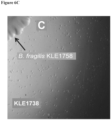
- Figure 6C the growth of E.
- gabavorous KLE1738 was qualitatively similar to that seen in the presence of B. fragilis KLE 1758.
- Figure 6D when E . coli was engineered to express gadC, a GABA antiporter, no growth of E. gabavorous KLE1738 was observed.
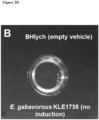
- Figure 6E no growth of E. gabavorous KLE1738 was observed in the presence of empty vehicle ( Figure 6E ).
- the results of Example 8 demonstrate that bacteria can be engineered to produce GABA (e.g., via the expression or overexpression of glutamate decarboxylase).
- the bacteria e.g., E. coli
- the bacteria can be engineered to produce GABA inside the human gut.
- the present disclosure also provides compromising one or more repressors of GABA production, (e.g., gadX or gadW).
- these repressors can regulate the pH restrictions of GABA production in E. coli, is a way to increase native GABA production. This can be achieved, for instance, via gene deletions, insertions, or substitutions, as known by those skilled in the art of molecular biology.
- bacteria can be engineered to produce GABA (e.g., at a physiologically relevant pH, such as between 4.5 and 7.5).
- GABA e.g., at a physiologically relevant pH, such as between 4.5 and 7.5.
- the bacteria can be engineered to contain DNA that codes for one or more enzymes set forth in Table 3-9. Set forth in Table 10 is also a sequence ID number for the 16S nucleotide sequence of the listed bacteria.
- the bacteria that are engineered to produce GABA can have at least 90% 16S sequence similarity to the 16S sequences given in Table 10 (e.g., at least 91% similarity, at least 92% similarity, at least 93% similarity, at least 94% similarity, at least 95% similarity, at least 96% similarity, at least 97% similarity, at least 98% similarity, at least 99% similarity, at least 99.5% similarity, at least 99.9% similarity, or 100% similarity).
- Table 10 Bacteria Capable of Being Engineered to Produce GABA Species Seq. ID No. Abiotrophia defectiva 305 Abiotrophia para-adiacens 306 Abiotrophia sp.
- Acidilobus saccharovorans 328 Acidithiobacillus ferrivorans 329 Acidovorax sp. 330 Acidovorax sp. 331 Acinetobacter baumannii 332 Acinetobacter calcoaceticus 333 Acinetobacter genomosp. 334 Acinetobacter haemolyticus 335 Acinetobacter johnsonii 336 Acinetobacter junii 337 Acinetobacter lwoffii 338 Acinetobacter parvus 339 Acinetobacter radioresistens 340 Acinetobacter schindleri 341 Acinetobacter sp. 342 Acinetobacter sp. 343 Acinetobacter sp.
- Actinobacillus 344 Acinetobacter sp. 345 Acinetobacter sp. 346 Acinetobacter sp. 347 Acinetobacter sp. 348 Actinobacillus minor 349 Actinobacillus pleuropneumoniae 350 Actinobacillus succinogenes 351 Actinobacillus succinogenes 352 Actinobacillus ureae 353 Actinobaculum massiliae 354 Actinobaculum schaalii 355 Actinobaculum sp. 356 Actinobaculum sp.
- Aeromonas allosaccharophila 409 Aeromonas enteropelogenes 410 Aeromonas hydrophila 411 Aeromonas jandaei 412 Aeromonas salmonicida 413 Aeromonas trota 414 Aeromonas veronii 415 Afipia genomosp.
- Aggregatibacter actinomycetemcomitans 417 Aggregatibacter aphrophilus 418 Aggregatibacter segnis 419 Agrobacterium radiobacter 420 Agrobacterium tumefaciens 421 Agrococcus whilnsis 422 Akkermansia muciniphila 423 Alcaligenes faecalis 424 Alcaligenes sp. 425 Alcaligenes sp.
- Alicyclobacillus acidocaldarius 427 Alicyclobacillus acidoterrestris 428 Alicyclobacillus contaminans 429 Alicyclobacillus cycloheptanicus 430 Alicyclobacillus herbarius 431 Alicyclobacillus pomorum 432 Alicyclobacillus sp. 433 Alistipes finegoldii 434 Alistipes indistinctus 435 Alistipes onderdonkii 436 Alistipes putredinis 437 Alistipes shahii 438 Alistipes sp. 439 Alistipes sp. 440 Alistipes sp.
- Bacillus aeolius 500 Bacillus aerophilus 501 Bacillus aestuarii 502 Bacillus alcalophilus 503 Bacillus amyloliquefaciens 504 Bacillus atrophaeus 505 Bacillus badius 506 Bacillus cereus 507 Bacillus circulans 508 Bacillus clausii 509 Bacillus coagulans 510 Bacillus firmus 511 Bacillus flexus 512 Bacillus fordii 513 Bacillus gelatini 514 Bacillus halmapalus 515 Bacillus halodurans 516 Bacillus herbersteinensis 517 Bacillus
- Brevibacillus agri 696 Brevibacillus brevis 697 Brevibacillus centrosporus 698 Brevibacillus choshinensis 699 Brevibacillus invocatus 700 Brevibacillus laterosporus 701 Brevibacillus parabrevis 702 Brevibacillus reuszeri 703 Brevibacillus sp.
- Brevibacillus thermoruber 705 Brevibacterium aurantiacum 706 Brevibacterium casei 707 Brevibacterium epidermidis 708 Brevibacterium frigoritolerans 709 Brevibacterium linens 710 Brevibacterium mcbrellneri 711 Brevibacterium paucivorans 712 Brevibacterium sanguinis 713 Brevibacterium sp. 714 Brevibacterium sp.
- Capnocytophaga gingivalis 730 Capnocytophaga granulosa 731 Capnocytophaga ochracea 732 Capnocytophaga sp. 733 Capnocytophaga sp. 734 Capnocytophaga sp. 735 Capnocytophaga sp. 736 Capnocytophaga sp. 737 Capnocytophaga sp. 738 Capnocytophaga sp.
- Flavonifractor plautii 1119 Flexispira rappini 1120 Flexistipes sinusarabici 1121 Francisella novicida 1122 Francisella philomiragia 1123 Fulvimorzas sp. 1124 Fusobacterium canifelinum 1125 Fusobacterium genomosp. 1126 Fusobacterium genomosp.
- Lactobacillus acidipiscis 1294 Lactobacillus acidophilus 1295 Lactobacillus alimentarius 1296 Lactobacillus amylolyticus 1297 Lactobacillus amylovorus 1298 Lactobacillus antri 1299 Lactobacillus brevis 1300 Lactobacillus buchneri 1301 Lactobacillus casei 1302 Lactobacillus catenaformis 1303 Lactobacillus coleohominis 1304 Lactobacillus coryniformis 1305 Lactobacillus crispatus 1306 Lactobacillus curvatus 1307 Lactobacillus delbrueckii 1308 Lactobacillus dextrinicus 1309 Lactobacillus farciminis 1310 Lactobacillus fermentum 1311 Lactobacillus gasseri 1312 Lactobacillus gastricits 1313 Lactobacillus genomosp.
- Lactobacillus tucceti 1366 Lactobacillus ultunensis 1367 Lactobacillus vaginalis 1368 Lactobacillus vini 1369 Lactobacillus vitulinus 1370 Lactobacillus zeae 1371 Lactococcus garvieae 1372 Lactococcus lactis 1373 Lactococcus raffinolactis 1374 Lactonifactor longoviformis 1375 Laribacter hongkongensis 1376 Lautropia mirabilis 1377 Lautropia sp. 1378 Leminorella grimontii 1379 Leminorella richardii 1380 Leptotrichia buccalis 1381 Leptotrichia genomosp.
- Leuconostoc carnosum 1393 Leuconostoc citreum 1394 Leuconostoc gasicomitatum 1395 Leuconostoc inhae 1396 Leuconostoc kimchii 1397 Leuconostoc lactis 1398 Leuconostoc mesenteroides 1399 Leuconostoc pseudomesenteroides 1400 Listeria innocua 1401 Listeria ivanovii 1402 Luteococcus sanguinis 1403 Lutispora thermophila 1404 Lysinibacillus fusiformis 1405 Lysinibacillus sphaericus 1406 Macrococcus caseolyticus 1407 Mannheimia haemolytica 1408 Marvinbryantia ormatexigens 1409 Massilia sp.
- Neisseria bacilliformis 1514 Neisseria cinerea 1515 Neisseria elongata 1516 Neisseria flavescens 1517 Neisseria genomosp. 1518 Neisseria lactamica 1519 Neisseria macacae 1520 Neisseria mucosa 1521 Neisseria pharyngis 1522 Neisseria polysaccharea 1523 Neisseria sicca 1524 Neisseria sp. 1525 Neisseria sp. 1526 Neisseria sp. 1527 Neisseria sp. 1528 Neisseria sp.
- Ochrobactrum anthropi 1544 Ochrobactrum intermedium 1545 Ochrobactrum pseudintermedium 1546 Odoribacter laneus 1547 Odoribacter splanchnicus 1548 Okadaella gastrococcus 1549 Oligella ureolytica 1550 Oligella urethralis 1551 Olsenella genomosp. 1552 Olsenella profusa 1553 Olsenella sp. 1554 Olsenella sp. 1555 Olsenella uli 1556 Opitutus terrae 1557 Oribacterium sinus 1558 Oribacterium sp. 1559 Oribacterium sp. 1560 Oribacterium sp.
- Oscillibacter valericigenes 1570 Oscillospira guilliermondii 1571
- Oxalobacter formigenes 1572 Paenibacillus barcinonensis 1573
- Paenibacillus barengoltzii 1574
- Paenibacillus chibensis 1575
- Paenibacillus cookii 1576 Paenibacillus durus 1577
- Paenibacillus lactis 1579 Paenibacillus lautus 1580
- Paenibacillus pabuli 1581 Paenibacillus polymyxa 1582
- Paenibacillus popilliae 1583 Paenibacillus sp.
- Paenibacillus timonensis 1591 Pantoea agglomerans 1592 Pantoea ananatis 1593 Pantoea brenneri 1594 Pantoea citrea 1595 Pantoea conspicua 1596 Pantoea septica 1597 Papillibacter cinnamivorans 1598 Parabacteroides distasonis 1599 Parabacteroides goldsteinii 1600 Parabacteroides gordonii 1601 Parabacteroides johnsonii 1602 Parabacteroides merdae 1603 Parabacteroides sp. 1604 Parabacteroides sp. 1605 Parachlamydia sp.
- Prevotella genomosp. 1680 Prevotella genomosp. 1681 Prevotella genomosp. 1682 Prevotella heparinolytica 1683 Prevotella histicola 1684 Prevotella intermedia 1685 Prevotella loescheii 1686 Prevotella maculosa 1687 Prevotella marshii 1688 Prevotella melaninogenica 1689 Prevotella micans 1690
- Prevotella multiformis 1691 Prevotella multisaccharivora 1692
- Prevotella nanceiensis 1693 Prevotella nigrescens 1694
- Prevotella oralis 1695 Prevotella oris 1696
- Prevotella pallens 1698 Prevotella ruminicola 1699 Prevotella salivae 1700 Prevotella sp.
- Prevotella sp. 1702 Prevotella sp. 1703
- Prevotella sp. 1704 Prevotella sp. 1705
- Prevotella sp. 1706 Prevotella sp. 1707
- Prevotella sp. 1708 Prevotella sp. 1709
- Prevotella sp. 1710 Prevotella sp. 1711
- Prevotella sp. 1712 Prevotella sp. 1713
- Prevotella sp. 1715 Prevotella sp. 1716
- Prevotella sp. 1717 Prevotella sp. 1718
- Prevotella sp. 1719 Prevotella sp.
- Prevotella sp. 1740 Prevotella sp. 1741 Prevotella sp. 1742 Prevotella sp. 1743 Prevotella sp. 1744 Prevotella sp. 1745 Prevotella sp.
- Pseudoflavonifractor capillosus 1776 Pseudomonas aeruginosa 1777 Pseudomonas fluorescens 1778 Pseudomonas gessardii 1779 Pseudomonas mendocina 1780 Pseudomonas monteilii 1781 Pseudomonas poae 1782 Pseudomonas pseudoalcaligenes 1783 Pseudomonas putida 1784 Pseudomonas sp. 1785 Pseudomonas sp. 1786 Pseudomonas sp.
- Raoultella ornithinolytica 1802 Raoultella planticola 1803 Raoultella terrigena 1804 Rhodobacter sp.
- Rhodobacter sphaeroides 1806 Rhodococcus corynebacterioides 1807 Rhodococcus equi 1808 Rhodococcus erythropolis 1809 Rhodococcus fascians 1810 Rhodopseudomonas palustris 1811 Robinsoniella peoriensis 1812 Roseburia triocola 1813 Roseburia faecalis 1814 Roseburia faecis 1815 Roseburia hominis 1816 Roseburia intestinalis 1817 Roseburia inulinivorans 1818 Roseburia sp.
- Staphylococcaceae bacterium 1916 Staphylococcus aureus 1917 Staphylococcus auricularis 1918 Staphylococcus capitis 1919 Staphylococcus caprae 1920 Staphylococcus carnosus 1921 Staphylococcus cohnii 1922 Staphylococcus condimenti 1923 Staphylococcus epidermidis 1924 Staphylococcus equorum 1925 Staphylococcus fleurettii 1926 Staphylococcus haemolyticus 1927 Staphylococcus hominis 1928 Staphylococcus lugdunensis 1929 Staphylococcus pasteuri 1930 Staphylococcus pseudintermedius 1931 Staphylococcus saccharolyticus 1932 Staphylococcus saprophyticus 1933 Staphylococcus sciuri 1934 Staphylococcus sp.
- Synergistetes bacterium 2065 Synergistetes bacterium 2066 Synergistetes bacterium 2067 Synergistetes bacterium 2068 Synergistetes bacterium 2069 Syntrophococcus sucromutans 2070 Syntrophomonadaceae genomosp. 2071 Tannerella forsythia 2072 Tannerella sp. 2073 Tatlockia micdadei 2074 Tatumella ptyseos 2075 Tessaracoccus sp.
- Veillonella nionipellierensis 2128 Veillonella parvula 2129 Veillonella sp. 2130 Veillonella sp. 2131 Veillonella sp. 2132 Veillonella sp. 2133 Veillonella sp. 2134 Veillonella sp. 2135 Veillonella sp. 2136 Veillonella sp. 2137 Veillonella sp. 2138 Veillonella sp. 2139 Veillonella sp. 2140 Veillonella sp. 2141 Veillonella sp. 2142 Veillonella sp. 2143 Veillonella sp.
- any of the GABA-producing bacteria described herein e.g., natural bacteria or engineered bacteria
- the therapeutic compositions can be administered to a patient in need thereof to treat or alleviate the symptom of a mental illness or central nervous system disease.
- bacteria are purified prior to incorporation into a therapeutic composition.
- bacteria can be purified so that the population of bacteria is substantially free of other bacteria (e.g., contains at least 90%, at least 91%, at least 92%, at least 93%, at least 94%, at least 95%, at least 96%, at least 97%, or at least 98%, at least 99% of the specific bacterial strain or strains desired in the composition).
- the therapeutic composition is a probiotic or a medical food comprising at least one GABA-producing bacterial strain.
- the strain can be administered, for instance, as a probiotic, as capsules, tablets, caplets, pills, troches, lozenges, powders, and/or granules.
- the strain can also be formulated as a medical food.
- the GABA-producing bacteria can also be administered as a fecal transplant or suppository.
- the dose of the therapeutic can contain 1 ⁇ 10 4 , 1 ⁇ 10 5 . 1 ⁇ 10 6 , 1 ⁇ 10 7 , 1 ⁇ 10 8 , 1 ⁇ 10 9 , 1 ⁇ 10 10 , 1 ⁇ 10 11 or greater than 1 ⁇ 10 11 colony forming units (CFUs) of the desired bacterial species.
- the desired bacterial species can be GABA-producing bacteria, bacteria that are capable of inhibiting the growth of GABA-consuming bacteria, or a combination thereof.
- the therapeutic composition or dose unit comprises a pharmaceutically acceptable formulation, including an enteric coating or similar to survive the acidity of the stomach and enabled delivery into the small or large intestines, prebiotics (such as, but not limited to, amino acids (including arginine, glutamate, and omithine), biotin, fructooligosaccharide, galactooligosaccharides, hemicelluloses (e.g., arabinoxylan, xylan, xyloglucan, and glucomannan), inulin, chitin, lactulose, mannan oligosaccharides, oligofructose-enriched inulin, gums (e.g., guar gum, gum arabic and carregenaan), oligofructose, oligodextrose, tagatose, resistant maltodextrins (e.g., resistant starch), transgalactooligosaccharide, pectins
- the mental illness or disease of the central nervous system that can be treated by administration of a therapeutic composition described herein is selected from depression, bipolar disorder, schizophrenia, anxiety, anxiety disorders, addiction, social phobia, major depressive disorder, treatment-resistant major depressive disorder (TR-MDD), major depressive disorder and its subtypes (melancholic depression, atypical depression, catatonic depression, postpartum depression, and seasonal affective disorder), Neurodegenerative amyloid disorders (Parkinson's, Alzheimer's, and Huntington's diseases) orthostatic tremor, Lafora disease, restless leg syndrome, neuropathic pain, pain disorders, dementia, epilepsy, stiff person syndrome, premenstrual dysphoric disorder, autism spectrum disorder, sleep disorders, and attention deficit hyperactivity disorder (ADHD).
- depression bipolar disorder
- schizophrenia anxiety, anxiety disorders, addiction, social phobia
- TR-MDD treatment-resistant major depressive disorder
- major depressive disorder and its subtypes melancholic depression, atypical depression, catatonic depression, postpartum depression, and seasonal
- the method further comprises decreasing at least one symptom of a mental disorder or disease of the central nervous system in the subject selected from the group consisting of: fatigue, insomnia, motor dysfunction, stress, persistent anxiety, persistent sadness, social withdrawal, substance withdrawal, irritability, thoughts of suicide, thoughts of self-harm, restlessness, low sex drive, lack of focus, loss of appetite, seizures, memory loss, anger, bouts of emotional reactivity, confusion, pain, and muscle spasms.
- a mental disorder or disease of the central nervous system in the subject selected from the group consisting of: fatigue, insomnia, motor dysfunction, stress, persistent anxiety, persistent sadness, social withdrawal, substance withdrawal, irritability, thoughts of suicide, thoughts of self-harm, restlessness, low sex drive, lack of focus, loss of appetite, seizures, memory loss, anger, bouts of emotional reactivity, confusion, pain, and muscle spasms.
- the therapeutic compositions described herein can be administered to a patient in need thereof, for instance for the treatment of a mental illness or disease of the central nervous system.
- the method of treatment can comprise first diagnosing a patient who can benefit from treatment by a therapeutic composition described herein.
- the method further comprises administering to the patient a therapeutic composition described herein.
- the process of identifying a subject with a mental illness or disease of the central nervous system can be carried out by a trained psychologist, psychiatrist, or neurologist.
- a psychiatrist, psychologist, or neurologist can diagnose a subject with a mental illness or disease of the central nervous system evaluating the subject's behavior for symptoms of the mental illness or disease of the central nervous system.
- DSM-5 Diagnostic and Statistical Manual of Mental Disorders
- the process of identifying a subject with a mental illness or disease of the central nervous system can comprise diagnosing the subject with a mental illness or disease of the central nervous system.
- the mental illness or disease of the central nervous system is identified or diagnosed using fMRI.
- mental illness or disease of the central nervous system can be identified with standard psychological and neurological surveys, or in other methods known to experts in the field.
- a subject in need of treatment with a therapeutic composition described herein can be identified by identifying low levels of GABA in the subject's blood, serum, stool, or other bodily fluid.
- the amount of GABA in the subject's stool e.g., the initial amount of GABA in the subject's stool
- the amount of GABA can be measured using the wet or dry weight of stool by LC/MS or another technique known in the art.
- the amount of GABA in the subject's blood or serum (e.g., the initial amount of GABA in the subject's blood or serum) is below about 10 ⁇ g/L +/- 5 ⁇ g/L GABA per gram of blood or serum (e.g., as measured by LC/MS).
- the amount of GABA in the prefrontal cortex, or other areas of the brain is below about 1.0 mM/kg, as measured by proton magnetic resonance (PMR), or another similar technique.
- PMR proton magnetic resonance
- the percentage of GABA-producing bacteria in the subject's gut (e.g., the initial amount) represents about 10% of total 16S sequences as measured by sequencing using such methods as 16S rDNA gene Illumina sequencing or quantitative PCR. In some embodiments, the percentage of GABA-producing bacteria in the subject's gut represents about 9%, about 8%, about 7%, about 6%, about 5%, about 4%, about 3%, about 2%, about 1%, or less than about 1% of the total 16S sequences measured in the subject's gut.
- Determination of the initial amount of GABA in a subject's blood, serum, regions of the brain, or stool can help identify subjects that can benefit from treatment by administration of GABA-producing bacteria.
- a subject with an initial amount of GABA in the serum or blood below 10 ⁇ g/L GABA can benefit from administration of GABA-producing bacteria.
- a subject with an initial amount of GABA in the brain in regions such as the prefrontal cortex (or other areas of the brain), of about 1.0 mM/kg can benefit from treatment by administration of GABA-producing bacteria.
- a subject with an initial amount of GABA in stool below 8 ⁇ g GABA per gram of stool can benefit from administration of GABA-producing bacteria.
- a subject with an initial amount of GABA in the stool below 100 ⁇ g, below 50 ⁇ g, below 25 ⁇ g, below 20 ⁇ g, below 15 ⁇ g, below 10 ⁇ g, below 9 ⁇ g, below 8 ⁇ g, below 7 ⁇ g, below 6 ⁇ g, below 5 ⁇ g, below 4 ⁇ g, below 3 ⁇ g, below 2 ⁇ g, below 1 ⁇ g, below 0.5 ⁇ g, below 0.1 ⁇ g, below 0.01 ⁇ g, below 10 ng, or below 1 ng, or below 0.1 ng per gram of stool can benefit from administration of a GABA-producing bacteria.
- the amount of GABA is increased 0.1, 1, 5, 10, 20, 30, 40, 50, 60, 70, 80, 90, 100, 500, 1000, 2000, 3000, 4000, 5000, or more percent in the subject's stool relative to the initial amount of GABA in the subject's stool, e.g., as measured in step (b) of any of the above-aspects.
- the amount of GABA is increased 0.1, 1, 5, 10, 20, 30, 40, 50, 60, 70, 80, 90, 100, 500, 1000, 2000, 3000, 4000, 5000, or more percent in the subject's blood or serum relative to the initial amount of GABA in the subject's blood or serum, e.g., as measured in step (b) of any of the above-aspects.
- the amount of GABA is increased 0.1, 1, 5, 10, 20, 30, 40, 50, 60, 70, 80, 90, 100, 500, 1000, 2000, 3000, 4000, 5000, or more percent in regions of the subject's brain, such as, but not limited to the prefrontal cortex, relative to the initial amount of GABA in the subject's brain, e.g., as measured in step (b) of any of the above-aspects.
- At least one GABA-producing bacteria is increased 0.1, 1, 5, 10, 20, 30, 40, 50, 60, 70, 80, 90, 100, 500, 1000, 2000, 3000, 4000, 5000, or more percent in the subject's stool relative to the initial amount of GABA-producing bacteria in the subject's stool, e.g., as measured in step (b) in any of the above-aspects.
- the level of expression of at least one GABA producing enzyme is increased 0.1, 1, 5, 10, 20, 30, 40, 50, 60, 70, 80, 90, 100, 500, 1000, 2000, 3000, 4000, 5000, or more percent in the subject's stool relative to the initial level of expression of GABA-producing enzymes in the subject's stool, as measured by qPCR or some other appropriate method, known to those familiar in the field.
- the amount of GABA-consuming bacteria can be reduced, e.g., reduced in the subject's stool, blood serum, and the like.
- the GABA-consuming bacteria can be, for instance, Evtepia gabavorous or Firmicutes bacterium MGS: 114.
- GABA-consuming bacteria can be reduced by 0.1, 1, 5, 10, 20, 30, 40, 50, 60, 70, 80, 90, 100, 500, 1000, 2000, 3000, 4000, 5000, or more percent.
- the present disclosure provides for the treatment of mental illness or disease of the central nervous system comprising administering to the subject GABA-producing bacteria, or prebiotics to stimulate growth or GABA production capabilities of GABA producing bacteria.
- the present disclosure provides a method of culturing bacteria that require GABA for survival and replication. In some cases, these bacteria were previously uncultured or unculturable. In some cases, the bacteria are cultured by supplying endogenous GABA to the growth medium. In some embodiments, the bacteria are cultured by co-culturing the bacteria with a different bacterium capable of producing GABA (e.g., a bacterium as described above).
- a different bacterium capable of producing GABA e.g., a bacterium as described above.
- the previously uncultured bacterium is E. gabavorous.
- E. gabavorous can be cultured on a suitable substrate such as agar.
- the agar can contain added GABA.
- the present disclosure provides a method of culturing E. gabavorous comprising co-culturing E. gabavorous with another bacterial strain, said strain is capable of producing GABA, for instance at conditions that are physiologically relevant and found in to the human gastrointestinal tract (e.g., pH less between about 4.5 and about 7.5).
- E. gabavorous some previously unculturable bacteria may be able to grow in proximity to cultivable organisms producing growth factors necessary for bacteria to survive or grow. Accordingly, the present disclosure teaches the discovery and culture of E. gabavorous in the presence of GABA as a necessary growth factor.
- E. gabavorous was identified as a late-growing colony in spatial proximity to Bacteroides fragilis KLE1758. It was found that growth of E. gabavorous KLE1738 was induced in the presence of supernatant derived from Bacteroides fragilis KI,E1758. Chemical analysis via HPLC and NMR of Bacteroides fragilis KLE1738 supernatant revealed GABA as the necessary growth factor for E. gabavorous.
- FIG. 1A shows a photograph of an agar plate containing colonies of bacteria after treatment with human stool. The inset at the top right shows a close-up of a colony of KLE1758 along with a colony of 1738 that is growing in the immediate proximity.
- Figure 1B shows a colony of KLE1758 that is capable of supporting multiple colonies of KLE1738 on an agar plate with no other bacteria.
- Bacteroides fragilis KLE1758 can support the growth of E. gabavorous KLE1738.
- Bacteroides fragilis KLE1758 and E . gabavorous KLE1738 can co-exist in a symbiotic relationship in which E. gabavorous KLE1738 can consume the GABA that is produced by Bacteroides fragilis KLE1758.
- E. gabavorous KLE1738 The genetic sequence of E . gabavorous KLE1738 was identified as set forth in Example 5.
- the annotated genome (2,500,009 bp) of E. gabavorous is given in the attached Sequence Listing comprising SEQ. ID Nos. 1-2288 and is given in SEQ ID Nos. 2218-2285. Without wishing to be bound by theory, the genome revealed no obvious entry points for metabolism of common sugars or other carbon sources.
- E. gabavorous is predicted to have a limited set of transporters, including those for methionine, branched-chain amino acids, dipeptides, oligopeptides, and choline/betaine, as predicted in Table 10.
- Table 10 Predicted Transport Systems in E . gabavorous.
- these amino acids are not usually capable of supporting bacterial growth as single carbon sources, unlike serine, threonine, glutamate, and others. This is supported by the inability of E. gabavorous to grow on the tested amino acids.
- B. fragilis KLE1758 The pH dependency of B. fragilis KLE1758's ability to produce GABA was investigated. As set forth in Example 6, B. fragilis KLE1758 was grown at various pH values, and the supernatant from that growth was analyzed using LCMS. As shown in Figure 4A , GABA is produced primarily at relatively lower pH (e.g., about 5.5 and below), compared with glutamate.
- B. fragilis KLE1758 can produce GABA at low pH, whereas it was found to produce primarily glutamate at relatively high pH. As set forth in Example 6 and Figure 4A , at a pH of about 5 and about 5.5, B. fragilis KLE1758 produced considerably more GABA than glutamate. However, at a pH of about 6 and about 6.5, B. fragilis KLE1758 was found to produce primarily glutamate and relatively low quantities of GABA.
- the present disclosure also teaches methods of identifying bacteria that can produce GABA.
- the present disclosure provides methods of screening for bacteria capable of producing GABA using, for instance, E . gabavorous and/or other GABA-dependent bacterial growth as a bioassay.
- buffered media e.g., buffered agar
- the assay technique set forth herein can be used to identify bacteria that are capable of producing bacteri at various pH values (e.g., between about 5.5 to about 7.5).
- Example 7 a sample that is thought to contain GABA-producing bacteria, such as a human stool sample, can be mixed with molten agar. The agar, containing the bacterial sample, can then be streaked with a dilute solution of E. gabavorous. As shown herein, E. gabavorous cannot grow in the absence of GABA, and therefore any colonies of E. gabavorous that do form will necessarily grow in close spatial proximity to GABA-producers.
- the assay method set forth herein was adapted to control the pH of the media, enabling identification of organisms capable of producing GABA at a pH between about 4.5 and about 7.5.
- the pH of between about 4.5 and about 7.5 is the relevant pH within the human gut. Accordingly, bacteria that can produce GABA at these pH values can in some embodiments be capable of producing GABA in the human gut.
- the present disclosure can allow one to distinguish between GABA-producers that are capable of producing GABA at a physiologically relevant pH (e.g., between about 4.5 to about 7.5) from bacteria that are not able to produce GABA at a physiological relevant pH (e.g., bacteria that can only produce substantial quantities of GABA below pH of about 4.5).
- a physiologically relevant pH e.g., between about 4.5 to about 7.5
- bacteria that are not able to produce GABA at a physiological relevant pH e.g., bacteria that can only produce substantial quantities of GABA below pH of about 4.5.
- Figure 4B shows a representative agar plate showing growth of E. gabavorous in the presence of a GABA-producing bacteria.
- Figure 4C shows a phylogenetic tree of GABA-producing bacteria that were identified using this method.
- Figure 5 shows the GABA production capabilities of certain strains of GABA producers identified using the techniques described herein.
- eight strains of GABA produers were grown in buffered media (e.g., between about pH 4.5 and about pH 5.0; and between about pH 6.5 and about pH 7.0).
- buffered media e.g., between about pH 4.5 and about pH 5.0; and between about pH 6.5 and about pH 7.0.
- the GABA-producing capabilities of the GABA-producing bacteria at various pH values were investigated.
- certain bacteria e.g., B. dorei KLE1912
- produced relatively similar quanties of GABA at lower pH e.g., between about 4.5 and about 5.0
- certain bacteria produced different amounts of GABA depending on the pH (e.g., B. vulgatus KLE1910 and B.
- ovatus KLE1770 ovatus KLE1770.
- B. vulgatus KLE1910 and B. ovatus KLE1770 some bacteria were found to produce relatively more GABA at lower pH than at higher pH, whereas some bacteria were found to produce relatively more GABA at higher pH than at lower pH.
- the substrate is agar.
- the step of contacting the substrate with E . gabavoro TSS comprises streaking the agar with a dilute solution of E . gabavorous. The GABA-producing colonies are then identified by growth induction of E . gabavorous.
- growth E. gabavorous is used to determine if a bacterial strain produces GABA.
- any bacteria that has a strict requirement of GABA for growth and survival can likewise be used as described above to identify bacteria that can produce GABA.
- PCR was performed using the general bacterial primers 27F (5'-AGAGTTTGATCMTGGCTCAG-3') (set forth in Seq ID No. 2287) and 1492R (5'- TACGGYTACCTTGTTACGACTT-3') (set forth in Seq ID No. 2288) to amplify the 16S rRNA gene.
- the PCR reaction mixture was 12.5 ⁇ L GoTaq Master Mix (Promega), 1 ⁇ L 10 ⁇ M 27F and 1492R primers, 9.5 ⁇ L Nuclease Free Water (Promega), and 1 ⁇ L of a colony resuspended in 100 ⁇ L sterilized distilled water.
- the amplification conditions were one cycle of 95°C for 5 min; 30 cycles of 95°C for 30 s, 55°C for 30 s; 72°C for 90 s; and finally one cycle of 72°C for 7 min.
- Amplification of PCR reactions were then confirmed using gel electrophoresis on a 0.8% agarose gel loaded saturated with ethidium bromide.
- Successful PCRs were sequenced by Macrogen Corporation using the 27F primer using the Applied Biosystems 3730x1 DNA analyzer. Quality control for sequences was performed using DNA Baser (www.DnaBaser.com), in which ends were trimmed until there were more than 75% good bases (defined by having a QV score of higher than 25) in an 18 base window. Identification of phylogenetic neighbors and calculation of pairwise sequence similarity were carried out using the EzTaxon server.
- Example 2 Cultivation of helper-uncultured pairs from human stool samples
- a fecal sample from a healthy human donor was diluted and spread-plated on rich medium, and newly formed colonies were noted daily for a week. Late forming colonies (3-7 days) were diluted and spread on a nutrient agar plate, and a heavy inoculum of a neighboring, early forming colony (1-2 days) was spotted, as shown in Figure 1A . Using this method, a number of helper-uncultured pairs were identified, in which the spread-plated uncultured isolate formed a gradient of growth around the spotted culturable helper.
- E. gabavorous KLE1738 (93.22% similar to Flavonifractor plautii ATCC 29863 by 16S rRNA gene sequence
- Bacteroides fragilis KLE1758 (100% similar to Bacteroides fragilis ATCC 25852 by 16S rRNA gene sequence) for growth ( Fig. 1B ).
- E. gabavorous is a gram positive organism of the Clostridia class.
- the supernatant of a 48-hour culture of B. fragilis KLE1758 grown in rich medium induced growth of E . gabavorous as shown in Figures 2A and 2B , enabling bioassay-driven purification of the growth factor.
- the supernatant was solvent-partitioned with ethyl acetate, and the water residue fraction induced the growth of E. gabavorous.
- the water fraction was then purified using HP-20 column chromatography, and the most polar fraction induced the growth of E . gabavorous as shown in Figure 2C . This active fraction was then further fractionated by preparative HPLC.
- Example 4 Testing other compounds for induction of E. sabavorous
- DNA from cells of E . gabavorous grown 48 hours anaerobically on FAAy plates with 1.0 mg/mL GABA was isolated for genome sequencing using the PowerSoil ® DNA Isolation Kit (Mo Bio, San Diego, CA) to manufacturer specifications, yielding ⁇ 5.0 ⁇ g of high quality DNA.
- Genomic sequencing and de novo assembly was performed by the Genomic Core at Tufts University in Boston, MA.
- the genome of E. gabavorous was sequenced on an Illumina MiSeq using MiSeq V2 500 cycles chemistry with a paired-end 250 bases format. Briefly, 100 ng of genomic DNA was sheared on a Covaris M220 to an average fragment size of around 600 bases.
- a sequencing library was prepared with Illumina TruSeq Nano DNA Sample Preparation Kit per the manufacturer instruction. Base calling and demultiplexing was performed on the raw data from the MiSeq using CASAVA and fastq files were generated. De novo assembly of the genome was performed using Edena V3.131028 with a customized parameter optimization pipeline. The best assembled genome, as assessed by the contig statistic, was reported. Assembly yielded 68 contigs (n), with all contigs having a sequence length longer than 200 bases (n:200). 7 contigs with a larger value than the N50 (119748), and the minimal contig length is 355 (min). The N20, N50 and N20 are 33403, 119748 and 204670, respectively.
- the largest contig length (max) was 344080, and the estimated genome size is 2500009.
- the draft genome was annotated using the RAST server and the KAAS (KEGG Automatic Annotation Server) analysis tool of the KEGG (Kyoto Encyclopedia of Genes and Genomes) database.
- the genome of E . gabavorous was annotated using RAST, and the genomes of CAG:113 and E . gabavorous were compared using RAST.
- the absolute amount of glutamate and GABA contained in the B. fragilis KLE1758 supernatant was determined by HPLC, using a fluorophore to aid in detection. Specifically, free amines were labeled for analysis by reacting with the AccQ reagent (Waters) according to manufacturer's protocols. A calibration curve was generated from stock solutions (10 mg/mL) that were prepared by dissolving GABA (2.0 mg) in water (200 ⁇ L), glutamate (Glu) (10.2 mg) in water (1020 ⁇ E) and cysteic acid (CSA) (16.9 mg) in water (1690 ⁇ E). These were serially diluted to generate a concentration gradient.
- stocks were made to final concentrations of 0.1mg/mL, 0.05 mg/mL, 0.01 mg/mL and 0.001 mg/mL.
- An aliquot of a given stock solution was added to the AccQ reaction buffer (25 ⁇ L final), followed by the addition of the acetonitrile-dissolved AccQ reagent (25 ⁇ L). This was reacted for ten minutes at 55-60°C, and then transferred directly to an LCMS vial, fitted with a glass insert.
- Reaction concentrations of the amino acids were: 20 ng/ ⁇ L, 10 ng/ ⁇ L, 5 ng/ ⁇ L, 2.5 ng/ ⁇ L, 1 ng/ ⁇ L, 0.5 ng/ ⁇ L, 1 ng/ ⁇ L and 0 ng/ ⁇ L (control). These samples were injected (10 ⁇ L) on an Agilent LCMS, using a gradient of solvent A (water/0.1% formic acid) and B (acetonitrile/0.1% formic acid) over the following time course: 1) 0-40 minutes linear gradient of 2% B to 98% B; 2) 40-45 min isocratic at 98% B; 3) 45-45.5 min linear gradient of 98% B to 2 % B; 4) 45.5-55 min isocratic at 2% B.
- solvent A water/0.1% formic acid
- B acetonitrile/0.1% formic acid
- the CSA-AccA derivative eluted at 9.5 min, the Glu-AccQ derivative eluted at 12.1 min and the GABA-AccQ derivative at 12.5 min.
- CSA was added to all reactions, to a final concentration of 2.5 ⁇ g/mL, and used as an internal standard.
- Example 7 Co-culture Screen for GABA Producers Using E . gabavorous
- GABA secretion can allow bacteria to survive acid stress.
- Decarboxylation of glutamate produces GABA, which is exported from the cell in a protonated form, alkalinizing the cytoplasm.
- E . coli as well as some Lactobacillus and Bifidobacterium strains were shown to produce GABA, but these organisms are typically found at a low abundance in the human intestinal tract, and in the case of E. coli, is dependent on low pH (e.g., about 4.2 and below).
- Bacteroides fragilis the helper of E. gabavorous, is a common gut bacterium, but it was found that similarly to E.
- GABA production by Bacteroides fragilis KLE1758 is only observed at a pH less than about 5.5 as shown in Figure 4A .
- GABA is shown in left-hand columns and glutamate is shown in right-hand columns at each pH value.
- it was therefore considered useful to identify microorganisms capable of producing GABA at a physiologically relevant pH for the human large intestine e.g., pH of about 5.5 to about 7.5, or about pH 5.7 to about 7.4.
- E. gabavorous was utilized to screen for bacteria capable of secreting GABA on heavily buffered medium. Metabolic byproducts of bacterial growth may lower the pH of the medium in the absence of buffer. Stool sample was mixed with molten agar and poured in Petri plates in an anaerobic chamber, and E. gabavorous was spread on top of the agar once solidified. By looking for zones of growth induction of E . gabavorous, and measuring the pH of the agar, bacteria that produce GABA at a pH of between about 6.0 and about 7.0 were identified, as well as those producing GABA at a pH of about 4.5 to about 5.0, as shown in Figure 4B .
- the full 16S rRNA gene was amplified and sequenced using the 27F and 1492R universal primers, and annotation with EZTaxon revealed a number of representatives from multiple genera, including Bacteroides, Bifidobacterium, Blautia, Coprococcus, Gordonibacter, Dorea, and Clostridium ( Fig. 4C ). Of these, only Bifidobacterium adolescentis was previously reported to produce GABA.
- Example 8 Using an Engineered Escherichia coli strain to produce GABA and induce the growth of E. sabavorous
- GABA can be produced by intestinal epithelial cells and by some bacteria, such as Escherichia coli and Listeria monocytogenes, by decarboxylation of glutamate.
- E. coli the decarboxylation of glutamate serves as a mechanism to decrease intracellular pH, and GABA production generally occurs at a low pH.
Landscapes
- Health & Medical Sciences (AREA)
- Life Sciences & Earth Sciences (AREA)
- Chemical & Material Sciences (AREA)
- Bioinformatics & Cheminformatics (AREA)
- Engineering & Computer Science (AREA)
- Organic Chemistry (AREA)
- Zoology (AREA)
- Medicinal Chemistry (AREA)
- General Health & Medical Sciences (AREA)
- Genetics & Genomics (AREA)
- Wood Science & Technology (AREA)
- Microbiology (AREA)
- Biomedical Technology (AREA)
- Molecular Biology (AREA)
- Veterinary Medicine (AREA)
- Public Health (AREA)
- Animal Behavior & Ethology (AREA)
- Pharmacology & Pharmacy (AREA)
- General Engineering & Computer Science (AREA)
- Biotechnology (AREA)
- Biochemistry (AREA)
- Mycology (AREA)
- Neurosurgery (AREA)
- General Chemical & Material Sciences (AREA)
- Neurology (AREA)
- Chemical Kinetics & Catalysis (AREA)
- Nuclear Medicine, Radiotherapy & Molecular Imaging (AREA)
- Epidemiology (AREA)
- Psychiatry (AREA)
- Pain & Pain Management (AREA)
- Medicines Containing Material From Animals Or Micro-Organisms (AREA)
- Micro-Organisms Or Cultivation Processes Thereof (AREA)
- Measuring Or Testing Involving Enzymes Or Micro-Organisms (AREA)
- Coloring Foods And Improving Nutritive Qualities (AREA)
- Medicinal Preparation (AREA)
- Medicines That Contain Protein Lipid Enzymes And Other Medicines (AREA)
- Pharmaceuticals Containing Other Organic And Inorganic Compounds (AREA)
Applications Claiming Priority (3)
| Application Number | Priority Date | Filing Date | Title |
|---|---|---|---|
| US201662307991P | 2016-03-14 | 2016-03-14 | |
| PCT/US2017/022091 WO2017160711A1 (en) | 2016-03-14 | 2017-03-13 | Modulation of the gut microbiome to treat mental disorders or diseases of the central nervous system |
| EP17712676.0A EP3429604A1 (de) | 2016-03-14 | 2017-03-13 | Modulation des darmmikrobioms zur behandlung von geistesstörungen oder erkrankungen des zentralnervensystems |
Related Parent Applications (1)
| Application Number | Title | Priority Date | Filing Date |
|---|---|---|---|
| EP17712676.0A Division EP3429604A1 (de) | 2016-03-14 | 2017-03-13 | Modulation des darmmikrobioms zur behandlung von geistesstörungen oder erkrankungen des zentralnervensystems |
Publications (2)
| Publication Number | Publication Date |
|---|---|
| EP4368254A2 true EP4368254A2 (de) | 2024-05-15 |
| EP4368254A3 EP4368254A3 (de) | 2024-08-14 |
Family
ID=58387981
Family Applications (2)
| Application Number | Title | Priority Date | Filing Date |
|---|---|---|---|
| EP17712676.0A Ceased EP3429604A1 (de) | 2016-03-14 | 2017-03-13 | Modulation des darmmikrobioms zur behandlung von geistesstörungen oder erkrankungen des zentralnervensystems |
| EP23219448.0A Pending EP4368254A3 (de) | 2016-03-14 | 2017-03-13 | Modulation des darmmikrobioms zur behandlung von geistesstörungen oder erkrankungen des zentralnervensystems |
Family Applications Before (1)
| Application Number | Title | Priority Date | Filing Date |
|---|---|---|---|
| EP17712676.0A Ceased EP3429604A1 (de) | 2016-03-14 | 2017-03-13 | Modulation des darmmikrobioms zur behandlung von geistesstörungen oder erkrankungen des zentralnervensystems |
Country Status (7)
| Country | Link |
|---|---|
| US (3) | US11116804B2 (de) |
| EP (2) | EP3429604A1 (de) |
| JP (3) | JP7216998B2 (de) |
| CN (1) | CN109715177A (de) |
| AU (2) | AU2017234120B2 (de) |
| CA (1) | CA3016911A1 (de) |
| WO (1) | WO2017160711A1 (de) |
Families Citing this family (98)
| Publication number | Priority date | Publication date | Assignee | Title |
|---|---|---|---|---|
| WO2011151941A1 (ja) | 2010-06-04 | 2011-12-08 | 国立大学法人東京大学 | 制御性t細胞の増殖または集積を誘導する作用を有する組成物 |
| GB201117313D0 (en) | 2011-10-07 | 2011-11-16 | Gt Biolog Ltd | Bacterium for use in medicine |
| ES2993669T3 (en) * | 2011-12-01 | 2025-01-03 | Univ Tokyo | Human-derived bacteria that induce proliferation or accumulation of regulatory t cells |
| SG11201503966PA (en) | 2012-11-23 | 2015-06-29 | Seres Health Inc | Synergistic bacterial compositions and methods of production and use thereof |
| US8906668B2 (en) | 2012-11-23 | 2014-12-09 | Seres Health, Inc. | Synergistic bacterial compositions and methods of production and use thereof |
| JP2016509003A (ja) | 2013-02-04 | 2016-03-24 | セレス セラピューティクス インコーポレイテッド | 組成物および方法 |
| US10973861B2 (en) | 2013-02-04 | 2021-04-13 | Seres Therapeutics, Inc. | Compositions and methods |
| WO2014145958A2 (en) | 2013-03-15 | 2014-09-18 | Seres Health, Inc. | Network-based microbial compositions and methods |
| CN105979952B (zh) | 2013-11-25 | 2022-04-08 | 赛里斯治疗公司 | 协同细菌组合物以及其制造方法和用途 |
| MA41060B1 (fr) | 2015-06-15 | 2019-11-29 | 4D Pharma Res Ltd | Compositions comprenant des souches bactériennes |
| GB201612191D0 (en) | 2016-07-13 | 2016-08-24 | 4D Pharma Plc | Compositions comprising bacterial strains |
| EP3429604A1 (de) | 2016-03-14 | 2019-01-23 | Holobiome, Inc. | Modulation des darmmikrobioms zur behandlung von geistesstörungen oder erkrankungen des zentralnervensystems |
| AU2017249159B2 (en) | 2016-04-11 | 2024-06-13 | President And Fellows Of Harvard College | Probiotic formulations for improving athletic performance |
| US10596206B1 (en) | 2017-03-14 | 2020-03-24 | Cornell University | Probiotic compositions and methods of use |
| EP3606325B1 (de) * | 2017-04-03 | 2024-09-04 | Gusto Global, LLC | Rationaler entwurf von biotherapeutika auf mikrobenbasis |
| DK3630136T3 (da) | 2017-05-22 | 2021-05-25 | 4D Pharma Res Ltd | Sammensætninger, der omfatter bakteriestammer |
| SMT202000695T1 (it) | 2017-06-14 | 2021-01-05 | 4D Pharma Res Limited | Composizioni comprendenti ceppi batterici |
| SMT202000555T1 (it) | 2017-06-14 | 2020-11-10 | 4D Pharma Res Limited | Composizioni comprendenti un ceppo batterico del genere megaspaera e loro usi |
| CA3066189A1 (en) * | 2017-06-14 | 2018-12-20 | 4D Pharma Research Limited | Compositions comprising bacterial strains |
| EP3668527A1 (de) | 2017-08-14 | 2020-06-24 | Seres Therapeutics, Inc. | Zusammensetzungen und verfahren zur behandlung von cholestase |
| EP3715448A4 (de) | 2017-09-29 | 2021-06-30 | University - Industry Cooperation Group of Kyung Hee University | Neuartige milchsäurebakterien und verwendung davon |
| BR112020008552A2 (pt) | 2017-10-30 | 2020-12-29 | Seres Therapeutics, Inc. | métodos e composições para tratamento de resistência a antibiótico |
| FR3074501B1 (fr) | 2017-12-01 | 2022-01-07 | Lesaffre & Cie | Isolement et culture pure d'une archee de l'ordre des methanomassiliicoccales |
| EP3723776A4 (de) * | 2017-12-11 | 2022-07-27 | Vedanta Biosciences, Inc. | Zusammensetzungen und verfahren zur unterdrückung pathogener organismen |
| WO2019118984A2 (en) * | 2017-12-15 | 2019-06-20 | Solarea Bio, Inc. | Microbial compositions and methods for treating type 2 diabetes, obesity, and metabolic syndrome |
| JP7325106B2 (ja) * | 2018-02-09 | 2023-08-14 | Noster株式会社 | リポ多糖制御性腸内細菌及びその用途 |
| WO2019169138A1 (en) * | 2018-02-28 | 2019-09-06 | Evelo Biosciences, Inc. | Compositions and methods for treating cancer using paraclostridium benzoelyticum |
| WO2019169160A1 (en) * | 2018-02-28 | 2019-09-06 | Evelo Biosciences, Inc. | Compositions and methods for treating cancer using ruminococcus gnavus |
| MX2020010177A (es) * | 2018-03-29 | 2021-01-15 | Seres Therapeutics Inc | Composiciones y métodos para tratar enfermedades inflamatorias intestinales. |
| EP3773645A4 (de) | 2018-04-10 | 2021-11-24 | Siolta Therapeutics, Inc. | Mikrobielle konsortien |
| WO2019205188A1 (zh) * | 2018-04-24 | 2019-10-31 | 深圳华大生命科学研究院 | 抑郁症生物标志物及其用途 |
| WO2019226723A1 (en) * | 2018-05-23 | 2019-11-28 | The Regents Of The University Of California | Methods of selecting subjects for treatment with metabolomic modulators |
| BR112020023933A2 (pt) * | 2018-05-24 | 2021-04-27 | Seres Therapeutics, Inc. | composições bacterianas projetadas e usos destas |
| SI3723777T1 (sl) * | 2018-06-25 | 2021-08-31 | 4D Pharma Research Limited | Sestave, ki zajemajo bakterijske seve |
| CA3111795A1 (en) | 2018-09-05 | 2020-03-12 | Solarea Bio, Inc. | Methods and compositions for treating musculoskeletal diseases |
| US11980647B2 (en) | 2018-09-05 | 2024-05-14 | Solarea Bio, Inc. | Methods and compositions for treating musculoskeletal diseases, treating inflammation, and managing symptoms of menopause |
| WO2020089488A1 (en) * | 2018-11-02 | 2020-05-07 | 4D Pharma Research Limited | Compositions comprising bacterial strains |
| ES2763350B2 (es) * | 2018-11-28 | 2020-10-13 | Consejo Superior Investigacion | Cepa de christensenella minuta y uso de la misma |
| SG11202106258YA (en) | 2018-12-12 | 2021-07-29 | 4D Pharma Res Ltd | Compositions comprising parabacteroides bacterial strains for treating cancer |
| US20220096574A1 (en) * | 2019-01-29 | 2022-03-31 | Holobiome, Inc. | Methods and compositions for treating and preventing central nervous system disorders and other conditions caused by gut microbial dysbiosis |
| TWI827804B (zh) * | 2019-03-06 | 2024-01-01 | 日商三菱商事生命科學股份有限公司 | 蕈菌絲體之製造方法、含有蕈菌絲體的組成物、以及使用了蕈菌絲體之食品材料 |
| WO2020185581A2 (en) | 2019-03-08 | 2020-09-17 | The Regents Of The University Of California | Compositions and methods for modulating lipid and steroid metabolism |
| EP3950929A4 (de) * | 2019-03-28 | 2023-01-04 | CJ Bioscience, Inc. | Faecalibacterium sp. mikrobe und antikrebszusammensetzung damit |
| EP3962295A1 (de) | 2019-05-01 | 2022-03-09 | The Procter & Gamble Company | Probiotische bakterienstämme, die kurzkettige fettsäuren produzieren, und zusammensetzungen damit |
| MX2021013776A (es) * | 2019-05-10 | 2021-12-10 | 4D Pharma Res Limited | Composiciones que comprenden cepas bacterianas. |
| CN110184331A (zh) * | 2019-05-27 | 2019-08-30 | 深圳前海大井医疗股份有限公司 | 幽门螺杆菌阴阳性与克拉霉素耐药性同步检测法 |
| CA3145904A1 (en) | 2019-07-05 | 2021-01-14 | 4D Pharma Research Limited | Compositions comprising bacterial strains |
| PH12021553137A1 (en) | 2019-07-19 | 2022-07-25 | Finch Therapeutics Holdings Llc | Methods and products for treatment of gastrointestinal disorders |
| CN110292585A (zh) * | 2019-08-13 | 2019-10-01 | 西南大学 | 用于治疗甲基苯丙胺成瘾戒断的肠道菌群胶囊及制备方法 |
| EP4022096A4 (de) * | 2019-08-26 | 2023-12-06 | The State of Israel - Ministry of Agriculture & Rural Development, Agricultural Research Organization (ARO) (Volcani Center) | Fischhautmikrobiom |
| WO2021039932A1 (ja) * | 2019-08-28 | 2021-03-04 | 学校法人順天堂 | 再発寛解型多発性硬化症、二次進行型多発性硬化症、非典型多発性硬化症及び視神経脊髄炎類縁疾患の診断方法、並びに診断用バイオマーカー |
| CN120732903A (zh) | 2019-10-07 | 2025-10-03 | 谢尔塔治疗公司 | 治疗性药物组合物 |
| KR102350360B1 (ko) * | 2019-10-31 | 2022-01-12 | 재단법인 경기도경제과학진흥원 | 스트렙토마이세스 하이드로제나스 배양액 추출물을 이용한 항염증용 조성물 |
| CN110669700B (zh) * | 2019-11-07 | 2021-11-23 | 自然资源部第三海洋研究所 | 一株高效石油烃降解菌pa16_9及其筛选方法与应用 |
| WO2021108643A1 (en) * | 2019-11-25 | 2021-06-03 | Fitbiomics Inc. | Compositions for improving athletic performance and methods of use thereof |
| BR112022010411A2 (pt) * | 2019-11-27 | 2022-08-23 | Seres Therapeutics Inc | Composições bacterianas projetadas e usos das mesmas |
| WO2021138562A1 (en) * | 2019-12-31 | 2021-07-08 | Assembly Biosciences, Inc. | Compositions comprising bacterial species and methods related thereto |
| TW202140773A (zh) | 2020-01-27 | 2021-11-01 | 英商4D製藥研究有限公司 | 包含細菌菌株之組成物 |
| WO2021163212A1 (en) | 2020-02-10 | 2021-08-19 | Native Microbials, Inc. | Microbial compositions and methods of use for canine enteropathy and dysbiosis |
| CN111184748A (zh) * | 2020-02-10 | 2020-05-22 | 农业农村部食物与营养发展研究所 | 一种改善肌肉萎缩的微生物菌剂及其应用 |
| CN116322720A (zh) * | 2020-03-13 | 2023-06-23 | 菲特碧奥米克斯股份有限公司 | 用于改善人类健康和运动表现的益生菌组合物 |
| EP3900731A1 (de) * | 2020-04-21 | 2021-10-27 | Giellepi S.p.A. | Zusammensetzung zur verwendung bei der behandlung von infektionen mit streptokokken der gruppe b (gbs) |
| WO2021221110A1 (ja) * | 2020-04-29 | 2021-11-04 | 学校法人慶應義塾 | Th1細胞及び/又はTh17細胞の増殖又は活性化を誘導する小腸内細菌 |
| TW202214273A (zh) * | 2020-06-15 | 2022-04-16 | 香港中文大學 | 細菌在孩童發育評估和治療的應用 |
| TW202216179A (zh) * | 2020-06-30 | 2022-05-01 | 英商4D製藥研究有限公司 | 包含細菌菌株之組成物 |
| CN111961614B (zh) * | 2020-08-04 | 2022-04-29 | 安徽科技学院 | 一株产胞外多糖的细菌cd-1 |
| CN116568314A (zh) * | 2020-09-23 | 2023-08-08 | Pbl生物实验室 | 新型乳酸菌及其用途 |
| WO2022076578A1 (en) * | 2020-10-06 | 2022-04-14 | Mayo Foundation For Medical Education And Research | Methods and materials for treating gastrointestinal disorders |
| CA3198416A1 (en) * | 2020-10-21 | 2022-04-28 | Gusto Global, Llc | Microbial-based compositions for systemic inflammation control |
| WO2022115646A1 (en) * | 2020-11-25 | 2022-06-02 | Seres Therapeutics, Inc. | Designed bacterial compositions for treating graft-versus-host-disease |
| KR102651196B1 (ko) | 2020-12-28 | 2024-03-27 | 주식회사 엠디헬스케어 | 마이크로코커스 루테우스 유래 세포외 소포를 포함하는 안질환 예방 또는 치료용 조성물 |
| JP2024501034A (ja) * | 2020-12-28 | 2024-01-10 | エムディー ヘルスケア インコーポレイテッド | マイクロコッカス・ルテウス由来細胞外小胞を含む神経発達疾患、神経疾患、または精神疾患の予防または治療用組成物 |
| KR102215599B1 (ko) * | 2020-12-28 | 2021-02-15 | 주식회사 에이치이엠 | 신규한 비피도박테리움 애니멀리스 락티스 hem20-01 균주, 및 상기 균주 또는 이의 배양물을 포함하는 우울증 치료용 조성물 |
| US20240424035A1 (en) * | 2021-01-26 | 2024-12-26 | Washington State University | Bacteria producing gamma-aminobutyric acid (gaba) and uses of the bacteria |
| CN112956696A (zh) * | 2021-02-10 | 2021-06-15 | 北京华元生物技术研究院 | 乳双歧杆菌在防治精神障碍中的用途 |
| CA3208064A1 (en) | 2021-02-10 | 2022-08-18 | Zhongke Wisbiom(Beijing)Biotechnology Co., Ltd. | Bifidobacterium animalis subsp. lactis and use thereof |
| US20240156882A1 (en) * | 2021-03-04 | 2024-05-16 | Evonik Operations Gmbh | Preparations comprising probiotic strains and anthocyanins |
| CN113462594B (zh) * | 2021-06-17 | 2022-04-15 | 中南民族大学 | 一株产石杉碱乙的克吕沃尔氏菌属qnx-s26菌株及用途 |
| AU2022315538A1 (en) * | 2021-07-20 | 2024-02-08 | Université Catholique de Louvain | Prevention and/or treatment of reward dysregulation disorders |
| WO2023001368A1 (en) * | 2021-07-20 | 2023-01-26 | Université Catholique de Louvain | Prevention and/or treatment of reward dysregulation disorders |
| CA3238788A1 (en) | 2021-11-22 | 2023-05-25 | Eric Michael Schott | Methods and compositions for treating musculoskeletal diseases, treating inflammation, and managing symptoms of menopause |
| IL313090A (en) * | 2021-12-02 | 2024-07-01 | Marvelbiome Inc | Methods and uses of microbiome compositions, components or metabolites for the treatment of diseases, disorders and conditions related to the vagus nerve |
| CN113881610B (zh) * | 2021-12-06 | 2022-02-25 | 北京量化健康科技有限公司 | 多形拟杆菌bp8e及其应用 |
| WO2023107464A2 (en) * | 2021-12-07 | 2023-06-15 | Cornell University | Methods and compositions for genetically modifying human gut microbes |
| CN116262900B (zh) * | 2021-12-13 | 2024-03-01 | 中国石油天然气股份有限公司 | 一种微生物驱油菌及其菌剂与其制备方法和应用 |
| US20230190834A1 (en) | 2021-12-21 | 2023-06-22 | Solarea Bio, Inc. | Immunomodulatory compositions comprising microbial entities |
| CN114452305B (zh) * | 2022-03-17 | 2024-07-26 | 北京航空航天大学 | 单形拟杆菌用于制造预防与治疗焦虑抑郁症药物中的应用 |
| CN114642684B (zh) * | 2022-03-21 | 2024-07-26 | 北京航空航天大学 | 用于防治焦虑抑郁症的直肠真杆菌(Eubacterium rectale) |
| KR20240026346A (ko) * | 2022-08-18 | 2024-02-28 | 동화약품주식회사 | 신규 유산균 및 이의 용도 |
| CN115851524B (zh) * | 2022-11-21 | 2023-05-12 | 东北农业大学 | 一株增加农作物产量的菌株及其应用 |
| KR102547036B1 (ko) * | 2023-01-10 | 2023-06-26 | 주식회사 바이오뱅크힐링 | 블라우티아 오베움을 유효성분으로 포함하는 퇴행성 뇌질환 예방 또는 치료용 조성물 |
| WO2024151071A1 (ko) * | 2023-01-10 | 2024-07-18 | 주식회사 바이오뱅크힐링 | 블라우티아 오베움 또는 로제부리아 파에시스 균주의 퇴행성 뇌질환 예방 또는 치료 용도 |
| KR102627484B1 (ko) * | 2023-01-11 | 2024-01-24 | 에스피씨 주식회사 | Fodmap 저감능 및 발효 풍미가 우수한 신규 제빵용 유산균 락토코커스 락티스 cla2 |
| WO2024165889A1 (en) * | 2023-02-07 | 2024-08-15 | Haiken Vetscience Spa | Psychobiotic probiotic for veterinary use |
| WO2024181851A1 (en) * | 2023-02-28 | 2024-09-06 | Enterobiome Inc. | Method for predicting therapeutic response of pharmabiotics and treatment method of various diseases using the same |
| KR102773114B1 (ko) * | 2023-09-03 | 2025-03-27 | (주)터틀바이오 | 고활성의 글루타메이트 디카르복실라제 생산방법 및 이의 활용 |
| WO2025115128A1 (ja) * | 2023-11-29 | 2025-06-05 | 正志 大原 | アルツハイマー型認知症リスクの評価方法および評価装置 |
| CN117844710B (zh) * | 2024-02-01 | 2024-08-06 | 大连医科大学 | 一株罗伊氏乳杆菌及其应用 |
Family Cites Families (24)
| Publication number | Priority date | Publication date | Assignee | Title |
|---|---|---|---|---|
| US20020013270A1 (en) * | 2000-06-05 | 2002-01-31 | Bolte Ellen R. | Method for treating a mental disorder |
| AUPQ899700A0 (en) | 2000-07-25 | 2000-08-17 | Borody, Thomas Julius | Probiotic recolonisation therapy |
| JP4313615B2 (ja) | 2003-06-03 | 2009-08-12 | ヒガシマル醤油株式会社 | 免疫賦活活性及びγ−アミノ酪酸産生能を有する新規乳酸菌、及びその利用。 |
| TW200811288A (en) | 2006-02-21 | 2008-03-01 | Kikkoman Corp | Lactic acid bacterium capable of producing gamma-aminobutyric acid |
| WO2008155999A1 (ja) * | 2007-06-21 | 2008-12-24 | Nagase & Co., Ltd. | Gaba作動性ニューロン賦活剤 |
| ITRM20070398A1 (it) * | 2007-07-17 | 2009-01-18 | Giuliani Spa | Procedimento per la preparazione di acido gamma-ammino butirrico (gaba) mediante batteri lattici (lab) su surplus agro-alimentari. |
| WO2011137369A1 (en) * | 2010-04-29 | 2011-11-03 | The Regents Of The University Of California | Production of gamma-aminobutyric acid by recombinant microorganisms |
| CA2813606C (en) | 2010-10-07 | 2019-01-22 | Sarkis K. Mazmanian | Probiotic therapies for autism |
| WO2012142605A1 (en) * | 2011-04-15 | 2012-10-18 | Samaritan Health Services | Rapid recolonization deployment agent |
| WO2012162496A1 (en) | 2011-05-24 | 2012-11-29 | Northeastern University | Microbial growth factors |
| ES2993669T3 (en) | 2011-12-01 | 2025-01-03 | Univ Tokyo | Human-derived bacteria that induce proliferation or accumulation of regulatory t cells |
| WO2013107913A1 (en) | 2012-01-19 | 2013-07-25 | University College Cork - National University Of Ireland, Cork | Gaba-producing culturable bacteria derived from the human gastrointestinal tract |
| CN104507483A (zh) * | 2012-04-13 | 2015-04-08 | 波士顿学院理事会 | 益生元组合物及使用方法 |
| US8906668B2 (en) | 2012-11-23 | 2014-12-09 | Seres Health, Inc. | Synergistic bacterial compositions and methods of production and use thereof |
| US10973861B2 (en) | 2013-02-04 | 2021-04-13 | Seres Therapeutics, Inc. | Compositions and methods |
| JP2016509003A (ja) | 2013-02-04 | 2016-03-24 | セレス セラピューティクス インコーポレイテッド | 組成物および方法 |
| WO2014145958A2 (en) | 2013-03-15 | 2014-09-18 | Seres Health, Inc. | Network-based microbial compositions and methods |
| CN103509831A (zh) * | 2013-06-14 | 2014-01-15 | 乌鲁木齐思科康达科技有限责任公司 | 一种利用米曲霉偶联分离工艺转化谷氨酸钠生成γ-氨基丁酸的制备方法 |
| CN105979952B (zh) | 2013-11-25 | 2022-04-08 | 赛里斯治疗公司 | 协同细菌组合物以及其制造方法和用途 |
| WO2016065075A1 (en) | 2014-10-21 | 2016-04-28 | uBiome, Inc. | Method and system for microbiome-derived diagnostics and therapeutics |
| CA2966360C (en) | 2014-10-30 | 2023-09-05 | California Institute Of Technology | Compositions and methods comprising bacteria for improving behavior in neurodevelopmental disorders |
| CA2964480A1 (en) | 2014-10-31 | 2016-05-06 | Whole Biome Inc. | Methods and compositions relating to microbial treatment and diagnosis of disorders |
| EP3429604A1 (de) | 2016-03-14 | 2019-01-23 | Holobiome, Inc. | Modulation des darmmikrobioms zur behandlung von geistesstörungen oder erkrankungen des zentralnervensystems |
| EP3769321A1 (de) | 2017-06-02 | 2021-01-27 | Psomagen, Inc. | Verfahren und system zur charakterisierung von mit mikroorganismen verbundenen schlafbezogenen zuständen |
-
2017
- 2017-03-13 EP EP17712676.0A patent/EP3429604A1/de not_active Ceased
- 2017-03-13 CA CA3016911A patent/CA3016911A1/en active Pending
- 2017-03-13 EP EP23219448.0A patent/EP4368254A3/de active Pending
- 2017-03-13 WO PCT/US2017/022091 patent/WO2017160711A1/en not_active Ceased
- 2017-03-13 US US16/084,511 patent/US11116804B2/en active Active
- 2017-03-13 CN CN201780029600.2A patent/CN109715177A/zh active Pending
- 2017-03-13 JP JP2018549231A patent/JP7216998B2/ja active Active
- 2017-03-13 AU AU2017234120A patent/AU2017234120B2/en active Active
-
2021
- 2021-08-06 US US17/396,330 patent/US12397022B2/en active Active
-
2023
- 2023-01-16 JP JP2023004452A patent/JP7740720B2/ja active Active
-
2024
- 2024-09-20 AU AU2024219909A patent/AU2024219909A1/en active Pending
-
2025
- 2025-07-11 US US19/267,001 patent/US20260000717A1/en active Pending
- 2025-08-28 JP JP2025142058A patent/JP2025161986A/ja active Pending
Also Published As
| Publication number | Publication date |
|---|---|
| JP2023038274A (ja) | 2023-03-16 |
| JP2025161986A (ja) | 2025-10-24 |
| EP3429604A1 (de) | 2019-01-23 |
| JP7216998B2 (ja) | 2023-02-02 |
| CA3016911A1 (en) | 2017-09-21 |
| US12397022B2 (en) | 2025-08-26 |
| US20190070225A1 (en) | 2019-03-07 |
| CN109715177A (zh) | 2019-05-03 |
| EP4368254A3 (de) | 2024-08-14 |
| AU2017234120B2 (en) | 2024-06-20 |
| AU2017234120A1 (en) | 2018-09-20 |
| US11116804B2 (en) | 2021-09-14 |
| JP2019508479A (ja) | 2019-03-28 |
| US20220040242A1 (en) | 2022-02-10 |
| WO2017160711A1 (en) | 2017-09-21 |
| AU2024219909A1 (en) | 2024-11-21 |
| US20260000717A1 (en) | 2026-01-01 |
| JP7740720B2 (ja) | 2025-09-17 |
Similar Documents
| Publication | Publication Date | Title |
|---|---|---|
| US12397022B2 (en) | Modulation of the gut microbiome to treat mental disorders or diseases of the central nervous system | |
| US12409197B2 (en) | Synergistic bacterial compositions and methods of production and use thereof | |
| US11446341B2 (en) | Method for the identification of bacteria | |
| US20200164005A1 (en) | Pharmaceutical compositions of a bile acid derivative and microbiome and uses thereof | |
| CA2899926C (en) | DIGESTIVE TUBE FILLING COMPOSITIONS | |
| Qian et al. | Transcriptomic analysis of Listeria monocytogenes under pulsed magnetic field treatment | |
| An et al. | Spatio-temporal dynamics of the human small intestinal microbiome and its response to a synbiotic | |
| US12016891B2 (en) | Immunomodulatory compositions comprising microbial entities | |
| Li et al. | Impact of a short-term exposure to spaceflight on the phenotype, genome, transcriptome and proteome of Escherichia coli | |
| CA3191832A1 (en) | Methods and uses of microbiome compositions | |
| Lou et al. | Genomic analysis of cultivated infant microbiomes identifies Bifidobacterium 2’-fucosyllactose utilization can be facilitated by co-existing species | |
| HK40111423A (en) | Modulation of the gut microbiome to treat mental disorders or diseases of the central nervous system | |
| Boonsan et al. | A Comprehensive Approach to Candidate Probiotic Screening through Nanopore Sequencing and Bioinformatic Analysis | |
| Oladipo | Evaluating the Gastrointestinal Microbiota of Hospitalized Neonates Using Culturomics and Metagenomics | |
| Shin et al. | Safety assessment of potential probiotic lactic acid bacteria strains Pediococcus acidilactici SY21 and Pediococcus acidilactici SY22: J. Shin et al. | |
| Lauro et al. | Abyssal zone, metagenomics of |
Legal Events
| Date | Code | Title | Description |
|---|---|---|---|
| PUAI | Public reference made under article 153(3) epc to a published international application that has entered the european phase |
Free format text: ORIGINAL CODE: 0009012 |
|
| STAA | Information on the status of an ep patent application or granted ep patent |
Free format text: STATUS: THE APPLICATION HAS BEEN PUBLISHED |
|
| AC | Divisional application: reference to earlier application |
Ref document number: 3429604 Country of ref document: EP Kind code of ref document: P |
|
| AK | Designated contracting states |
Kind code of ref document: A2 Designated state(s): AL AT BE BG CH CY CZ DE DK EE ES FI FR GB GR HR HU IE IS IT LI LT LU LV MC MK MT NL NO PL PT RO RS SE SI SK SM TR |
|
| REG | Reference to a national code |
Ref country code: DE Ref legal event code: R079 Free format text: PREVIOUS MAIN CLASS: A61P0043000000 Ipc: A61K0035740000 |
|
| PUAL | Search report despatched |
Free format text: ORIGINAL CODE: 0009013 |
|
| AK | Designated contracting states |
Kind code of ref document: A3 Designated state(s): AL AT BE BG CH CY CZ DE DK EE ES FI FR GB GR HR HU IE IS IT LI LT LU LV MC MK MT NL NO PL PT RO RS SE SI SK SM TR |
|
| RIC1 | Information provided on ipc code assigned before grant |
Ipc: A61P 43/00 20060101ALI20240705BHEP Ipc: A61P 25/24 20060101ALI20240705BHEP Ipc: A61P 25/22 20060101ALI20240705BHEP Ipc: A61P 25/18 20060101ALI20240705BHEP Ipc: A61P 25/00 20060101ALI20240705BHEP Ipc: A61K 35/742 20150101ALI20240705BHEP Ipc: A61K 35/745 20150101ALI20240705BHEP Ipc: A61K 35/74 20150101AFI20240705BHEP |
|
| REG | Reference to a national code |
Ref country code: HK Ref legal event code: DE Ref document number: 40111423 Country of ref document: HK |
|
| STAA | Information on the status of an ep patent application or granted ep patent |
Free format text: STATUS: REQUEST FOR EXAMINATION WAS MADE |
|
| 17P | Request for examination filed |
Effective date: 20250213 |