EP4368643A1 - Stark quellbares hyaluronsäure-kügelchengel - Google Patents
Stark quellbares hyaluronsäure-kügelchengel Download PDFInfo
- Publication number
- EP4368643A1 EP4368643A1 EP21949450.7A EP21949450A EP4368643A1 EP 4368643 A1 EP4368643 A1 EP 4368643A1 EP 21949450 A EP21949450 A EP 21949450A EP 4368643 A1 EP4368643 A1 EP 4368643A1
- Authority
- EP
- European Patent Office
- Prior art keywords
- hyaluronic acid
- oil
- gel
- crosslinking reaction
- bead gel
- Prior art date
- Legal status (The legal status is an assumption and is not a legal conclusion. Google has not performed a legal analysis and makes no representation as to the accuracy of the status listed.)
- Pending
Links
Images




Classifications
-
- C—CHEMISTRY; METALLURGY
- C08—ORGANIC MACROMOLECULAR COMPOUNDS; THEIR PREPARATION OR CHEMICAL WORKING-UP; COMPOSITIONS BASED THEREON
- C08B—POLYSACCHARIDES; DERIVATIVES THEREOF
- C08B37/00—Preparation of polysaccharides not provided for in groups C08B1/00 - C08B35/00; Derivatives thereof
- C08B37/006—Heteroglycans, i.e. polysaccharides having more than one sugar residue in the main chain in either alternating or less regular sequence; Gellans; Succinoglycans; Arabinogalactans; Tragacanth or gum tragacanth or traganth from Astragalus; Gum Karaya from Sterculia urens; Gum Ghatti from Anogeissus latifolia; Derivatives thereof
- C08B37/0063—Glycosaminoglycans or mucopolysaccharides, e.g. keratan sulfate; Derivatives thereof, e.g. fucoidan
- C08B37/0072—Hyaluronic acid, i.e. HA or hyaluronan; Derivatives thereof, e.g. crosslinked hyaluronic acid (hylan) or hyaluronates
-
- C—CHEMISTRY; METALLURGY
- C08—ORGANIC MACROMOLECULAR COMPOUNDS; THEIR PREPARATION OR CHEMICAL WORKING-UP; COMPOSITIONS BASED THEREON
- C08J—WORKING-UP; GENERAL PROCESSES OF COMPOUNDING; AFTER-TREATMENT NOT COVERED BY SUBCLASSES C08B, C08C, C08F, C08G or C08H
- C08J3/00—Processes of treating or compounding macromolecular substances
- C08J3/02—Making solutions, dispersions, lattices or gels by other methods than by solution, emulsion or suspension polymerisation techniques
- C08J3/03—Making solutions, dispersions, lattices or gels by other methods than by solution, emulsion or suspension polymerisation techniques in aqueous media
- C08J3/075—Macromolecular gels
-
- C—CHEMISTRY; METALLURGY
- C08—ORGANIC MACROMOLECULAR COMPOUNDS; THEIR PREPARATION OR CHEMICAL WORKING-UP; COMPOSITIONS BASED THEREON
- C08J—WORKING-UP; GENERAL PROCESSES OF COMPOUNDING; AFTER-TREATMENT NOT COVERED BY SUBCLASSES C08B, C08C, C08F, C08G or C08H
- C08J3/00—Processes of treating or compounding macromolecular substances
- C08J3/12—Powdering or granulating
-
- C—CHEMISTRY; METALLURGY
- C08—ORGANIC MACROMOLECULAR COMPOUNDS; THEIR PREPARATION OR CHEMICAL WORKING-UP; COMPOSITIONS BASED THEREON
- C08J—WORKING-UP; GENERAL PROCESSES OF COMPOUNDING; AFTER-TREATMENT NOT COVERED BY SUBCLASSES C08B, C08C, C08F, C08G or C08H
- C08J3/00—Processes of treating or compounding macromolecular substances
- C08J3/24—Crosslinking, e.g. vulcanising, of macromolecules
Definitions
- Hyaluronic acid (Hyaluronan, (C14H20NNaO11)n (n > 1000)) is a polymer present in the living body and is a polysaccharide called glycosaminoglycan.
- the hyaluronic acid has a structure in which D-glucuronic acid and N-acetylglucosamine are repeatedly linked through the bond between ⁇ and ⁇ .
- the hyaluronic acid is a wide range of linear polysaccharides that are water-soluble, have very high viscosity and high elasticity, and have a molecular weight in a range of 1,000 to 10,000,000 Da (daltons).
- the hyaluronic acid has very desirable advantages in terms of efficacy and physical properties, such as a very excellent lubricating function in a physical friction state and a protective effect against invasion of bacteria, etc., due to a strong moisturizing effect, and therefore has wide applications for cosmetic and medical purposes.
- hyaluronic acid as an ophthalmic surgical aid has also been increased, and ultrahigh molecular weight of hyaluronic acid in the body has been prominent as a raw material for an anti-adhesive agent.
- the hyaluronic acid is susceptible to degradation in the living body or under conditions such as acid and alkali, and has poor processability, which limits its development for various applications. Therefore, efforts to develop materials that structurally stabilized hyaluronic acid have been widely conducted.
- Crosslinked hyaluronic acid has been developed for a variety of applications, including an anti-adhesive agent in a form of film or gel for preventing adhesion after surgery, a filler for wrinkle removal, an implant, a joint injection, a drug delivery matrix, and a cell scaffold.
- an anti-adhesive agent in a form of film or gel for preventing adhesion after surgery a filler for wrinkle removal, an implant, a joint injection, a drug delivery matrix, and a cell scaffold.
- research has been actively conducted recently on its use as a filler for wrinkle removal and a cosmetic aid, etc., for commercial purposes.
- Commonly known methods for preparing beads composed of crosslinked hyaluronic acid include a combination of chemical and physical methods.
- methods for separating the beads precipitating through a micro nozzle, lipidizing and encapsulating the outside, dispersing solubilized biodegradable polymers using a surfactant and then obtaining them by solvent extraction and evaporation, etc., are known.
- 6,066,340 and 6,039,970 disclose the use of a hyaluronic acid derivative synthesized by coupling reaction of ethyl alcohol or benzyl alcohol with the carboxyl group of hyaluronic acid.
- This material is insoluble in water but soluble in organic solvents such as dimethyl sulfoxide.
- organic solvents such as dimethyl sulfoxide.
- the literature related to a preparation of hyaluronic acid beads crosslinked by 1,3-butadiene diepoxide discloses that under the conditions of crosslinking reaction by adding 1,3-butandiene diepoxide after stirring a mixture of hyaluronic acid and vegetable oil in an alkaline aqueous solution, when 0.4 mL of excess 3-butandiene diepoxide (approximately 800 mol% relative to the crosslinking reaction site) is applied to 100 mg of hyaluronic acid, the hyaluronic acid beads are too hard and have an uneven shape with swelling (%) of around 500%, and there are limitations in application due to the use of an excessive crosslinking agent ( Polymer(Korea), Vol. 29, No.5, pp445-450, 2005 ).
- the method for preparing hyaluronic acid microbeads includes a method of dropping drops of a hyaluronic acid aqueous solution into a stirring crosslinking solution through a nozzle under the pressure of compressed air through a microbead generator to prepare hyaluronic acid microbeads.
- the particle shape and size are determined at the moment a drop of the hyaluronic acid aqueous solution falls on a stirrer through a nozzle under the pressure of compressed air in the microbead generator, so a problem of poor uniformity in the particle shape and size may occur.
- the crosslinking agent remain as residues in the hyaluronic acid or a salt thereof, and there is a risk of reacting with substances in vivo.
- divinyl sulfone when divinyl sulfone is used as a crosslinking agent, it is known that cytotoxicity may be caused by unreacted divinyl sulfone, so there is a problem that it is necessary to perform a complex process to reduce the reactive crosslinking agent ( Journal of KIPS, Vol. 11. No. 03. Volume 30. (2009 ), Analysis on method for preparing hyaluronic acid microbeads).
- the prior art is a method for preparing solid-phase bead-type emulsion beads by dropping them into a frozen refrigerant at -10° C to -200° C, which has limited use in applications because it contains many components and has no purification process (Method of preparing bead-type emulsion beads by freezing at low temperature and obtained bead-type emulsion beads, Korea Patent No. 1015532330000 (September 9, 2015 )).
- the literature related to the preparation of hyaluronic acid beads crosslinked by BDDE discloses a preparation method in which hyaluronic acid is dissolved in an alkaline aqueous solution at 10° C overnight to reduce its molecular weight, and then an excess of BDDE (20 mg of BDDE per 100 mg of hyaluronic acid, approximately 40 mol% relative to the crosslinking reaction site) is added, stirred and reacted in olive oil to react, and then recovered through a filter, and purified with a 70% solution of aqueous acetone, distilled water, and phosphate buffer saline (PBS), wherein the prepared hyaluronic acid beads have a high chemical strain of close to 20 to 30% and a low swelling of 18.99 to 23.02, so they are too hard and have uneven shape, which has limited use in applications.
- PBS phosphate buffer saline
- the prior art is a method for preparing crosslinked hyaluronic acid by performing a crosslinking reaction with ligands of the group consisting of alendronate (ALD), adenosine diphosphate (ADP), and adenosine triphosphate (ATP) as a crosslinking agent, dissolving the crosslinked hyaluronic acid, and then dropping it on polyvalent cations to prepare nano/microbeads, which has limited use in applications due to safety and stability issues (Method for preparing hyaluronic acid microbead and use of the hyaluronic acid microbead, Korea Patent No. 1021085520000 (April 29, 2020 )).
- ALD alendronate
- ADP adenosine diphosphate
- ATP adenosine triphosphate
- hyaluronic acid is a highly hydrophilic material, and has been limited in its ability to prepare uniform spherical beads that are transparent and have a high swelling using the commonly known methods.
- the hydrophilicity of hyaluronic acid in an aqueous solution phase within an oil phase was quite high, making it difficult to remove moisture by a solvent evaporation method, and when an organic solvent was added by the solvent extraction method, the particles tangled with each other, making it impossible to prepare uniformly sized beads.
- hyaluronic acid beads have included using excessive amounts of cationic materials to form an insoluble precipitate through ionic bonding with anionic hyaluronic acid, or using excessive amounts of crosslinking agents to form insoluble forms and then drying them to physically particulate them, or binding hydrophobic materials to a carboxyl group of hyaluronic acid, dissolving them in an organic solvent, and then preparing them by the solvent extraction method, which have shown limitations in applications as the particles are quite small in size, have a non-uniform shape, and are hard opaque particles with very low swelling in aqueous solution.
- An object of the present disclosure is to provide a hyaluronic acid bead gel that has a uniform spherical shape, is transparent, and has a high swelling in order to solve these problems of the prior art.
- an object of the present disclosure to provide a spherical hyaluronic acid bead gel that may be usefully used in medical devices, pharmaceuticals, cosmetics, food industries, etc., because of excellent biocompatibility in various environments in vivo and ex vitro due to a uniform spherical shape and size control, control of a decomposition period of a hyaluronic acid spherical bead gel through crosslinking, a high swelling property in aqueous solutions, and excellent physical stability, is transparent, has a high swelling, and is uniform.
- the present disclosure relates to a spherical hyaluronic acid bead gel that is a transparent and has a very high swelling and a uniform spherical form, which is obtained by performing a crosslinking reaction again while dispersed in oil after a crosslinking reaction.
- the spherical hyaluronic acid bead gel that is a transparent and has a high swelling and a uniform spherical form according to the present disclosure may be prepared by adjusting a ratio of oil and hyaluronic acid solution without using emulsifiers, surfactants, solubilizers, etc.
- a spherical hyaluronic acid bead gel with a high swelling may be prepared through a dispersed crosslinking reaction in a hyaluronic acid solution dispersed in an oil phase without additives, and may be prepared by applying a three-step purification method to remove impurities such as oil and unreacted substances to prepare a transparent bead gel.
- the spherical hyaluronic acid bead gel with a high swelling according to the present disclosure has a transparent spherical shape with a selected size, exhibits a selected size, a decomposition period, viscoelasticity, and a swelling, has excellent biocompatibility, and is very stable against heat and enzymes.
- the transparent, spherical hyaluronic acid bead gel with a spherical shape according to the present disclosure with these properties may be used in a variety of application, including a filler for wrinkle removal, an implant, a drug delivery matrix, a cell carrier, a cell scaffold, a joint injection, a cosmetic product, etc.
- the spherical hyaluronic acid bead gel with a high swelling is prepared without applying conventional preparing methods, that is, a method of lipidizing and encapsulating the outside of spherical beads, a method of using emulsifiers and surfactants, etc., a method of using an excess of crosslinking agent to create an insoluble form and dry it, and physically particulate it, and a preparation method that combines hydrophobic substances, dissolves them in an organic solvent, and then performs phase separation.
- conventional preparing methods that is, a method of lipidizing and encapsulating the outside of spherical beads, a method of using emulsifiers and surfactants, etc., a method of using an excess of crosslinking agent to create an insoluble form and dry it, and physically particulate it, and a preparation method that combines hydrophobic substances, dissolves them in an organic solvent, and then performs phase separation.
- the present disclosure provides a hyaluronic acid bead gel that has a swelling of 4,500% to 10,000% and is uniform and spheical shape
- the hyaluronic acid bead gel may be prepared through a two-step crosslinking reaction of a mixed crosslinking reaction step and a dispersed crosslinking reaction step and a three-step purification reaction, wherein a ratio of a reaction time in the mixed crosslinking reaction step to a reaction time in the dispersed crosslinking step may be 1:24 to 1:72.
- the mixed crosslinking reaction step may be a reaction step of obtaining a reactant by adding hyaluronic acid or a salt thereof to an alkaline aqueous solution, adding a crosslinking agent, and then homogeneously mixing and reacting them with each other and the dispersed crosslinking reaction step may be a step of forming covalent crosslinking bonds by stirring the reactant with oil.
- the crosslinking agent in the mixed crosslinking reaction step may be added in an amount ranging from 1 to 30 equivalent % based on a repeating unit of the hyaluronic acid or a salt thereof. If the concentration of the crosslinking agent is within the above range, it is desirable to prepare a bead gel with a high swelling and good shape retention and thus high physical stability. On the other hand, if the concentration of the crosslinking agent is less than 1 equivalent %, it is undesirable due to the disadvantages of easy degradation and poor shape retention. If the concentration of the crosslinking agent exceeds 30 equivalent %, it is undesirable because the frequency of side effects is increased due to the use of high concentration of the crosslinking agent, and also, the convenience of use is reduced due to hard properties having a low swelling.
- a concentration of the hyaluronic acid or a salt thereof in the reactant in the mixed crosslinking reaction step may be added in a range of 1 to 30% by weight based on the 0.1 to 10 N of alkaline aqueous solution. If the concentration of the hyaluronic acid or a salt thereof is within the above range, it is desirable because homogeneous mixing and reaction are possible, and a bead gel with high physical stability is possible due to a high swelling and good shape retention. On the other hand, if the concentration of the hyaluronic acid or a salt thereof is less than 1% by weight, it is undesirable because it is difficult to maintain the shape due to poor crosslinking. If the concentration of the hyaluronic acid or a salt thereof exceeds 30% by weight, it is undesirable because too high a concentration makes homogeneous mixing difficult, resulting in a heterogeneous reaction, and too high crosslinking results in hard properties.
- a weight ratio of the alkaline aqueous solution of the hyaluronic acid or a salt thereof to which the crosslinking agent is added and the oil may be in a range of 1:1 to 1:9, preferably from 1:1 to 1:3, and more preferably from 1:1 to 1:2. If a mixing weight ratio of the alkaline aqueous solution of hyaluronic acid or a salt thereof and the oil is within the above range, it is desirable because it is possible to prepare a uniform bead gel with excellent productivity and increase the swelling property of the finally prepared bead gel.
- the mixing weight ratio of the alkaline aqueous solution of hyaluronic acid or a salt thereof and the oil is less than 1:1, it is undesirable because the alkaline aqueous solution of hyaluronic acid or a salt thereof is greater than the oil, making it difficult to uniformly disperse in the oil phase due to agglomeration. If the mixing weight ratio of the alkaline aqueous solution of hyaluronic acid or a salt thereof and the oil exceeds 1:9, it is undesirable because the alkaline aqueous solution of hyaluronic acid or a salt thereof is well dispersed uniformly in the oil phase, but productivity is low compared to volume.
- the particle shape and size were determined at the moment a drop of the aqueous hyaluronic acid solution fell on a stirrer, so there was a problem of poor uniformity in the particle shape and size.
- the present disclosure has a technical distinction in that the particle size and shape may be uniformly formed by dispersion conditions such as the ratio of oil and aqueous solution and a stirring speed after the drop of the aqueous hyaluronic acid solution falls into oil.
- a mixed crosslinking reaction is performed before dispersion in oil as a first step, and a dispersed crosslinking reaction is performed in a dispersed state in oil as a second step to achieve a swelling range suitable for the human body while maintaining the uniform spherical shape and physical viscoelasticity of the hyaluronic acid bead gel.
- the hyaluronic acid bead gel is much softer than that of the prior art and may significantly reduce irritation when applied subcutaneously.
- the crosslinking agent may be one or more selected from the group consisting of 1,4-butandiol diglycidyl ether (BDDE), ethylene glycol diglycidyl ether (EGDGE), 1,6-hexanediol diglycidyl ether, propylene glycol diglycidyl ether, polypropylene glycol diglycidyl ether, polytetramethylene glycol diglycidyl ether, neopentyl glycol diglycidyl ether, polyglycerol polyglycidyl ether, diglycerol polyglycidyl ether, glycerol polyglycidyl ether, tri-methylpropane polyglycidyl ether, 1,2-(bis(2,3-epoxypropoxy)ethylene), pentaerythritol polyglycidyl ether, and sorbitol polyglycidyl ether.
- BDDE 1,4-butandiol diglycidyl
- the oil is one or more selected from the group consisting of mineral oil, medium chain triglycerides, menhaden oil, linseed oil, coconut oil, cod oil, soya bean oil, whale oil, cotton seed oil, sesame seed oil, peanut oil, olive oil, lard oil, palms oil, corn oil, rapeseed oil, bone oil, china wood oil, and castor oil.
- a three-step purification reaction may include: (a) a first purification step of washing a spherical gel prepared that has undergone the dispersed crosslinking reaction step using one or more selected from distilled water, an acidic solution, an aqueous solution to which an acidic salt is added, and PBS; (b) a second purification step of washing the hyaluronic acid bead gel that has undergone the first purification step with an organic solvent aqueous solution; and (c) a third purification step of washing the hyaluronic acid bead gel that has undergone the second purification step using one or more selected from distilled water, an acidic solution, an aqueous solution to which an acidic salt is added, and PBS.
- the organic solvent may be one or more selected from DMSO, DMF, acetonitrile, methanol, THF, acetone, an acetone aqueous solution, and an alcohol having 2 to 6 carbon atoms.
- a weight ratio of distilled water to organic solvent is preferably in a range of 9:1 to 1:9. It is desirable that the weight ratio of distilled water to the organic solvent is within the above range because the bead gel swells appropriately and oil and impurities may be easily removed. On the other hand, if the weight ratio of distilled water to organic solvent is 9:1 or more, it is undesirable because the bead gel does not swell sufficiently due to a high organic solvent weight ratio, which makes it difficult to remove oil and impurities. If the weight ratio of distilled water to organic solvent is less than 1:9, it is undesirable because it becomes difficult to remove oil and impurities due to a low organic solvent weight ratio.
- the spherical hyaluronic acid bead gel with a high swelling not only has a transparent spherical shape with high purity, uniformity, and selective size, but also has the properties of not degrading its shape even under sterilization conditions at 121° C, and has excellent biocompatibility, viscoelasticity, swelling property, and stability against heat and enzymes.
- the present disclosure provides a spherical hyaluronic acid bead gel, which is prepared by adjusting a bead size by the type and relative ratio of hyaluronic acid solution and oil without using an emulsifier in the oil phase in the preparation of the spherical hyaluronic acid bead gel, and chemically combining it with a small amount of a crosslinking agent (polyfunctional epoxide) having at least two epoxy reactors, and a method for preparing the same.
- a crosslinking agent polyfunctional epoxide
- the spherical hyaluronic acid bead gel is not particularly limited in size, but the average diameter of the microparticles is preferably 50 to 2,000 um. Depending on the size of the spherical hyaluronic acid bead gel, the range of medical applications may be varied.
- hyaluronic acid briefly expresses the form of the acid and a salt thereof.
- the hyaluronic acid includes both inorganic salts such as sodium hyaluronate, potassium hyaluronate, calcium hyaluronate, magnesium hyaluronate, zinc hyaluronate, cobalt hyaluronate, etc., and organic salts such as tetrabutylammonium hyaluronate, etc.
- the molecular weight of the hyaluronic acid or a salt thereof is not particularly limited, and is preferably 100,000 to 5,000,000 daltons.
- a method of preparation according to the invention includes: a mixed crosslinking reaction step in which hyaluronic acid or a salt thereof is added to an alkaline aqueous solution and a small amount of a crosslinking agent is added at the same time to uniformly mix the resulting mixture, a dispersed crosslinking reaction step in which the reaction mixture is dispersed in various types of oil, a first purification step in which the reactants that have undergone these reactions are recovered and purified with distilled water or an acidic solution or an aqueous solution to which a salt is added, and PBS to remove unreactants and impurities, a second purification step of purifying the reactants that have undergone the first purification step with an organic solvent aqueous solution, and a third purification step of purifying the reactants that have undergone the second purification step with distilled water, an acidic solution, an aqueous solution to which a salt is added, and PBS.
- the spherical hyaluronic acid bead gel according to the present disclosure may further contain other ingredients within the range that does not impair the effect of the present disclosure.
- the hyaluronic acid or a salt thereof; the aqueous alkaline solution; and the crosslinking agent, which is uniformly mixed in the mixed crosslinking reaction step, will be described below, respectively.
- hyaluronic acid is a concept that includes both the form of the acid and a salt thereof, and therefore, in the preparation method of the present disclosure, "hyaluronic acid aqueous solution” includes an aqueous solution of hyaluronic acid, an aqueous solution of a hyaluronic acid salt, and a mixed aqueous solution of hyaluronic acid and a hyaluronic acid salt.
- the alkaline reagent used to prepare the alkaline aqueous solution dissolving the hyaluronic acid is not particularly limited, but preferred examples include reagents such as sodium hydroxide, potassium hydroxide, and aqueous ammonia.
- the concentration of the alkaline aqueous solution is not particularly limited, and a concentration of 0.1 to 10N is preferred for dissolution and crosslinking reaction of the hyaluronic acid.
- the crosslinking agent reacts with the alcohol group of the hyaluronic acid or a salt thereof to form an ether bond, thereby forming a crosslinking between the hyaluronic acid or a salt thereof.
- the reaction of epoxy functional groups with alcohols is known to proceed at high temperatures and alkaline conditions, and as the reaction proceeds, the epoxy functional groups are attached to the hyaluronic acid or a salt thereof, so no by-products are generated.
- the hyaluronic acid or a salt thereof may be added to an alkaline aqueous solution, and a small amount of crosslinking agent may be added at the same time to uniformly mix the resulting mixture.
- an alkaline aqueous solution of hyaluronic acid or a salt thereof uniformly mixed with a crosslinking agent is mixed with various types of oil, and then properly stirred and subjected to a crosslinking reaction at a certain temperature.
- the alkaline aqueous solution of hyaluronic acid or a salt thereof dispersed in the oil phase gradually turns into a high concentration as the solvent evaporates, and the effective reaction concentration increases accordingly, thereby maximizing the efficiency of the reaction, so that a spherical hyaluronic acid bead gel with excellent physical properties may be prepared using a small amount of crosslinking agent.
- This method for preparing spherical hyaluronic acid bead gel may not only prepare a spherical hyaluronic acid bead gel with strong and special properties, but also have the efficiency of the crosslinking reaction at the same time.
- the properties of the spherical hyaluronic acid bead gel may also be adjusted by adjusting a mixing time and a ratio of oil to aqueous solution when mixing an alkaline aqueous solution of hyaluronic acid or a salt thereof containing the crosslinking agent with various types of oil.
- the mixing may be carried in a weight ratio of an alkaline aqueous solution of hyaluronic acid or a salt thereof to which a crosslinking agent is added and the oil in the range of 1:1 to 1:9, preferably 1:1 to 1:3, and more preferably 1:1 to 1:2.
- the mixing weight ratio of the alkaline aqueous solution of hyaluronic acid or a salt thereof and the oil is within the above range, it is possible to prepare an uniform bead gel with excellent productivity, and finally provide a spherical hyaluronic acid bead gel having a swelling of 3,000 to 10,000%, preferably 4,500 to 10,000% that may be applied to the living body, which is a much softer material and may significantly reduce irritation when applied subcutaneously.
- the size of the spherical hyaluronic acid bead gel in the absence of emulsifier is controlled by a stirring speed, a type of oil, and a ratio of oil to aqueous solution.
- the size of the beads may decrease as the stirring speed increases and the viscosity of the alkaline aqueous solution of hyaluronic acid and a salt thereof decreases.
- an organic solvent containing such as DMSO, DMF, acetonitrile, methanol, THF, acetone, an acetone aqueous solution, an alcohol having 2 to 6 carbon atoms such as ethanol, or an alcohol aqueous solution may be used.
- the present inventors observed that the physical properties of the prepared spherical hyaluronic acid bead gel vary depending on the mixing properties of the alkaline aqueous solution of hyaluronic acid or a salt thereof with the various organic solvents and oil phase described above, and that the closer a polarity index of the organic solvent is to distilled water, the higher the transparency of the prepared spherical hyaluronic acid bead gel and the lower the complex viscosity, thereby presenting a method for preparing spherical hyaluronic acid bead gel with various properties.
- the reaction temperature in the mixed crosslinking reaction step or the dispersed crosslinking reaction step is not particularly limited, but is preferably 5° C to 50° C, and more preferably 15° C to 40° C.
- the reaction time of the mixed crosslinking reaction step is preferably from 30 minutes to 4 hours, and more preferably from 1 hour to 2 hours.
- the reaction time of the dispersed crosslinking reaction step is preferably 5 hours to 72 hours, and more preferably 24 hours to 72 hours. Therefore, the ratio of the reaction time of the above mixed crosslinking reaction step to the reaction time of the above dispersed crosslinking reaction step is preferably 4:5 to 1:144, and more preferably 1:24 to 1:72.
- reaction time for the generation of crosslinks in the mixed crosslinking reaction step or the dispersed crosslinking reaction step is not particularly limited. However, if the reaction time is excessively long, there may be a problem in that the hyaluronic acid may be hydrolyzed under alkaline conditions, resulting in a lower physical viscoelasticity of the prepared spherical hyaluronic acid bead gel.
- a hyaluronic acid bead gel that may maintain the shape of the hyaluronic acid bead gel in a uniform spherical shape, have excellent physical viscoelasticity, and have a high swelling.
- the crosslinking reaction step may be carried out separately into two steps: a mixed crosslinking reaction step and a dispersed crosslinking reaction step.
- the hyaluronic acid gel which has become high viscoelasticity even with a relatively low hyaluronic acid content, is stirred with oil to form a bead shape, and through a dispersed crosslinking reaction to form covalent crosslinks, a hyaluronic acid bead gel having a swelling in the range of 4,500 to 10,000% that may be applied to the living body as described above may be prepared.
- the crosslinking reaction is carried out separately in two-steps: a mixed crosslinking reaction step and a dispersed crosslinking reaction step.
- a mixed crosslinking reaction step Through the first step of a mixed crosslinking reaction, a hyaluronic acid gel is formed with relatively high viscoelasticity compared to the relatively low hyaluronic acid content, and in the second step of the dispersed crosslinking reaction, by adjusting the ratio of the hyaluronic acid gel and the oil, it is possible to stably produce a hyaluronic acid bead gel with a high swelling suitable for the human body and a uniform bead shape, thereby obtaining the effect of increasing productivity.
- the viscoelasticity of the hyaluronic acid gel formed in the mixed crosslinking reaction step may be expressed as a complex modulus, a storage modulus, and a loss modulus, and the excellence of elasticity may be expressed by a ratio of storage modulus to loss modulus.
- an organic solvent or an organic solvent aqueous solution is used to remove oil from the spherical hyaluronic acid bead gel product.
- the organic solvent or organic solvent aqueous solution may be an alcohol or alcohol aqueous solution having 2 to 6 carbon atoms, such as diethyl ether, DMSO, DMF, acetonitrile, methanol, THF, acetone, an acetone aqueous solution, an alcohol having 2 to 6 carbon atoms such as ethanol, or an alcohol aqueous solution, etc.
- the spherical hyaluronic acid bead gel product from which the oil has been removed is washed several times in distilled water, an acidic solution, an aqueous solution to which a salt is add, and PBS to remove unreacted crosslinking agents and hydroxide ions.
- the cleaning efficiency of the unreacted material may be increased by using aqueous solutions to which a salt is added, in which case a sodium chloride aqueous solution, a phosphoric acid aqueous solution, and a sodium chloride aqueous solution to which phosphate is added are most suitable.
- the purified spherical hyaluronic acid bead gel may be swollen in PBS and sterilized at 121°C to finally prepare a spherical hyaluronic acid bead gel that may be applied to the living body.
- spherical hyaluronic acid bead gel may also be prepared by recovering the spherical hyaluronic acid bead gel in a precipitated state using an organic solvent or an organic solvent aqueous solution, drying it through nitrogen, air, heat, and reduced pressure, sorting the spherical hyaluronic acid bead gel by size shape according to the purpose of medicinal application, reswelling it in PBS, and sterilizing it at 121°C to finally prepare the spherical hyaluronic acid bead gel that may be applied to the living body.
- the organic solvent or organic solvent aqueous solution used for precipitation of the spherical hyaluronic acid bead gel may be DMSO, DMF, acetonitrile, methanol, THF, acetone, an acetone aqueous solution, an alcohol having 2 to 6 carbon atoms such as ethanol, or an alcohol aqueous solution, etc.
- the hyaluronic acid or a salt thereof crosslinked material prepared by the present disclosure may be separated and/or purified in various ways by other conventional methods known in the art, and representative examples of which include distillation (including distillation under atmospheric pressure and reduced pressure distillation), recrystallization, column chromatography, ion exchange chromatography, gel chromatography, affinity chromatography, thin layer chromatography, phase separation, solvent extraction, dialysis, washing, etc.
- the separation and/or purification may be carried out after each process or after a series of reactions in the preparation of hyaluronic acid derivative microbeads.
- the resulting spherical hyaluronic acid bead gel according to the present disclosure may be sterilized at 121°C, has no adverse effects when introduced into the body, and may provide as provide physical properties that may be used as a filler for wrinkle removal, a cosmetic implant, joint injection, and anti-adhesive agent.
- the spherical hyaluronic acid bead gel may be used as a drug delivery matrix or a cell carrier and may also be used as a vehicle to deliver specific drugs or cells to specific biological sites, and may also be used as a cell scaffold for tissue engineering, etc.
- Sodium hyaluronate (molecular weight: 1,000,000) at a concentration of 50 mg/ml was added to 200 mL of 0.25 N NaOH solution, and at the same time, 0.4032 g of butanediol diglycidyl ether (BDDE) was added thereto (Equivalence ratio of BDDE to hyaluronic acid repeating unit: 8 mol%).
- BDDE butanediol diglycidyl ether
- Some of the washed spherical hyaluronic acid bead gels were swollen in PBS and then sterilized at 121°C to prepare spherical hyaluronic acid bead gels.
- Some of the other spherical hyaluronic acid bead gels were subjected to an organic solvent precipitation process, a nitrogen gas drying process, a classification process, a PBS reswelling process, and a sterilization process at 121° C to prepare spherical hyaluronic acid bead gels having a size and shape suitable for each application.
- Sodium hyaluronate (molecular weight: 1,000,000) at a concentration of 50 mg/ml was added to 200 mL of 0.25 N NaOH solution, and at the same time, 0.4536 g of butanediol diglycidyl ether (BDDE) was added thereto (Equivalence ratio of BDDE to hyaluronic acid repeating unit: 9 mol%).
- BDDE butanediol diglycidyl ether
- Some of the washed spherical hyaluronic acid bead gels were swollen in PBS and then sterilized at 121°C to prepare spherical hyaluronic acid bead gels.
- Some of the other spherical hyaluronic acid bead gels were subjected to an organic solvent precipitation process, a nitrogen gas drying process, a classification process, a PBS reswelling process, and a sterilization process at 121°C to prepare spherical hyaluronic acid bead gels having a size and shape suitable for each application.
- BDDE butanediol diglycidyl ether
- Some of the washed spherical hyaluronic acid bead gels were swollen in PBS and then sterilized at 121°C to prepare spherical hyaluronic acid bead gels.
- Some of the other spherical hyaluronic acid bead gels were subjected to an organic solvent precipitation process, a nitrogen gas drying process, a classification process, a PBS reswelling process, and a sterilization process at 121°C to prepare spherical hyaluronic acid bead gels having a size and shape suitable for each application.
- Sodium hyaluronate (molecular weight: 1,000,000) at a concentration of 100 mg/ml was added to 100 mL of 0.25 N NaOH solution.
- the reactant was dropped onto 500 g of MCT oil.
- the reactant was stirred at a speed of 700 rpm.
- the reaction was carried out at 27°C for 24 hours.
- BDDE butanediol diglycidyl ether
- the washed hyaluronic acid bead gel was swollen in PBS and then sterilized at 121°C to prepare a hyaluronic acid bead gel.
- a hyaluronic acid bead gel was prepared in the same manner as in Comparative Example 1, except that 49.5 g of butanediol diglycidyl ether (BDDE) as a crosslinking agent was added.
- BDDE butanediol diglycidyl ether
- a hyaluronic acid bead gel was prepared in the same manner as in Comparative Example 1, except that 59.4 g of butanediol diglycidyl ether (BDDE) as a crosslinking agent was added.
- BDDE butanediol diglycidyl ether
- Sodium hyaluronate (molecular weight: 1,000,000) at a concentration of 100 mg/ml was added to 100 mL of 0.25 N NaOH solution. Dissolution was performed overnight at 10°C. 2 g of butanediol diglycidyl ether (BDDE) as a crosslinking agent was added. The reactant was dropped onto 900 g of olive oil. The reactant was stirred at a speed of 700 rpm. The reaction was carried out at 25°C for 4 days. After 4 days, 500 ml of acetone was slowly added to recover the hyaluronic acid beads dispersed in the mixed solution. The recovered hyaluronic acid beads were washed 3 times with 70% acetone. The recovered hyaluronic acid beads were washed 2 times with 5 L of distilled water, respectively.
- BDDE butanediol diglycidyl ether
- the washed hyaluronic acid bead gel was swollen in PBS and then sterilized at 121°C to prepare a hyaluronic acid bead gel.
- BDDE butanediol diglycidyl ether
- the dispersed hyaluronic acid beads were recovered.
- the recovered hyaluronic acid beads were washed 3 times with isopropanol.
- the recovered hyaluronic acid beads were washed 5 times with 5 L of PBS, respectively.
- the washed hyaluronic acid bead gel was pulverized and sterilized at 121°C to prepare a hyaluronic acid bead gel.
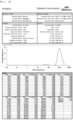
- Dv (10) is 593.3 ⁇ m
- Dv (50) is 1,094.635 ⁇ m
- Dv (90) is 2,039.527 ⁇ m , with a high swelling (9,610%) as shown in Table 1, while maintaining a uniform spherical bead shape.
- Dv (10) is 635.83 ⁇ m
- Dv (50) is 1,098.308 ⁇ m
- Dv (90) is 1,988.501 ⁇ m, with a high swelling (8,750%) as shown in Table 1, while maintaining a uniform spherical bead shape.
- Dv (10) is 456.188 ⁇ m
- Dv (50) is 754.190 ⁇ m
- Dv (90) is 2039.527 ⁇ m, with a high swelling (4,771%) as shown in Table 1, while maintaining a uniform spherical bead shape.
- the swelling of the spherical hyaluronic acid bead gels prepared in Examples 1, 2, and 3 and Comparative Examples 2 and 3 was measured.
- the swelling refers to a value obtained by dividing the weight of the swollen state in PBS by the weight of the dry state and multiplying it by 100. Therefore, it could be confirmed that the spherical hyaluronic acid bead gel had a high swelling of 771 to 9,610% and maintained its spherical shape well.
- the viscoelasticity was measured after sterilization at a frequency of 0.02 to 1 Hz using a rheometer.
- the spherical hyaluronic acid bead gels show similar values to major products currently sold in the market, and are expected to show appropriate usability, safety, and performance ( FIG. 6 ).
- the spherical hyaluronic acid bead gels have a high modulus, showing excellent viscoelasticity with excellent shape retention, and as the crosslinking rate increases, the complex modulus increases from 312.3 to 501.8.
- the complex modulus and storage modulus are preferably maintained at about 300 or more to 550 (Pa), and the loss modulus is preferably maintained at 70 or more and less than 150 (Pa) in order to suit a high complex modulus and storage modulus, which are advantages of a biphasic type, and a high storage modulus compared to a loss modulus, which is an advantage of a monophasic type.
- the spherical hyaluronic acid bead gels prepared in Examples 1, 2, and 3 were a biphasic type.
- the complex modulus was maintained at 300 to 510 (Pa)
- the storage modulus was maintained at 300 to 500 (Pa). Pa)
- the loss modulus was maintained at 70 to 140 (Pa).
- the existing biphasic type amorphous gel has high complex modulus and storage modulus of about 400 to 550 (Pa), while its loss modulus has a high value of about 150 to 350 (Pa).
- the existing biphasic type amorphous gel may have a relatively low ratio of storage modulus to loss modulus, resulting in low elasticity and resilience.
- the spherical hyaluronic acid bead gel prepared in the present disclosure had with a loss modulus maintained at 70 or more and less than 150 (Pa) and a loss modulus to a storage modulus of 1:15/7 to 1:50/7, which is a relatively higher storage modulus compared to the loss modulus compared to the existing biphasic type amorphous gel.
- the spherical hyaluronic acid bead gel according to the present disclosure exhibits a high complex modulus and storage modulus, while exhibiting a low loss modulus compared to existing biphasic type amorphous gels, and thus may exhibit excellent performance as a material for tissue repair.
- FIG. 7 The results of measuring the extrusion force of the spherical hyaluronic acid bead gels prepared in Examples 1, 2, and 3 are shown in FIG. 7 .
- the extrusion force was 9.85 ⁇ 3.64 N with a 27G needle
- the extrusion force was 9.45 ⁇ 2.79 N with a 27G needle
- the extrusion force was 9.69 ⁇ 3.18N with a 27G needle.
- the spherical hyaluronic acid bead gels prepared in Examples 1, 2, and 3 had a low extrusion force compared to the extrusion force of 10 to 20 N value of the major products currently sold in the market, resulting in excellent usability.
- the spherical hyaluronic acid bead gels prepared in Examples 1, 2, and 3 did not change in shape even after passing through a 27G needle and maintained their spherical shape well. From this, it can be seen that the shape of the spherical bead does not break even after the treatment with the needle, even at the maximum pressure output of 50 N in FIG. 7 , and the elasticity of the bead gel is excellent enough to maintain the spherical shape, so it is possible to maintain the spherical shape even when external shock is applied at the treatment area.
- the step of sterilizing the hyaluronic acid bead gel that has undergone the swelling step by swelling it again in an isotonic solution such as PBS, separating it according to size and preparing it alone or in a mixed preparation, or recovering it as a precipitate in an organic solvent or an aqueous solution of an organic solvent, drying it through nitrogen, air, heat, or reduced pressure, separating it according to shape or size according to the purpose of application, and sterilizing it by reswelling it in an isotonic solution such as PBS.
- an isotonic solution such as PBS
- the spherical hyaluronic acid bead gel according to the present disclosure which has various physical properties depending on the concentration of hyaluronic acid, the amount of crosslinking agent, alkali concentration, reaction temperature, reaction time, etc., has a transparent and uniform spherical shape, has a high swelling and excellent biocompatibility, is stable against heat and enzymes, and exhibits excellent viscoelasticity.
- the present disclosure may stably obtain bead gels of various sizes by adjusting the ratio of various oils and hyaluronic acid solutions without using emulsifiers, surfactants, solubilizers, etc.
- the present disclosure does not use a method of adding synthetic polymers such as PLGA and PCL, which are shell-forming materials, a method of preparing insoluble precipitates through ionic bonding, a method of precipitating in organic solvents, etc., but maintains the spherical shape through dispersed crosslinking in a hyaluronic acid solution dispersed in an oil phase without additives.
- the hyaluronic acid bead gel according to the present disclosure is transparent, has high swelling, and exhibits uniform quality properties. Therefore, the spherical hyaluronic acid bead gel according to the present disclosure may be used as a filler for wrinkle removal, an implant, a drug delivery matrix, a cell carrier, a cell scaffold, a joint injection, a cosmetic product, etc.
Landscapes
- Chemical & Material Sciences (AREA)
- Health & Medical Sciences (AREA)
- Chemical Kinetics & Catalysis (AREA)
- Medicinal Chemistry (AREA)
- Polymers & Plastics (AREA)
- Organic Chemistry (AREA)
- Life Sciences & Earth Sciences (AREA)
- Dispersion Chemistry (AREA)
- General Health & Medical Sciences (AREA)
- Molecular Biology (AREA)
- Engineering & Computer Science (AREA)
- Biochemistry (AREA)
- Materials Engineering (AREA)
- Polysaccharides And Polysaccharide Derivatives (AREA)
- Sustainable Development (AREA)
- Medicinal Preparation (AREA)
- Cosmetics (AREA)
Applications Claiming Priority (3)
| Application Number | Priority Date | Filing Date | Title |
|---|---|---|---|
| KR20210000632 | 2021-01-05 | ||
| KR1020210090011A KR102366394B1 (ko) | 2021-01-05 | 2021-07-08 | 고팽윤성 히알루론산 비드 겔 |
| PCT/KR2021/019626 WO2023282413A1 (ko) | 2021-01-05 | 2021-12-22 | 고팽윤성 히알루론산 비드 겔 |
Publications (2)
| Publication Number | Publication Date |
|---|---|
| EP4368643A1 true EP4368643A1 (de) | 2024-05-15 |
| EP4368643A4 EP4368643A4 (de) | 2025-07-09 |
Family
ID=80495575
Family Applications (1)
| Application Number | Title | Priority Date | Filing Date |
|---|---|---|---|
| EP21949450.7A Pending EP4368643A4 (de) | 2021-01-05 | 2021-12-22 | Stark quellbares hyaluronsäure-kügelchengel |
Country Status (4)
| Country | Link |
|---|---|
| EP (1) | EP4368643A4 (de) |
| KR (1) | KR102366394B1 (de) |
| CN (1) | CN117693532A (de) |
| WO (1) | WO2023282413A1 (de) |
Cited By (1)
| Publication number | Priority date | Publication date | Assignee | Title |
|---|---|---|---|---|
| EP4261245A4 (de) * | 2020-11-30 | 2024-12-25 | Yu Co., Ltd. | Verfahren zur herstellung eines hochquellbaren hyaluronsäure-perl-gels |
Families Citing this family (4)
| Publication number | Priority date | Publication date | Assignee | Title |
|---|---|---|---|---|
| CN114736651B (zh) * | 2022-04-15 | 2024-01-05 | 书香门地集团股份有限公司 | 一种韧性大豆蛋白胶黏剂及制备方法和应用 |
| KR20240077849A (ko) | 2022-11-25 | 2024-06-03 | 주식회사 현대바이오랜드 | 고농도 히알루론산을 유상 매트릭스에 포집한 유분산 화장료 조성물 |
| CN117018288B (zh) * | 2023-07-28 | 2025-10-03 | 四川大学 | 一种注射用透明质酸微球的制备方法 |
| CN118947908A (zh) * | 2024-09-05 | 2024-11-15 | 华熙生物科技股份有限公司 | 一种爆爆珠及其制备方法 |
Family Cites Families (11)
| Publication number | Priority date | Publication date | Assignee | Title |
|---|---|---|---|---|
| US4582865A (en) * | 1984-12-06 | 1986-04-15 | Biomatrix, Inc. | Cross-linked gels of hyaluronic acid and products containing such gels |
| IT1247472B (it) | 1991-05-31 | 1994-12-17 | Fidia Spa | Processo per la preparazione di microsfere contenenti componenti biologicamente attivi. |
| KR100548965B1 (ko) | 2003-11-03 | 2006-02-02 | 박성영 | 고분자 다당류를 주재로 한 미세구슬 및 그의 제조 방법 |
| KR101250846B1 (ko) * | 2005-07-04 | 2013-04-05 | 주식회사 엘지생명과학 | 히알루론산 가교물의 제조방법 |
| KR20080073419A (ko) * | 2007-02-06 | 2008-08-11 | 주식회사 핸슨바이오텍 | 의료용 히알루론산 유도체 마이크로비드 및 이의 제조 방법 |
| US9109051B2 (en) * | 2007-12-19 | 2015-08-18 | Evonik Goldschmidt Gmbh | Crosslinked hyaluronic acid in emulsion |
| CN101538377A (zh) * | 2008-03-20 | 2009-09-23 | 上海昊海生物科技有限公司 | 一种交联透明质酸凝胶及其制备方法 |
| CN101759881A (zh) * | 2008-10-08 | 2010-06-30 | 上海建华精细生物制品有限公司 | 一种医用交联透明质酸钠凝胶衍生产品及其制备方法 |
| US9662282B2 (en) | 2013-03-28 | 2017-05-30 | Kpt Ltd | Method for preparing round emulsion beads using low temperature cooling and the product thereof |
| CN108478875B (zh) * | 2018-03-16 | 2021-06-04 | 浙江科技学院 | 一种交联透明质酸凝胶微球的制备方法及其应用 |
| KR102108552B1 (ko) | 2018-05-15 | 2020-05-08 | 한국세라믹기술원 | 히알루론산 마이크로비드의 제조 방법 및 상기 히알루론산 마이크로비드의 용도 |
-
2021
- 2021-07-08 KR KR1020210090011A patent/KR102366394B1/ko active Active
- 2021-12-22 CN CN202180100223.3A patent/CN117693532A/zh active Pending
- 2021-12-22 EP EP21949450.7A patent/EP4368643A4/de active Pending
- 2021-12-22 WO PCT/KR2021/019626 patent/WO2023282413A1/ko not_active Ceased
Cited By (1)
| Publication number | Priority date | Publication date | Assignee | Title |
|---|---|---|---|---|
| EP4261245A4 (de) * | 2020-11-30 | 2024-12-25 | Yu Co., Ltd. | Verfahren zur herstellung eines hochquellbaren hyaluronsäure-perl-gels |
Also Published As
| Publication number | Publication date |
|---|---|
| CN117693532A (zh) | 2024-03-12 |
| KR102366394B1 (ko) | 2022-02-23 |
| WO2023282413A1 (ko) | 2023-01-12 |
| EP4368643A4 (de) | 2025-07-09 |
Similar Documents
| Publication | Publication Date | Title |
|---|---|---|
| EP4368643A1 (de) | Stark quellbares hyaluronsäure-kügelchengel | |
| JP6106686B2 (ja) | 水不溶性ゲル組成物およびその製造方法 | |
| EP3381438B1 (de) | Zusammensetzung zur injektion von hyaluronsäure mit hyaluronsäurederivat und dna-fraktion sowie verwendung davon | |
| EP2643029B1 (de) | Präparat und/oder formulierung aus mit polysacchariden vernetzten proteinen | |
| EP2199308B1 (de) | Quellbares vernetztes hyaluronsäurepulver und herstellungsverfahren dafür | |
| KR20080073419A (ko) | 의료용 히알루론산 유도체 마이크로비드 및 이의 제조 방법 | |
| WO2005112888A2 (en) | Methods for making injectable polymer hydrogels | |
| EP4261245A1 (de) | Verfahren zur herstellung eines hochquellbaren hyaluronsäure-perl-gels | |
| CA2394582A1 (en) | Water insoluble derivatives of polyanionic polysaccharides | |
| KR101250846B1 (ko) | 히알루론산 가교물의 제조방법 | |
| CN101502677A (zh) | 一种注射用交联透明质酸钠凝胶及其制备方法 | |
| JP7784138B2 (ja) | 超分岐ポリグリセロールポリグリシジルエーテルおよび多糖用の架橋物質としてのその使用 | |
| KR102577433B1 (ko) | 화장품 용도의 히알루론산 비드 제조 방법 | |
| CN106999626A (zh) | 生物相容性组合物以及制备方法 | |
| KR102682662B1 (ko) | 신규 히알루론산-키토산 하이드로겔의 제조 방법 및 이를 이용한 필러 조성물 | |
| KR102567151B1 (ko) | 화장품용 히알루론산 비드 | |
| KR102574864B1 (ko) | 온도감응성 히알루론산 비드 겔 제조 방법 | |
| EP4276138A1 (de) | Wärmeempfindliches hyaluronsäurekügelchengel | |
| Nagpal et al. | Pharmaceutical applications of gellan gum | |
| KR20250077727A (ko) | 폴리-l-락틱산 필러의 제조방법 및 그 제조방법으로 제조된 폴리-l-락틱산 필러 | |
| HK40072935A (en) | A hyperbranched polyglycerol polyglycidyl ether and its use as crosslinker for polysaccharides | |
| HK40072935B (zh) | 一种超支化聚甘油多缩水甘油醚及其作为多糖交联剂的用途 | |
| IT202000004093A1 (it) | Idrogeli ibridi di acido ialuronico reticolato e processo di produzione | |
| WO2021133190A1 (ru) | Способ получения модифицированного гиалуронана | |
| HK40009300A (en) | Preparation and/or formulation of proteins cross-linked with polysaccharides |
Legal Events
| Date | Code | Title | Description |
|---|---|---|---|
| STAA | Information on the status of an ep patent application or granted ep patent |
Free format text: STATUS: THE INTERNATIONAL PUBLICATION HAS BEEN MADE |
|
| PUAI | Public reference made under article 153(3) epc to a published international application that has entered the european phase |
Free format text: ORIGINAL CODE: 0009012 |
|
| STAA | Information on the status of an ep patent application or granted ep patent |
Free format text: STATUS: REQUEST FOR EXAMINATION WAS MADE |
|
| 17P | Request for examination filed |
Effective date: 20231213 |
|
| AK | Designated contracting states |
Kind code of ref document: A1 Designated state(s): AL AT BE BG CH CY CZ DE DK EE ES FI FR GB GR HR HU IE IS IT LI LT LU LV MC MK MT NL NO PL PT RO RS SE SI SK SM TR |
|
| DAV | Request for validation of the european patent (deleted) | ||
| DAX | Request for extension of the european patent (deleted) | ||
| A4 | Supplementary search report drawn up and despatched |
Effective date: 20250611 |
|
| RIC1 | Information provided on ipc code assigned before grant |
Ipc: C08J 3/24 20060101ALI20250604BHEP Ipc: C08J 3/12 20060101ALI20250604BHEP Ipc: C08J 3/075 20060101ALI20250604BHEP Ipc: C08L 5/08 20060101ALI20250604BHEP Ipc: C08B 37/00 20060101ALI20250604BHEP Ipc: C08B 37/08 20060101AFI20250604BHEP |
|
| STAA | Information on the status of an ep patent application or granted ep patent |
Free format text: STATUS: EXAMINATION IS IN PROGRESS |