EP4372943A2 - System und verfahren zum übergang zu backup-strompooling - Google Patents
System und verfahren zum übergang zu backup-strompooling Download PDFInfo
- Publication number
- EP4372943A2 EP4372943A2 EP23174210.7A EP23174210A EP4372943A2 EP 4372943 A2 EP4372943 A2 EP 4372943A2 EP 23174210 A EP23174210 A EP 23174210A EP 4372943 A2 EP4372943 A2 EP 4372943A2
- Authority
- EP
- European Patent Office
- Prior art keywords
- power
- backup power
- power supply
- transformer
- backup
- Prior art date
- Legal status (The legal status is an assumption and is not a legal conclusion. Google has not performed a legal analysis and makes no representation as to the accuracy of the status listed.)
- Pending
Links
Images



Classifications
-
- H—ELECTRICITY
- H02—GENERATION; CONVERSION OR DISTRIBUTION OF ELECTRIC POWER
- H02J—ELECTRIC POWER NETWORKS; CIRCUIT ARRANGEMENTS OR SYSTEMS FOR SUPPLYING OR DISTRIBUTING ELECTRIC POWER; SYSTEMS FOR STORING ELECTRIC ENERGY
- H02J9/00—Circuit arrangements for emergency or stand-by power supply, e.g. for emergency lighting
- H02J9/04—Circuit arrangements for emergency or stand-by power supply, e.g. for emergency lighting in which the distribution system is disconnected from the normal source and connected to a standby source
- H02J9/06—Circuit arrangements for emergency or stand-by power supply, e.g. for emergency lighting in which the distribution system is disconnected from the normal source and connected to a standby source with automatic change-over, e.g. UPS systems
- H02J9/062—Circuit arrangements for emergency or stand-by power supply, e.g. for emergency lighting in which the distribution system is disconnected from the normal source and connected to a standby source with automatic change-over, e.g. UPS systems for AC powered loads
-
- H—ELECTRICITY
- H02—GENERATION; CONVERSION OR DISTRIBUTION OF ELECTRIC POWER
- H02J—ELECTRIC POWER NETWORKS; CIRCUIT ARRANGEMENTS OR SYSTEMS FOR SUPPLYING OR DISTRIBUTING ELECTRIC POWER; SYSTEMS FOR STORING ELECTRIC ENERGY
- H02J9/00—Circuit arrangements for emergency or stand-by power supply, e.g. for emergency lighting
- H02J9/04—Circuit arrangements for emergency or stand-by power supply, e.g. for emergency lighting in which the distribution system is disconnected from the normal source and connected to a standby source
- H02J9/06—Circuit arrangements for emergency or stand-by power supply, e.g. for emergency lighting in which the distribution system is disconnected from the normal source and connected to a standby source with automatic change-over, e.g. UPS systems
- H02J9/068—Electronic means for switching from one power supply to another power supply, e.g. to avoid parallel connection
-
- H—ELECTRICITY
- H02—GENERATION; CONVERSION OR DISTRIBUTION OF ELECTRIC POWER
- H02H—EMERGENCY PROTECTIVE CIRCUIT ARRANGEMENTS
- H02H9/00—Emergency protective circuit arrangements for limiting excess current or voltage without disconnection
- H02H9/02—Emergency protective circuit arrangements for limiting excess current or voltage without disconnection responsive to excess current
-
- H—ELECTRICITY
- H02—GENERATION; CONVERSION OR DISTRIBUTION OF ELECTRIC POWER
- H02J—ELECTRIC POWER NETWORKS; CIRCUIT ARRANGEMENTS OR SYSTEMS FOR SUPPLYING OR DISTRIBUTING ELECTRIC POWER; SYSTEMS FOR STORING ELECTRIC ENERGY
- H02J3/00—Circuit arrangements for AC mains or AC distribution networks
- H02J3/001—Arrangements for handling faults or abnormalities, e.g. emergencies or contingencies
- H02J3/0012—Arrangements for handling faults or abnormalities, e.g. emergencies or contingencies characterised by the contingency detection means in AC networks, e.g. using phasor measurement units [PMU], synchrophasors or contingency analysis
-
- H—ELECTRICITY
- H02—GENERATION; CONVERSION OR DISTRIBUTION OF ELECTRIC POWER
- H02J—ELECTRIC POWER NETWORKS; CIRCUIT ARRANGEMENTS OR SYSTEMS FOR SUPPLYING OR DISTRIBUTING ELECTRIC POWER; SYSTEMS FOR STORING ELECTRIC ENERGY
- H02J3/00—Circuit arrangements for AC mains or AC distribution networks
- H02J3/12—Arrangements for adjusting voltage in AC networks by changing a characteristic of the network load
- H02J3/14—Arrangements for adjusting voltage in AC networks by changing a characteristic of the network load by switching loads on to, or off from, the networks, e.g. progressively balanced loading
-
- H—ELECTRICITY
- H02—GENERATION; CONVERSION OR DISTRIBUTION OF ELECTRIC POWER
- H02J—ELECTRIC POWER NETWORKS; CIRCUIT ARRANGEMENTS OR SYSTEMS FOR SUPPLYING OR DISTRIBUTING ELECTRIC POWER; SYSTEMS FOR STORING ELECTRIC ENERGY
- H02J3/00—Circuit arrangements for AC mains or AC distribution networks
- H02J3/28—Arrangements for balancing of the load in networks by storage of energy
- H02J3/32—Arrangements for balancing of the load in networks by storage of energy using batteries or super capacitors with converting means
-
- H—ELECTRICITY
- H02—GENERATION; CONVERSION OR DISTRIBUTION OF ELECTRIC POWER
- H02J—ELECTRIC POWER NETWORKS; CIRCUIT ARRANGEMENTS OR SYSTEMS FOR SUPPLYING OR DISTRIBUTING ELECTRIC POWER; SYSTEMS FOR STORING ELECTRIC ENERGY
- H02J3/00—Circuit arrangements for AC mains or AC distribution networks
- H02J3/38—Arrangements for feeding a single network from two or more generators or sources in parallel; Arrangements for feeding already energised networks from additional generators or sources in parallel
- H02J3/381—Dispersed generators
-
- H—ELECTRICITY
- H02—GENERATION; CONVERSION OR DISTRIBUTION OF ELECTRIC POWER
- H02J—ELECTRIC POWER NETWORKS; CIRCUIT ARRANGEMENTS OR SYSTEMS FOR SUPPLYING OR DISTRIBUTING ELECTRIC POWER; SYSTEMS FOR STORING ELECTRIC ENERGY
- H02J3/00—Circuit arrangements for AC mains or AC distribution networks
- H02J3/38—Arrangements for feeding a single network from two or more generators or sources in parallel; Arrangements for feeding already energised networks from additional generators or sources in parallel
- H02J3/388—Arrangements for the handling of islanding, e.g. for disconnection or for avoiding the disconnection of power
-
- H—ELECTRICITY
- H02—GENERATION; CONVERSION OR DISTRIBUTION OF ELECTRIC POWER
- H02J—ELECTRIC POWER NETWORKS; CIRCUIT ARRANGEMENTS OR SYSTEMS FOR SUPPLYING OR DISTRIBUTING ELECTRIC POWER; SYSTEMS FOR STORING ELECTRIC ENERGY
- H02J9/00—Circuit arrangements for emergency or stand-by power supply, e.g. for emergency lighting
- H02J9/04—Circuit arrangements for emergency or stand-by power supply, e.g. for emergency lighting in which the distribution system is disconnected from the normal source and connected to a standby source
- H02J9/06—Circuit arrangements for emergency or stand-by power supply, e.g. for emergency lighting in which the distribution system is disconnected from the normal source and connected to a standby source with automatic change-over, e.g. UPS systems
-
- H—ELECTRICITY
- H02—GENERATION; CONVERSION OR DISTRIBUTION OF ELECTRIC POWER
- H02J—ELECTRIC POWER NETWORKS; CIRCUIT ARRANGEMENTS OR SYSTEMS FOR SUPPLYING OR DISTRIBUTING ELECTRIC POWER; SYSTEMS FOR STORING ELECTRIC ENERGY
- H02J2101/00—Supply or distribution of decentralised, dispersed or local electric power generation
- H02J2101/20—Dispersed power generation using renewable energy sources
-
- H—ELECTRICITY
- H02—GENERATION; CONVERSION OR DISTRIBUTION OF ELECTRIC POWER
- H02J—ELECTRIC POWER NETWORKS; CIRCUIT ARRANGEMENTS OR SYSTEMS FOR SUPPLYING OR DISTRIBUTING ELECTRIC POWER; SYSTEMS FOR STORING ELECTRIC ENERGY
- H02J2105/00—Networks for supplying or distributing electric power characterised by their spatial reach or by the load
- H02J2105/50—Networks for supplying or distributing electric power characterised by their spatial reach or by the load for selectively controlling the operation of the loads
- H02J2105/57—Networks for supplying or distributing electric power characterised by their spatial reach or by the load for selectively controlling the operation of the loads according to a pre-established time schedule
Definitions
- a group of loads that consume large amounts of power is typically connected to a power grid.
- the group of loads may further connect to a backup power system to maintain operation in the event of a power grid failure.
- the backup power system may include a plurality of backup power sources, each source connected to a respective load of the group of loads, and capable of generating sufficient power to maintain the operation of its respective load.
- the backup power sources may be pooled with one another so that utilization of the backup power system is maximized. In order to pool back power sources, it is necessary to connect the backup power sources with one another. However, the separate backup power sources may be unsynchronized, which prevents the power sources from being connected to one another. Furthermore, connecting the backup power sources simultaneously can result in an inrush current that is harmful to the switching circuitry that connects the backup power sources.
- the present disclosure provides backup power systems and methods of operation that transitions the backup power system from individual backup power sources powering respective loads to a power pooling configuration in which the individual backup power sources are connected to one another so that any load of the system may be powered by any one or combination of the backup power sources.
- the systems and methods avoid difficulties due to synchronization and inrush current by staggering the connection of the individual backup power sources over a predetermined amount of time.
- a method for supplying backup power after failure of a primary power source includes: controlling, by one or more controllers, a first switch to disconnect a first backup power supply from a first transformer and a second switch to disconnect a second backup power supply from a second transformer, wherein the first transformer connects the first backup power supply to a shared power line and wherein the second transformer connects the second backup power supply to the shared power line; and controlling, by the one or more controllers, the first backup power supply to supply power to a first load and the second backup power supply to supply power to a second load; at a predetermined first time after the first backup power supply begins supplying power to a first load and the second backup power supply begins supplying power to a second load, controlling, by the one or more controllers, the first switch to reconnect the first backup power supply to the first transformer; and at a predetermined second time later than the first time, controlling, by the one or more controllers, the second switch to reconnect the second backup power supply to the second transformer.
- controlling the first switch to reconnect the first backup power supply to the first transformer may include gradually adjusting a firing angle applied to the first switch until the firing angle is 0°.
- gradually adjusting a firing angle applied to the first switch may include setting the firing angle to an initial value close to 180° at the predetermined first time, and setting the firing angle to 0° before the predetermined second time.
- controlling the second switch to reconnect the second backup power supply to the second transformer may include determining whether the second transformer is energized by power received from the first backup power supply over the shared power line, in response to the second transformer not being energized, at the predetermined second time, gradually adjusting the firing angle applied to the second switch until the firing angle is 0°, and in response to the second transformer being energized, synchronizing the second backup power supply with the second transformer and reconnecting the synchronized second backup power supply to the second transformer.
- the method may further include controlling, by the one or more controllers, an islanding switch to disconnect the shared power line from the primary power source prior to connection of the first backup power supply to the first transformer.
- the predetermined first time and the predetermined second time may be about ten seconds apart.
- the shared power line may be connected to one or more additional backup power sources, and the method may further include controlling, by the one or more controllers, respective switches of each of the additional backup power supplies to connect the additional backup power supplies to the shared power line at respective predetermined times, wherein each respective predetermined time is a different time and is different from the predetermined first and second times.
- controlling the respective switch may include determining whether a respective transformer connected to the respective switch is energized by power received over the shared power line, in response to the respective transformer not being energized, at a predetermined respective time, gradually adjusting the firing angle applied to the respective switch until the firing angle is 0°, and in response to the respective transformer being energized, synchronizing the respective backup power supply connected to the respective switch with the respective transformer, and reconnecting the synchronized respective backup power supply to the respective transformer.
- the method may further include controlling, by the one or more controllers, the first backup power supply to supply power to the first load at a first power rating prior to the predetermined first time, and controlling, by the one or more controllers, the first backup power supply to supply power to the shared power line at a second power rating after the predetermined second time, wherein the second power rating is lower than the first power rating.
- supplying power to the first load at a first power rating may include supplying power from each of a first power source and a second power source
- supplying power to the first load at a second power rating may include supplying power from only the first power source
- the first power source may include a renewable energy source
- the second power source may include one or more batteries.
- Another aspect of the disclosure is directed to a system including: a shared power line; a plurality of transformers, each transformer connected to the shared power line; a plurality of backup power supplies, each backup power supply connected to the shared power line through a respective transformer; and one or more controllers configured to, for each respective backup power supply of the plurality of backup power supplies: after passage of a respective predetermined amount of time, determine whether a respective transformer connected to the respective backup power supply is energized, wherein the respective predetermined amount of time is different from each of plurality of backup power supplies; in response to the respective transformer being energized: synchronize the backup power supply with the respective transformer; and upon synchronization of the respective backup power supply with the respective transformer, set a respective switch positioned between the respective backup power supply and the respective transformer to a fully closed state; and in response to the respective transformer not being energized, transition the respective switch from a fully open state to the fully closed state according to an inrush current limiting scheme.
- each respective backup power supply may be an uninterruptable power supply configured to power a respective load in response to failure of a primary power source, and the respective load powered by the respective backup power supply may include one or more electrical components of a datacenter.
- each uninterruptable power supply may include a first renewable power source and a second power source, and the uninterruptable power supply may be configured to supply power to the respective load at a first power rating using the first and second power sources and at a second power rating using only the first power source.
- each respective power source may include a respective renewable power source and a respective battery configured to supplement power supplied by the renewable power source, and a run time of the battery may be greater than or equal to a longest predetermined amount of time of the respective predetermined amounts of time.
- the respective renewable power source may include at least one of a hydrogen fuel cell, a biofuel cell, or a solar cell.
- a difference between the first power rate and the second power rate may correspond to an over-subscription ratio of the datacenter.
- the one or more controllers may be configured to, in response to detection of the failure of the primary power source: control each of the respective switches to disconnect the plurality of backup power supplies from the shared power line; and for each respective backup power supply, control activation of a respective inverter connected to the respective backup power supply and configured to convert direct current power of the respective backup power supply into alternating current power for powering the respective load.
- the one or more controllers may be configured to, in response to detection of the failure of the primary power source, control an islanding switch to disconnect the shared power line from the primary power source prior to an earliest one of the respective predetermined amounts of time.
- the inrush current limiting scheme may involve setting a firing angle applied to the respective switch to an initial value close to 180°, and gradually reducing the firing angle until the firing angle is 0°.
- the shared power line may be a medium voltage power bus
- the first backup power supply may include a low voltage power supply
- the first transformer may be configured to interface the medium voltage power bus with the low voltage power supply.
- individual backup power sources are connected to respective loads and to a shared power line, such as a medium voltage power bus.
- the individual backup power sources are first connected to their respective loads immediately upon failure of the primary power source to ensure uninterrupted power supply at each load. Then, over a duration of time, the individual backup power sources are connected to the shared power line to facilitate power pooling among the loads. Connections to the shared power line may be performed in a staggered fashion to avoid overloading the power line with inrush current and to synchronize the backup power supplies with one another.
- the staggered connection of backup power supplies may be preprogrammed into the system.
- a transformer connecting the backup power supply and shared power line may be energized.
- the backup power supply may operate at low voltage whereas the shared power line may be a medium voltage bus.
- energizing the transformer may be done gradually by opening and closing a switch between backup power supply and transformer according to a firing angle.
- the firing angle may be compared to a duty cycle of a pulse width modulator in which a half-cycle of the output of the backup power supply is equal to the period of the pulse width modulation signal, such that some energy from the power supply is transferred for each of the positive and negative phases of its cycle.
- the duty cycle may begin small, and gradually increase until the switch remains fully closed.
- the firing angle may begin at its maximum in a half AC cycle and gradually decrease all the way to zero degrees.
- the backup power supplies connected to the shared power line may include main backup power sources and auxiliary backup power sources.
- auxiliary backup power sources are smaller and much less expensive than the main backup sources, but have much shorter runtime.
- the auxiliary backup power sources may include batteries, while the main backup power sources may include more expensive energy sources, such as fuel cells and other renewable resources.
- auxiliary backup power sources for each load in the system avoids the need for the power rating of each main backup power source to equal to the maximum load demand of the corresponding load, since the auxiliary backup power sources can make up for any shortfall of the main backup power sources in the short term before connection of the main backup power sources over the shared power line, and power pooling can make up for the shortfall in the long term after connection of the main backup power sources over the shared power line. Furthermore, since each main backup power source does not need to meet the maximum load demand of its corresponding load, the main backup power sources can be made smaller than otherwise allowable. This can make the use of the main backup power sources more cost effective.
- Fig. 1 is a block diagram of an example backup power system 100 including a plurality of backup power supplies 110, 111, 112 connected to a shared power line 120 through a plurality of respective transformers 130, 131, 132.
- the backup power system 100 may be connected to a primary power source 140, such as a utility grid, through the shared power line 120.
- Each backup power supply 110 may be positioned between the primary power source 140 and a respective load of a plurality of loads 150, 151, 152 powered by the backup power system 100.
- a single backup power supply 110 is shown in detail, although it should be understood that the single backup power supply 110 may be representative of the other backup power supplies 111, 112 of the backup power system 100.
- the backup power supply 110 may include a respective backup power source 160 configured to store energy for use to power the plurality of loads 150, 151, 152 in the event of a primary power source failure or disconnection.
- the backup power supply 110 may also include a respective inverter 165 configured to convert a flow of energy from the backup power source 160 from a direct current to an alternating current in order to power the plurality of loads 150, 151, 152.
- the backup power supplies 110, 111, 112 may collectively function as a microgrid for the plurality of loads 150, 151, 152 in the absence of power from the primary power source 140.
- the backup power supply 110 is also switchably connectable to the shared power line 120 through a respective switch 180.
- the switch 180 may be an intelligent static switch (ISS). In operation, when the primary power source 140 is connected to and powering the plurality of loads 150, 151, 152, the switch 180 may be closed. In some examples, such as the example of Fig. 1 , closing the switch 180 may also connect the primary power source 140 to the backup power source 160 so that power from the primary power source 140 may be used to recharge the backup power source 160.
- ISS intelligent static switch
- the switch 180 may be opened in order to initially isolate the backup power supply 110 from the other backup power supplies 111, 112.
- the backup power source 160 may still be connected to the corresponding load 150 of the backup power supply 110 and may be used to power the corresponding load 150.
- the switches 180 may subsequently be closed again to reconnect the backup power supply with the other backup power supplies 111, 112 over the shared power line 120, thereby causing the backup power supplies 110, 111, 112 to be pooled together.
- its respective backup power source 160 may then provide power to all of the loads 150, 151, 152 of the reconnected backup power supplies 110, 111, 112.
- each backup power source 160 may include one or more main backup energy sources 162, which may be renewable energy sources such as hydrogen fuel cells, biofuel cells, other types of renewable fuel cells, solar cells, and so on. Renewable energy sources may be environmentally preferable over other energy sources such as diesel generators. Additionally or alternatively, each backup power source 160 may include one or more auxiliary energy sources 164, such as one or more batteries. The auxiliary energy sources 164 may be provided to supplement the main backup energy sources 162 of the backup power source 160, such that the backup power source 160 may have a first power rating while the auxiliary energy sources 164 are operating and a second power rating lower than the first power rating while the auxiliary energy sources 164 are not operating or have been fully or partially depleted.
- main backup energy sources 162 may be renewable energy sources such as hydrogen fuel cells, biofuel cells, other types of renewable fuel cells, solar cells, and so on. Renewable energy sources may be environmentally preferable over other energy sources such as diesel generators.
- each backup power source 160 may include one or more auxiliary energy sources 164, such as one or
- the first and second power ratings may be selected based at least in part on the sizes of the respective loads 150, 151, 152 of the system 100.
- the first power rating may be individually selected for each respective backup power source 160 to be equal to the installed total maximum load.
- the second power rating may be collectively determined for all of the backup power sources based on a total maximum possible power consumption for the installed load.
- the over-subscription ratio may define a percentage difference between the first power rating and the second power rating.
- the maximum load of the system may be 12 megawatts (MW), but the power consumption of the installed may be much less than 12 MW, such as 9 MW.
- each of loads 1-8 may have a power consumption of 450 kW
- each of loads 9-12 may have a power consumption of 400 kW
- each of loads 13-16 may have a power consumption of 500 kW
- each of loads 17-18 may have a load consumption of 350 kW
- each of loads 19-20 may have a power consumption of 550 kW, thereby totaling a total power consumption of 9 MW.
- the backup power over-subscription ratio may be 33%, representing the percentage difference between the maximum possible load at 12 MW and the maximum power consumption of the loads at 9 MW, whereby 12 MW is 33% more than 9 MW.
- the batteries included in each backup power supply may be configured to contribute at least 150 kW - and up to 600 kW - of power for a relatively short duration, while the remaining energy sources of the backup power supply may be configured to contribute 450 kW of power for a relatively longer duration.
- each individual backup power supply may have a first power rating of 600 kW to meet maximum load consumption demands over the short duration of time, and a second power rating of 450 kW to meet typical load consumption demands over the longer duration of time.
- the short duration of time may correspond to a time that the backup power supply 110 is expected to operate in isolation from the other backup power supplies 111, 112 of the system 100. As such, for the short duration of time, the backup power supply 110 relies on the one or more auxiliary energy sources 164 to handle any power consumption demands of the corresponding load 150.
- the long duration of time may correspond to a time that the backup power supply 110 is expected to be connected to and operate in concert with the other backup power supplies 111, 112 of the system 100, such that power pooling techniques may instead be used for the backup power supply 110 to deliver the average load power.
- the transformers 130, 131, 132 included in the system 100 may be provided to interface a shared power line and backup power supplies having different voltage levels.
- the backup power supplies 110, 111, 112 may operate at a relatively low voltage
- the shared power line may operate at a relatively higher voltage. This may be advantageous for mitigating current levels or avoiding excess current at the shared power line 140.
- the shared power line may be a medium-voltage (MV) power line having a voltage rating between about 10 kV to 35 kV
- the backup power supplies may be low-voltage (LV) power supplies having a voltage rating below 10 kV, in some cases below 1 kV, and in some cases 480 V or lower.
- each transformer 130, 131, 132 may be an MV/LV transformer.
- the system 100 is further shown to include an islanding switch 170 positioned between the shared power line 120 and the primary power source 140.
- the islanding switch 170 may disconnect the primary power source 140 from the backup power system 100 to avoid power being fed back from the system 100 to the primary power source 140. Disconnection of the primary power source 140 may occur after or at the same time as opening the switch 180.
- Operations of the components of the backup power supplies 110, 111, 112 as well as the islanding switch 170 may be controlled by one or more controllers included in the system 100.
- a single controller 190 shared by the backup power supplies 110, 111, 112 and other system components is shown.
- each component and each backup power supply may include its own respective controller, and further that the respective controllers may or may not be capable of communication with one another.
- the controller 190 may include one or more processors 192 and memory 194.
- the memory 194 may include one or more storage devices, such as a non-transitory computer-readable storage medium which may store programs, modules and data structures, or any subset thereof.
- the one or more processors 192 may be configured to access data stored in the memory 194 and to execute instructions according to one or more programs stored therein or in an external device accessed through one or more input/output components 196.
- the one or more processors 192 may be capable of executing any of the example routines described in the present disclosure.
- the plurality of loads 150, 151, 152 may be one or more power-consuming components of a data center.
- each load may include any one or combination of servers and computing devices, cooling equipment, power distribution equipment, lighting equipment, as well as other power-consuming equipment that may be housed within the data center building.
- each backup power supply 110, 111, 112 may be a respective uninterruptable power supply (UPS) included in the data center.
- UPS may be operated at a low-voltage rating such as 120V, 208 V or 480 V
- the shared power line may be a power bus operating at a medium-voltage rating such as 10 kV, 15 kV or 25 kV.
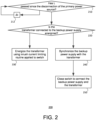
- Fig. 2 is a flow diagram illustrating an example routine 200 that may be executed by an i th backup power supply from among a plurality of backup power supplies, such as any one of the backup power supplies 110, 111, 112 of the example system 100 of Fig. 1 .
- the routine 200 may be executed by a controller, such as controller 190 shown in the example system 100 of Fig. 1 , or another processing unit in communication with the backup power supply, in response to disconnection of a primary power source from the system to which the backup power is to be supplied.
- the routine begins at block 210 with a determination of whether a predetermined amount of time t i has passed since the disconnection of the primary power source from the system. If the predetermined amount of time has not passed, operations may continue at block 212 with a time delay ⁇ t, and then after the time delay, operations may return to block 210. If the predetermined amount of time t i has passed, operations may continue at block 220. In effect, the routine may ensure that the operations of block 220 and onward are not executed until after the passage of the predetermined amount of time t i .
- Energization of the transformer may be a gradual process in order to limit inrush current from the backup power supply.
- An inrush current limiting routine may involve gradually increasing a duty cycle of a signal to close the switch between the backup power source and the transformer so that the power transferred from the backup power source to the transformer is slowly and gradually increased.
- Figs. 3A-3C illustrate sample snapshots of switch operation over time for gradually increasing the power transferred from the backup power source to the transformer.
- Each of Figs. 3A-3C shows a respective cycle of alternating current output by the backup power supply from a start time of the cycle T 0 to a completion time of the cycle T C .
- each cycle is shown as a sine wave, although other waveforms may be used. Also, in the example of Figs.
- a positive voltage is output during a first half of each cycle from T 0 until T C/2
- a negative voltage is output during a second half of each cycle from T C/2 until Tc, although in other examples, an order of the respective half-cycles may be reversed.
- a pair of vertical lines 311, 312 are provided to illustrate a time that the switch connecting the backup power supply and the transformer is closed, thereby allowing energy to pass from the backup power supply to the transformer. Additionally, in each example snapshot, the switch is opened at the end of each half-cycle, thereby cutting off the energy transfer.
- the time at which the switch is closed is commonly referred to as the turning-on angle or firing angle ⁇ , whereby a firing angle of 180° represents closing of the switch at the end of each half-cycle and thus no power transfer and no energization of the transformer, and whereby a firing angle of 0° represents closing of the switch at the beginning of each half-cycle and thus a complete power transfer and full energization of the transformer.
- the firing angle ⁇ is gradually transitioned from close to 180° to 0°.
- Fig. 3A is a snapshot of an alternating current cycle at a beginning of the energization operations of block 230, which begins by applying a firing angle close to 180° to the switch.
- the switch For each alternating current cycle output by the backup power source, the switch is closed for only a tail end of each half-cycle, meaning that only the power output at the respective tail-ends of the alternating current half-cycles are passed from the backup power source through the switch and to the transformer. This effectively limits the current received at the transformer at the initial time shown in Fig. 3A .
- Fig. 3B is a snapshot of an alternating current cycle at about a middle of the energization operations of block 230, by which time the firing angle has been reduced to about 100°.
- the switch is closed for nearly half of each half-cycle, meaning that nearly half of the power output by the backup power source is passed through the switch and to the transformer. This effectively maintains some limit on the current received at the transformer, such it is not as limited as at the initial time.
- Fig. 3C is a snapshot of an alternating current cycle at the end of the energization operations of block 230, by which time the firing angle has been reduced all the way to 0°. At this time, the full alternating current cycle output by the backup power source is passed through the switch and to the transformer. Effectively, there is no more limit on the current received at the transformer, and the transformer may be fully energized. Thus, transformer inrush current is limited by gradually increasing the voltage across the transformer in accordance with the decreasing of the firing angle
- the duration of the energization operations of block 230 which is also the amount of time between the snapshot of Fig.3A and that of Fig. 3C , may be predetermined and preprogrammed into the routine 200. For instance, in some applications, a duration of between several milliseconds to 1 second may be used, although the duration could be even more than 1 second.
- operations may continue at block 240 with synchronization of the backup power supply with the transformer.
- the synchronization operations may be executed using any conventional synchronization techniques or system known in the art, such as using a load bus synchronization (LBS) system.
- LBS load bus synchronization
- the switch may be closed to connect the backup power supply and transformer.
- the inverter of the backup power supply may be controlled such that power from the backup power supply is almost equally shared among the backup power supply and any other backup power supply that is reconnected to the shared power line.
- Power sharing among of the backup power supplies may be controlled using a known power sharing control technique, such as droop control.
- the predetermined amount of time t i after which the operations of block 220 and onward are executed may be preprogrammed into the routine 200. Furthermore, the predetermined amount of time t i may be different for each of the plurality of backup power supplies, such that the operations of the routine 200 from block 220 and onward may be executed for each backup power supply at a different time. For instance, cascading time delays may be assigned to each backup power supply so that each backup power supply is connected to the shared power line at a separate time. The amount of amount of time separating connection of each backup power supply may be predetermined, and may vary depending on the particular requirements and configurations of a given system.
- the amount of time separating connection of each backup power supply should not exceed X/N seconds, although less time may also be acceptable.
- the time delay may be on the order of about 10 seconds.
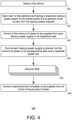
- Fig. 4 is a flow diagram illustrating an example routine 400 that may be executed by system including a plurality of backup power supplies, such as the example system 100 of Fig. 1 .
- the routine 400 may begin with a utility failure, such as disconnection of the primary power source from the system.
- the utility failure is detected 410.
- the detection may be performed by one or more sensors included in the system, such as one or more voltage sensors, one or more current sensors, other types of power failure sensors known in the art, or a combination thereof.
- one or more system controllers may control the switches connected to the shared power line. Controlling the switches may involve opening each of the switches connecting a respective backup power supply to the shared power line so that each backup power supply independently provides power to its respective load. In some examples, controlling the switches may further involve opening an islanding switch connected between the shared power line and the primary power source in order to prevent power from being fed back from the system to the primary power source.
- the one or more system controllers may control a first amount of power to be supplied from each backup power supply to its respective load.
- the first amount of power may meet a first power rating for maximum load consumption demands of the respective load.
- Supplying the first amount of power may involve utilizing a combination of long-term power sources and short-term power sources.
- a long-term power source may be a renewable power source, such as a fuel cell, whereas a short-term power source may be a battery.
- the fuel cell may be capable of providing power at a second power rating that is lower than the first power rating for a relatively long amount of time, such as an amount of time for which the utility failure is expected to last or longer if the power source can be refueled during the utility failure.
- the amount of time may be about 24 hours, about 48 hours, about 72 hours, or another amount of time.
- the battery may be capable of increasing the power rating for a relatively short amount of time, such as an amount of time for which the routine of 400 is expected to last.
- the amount of time may be about 20 minutes, about 30 minutes, about an hour, or another amount of time.
- the one or more system controllers may control each backup power supply to provide the first amount of power to its corresponding load over a separate power line that is disconnected from the shared power line.
- Providing power from each backup power supply may involve turning on an inverter at the backup power supply to convert a direct current of the backup power source to an alternating current that can be used to power the corresponding load.
- the inverters may be turned on at about the same time as the switches are opened, either before the switches are opened and sufficiently close in time to opening the switches so as to avoid inrush current at the shared power line, or after the switches are opened and sufficiently close in time to the utility failure to avoid power supply interruption at the plurality of loads.
- the backup power supply switches may be turned off and inverter switches turned on at approximately a first time, and the islanding switch may be turned off at a second time that is later than the first time.
- operations may continue at each of the backup power supplies with the operations of routine 200 of Fig. 2 . This may involve waiting for passage of a certain amount of time, such as 10 seconds, followed by determining whether the transformer connecting the backup power supply to the shared power line is energized, and then either energizing the transformer before closing the switch if the transformer is not energized, or synchronizing the backup power supply with the transformer before closing the switch if the transformer is already energized.
- a certain amount of time such as 10 seconds
- the transformer will be determined not to be energized. If the first backup power supply succeeds in energizing the transformer, connecting to the shared power line, and providing power to the shared power line, then this success should result in the other transformers connected to the shared power line also being energized. In such a case, each of the other backup power supplies may be able to skip the gradual increase of backup power fed to the transformer. However, since the transformer is already energized and has its own phase independent of the backup power source, the backup power source will need to be synchronized with the transformer before closing the switch and electrically connecting the backup power supply to the transformer.
- each of the backup power supplies should be properly connected to the shared power line of the system and synchronized with one another, making power sharing possible between the loads.
- the one or more system controllers may control a second amount of power to be supplied from all of the backup power supplies to the plurality of loads.
- the second amount of power may be at the second power rating that is lower than the first power rating, and may involve oversubscribing the power of the main backup power source after power pooling on the shared power line.
- the auxiliary backup power source may continue to be used as needed after connection of the backup power supplies through the shared power line, such as to deliver enough power for a brief amount of time, such as during load transient events.
- Fig. 5 is a chart illustrating a timing sequence 500 for switches of a microgrid.
- Fig. 5 only three backup power supplies of the microgrid are shown, but it should be understood that the microgrid may contain more or fewer backup power supplies.
- each of the switches connecting the backup power supplies to the shared power line are opened, thereby disconnecting the backup power supplies from the shared power line.
- all inverters connected to the backup power supplies are turned on to provide power from the backup power supplies to the respective loads of the microgrid.
- the islanding switch is switched off.
- the transformer is expected to be fully energized and in phase with the first backup power supply 501 and the switch remains closed. Since the switch is fully closed, power may be provided from the first backup power supply 501 to the shared power line and to the transformers of the other backup power supplies 502, 503.
- the transformer is fully energized and in phase with the second backup power supply 502 and the switch remains closed. Since the switch is fully closed, power may be provided from the second backup power supply 502 to the shared power line and to the transformers of the other backup power supplies 501, 503.
- each of the backup power supplies may be connected to the shared power line and power may be shared among the supplies to power the plurality of loads connected to the microgrid.
- the examples of the present disclosure may be useful for forming a power pool on a medium voltage bus.
- the system of the present disclosure enables microgrids to rely on batteries for excess power demands on a short term basis while slowly pooling the main backup power sources to oversubscribe the power on a long term basis.
- This may be beneficial for saving capital expenditure (CapEx) for expensive backup power sources such as renewable resources like fuel cells, since the power sources can be integrated according to a lower second power rating instead of having to meet the demands of a higher first power rating.
- CapEx capital expenditure
- the systems and techniques of the present disclosure also encourage the use of these renewable resources, thereby encouraging the production of more environmentally friendly microgrids such as data centers.
Landscapes
- Engineering & Computer Science (AREA)
- Power Engineering (AREA)
- Business, Economics & Management (AREA)
- Emergency Management (AREA)
- Stand-By Power Supply Arrangements (AREA)
- Supply And Distribution Of Alternating Current (AREA)
Applications Claiming Priority (1)
| Application Number | Priority Date | Filing Date | Title |
|---|---|---|---|
| US17/987,081 US12081064B2 (en) | 2022-11-15 | 2022-11-15 | System and method for transitioning to backup power pooling |
Publications (2)
| Publication Number | Publication Date |
|---|---|
| EP4372943A2 true EP4372943A2 (de) | 2024-05-22 |
| EP4372943A3 EP4372943A3 (de) | 2024-06-26 |
Family
ID=86469269
Family Applications (1)
| Application Number | Title | Priority Date | Filing Date |
|---|---|---|---|
| EP23174210.7A Pending EP4372943A3 (de) | 2022-11-15 | 2023-05-19 | System und verfahren zum übergang zu backup-strompooling |
Country Status (3)
| Country | Link |
|---|---|
| US (2) | US12081064B2 (de) |
| EP (1) | EP4372943A3 (de) |
| CN (1) | CN118054539A (de) |
Family Cites Families (10)
| Publication number | Priority date | Publication date | Assignee | Title |
|---|---|---|---|---|
| US7015599B2 (en) * | 2003-06-27 | 2006-03-21 | Briggs & Stratton Power Products Group, Llc | Backup power management system and method of operating the same |
| US8816533B2 (en) * | 2011-02-16 | 2014-08-26 | Eaton Corporation | Uninterruptible power supply systems and methods using an isolated neutral reference |
| US8890373B2 (en) * | 2011-04-04 | 2014-11-18 | Eaton Corporation | Power distribution systems using distributed current sensing |
| US20130270912A1 (en) * | 2012-04-16 | 2013-10-17 | Hamilton Sundstrand Corporation | System and method for providing time-controlled backup power to a load |
| US9601945B2 (en) | 2013-01-29 | 2017-03-21 | Reynolds & Reynolds Electronics, Inc. | Emergency back-up power system for traction elevators |
| US10135237B2 (en) | 2014-07-30 | 2018-11-20 | Abb Schweiz Ag | Systems and methods for exploiting current capability in static ups |
| US9923371B1 (en) | 2014-08-13 | 2018-03-20 | Rosendin Electric, Inc. | Shared resource system |
| US10230260B2 (en) | 2015-09-23 | 2019-03-12 | Abb Schweiz Ag | Fast utility disconnect switch for single conversion UPS |
| US10284008B2 (en) * | 2016-09-13 | 2019-05-07 | Abb Schweiz Ag | Isolated parallel ups system with fault location detection |
| US10199861B2 (en) * | 2016-09-13 | 2019-02-05 | Abb Schweiz Ag | Isolated parallel UPS system with choke bypass switch |
-
2022
- 2022-11-15 US US17/987,081 patent/US12081064B2/en active Active
-
2023
- 2023-04-26 CN CN202310460133.6A patent/CN118054539A/zh active Pending
- 2023-05-19 EP EP23174210.7A patent/EP4372943A3/de active Pending
-
2024
- 2024-08-06 US US18/795,379 patent/US20240396367A1/en active Pending
Also Published As
| Publication number | Publication date |
|---|---|
| US20240396367A1 (en) | 2024-11-28 |
| EP4372943A3 (de) | 2024-06-26 |
| CN118054539A (zh) | 2024-05-17 |
| US12081064B2 (en) | 2024-09-03 |
| US20240162742A1 (en) | 2024-05-16 |
Similar Documents
| Publication | Publication Date | Title |
|---|---|---|
| CN102210081B (zh) | 应急电源装置 | |
| US5929538A (en) | Multimode power processor | |
| JP6262887B2 (ja) | 電源バス回路 | |
| CN106471704B (zh) | 不间断电源装置 | |
| US20150229131A1 (en) | Grid tie solar inverter system with storage | |
| CN100550572C (zh) | 稳定化电力供给系统及其运用方法、以及电力稳定供给的运用工序 | |
| KR20180088520A (ko) | 다수의 그리드 연계형 전력 변환기의 단독 운전 | |
| CN102318165B (zh) | 一种电源供电系统及方法 | |
| JP2005506817A (ja) | バックアップ電力を最大化するための短時間のブリッジ電力の制御及び回復を行う方法及びシステム | |
| RU2503114C1 (ru) | Устройство бесперебойного автоматического включения резерва | |
| WO2013175612A1 (ja) | 電力供給システム | |
| CN113381430A (zh) | 基于ups的电池储能电路 | |
| US20240405566A1 (en) | System and method for automated clean energy blackstart for backup auxiliary power, microgrid customer loads, and utility grid | |
| WO2022057991A1 (en) | Multiple output energy storage | |
| CN210468893U (zh) | 一种不间断供电的发电机组供电系统 | |
| US12081064B2 (en) | System and method for transitioning to backup power pooling | |
| CN110932333A (zh) | 一种配电系统 | |
| CN116169720A (zh) | 一种微电网系统 | |
| US10581266B2 (en) | Energy storage system and method for direct coupling energy storage and power source | |
| HK40111442A (zh) | 用於转换到备用电力汇集的系统和方法 | |
| US20180323726A1 (en) | Initializing virtual oscillator control | |
| JPH03142512A (ja) | 発電システムの制御方法 | |
| CN210074772U (zh) | 一种多节点切换智能微电网实验系统 | |
| CN115714450A (zh) | 一种基于移动储能装置的电力系统及其控制方法 | |
| Naidu et al. | A unified distributed control strategy for dc microgrid with hybrid energy storage devices |
Legal Events
| Date | Code | Title | Description |
|---|---|---|---|
| PUAI | Public reference made under article 153(3) epc to a published international application that has entered the european phase |
Free format text: ORIGINAL CODE: 0009012 |
|
| STAA | Information on the status of an ep patent application or granted ep patent |
Free format text: STATUS: THE APPLICATION HAS BEEN PUBLISHED |
|
| AK | Designated contracting states |
Kind code of ref document: A2 Designated state(s): AL AT BE BG CH CY CZ DE DK EE ES FI FR GB GR HR HU IE IS IT LI LT LU LV MC ME MK MT NL NO PL PT RO RS SE SI SK SM TR |
|
| PUAL | Search report despatched |
Free format text: ORIGINAL CODE: 0009013 |
|
| AK | Designated contracting states |
Kind code of ref document: A3 Designated state(s): AL AT BE BG CH CY CZ DE DK EE ES FI FR GB GR HR HU IE IS IT LI LT LU LV MC ME MK MT NL NO PL PT RO RS SE SI SK SM TR |
|
| RIC1 | Information provided on ipc code assigned before grant |
Ipc: H02J 9/06 20060101ALI20240523BHEP Ipc: H02J 3/14 20060101AFI20240523BHEP |
|
| STAA | Information on the status of an ep patent application or granted ep patent |
Free format text: STATUS: REQUEST FOR EXAMINATION WAS MADE |
|
| 17P | Request for examination filed |
Effective date: 20241227 |