EP4373036A1 - Transfert de trafic multidiffusion inter-sous-réseau à l'aide d'un domaine de pont supplémentaire (sbd) - Google Patents
Transfert de trafic multidiffusion inter-sous-réseau à l'aide d'un domaine de pont supplémentaire (sbd) Download PDFInfo
- Publication number
- EP4373036A1 EP4373036A1 EP23162151.7A EP23162151A EP4373036A1 EP 4373036 A1 EP4373036 A1 EP 4373036A1 EP 23162151 A EP23162151 A EP 23162151A EP 4373036 A1 EP4373036 A1 EP 4373036A1
- Authority
- EP
- European Patent Office
- Prior art keywords
- network device
- inter
- copy
- multicast traffic
- traffic
- Prior art date
- Legal status (The legal status is an assumption and is not a legal conclusion. Google has not performed a legal analysis and makes no representation as to the accuracy of the status listed.)
- Pending
Links
Images



Classifications
-
- H—ELECTRICITY
- H04—ELECTRIC COMMUNICATION TECHNIQUE
- H04L—TRANSMISSION OF DIGITAL INFORMATION, e.g. TELEGRAPHIC COMMUNICATION
- H04L45/00—Routing or path finding of packets in data switching networks
- H04L45/30—Routing of multiclass traffic
-
- H—ELECTRICITY
- H04—ELECTRIC COMMUNICATION TECHNIQUE
- H04L—TRANSMISSION OF DIGITAL INFORMATION, e.g. TELEGRAPHIC COMMUNICATION
- H04L12/00—Data switching networks
- H04L12/02—Details
- H04L12/16—Arrangements for providing special services to substations
- H04L12/18—Arrangements for providing special services to substations for broadcast or conference, e.g. multicast
- H04L12/189—Arrangements for providing special services to substations for broadcast or conference, e.g. multicast in combination with wireless systems
-
- H—ELECTRICITY
- H04—ELECTRIC COMMUNICATION TECHNIQUE
- H04L—TRANSMISSION OF DIGITAL INFORMATION, e.g. TELEGRAPHIC COMMUNICATION
- H04L12/00—Data switching networks
- H04L12/28—Data switching networks characterised by path configuration, e.g. LAN [Local Area Networks] or WAN [Wide Area Networks]
- H04L12/46—Interconnection of networks
- H04L12/4604—LAN interconnection over a backbone network, e.g. Internet, Frame Relay
- H04L12/462—LAN interconnection over a bridge based backbone
-
- H—ELECTRICITY
- H04—ELECTRIC COMMUNICATION TECHNIQUE
- H04L—TRANSMISSION OF DIGITAL INFORMATION, e.g. TELEGRAPHIC COMMUNICATION
- H04L12/00—Data switching networks
- H04L12/28—Data switching networks characterised by path configuration, e.g. LAN [Local Area Networks] or WAN [Wide Area Networks]
- H04L12/46—Interconnection of networks
- H04L12/4604—LAN interconnection over a backbone network, e.g. Internet, Frame Relay
- H04L2012/4629—LAN interconnection over a backbone network, e.g. Internet, Frame Relay using multilayer switching, e.g. layer 3 switching
Definitions
- Optimized inter-subnet multicast is a multicast traffic optimization feature. This feature operates at Layer 2 and Layer 3 in Ethernet virtual private network virtual extensible local area network (EVPN-VXLAN) edge-routed bridging (ERB) overlay fabrics.
- EVPN-VXLAN virtual private network virtual extensible local area network
- ERP edge-routed bridging
- a method includes receiving, by a first network device that hosts a bridge domain (BD), inter-subnet multicast traffic associated with the BD; and forwarding, by the first network device, using a supplemental bridge domain (SBD) interface of the first network device, and via an SBD, a first copy of the inter-subnet multicast traffic to a second network device that hosts the BD.
- BD bridge domain
- SBD supplemental bridge domain
- a first network device includes one or more memories, and one or more processors to: receive, from a second network device that hosts a BD, a first copy of inter-subnet multicast traffic associated with the BD, wherein: the first network device hosts the BD, and a third network device is multihomed to the first network device and the second network device; forward a second copy of the inter-subnet multicast traffic to at least one endpoint device; and refrain from forwarding any copy of the inter-subnet multicast traffic to the third network device.
- a computer-readable medium comprising a set of instructions includes one or more instructions that, when executed by one or more processors of a first network device, cause the first network device to: receive inter-subnet multicast traffic associated with a BD; and forward, using an SBD interface of the first network device, a first copy of the inter-subnet multicast traffic to a second network device that hosts the BD.
- ERB overlay fabric In Ethernet virtual private network (EVPN) ERB overlay fabric designs, leaf devices in the fabric route traffic between tenant bridge domains (e.g., between virtual local area networks (VLANs)). When OISM is enabled, the leaf devices route inter-subnet multicast traffic locally through integrated routing and bridging (IRB) interfaces using control plane multicast states. OISM leaf devices also selectively forward traffic into an EVPN core toward other EVPN devices with interested receivers. With OISM enabled, ERB overlay fabrics can support multicast traffic flow between devices inside and outside an EVPN fabric. The border leaf devices also include support supplemental bridge domain (SBD) inside the EVPN fabric to carry traffic from external sources toward receivers within the EVPN fabric.
- SBD supplemental bridge domain
- each leaf device to maintain a table that indicates capabilities and associations (e.g., VLAN associations) of each other leaf device within the EVPN fabric.
- capabilities and associations e.g., VLAN associations
- the number of entries in each table becomes unwieldy. This results in the leaf devices consuming substantial computing resources (e.g., processing resources, memory resources, communication resources, and/or power resources, among other examples) to maintain the tables, which impacts a traffic forwarding and/or switching performance of the leaf devices.
- Some implementations described herein provide for optimized forwarding of inter-subnet multicast traffic between provider edge (PE) network devices of a network (e.g., an EVPN network) that are associated with one or more customer edge (CE) network devices and a plurality of endpoint devices.
- PE provider edge
- Each PE network device may include an SBD interface, and each PE network device may be able to communicate, using the SBD interface and via an SBD, with other PE network devices, of the plurality of PE network devices, via an SBD. Accordingly, a PE network device may forward copies of inter-subnet multicast traffic to other PE network devices via the SBD.
- a CE network device associated with a BD may be multihomed to a first PE network device and a second PE network device (that are therefore both associated with the BD).
- the first PE network device may receive inter-subnet multicast traffic from the CE network device.
- the first PE network device may forward a copy of the inter-subnet multicast traffic to the second PE network device via the SBD.
- the second PE network device then may determine that it is a multihomed peer of the first PE network device for the CE network device, and may therefore refrain from forwarding a copy of the inter-subnet multicast traffic to the CE network device.
- the first PE network device may determine that it is a multihomed peer of the second PE network device for the CE network device, and may therefore forward a copy of the inter-subnet multicast traffic to the second PE network device using an IRB interface associated with the BD of the first PE network device (e.g., not via the SBD). Accordingly, the second PE network device, based on receiving the inter-subnet multicast traffic via an IRB interface associated with the BD of the second PE network device, may refrain from forwarding a copy of the inter-subnet multicast traffic to the CE network device.
- some implementations enable inter-subnet multicast traffic to be forwarded from an originating endpoint device to other receiving endpoint devices, where the endpoint devices are associated with the same or different BDs (e.g., VLANs).
- a PE network device associated with the originating endpoint device sends (e.g., using an SBD interface, or an IRB interface) the inter-subnet multicast traffic to a local PE network device (e.g., that is a multihomed peer of the PE network device), such that the inter-subnet multicast traffic is not forwarded back to the originating endpoint device or to other endpoint devices connected to the network device that is multihomed with the PE network device and the local PE network device.
- the PE network device sends the traffic to remote PE network devices (e.g., that are not multihomed peers of the PE network device) via an SBD to allow the remote PE network devices to forward the traffic to other receiving endpoint devices associated with the remote PE network devices.
- a PE network device described herein only needs to maintain information about whether other PE network devices are local PE network devices and/or remote PE network devices to the PE network device (e.g., for one or more BDs hosted by the PE network device).
- the PE network device does not need to maintain capabilities and associations of other PE network devices. Therefore, each PE network device maintains less information than that of a typical leaf device that utilizes OISM.
- the PE network device therefore utilizes fewer computing resources (e.g., processing resources, memory resources, communication resources, and/or power resources, among other examples) to maintain the information, which improves a performance of the PE network device as compared to a typical leaf device.
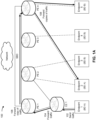
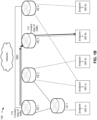
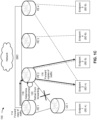
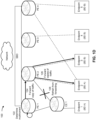
- Figs. 1A-1D are diagrams of an example implementation 100 associated with inter-subnet multicast traffic forwarding using an SBD.
- example implementation 100 includes a plurality of network devices, a plurality of endpoint devices, and a network. These devices and the network are described in more detail below in connection with Fig. 2 and Fig. 3 .
- example implementation 100 may include a plurality of PE network devices (shown as PEs 1 through 4) of a network (e.g., an EVPN network) that are associated with one or more customer edge (CE) network devices (shown as CE 1) and a plurality of endpoint devices (shown as endpoints 1 through 5).
- the endpoint device 1 may be connected to the CE 1, which may be multihomed to the PE 1 and the PE 2; the endpoint device 2 may be connected to the PE 2 and the PE 4; the endpoint device 3 may be connected to the PE 2; the endpoint device 4 may be connected to the PE 3; and the endpoint device 5 may be connected to the PE 4.
- Each endpoint device may be associated with a BD (e.g., a VLAN), and, therefore, each network device that is connected to the endpoint device may be associated with the BD.
- a BD e.g., a VLAN
- each of the endpoint devices 1 and 2 may be associated with a BD A
- each of the endpoint devices 3, 4, and 5 may be associated with a BD B.
- the CE 1 may be associated with the BD A
- the PE 1 may be associated with the BD A
- the PE 2 may be associated with the BD A and the BD B
- the PE 3 may be associated with the BD B
- the PE 4 may be associated with the BD A and the BD B.
- the device may include an IRB interface for communicating traffic (e.g., inter-subnet multicast traffic) associated with the hosted BD.
- traffic e.g., inter-subnet multicast traffic
- each of the endpoint devices 1 and 2 may include an IRB interface associated with the BD A
- each of the endpoint devices 3, 4, and 5 may include an IRB interface associated with the BD B.
- a network device associated with a BD may be configured to communicate with another network device that is associated with the BD via respective IRB interfaces of the network devices that are associated with the BD.
- the PE 1 and the PE 2 (that are both associated with the BD A) may communicate with each other via respective IRB interfaces that are associated with the BD A.
- the PE network devices may be associated with an SBD. That is, each of the PE network devices (e.g., PEs 1 through 4) may include an SBD interface associated with an SBD and may be configured to communicate with another PE network device via the SBD (e.g., using the SBD interface of the PE network device).
- each of the PE network devices e.g., PEs 1 through 4
- FIGs. 1A-1D The topology shown in Figs. 1A-1D of network devices, endpoint devices, and a network is provided as an example. Other topologies of network devices, endpoint devices, and a network are contemplated.
- the endpoint device 1 may send traffic (e.g., inter-subnet multicast traffic) to the CE 1.
- the traffic may be associated with the BD A (e.g., because the endpoint device 1 is associated with the BD A). Accordingly, the endpoint device 1 may send the traffic using an IRB interface associated with the BD A of the endpoint 1, and the CE 1 may receive the traffic using an IRB interface associated with the BD A of the CE 1.
- the CE 1 may forward the traffic (or a copy of the traffic) to the PE 1.
- the CE 1 may select (e.g., using a hashing and selection technique, or another technique) one of the PE network devices to which to send the traffic, and may therefore send the traffic to the selected PE network device (e.g., PE 1).
- the CE 1 may send the traffic using an IRB interface associated with the BD A of the CE 1, and the PE 1 may receive the traffic using an IRB interface associated with the BD A of the PE 1.
- the CE 1 may send copies of the traffic to one or more other endpoint devices (not shown in Fig. 1A ) that are connected to the CE 1 (e.g., in a similar manner).
- the PE 1 may forward a copy of the traffic to the PE 4.
- the PE 1 may process the traffic to generate a copy of the traffic and then may send the copy of the traffic to the PE 4 via the SBD.
- the PE 1 may send the copy of the traffic using the SBD interface of the PE 1, and the PE 4 may receive the traffic using the SBD interface of the PE 4.
- the PE 1 may forward a copy of the traffic to a PE network device that hosts the BD A.
- the PE 4 may forward copies of the traffic to one or more endpoint devices. For example, the PE 4 may process the copy of the traffic to generate another copy of the traffic for each endpoint device connected to the PE 4, and then may send the other copy of the traffic to the endpoint device. That is, the PE 4 may send a copy of the traffic to each of the endpoint device 2 and the endpoint device 5. Accordingly, the PE 4 may send a copy of the traffic to the endpoint device 2 using an IRB interface associated with the BD A of the PE 4, and the endpoint device 2 may receive the copy of the traffic using an IRB interface associated with the BD A of the endpoint device 2.
- the PE 4 may send a copy of the traffic to the endpoint device 5 using an IRB interface associated with the BD B of the PE 4, and the endpoint device 5 may receive the copy of the traffic using an IRB interface associated with the BD B of the endpoint device 5.
- the PE 1 may forward a copy of the traffic to the PE 3.
- the PE 1 may process the traffic to generate a copy of the traffic and then may send the copy of the traffic to the PE 3 via the SBD.
- the PE 1 may send the copy of the traffic using the SBD interface of the PE 1, and the PE 3 may receive the traffic using the SBD interface of the PE 3.
- the PE 1 may forward a copy of the traffic to a PE network device that does not host the BD A.
- the PE 3 may forward copies of the traffic to one or more endpoint devices. For example, the PE 3 may process the copy of the traffic to generate another copy of the traffic for each endpoint device connected to the PE 3, and then may send the other copy of the traffic to the endpoint device. That is, the PE 3 may send a copy of the traffic to the endpoint device 4. Accordingly, the PE 3 may send a copy of the traffic to the endpoint device 4 using an IRB interface associated with the BD B of the PE 3, and the endpoint device 4 may receive the copy of the traffic using an IRB interface associated with the BD B of the endpoint device 4.
- the PE 1 may forward a copy of the traffic to the PE 2.
- the PE 1 may process the traffic to generate a copy of the traffic and then may send the copy of the traffic to the PE 2 via the SBD.
- the PE 1 may send the copy of the traffic using the SBD interface of the PE 1, and the PE 2 may receive the traffic using the SBD interface of the PE 2.
- the PE 1 may forward a copy of the traffic to a PE network device that hosts the BD A.
- the PE 2 may forward copies of the traffic to one or more endpoint devices. For example, the PE 2 may process the copy of the traffic to generate another copy of the traffic for an endpoint device connected to the PE 2, and then may send the other copy of the traffic to the endpoint device. That is, the PE 2 may send a copy of the traffic to each of the endpoint device 2 and the endpoint device 3. Accordingly, the PE 2 may send a copy of the traffic to the endpoint device 2 using an IRB interface associated with the BD A of the PE 2, and the endpoint device 2 may receive the copy traffic using an IRB interface associated with the BD A of the endpoint device 2.
- the PE 2 may send a copy of the traffic to the endpoint device 3 using an IRB interface associated with the BD B of the PE 2, and the endpoint device 3 may receive the copy of the traffic using an IRB interface associated with the BD B of the endpoint device 3.
- the PE 2 may determine that the CE 1 is multihomed to the PE 1 and the PE 2. For example, the PE 2 may use a reverse path forwarding (RPF) analysis technique (e.g., based on the copy of the traffic), or another analysis technique, to determine that the CE 1 is multihomed to the PE 1 and the PE 2.
- RPF reverse path forwarding
- the PE 2 may process (e.g., parse and/or read) the copy of the traffic (e.g., a header of the copy of the traffic) to identify an address (e.g., an Internet protocol (IP) address, or another address) of the PE 1 and to identify the BD A (e.g., that the copy of the traffic is associated with the BD A).
- IP Internet protocol
- the PE 2 may identify, based on the address of the PE 1 and the BD A, an entry in a data structure (e.g., a database, a table, a file, or another electronic data structure, that is included in and/or accessible to the PE 2). That is, the PE 2 may search a data structure associated with the BD A for an entry associated with the address of the PE 1.
- a data structure e.g., a database, a table, a file, or another electronic data structure, that is included in and/or accessible to the PE 2. That is, the PE 2 may search a data structure associated with the BD A
- the entry may indicate, for example, whether the PE 1 is a multihomed peer of the PE 2 for a CE device (e.g., the CE 1). Accordingly, when the entry indicates that the PE 2 is a multihomed peer of the PE 1 for the CE 1, the PE 2 may determine (e.g., based on the entry) that the CE 1 is multihomed to the PE 1 and the PE 2 (e.g., for the BD A). The PE 2 may therefore refrain from forwarding any copy of the traffic to the CE 1, as described herein in relation to reference number 120.
- the PE 2 may determine (e.g., based on the entry) that the PE 2 is not a multihomed peer (e.g., for the BD A). The PE 2 may therefore forward a copy of the traffic to the CE 1, in a similar manner as that described herein in relation to reference number 116.
- the PE 2 may refrain from forwarding a copy of the traffic to the CE 1.
- the PE 2 may determine (e.g., based on determining that the CE 1 is multihomed to the PE 1 and the PE 2, as described above) to not send a copy of the traffic to the CE 1 (e.g., because the CE 1 received the traffic from the endpoint 1, and may have already forwarded copies of the traffic to other endpoint devices connected to the CE, as described above). Accordingly, the PE 2 may refrain from forwarding the copy of the traffic to the CE 1. In this way, some implementations described herein prevent additional copies from being forwarded to endpoint devices that originated the traffic and/or that already received copies of the traffic.
- some implementations include one or more processing steps described herein in relation to Fig. 1D .
- the PE 1 may determine that the CE 1 is multihomed to the PE 1 and the PE 2. For example, the PE 1 may use an RPF analysis technique (e.g., based on the traffic received by the PE 1 from the CE 1), or another analysis technique, to determine that the CE 1 is multihomed to the PE 1 and the PE 2.
- an RPF analysis technique e.g., based on the traffic received by the PE 1 from the CE 1
- another analysis technique e.g., based on the traffic received by the PE 1 from the CE 2
- the PE 1 may process (e.g., parse and/or read) the traffic (e.g., a header of the traffic) to identify the BD A (e.g., that the traffic is associated with the BD A).
- the PE 1 may identify, based on the BD A, an entry in a data structure (e.g., a database, a table, a file, or another electronic data structure, that is included in and/or accessible to the PE 1). That is, the PE 1 may search a data structure associated with the BD A for an entry that indicates, for example, whether the PE 1 is a multihomed peer for a CE device (e.g., the CE 1).
- a data structure e.g., a database, a table, a file, or another electronic data structure, that is included in and/or accessible to the PE 1). That is, the PE 1 may search a data structure associated with the BD A for an entry that indicates, for example, whether the PE 1 is a multihomed peer for a
- the PE 1 may determine (e.g., based on the entry) that the CE 1 is multihomed to the PE 1 and the PE 2 (e.g., for the BD A). The PE 1 may therefore forward a copy of the traffic to the PE 2, as described herein in relation to reference number 124.
- the PE 1 may determine (e.g., based on the entry) that the PE 1 is not a multihomed peer (e.g., for the BD A). The PE 1 may therefore forward a copy of the traffic to PE 2, such as in a similar manner as that described herein in relation to Fig. 1A and reference number 108.
- the PE 1 may forward a copy of the traffic to the PE 2 (e.g., based on determining that the CE 1 is multihomed to the PE 1 and the PE 2). For example, the PE 1 may process the traffic to generate a copy of the traffic and then may send the copy of the traffic to the PE 2 via the BD A (e.g., not via the SBD). Accordingly, the PE 1 may send the copy of the traffic using an IRB interface associated with the BD A of the PE 1, and the PE 2 may receive the copy of the traffic using an IRB interface associated with the BD A of the PE 2. In this way, the PE 1 may forward a copy of the traffic to a multihomed peer that hosts the BD A without using the SBD.
- the PE 1 may forward a copy of the traffic to a multihomed peer that hosts the BD A without using the SBD.
- the PE 2 may forward copies of the traffic to one or more endpoint devices. For example, the PE 2 may process the copy of the traffic to generate another copy of the traffic for an endpoint device connected to the PE 2, and then may send the other copy of the traffic to the endpoint device. That is, the PE 2 may send a copy of the traffic to each of the endpoint device 2 and the endpoint device 3. Accordingly, the PE 2 may send a copy of the traffic to the endpoint device 2 using an IRB interface associated with the BD A of the PE 2, and the endpoint device 2 may receive the copy traffic using an IRB interface associated with the BD A of the endpoint device 2.
- the PE 2 may send a copy of the traffic to the endpoint device 3 using an IRB interface associated with the BD B of the PE 2, and the endpoint device 3 may receive the copy of the traffic using an IRB interface associated with the BD B of the endpoint device 3.
- the PE 2 may refrain from forwarding a copy of the traffic to the CE 1.
- the PE 2 may determine (e.g., based on receiving the copy of the traffic via the IRB interface associated with the BD A of the PE 2) to not send a copy of the traffic to the CE 1 (e.g., because the CE 1 received the traffic from the endpoint 1, and may have already forwarded copies of the traffic to other endpoint devices connected to the CE, as described above). That is, the PE 2 may be configured to not forward a copy of traffic, that is received via an IRB interface of the PE 2 from another PE network device, to a CE network device (e.g., that is multihomed with the PE 2 and the other PE network device). Accordingly, the PE 2 may refrain from forwarding the copy of the traffic to the CE 1. In this way, some implementations described herein prevent additional copies from being forwarded to endpoint devices that originated the traffic and/or that already received copies of the traffic.
- Figs. 1A-1D are provided as an example. Other examples may differ from what is described with regard to Figs. 1A-1D .
- the number and arrangement of devices shown in Figs. 1A-1D are provided as an example. In practice, there may be additional devices, fewer devices, different devices, or differently arranged devices than those shown in Figs. 1A-1D .
- two or more devices shown in Figs. 1A-1D may be implemented within a single device, or a single device shown in Figs. 1A-1D may be implemented as multiple, distributed devices.
- a set of devices (e.g., one or more devices) shown in Figs. 1A-1D may perform one or more functions described as being performed by another set of devices shown in Figs. 1A-1D .
- Fig. 2 is a diagram of an example environment 200 in which systems and/or methods, described herein, may be implemented.
- environment 200 may include one or more endpoint devices 210, a group of network devices 220 (shown as network device 220-1 through network device 220-N), and a network 230.
- Devices of environment 200 may interconnect via wired connections, wireless connections, or a combination of wired and wireless connections.
- Endpoint device 210 includes one or more devices capable of receiving, generating, storing, processing, and/or providing traffic, such as inter-subnet multicast traffic described herein.
- endpoint device 210 may include a mobile phone (e.g., a smart phone, a radiotelephone, etc.), a laptop computer, a tablet computer, a desktop computer, a handheld computer, a gaming device, a wearable communication device (e.g., a smart watch, a pair of smart glasses, a heart rate monitor, a fitness tracker, smart clothing, smart jewelry, a head mounted display, etc.), a network device, or a similar type of device.
- endpoint device 210 may receive network traffic from and/or may provide network traffic to other endpoint devices 210 via network 230 (e.g., by routing packets using network devices 220 as intermediaries).
- Network device 220 includes one or more devices capable of receiving, processing, storing, routing, and/or providing traffic, such as inter-subnet multicast traffic described herein.
- network device 220 may include a router, such as a label switching router (LSR), a label edge router (LER), an ingress router, an egress router, a provider router (e.g., a provider edge router, a provider core router, etc.), a virtual router, and/or the like.
- LSR label switching router
- LER label edge router
- provider router e.g., a provider edge router, a provider core router, etc.
- virtual router e.g., a virtual router, and/or the like.
- network device 220 may include a gateway, a switch, a firewall, a hub, a bridge, a reverse proxy, a server (e.g., a proxy server, a cloud server, a data center server, etc.), a load balancer, and/or a similar device.
- network device 220 may be a physical device implemented within a housing, such as a chassis.
- network device 220 may be a virtual device implemented by one or more computer devices of a cloud computing environment or a data center.
- a group of network devices 220 may be a group of data center nodes that are used to route traffic flow through network 230.
- the network device 220 may be a CE network device, a PE network device, or another type of network device.
- network devices 220 may provide an EVPN multihoming topology.
- Network 230 includes one or more wired and/or wireless networks.
- network 230 may include an EVPN, an EVPN-VXLAN, a packet switched network, a cellular network (e.g., a fifth generation (5G) network, a fourth generation (4G) network, such as a long-term evolution (LTE) network, a third generation (3G) network, a code division multiple access (CDMA) network, a public land mobile network (PLMN), a local area network (LAN), a wide area network (WAN), a metropolitan area network (MAN), a telephone network (e.g., the Public Switched Telephone Network (PSTN)), a private network, an ad hoc network, an intranet, the Internet, a fiber optic-based network, a cloud computing network, or the like, and/or a combination of these or other types of networks.
- 5G fifth generation
- 4G fourth generation
- LTE long-term evolution
- 3G third generation
- CDMA code division multiple access
- PLMN
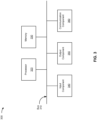
- Fig. 3 is a diagram of example components of a device 300 in which systems and/or methods described herein may be implemented.
- Device 300 may correspond to endpoint device 210 and/or network device 220.
- endpoint device 210 and/or network device 220 may include one or more devices 300 and/or one or more components of device 300.
- device 300 may include a bus 310, a processor 320, a memory 330, an input component 340, an output component 350, and a communication component 360.
- Bus 310 may include one or more components that enable wired and/or wireless communication among the components of device 300. Bus 310 may couple together two or more components of Fig. 3 , such as via operative coupling, communicative coupling, electronic coupling, and/or electric coupling.
- Processor 320 may include a central processing unit, a graphics processing unit, a microprocessor, a controller, a microcontroller, a digital signal processor, a field-programmable gate array, an application-specific integrated circuit, and/or another type of processing component.
- Processor 320 is implemented in hardware, firmware, or a combination of hardware and software. In some implementations, processor 320 may include one or more processors capable of being programmed to perform one or more operations or processes described elsewhere herein.
- Memory 330 may include volatile and/or nonvolatile memory.
- memory 330 may include random access memory (RAM), read only memory (ROM), a hard disk drive, and/or another type of memory (e.g., a flash memory, a magnetic memory, and/or an optical memory).
- RAM random access memory
- ROM read only memory
- Hard disk drive and/or another type of memory (e.g., a flash memory, a magnetic memory, and/or an optical memory).
- Memory 330 may include internal memory (e.g., RAM, ROM, or a hard disk drive) and/or removable memory (e.g., removable via a universal serial bus connection).
- Memory 330 may be a non-transitory computer-readable medium.
- Memory 330 stores information, instructions, and/or software (e.g., one or more software applications) related to the operation of device 300.
- memory 330 may include one or more memories that are coupled to one or more processors (e.g., processor 320), such as via bus 310
- Input component 340 enables device 300 to receive input, such as user input and/or sensed input.
- input component 340 may include a touch screen, a keyboard, a keypad, a mouse, a button, a microphone, a switch, a sensor, a global positioning system sensor, an accelerometer, a gyroscope, and/or an actuator.
- Output component 350 enables device 300 to provide output, such as via a display, a speaker, and/or a light-emitting diode.
- Communication component 360 enables device 300 to communicate with other devices via a wired connection and/or a wireless connection.
- communication component 360 may include a receiver, a transmitter, a transceiver, a modem, a network interface card, and/or an antenna.
- Device 300 may perform one or more operations or processes described herein.
- a computer-readable medium e.g., memory 330 or a data interface
- processor 320 may provide a set of instructions (e.g., one or more instructions or code) for execution by processor 320.
- Processor 320 may execute the set of instructions to perform one or more operations or processes described herein.
- execution of the set of instructions, by one or more processors 320 causes the one or more processors 320 and/or the device 300 to perform one or more operations or processes described herein.
- hardwired circuitry is used instead of or in combination with the instructions to perform one or more operations or processes described herein.
- processor 320 may be configured to perform one or more operations or processes described herein.
- implementations described herein are not limited to any specific combination of hardware circuitry and software.
- Device 300 may include additional components, fewer components, different components, or differently arranged components than those shown in Fig. 3 . Additionally, or alternatively, a set of components (e.g., one or more components) of device 300 may perform one or more functions described as being performed by another set of components of device 300.
- a set of components e.g., one or more components
- Fig. 4 is a diagram of example components of a device 400 in which systems and/or methods described herein may be implemented.
- Device 400 may correspond to endpoint device 210 and/or network device 220.
- endpoint device 210 and/or network device 220 may include one or more devices 400 and/or one or more components of device 400.
- device 400 may include one or more input components 410-1 through 410-B (B > 1) (hereinafter referred to collectively as input components 410, and individually as input component 410), a switching component 420, one or more output components 430-1 through 430-C (C ⁇ 1) (hereinafter referred to collectively as output components 430, and individually as output component 430), and a controller 440.
- Input component 410 may be one or more points of attachment for physical links and may be one or more points of entry for incoming traffic, such as packets. Input component 410 may process incoming traffic, such as by performing data link layer encapsulation or decapsulation. In some implementations, input component 410 may transmit and/or receive packets. In some implementations, input component 410 may include an input line card that includes one or more packet processing components (e.g., in the form of integrated circuits), such as one or more interface cards (IFCs), packet forwarding components, line card controller components, input ports, processors, memories, and/or input queues. In some implementations, device 400 may include one or more input components 410.
- packet processing components e.g., in the form of integrated circuits
- IFCs interface cards
- packet forwarding components line card controller components
- input ports e.g., processors, memories, and/or input queues.
- device 400 may include one or more input components 410.
- Switching component 420 may interconnect input components 410 with output components 430.
- switching component 420 may be implemented via one or more crossbars, via busses, and/or with shared memories.
- the shared memories may act as temporary buffers to store packets from input components 410 before the packets are eventually scheduled for delivery to output components 430.
- switching component 420 may enable input components 410, output components 430, and/or controller 440 to communicate with one another.
- Output component 430 may store packets and may schedule packets for transmission on output physical links. Output component 430 may support data link layer encapsulation or decapsulation, and/or a variety of higher-level protocols. In some implementations, output component 430 may transmit packets and/or receive packets. In some implementations, output component 430 may include an output line card that includes one or more packet processing components (e.g., in the form of integrated circuits), such as one or more IFCs, packet forwarding components, line card controller components, output ports, processors, memories, and/or output queues. In some implementations, device 400 may include one or more output components 430. In some implementations, input component 410 and output component 430 may be implemented by the same set of components (e.g., and input/output component may be a combination of input component 410 and output component 430).
- packet processing components e.g., in the form of integrated circuits
- IFCs packet forwarding components
- line card controller components e.g., packet forwarding components
- Controller 440 440 includes a processor in the form of, for example, a CPU, a graphics processing unit (GPU), an accelerated processing unit (APU), a microprocessor, a microcontroller, a digital signal processor (DSP), a field-programmable gate array (FPGA), an application-specific integrated circuit (ASIC), and/or another type of processor.
- the processor is implemented in hardware, firmware, or a combination of hardware and software.
- the processor is implemented in hardware, firmware, or a combination of hardware and software.
- controller 440 may include one or more processors that can be programmed to perform a function.
- controller 440 may include a RAM, a ROM, and/or another type of dynamic or static storage device (e.g., a flash memory, a magnetic memory, an optical memory, etc.) that stores information and/or instructions for use by controller 440.
- a RAM random access memory
- ROM read-only memory
- static storage device e.g., a flash memory, a magnetic memory, an optical memory, etc.
- controller 440 may communicate with other devices, networks, and/or systems connected to device 400 to exchange information regarding network topology. Controller 440 may create routing tables based on the network topology information, may create forwarding tables based on the routing tables, and may forward the forwarding tables to input components 410 and/or output components 430. Input components 410 and/or output components 430 may use the forwarding tables to perform route lookups for incoming and/or outgoing packets.
- Controller 440 may perform one or more processes described herein. Controller 440 may perform these processes in response to executing software instructions provided by a computer-readable medium.
- a computer-readable medium may take the form of a computer-readable storage medium and/or a computer-readable transmission medium.
- a computer-readable storage medium may take the form of a non-transitory memory device.
- a memory device includes memory space within a single physical storage device or memory space spread across multiple physical storage devices.
- a computer-readable transmission medium may take the form of a carrier wave, transmission signal or the like. A computer-readable transmission medium may occur between components of a single computer system and/or between plural separate computer systems.
- Software instructions may be read into a memory and/or storage component associated with controller 440 from another computer-readable medium, such as from another somputer-readable storage medium or using a computer-readable transmission medium from another device via a communication interface.
- software instructions stored in a memory and/or storage component associated with controller 440 may cause controller 440 to perform one or more processes described herein.
- hardwired circuitry may be used in place of or in combination with software instructions to perform one or more processes described herein. Thus, implementations described herein are not limited to any specific combination of hardware circuitry and software.
- device 400 may include additional components, fewer components, different components, or differently arranged components than those shown in Fig. 4 . Additionally, or alternatively, a set of components (e.g., one or more components) of device 400 may perform one or more functions described as being performed by another set of components of device 400.
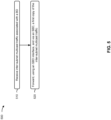
- Fig. 5 is a flowchart of an example process 500 associated with inter-subnet multicast traffic forwarding using an SBD.
- one or more process blocks of Fig. 5 are performed by a first network device (e.g., a network device 220, such as the PE 1 described herein).
- one or more process blocks of Fig. 5 are performed by another device or a group of devices separate from or including the first network device, such as another network device (e.g., another network device 220) and/or an endpoint device (e.g., an endpoint device 210).
- another network device e.g., another network device 220
- an endpoint device e.g., an endpoint device 210.
- 5 may be performed by one or more components of device 300, such as processor 320, memory 330, input component 340, output component 350, and/or communication component 360; one or more components of device 400, such as input component 410, switching component 420, output component 430, and/or controller 440; and/or another device.
- device 300 such as processor 320, memory 330, input component 340, output component 350, and/or communication component 360
- components of device 400 such as input component 410, switching component 420, output component 430, and/or controller 440
- another device such as input component 410, switching component 420, output component 430, and/or controller 440
- process 500 may include receiving inter-subnet multicast traffic associated with a BD (block 510).
- the first network device may receive inter-subnet multicast traffic associated with a BD, as described above.
- the first network device hosts the BD.
- process 500 may include forwarding, using an SBD interface of the first network device, and via an SBD, a first copy of the inter-subnet multicast traffic (block 520).
- the first network device may forward, using an SBD interface of the first network device, and via an SBD, a first copy of the inter-subnet multicast traffic to a second network device that hosts the BD, as described above.
- Process 500 may include additional implementations, such as any single implementation or any combination of implementations described below and/or in connection with one or more other processes described elsewhere herein.
- process 500 includes forwarding, using the SBD interface of the first network device and via the SBD, a second copy of the inter-subnet multicast traffic to a third network device that does not host the BD.
- receiving the inter-subnet multicast traffic comprises receiving the inter-subnet multicast traffic from a third network device associated with the BD, and the third network device is multihomed to the first network device and the second network device.
- forwarding the first copy of the inter-subnet multicast traffic to the second network device allows the second network device to: determine that the third network device is multihomed to the first network device and the second network device; refrain, based on determining that the third network device is multihomed to the first network device and the second network device, from forwarding any copy of the inter-subnet multicast traffic to the third network device; and forward a third copy of the inter-subnet multicast traffic to at least one endpoint device.
- receiving the inter-subnet multicast traffic comprises receiving the inter-subnet multicast traffic from a third network device associated with the BD, and the third network device is multihomed to the first network device and a fourth network device that hosts the BD.
- process 500 includes determining that the third network device is multihomed to the first network device and the fourth network device, and forwarding, based on determining that the third network device is multihomed to the first network device and the fourth network device, and using an IRB interface of the first network device associated with the BD, a second copy of the inter-subnet multicast traffic to the fourth network device.
- forwarding the second copy of the inter-subnet multicast traffic to the fourth network device allows the fourth network device to refrain from forwarding any copy of the inter-subnet multicast traffic to the third network device, and forward a third copy of the inter-subnet multicast traffic to at least one endpoint device.
- process 500 includes additional blocks, fewer blocks, different blocks, or differently arranged blocks than those depicted in Fig. 5 . Additionally, or alternatively, two or more of the blocks of process 500 may be performed in parallel.
- Fig. 6 is a flowchart of an example process 600 associated with inter-subnet multicast traffic forwarding using an SBD.
- one or more process blocks of Fig. 6 are performed by a first network device (e.g., a network device 220, such as the PE 2 described herein).
- one or more process blocks of Fig. 6 are performed by another device or a group of devices separate from or including the first network device, such as another network device (e.g., another network device 220) and/or an endpoint device (e.g., an endpoint device 210).
- another network device e.g., another network device 220
- an endpoint device e.g., an endpoint device 210.
- device 6 may be performed by one or more components of device 300, such as processor 320, memory 330, input component 340, output component 350, and/or communication component 360; one or more components of device 400, such as input component 410, switching component 420, output component 430, and/or controller 440; and/or another device.
- process 600 may include receiving a first copy of inter-subnet multicast traffic associated with a BD (block 610).
- the first network device may receive a first copy of inter-subnet multicast traffic associated with a BD (e.g., from a second network device that hosts the BD), as described above.
- the first network device hosts the BD, and a third network device is multihomed to the first network device and the second network device.
- process 600 may include forwarding a second copy of the inter-subnet multicast traffic to at least one endpoint device (block 620).
- the first network device may forward a second copy of the inter-subnet multicast traffic to at least one endpoint device, as described above.
- process 600 may include refraining from forwarding any copy of the inter-subnet multicast traffic to another network device (block 630).
- the first network device may refrain from forwarding any copy of the inter-subnet multicast traffic to the third network device, as described above.
- Process 600 may include additional implementations, such as any single implementation or any combination of implementations described below and/or in connection with one or more other processes described elsewhere herein.
- receiving the first copy of the inter-subnet multicast traffic comprises receiving the first copy of the inter-subnet multicast traffic via an SBD interface of the first network device.
- refraining from forwarding any copy of the inter-subnet multicast traffic to the third network device includes determining that the third network device is multihomed to the first network device and the second network device, and determining, based on determining that the third network device is multihomed to the first network device and the second network device, to not send a copy of the inter-subnet multicast traffic to the third network device.
- determining that the third network device is multihomed to the first network device and the second network device includes processing the first copy of the inter-subnet multicast traffic to identify an address of the second network device and the BD; identifying, based on the address of the second network device and the BD, an entry in a data structure; and determining, based on the entry, that the third network device is multihomed to the first network device and the second network device.
- receiving the first copy of the inter-subnet multicast traffic comprises receiving the first copy of the inter-subnet multicast traffic via an IRB interface of the first network device associated with the BD.
- refraining from forwarding any copy of the inter-subnet multicast traffic to the third network device includes determining, based on receiving the first copy of the inter-subnet multicast traffic via the IRB interface of the first network device, to not send a copy of the inter-subnet multicast traffic to the third network device.
- process 600 includes additional blocks, fewer blocks, different blocks, or differently arranged blocks than those depicted in Fig. 6 . Additionally, or alternatively, two or more of the blocks of process 600 may be performed in parallel.
- a first network device can host a bridge domain (BD) may receive inter-subnet multicast traffic associated with the BD.
- the BD may forward, using a supplemental bridge domain (SBD) interface of the first network device, and via an SBD, a first copy of the inter-subnet multicast traffic to a second network device that hosts the BD.
- the first network device may forward, using the SBD interface and via the SBD, a second copy of the inter-subnet multicast traffic to a third network device that does not host the BD.
- SBD supplemental bridge domain
- the first network device may forward, using an integrated routing and bridging (IRB) interface of the first network device associated with the BD, a third copy of the inter-subnet multicast traffic to a fourth network device that hosts the BD (e.g., when the fourth network device is a multihoming peer of the first network device).
- IRB integrated routing and bridging
- Packet may refer to a communication structure for communicating information, such as a protocol data unit (PDU), a service data unit (SDU), a network packet, a datagram, a segment, a message, a block, a frame (e.g., an Ethernet frame), a portion of any of the above, and/or another type of formatted or unformatted unit of data capable of being transmitted via a network.
- PDU protocol data unit
- SDU service data unit
- network packet e.g., a packet datagram, a segment, a message, a block, a frame (e.g., an Ethernet frame), a portion of any of the above, and/or another type of formatted or unformatted unit of data capable of being transmitted via a network.
- the term "component” is intended to be broadly construed as hardware, firmware, or a combination of hardware and software. It will be apparent that systems and/or methods described herein may be implemented in different forms of hardware, firmware, and/or a combination of hardware and software. The actual specialized control hardware or software code used to implement these systems and/or methods is not limiting of the implementations. Thus, the operation and behavior of the systems and/or methods are described herein without reference to specific software code - it being understood that software and hardware can be used to implement the systems and/or methods based on the description herein.
- a, b, or c is intended to cover a, b, c, a-b, a-c, b-c, and a-b-c, as well as any combination with multiple of the same item.
- the terms “has,” “have,” “having,” or the like are intended to be open-ended terms. Further, the phrase “based on” is intended to mean “based, at least in part, on” unless explicitly stated otherwise. Also, as used herein, the term “or” is intended to be inclusive when used in a series and may be used interchangeably with “and/or,” unless explicitly stated otherwise (e.g., if used in combination with “either” or “only one of').
Landscapes
- Engineering & Computer Science (AREA)
- Computer Networks & Wireless Communication (AREA)
- Signal Processing (AREA)
- Data Exchanges In Wide-Area Networks (AREA)
Applications Claiming Priority (2)
| Application Number | Priority Date | Filing Date | Title |
|---|---|---|---|
| IN202241066189 | 2022-11-18 | ||
| US18/089,016 US12519715B2 (en) | 2022-11-18 | 2022-12-27 | Inter-subnet multicast traffic forwarding using supplemental bridge domain (SBD) |
Publications (1)
| Publication Number | Publication Date |
|---|---|
| EP4373036A1 true EP4373036A1 (fr) | 2024-05-22 |
Family
ID=85703430
Family Applications (1)
| Application Number | Title | Priority Date | Filing Date |
|---|---|---|---|
| EP23162151.7A Pending EP4373036A1 (fr) | 2022-11-18 | 2023-03-15 | Transfert de trafic multidiffusion inter-sous-réseau à l'aide d'un domaine de pont supplémentaire (sbd) |
Country Status (1)
| Country | Link |
|---|---|
| EP (1) | EP4373036A1 (fr) |
Citations (1)
| Publication number | Priority date | Publication date | Assignee | Title |
|---|---|---|---|---|
| US11057317B2 (en) * | 2019-09-26 | 2021-07-06 | Juniper Networks, Inc. | Synchronizing multicast router capability towards ethernet virtual private network (EVPN) multi-homed protocol independent multicast (PIM) device |
-
2023
- 2023-03-15 EP EP23162151.7A patent/EP4373036A1/fr active Pending
Patent Citations (1)
| Publication number | Priority date | Publication date | Assignee | Title |
|---|---|---|---|---|
| US11057317B2 (en) * | 2019-09-26 | 2021-07-06 | Juniper Networks, Inc. | Synchronizing multicast router capability towards ethernet virtual private network (EVPN) multi-homed protocol independent multicast (PIM) device |
Non-Patent Citations (1)
| Title |
|---|
| LIN Z ZHANG J DRAKE E ROSEN W ET AL: "EVPN Optimized Inter-Subnet Multicast (OISM) Forwarding draft-ietf-bess-evpn-irb-mcast-06; draft-ietf-bess-evpn-irb-mcast-06.txt", no. 6, 24 May 2021 (2021-05-24), pages 1 - 77, XP015145953, Retrieved from the Internet <URL:https://tools.ietf.org/html/draft-ietf-bess-evpn-irb-mcast-06> [retrieved on 20210524] * |
Similar Documents
| Publication | Publication Date | Title |
|---|---|---|
| US11949584B2 (en) | Utilizing domain segment identifiers for inter-domain shortest path segment routing | |
| US11671322B2 (en) | Configuration of a network using a flex-algorithm routing mechanism | |
| US12120022B1 (en) | Traffic filtering based on destination address and incoming interface of a network device | |
| US12068917B2 (en) | Configuration of a network using a flex-algorithm routing mechanism | |
| US20230412503A1 (en) | Determining unicast addresses of gateway network devices associated with an anycast address in vxlan-evpn dci environments | |
| US12166799B2 (en) | Using zones based on entry points and exit points of a network device to apply a security policy to network traffic | |
| US20260019400A1 (en) | Detecting and preventing duplicate network addresses | |
| EP4373036A1 (fr) | Transfert de trafic multidiffusion inter-sous-réseau à l'aide d'un domaine de pont supplémentaire (sbd) | |
| EP4191965A1 (fr) | Conservation de la cohérence des informations de topologie d'état de liaison de protocole de passerelle frontière redondante | |
| US12519715B2 (en) | Inter-subnet multicast traffic forwarding using supplemental bridge domain (SBD) | |
| EP4398540A1 (fr) | Création dynamique de tranches de réseau de recouvrement à l'aide de spécifications de flux de protocole de passerelle frontière | |
| EP4195592A1 (fr) | Transfert d'un trafic de réseau associé à une classification de sécurité par l'intermédiaire d'un chemin de routage associé à la classification de sécurité | |
| EP4236246A1 (fr) | Détermination d'une destination optimale sur un chemin optimal utilisant une sélection de chemin multifactorielle | |
| US12574322B2 (en) | Data structure associated with an interface of a network device | |
| EP4304146A1 (fr) | Publicité à réplication explicite d'indice de bit (bier) avec un dispositif de distinction de route | |
| EP4604483A1 (fr) | Routage et pontage intégrés (irb) à arbre ethernet (e-tree) avec protection de liaison de sortie | |
| US20240031285A1 (en) | Advertising non-vpn routes with a route distinguisher and a route target | |
| US20250267094A1 (en) | Ethernet-tree (e-tree) integrated routing and bridging (irb) with egress link protection | |
| US12120093B1 (en) | Providing subscriber aware network address filtering using an open configuration remote procedure call framework | |
| US11750509B1 (en) | Preventing unicast traffic loops during access link failures | |
| US11973739B2 (en) | Systems and methods for supporting host devices with a single network address when multiple prefixes are delegated | |
| EP3958524A1 (fr) | Utilisation d'algorithmes flex avec réflexion de routage | |
| EP4297376B1 (fr) | Surabonnement de port non traduit pour un dispositif proxy | |
| US12284117B2 (en) | Load balancing of assisted replication network devices | |
| EP4187848A1 (fr) | Actionnement ou empêchement d'une mise à jour d'une table de traduction d'adresses de réseau |
Legal Events
| Date | Code | Title | Description |
|---|---|---|---|
| PUAI | Public reference made under article 153(3) epc to a published international application that has entered the european phase |
Free format text: ORIGINAL CODE: 0009012 |
|
| STAA | Information on the status of an ep patent application or granted ep patent |
Free format text: STATUS: THE APPLICATION HAS BEEN PUBLISHED |
|
| AK | Designated contracting states |
Kind code of ref document: A1 Designated state(s): AL AT BE BG CH CY CZ DE DK EE ES FI FR GB GR HR HU IE IS IT LI LT LU LV MC ME MK MT NL NO PL PT RO RS SE SI SK SM TR |
|
| STAA | Information on the status of an ep patent application or granted ep patent |
Free format text: STATUS: REQUEST FOR EXAMINATION WAS MADE |
|
| 17P | Request for examination filed |
Effective date: 20241113 |
|
| RBV | Designated contracting states (corrected) |
Designated state(s): AL AT BE BG CH CY CZ DE DK EE ES FI FR GB GR HR HU IE IS IT LI LT LU LV MC ME MK MT NL NO PL PT RO RS SE SI SK SM TR |