EP4373203A1 - Kommunikationsverfahren und -vorrichtung, elektronische vorrichtung und speichermedium - Google Patents
Kommunikationsverfahren und -vorrichtung, elektronische vorrichtung und speichermedium Download PDFInfo
- Publication number
- EP4373203A1 EP4373203A1 EP21949732.8A EP21949732A EP4373203A1 EP 4373203 A1 EP4373203 A1 EP 4373203A1 EP 21949732 A EP21949732 A EP 21949732A EP 4373203 A1 EP4373203 A1 EP 4373203A1
- Authority
- EP
- European Patent Office
- Prior art keywords
- link
- radio frame
- tid
- communication link
- mapping
- Prior art date
- Legal status (The legal status is an assumption and is not a legal conclusion. Google has not performed a legal analysis and makes no representation as to the accuracy of the status listed.)
- Pending
Links
Images


Classifications
-
- H—ELECTRICITY
- H04—ELECTRIC COMMUNICATION TECHNIQUE
- H04W—WIRELESS COMMUNICATION NETWORKS
- H04W76/00—Connection management
- H04W76/10—Connection setup
- H04W76/15—Setup of multiple wireless link connections
-
- H—ELECTRICITY
- H04—ELECTRIC COMMUNICATION TECHNIQUE
- H04W—WIRELESS COMMUNICATION NETWORKS
- H04W76/00—Connection management
- H04W76/10—Connection setup
- H04W76/11—Allocation or use of connection identifiers
-
- H—ELECTRICITY
- H04—ELECTRIC COMMUNICATION TECHNIQUE
- H04W—WIRELESS COMMUNICATION NETWORKS
- H04W84/00—Network topologies
- H04W84/02—Hierarchically pre-organised networks, e.g. paging networks, cellular networks, WLAN [Wireless Local Area Network] or WLL [Wireless Local Loop]
- H04W84/10—Small scale networks; Flat hierarchical networks
- H04W84/12—WLAN [Wireless Local Area Networks]
Definitions
- the disclosure relates to a field of mobile communication technologies, in particular to a communication method, a communication device, an electronic device and a storage medium.
- Wi-Fi Wireless Fidelity
- the aggregation and collaboration of multiple frequency bands refers to simultaneous communication among devices in 2.4GHz, 5.8GHz, 6GHz and other frequency bands.
- a new Media Access Control (MAC) mechanism may be defined for management.
- the aggregation and collaboration of multiple frequency bands is expected to be able to support low-latency transmission.
- the aggregation and collaboration of multiple frequency bands may support a maximum bandwidth of 320MHz (160MHz+160MHz), and it may also support 240MHz (160MHz+80MHz) and other bandwidths supported by the existing standards.
- a Basic Service Set may consist of an Access Point (AP) and one or more Stations (STAs) in communication with the AP.
- the AP and the STAs can be Multi-Link Devices (MLDs).
- MLDs Multi-Link Devices
- the MLD supports a function of sending and/or receiving simultaneously on multiple links at the same time. Therefore, there are multiple links between the AP MLD and the STA MLD for communication.
- the AP MLD may delete/add its secondary APs. If the secondary APs are changed, a Traffic Identifier-to-communication Link (TID-to-Link) mapping mechanism may be unable to realize. Thus, a way for realizing the TID-to-Link mapping mechanism in the multi-link scenario.
- TID-to-Link Traffic Identifier-to-communication Link
- the embodiments of the disclosure provide a communication method, a communication device, an electronic device and a storage medium, to provide a way to realize a TID-to-Link mapping mechanism in the multi-link scenario.
- embodiments of the disclosure provide a communication method, which is performed by a STA that supports multiple links.
- the method includes: sending a first radio frame, in which the first radio frame includes a Traffic Identifier-to-communication Link (TID-to-Link) mapping information element between a traffic identifier and a target communication link, and the target communication link includes a newly added and/or deleted communication link.
- TID-to-Link Traffic Identifier-to-communication Link
- embodiments of the disclosure provide a communication method, which is performed by an AP that supports multiple links.
- the method includes: receiving a first radio frame, in which the first radio frame includes a Traffic Identifier-to-communication Link (TID-to-Link) mapping information element between a traffic identifier and a target communication link, and the target communication link includes a newly added and/or deleted communication link.
- TID-to-Link Traffic Identifier-to-communication Link
- inventions of the disclosure provide a STA.
- the STA is a device that supports multiple links.
- the STA includes: a sending module, configured to send a first radio frame, in which the first radio frame includes a Traffic Identifier-to-communication Link (TID-to-Link) mapping information element between a traffic identifier and a target communication link, and the target communication link includes a newly added and/or deleted communication link.
- TID-to-Link Traffic Identifier-to-communication Link
- inventions of the disclosure provide an AP.
- the AP is a device that supports multiple links.
- the AP includes: a receiving module, configured to receive a first radio frame, in which the first radio frame includes a Traffic Identifier-to-communication Link (TID-to-Link) mapping information element between a traffic identifier and a target communication link, and the target communication link includes a newly added and/or deleted communication link.
- TID-to-Link Traffic Identifier-to-communication Link
- inventions of the disclosure provide a communication device, which is applied to a STA that supports multiple links.
- the device includes: a radio frame sending module, configured to send a first radio frame, in which the first radio frame includes a Traffic Identifier-to-communication Link (TID-to-Link) mapping information element between a traffic identifier and a target communication link, and the target communication link includes a newly added and/or deleted communication link.
- TID-to-Link Traffic Identifier-to-communication Link
- inventions of the disclosure provide a communication device, which is applied to an AP that supports multiple links.
- the device includes: a radio frame receiving module, configured to receive a first radio frame, in which the first radio frame includes a Traffic Identifier-to-communication Link (TID-to-Link) mapping information element between a traffic identifier and a target communication link, and the target communication link includes a newly added and/or deleted communication link.
- TID-to-Link Traffic Identifier-to-communication Link
- the embodiments of the disclosure also provide an electronic device, which includes a memory, a processor and computer programs stored on the memory and executable by the processor. When the programs are executed by the processor, one or more methods of the embodiments of the disclosure are implemented.
- the embodiments of the disclosure also provide a computer-readable storage medium having computer programs stored thereon. When the computer programs are executed by a processor, one or more methods of the embodiments of the disclosure are implemented.
- the STA sends the first radio frame.
- the first radio frame includes the TID-to-Link mapping information element, and the target communication link includes a newly added and/or deleted communication link.
- the STA requests the AP to perform a corresponding TID-to-Link mapping operation via the first radio frame, to realize the TID-to-Link mapping mechanism, thereby improving the spectrum utilization.
- the term "and/or” describes a relation of associated objects, which indicates three relations, for example, "A and/or B" indicates that A exists alone, A and B both exist, and B exists alone.
- the character “/” generally indicates that the associated objects prior to and after the character "/" is in an "or” relation.
- multiple in the embodiments of the disclosure refers to two or more, which is the similar for other quantifiers.
- first, second, and third may be used in the disclosure to describe various information, the information should not be limited to these terms. These terms are only used to distinguish the same type of information from each other.
- first information may also be referred to as the second information, and similarly, the second information may also be referred to as the first information.
- second information may also be referred to as the first information.
- if' as used herein can be interpreted as "when", “while” or "in response to determining”.
- the embodiments of the disclosure provide a communication method, a communication device, a terminal and a network device, to provide a way to realize a TID-to-Link mapping mechanism in a multi-link scenario.
- the method and device are based on the same application conception, and since the method and device solve problems based on similar principles, the implementations of the device and the method can be referred to each other, and the repeated contents is not elaborated.
- the embodiment of the disclosure provides a communication method.
- the method is performed by a STA (i.e., a non-AP MLD) that supports multiple links.
- the method includes the following steps.
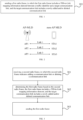
- a first radio frame is sent, in which the first radio frame includes a Traffic Identifier-to-communication Link (TID-to-Link) mapping information element between a traffic identifier and a target communication link, and the target communication link includes a newly added and/or deleted communication link.
- TID-to-Link Traffic Identifier-to-communication Link
- an AP MLD and the Non-AP MLD may be devices that support multiple links.
- the following contents mainly describe an example of multi-link communication between one AP and one non-AP MLD (STA), but the exemplary embodiments of the disclosure are not limited thereto.
- the AP MLD may represent an AP that supports a multi-link communication function
- the non-AP MLD may represent a STA that supports a multi-link communication function.
- the AP MLD may operate under three links.
- AP 1, AP2, and AP3 shown in FIG. 2 each may operate under Link 1, Link 2, and Link 3, respectively.
- the non-AP MLD, i.e., STA1, STA2, and STA3 shown in FIG. 2 may also operate under three links, in which STA1 works under Link 1, STA2 works under Link 2, and STA3 works under Link 3.
- STA1 works under Link 1
- STA2 works under Link 2
- STA3 works under Link 3.
- Link 1 to Link 3 may be links at different frequencies, e.g., links at 2.4GHz, 5GHz, and 6GHz, or links having the same or different bandwidths at 2.4GHz.
- each link may have a plurality of channels. It may be appreciated that the communication scenario shown in FIG. 2 is only exemplary, and the concept of the disclosure is not limited thereto.
- the AP MLD may be connected to multiple non-AP MLDs, or the AP may communicate with other types of STAs under each link.
- the AP MLD may delete/add its secondary AP. If a secondary AP is changed, for example, deleting a link where the secondary AP operates, the STA sends the first radio frame, the first radio frame is configured to request to update a TID-to-Link mapping. For example, for case one where the AP MLD deletes the link on which its secondary AP operates, the TID may still be mapped to the deleted link of the secondary AP, at this time, the STA may request the AP MLD to update the TID-to-Link mapping. For case two where the AP MLD adds a new secondary AP, a link of the newly added secondary AP does not have a TID mapping. In the above two cases, the STA requests the AP MLD to update the TID-to-Link mapping via the first radio frame, to realize the TID-to-Link mapping mechanism.
- the target communication link includes a newly added and/or deleted communication link.
- the first radio frame includes the TID-to-Link mapping information element.
- the TID-to-Link mapping information element is configured to indicate that the target communication link is changed, and may also indicate a type of change, which is either addition or deletion.
- the AP MLD After receiving the first radio frame, the AP MLD performs a corresponding remapping operation depending on the type of change. For example, corresponding to the above case one, the AP MLD may delete the TID of the target communication link. For the above case two, the AP MLD may create a TID-to-Link mapping for the newly added target communication link.
- the STA sends the first radio frame.
- the first radio frame includes the TID-to-Link mapping information element
- the target communication link includes a newly added and/or deleted communication link.
- the STA requests the AP to perform a corresponding TID-to-Link mapping operation via the first radio frame, to realize the TID-to-Link mapping mechanism, thereby improving the spectrum utilization.
- the embodiments of the disclosure provide a way to realize the TID-to-Link mapping mechanism in the multi-link scenario.
- the TID-to-Link mapping information element includes a link change indicator field.
- the link change indicator field indicates adding a communication link and/or deleting a communication link. That is, it indicates the type of change of the target communication link.
- the TID-to-Link mapping information element is shown in Table 1 below. Table 1: Content Element ID Length Element ID Extension TID-To-Link Mapping Control Link Mapping Of TID 0 (Optional) ... Link Mapping Of TID 7 (Optional) ... Octets 1 1 1 2 0 or 2 ... 0 or 2 ...
- the non-AP MLD can initiate TID-to-Link mapping negotiation in a (re)association request frame if the AP MLD has already indicated.
- the TID-To-Link Mapping Control field carries the link change indicator field.
- Table 2 Direction Default Mapping link change indicator (Added/Deleted Link) Reserved Link Mapping Presence Indicator
- the link change indicator field indicates that the link is changed. For example, when “Added/Deleted Link” is set to 1, it indicates that a new link is added or an existing link is deleted. When “Added/Deleted Link” is set to 0, the link remains the same.
- the link change indicator field may also indicate the type of change. For example, when “Added/Deleted Link” is set to 1, it indicates that a new link is added, and when “Added/Deleted Link” is set to 0, it indicates that an existing link is deleted.
- Direction includes: downlink or uplink (DL/UL), or DL&UL.
- DL/UL downlink or uplink
- DL&UL a format of the TID-To-Link Mapping control field is shown in Table 3 below.
- Table 3 DL/UL Default Mapping link change indicator (Added/Deleted Link) Reserved Link Mapping Presence Indicator
- Table 4 For DL&UL, a format of the TID-To-Link Mapping control field is shown in Table 4 below. Table 4: DL&UL Default Mapping link change indicator (Added/Deleted Link) Reserved Link Mapping Presence Indicator
- the method before sending the first radio frame, includes: determining the first radio frame.
- the STA may determine (generate) the first radio frame and send the first radio frame under any link, to identify that the STA negotiates a new TID mapping link with the AP MLD.
- the embodiment of the disclosure provides a communication method.
- the method is performed by a STA (i.e., a non-AP MLD) that supports multiple links.
- the method includes the following steps.
- a second radio frame is received, in which the second radio frame indicates adding a communication link or deleting a communication link.
- the second radio frame may be sent by the AP MLD.
- the AP MLD sends the second radio frame to the STA after deleting/adding its secondary AP.
- the second radio frame indicates adding a communication link or deleting a communication link.
- the first radio frame is determined based on the second radio frame.
- the first radio frame includes the TID-to-Link mapping information element, and the target communication link includes a newly added and/or deleted communication link.
- the STA may determine (generate) the first radio frame and send the first radio frame under any link, to identify that the STA negotiates a new TID mapping with the AP MLD, and the TID-to-Link mapping information element is carried in the first radio frame.
- the first radio frame is sent.
- the STA after receiving the second radio frame, determines and sends the first radio frame.
- the first radio frame includes the TID-to-Link mapping information element.
- the target communication link includes a newly added and/or deleted communication link.
- the STA requests the AP to perform the corresponding TID-to-Link mapping operation via the first radio frame, to realize the TID-to-Link mapping mechanism, thereby improving the spectrum utilization.
- sending the first radio frame includes: sending the first radio frame on a communication link with an AP.
- the STA may send the first radio frame through one of the communication links with the AP MLD in a unicast form, in which the first radio frame identifies that the STA negotiates a new TID mapping link with the AP MLD.
- the first radio frame indicates to establish a TID-to-Link mapping of the STA.
- the STA instructs or requests the AP MLD to update or establish a new TID-to-Link mapping by sending the first radio frame, to realize the TID-to-Link mapping mechanism.
- the first radio frame includes a TID-to-Link request frame
- the TID-to-Link request frame includes the TID-to-Link mapping information element, as shown in the above Table 1.
- the embodiment of the disclosure provides a communication method.
- the method is performed by a STA (i.e., a non-AP MLD) that supports multiple links.
- the method includes the following steps.
- a first radio frame is sent, in which the first radio frame includes a TID-to-Link mapping information element, and the target communication link includes a newly added and/or deleted communication link.
- a third radio frame is received, in which the third radio frame includes first indication information or second indication information.
- the first indication information instructs the AP to establish a first TID-to-Link mapping in the TID-to-Link mapping information element.
- the second indication information instructs the STA to trigger establishment of a second TID-to-Link mapping.
- the first TID-to-Link mapping is different from the second TID-to-Link mapping.
- the third radio frame may be, for example, a TID-to-Link mapping response frame. If the AP MLD accepts the request from the Non-AP MLD and establishes the requested first TID-to-Link mapping, the AP MLD carries the first indication information in the third radio frame.
- the first indication information may include a status code indicating that the request to establish the first TID-to-Link mapping is accepted. If the AP MLD does not accept the request from the Non-AP MLD, for example, the first TID-to-Link mapping being unable to be established, the AP MLD carries the second indication information in the third radio frame. In the second indication information, the AP MLD recommends the second TID-to-Link mapping to the STA and instructs the STA to trigger the establishment of the second TID-to-Link mapping.
- the STA sends the first radio frame, which includes the TID-to-Link mapping information element.
- the target communication link includes a newly added and/or deleted communication link.
- the STA requests the AP to perform the corresponding TID-to-Link mapping operation via the first radio frame, and receives the third radio frame fed back from the AP.
- the third radio frame indicates that the STA may trigger the establishment of a TID-to-Link mapping, to realize the TID-to-Link mapping mechanism, thereby improving the spectrum utilization.
- the method further includes: receiving a fourth radio frame, in which the fourth radio frame includes a target information element.
- the target information element indicates capability information of the AP at a physical (PHY) layer or at a medium access control (MAC) layer, and the capability information includes an indication of an ability of the AP to support changes in secondary APs. Therefore, the STA can be informed of the capability information of the AP MLD.
- PHY physical
- MAC medium access control
- the AP MLD may carry the capability information in an Enhancement for extremely high throughput (EHT) MAC capability information element, as shown in Table 5 below.
- EHT Enhancement for extremely high throughput
- Table 5 Content NSEP Priority Access Supported EHT OM Control Support Triggered TXOP Sharing Support Reserved Bits 1 1 1 13 order of Bits B0 B1 B3 B3 to B15
- NSEP represents Existing National Security and Emergency Preparedness.
- the "Reserved" field in Table 3 carries the capability information.
- EHT PHY capability information element As shown in Table 6 below.
- Table 6 Content Reserved Support For 320 MHz In 6 GHz Support for 242-tone RU In BW Wider Than 20 MHz NDP With 4 ⁇ EHT-LTF And 3.2 ⁇ s GI) Partial Bandwidth UL MU-MIMO Signal user (SU) Beam former Bits 1 1 1 1 1 13 Bits order of precedence B0 B1 B2 B3 B4 B5
- the capability information is carried in the "Reserved" field in the EHT PHY capability information element.
- the STA after receiving the second radio frame, determines and sends the first radio frame.
- the first radio frame includes the TID-to-Link mapping information element.
- the target communication link includes a newly added and/or deleted communication link.
- the STA requests the AP to perform the corresponding TID-to-Link mapping operation via the first radio frame, to realize the TID-to-Link mapping mechanism, thereby improving the spectrum utilization.
- the embodiment of the disclosure provides a communication method.
- the method is performed by an AP (i.e., an AP or an AP MLD) that supports multiple links.
- the method includes the following steps.
- a first radio frame is received, in which the first radio frame includes a TID-to-Link mapping information element between a traffic identifier and a target communication link, and the target communication link includes a newly added and/or deleted communication link.
- the AP MLD and a non-AP MLD may be devices that support multiple links.
- the following context mainly describes an example of one AP communicating with one STA on multiple links.
- the exemplary embodiments of the disclosure are not limited thereto.
- the AP MLD may represent the AP that supports a multi-link communication function
- the non-AP MLD may represent a STA that supports a multi-link communication function.
- the AP MLD may operate under three links.
- AP1, AP2, and AP3 shown in FIG. 2 each may operate under three links, i.e., Link 1, Link 2, and Link 3, respectively.
- the non-AP MLD, i.e., STA1, STA2, and STA3 shown in FIG. 2 may also operate under three links, in which STA1 works under Link 1, STA2 works under Link 2, and STA3 works under Link 3.
- STA1 works under Link 1
- STA2 works under Link 2
- STA3 works under Link 3.
- Link 1 to Link 3 may be links at different frequencies, e.g., links at 2.4GHz, 5GHz, and 6GHz, or links having the same or different bandwidths at 2.4GHz.
- each link may have a plurality of channels. It may be appreciated that the communication scenario shown in FIG. 2 is only exemplary, and the concept of the disclosure is not limited thereto.
- the AP MLD may be connected to multiple non-AP MLDs, or the AP may communicate with other types of STAs under each link.
- the AP MLD may delete/add its secondary AP. If a secondary AP is changed, the AP MLD receives the first radio frame sent by the STA, and the first radio frame is configured to request to update a TID-to-Link mapping. For example, for case one where the AP MLD deletes the link on which its secondary AP operates, the TID may still be mapped to the deleted link of the secondary AP, at this time, the STA may request the AP MLD to update the TID-to-Link mapping. For case two where the AP MLD adds a new secondary AP, a link of the newly added secondary AP does not have a TID mapping. In the above two cases, the STA requests the AP MLD to update the TID-to-Link mapping via the first radio frame, to realize the TID-to-Link mapping mechanism.
- the target communication link includes a newly added and/or deleted communication link.
- the first radio frame includes the TID-to-Link mapping information element.
- the TID-to-Link mapping information element is configured to indicate that the target communication link is changed, and may also indicate a type of change, which is either addition or deletion.
- the AP MLD After receiving the first radio frame, the AP MLD performs a corresponding remapping operation depending on the type of change. For example, corresponding to the above case one, the AP MLD may delete the TID of the target communication link. For the above case two, the AP MLD may create a TID-to-Link mapping for the newly added target communication link.
- the AP MLD receives the first radio frame.
- the first radio frame includes the TID-to-Link mapping information element
- the target communication link includes a newly added and/or deleted communication link.
- the AP MLD performs a corresponding TID-to-Link mapping operation according to the first radio frame, to realize the TID-to-Link mapping mechanism, thereby improving the spectrum utilization.
- the embodiments of the disclosure provide a way to realize the TID-to-Link mapping mechanism in the multi-link scenario.
- the TID-to-Link mapping information element includes a link change indicator field.
- the link change indicator field indicates adding a communication link and/or deleting a communication link.
- TID-to-Link mapping information element is shown in Table 1 below.
- Table 1 Content Element ID Length Element ID Extension TID-To-Link Mapping Control Link Mapping Of TID 0 (Optional) ... Link Mapping Of TID 7 (Optional) ... Octets 1 1 1 2 0 or 2 ... 0 or 2 ...
- the non-AP MLD can initiate TID-to-Link mapping negotiation in a (re)association request frame if the AP MLD has already indicated.
- the TID-To-Link Mapping Control field carries the link change indicator field.
- Table 2 Direction Default Mapping link change indicator (Added/Deleted Link) Reserved Link Mapping Presence Indicator
- the link change indicator field indicates that the link is changed. For example, when “Added/Deleted Link” is set to 1, it indicates that a new link is added or an existing link is deleted. When “Added/Deleted Link” is set to 0, the link remains the same.
- the link change indicator field may also indicate the type of change. For example, when “Added/Deleted Link” is set to 1, it indicates that a new link is added, and when “Added/Deleted Link” is set to 0, it indicates that an existing link is deleted.
- Direction includes: DL/UL, or DL&UL.
- DL/UL a format of the TID-To-Link Mapping control field is shown in Table 3 below.
- Table 3 DL/UL Default Mapping link change indicator (Added/Deleted Link) Reserved Link Mapping Presence Indicator
- Table 4 For DL&UL, a format of the TID-To-Link Mapping control field is shown in Table 4 below. Table 4: DL&UL Default Mapping link change indicator (Added/Deleted Link) Reserved Link Mapping Presence Indicator
- the method before receiving the first radio frame, includes: sending a second radio frame, in which the second radio frame indicates adding a communication link or deleting a communication link.
- the AP MLD After the AP MLD deletes/adds its secondary AP, it sends the second radio frame to the STA.
- the second radio frame indicates adding a communication link or deleting a communication link.
- receiving the first radio frame includes: receiving the first radio frame on a communication link with a STA.
- the AP MLD When the AP MLD receives the first radio frame, it may receive the first radio frame through one of the communication links with the STA in a unicast form, in which the first radio frame identifies that the STA negotiates a new TID mapping link with the AP MLD.
- the method after receiving the first radio frame, includes: sending a third radio frame, in which the third radio frame includes first indication information or second indication information.
- the first indication information indicates the AP to establish a first TID-to-Link mapping in the TID-to-Link mapping information element
- the second indication information indicates the STA that sending the first radio frame to trigger establishment of a second TID-to-Link mapping.
- the first TID-to-Link mapping is different from the second TID-to-Link mapping.
- the AP MLD If the AP MLD accepts the request from the Non-AP MLD and establishes the requested first TID-to-Link mapping, the AP MLD carries the first indication information in the third radio frame.
- the first indication information may include a status code indicating that the request to establish the first TID-to-Link mapping is accepted. If the AP MLD does not accept the request from the Non-AP MLD, for example, the first TID-to-Link mapping being unable to be established, the AP MLD carries the second indication information in the third radio frame. In the second indication information, the AP MLD recommends the second TID-to-Link mapping to the STA and instructs the STA to trigger the establishment of the second TID-to-Link mapping.
- the method further includes: sending a fourth radio frame, in which the fourth radio frame includes a target information element.
- the target information element indicates capability information of the AP at a PHY layer or at a MAC layer, and the capability information includes an indication of an ability of the AP to support changes in secondary APs.
- the AP MLD may carry the capability information in an EHT MAC capability information element, as shown in Table 5 below.
- Table 5 Content NSEP Priority Access Supported EHT OM Control Support Triggered TXOP Sharing Support Reserved Bits 1 1 1 13 order of Bits B0 B1 B3 B3 to B15
- NSEP represents Existing National Security and Emergency Preparedness.
- the "Reserved" field in Table 3 carries the capability information.
- EHT PHY capability information element As shown in Table 6 below.
- Table 6 Content Reserved Support For 320 MHz In 6 GHz Support for 242-tone RU In BW Wider Than 20 MHz NDP With 4 ⁇ EHT-LTF And 3.2 ⁇ s GI) Partial Bandwidth UL MU-MIMO Signal user (SU) Beam former Bits 1 1 1 1 1 13 Bits order of precedence B0 B1 B2 B3 B4 B5
- the capability information is carried in the "Reserved" field in the EHT PHY capability information element.
- the first radio frame includes a TID-to-Link request frame.
- the TID-to-Link request frame includes a TID-to-Link mapping information element, as shown in the above Table 1.
- the AP MLD receives the first radio frame.
- the first radio frame includes the TID-to-Link mapping information element.
- the target communication link includes a newly added and/or deleted communication link.
- the AP MLD performs the corresponding TID-to-Link mapping operation according to the first radio frame, to realize the TID-to-Link mapping mechanism, thereby improving the spectrum utilization.
- the embodiments of the disclosure also provide a STA, which is a STA that supports multiple links.
- the STA includes: a sending module 601, configured to send a first radio frame, in which the first radio frame includes a TID-to-Link mapping information element between a traffic identifier and a target communication link, and the target communication link includes a newly added and/or deleted communication link.
- an AP MLD may delete/add its secondary AP. If a secondary AP is changed, the STA sends the first radio frame, the first radio frame is configured to request to update a TID-to-Link mapping. For example, for case one where the AP MLD deletes a link on which its secondary AP operates, the TID may still be mapped to the deleted link of the secondary AP, at this time, the STA may request the AP MLD to update the TID-to-Link mapping. For case two where the AP MLD adds a new secondary AP, a link of the newly added secondary AP does not have a TID mapping. In the above two cases, the STA requests the AP MLD to update the TID-to-Link mapping via the first radio frame, to realize the TID-to-Link mapping mechanism.
- the target communication link includes a newly added and/or deleted communication link.
- the first radio frame includes the TID-to-Link mapping information element.
- the TID-to-Link mapping information element is configured to indicate that the target communication link is changed, and may also indicate a type of change, which is either addition or deletion.
- the AP MLD After receiving the first radio frame, the AP MLD performs a corresponding remapping operation depending on the type of change. For example, corresponding to the above case one, the AP MLD may delete the TID of the target communication link. For the above case two, the AP MLD may create a TID-to-Link mapping for the newly added communication link.
- the TID-to-Link mapping information element includes a link change indicator field, and the link change indicator field indicates adding a communication link and/or deleting a communication link.
- the STA includes: a radio frame determining module, configured to determine the first radio frame.
- determining the first radio frame includes:
- the sending module 601 is configured to: send the first radio frame on a communication link with an AP.
- the first radio frame indicates establishing a TID-to-Link mapping of the STA.
- the STA includes: a first receiving module, configured to receive a third radio frame, in which the third radio frame includes first indication information or second indication information.
- the first indication information indicates an AP to establish a first TID-to-Link mapping in the TID-to-Link mapping information element
- the second indication information indicates the station to trigger establishment of a second TID-to-Link mapping
- the first TID-to-Link mapping is different from the second TID-to-Link mapping.
- the STA includes: a second receiving module, configured to receive a fourth radio frame, in which the fourth radio frame includes a target information element, the target information element indicates capability information of an AP at a PHY layer or at a MAC layer, and the capability information includes an indication of an ability of the AP to support a change in a secondary AP.
- the first radio frame includes a TID-to-Link request frame.
- the sending module 601 sends the first radio frame.
- the first radio frame includes the TID-to-Link mapping information element.
- the target communication link includes a newly added and/or deleted communication link.
- the STA requests the AP to perform the corresponding TID-to-Link mapping operation through the first radio frame, to realize the TID-to-Link mapping mechanism, thereby improving the spectrum utilization.
- the embodiments of the disclosure also provide a communication device, which is applied to a STA that supports multiple links.
- the communication device includes: a radio frame sending module, configured to send a first radio frame, in which the first radio frame includes a TID-to-Link mapping information element between a traffic identifier and a target communication link, and the target communication link includes a newly added and/or deleted communication link.
- the device also includes other modules of the STA in the preceding embodiments for performing other functions implemented by the STA in the preceding embodiments, which will not be repeated herein.
- the embodiments of the disclosure also provide an AP, which is an AP that supports multiple links.
- the AP includes: a receiving module 701, configured to receive a first radio frame, in which the first radio frame includes a TID-to-Link mapping information element between a traffic identifier and a target communication link, and the target communication link includes a newly added and/or deleted communication link.
- an AP MLD may delete/add its secondary AP. If the secondary APs are changed, the AP MLD receives the first radio frame sent by a STA, the first radio frame is configured to request to update a TID-to-Link mapping. For example, for case one where the AP MLD deletes a link on which its secondary AP operates, the TID may still be mapped to the deleted link of the secondary AP, at this time, the STA may request the AP MLD to update the TID-to-Link mapping. For case two where the AP MLD adds a new secondary AP, a link of the newly added secondary AP does not have a TID mapping. In the above two cases, the STA requests the AP MLD to update the TID-to-Link mapping via the first radio frame, to realize the TID-to-Link mapping mechanism.
- the target communication link includes a newly added and/or deleted communication link.
- the first radio frame includes the TID-to-Link mapping information element.
- the TID-to-Link mapping information element is configured to indicate that the target communication link is changed, and may also indicate a type of change, which is either addition or deletion.
- the AP MLD After receiving the first radio frame, the AP MLD performs a corresponding remapping operation depending on the type of change. For example, corresponding to the above case one, the AP MLD may delete the TID of the target communication link. For the above case two, the AP MLD may create a TID-to-Link mapping for the newly added target communication link.
- the TID-to-Link mapping information element includes a link change indicator field, and the link change indicator field indicates adding a communication link and/or deleting a communication link.
- the AP before receiving the first radio frame, is configured to: send a second radio frame, in which the second radio frame indicates adding a communication link or deleting a communication link.
- the receiving module 701 is configured to: receive the first radio frame on a communication link with a STA.
- the AP includes: a first sending module, configured to send a third radio frame, in which the third radio frame includes first indication information or second indication information.
- the first indication information indicates the AP to establish a first TID-to-Link mapping in the TID-to-Link mapping information element
- the second indication information indicates the station to trigger establishment of a second TID-to-Link mapping
- the first TID-to-Link mapping is different from the second TID-to-Link mapping.
- the AP includes: a second sending module, configured to send a fourth radio frame, in which the fourth radio frame includes a target information element, the target information element indicates capability information of the AP at a PHY layer or at a MAC layer, and the capability information includes an indication of an ability of the AP to support a change in a secondary AP.
- the first radio frame includes a TID-to-Link request frame.
- the receiving module 701 receives the first radio frame.
- the first radio frame includes the TID-to-Link mapping information element.
- the target communication link includes a newly added and/or deleted communication link.
- the AP MLD performs a corresponding TID-to-Link mapping operation according to the first radio frame, to realize the TID-to-Link mapping mechanism, thereby improving the spectrum utilization.
- the embodiments of the disclosure also provide a communication device, which is applied to an AP that supports multiple links.
- the communication device includes: a radio frame receiving module, configured to receive a first radio frame, in which the first radio frame includes a TID-to-Link mapping information element between a traffic identifier and a target communication link, and the target communication link includes a newly added and/or deleted communication link.
- the device further includes other modules of the AP in the preceding embodiments for performing other functions performed by the AP in the preceding embodiments, which will not be repeated herein.
- the embodiment of the disclosure also provides an electronic device.
- the electronic device 8000 shown in FIG. 8 may be a server, which includes: a processor 8001 and a memory 8003.
- the processor 8001 is connected to the memory 8003, for example, via a bus 8002.
- the electronic device 8000 may also include a transceiver 8004. It should be noted that there may be one or more transceivers 8004 in practical applications, and the structure of the electronic device 8000 does not constitute a limitation of the embodiments of the disclosure.
- the processor 8001 can be a Central Processing Unit (CPU), a general purpose processor, a Digital Signal Processor (DSP), an Application Specific Integrated Circuit (ASIC), a Field Programmable Gate Array (FPGA) or other programmable logic devices, transistor logic devices, hardware components, or any combination thereof.
- the processor 8001 may implement or execute various exemplary logic boxes, modules, and circuits described in combination with the description disclosed in the disclosure.
- the processor 8001 may also be a combination that implements a computing function, for example, a combination consisting of one or more microprocessors, and a combination consisting of DSPs and microprocessors.
- the bus 8002 may include a pathway to transfer information among the above components.
- the bus 8002 may be a Peripheral Component Interconnect (PCI) bus or an Extended Industry Standard Architecture (EISA) bus.
- PCI Peripheral Component Interconnect
- EISA Extended Industry Standard Architecture
- the bus 8002 can be categorized as an address bus, a data bus, a control bus, and the like.
- the bus 8002 is represented by only one thick line in FIG. 8 , but it does not indicate that there is only one bus or one type of bus.
- the memory 8003 may be a Read Only Memory (ROM) or other types of static storage devices for storing static information and instructions, a Random Access Memory (RAM) or other types of dynamic storage devices for storing information and instructions, an Electrically Erasable Programmable Read Only Memory (EEPROM), a Compact Disc Read Only Memory (CD-ROM) or other optical disc memories, optical disk memories (including compact disc, laser disc, CD-ROM, digital general disc, and Blu-ray disc), disk storage mediums or other magnetic storage devices, or any other medium that can be used to carry or store expected program codes in the form of instructions or data structures and can be accessed by a computer, which is not limited herein.
- ROM Read Only Memory
- RAM Random Access Memory
- EEPROM Electrically Erasable Programmable Read Only Memory
- CD-ROM Compact Disc Read Only Memory
- CD-ROM Compact Disc Read Only Memory
- optical disk memories including compact disc, laser disc, CD-ROM, digital general disc, and Blu-ray disc
- disk storage mediums or other magnetic storage devices or any other medium that can
- the memory 8003 is configured to store application codes for executing the solution of the disclosure, and the execution is controlled by the processor 8001.
- the processor 8001 is configured to execute the application codes stored in the memory 8003 to implement the contents shown in the foregoing method embodiments.
- the electronic device includes but is not limited to: a mobile phone, a notebook computer, a digital broadcast receiver, a personal digital assistant (PDA), a PAD, a portable multimedia player (PMP), a vehicle-mounted terminal (e.g., vehicle-mounted navigation terminal) and other mobile terminals, and fixed terminals such as a digital TV and a desktop computer.
- PDA personal digital assistant
- PMP portable multimedia player
- vehicle-mounted terminal e.g., vehicle-mounted navigation terminal
- fixed terminals such as a digital TV and a desktop computer.
- the server provided by the disclosure may be a standalone physical server, a server cluster or a distributed system comprising multiple physical servers, or a cloud server providing basic cloud computing services such as cloud services, cloud database, cloud computing, cloud functions, cloud storage, network services, cloud communication, middleware services, domain name services, security services, Content Distribution Network (CDN), and big data and artificial intelligence platforms.
- the terminal may include, but is not limited to, a smartphone, a tablet, a laptop, a desktop computer, a smart speaker, and a smart watch.
- the terminal and the server may be connected directly or indirectly in a wired or wireless manner, which is not limited herein.
- the embodiments of the disclosure provide a computer-readable storage medium having computer programs stored thereon.
- the computer programs When the computer programs are executed by a computer, the computer is caused to execute the corresponding contents of the foregoing method embodiments.
- the computer-readable medium described above in the disclosure may be a computer-readable signaling medium, a computer-readable storage medium or any combination thereof.
- the computer-readable storage medium may include, but is not limited to, an electrical, magnetic, optical, electromagnetic, infrared, or semiconducting system, apparatus or device, or any combination thereof. More specific examples of the computer-readable storage medium may include, but are not limited to, electrical connections having one or more wires, portable computer disks, hard disks, RAMs, ROMs, Erasable Programmable Read Only Memories (EPROMs or flash memories), optical fibers, portable CD-ROMs, optical storage devices, magnetic memory devices, or any suitable combination thereof.
- EPROMs or flash memories Erasable Programmable Read Only Memories
- the computer-readable storage medium may be any tangible medium containing or storing programs that may be used by or in combination with an instruction execution system, apparatus or device.
- a computer-readable signal medium may include a data signal propagated in a baseband or as part of a carrier that carries computer-readable program codes. The propagated data signal may take a variety of forms, which includes, but is not limited to, an electromagnetic signal, an optical signal, or any suitable combination thereof.
- the computer-readable signal medium may also be any computer-readable medium other than the computer-readable storage medium.
- the computer-readable signal medium may send, propagate, or transmit a program that can be used by or in combination with an instruction execution system, apparatus, or device.
- the program code stored on the computer-readable medium may be transmitted using any suitable medium, which includes, but is not limited to: wire, fiber optic cable, Radio Frequency (RF), or any suitable combination thereof.
- RF Radio Frequency
- the above computer-readable medium may be contained in the above electronic device or exist independently rather than being assembled into the electronic device.
- the computer-readable medium carries one or more programs.
- the electronic device is caused to implement the method shown in the above embodiments.
- a computer program product or computer program includes computer instructions stored in a computer-readable storage medium.
- the processor of the computer device reads the computer instructions from the computer-readable storage medium, and the processor executes the computer instructions to cause the computer device to implement the communication method provided in the above optional implementations.
- the computer program codes for performing the operations of the disclosure may be written in one or more programming languages or combinations thereof.
- the above programming languages include object-oriented programming languages, such as Java, Smalltalk, and C++, and conventional procedural programming languages, such as "C" programming language or similar programming languages.
- the program code may be executed entirely on a user computer, executed partially on the user computer, executed as a stand-alone software package, executed partially on the user computer and partially on a remote computer, or executed entirely on a remote computer or a server.
- the remote computer may be connected to the user computer via any type of network, including a LAN or a Wide Area Network (WAN), or it may be connected to an external computer (e.g., via the Internet through an Internet service provider).
- WAN Wide Area Network
- each frame in the flowcharts or block diagrams may represent a module, a program segment, or a portion of codes, which includes one or more executable instructions for implementing a specified logical function.
- the functions labeled in the frames may also be implemented in a different order than those labeled in the accompanying drawings. For example, two consecutively represented boxes may actually be executed substantially in parallel, or they may sometimes be executed in reverse order, depending on the function involved.
- each of the frames in the block diagrams and/or flowcharts, and any combination of frames in the block diagrams and/or flowcharts may be implemented with a specialized hardware-based system that performs the specified function or operation, or may be implemented with a combination of specialized hardware and computer instructions.
- modules described in the embodiments of the disclosure may be realized through software or hardware.
- the name of a module does not constitute a limitation of the module itself in a certain case.
- module A may also be described as "module A for performing an operation B".
Landscapes
- Engineering & Computer Science (AREA)
- Computer Networks & Wireless Communication (AREA)
- Signal Processing (AREA)
- Mobile Radio Communication Systems (AREA)
Applications Claiming Priority (1)
| Application Number | Priority Date | Filing Date | Title |
|---|---|---|---|
| PCT/CN2021/106882 WO2023283949A1 (zh) | 2021-07-16 | 2021-07-16 | 通信方法及装置、电子设备及存储介质 |
Publications (2)
| Publication Number | Publication Date |
|---|---|
| EP4373203A1 true EP4373203A1 (de) | 2024-05-22 |
| EP4373203A4 EP4373203A4 (de) | 2025-04-23 |
Family
ID=84919877
Family Applications (1)
| Application Number | Title | Priority Date | Filing Date |
|---|---|---|---|
| EP21949732.8A Pending EP4373203A4 (de) | 2021-07-16 | 2021-07-16 | Kommunikationsverfahren und -vorrichtung, elektronische vorrichtung und speichermedium |
Country Status (4)
| Country | Link |
|---|---|
| US (1) | US20240334516A1 (de) |
| EP (1) | EP4373203A4 (de) |
| CN (1) | CN115812333A (de) |
| WO (1) | WO2023283949A1 (de) |
Families Citing this family (1)
| Publication number | Priority date | Publication date | Assignee | Title |
|---|---|---|---|---|
| CN119183685A (zh) * | 2023-04-23 | 2024-12-24 | 北京小米移动软件有限公司 | 通信方法、电子设备及存储介质 |
Family Cites Families (8)
| Publication number | Priority date | Publication date | Assignee | Title |
|---|---|---|---|---|
| US10499260B2 (en) * | 2016-01-08 | 2019-12-03 | Microsoft Technology Licensing, Llc | Adaptive profiles with SDR |
| US11381999B2 (en) * | 2019-05-10 | 2022-07-05 | Qualcomm Incorporated | Multi-link aggregation link management |
| US11445431B2 (en) * | 2019-07-12 | 2022-09-13 | Qualcomm Incorporated | Multi-link communication |
| US11483887B2 (en) * | 2019-07-31 | 2022-10-25 | Mediatek Singapore Pte. Ltd. | Enhanced high-throughput multi-link operation management |
| US20210058868A1 (en) * | 2019-11-06 | 2021-02-25 | Laurent Cariou | Initial power state after traffic identifier mapping function |
| US11672038B2 (en) * | 2019-11-11 | 2023-06-06 | Nxp Usa, Inc. | Apparatus and method for multi-link communications |
| US11743709B2 (en) * | 2020-04-08 | 2023-08-29 | Qualcomm Incorporated | Context updates for multi-link devices |
| CN112492698B (zh) * | 2020-10-30 | 2025-05-09 | 中兴通讯股份有限公司 | 多链路低时延通信方法、装置、存储介质和电子装置 |
-
2021
- 2021-07-16 CN CN202180002075.1A patent/CN115812333A/zh active Pending
- 2021-07-16 EP EP21949732.8A patent/EP4373203A4/de active Pending
- 2021-07-16 US US18/579,243 patent/US20240334516A1/en active Pending
- 2021-07-16 WO PCT/CN2021/106882 patent/WO2023283949A1/zh not_active Ceased
Also Published As
| Publication number | Publication date |
|---|---|
| US20240334516A1 (en) | 2024-10-03 |
| WO2023283949A1 (zh) | 2023-01-19 |
| CN115812333A (zh) | 2023-03-17 |
| EP4373203A4 (de) | 2025-04-23 |
Similar Documents
| Publication | Publication Date | Title |
|---|---|---|
| WO2024082223A1 (zh) | 通信方法、电子设备及存储介质 | |
| WO2023065079A1 (zh) | 通信连接处理方法及装置、电子设备及存储介质 | |
| EP4626102A1 (de) | Kommunikationsverfahren, elektronische vorrichtung und speichermedium | |
| EP4373203A1 (de) | Kommunikationsverfahren und -vorrichtung, elektronische vorrichtung und speichermedium | |
| US12593316B2 (en) | Communication method and communication device | |
| EP4412395A1 (de) | Verfahren und vorrichtung zur steuerung einer kommunikationsverbindung sowie elektronische vorrichtung und speichermedium | |
| EP4648541A1 (de) | Kommunikationsverfahren, elektronische vorrichtung und speichermedium | |
| CN115918120B (zh) | 参数处理方法及接入点设备、站点设备及存储介质 | |
| US20260006671A1 (en) | Communication method and apparatus, electronic device and storage medium | |
| EP4415465A1 (de) | Kommunikationsverfahren und -vorrichtung sowie elektronische vorrichtung und speichermedium | |
| EP4369838A1 (de) | Signalverarbeitungsverfahren und -vorrichtung, elektronische vorrichtung und speichermedium | |
| CN118235483A (zh) | 通信方法、电子设备及存储介质 | |
| US20250008584A1 (en) | Wireless communication method and apparatus, device, and storage medium | |
| EP4637209A1 (de) | Datenrahmenübertragungsverfahren, elektronische vorrichtung und speichermedium | |
| EP4633237A1 (de) | Kommunikationsverfahren, elektronische vorrichtung und speichermedium | |
| EP4539594A1 (de) | Kommunikationsverfahren, netzwerkvorrichtung, elektronische vorrichtung und speichermedium | |
| EP4615156A1 (de) | Zuordnungsverfahren für assoziationsidentifikator, empfangsverfahren, elektronische vorrichtung und speichermedium | |
| EP4608055A1 (de) | Kommunikationsverfahren, elektronische vorrichtung und speichermedium | |
| EP4564949A1 (de) | Kommunikationsverfahren, elektronische vorrichtung und speichermedium | |
| EP4586562A1 (de) | Kommunikationsverfahren und elektronische vorrichtung sowie speichermedium | |
| EP4654744A1 (de) | Funkrahmenübertragungsverfahren, elektronische vorrichtung und speichermedium | |
| US20260006536A1 (en) | Communication method and apparatus, electronic device, and storage medium | |
| WO2024148482A1 (zh) | 通信方法、电子设备及存储介质 | |
| WO2024130513A1 (zh) | 块确认ba消息传输方法、电子设备及存储介质 | |
| WO2024152218A1 (zh) | 通信方法、电子设备及存储介质 |
Legal Events
| Date | Code | Title | Description |
|---|---|---|---|
| STAA | Information on the status of an ep patent application or granted ep patent |
Free format text: STATUS: THE INTERNATIONAL PUBLICATION HAS BEEN MADE |
|
| PUAI | Public reference made under article 153(3) epc to a published international application that has entered the european phase |
Free format text: ORIGINAL CODE: 0009012 |
|
| STAA | Information on the status of an ep patent application or granted ep patent |
Free format text: STATUS: REQUEST FOR EXAMINATION WAS MADE |
|
| 17P | Request for examination filed |
Effective date: 20240205 |
|
| AK | Designated contracting states |
Kind code of ref document: A1 Designated state(s): AL AT BE BG CH CY CZ DE DK EE ES FI FR GB GR HR HU IE IS IT LI LT LU LV MC MK MT NL NO PL PT RO RS SE SI SK SM TR |
|
| DAV | Request for validation of the european patent (deleted) | ||
| DAX | Request for extension of the european patent (deleted) | ||
| A4 | Supplementary search report drawn up and despatched |
Effective date: 20250321 |
|
| RIC1 | Information provided on ipc code assigned before grant |
Ipc: H04W 84/12 20090101ALN20250317BHEP Ipc: H04W 76/15 20180101ALI20250317BHEP Ipc: H04W 76/11 20180101AFI20250317BHEP |