EP4374967A1 - Procédé de récupération de substrats minéraux à partir de matériaux de valeur contenant des fibres minérales artificielles - Google Patents
Procédé de récupération de substrats minéraux à partir de matériaux de valeur contenant des fibres minérales artificielles Download PDFInfo
- Publication number
- EP4374967A1 EP4374967A1 EP23212808.2A EP23212808A EP4374967A1 EP 4374967 A1 EP4374967 A1 EP 4374967A1 EP 23212808 A EP23212808 A EP 23212808A EP 4374967 A1 EP4374967 A1 EP 4374967A1
- Authority
- EP
- European Patent Office
- Prior art keywords
- recyclable material
- recyclable
- separating
- separation
- suspension
- Prior art date
- Legal status (The legal status is an assumption and is not a legal conclusion. Google has not performed a legal analysis and makes no representation as to the accuracy of the status listed.)
- Pending
Links
Images

Classifications
-
- B—PERFORMING OPERATIONS; TRANSPORTING
- B03—SEPARATION OF SOLID MATERIALS USING LIQUIDS OR USING PNEUMATIC TABLES OR JIGS; MAGNETIC OR ELECTROSTATIC SEPARATION OF SOLID MATERIALS FROM SOLID MATERIALS OR FLUIDS; SEPARATION BY HIGH-VOLTAGE ELECTRIC FIELDS
- B03B—SEPARATING SOLID MATERIALS USING LIQUIDS OR USING PNEUMATIC TABLES OR JIGS
- B03B9/00—General arrangement of separating plant, e.g. flow sheets
- B03B9/06—General arrangement of separating plant, e.g. flow sheets specially adapted for refuse
- B03B9/061—General arrangement of separating plant, e.g. flow sheets specially adapted for refuse the refuse being industrial
-
- B—PERFORMING OPERATIONS; TRANSPORTING
- B02—CRUSHING, PULVERISING, OR DISINTEGRATING; PREPARATORY TREATMENT OF GRAIN FOR MILLING
- B02C—CRUSHING, PULVERISING, OR DISINTEGRATING IN GENERAL; MILLING GRAIN
- B02C21/00—Disintegrating plant with or without drying of the material
-
- B—PERFORMING OPERATIONS; TRANSPORTING
- B02—CRUSHING, PULVERISING, OR DISINTEGRATING; PREPARATORY TREATMENT OF GRAIN FOR MILLING
- B02C—CRUSHING, PULVERISING, OR DISINTEGRATING IN GENERAL; MILLING GRAIN
- B02C23/00—Auxiliary methods or auxiliary devices or accessories specially adapted for crushing or disintegrating not provided for in preceding groups or not specially adapted to apparatus covered by a single preceding group
- B02C23/08—Separating or sorting of material, associated with crushing or disintegrating
- B02C23/14—Separating or sorting of material, associated with crushing or disintegrating with more than one separator
-
- B—PERFORMING OPERATIONS; TRANSPORTING
- B03—SEPARATION OF SOLID MATERIALS USING LIQUIDS OR USING PNEUMATIC TABLES OR JIGS; MAGNETIC OR ELECTROSTATIC SEPARATION OF SOLID MATERIALS FROM SOLID MATERIALS OR FLUIDS; SEPARATION BY HIGH-VOLTAGE ELECTRIC FIELDS
- B03B—SEPARATING SOLID MATERIALS USING LIQUIDS OR USING PNEUMATIC TABLES OR JIGS
- B03B9/00—General arrangement of separating plant, e.g. flow sheets
- B03B9/06—General arrangement of separating plant, e.g. flow sheets specially adapted for refuse
- B03B9/061—General arrangement of separating plant, e.g. flow sheets specially adapted for refuse the refuse being industrial
- B03B9/065—General arrangement of separating plant, e.g. flow sheets specially adapted for refuse the refuse being industrial the refuse being building rubble
-
- B—PERFORMING OPERATIONS; TRANSPORTING
- B09—DISPOSAL OF SOLID WASTE; RECLAMATION OF CONTAMINATED SOIL
- B09B—DISPOSAL OF SOLID WASTE NOT OTHERWISE PROVIDED FOR
- B09B3/00—Destroying solid waste or transforming solid waste into something useful or harmless
- B09B3/30—Destroying solid waste or transforming solid waste into something useful or harmless involving mechanical treatment
-
- B—PERFORMING OPERATIONS; TRANSPORTING
- B09—DISPOSAL OF SOLID WASTE; RECLAMATION OF CONTAMINATED SOIL
- B09B—DISPOSAL OF SOLID WASTE NOT OTHERWISE PROVIDED FOR
- B09B3/00—Destroying solid waste or transforming solid waste into something useful or harmless
- B09B3/30—Destroying solid waste or transforming solid waste into something useful or harmless involving mechanical treatment
- B09B3/35—Shredding, crushing or cutting
-
- B—PERFORMING OPERATIONS; TRANSPORTING
- B02—CRUSHING, PULVERISING, OR DISINTEGRATING; PREPARATORY TREATMENT OF GRAIN FOR MILLING
- B02C—CRUSHING, PULVERISING, OR DISINTEGRATING IN GENERAL; MILLING GRAIN
- B02C23/00—Auxiliary methods or auxiliary devices or accessories specially adapted for crushing or disintegrating not provided for in preceding groups or not specially adapted to apparatus covered by a single preceding group
- B02C23/08—Separating or sorting of material, associated with crushing or disintegrating
- B02C23/16—Separating or sorting of material, associated with crushing or disintegrating with separator defining termination of crushing or disintegrating zone, e.g. screen denying egress of oversize material
- B02C2023/165—Screen denying egress of oversize material
Definitions
- the present invention relates to a method for recovering mineral substrates from valuable materials containing artificial mineral fibers according to the preamble of patent claim 1. It further relates to a device for carrying out such a method.
- KMF Artificial mineral fibers
- colloquially known as glass wool, rock wool, mineral wool, kamila or camelite are used as insulation material, in textiles, as reinforcement for plastics and as optical fibers.
- Artificially produced mineral fibers are produced from mineral melts using various jet or centrifuge processes.
- Other mineral substrates suitable for the process include slag fibers or other non-fibrous minerals.
- Mineral fibres can be classified as a substance that is hazardous to health under certain circumstances.
- this classification refers to geometric properties and includes fibres with a fibre length (FL) > 5 ⁇ m and a fibre diameter (FD) ⁇ 3 ⁇ m and a FL/FD ratio > 3:1.
- biopersistence also known as bio-durability, is used as a criterion for classification, which describes the fibres' ability to remain in the human body instead of being excreted from it. This bio-durability is higher the worse the fibres are in the body. the lung fluid can dissolve or other cleansing processes of the body can take effect.
- Non-hazardous KFM waste refers to non-biopersistent artificially produced mineral fibres and those artificially produced mineral fibres which, according to the classification already mentioned above, have a fibre diameter (FD) of less than 3 ⁇ m and a fibre length (FL) of greater than 5 ⁇ m and for which the ratio of fibre length to fibre diameter (FL/FD) is at least 3:1. If they deviate from these parameters, they are either considered non-hazardous or as particles and thus also non-hazardous.
- FD fibre diameter
- FL fibre length
- in-house or near-company recycling mainly involves pure mineral fibers, for example in the form of mineral wool, which arise in the corresponding production process. These are fiber sections that arise, for example, in the manufacture of insulation mats by cutting them to size, overstock goods or scrap.
- These artificially produced mineral fibers can be fibers with binders or "pure" fibers.
- Demolished materials containing artificially produced mineral fibers are products or building rubble that have been processed with artificially produced mineral fibers.
- Recyclable materials such as waste products, rejects or surplus products, which are made from such artificial mineral fibres Products can - particularly waste products - be classified as harmless or hazardous according to internationally valid WHO conventions.
- the hazardous recyclable materials must be treated with great effort in order to isolate the artificial mineral fibres classified as physiologically hazardous and to send them to a further processing process in which the artificial mineral fibres classified as hazardous are ground or melted into physiologically harmless substances.
- the artificial mineral fibres classified as non-hazardous can be sent for further processing immediately.
- the artificial mineral fibres must first be separated from other recyclable materials and freed. Afterwards, however, the synthetic resin adhesions to the mineral fibres remain, which prevent the pure reuse of the mineral fibres classified as non-hazardous.
- Hazardous mineral fibres can be sent for general reuse after appropriate processing.
- the EP 0 747 126 A describes a method and a device for processing fiber components and foreign components including lamination material, in particular old mineral fibers.
- the method is based on the use of a high-pressure roller mill for comminution and a plurality of screening devices for the purpose of screening.
- the EN 10 2012 218 878 A describes a process for recycling mineral wool waste in which the waste is introduced into a process chamber and converted into a melt by mixing and thermal treatment. This process requires the prior separate separation of lamination materials.
- the unpublished EN 10 2021 128 758 A1 shows and describes a method and a device for cleaning used fiber materials, whereby the fiber materials are first crushed and then mixed with a fluid containing water. The resulting pulp is subjected to thermal energy under excess pressure. According to an embodiment therein, the pulp can then be ground using a wet grinding device
- the object of the present invention is therefore to provide a generic method which can be carried out without compromising the required safety and at a manageable cost, as well as to provide a corresponding device.
- the fiber materials to be treated with the process for example manufacturing or building waste containing mineral fibers or demolition materials to be recycled, for example glass fiber waste, insulation waste or construction and demolition waste, are first freed in step a) of adhering laminations, binders, adhesives or other foreign substances that are not fiber materials formed from artificial mineral fibers.
- step a) essentially all non-glassy or non-mineral components are separated.
- step b) with water or a fluid containing water to form a flowable suspension, which is then fed to a mill in step c) in which the suspension is wet-ground with the fibers.
- This grinding step can be carried out in one stage in a grinder or in several stages in several grinders one after the other.
- the suspension is discharged from the mill in step d) and then those solid particles that are smaller than a predetermined grain size that is harmless to health are separated from the supplied suspension by means of separation means, for example by means of sieving devices or other classifying devices with, for example, a hydrocyclone.
- separation means for example by means of sieving devices or other classifying devices with, for example, a hydrocyclone.
- the larger solid particles that are not separated from the suspension in this process can either deposited or returned to the grinding process.
- the portion of the suspension separated in step d) containing the fine-grained solid particles is then dewatered in step e) and the fine-grained solid particles are dried.
- the specified, harmless grain size of the fine-grained solid particles is determined, for example, by maximum dimensions that are specified as harmless by the World Health Organization (WHO).
- WHO World Health Organization
- These harmlessness criteria determine formal, technical and legal harmlessness in accordance with the WHO's specifications. These criteria include, for example, a form factor of fibrous solid particles with a length to diameter ratio of less than 3:1.
- Another criterion is the highly hazardous health risk of fibrous solid particles entering the lungs. Such fibrous dusts are considered to enter the lungs if their length is greater than 5 ⁇ m and their diameter is less than 3 ⁇ m.
- the mineral solid particles recovered through the process which are harmless to health, can then be further processed and reused, for example, in the production of concrete, frits, engobes and glazes as well as ceramic masses or paints and varnishes.
- This multi-stage crushing and separation process ensures a very effective separation of the valuable materials containing the mineral fibres and thus a high degree of purity of the fibre materials intended for the subsequent grinding process.
- the binding agents adhering to the mineral fibers can also be removed.
- Water-soluble binding agents can be washed or removed from the mineral fibers in a watering step, for example.
- Binding agents containing phenol or formaldehyde can be biologically removed from the mineral fibers in a bioreactor, for example, using suitable bacteria that metabolize the corresponding hydrocarbon.
- the separation of the coarsely shredded, foreign recyclable material components in step a2) also includes the separation of coarsely shredded ferromagnetic materials from the coarsely shredded recyclable material stream. This allows magnetic-metallic components such as staples, nails or screws to be removed from the coarsely shredded recyclable material stream at an early stage.
- the separation of the further shredded, foreign recyclable material components in step a4) also includes the separation of ferromagnetic substances from the further shredded recyclable material stream. This means that magnetic-metallic fragments or other smaller components can also be removed from the further shredded recyclable material stream in this step.
- the separation of the further shredded foreign recyclable material components in step a4) also includes the separation of non-magnetic metallic substances from the further shredded recyclable material stream. This also removes non-magnetic foreign substances, for example made of aluminum or copper, from the recyclable material stream.
- an embodiment of the method according to the invention which can be combined with other embodiments and according to which, when separating solids from the suspension in step d), the solids from the suspension which are larger than the specified grain size are returned to step c) in front of the mill and fed back to the mill in step c).
- This return of the suspension with the non-separated solids and the subsequent re-grinding increases the efficiency of the method and reduces the amount of residual materials to be deposited.
- step a1 the coarse shredding of the recyclable materials in the recyclable material stream in the coarse shredding device in step a1) is carried out by shredding the recyclable materials in a shredder.
- step a2) is carried out by means of a sieving device which preferably has a moving sieve, in particular a drum sieve.
- the further comminution of the coarsely crushed recyclable material components of the recyclable material stream in step a3) is carried out by impact separation by means of at least one impact separator.
- the separation of further shredded, foreign recyclable components from the recyclable material flow leaving the second shredding device is carried out by classifying them using a classifying device. This means that the shredded, foreign recyclable components are immediately separated according to different sizes, masses and/or materials, which makes the recycling of these recyclable materials easier.
- a device for carrying out a method according to the invention is provided with a comminution and separation arrangement, a suspension mixing arrangement, a wet grinding arrangement having a mill and a dewatering and drying arrangement, wherein the wet grinding device has a wet separation device arranged downstream of the mill in the flow direction of the valuable material stream.
- the shredding and separation arrangement is designed in several stages and has a first coarse shredding device, a first separating and separating device arranged downstream of this in the flow direction of the recyclable material flow, a second shredding device arranged downstream of this in the flow direction of the recyclable material flow, and a second separating and separating device arranged downstream of this in the flow direction of the recyclable material flow.
- the first separation device comprises a first magnetic separator.
- the second separation device preferably comprises a second magnetic separator.
- the second separation device comprises an eddy current separator.
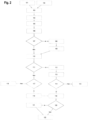
- Fig.1 shows a simplified schematic representation of a device 100 for recovering mineral substrates from valuable materials W that have artificially produced mineral fibers.
- the device comprises - in the direction of the valuable material flow passing through the device - a crushing and separation arrangement 1, a suspension mixing arrangement 2, a wet grinding arrangement 3 and a dewatering and drying arrangement 4.
- the recyclable materials W are fed as a recyclable material stream W 1 to a first coarse shredding device 11 by means of a recyclable material feed 10, which is only shown schematically here and comprises, for example, a conveyor device.
- the first coarse shredding device 11 shreds the recyclable materials W and is formed, for example, by a shredding device, a tearing device or a plucking device or contains such a device.
- the recyclable material stream W 1 can also contain other materials in addition to the mineral substrates, such as residues of paper or plastic laminations, metal wires or staples and brick, mortar or concrete residues.
- the mineral substrates in the recyclable material stream are separated from the remaining parts of the recyclable material stream and separated; for example, mineral wool parts are frayed there.
- a first separating and separating device 12 with different mechanical separating and separating means known to the person skilled in the art is provided downstream of the first coarse shredding device 11 for carrying out process step a2).
- a preferably moving coarse sieve 12' which is designed, for example, as a vibrating sieve or as a rotating drum sieve and onto or into which the recyclable material components emerging from the coarse shredding device 11 fall. Coarse, foreign recyclable material components such as stones and lumps of mortar are retained there and the shredded fibrous recyclable material components pass through this coarse sieve.
- first transport device 13 which is formed, for example, by a chute or a conveyor belt.
- first magnetic separator 14 is provided, which is made of a magnetizable metal such as For example, extracts recyclable material components consisting of iron (e.g. staples, nails, screws, wires) from the recyclable material stream W 2 .
- the roughly shredded recyclable material components of the recyclable material stream W 2 leaving the first transport device 13 are fed in step a3) to a subsequent second shredding device 15 and are further shredded and fibrilized by this.
- This shredding device 15 has, for example, an impact separator, also referred to as an impact reactor, or is formed by an impact separator.
- a second separating and separating device 16 with different mechanical separating and separating means known to the person skilled in the art is provided downstream of the second comminution device 15 for carrying out the process step a4), which form or can have a classifying device.
- the second separating and detaching device 16 can also be designed as a moving sieve 16', for example as a vibrating sieve or as a rotating drum sieve, or can have such a sieve.
- the recyclable material components passing through the finer-meshed sieve 16' fall onto a second transport device 17, which is formed, for example, by a chute or a conveyor belt.
- a second magnetic separator 18 is provided, which extracts recyclable material components still contained in the recyclable material stream W 3 and consisting of a magnetizable metal such as iron (for example fragments of staples, nails, screws, wires) from the recyclable material stream W 3 .
- Both the first separating and separating device 12 and the second separating and separating device 16 can alternatively or additionally have an air sifter with which lighter lamination residues made of paper or plastic can be separated.
- the further comminuted recyclable material components of the recyclable material stream W 3 leaving the second transport device 17 are conveyed into a process container 20 of the suspension mixing arrangement, where they are mixed with water or a water-containing fluid to form a suspension in step b).
- the water or water-containing fluid is introduced from a fluid tank 21 through a fluid line 22 into the process container 20 by means of a pump (not shown).
- the suspension prepared in the process container 20, which contains the comminuted mineral fiber-containing recyclable material components, is fed as recyclable material stream W 4 into a mill 30 of the wet grinding arrangement 3, in which the suspension is wet-ground for a predetermined period of time.
- the mineral fiber-containing recyclable material components are further comminuted until they have reached a particle size that is harmless to health.
- This grinding process can be carried out with a single mill or with several mills arranged in cascade one after the other.
- the ground suspension is discharged from the mill 30 to a wet separation device 32 in step d) as a recyclable material stream W 5.
- this wet separation device 32 which has a sieve and/or a hydrocyclone as a separating agent, for example, the recyclable material components that have reached a particle size or grain size that is harmless to health and thus form a harmless mineral substrate are separated from the suspension stream.
- the part of the suspension with the non-separated recyclable material components is returned to the mill 30 via a return line 34 and ground again.
- the part of the suspension stream separated in the wet separation device 32 with the valuable components, which serve as mineral substrate have reached a particle size or grain size that is harmless to health, are fed as a valuable material stream W 6 to a dewatering device 40, formed for example by a dewatering conveyor belt 42 of the dewatering and drying arrangement 4, in which the water or water-containing fluid can flow or drip off the particles of the mineral substrate.
- the mineral substrate thus obtained is then dried by means of a drying device 44 and leaves the device 100 as a dry powder P.
- the water or water-containing fluid separated during dewatering in the dewatering device 40 is collected and returned to the fluid tank 21 via a fluid return line 46 and, if necessary, cleaned before being introduced into the fluid tank 21.
- this first separation step coarse parts and mineral wool recyclables are separated from one another using, for example, a sieve with a mesh size suitable for effectively separating out coarser components of the recyclable material stream.
- the mineral wool is in a size that is suitable for subsequent processing.
- the mineral wool recyclables are separated into three fractions: mineral wool, waste and ferromagnetic components. The separation takes place, for example, using a drum sieve or another non-static sieve.
- the mineral wool is then subjected to a second mechanical disintegration and crushing step. Any impurities remaining in the mineral wool mixture are also crushed. Laminations initially remain in the mass flow.
- the method according to the invention can also be used to treat fiber composite elements bound with mineral binders, for example acoustic panels. This requires additional processing and separation of components such as perlite.
- the method according to the invention can also be used to treat mineral wool that is to be directly recycled as wool.
- a shortened method is used.
- Mineral wool that has been used as a plant substrate could be treated in this way.
- ferromagnetic impurities and non-magnetic metallic components are selectively removed from the mineral wool mixture.
- the metallic impurities are in a form in which they can be recycled.
- the fractions intended for further processing are fed to an impact reactor as a second crushing device using a conveyor system that is preferably encapsulated to avoid the release of any substances that may be hazardous to health.
- the impact reactor is suitable for separating materials with different viscous behavior from one another. It consists of a cylindrical shell in which a rotor equipped with impact elements rotates. The impact reactor has a corresponding feed and discharge opening. The discharge opening is equipped with a classifying device. The mesh size of the classifying device is suitable for the subsequent process step. The impact reactor discharges the treated material onto a belt.
- ferromagnetic impurities are separated again using an overbelt magnet and the non-magnetic metallic components are separated using an eddy current separator.
- the recyclable material to be treated is then mixed with water, for example, to form a pulp as a suspension.
- This pulp is fed to a mill using a pump. In this mill, the material fed in is ground to a grain size specified for subsequent processing.
- the pulp is preferably fed into a tank with microorganisms in an additional process step and exposed to a mixture of aerobic and anaerobic bacteria, for example.
- a pH value between 4 and 8 and a maximum temperature of 50°C
- the binders adhering to the surface of the fibers mostly formaldehyde-phenolic resins but also starch and sugar-based products, are metabolized by these microorganisms.
- metallic impurities especially those containing aluminum, are removed from the mineral wool mixture beforehand.
- the treatment duration is a function of the binder concentration and the desired result. The treatment duration can be specified as 2 to 7 days. Shorter or longer treatment periods do not appear to be economical.
- the treatment takes place in a tank with a device to keep the pulp fed in suspension.
- a tank can, for example, be equipped with a diffuse injection of air at the bottom. Mechanical agitators can also be used, but this causes agglomeration of the fed mineral fibers.
- the treatment tanks are equipped with a discharge device at the bottom for shot and other sunken solid components.
- the material is divided into several phases using a suitable device, a hydrocyclone or a sieve. separated.
- a suitable device a hydrocyclone or a sieve.
- the so-called “shot” is separated from the mineral wool mixture.
- fiber components with a size that is not suitable for the subsequent fine grinding are separated and returned.
- the suspended material containing mineral fibers suitable for subsequent fine grinding is fed by a pump to the mill designed as a fine grinding device, for example a stirred ball mill.
- a fine grinding device for example a stirred ball mill.
- the mineral fibers fed into the grinding device do not experience any significant reduction in diameter, but mainly in length.
- Mineral fibers used in construction have a fiber diameter in the range of 2 to 9 ⁇ m.
- Glass fibers used in the manufacture of GRP components have a fiber diameter in the range of 2 to 24 ⁇ m.
- the achievable grinding fineness is therefore a value that is lower than the limit at which fibers must be classified as "dangerous". This corresponds to a length to diameter ratio of more than 3:1.
- Another criterion is respirability. Fiber dust is considered respirable if the fiber length is greater than 5 ⁇ m and if its diameter is less than 3 ⁇ m.
- the material to be ground is separated into two phases using a suitable device, such as a hydrocyclone or a sieve: a first, harmless phase or fraction, which has a particle size or grain size that ensures the safety of the material in accordance with the relevant WHO guidelines, and a second, health-hazardous phase or fraction, which is returned to the inlet of the mill.
- a suitable device such as a hydrocyclone or a sieve: a first, harmless phase or fraction, which has a particle size or grain size that ensures the safety of the material in accordance with the relevant WHO guidelines, and a second, health-hazardous phase or fraction, which is returned to the inlet of the mill.
- the non-hazardous fraction which complies with WHO guidelines, is subjected to single or multi-stage dewatering and drying.
- Dewatering can be carried out via a comb filter press or a decanter. Drying can be done using warm air or microwaves.
- the separation of the synthetic resin binders from the mineral components is preferably carried out mechanically in the grinding process and by biological degradation of the resins using microorganisms, such as bacteria.
- microorganisms such as bacteria.
- energy is introduced into the mineral fibers. This leads to heating.
- Mechanical shear forces lead to the splintering of the individual fibers and thus to the detachment of the relatively brittle synthetic resin binders applied by nebulization during the manufacture of bonded mineral wool products.
- the binders remaining on the surface and the splintered binder particles are broken down by microorganisms.
- washing water is circulated and cleaned using osmosis.
- the activated sludge produced is either dewatered and fed into a sewage sludge incineration plant or discharged as waste water, depending on the legal basis. Other uses, such as fertilizer, are also possible.
Landscapes
- Engineering & Computer Science (AREA)
- Environmental & Geological Engineering (AREA)
- Food Science & Technology (AREA)
- Processing Of Solid Wastes (AREA)
Applications Claiming Priority (1)
| Application Number | Priority Date | Filing Date | Title |
|---|---|---|---|
| DE102022131424.3A DE102022131424A1 (de) | 2022-11-28 | 2022-11-28 | Verfahren zur Rückgewinnung von mineralischen Substraten aus künstliche Mineralfasern enthaltenden Wertstoffen |
Publications (1)
| Publication Number | Publication Date |
|---|---|
| EP4374967A1 true EP4374967A1 (fr) | 2024-05-29 |
Family
ID=88978476
Family Applications (1)
| Application Number | Title | Priority Date | Filing Date |
|---|---|---|---|
| EP23212808.2A Pending EP4374967A1 (fr) | 2022-11-28 | 2023-11-28 | Procédé de récupération de substrats minéraux à partir de matériaux de valeur contenant des fibres minérales artificielles |
Country Status (2)
| Country | Link |
|---|---|
| EP (1) | EP4374967A1 (fr) |
| DE (1) | DE102022131424A1 (fr) |
Cited By (1)
| Publication number | Priority date | Publication date | Assignee | Title |
|---|---|---|---|---|
| EP4670861A1 (fr) * | 2024-06-26 | 2025-12-31 | Saint-Gobain Ecophon AB | Procédé de recyclage de matière fibreuse minérale |
Citations (4)
| Publication number | Priority date | Publication date | Assignee | Title |
|---|---|---|---|---|
| EP0747126A1 (fr) | 1995-06-01 | 1996-12-11 | Thyssen Altwert Umweltservice GmbH | Procédé et dispositif pour le traitement de matières fibreuses, en particulier des déchets de laine minerale, comportant des fibres et des matières étrangères |
| DE102012218878A1 (de) | 2012-10-17 | 2014-04-17 | Currenta Gmbh & Co.Ohg | Thermische Behandlung von Mineralwolle |
| CN110862234A (zh) * | 2019-12-12 | 2020-03-06 | 重庆国际复合材料股份有限公司 | 一种玻璃纤维废丝的回收方法 |
| DE102021128758A1 (de) | 2021-11-04 | 2023-05-04 | Dfm Ip B.V. | Verfahren und Vorrichtung zum Reinigen von mit organischen Stoffen behafteten gebrauchten Faserwertstoffen |
Family Cites Families (3)
| Publication number | Priority date | Publication date | Assignee | Title |
|---|---|---|---|---|
| JP3960007B2 (ja) * | 2001-10-29 | 2007-08-15 | 三菱マテリアル株式会社 | 繊維類を含有する廃棄物の処理方法 |
| AT516381B1 (de) * | 2014-12-04 | 2016-05-15 | Andritz Ag Maschf | Verfahren zur Aufbereitung elektrischer und elektronischer Bauteile zur Rückgewinnung von Wertstoffen |
| CN108975680A (zh) * | 2018-09-18 | 2018-12-11 | 重庆国际复合材料股份有限公司 | 一种玻璃纤维开刀丝的回收方法 |
-
2022
- 2022-11-28 DE DE102022131424.3A patent/DE102022131424A1/de active Granted
-
2023
- 2023-11-28 EP EP23212808.2A patent/EP4374967A1/fr active Pending
Patent Citations (5)
| Publication number | Priority date | Publication date | Assignee | Title |
|---|---|---|---|---|
| EP0747126A1 (fr) | 1995-06-01 | 1996-12-11 | Thyssen Altwert Umweltservice GmbH | Procédé et dispositif pour le traitement de matières fibreuses, en particulier des déchets de laine minerale, comportant des fibres et des matières étrangères |
| DE102012218878A1 (de) | 2012-10-17 | 2014-04-17 | Currenta Gmbh & Co.Ohg | Thermische Behandlung von Mineralwolle |
| CN110862234A (zh) * | 2019-12-12 | 2020-03-06 | 重庆国际复合材料股份有限公司 | 一种玻璃纤维废丝的回收方法 |
| DE102021128758A1 (de) | 2021-11-04 | 2023-05-04 | Dfm Ip B.V. | Verfahren und Vorrichtung zum Reinigen von mit organischen Stoffen behafteten gebrauchten Faserwertstoffen |
| EP4177228A1 (fr) * | 2021-11-04 | 2023-05-10 | Dfm Ip B.V. | Procédé et dispositif pour nettoyer des fibres de valeur utilisées avec des matières organiques |
Non-Patent Citations (2)
| Title |
|---|
| FRANK U VOGDT ET AL: "LifeCycle KMF Optimierung der Stoffstr�me im Lebenszyklus von Bauprodukten aus k�nstlichen Mineralfaserd�mmstoffen", 1 January 2019 (2019-01-01), XP055692490, Retrieved from the Internet <URL:https://www.irbnet.de/daten/rswb/19089007731.pdf> [retrieved on 20200507] * |
| IARC: "Man-made Vitreous Fibres", IARC MONOGRAPHS ON THE EVALUATION OF CARCINOGENIC RISKS TO HUMANS, vol. 81, 2002 |
Cited By (2)
| Publication number | Priority date | Publication date | Assignee | Title |
|---|---|---|---|---|
| EP4670861A1 (fr) * | 2024-06-26 | 2025-12-31 | Saint-Gobain Ecophon AB | Procédé de recyclage de matière fibreuse minérale |
| WO2026003201A1 (fr) * | 2024-06-26 | 2026-01-02 | Saint-Gobain Ecophon Ab | Procédé de recyclage de matériau fibreux minéral |
Also Published As
| Publication number | Publication date |
|---|---|
| DE102022131424A1 (de) | 2024-05-29 |
Similar Documents
| Publication | Publication Date | Title |
|---|---|---|
| DE60300809T2 (de) | Vorrichtung zur Wiedergewinnung von Gipskartonplatten | |
| EP2903744B1 (fr) | Procédé et dispositif de traitement et de séparation d'un matériau à partir d'un système contenant plusieurs substances liées | |
| DE2162953A1 (de) | Verfahren zur Rückgewinnung von wiederaufarbeitbaren Bestandteilen aus Abfallmaterial | |
| DE102007029498A1 (de) | Verfahren, Anlage und Vorrichtungen zur Aufbereitung kunststoffhaltiger Abfälle | |
| EP1372860B1 (fr) | Installation et procede de traitement de minerais metalliferes | |
| DE102021127484B4 (de) | Verfahren zur Herstellung eines partikulären Rezyklats aus Quarzkomposit | |
| EP0243819B1 (fr) | Procédé et dispositif pour fractionner un mélange hétérogène de matières solides | |
| DE3105597C2 (de) | Abfallaufbereitung | |
| EP0747126B1 (fr) | Procédé et dispositif pour le traitement de matières fibreuses, en particulier des déchets de laine minerale, comportant des fibres et des matières étrangères | |
| DE102022131424A1 (de) | Verfahren zur Rückgewinnung von mineralischen Substraten aus künstliche Mineralfasern enthaltenden Wertstoffen | |
| DE102021128758A1 (de) | Verfahren und Vorrichtung zum Reinigen von mit organischen Stoffen behafteten gebrauchten Faserwertstoffen | |
| DE3836608C2 (fr) | ||
| EP0366759B1 (fr) | Procede pour broyer des matieres friables | |
| EP2052780B1 (fr) | Procédé destiné au traitement de scories | |
| DE4323217C1 (de) | Verfahren und Anlage zum Herstellen von Baumaterialien sowie Verwendung von Leiterplattenmaterial hierfür | |
| EP0876844B1 (fr) | Procédé et appareil pour le traitement de déchets | |
| DE3390020T1 (de) | Naßverfahren zur Asbestanreicherung | |
| EP3555016A1 (fr) | Procédé de préparation d'un liant à prise hydraulique et utilisation de la matière première de type ciment à base de celui-ci | |
| DE19751629A1 (de) | Verfahren und Anlage zur Aufarbeitung von Restmüll, Sperrmüll, Gewerbeabfällen u. dgl. | |
| EP1018371A1 (fr) | Procédé et dispositif pour le traitement de déchets avec broyage ultérieur des fractions de criblage séchées et exemptes de métaux | |
| AT380813B (de) | Verfahren zum aufbereiten von muell sowie anlage zur durchfuehrung des verfahrens | |
| EP3411152B1 (fr) | Procédé de déchiquetage de matériaux solides et dispositif permettant la mise en oeuvre dudit procédé | |
| LU507057B1 (de) | Verfahren zur Umwandlung von nicht biolöslichen Mineralfasern, zum Beispiel Asbest, in einen gefahrlosen Wertstoff | |
| DE4427462C2 (de) | Verfahren und Vorrichtung zur Behandlung von Altglas | |
| CH655254A5 (en) | Process and system for treating mixed construction debris |
Legal Events
| Date | Code | Title | Description |
|---|---|---|---|
| PUAI | Public reference made under article 153(3) epc to a published international application that has entered the european phase |
Free format text: ORIGINAL CODE: 0009012 |
|
| STAA | Information on the status of an ep patent application or granted ep patent |
Free format text: STATUS: THE APPLICATION HAS BEEN PUBLISHED |
|
| AK | Designated contracting states |
Kind code of ref document: A1 Designated state(s): AL AT BE BG CH CY CZ DE DK EE ES FI FR GB GR HR HU IE IS IT LI LT LU LV MC ME MK MT NL NO PL PT RO RS SE SI SK SM TR |
|
| STAA | Information on the status of an ep patent application or granted ep patent |
Free format text: STATUS: REQUEST FOR EXAMINATION WAS MADE |
|
| 17P | Request for examination filed |
Effective date: 20241126 |
|
| RBV | Designated contracting states (corrected) |
Designated state(s): AL AT BE BG CH CY CZ DE DK EE ES FI FR GB GR HR HU IE IS IT LI LT LU LV MC ME MK MT NL NO PL PT RO RS SE SI SK SM TR |
|
| STAA | Information on the status of an ep patent application or granted ep patent |
Free format text: STATUS: EXAMINATION IS IN PROGRESS |
|
| 17Q | First examination report despatched |
Effective date: 20250821 |