EP4375391A1 - Hochfestes stahlblech mit hervorragender lochdehnbarkeit und duktilität und herstellungsverfahren dafür - Google Patents
Hochfestes stahlblech mit hervorragender lochdehnbarkeit und duktilität und herstellungsverfahren dafür Download PDFInfo
- Publication number
- EP4375391A1 EP4375391A1 EP22846060.6A EP22846060A EP4375391A1 EP 4375391 A1 EP4375391 A1 EP 4375391A1 EP 22846060 A EP22846060 A EP 22846060A EP 4375391 A1 EP4375391 A1 EP 4375391A1
- Authority
- EP
- European Patent Office
- Prior art keywords
- steel sheet
- less
- excluding
- cooling
- strength
- Prior art date
- Legal status (The legal status is an assumption and is not a legal conclusion. Google has not performed a legal analysis and makes no representation as to the accuracy of the status listed.)
- Pending
Links
Images

Classifications
-
- C—CHEMISTRY; METALLURGY
- C21—METALLURGY OF IRON
- C21D—MODIFYING THE PHYSICAL STRUCTURE OF FERROUS METALS; GENERAL DEVICES FOR HEAT TREATMENT OF FERROUS OR NON-FERROUS METALS OR ALLOYS; MAKING METAL MALLEABLE, e.g. BY DECARBURISATION OR TEMPERING
- C21D9/00—Heat treatment, e.g. annealing, hardening, quenching or tempering, adapted for particular articles; Furnaces therefor
- C21D9/46—Heat treatment, e.g. annealing, hardening, quenching or tempering, adapted for particular articles; Furnaces therefor for sheet metals
-
- B—PERFORMING OPERATIONS; TRANSPORTING
- B21—MECHANICAL METAL-WORKING WITHOUT ESSENTIALLY REMOVING MATERIAL; PUNCHING METAL
- B21C—MANUFACTURE OF METAL SHEETS, WIRE, RODS, TUBES, PROFILES OR LIKE SEMI-MANUFACTURED PRODUCTS OTHERWISE THAN BY ROLLING; AUXILIARY OPERATIONS USED IN CONNECTION WITH METAL-WORKING WITHOUT ESSENTIALLY REMOVING MATERIAL
- B21C47/00—Winding-up, coiling or winding-off metal wire, metal band or other flexible metal material characterised by features relevant to metal processing only
- B21C47/02—Winding-up or coiling
-
- C—CHEMISTRY; METALLURGY
- C21—METALLURGY OF IRON
- C21D—MODIFYING THE PHYSICAL STRUCTURE OF FERROUS METALS; GENERAL DEVICES FOR HEAT TREATMENT OF FERROUS OR NON-FERROUS METALS OR ALLOYS; MAKING METAL MALLEABLE, e.g. BY DECARBURISATION OR TEMPERING
- C21D1/00—General methods or devices for heat treatment, e.g. annealing, hardening, quenching or tempering
- C21D1/18—Hardening; Quenching with or without subsequent tempering
-
- C—CHEMISTRY; METALLURGY
- C21—METALLURGY OF IRON
- C21D—MODIFYING THE PHYSICAL STRUCTURE OF FERROUS METALS; GENERAL DEVICES FOR HEAT TREATMENT OF FERROUS OR NON-FERROUS METALS OR ALLOYS; MAKING METAL MALLEABLE, e.g. BY DECARBURISATION OR TEMPERING
- C21D1/00—General methods or devices for heat treatment, e.g. annealing, hardening, quenching or tempering
- C21D1/18—Hardening; Quenching with or without subsequent tempering
- C21D1/19—Hardening; Quenching with or without subsequent tempering by interrupted quenching
-
- C—CHEMISTRY; METALLURGY
- C21—METALLURGY OF IRON
- C21D—MODIFYING THE PHYSICAL STRUCTURE OF FERROUS METALS; GENERAL DEVICES FOR HEAT TREATMENT OF FERROUS OR NON-FERROUS METALS OR ALLOYS; MAKING METAL MALLEABLE, e.g. BY DECARBURISATION OR TEMPERING
- C21D1/00—General methods or devices for heat treatment, e.g. annealing, hardening, quenching or tempering
- C21D1/84—Controlled slow cooling
-
- C—CHEMISTRY; METALLURGY
- C21—METALLURGY OF IRON
- C21D—MODIFYING THE PHYSICAL STRUCTURE OF FERROUS METALS; GENERAL DEVICES FOR HEAT TREATMENT OF FERROUS OR NON-FERROUS METALS OR ALLOYS; MAKING METAL MALLEABLE, e.g. BY DECARBURISATION OR TEMPERING
- C21D6/00—Heat treatment of ferrous alloys
- C21D6/002—Heat treatment of ferrous alloys containing Cr
-
- C—CHEMISTRY; METALLURGY
- C21—METALLURGY OF IRON
- C21D—MODIFYING THE PHYSICAL STRUCTURE OF FERROUS METALS; GENERAL DEVICES FOR HEAT TREATMENT OF FERROUS OR NON-FERROUS METALS OR ALLOYS; MAKING METAL MALLEABLE, e.g. BY DECARBURISATION OR TEMPERING
- C21D6/00—Heat treatment of ferrous alloys
- C21D6/005—Heat treatment of ferrous alloys containing Mn
-
- C—CHEMISTRY; METALLURGY
- C21—METALLURGY OF IRON
- C21D—MODIFYING THE PHYSICAL STRUCTURE OF FERROUS METALS; GENERAL DEVICES FOR HEAT TREATMENT OF FERROUS OR NON-FERROUS METALS OR ALLOYS; MAKING METAL MALLEABLE, e.g. BY DECARBURISATION OR TEMPERING
- C21D6/00—Heat treatment of ferrous alloys
- C21D6/008—Heat treatment of ferrous alloys containing Si
-
- C—CHEMISTRY; METALLURGY
- C21—METALLURGY OF IRON
- C21D—MODIFYING THE PHYSICAL STRUCTURE OF FERROUS METALS; GENERAL DEVICES FOR HEAT TREATMENT OF FERROUS OR NON-FERROUS METALS OR ALLOYS; MAKING METAL MALLEABLE, e.g. BY DECARBURISATION OR TEMPERING
- C21D8/00—Modifying the physical properties of ferrous metals or ferrous alloys by deformation combined with, or followed by, heat treatment
- C21D8/02—Modifying the physical properties of ferrous metals or ferrous alloys by deformation combined with, or followed by, heat treatment during manufacturing of plates or strips
-
- C—CHEMISTRY; METALLURGY
- C21—METALLURGY OF IRON
- C21D—MODIFYING THE PHYSICAL STRUCTURE OF FERROUS METALS; GENERAL DEVICES FOR HEAT TREATMENT OF FERROUS OR NON-FERROUS METALS OR ALLOYS; MAKING METAL MALLEABLE, e.g. BY DECARBURISATION OR TEMPERING
- C21D8/00—Modifying the physical properties of ferrous metals or ferrous alloys by deformation combined with, or followed by, heat treatment
- C21D8/02—Modifying the physical properties of ferrous metals or ferrous alloys by deformation combined with, or followed by, heat treatment during manufacturing of plates or strips
- C21D8/0221—Modifying the physical properties of ferrous metals or ferrous alloys by deformation combined with, or followed by, heat treatment during manufacturing of plates or strips characterised by the working steps
- C21D8/0226—Hot rolling
-
- C—CHEMISTRY; METALLURGY
- C21—METALLURGY OF IRON
- C21D—MODIFYING THE PHYSICAL STRUCTURE OF FERROUS METALS; GENERAL DEVICES FOR HEAT TREATMENT OF FERROUS OR NON-FERROUS METALS OR ALLOYS; MAKING METAL MALLEABLE, e.g. BY DECARBURISATION OR TEMPERING
- C21D8/00—Modifying the physical properties of ferrous metals or ferrous alloys by deformation combined with, or followed by, heat treatment
- C21D8/02—Modifying the physical properties of ferrous metals or ferrous alloys by deformation combined with, or followed by, heat treatment during manufacturing of plates or strips
- C21D8/0221—Modifying the physical properties of ferrous metals or ferrous alloys by deformation combined with, or followed by, heat treatment during manufacturing of plates or strips characterised by the working steps
- C21D8/0236—Cold rolling
-
- C—CHEMISTRY; METALLURGY
- C21—METALLURGY OF IRON
- C21D—MODIFYING THE PHYSICAL STRUCTURE OF FERROUS METALS; GENERAL DEVICES FOR HEAT TREATMENT OF FERROUS OR NON-FERROUS METALS OR ALLOYS; MAKING METAL MALLEABLE, e.g. BY DECARBURISATION OR TEMPERING
- C21D8/00—Modifying the physical properties of ferrous metals or ferrous alloys by deformation combined with, or followed by, heat treatment
- C21D8/02—Modifying the physical properties of ferrous metals or ferrous alloys by deformation combined with, or followed by, heat treatment during manufacturing of plates or strips
- C21D8/0247—Modifying the physical properties of ferrous metals or ferrous alloys by deformation combined with, or followed by, heat treatment during manufacturing of plates or strips characterised by the heat treatment
- C21D8/0263—Modifying the physical properties of ferrous metals or ferrous alloys by deformation combined with, or followed by, heat treatment during manufacturing of plates or strips characterised by the heat treatment following hot rolling
-
- C—CHEMISTRY; METALLURGY
- C21—METALLURGY OF IRON
- C21D—MODIFYING THE PHYSICAL STRUCTURE OF FERROUS METALS; GENERAL DEVICES FOR HEAT TREATMENT OF FERROUS OR NON-FERROUS METALS OR ALLOYS; MAKING METAL MALLEABLE, e.g. BY DECARBURISATION OR TEMPERING
- C21D8/00—Modifying the physical properties of ferrous metals or ferrous alloys by deformation combined with, or followed by, heat treatment
- C21D8/02—Modifying the physical properties of ferrous metals or ferrous alloys by deformation combined with, or followed by, heat treatment during manufacturing of plates or strips
- C21D8/0247—Modifying the physical properties of ferrous metals or ferrous alloys by deformation combined with, or followed by, heat treatment during manufacturing of plates or strips characterised by the heat treatment
- C21D8/0273—Final recrystallisation annealing
-
- C—CHEMISTRY; METALLURGY
- C21—METALLURGY OF IRON
- C21D—MODIFYING THE PHYSICAL STRUCTURE OF FERROUS METALS; GENERAL DEVICES FOR HEAT TREATMENT OF FERROUS OR NON-FERROUS METALS OR ALLOYS; MAKING METAL MALLEABLE, e.g. BY DECARBURISATION OR TEMPERING
- C21D9/00—Heat treatment, e.g. annealing, hardening, quenching or tempering, adapted for particular articles; Furnaces therefor
- C21D9/0062—Heat-treating apparatus with a cooling or quenching zone
-
- C—CHEMISTRY; METALLURGY
- C22—METALLURGY; FERROUS OR NON-FERROUS ALLOYS; TREATMENT OF ALLOYS OR NON-FERROUS METALS
- C22C—ALLOYS
- C22C38/00—Ferrous alloys, e.g. steel alloys
- C22C38/001—Ferrous alloys, e.g. steel alloys containing N
-
- C—CHEMISTRY; METALLURGY
- C22—METALLURGY; FERROUS OR NON-FERROUS ALLOYS; TREATMENT OF ALLOYS OR NON-FERROUS METALS
- C22C—ALLOYS
- C22C38/00—Ferrous alloys, e.g. steel alloys
- C22C38/002—Ferrous alloys, e.g. steel alloys containing In, Mg, or other elements not provided for in one single group C22C38/001 - C22C38/60
-
- C—CHEMISTRY; METALLURGY
- C22—METALLURGY; FERROUS OR NON-FERROUS ALLOYS; TREATMENT OF ALLOYS OR NON-FERROUS METALS
- C22C—ALLOYS
- C22C38/00—Ferrous alloys, e.g. steel alloys
- C22C38/02—Ferrous alloys, e.g. steel alloys containing silicon
-
- C—CHEMISTRY; METALLURGY
- C22—METALLURGY; FERROUS OR NON-FERROUS ALLOYS; TREATMENT OF ALLOYS OR NON-FERROUS METALS
- C22C—ALLOYS
- C22C38/00—Ferrous alloys, e.g. steel alloys
- C22C38/04—Ferrous alloys, e.g. steel alloys containing manganese
-
- C—CHEMISTRY; METALLURGY
- C22—METALLURGY; FERROUS OR NON-FERROUS ALLOYS; TREATMENT OF ALLOYS OR NON-FERROUS METALS
- C22C—ALLOYS
- C22C38/00—Ferrous alloys, e.g. steel alloys
- C22C38/06—Ferrous alloys, e.g. steel alloys containing aluminium
-
- C—CHEMISTRY; METALLURGY
- C22—METALLURGY; FERROUS OR NON-FERROUS ALLOYS; TREATMENT OF ALLOYS OR NON-FERROUS METALS
- C22C—ALLOYS
- C22C38/00—Ferrous alloys, e.g. steel alloys
- C22C38/12—Ferrous alloys, e.g. steel alloys containing tungsten, tantalum, molybdenum, vanadium, or niobium
-
- C—CHEMISTRY; METALLURGY
- C22—METALLURGY; FERROUS OR NON-FERROUS ALLOYS; TREATMENT OF ALLOYS OR NON-FERROUS METALS
- C22C—ALLOYS
- C22C38/00—Ferrous alloys, e.g. steel alloys
- C22C38/14—Ferrous alloys, e.g. steel alloys containing titanium or zirconium
-
- C—CHEMISTRY; METALLURGY
- C22—METALLURGY; FERROUS OR NON-FERROUS ALLOYS; TREATMENT OF ALLOYS OR NON-FERROUS METALS
- C22C—ALLOYS
- C22C38/00—Ferrous alloys, e.g. steel alloys
- C22C38/18—Ferrous alloys, e.g. steel alloys containing chromium
- C22C38/22—Ferrous alloys, e.g. steel alloys containing chromium with molybdenum or tungsten
-
- C—CHEMISTRY; METALLURGY
- C22—METALLURGY; FERROUS OR NON-FERROUS ALLOYS; TREATMENT OF ALLOYS OR NON-FERROUS METALS
- C22C—ALLOYS
- C22C38/00—Ferrous alloys, e.g. steel alloys
- C22C38/18—Ferrous alloys, e.g. steel alloys containing chromium
- C22C38/26—Ferrous alloys, e.g. steel alloys containing chromium with niobium or tantalum
-
- C—CHEMISTRY; METALLURGY
- C22—METALLURGY; FERROUS OR NON-FERROUS ALLOYS; TREATMENT OF ALLOYS OR NON-FERROUS METALS
- C22C—ALLOYS
- C22C38/00—Ferrous alloys, e.g. steel alloys
- C22C38/18—Ferrous alloys, e.g. steel alloys containing chromium
- C22C38/28—Ferrous alloys, e.g. steel alloys containing chromium with titanium or zirconium
-
- C—CHEMISTRY; METALLURGY
- C22—METALLURGY; FERROUS OR NON-FERROUS ALLOYS; TREATMENT OF ALLOYS OR NON-FERROUS METALS
- C22C—ALLOYS
- C22C38/00—Ferrous alloys, e.g. steel alloys
- C22C38/18—Ferrous alloys, e.g. steel alloys containing chromium
- C22C38/32—Ferrous alloys, e.g. steel alloys containing chromium with boron
-
- C—CHEMISTRY; METALLURGY
- C22—METALLURGY; FERROUS OR NON-FERROUS ALLOYS; TREATMENT OF ALLOYS OR NON-FERROUS METALS
- C22C—ALLOYS
- C22C38/00—Ferrous alloys, e.g. steel alloys
- C22C38/18—Ferrous alloys, e.g. steel alloys containing chromium
- C22C38/38—Ferrous alloys, e.g. steel alloys containing chromium with more than 1.5% by weight of manganese
-
- C—CHEMISTRY; METALLURGY
- C21—METALLURGY OF IRON
- C21D—MODIFYING THE PHYSICAL STRUCTURE OF FERROUS METALS; GENERAL DEVICES FOR HEAT TREATMENT OF FERROUS OR NON-FERROUS METALS OR ALLOYS; MAKING METAL MALLEABLE, e.g. BY DECARBURISATION OR TEMPERING
- C21D2211/00—Microstructure comprising significant phases
- C21D2211/005—Ferrite
-
- C—CHEMISTRY; METALLURGY
- C21—METALLURGY OF IRON
- C21D—MODIFYING THE PHYSICAL STRUCTURE OF FERROUS METALS; GENERAL DEVICES FOR HEAT TREATMENT OF FERROUS OR NON-FERROUS METALS OR ALLOYS; MAKING METAL MALLEABLE, e.g. BY DECARBURISATION OR TEMPERING
- C21D2211/00—Microstructure comprising significant phases
- C21D2211/008—Martensite
Definitions
- the present disclosure relates to a steel suitable as a material for automobiles, and more particularly, to a high-strength steel sheet having excellent hole expandability and ductility and a manufacturing method thereof.
- high-strength steel with excellent strength has been used as a material for structural members, such as members, seat rails, and pillars to improve impact resistance of vehicle bodies.
- hole expandability is required for smooth molding, but high-strength steel has low hole expandability, resulting in defects such as cracks during molding. As such, poor hole expandability may result in cracks in part molded portions when the car crashes, and thus, parts may be easily destroyed to threaten the safety of occupants.
- high-strength steel used as a material for automobiles includes dual phase steel (DP Steel), transformation induced plasticity steel (TRIP steel), complex phase steel (CP steel), ferrite-bainite steel (FB steel), and the like.
- DP Steel dual phase steel
- TRIP steel transformation induced plasticity steel
- CP steel complex phase steel
- FB steel ferrite-bainite steel
- DP steel an ultra-high-strength steel, has a low yield ratio of approximately 0.5 to 0.6, so it is easy to process and advantageously has high elongation next to TRIP steel. Accordingly, DP steel is mainly applied to door outers, seat rails, seat belts, suspensions, arms, wheel rims, and the like.
- TRIP steel has a yield ratio in the range of 0.57 to 0.67, exhibiting excellent formability (high ductility), and is therefore suitable for parts requiring high formability, such as members, roofs, seat belts, and bumper rails.
- CP steel is applied to side panels and underbody stiffeners due to a low yield ratio, high elongation, and bending workability thereof, and FB steel has excellent hole expandability and is mainly applied to suspension lower arms or wheel discs.
- DP steel mainly includes ferrite with excellent ductility and hard phases (martensite phase, bainite phase) with high strength, and a small amount of residual austenite may be present therein.
- the DP steel has low yield strength and high tensile strength, thus having a low yield ratio (YR) and have characteristics of high strain hardening rate, high ductility, continuous yield behavior, room temperature aging resistance, baking hardenability, and the like.
- high-strength steel with high hole expandability may be manufactured by controlling the fraction, recrystallization degree, and distribution uniformity of each phase.
- a slab is manufactured through a steelmaking and casting process, [heating-rough rolling-finish hot rolling] is performed on the slab to obtain a hot-rolled coil, and then a final product is manufactured through an annealing process.
- the annealing process is a process mainly performed in the manufacturing of a cold-rolled steel sheet, and the cold-rolled steel sheet is manufactured by pickling a hot-rolled coil to remove surface scale therefrom, cold-rolling the resultant coil at a constant reduction rate at room temperature, and then performing annealing and an additional temper rolling process as necessary.
- Cold-rolled steel sheets (cold-rolled material) obtained by cold rolling are in a very hardened state and are not suitable for manufacturing parts requiring workability, and therefore, workability may be improved by softening through a heat treatment in a continuous annealing furnace, as a subsequent process.
- the steel sheet (cold-rolled material) is heated to approximately 650°C to 850°C in a heating furnace and then maintained for a predetermined period of time to lower hardness and improve workability through recrystallization and phase transformation.
- the steel sheet that has not undergone the annealing process has high hardness, particularly, surface hardness, and lacks workability
- the steel sheet subjected to the annealing process has a recrystallized structure, so that hardness, a yield point, and tensile strength are lowered to improve workability.
- ferrite may be completely recrystallized in a heating process during continuous annealing to be produced in the form of equiaxed crystals, so that austenite may be created and grown in equiaxed crystals in a subsequent process, thereby advantageously forming an austenite phase having small and uniform grains.
- Patent Document 1 proposes a method according to refining the microstructure, and specifically, a method of dispersing fine precipitated copper particles having a grain size of 1 to 100 nm inside the structure for a composite structure steel sheet mainly comprised of a martensite phase.
- this technique requires the addition of 2 to 5% of Cu to obtain good fine precipitated particles, leading to a possibility that hot brittleness may occur due to a large amount of Cu and manufacturing costs may excessively increase.
- Patent Document 2 discloses a steel sheet having a structure containing 2 to 10 area% of pearlite based on ferrite as a base structure, and having improved strength through precipitation enhancement and crystal grain refinement by adding carbon nitride forming elements (e.g., Ti, etc.). While the steel sheet is good in terms of hole expandability, it has limitations in further increasing tensile strength, and has a problem in that cracks occur during fresh forming due to high yield strength and low ductility.
- carbon nitride forming elements e.g., Ti, etc.
- Patent Document 3 discloses a method of manufacturing a cold-rolled steel sheet simultaneously obtaining high strength and high ductility using a tempered martensite phase and having an excellent plate shape after continuous annealing, but the content of carbon (C) in the steel is 0.2% or more to have poor weldability and there is a possibility that dent defects in a furnace may occur due to the addition of a large amount of Si.
- An aspect of the present disclosure is to provide a high-strength steel sheet having a low yield ratio, high strength, and excellent formability, such as hole expandability, through enhancement of ductility, as a material suitable for automotive structural members, and the like, and a method for manufacturing the same.
- the object of the present disclosure is not limited to the above.
- the object of the present disclosure will be understood from the entire contents of this specification, and those skilled in the art will have no difficulty in understanding the additional subject of the present disclosure.
- a high-strength steel sheet having excellent hole expandability comprises, by wt%, carbon (C): 0.05 to 0.12%, manganese (Mn): 2.5 to 3.0%, silicon (Si): 1.2% or less (excluding 0%), chromium (Cr): 0.1% or less (excluding 0%), molybdenum (Mo): 0.1% or less (excluding 0%), niobium (Nb): 0.1% or less (excluding 0%), titanium (Ti): 0.1% or less (excluding 0%), boron (B): 0.002% or less (excluding 0%), aluminum (sol.Al): 0.02 to 0.05%, phosphorus (P): 0.05% or less (excluding 0%), sulfur (S): 0.01% or less (excluding 0%), nitrogen (N): 0.01% or less (excluding 0%), iron (Fe) and other unavoidable impurities, wherein a microstructure comprises ferrite of 20 to 30% by area fraction, non
- a method of manufacturing a high-strength steel sheet having excellent hole expandability includes: preparing a steel slab including an alloy composition described above; heating the steel slab in a temperature range of 1100 to 1300°C; hot-rolling the heated steel slab to manufacture a hot-rolled steel sheet; coiling the hot-rolled steel sheet in a temperature range of 400 to 700°C; cooling the hot-rolled steel sheet to room temperature after the coiling; cold-rolling the cooled hot-rolled steel sheet to manufacture a cold-rolled steel sheet; continuously annealing the cold-rolled steel sheet; primarily cooling the cold-rolled steel sheet at an average cooling rate of 1 to 10°C/s to a temperature range of 570 to 630°C after the continuous annealing; and secondarily cooling the cooled cold-rolled steel sheet at an average cooling rate of 5 to 50°C to a temperature range of 300 to 400°C, after the primary cooling, wherein the continuous annealing is performed in a facility equipped with a heating zone,
- the steel sheet of the present disclosure with improved formability may prevent machining defects, such as cracks or wrinkles during press forming, the steel sheet may be appropriately applied to parts of structures requiring machining into complex shapes. Furthermore, the steel sheet of the present disclosure is also effective in manufacturing a material with improved collision resistance so that defects, such as cracks, are not easily formed if a vehicle to which such parts are applied inevitably collides.
- the inventors of the present disclosure conducted in-depth research to develop a material having a level of formability that may be suitably used for parts requiring machining into complex shapes among automotive materials.
- the present inventors completed the present disclosure by deriving a structure configuration capable of resolving a difference in hardness between a soft phase and a hard phase, which affects crack resistance of steel, and, at the same time, confirming that a target could be achieved through refinement of the hard phase and control of crystal grain shape, which are advantageous for preventing generation and propagation of voids.
- the present disclosure has technical significance in introducing an intermediate phase, preferably, a non-equilibrium (quasi-equilibrium) ferrite phase, in order to solve the difference in hardness between the soft phase and the hard phase, and optimizing an alloy composition and manufacturing conditions in forming such a structure.
- an intermediate phase preferably, a non-equilibrium (quasi-equilibrium) ferrite phase
- a high-strength steel sheet having excellent hole expandability and ductility comprises, by wt%, carbon (C): 0.05 to 0.12%, manganese (Mn): 2.5 to 3.0%, silicon (Si): 1.2% or less (excluding 0%), chromium (Cr): 0.1% or less (excluding 0%), molybdenum (Mo): 0.1% or less (excluding 0%), niobium (Nb): 0.1% or less (excluding 0%), titanium (Ti): 0.1% or less (excluding 0%), boron (B): 0.002% or less (excluding 0%), aluminum (sol.Al): 0.02 to 0.05%, phosphorus (P): 0.05% or less (excluding 0%), sulfur (S): 0.01% or less (excluding 0%), and nitrogen (N): 0.01% or less (excluding 0%).
- the content of each element is based on weight, and the ratio of a structure is based on area.
- Carbon (C) is an important element added for solid solution strengthening, and carbon (C) may be combined with a precipitated element to form a fine precipitate, thereby contributing to enhancement of the strength of steel.
- the content of C exceeds 0.12%, hardenability may be increased and strength may be excessively increased as martensite is formed during cooling during steel production, while elongation is reduced. In addition, weldability may become inferior to cause welding defects during machining into parts. Meanwhile, if the C content is less than 0.05%, it may be difficult to secure a target level of strength.
- carbon (C) may be included in the amount of 0.05 to 0.12%. More advantageously, carbon (C) may be included by 0.06% or more, and may be included by 0.10% or less.
- Manganese (Mn) is an element advantageous for preventing hot brittleness due to the formation of FeS by precipitating sulfur (S) in steel as MnS, and for solid solution strengthening of steel.
- Mn-Band Mn oxide band
- Mn oxide may be eluted on the surface, thereby significantly impairing plating properties.
- Mn may be included in an amount of 2.5 to 3.0%.
- Silicon (Si) is a ferrite stabilizing element and is advantageous in securing a target level of ferrite fraction by accelerating ferrite transformation.
- silicon (Si) has good solid solution strengthening ability to be effective in increasing the strength of ferrite and is a useful in securing strength without reducing the ductility of steel.
- the content of Si exceeds 1.2%, the solid solution strengthening effect may be excessive to rather lower the ductility and induce surface scale defects to adversely affect a plating surface quality. In addition, there is a problem of impairing chemical conversion treatability.
- Si may be included in an amount of 1.2% or less, and 0% may be excluded. More advantageously, Si may be included in an amount of 0.1% or more.
- Chromium (Cr) is an element contributing to constituting a structure intended in the present disclosure, suppresses the formation of martensite and bainite phases during annealing heat treatment, and contributes to strength enhancement by forming fine carbides. That is, Cr has an effect of suppressing bainite formed competitively with non-equilibrium (quasi-equilibrium) ferrite, and Cr included at an appropriate level is advantageous in forming a non-equilibrium (quasi-equilibrium) ferrite phase at high temperatures.
- the non-equilibrium (quasi-equilibrium) ferrite phase may not be formed to reduce the ductility and hole expandability of the steel, and when carbides are formed at grain boundaries, strength and elongation may be inferior. In addition, manufacturing costs may increase.
- Cr may be included in an amount of 0.1% or less, and 0% may be excluded. More advantageously, Cr may be included in an amount of 0.01% or more.
- Molybdenum (Mo) is an element that facilitates the formation of a non-equilibrium (quasi-equilibrium) ferrite phase by suppressing the transformation of pearlite, suppresses the formation of a martensite phase during annealing heat treatment, and contributes to strength enhancement by forming fine carbides.
- non-equilibrium (quasi-equilibrium) ferrite phase may not rather be formed to reduce the ductility and hole expandability of the steel, and manufacturing costs may increase.
- Mo may be included in an amount of 0.1% or less, and 0% may be excluded. More advantageously, Mo may be included in an amount of 0.01% or less.
- Niobium (Nb) is an element that segregates at austenite grain boundaries to suppress coarsening of austenite crystal grains during annealing heat treatment and contributes to strength enhancement by forming fine carbides.
- Nb may be included in an amount of 0.1% or less, and 0% may be excluded. More advantageously, Nb may be included in an amount of 0.01% or less.
- Titanium (Ti) is an element that forms fine carbides and contributes to securing yield strength and tensile strength.
- Ti has an effect of precipitating N in steel as TiN to suppress the formation of AlN due to Al inevitably present in steel, thereby reducing the possibility of cracking during continuous casting.
- Ti may be included in an amount of 0.1% or less, and 0% may be excluded. More advantageously, Ti may be included in an amount of 0.01% or less.
- Boron (B) is an element that retards the transformation of austenite into pearlite during cooling after annealing heat treatment, but if the content of boron (B) exceeds 0.002%, B may be excessively concentrated on the surface to cause deterioration of plating adhesion.
- B may be included in an amount of 0.002% or less, and 0% may be excluded.
- Aluminum (sol.Al) is an element added for the grain size refinement effect and deoxidation of steel, and if the content of aluminum (sol.Al) is less than 0.02%, aluminum killed steel cannot be manufactured in a stable state. Meanwhile, if the content of aluminum (sol.Al) exceeds 0.05%, the crystal grains may be refined to improve the strength, but excessive formation of inclusions during steel casting operation may increase the risk of surface defects of a plated steel sheet.
- the sol.Al may be included in an amount of 0.02 to 0.05%.
- Phosphorus (P) is a substitutional element having the greatest solid-solution strengthening effect and is an element advantageous for improving in-plane anisotropy and securing strength without significantly deteriorating formability.
- P is excessively added, the possibility of brittle fracture may significantly increase, thereby increasing the possibility of plate breakage of a slab during hot rolling and impairing plating surface characteristics.
- the content of P may be controlled to 0.05% or less, and 0% may be excluded in consideration of the level that is inevitably added.
- S Sulfur
- S is an element that is inevitably added as an impurity element in steel, and since S inhibits ductility, it is desirable to manage the content of S as low as possible.
- S since S has a problem of increasing the possibility of generating hot brittleness, it is preferable to control the content of S to 0.01% or less.
- 0% may be excluded.
- N Nitrogen
- N may be included in an amount of 0.01% or less, and 0% may be excluded in consideration of an inevitably added level.
- the remaining component of the present disclosure is iron (Fe).
- Fe iron
- unintended impurities from raw materials or the surrounding environment inevitably mixed in a normal manufacturing process cannot be excluded. Since these impurities are known to anyone skilled in the ordinary manufacturing process, not all thereof are specifically mentioned in this specification.
- the steel sheet of the present disclosure having the aforementioned alloy composition may include ferrite as a soft phase, a martensite phase as a hard phase, and a non-equilibrium (quasi-equilibrium) ferrite phase formed at these interfaces.
- the steel sheet of the present disclosure may include a ferrite phase in an area fraction of 20 to 30% and a non-equilibrium (quasi-equilibrium) ferrite phase in an area fraction of 5 to 15%, and may include a martensite phase as a remaining structure.
- a trace amount of a retained austenite phase may be included.
- the non-equilibrium (quasi-equilibrium) ferrite phase is a structure advantageous to minimizing a difference in hardness between the soft phase and the hard phase and is a structure distinct from existing equilibrium ferrite (polygonal ferrite).
- the non-equilibrium (quasi-equilibrium) ferrite may be an acicular ferrite or a bainitic ferrite.
- Widmanstatten ferrite, massive ferrite, and the like may be included depending on cooling conditions.
- non-equilibrium (quasi-equilibrium) ferrite includes relatively high C and Mn compared to equilibrium ferrite, while being affected by components constituting a mother phase. For example, if the C concentration of equilibrium ferrite is taken to be 0.02%, non-equilibrium (quasi-equilibrium) ferrite has a higher C content of 0.03 to 0.04%.
- the hard phase formed near non-equilibrium (quasi-equilibrium) ferrite has a relatively low concentration of C and Mn, the difference in hardness between the soft phase and the hard phase may be reduced and hole expandability may be improved.
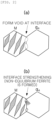
- the Si concentration in non-equilibrium (quasi-equilibrium) ferrite is as low as less than 1%, stacking fault energy may increase and cross slip may be difficult, resulting in resistance to the formation of voids due to deformation ( FIG. 2 ).
- the fraction of the non-equilibrium (quasi-equilibrium) ferrite phase is excessively high, the fraction of the hard phase may be relatively low, making it impossible to secure a target level of strength.
- the non-equilibrium (quasi-equilibrium) ferrite phase may be included in an amount of 15% or less. Meanwhile, if the fraction is less than 5%, the aforementioned effect (minimization of the hardness difference between the hard phase and the soft phase) cannot be sufficiently obtained, resulting in poor hole expandability.
- the fraction of the martensite phase may not be specifically limited, but may be included in an area fraction of 50% or more to secure ultra-high strength of 1100 MPa or more in tensile strength. However, if the fraction of the martensite phase exceeds 75%, ductility may be lowered, making it difficult to secure a target level of formability.
- the fraction of the retained austenite phase does not exceed 3%, and even if the fraction is 0%, there is no difficulty in securing intended physical properties.
- the steel sheet of the present disclosure having the aforementioned microstructure may have a tensile strength of 1100 MPa or more, a yield strength of 550 to 700 MPa, and an elongation (total elongation) of 12% or more, so as to have high strength and high ductility.
- the steel sheet has a hole expansion ratio (HER) of 25% or more, so that resistance to cracks that may occur during machining and resistance to impact fracture are excellent.
- HER hole expansion ratio
- the present disclosure may manufacture a desired steel sheet through the processes of [steel slab heating - hot rolling - coiling - cold rolling - continuous annealing], and each process will be described in detail below.
- a steel slab satisfying the aforementioned alloy composition may be prepared and heated.
- This process is performed in order to smoothly perform the subsequent hot rolling process and sufficiently obtain target mechanical properties of the steel sheet.
- the conditions may be normal conditions.
- the heating process may be performed in a temperature range of 1100 to 1300°C.
- the heated steel slab may be hot-rolled to produce a hot-rolled steel sheet, and at this time, finish hot-rolling may be performed at an exit side temperature of Ar3 or more and 1000°C or less.
- hot deformation resistance may increase rapidly, and the top, bottom, and edge of the hot-rolled coil may become a single-phase region, resulting in increased in-plane anisotropy to deteriorate formability. Meanwhile, if the temperature exceeds 1000°C, a rolling load may be relatively reduced, which is advantageous to productivity, but there is a risk of thick oxide scale.
- the finish hot rolling may be performed in a temperature range of 760 to 940°C.
- the hot-rolled steel sheet manufactured according to the above may be coiled to have a coil shape.
- the coiling may be performed in a temperature range of 400 to 700°C. If the coiling temperature is less than 400°C., martensite or non-equilibrium (quasi-equilibrium) ferrite phase may be excessively formed, resulting in an excessive increase in strength of the hot-rolled steel sheet, which may cause problems, such as shape defects due to a load during subsequent cold rolling. Meanwhile, if the coiling temperature exceeds 700°C, a surface scale may increase to deteriorate pickling properties.
- the coiled hot-rolled steel sheet it is preferable to cool the coiled hot-rolled steel sheet to room temperature at an average cooling rate of 0.1°C/s or less (excluding 0°C/s).
- the rolled hot-rolled steel sheet may be cooled after performing processes, such as transfer and stacking, but it should be noted that the process prior to cooling is not limited thereto.
- the hot-rolled steel sheet coiled according to the above may be cold-rolled to produce a cold-rolled steel sheet.
- the cold rolling may be performed at a cold rolling reduction rate of 55 to 70%. If the cold rolling reduction rate is less than 55%, the recrystallization driving force may be weakened, making it difficult to obtain good recrystallized grains. Meanwhile, if the cold rolling reduction rate exceeds 70%, the risk of cracking may increase at the edge of the steel sheet, and the rolling load may increase rapidly.
- the present disclosure may further promote recrystallization of ferrite in a heating section during the subsequent continuous annealing process in a state in which an appropriate level of cold rolling reduction rate is applied during cold rolling, and from this, the formation of fine ferrite may be induced to form small austenite uniformly at the ferrite grain boundary.
- This affects the size or distribution of the non-equilibrium (quasi-equilibrium) structure during cooling and is advantageous to improving workability, such as elongation and hole expandability, while maintaining the strength of a final product.
- the cold rolling reduction rate may be implemented with only one cold rolling, that is, one stand, and thus, there is an economically advantageous effect as the rolling reduction is possible.
- a target reduction ratio may be achieved by repeated rolling using a reversing mill.
- the reversing mill is a type of rolling mill used for rolling thin materials, and refers to a rolling mill that rolls, while reciprocating the material between a pair of rolls. One way may be set to 1 pass, when reciprocating the material.
- the hot-rolled steel sheet may be pickled before the cold rolling, and the pickling process may be performed in a general manner.
- the continuous annealing may be performed in a continuous annealing furnace (CAL), for example.
- CAL continuous annealing furnace
- the continuous annealing furnace may include [heating zone - soaking zone - cooling zone (slow cooling zone and rapid cooling zone) - (overaging zone, if necessary)].
- the cold rolled steel sheet is heated to a specific temperature in the heating zone, and after reaching a target temperature, the steel sheet is subjected to a process of maintaining in the soaking zone for a certain period of time.
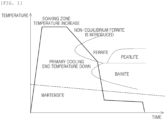
- the temperature of the heating zone and the soaking zone may be equally controlled, which means that an end temperature of the heating zone and a starting temperature of the soaking zone are controlled to be the same ( FIG. 1 ).
- the temperature of the heating zone and soaking zone may be controlled to 810 to 850°C.
- the temperature of the heating zone is less than 810°C, sufficient heat input for recrystallization cannot be applied, whereas if the temperature exceeds 850°C, productivity may be reduced and an austenite phase may be excessively formed, resulting in a significant increase in the fraction of the hard phase after subsequent cooling to lower the ductility of the steel.
- the temperature of the soaking zone is less than 810°C, excessive cooling may be required at the end temperature of the heating zone, which is economically disadvantageous, and the amount of heat for recrystallization may be insufficient. Meanwhile, if the temperature exceeds 850°C, the austenite fraction may become excessive and formability may decrease due to an increase in the hard phase during cooling.
- Increasing the temperature of the soaking zone within the aforementioned temperature range may lower the austenite stability, thereby promoting the formation of a non-equilibrium (quasi-equilibrium) ferrite phase during subsequent cooling.
- the present disclosure performs stepwise cooling during cooling after passing through the heating zone and soaking zone.
- a non-equilibrium (quasi-equilibrium) ferrite phase may be introduced, and the non-equilibrium (quasi-equilibrium) ferrite phase may be configured together with a certain fraction of soft and hard phases as a final structure. Accordingly, in the steel sheet of the present disclosure, not only strength and ductility may be improved, but also a workability improvement effect may be obtained by interfacial strengthening by the non-equilibrium (quasi-equilibrium) ferrite phase.
- the heat input applied to the steel sheet in the heating section including the heating zone and the soaking zone during the continuous annealing it is preferable to control the heat input applied to the steel sheet in the heating section including the heating zone and the soaking zone during the continuous annealing.
- a target structure may be formed by cooling the cold-rolled steel sheet heat-treated according to the above, and at this time, it is preferable to perform cooling in a stepwise manner.
- the stepwise cooling may include primary cooling - secondary cooling. Specifically, after the primary cooling at an average cooling rate of 1 to 10°C/s to a temperature range of 570 to 630°C after the continuous annealing, secondary cooling may be performed at an average cooling rate of 5 to 50°C/s up to a temperature range of 300 to 400°C.
- the diffusion activity of carbon may be low due to the excessively low temperature and the carbon concentration in ferrite may increase, while the yield ratio may increase due to an excessive hard phase fraction as the carbon concentration in austenite decreases, thereby increasing the tendency of cracking during machining.
- the cooling rate between the soaking zone and the cooling zone may excessively increase, causing a problem that a shape of the plate is not uniform. If the end temperature exceeds 630°C, an excessively high cooling rate may be required during subsequent cooling (secondary cooling) and it may be difficult to introduce the non-equilibrium (quasi-equilibrium) ferrite phase.
- the primary cooling may be performed at an average cooling rate of 1°C/s or more.
- rapid cooling may be performed at a cooling rate equal to or higher than a certain level.
- the secondary cooling end temperature is less than 300°C, cooling deviation may occur in width and length directions of the steel sheet, so that the plate shape may be deteriorated.
- the temperature exceeds 400°C, it may not be possible to sufficiently secure the hard phase, and thus, the strength may be lowered and bainite may be formed to cause an increase in yield ratio and a decrease in elongation.
- the average cooling rate during the secondary cooling is less than 5°C/s, there is a risk that the fraction of the hard phase may be excessive, whereas if the average cooling rate exceeds 50°C/s, the hard phase may be insufficient.
- overaging treatment may be performed.
- the overaging treatment is a process of maintaining for a predetermined time after the secondary cooling end temperature, and has an effect of improving shape quality by performing uniform heat treatment in the width direction and length direction of the coil. To this end, the overaging treatment may be performed for 200 to 800 seconds.
- the temperature thereof may be the same as the end temperature of the secondary cooling or may be performed within the end temperature range of the secondary cooling.
- the high-strength steel sheet of the present disclosure prepared as described above may have a microstructure including a hard phase and a soft phase, and in particular, by maximizing ferrite recrystallization by an optimized cold rolling and annealing process, a structure in which the martensite phase, which is a hard phase, is uniformly distributed in the finally recrystallized ferrite matrix may be achieved.
- a non-equilibrium (quasi-equilibrium) ferrite phase into the interface between the hard phase and the soft phase, crack resistance during machining may increase.
- the steel sheet of the present disclosure has a high tensile strength of 1100 MPa or more, it is possible to ensure excellent formability, such as hole expandability by securing a low yield ratio and high ductility.
- each steel slab was heated at 1200°C for 1 hour, and then finish hot-rolled at a finish rolling temperature of 880 to 920°C to manufacture hot-rolled steel sheets. Thereafter, each hot-rolled steel sheet was coiled at 650°C and then cooled to room temperature at a cooling rate of 0.1°C/s. Thereafter, each of the coiled hot-rolled steel sheets was subjected to cold rolling and continuous annealing under the conditions illustrated in Table 2 below, stepwise cooling (primary-secondary) was performed, and then, overaging treatment was performed at 360°C for 520 seconds to manufacture a final steel sheet.
- stepwise cooling primary-secondary
- the primary cooling was performed at an average cooling rate of 3°C/s and the secondary cooling was performed at an average cooling rate of 20°C/s.
- cold rolling was performed by one stand.
- a tensile test piece having a size of JIS No. 5 was taken in a direction perpendicular to the rolling direction, and then, a tensile test was performed at a strain rate 0.01/s.
- the hole expandability (HER) (%) measurement test was performed according to the ISO16630 standard. Specifically, after a circular hole is punched in a test piece, a hole enlargement amount until cracks occurring at the edge of the hole penetrates in a thickness direction when the circular hole is expanded using a conical punch is expressed as a ratio to the initial hole. At this time, the specimen size was 120 mm ⁇ 120 mm, the clearance was 12%, and a diameter of the punched hole was set to 10 mm, a punching holding load was set to be 20 tons, and a test speed was set to 12 mm/min.
- FIG. 3 is microstructure images of Comparative Examples 4 to 7 and Inventive Example 1.
- Inventive Example 1 a uniform and fine non-equilibrium (quasi-equilibrium) ferrite phase was introduced into a sufficient fraction of a recrystallized ferrite matrix during primary cooling, and a certain fraction of a martensite phase was formed during secondary cooling.
- a uniform and fine non-equilibrium (quasi-equilibrium) ferrite phase was introduced into a sufficient fraction of a recrystallized ferrite matrix during primary cooling, and a certain fraction of a martensite phase was formed during secondary cooling.
- Comparative Examples 4 to 7 it can be seen that a small amount of non-equilibrium (quasi-equilibrium) ferrite was introduced by deviating from the conditions of the soaking zone temperature or the primary cooling end temperature during continuous annealing. Thereamong, in Comparative Example 4 in which the soaking zone temperature was less than 800°C and the primary cooling end temperature was considerably high and in Comparative Example 7 in which the primary cooling end temperature was considerably high, non-equilibrium (quasi-equilibrium) ferrite was rarely observed as less than 1%.
Landscapes
- Chemical & Material Sciences (AREA)
- Engineering & Computer Science (AREA)
- Mechanical Engineering (AREA)
- Materials Engineering (AREA)
- Metallurgy (AREA)
- Organic Chemistry (AREA)
- Physics & Mathematics (AREA)
- Thermal Sciences (AREA)
- Crystallography & Structural Chemistry (AREA)
- Heat Treatment Of Sheet Steel (AREA)
Applications Claiming Priority (2)
| Application Number | Priority Date | Filing Date | Title |
|---|---|---|---|
| KR1020210094848A KR20230014121A (ko) | 2021-07-20 | 2021-07-20 | 구멍확장성 및 연성이 우수한 고강도 강판 및 이의 제조방법 |
| PCT/KR2022/008874 WO2023003188A1 (ko) | 2021-07-20 | 2022-06-22 | 구멍확장성 및 연성이 우수한 고강도 강판 및 이의 제조방법 |
Publications (2)
| Publication Number | Publication Date |
|---|---|
| EP4375391A1 true EP4375391A1 (de) | 2024-05-29 |
| EP4375391A4 EP4375391A4 (de) | 2025-01-22 |
Family
ID=84980348
Family Applications (1)
| Application Number | Title | Priority Date | Filing Date |
|---|---|---|---|
| EP22846060.6A Pending EP4375391A4 (de) | 2021-07-20 | 2022-06-22 | Hochfestes stahlblech mit hervorragender lochdehnbarkeit und duktilität und herstellungsverfahren dafür |
Country Status (6)
| Country | Link |
|---|---|
| US (1) | US20240287639A1 (de) |
| EP (1) | EP4375391A4 (de) |
| JP (1) | JP2024527419A (de) |
| KR (1) | KR20230014121A (de) |
| CN (1) | CN117043382A (de) |
| WO (1) | WO2023003188A1 (de) |
Family Cites Families (18)
| Publication number | Priority date | Publication date | Assignee | Title |
|---|---|---|---|---|
| JP4308689B2 (ja) | 2004-03-16 | 2009-08-05 | Jfeスチール株式会社 | 加工性の良好な高強度鋼およびその製造方法 |
| JP5168045B2 (ja) * | 2008-02-15 | 2013-03-21 | 新日鐵住金株式会社 | 高温強度、靭性及び耐再熱脆化特性に優れた耐火鋼材並びにその製造方法 |
| PL2264206T3 (pl) * | 2008-04-10 | 2015-04-30 | Nippon Steel & Sumitomo Metal Corp | Blachy stalowe, o wysokiej wytrzymałości, wykazujące bardzo dobrą równowagę pomiędzy obrabialnością zadziorów oraz ciągliwością oraz doskonałą odporność na zmęczenie, blachy stalowe cynkowane oraz procesy ich wytwarzania |
| JP5359168B2 (ja) | 2008-10-08 | 2013-12-04 | Jfeスチール株式会社 | 延性に優れる超高強度冷延鋼板およびその製造方法 |
| JP5709151B2 (ja) * | 2009-03-10 | 2015-04-30 | Jfeスチール株式会社 | 成形性に優れた高強度溶融亜鉛めっき鋼板およびその製造方法 |
| WO2011065591A1 (ja) * | 2009-11-30 | 2011-06-03 | 新日本製鐵株式会社 | 耐水素脆化特性に優れた引張最大強度900MPa以上の高強度鋼板及びその製造方法 |
| JP5771034B2 (ja) * | 2010-03-29 | 2015-08-26 | 株式会社神戸製鋼所 | 加工性に優れた超高強度鋼板、およびその製造方法 |
| BR112013006143B1 (pt) * | 2010-09-16 | 2018-12-18 | Nippon Steel & Sumitomo Metal Corporation | chapa de aço de alta resistência e chapa de aço revestida com zinco de alta resistência que têm excelente ductilidade e capacidade de estiramento-flangeamento e método de fabricação das mesmas |
| KR101674751B1 (ko) | 2013-12-20 | 2016-11-10 | 주식회사 포스코 | 구멍확장성이 우수한 석출강화형 강판 및 그 제조방법 |
| MX379360B (es) * | 2014-07-25 | 2025-03-11 | Jfe Steel Corp | Método para la fabricación de lámina de acero galvanizada de alta resistencia. |
| CN106574340B (zh) * | 2014-08-07 | 2018-04-10 | 杰富意钢铁株式会社 | 高强度钢板及其制造方法、以及高强度镀锌钢板的制造方法 |
| US10113223B2 (en) * | 2014-11-05 | 2018-10-30 | Nippon Steel & Sumitomo Metal Corporation | Hot-dip galvanized steel sheet |
| KR101676137B1 (ko) * | 2014-12-24 | 2016-11-15 | 주식회사 포스코 | 굽힘가공성과 구멍확장성이 우수한 고강도 냉연강판, 용융아연도금강판과 그 제조방법 |
| CN107429369B (zh) * | 2015-02-24 | 2019-04-05 | 新日铁住金株式会社 | 冷轧钢板及其制造方法 |
| MX374792B (es) * | 2016-04-19 | 2025-03-06 | Jfe Steel Corp | Lamina de acero, lamina de acero recubierta, y metodos para la fabricacion de las mismas |
| JP6414246B2 (ja) * | 2017-02-15 | 2018-10-31 | Jfeスチール株式会社 | 高強度鋼板およびその製造方法 |
| US11426975B2 (en) * | 2017-07-31 | 2022-08-30 | Nippon Steel Corporation | Hot-dip galvanized steel sheet |
| WO2020235599A1 (ja) * | 2019-05-23 | 2020-11-26 | 日本製鉄株式会社 | ホットスタンプ成形体およびその製造方法 |
-
2021
- 2021-07-20 KR KR1020210094848A patent/KR20230014121A/ko active Pending
-
2022
- 2022-06-22 US US18/578,672 patent/US20240287639A1/en active Pending
- 2022-06-22 CN CN202280017433.0A patent/CN117043382A/zh active Pending
- 2022-06-22 EP EP22846060.6A patent/EP4375391A4/de active Pending
- 2022-06-22 WO PCT/KR2022/008874 patent/WO2023003188A1/ko not_active Ceased
- 2022-06-22 JP JP2024502609A patent/JP2024527419A/ja active Pending
Also Published As
| Publication number | Publication date |
|---|---|
| CN117043382A (zh) | 2023-11-10 |
| WO2023003188A1 (ko) | 2023-01-26 |
| JP2024527419A (ja) | 2024-07-24 |
| EP4375391A4 (de) | 2025-01-22 |
| US20240287639A1 (en) | 2024-08-29 |
| KR20230014121A (ko) | 2023-01-30 |
Similar Documents
| Publication | Publication Date | Title |
|---|---|---|
| CN111511951B (zh) | 碰撞特性和成型性优异的高强度钢板及其制造方法 | |
| JP2023554277A (ja) | 延性及び成形性に優れた高強度溶融亜鉛めっき鋼板及びその製造方法 | |
| KR20230087773A (ko) | 강도 및 연성이 우수한 강판 및 그 제조방법 | |
| KR20210080664A (ko) | 연성 및 가공성이 우수한 강판 및 이의 제조방법 | |
| EP4600399A1 (de) | Stahlblech und verfahren zur herstellung davon | |
| US20250236924A1 (en) | Eco-friendly steel sheet having high strength and high formability, and method for manufacturing same | |
| JP7640701B2 (ja) | 曲げ性及び成形性に優れた高強度鋼板及びこの製造方法 | |
| KR20250093735A (ko) | 강판 및 이의 제조방법 | |
| EP4375391A1 (de) | Hochfestes stahlblech mit hervorragender lochdehnbarkeit und duktilität und herstellungsverfahren dafür | |
| KR20230094234A (ko) | 연성 및 구멍확장성이 우수한 고강도 강판 및 이의 제조방법 | |
| KR102949639B1 (ko) | 구멍확장성 및 연성이 우수한 고강도 후물 강판 및 이의 제조방법 | |
| CN116034176B (zh) | 成型性优异的高强度钢板及其制造方法 | |
| CN116194609B (zh) | 扩孔性优异的高强度钢板及其制造方法 | |
| KR102904563B1 (ko) | 초고강도 냉연강판 및 그 제조방법 | |
| KR20250093761A (ko) | 냉연강판 및 그 제조방법 | |
| KR20250093732A (ko) | 냉연강판 및 그 제조방법 | |
| KR20250093754A (ko) | 강판 및 이의 제조방법 |
Legal Events
| Date | Code | Title | Description |
|---|---|---|---|
| STAA | Information on the status of an ep patent application or granted ep patent |
Free format text: STATUS: THE INTERNATIONAL PUBLICATION HAS BEEN MADE |
|
| PUAI | Public reference made under article 153(3) epc to a published international application that has entered the european phase |
Free format text: ORIGINAL CODE: 0009012 |
|
| STAA | Information on the status of an ep patent application or granted ep patent |
Free format text: STATUS: REQUEST FOR EXAMINATION WAS MADE |
|
| 17P | Request for examination filed |
Effective date: 20240112 |
|
| AK | Designated contracting states |
Kind code of ref document: A1 Designated state(s): AL AT BE BG CH CY CZ DE DK EE ES FI FR GB GR HR HU IE IS IT LI LT LU LV MC MK MT NL NO PL PT RO RS SE SI SK SM TR |
|
| DAV | Request for validation of the european patent (deleted) | ||
| DAX | Request for extension of the european patent (deleted) | ||
| REG | Reference to a national code |
Ref country code: DE Ref legal event code: R079 Free format text: PREVIOUS MAIN CLASS: C22C0038380000 Ipc: C22C0038000000 |
|
| A4 | Supplementary search report drawn up and despatched |
Effective date: 20241223 |
|
| RIC1 | Information provided on ipc code assigned before grant |
Ipc: C21D 1/19 20060101ALI20241218BHEP Ipc: C21D 8/02 20060101ALI20241218BHEP Ipc: C21D 9/46 20060101ALI20241218BHEP Ipc: C21D 9/00 20060101ALI20241218BHEP Ipc: C22C 38/38 20060101ALI20241218BHEP Ipc: C22C 38/32 20060101ALI20241218BHEP Ipc: C22C 38/28 20060101ALI20241218BHEP Ipc: C22C 38/26 20060101ALI20241218BHEP Ipc: C22C 38/22 20060101ALI20241218BHEP Ipc: C22C 38/14 20060101ALI20241218BHEP Ipc: C22C 38/12 20060101ALI20241218BHEP Ipc: C22C 38/04 20060101ALI20241218BHEP Ipc: C22C 38/02 20060101ALI20241218BHEP Ipc: C22C 38/00 20060101AFI20241218BHEP |