EP4375998B1 - Audiodecoder - Google Patents
Audiodecoder Download PDFInfo
- Publication number
- EP4375998B1 EP4375998B1 EP24167799.6A EP24167799A EP4375998B1 EP 4375998 B1 EP4375998 B1 EP 4375998B1 EP 24167799 A EP24167799 A EP 24167799A EP 4375998 B1 EP4375998 B1 EP 4375998B1
- Authority
- EP
- European Patent Office
- Prior art keywords
- noise
- spectral
- scale factor
- quantized
- band
- Prior art date
- Legal status (The legal status is an assumption and is not a legal conclusion. Google has not performed a legal analysis and makes no representation as to the accuracy of the status listed.)
- Active
Links
Images





Classifications
-
- G—PHYSICS
- G10—MUSICAL INSTRUMENTS; ACOUSTICS
- G10L—SPEECH ANALYSIS TECHNIQUES OR SPEECH SYNTHESIS; SPEECH RECOGNITION; SPEECH OR VOICE PROCESSING TECHNIQUES; SPEECH OR AUDIO CODING OR DECODING
- G10L19/00—Speech or audio signals analysis-synthesis techniques for redundancy reduction, e.g. in vocoders; Coding or decoding of speech or audio signals, using source filter models or psychoacoustic analysis
- G10L19/02—Speech or audio signals analysis-synthesis techniques for redundancy reduction, e.g. in vocoders; Coding or decoding of speech or audio signals, using source filter models or psychoacoustic analysis using spectral analysis, e.g. transform vocoders or subband vocoders
- G10L19/032—Quantisation or dequantisation of spectral components
- G10L19/035—Scalar quantisation
-
- G—PHYSICS
- G10—MUSICAL INSTRUMENTS; ACOUSTICS
- G10L—SPEECH ANALYSIS TECHNIQUES OR SPEECH SYNTHESIS; SPEECH RECOGNITION; SPEECH OR VOICE PROCESSING TECHNIQUES; SPEECH OR AUDIO CODING OR DECODING
- G10L19/00—Speech or audio signals analysis-synthesis techniques for redundancy reduction, e.g. in vocoders; Coding or decoding of speech or audio signals, using source filter models or psychoacoustic analysis
-
- G—PHYSICS
- G10—MUSICAL INSTRUMENTS; ACOUSTICS
- G10L—SPEECH ANALYSIS TECHNIQUES OR SPEECH SYNTHESIS; SPEECH RECOGNITION; SPEECH OR VOICE PROCESSING TECHNIQUES; SPEECH OR AUDIO CODING OR DECODING
- G10L19/00—Speech or audio signals analysis-synthesis techniques for redundancy reduction, e.g. in vocoders; Coding or decoding of speech or audio signals, using source filter models or psychoacoustic analysis
- G10L19/008—Multichannel audio signal coding or decoding using interchannel correlation to reduce redundancy, e.g. joint-stereo, intensity-coding or matrixing
-
- G—PHYSICS
- G10—MUSICAL INSTRUMENTS; ACOUSTICS
- G10L—SPEECH ANALYSIS TECHNIQUES OR SPEECH SYNTHESIS; SPEECH RECOGNITION; SPEECH OR VOICE PROCESSING TECHNIQUES; SPEECH OR AUDIO CODING OR DECODING
- G10L19/00—Speech or audio signals analysis-synthesis techniques for redundancy reduction, e.g. in vocoders; Coding or decoding of speech or audio signals, using source filter models or psychoacoustic analysis
- G10L19/02—Speech or audio signals analysis-synthesis techniques for redundancy reduction, e.g. in vocoders; Coding or decoding of speech or audio signals, using source filter models or psychoacoustic analysis using spectral analysis, e.g. transform vocoders or subband vocoders
-
- G—PHYSICS
- G10—MUSICAL INSTRUMENTS; ACOUSTICS
- G10L—SPEECH ANALYSIS TECHNIQUES OR SPEECH SYNTHESIS; SPEECH RECOGNITION; SPEECH OR VOICE PROCESSING TECHNIQUES; SPEECH OR AUDIO CODING OR DECODING
- G10L19/00—Speech or audio signals analysis-synthesis techniques for redundancy reduction, e.g. in vocoders; Coding or decoding of speech or audio signals, using source filter models or psychoacoustic analysis
- G10L19/02—Speech or audio signals analysis-synthesis techniques for redundancy reduction, e.g. in vocoders; Coding or decoding of speech or audio signals, using source filter models or psychoacoustic analysis using spectral analysis, e.g. transform vocoders or subband vocoders
- G10L19/0204—Speech or audio signals analysis-synthesis techniques for redundancy reduction, e.g. in vocoders; Coding or decoding of speech or audio signals, using source filter models or psychoacoustic analysis using spectral analysis, e.g. transform vocoders or subband vocoders using subband decomposition
-
- G—PHYSICS
- G10—MUSICAL INSTRUMENTS; ACOUSTICS
- G10L—SPEECH ANALYSIS TECHNIQUES OR SPEECH SYNTHESIS; SPEECH RECOGNITION; SPEECH OR VOICE PROCESSING TECHNIQUES; SPEECH OR AUDIO CODING OR DECODING
- G10L19/00—Speech or audio signals analysis-synthesis techniques for redundancy reduction, e.g. in vocoders; Coding or decoding of speech or audio signals, using source filter models or psychoacoustic analysis
- G10L19/02—Speech or audio signals analysis-synthesis techniques for redundancy reduction, e.g. in vocoders; Coding or decoding of speech or audio signals, using source filter models or psychoacoustic analysis using spectral analysis, e.g. transform vocoders or subband vocoders
- G10L19/028—Noise substitution, i.e. substituting non-tonal spectral components by noisy source
-
- G—PHYSICS
- G10—MUSICAL INSTRUMENTS; ACOUSTICS
- G10L—SPEECH ANALYSIS TECHNIQUES OR SPEECH SYNTHESIS; SPEECH RECOGNITION; SPEECH OR VOICE PROCESSING TECHNIQUES; SPEECH OR AUDIO CODING OR DECODING
- G10L19/00—Speech or audio signals analysis-synthesis techniques for redundancy reduction, e.g. in vocoders; Coding or decoding of speech or audio signals, using source filter models or psychoacoustic analysis
- G10L19/02—Speech or audio signals analysis-synthesis techniques for redundancy reduction, e.g. in vocoders; Coding or decoding of speech or audio signals, using source filter models or psychoacoustic analysis using spectral analysis, e.g. transform vocoders or subband vocoders
- G10L19/032—Quantisation or dequantisation of spectral components
-
- G—PHYSICS
- G10—MUSICAL INSTRUMENTS; ACOUSTICS
- G10L—SPEECH ANALYSIS TECHNIQUES OR SPEECH SYNTHESIS; SPEECH RECOGNITION; SPEECH OR VOICE PROCESSING TECHNIQUES; SPEECH OR AUDIO CODING OR DECODING
- G10L25/00—Speech or voice analysis techniques not restricted to a single one of groups G10L15/00 - G10L21/00
- G10L25/03—Speech or voice analysis techniques not restricted to a single one of groups G10L15/00 - G10L21/00 characterised by the type of extracted parameters
- G10L25/18—Speech or voice analysis techniques not restricted to a single one of groups G10L15/00 - G10L21/00 characterised by the type of extracted parameters the extracted parameters being spectral information of each sub-band
Definitions
- Embodiments according to the invention are related to a decoder for providing a decoded representation of an audio signal on the basis of an encoded audio stream. Generally speaking, embodiments according to the invention are related to a noise filling.
- Audio coding concepts often encode an audio signal in the frequency domain.
- AAC advanced audio coding
- spectral bins or frequency bins
- intensity information for different spectral bins is encoded.
- the resolution used for encoding intensities in different spectral bins is adapted in accordance with the psychoacoustic relevances of the different spectral bins.
- some spectral bins which are considered as being of low psychoacoustic relevance, are encoded with a very low intensity resolution, such that some of the spectral bins considered to be of low psychoacoustic relevance, or even a dominant number thereof, are quantized to zero. Quantizing the intensity of a spectral bin to zero brings along the advantage that the quantized zero-value can be encoded in a very bit-saving manner, which helps to keep the bit rate as small as possible. Nevertheless, spectral bins quantized to zero sometimes result in audible artifacts, even if the psychoacoustic model indicates that the spectral bins are of low psychoacoustic relevance.
- the MPEG-4 "AAC" (advanced audio coding) uses the concept of perceptual noise substitution (PNS).
- PPS perceptual noise substitution
- the perceptional noise substitution fills complete scale factor bands with noise only. Details regarding the MPEG-4 AAC may, for example, be found in the International Standard ISO/IEC 14496-3 (Information Technology - Coding of Audio-Visual Objects - Part 3: Audio).
- the AMR-WB+ speech coder replaces vector quantization vectors (VQ vectors) quantized to zero with a random noise vector, where each complex spectral value has a constant amplitude, but a random phase. The amplitude is controlled by one noise value transmitted with the bitstream.
- AMR-WB+ speech coder may, for example, be found in the technical specification entitled " Third Generation Partnership Project; Technical Specification Group Services and System Aspects; Audio Codec Processing Functions; Extended Adaptive Multi-Rate-Wide Band (AMR-WB+) Codec; Transcoding Functions (Release Six)", which is also known as "3GPP TS 26.290 V6.3.0 (2005-06) - Technical Specificati on”.
- EP 1 395 980 B1 describes an audio coding concept.
- the publication describes a means by which selected frequency bands of information from an original audio signal, which are audible, but which are perceptionally less relevant, need not be encoded, but may be replaced by a noise filling parameter. Those signal bands having content, which is perceptionally more relevant are, in contrast, fully encoded. Encoding bits are saved in this manner without leaving voids in the frequency spectrum of the received signal.
- the noise filling parameter is a measure of the RMS signal value within the band in question and is used at the reception end by a decoding algorithm to indicate the amount of noise to inject in the frequency band in question.
- the conventional concepts typically bring along the problem that they either comprise a poor resolution regarding the granularity of the noise filling, which typically degrades the hearing impression, or require a comparatively large amount of noise filling side information, which requires extra bit rate.
- An embodiment according to the invention creates a decoder for providing a decoded representation of an audio signal as set forth in claim 1.
- the decoder is based on the finding that a single multi-band noise intensity value can be applied for a noise filling with good results if separate frequency band gain information is associated with the different frequency bands. Accordingly, an individual scaling of noise introduced in the different frequency bands is possible on the basis of the frequency band gain information, such that, for example, the single common multi-band noise intensity value provides, when taken in combination with separate frequency band gain information, sufficient information to introduce noise in a way adapted to human psychoacoustics.
- the concept described herein allows to apply a noise filling in the quantized (but non-rescaled) domain.
- the noise added in the decoder can be scaled with the psychoacoustic relevance of the band without requiring additional side information (beyond the side information, which is, anyway, required to scale the non-noise audio content of the frequency bands in accordance with the psychoacoustic relevance of the frequency bands).
- Fig. 1 shows a block schematic diagram of an encoder for providing an audio stream on the basis of the transform-domain representation of an input audio signal which can be used in connection with embodiments of the invention.
- the encoder 100 of Fig. 1 comprises a quantization error calculator 110 and an audio stream provider 120.
- the quantization error calculator 110 is configured to receive an information 112 regarding a first frequency band, for which a first frequency band gain information is available, and an information 114 about a second frequency band, for which a second frequency band gain information is available.
- the quantization error calculator is configured to determine a multi-band quantization error over a plurality of frequency bands of the input audio signal, for which separate band gain information is available.
- the quantization error calculator 110 is configured to determine the multi-band quantization error over the first frequency band and the second frequency band using the information 112, 114. Accordingly, the quantization error calculator 110 is configured to provide the information 116 describing the multi-band quantization error to the audio stream provider 120.
- the audio stream provider 120 is configured to also receive an information 122 describing the first frequency band and an information 124 describing the second frequency band.
- the audio stream provider 120 is configured to provide an audio stream 126, such that the audio stream 126 comprises a representation of the information 116 and also a representation of the audio content of the first frequency band and of the second frequency band.
- the encoder 100 provides an audio stream 126, comprising an information content, which allows for an efficient decoding of the audio content of the frequency band using a noise filling.
- the audio stream 126 provided by the encoder brings along a good trade-off between bit rate and noise-filling-decoding-flexibility.
- the audio encoder 200 according to Fig. 2 is specifically based on the audio encoder described in ISO/IEC 14496-3: 2005(E), Part 3: Audio, Sub-part 4, Section 4.1. However, the audio encoder 200 does not need to implement the exact functionality of the audio encoder of ISO/IEC 14494-3: 2005(E).
- the audio encoder 200 may, for example, be configured to receive an input time signal 210 and to provide, on the basis thereof, a coded audio stream 212.
- a signal processing path may comprise an optional downsampler 220, an optional AAC gain control 222, a block-switching filterbank 224, an optional signal processing 226, an extended AAC encoder 228 and a bit stream payload formatter 230.
- the encoder 200 typically comprises a psychoacoustic model 240.
- the encoder 200 only comprises the blockswitching/filter bank 224, the extended AAC encoder 228, the bit stream payload formatter 230 and the psychoacoustic model 240, while the other components (in particular, components 220, 222, 226) should be considered as merely optional.
- the block-switching/filter bank 224 receives the input time signal 210 (optionally downsampled by the downsampler 220, and optionally scaled in gain by the AAC gain controller 222), and provides, on the basis thereof, a frequency domain representation 224a.
- the frequency domain representation 224a may, for example, comprise an information describing intensities (for example, amplitudes or energies) of spectral bins of the input time signal 210.
- the block-switching/filter bank 224 may be configured to perform a modified discrete cosine transform (MDCT) to derive the frequency domain values from the input time signal 210.
- MDCT modified discrete cosine transform
- the frequency domain representation 224a may be logically split in different frequency bands, which are also designated as "scale factor bands".
- scale factor bands For example, it is assumed that the block-switching/ filter bank 224, provides spectral values (also designated as frequency bin values) for a large number of different frequency bins. The number of frequency bins is determined, among others, by the length of a window input into the filterbank 224, and also dependent on the sampling (and bit) rate.
- the frequency bands or scale factor bands define sub-sets of the spectral values provided by the block-switching/filterbank. Details regarding the definition of the scale factor bands are known to the man skilled in the art, and also described in ISO/IEC 14496-3: 2005(E), Part 3, Sub-part 4.
- the extended AAC encoder 228 receives the spectral values 224a provided by the block-switching/filterbank 224 on the basis of the input time signal 210 (or a pre-processed version thereof) as an input information 228a.
- the input information 228a of the extended AAC encoder 228 may be derived from the spectral values 224a using one or more of the processing steps of the optional spectral processing 226.
- the optional pre-processing steps of the spectral processing 226 reference is made to ISO/IEC 14496-3: 2005(E), and to further Standards referenced therein.
- the extended AAC encoder 228 is configured to receive the input information 228a in the form of spectral values for a plurality of spectral bins and to provide, on the basis thereof, a quantized and noiselessly coded representation 228b of the spectrum.
- the extended AAC encoder 228 may, for example, use information derived from the input audio signal 210 (or a pre-processed version thereof) using the psychoacoustic model 240.
- the extended AAC encoder 228 may use an information provided by the psychoacoustic model 240 to decide which accuracy should be applied for the encoding of different frequency bands (or scale factor bands) of the spectral input information 228a.
- the extended AAC encoder 228 may generally adapt its quantization accuracy for different frequency bands to the specific characteristics of the input time signal 210, and also to the available number of bits.
- the extended AAC encoder may, for example, adjust its quantization accuracies, such that the information representing the quantized and noiselessly coded spectrum comprises an appropriate bit rate (or average bit rate).
- the bit stream payload formatter 230 is configured to include the information 228b representing the quantized and noiselessly coded spectra into the coded audio stream 212 according to a predetermined syntax.
- Figs. 3a and 3b show a block schematic diagram of an extended AAC encoder which can be used in connection with embodiments of the invention.
- the extended AAC decoder is designated with 228 and can take the place of the extended AAC encoder 228 of Fig. 2 .
- the extended AAC encoder 228 is configured to receive, as an input information 228a, a vector of magnitudes of spectral lines, wherein the vector of spectral lines is sometimes designated with mdct_line (0..1023).
- the extended AAC encoder 228 also receives a codec threshold information 228c, which describes a maximum allowed error energy on a MDCT level.
- the codec threshold information 228c is typically provided individually for different scale factor bands and is generated using the psychoacoustic model 240.
- the codec threshold information 228 is sometimes designated with x min (sb), wherein the parameter sb indicates the scale factor band dependency.
- the extended AAC encoder 228 also receives a bit number information 228d, which describes a number of available bits for encoding the spectrum represented by the vector 228a of magnitudes of spectral values.
- the bit number information 228d may comprise a mean bit information (designated with mean_bits) and an additional bit information (designated with more_bits).
- the extended AAC encoder 228 is also configured to receive a scale factor band information 228e, which describes, for example, a number and width of scale factor bands.
- the extended AAC encoder comprises a spectral value quantizer 310, which is configured to provide a vector 312 of quantized values of spectral lines, which is also designated with x_quant (0..1023).
- the spectral value quantizer 310 which includes a scaling, is also configured to provide a scale factor information 314, which may represent one scale factor for each scale factor band and also a common scale factor information. Further, the spectral value quantizer 310 may be configured to provide a bit usage information 316, which may describe a number of bits used for quantizing the vector 228a of magnitudes of spectral values.
- the spectral value quantizer 310 is configured to quantize different spectral values of the vector 228a with different accuracies depending on the psychoacoustic relevance of the different spectral values.
- the spectral value quantizer 210 scales the spectral values of the vector 228a using different, scale-factor-band-dependent scale factors and quantizes the resulting scaled spectral values.
- spectral values associated with psychoacoustically important scale factor bands will be scaled with large scale factors, such that the scaled spectral values of psychoacoustically important scale factor bands cover a large range of values.
- the spectral values of psychoacoustically less important scale factor bands are scaled with smaller scale factors, such that the scaled spectral values of the psychoacoustically less important scale factor bands cover a smaller range of values only.
- the scaled spectral values are then quantized, for example, to an integral value. In this quantization, many of the scaled spectral values of the psychoacoustically less important scale factor bands are quantized to zero, because the spectral values of the psychoacoustically less important scale factor bands are scaled with a small scale factor only.
- spectral values of psychoacoustically more relevant scale factor bands are quantized with high accuracy (because the scaled spectral lines of said more relevant scale factor bands cover a large range of values and, therefore, many quantization steps), while the spectral values of the psychoacoustically less important scale factor bands are quantized with lower quantization accuracy (because the scaled spectral values of the less important scale factor bands cover a smaller range of values and are, therefore, quantized to less different quantization steps).
- the spectral value quantizer 310 is typically configured to determine appropriate scaling factors using the codec threshold 228c and the bit number information 228d. Typically, the spectral value quantizer 310 is also configured to determine the appropriate scale factors by itself. Details regarding a possible implementation of the spectral value quantizer 310 are described in ISO/IEC 14496-3: 2001, Chapter 4.B.10. In addition, the implementation of the spectral value quantizer is well known to a man skilled in the art of MPEG4 encoding.
- the extended AAC encoder 228 also comprises a multi-band quantization error calculator 330, which is configured to receive, for example, the vector 228a of magnitudes of spectral values, the vector 312 of quantized-values of spectral lines and the scale factor information314.
- the multi-band quantization error calculator 330 is, for example, configured to determine a deviation between a non-quantized scaled version of the spectral values of the vector 228a (for example, scaled using a non-linear scaling operation and a scale factor) and a scaled-and-quantized version (for example, scaled using a non-linear scaling operation and a scale factor, and quantized using an "integer" rounding operation) of the spectral values.
- Fig. 4a shows a program listing of an algorithm performed by the multi-band quantization error calculator 330 and the scale factor adaptor 340.
- An appropriate noise level quantization may help to produce the number of bits required for transporting the information describing the multi-band quantization error.
- the noise level may be quantized in 8 quantization levels in the logarithmic domain, taking into account human perception of loudness.
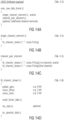
- the algorithm shown in Fig. 4b may be used, wherein "(INT)” designates an integer operator, wherein “LD” designates a logarithm operation for a base of 2, and wherein “meanLineError” designates a quantization error per frequency line. "min(.,.)” designates a minimum value operator, and "max(.,.)” designates a maximum value operator.
- Fig. 5 shows a block schematic diagram of a decoder according to an embodiment of the invention.
- the decoder 500 is configured to receive an encoded audio information in the form of an encoded audio stream 510, and to provide, on the basis thereof, a decoded representation of the audio signal on the basis of spectral components of frequency bands of the audio signal, for example spectral components 522 of a first frequency band and spectral components 524 of a second frequency band.
- the decoder 500 comprises a noise filler 520, which is configured to receive a representation 522 of spectral components of a first frequency band, to which first frequency band gain information is associated, and a representation 524 of spectral components of a second frequency band, to which second frequency band gain information is associated.
- the noise filler 520 is configured to receive a representation 526 of a multi-band noise intensity value. Further, the noise filler is configured to introduce noise into spectral components of a plurality of frequency bands to which separate frequency band gain information, namely scale factors, is associated on the basis of the common multi-band noise intensity value 526. For example, the noise filler 520 may be configured to introduce noise into the spectral components 522 of the first frequency band to obtain the noise-affected spectral components 512 of the first frequency band, and also to introduce noise into the spectral components 524 of the second frequency band to obtain the noise-affected spectral components 514 of the second frequency band.
- the decoder 500 is able to perform a time-tuned noise filling on the basis of a very small (bit-efficient) noise filling side information.
- Fig. 6 shows a block schematic diagram of a decoder 600 in which the invention can be implemented.
- the decoder 600 is similar to the decoder disclosed in ISO/IEC 14496.3: 2005 (E), such that reference is made to this International Standard.
- the decoder 600 is configured to receive a coded audio stream 610 and to provide, on the basis thereof, output time signals 612.
- the coded audio stream may comprise some or all of the information described in ISO/IEC 14496.3: 2005 (E), and additionally comprises information describing a multi-band noise intensity value.
- the decoder 600 further comprises a bitstream payload deformatter 620, which is configured to extract from the coded audio stream 610 a plurality of encoded audio parameters, some of which will be explained in detail in the following.
- the decoder 600 further comprises an extended "advanced audio coding" (AAC) decoder 630, the functionality of which will be described in detail, taking reference to Figs. 7a , 7b , 8a to 8c , 9 , 10a , 10b , 11 , 12 , 13a and 13b .
- the extended AAC decoder 630 is configured to receive an input information 630a, which comprises, for example, a quantized and encoded spectral line information, an encoded scale factor information and an encoded noise filling parameter information.
- input information 630a of the extended AAC encoder 630 may be identical to the output information 228b provided by the extended AAC encoder 220a described with reference to Fig. 2 .
- the extended AAC decoder 630 may be configured to provide, on the basis of the input information 630a, a representation 630b of a scaled and inversely quantized spectrum, for example, in the form of scaled, inversely quantized spectral line values for a plurality of frequency bins (for example, for 1024 frequency bins).
- the decoder 600 may comprise additional spectrum decoders, like, for example, a TwinVQ spectrum decoder and/or a BSAC spectrum decoder, which may be used alternatively to the extended AAC spectrum decoder 630 in some cases.
- additional spectrum decoders like, for example, a TwinVQ spectrum decoder and/or a BSAC spectrum decoder, which may be used alternatively to the extended AAC spectrum decoder 630 in some cases.
- the decoder 600 may optionally comprise a spectrum processing 640, which is configured to process the output information 630b of the extended AAC decoder 630 in order to obtain an input information 640a of a block switching/filterbank 640.
- the optional spectral processing 630 may comprise one or more, or even all, of the functionalities M/S, PNS, prediction, intensity, long-term prediction, dependently-switched coupling, TNS, dependently-switched coupling, which functionalities are described in detail in ISO/IEC 14493.3: 2005 (E) and the documents referenced therein.
- the output information 630b of the extended AAC decoder 630 may serve directly as input information 640a of the block-switching/filterbank 640.
- the extended AAC decoder 630 may provide, as the output information 630b, scaled and inversely quantized spectra.
- the block-switching/filterbank 640 uses, as the input information 640a, the (optionally pre-processed) inversely-quantized spectra and provides, on the basis thereof, one or more time domain reconstructed audio signals as an output information 640b.
- the filterbank/block-switching may, for example, be configured to apply the inverse of the frequency mapping that was carried out in the encoder (for example, in the block-switching/filterbank 224).
- an inverse modified discrete cosine transform may be used by the filterbank.
- the IMDCT may be configured to support either one set of 120, 128, 480, 512, 960 or 1024, or four sets of 32 or 256 spectral coefficients.
- the decoder 600 may optionally further comprise an AAC gain control 650, a SBR decoder 652 and an independently-switched coupling 654, to derive the output time signal 612 from the output signal 640b of the block-switching/filterbank 640.
- the output signal 640b of the block-switching/filterbank 640 may also serve as the output time signal 612 in the absence of the functionality 650, 652, 654.
- the noise filler 770 is also configured to provide un-scaled, inversely quantized spectral values 774, also designated as x_ac_invquant or x_invquant on the basis of its input information. Details regarding the functionality of the noise filler will subsequently be described, taking reference to Figs. 9 , 10a , 10b , 11 , 12 , 13a and 13b .
- the extended AAC decoder 630 also comprises a rescaler 780, which is configured to receive the modified integer representation of the scale factors 772 and the un-scaled inversely quantized spectral values 774, and to provide, on the basis thereof, scaled, inversely quantized spectral values 782, which may also be designated as x_rescal, and which may serve as the output information 630b of the extended AAC decoder 630.
- the rescaler 780 may, for example, comprise the functionality as described in ISO/IEC 14496-3: 2005, Chapter 4.6.2.3.3.
- Fig. 8a shows a representation of an equation for deriving the un-scaled inversely quantized spectral values 762 from the quantized spectral values 752.
- sign (.) designates a sign operator
- . designates an absolute value operator.
- Fig. 8b shows a pseudo program code representing the functionality of the inverse quantizer 760. As can be seen, the inverse quantization according to the mathematical mapping rule shown in Fig.
- Fig. 8a shows a flow chart representation of the algorithm of Fig. 8b .
- a non-linear inverse quantization rule is applied.
- Fig. 9 shows a block schematic diagram of a noise filler 900 according to an embodiment of the invention.
- the noise filler 900 may, for example, take the place of the noise filler 770 described with reference to Figs. 7A and 7B .
- the noise filler 900 receives the decoded integer representation 742 of the scale factors, which may be considered as frequency band gain values.
- the noise filler 900 also receives the un-scaled inversely quantized spectral values 762. Further, the noise filler 900 receives the noise filling parameter information 630ac, for example, comprising noise filling parameters noise_value and noise_offset.
- the noise filler 900 further provides the modified integer representation 772 of the scale factors and the un-scaled inversely quantized spectral values 774.
- the noise filler 900 comprises a spectral-line-quantized-to-zero detector 910, which is configured to determine whether a spectral line (or spectral bin) is quantized to zero (and possibly fulfills further noise filling requirements). For this purpose, the spectral-line-quantized-to-zero detector 910 directly receives the un-scaled inversely quantized spectra 762 as input information.
- the noise filler 900 further comprises a selective spectral line replacer 920, which is configured to selectively replace spectral values of the input information 762 by spectral line replacement values 922 in dependence on the decision of the spectral-line-quantized-to-zero detector 910.
- the noise filler 900 also comprises a selective scale factor modifier 930, which is configured to selectively modify scale factors of the input information 742.
- the selective scale factor modifier 930 is configured to increase scale factors of scale factor frequency bands, which have been quantized to zero by a predetermined value, which is designated as "noise_offset".
- a predetermined value which is designated as "noise_offset”.
- scale factors of frequency bands quantized to zero are increased when compared to corresponding scale factor values within the input information 742.
- corresponding scale factor values of scale factor frequency bands, which are not quantized to zero are identical in the input information 742 and in the output information 772.
- the noise filler 900 also comprises a band-quantized-to-zero detector 940, which is configured to control the selective scale factor modifier 930 by providing an "enable scale factor modification" signal or flag 942 on the basis of the input information 762.
- the band-quantized-to-zero detector 940 may provide a signal or flag indicating the need for an increase of a scale factor to the selective scale factor modifier 930 if all the frequency bins (also designated as spectral bins) of a scale factor band are quantized to zero.
- the selective scale factor modifier can also take the form of a selective scale factor replacer, which is configured to set scale factors of scale factor bands quantized entirely to zero to a predetermined value, irrespective of the input information 742.
- a re-scaler 950 will be described, which may take the function of the re-scaler 780.
- the re-scaler 950 is configured to receive the modified integer representation 772 of the scale factors provided by the noise filler and also for the un-scaled, inversely quantized spectral values 774 provided by the noise filler.
- the re-scaler 950 comprises a scale factor gain computer 960, which is configured to receive one integer representation of the scale factor per scale factor band and to provide one gain value per scale factor band.
- the scale factor gain computer 960 may be configured to compute a gain value 962 for an i-th frequency band on the basis of a modified integer representation 772 of the scale factor for the i-th scale factor band.
- the scale factor gain computer 960 provides individual gain values for the different scale factor bands.
- the re-scaler 950 also comprises a multiplier 970, which is configured to receive the gain values 962 and the un-scaled, inversely quantized spectral values 774. It should be noted that each of the un-scaled, inversely quantized spectral values 774 is associated with a scale factor frequency band (sfb). Accordingly, the multiplier 970 is configured to scale each of the un-scaled, inversely quantized spectral values 774 with a corresponding gain value associated with the same scale factor band.
- sfb scale factor frequency band
- un-scaled, inversely quantized spectral values 774 associated with a given scale factor band are scaled with the gain value associated with the given scale factor band. Accordingly, un-scaled, inversely quantized spectral values associated with different scale factor bands are scaled with typically different gain values associated with the different scale factor bands.
- Figs. 10A and 10B show a pseudo program code representation ( Fig. 10A ) and a corresponding legend ( Fig. 10B ). Comments start with "--".
- a range shift of the noise offset value is performed such that the range-shifted noise offset value can take positive and negative values.
- a second part of the algorithm (lines 9 to 29) is responsible for a selective replacement of un-scaled, inversely quantized spectral values with spectral line replacement values and for a selective modification of the scale factors.
- the algorithm may be executed for all available window groups (for-loop from lines 9 to 29).
- all scale factor bands between zero and a maximum scale factor band (max_sfb) may be processed even though the processing may be different for different scale factor bands (for-loop between lines 10 and 28).
- max_sfb maximum scale factor band
- One important aspect is the fact that it is generally assumed that a scale factor band is quantized to zero unless it is found that the scale factor band is not quantized to zero (confer line 11).
- a scale factor band is quantized to zero or not is only executed for scale factor bands, a starting frequency line (swb_offset[sfb]) of which is above a predetermined spectral coefficient index (noiseFillingStartOffset).
- a conditional routine between lines 13 and 24 is only executed if an index of the lowest spectral coefficients of scale factor band sfb is larger than noise filling start offset.
- the certain scale factor band is considered as being quantized to zero only if all spectral lines of the certain scale factor band are quantized to zero (the flag "band_quantized_to_zero" is reset by the for-loop between lines 15 and 22 if a single spectral bin of the scale factor band is not quantized to zero.
- a scale factor of a given scale factor band is modified using the noise offset if the flag "band_quantized_to_zero", which is initially set by default (line 11) is not deleted during the execution of the program code between lines 12 and 24.
- a reset of the flag can only occur for scale factor bands for which an index of the lowest spectral coefficient is above the predetermined value (noiseFillingStartOffset).
- the algorithm of Fig. 10A comprises a replacement of spectral line values with spectral line replacement values if the spectral line is quantized to zero (condition of line 16 and replacement operation of line 17).
- the replacement values could be computed in a simple way in that a random or pseudo-random sign is added to the noise value (noiseVal) computed in the first part of the algorithm (confer line 17).
- Fig. 10B shows a legend of the relevant symbols used in the pseudo program code of Fig. 10A to facilitate a better understanding of the pseudo program code.
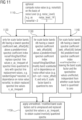
- the functionality of the noise filler optionally comprises computing 1110 a noise value on the basis of the noise level.
- the functionality of the noise filler also comprises replacement 1120 of spectral line values of spectral lines quantized to zero with spectral line replacement values in dependence on the noise value to obtain replaced spectral line values.
- the replacement 1120 is only performed for scale factor bands having a lowest spectral coefficient above a predetermined spectral coefficient index.
- the functionality of the noise filler also comprises modifying 1130 a band scale factor in dependence on the noise offset value if, and only if, the scale factor band is quantized to zero. However, the modification 1130 is executed in that form for scale factor bands having a lowest spectral coefficient above the predetermined spectral coefficient index.
- the noise filler also comprises a functionality of leaving 1140 band scale factors unaffected, independent from whether the scale factor band is quantized to zero, for scale factor bands having a lowest spectral coefficient below the predetermined spectral coefficient index.
- the re-scaler comprises a functionality 1150 of applying unmodified or modified (whichever is available) band scale factors to un-replaced or replaced (whichever is available) spectral line values to obtain scaled and inversely quantized spectra.
- Fig. 12 shows a schematic representation of the concept described with reference to Figs. 10A , 10B and 11 .
- the different functionalities are represented in dependence on a scale factor band start bin.
- Figs. 13A and 13B show pseudo code program listings of algorithms, which may be performed in an alternative implementation of the noise filler 770.
- Fig. 13A describes an algorithm for deriving a noise value (for use within the noise filler) from a noise level information, which may be represented by the noise filling parameter information 630ac.
- the noiseVal range [0, 0.5] is rather large and can be optimized.
- Fig. 13B represents an algorithm, which may be formed by the noise filler 770.
- the algorithm of Fig. 13B comprises a first portion of determining the noise value (designated with "noiseValue” or “noiseVal” - line s 1 to 4).
- a second portion of the algorithm comprises a selective modification of a scale factor (lines 7 to 9) and a selective replacement of spectral line values with spectral line replacement values (lines 10 to 14).
- the scale factor (scf) is modified using the noise offset (noise_offset) whenever a band is quantized to zero (see line 7). No difference is made between lower frequency bands and higher frequency bands in this embodiment.
- noise is introduced into spectral lines quantized to zero only for higher frequency bands (if the line is above a certain predetermined threshold "noiseFillingStartOffset").
- embodiments of the decoder according to the present invention comprise the following features:
- the "usac bitstream payload” carries payload information to represent one or more single channels (payload “single_channel_element ()) and/or one or more channel pairs (channel_pair_element ()), as can be seen from Fig. 14A .
- a single channel information (single_channel_element ()) comprises, among other optional information, a frequency domain channel stream (fd_channel_stream), as can be seen from Fig. 14B .
- a channel pair information (channel_pair_element) comprises, in addition to additional elements, a plurality of, for example, two frequency domain channel streams (fd_channel_stream), as can be seen from Fig. 14C .
- the data content of a frequency domain channel stream may, for example, be dependent on whether a noise filling is used or not (which may be signaled in a signaling data portion not shown here).
- the frequency domain channel stream comprises, for example, the data elements shown in Fig. 14D .
- a global gain information (global_gain), as defined in ISO/IEC 14496-3: 2005 may be present.
- the frequency domain channel stream may comprise a noise offset information (noise_offset) and a noise level information (noise_level), as described herein.
- the noise offset information may, for example, be encoded using 3 bits and the noise level information may, for example, be encoded using 5 bits.
- the frequency domain channel stream also comprises temporal noise shaping data (tns_data) ()), as defined in ISO/IEC 14496-3.
- tns_data temporal noise shaping data
- the frequency domain channel stream may comprise other information, if required.
- Fig. 15 shows a schematic representation of the syntax of a channel stream representing an individual channel (individual_channel_stream ()).
- the individual channel stream may comprise a global gain information (global_gain) encoded using, for example, 8 bits, noise offset information (noise_offset) encoded using, for example, 5 bits and a noise level information (noise_level) encoded using, for example, 3 bits.
- global_gain global gain information
- noise_offset noise offset information
- noise_level noise level information
- the individual channel stream further comprises section data (section data ()), scale factor data (scale_factor_data ()) and spectral data (spectral_data ()).
- the individual channel stream may comprise further optional information, as can be seen from Fig. 15 .
- bitstream is disclosed in which the following bitstream syntax elements are used:
- noise filling can be used for two purposes:
- the newly proposed noise filling coding scheme described herein efficiently combines the above purposes into a single application.
- the perceptual noise substitution (PNS) is used to only transmit a parameterized information of noise-like signal parts and to reproduce these signal parts perceptionally equivalent in the decoder.
- vector quantization vectors quantized to zero are replaced with a random noise vector where each complex spectral value has constant amplitude, but random phase. The amplitude is controlled by one noise value transmitted with the bitstream.
- the present invention comprises a new form of noise level calculation.
- the noise level is calculated in the quantized domain based on the average quantization error.
- the quantization error in the quantized domain differs from other forms of quantization error.
- the quantization error per line in the quantized domain is in the range [-0.5; 0.5] (1 quantization level) with an average absolute error of 0.25 (for normal distributed input values that are usually larger than 1).
- the advantage of adding noise in the quantized domain is the fact that noise added in the decoder is scaled, not only with the average energy in a given band, but also the psychoacoustic relevance of a band.
- the perceptually most relevant (tonal) bands will be the bands quantized most accurately, meaning multiple quantization levels (quantized values larger than 1) will be used in these bands. Now adding noise with a level of the average quantization error in these bands will have only very limited influence on the perception of such a band.
- Bands that are perceptually not as relevant or more noise-like may be quantized with a lower number of quantization levels. Although much more spectral lines in the band will be quantized to zero, the resulting average quantization error will be the same as for the fine quantized bands (assuming a normal distributed quantization error in both bands), while the relative error in the band may be much higher.
- the noise filling will help to perceptually mask artifacts resulting from the spectral holes due to the coarse quantization.
- a consideration of the noise filling in the quantized domain can be achieved by the above-described encoder and also by the above-described decoder.
- embodiments of the invention can be implemented in hardware or in software.
- the implementation can be performed using a digital storage medium, for example a floppy disk, a DVD, a CD, a ROM, a PROM, an EPROM, an EEPROM or a FLASH memory, having electronically readable control signals stored thereon, which cooperate (or are capable of cooperating) with a programmable computer system such that the respective method is performed.
- a digital storage medium for example a floppy disk, a DVD, a CD, a ROM, a PROM, an EPROM, an EEPROM or a FLASH memory, having electronically readable control signals stored thereon, which cooperate (or are capable of cooperating) with a programmable computer system such that the respective method is performed.
Landscapes
- Engineering & Computer Science (AREA)
- Physics & Mathematics (AREA)
- Spectroscopy & Molecular Physics (AREA)
- Audiology, Speech & Language Pathology (AREA)
- Signal Processing (AREA)
- Health & Medical Sciences (AREA)
- Computational Linguistics (AREA)
- Human Computer Interaction (AREA)
- Acoustics & Sound (AREA)
- Multimedia (AREA)
- Mathematical Physics (AREA)
- Compression, Expansion, Code Conversion, And Decoders (AREA)
- Detection And Prevention Of Errors In Transmission (AREA)
Claims (1)
- Ein Decodierer (500; 600) zum Bereitstellen einer decodierten Darstellung (512, 514; 630b) eines Audiosignals auf der Basis eines codierten Audiostroms (510; 610), der Spektralkomponenten von Frequenzbändern des Audiosignals und einen Mehrbandrauschenintensitätswert (526) darstellt, wobei der Decodierer folgende Merkmale aufweist:einen Rauschfüller (520; 770), der konfiguriert ist, Rauschen in Spektralkomponenten einer Mehrzahl von Frequenzbändern einzubringen, denen getrennte Frequenzbandverstärkungsinformationen, nämlich Skalierfaktoren, zugeordnet sind, auf der Basis eines einzelnen gemeinsamen Mehrbandrauschenintensitätswerts (526) undwobei beginnend von einer Rauschfüllstartlinie jede Spektrallinie, die auf null quantisiert ist, durch einen Austauschwert ersetzt wird, der ein angezeigter Rauschwert ist, dessen Größe durch den Mehrbandrauschintensitätswert mit einem Zufallsvorzeichen bestimmt wird, um Rauschfüllen in einem quantisierten Bereich durchzuführen;wobei der Decodierer konfiguriert ist, einen Austauschwert mit einem Skalierfaktor zu skalieren, der für ein tatsächliches Skalierfaktorband übertragen wird,um individuelles Skalieren von Rauschen durchzuführen, das in unterschiedliche Frequenzbänder eingebracht wird, auf der Basis der Frequenzbandverstärkungsinformationen.
Applications Claiming Priority (6)
| Application Number | Priority Date | Filing Date | Title |
|---|---|---|---|
| US7987208P | 2008-07-11 | 2008-07-11 | |
| US10382008P | 2008-10-08 | 2008-10-08 | |
| PCT/EP2009/004602 WO2010003556A1 (en) | 2008-07-11 | 2009-06-25 | Audio encoder, audio decoder, methods for encoding and decoding an audio signal, audio stream and computer program |
| EP09776839.4A EP2304719B1 (de) | 2008-07-11 | 2009-06-25 | Audiokodierer, verfahren zum bereitstellen eines audiodatenstroms und computerprogramm |
| EP23178772.2A EP4235660B1 (de) | 2008-07-11 | 2009-06-25 | Audio-decodierer |
| EP17175883.2A EP3246918B1 (de) | 2008-07-11 | 2009-06-25 | Audiodecodierer, verfahren zum decodieren eines audio-signals und computerprogramm |
Related Parent Applications (4)
| Application Number | Title | Priority Date | Filing Date |
|---|---|---|---|
| EP17175883.2A Division EP3246918B1 (de) | 2008-07-11 | 2009-06-25 | Audiodecodierer, verfahren zum decodieren eines audio-signals und computerprogramm |
| EP23178772.2A Division EP4235660B1 (de) | 2008-07-11 | 2009-06-25 | Audio-decodierer |
| EP23178772.2A Division-Into EP4235660B1 (de) | 2008-07-11 | 2009-06-25 | Audio-decodierer |
| EP09776839.4A Division EP2304719B1 (de) | 2008-07-11 | 2009-06-25 | Audiokodierer, verfahren zum bereitstellen eines audiodatenstroms und computerprogramm |
Publications (3)
| Publication Number | Publication Date |
|---|---|
| EP4375998A1 EP4375998A1 (de) | 2024-05-29 |
| EP4375998B1 true EP4375998B1 (de) | 2025-04-30 |
| EP4375998C0 EP4375998C0 (de) | 2025-04-30 |
Family
ID=40941986
Family Applications (12)
| Application Number | Title | Priority Date | Filing Date |
|---|---|---|---|
| EP09776839.4A Active EP2304719B1 (de) | 2008-07-11 | 2009-06-25 | Audiokodierer, verfahren zum bereitstellen eines audiodatenstroms und computerprogramm |
| EP17175883.2A Active EP3246918B1 (de) | 2008-07-11 | 2009-06-25 | Audiodecodierer, verfahren zum decodieren eines audio-signals und computerprogramm |
| EP23178772.2A Active EP4235660B1 (de) | 2008-07-11 | 2009-06-25 | Audio-decodierer |
| EP24167725.1A Active EP4407610B1 (de) | 2008-07-11 | 2009-06-25 | Audiodecoder |
| EP24167804.4A Active EP4407614B1 (de) | 2008-07-11 | 2009-06-25 | Verfahren zur decodierung eines audiosignals und computerprogramm |
| EP24167758.2A Active EP4372744B1 (de) | 2008-07-11 | 2009-06-25 | Verfahren zur audiodecodierung und entsprechendes computerprogramm |
| EP24167801.0A Active EP4407612B1 (de) | 2008-07-11 | 2009-06-25 | Verfahren zur decodierung eines audiosignals und computerprogramm |
| EP24167794.7A Active EP4407611B1 (de) | 2008-07-11 | 2009-06-25 | Verfahren zur decodierung eines audiosignals und computerprogramm |
| EP24167799.6A Active EP4375998B1 (de) | 2008-07-11 | 2009-06-25 | Audiodecoder |
| EP24167802.8A Active EP4407613B1 (de) | 2008-07-11 | 2009-06-25 | Audiodecoder |
| EP24167780.6A Active EP4372745B1 (de) | 2008-07-11 | 2009-06-25 | Audiodecoder |
| EP09776859A Active EP2304720B1 (de) | 2008-07-11 | 2009-06-26 | Rauschunterdrücker, berechner für rauschunterdrückungsparameter, verfahren zur bereitstellung eines rauschunterdrückungsparameters, verfahren zur rauschunterdrückten spektralen darstellung eines tonsignals, entsprechendes computerprogramm und kodiertes tonsignal |
Family Applications Before (8)
| Application Number | Title | Priority Date | Filing Date |
|---|---|---|---|
| EP09776839.4A Active EP2304719B1 (de) | 2008-07-11 | 2009-06-25 | Audiokodierer, verfahren zum bereitstellen eines audiodatenstroms und computerprogramm |
| EP17175883.2A Active EP3246918B1 (de) | 2008-07-11 | 2009-06-25 | Audiodecodierer, verfahren zum decodieren eines audio-signals und computerprogramm |
| EP23178772.2A Active EP4235660B1 (de) | 2008-07-11 | 2009-06-25 | Audio-decodierer |
| EP24167725.1A Active EP4407610B1 (de) | 2008-07-11 | 2009-06-25 | Audiodecoder |
| EP24167804.4A Active EP4407614B1 (de) | 2008-07-11 | 2009-06-25 | Verfahren zur decodierung eines audiosignals und computerprogramm |
| EP24167758.2A Active EP4372744B1 (de) | 2008-07-11 | 2009-06-25 | Verfahren zur audiodecodierung und entsprechendes computerprogramm |
| EP24167801.0A Active EP4407612B1 (de) | 2008-07-11 | 2009-06-25 | Verfahren zur decodierung eines audiosignals und computerprogramm |
| EP24167794.7A Active EP4407611B1 (de) | 2008-07-11 | 2009-06-25 | Verfahren zur decodierung eines audiosignals und computerprogramm |
Family Applications After (3)
| Application Number | Title | Priority Date | Filing Date |
|---|---|---|---|
| EP24167802.8A Active EP4407613B1 (de) | 2008-07-11 | 2009-06-25 | Audiodecoder |
| EP24167780.6A Active EP4372745B1 (de) | 2008-07-11 | 2009-06-25 | Audiodecoder |
| EP09776859A Active EP2304720B1 (de) | 2008-07-11 | 2009-06-26 | Rauschunterdrücker, berechner für rauschunterdrückungsparameter, verfahren zur bereitstellung eines rauschunterdrückungsparameters, verfahren zur rauschunterdrückten spektralen darstellung eines tonsignals, entsprechendes computerprogramm und kodiertes tonsignal |
Country Status (21)
| Country | Link |
|---|---|
| US (13) | US9043203B2 (de) |
| EP (12) | EP2304719B1 (de) |
| JP (2) | JP5622726B2 (de) |
| KR (4) | KR101518532B1 (de) |
| CN (2) | CN102089808B (de) |
| AR (2) | AR072482A1 (de) |
| AT (1) | ATE535903T1 (de) |
| AU (2) | AU2009267459B2 (de) |
| BR (5) | BRPI0910811B1 (de) |
| CA (2) | CA2730361C (de) |
| CO (2) | CO6341671A2 (de) |
| EG (1) | EG26480A (de) |
| ES (14) | ES3032014T3 (de) |
| MX (2) | MX2011000382A (de) |
| MY (2) | MY178597A (de) |
| PL (12) | PL4375998T3 (de) |
| PT (1) | PT2304719T (de) |
| RU (2) | RU2519069C2 (de) |
| TW (2) | TWI417871B (de) |
| WO (2) | WO2010003556A1 (de) |
| ZA (2) | ZA201100085B (de) |
Families Citing this family (91)
| Publication number | Priority date | Publication date | Assignee | Title |
|---|---|---|---|---|
| EP2304719B1 (de) | 2008-07-11 | 2017-07-26 | Fraunhofer-Gesellschaft zur Förderung der angewandten Forschung e.V. | Audiokodierer, verfahren zum bereitstellen eines audiodatenstroms und computerprogramm |
| WO2010053287A2 (en) * | 2008-11-04 | 2010-05-14 | Lg Electronics Inc. | An apparatus for processing an audio signal and method thereof |
| US8553897B2 (en) | 2009-06-09 | 2013-10-08 | Dean Robert Gary Anderson | Method and apparatus for directional acoustic fitting of hearing aids |
| US9101299B2 (en) * | 2009-07-23 | 2015-08-11 | Dean Robert Gary Anderson As Trustee Of The D/L Anderson Family Trust | Hearing aids configured for directional acoustic fitting |
| US8879745B2 (en) * | 2009-07-23 | 2014-11-04 | Dean Robert Gary Anderson As Trustee Of The D/L Anderson Family Trust | Method of deriving individualized gain compensation curves for hearing aid fitting |
| JP5754899B2 (ja) | 2009-10-07 | 2015-07-29 | ソニー株式会社 | 復号装置および方法、並びにプログラム |
| US9117458B2 (en) * | 2009-11-12 | 2015-08-25 | Lg Electronics Inc. | Apparatus for processing an audio signal and method thereof |
| JP5609737B2 (ja) | 2010-04-13 | 2014-10-22 | ソニー株式会社 | 信号処理装置および方法、符号化装置および方法、復号装置および方法、並びにプログラム |
| JP5850216B2 (ja) | 2010-04-13 | 2016-02-03 | ソニー株式会社 | 信号処理装置および方法、符号化装置および方法、復号装置および方法、並びにプログラム |
| US8924222B2 (en) | 2010-07-30 | 2014-12-30 | Qualcomm Incorporated | Systems, methods, apparatus, and computer-readable media for coding of harmonic signals |
| JP6075743B2 (ja) | 2010-08-03 | 2017-02-08 | ソニー株式会社 | 信号処理装置および方法、並びにプログラム |
| US9208792B2 (en) * | 2010-08-17 | 2015-12-08 | Qualcomm Incorporated | Systems, methods, apparatus, and computer-readable media for noise injection |
| US9008811B2 (en) | 2010-09-17 | 2015-04-14 | Xiph.org Foundation | Methods and systems for adaptive time-frequency resolution in digital data coding |
| JP5707842B2 (ja) | 2010-10-15 | 2015-04-30 | ソニー株式会社 | 符号化装置および方法、復号装置および方法、並びにプログラム |
| EP2631905A4 (de) * | 2010-10-18 | 2014-04-30 | Panasonic Corp | Vorrichtung zur tonkodierung und tondekodierung |
| WO2012122299A1 (en) | 2011-03-07 | 2012-09-13 | Xiph. Org. | Bit allocation and partitioning in gain-shape vector quantization for audio coding |
| WO2012122297A1 (en) * | 2011-03-07 | 2012-09-13 | Xiph. Org. | Methods and systems for avoiding partial collapse in multi-block audio coding |
| US8838442B2 (en) | 2011-03-07 | 2014-09-16 | Xiph.org Foundation | Method and system for two-step spreading for tonal artifact avoidance in audio coding |
| SG194199A1 (en) | 2011-03-18 | 2013-12-30 | Fraunhofer Ges Forschung | Frame element positioning in frames of a bitstream representing audio content |
| EP2705516B1 (de) * | 2011-05-04 | 2016-07-06 | Nokia Technologies Oy | Kodierung von stereophonen signalen |
| WO2013002623A2 (ko) | 2011-06-30 | 2013-01-03 | 삼성전자 주식회사 | 대역폭 확장신호 생성장치 및 방법 |
| WO2013061232A1 (en) * | 2011-10-24 | 2013-05-02 | Koninklijke Philips Electronics N.V. | Audio signal noise attenuation |
| US8942397B2 (en) * | 2011-11-16 | 2015-01-27 | Dean Robert Gary Anderson | Method and apparatus for adding audible noise with time varying volume to audio devices |
| JP5942463B2 (ja) * | 2012-02-17 | 2016-06-29 | 株式会社ソシオネクスト | オーディオ信号符号化装置およびオーディオ信号符号化方法 |
| US20130282373A1 (en) * | 2012-04-23 | 2013-10-24 | Qualcomm Incorporated | Systems and methods for audio signal processing |
| CN103778918B (zh) * | 2012-10-26 | 2016-09-07 | 华为技术有限公司 | 音频信号的比特分配的方法和装置 |
| CN105976824B (zh) | 2012-12-06 | 2021-06-08 | 华为技术有限公司 | 信号解码的方法和设备 |
| CN105122357B (zh) | 2013-01-29 | 2019-04-23 | 弗劳恩霍夫应用研究促进协会 | 频域中基于lpc进行编码的低频增强 |
| CA2898024C (en) * | 2013-01-29 | 2018-09-11 | Fraunhofer-Gesellschaft Zur Foerderung Der Angewandten Forschung E.V. | Noise filling concept |
| CN105103226B (zh) * | 2013-01-29 | 2019-04-16 | 弗劳恩霍夫应用研究促进协会 | 低复杂度音调自适应音频信号量化 |
| EP3217398B1 (de) | 2013-04-05 | 2019-08-14 | Dolby International AB | Erweiterter quantisierer |
| DK2981963T3 (en) | 2013-04-05 | 2017-02-27 | Dolby Laboratories Licensing Corp | COMPRESSION APPARATUS AND PROCEDURE TO REDUCE QUANTIZATION NOISE USING ADVANCED SPECTRAL EXTENSION |
| EP2992605B1 (de) * | 2013-04-29 | 2017-06-07 | Dolby Laboratories Licensing Corporation | Frequenzbandkompression mit dynamischen schwellen |
| SG10201710019SA (en) | 2013-05-24 | 2018-01-30 | Dolby Int Ab | Audio Encoder And Decoder |
| SG11201510513WA (en) * | 2013-06-21 | 2016-01-28 | Fraunhofer Ges Forschung | Method and apparatus for obtaining spectrum coefficients for a replacement frame of an audio signal, audio decoder, audio receiver and system for transmitting audio signals |
| EP3014609B1 (de) | 2013-06-27 | 2017-09-27 | Dolby Laboratories Licensing Corporation | Bitstromsyntax zur räumlichen sprachcodierung |
| EP2830060A1 (de) * | 2013-07-22 | 2015-01-28 | Fraunhofer-Gesellschaft zur Förderung der angewandten Forschung e.V. | Rauschfüllung bei mehrkanaliger Audiocodierung |
| EP2830058A1 (de) | 2013-07-22 | 2015-01-28 | Fraunhofer-Gesellschaft zur Förderung der angewandten Forschung e.V. | Frequenzbereichsaudiocodierung mit Unterstützung von Transformationslängenschaltung |
| EP2830054A1 (de) | 2013-07-22 | 2015-01-28 | Fraunhofer Gesellschaft zur Förderung der angewandten Forschung e.V. | Audiocodierer, Audiodecodierer und zugehörige Verfahren unter Verwendung von Zweikanalverarbeitung in einem intelligenten Lückenfüllkontext |
| TWI579831B (zh) | 2013-09-12 | 2017-04-21 | 杜比國際公司 | 用於參數量化的方法、用於量化的參數之解量化方法及其電腦可讀取的媒體、音頻編碼器、音頻解碼器及音頻系統 |
| JP6531649B2 (ja) | 2013-09-19 | 2019-06-19 | ソニー株式会社 | 符号化装置および方法、復号化装置および方法、並びにプログラム |
| ES2641580T3 (es) | 2013-10-03 | 2017-11-10 | Dolby Laboratories Licensing Corporation | Generación de señal difusa adaptativa en un mezclador ascendente |
| EP4629236A3 (de) | 2013-10-22 | 2025-12-17 | Fraunhofer-Gesellschaft zur Förderung der angewandten Forschung e.V. | Konzept zur kombinierten dynamikbereichskompression und geführten clipping-verhinderung für audiovorrichtungen |
| PT3285254T (pt) | 2013-10-31 | 2019-07-09 | Fraunhofer Ges Forschung | Descodificador de áudio e método para fornecer uma informação de áudio descodificada utilizando uma ocultação de erro com base num sinal de excitação no domínio de tempo |
| PT3063759T (pt) | 2013-10-31 | 2018-03-22 | Fraunhofer Ges Forschung | Descodificador de áudio e método para fornecer uma informação de áudio descodificada utilizando uma dissimulação de erros que modifica um sinal de excitação de domínio de tempo |
| AU2014360038B2 (en) | 2013-12-02 | 2017-11-02 | Huawei Technologies Co., Ltd. | Encoding method and apparatus |
| KR102356012B1 (ko) | 2013-12-27 | 2022-01-27 | 소니그룹주식회사 | 복호화 장치 및 방법, 및 프로그램 |
| EP3117432B1 (de) * | 2014-03-14 | 2019-05-08 | Telefonaktiebolaget LM Ericsson (publ) | Audiocodierungsverfahren und vorrichtung |
| EP3128513B1 (de) * | 2014-03-31 | 2019-05-15 | Fraunhofer Gesellschaft zur Förderung der Angewand | Encoder, decoder, codierungsverfahren und decodierungsverfahren |
| US9685166B2 (en) | 2014-07-26 | 2017-06-20 | Huawei Technologies Co., Ltd. | Classification between time-domain coding and frequency domain coding |
| EP2980792A1 (de) | 2014-07-28 | 2016-02-03 | Fraunhofer-Gesellschaft zur Förderung der angewandten Forschung e.V. | Vorrichtung und Verfahren zur Erzeugung eines verbesserten Signals mit unabhängiger Rausch-Füllung |
| EP2980801A1 (de) | 2014-07-28 | 2016-02-03 | Fraunhofer-Gesellschaft zur Förderung der angewandten Forschung e.V. | Verfahren zur Schätzung des Rauschens in einem Audiosignal, Rauschschätzer, Audiocodierer, Audiodecodierer und System zur Übertragung von Audiosignalen |
| EP4601259A3 (de) * | 2014-09-30 | 2025-09-24 | Sony Group Corporation | Sendevorrichtung, sendeverfahren, empfangsvorrichtung und empfangsverfahren |
| US9875756B2 (en) | 2014-12-16 | 2018-01-23 | Psyx Research, Inc. | System and method for artifact masking |
| WO2016142002A1 (en) | 2015-03-09 | 2016-09-15 | Fraunhofer-Gesellschaft Zur Foerderung Der Angewandten Forschung E.V. | Audio encoder, audio decoder, method for encoding an audio signal and method for decoding an encoded audio signal |
| TWI879690B (zh) | 2015-03-13 | 2025-04-01 | 瑞典商杜比國際公司 | 音訊處理單元、用於將經編碼的音訊位元流解碼之方法以及非暫態電腦可讀媒體 |
| WO2016162283A1 (en) * | 2015-04-07 | 2016-10-13 | Dolby International Ab | Audio coding with range extension |
| US9454343B1 (en) | 2015-07-20 | 2016-09-27 | Tls Corp. | Creating spectral wells for inserting watermarks in audio signals |
| US9311924B1 (en) | 2015-07-20 | 2016-04-12 | Tls Corp. | Spectral wells for inserting watermarks in audio signals |
| US10115404B2 (en) | 2015-07-24 | 2018-10-30 | Tls Corp. | Redundancy in watermarking audio signals that have speech-like properties |
| US9626977B2 (en) | 2015-07-24 | 2017-04-18 | Tls Corp. | Inserting watermarks into audio signals that have speech-like properties |
| EP3926626B1 (de) | 2015-10-08 | 2024-05-22 | Dolby International AB | Geschichtete codierungs- und datenstruktur für komprimierte higher-order-ambisonics-schall- oder schallfelddarstellungen |
| EP3360135B1 (de) | 2015-10-08 | 2020-03-11 | Dolby International AB | Geschichtete codierung für komprimierte schall- oder schallfelddarstellungen |
| US10142743B2 (en) | 2016-01-01 | 2018-11-27 | Dean Robert Gary Anderson | Parametrically formulated noise and audio systems, devices, and methods thereof |
| ES2771200T3 (es) * | 2016-02-17 | 2020-07-06 | Fraunhofer Ges Forschung | Postprocesador, preprocesador, codificador de audio, decodificador de audio y métodos relacionados para mejorar el procesamiento de transitorios |
| EP3208800A1 (de) | 2016-02-17 | 2017-08-23 | Fraunhofer-Gesellschaft zur Förderung der angewandten Forschung e.V. | Vorrichtung und verfahren zur stereoablage bei mehrkanaliger codierung |
| US10146500B2 (en) | 2016-08-31 | 2018-12-04 | Dts, Inc. | Transform-based audio codec and method with subband energy smoothing |
| EP3382703A1 (de) * | 2017-03-31 | 2018-10-03 | Fraunhofer-Gesellschaft zur Förderung der angewandten Forschung e.V. | Vorrichtung und verfahren zur verarbeitung eines audiosignals |
| EP3396670B1 (de) * | 2017-04-28 | 2020-11-25 | Nxp B.V. | Sprachsignalverarbeitung |
| JP7214726B2 (ja) * | 2017-10-27 | 2023-01-30 | フラウンホッファー-ゲゼルシャフト ツァ フェルダールング デァ アンゲヴァンテン フォアシュンク エー.ファオ | ニューラルネットワークプロセッサを用いた帯域幅が拡張されたオーディオ信号を生成するための装置、方法またはコンピュータプログラム |
| WO2019091576A1 (en) * | 2017-11-10 | 2019-05-16 | Fraunhofer-Gesellschaft zur Förderung der angewandten Forschung e.V. | Audio encoders, audio decoders, methods and computer programs adapting an encoding and decoding of least significant bits |
| US10950251B2 (en) * | 2018-03-05 | 2021-03-16 | Dts, Inc. | Coding of harmonic signals in transform-based audio codecs |
| US11694708B2 (en) * | 2018-09-23 | 2023-07-04 | Plantronics, Inc. | Audio device and method of audio processing with improved talker discrimination |
| US11264014B1 (en) * | 2018-09-23 | 2022-03-01 | Plantronics, Inc. | Audio device and method of audio processing with improved talker discrimination |
| WO2020073148A1 (en) * | 2018-10-08 | 2020-04-16 | Telefonaktiebolaget Lm Ericsson (Publ) | Transmission power determination for an antenna array |
| CN113302692B (zh) * | 2018-10-26 | 2024-09-24 | 弗劳恩霍夫应用研究促进协会 | 基于方向响度图的音频处理 |
| WO2020164751A1 (en) | 2019-02-13 | 2020-08-20 | Fraunhofer-Gesellschaft zur Förderung der angewandten Forschung e.V. | Decoder and decoding method for lc3 concealment including full frame loss concealment and partial frame loss concealment |
| US12148441B2 (en) * | 2019-03-10 | 2024-11-19 | Kardome Technology Ltd. | Source separation for automatic speech recognition (ASR) |
| WO2020207593A1 (en) * | 2019-04-11 | 2020-10-15 | Fraunhofer-Gesellschaft zur Förderung der angewandten Forschung e.V. | Audio decoder, apparatus for determining a set of values defining characteristics of a filter, methods for providing a decoded audio representation, methods for determining a set of values defining characteristics of a filter and computer program |
| US11361776B2 (en) | 2019-06-24 | 2022-06-14 | Qualcomm Incorporated | Coding scaled spatial components |
| US12308034B2 (en) | 2019-06-24 | 2025-05-20 | Qualcomm Incorporated | Performing psychoacoustic audio coding based on operating conditions |
| US12142285B2 (en) | 2019-06-24 | 2024-11-12 | Qualcomm Incorporated | Quantizing spatial components based on bit allocations determined for psychoacoustic audio coding |
| US11538489B2 (en) | 2019-06-24 | 2022-12-27 | Qualcomm Incorporated | Correlating scene-based audio data for psychoacoustic audio coding |
| US12511546B2 (en) * | 2019-10-30 | 2025-12-30 | Royal Bank Of Canada | System and method for machine learning architecture with differential privacy |
| CN112037802B (zh) * | 2020-05-08 | 2022-04-01 | 珠海市杰理科技股份有限公司 | 基于语音端点检测的音频编码方法及装置、设备、介质 |
| US11348594B2 (en) * | 2020-06-11 | 2022-05-31 | Qualcomm Incorporated | Stream conformant bit error resilience |
| WO2022008454A1 (en) * | 2020-07-07 | 2022-01-13 | Fraunhofer-Gesellschaft zur Förderung der angewandten Forschung e.V. | Audio quantizer and audio dequantizer and related methods |
| US11545172B1 (en) * | 2021-03-09 | 2023-01-03 | Amazon Technologies, Inc. | Sound source localization using reflection classification |
| TW202333143A (zh) * | 2021-12-23 | 2023-08-16 | 弗勞恩霍夫爾協會 | 在音訊寫碼中使用濾波用於頻譜時間改善頻譜間隙填充之方法及設備 |
| CN114900246B (zh) * | 2022-05-25 | 2023-06-13 | 中国电子科技集团公司第十研究所 | 噪声基底估计方法、装置、设备及存储介质 |
| US12531064B1 (en) * | 2024-03-28 | 2026-01-20 | Amazon Technologies, Inc. | Audio-based user engagement detection |
Family Cites Families (50)
| Publication number | Priority date | Publication date | Assignee | Title |
|---|---|---|---|---|
| US4703505A (en) * | 1983-08-24 | 1987-10-27 | Harris Corporation | Speech data encoding scheme |
| US4956871A (en) * | 1988-09-30 | 1990-09-11 | At&T Bell Laboratories | Improving sub-band coding of speech at low bit rates by adding residual speech energy signals to sub-bands |
| JPH0934493A (ja) | 1995-07-20 | 1997-02-07 | Graphics Commun Lab:Kk | 音響信号符号化装置、音響信号復号装置および音響信号処理装置 |
| US6092041A (en) | 1996-08-22 | 2000-07-18 | Motorola, Inc. | System and method of encoding and decoding a layered bitstream by re-applying psychoacoustic analysis in the decoder |
| US5797120A (en) * | 1996-09-04 | 1998-08-18 | Advanced Micro Devices, Inc. | System and method for generating re-configurable band limited noise using modulation |
| US5924064A (en) * | 1996-10-07 | 1999-07-13 | Picturetel Corporation | Variable length coding using a plurality of region bit allocation patterns |
| US5960389A (en) | 1996-11-15 | 1999-09-28 | Nokia Mobile Phones Limited | Methods for generating comfort noise during discontinuous transmission |
| US6167133A (en) * | 1997-04-02 | 2000-12-26 | At&T Corporation | Echo detection, tracking, cancellation and noise fill in real time in a communication system |
| US6240386B1 (en) * | 1998-08-24 | 2001-05-29 | Conexant Systems, Inc. | Speech codec employing noise classification for noise compensation |
| RU2237296C2 (ru) * | 1998-11-23 | 2004-09-27 | Телефонактиеболагет Лм Эрикссон (Пабл) | Кодирование речи с функцией изменения комфортного шума для повышения точности воспроизведения |
| US7124079B1 (en) * | 1998-11-23 | 2006-10-17 | Telefonaktiebolaget Lm Ericsson (Publ) | Speech coding with comfort noise variability feature for increased fidelity |
| JP3804902B2 (ja) | 1999-09-27 | 2006-08-02 | パイオニア株式会社 | 量子化誤差補正方法及び装置並びにオーディオ情報復号方法及び装置 |
| FI116643B (fi) | 1999-11-15 | 2006-01-13 | Nokia Corp | Kohinan vaimennus |
| SE0004187D0 (sv) * | 2000-11-15 | 2000-11-15 | Coding Technologies Sweden Ab | Enhancing the performance of coding systems that use high frequency reconstruction methods |
| DE60233032D1 (de) * | 2001-03-02 | 2009-09-03 | Panasonic Corp | Audio-kodierer und audio-dekodierer |
| US6876968B2 (en) | 2001-03-08 | 2005-04-05 | Matsushita Electric Industrial Co., Ltd. | Run time synthesizer adaptation to improve intelligibility of synthesized speech |
| ATE320651T1 (de) * | 2001-05-08 | 2006-04-15 | Koninkl Philips Electronics Nv | Kodieren eines audiosignals |
| JP4506039B2 (ja) | 2001-06-15 | 2010-07-21 | ソニー株式会社 | 符号化装置及び方法、復号装置及び方法、並びに符号化プログラム及び復号プログラム |
| US7447631B2 (en) * | 2002-06-17 | 2008-11-04 | Dolby Laboratories Licensing Corporation | Audio coding system using spectral hole filling |
| KR100462611B1 (ko) | 2002-06-27 | 2004-12-20 | 삼성전자주식회사 | 하모닉 성분을 이용한 오디오 코딩방법 및 장치 |
| JP4218271B2 (ja) * | 2002-07-19 | 2009-02-04 | ソニー株式会社 | データ処理装置およびデータ処理方法、並びにプログラムおよび記録媒体 |
| DE10236694A1 (de) | 2002-08-09 | 2004-02-26 | Fraunhofer-Gesellschaft zur Förderung der angewandten Forschung e.V. | Vorrichtung und Verfahren zum skalierbaren Codieren und Vorrichtung und Verfahren zum skalierbaren Decodieren |
| KR100477699B1 (ko) * | 2003-01-15 | 2005-03-18 | 삼성전자주식회사 | 양자화 잡음 분포 조절 방법 및 장치 |
| WO2005004113A1 (ja) | 2003-06-30 | 2005-01-13 | Fujitsu Limited | オーディオ符号化装置 |
| JP4849466B2 (ja) * | 2003-10-10 | 2012-01-11 | エージェンシー フォー サイエンス, テクノロジー アンド リサーチ | デジタル信号をスケーラブルビットストリームにエンコードする方法、及びスケーラブルビットストリームをデコードする方法 |
| US7723474B2 (en) | 2003-10-21 | 2010-05-25 | The Regents Of The University Of California | Molecules that selectively home to vasculature of pre-malignant dysplastic lesions or malignancies |
| US7436786B2 (en) | 2003-12-09 | 2008-10-14 | International Business Machines Corporation | Telecommunications system for minimizing the effect of white noise data packets for the generation of required white noise on transmission channel utilization |
| JP2005202248A (ja) * | 2004-01-16 | 2005-07-28 | Fujitsu Ltd | オーディオ符号化装置およびオーディオ符号化装置のフレーム領域割り当て回路 |
| DE102004007200B3 (de) | 2004-02-13 | 2005-08-11 | Fraunhofer-Gesellschaft zur Förderung der angewandten Forschung e.V. | Audiocodierung |
| CA2457988A1 (en) * | 2004-02-18 | 2005-08-18 | Voiceage Corporation | Methods and devices for audio compression based on acelp/tcx coding and multi-rate lattice vector quantization |
| US7613306B2 (en) * | 2004-02-25 | 2009-11-03 | Panasonic Corporation | Audio encoder and audio decoder |
| ATE371926T1 (de) * | 2004-05-17 | 2007-09-15 | Nokia Corp | Audiocodierung mit verschiedenen codierungsmodellen |
| WO2005112001A1 (ja) | 2004-05-19 | 2005-11-24 | Matsushita Electric Industrial Co., Ltd. | 符号化装置、復号化装置、およびこれらの方法 |
| US7649988B2 (en) * | 2004-06-15 | 2010-01-19 | Acoustic Technologies, Inc. | Comfort noise generator using modified Doblinger noise estimate |
| US7873515B2 (en) * | 2004-11-23 | 2011-01-18 | Stmicroelectronics Asia Pacific Pte. Ltd. | System and method for error reconstruction of streaming audio information |
| KR100707173B1 (ko) | 2004-12-21 | 2007-04-13 | 삼성전자주식회사 | 저비트율 부호화/복호화방법 및 장치 |
| US7885809B2 (en) * | 2005-04-20 | 2011-02-08 | Ntt Docomo, Inc. | Quantization of speech and audio coding parameters using partial information on atypical subsequences |
| CN101263554B (zh) * | 2005-07-22 | 2011-12-28 | 法国电信公司 | 在比特率分级和带宽分级的音频解码中的比特率切换方法 |
| JP4627737B2 (ja) * | 2006-03-08 | 2011-02-09 | シャープ株式会社 | デジタルデータ復号化装置 |
| US7564418B2 (en) | 2006-04-21 | 2009-07-21 | Galtronics Ltd. | Twin ground antenna |
| JP4380669B2 (ja) * | 2006-08-07 | 2009-12-09 | カシオ計算機株式会社 | 音声符号化装置、音声復号装置、音声符号化方法、音声復号方法、及び、プログラム |
| US7275936B1 (en) * | 2006-09-22 | 2007-10-02 | Lotes Co., Ltd. | Electrical connector |
| US8275611B2 (en) * | 2007-01-18 | 2012-09-25 | Stmicroelectronics Asia Pacific Pte., Ltd. | Adaptive noise suppression for digital speech signals |
| WO2008108082A1 (ja) * | 2007-03-02 | 2008-09-12 | Panasonic Corporation | 音声復号装置および音声復号方法 |
| DK2571024T3 (en) * | 2007-08-27 | 2015-01-05 | Ericsson Telefon Ab L M | Adaptive transition frequency between the noise filling and bandwidth extension |
| DK2186089T3 (en) * | 2007-08-27 | 2019-01-07 | Ericsson Telefon Ab L M | Method and apparatus for perceptual spectral decoding of an audio signal including filling in spectral holes |
| US8560307B2 (en) * | 2008-01-28 | 2013-10-15 | Qualcomm Incorporated | Systems, methods, and apparatus for context suppression using receivers |
| EP2304719B1 (de) | 2008-07-11 | 2017-07-26 | Fraunhofer-Gesellschaft zur Förderung der angewandten Forschung e.V. | Audiokodierer, verfahren zum bereitstellen eines audiodatenstroms und computerprogramm |
| US9208792B2 (en) | 2010-08-17 | 2015-12-08 | Qualcomm Incorporated | Systems, methods, apparatus, and computer-readable media for noise injection |
| EP2631905A4 (de) | 2010-10-18 | 2014-04-30 | Panasonic Corp | Vorrichtung zur tonkodierung und tondekodierung |
-
2009
- 2009-06-25 EP EP09776839.4A patent/EP2304719B1/de active Active
- 2009-06-25 ES ES24167780T patent/ES3032014T3/es active Active
- 2009-06-25 ES ES24167758T patent/ES3032419T3/es active Active
- 2009-06-25 KR KR1020117000768A patent/KR101518532B1/ko active Active
- 2009-06-25 ES ES23178772T patent/ES2988414T3/es active Active
- 2009-06-25 ES ES24167794T patent/ES3032406T3/es active Active
- 2009-06-25 ES ES24167725T patent/ES3031937T3/es active Active
- 2009-06-25 ES ES09776839.4T patent/ES2642906T3/es active Active
- 2009-06-25 BR BRPI0910811-4A patent/BRPI0910811B1/pt active IP Right Grant
- 2009-06-25 KR KR1020147004791A patent/KR101582057B1/ko active Active
- 2009-06-25 ES ES24167804T patent/ES3032483T3/es active Active
- 2009-06-25 ES ES24167802T patent/ES3032482T3/es active Active
- 2009-06-25 PL PL24167799.6T patent/PL4375998T3/pl unknown
- 2009-06-25 PL PL24167801.0T patent/PL4407612T3/pl unknown
- 2009-06-25 CN CN200980127118.8A patent/CN102089808B/zh active Active
- 2009-06-25 PL PL17175883.2T patent/PL3246918T3/pl unknown
- 2009-06-25 EP EP17175883.2A patent/EP3246918B1/de active Active
- 2009-06-25 EP EP23178772.2A patent/EP4235660B1/de active Active
- 2009-06-25 PL PL24167780.6T patent/PL4372745T3/pl unknown
- 2009-06-25 EP EP24167725.1A patent/EP4407610B1/de active Active
- 2009-06-25 BR BR122021003752-3A patent/BR122021003752B1/pt active IP Right Grant
- 2009-06-25 PL PL24167758.2T patent/PL4372744T3/pl unknown
- 2009-06-25 ES ES24167799T patent/ES3031430T3/es active Active
- 2009-06-25 RU RU2011104006/08A patent/RU2519069C2/ru active
- 2009-06-25 BR BR122021003726-4A patent/BR122021003726B1/pt active IP Right Grant
- 2009-06-25 EP EP24167804.4A patent/EP4407614B1/de active Active
- 2009-06-25 ES ES17175883T patent/ES2955669T3/es active Active
- 2009-06-25 BR BR122021003142-8A patent/BR122021003142B1/pt active IP Right Grant
- 2009-06-25 PL PL24167794.7T patent/PL4407611T3/pl unknown
- 2009-06-25 KR KR1020157036527A patent/KR101706009B1/ko active Active
- 2009-06-25 CA CA2730361A patent/CA2730361C/en active Active
- 2009-06-25 ES ES11157204.6T patent/ES2526767T3/es active Active
- 2009-06-25 MX MX2011000382A patent/MX2011000382A/es active IP Right Grant
- 2009-06-25 AU AU2009267459A patent/AU2009267459B2/en active Active
- 2009-06-25 EP EP24167758.2A patent/EP4372744B1/de active Active
- 2009-06-25 WO PCT/EP2009/004602 patent/WO2010003556A1/en not_active Ceased
- 2009-06-25 PT PT97768394T patent/PT2304719T/pt unknown
- 2009-06-25 EP EP24167801.0A patent/EP4407612B1/de active Active
- 2009-06-25 PL PL24167725.1T patent/PL4407610T3/pl unknown
- 2009-06-25 MY MYPI2011000098A patent/MY178597A/en unknown
- 2009-06-25 BR BR122021003097-9A patent/BR122021003097B1/pt active IP Right Grant
- 2009-06-25 EP EP24167794.7A patent/EP4407611B1/de active Active
- 2009-06-25 PL PL23178772.2T patent/PL4235660T3/pl unknown
- 2009-06-25 PL PL24167802.8T patent/PL4407613T3/pl unknown
- 2009-06-25 ES ES24167801T patent/ES3032422T3/es active Active
- 2009-06-25 PL PL09776839T patent/PL2304719T3/pl unknown
- 2009-06-25 JP JP2011516991A patent/JP5622726B2/ja active Active
- 2009-06-25 EP EP24167799.6A patent/EP4375998B1/de active Active
- 2009-06-25 PL PL24167804.4T patent/PL4407614T3/pl unknown
- 2009-06-25 ES ES11157188T patent/ES2422412T3/es active Active
- 2009-06-25 EP EP24167802.8A patent/EP4407613B1/de active Active
- 2009-06-25 EP EP24167780.6A patent/EP4372745B1/de active Active
- 2009-06-26 ES ES09776859T patent/ES2374640T3/es active Active
- 2009-06-26 WO PCT/EP2009/004653 patent/WO2010003565A1/en not_active Ceased
- 2009-06-26 CN CN2009801270908A patent/CN102089806B/zh active Active
- 2009-06-26 RU RU2011102410/08A patent/RU2512103C2/ru active
- 2009-06-26 JP JP2011516997A patent/JP5307889B2/ja active Active
- 2009-06-26 PL PL09776859T patent/PL2304720T3/pl unknown
- 2009-06-26 AT AT09776859T patent/ATE535903T1/de active
- 2009-06-26 EP EP09776859A patent/EP2304720B1/de active Active
- 2009-06-26 CA CA2730536A patent/CA2730536C/en active Active
- 2009-06-26 KR KR1020117000435A patent/KR101251790B1/ko active Active
- 2009-06-26 MY MYPI2011000076A patent/MY155785A/en unknown
- 2009-06-26 MX MX2011000359A patent/MX2011000359A/es active IP Right Grant
- 2009-06-26 AU AU2009267468A patent/AU2009267468B2/en active Active
- 2009-06-30 TW TW098122013A patent/TWI417871B/zh active
- 2009-07-02 TW TW098122400A patent/TWI492223B/zh active
- 2009-07-07 AR ARP090102551 patent/AR072482A1/es active IP Right Grant
- 2009-07-13 AR ARP090102626A patent/AR072497A1/es active IP Right Grant
-
2011
- 2011-01-04 ZA ZA2011/00085A patent/ZA201100085B/en unknown
- 2011-01-04 ZA ZA2011/00091A patent/ZA201100091B/en unknown
- 2011-01-07 CO CO11001536A patent/CO6341671A2/es active IP Right Grant
- 2011-01-10 EG EG2011010058A patent/EG26480A/en active
- 2011-01-11 US US13/004,508 patent/US9043203B2/en active Active
- 2011-01-11 US US13/004,493 patent/US8983851B2/en active Active
- 2011-01-13 CO CO11003109A patent/CO6280569A2/es active IP Right Grant
-
2014
- 2014-01-16 US US14/157,185 patent/US9449606B2/en active Active
- 2014-12-24 US US14/582,828 patent/US9711157B2/en active Active
-
2016
- 2016-09-15 US US15/266,862 patent/US10629215B2/en active Active
-
2017
- 2017-07-07 US US15/643,908 patent/US11024323B2/en active Active
-
2021
- 2021-05-17 US US17/322,656 patent/US11869521B2/en active Active
-
2023
- 2023-11-29 US US18/522,732 patent/US12080305B2/en active Active
- 2023-11-29 US US18/522,762 patent/US12080306B2/en active Active
-
2024
- 2024-08-29 US US18/819,680 patent/US12327570B2/en active Active
- 2024-08-29 US US18/819,804 patent/US12334089B2/en active Active
- 2024-08-29 US US18/819,733 patent/US12334088B2/en active Active
- 2024-08-29 US US18/819,866 patent/US12334090B2/en active Active
Also Published As
Similar Documents
| Publication | Publication Date | Title |
|---|---|---|
| EP4375998B1 (de) | Audiodecoder | |
| EP2346030B1 (de) | Vorrichtung und Verfahren zur Audiokodierung und Computerprogramm | |
| HK40109468A (en) | Audio decoder | |
| HK40109468B (en) | Audio decoder | |
| HK40110767B (en) | Audio decoder | |
| HK40110767A (en) | Audio decoder | |
| HK40110136A (en) | Method for audio decoding and corresponding computer program | |
| HK40110136B (en) | Method for audio decoding and corresponding computer program | |
| HK40109447B (en) | Method for decoding an audio signal and computer program | |
| HK40109447A (en) | Method for decoding an audio signal and computer program | |
| HK40110130A (en) | Audio decoder | |
| HK40110130B (en) | Audio decoder | |
| HK40110768A (en) | Method for decoding an audio signal and computer program | |
| HK40110768B (en) | Method for decoding an audio signal and computer program | |
| HK40100444B (en) | Audio decoder | |
| HK40100444A (en) | Audio decoder | |
| HK40110135B (en) | Method for decoding an audio signal and computer program | |
| HK40110135A (en) | Method for decoding an audio signal and computer program | |
| HK40110134B (en) | Audio decoder | |
| HK40110134A (en) | Audio decoder | |
| HK1246960B (en) | Audio decoder, method for decoding an audio signal and computer program | |
| HK1246960A1 (en) | Audio decoder, method for decoding an audio signal and computer program | |
| HK1154113B (en) | Audio encoder, methods for providing an audio stream and computer program | |
| HK1154113A (en) | Audio encoder, methods for providing an audio stream and computer program | |
| HK1160286A (en) | Audio encoder, method for encoding an audio signal and corresponding computer program |
Legal Events
| Date | Code | Title | Description |
|---|---|---|---|
| PUAI | Public reference made under article 153(3) epc to a published international application that has entered the european phase |
Free format text: ORIGINAL CODE: 0009012 |
|
| STAA | Information on the status of an ep patent application or granted ep patent |
Free format text: STATUS: THE APPLICATION HAS BEEN PUBLISHED |
|
| AC | Divisional application: reference to earlier application |
Ref document number: 2304719 Country of ref document: EP Kind code of ref document: P Ref document number: 3246918 Country of ref document: EP Kind code of ref document: P Ref document number: 4235660 Country of ref document: EP Kind code of ref document: P |
|
| AK | Designated contracting states |
Kind code of ref document: A1 Designated state(s): AT BE BG CH CY CZ DE DK EE ES FI FR GB GR HR HU IE IS IT LI LT LU LV MC MK MT NL NO PL PT RO SE SI SK TR |
|
| REG | Reference to a national code |
Ref country code: HK Ref legal event code: DE Ref document number: 40109468 Country of ref document: HK |
|
| STAA | Information on the status of an ep patent application or granted ep patent |
Free format text: STATUS: REQUEST FOR EXAMINATION WAS MADE |
|
| 17P | Request for examination filed |
Effective date: 20241129 |
|
| RBV | Designated contracting states (corrected) |
Designated state(s): AT BE BG CH CY CZ DE DK EE ES FI FR GB GR HR HU IE IS IT LI LT LU LV MC MK MT NL NO PL PT RO SE SI SK TR |
|
| GRAP | Despatch of communication of intention to grant a patent |
Free format text: ORIGINAL CODE: EPIDOSNIGR1 |
|
| STAA | Information on the status of an ep patent application or granted ep patent |
Free format text: STATUS: GRANT OF PATENT IS INTENDED |
|
| INTG | Intention to grant announced |
Effective date: 20250129 |
|
| GRAS | Grant fee paid |
Free format text: ORIGINAL CODE: EPIDOSNIGR3 |
|
| GRAA | (expected) grant |
Free format text: ORIGINAL CODE: 0009210 |
|
| STAA | Information on the status of an ep patent application or granted ep patent |
Free format text: STATUS: THE PATENT HAS BEEN GRANTED |
|
| AC | Divisional application: reference to earlier application |
Ref document number: 2304719 Country of ref document: EP Kind code of ref document: P Ref document number: 3246918 Country of ref document: EP Kind code of ref document: P Ref document number: 4235660 Country of ref document: EP Kind code of ref document: P |
|
| AK | Designated contracting states |
Kind code of ref document: B1 Designated state(s): AT BE BG CH CY CZ DE DK EE ES FI FR GB GR HR HU IE IS IT LI LT LU LV MC MK MT NL NO PL PT RO SE SI SK TR |
|
| REG | Reference to a national code |
Ref country code: CH Ref legal event code: EP Ref country code: GB Ref legal event code: FG4D |
|
| REG | Reference to a national code |
Ref country code: DE Ref legal event code: R096 Ref document number: 602009065510 Country of ref document: DE |
|
| REG | Reference to a national code |
Ref country code: IE Ref legal event code: FG4D |
|
| U01 | Request for unitary effect filed |
Effective date: 20250522 |
|
| U07 | Unitary effect registered |
Designated state(s): AT BE BG DE DK EE FI FR IT LT LU LV MT NL PT RO SE SI Effective date: 20250602 |
|
| U20 | Renewal fee for the european patent with unitary effect paid |
Year of fee payment: 17 Effective date: 20250528 |
|
| REG | Reference to a national code |
Ref country code: ES Ref legal event code: FG2A Ref document number: 3031430 Country of ref document: ES Kind code of ref document: T3 Effective date: 20250708 |
|
| PGFP | Annual fee paid to national office [announced via postgrant information from national office to epo] |
Ref country code: GB Payment date: 20250611 Year of fee payment: 17 |
|
| PGFP | Annual fee paid to national office [announced via postgrant information from national office to epo] |
Ref country code: ES Payment date: 20250701 Year of fee payment: 17 |
|
| PG25 | Lapsed in a contracting state [announced via postgrant information from national office to epo] |
Ref country code: NO Free format text: LAPSE BECAUSE OF FAILURE TO SUBMIT A TRANSLATION OF THE DESCRIPTION OR TO PAY THE FEE WITHIN THE PRESCRIBED TIME-LIMIT Effective date: 20250730 Ref country code: GR Free format text: LAPSE BECAUSE OF FAILURE TO SUBMIT A TRANSLATION OF THE DESCRIPTION OR TO PAY THE FEE WITHIN THE PRESCRIBED TIME-LIMIT Effective date: 20250731 |
|
| PGFP | Annual fee paid to national office [announced via postgrant information from national office to epo] |
Ref country code: TR Payment date: 20250729 Year of fee payment: 17 Ref country code: PL Payment date: 20250529 Year of fee payment: 17 |
|
| PG25 | Lapsed in a contracting state [announced via postgrant information from national office to epo] |
Ref country code: HR Free format text: LAPSE BECAUSE OF FAILURE TO SUBMIT A TRANSLATION OF THE DESCRIPTION OR TO PAY THE FEE WITHIN THE PRESCRIBED TIME-LIMIT Effective date: 20250430 |
|
| PG25 | Lapsed in a contracting state [announced via postgrant information from national office to epo] |
Ref country code: IS Free format text: LAPSE BECAUSE OF FAILURE TO SUBMIT A TRANSLATION OF THE DESCRIPTION OR TO PAY THE FEE WITHIN THE PRESCRIBED TIME-LIMIT Effective date: 20250830 |
|
| PG25 | Lapsed in a contracting state [announced via postgrant information from national office to epo] |
Ref country code: CZ Free format text: LAPSE BECAUSE OF FAILURE TO SUBMIT A TRANSLATION OF THE DESCRIPTION OR TO PAY THE FEE WITHIN THE PRESCRIBED TIME-LIMIT Effective date: 20250430 |
|
| PG25 | Lapsed in a contracting state [announced via postgrant information from national office to epo] |
Ref country code: SK Free format text: LAPSE BECAUSE OF FAILURE TO SUBMIT A TRANSLATION OF THE DESCRIPTION OR TO PAY THE FEE WITHIN THE PRESCRIBED TIME-LIMIT Effective date: 20250430 |
|
| REG | Reference to a national code |
Ref country code: CH Ref legal event code: H13 Free format text: ST27 STATUS EVENT CODE: U-0-0-H10-H13 (AS PROVIDED BY THE NATIONAL OFFICE) Effective date: 20260127 |
|
| PG25 | Lapsed in a contracting state [announced via postgrant information from national office to epo] |
Ref country code: MC Free format text: LAPSE BECAUSE OF FAILURE TO SUBMIT A TRANSLATION OF THE DESCRIPTION OR TO PAY THE FEE WITHIN THE PRESCRIBED TIME-LIMIT Effective date: 20250430 |
|
| PLBE | No opposition filed within time limit |
Free format text: ORIGINAL CODE: 0009261 |
|
| STAA | Information on the status of an ep patent application or granted ep patent |
Free format text: STATUS: NO OPPOSITION FILED WITHIN TIME LIMIT |
|
| REG | Reference to a national code |
Ref country code: CH Ref legal event code: L10 Free format text: ST27 STATUS EVENT CODE: U-0-0-L10-L00 (AS PROVIDED BY THE NATIONAL OFFICE) Effective date: 20260311 |
|
| 26N | No opposition filed |
Effective date: 20260202 |
|
| PG25 | Lapsed in a contracting state [announced via postgrant information from national office to epo] |
Ref country code: IE Free format text: LAPSE BECAUSE OF NON-PAYMENT OF DUE FEES Effective date: 20250625 |
|
| PG25 | Lapsed in a contracting state [announced via postgrant information from national office to epo] |
Ref country code: CH Free format text: LAPSE BECAUSE OF NON-PAYMENT OF DUE FEES Effective date: 20250630 |