EP4376356A1 - Echange de données anonyme - Google Patents
Echange de données anonyme Download PDFInfo
- Publication number
- EP4376356A1 EP4376356A1 EP22209451.8A EP22209451A EP4376356A1 EP 4376356 A1 EP4376356 A1 EP 4376356A1 EP 22209451 A EP22209451 A EP 22209451A EP 4376356 A1 EP4376356 A1 EP 4376356A1
- Authority
- EP
- European Patent Office
- Prior art keywords
- data
- anonymized
- anonymization
- providing
- unit
- Prior art date
- Legal status (The legal status is an assumption and is not a legal conclusion. Google has not performed a legal analysis and makes no representation as to the accuracy of the status listed.)
- Pending
Links
Images



Classifications
-
- H—ELECTRICITY
- H04—ELECTRIC COMMUNICATION TECHNIQUE
- H04L—TRANSMISSION OF DIGITAL INFORMATION, e.g. TELEGRAPHIC COMMUNICATION
- H04L63/00—Network architectures or network communication protocols for network security
- H04L63/10—Network architectures or network communication protocols for network security for controlling access to devices or network resources
- H04L63/105—Multiple levels of security
-
- G—PHYSICS
- G06—COMPUTING OR CALCULATING; COUNTING
- G06F—ELECTRIC DIGITAL DATA PROCESSING
- G06F21/00—Security arrangements for protecting computers, components thereof, programs or data against unauthorised activity
- G06F21/50—Monitoring users, programs or devices to maintain the integrity of platforms, e.g. of processors, firmware or operating systems
- G06F21/55—Detecting local intrusion or implementing counter-measures
- G06F21/552—Detecting local intrusion or implementing counter-measures involving long-term monitoring or reporting
-
- G—PHYSICS
- G06—COMPUTING OR CALCULATING; COUNTING
- G06F—ELECTRIC DIGITAL DATA PROCESSING
- G06F21/00—Security arrangements for protecting computers, components thereof, programs or data against unauthorised activity
- G06F21/60—Protecting data
- G06F21/62—Protecting access to data via a platform, e.g. using keys or access control rules
- G06F21/6218—Protecting access to data via a platform, e.g. using keys or access control rules to a system of files or objects, e.g. local or distributed file system or database
- G06F21/6245—Protecting personal data, e.g. for financial or medical purposes
- G06F21/6254—Protecting personal data, e.g. for financial or medical purposes by anonymising data, e.g. decorrelating personal data from the owner's identification
-
- H—ELECTRICITY
- H04—ELECTRIC COMMUNICATION TECHNIQUE
- H04L—TRANSMISSION OF DIGITAL INFORMATION, e.g. TELEGRAPHIC COMMUNICATION
- H04L63/00—Network architectures or network communication protocols for network security
- H04L63/04—Network architectures or network communication protocols for network security for providing a confidential data exchange among entities communicating through data packet networks
- H04L63/0428—Network architectures or network communication protocols for network security for providing a confidential data exchange among entities communicating through data packet networks wherein the data content is protected, e.g. by encrypting or encapsulating the payload
-
- G—PHYSICS
- G06—COMPUTING OR CALCULATING; COUNTING
- G06F—ELECTRIC DIGITAL DATA PROCESSING
- G06F2221/00—Indexing scheme relating to security arrangements for protecting computers, components thereof, programs or data against unauthorised activity
- G06F2221/21—Indexing scheme relating to G06F21/00 and subgroups addressing additional information or applications relating to security arrangements for protecting computers, components thereof, programs or data against unauthorised activity
- G06F2221/2113—Multi-level security, e.g. mandatory access control
-
- H—ELECTRICITY
- H04—ELECTRIC COMMUNICATION TECHNIQUE
- H04L—TRANSMISSION OF DIGITAL INFORMATION, e.g. TELEGRAPHIC COMMUNICATION
- H04L63/00—Network architectures or network communication protocols for network security
- H04L63/04—Network architectures or network communication protocols for network security for providing a confidential data exchange among entities communicating through data packet networks
- H04L63/0407—Network architectures or network communication protocols for network security for providing a confidential data exchange among entities communicating through data packet networks wherein the identity of one or more communicating identities is hidden
- H04L63/0421—Anonymous communication, i.e. the party's identifiers are hidden from the other party or parties, e.g. using an anonymizer
-
- H—ELECTRICITY
- H04—ELECTRIC COMMUNICATION TECHNIQUE
- H04L—TRANSMISSION OF DIGITAL INFORMATION, e.g. TELEGRAPHIC COMMUNICATION
- H04L63/00—Network architectures or network communication protocols for network security
- H04L63/14—Network architectures or network communication protocols for network security for detecting or protecting against malicious traffic
- H04L63/1408—Network architectures or network communication protocols for network security for detecting or protecting against malicious traffic by monitoring network traffic
- H04L63/1416—Event detection, e.g. attack signature detection
Definitions
- the present disclosure relates to a computer-implemented method for providing a data exchange of sensitive data between a data provider and at least one data receiver, a data provider device, a data receiver device, and a system for providing a data exchange of sensitive data between a data provider and at least one date receiver.
- the general background of this disclosure is the providing of anonymized sensitive data from a data provider to a data receiver.
- a computer-implemented method for providing a data exchange of sensitive data between at least one data provider and at least one data receiver comprising:
- the term sensitive data as used herein is to be understood broadly and represents any data indicating private and/or secret data which should not or may not be accessible to the public.
- the sensitive data may include specific data types. Exemplary, specific data types may be data representing abnormal situations, an anomaly, the company name, address data, personal data, plant data, device identifier data, equipment identifiers, alarm and event messages, and process values, but is not limited thereto.
- On sensitive data normally data governance and data privacy regulations as well as cyber security regulations are applied.
- the sensitive data may be a whole data set of the sensitive data or a part of the whole data set of the sensitive data, snippets of the data set, and a pattern of the whole data set of the sensitive data like a part of the sensitive data indicating only one specific data type.
- the sensitive data may be provided by a querying, an identification respectively detection of the data provider, but is not limited thereto.
- data provider as used herein is to be understood broadly and represents any natural person and/or company being able to provide data.
- the data provider may be a plant owner and data owner, but is not limited thereto.
- the term anonymizing as used herein is to be understood broadly and represents any method or process for encrypting the sensitive data.
- the anonymization is provided by an application of encryption algorithms to the sensitive data.
- the encryption algorithms may be standard encryption algorithms like Authenticated Encryption, AES, ChaCha, Speck, but are not limited thereto.
- such algorithms could be used in an Authenticated Encryption with Associated Data, AEAD, construction, e.g. AES-GCM.
- Anonymization of encrypted fields can be repealed by sharing the key with the recipient, allowing the recipient to decrypt all fields encrypted with a certain key.
- the anonymization may provide a multi-level anonymization including at least three level of anonymization, i.e.
- the phrase considering the anonymized sensitive data by the at least one data receiver as to be of interest as used herein is to be understood broadly and represents that the data receiver may examine/analyze the anonymized/encrypted sensitive data for the occurrence of known patterns.
- known patterns may be previously occurred anomalies etc. being recognized by or stored in a database of the data receiver device.
- a pattern may be for example a minimum number of failed login attempt followed by a successful login attempt within a given time frame, but is not limited thereto.
- these patterns are identified as sensitive data being of interest, such that the data receiver gets the demand/request to change the level of anonymization of the anonymized sensitive data and request to downgrade the level of anonymization for the part of the data containing the pattern of interest.
- anonymized communication as used herein is to be understood broadly and represents any anonymized exchange of information and/or data, but is not limited thereto.
- the communication is provided between the data provider and the data receiver.
- the communication between the data receiver and the data provider is provided by the following sub steps.
- Each part of the anonymized sensitive data being provided by the data provider that is submitted/provided to the data receiver gets respectively is provided with an anonymized connection link.
- the request is provided with the anonymized connection link to the at least one data provider. Since only one of the at least one data providers, i.e.
- the data provider of the original sensitive data has the same, a corresponding, or a complementary anonymized connection link, only the one of the at least one data providers is able and allowed to receive and process the request issued by the data receiver.
- the one of the at least one data provider can decrypt the request.
- Other data providers of the at least one data providers are not able to decrypt the request and will not get any information about the content of the request.
- the data provider accepts the request and provides anonym ized sensitive data with a lower level of anonymization, the data provider provides these anonymized sensitive data back to the data receiver.
- the providing of a communication can be fully or at least partially automatized. Therefore, most of the anonymization level changes and sending requests are preformed automatically such that human interactions are minimized to a minimum.
- the data receiver can transmit a request and a comment to the data provider. Additionally or alternatively, the data provider is able to transmit an answer-comment back to the data receiver.
- the answer-comment may include information about why the request of the data receiver was denied or accepted, i.e. the reasons for acceptance and deny.
- the communication may be a two-way communication. The communication might be possible between the data receiver and the data provider at any time.
- the term anonymized connection link as used herein is to be understood broadly and represents any link providing a connection between the data provider and the data receiver.
- the anonymized connection link may be a unique identity, unique ID and/or a public ID-key, but is not limited thereto.
- the public ID-key is a long cipher code.
- the connection link may be an integer or a string, but is not limited thereto.
- the anonymized connection link may be an uniform link, i.e. the anonymized connection link of the data provider and the anonymized connection link of the submitted/provided anonymized sensitive data being provided to the data receiver are identical, or a complementary link, i.e. the connection link of the data provider and the anonymized connection link of the submitted/provided anonymized sensitive data being provided to the data receiver fits to each other, but is not limited thereto.
- the anonymized connection link provides that the data receiver is not able to identify the data provider.
- data as used herein is to be understood broadly in the present case and represents any kind of data.
- Data may be single numbers/numerical values, a plurality of a numbers/numerical values, a plurality of a numbers/numerical values being arranged within a list, stings, and integers, but are not limited thereto.
- two-way communication as used herein is to be understood broadly and represents that a communication between the data provider and data receiver is possible in both directions, i.e. directly or indirectly from the data provider to the data receiver and directly or indirectly from the data receiver to the data provider.
- the willingness and trust of the data provider to share the sensitive data can be significantly increased.
- the changing of the anonymization comprises repealing the anonymization or downgrading a level of the anonym ization.
- the anonym ized sensitive data is a whole data set of anonym ized sensitive data or a part of the anonym ized sensitive data set.
- the method further comprises the step of demanding the deletion of the provided anonymized sensitive data or substituting the provided anonymized sensitive data with different data by the data provider.
- the method further comprises the step of processing the provided anonymized sensitive data having a changed anonymization by the at least one data receiver; and providing the results of the processing to the at least one data provider.
- processing as used herein is to be understood broadly and represents any method or process for analyzing the received anonymized sensitive data having a changed anonymization individually or for comparing the anonymized sensitive data having a changed anonymization with other data.
- the results of the processing may be a broadcast of new rules and/or newsletter, the results of the analysis, in particular the analysis report, but is not limited thereto. Additionally, the results of the processing can be provided to all other data providers.
- the data provider can receive information about e.g. anomalies etc.
- the processing of the provided anonym ized sensitive data having a changed anonymization is an analysis of security threats.
- a data provider device comprising:
- anonymization configuration tool as used herein is to be understood broadly and represents any tool at which the level of anonymization are selected, chosen and/or defined by the data provider for one or more specific data types of the anonymized sensitive data.
- decision on request unit as used herein is to be understood broadly and represents any unit for providing either an acceptance or a deny of the request to change the level of anonymization of the sensitive data. Additionally, the decision on request unit is able to store specific anonymization justifications with respect to specific parts, patterns or specific data types of the sensitive data. For instance, to avoid an overhasty agreement on a lower anonymization level red flags can be set in the anonymization configuration tool for specific anonymization justifications that should not be changed. Further, a warning can be added to the request when the request violates a red flag. Also, flags can be set for settings that are not negotiable. In this case a request for a non-negotiable anonymization level change is ignored. Additionally or alternatively, to ensure that a data provider is not bothered with requests for anonymization level changes on a dataset that the data provider has already declined or accepted, repeated requests by the same data provider are also ignored.
- anonymization editor unit as used herein is to be understood broadly and represents any unit for changing the level of anonymization of the sensitive data.
- the anonymization editor unit provides an interactively changing, wherein the data receiver and the data provider interact with each other, of the anonymization level of the sensitive data, or parts of the sensitive data and/or individual data types.
- the change of the level of anonymization can be provided at any time.
- the anonymization editor unit may be used to overwrite the level of anonymization of the anonymized sensitive data or the default level of anonymization in an automatic anonymization process of the sensitive data.
- a data receiver device comprising:
- receiving unit as used herein is to be understood broadly and represents any unit being able to receive the anonymized sensitive data with the anonymized connection link from at least one data provider unit.
- the receiving unit may be able to differ and/or to provide a notification about already used or new datasets.
- anonymization level change request unit as used herein is to be understood broadly and represents any unit being able to provide a request for changing the anonymization to a desired anonymization level and to provide the anonymized connection link being received together with the received anonymized sensitive data by the data receiver to the request. Additionally, the anonymization level change request unit may be able to provide a comment to the request. Exemplary, a comment may be a question or an explanation e.g. why further de-anonymization is needed by the data receiver.
- the device further comprises: a processing unit for processing the provided anonymized sensitive data having a changed anonymization; and a third providing unit for providing the results of the processing to the at least one data provider.
- the data receiver device further comprises a storage unit for storing the received anonym ized sensitive data with the anonym ized connection link and/or the results of the processing unit.
- the term storage unit as used herein is to be understood broadly and represents any unit for storing anonymized sensitive data.
- the storage unit may be database, memory, storage device, cloud storage, and/or cache, but is not limited thereto.
- the storage unit stores the data provider's data packages, knowledge about the choosing levels of anonymization, the connection link, and storage about known patterns representing areas of interest like security threats. Additionally, the storage unit also stores all services, like analyses and determinations, being made by the data receiver. Further, the storage unit stores the information about which request has been already made for each record.
- a system for providing a data exchange of sensitive data between a data provider and at least one data receiver comprising a data provider unit as described in the present disclosure and a data receiver unit as described in the present disclosure.
- a computer program element with instructions which, when executed on computing devices of a computing environment, is configured to carry out the steps of the computer-implemented method as described in the present disclosure in a system as described in the present disclosure.
- a computer-readable storage medium comprising instructions which, when executed by a computer, cause the computer to carry out the computer-implemented method as described in the present disclosure.
- determining also includes “initiating or causing to determine”
- generating also includes “initiating or causing to generate”
- providing also includes “initiating or causing to determine, generate, select, send or receive”.
- “Initiating or causing to perform an action” includes any processing signal that triggers a computing device to perform the respective action.
- Fig. 1 illustrates a flow diagram of a computer-implemented method for providing a data exchange of sensitive data between at least one data provider and at least one data receiver.
- sensitive data are provided by the at least one data provider.
- the provided sensitive data are anonymized by an encoding method, wherein different sensitive data types has different level of anonymization.
- the anonymized sensitive data are provided with an anonymized connection link.
- the anonymized connection link is a unique ID which enables respectively represents an anonymized connection between the provided anonymized sensitive data and the data provider.
- the anonymized sensitive data with the anonymized connection link are provided to the at least one data receiver.
- the at least one data receiver receives data from a plurality of data provider and examines the received anonymized sensitive data if there are at least one data being considered as to be of interest.
- an anonymized communication between the at least one data receiver and the at least one data provider by the anonymized connection link is provided.
- the communication is provided by the anonymized connection link.
- the communication includes the sub steps of: providing a request for changing the anonymization via the anonymized communication to the at least one data provider wherein the request is provided with the connection link of the anonymized sensitive data received by the data receiver.
- the communication further comprises the sub step of receiving the request by the one of the at least one data provider being allowed to receive the request.
- the request is allowed when the anonymized connection link of the data provider is identical to the anonymized connection link of the request. Furthermore, the communication includes the steps of approving or denying the request for changing the anonymization by the one of the at least one data provider, and providing the anonymized sensitive data having a changed anonymization to the at least one data receiver when the request is approved.
- the computer-implemented method for providing a data exchange of sensitive data between at least one data provider and at least one data receiver further comprises the step of demanding the deletion of the provided anonymized sensitive data or substituting the provided anonymized sensitive data with different data.
- the computer-implemented method for providing a data exchange of sensitive data between at least one data provider and at least one data receiver further comprises the steps of processing the provided anonymized sensitive data having a changed anonymization by the at least one data receiver; and providing the results of the processing to the at least one data provider.
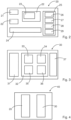
- Fig. 2 illustrates an example embodiment of the data provider device.
- the data provider device 20 comprises a first providing unit 21 for providing sensitive data, an anonymization unit 22 for anonymizing provided sensitive data and for providing an anonymized connection link to the anonymized sensitive data.
- the anonymization unit 22 comprises an anonymization configuration tool 23 for selecting and defining an anonymization level.
- the data provider device 20 further comprises a second providing unit 24 for providing anonymized sensitive data to at least one data receiver device and a communication unit 25 for anonymous communication to the at least one data receiver device.
- the communication unit 25 comprises a receiver unit 26 for receiving and allowing the request on changing the anonymization, a decision on request unit 27 for providing a decision on the received and allowed request, an anonymization editor unit 28 for providing anonymized sensitive data having a changed anonymization, and a third providing unit 29 for providing the provided anonymized sensitive data having a changed anonymization to the at least one data receiver device.
- Fig.3 illustrates an example embodiment of the data receiver device.
- the data receiver device 30 comprises a receiving unit 31 for receiving anonymized sensitive data with the anonymized connection link from at least one data provider unit, and a communication unit 32 for anonymous communication to a data provider device.
- the communication unit 32 comprises a search unit 33 searching for anonymized sensitive data to be of interest, an anonymization level change request unit 34 for providing a request for changing the anonymization, a providing unit 35 for providing the request for changing anonymization to the at least one data provider device, and a second receiving unit 36 for receiving anonymized sensitive data having a repealed anonymization or a downgraded level of anonym ization.
- the data receiver device 30 further comprises a processing unit 37 for processing the provided anonymized sensitive data having a changed anonymization, and a third providing unit 38 for providing the results of the processing to the at least one data provider.
- the data receiver device 30 further comprises a storage unit 39 for storing the received anonymized sensitive data with the anonymized connection link.
- Fig. 4 illustrates an example embodiment of the system for providing a data exchange of sensitive data between at least one data provider and at least one data receiver.
- the system 40 comprises a data provider unit 20, and a data receiver unit 30.
- Fig. 5 illustrates an example usage of the system.
- a data provider has detected an anomaly in his data but cannot judge if it was caused by a security issue or not.
- the data provider can submit the detected anomaly to a data receiver, in particular an external analyst, by using the data provider device.
- the data are anonymized according to predefined configuration settings.
- the data receiver receives the data and compares it to other cases. The data receiver may find a similar case, but to be sure if the cases are comparable, the data receiver needs to know more of the data.
- the data receiver marks the part of the data that needs to be put to a lower level on anonymization, selects the desired anonymization level, adds a comment, why this is necessary and submits the request to the data provider.
- the request is sent to all data providers from which the data receiver receives data, but only the data provider of the data of interest can receive and process the request.
- the data provider permits the anonymization change and the modified data is resubmitted to the data receiver. Once the data receiver has finished the examining, a report about the findings may be send to the data provider.
- Fig. 6 illustrates an example of configuration settings/ anonymization justification in the anonymization configuration tool.
- the type of data company name, address data, personal data and process values are high sensible data such that these data are not send to a data receiver at all.
- the type of data plant, device identifiers and KKS are data which can be send to the data receiver with a medium anonymization/encryption.
- the type of data alarm and event messages are data which can send to the data receiver with a high anonymization/encryption. In case the data receiver requests a change of the level of anonymization the type of data process values, the request is ignored. This is provided by a red flag.
- the data receiver requests a change of the level of anonymization the type of data company name, address data, personal data, plant, device identifier, and power plant classification system, KKS, there is added a warning when a request is received.
- the data receiver requests a change of the level of anonymization the type of data alarm and event messages, the request is accepted without any acceptance of the data provider.
- Fig. 7 illustrates a broadcasting service.
- the infrastructure of the system 40 can also be used for broadcasting the results of the further processing, i.e. the identification of security threats, can be provided as newsletter and/or a security information and event management rules, SIEM rules, to all data provider providing data to the data receiver.
- the data receiver provides these results and transmits these results wireless or by wire to the at least one data provider.
- the data provider can receive and check the results and can forward these results to a user, e.g. the newsletter, and to a SIEM, e.g. the SIEM rule.
- Fig. 8 illustrates a flow diagram of how a data provider submits a dataset.
- the data provider examines the data and may detect an anomaly.
- the data provider also provides anomaly related data which can be stored at a database or can be queried from a database.
- a notification is provided together with the anomaly data to an internal analyst of the data providing device.
- the data provider submits a request for an external analysis, requests for data submission, and receives data via a data exchange.
- Figure 8 shows possible steps before the data is anonymized and submitted to the data receiver. It shows that some data providers may first have an internal data analyst to analyse the data. Only the cases that cannot be solved are then sent to the external data receiver.
- the step "data exchange responsible's data handling" summarizes all steps of Figure 10 .
- Fig. 9 illustrates a flow diagram of how the data provider handles a request from a data receiver.
- the request is checked.
- the data provider checks if the request was not send before or is negotiable. Otherwise or when the request is send before or is not negotiable, the request is deleted/ignored.
- the dater provider checks if a red flag in the anonymization justification exists. When there is a red flag violence, there is added a warning to the request. Otherwise, the request for data submission is accepted and a data exchange is provided. Further, Figure 9 shows the necessary steps around anonymization.
- Figure 8 shows an internal request from the data provider, because the data needs to be sent out to the data receiver.
- Figure 9 shows an external request from the data provider. Here other steps are necessary like checking for the red flag or checking whether the request has been sent before.
- Fig. 10 illustrates a flow diagram of a data anonymization and submission in the data provider device.
- the data provider device receives a request for data submission and displays the request to data responsible.
- the level of anonymization is provided again by taking into account the requested levels and the anonymization justification.
- the modification of the level of anonymization is provided by displaying the data to a responsible and modifying anonymization parameters.
- the sensitive data having a right anonymization is submitted to the data receiver by the data provider.
- Figure 10 shows the process of anonymization.
- the anonymization depends on the settings made in the configuration tool and the requested anonymization level (in case of an external request).
- the anonymization of the data is automatically performed and can be modified by the data exchange responsible person. This can .e.g. be done by using an anonymization editor, where regions of the data can be selected and anonymized to another level.
- Fig. 11 illustrates a flow diagram of a data handling in the data receiver device.
- the data receiver device receives sensitive data, in particular new data
- the received data are processed.
- a notification is provided an it is checked if an older version exists. In case an older version exists, this older version is deleted and the newer version is added to a store, in particular storage medium.
- the new data stored at the storage medium and the notifications are displayed and provided to an analyst.
- the analyst examines the new data by querying known threat patterns from another database. When the analyst comes to the conclusion that a de-anonymization might be helpful, the analyst provides a requests and submits this request to the data provider. Further, Figure 11 shows the process on the data receiver's side.
- the data are stored, wherein older versions of this data are replaced, and the analyst is informed by a notification that new data has arrived.
- the analyst can have a look at the data, perform an analysis with the new data, which includes also data of other data providers and known threat patterns. Depending on the outcome of the analysis the analyst may decide if a reduced anonymization on at least parts of the data would be helpful. In case the analyst decide that a reduced anonymization on at least parts of the data would be helpful, a request is sent to the data provider.
Landscapes
- Engineering & Computer Science (AREA)
- Computer Security & Cryptography (AREA)
- Computer Hardware Design (AREA)
- Theoretical Computer Science (AREA)
- General Engineering & Computer Science (AREA)
- Software Systems (AREA)
- Signal Processing (AREA)
- Health & Medical Sciences (AREA)
- Bioethics (AREA)
- General Health & Medical Sciences (AREA)
- Computer Networks & Wireless Communication (AREA)
- Physics & Mathematics (AREA)
- General Physics & Mathematics (AREA)
- Computing Systems (AREA)
- Medical Informatics (AREA)
- Databases & Information Systems (AREA)
- Data Exchanges In Wide-Area Networks (AREA)
Priority Applications (3)
| Application Number | Priority Date | Filing Date | Title |
|---|---|---|---|
| EP22209451.8A EP4376356A1 (fr) | 2022-11-24 | 2022-11-24 | Echange de données anonyme |
| CN202380080212.2A CN120226309A (zh) | 2022-11-24 | 2023-11-15 | 匿名数据交换 |
| PCT/EP2023/081866 WO2024110273A1 (fr) | 2022-11-24 | 2023-11-15 | Échange de données anonymes |
Applications Claiming Priority (1)
| Application Number | Priority Date | Filing Date | Title |
|---|---|---|---|
| EP22209451.8A EP4376356A1 (fr) | 2022-11-24 | 2022-11-24 | Echange de données anonyme |
Publications (1)
| Publication Number | Publication Date |
|---|---|
| EP4376356A1 true EP4376356A1 (fr) | 2024-05-29 |
Family
ID=84361632
Family Applications (1)
| Application Number | Title | Priority Date | Filing Date |
|---|---|---|---|
| EP22209451.8A Pending EP4376356A1 (fr) | 2022-11-24 | 2022-11-24 | Echange de données anonyme |
Country Status (3)
| Country | Link |
|---|---|
| EP (1) | EP4376356A1 (fr) |
| CN (1) | CN120226309A (fr) |
| WO (1) | WO2024110273A1 (fr) |
Citations (3)
| Publication number | Priority date | Publication date | Assignee | Title |
|---|---|---|---|---|
| WO2017059200A1 (fr) * | 2015-10-02 | 2017-04-06 | Dtex Systems Inc. | Procédé et système d'anonymisation d'enregistrements d'activité |
| US20170149802A1 (en) * | 2015-11-19 | 2017-05-25 | Threat Stream, Inc. | Protecting threat indicators from third party abuse |
| US20190260784A1 (en) * | 2018-02-20 | 2019-08-22 | Darktrace Limited | Artificial intelligence privacy protection for cybersecurity analysis |
-
2022
- 2022-11-24 EP EP22209451.8A patent/EP4376356A1/fr active Pending
-
2023
- 2023-11-15 CN CN202380080212.2A patent/CN120226309A/zh active Pending
- 2023-11-15 WO PCT/EP2023/081866 patent/WO2024110273A1/fr not_active Ceased
Patent Citations (3)
| Publication number | Priority date | Publication date | Assignee | Title |
|---|---|---|---|---|
| WO2017059200A1 (fr) * | 2015-10-02 | 2017-04-06 | Dtex Systems Inc. | Procédé et système d'anonymisation d'enregistrements d'activité |
| US20170149802A1 (en) * | 2015-11-19 | 2017-05-25 | Threat Stream, Inc. | Protecting threat indicators from third party abuse |
| US20190260784A1 (en) * | 2018-02-20 | 2019-08-22 | Darktrace Limited | Artificial intelligence privacy protection for cybersecurity analysis |
Also Published As
| Publication number | Publication date |
|---|---|
| CN120226309A (zh) | 2025-06-27 |
| WO2024110273A1 (fr) | 2024-05-30 |
Similar Documents
| Publication | Publication Date | Title |
|---|---|---|
| US11222111B2 (en) | Techniques for sharing network security event information | |
| US10666684B2 (en) | Security policies with probabilistic actions | |
| AU2008202534B2 (en) | Method and system for e-mail management of e-mails having embedded classification metadata | |
| US10949555B2 (en) | Encryption and decryption system and method | |
| US11138475B2 (en) | Systems and methods for data protection | |
| US8429751B2 (en) | Method and apparatus for phishing and leeching vulnerability detection | |
| US20130133026A1 (en) | System, method, and apparatus for data, data structure, or encryption cognition incorporating autonomous security protection | |
| CN118568754B (zh) | 一种基于大数据的高可信度学习资源安全共享方法及装置 | |
| US6847719B1 (en) | Limiting receiver access to secure read-only communications over a network by preventing access to source-formatted plaintext | |
| CN115203712A (zh) | 基于云访问安全代理的数据库审计方法和装置 | |
| CN119848920A (zh) | 数据跨行业共享方法、系统、设备、存储介质和程序产品 | |
| US9118617B1 (en) | Methods and apparatus for adapting the protection level for protected content | |
| Preuveneers et al. | Privacy-preserving polyglot sharing and analysis of confidential cyber threat intelligence | |
| EP4376356A1 (fr) | Echange de données anonyme | |
| Hicks et al. | VAMS: verifiable auditing of access to confidential data | |
| Burke et al. | K-anonymity for privacy preserving crime data publishing in resource constrained environments | |
| WO2021144770A1 (fr) | Dispositif et procédé pour sécuriser, régir et surveiller des systèmes de gestion de commande source (scm) et de commande de version | |
| CN117828634A (zh) | 一种数据处理方法、装置以及电子设备 | |
| CN118157896A (zh) | 数据传输方法、数据管控装置及相关设备 | |
| US20230195919A1 (en) | Mass spectrometry data management system and method | |
| Xiong et al. | Library data protection and threat detection system based on network security | |
| Veluru | Enterprise data security in health care industry using data science and generative adversarial network to implement data masking techniques | |
| US12225002B2 (en) | Enriching exposed credential search results to make them actionable | |
| Alsinglawi et al. | Privacy-preserving roadmap for medical data-sharing systems | |
| Panda | Data Security Mechanisms in Database Management |
Legal Events
| Date | Code | Title | Description |
|---|---|---|---|
| PUAI | Public reference made under article 153(3) epc to a published international application that has entered the european phase |
Free format text: ORIGINAL CODE: 0009012 |
|
| STAA | Information on the status of an ep patent application or granted ep patent |
Free format text: STATUS: THE APPLICATION HAS BEEN PUBLISHED |
|
| AK | Designated contracting states |
Kind code of ref document: A1 Designated state(s): AL AT BE BG CH CY CZ DE DK EE ES FI FR GB GR HR HU IE IS IT LI LT LU LV MC ME MK MT NL NO PL PT RO RS SE SI SK SM TR |
|
| STAA | Information on the status of an ep patent application or granted ep patent |
Free format text: STATUS: REQUEST FOR EXAMINATION WAS MADE |
|
| 17P | Request for examination filed |
Effective date: 20240801 |
|
| RBV | Designated contracting states (corrected) |
Designated state(s): AL AT BE BG CH CY CZ DE DK EE ES FI FR GB GR HR HU IE IS IT LI LT LU LV MC ME MK MT NL NO PL PT RO RS SE SI SK SM TR |