EP4376511A1 - Positionierungsverfahren und -vorrichtung - Google Patents
Positionierungsverfahren und -vorrichtung Download PDFInfo
- Publication number
- EP4376511A1 EP4376511A1 EP22845261.1A EP22845261A EP4376511A1 EP 4376511 A1 EP4376511 A1 EP 4376511A1 EP 22845261 A EP22845261 A EP 22845261A EP 4376511 A1 EP4376511 A1 EP 4376511A1
- Authority
- EP
- European Patent Office
- Prior art keywords
- positioning reference
- reference signal
- user equipment
- location
- sequence
- Prior art date
- Legal status (The legal status is an assumption and is not a legal conclusion. Google has not performed a legal analysis and makes no representation as to the accuracy of the status listed.)
- Pending
Links
Images





Classifications
-
- H—ELECTRICITY
- H04—ELECTRIC COMMUNICATION TECHNIQUE
- H04W—WIRELESS COMMUNICATION NETWORKS
- H04W64/00—Locating users or terminals or network equipment for network management purposes, e.g. mobility management
-
- G—PHYSICS
- G01—MEASURING; TESTING
- G01S—RADIO DIRECTION-FINDING; RADIO NAVIGATION; DETERMINING DISTANCE OR VELOCITY BY USE OF RADIO WAVES; LOCATING OR PRESENCE-DETECTING BY USE OF THE REFLECTION OR RERADIATION OF RADIO WAVES; ANALOGOUS ARRANGEMENTS USING OTHER WAVES
- G01S5/00—Position-fixing by co-ordinating two or more direction or position line determinations; Position-fixing by co-ordinating two or more distance determinations
- G01S5/02—Position-fixing by co-ordinating two or more direction or position line determinations; Position-fixing by co-ordinating two or more distance determinations using radio waves
- G01S5/0205—Details
- G01S5/0236—Assistance data, e.g. base station almanac
-
- H—ELECTRICITY
- H04—ELECTRIC COMMUNICATION TECHNIQUE
- H04L—TRANSMISSION OF DIGITAL INFORMATION, e.g. TELEGRAPHIC COMMUNICATION
- H04L5/00—Arrangements affording multiple use of the transmission path
- H04L5/003—Arrangements for allocating sub-channels of the transmission path
- H04L5/0037—Inter-user or inter-terminal allocation
-
- H—ELECTRICITY
- H04—ELECTRIC COMMUNICATION TECHNIQUE
- H04L—TRANSMISSION OF DIGITAL INFORMATION, e.g. TELEGRAPHIC COMMUNICATION
- H04L5/00—Arrangements affording multiple use of the transmission path
- H04L5/003—Arrangements for allocating sub-channels of the transmission path
- H04L5/0048—Allocation of pilot signals, i.e. of signals known to the receiver
-
- H—ELECTRICITY
- H04—ELECTRIC COMMUNICATION TECHNIQUE
- H04L—TRANSMISSION OF DIGITAL INFORMATION, e.g. TELEGRAPHIC COMMUNICATION
- H04L5/00—Arrangements affording multiple use of the transmission path
- H04L5/0091—Signalling for the administration of the divided path, e.g. signalling of configuration information
- H04L5/0094—Indication of how sub-channels of the path are allocated
-
- H—ELECTRICITY
- H04—ELECTRIC COMMUNICATION TECHNIQUE
- H04W—WIRELESS COMMUNICATION NETWORKS
- H04W4/00—Services specially adapted for wireless communication networks; Facilities therefor
- H04W4/30—Services specially adapted for particular environments, situations or purposes
- H04W4/40—Services specially adapted for particular environments, situations or purposes for vehicles, e.g. vehicle-to-pedestrians [V2P]
-
- H—ELECTRICITY
- H04—ELECTRIC COMMUNICATION TECHNIQUE
- H04W—WIRELESS COMMUNICATION NETWORKS
- H04W76/00—Connection management
- H04W76/10—Connection setup
- H04W76/14—Direct-mode setup
-
- H—ELECTRICITY
- H04—ELECTRIC COMMUNICATION TECHNIQUE
- H04W—WIRELESS COMMUNICATION NETWORKS
- H04W92/00—Interfaces specially adapted for wireless communication networks
- H04W92/16—Interfaces between hierarchically similar devices
- H04W92/18—Interfaces between hierarchically similar devices between terminal devices
-
- H—ELECTRICITY
- H04—ELECTRIC COMMUNICATION TECHNIQUE
- H04W—WIRELESS COMMUNICATION NETWORKS
- H04W88/00—Devices specially adapted for wireless communication networks, e.g. terminals, base stations or access point devices
- H04W88/02—Terminal devices
- H04W88/04—Terminal devices adapted for relaying to or from another terminal or user
Definitions
- This application relates to the field of communication technologies, and in particular, to a positioning method and apparatus.
- a long term evolution (long term evolution, LTE) system supports sidelink transmission, that is, data transmission between user equipments (user equipments, UEs) is directly performed on a physical layer.
- An LTE sidelink performs communication based on broadcast.
- the LTE sidelink may be configured to support basic security communication of vehicle to everything (vehicle to everything, V2X), but is not applicable to other more advanced V2X services.
- a 5G new radio (new radio, NR) system will support more advanced sidelink transmission designs, such as unicast, broadcast, multicast, and the like, to support more comprehensive service types.
- An objective of embodiments of this application is to provide a positioning method and apparatus, which can resolve a problem of meeting positioning requirements in SL communication.
- a positioning method including:
- a positioning apparatus used in a user equipment and including:
- a user equipment including a processor, a memory, and a program stored in the memory and executable on the processor, the program, when executed by the processor, implementing the steps of the method according to the first aspect.
- a readable storage medium stores a program or instructions, the program or instructions, when executed by the processor, implementing the method according to the first aspect.
- a computer program product is provided.
- the computer program product is stored in a non-volatile storage medium, and the computer program product is executed by at least one processor to implement the steps of the method according to the first aspect.
- a chip including a processor and a communication interface, where the communication interface is coupled to the processor, and the processor is configured to run a program or instructions to implement the method according to the first aspect.
- a communication device configured to perform the steps of the method according to the first aspect.
- mapping rule for determining the mapping configuration of the SL positioning reference signal and the sequence definition for determining the sequence feature and/or the pattern of the SL positioning reference signal by using the mapping rule for determining the mapping configuration of the SL positioning reference signal and the sequence definition for determining the sequence feature and/or the pattern of the SL positioning reference signal, transmission of the SL positioning reference signal between the first user equipment and the second user equipment is implemented, and positioning requirements in SL communication are met.
- first”, second, and so on are intended to distinguish similar objects but do not necessarily indicate a specific order or sequence. It is to be understood that the term used in such a way is interchangeable in proper circumstances, so that the embodiments of this application can be implemented in other sequences than the sequence illustrated or described herein.
- the objects distinguished by “first”, “second”, and the like are usually of one type, and a quantity of objects is not limited, for example, there may be one or more first objects.
- “and/or” used in the specification and the claims represents at least one of the connected objects, and a character “/" in this specification generally indicates an "or” relationship between the associated obj ects.
- LTE long term evolution
- LTE-Advanced LTE-advanced
- LTE-A Long term evolution
- CDMA code division multiple access
- time division multiple access time division multiple access
- FDMA frequency division multiple access
- OFDMA orthogonal frequency division multiple access
- SC-FDMA single-carrier frequency-division multiple access
- system and “network” are usually interchangeably used, and the technology described herein can be applied to the systems and radio technologies mentioned above, and can also be applied to other systems and radio technologies.
- technologies are also applicable to applications other than NR system applications, for example, a 6th generation (6th Generation, 6G) communication system, a new radio (new radio, NR) system is exemplarily described in the following descriptions, and the term “NR” is used in most of the following descriptions.
- a long term evolution (long term evolution, LTE) system supports sidelink transmission, that is, data transmission between user equipments (user equipments, UEs) is directly performed on a physical layer.
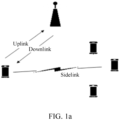
- FIG. 1a shows a communication system including SL communication.
- An LTE sidelink performs communication based on broadcast.
- the LTE sidelink may be configured to support basic security communication of vehicle to everything (vehicle to everything, V2X), but is not applicable to other more advanced V2X services.
- a 5G NR (new radio) system will support more advanced sidelink transmission designs, such as unicast, broadcast, multicast, and the like, to support more comprehensive service types.
- a long term evolution (long term evolution, LTE) system supports sidelink transmission from the 12 th release, which is used for data transmission between user equipments (user equipments, UEs) without using a network device.
- NR V2X defines two resource allocation modes (modes), one is mode1 that schedules resources for a base station; and the other is mode2, where the UE determines what resources to use for transmission or another UE to schedule the UE.
- resource information may be from a broadcast message or pre-configured information of the base station. If the UE works within a range of the base station and has a radio resource control (radio resource control, RRC) connection with the base station, the UE may work in mode1 and/or mode2. If the UE works within the range of the base station but has no RRC connection with the base station, the UE may only work in mode2. If the UE is outside the range of the base station, the UE may only work in mode2 and perform V2X transmission based on the pre-configured information.
- RRC radio resource control
- a transmit user equipment transmit user equipment
- TX UE transmit user equipment
- the UE Before resource selection, the UE needs to determine a candidate resource set (candidate resource set) for resource selection, based on comparison of a reference signal receiving power (reference signal receiving power, RSRP) measured on a resource within the resource selection window and a corresponding RSRP threshold (threshold), if the RSRP is lower than the RSRP threshold, the resource may be included in the candidate resource set.
- RSRP reference signal receiving power
- threshold if the RSRP is lower than the RSRP threshold, the resource may be included in the candidate resource set.
- the UE After the resource set is determined, the UE randomly selects transmission resources from the candidate resource set. In addition, the UE may reserve transmission resources for subsequent transmission during this transmission. A specific procedure is shown in FIG. 1b .
- a mapping relationship between a number of ports and port numbers is fixed SL-ResourcePool sl-TimeResource / INTEGER (10..160) sl-NumSubchannel INTEGER (0..265) sl-StartRB-Subchannel INTEGER (1..27) Set level Maxnumofset 2 16 3 sl-SSB-TimeAllocations Periodicity 2 ⁇ ⁇ 4, 8 ...
- n ID is determined by the 10-bit LSB of CRC PSCCH Nih equals the decimal representation of CRC on the PSCCH associated with the PSSCH sl-DMRS-ScrambleID-r16 INTEGER (0..65535) PSSCH CRC Number of resources 64 16 ReOffset RE&comb 2, 3, ...
- the user equipment in this embodiment of this application may be a user equipment side device such as a mobile phone, a tablet personal computer (tablet personal computer), a laptop computer (laptop computer) or notebook computer, a personal digital assistant (personal digital assistant, PDA), a palmtop computer, a notebook, an ultra-mobile personal computer (ultra-mobile personal computer, UMPC), a Mobile Internet Device (mobile Internet device, MID), a wearable device (wearable device), a vehicle user equipment (VEHICLE USER EQUIPMENT, VUE), a pedestrian user equipment (pedestrian user equipment, PUE), or the like.
- the wearable device includes a bracelet, a headset, glasses, and the like. It is to be noted that, a specific type of the user equipment is not limited in the embodiments of this application.
- an embodiment of this application provides a positioning method.
- the embodiments of this application are applied to an SL communication scenario, and involved communication devices are a pair of user equipments in SL communication, that is, a first user equipment and a second user equipment.
- the first user equipment and the second user equipment may be a transmit end or a receive end of each other.
- the first user equipment may be a transmit user equipment
- the second user equipment may be a receive user equipment
- the first user equipment may be a receive user equipment
- the second user equipment may be a transmit user equipment.
- a scheduling user equipment may further be configured in an SL communication system.
- the first user equipment and the second user equipment may alternatively be a scheduling user equipment and a transmit user equipment respectively, or may be a scheduling user equipment and a receive user equipment respectively.
- a third user equipment is used as a scheduling user equipment that schedules the first user equipment and/or the second user equipment.
- the method in the embodiments of this application is applicable to various situations mentioned above. Descriptions are given below by using a first user equipment as an execution entity of the method. It may be understood that, the first user equipment may be used as a transmit user equipment, a receive user equipment, or a scheduling user equipment in SL communication.
- the method specifically includes step 201.
- Step 201 A first user equipment transmits a sidelink SL positioning reference signal according to a mapping rule and/or a sequence definition.
- the SL positioning reference signal (SL positioning reference signal, SL-PRS) is used for determining location information of the first user equipment and/or a second user equipment, where the second user equipment is an opposite user equipment that performs SL communication or SL positioning with the first user equipment.
- communication between the first user equipment and the second user equipment may be specifically as follows: 1) data transmission between the transmit user equipment and the receive user equipment; 2) information exchange between the scheduling user equipment and the transmit user equipment; and 3) information exchange between the scheduling user equipment and the receive user equipment. This is not specifically limited in this embodiment of this application.
- the second user equipment may be one or more user equipments.
- the first user equipment is used as a transmit user equipment, there may be a plurality of receive user equipments, and each user equipment may be used as a second user equipment.
- the first user equipment is used as a receive user equipment, there may be a plurality of transmit user equipments, and each user equipment may be used as a second user equipment.
- the mapping rule is used for determining a mapping configuration of the SL positioning reference signal
- the sequence definition is used for determining a sequence feature and/or a pattern of the SL positioning reference signal, so that the first user equipment can send the SL positioning reference signal to the opposite user equipment according to the mapping rule and/or the sequence definition, and the first user equipment can receive the SL positioning reference signal from the opposite user equipment according to the mapping rule and/or the sequence definition.
- the mapping rule described in this application may be determining the SL positioning reference signal according to a protocol constraint, or may be determining the SL positioning reference signal according to configuration information (for example, a network side sends the configuration information to the first user equipment, a higher layer sends the configuration information to the first user equipment or the second user equipment, or a higher layer sends the configuration information to the first user equipment), or may be determining the SL positioning reference signal in combination with a protocol and configuration information.
- mapping rule for determining the mapping configuration of the SL positioning reference signal and the sequence definition for determining the sequence feature and/or the pattern of the SL positioning reference signal by using the mapping rule for determining the mapping configuration of the SL positioning reference signal and the sequence definition for determining the sequence feature and/or the pattern of the SL positioning reference signal, transmission of the SL positioning reference signal between the first user equipment and the second user equipment is implemented or determined, and positioning requirements in SL communication are met.
- the SL positioning reference signal includes one or more of the following:
- the SL positioning reference signal and a UU positioning reference signal have partially same mapping rules and/or sequence definitions or completely same mapping rules and/or sequence definitions.
- the UU positioning reference signal may include an LTE-positioning reference signal (LTE-PRS), an NR PRS, an NR SRS, and the like.
- LTE-PRS LTE-positioning reference signal
- NR PRS NR PRS
- NR SRS NR SRS
- the SL positioning reference signal may be partially or completely the same as the UU positioning reference signal.
- the SL positioning reference signal is completely the same as the UU positioning reference signal, for example, for some special scenarios, content of the SL positioning reference signal is consistent with content of the UU positioning reference signal, the UU positioning reference signal may be directly reused as the SL positioning reference signal.
- the SL positioning reference signal is partially the same as the UU positioning reference signal, for example, bands in communication scenarios of the two are different, the content of the SL positioning reference signal is inconsistent with the content of the UU positioning reference signal, and the UU positioning reference signal cannot be reused as the SL positioning reference signal.
- the SL positioning reference signal may carry an automatic gain control (automatic gain control, AGC) character, where the character does not exist in the UU positioning reference signal, and in this case, the content of the SL positioning reference signal is inconsistent with the content of the UU positioning reference signal, and the UU positioning reference signal cannot be reused as the SL positioning reference signal.
- AGC automatic gain control
- the SRS may be used as the SL positioning reference signal.
- the SL positioning reference signal may be received by a network side device.
- the SL-PRS and the UU positioning reference signal may use a same band, a numerology time-frequency resource configuration, or the like.
- the SL-PRS and the UU positioning reference signal may use a same sequence definition, for example, an ID, a sequence type, a sequence initial value cinit, and the like.
- there may be a plurality of SL positioning reference signals for example, a plurality of SL positioning reference signals of a first device, or a first device is scheduled to send a plurality of SL positioning reference signals or is scheduled to receive a plurality of SL positioning reference signals, where the plurality of SL positioning reference signals may be the same or different.
- the method further includes any one of the following:
- the first user equipment in a case that there are a plurality of SL positioning reference signals, the first user equipment sends/measures one or N SL positioning reference signals with a high priority.
- the plurality of SL positioning reference signals have a same target user equipment, where the target user equipment may be a transmit user equipment or a receive user equipment.
- the target user equipment is the receive user equipment.
- the first device is the target user equipment, and the first device is configured to send or measure the plurality of SL positioning reference signals.
- a plurality of first user equipments may send the plurality of SL positioning reference signals to the target user equipment.
- the target user equipment may send the plurality of SL positioning reference signals to a plurality of first user equipments.
- the target user equipment has one or more the following operations:
- the first user equipment may learn, in an existing manner, whether the target user equipment has the foregoing operations.
- the target user equipment may generate some feedback information in the existing manner after performing a measurement operation, and the first user equipment may learn, according to the feedback information, whether the target user equipment has the foregoing operations.
- the target user equipment has one or more the following operations:
- the plurality of SL positioning reference signals are from different carriers (carriers) or frequency layers (frequency layers),
- the method further includes any one of the following:
- the method further includes:
- the second indication information may be indication information sent by the scheduling user equipment or the second user equipment, or may be indication information sent by the higher layer of the first user equipment.
- the second indication information may indicate the following content:
- the second indication information indicates sending or measurement of a positioning reference signal.
- the second indication information indicates sending of the positioning reference signal; and when the first user equipment is used as the receive user equipment, the second indication information indicates measurement of the positioning reference signal.
- the method further includes: sending, by the first user equipment, second indication information to the second user equipment, where the second indication information is used for indicating that the second user equipment sends or measures the SL positioning reference signal.
- the second indication information indicates sending of the positioning reference signal; and when the second user equipment is used as the receive user equipment, the second indication information indicates measurement of the positioning reference signal.
- the mapping rule includes a first time-domain mapping rule; and the first time-domain mapping rule includes one or more of the following:
- the mapping rule includes a second time-domain mapping rule
- the SL positioning reference signal is not sent on the location, or is sent on the following first symbol that is not at the first location.
- the second location includes one or more of the following:
- the mapping rule includes a first pre-defined or pre-configured pattern (pattern), and the first pre-defined or pre-configured pattern includes a third time-domain mapping rule; and the third time-domain mapping rule includes one or more of the following:
- the time-domain mapping rule is used for indicating how the SL positioning reference signal is mapped to a time domain, a symbol to which the SL positioning reference signal is mapped, symbols to which the SL positioning reference signal is mapped, symbols to which the SL positioning reference signal can be mapped, and symbols to which the SL positioning reference signal cannot be mapped.
- the mapping rule includes that the first user equipment receives or sends third indication information, where
- the third indication information is used for indicating that the SL positioning reference signal is transmitted on an SL subframe and/or a UL subframe, or the third indication information is used for indicating cross-band mapping, cross-carrier mapping, or cross-frequency-layer mapping, or the third indication information includes a number or locations of OFDM symbols.
- That the third indication information is used for indicating cross-band mapping, cross-carrier mapping, or cross-frequency-layer mapping may be understood as that, whether the SL positioning reference signal may be at frequency bands and carriers with different indication information or activation BWPs, or may be understood as that, whether the SL positioning reference signal may be mapped on a plurality of frequency bands and carriers.
- the mapping rule includes: mapping the SL positioning reference signal to a UL subframe.
- the mapping the SL positioning reference signal to a UL subframe may be understood as that, if the UL subframe may be used for an SL, and may be used for sending an SL positioning signal, or may be understood as that the UL subframe may be used for sending the SL positioning reference signal. Further, whether the SL positioning reference signal can be mapped to the UL subframe may be indicated by using the indication information.
- the mapping rule includes a first power mapping rule; and the first power mapping rule includes one or more of the following:
- P 0,s-prs , ⁇ s-prs is a power adjustment parameter of the SL positioning reference signal
- M RB S ⁇ PRS is a number of resource blocks (resource blocks, RBs) of the SL positioning reference signal
- PL is a path loss of a power reference signal, where the power reference signal includes one or more of the following:
- the mapping rule includes a first frequency-domain mapping rule; and the first frequency-domain mapping rule includes one or more of the following:
- the mapping rule includes a second frequency-domain mapping rule
- the SL positioning reference signal is not sent on the location, or is sent on the following first frequency-domain location that is not at the first location.
- the fourth location includes one or more of the following:
- the frequency-domain mapping rule is used for indicating how the SL positioning reference signal is mapped to a frequency domain, PRBs or REs to which the SL positioning reference signal is mapped, a size of a bandwidth, frequency-domain locations to which the SL positioning reference signal can be mapped, and frequency-domain locations to which the SL positioning reference signal cannot be mapped.
- the mapping rule includes a second stage SCI mapping rule; and the second stage SCI mapping rule includes one or more of the following:
- the mapping rule includes a third frequency-domain mapping rule; and the third frequency-domain mapping rule includes one or more of the following:
- the method further includes: determining the number of OFDM symbols, the maximum number of OFDM symbols, that the first OFDM symbol is located on the X th symbol in the slot, the first power coefficient, the point A, a number of frequency-domain PRBs, the bandwidth, the numerology, or the comb value in one or more of the following manners:
- sequence definition includes one or more of the following:
- the sequence of an uplink positioning reference signal may be a gold sequence or a computer generate sequence (computer generate sequence, CGS) sequence, where generation parameters of the gold sequence or the CGS sequence may be calculated by using a UE/UE group ID or a network configuration ID.
- the UE/UE group ID may be calculated by using an international mobile subscriber identification number (international mobile subscriber identification number, IMSI) and an international mobile equipment identity (international mobile equipment identity, IMEI), or may be obtained through a network indication.
- IMSI international mobile subscriber identification number
- IMEI international mobile equipment identity
- discrete Fourier transform discrete Fourier transform, DFT
- DFT discrete Fourier transform
- the uplink positioning reference signal may be at least one of an NR SRS, an NR PRACH, an NR UL PRS, or an uplink positioning reference signal newly defined by NR.
- an initial value c init of the c(n) pseudo-random sequence is associated with one or more of the following:
- a sequence of the SL positioning reference signal is associated with one or more the following:
- the initial value of c(n) of the SL positioning reference signal is associated with one or more of (1) to (6).
- the mapping rule further includes: mapping the SL positioning reference signal to a first dedicated resource.
- the method further includes: transmitting, by the first user equipment, first dedicated resource configuration information, for example, the first user equipment receives first dedicated resource configuration information or sends first dedicated resource configuration information.
- the first user equipment may send the first dedicated resource configuration information; and in another embodiment, as a scheduling user equipment, a transmit user equipment, a receive user equipment, the first user equipment may receive the first dedicated resource configuration information.
- the first dedicated resource configuration information includes one or more the following:
- the method further includes: in a case that the first user equipment is scheduled to send the SL positioning reference signal, detecting an RSRP on a first dedicated resource pool and listening to SCI, and determining a transmit resource of the SL positioning reference signal.
- the SL positioning reference signal is sent in a case that the first user equipment is scheduled by the higher layer, or the network side, or the second user equipment to send the SL positioning reference signal.
- Case 1 There is a dedicated resource pool or a resource whose RSRP is less than a threshold 1.
- Case 2 It is not detected through listening that a dedicated resource pool or a resource is scheduled by the SCI.
- Case 3 There is a reservation resource pool of a dedicated resource pool whose RSRP is less than a threshold 1.
- the reservation resource pool of the dedicated resource pool may be resources reserved for the network side to configure SL positioning reference signal transmission.
- transmit resources or transmit sequences of SL positioning reference signals corresponding to different first user equipments meet one or more of the following:
- an ID hopping (hopping) rule associated with the initial value of the c(n) pseudo-random sequence is associated with one or more of geographical location information, the source ID, the destination ID, a zone ID, or a communication range.
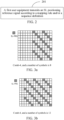
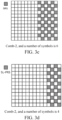
- FIG. 3a to FIG. 3m show patterns patterns of SL positioning reference signals.
- a target pattern feature corresponding to a target pattern has a correspondence with at least one of the following: a density corresponding to the SL positioning reference signal, a CDM type, a port number, a Comb value, a number of symbols, an RE offset, an SL symbol type, a symbol location, a bandwidth, a positioning requirement, a sequence feature, a transmission channel, a transmission resource, a resource pool, and a BWP.
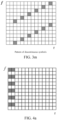
- Pattern (pattern) feature where there are two symbols used for an SL-PRS, and the second symbol is repetition of the first symbol, as shown in FIG. 4a and FIG. 4b .
- the SL-PRS avoids symbols such as the S-SS/PBSCH/DMRS and is transmitted on another symbol.
- an embodiment of this application provides a positioning apparatus 600, used in a user equipment.
- the apparatus 600 includes:
- the SL positioning reference signal includes one or more of the following:
- the SL positioning reference signal and a UU positioning reference signal have partially same mapping rules and/or sequence definitions or completely same mapping rules and/or sequence definitions.
- the method further includes any one of the following:
- the target user equipment has one or more of the following operations:
- the transmission module is further configured to perform any one of the following:
- the transmission module is further configured to perform any one of the following:
- the transmission module is further configured to:
- the mapping rule includes a first time-domain mapping rule; and the first time-domain mapping rule includes one or more of the following:
- the mapping rule includes a second time-domain mapping rule; and the second time-domain mapping rule includes one or more of the following:
- the mapping rule includes a third time-domain mapping rule; and the third time-domain mapping rule includes one or more of the following:
- the mapping rule includes that the first user equipment receives or sends third indication information, where the third indication information is used for indicating that the SL positioning reference signal is transmitted on an SL subframe and/or a UL subframe, or the third indication information is used for indicating cross-band mapping, cross-carrier mapping, or cross-frequency-layer mapping, or the third indication information includes a number or locations of OFDM symbols.
- the mapping rule includes: mapping the SL positioning reference signal to a UL subframe.
- the mapping rule includes a first power mapping rule; and the first power mapping rule includes one or more of the following:
- the mapping rule includes a first frequency-domain mapping rule; and the first frequency-domain mapping rule includes one or more of the following:
- the mapping rule includes a second frequency-domain mapping rule; and the second frequency-domain mapping rule includes one or more of the following:
- the mapping rule includes a second stage SCI mapping rule; and the second stage SCI mapping rule includes one or more of the following:
- the mapping rule includes a third frequency-domain mapping rule; and the third frequency-domain mapping rule includes one or more of the following:
- the transmission module is further configured to: determining the number of OFDM symbols, the maximum number of OFDM symbols, that the first OFDM symbol is located on the X th symbol in the slot, the first power coefficient, the point A, a number of frequency-domain PRBs, the bandwidth, the numerology, or the comb value in one or more of the following manners:
- an initial value of the c(n) pseudo-random sequence is associated with one or more of the following:
- a sequence of the SL positioning reference signal is associated with one or more the following:
- the mapping rule further includes: mapping the SL positioning reference signal to a first dedicated resource.
- the transmission module is further configured to: transmit, by the first user equipment, first dedicated resource configuration information, where the first dedicated resource configuration information includes one or more of the following:
- the transmission module is further configured to:
- transmit resources or transmit sequences of SL positioning reference signals corresponding to different first user equipments meet one or more of the following:
- mapping rules or sequence definitions used by the different first user equipments to send the SL positioning reference signals are different, including one or more the following:
- an ID hopping rule is associated with one or more of geographical location information, the source ID, the destination ID, a zone ID, or a communication range.
- the positioning apparatus provided in the embodiments of this application can implement the processes implemented in the method embodiment of FIG. 2 and achieve the same technical effect. To avoid repetition, details are not described herein again.
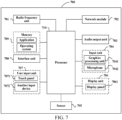
- FIG. 7 is a schematic diagram of a hardware structure of a user equipment according to an embodiment of this application.
- the user equipment 700 includes, but is not limited to, components such as a radio frequency unit 701, a network module 702, an audio output unit 703, an input unit 704, a sensor 705, a display unit 706, a user input unit 707, an interface unit 708, a memory 709, and a processor 710.
- components such as a radio frequency unit 701, a network module 702, an audio output unit 703, an input unit 704, a sensor 705, a display unit 706, a user input unit 707, an interface unit 708, a memory 709, and a processor 710.
- the user equipment 700 may further include a power supply (such as a battery) for supplying power to the components.
- a power supply such as a battery
- the power supply may be logically connected to the processor 710 by using a power management system, thereby implementing functions such as charging, discharging, and power consumption management by using the power management system.
- a user equipment structure shown in FIG. 7 does not constitute a limitation to the user equipment, and the user equipment may include more or fewer components than those shown in the figure, or some components may be combined, or a different component deployment may be used. Details are not described herein again.
- the input unit 704 may include a graphics processing unit (graphics processing unit, GPU) 7041 and a microphone 7042.
- the graphics processing unit 7041 processes image data of a static picture or a video obtained by an image capturing apparatus (for example, a camera) in a video capturing mode or an image capturing mode.
- the display unit 706 may include a display panel 7061, for example, a display panel 7061 configured in a form such as a liquid crystal display or an organic light-emitting diode.
- the user input unit 707 includes a touch panel 7061 and another input device 7072.
- the touch panel 7061 is also referred to as a touchscreen.
- the touch panel 7061 may include two parts: a touch detection apparatus and a touch controller.
- the another input device 7072 may include, but is not limited to, a physical keyboard, a functional key (such as a volume control key or a switch key), a track ball, a mouse, and a joystick, and the details will not be described herein again.
- the radio frequency unit 701 receives downlink data from a network side device and sends the data to the processor 610 for processing; and sends uplink data to the network side device.
- the radio frequency unit 701 includes, but is not limited to, an antenna, at least one amplifier, a transceiver, a coupler, a low noise amplifier, a duplexer, and the like.
- the memory 709 may be configured to store a software program or instructions and various data.
- the memory 709 may mainly include a program storage or instruction area and a data storage area.
- the program storage or instruction area may store an operating system, an application or instructions required by at least one function (for example, a sound playback function and an image playback function), or the like.
- the memory 709 may include a high speed random access memory, and may further include a non-volatile memory.
- the non-volatile memory may be a read-only memory (read-only memory, ROM), a programmable ROM (programmable ROM, PROM), an erasable PROM (erasable PROM, EPROM), an electrically EPROM (electrically EPROM, EEPROM), or a flash memory.
- ROM read-only memory
- PROM programmable ROM
- EPROM erasable PROM
- EPROM electrically EPROM
- EEPROM electrically EPROM
- flash memory for example, at least one magnetic disk storage
- the processor 710 may include one or more processing units.
- the processor 710 may integrate an application processor and a modem processor.
- the application processor mainly processes an operating system, a user interface, an application or instructions, and the like.
- the modem processor mainly processes wireless communication, for example, a baseband processor. It may be understood that the modulation and demodulation processor may not be integrated into the processor 710.
- the user equipment provided in the embodiments of this application can implement the processes implemented in the method embodiment of FIG. 2 and achieve the same technical effect. To avoid repetition, details are not described herein again.
- An embodiment of this application further provides a computer program product, where the computer program product is stored in a non-volatile storage medium, and the computer program product is executed by at least one processor to implement steps of the method in FIG. 2 .
- An embodiment of this application further provides a readable storage medium.
- the readable storage medium may be non-volatile or volatile.
- the readable storage medium stores a program or instructions, the program or instructions, when executed by a processor, implementing the processes of the embodiments of the method shown in FIG. 2 , and achieving the same technical effect. To avoid repetition, details are not described herein again.
- the processor is a processor in the user equipment in the foregoing embodiments.
- the readable storage medium includes a computer-readable storage medium, for example, a read-only memory (Read-Only Memory, ROM), a random access memory (Random Access Memory, RAM), a magnetic disk, an optical disk, or the like.
- An embodiment of this application further provides a chip, including a processor and a communication interface coupled to each other, the processor being configured to run a program or instructions of the network side device to implement the processes of the method embodiments in FIG. 2 , and can achieve the same technical effects. To avoid repetition, details are not described herein again.
- the chip mentioned in this embodiment of this application may also be referred to as a system-level chip, a system chip, a chip system, a system on chip, or the like.
- the method according to the foregoing embodiments may be implemented by means of software and a necessary general hardware platform, and certainly, may alternatively be implemented by hardware, but in many cases, the former manner is a better implementation.
- the technical solutions of this application essentially or the part contributing to the related art may be implemented in the form of a software product.
- the computer software product is stored in a storage medium (such as a ROM/RAM, a magnetic disk, or an optical disc), and includes several instructions for instructing a user equipment (which may be a mobile phone, a computer, a server, an air conditioner, a network device, or the like) to perform the method described in the embodiments of this application.
Landscapes
- Engineering & Computer Science (AREA)
- Signal Processing (AREA)
- Computer Networks & Wireless Communication (AREA)
- Physics & Mathematics (AREA)
- General Physics & Mathematics (AREA)
- Radar, Positioning & Navigation (AREA)
- Remote Sensing (AREA)
- Mobile Radio Communication Systems (AREA)
Applications Claiming Priority (2)
| Application Number | Priority Date | Filing Date | Title |
|---|---|---|---|
| CN202110815286.9A CN115643636B (zh) | 2021-07-19 | 2021-07-19 | 定位方法及装置 |
| PCT/CN2022/106212 WO2023001096A1 (zh) | 2021-07-19 | 2022-07-18 | 定位方法及装置 |
Publications (2)
| Publication Number | Publication Date |
|---|---|
| EP4376511A1 true EP4376511A1 (de) | 2024-05-29 |
| EP4376511A4 EP4376511A4 (de) | 2024-11-13 |
Family
ID=84940337
Family Applications (1)
| Application Number | Title | Priority Date | Filing Date |
|---|---|---|---|
| EP22845261.1A Pending EP4376511A4 (de) | 2021-07-19 | 2022-07-18 | Positionierungsverfahren und -vorrichtung |
Country Status (4)
| Country | Link |
|---|---|
| US (1) | US20240196356A1 (de) |
| EP (1) | EP4376511A4 (de) |
| CN (1) | CN115643636B (de) |
| WO (1) | WO2023001096A1 (de) |
Families Citing this family (19)
| Publication number | Priority date | Publication date | Assignee | Title |
|---|---|---|---|---|
| CN115622674B (zh) * | 2017-02-07 | 2024-12-24 | 中兴通讯股份有限公司 | 一种相位噪声导频的配置、确定方法及装置 |
| US11929951B2 (en) * | 2021-07-19 | 2024-03-12 | Qualcomm Incorporated | Sidelink positioning reference signal transmissions |
| CN115643637B (zh) * | 2021-07-19 | 2026-03-17 | 维沃移动通信有限公司 | 定位方法及装置 |
| CN117014273A (zh) * | 2022-04-29 | 2023-11-07 | 大唐移动通信设备有限公司 | 直通链路定位参考信号的发送方法、终端定位方法及装置 |
| EP4564975A4 (de) * | 2022-07-28 | 2025-08-13 | Beijing Xiaomi Mobile Software Co Ltd | Slprs-übertragungsverfahren und vorrichtung dafür |
| WO2024039159A1 (ko) * | 2022-08-15 | 2024-02-22 | 엘지전자 주식회사 | 사이드링크를 위한 전송 전력 관리 |
| CN119856437A (zh) * | 2022-12-30 | 2025-04-18 | Oppo广东移动通信有限公司 | 用于侧行传输的方法和终端设备 |
| CN118785082A (zh) * | 2023-04-07 | 2024-10-15 | 大唐移动通信设备有限公司 | 终端定位方法、第一终端和装置 |
| CN118785400A (zh) * | 2023-04-07 | 2024-10-15 | 维沃移动通信有限公司 | 映射资源确定方法、装置、用户设备及存储介质 |
| CN118784177A (zh) * | 2023-04-07 | 2024-10-15 | 华为技术有限公司 | 一种侧行定位参考信号资源的配置方法及装置 |
| CN118785339A (zh) * | 2023-04-07 | 2024-10-15 | 华为技术有限公司 | 一种通信方法、装置、存储介质以及芯片系统 |
| US20240381393A1 (en) * | 2023-05-11 | 2024-11-14 | Samsung Electronics Co., Ltd. | Sidelink power control with carrier aggregation |
| US20240396611A1 (en) * | 2023-05-23 | 2024-11-28 | Qualcomm Incorporated | Initial beam-pairing reference signals using destination identifiers |
| CN120642490A (zh) * | 2023-06-28 | 2025-09-12 | Oppo广东移动通信有限公司 | 一种资源映射的方法、装置、终端、芯片和存储介质 |
| WO2025024984A1 (zh) * | 2023-07-28 | 2025-02-06 | Oppo广东移动通信有限公司 | 定位方法、装置、设备及存储介质 |
| KR20260041060A (ko) * | 2023-08-01 | 2026-03-26 | 광동 오포 모바일 텔레커뮤니케이션즈 코포레이션 리미티드 | 사이드링크 통신 방법 및 단말 장치 |
| CN117546584A (zh) * | 2023-09-27 | 2024-02-09 | 北京小米移动软件有限公司 | 资源分配方法、装置、设备及存储介质 |
| CN119728048A (zh) * | 2023-09-28 | 2025-03-28 | 维沃移动通信有限公司 | 信号发送方法、信号接收方法及终端 |
| CN120238905A (zh) * | 2023-12-29 | 2025-07-01 | 华为技术有限公司 | 一种通信方法及其装置 |
Family Cites Families (11)
| Publication number | Priority date | Publication date | Assignee | Title |
|---|---|---|---|---|
| KR102800232B1 (ko) * | 2016-08-12 | 2025-04-29 | 주식회사 아이티엘 | 무선 통신 시스템에서 협대역-사물 인터넷 디바이스를 위한 측위 참조신호 전송 방법 및 장치 |
| CN113542178A (zh) * | 2019-04-28 | 2021-10-22 | 华为技术有限公司 | 生成参考信号的方法、检测参考信号的方法和通信装置 |
| EP4013171B1 (de) * | 2019-08-29 | 2023-11-29 | LG Electronics Inc. | Verfahren für teilnehmerausrüstung in einem drahtlosen kommunikationssystem |
| CN112583553B (zh) * | 2019-09-29 | 2022-02-08 | 大唐移动通信设备有限公司 | 信号传输方法及装置 |
| KR102934179B1 (ko) * | 2019-11-01 | 2026-03-09 | 엘지전자 주식회사 | 사이드링크를 지원하는 무선통신시스템에서 단말이 상대적인 측위를 수행하는 방법 및 이를 위한 장치 |
| EP4057719A4 (de) * | 2019-11-08 | 2023-12-20 | LG Electronics Inc. | Positionierungsverfahren unter verwendung von sidelink und vorrichtung dafür |
| CN119767251A (zh) * | 2019-11-18 | 2025-04-04 | 华为技术有限公司 | 侧行定位方法和装置 |
| CN115632750A (zh) * | 2019-12-17 | 2023-01-20 | 大唐移动通信设备有限公司 | 一种直通链路定位参考信号的发送、接收方法及终端 |
| EP4060923A4 (de) * | 2019-12-26 | 2023-01-18 | LG Electronics Inc. | Vorkonfiguriertes prs-übertragungsverfahren für sidelink-positionierung und vorrichtung dafür |
| US11609299B2 (en) * | 2021-02-02 | 2023-03-21 | Qualcomm Incorporated | Positioning reference signal measurement for joint positioning |
| US11778585B2 (en) * | 2021-07-06 | 2023-10-03 | Qualcomm Incorporated | Sidelink positioning reference signal transmission and reception |
-
2021
- 2021-07-19 CN CN202110815286.9A patent/CN115643636B/zh active Active
-
2022
- 2022-07-18 WO PCT/CN2022/106212 patent/WO2023001096A1/zh not_active Ceased
- 2022-07-18 EP EP22845261.1A patent/EP4376511A4/de active Pending
-
2024
- 2024-01-17 US US18/414,534 patent/US20240196356A1/en active Pending
Also Published As
| Publication number | Publication date |
|---|---|
| CN115643636A (zh) | 2023-01-24 |
| EP4376511A4 (de) | 2024-11-13 |
| US20240196356A1 (en) | 2024-06-13 |
| CN115643636B (zh) | 2026-03-17 |
| WO2023001096A1 (zh) | 2023-01-26 |
Similar Documents
| Publication | Publication Date | Title |
|---|---|---|
| US20240196356A1 (en) | Positioning method and apparatus | |
| US12382404B2 (en) | Method and apparatus for random access on a wireless communication network | |
| US20200280957A1 (en) | Method for Transmitting Paging Message, Terminal Device, and Network Device | |
| JP7056017B2 (ja) | 通信装置、通信方法、及びプログラム | |
| EP3878132B1 (de) | Verfahren und vorrichtung zum senden und empfangen eines referenzsignals für sidelink-daten in einem drahtloskommunikationssystem | |
| CN110635875B (zh) | 信息传输的方法及装置 | |
| US20240080174A1 (en) | Transmission Control Method and Apparatus, Terminal, and Readable Storage Medium | |
| US20210167883A1 (en) | Method and apparatus for transmitting and receiving sidelink synchronization signal in wireless communication system | |
| US20230254809A1 (en) | Positioning Method, Terminal, and Network Side Device | |
| EP3133881A1 (de) | Verfahren, einrichtung und vorrichtung zum senden/empfangen von synchronisationssignalen | |
| US12567929B2 (en) | Method for SRS transmission resource configuration, terminal device, and network device | |
| CN105208663B (zh) | 一种非授权频谱通信的调度方法和装置 | |
| US12477536B2 (en) | Schedule transmission of physical uplink shared channel (PUSCH) on an unlicensed band | |
| US20240155541A1 (en) | Positioning method and apparatus | |
| US20220279525A1 (en) | Method performed by user equipment, and user equipment | |
| US20220295398A1 (en) | Method for transmitting and receiving signal in wireless communication system, and apparatus therefor | |
| US20190141517A1 (en) | Transmission method, user equipment, and base station | |
| EP4557651A1 (de) | Übertragungsverfahren, positionierungsreferenzsignalkonfigurationsverfahren und -vorrichtung, vorrichtung und medium | |
| CN115669131B (zh) | 无线通信方法、终端设备和网络设备 | |
| EP4284076A1 (de) | Referenzsignalbestimmungsverfahren, referenzsignalverarbeitungsverfahren und zugehörige vorrichtungen | |
| US20260006628A1 (en) | Communication methods | |
| EP4485010B1 (de) | Positionierungsverfahren und -vorrichtung zur absoluten position, vorrichtung und medium | |
| US20250351115A1 (en) | Method of sidelink communication and terminal device | |
| US20250365745A1 (en) | Method for resource mapping, and terminal device and chip thereof | |
| US20250081120A1 (en) | Power boosting and energy harvesting slot indications |
Legal Events
| Date | Code | Title | Description |
|---|---|---|---|
| STAA | Information on the status of an ep patent application or granted ep patent |
Free format text: STATUS: THE INTERNATIONAL PUBLICATION HAS BEEN MADE |
|
| PUAI | Public reference made under article 153(3) epc to a published international application that has entered the european phase |
Free format text: ORIGINAL CODE: 0009012 |
|
| STAA | Information on the status of an ep patent application or granted ep patent |
Free format text: STATUS: REQUEST FOR EXAMINATION WAS MADE |
|
| 17P | Request for examination filed |
Effective date: 20240219 |
|
| AK | Designated contracting states |
Kind code of ref document: A1 Designated state(s): AL AT BE BG CH CY CZ DE DK EE ES FI FR GB GR HR HU IE IS IT LI LT LU LV MC MK MT NL NO PL PT RO RS SE SI SK SM TR |
|
| REG | Reference to a national code |
Ref country code: DE Ref legal event code: R079 Free format text: PREVIOUS MAIN CLASS: H04W0064000000 Ipc: H04L0005000000 |
|
| DAV | Request for validation of the european patent (deleted) | ||
| DAX | Request for extension of the european patent (deleted) | ||
| A4 | Supplementary search report drawn up and despatched |
Effective date: 20241014 |
|
| RIC1 | Information provided on ipc code assigned before grant |
Ipc: H04W 76/14 20180101ALI20241008BHEP Ipc: H04W 92/18 20090101ALI20241008BHEP Ipc: H04W 4/40 20180101ALI20241008BHEP Ipc: G01S 5/02 20100101ALI20241008BHEP Ipc: H04W 64/00 20090101ALI20241008BHEP Ipc: H04L 5/00 20060101AFI20241008BHEP |