EP4376552A1 - Procédé de détermination d'au moins une propriété de couleur d'un élément d'éclairage, programme informatique et élément d'éclairage - Google Patents
Procédé de détermination d'au moins une propriété de couleur d'un élément d'éclairage, programme informatique et élément d'éclairage Download PDFInfo
- Publication number
- EP4376552A1 EP4376552A1 EP23192704.7A EP23192704A EP4376552A1 EP 4376552 A1 EP4376552 A1 EP 4376552A1 EP 23192704 A EP23192704 A EP 23192704A EP 4376552 A1 EP4376552 A1 EP 4376552A1
- Authority
- EP
- European Patent Office
- Prior art keywords
- light
- color
- light source
- reflection surface
- lighting element
- Prior art date
- Legal status (The legal status is an assumption and is not a legal conclusion. Google has not performed a legal analysis and makes no representation as to the accuracy of the status listed.)
- Pending
Links
- 238000000034 method Methods 0.000 title claims abstract description 79
- 238000004590 computer program Methods 0.000 title description 5
- 238000012545 processing Methods 0.000 claims abstract description 10
- 230000004048 modification Effects 0.000 claims description 64
- 238000012986 modification Methods 0.000 claims description 64
- 230000004907 flux Effects 0.000 claims description 13
- 239000011248 coating agent Substances 0.000 claims description 4
- 238000000576 coating method Methods 0.000 claims description 4
- 238000009826 distribution Methods 0.000 claims description 4
- 238000011161 development Methods 0.000 description 13
- 230000018109 developmental process Effects 0.000 description 13
- 238000004088 simulation Methods 0.000 description 11
- 239000000463 material Substances 0.000 description 8
- 238000013461 design Methods 0.000 description 7
- 238000005457 optimization Methods 0.000 description 7
- 230000005540 biological transmission Effects 0.000 description 6
- 238000005259 measurement Methods 0.000 description 5
- 238000002310 reflectometry Methods 0.000 description 5
- 230000000875 corresponding effect Effects 0.000 description 4
- 230000001419 dependent effect Effects 0.000 description 4
- 230000008569 process Effects 0.000 description 4
- 230000000694 effects Effects 0.000 description 3
- 238000009434 installation Methods 0.000 description 3
- 238000004519 manufacturing process Methods 0.000 description 3
- 238000010521 absorption reaction Methods 0.000 description 2
- 230000008901 benefit Effects 0.000 description 2
- 238000004040 coloring Methods 0.000 description 2
- 230000007613 environmental effect Effects 0.000 description 2
- 230000003993 interaction Effects 0.000 description 2
- 229920003023 plastic Polymers 0.000 description 2
- 230000003679 aging effect Effects 0.000 description 1
- 238000007743 anodising Methods 0.000 description 1
- 238000003491 array Methods 0.000 description 1
- 238000013473 artificial intelligence Methods 0.000 description 1
- 230000008859 change Effects 0.000 description 1
- 230000000739 chaotic effect Effects 0.000 description 1
- 230000001276 controlling effect Effects 0.000 description 1
- 238000001816 cooling Methods 0.000 description 1
- 230000002596 correlated effect Effects 0.000 description 1
- 230000007423 decrease Effects 0.000 description 1
- 238000009792 diffusion process Methods 0.000 description 1
- 238000005516 engineering process Methods 0.000 description 1
- 239000004744 fabric Substances 0.000 description 1
- 235000012055 fruits and vegetables Nutrition 0.000 description 1
- 239000011521 glass Substances 0.000 description 1
- 229910052736 halogen Inorganic materials 0.000 description 1
- 150000002367 halogens Chemical class 0.000 description 1
- 230000036541 health Effects 0.000 description 1
- 230000010354 integration Effects 0.000 description 1
- 230000001788 irregular Effects 0.000 description 1
- 238000013532 laser treatment Methods 0.000 description 1
- 238000004020 luminiscence type Methods 0.000 description 1
- 230000033764 rhythmic process Effects 0.000 description 1
- 230000003595 spectral effect Effects 0.000 description 1
- 238000001228 spectrum Methods 0.000 description 1
- 230000003068 static effect Effects 0.000 description 1
- 230000007704 transition Effects 0.000 description 1
- 230000003442 weekly effect Effects 0.000 description 1
- 230000036642 wellbeing Effects 0.000 description 1
Images


Classifications
-
- H—ELECTRICITY
- H05—ELECTRIC TECHNIQUES NOT OTHERWISE PROVIDED FOR
- H05B—ELECTRIC HEATING; ELECTRIC LIGHT SOURCES NOT OTHERWISE PROVIDED FOR; CIRCUIT ARRANGEMENTS FOR ELECTRIC LIGHT SOURCES, IN GENERAL
- H05B45/00—Circuit arrangements for operating light-emitting diodes [LED]
- H05B45/20—Controlling the colour of the light
-
- H—ELECTRICITY
- H05—ELECTRIC TECHNIQUES NOT OTHERWISE PROVIDED FOR
- H05B—ELECTRIC HEATING; ELECTRIC LIGHT SOURCES NOT OTHERWISE PROVIDED FOR; CIRCUIT ARRANGEMENTS FOR ELECTRIC LIGHT SOURCES, IN GENERAL
- H05B47/00—Circuit arrangements for operating light sources in general, i.e. where the type of light source is not relevant
- H05B47/10—Controlling the light source
- H05B47/105—Controlling the light source in response to determined parameters
- H05B47/11—Controlling the light source in response to determined parameters by determining the brightness or colour temperature of ambient light
Definitions
- the invention relates to a method for determining at least one color property of emitted operating light of a lighting element.
- the invention also relates to a lighting element, in particular a luminaire or a light channel, for emitting operating light with at least one specified color property according to a target specification for the at least one color property, according to the preamble of claim 15.
- Lighting elements are used in a wide variety of shapes and designs and are used, for example, for the active or passive lighting of objects, people or rooms. Lighting elements are becoming increasingly important in modern interior design. The spectrum of light and thus both its color impression and physiological effectiveness on the observer as well as the effects on illuminated objects and surfaces are becoming increasingly important in this industry.
- the color properties of the emitted operating light in particular the light color or color temperature and brightness or luminous flux, influence the living beings that perceive the light in different ways.
- the life rhythm of organisms for example, is strongly dependent on daylight. Daylight serves as a timekeeper for people and has been proven to influence the well-being and performance of an individual.
- a suitable color temperature of a lighting element can, for example, be used to improve the performance and health of people who often spend time indoors.
- lighting properties can influence people's consumer behavior.
- the targeted highlighting of certain products (e.g. fruit and vegetables) in a certain light color can have a significant influence on the consumer.
- very specific lighting or color properties may therefore be desired in order to convey certain messages or feelings to a customer.
- Color properties of the emitted operating light of a lighting element can include in particular the color coordinates and the luminous flux of the light.
- Color coordinates correspond to a specific value of the closest color temperature.
- Manufacturers of lamps or light sources such as light-emitting diodes (LEDs) classify each light source according to industry standards into a class that corresponds, for example, to a range of color coordinates. Since the classes each cover value ranges, there is no guarantee that commercially available light sources produce light with a precise color temperature and a very specific luminous flux. When using LEDs in particular, the light color can vary greatly between multiple batches of nominally similar LEDs.
- a lamp which comprises at least one material layer in the transmission path of the light, on which a large number of dots are printed.
- the material layer is thus suitable for adjusting a color property of the light emerging from the light source, in particular color temperature and luminous flux, by interacting with the dots.
- active wavelength converters also known as “luminescence converters”
- the incident light is initially absorbed on the surface of the converter.
- the energy thus radiated onto the surface causes re-emission, in which the surface of the converter itself acts as a light source that again emits light with a defined wavelength.
- active light manipulation can be, for example, the WO 2013/148276 A1 , the US 2012/250304 A1 , the EN 10 2011 081 919 A1 and the WO 2013/164276 A1 be taken.
- the object of the present invention is to provide a method for determining at least one color property of emitted operating light of a lighting element, which method is able to meet a target specification for the color property as precisely and repeatably as possible, preferably with simple technical means and high efficiency.
- a method for determining at least one color property of emitted operating light of a lighting element.
- a color property in the sense of the present invention can be, in particular, a color temperature or light color, a luminous flux (measure of the amount of perceptible light per period of time).
- the color temperature can be particularly advantageously defined in the form of color coordinates of a color space, in particular a standardized color space.
- the "operating light” is the light emitted by the lighting element as a whole into the environment.
- the method according to the invention can in principle be carried out at any time. Preferably, however, the method can be carried out during the installation or initial installation of the lighting element, during the design of the lighting element or during the manufacture of the lighting element. However, the method can in principle also be carried out during use of the lighting element in order to modify an existing lighting element with regard to at least to adapt a colour property, for example to changed spatial conditions or to compensate for environmental and aging effects.
- the method is carried out once per lighting element, although a cyclical or regular adjustment of the color properties of the lighting element can also be provided, for example if the color properties of the light source of the lighting element change over the course of the product's lifespan.
- the method can thus be carried out, for example, in a five-year cycle, a four-year cycle, a three-year cycle, a two-year cycle, a one-year cycle, a six-month cycle, monthly, weekly or daily.
- a target specification for the at least one color property of the operating light is defined within the scope of the method.
- the target specification can be defined in an application- or customer-oriented manner in order to best adapt the color properties of the lighting element to the intended use of the lighting element.
- the objective can in particular be an objective function within the framework of a mathematical optimization task.
- primary light is provided from at least one light source within a housing assembly of the lighting element, wherein the at least one light source has at least one color property that deviates from the target specification.
- the method can advantageously be used to enable the operating light to be emitted within the scope of the target specification, even though the light source alone is not able to meet these requirements. In principle, however, it cannot be ruled out that the light source already meets the requirements placed on the color properties of the light without further measures. In this case, however, it is then generally not necessary to use the method according to the invention - apart from checking the operating light emitted by the light source or the lighting element.
- At least one reflection surface is provided or processed which absorbs a defined color component or a defined wavelength range of the primary light of the light source and reflects the remaining color components or wavelength ranges of the primary light of the light source as secondary light in the direction of a light exit opening of the housing assembly, so that the at least one color property of the operating light emitted by the lighting element as a whole corresponds to the target specification or at least approximately corresponds to it (within a defined tolerance range).
- provision of the at least one reflection surface can be understood to mean, among other things, an initial installation of a corresponding reflection surface, but also a replacement of an existing reflection surface.
- processing of the at least one reflection surface can be understood to mean, among other things, an initial processing of the reflection surface during production, but also a subsequent processing of the reflection surface, for example during operation of the lighting element.
- the method can be used advantageously and economically for almost any lighting element.
- the lighting elements are able to emit the operating light adjusted or defined with regard to the at least one color property with a particularly high degree of efficiency. since the light is influenced in the context of the present invention with respect to the reflected light from the reflection surface (secondary light).
- the light is therefore preferably influenced not in the transmission path of the light source, but in the reflection path.
- the direct light from the light source can advantageously remain unaffected.
- the efficiency of the light source is therefore generally not negatively influenced.
- the reflection surface preferably neither generates re-emission or fluorescence, nor does it actively convert the wavelength of the incident primary light.
- the reflection surface is preferably only designed to absorb defined wavelength ranges from the primary light and to reflect the remaining color components again.
- the reflection surface or the modification surface section mentioned below preferably has no luminescent material or phosphors.
- the primary light is influenced by the reflection surface or the modification surface section mentioned below, preferably purely passively, i.e. by an interaction that is limited to the exclusive absorption and reflection of the primary light.
- no dynamic light guidance is provided.
- all components of the lighting element, in particular the reflection surface are static or immobile.
- the color property taken into account in the target specification is a color temperature and/or a luminous flux.
- the color temperature or light color of the operating light can be adjusted in particular.
- the provision or processing of the reflection surface can also take place against the background of adjusting the luminous flux.
- the luminous flux of LEDs decreases over the life of the LEDs. Therefore, one aim can be, for example, to adjust or replace the at least one reflection surface over the years in order to keep the luminous flux constant.
- the reflectivity of the reflection surface can therefore be low, for example, when the lighting element is first installed and can be increased later by replacing or processing the reflection surface.
- the color temperature can be defined in the target specification in particular as color coordinates, for example as xy coordinates of a CIE 1976 color space. It can also be specified as "Correlated Color Temperature” (CCT) and Duv value. In principle, any Definition of the color temperature can be provided according to any standard.
- the luminous flux can be expressed, for example, in lumens (lm) or in any other way.
- a target value and/or a target value range is used as the target specification.
- the target specification can be provided as a single target value (or, if several color properties are taken into account, as a combination of several target values) in particular if the aim is to bring the actual color property of the operating light as close as possible to the target value or target specification, i.e. to optimize the value. It is not absolutely necessary that the target value or target specification is actually achieved.
- a certain acceptable tolerance can therefore be provided when defining the target specification based on a target value.
- the target specification is therefore preferably a target value range, in particular for each color property to be taken into account, in order to include any acceptable tolerances or deviations in the target specification due to the application.
- the reflection surface is designed or processed in such a way that the secondary light is reflected with color properties that correspond to the target specification or are as close as possible to the target specification.
- it can be particularly advantageous to emit only or at least essentially the secondary light as operating light, i.e. for example to reflect the entire primary light of the light source via the at least one reflection surface.
- the reflection surface is designed or processed in such a way that the secondary light is reflected with at least one color property that deviates from the target specification.
- the operating light is therefore preferably a combination of secondary light and primary light, i.e. a superposition of the reflected and directly emitted light from the light source.
- the secondary light i.e. the reflected light, can therefore advantageously be used to adjust the color properties of the light transmitted by the light source.
- the method can be used particularly advantageously when the reflected light, i.e. the secondary light, is lost light or at least essentially lost light from the light source within the lighting element.
- the at least one color property according to the target specification only results from a combination of the color properties of the primary light and the secondary light.
- the color properties of the primary light and the secondary light can each deviate from the target specification, but in combination they correspond to the target specification.
- the housing assembly can be a one-piece housing assembly made from a single component.
- the reflective surface can, for example, be an inner wall of the housing assembly that has reflective properties, for example because it has been coated accordingly.
- the inner surface of the housing assembly can, for example, be designed as a reflector.
- At least one separate component within the housing assembly is used as a reflection surface.
- the at least one reflection surface can therefore also be an additional component within the lighting element, which is preferably attached to the housing assembly (non-positively, positively and/or materially).
- the separate component can optionally be modularly interchangeable in order to adapt the lighting element in terms of the at least one color property within the scope of the method according to the invention.
- the separate component can, for example, be a separate reflector that can be inserted into the housing assembly as required (e.g. screwed or latched).
- a reflector from glossy to matt
- a holder for the light source and/or an electrical circuit board, in particular an electrical circuit board for the electrical supply and/or control of the light source is used as the reflection surface.
- the light source itself or at least components of the light source can also have a reflection surface which is modified accordingly.
- any component of the lighting element can serve as a reflection surface.
- the specialist can make a selection based on the application and the structural conditions of the respective lighting element.
- At least one artificial light source is used as the light source, wherein the housing assembly has a lamp housing or is designed as a lamp housing.
- the light source can therefore preferably be a lamp, i.e. a technical component for generating light (also known under the term "illuminant").
- any lamps can be used, such as incandescent lamps, halogen lamps, gas discharge lamps, high-pressure discharge lamps, fluorescent lamps and in particular light-emitting diodes or light-emitting diode arrays.
- the invention is particularly advantageous for adapting at least one color property of a lighting element with an artificial light source.
- At least one natural light source is used as the light source, wherein the housing assembly has a light channel or is designed as a light channel.
- Sunlight in particular can be used as a natural light source.
- a lighting element can also be provided which uses a combination of at least one artificial light source and one natural light source, for example a light channel with artificial light sources arranged within the light channel (e.g. for use at night or for admixture).
- the reflection surface can be manufactured in such a way that it enables a modification of the primary light according to the invention.
- the base material of the reflection surface can be designed during production to have a corresponding color, a color gradient or another pattern or can be modified accordingly in sections or completely.
- At least one modification surface section suitable for influencing the at least one color property is formed on the reflection surface.
- modification surface sections can be provided which are regularly or irregularly distributed on the reflection surface.
- the modification surface sections can be distributed completely over the reflection surface, but can also cover only surface sections of the entire reflection surface. In principle, any number of modification surface sections can be provided, for example 10 modification surface sections, 20 modification surface sections, 50 modification surface sections, 100 modification surface sections or even more modification surface sections. A smaller number of modification surface sections and even just a single modification surface section can also be provided within the scope of the invention.
- the modification surface sections can basically have any geometric shape.
- the modification surface sections are preferably round or rectangular.
- a combination of different geometric shapes, i.e. the use of several modification surface sections each with different geometric shapes, can also be provided.
- the size of the modification surface sections can basically be any size.
- the modification surface section can basically even extend over the entire reflection surface.
- a modification surface section is preferably (much) smaller than the entire reflection surface and can, for example, take up 50% or less of the reflection surface, preferably take up 10% or less of the reflection surface, particularly preferably take up 5% or less of the reflection surface, for example take up 1% or less of the reflection surface.
- the reflection properties of the modification surface sections differ from the reflection properties of the pure reflection surface.
- the reflection properties in particular reflectivity
- the modification surface sections preferably have a texture and/or shading and/or color that differs from the reflection surface.
- their texture, shading and/or color and also their reflectivity can differ in each case, but preferably be identical in each case.
- color transitions can also be represented in individual modification surface sections or in the overall image of all modification surface sections.
- the modification surface sections are distributed evenly over the reflection surface, i.e. according to a regular pattern.
- a chaotic or irregular distribution is also possible in principle.
- the reflective surface can thus be provided with a suitable colour (single colour or multi-coloured pattern), for example by printing, varnishing or otherwise colouring.
- the at least one modification surface section is applied to the reflection surface.
- the at least one modification surface section can, for example, be printed or glued onto the reflection surface and/or deposited as a coating. An anodizing process can also be used.
- the at least one modification surface section can be applied to the reflection surface, for example as a film element or part of a film element, for example by being glued on. Laser treatment of the reflection surface to form the modification surface sections can also be provided.
- At least one reflection parameter of the at least one modification surface section is adapted in order to influence the at least one color property of the secondary light.
- the reflection parameter can be, for example, the surface size of the at least one modification surface section, the density of modification surface sections in a specific surface section of the reflection surface, the distribution of modification surface sections on the reflection surface, the geometric shape of the at least one modification surface section and/or the color (hue, saturation and/or brightness) of the at least one modification surface section.
- the reflection surface can be processed or replaced, for example, whereby the modified or replaced Modification surface has appropriately adjusted parameters with regard to the modification surface sections so that the target specification is better met.
- reflection parameters of the reflection surface are optimized in an iterative manner in order to achieve the best possible approximation to the agreement of the at least one color property of the operating light with the target specification, with an unchanged light source.
- the optimization of the reflection parameters can be carried out under real environmental conditions, under laboratory conditions and/or in the context of simulations using a simulation model.
- Any optimization method can be used, for example a heuristic optimization method.
- the use of artificial intelligence to optimize the reflection parameters can also be planned.
- the determined reflection parameters can be applied to the reflection surface or the modification surface sections and checked under real conditions using measurement technology and/or in the simulation environment using the simulation model. Depending on the result, the reflection parameters can then be further revised until at least one color property of the operating light has been sufficiently approximated to the target specification or target function.
- a combination of real measurement and simulation can be advantageous, for example to calibrate the simulation model using real measurements.
- a sensor device can be provided to check at least one color property of the operating light.
- a conscious or targeted/intentional influence on the operating light to influence/determine the color property within the scope of the invention takes place exclusively in the reflection path and not in the transmission path of the at least one light source.
- An influence in the transmission path of the light can preferably be avoided.
- the light source (in particular an artificial light source) is selected in such a way that the colour properties of the primary light emitted by the light source correspond as closely as possible to the target specification. In this way, the remaining Deviations from the target can be easily adjusted by calibration using a reflection surface or secondary light.
- a computer program comprising control commands which, when the program is executed by a control device, cause the control device to carry out the method according to the above and following statements.
- the control device can be designed as a microprocessor. Instead of a microprocessor, any other device can be provided for implementing the control device, for example one or more arrangements of discrete electrical components on a circuit board, a programmable logic controller (PLC), an application-specific integrated circuit (ASIC) or another programmable circuit, for example a field programmable gate array (FPGA), a programmable logic array (PLA) and/or a commercially available computer.
- PLC programmable logic controller
- ASIC application-specific integrated circuit
- FPGA field programmable gate array
- PLA programmable logic array
- the control device can be communicatively connected to one or more sensor devices or have one or more sensor devices in order to make measurement results with regard to the actual color property of the emitted operating light available for the computer program or for use with the method, in particular in order to optimize reflection parameters of the reflection surface and/or in order to adapt a simulation model of a simulation environment implemented on the control device.
- control device is communicatively connected to an input device in order to provide the target specification to the control device.
- control device is communicatively connected to an output device in order to provide data for providing or processing the reflection surface, for example determined reflection parameters relating to the modification surface sections.
- the invention also relates to a device for carrying out the method described above and below, comprising the control device and preferably the at least one sensor device.
- the invention also relates to a lighting element, in particular a lamp or a light channel, for emitting operating light with at least one specified color property according to a target specification for the at least one color property.
- the lighting element has at least one housing assembly and at least one light source, which Primary light with at least one color property that differs from the target specification is generated within the housing assembly.
- the lighting element also has at least one reflection surface that absorbs a defined color component of the primary light of the light source and reflects the remaining color components of the primary light of the light source as secondary light in the direction of a light exit opening of the housing assembly.
- the spectral reflectivity of at least one reflection surface of the lighting element can advantageously be modified so that the lighting element emits the operating light with color properties that are optimal for the respective application.
- the proposed lighting element is able to emit color properties with (high) agreement with a target specification with repeatable accuracy, and the proposed lighting element can also have a high degree of efficiency.
- the lighting element can in principle comprise any components of known lighting elements, such as lenses, light diffusers, material layers arranged in the transmission path, cooling devices or heat sinks and so on.
- any lighting element can be provided, for example individual lighting spots or even surface lights.
- the lighting element can be designed in any shape, for example as a ceiling light, wall light or other type of light.
- the size of the lighting element is not important within the scope of the invention.
- the invention can in principle be suitable for use with small or medium-sized lighting elements with a size of, for example, one centimeter to fifty centimeters, but in particular for use with larger lighting elements with dimensions in the meter range.
- the reflection surface is at least partially transparent or semi-transparent or has one or more openings for the passage of light.
- the at least one light source is preferably arranged within the housing assembly and optionally fastened within the housing assembly.
- the light source can, however, also be arranged outside the housing assembly if it is ensured that it introduces sufficient primary light into the housing assembly.
- the reflection surface is designed and/or arranged to emit the secondary light with at least one color property that deviates from the target specification.
- the reflection surface can be at least one inner surface of the housing assembly.
- the reflection surface can also be at least one separate component within the housing assembly, which is optionally connected to the housing assembly.
- the reflection surface can be, for example, a reflector, a holder for the light source and/or an electrical circuit board.
- the at least one light source can preferably be an artificial light source, wherein the housing assembly has a lamp housing or is designed as a lamp housing.
- the at least one light source can also be a natural light source, wherein the housing assembly has a light channel or is designed as a light channel. A combination of artificial and natural light sources is also possible.
- At least one modification surface section suitable for influencing the at least one color property is formed on the reflection surface, preferably several modification surface sections distributed regularly or irregularly on the reflection surface.
- the at least one modification surface section can be applied to the reflection surface, in particular printed or glued on.
- the at least one modification surface section can also be a coating.
- the values and parameters described here include deviations or fluctuations of ⁇ 10% or less, preferably ⁇ 5% or less, more preferably ⁇ 1% or less, and most preferably ⁇ 0.1% or less of the respective specified value or parameter, provided that these deviations are not excluded in the implementation of the invention in practice.
- the specification of ranges by initial and final values also includes all those values and fractions that are included in the respective specified range, in particular the initial and final values and a respective mean value.
- the invention also relates to a lighting element independent of claim 15, in particular a lamp or a light channel, for emitting operating light with at least one specified color property according to a target specification for the at least one color property, comprising at least one housing assembly and at least one light source which generates primary light within the housing assembly with at least one color property deviating from the target specification, further comprising at least one reflection surface which reflects at least part of the primary light of the light source as secondary light in the direction of a light exit opening of the housing assembly, wherein the reflection surface is designed and arranged to emit the secondary light with at least one color property that is different from the primary light, so that the at least one color property of the operating light emitted by the lighting element as a whole corresponds to the target specification.
- FIG. 1 shows an example of a lighting element designed as a lamp 1 according to a first embodiment of the invention.
- the lamp 1 shown has a mounting base 2 with two mounting pins 3, as well as a lamp body 4 in which, among other things, the electrical components for supplying and controlling the lamp 1 can be arranged.
- the design shown is to be understood as an example only.
- the luminaire 1 emits operating light L B with defined colour properties which, within the scope of the invention, preferably correspond to a target specification Z (cf. Fig.6 ) or at least approximate the target Z within the framework of an optimization.
- the lighting element or the lamp 1 has a housing assembly 5 and an artificial light source 6 arranged within the housing assembly 5, which can be a light-emitting diode (LED), for example.
- the artificial light source 6 emits primary light L P with at least one color property that generally deviates from the target specification Z. In the illustrated design of the lighting element or the lamp 1, this primary light L P is emitted partly as operating light L B and partly in the direction of a reflection surface 7.
- the reflection surface 7, which in the embodiment of the Figure 1 is an inner surface of the housing assembly 5, the primary light L P of the artificial light source 6 is reflected as secondary light Ls in the direction of a light exit opening 8 of the housing assembly 5.
- the reflection surface 7 is the reflector of the lamp 1 shown.
- the operating light L B is generated as a superposition of the primary light L P and the reflected secondary light Ls. It should be mentioned at this point that the reflection surface 7 does not have to be a reflector of the lighting element.
- the reflection surface 7 can also be a holder for the artificial light source 6, an electrical circuit board (not shown), the artificial light source 6 itself or another component.
- the light exit opening 8 of the housing assembly 5 can optionally be covered, for example by a transparent or partially transparent element, for example a glass plate or a plastic plate 9.
- the cover of the light exit opening 8 can optionally fulfill the properties of a lens and/or a light diffuser.
- the reflection surface 7 is designed and arranged to absorb a defined color component of the primary light of the light source and to reflect the remaining color components of the secondary light Ls, so that the at least one color property of the operating light L B emitted by the lighting element or the lamp 1 as a whole again corresponds to the target specification Z or at least corresponds better than the at least one color property of the primary light L P alone.
- the at least one reflection surface 7 can be designed or provided in such a way as will be described in more detail below in the context of the method according to the invention.
- FIG 2 a second embodiment of a lighting element according to the invention is shown. Shown is a section of a surface light 10 with several artificial light sources 6, each of which emits primary light L P in the direction of the light exit opening 8 of the housing assembly 5. Again, a reflection surface 7 is provided, which reflects at least part of the primary light L P of the artificial light sources 6 as secondary light L S , also in the direction of the light exit opening 8.
- the reflection surface 7 in the embodiment of the Figure 2 by a separate component 11 within the housing assembly 5.
- This is a reflector that is permanently mounted or can be removed from the housing assembly 5 and can therefore be exchanged or processed, for example, in order to modify the color properties of the primary light L P in a particularly simple manner. Any fastening means that are available in Figure 2 however, are not shown.
- a surface light 10 which can be used as a ceiling light, for example, it can optionally be provided that one or more fabric panels 12 are arranged in the area of the light exit opening 8 in order to produce a diffusion effect and to conceal the interior of the surface light 10.
- a light channel 14 is shown which, for example, guides sunlight to a light exit opening 8.
- a cover can optionally be provided, for example a (partially) transparent plastic plate 9.
- Several reflection surfaces 7 can be provided to guide the light within the light channel 14, wherein at least one of the reflection surfaces 7 can finally be designed and arranged according to the invention to emit the secondary light Ls according to target specification Z, if necessary in such a way that, even in interaction with unaffected sunlight, the operating light L B is emitted with the defined color property according to target specification Z.
- Modification surface sections 15 can be formed on the reflection surface 7 to influence the at least one color property, which can be distributed regularly or irregularly on the reflection surface 7.
- a section of a reflection surface 7 with several regularly arranged modification surface sections 15 is shown, the geometric shapes of which each correspond to a circle. In principle, other geometric shapes can also be provided.
- the surface size, density or number and other properties of the modification surface sections 15 can also be modified to achieve the desired color properties within the framework of the reflection of the primary light L P.
- the reflection properties of the reflection surface 7 can be adapted accordingly, for example by appropriate texturing, shading or coloring.
- the modification surface sections 15 can already be provided on the base body of the object having the reflection surface 7, but are preferably applied separately to the reflection surface 7 (for example printed, glued or deposited as a coating).
- the design and distribution of the modification surface sections 15 can thus be optimized as reflection parameters in order to achieve the best possible approximation to the agreement of the at least one color property of the operating light L B with the target specification Z with a preferably unchanged light source 6, 13.
- an iterative approximation or optimization can be provided.
- a first method step S1 to first define the target specification Z for the at least one color property of the operating light L B.
- primary light L P can be provided from at least one light source 6, 13 within the housing assembly 5 of the lighting element 1, 10, 14.
- the color properties of the primary light L P generally deviate from the target specification Z, with a light source 6, 13 preferably already being selected which emits primary light L P with color properties which are as close as possible to the target specification Z.
- the at least one reflection surface 7 can be provided or processed in such a way that the reflection surface 7 emits the secondary light Ls with at least one color property that is different from the primary light L P , so that the at least one color property of the operating light L B emitted by the lighting element 1, 10, 14 as a whole is closer to the target specification Z.
- Empirical values with the previously selected light source 6, 13 and the lighting element 1, 10, 14 and/or a simulation model can be used to determine the reflection parameters of the reflection surface 7.
- the actually emitted operating light L B can be checked for compliance with the target specification Z.
- a sensor device (not shown) can be used for this purpose. If sufficient compliance with the target specification Z is determined, the method can be successfully terminated. Otherwise, if the at least one color property of the operating light L B is incompatible with the target specification Z, the reflection parameters can be further optimized in an optional fifth method step S5. The reflection surface 7 can therefore be further processed, changed or replaced.
- the color property to be taken into account in the target specification Z can be, in particular, a color temperature and/or a luminous flux.
- the target specification Z is preferably a target value range B in order to also take into account tolerances around a defined individual target value Z 0 , since it may not be possible to achieve an exact target value Z 0 even by adjusting the reflection surface 7 - depending on the light source 6, 13 and the design of the lighting element 1, 10, 14.
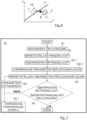
- An example is shown in Figure 6 a color space according to CIE 1976 is indicated. Within this color space, Color temperature values are represented using xy coordinates. A black body curve 17 runs through the color space.
- Figure 7 a method according to the invention according to a second exemplary embodiment.
- a first check of the operating light L B can be provided (method step S2.1) following the second method step S2, i.e. the provision of the primary light L P .
- tolerance-related deviations from the manufacturer's specifications of the respective artificial light source 6 can be taken into account during the first provision or processing of the reflection surface 7.
- a prediction for the reflection parameters of the reflection surface 7 can be made using a simulation model.
- the prediction model or simulation model can be adapted as required in an optional process step (process step S3.1) based on the later actual measurement of the operating light L B.
Landscapes
- Non-Portable Lighting Devices Or Systems Thereof (AREA)
Applications Claiming Priority (1)
| Application Number | Priority Date | Filing Date | Title |
|---|---|---|---|
| EP22209714.9A EP4376551A1 (fr) | 2022-11-25 | 2022-11-25 | Procédé de détermination d'au moins une propriété de couleur d'un élément d'éclairage, programme informatique et élément d'éclairage |
Publications (1)
| Publication Number | Publication Date |
|---|---|
| EP4376552A1 true EP4376552A1 (fr) | 2024-05-29 |
Family
ID=87571899
Family Applications (2)
| Application Number | Title | Priority Date | Filing Date |
|---|---|---|---|
| EP22209714.9A Withdrawn EP4376551A1 (fr) | 2022-11-25 | 2022-11-25 | Procédé de détermination d'au moins une propriété de couleur d'un élément d'éclairage, programme informatique et élément d'éclairage |
| EP23192704.7A Pending EP4376552A1 (fr) | 2022-11-25 | 2023-08-22 | Procédé de détermination d'au moins une propriété de couleur d'un élément d'éclairage, programme informatique et élément d'éclairage |
Family Applications Before (1)
| Application Number | Title | Priority Date | Filing Date |
|---|---|---|---|
| EP22209714.9A Withdrawn EP4376551A1 (fr) | 2022-11-25 | 2022-11-25 | Procédé de détermination d'au moins une propriété de couleur d'un élément d'éclairage, programme informatique et élément d'éclairage |
Country Status (1)
| Country | Link |
|---|---|
| EP (2) | EP4376551A1 (fr) |
Citations (5)
| Publication number | Priority date | Publication date | Assignee | Title |
|---|---|---|---|---|
| US20120250304A1 (en) | 2011-03-31 | 2012-10-04 | Xicato, Inc. | Grid structure on a transmissive layer of an led-based illumination module |
| DE102011081919A1 (de) | 2011-08-31 | 2013-02-28 | Automotive Lighting Reutlingen Gmbh | Lichtmodul zum Aussenden von Licht und Kraftfahrzeugbeleuchtungseinrichtung mit mindestens einem solchen Lichtmodul |
| WO2013148276A1 (fr) | 2012-03-31 | 2013-10-03 | Osram Sylvania Inc. | Structure de conversion de longueur d'onde destinée à une source de lumière |
| WO2013164276A1 (fr) | 2012-05-03 | 2013-11-07 | Osram Gmbh | Dispositif lumineux de véhicule |
| DE212016000159U1 (de) | 2015-11-09 | 2018-03-13 | Apple Inc. | Leuchte |
-
2022
- 2022-11-25 EP EP22209714.9A patent/EP4376551A1/fr not_active Withdrawn
-
2023
- 2023-08-22 EP EP23192704.7A patent/EP4376552A1/fr active Pending
Patent Citations (5)
| Publication number | Priority date | Publication date | Assignee | Title |
|---|---|---|---|---|
| US20120250304A1 (en) | 2011-03-31 | 2012-10-04 | Xicato, Inc. | Grid structure on a transmissive layer of an led-based illumination module |
| DE102011081919A1 (de) | 2011-08-31 | 2013-02-28 | Automotive Lighting Reutlingen Gmbh | Lichtmodul zum Aussenden von Licht und Kraftfahrzeugbeleuchtungseinrichtung mit mindestens einem solchen Lichtmodul |
| WO2013148276A1 (fr) | 2012-03-31 | 2013-10-03 | Osram Sylvania Inc. | Structure de conversion de longueur d'onde destinée à une source de lumière |
| WO2013164276A1 (fr) | 2012-05-03 | 2013-11-07 | Osram Gmbh | Dispositif lumineux de véhicule |
| DE212016000159U1 (de) | 2015-11-09 | 2018-03-13 | Apple Inc. | Leuchte |
Also Published As
| Publication number | Publication date |
|---|---|
| EP4376551A1 (fr) | 2024-05-29 |
Similar Documents
| Publication | Publication Date | Title |
|---|---|---|
| DE10102585A1 (de) | Farbige Beleuchtungseinrichtung | |
| EP2845233B1 (fr) | Module de del | |
| EP3456151A1 (fr) | Dispositif d'éclairage à caractéristiques optiques stables | |
| DE212016000159U1 (de) | Leuchte | |
| EP2556287B1 (fr) | Arrangement d'émission de lumière comprenant plusieurs sources de lumière et un élément diffuseur de lumière transparent | |
| DE202006020673U1 (de) | Wiedergabevorrichtung | |
| EP4376552A1 (fr) | Procédé de détermination d'au moins une propriété de couleur d'un élément d'éclairage, programme informatique et élément d'éclairage | |
| EP1651906B2 (fr) | Lampe comprenant au moins deux sources de lumiere | |
| EP2367401A2 (fr) | Dispositif doté d'un moyen d'éclairage et son procédé de commande | |
| EP2981760B1 (fr) | Systeme d'eclairage a diodes, lampe equipee d'un tel systeme et methode de reglage du spectre d'ondes d'un tel systeme. | |
| DE102010028416A1 (de) | LED-Modul mit Linse zum Erzeugen einer nicht rotationssymmetrischen Lichtverteilung | |
| DE102007052854A1 (de) | Verfahren und Vorrichtung zur Steuerung der Lichtabgabe einer LED-Leuchte | |
| EP2981759B1 (fr) | Systeme d'eclairage a diodes, lampe equipee d'un tel systeme et methode de reglage du spectre d'ondes d'un tel systeme d'eclairage | |
| DE102014205470B4 (de) | Leuchtvorrichtung mit CoB-Bereich | |
| EP2502460B1 (fr) | Dispositif électroluminescent | |
| DE102011080247A1 (de) | Reflektor, reflektorvorrichtung und leuchte mit reflektor | |
| EP3677421B1 (fr) | Dispositif lumineux | |
| DE102012009581A1 (de) | Verfahren und Vorrichtung zur Beleuchtung von Räumen | |
| DE102016101524A1 (de) | Ambientebeleuchtung | |
| AT17303U1 (de) | 3D-Druckverfahren zur Herstellung eines Leuchtenelements mit optischem Teil | |
| DE102012223849B3 (de) | Leuchtvorrichtung mit streuplatte | |
| DE202006016222U1 (de) | Leuchte | |
| DE202013011362U1 (de) | Vorrichtung zur Aufnahme einer Vielzahl von Lichtleitfasern | |
| DE102010003653B4 (de) | Verfahren zum Herstellen einer Lichtmischbox, bei dem eine Zahl der Leuchtdioden statistisch bestimmt wird, entsprechende Leuchtvorrichtung und Satz von Leuchtvorrichtungen | |
| DE102009056463A1 (de) | LED-Vorrichtung mit einstellbarem Spektrum und zugehöriges Verfahren |
Legal Events
| Date | Code | Title | Description |
|---|---|---|---|
| PUAI | Public reference made under article 153(3) epc to a published international application that has entered the european phase |
Free format text: ORIGINAL CODE: 0009012 |
|
| STAA | Information on the status of an ep patent application or granted ep patent |
Free format text: STATUS: THE APPLICATION HAS BEEN PUBLISHED |
|
| AK | Designated contracting states |
Kind code of ref document: A1 Designated state(s): AL AT BE BG CH CY CZ DE DK EE ES FI FR GB GR HR HU IE IS IT LI LT LU LV MC ME MK MT NL NO PL PT RO RS SE SI SK SM TR |
|
| STAA | Information on the status of an ep patent application or granted ep patent |
Free format text: STATUS: REQUEST FOR EXAMINATION WAS MADE |
|
| 17P | Request for examination filed |
Effective date: 20240624 |
|
| RBV | Designated contracting states (corrected) |
Designated state(s): AL AT BE BG CH CY CZ DE DK EE ES FI FR GB GR HR HU IE IS IT LI LT LU LV MC ME MK MT NL NO PL PT RO RS SE SI SK SM TR |