EP4380155A1 - Codierungs- und decodierungsverfahren, codierer, decodierer und elektronische vorrichtung - Google Patents
Codierungs- und decodierungsverfahren, codierer, decodierer und elektronische vorrichtung Download PDFInfo
- Publication number
- EP4380155A1 EP4380155A1 EP22863211.3A EP22863211A EP4380155A1 EP 4380155 A1 EP4380155 A1 EP 4380155A1 EP 22863211 A EP22863211 A EP 22863211A EP 4380155 A1 EP4380155 A1 EP 4380155A1
- Authority
- EP
- European Patent Office
- Prior art keywords
- picture
- layer
- encoding
- bitstream
- estimate
- Prior art date
- Legal status (The legal status is an assumption and is not a legal conclusion. Google has not performed a legal analysis and makes no representation as to the accuracy of the status listed.)
- Pending
Links
- 238000000034 method Methods 0.000 title claims abstract description 108
- 230000005540 biological transmission Effects 0.000 claims abstract description 107
- 230000003044 adaptive effect Effects 0.000 claims abstract description 20
- 230000002123 temporal effect Effects 0.000 claims description 43
- 238000013139 quantization Methods 0.000 claims description 34
- 238000004590 computer program Methods 0.000 claims description 24
- 238000005457 optimization Methods 0.000 claims description 23
- 238000012545 processing Methods 0.000 description 124
- 230000000694 effects Effects 0.000 description 50
- 238000004458 analytical method Methods 0.000 description 43
- 238000010586 diagram Methods 0.000 description 24
- 230000008569 process Effects 0.000 description 24
- 238000012546 transfer Methods 0.000 description 18
- 238000004364 calculation method Methods 0.000 description 12
- 230000006870 function Effects 0.000 description 11
- 208000037170 Delayed Emergence from Anesthesia Diseases 0.000 description 6
- 230000006835 compression Effects 0.000 description 6
- 238000007906 compression Methods 0.000 description 6
- 238000004891 communication Methods 0.000 description 4
- 238000012986 modification Methods 0.000 description 4
- 230000004048 modification Effects 0.000 description 4
- 230000008878 coupling Effects 0.000 description 3
- 238000010168 coupling process Methods 0.000 description 3
- 238000005859 coupling reaction Methods 0.000 description 3
- 239000011159 matrix material Substances 0.000 description 3
- 230000009286 beneficial effect Effects 0.000 description 2
- 230000008859 change Effects 0.000 description 2
- 238000013461 design Methods 0.000 description 2
- 238000005516 engineering process Methods 0.000 description 2
- 238000012935 Averaging Methods 0.000 description 1
- 230000001174 ascending effect Effects 0.000 description 1
- 238000004422 calculation algorithm Methods 0.000 description 1
- 239000003086 colorant Substances 0.000 description 1
- 230000003287 optical effect Effects 0.000 description 1
- 230000000750 progressive effect Effects 0.000 description 1
Images



Classifications
-
- H—ELECTRICITY
- H04—ELECTRIC COMMUNICATION TECHNIQUE
- H04N—PICTORIAL COMMUNICATION, e.g. TELEVISION
- H04N19/00—Methods or arrangements for coding, decoding, compressing or decompressing digital video signals
- H04N19/30—Methods or arrangements for coding, decoding, compressing or decompressing digital video signals using hierarchical techniques, e.g. scalability
- H04N19/36—Scalability techniques involving formatting the layers as a function of picture distortion after decoding, e.g. signal-to-noise [SNR] scalability
-
- H—ELECTRICITY
- H04—ELECTRIC COMMUNICATION TECHNIQUE
- H04N—PICTORIAL COMMUNICATION, e.g. TELEVISION
- H04N19/00—Methods or arrangements for coding, decoding, compressing or decompressing digital video signals
- H04N19/10—Methods or arrangements for coding, decoding, compressing or decompressing digital video signals using adaptive coding
- H04N19/134—Methods or arrangements for coding, decoding, compressing or decompressing digital video signals using adaptive coding characterised by the element, parameter or criterion affecting or controlling the adaptive coding
- H04N19/136—Incoming video signal characteristics or properties
- H04N19/14—Coding unit complexity, e.g. amount of activity or edge presence estimation
-
- H—ELECTRICITY
- H04—ELECTRIC COMMUNICATION TECHNIQUE
- H04N—PICTORIAL COMMUNICATION, e.g. TELEVISION
- H04N19/00—Methods or arrangements for coding, decoding, compressing or decompressing digital video signals
- H04N19/10—Methods or arrangements for coding, decoding, compressing or decompressing digital video signals using adaptive coding
- H04N19/169—Methods or arrangements for coding, decoding, compressing or decompressing digital video signals using adaptive coding characterised by the coding unit, i.e. the structural portion or semantic portion of the video signal being the object or the subject of the adaptive coding
- H04N19/17—Methods or arrangements for coding, decoding, compressing or decompressing digital video signals using adaptive coding characterised by the coding unit, i.e. the structural portion or semantic portion of the video signal being the object or the subject of the adaptive coding the unit being an image region, e.g. an object
- H04N19/172—Methods or arrangements for coding, decoding, compressing or decompressing digital video signals using adaptive coding characterised by the coding unit, i.e. the structural portion or semantic portion of the video signal being the object or the subject of the adaptive coding the unit being an image region, e.g. an object the region being a picture, frame or field
-
- H—ELECTRICITY
- H04—ELECTRIC COMMUNICATION TECHNIQUE
- H04N—PICTORIAL COMMUNICATION, e.g. TELEVISION
- H04N19/00—Methods or arrangements for coding, decoding, compressing or decompressing digital video signals
- H04N19/10—Methods or arrangements for coding, decoding, compressing or decompressing digital video signals using adaptive coding
- H04N19/169—Methods or arrangements for coding, decoding, compressing or decompressing digital video signals using adaptive coding characterised by the coding unit, i.e. the structural portion or semantic portion of the video signal being the object or the subject of the adaptive coding
- H04N19/187—Methods or arrangements for coding, decoding, compressing or decompressing digital video signals using adaptive coding characterised by the coding unit, i.e. the structural portion or semantic portion of the video signal being the object or the subject of the adaptive coding the unit being a scalable video layer
-
- H—ELECTRICITY
- H04—ELECTRIC COMMUNICATION TECHNIQUE
- H04N—PICTORIAL COMMUNICATION, e.g. TELEVISION
- H04N19/00—Methods or arrangements for coding, decoding, compressing or decompressing digital video signals
- H04N19/30—Methods or arrangements for coding, decoding, compressing or decompressing digital video signals using hierarchical techniques, e.g. scalability
Definitions
- Embodiments of this application relate to the field of encoding and decoding, and in particular, to an encoding method, a decoding method, an encoder, a decoder, and an electronic device.
- scalable video coding is widely applied to a scene with a high requirement for an end-to-end delay, to improve playing smoothness of a video.
- network fluctuation is normal, and video pictures of different video services are different. This causes changes in picture quality of an encoded picture, a bit rate, and picture quality of a decoded picture.
- current scalable video coding is used to perform scalable coding on a picture, because a layer structure of the scalable coding is fixed, when a network fluctuates and a to-be-coded video picture changes, there may be excessive layers, and layer redundancy is caused, resulting in a low coding compression rate and low transmission efficiency.
- this application provides an encoding method, a decoding method, an encoder, a decoder, and an electronic device.
- flexible scalable encoding can be performed on each picture, to improve a coding compression rate and transmission efficiency, and improve video picture quality.
- an embodiment of this application provides an encoding method.
- the method includes: obtaining a to-be-encoded picture; and after i th -layer encoding is performed on the picture, performing adaptive scalable encoding on the picture based on source information of the picture and/or encoding information of an i th layer.
- flexible scalable encoding can be performed on each picture in a manner of adapting to information carried in the picture and/or encoding information of the picture, and when the to-be-encoded picture changes, layer redundancy caused by excessive layers can be avoided, to improve encoding efficiency and transmission efficiency.
- that a transmittable intermediate layer with high picture quality cannot be obtained due to too few layers can be avoided, to improve video picture quality.
- adaptive scalable encoding means whether to perform further scalable encoding on the to-be-encoded picture.
- i is a positive integer
- the i th layer is a base layer or an enhancement layer.
- the to-be-encoded picture may be a frame of a complete picture, may be a picture block obtained by dividing a picture into blocks, or may be a local area with rich texture information, a local area interested in by a user, another key area, or the like.
- the performing adaptive scalable encoding on the picture based on source information of the picture includes: when the source information meets a first preset condition, performing (i+1) th -layer encoding on the picture.
- ending encoding of the picture means that next-layer encoding is no longer performed on the picture, that is, ending encoding of a current frame instead of ending encoding of all frames.
- ending encoding of the current frame refers to determining not to perform (i+1) th -layer encoding on the current frame instead of immediately stopping an encoding operation that may be being performed by an encoder on the i th layer and a lower layer of the current frame.
- the performing adaptive scalable encoding on the picture based on encoding information of an i th layer includes: when the encoding information of the i th layer meets a second preset condition, performing (i+1) th -layer encoding on the picture.
- the performing adaptive scalable encoding on the picture based on source information of the picture and/or encoding information of an i th layer includes: when the source information does not meet a first preset condition, and the encoding information of the i th layer does not meet a second preset condition, ending encoding of the picture.
- the performing adaptive scalable encoding on the picture based on source information of the picture and/or encoding information of an i th layer includes: when the source information meets a first preset condition, and the encoding information of the i th layer does not meet a second preset condition, ending encoding of the picture.
- the performing adaptive scalable encoding on the picture based on source information of the picture and/or encoding information of an i th layer includes: when the source information does not meet a first preset condition, and the encoding information of the i th layer meets a second preset condition, ending encoding of the picture.
- the first preset condition includes at least one of the following:
- the second preset condition includes at least one of the following:
- a number of coding layers can be appropriately increased, to obtain a transmittable intermediate layer with high picture quality, and improve video picture quality.
- the number of coding layers can be appropriately reduced, to reduce a redundant layer, and improve coding compression efficiency and transmission efficiency.
- a bitstream obtained by performing i th -layer encoding on the picture includes an encoding status identifier, and the encoding status identifier indicates whether a bitstream of the i th layer is a bitstream obtained by performing last-layer encoding on the picture.
- the encoding status identifier indicates whether a bitstream of the i th layer is a bitstream obtained by performing last-layer encoding on the picture.
- the method further includes: after i th -layer encoding is performed on the picture, determining, based on a preset maximum number of layers L_MAX, whether to end encoding of the picture.
- the encoding information includes at least one of the following: residual information of a residual picture, a peak signal-to-noise ratio of a reconstructed picture, an encoding quantization parameter value, a rate-distortion optimization parameter value, and a subjective quality estimate of the reconstructed picture.
- the source information includes at least one of the following: spatial complexity, temporal complexity, and temporal-spatial complexity.
- an embodiment of this application provides a decoding method.
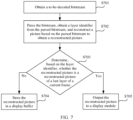
- the method includes: obtaining a to-be-decoded bitstream, where the bitstream includes an encoding status identifier; parsing the bitstream, obtaining the encoding status identifier from the parsed bitstream, and reconstructing a picture based on the parsed bitstream to obtain a reconstructed picture; and if the encoding status identifier is a first preset identifier, storing the reconstructed picture in a display buffer; or if the encoding status identifier is a second preset identifier, outputting the reconstructed picture to a display module.
- a decoder side can determine, based on the encoding status identifier of the bitstream, whether the bitstream is a bitstream obtained by performing last-layer encoding on a picture corresponding to the bitstream, and further determine whether to send the reconstructed picture to the display module for display or store the reconstructed picture.
- the first preset identifier indicates that the bitstream is not the bitstream obtained by performing last-layer encoding on the picture corresponding to the bitstream
- the second preset identifier indicates that the bitstream is the bitstream obtained by performing last-layer encoding on the picture corresponding to the bitstream.
- an embodiment of this application provides an encoding method.
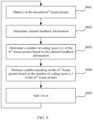
- the method includes: obtaining a to-be-encoded picture; determining a number of coding layers L1 of the picture based on channel feedback information; and performing scalable encoding on the picture based on the number of coding layers L1.
- flexible scalable encoding can be performed on each picture in a manner of adapting to a network fluctuation situation, and when a network fluctuates, layer redundancy caused by excessive layers is avoided, to improve encoding efficiency and transmission efficiency.
- that a transmittable intermediate layer with high picture quality cannot be obtained due to too few layers can be avoided, to improve video picture quality.
- L1 is a positive integer.
- the determining a number of coding layers L1 of the picture based on channel feedback information includes: when the channel feedback information meets a third preset condition, selecting L1 from a number of coding layers L2 of a historical frame to a preset maximum number of layers L_MAX; or when the channel feedback information does not meet a third preset condition, selecting L1 from 1 to a number of coding layers L2 of a historical frame.
- the historical frame may be any frame before a current frame, or may be any frame before a current frame in a picture group to which the current frame belongs.
- the third preset condition includes at least one of the following:
- a network fluctuation situation can be accurately determined based on historical channel feedback information and current channel feedback information. Further, when a network fluctuation is large, a number of coding layers can be appropriately increased, to obtain a transmittable intermediate layer with high picture quality, and improve video picture quality. In addition, when the network fluctuation is small, the number of coding layers can be appropriately reduced, to reduce a redundant layer, and improve coding compression efficiency and transmission efficiency.
- the third preset condition includes at least one of the following:
- a network fluctuation situation can be accurately determined based on historical channel feedback information and current channel feedback information. Further, when a network fluctuation is large, a number of coding layers can be appropriately increased, to obtain a transmittable intermediate layer with high picture quality, and improve video picture quality. In addition, when the network fluctuation is small, the number of coding layers can be appropriately reduced, to reduce a redundant layer, and improve coding compression efficiency and transmission efficiency.
- the performing scalable encoding on the picture based on the number of coding layers L1 includes: after i th -layer encoding is performed on the picture, when i is less than the number of coding layers L1, performing adaptive scalable encoding on the picture based on source information of the picture and/or encoding information of an i th layer, where i is a positive integer, and the i th layer is a base layer or an enhancement layer; or when i is equal to the number of coding layers L1, ending encoding of the picture.
- flexible scalable encoding can be performed on each picture in a manner of adapting to a network fluctuation situation, and information carried in the picture and/or encoding information of the picture, and when a network fluctuates or a to-be-encoded picture changes, layer redundancy caused by excessive layers is avoided, to improve encoding efficiency and transmission efficiency.
- a transmittable intermediate layer with high picture quality cannot be obtained due to too few layers can be avoided, to improve video picture quality.
- the channel feedback information includes at least one of the following: a network transmission bandwidth estimate, a network transmission throughput estimate, a blocked data amount estimate, a packet loss rate estimate, a sending delay duration estimate, and a display frame rate estimate.
- the method further includes: A bitstream of the picture includes the number of coding layers L1 of the picture. In this way, it is convenient for a decoder side to determine whether a decoded bitstream is a bitstream obtained by performing last-layer encoding on a picture, to facilitate display decision-making.
- an embodiment of this application provides a decoding method.
- the method includes: obtaining a to-be-decoded bitstream, where the bitstream includes a layer identifier; parsing the bitstream, obtaining the layer identifier from the parsed bitstream, and reconstructing a picture based on the parsed bitstream to obtain a reconstructed picture; and when it is determined, based on the layer identifier, that the bitstream is a bitstream obtained by performing last-layer encoding on a picture corresponding to the bitstream, outputting the reconstructed picture to a display module; or when it is determined, based on the layer identifier, that the bitstream is not a bitstream obtained by performing last-layer encoding on a picture corresponding to the bitstream, storing the reconstructed picture in a display buffer.
- a decoder side can determine, based on the layer identifier of the bitstream, whether the bitstream is the bitstream obtained by performing last-layer encoding on the picture corresponding to the bitstream, and further determine whether to send the reconstructed picture to the display module for display or store the reconstructed picture.
- an embodiment of this application further provides an encoding method.
- the method includes: obtaining a to-be-encoded picture; and then performing adaptive scalable encoding on the picture based on source information of the picture.
- the fifth aspect and any implementation of the fifth aspect respectively correspond to the first aspect and any implementation of the first aspect.
- an embodiment of this application further provides an encoding method.
- the method includes: obtaining a to-be-encoded picture; and after i th -layer encoding is performed on the picture, performing adaptive scalable encoding on the picture based on encoding information of an i th layer.
- the sixth aspect and any implementation of the sixth aspect respectively correspond to the first aspect and any implementation of the first aspect.
- an embodiment of this application provides an encoder.
- the encoder is configured to: obtain a to-be-encoded picture; and after i th -layer encoding is performed on the picture, perform adaptive scalable encoding on the picture based on source information of the picture and/or encoding information of an i th layer, where i is a positive integer, and the i th layer is a base layer or an enhancement layer.
- the encoder is configured to: when the source information meets a first preset condition, perform (i+1) th -layer encoding on the picture.
- the encoder is configured to: when the encoding information of the i th layer meets a second preset condition, perform (i+1) th -layer encoding on the picture.
- the encoder is configured to: when the source information does not meet a first preset condition, and the encoding information of the i th layer does not meet a second preset condition, end encoding of the picture.
- the first preset condition includes at least one of the following:
- the second preset condition includes at least one of the following:
- a bitstream obtained by performing i th -layer encoding on the picture includes an encoding status identifier, and the encoding status identifier indicates whether a bitstream of the i th layer is a bitstream obtained by performing last-layer encoding on the picture.
- the encoder is configured to: after i th -layer encoding is performed on the picture, determine, based on a preset maximum number of layers L_MAX, whether to end encoding of the picture.
- the encoding information includes at least one of the following: residual information of a residual picture, a peak signal-to-noise ratio of a reconstructed picture, an encoding quantization parameter value, a rate-distortion optimization parameter value, and a subjective quality estimate of the reconstructed picture.
- the source information includes at least one of the following: spatial complexity, temporal complexity, and temporal-spatial complexity.
- the seventh aspect and any implementation of the seventh aspect respectively correspond to the first aspect and any implementation of the first aspect.
- an embodiment of this application further provides a decoder.
- the decoder is configured to: obtain a to-be-decoded bitstream, where the bitstream includes an encoding status identifier; parse the bitstream, obtain the encoding status identifier from the parsed bitstream, and reconstruct a picture based on the parsed bitstream to obtain a reconstructed picture; and if the encoding status identifier is a first preset identifier, store the reconstructed picture in a display buffer; or if the encoding status identifier is a second preset identifier, output the reconstructed picture to a display module.
- the first preset identifier indicates that the bitstream is not a bitstream obtained by performing last-layer encoding on a picture corresponding to the bitstream
- the second preset identifier indicates that the bitstream is the bitstream obtained by performing last-layer encoding on the picture corresponding to the bitstream.
- the eighth aspect and any implementation of the eighth aspect respectively correspond to the second aspect and any implementation of the second aspect.
- an embodiment of this application further provides an encoder.
- the encoder is configured to: obtain a to-be-encoded picture; determine a number of coding layers L1 of the picture based on channel feedback information, where L1 is a positive integer; and perform scalable encoding on the picture based on the number of coding layers L1.
- the encoder is configured to: when the channel feedback information meets a third preset condition, select L1 from a number of coding layers L2 of a historical frame to a preset maximum number of layers L_MAX; or when the channel feedback information does not meet a third preset condition, select L1 from 1 to a number of coding layers L2 of a historical frame.
- the third preset condition includes at least one of the following:
- the encoder is configured to: after i th -layer encoding is performed on the picture, when i is less than the number of coding layers L1, perform adaptive scalable encoding on the picture based on source information of the picture and/or encoding information of an i th layer, where i is a positive integer, and the i th layer is a base layer or an enhancement layer; or when i is equal to the number of coding layers L1, end encoding of the picture.
- the channel feedback information includes at least one of the following: a network transmission bandwidth estimate, a network transmission throughput estimate, a blocked data amount estimate, a packet loss rate estimate, a sending delay duration estimate, and a display frame rate estimate.
- the ninth aspect and any implementation of the ninth aspect respectively correspond to the third aspect and any implementation of the third aspect.
- the tenth aspect and any implementation of the tenth aspect respectively correspond to the fourth aspect and any implementation of the fourth aspect.
- an embodiment of this application provides an electronic device, including the encoder according to the seventh aspect and/or the decoder according to the eighth aspect.
- the eleventh aspect and any implementation of the eleventh aspect respectively correspond to the first aspect and any implementation of the first aspect, and/or correspond to the second aspect and any implementation of the second aspect.
- technical effects corresponding to the eleventh aspect and any implementation of the eleventh aspect refer to the technical effects corresponding to the first aspect and any implementation of the first aspect, and/or refer to the technical effects corresponding to the second aspect and any implementation of the second aspect. Details are not described herein again.
- an embodiment of this application provides an electronic device, including the encoder according to the ninth aspect and/or the decoder according to the tenth aspect.
- the twelfth aspect and any implementation of the twelfth aspect respectively correspond to the third aspect and any implementation of the third aspect, and/or correspond to the fourth aspect and any implementation of the fourth aspect.
- technical effects corresponding to the twelfth aspect and any implementation of the twelfth aspect refer to the technical effects corresponding to the third aspect and any implementation of the third aspect, and/or refer to the technical effects corresponding to the fourth aspect and any implementation of the fourth aspect. Details are not described herein again.
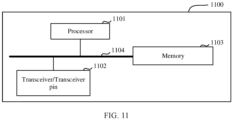
- an embodiment of this application provides an electronic device, including a memory and a processor.
- the memory is coupled to the processor; and the memory stores program instructions.
- the program instructions are executed by the processor, the electronic device is enabled to perform the encoding method according to any one of the first aspect or the possible implementations of the first aspect.
- the thirteenth aspect and any implementation of the thirteenth aspect respectively correspond to the first aspect and any implementation of the first aspect.
- an embodiment of this application provides an electronic device, including a memory and a processor.
- the memory is coupled to the processor; and the memory stores program instructions.
- the program instructions are executed by the processor, the electronic device is enabled to perform the decoding method according to any one of the second aspect or the possible implementations of the second aspect.
- the fourteenth aspect and any implementation of the fourteenth aspect respectively correspond to the second aspect and any implementation of the second aspect.
- an embodiment of this application provides an electronic device, including a memory and a processor.
- the memory is coupled to the processor; and the memory stores program instructions.
- the program instructions are executed by the processor, the electronic device is enabled to perform the encoding method according to any one of the third aspect or the possible implementations of the third aspect.
- the fifteenth aspect and any implementation of the fifteenth aspect respectively correspond to the third aspect and any implementation of the third aspect.
- an embodiment of this application provides an electronic device, including a memory and a processor.
- the memory is coupled to the processor; and the memory stores program instructions.
- the electronic device is enabled to perform the decoding method according to any one of the fourth aspect or the possible implementations of the fourth aspect.
- the sixteenth aspect and any implementation of the sixteenth aspect respectively correspond to the fourth aspect and any implementation of the fourth aspect.
- an embodiment of this application provides a chip, including one or more interface circuits and one or more processors.
- the interface circuit is configured to receive a signal from a memory of an electronic device, and send the signal to the processor, where the signal includes computer instructions stored in the memory.
- the processor executes the computer instructions, the electronic device performs the encoding method according to any one of the first aspect or the possible implementations of the first aspect.
- the seventeenth aspect and any implementation of the seventeenth aspect respectively correspond to the first aspect and any implementation of the first aspect.
- an embodiment of this application provides a chip, including one or more interface circuits and one or more processors.
- the interface circuit is configured to receive a signal from a memory of an electronic device, and send the signal to the processor, where the signal includes computer instructions stored in the memory.
- the processor executes the computer instructions, the electronic device performs the decoding method according to any one of the second aspect or the possible implementations of the second aspect.
- the eighteenth aspect and any implementation of the eighteenth aspect respectively correspond to the second aspect and any implementation of the second aspect.
- an embodiment of this application provides a chip, including one or more interface circuits and one or more processors.
- the interface circuit is configured to receive a signal from a memory of an electronic device, and send the signal to the processor, where the signal includes computer instructions stored in the memory.
- the processor executes the computer instructions, the electronic device performs the encoding method according to any one of the third aspect or the possible implementations of the third aspect.
- the nineteenth aspect and any implementation of the nineteenth aspect respectively correspond to the third aspect and any implementation of the third aspect.
- an embodiment of this application provides a chip, including one or more interface circuits and one or more processors.
- the interface circuit is configured to receive a signal from a memory of an electronic device, and send the signal to the processor, where the signal includes computer instructions stored in the memory.
- the processor executes the computer instructions, the electronic device performs the decoding method according to any one of the fourth aspect or the possible implementations of the fourth aspect.
- the twentieth aspect and any implementation of the twentieth aspect respectively correspond to the fourth aspect and any implementation of the fourth aspect.
- an embodiment of this application provides a computer storage medium.
- the computer-readable storage medium stores a computer program.
- the computer program is run on a computer or a processor, the computer or the processor is enabled to perform the encoding method according to any one of the first aspect or the possible implementations of the first aspect.
- the twenty-first aspect and any implementation of the twenty-first aspect respectively correspond to the first aspect and any implementation of the first aspect.
- an embodiment of this application provides a computer storage medium.
- the computer-readable storage medium stores a computer program.
- an electronic device is enabled to perform the decoding method according to any one of the second aspect or the possible implementations of the second aspect.
- the twenty-second aspect and any implementation of the twenty-second aspect respectively correspond to the second aspect and any implementation of the second aspect.
- an embodiment of this application provides a computer storage medium.
- the computer-readable storage medium stores a computer program.
- an electronic device is enabled to perform the encoding method according to any one of the third aspect or the possible implementations of the third aspect.
- the twenty-third aspect and any implementation of the twenty-third aspect respectively correspond to the third aspect and any implementation of the third aspect.
- an embodiment of this application provides a computer storage medium.
- the computer-readable storage medium stores a computer program.
- an electronic device is enabled to perform the decoding method according to any one of the fourth aspect or the possible implementations of the fourth aspect.
- the twenty-fourth aspect and any implementation of the twenty-fourth aspect respectively correspond to the fourth aspect and any implementation of the fourth aspect.
- an embodiment of this application provides a computer program product.
- the computer program product includes a software program, and when the software program is executed by a computer or a processor, the computer or the processor is enabled to perform the encoding method according to any one of the first aspect or the possible implementations of the first aspect.
- the twenty-fifth aspect and any implementation of the twenty-fifth aspect respectively correspond to the first aspect and any implementation of the first aspect.
- an embodiment of this application provides a computer program product.
- the computer program product includes a software program, and when the software program is executed by a computer or a processor, an electronic device is enabled to perform the decoding method according to any one of the second aspect or the possible implementations of the second aspect.
- the twenty-sixth aspect and any implementation of the twenty-sixth aspect respectively correspond to the second aspect and any implementation of the second aspect.
- an embodiment of this application provides a computer program product.
- the computer program product includes a software program, and when the software program is executed by a computer or a processor, an electronic device is enabled to perform the encoding method according to any one of the third aspect or the possible implementations of the third aspect.
- the twenty-seventh aspect and any implementation of the twenty-seventh aspect respectively correspond to the third aspect and any implementation of the third aspect.
- an embodiment of this application provides a computer program product.
- the computer program product includes a software program, and when the software program is executed by a computer or a processor, an electronic device is enabled to perform the decoding method according to any one of the fourth aspect or the possible implementations of the fourth aspect.
- the twenty-eighth aspect and any implementation of the twenty-eighth aspect respectively correspond to the fourth aspect and any implementation of the fourth aspect.
- a and/or B may represent the following three cases: Only A exists, both A and B exist, and only B exists.
- first the terms “first”, “second”, and so on are intended to distinguish between different objects but do not indicate a particular order of the objects.
- a first target object and a second target object are used to distinguish between different target objects, but are not used to describe a particular order of the target objects.
- the word “example” or “for example” is used to represent giving an example, an illustration, or a description. Any embodiment or design scheme described as an “example” or “for example” in embodiments of this application should not be explained as being more preferred or having more advantages than another embodiment or design scheme. Exactly, use of the word “example”, “for example”, or the like is intended to present a related concept in a specific manner.
- a plurality of means two or more than two.
- a plurality of processing units mean two or more processing units; and a plurality of systems mean two or more systems.
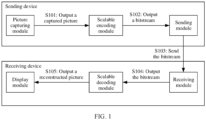
- FIG. 1 shows an example of a schematic diagram of an application scenario.
- the application scenario in FIG. 1 may include various video service scenes, for example, a video conference scene, a video phone scene, an online education scene, a remote tutoring scene, a low-delay live broadcast scene, a cloud game scene, a wireless screen inter-projection scene, and a wireless extended screen scene.
- video service scenes for example, a video conference scene, a video phone scene, an online education scene, a remote tutoring scene, a low-delay live broadcast scene, a cloud game scene, a wireless screen inter-projection scene, and a wireless extended screen scene. This is not limited in embodiments of this application.
- the application scenario may include a sending device and a receiving device.
- the sending device includes but is not limited to a server, a personal computer (Personal Computer, PC), a notebook computer, a tablet computer, a mobile phone, and a watch.
- a server a personal computer (Personal Computer, PC)
- PC Personal Computer
- notebook computer a tablet computer
- mobile phone a mobile phone
- watch a watch
- the receiving device includes but is not limited to a PC, a notebook computer, a tablet computer, a mobile phone, and a watch.
- the sending device may be a PC or a notebook computer
- the receiving device may be a PC or a notebook computer
- the sending device may be a PC or a notebook computer
- the receiving device may be a tablet computer
- the sending device may be a server
- the receiving device may be a tablet computer, a PC, a notebook computer, or a mobile phone.
- the sending device may include a picture capturing module, a scalable encoding module, and a sending module.
- the scalable encoding module may be a software module, or may be a hardware module. This is not limited in embodiments of this application. It should be understood that FIG. 1 shows merely an example of the sending device. The sending device in some other embodiments of this application has more modules than those shown in FIG. 1 . This is not limited in embodiments of this application.
- the picture capturing module is configured to capture a picture.
- the scalable encoding module is configured for scalable encoding decision-making and encoding.
- the sending module is configured to send data.
- the receiving device may include a display module, a scalable decoding module, and a receiving module.
- the scalable decoding module may be a software module, or may be a hardware module. This is not limited in embodiments of this application. It should be understood that FIG. 1 shows merely an example of the receiving device. The receiving device in some other embodiments of this application has more modules than those shown in FIG. 1 . This is not limited in embodiments of this application.
- the receiving module is configured to receive the data.
- the scalable decoding module is configured for decoding and display decision-making of a scalable bitstream.
- the display module is configured for display.
- a process in which the sending device sends the captured picture to the receiving device for display after capturing the picture is as follows.
- the picture capturing module outputs the captured picture to the scalable encoding module.
- the picture capturing module may capture a picture by using a camera.
- the picture capturing module may capture a picture output by a video card (also referred to as a video adapter).
- a video card also referred to as a video adapter
- the picture capturing module may capture a picture in a screen capture manner.
- the picture capturing module may output the captured picture to the scalable encoding module.
- the scalable encoding module outputs a bitstream to the sending module.
- the scalable encoding module may perform scalable encoding decision-making.
- the scalable encoding decision-making may include: determining whether to perform next-layer encoding, and/or determining a number of coding layers of the picture; and performing scalable encoding on the picture based on a result of the scalable encoding decision-making, and outputting an encoded bitstream to the sending module.
- the sending module may send the bitstream to the receiving device.
- the receiving module outputs the received bitstream to the scalable decoding module.
- the receiving module of the receiving device may receive the bitstream, and then output the bitstream to the scalable decoding module.
- the scalable decoding module outputs a reconstructed picture to the display module.
- the scalable decoding module may decode the bitstream to obtain corresponding reconstructed pictures. Then, the scalable encoding module may select a to-be-displayed reconstructed picture from the reconstructed pictures, and output the to-be-displayed reconstructed picture to the display module.
- the display module may display the reconstructed picture.
- the scalable encoding decision-making of the scalable encoding module may be: after one-layer encoding is performed on the picture, performing decision-making on whether to perform next-layer encoding on the picture; and determining, based on a decision-making result, whether to perform next-layer encoding on the picture or end encoding of the picture.
- ending encoding of the picture means ending encoding of a currently encoded picture instead of ending encoding of another frame.
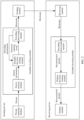
- FIG. 2 shows an example of a schematic diagram of data transmission.
- the scalable encoding module may include a source analysis module, a scalable decision-making module, and an encoding processing module. It should be understood that FIG. 2 shows merely an example of the scalable encoding module. The scalable encoding module in some other embodiments of this application has more modules than those shown in FIG. 2 . This is not limited in embodiments of this application.
- the source analysis module is configured to: analyze a source input to the source analysis module, and determine source information.
- the source input to the source analysis module may be a picture input by the picture capturing module to the source analysis module, and the source information may be any one or more types of information obtained by analyzing information carried in the picture.
- the source information may include complexity, and the complexity may include at least one of the following: spatial complexity, temporal complexity, and temporal-spatial complexity.
- the spatial complexity represents a brightness change and texture complexity of a picture, and may be a description of an amount of the information included in the picture.
- the temporal complexity represents a change of a current frame relative to a historical encoded frame, and may be a description of an amount of information in a period of time from encoding time of the historical encoded frame to current time.
- the temporal-space complexity may be a combination of the temporal complexity and the spatial complexity.
- the source analysis module may transfer the source information to the scalable decision-making module.
- the encoding processing module may be configured to: encode the picture, and determine the encoding information.
- the encoding information may include at least one of the following: residual information of a residual picture, a peak signal-to-noise ratio of the reconstructed picture, an encoding quantization parameter value, a rate-distortion optimization parameter value, and a subjective quality estimate of the reconstructed picture.
- the reconstructed picture may be obtained by performing picture reconstruction by the encoding processing module based on a bitstream obtained by encoding a source picture (namely, a picture input to the encoding processing module).
- the residual picture may be a difference picture between the source picture and the reconstructed picture of the source picture.
- the encoding processing module may feed back the determined encoding information to the scalable decision-making module, and may transfer the encoded bitstream to the sending module.
- the scalable decision-making module is configured to perform, based on the source information and/or the encoding information, decision-making on whether to perform next-layer encoding, to obtain a decision-making result.
- the scalable decision-making module may send the decision-making result to the encoding processing module, so that the encoding processing module determines, based on the decision-making result, whether to continue to perform next-layer encoding on the picture or end encoding of the picture.
- the sending module may send the bitstream.
- a scalable decoding module may include a decoding processing module and a display decision-making module. It should be understood that FIG. 2 shows merely an example of the scalable decoding module. The scalable decoding module in some other embodiments of this application has more modules than those shown in FIG. 2 . This is not limited in embodiments of this application.
- the receiving module may receive the bitstream, and transfer the bitstream to the decoding processing module.
- the decoding processing module is configured to decode the bitstream. For example, after obtaining the reconstructed picture through decoding, the decoding processing module may transfer the reconstructed picture to the display decision-making module.
- the display decision-making module is configured to select the to-be-displayed reconstructed picture.
- the display decision-making module may send the selected to-be-displayed reconstructed picture to the display module, and the display module displays the received reconstructed picture.
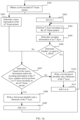
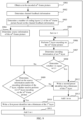
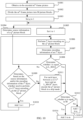
- FIG. 3a shows an example of a schematic diagram of an encoding process.
- An m th -frame picture (m is a positive integer) is used as an example to describe a process of encoding the m th -frame picture by a scalable encoding module. The process may be described as follows.
- a picture capturing module may transfer the picture to a source analysis module in the scalable encoding module, and then the source analysis module obtains the to-be-encoded m th -frame picture.
- the picture capturing module may simultaneously transfer the picture to the source analysis module and an encoding processing module in the scalable encoding module, and then the source analysis module and the encoding processing module may obtain the to-be-encoded m th -frame picture.
- S302 Determine source information of the m th -frame picture.
- the source analysis module may perform complexity analysis on the m th -frame picture, to determine at least one of spatial complexity, temporal complexity, and temporal-spatial complexity of the m th -frame picture.
- the m th -frame picture may be divided into N (N is an integer greater than 1) picture blocks.
- the m th -frame picture may be divided into the N picture blocks based on a largest coding unit, or the m th -frame picture may be divided into the N picture blocks in another manner. This is not limited in embodiments of this application.
- pixel variance values of the picture block on three color channels may be separately calculated.
- ⁇ Yk indicates a pixel variance value of a k th picture block on a Y channel
- k is a positive integer
- a value range of k is 1 to N.
- P Ykj ( x j , y j ) indicates a pixel value of a j th sample (whose coordinates are ( x j , y j )) in the k th picture block on the Y channel
- J is a total number of samples included in the k th picture block
- J and j are positive integers
- a value range of j is 1 to J.
- P Yk indicates an average pixel value of all samples in the k th picture block on the Y channel.
- ⁇ Uk indicates a pixel variance value of a k th picture block on a U channel, k is a positive integer, and a value range of k is 1 to N.
- P Ukj ( x j , y j ) indicates a pixel value of a j th sample (whose coordinates are ( x j , y j )) in the k th picture block on the U channel, J is a total number of samples included in the k th picture block, J and j are positive integers, and a value range of j is 1 to J.
- P Uk indicates an average pixel value of all samples in the k th picture block on the U channel.
- ⁇ Vk indicates a pixel variance value of a k th picture block on a V channel
- k is a positive integer
- a value range of k is 1 to N.
- P Vkj ( x j , y j ) indicates a pixel value of a j th sample (whose coordinates are ( x j , y j )) in the k th picture block on the V channel
- J is a total number of samples included in the k th picture block
- J and j are positive integers
- a value range of j is 1 to J.
- P Vk indicates an average pixel value of all samples in the k th picture block on the V channel.
- the spatial complexity of the m th -frame picture on the Y channel may be obtained through calculation based on pixel variance values of the N picture blocks on the Y channel.
- ⁇ YS indicates the spatial complexity of the m th -frame picture on the Y channel.
- the spatial complexity of the m th -frame picture on the U channel may be obtained through calculation based on pixel variance values of the N picture blocks on the U channel.
- ⁇ US indicates the spatial complexity of the m th -frame picture on the U channel.
- the spatial complexity of the m th -frame picture on the V channel may be obtained through calculation based on pixel variance values of the N picture blocks on the V channel.
- ⁇ VS indicates the spatial complexity of the m th -frame picture on the V channel.
- the spatial complexity of the m th -frame picture may be calculated based on the spatial complexity of the m th -frame picture on the Y channel, the spatial complexity of the m th -frame picture on the U channel, and the spatial complexity of the m th -frame picture on the V channel.
- weighted calculation may be performed on the spatial complexity of the m th -frame picture on the Y channel, the spatial complexity of the m th -frame picture on the U channel, and the spatial complexity of the m th -frame picture on the V channel, to determine the spatial complexity of the m th -frame picture.
- ⁇ S w 0 ⁇ YS + w 1 ⁇ US + w 2 ⁇ VS
- ⁇ S is the spatial complexity of the m th -frame picture
- w 0 is a weight of the spatial complexity of the m th -frame picture on the Y channel
- w 1 is a weight of the spatial complexity of the m th -frame picture on the U channel
- w 2 is a weight of the spatial complexity of the m th -frame picture on the V channel.
- w 0 + w 1 + w 2 1, and w 0 , w 1 , and w 2 may be set based on a requirement. This is not limited in embodiments of this application.
- the m th -frame picture may be divided into N (which is an integer greater than 1) picture blocks, and a frame of picture (subsequently represented as an f th -frame picture) that has been encoded before an m th frame is divided into N picture blocks.
- a difference picture between a k th picture block in the m th frame and a k th picture block in the f th -frame picture may be determined, to obtain a k th difference picture block.
- the k th difference picture block may be obtained by subtracting pixel values of samples at corresponding locations in the k th picture block in the f th -frame picture from pixel values of samples in the k th picture block in the m th frame.
- k is a positive integer
- a value range of k is 1 to N.
- pixel variance values of the k th difference picture block on three color channels may be separately calculated.
- ⁇ D Yk indicates a pixel variance value of a k th difference picture block on a Y channel
- k is a positive integer
- a value range of k is 1 to N.
- P D Ykj ( x j , y j ) indicates a pixel value of a j th sample (whose coordinates are ( x j , y j )) in the k th difference picture block on the Y channel
- J is a total number of samples included in the k th difference picture block
- J and j are positive integers
- a value range of j is 1 to J.
- P Yk D indicates an average value of absolute pixel values of all samples in the k th difference picture block on the Y channel (the average value of absolute pixel values of all samples in the k th difference picture block on the Y channel may be obtained by first determining absolute values of pixel values of all the samples in the k th difference picture block on the Y channel, and then, calculating an average value of the absolute values of the pixel values of all the samples in the k th difference picture block on the Y channel).
- ⁇ D Uk indicates a pixel variance value of a k th difference picture block on a U channel, k is a positive integer, and a value range of k is 1 to N.
- P D Ukj ( x j , y i ) indicates a pixel value of a j th sample (whose coordinates are ( x j , y j )) in the k th difference picture block on the Y channel, J is a total number of samples included in the k th difference picture block, J and j are positive integers, and a value range of j is 1 to J.
- indicates an average value of absolute pixel values of all samples in the k th difference picture block on the U channel.
- ⁇ D Vk indicates a pixel variance value of a k th difference picture block on a V channel, k is a positive integer, and a value range of k is 1 to N.
- P D Vkj ( x j , y j ) indicates a pixel value of a j th sample (whose coordinates are ( x j , y j )) in the k th difference picture block on the V channel, J is a total number of samples included in the k th difference picture block, J and j are positive integers, and a value range of j is 1 to J.
- indicates an average value of absolute pixel values of all samples in the k th difference picture block on the V channel.
- the temporal complexity of the m th -frame picture on the Y channel may be obtained through calculation based on pixel variance values of the N difference picture blocks on the Y channel.
- ⁇ YT indicates the spatial complexity of the m th -frame picture on the Y channel.
- the temporal complexity of the m th -frame picture on the U channel may be obtained through calculation based on pixel variance values of the N difference picture blocks on the U channel.
- ⁇ UT indicates the spatial complexity of the m th -frame picture on the U channel.
- the temporal complexity of the m th -frame picture on the V channel may be obtained through calculation based on pixel variance values of the N difference picture blocks on the V channel.
- ⁇ VT indicates the spatial complexity of the m th -frame picture on the V channel.
- the temporal complexity of the m th -frame picture may be calculated based on the temporal complexity of the m th -frame picture on the Y channel, the temporal complexity of the m th -frame picture on the U channel, and the temporal complexity of the m th -frame picture on the V channel.
- weighted calculation may be performed on the temporal complexity of the m th -frame picture on the Y channel, the temporal complexity of the m th -frame picture on the U channel, and the temporal complexity of the m th -frame picture on the V channel, to determine the temporal complexity of the m th -frame picture.
- ⁇ T w 3 ⁇ YT + w 4 ⁇ UT + w 5 ⁇ VT
- ⁇ T is the temporal complexity of the m th -frame picture
- w 3 is a weight of the temporal complexity of the m th -frame picture on the Y channel
- w 4 is a weight of the temporal complexity of the m th -frame picture on the U channel
- w 5 is a weight of the temporal complexity of the m th -frame picture on the V channel.
- w 3 + w 4 + w 5 1, and w 3 , w 4 , and w 5 may be set based on a requirement. This is not limited in embodiments of this application.
- weighted averaging may be performed on the spatial complexity and temporal complexity of the m th -frame picture, to obtain temporal-spatial complexity of an m th frame.
- ⁇ ⁇ T + ⁇ S 2
- weighted calculation may alternatively be performed on the spatial complexity and temporal complexity of the m th -frame picture based on a weight preset for the spatial complexity and a weight preset for the temporal complexity, to obtain the temporal-spatial complexity of the m th frame. This is not limited in embodiments of this application.
- the spatial complexity and the temporal complexity may alternatively be obtained based on prediction information obtained by performing precoding by the encoding processing module.
- the prediction information may be provided by the encoding processing module.
- the spatial complexity and the temporal complexity may be determined based on a variance value of a residual block obtained through precoding.
- the residual block obtained through precoding may be a difference picture block between a precoded block obtained by precoding a picture block of the m th frame and the picture block.
- one or more of the temporal complexity, the spatial complexity, and the temporal-spatial complexity of the m th frame may be used as source information of the m th frame.
- the source analysis module may use a coding scheme that is preset for each frame (the coding scheme includes inter-frame predictive coding and intra-frame predictive coding), to determine which of the temporal complexity, the spatial complexity, and the temporal-spatial complexity is used as the source information of the m th frame. For example, if the preset coding scheme of the m th frame is intra-frame predictive coding, only the spatial complexity may be used as the source information of the m th frame. For example, if the preset coding scheme of the m th frame is inter-frame predictive coding, only the temporal complexity may be used as the source information of the m th frame.
- the preset coding scheme of the m th frame is intra-frame predictive coding and inter-frame predictive coding
- only the temporal-spatial complexity may be used as the source information of the m th frame, or the spatial complexity and the temporal complexity may be used as the source information of the m th frame.
- the source analysis module may input the source information to a scalable decision-making module, and the scalable decision-making module performs scalable decision-making based on the source information.
- the scalable decision-making module may set i to 1, and then input a value of i to the encoding processing module.
- the scalable decision-making module may further determine an encoding parameter of an i th layer, and input the encoding parameter of the i th layer to the encoding processing module.
- encoding parameters may be preset, and the scalable decision-making module may obtain the encoding parameter of the i th layer from the preset encoding parameters.
- the encoding parameter may include at least one of the following: a resolution, an encoding quantization parameter, and reference frame information.
- the resolution is a resolution of a picture input to the encoding processing module.
- the resolution may include a source resolution and a target encoding resolution.
- the source resolution is a resolution of the m th -frame picture
- the target encoding resolution is a resolution of a picture that can be reconstructed after the picture is encoded, or a resolution actually encoded by the encoding processing module.
- the encoding quantization parameter is a quantization parameter used by the encoding processing module to encode a picture.
- the encoding quantization parameter determines a quality distortion degree of an encoded picture.
- a larger encoding quantization parameter indicates a higher distortion degree of the encoded picture than that of a source picture.
- a smaller encoding quantization parameter indicates a less serious distortion degree of the encoded picture than that of the source picture.
- the reference frame information indicates a reference frame.
- the reference frame information may be a sequence number (also referred to as a picture order count (Picture Order Count, POC)) in which the reference frame enters the encoding processing module, or may also be a distance between the reference frame and a currently encoded picture of the encoding processing module (the distance is a difference between the sequence number in which the reference frame enters the encoding processing module and a sequence number in which the currently encoded picture enters the encoding processing module).
- POC Picture Order Count
- the sequence number in which the reference frame enters the encoding processing module may be determined according to a sequence in which the reference frame enters the encoding processing module.
- a POC is the same as a frame number of a picture.
- two frames of pictures are captured. After a first frame of picture is input to the encoding processing module, for the encoding processing module, the first frame of picture is input, and a POC of this frame of picture is 1. After a second frame of picture is input to the encoding processing module, for the encoding processing module, the second frame of picture is input, and a POC of this input frame of picture is 2. The rest can be deduced in the same manner.
- the scalable decision-making module may determine the encoding parameter of the i th layer based on the complexity of the m th -frame picture and the channel feedback information. This is not limited in embodiments of this application.
- a sequence of performing S302 and S303 is not limited in embodiments of this application.
- the scalable decision-making module only needs to input the value of i and an encoding parameter of a base layer to the encoding processing module after setting i to 1.
- the source analysis module may input the m th -frame picture to the scalable decision-making module when performing S302.
- the scalable decision-making module After setting i to 1, the scalable decision-making module inputs the value of i, the encoding parameter of the base layer, and the m th -frame picture to the encoding processing module.
- a sequence in which the scalable decision-making module inputs the value of i, the encoding parameter of the base layer, and the m th -frame picture to the encoding processing module is not limited in embodiments of this application.
- i 1, it indicates that encoding of the base layer needs to be performed on the m th -frame picture. If i is greater than 1, it indicates that encoding of an enhancement layer needs to be performed on the m th -frame picture. For example, when i is 2, it indicates that encoding of a first enhancement layer needs to be performed on the m th -frame picture, when i is 3, it indicates that encoding of a second enhancement layer needs to be performed on the m th -frame picture, and so on.
- the i th layer may be the base layer, or may be the enhancement layer.
- first layer namely, base layer
- encoding may be performed on the frame of picture.
- the encoding processing module performs i th -layer encoding on the m th -frame picture based on the encoding parameter of the i th layer.
- the encoding processing module may determine the encoding information of the i th layer.
- the encoding information of the i th layer may include at least one of the following: residual information of a residual picture of the i th layer, a peak signal-to-noise ratio of a reconstructed picture of the i th layer, an encoding quantization parameter value of the i th layer, a rate-distortion optimization parameter value of the i th layer, and a subjective quality estimate of the reconstructed picture of the i th layer.
- the residual information of the residual picture may be complexity of the residual picture.
- the complexity of the residual picture may include at least one of the following: spatial complexity of the residual picture, temporal complexity of the residual picture, and temporal-spatial complexity of the residual picture.
- picture reconstruction may be performed based on a bitstream obtained by performing i th -layer encoding on the m th -frame picture, to obtain a reconstructed picture of the i th layer.
- the residual picture of the i th layer may be obtained by subtracting samples of the m th -frame picture from samples of the reconstructed picture of the i th layer one by one.
- complexity of the residual picture of the i th layer is calculated in the manner described above, to obtain the residual information of the residual picture of the i th layer.
- Hadamard transform (Hadamard Transform) may be performed on the M1 ⁇ M2 residual block, to obtain an M1 ⁇ M2 transform domain block pixel matrix. Then, absolute values of values of all elements in the pixel matrix are calculated, and the absolute values of the values of all the elements in the pixel matrix are added, to obtain complexity of the M1 ⁇ M2 residual block. Then, complexity of the residual picture of the i th layer may be determined based on complexities of a plurality of M1 ⁇ M2 residual blocks. For details, refer to the foregoing description. Details are not described herein again. M1 and M2 may be equal, or may not be equal. This is not limited in embodiments of this application. Alternatively, the Hadamard transform may be replaced with a discrete cosine transform or a discrete Fourier transform. This is not limited in embodiments of this application.
- a mean square error between the m th -frame picture and the reconstructed picture of the i th layer may be calculated, and then the peak signal-to-noise ratio of the reconstructed picture of the i th layer is calculated based on the mean square error and a maximum pixel value in the reconstructed picture of the i th layer.
- the encoding processing module may obtain the encoding quantization parameter value of the i th layer from the encoding parameter of the i th layer input by the scalable decision-making module.
- the rate-distortion optimization parameter value is a data amount (rate) optimization distortion amount required for picture encoding.
- the rate-distortion optimization parameter value is essentially a Lagrange factor in a rate-distortion optimization formula, and a rate-distortion optimization problem may be converted into finding an optimal encoding mode or encoding parameter to minimize a weighted sum of a distortion and a bit rate. This is shown in the following expression. min B ⁇ S D B + ⁇ R B
- B refers to an encoding mode or an encoding parameter
- S is a finite set of the variable B
- D(B) indicates a distortion value obtained in case of a given B
- R(B) indicates a bit rate obtained in case of a given B
- ⁇ is the Lagrange factor.
- a ⁇ value is predetermined, and determines importance of the bit rate in an objective function.
- the ⁇ value is larger, a current layer tends to select a coding scheme with a lower bit rate and poor video quality for coding. On the contrary, the current layer tends to select a coding scheme with a higher bit rate and good video quality for coding.
- a subjective quality estimate includes but is not limited to a structural similarity (Structural Similarity, SSIM) value, a multi-scale structural similarity (Multi-Scale Structural Similarity, MS-SSIM) value, a mean opinion score (Mean Opinion Score, MOS) value, a universal image quality index (Universal Image Quality Index, UIQI) value, and the like.
- SSIM structural similarity
- MS-SSIM multi-scale structural similarity
- MOS mean opinion score
- UIQI Universal Image Quality Index
- a pixel average value and a pixel variance of the m th -frame picture, and a pixel average value and a pixel variance of the reconstructed picture of the i th layer may be calculated, and then an SSIM value is calculated based on the pixel average value and the pixel variance of the m th -frame picture, and the pixel average value and the pixel variance of the reconstructed picture of the i th layer.
- an SSIM value is calculated based on the pixel average value and the pixel variance of the m th -frame picture, and the pixel average value and the pixel variance of the reconstructed picture of the i th layer.
- the encoding processing module may feed back the encoding information of the i th layer to the scalable decision-making module, and the scalable decision-making module performs scalable decision-making based on the encoding information of the i th layer.
- the scalable decision-making module may first determine whether i is equal to L_MAX.
- L_MAX indicates a maximum number of layers supported by the encoding processing module.
- scalable decision-making may be performed on the m th -frame picture.
- S307 may be performed.
- S307 Determine, based on the source information and/or the encoding information of the i th layer, whether need to perform (i+1) th -layer encoding on the m th -frame picture.
- the scalable decision-making module may determine, based on the source information, whether need to perform (i+1) th -layer encoding on the m th -frame picture.
- the source information when the source information meets a first preset condition, it may be determined that (i+1) th -layer encoding needs to be performed on the m th -frame picture.
- the source information does not meet a first preset condition, it may be determined that (i+1) th -layer encoding does not need to be performed on the m th -frame picture.
- the first preset condition may include at least one of the following:
- a first complexity threshold corresponding to a high layer is greater than a first complexity threshold corresponding to a low layer.
- the first complexity threshold corresponding to the i th layer is greater than a first complexity threshold corresponding to a (i-1) th layer.
- a first complexity threshold corresponding to a second layer is greater than a first complexity threshold corresponding to a first layer
- a first complexity threshold corresponding to a third layer is greater than the first complexity threshold corresponding to the second layer.
- a second complexity threshold corresponding to a high layer is greater than a second complexity threshold corresponding to a low layer.
- the second complexity threshold corresponding to the i th layer is greater than a second complexity threshold corresponding to a (i-1) th layer.
- a second complexity threshold corresponding to a second layer is greater than a second complexity threshold corresponding to a first layer
- a second complexity threshold corresponding to a third layer is greater than the second complexity threshold corresponding to the second layer.
- a third complexity threshold corresponding to a high layer is greater than a third complexity threshold corresponding to a low layer.
- the third complexity threshold corresponding to the i th layer is greater than a third complexity threshold corresponding to the (i-1) th layer.
- a third complexity threshold corresponding to a second layer is greater than a third complexity threshold corresponding to a first layer
- a third complexity threshold corresponding to a third layer is greater than the third complexity threshold corresponding to the second layer.
- ⁇ 1 i is the first complexity threshold corresponding to the i th layer
- ⁇ 1 0 is a preset first complexity initial value
- ⁇ ⁇ 1 i is a first threshold step corresponding to the i th layer
- ⁇ ⁇ 1 i is greater than 0.
- ⁇ ⁇ 3 i may be the same or may be different, and may be specifically set based on a requirement. This is not limited in embodiments of this application.
- ⁇ 2 i is the second complexity threshold corresponding to the i th layer
- ⁇ 2 0 is a preset second complexity initial value
- ⁇ ⁇ 2 i is a second threshold step corresponding to the i th layer
- ⁇ ⁇ 2 i is greater than 0.
- ⁇ ⁇ 2 i may be the same or may be different, and may be specifically set based on a requirement. This is not limited in embodiments of this application.
- ⁇ 3 i is the third complexity threshold corresponding to the i th layer
- ⁇ 3 0 is a preset third complexity initial value
- ⁇ ⁇ 3 i is a third threshold step corresponding to the i th layer
- ⁇ ⁇ 3 i is greater than 0.
- ⁇ ⁇ 3 i may be the same or may be different, and may be specifically set based on a requirement. This is not limited in embodiments of this application.
- any two of ⁇ ⁇ 1 i , ⁇ ⁇ 2 i , and ⁇ ⁇ 3 i may be the same, or may be different, and may be specifically set based on a requirement. This is not limited in embodiments of this application.
- any two of ⁇ 1 0 , ⁇ 2 0 , and ⁇ 3 0 may be the same, or may be different, and may be specifically set based on a requirement. This is not limited in embodiments of this application.
- the spatial complexity of the m th -frame picture is greater than the first complexity threshold corresponding to the i th layer indicates that the spatial complexity of the m th -frame picture is high.
- That the temporal complexity of the m th -frame picture is greater than the second complexity threshold corresponding to the i th layer indicates that the temporal complexity of the m th -frame picture is high.
- That the temporal-spatial complexity of the m th -frame picture is greater than the third complexity threshold corresponding to the i th layer indicates that the temporal-spatial complexity of the m th -frame picture is high.
- the scalable decision-making module may determine, based on the encoding information of the i th layer, whether need to perform (i+1) th -layer encoding on the m th -frame picture.
- the encoding information of the i th layer meets a second preset condition, it may be determined that (i+1) th -layer encoding needs to be performed on the m th -frame picture.
- the encoding information of the i th layer does not meet a second preset condition, it may be determined that (i+1) th -layer encoding does not need to be performed on the m th -frame picture.
- the second preset condition includes at least one of the following:
- the residual threshold, the signal-to-noise ratio threshold, the quantization threshold, the distortion threshold, and the subjective quality threshold may all be set based on a requirement. This is not limited in embodiments of this application.
- the residual information of the reconstructed picture of the i th layer is greater than the residual threshold indicates that a residual between the reconstructed picture of the i th layer and the m th -frame picture is large, that is, the complexity of the m th -frame picture is higher. That the peak signal-to-noise ratio of the reconstructed picture of the i th layer is less than the signal-to-noise ratio threshold indicates that after i th -layer encoding is performed on the m th -frame picture, picture quality is poor.
- That the encoding quantization parameter value of the i th layer is greater than the quantization threshold indicates that after i th -layer encoding is performed on the m th -frame picture, picture distortion is large. That the rate-distortion optimization parameter value of the i th layer is greater than the distortion threshold indicates that a bitstream obtained by performing i th -layer encoding on the m th -frame picture is small and is poor in quality. That the subjective quality estimate of the reconstructed picture of the i th layer is less than the subjective quality threshold indicates that after i th -layer encoding is performed on the m th -frame picture, subjective picture quality is poor.
- the scalable decision-making module may determine, based on the source information and the encoding information of the i th layer, whether to perform (i+1) th -layer encoding on the m th -frame picture.
- the source information meets a first preset condition, or the encoding information of the i th layer meets a second preset condition, it is determined that (i+1) th -layer encoding needs to be performed on the m th -frame picture.
- the source information does not meet a first preset condition, and the encoding information of the i th layer does not meet a second preset condition, it is determined that (i+1) th -layer encoding does not need to be performed on the m th -frame picture.
- the source information does not meet a first preset condition, or the encoding information of the i th layer does not meet a second preset condition, it is determined that (i+1) th -layer encoding does not need to be performed on the m th -frame picture.
- the source information includes temporal-spatial complexity of the m th -frame picture
- the encoding information of the i th layer includes: the residual information of the residual picture of the i th layer, the peak signal-to-noise ratio of the reconstructed picture of the i th layer, the encoding quantization parameter value of the i th layer, the rate-distortion optimization parameter value of the i th layer, and the subjective quality estimate of the reconstructed picture of the i th layer.
- a progressive priority manner may be used to determine whether need to perform (i+1) th -layer encoding on the m th -frame picture.
- an ascending order of priorities of the foregoing parameters may be as follows: the subjective quality estimate of the reconstructed picture of the i th layer, the rate-distortion optimization parameter value of the i th layer, the encoding quantization parameter value of the i th layer, the peak signal-to-noise ratio of the reconstructed picture of the i th layer, the residual information of the residual picture of the i th layer, and the temporal-spatial complexity of the m th -frame picture.
- the subjective quality estimate of the reconstructed picture of the i th layer is less than the subjective quality threshold, it is determined that (i+1) th -layer encoding needs to be performed on the m th -frame picture. If the subjective quality estimate of the reconstructed picture of the i th layer is greater than or equal to the subjective quality threshold, it is determined whether the rate-distortion optimization parameter value of the i th layer is greater than the distortion threshold. If the rate-distortion optimization parameter value of the i th layer is greater than the distortion threshold, it is determined that (i+1) th -layer encoding needs to be performed on the m th -frame picture.
- the rate-distortion optimization parameter value of the i th layer is less than or equal to the distortion threshold, it is determined whether the encoding quantization parameter value of the i th layer is greater than the quantization threshold. If the encoding quantization parameter value of the i th layer is greater than the quantization threshold, it is determined that (i+1) th -layer encoding needs to be performed on the m th -frame picture. If the encoding quantization parameter value of the i th layer is less than or equal to the quantization threshold, it is determined whether the peak signal-to-noise ratio of the reconstructed picture of the i th layer is less than the signal-to-noise ratio threshold.
- the peak signal-to-noise ratio of the reconstructed picture of the i th layer is less than the signal-to-noise ratio threshold, it is determined that (i+1) th -layer encoding needs to be performed on the m th -frame picture. If the peak signal-to-noise ratio of the reconstructed picture of the i th layer is greater than or equal to the signal-to-noise ratio threshold, it is determined whether the residual information of the reconstructed picture of the i th layer is greater than the residual threshold. If the residual information of the reconstructed picture of the i th layer is greater than the residual threshold, it is determined that (i+1) th -layer encoding needs to be performed on the m th -frame picture.
- temporal-spatial complexity information of the m th -frame picture is greater than a third complexity threshold. If the temporal-spatial complexity information of the m th -frame picture is greater than the third complexity threshold, it is determined that (i+1) th -layer encoding needs to be performed on the m th -frame picture. If the temporal-spatial complexity information of the m th -frame picture is less than or equal to the third complexity threshold, it is determined that (i+1) th -layer encoding does not need to be performed on the m th -frame picture.
- a selective manner may be used to determine whether to perform (i+1) th -layer encoding on the m th -frame picture.
- a sum of a number of pieces of source information that meets a condition and a number of pieces of encoding information of the i th layer that meets a condition is greater than or equal to a sum of a number of pieces of source information that does not meet a condition and a number of pieces of encoding information of the i th layer that does not meet a condition, it may be determined that (i+1) th -layer encoding needs to be performed on the m th -frame picture.
- a sum of a number of pieces of source information that meets a condition and a number of pieces of encoding information of the i th layer that meets a condition is less than a sum of a number of pieces of source information that does not meet a condition and a number of pieces of encoding information of the i th layer that does not meet a condition, it may be determined that (i+1) th -layer encoding does not need to be performed on the m th -frame picture.
- S308 Write a first preset identifier into a bitstream of an i th layer.
- the bitstream of the i th layer is a bitstream obtained by performing i th -layer encoding on the m th -frame picture.
- the encoding processing module may write an encoding status identifier into the bitstream of the i th layer of the m th -frame picture.
- the encoding status identifier indicates whether the bitstream of the i th layer is a bitstream obtained by performing last-layer encoding on the picture.
- the encoding status identifier may include the first preset identifier, and the first preset identifier may indicate that the bitstream is not a bitstream obtained by performing last-layer encoding on a picture corresponding to the bitstream.
- the encoding status identifier may include a second preset identifier, and the second preset identifier may indicate that the bitstream is the bitstream obtained by performing last-layer encoding on the picture corresponding to the bitstream.
- the first preset identifier is different from the second preset identifier.
- the first preset identifier is 0, and the second preset identifier is 1.
- the scalable decision-making module may send scalable encoding continue notification information to the encoding processing module.
- the encoding processing module receives the scalable encoding continue notification information, the first preset identifier may be written into the bitstream of the i th layer.
- the scalable decision-making module may add 1 to i, and obtain the encoding parameter of the i th layer. Then, a value of i and the encoding parameter of the i th layer are input to the encoding processing module, and the encoding processing module performs S304.
- the scalable decision-making module may send scalable encoding stop notification information to the encoding processing module.
- the encoding processing module may write the second preset identifier into the bitstream of the i th layer based on the scalable encoding stop notification information.
- the scalable decision-making module may add 1 to m, and then indicate the source analysis module to obtain the m th -frame picture, that is, obtain a next frame of picture.
- the encoding processing module may be indicated to obtain the m th -frame picture. Then, scalable encoding may be performed on the next frame of picture according to S301 to S310.
- the scalable decision-making module may determine that encoding of the m th -frame picture ends. For example, when the scalable decision-making module receives information that is fed back by the encoding processing module and that indicates that the second preset identifier in the bitstream of the i th layer is completed, the scalable decision-making module may determine that the encoding of the m th -frame picture ends.
- quantities of encoding layers corresponding to different frames may be the same or may be different. Specifically, the quantities need to be determined based on source information of different frames and/or encoding information of encoded layers. This is not limited in embodiments of this application.
- FIG. 3b shows an example of a schematic diagram of a data processing process.
- video data includes e (e is a positive integer) frames of pictures: a picture 1, a picture 2, a picture 3, ..., and a picture e.
- a picture capturing module may transfer the picture 1 to a source analysis module.
- the source analysis module may perform complexity analysis on the picture 1, determine complexity of the picture 1, and transfer the complexity of the picture 1 to a scalable decision-making module.
- the source analysis module may transfer the picture 1 to the scalable decision-making module.
- the scalable decision-making module may set i to 1, and determine an encoding parameter of a base layer. Then, a value of i, the encoding parameter of the base layer, and the picture 1 are transferred to an encoding processing module.
- the encoding processing module may perform encoding of the base layer on the picture 1 based on the encoding parameter of the base layer, to obtain a corresponding bitstream. After completing encoding of the base layer on the picture 1, the encoding processing module may determine encoding information of the base layer, and feed back the encoding information of the base layer to the scalable decision-making module.
- the scalable decision-making module determines, based on the complexity of the picture 1 and the encoding parameter of the base layer, that encoding of a first enhancement layer needs to be performed on the picture 1, and may send scalable encoding continue notification information to an encoding analysis module.
- the encoding processing module may write a first preset identifier into the bitstream of the base layer.
- the scalable decision-making module may add 1 to i, determine an encoding parameter of the first enhancement layer, and then send a value of i and the encoding parameter of the first enhancement layer to the encoding processing module.
- the encoding processing module may perform encoding of the first enhancement layer on the picture 1 based on the encoding parameter of the first enhancement layer, to obtain a corresponding bitstream. After completing encoding of the first enhancement layer on the picture 1, the encoding processing module may determine encoding information of the first enhancement layer, and feed back the encoding information of the first enhancement layer to the scalable decision-making module.
- the scalable decision-making module determines, based on the complexity of the picture 1 and the encoding parameter of the first enhancement layer, that encoding of a second enhancement layer needs to be performed on the picture 1, and may send scalable encoding continue notification information to an encoding analysis module.
- the encoding processing module may write a first preset identifier into the bitstream of the first enhancement layer.
- the scalable decision-making module may add 1 to i, determine an encoding parameter of the second enhancement layer, and send a value of i and the encoding parameter of the second enhancement layer to the encoding processing module.
- the encoding processing module may perform encoding of the second enhancement layer on the picture 1 based on the encoding parameter of the second enhancement layer, to obtain a corresponding bitstream. After completing encoding of the second enhancement layer on the picture 1, the encoding processing module may determine encoding information of the second enhancement layer, and feed back the encoding information of the second enhancement layer to the scalable decision-making module.
- the scalable decision-making module determines, based on the complexity of the picture 1 and the encoding parameter of the second enhancement layer, that encoding of an enhancement layer 3 does not need to be performed on the picture 1, and may send a scalable encoding stop notification message to the encoding processing module.
- the encoding processing module may write a second preset identifier into the bitstream of the second enhancement layer.
- encoding performed by a scalable encoding module on the picture 1 ends, that is, the scalable encoding module performs three-layer encoding on the picture 1, as shown in FIG. 3b .
- the scalable encoding module may obtain the picture 2, and perform scalable encoding on the picture 2.
- a process of performing scalable encoding on the picture 2 refer to the foregoing process of performing scalable encoding on the picture 1. Details are not described herein again.
- the scalable encoding module performs encoding of one layer on the picture 2.
- the scalable encoding module may perform scalable encoding on each obtained frame of picture in the manner described above.
- the scalable encoding module may obtain the picture e, and perform scalable encoding on the picture e.
- a process of performing scalable encoding on the picture e refer to the foregoing process of performing scalable encoding on the picture 1. Details are not described herein again. Refer to FIG. 3b .
- the scalable encoding module performs encoding of two layers on the picture e.
- the following describes how to write an encoding status identifier into a bitstream.
- an encoding status identifier may be written into a header or a tail of a bitstream of an i th layer.
- the bitstream of the i th layer is shown in Table 1.
- Table 1 shows a syntax element of a slice (picture slice) bitstream of the i th layer specified in the standard.
- slice_segment_data() may indicate a bitstream of an entire frame obtained by performing i th -layer encoding on an m th frame.
- do ⁇ ... ⁇ while(!end_of_slice_segment_flag) is used to decode an entire frame of picture corresponding to the i th layer.
- slice_segment_data() may indicate a bitstream of a picture slice obtained by performing i th -layer encoding on an m th frame.
- the bitstream obtained by performing i th -layer encoding on the m th frame may include bitstreams of a plurality of picture slices.
- the do ⁇ ... ⁇ while(!end_of_slice_segment_flag) is used to decode a picture of a picture slice corresponding to the i th layer.
- last_layer_flag is a syntax element used to identify whether a bitstream of the i th layer is a bitstream obtained by performing last-layer encoding on an m th -frame picture.
- last_layer_flag may be written into a bitstream of a last picture slice obtained by performing i th -layer encoding on the m th frame.
- last_layer_flag may be written into a bitstream of each picture slice obtained by performing i th -layer encoding on the m th frame.
- the descriptor describes a representation form of a syntax element.
- u(1) in Table 1 indicates that last_layer_flag occupies 1 bit. It is assumed that if a first prediction identifier 0 needs to be written into the bitstream of the i th layer, "0" may be written into a bit corresponding to last_layer_flag. It is assumed that if a second prediction identifier 1 needs to be written into the bitstream of the i th layer, "1" may be written into a bit corresponding to last_layer_flag.
- Table 1 shows merely an example of the bitstream. Names of syntax elements in the bitstream, a sequence of the syntax elements, and a quantity of bits occupied by each syntax element are not limited in embodiments of this application.
- the encoding processing module may further write L_MAX, and an identifier indicating whether to perform scalable encoding on the picture, into the bitstream.
- L_MAX, and the identifier indicating whether to perform scalable encoding on the picture may be written into a video parameter set (Video Parameter Set, VPS), a sequence parameter set (Sequence Parameter Set, SPS), or a picture parameter set (Picture Parameter Set, PPS) of the bitstream.
- VPS, the SPS, and the PPS may be sent to a decoder side before the encoding processing module sends a bitstream (namely, a picture order bitstream) of a first frame of picture of a video service.
- Table 2 shows a syntax element of the SPS specified in the standard.
- seq_parameter_set_rbsp() indicates an SPS of a bitstream of a video service.
- sps_extension_present_flag is a syntax element used to identify whether a syntax element is extended in the SPS.
- sps_extension_present_flag 1 indicates that a syntax element is extended in the SPS.
- sps_extension_present_flag 0 indicates that a syntax element is not extended in the SPS.
- sps_shortrange_multilayer_flag is a syntax element used to identify whether scalable encoding is performed on a picture.
- sps_shortrange_multilayer_flag 1 indicates that scalable encoding is performed on the picture.
- sps_shortrange_multilayer_flag 0 indicates that scalable encoding is not performed on the picture.
- sps_max_layer_number_minus1 is a syntax element used to identify a maximum number of layers L_MAX of the encoding processing module.
- the encoding processing module may write a difference between the maximum number of layers L_MAX supported by the encoding processing module and 1 into a bit corresponding to sps_max_layer_number_minus1. It is assumed that, as shown in Table 2, a descriptor of sps_max_layer_number_minus1 is u(3), that is, a quantity of bits occupied by sps_max_layer_number_minus1 is 3.
- rbsp_trailing_bits() is used to perform byte alignment on the bitstream.
- Table 2 shows merely an example of the SPS of the bitstream. Names of syntax elements in the SPS, a sequence of the syntax elements, and a quantity of bits occupied by each syntax element are not limited in embodiments of this application.
- the encoding processing module may further write, into a bitstream of the layer, a layer identifier corresponding to the layer.
- the layer identifier may uniquely identify a layer, for example, a layer number.
- the encoding processing module may write, into nal_unit_header() of a bitstream of each layer, a layer identifier of the layer, as shown in Table 3.
- Table 3 nal_unit_header( ) ⁇ Descriptor ... nuh_layer_id u(3) ... ⁇
- Table 3 shows a syntax element of nal_unit_header() specified in the standard.
- nuh_layer_id is a syntax element used to identify a coding layer corresponding to a current bitstream.
- a layer identifier corresponding to the current bitstream may be written into a bit corresponding to nuh_layer_id.
- the encoding processing module may write a difference between the layer identifier corresponding to the current bitstream and 1 into the bit corresponding to nuh_layer_id. It is assumed that a descriptor of nuh_layer_id in Table 3 is u(3), that is, a quantity of bits occupied by nuh_layer_id is 3.
- the current bitstream is a bitstream of a sixth enhancement layer (namely, a bitstream of a seventh layer of the picture)
- "110” may be written into the bit corresponding to nuh_layer_id.
- the current bitstream is a bitstream of a base layer (namely, a bitstream of a first layer of the picture)
- "000" may be written into the bit corresponding to nuh_layer_id.
- Table 3 shows merely an example of the bitstream. Names of syntax elements in the bitstream, a sequence of the syntax elements, and a quantity of bits occupied by each syntax element are not limited in embodiments of this application.
- FIG. 4 shows an example of a schematic diagram of decoding.
- a processing process performed by the scalable decoding module after the bitstream is received may be as follows.
- the receiving module of the receiving device may transfer the bitstream to the decoding processing module, and the decoding processing module decodes the bitstream.
- S402 Parse the bitstream, obtain an encoding status identifier from the parsed bitstream, and reconstruct a picture based on the parsed bitstream to obtain a reconstructed picture.
- the decoding processing module may parse the bitstream, obtain the encoding status identifier from the parsed bitstream, and reconstruct the picture based on the parsed bitstream to obtain the reconstructed picture. Then, the encoding status identifier and the reconstructed picture are sent to the display decision-making module, and the display decision-making module determines whether to send the reconstructed picture to the display module for display.
- the bitstream received by the decoding processing module may be shown in Table 1, and the decoding processing module may parse slice_segment_data().
- the decoding processing module may parse slice_segment_data().
- S403 Determine, based on the encoding status identifier, whether the reconstructed picture is a reconstructed picture of a last layer of the current frame.
- the reconstructed picture of the last layer of the current frame is a reconstructed picture obtained by decoding a bitstream obtained by performing last-layer encoding on a picture of the current frame.
- the display decision-making module may determine, based on the encoding status identifier, whether the reconstructed picture is the reconstructed picture of the last layer of the current frame, that is, determine, based on the encoding status identifier, whether the decoded bitstream is the bitstream obtained by performing last-layer encoding on the picture.
- the encoding status identifier extracted from the bitstream is a first preset identifier
- S404 may be performed.
- the encoding status identifier extracted from the bitstream is the second preset identifier
- it may be determined that the reconstructed picture is the reconstructed picture of the last layer of the current frame.
- S405 may be performed.
- Table 1 is parsed to determine that the encoding status identifier is 1, namely, the second preset identifier. Therefore, it may be determined that the reconstructed picture is the reconstructed picture of the last layer of the current frame. In this case, S405 may be performed.
- the display decision-making module stores the reconstructed picture in the display buffer.
- a reconstructed picture of a next frame that is sent by the decoding processing module when a reconstructed picture of a next frame that is sent by the decoding processing module is received, a reconstructed picture of a highest layer of the current frame that is stored in the display buffer may be sent to the display module.
- the reconstructed picture of the highest layer of the current frame that is stored in the display buffer may be sent to the display module.
- the display decision-making module may send, to the display module, a reconstructed picture of a highest layer of a latest frame stored in the display buffer.
- S405 Output the reconstructed picture to the display module.
- the display decision-making module may directly send the reconstructed picture to the display module.
- the display decision-making module may alternatively determine, based on a layer identifier of the reconstructed picture and L_MAX of the encoding processing module, whether the reconstructed picture is the reconstructed picture of the last layer of the current frame.
- the decoding processing module may parse the SPS information, namely, parse seq_parameter_set_rbsp().
- the element sps_extension_present_flag 1 is obtained through parsing
- sps_shortrange_multilayer_flag 1 is obtained through parsing
- sps_max_layer_number_minus1 is further parsed.
- the decoding processing module may parse nal_unit_header().
- the decoding processing module may send the reconstructed picture, the layer identifier of the reconstructed picture, and L_MAX to the display decision-making module.
- the display decision-making module receives the reconstructed picture, the layer identifier of the reconstructed picture, and the L _MAX that are sent to the display decision-making module, if that the layer identifier is not equal to L_MAX is obtained through comparison, the display decision-making module may determine that the reconstructed picture is not the reconstructed picture of the last layer of the current frame. If that the layer identifier is equal to L_MAX is obtained through comparison, the display decision-making module may determine that the reconstructed picture is the reconstructed picture of the last layer of the current frame.
- Table 2 and Table 3 are parsed to determine that L_MAX is 8 and the layer identifier is 7. Therefore, it may be determined that the reconstructed picture is not the reconstructed picture of the last layer of the current frame, and S404 may be performed.
- the scalable encoding decision-making of the scalable encoding module may be: before each encoding of a picture, performing decision-making on a number of coding layers for the picture; and encoding the picture based on a number of coding layers of each frame of picture.
- FIG. 5 shows an example of a schematic diagram of data transmission.
- the scalable encoding module may include a channel analysis module, a scalable decision-making module, and an encoding processing module. It should be understood that FIG. 5 shows merely an example of the scalable encoding module. The scalable encoding module in some other embodiments of this application has more modules than those shown in FIG. 5 . This is not limited in embodiments of this application.
- the channel analysis module is configured to perform analysis based on network feedback information fed back by the sending module, to determine channel feedback information.
- the network feedback information may include at least one of the following: a network transmission bandwidth, a network transmission throughput, a blocked data amount, a packet loss rate, sending delay duration, and a display frame rate.
- the network transmission bandwidth represents a transmission capability of a channel during actual sending of data.
- the network transmission throughput is an amount of data actually transmitted on a channel in a unit time.
- the blocked data amount is an amount of to-be-sent data or a number of to-be-sent frames currently stored in a buffer of the sending device.
- the packet loss rate is a ratio of a quantity of lost data packets in a data transmission process to a total quantity of sent data packets.
- the sending delay duration is duration from time at which a frame is sent to time at which receiving or discarding is acknowledged.
- the display frame rate is a frame rate at which the display module displays the reconstructed picture.
- the channel feedback information may include at least one of the following: a network transmission bandwidth estimate, a network transmission throughput estimate, a blocked data amount estimate, a packet loss rate estimate, a sending delay duration estimate, and a display frame rate estimate.
- the network transmission bandwidth estimate may be a value obtained by collecting statistics on network transmission bandwidth estimates in a period of time, or may be an instantaneous value of a network transmission bandwidth estimate.
- the network transmission throughput estimate may be a value obtained by collecting statistics on network transmission throughputs in a period of time, or may be an instantaneous value of a network transmission throughput.
- the blocked data amount estimate may be a value obtained by collecting statistics on blocked data amounts in a period of time, or may be an instantaneous value of a blocked data amount.
- the packet loss rate estimate may be a value obtained by collecting statistics on packet loss rates in a period of time, or may be an instantaneous value of a packet loss rate.
- the sending delay duration estimate may be a value obtained by collecting statistics on sending delay duration in a period of time, or may be an instantaneous value of sending delay duration.
- the display frame rate estimate may be a value obtained by collecting statistics on display frame rates in a period of time, or may be an instantaneous value of a display frame rate.
- the channel analysis module may transfer the channel feedback information to the scalable decision-making module.
- the scalable decision-making module is configured to determine a number of coding layers for each frame of picture based on the channel feedback information. For example, after determining the number of coding layers for each frame of picture, the scalable decision-making module may transfer the number of coding layers to the encoding processing module as a decision-making result.
- the encoding processing module is configured to perform encoding.
- the encoding processing module may encode the picture based on the decision-making result, and then transfer an encoded bitstream to the sending module.
- FIG. 6 shows an example of a schematic diagram of an encoding process.
- An m th -frame picture (m is a positive integer) is used as an example to describe a process of encoding the m th -frame picture by a scalable encoding module. The process may be described as follows.
- a picture capturing module may transfer the picture to a scalable decision-making module in the scalable encoding module, and then the scalable decision-making module obtains the to-be-encoded m th -frame picture.
- the picture capturing module may simultaneously transfer the picture to the scalable decision-making module and an encoding processing module in the scalable encoding module, and then the scalable decision-making module and the encoding processing module may obtain the to-be-encoded m th -frame picture.
- S602 Determine channel feedback information.
- the scalable decision-making module may send a channel analysis indication to the channel analysis module, and the channel analysis module performs channel analysis based on network feedback information fed back by the sending module, to obtain the channel feedback information.
- the channel feedback information may include historical channel feedback information and current channel feedback information.
- the historical channel feedback information may be a statistical value of network feedback information within specified duration before encoding of a (m-1) th -frame picture is completed.
- the specified duration may be set based on a requirement. This is not limited in embodiments of this application.
- the historical channel feedback information includes at least one of the following: a historical network transmission bandwidth estimate, a historical network transmission throughput estimate, a historical blocked data amount estimate, a historical packet loss rate estimate, a historical sending delay duration estimate, and a historical display frame rate estimate.
- the current channel feedback information may be a statistical value of network feedback information in a time period from time at which encoding of the (m-1) th -frame picture is completed to time at which the m th -frame picture is obtained.
- the current channel feedback information includes at least one of the following: a current network transmission bandwidth estimate, a current network transmission throughput estimate, a current blocked data amount estimate, a current packet loss rate estimate, a current sending delay duration estimate, and a current display frame rate estimate.
- ⁇ is a weighting coefficient, and may be set based on a requirement. This is not limited in embodiments of this application.
- a 1 is the historical network transmission bandwidth estimate
- N1 is a quantity of moments included in specified duration before encoding of a corresponding (m-1) th -frame picture is completed
- N1 is a positive integer.
- the historical network transmission bandwidth estimate may be a variance value of network transmission bandwidth estimates at a plurality of moments.
- the current network transmission bandwidth estimate may be an average value of network transmission bandwidth estimates at a plurality of moments.
- a 2 is the current network transmission bandwidth estimate
- N2 is a quantity of moments included in a time period from time at which encoding of the (m-1) th -frame picture is completed to time at which the m th -frame picture is obtained
- N2 is a positive integer
- the current network transmission bandwidth estimate may be a variance value of network transmission bandwidth estimates at a plurality of moments.
- B 1 is the historical network transmission throughput estimate
- N1 is a quantity of moments included in specified duration before encoding of a corresponding (m-1) th -frame picture is completed
- N1 is a positive integer.
- the historical network transmission throughput estimate may be a variance value of total throughputs of data received and sent on a channel at a plurality of moments.
- N2 is a quantity of moments included in a time period from time at which encoding of the (m-1) th -frame picture is completed to time at which the m th -frame picture is obtained, and N2 is a positive integer.
- the current network transmission throughput estimate may be a variance value of total throughputs of data received and sent on a channel at a plurality of moments.
- the historical blocked data amount estimate may be an average value of amounts of to-be-sent data stored in a buffer of the sending device at a plurality of moments.
- C 1 is the historical blocked data amount estimate
- N1 is a quantity of moments included in specified duration before encoding of a corresponding (m-1) th -frame picture is completed
- N1 is a positive integer
- L i is an amount of to-be-sent data stored in the buffer of the sending device at an i th moment.
- the historical blocked data amount estimate may be a variance value of amounts of to-be-sent data stored in a buffer of the sending device at a plurality of moments.
- the current blocked data amount estimate may be an average value of amounts of to-be-sent data stored in a buffer of the sending device at a plurality of moments.
- C 2 is the current blocked data amount blocked data amount
- N2 is a quantity of moments included in a time period from time at which encoding of the (m-1) th -frame picture is completed to time at which the m th -frame picture is obtained
- N2 is a positive integer
- the current blocked data amount estimate may be a variance value of amounts of to-be-sent data stored in a buffer of the sending device at a plurality of moments.
- the historical packet loss rate estimate may be an average value of packet loss rates at a plurality of moments.
- D 1 is the historical packet loss rate estimate
- N1 is a quantity of moments included in specified duration before encoding of a corresponding (m-1) th -frame picture is completed
- N1 is a positive integer
- R i is a packet loss rate at an i th moment.
- the historical packet loss rate estimate may be a variance value of packet loss rates at a plurality of moments.
- the current packet loss rate estimate may be an average value of packet loss rates/total throughputs at a plurality of moments.
- D 2 is the current packet loss rate estimate
- N2 is a quantity of moments included in a time period from time at which encoding of the (m-1) th -frame picture is completed to time at which the m th -frame picture is obtained
- N2 is a positive integer.
- the current packet loss rate estimate may be a variance value of packet loss rates at a plurality of moments.
- the historical sending delay duration estimate may be an average value of sending delay duration at a plurality of moments.
- E 1 is the historical sending delay duration estimate
- N1 is a quantity of moments included in specified duration before encoding of a corresponding (m-1) th -frame picture is completed
- N1 is a positive integer
- Y i is sending delay duration at an i th moment.
- the historical sending delay duration estimate may be a variance value of sending delay duration at a plurality of moments.
- the current sending delay duration estimate may be an average value of sending delay duration at a plurality of moments.
- E 2 is the current sending delay duration estimate
- N2 is a quantity of moments included in a time period from time at which encoding of the (m-1) th -frame picture is completed to time at which the m th -frame picture is obtained
- N2 is a positive integer
- the current sending delay duration estimate may be a variance value of sending delay duration at a plurality of moments.
- the historical display frame rate estimate may be an average value of display frame rates at a plurality of moments.
- F 1 is the historical display frame rate estimate
- N1 is a quantity of moments included in specified duration before encoding of a corresponding (m-1) th -frame picture is completed
- N1 is a positive integer
- f i is a display frame rate at an i th moment.
- the historical display frame rate estimate may be a variance value of display frame rates at a plurality of moments.
- the current display frame rate estimate may be an average value of display frame rates at a plurality of moments.
- F 2 is the current display frame rate estimate
- N2 is a quantity of moments included in a time period from time at which encoding of the (m-1) th -frame picture is completed to time at which the m th -frame picture is obtained
- N2 is a positive integer.
- the current display frame rate estimate may be a variance value of display frame rates at a plurality of moments.
- the historical channel feedback information may alternatively be an instantaneous value of network feedback information corresponding to a case in which encoding of the (m-1) th -frame picture is completed.
- the historical network transmission throughput estimate is P i , where i is a moment at which encoding of the (m-1) th -frame picture is completed.
- the current channel feedback information may alternatively be an instantaneous value of network feedback information corresponding to a case in which the m th -frame picture is obtained.
- the current network transmission throughput estimate is P-, where i is a moment at which the m th -frame picture is obtained. This is not limited in embodiments of this application.
- S603 Determine a number of coding layers L1 of the m th -frame picture based on the channel feedback information.
- the scalable decision-making module may determine whether the channel feedback information meets a third preset condition.
- L1 is selected from a number of coding layers L2 of a historical frame to a preset maximum number of layers L_MAX; or when the channel feedback information does not meet the third preset condition, L1 is selected from 1 to a number of coding layers L2 of a historical frame.
- the third preset condition may include at least one of the following:
- the bandwidth difference threshold, the throughput threshold, the data block threshold, the packet loss rate threshold, the delay threshold, and the display frame rate threshold may all be set based on requirements. Details are not described herein again.
- the third preset condition may include at least one of the following:
- the bandwidth variance threshold, the throughput variance threshold, the data block variance threshold, the packet loss rate variance threshold, the delay variance threshold, and the display frame rate variance threshold may all be set based on requirements. Details are not described herein again.
- the scalable decision-making module may randomly select a number from the number of coding layers L2 of the historical frame to the preset maximum number of layers L_MAX as a number of coding layers L1 of an i th layer.
- the historical frame may be any frame before an m th frame, or may be any frame before an m th frame in a picture group to which the m th frame belongs. This is not limited in embodiments of this application.
- L1 may be equal to L2, or may be equal to L_MAX. This is not limited in embodiments of this application.
- the scalable decision-making module may alternatively select L1 from the number of coding layers L2 of the historical frame to the preset maximum number of layers L_MAX based on the channel feedback information. For example, if it is determined, based on the channel feedback information, that a network fluctuation is greater (for example, the difference between the current network transmission bandwidth estimate and the historical network transmission bandwidth estimate is much greater than the bandwidth difference threshold), a larger number may be selected as L1 from L2 to L_MAX.
- a smaller number may be selected as L1 from L2 to L_MAX.
- the scalable decision-making module may randomly select a number from 1 to the number of coding layers L2 of the historical frame as a number of coding layers L1 of an i th layer.
- L1 may be equal to L2, or may be equal to 1. This is not limited in embodiments of this application.
- the scalable decision-making module may alternatively select L1 from 1 to the number of coding layers L2 of the historical frame based on the channel feedback information. For example, if it is determined, based on the channel feedback information, that a network fluctuation is smaller (for example, the difference between the current network transmission bandwidth estimate and the historical network transmission bandwidth estimate is more smaller than the bandwidth difference threshold), a smaller number may be selected as L1 from 1 to L2. For example, if it is determined, based on the channel feedback information, that a network fluctuation is greater (for example, the difference between the current network transmission bandwidth estimate and the historical network transmission bandwidth estimate is less smaller than the bandwidth difference threshold), a greater number may be selected as L1 from 1 to L2.
- S604 Perform scalable encoding on the m th -frame picture based on the number of coding layers L1 of the m th -frame picture.
- the scalable decision-making module may further determine an encoding parameter of each of the L1 layers. Then, the number of coding layers L1 of the m th -frame picture and the encoding parameter corresponding to each layer are transferred to the encoding processing module.
- the encoding processing module performs scalable encoding on the m th -frame picture based on the number of coding layers L1 of the m th -frame picture and the encoding parameter of each layer.
- the scalable decision-making module may further transfer the m th -frame picture to the encoding processing module.
- a sequence in which the scalable decision-making module transfers the number of coding layers L1 of the m th -frame picture, the encoding parameter, and the m th -frame picture to the encoding processing module is not limited in embodiments of this application.
- the encoding processing module may send a notification message to the scalable decision-making module.
- the scalable decision-making module may add 1 to m, and then perform S601, that is, process a next frame of picture.
- numbers of coding layers determined by the scalable decision-making module for different frames may be the same or may be different, and may be specifically determined based on the channel feedback information. This is not limited in embodiments of this application
- video data includes e (e is a positive integer) frames of pictures: a picture 1, a picture 2, a picture 3, ..., and a picture e.
- the picture capturing module may transfer the picture 1 to the scalable decision-making module.
- the scalable decision-making module may send a channel analysis indication to the channel analysis module.
- the channel analysis module performs channel analysis based on the network feedback information fed back by the sending module, to obtain channel feedback information, and feeds back the channel feedback information to the scalable decision-making module.
- the scalable decision-making module determines, based on the channel feedback information, that a number of coding layers L1 for the picture 1 is 3. In this case, an encoding parameter of a base layer, an encoding parameter of a first enhancement layer, and an encoding parameter of a second enhancement layer may be determined.
- a value of the picture 1, L1, and the encoding parameters are input to the encoding analysis module, and the encoding analysis module performs encoding of the base layer on the picture 1 based on the encoding parameter of the base layer, performs encoding of the first enhancement layer on the picture 1 based on the encoding parameter of the first enhancement layer, and performs encoding of the second enhancement layer on the picture 1 based on the encoding parameter of the second enhancement layer.
- the scalable decision-making module may determine that a number of coding layers L1 for the picture 1 is 1.
- the scalable decision-making module may determine an encoding parameter of the base layer, and then input the picture 1, a value of L1, and the encoding parameter to the encoding analysis module.
- the encoding analysis module performs encoding of the base layer on the picture 1 based on the encoding parameters.
- the scalable decision-making module may determine that a number of coding layers L1 for the picture e is 2.
- the scalable decision-making module may determine an encoding parameter of the base layer and an encoding parameter of the first enhancement layer, and then input the picture e, a value of L1, and the encoding parameters to the encoding analysis module.
- the encoding analysis module performs encoding of the base layer on the picture e based on the encoding parameter of the base layer, and performs encoding of the first enhancement layer on the picture e based on the encoding parameter of the first enhancement layer.
- a number of coding layers L1 of the m th -frame picture may be added to a bitstream of each layer of the m th -frame picture.
- a number of coding layers L1 of the m th -frame picture may be added to a bitstream of a first layer of the m th -frame picture.
- the number of coding layers L1 corresponding to each picture may be written into a header of a bitstream of each layer or a bitstream of the first layer. This may be shown in Table 4.
- Table 4 slice_segment_header() ⁇ Descriptor ... reuse_sps_max_layer_number_flag u(1) If (!reuse_sps_ max_layer_number_flag) ⁇ max_layer_number_minus1 u(3) ⁇ ⁇
- Table 4 shows a syntax element of a slice bitstream of the i th layer specified in the standard.
- reuse_sps_max_layer_number_flag is a syntax element used to identify whether a number of coding layers L_IMG is set for a picture.
- reuse_sps_max_layer_number_flag 0 indicates that the number of coding layers L_IMG is set for the picture.
- reuse_sps_max_layer_number_flag 1 indicates that the number of coding layers L_IMG is not set for the picture.
- the number of coding layers L_IMG of the picture may be determined based on a value of sps_max_layer_number_minus1 in the SPS.
- the number of coding layers L_IMG is L_MAX (maximum number of layers supported by the encoding processing module).
- max_layer_number_minus1 is a syntax element used to identify a number of coding layers L_IMG of a picture. For example, that the number of coding layers of the picture L1-1 may be written into a bit corresponding to max_layer_number_minus1.
- a descriptor corresponding to max_layer_number_minus1 in Table 4 is u(3), it indicates that max_layer_number_minus1 occupies three characters. It is assumed that a number of coding layers L1 of a picture is equal to 4, "011" may be written into the bit corresponding to max_layer_number_minus1. It is assumed that the number of coding layers L1 of the picture is 1, "000" may be written into the bit corresponding to max_layer_number_minus1.
- Table 4 shows merely an example of the bitstream. Names of syntax elements in the bitstream, a sequence of the syntax elements, and a quantity of bits occupied by each syntax element are not limited in embodiments of this application.
- slice_segment_header() may indicate a bitstream of an entire frame obtained by performing i th -layer encoding on an m th frame.
- slice_segment_header() may indicate a bitstream of a picture slice obtained by performing i th -layer encoding on an m th frame.
- the bitstream obtained by performing i th -layer encoding on the m th frame may include bitstreams of a plurality of picture slices.
- reuse_sps_max_layer_number_flag and max_layer_number_minus1 may be written into a bitstream of a first picture slice obtained by performing i th -layer encoding on an m th frame.
- reuse_sps_max_layer_number_flag and max_layer_number_minus1 may be written into a bitstream of each picture slice obtained by performing i th -layer encoding on an m th frame.
- FIG. 7 shows an example of a schematic diagram of a decoding process.
- S702 Parse the bitstream, obtain a layer identifier from the parsed bitstream, and reconstruct a picture based on the parsed bitstream to obtain a reconstructed picture.
- the decoding processing module may parse the bitstream, obtain the layer identifier and a number of coding layers of a current frame from the parsed bitstream, and reconstruct the picture based on the parsed bitstream to obtain the reconstructed picture. Then, the layer identifier, the number of coding layers of the current frame, and the reconstructed picture are sent to the display decision-making module, and the display decision-making module determines whether to send the reconstructed picture to the display module for display.
- the decoding processing module parses SPS information to obtain a maximum number of layers after receiving the SPS information. Details are not described herein again.
- information included in the bitstream received by the decoding processing module may be shown in Table 4, and the decoding processing module may parse slice_segment_header().
- the decoding processing module cannot further parse max_layer_number_minus1.
- the decoding module may further parse max_layer_number_minus1.
- the L_IMG may be determined based on a parsed value of max_layer_number_minus1.
- S703 Determine, based on the layer identifier, whether the reconstructed picture is a reconstructed picture of a last layer of the current frame.
- the display decision-making module may determine that the reconstructed picture is not the reconstructed picture of the last layer of the current frame. If that the layer identifier is equal to L_IMG is obtained through comparison, the display decision-making module may determine that the reconstructed picture is the reconstructed picture of the last layer of the current frame.
- Table 4 and Table 3 are parsed to determine that the number of coding layers L_IMG of the current frame is 4, and the layer identifier is 4. Therefore, it may be determined that the reconstructed picture is the reconstructed picture of the last layer of the current frame, and S704 may be performed.
- S704 Store the reconstructed picture in a display buffer.
- the scalable encoding decision-making of the scalable encoding module may be: before encoding a picture, determining a number of coding layers for the picture; and after one-layer encoding is performed on the picture based on the determined number of coding layers, performing decision-making on whether to perform next-layer encoding on the picture, and determining whether to perform next-layer encoding on the picture or end encoding of the picture based on a decision-making result.
- FIG. 8 shows an example of a schematic diagram of data transmission.
- the scalable encoding module may include a source analysis module, a scalable decision-making module, a channel analysis module, and an encoding processing module.
- FIG. 8 shows merely an example of the scalable encoding module.
- the scalable encoding module in some other embodiments of this application has more modules than those shown in FIG. 8 . This is not limited in embodiments of this application.
- FIG. 9 shows an example of a schematic diagram of an encoding process.
- S902 Determine channel feedback information.
- S903 Determine a number of coding layers L1 of the m th -frame picture based on the channel feedback information.
- S904 Determine source information of the m th -frame picture.
- S906 Perform i th -layer encoding on the m th -frame picture.
- S907 Determine encoding information of an i th layer.
- S909 Determine, based on the source information and/or the encoding information of the i th layer, whether need to perform (i+1) th -layer encoding on the m th -frame picture.
- S910 Write a first preset identifier into a bitstream of the i th layer.
- S912 Write a second preset identifier into the bitstream of the i th layer.
- S901 to S913 refer to S601 to S603 and S302 to S311. Details are not described herein again.
- flexible scalable encoding can be performed on each picture in a manner of adapting to a network fluctuation situation, and information carried in the picture and/or encoding information of the picture, and when a network fluctuates or a to-be-encoded picture changes, layer redundancy caused by excessive layers is avoided, to improve encoding efficiency and transmission efficiency.
- a transmittable intermediate layer with high picture quality cannot be obtained due to too few layers can be avoided, to improve video picture quality.
- the scalable encoding decision-making of the scalable encoding module may be: first dividing a picture into a plurality of picture blocks, and then determining whether to perform next-layer encoding on each picture block after one-layer encoding is performed on each picture block.
- FIG. 10 shows an example of a schematic diagram of an encoding process.
- M is a positive integer.
- the m th -frame picture may be divided into the M picture blocks based on a largest coding unit, or the m th -frame picture may be divided into the M picture blocks in another manner. This is not limited in embodiments of this application.
- the following uses an example in which decision-making is separately performed on whether to perform next-layer encoding on each of the M picture blocks for description.
- S1004 Determine source information of a q th picture block.
- S1007 Determine encoding information of an i th layer.
- S1009 Determine, based on the source information and/or the encoding information of the i th layer, whether need to perform (i+1) th -layer encoding on the q th picture block.
- the q th picture block of each layer is encoded in the skip mode.
- the q th picture block of each layer is encoded in the skip mode may be that when the q th picture block of each layer between the (i+1) th layer and the L_MAX th layer is encoded, a skip identifier is encoded as a bitstream of this layer.
- q when i is equal to L_MAX, or after S1011 is performed, it may be determined whether q is equal to M. When q is equal to M, it indicates that a last picture block of the m th -frame picture is encoded. In this case, S1014 may be performed. When q is less than M, it indicates that some picture blocks in the m th -frame picture are not encoded. In this case, S1014 may be performed.
- S1004 and S1005 may be performed again, that is, a next picture block in the m th -frame picture is encoded.
- S1001 may be performed again, that is, a next frame of picture is encoded.
- each frame of picture is encoded into L_MAX bitstreams, and one bitstream corresponds to bitstreams of same layers of the M picture blocks.
- a decoding processing module may decode each bitstream to obtain a reconstructed picture of a corresponding layer of a frame of picture. For example, some layers of some picture blocks are encoded in a skip mode. Therefore, in a process of decoding a bitstream by the decoding processing module, if a skip identifier is obtained by decoding a bitstream of each picture block in the bitstream, a predicted picture block obtained by performing current-layer decoding prediction on the picture block may be used as a reconstructed picture block of the picture block. Alternatively, an upper-layer reconstructed picture block corresponding to the picture block may be used as a reconstructed picture block of the picture block.
- Encoding of five layers is actually performed on a first picture block and a fourth picture block.
- Encoding of three layers is actually performed on a second picture block, and a fourth layer and a fifth layer are encoded in a skip mode.
- Encoding of four layers is actually performed on a third picture block, and a fifth layer is encoded in a skip mode.
- This frame of picture corresponds to four bitstreams.
- a first bitstream includes first-layer bitstreams corresponding to the four picture blocks
- a second bitstream includes second-layer bitstreams corresponding to the four picture blocks
- a third bitstream includes third-layer bitstreams corresponding to the four picture blocks
- a fourth bitstream includes fourth-layer bitstreams corresponding to the four picture blocks
- a fifth bitstream includes fifth-layer bitstreams corresponding to the four picture blocks.
- the decoding processing module After receiving the first bitstream, the decoding processing module decodes the first bitstream, to obtain a reconstructed picture of a first layer corresponding to the picture. After receiving the second bitstream, the decoding processing module decodes the second bitstream, to obtain a reconstructed picture of a second layer corresponding to the picture. After receiving the third bitstream, the decoding processing module decodes the third bitstream, to obtain a reconstructed picture of a third layer corresponding to the picture. After receiving the fourth bitstream, the decoding processing module may decode the fourth bitstream. A fourth-layer bitstream of the first picture block is decoded, to obtain a reconstructed picture block of a fourth layer of the first picture block.
- a fourth-layer bitstream of the second picture block is decoded, to obtain a skip identifier.
- a predicted picture block obtained by performing fourth-layer decoding prediction on the second picture block may be used as a reconstructed picture block of a fourth layer of the second picture block (alternatively, a reconstructed picture block of a third layer of the second picture block may be used as a reconstructed picture block of a fourth layer of the second picture block).
- a fourth-layer bitstream of the third picture block is decoded, to obtain a reconstructed picture block of a fourth layer of the third picture block.
- a fourth-layer bitstream of the fourth picture block is decoded, to obtain a reconstructed picture block of a fourth layer of the fourth picture block.
- a reconstructed picture of a fourth layer of the picture may be obtained.
- the decoding processing module may decode the fifth bitstream.
- a fifth-layer bitstream of the first picture block is decoded, to obtain a reconstructed picture block of a fifth layer of the first picture block.
- a fifth-layer bitstream of the second picture block is decoded, to obtain a skip identifier.
- a predicted picture block obtained by performing fifth-layer decoding prediction on the second picture block may be used as a reconstructed picture block of a fifth layer of the second picture block (alternatively, a reconstructed picture block of a fourth layer of the second picture block may be used as a reconstructed picture block of a fifth layer of the second picture block).
- a fifth-layer bitstream of the third picture block is decoded, to obtain a skip identifier.
- a predicted picture block obtained by performing fifth-layer decoding prediction on the third picture block may be used as a reconstructed picture block of a fifth layer of the third picture block (alternatively, a reconstructed picture block of a fourth layer of the third picture block may be used as a reconstructed picture block of a fifth layer of the third picture block).
- a fifth-layer bitstream of the fourth picture block is decoded, to obtain a reconstructed picture block of a fifth layer of the fourth picture block. Further, a reconstructed picture of a fifth layer of the picture may be obtained.
- FIG. 11 is a schematic block diagram of an apparatus 1100 according to an embodiment of this application.
- the apparatus 1100 may include a processor 1101 and a transceiver/transceiver pin 1102.
- the apparatus 1100 further includes a memory 1103.
- bus 1104 In addition to a data bus, the bus 1104 further includes a power bus, a control bus, and a status signal bus. However, for clear description, various buses are referred to as the bus 1104 in the figure.
- the memory 1103 may be configured to store instructions for the foregoing method embodiments.
- the processor 1101 may be configured to execute the instructions in the memory 1103, control a receiving pin to receive a signal, and control a sending pin to send a signal.
- the apparatus 1100 may be an electronic device in the foregoing method embodiments or a chip of the electronic device.
- An embodiment further provides a computer storage medium.
- the computer storage medium stores computer instructions.
- the computer instructions When the computer instructions are run on an electronic device, the electronic device is enabled to perform the foregoing related method steps, to implement the encoding and decoding methods in the foregoing embodiments.
- An embodiment provides a computer program product.
- the computer program product runs on a computer, the computer is enabled to perform the foregoing related steps, to implement the encoding and decoding methods in the foregoing embodiments.
- an embodiment of this application further provides an apparatus.
- the apparatus may be specifically a chip, a component, or a module.
- the apparatus may include a processor and a memory that are connected.
- the memory is configured to store computer-executable instructions.
- the processor may execute the computer-executable instructions stored in the memory, so that the chip performs the encoding and decoding methods in the foregoing method embodiments.
- the electronic device, the computer storage medium, the computer program product, or the chip provided in embodiments is configured to perform the corresponding method provided above. Therefore, for beneficial effects that can be achieved, refer to the beneficial effects of the corresponding method provided above. Details are not described herein again.
- the disclosed apparatus and method may be implemented in other manners.
- the described apparatus embodiment is merely an example.
- division into modules or units is merely logical function division and may be other division during actual implementation.
- a plurality of units or components may be combined or integrated into another apparatus, or some features may be ignored or not performed.
- the displayed or discussed mutual couplings or direct couplings or communication connections may be implemented through some interfaces.
- the indirect couplings or communication connections between the apparatuses or units may be implemented in an electronic form, a mechanical form, or another form.
- the units described as separate parts may or may not be physically separate, and parts displayed as units may be one or more physical units, may be located in one place, or may be distributed on different places. Some or all of the units may be selected based on actual requirements to achieve the objectives of the solutions of embodiments.
- functional units in embodiments of this application may be integrated into one processing unit, or each of the units may exist alone physically, or two or more units are integrated into one unit.
- the integrated unit may be implemented in a form of hardware, or may be implemented in a form of a software function unit.
- the integrated unit When being implemented in the form of the software function unit and sold or used as an independent product, the integrated unit may be stored in a readable storage medium.
- the software product is stored in a storage medium and includes several instructions for instructing a device (which may be a single-chip microcomputer, a chip, or the like) or a processor (processor) to perform all or some of the steps of the methods described in embodiments of this application.
- the foregoing storage medium includes any medium that can store program code, such as a USB flash drive, a removable hard disk, a read-only memory (read-only memory, ROM), a random access memory (random access memory, RAM), a magnetic disk, or an optical disc.
- program code such as a USB flash drive, a removable hard disk, a read-only memory (read-only memory, ROM), a random access memory (random access memory, RAM), a magnetic disk, or an optical disc.
- the software instruction may include a corresponding software module.
- the software module may be stored in a random access memory (Random Access Memory, RAM), a flash memory, a read-only memory (Read-Only Memory, ROM), an erasable programmable read-only memory (Erasable Programmable ROM, EPROM), an electrically erasable programmable read-only memory (Electrically EPROM, EEPROM), a register, a hard disk, a removable hard disk, a compact disc read-only memory (CD-ROM), or any other form of storage medium well-known in the art.
- a storage medium is coupled to a processor, so that the processor can read information from the storage medium and write information into the storage medium.
- the storage medium may be a component of the processor.
- the processor and the storage medium may be disposed in an ASIC.
- the computer-readable medium includes a computer storage medium and a communication medium, where the communication medium includes any medium that enables a computer program to be transmitted from one place to another.
- the storage medium may be any available medium that can be accessed by a general-purpose or dedicated computer.
Landscapes
- Engineering & Computer Science (AREA)
- Multimedia (AREA)
- Signal Processing (AREA)
- Compression Or Coding Systems Of Tv Signals (AREA)
Applications Claiming Priority (2)
| Application Number | Priority Date | Filing Date | Title |
|---|---|---|---|
| CN202111003279.5A CN115733987A (zh) | 2021-08-30 | 2021-08-30 | 编解码方法、编码器、解码器及电子设备 |
| PCT/CN2022/113984 WO2023030072A1 (zh) | 2021-08-30 | 2022-08-22 | 编解码方法、编码器、解码器及电子设备 |
Publications (2)
| Publication Number | Publication Date |
|---|---|
| EP4380155A1 true EP4380155A1 (de) | 2024-06-05 |
| EP4380155A4 EP4380155A4 (de) | 2024-11-20 |
Family
ID=85290720
Family Applications (1)
| Application Number | Title | Priority Date | Filing Date |
|---|---|---|---|
| EP22863211.3A Pending EP4380155A4 (de) | 2021-08-30 | 2022-08-22 | Codierungs- und decodierungsverfahren, codierer, decodierer und elektronische vorrichtung |
Country Status (3)
| Country | Link |
|---|---|
| EP (1) | EP4380155A4 (de) |
| CN (1) | CN115733987A (de) |
| WO (1) | WO2023030072A1 (de) |
Families Citing this family (7)
| Publication number | Priority date | Publication date | Assignee | Title |
|---|---|---|---|---|
| CN116405678A (zh) * | 2023-04-13 | 2023-07-07 | 深圳市爱协生科技股份有限公司 | 一种低复杂度和固定压缩比的静止图像压缩方法 |
| CN116193242B (zh) * | 2023-04-24 | 2023-07-14 | 北京城建智控科技股份有限公司 | 一种摄像装置图像解析与传输方法 |
| CN119342247A (zh) * | 2023-07-19 | 2025-01-21 | 华为云计算技术有限公司 | 视频处理方法及相关装置 |
| CN117082276B (zh) * | 2023-08-07 | 2026-01-13 | 中国电信股份有限公司技术创新中心 | 数据传输方法、装置、设备、介质和程序产品 |
| CN117409573A (zh) * | 2023-09-25 | 2024-01-16 | 重庆长安汽车股份有限公司 | 车载通信路径的确定方法、控制装置、车辆及存储介质 |
| CN119520797B (zh) * | 2024-10-11 | 2025-10-31 | 电子科技大学(深圳)高等研究院 | 水下无线传感器网络的图像传输方法、系统、设备及介质 |
| CN121077621B (zh) * | 2025-11-06 | 2026-02-10 | 深圳市盛天龙视听科技有限公司 | 一种基于内容感知的usb多通道音频自适应传输方法及系统 |
Family Cites Families (10)
| Publication number | Priority date | Publication date | Assignee | Title |
|---|---|---|---|---|
| US5930394A (en) * | 1993-08-30 | 1999-07-27 | Sony Corporation | Picture coding apparatus and method thereof |
| FR2880743A1 (fr) * | 2005-01-12 | 2006-07-14 | France Telecom | Dispositif et procedes de codage et de decodage echelonnables de flux de donnees d'images, signal, programme d'ordinateur et module d'adaptation de qualite d'image correspondants |
| KR20140122191A (ko) * | 2013-04-05 | 2014-10-17 | 삼성전자주식회사 | 멀티 레이어 비디오 부호화 방법 및 장치, 멀티 레이어 비디오 복호화 방법 및 장치 |
| WO2014161355A1 (en) * | 2013-04-05 | 2014-10-09 | Intel Corporation | Techniques for inter-layer residual prediction |
| JP6329246B2 (ja) * | 2014-03-14 | 2018-05-23 | ホアウェイ・テクノロジーズ・カンパニー・リミテッド | 画像復号装置 |
| CN104363454B (zh) * | 2014-09-01 | 2017-10-27 | 北京大学 | 一种高码率图像的视频编、解码方法及系统 |
| CN109600617B (zh) * | 2018-12-19 | 2020-07-21 | 北京东土科技股份有限公司 | 视频数据的编码、转发方法、装置、设备及存储介质 |
| CN111416981B (zh) * | 2019-01-07 | 2023-06-02 | 浙江大学 | 视频图像解码、编码方法及装置 |
| CN112104875B (zh) * | 2020-09-09 | 2023-04-11 | 中移(杭州)信息技术有限公司 | 视频编码方法、装置及存储介质 |
| CN113015003B (zh) * | 2021-03-08 | 2022-11-25 | 展讯通信(上海)有限公司 | 视频帧缓存方法和设备 |
-
2021
- 2021-08-30 CN CN202111003279.5A patent/CN115733987A/zh active Pending
-
2022
- 2022-08-22 EP EP22863211.3A patent/EP4380155A4/de active Pending
- 2022-08-22 WO PCT/CN2022/113984 patent/WO2023030072A1/zh not_active Ceased
Also Published As
| Publication number | Publication date |
|---|---|
| WO2023030072A1 (zh) | 2023-03-09 |
| CN115733987A (zh) | 2023-03-03 |
| EP4380155A4 (de) | 2024-11-20 |
Similar Documents
| Publication | Publication Date | Title |
|---|---|---|
| EP4380155A1 (de) | Codierungs- und decodierungsverfahren, codierer, decodierer und elektronische vorrichtung | |
| CN112040233B (zh) | 视频编码、视频解码方法和装置、电子设备及存储介质 | |
| US7983499B2 (en) | Method and apparatus to prioritize video information during coding and decoding | |
| CN112351285B (zh) | 视频编码、解码方法和装置、电子设备和存储介质 | |
| CN108650510A (zh) | 视频的编码方法和装置、存储介质、电子装置 | |
| US12342001B2 (en) | Encoding method, real-time communication method, apparatus, device, and storage medium | |
| US11949853B2 (en) | Data decoding method and apparatus, and data coding method and apparatus | |
| US12470699B2 (en) | Encoding method, decoding method, and electronic device | |
| CN111988626B (zh) | 帧参考方法、设备及存储介质 | |
| WO2021056575A1 (zh) | 一种低延迟信源信道联合编码方法及相关设备 | |
| CN114125448B (zh) | 视频编码方法、解码方法及相关装置 | |
| US12604017B2 (en) | Encoding method, encapsulation method, display method, apparatus, and electronic device | |
| WO2023000815A1 (zh) | 一种码流处理方法、装置、终端设备及存储介质 | |
| US6909450B2 (en) | Video encoding and decoding method of mitigating data losses in an encoded video signal transmitted through a channel | |
| CN118646867B (zh) | 编解码方法及电子设备 | |
| WO2023169424A1 (zh) | 编解码方法及电子设备 | |
| CN115866297A (zh) | 视频处理方法、装置、设备及存储介质 | |
| CN118632001A (zh) | 一种编解码方法及装置 | |
| CN112351284A (zh) | 视频编码、解码方法和装置、电子设备和存储介质 | |
| CN114071144B (zh) | 基于质量分级的视频编解码方法及设备 | |
| EP0843483A2 (de) | Verfahren zur Dekodierung von kodierten Videodaten | |
| JP7492027B2 (ja) | Ptl関連情報をシグナリングする画像符号化/復号方法および装置、ならびにビットストリームを記憶したコンピュータ読み取り可能記録媒体 | |
| EP4697708A1 (de) | Codierungsverfahren, decodierungsverfahren und elektronische vorrichtung | |
| CN118450125A (zh) | 编解码方法及电子设备 | |
| CN119342251A (zh) | 一种基于5G AeroMACS通信的视频无线传输方法及系统 |
Legal Events
| Date | Code | Title | Description |
|---|---|---|---|
| STAA | Information on the status of an ep patent application or granted ep patent |
Free format text: STATUS: THE INTERNATIONAL PUBLICATION HAS BEEN MADE |
|
| PUAI | Public reference made under article 153(3) epc to a published international application that has entered the european phase |
Free format text: ORIGINAL CODE: 0009012 |
|
| STAA | Information on the status of an ep patent application or granted ep patent |
Free format text: STATUS: REQUEST FOR EXAMINATION WAS MADE |
|
| 17P | Request for examination filed |
Effective date: 20240301 |
|
| AK | Designated contracting states |
Kind code of ref document: A1 Designated state(s): AL AT BE BG CH CY CZ DE DK EE ES FI FR GB GR HR HU IE IS IT LI LT LU LV MC MK MT NL NO PL PT RO RS SE SI SK SM TR |
|
| A4 | Supplementary search report drawn up and despatched |
Effective date: 20241021 |
|
| RIC1 | Information provided on ipc code assigned before grant |
Ipc: H04N 19/36 20140101ALI20241015BHEP Ipc: H04N 19/30 20140101AFI20241015BHEP |
|
| DAV | Request for validation of the european patent (deleted) | ||
| DAX | Request for extension of the european patent (deleted) |