EP4380200A1 - Vorrichtungserkennungsverfahren und -vorrichtung - Google Patents
Vorrichtungserkennungsverfahren und -vorrichtung Download PDFInfo
- Publication number
- EP4380200A1 EP4380200A1 EP22851926.0A EP22851926A EP4380200A1 EP 4380200 A1 EP4380200 A1 EP 4380200A1 EP 22851926 A EP22851926 A EP 22851926A EP 4380200 A1 EP4380200 A1 EP 4380200A1
- Authority
- EP
- European Patent Office
- Prior art keywords
- application
- discovery
- message
- request
- discoverable
- Prior art date
- Legal status (The legal status is an assumption and is not a legal conclusion. Google has not performed a legal analysis and makes no representation as to the accuracy of the status listed.)
- Pending
Links
Images


Classifications
-
- H—ELECTRICITY
- H04—ELECTRIC COMMUNICATION TECHNIQUE
- H04W—WIRELESS COMMUNICATION NETWORKS
- H04W4/00—Services specially adapted for wireless communication networks; Facilities therefor
- H04W4/80—Services using short range communication, e.g. near-field communication [NFC], radio-frequency identification [RFID] or low energy communication
-
- H—ELECTRICITY
- H04—ELECTRIC COMMUNICATION TECHNIQUE
- H04W—WIRELESS COMMUNICATION NETWORKS
- H04W8/00—Network data management
- H04W8/005—Discovery of network devices, e.g. terminals
-
- H—ELECTRICITY
- H04—ELECTRIC COMMUNICATION TECHNIQUE
- H04W—WIRELESS COMMUNICATION NETWORKS
- H04W48/00—Access restriction; Network selection; Access point selection
- H04W48/18—Selecting a network or a communication service
-
- H—ELECTRICITY
- H04—ELECTRIC COMMUNICATION TECHNIQUE
- H04W—WIRELESS COMMUNICATION NETWORKS
- H04W84/00—Network topologies
- H04W84/02—Hierarchically pre-organised networks, e.g. paging networks, cellular networks, WLAN [Wireless Local Area Network] or WLL [Wireless Local Loop]
- H04W84/10—Small scale networks; Flat hierarchical networks
- H04W84/12—WLAN [Wireless Local Area Networks]
-
- H—ELECTRICITY
- H04—ELECTRIC COMMUNICATION TECHNIQUE
- H04W—WIRELESS COMMUNICATION NETWORKS
- H04W88/00—Devices specially adapted for wireless communication networks, e.g. terminals, base stations or access point devices
- H04W88/02—Terminal devices
- H04W88/06—Terminal devices adapted for operation in multiple networks or having at least two operational modes, e.g. multi-mode terminals
-
- Y—GENERAL TAGGING OF NEW TECHNOLOGICAL DEVELOPMENTS; GENERAL TAGGING OF CROSS-SECTIONAL TECHNOLOGIES SPANNING OVER SEVERAL SECTIONS OF THE IPC; TECHNICAL SUBJECTS COVERED BY FORMER USPC CROSS-REFERENCE ART COLLECTIONS [XRACs] AND DIGESTS
- Y02—TECHNOLOGIES OR APPLICATIONS FOR MITIGATION OR ADAPTATION AGAINST CLIMATE CHANGE
- Y02D—CLIMATE CHANGE MITIGATION TECHNOLOGIES IN INFORMATION AND COMMUNICATION TECHNOLOGIES [ICT], I.E. INFORMATION AND COMMUNICATION TECHNOLOGIES AIMING AT THE REDUCTION OF THEIR OWN ENERGY USE
- Y02D30/00—Reducing energy consumption in communication networks
- Y02D30/70—Reducing energy consumption in communication networks in wireless communication networks
Definitions
- This application relates to the field of communication technologies, and in particular, to a device discovery method and an apparatus.
- An existing Bluetooth low energy (Bluetooth low energy, BLE) protocol architecture may include a host (host), a controller (controller), and an interface (host interface controller, HCI) between the host and the controller.
- a host host
- controller controller
- HCI host interface controller
- Three device discovery modes are defined in the host: a non-discoverable mode, a limited discoverable mode, and a generally discoverable mode.
- Two device discovery procedures are further defined in the host: a limited discovery procedure and a general discovery procedure.
- a first device configured to be in any one of the foregoing device discovery modes may send an advertising message
- a second device configured to be in any one of the foregoing device discovery procedures may scan the advertising message to discover the first device.
- embodiments of this application provide a device discovery method and an apparatus, to support a plurality of access technologies, and meet diversified requirements for power consumption and bandwidths of different services or a same service in different communication scenarios.
- more device discovery modes and device discovery procedures can be supported, to meet requirements of more device discovery scenarios.
- an embodiment of this application provides a device discovery method.
- the method may include: obtaining, by a first device, request information of a first application; determining, based on the first application, an access technology corresponding to the first application; and advertising a first message based on the request information by using the access technology corresponding to the first application, where the request information may indicate a discoverable level of the first device; and the first message may include first indication information indicating the discoverable level of the first device.
- the first device may dynamically schedule a plurality of access technologies based on an application, to meet diversified requirements for power consumption and bandwidths of different services or a same service in different communication scenarios.
- a plurality of discoverable levels are provided for the first device, so that more device discovery modes and device discovery procedures can be supported, to meet requirements of more device discovery scenarios.
- the discoverable level includes one or more of the following: The device expects to be discovered by a previously paired device, the device expects to be discovered by a device with a designated address or service set identifier SSID, the device expects to be discovered by a device that supports a specific service or capability, the device is non-discoverable, the device is generally discoverable, or the device is preferentially discoverable.
- the first message further includes one or more of the following: identification information of the previously paired device, the designated address or SSID, or the specific service or capability.
- the first device determines, based on an application requirement and/or a service type of the first application, the access technology corresponding to the first application.
- the first device may dynamically schedule a plurality of access technologies based on an application requirement and/or a service type of an application, to meet diversified requirements for power consumption and bandwidths of different services or a same service in different communication scenarios.
- the first message further includes second indication information indicating whether the first message is a polling advertising message.
- the first device when the first message is a polling advertising message, the first device receives a polling response from a second device; and the first device discovers the second device based on the polling response.
- the second device may send the polling response to the first device.
- the second device is a hidden device (that is, a device that does not send an advertising message, but only performs scanning and receives polling)
- the first device may discover the hidden device based on a polling response sent by the hidden device.
- an embodiment of this application provides a communication apparatus.
- the communication apparatus may implement functions performed by the first device in the first aspect or the possible designs of the first aspect, and the functions may be implemented by hardware executing corresponding software.
- the hardware or the software includes one or more modules corresponding to the functions, for example, a transceiver module and a processing module.
- the transceiver module is configured to obtain request information of a first application.
- the processing module is configured to determine, based on the first application, an access technology corresponding to the first application.
- the transceiver module is further configured to advertise a first message based on the request information by using the access technology corresponding to the first application.
- the request information may indicate a discoverable level of the first device.
- the first message may include first indication information indicating the discoverable level of the first device.
- the discoverable level includes one or more of the following: The device expects to be discovered by a previously paired device, the device expects to be discovered by a device with a designated address or service set identifier SSID, the device expects to be discovered by a device that supports a specific service or capability, the device is non-discoverable, the device is generally discoverable, or the device is preferentially discoverable.
- the first message further includes one or more of the following: identification information of the previously paired device, the designated address or SSID, or the specific service or capability.
- the processing module is further configured to determine, based on an application requirement and/or a service type of the first application, the access technology corresponding to the first application.
- the first message further includes second indication information indicating whether the first message is a polling advertising message.
- the transceiver module is further configured to receive a polling response from a second device; and the processing module is further configured to discover the second device based on the polling response.
- the communication apparatus further refer to behavior functions of the first device in the device discovery method provided in any one of the first aspect or the possible designs of the first aspect.
- the communication apparatus also refer to technical effects brought by any possible design of the first aspect. Details are not described.
- an embodiment of this application provides a communication apparatus.
- the communication apparatus may be a first device or a chip or a system-on-a-chip in the first device.
- the communication apparatus may implement functions performed by the first device in the foregoing aspects or the possible designs, and the functions may be implemented by hardware.
- the communication apparatus may include a transceiver and a processor.
- the transceiver and the processor may be configured to support the communication apparatus in implementing the functions in any one of the first aspect or the possible designs of the first aspect.
- the transceiver may be configured to obtain request information of a first application; the processor may be configured to determine, based on the first application, an access technology corresponding to the first application; and the transceiver may be further configured to advertise a first message based on the request information by using the access technology corresponding to the first application, where the request information may indicate a discoverable level of the first device; and the first message may include first indication information indicating the discoverable level of the first device.
- the communication apparatus may further include a memory. The memory is configured to store computer-executable instructions and data that are necessary for the communication apparatus. When the communication apparatus runs, the transceiver and the processor execute the computer-executable instructions stored in the memory, to enable the communication apparatus to perform the device discovery method in any one of the first aspect or the possible designs of the first aspect.
- the communication apparatus in the third aspect refer to behavior functions of the first device in the device discovery method provided in any one of the first aspect or the possible designs of the first aspect.
- an embodiment of this application provides a device discovery method.
- the method includes: obtaining, by a second device, a first discovery request of a first application; determining, based on the first application, an access technology corresponding to the first application; scanning, by using the access technology corresponding to the first application, a first message advertised by a first device; and filtering the first message based on a filter policy corresponding to the first application, to determine a device corresponding to the first application, where the first discovery request may be used to request to discover the device corresponding to the first application; and the first message may include first indication information indicating a discoverable level of the first device.
- the second device may dynamically schedule a plurality of access technologies based on an application, to meet diversified requirements for power consumption and bandwidths of different services or a same service in different communication scenarios.
- a plurality of filter policies are provided for the second device, so that more device discovery modes and device discovery procedures can be supported, to meet requirements of more device discovery scenarios.
- the second device determines, based on an application requirement and/or a service type of the first application, the access technology corresponding to the first application.
- the second device may dynamically schedule a plurality of access technologies based on the application requirement and/or the service type of the first application, to meet diversified requirements for power consumption and bandwidths of different services or a same service in different communication scenarios.
- the discoverable level includes one or more of the following: The device expects to be discovered by a previously paired device, the device expects to be discovered by a device with a designated address or service set identifier SSID, the device expects to be discovered by a device that supports a designated service or capability, the device is non-discoverable, the device is generally discoverable, or the device is preferentially discoverable.
- the first message further includes one or more of the following: identification information of the previously paired device, the designated address or SSID, or the specific service or capability.
- the filter policy includes one or more of the following: discovering the previously paired device, discovering the device with the designated address or SSID, discovering the device that supports the specific service or capability, discovering a device within a specific range, disabling filtering, discovering a discoverable device, or discovering a preferential device.
- the first message further includes second indication information indicating whether the first message is a polling advertising message.
- the second device when the first message is a polling advertising message, and the second device determines that the first device is the device corresponding to the first application, the second device sends a polling response to the first device.
- the second device may send the polling response to the first device.
- the second device is a hidden device (that is, a device that does not send an advertising message, but only performs scanning and receives polling)
- the first device may discover the hidden device based on a polling response sent by the hidden device.
- the second device obtains a second discovery request of a second application, where the second discovery request is used to request to discover a device corresponding to the second application.
- the second device determines whether the first discovery request overlaps with the second discovery request. If the first discovery request overlaps with the second discovery request, the second device determines the device corresponding to the first application as the device corresponding to the second application.
- the second device merges the first discovery request and the second discovery request into one discovery request; the first message advertised by the first device is scanned based on the merged discovery request by using the access technology corresponding to the first application; and the first message is filtered based on a merged filter policy, and a device obtained through filtering is determined as the device corresponding to the first application and the device corresponding to the second application, where the merged filter policy is a filter policy obtained by merging the filter policy corresponding to the first application and a filter policy corresponding to the second application, or the merged filter policy is a filter policy corresponding to the merged discovery request.
- the second device may arbitrate and merge the discovery requests of the plurality of applications, to reduce a quantity of times of performing the foregoing device discovery method by the second device, and reduce power consumption of the second device.
- the second device determines a first label based on the first application, where labels corresponding to applications whose discovery requests overlap are the same; and the second device filters the first message based on the filter policy corresponding to the first application, and determines a device obtained through filtering as a device corresponding to an application indicated by the first label.
- the second device may further set a label for each application based on an application requirement of each application, and subsequently may distribute a device discovery result to each application based on the label.
- an embodiment of this application provides a communication apparatus.
- the communication apparatus may implement functions performed by the second device in the fourth aspect or the possible designs of the fourth aspect, and the functions may be implemented by hardware executing corresponding software.
- the hardware or the software includes one or more modules corresponding to the functions, for example, a transceiver module and a processing module.
- the transceiver module is configured to obtain a first discovery request of a first application.
- the processing module is configured to determine, based on the first application, an access technology corresponding to the first application.
- the transceiver module is configured to scan, by using the access technology corresponding to the first application, a first message advertised by a first device.
- the processing module is configured to filter the first message based on a filter policy corresponding to the first application, to determine a device corresponding to the first application.
- the first discovery request may be used to request to discover the device corresponding to the first application.
- the first message may include first indication information indicating a discoverable level of the first device.
- the processing module is configured to determine, based on an application requirement and/or a service type of the first application, the access technology corresponding to the first application.
- the discoverable level includes one or more of the following: The device expects to be discovered by a previously paired device, the device expects to be discovered by a device with a designated address or service set identifier SSID, the device expects to be discovered by a device that supports a designated service or capability, the device is non-discoverable, the device is generally discoverable, or the device is preferentially discoverable.
- the first message further includes one or more of the following: identification information of the previously paired device, the designated address or SSID, or the specific service or capability.
- the filter policy includes one or more of the following: discovering the previously paired device, discovering the device with the designated address or SSID, discovering the device that supports the specific service or capability, discovering a device within a specific range, disabling filtering, discovering a discoverable device, or discovering a preferential device.
- the first message further includes second indication information indicating whether the first message is a polling advertising message.
- the transceiver module when the first message is a polling advertising message, and the processing module determines that the first device is the device corresponding to the first application, the transceiver module sends a polling response to the first device.
- the transceiver module is further configured to obtain a second discovery request of a second application, where the second discovery request is used to request to discover a device corresponding to the second application.
- the processing module is further configured to determine whether the first discovery request overlaps with the second discovery request. If the first discovery request overlaps with the second discovery request, the processing module determines the device corresponding to the first application as the device corresponding to the second application.
- the processing module merges the first discovery request and the second discovery request into one discovery request; the transceiver module scans, based on the merged discovery request by using the access technology corresponding to the first application, the first message advertised by the first device; and the processing module filters the first message based on a merged filter policy, and determines a device obtained through filtering as the device corresponding to the first application and the device corresponding to the second application, where the merged filter policy is a filter policy obtained by merging the filter policy corresponding to the first application and a filter policy corresponding to the second application, or the merged filter policy is a filter policy corresponding to the merged discovery request.
- the processing module is further configured to determine a first label based on the first application, where labels corresponding to applications whose discovery requests overlap are the same; and the processing module is further configured to: filter the first message based on the filter policy corresponding to the first application, and determine a device obtained through filtering as a device corresponding to an application indicated by the first label.
- an embodiment of this application provides a communication apparatus.
- the communication apparatus may be a second device or a chip or a system-on-a-chip in the second device.
- the communication apparatus may implement functions performed by the second device in the foregoing aspects or the possible designs, and the functions may be implemented by hardware.
- the communication apparatus may include a transceiver and a processor.
- the transceiver and the processor may be configured to support the communication apparatus in implementing the functions in any one of the fourth aspect or the possible designs of the fourth aspect.
- the transceiver may be configured to obtain a first discovery request of a first application; the processor may be configured to determine, based on the first application, an access technology corresponding to the first application; the transceiver may be further configured to scan, by using the access technology corresponding to the first application, a first message advertised by a first device; and the processor may be further configured to filter the first message based on a filter policy corresponding to the first application, to determine a device corresponding to the first application, where the first discovery request may be used to request to discover the device corresponding to the first application; and the first message may include first indication information indicating a discoverable level of the first device.
- the communication apparatus may further include a memory.
- the memory is configured to store computer-executable instructions and data that are necessary for the communication apparatus.
- the transceiver and the processor execute the computer-executable instructions stored in the memory, to enable the communication apparatus to perform the device discovery method in any one of the fourth aspect or the possible designs of the fourth aspect.
- the communication apparatus in the sixth aspect refer to behavior functions of the second device in the device discovery method provided in any one of the fourth aspect or the possible designs of the fourth aspect.
- an embodiment of this application provides a communication apparatus.
- the communication apparatus includes one or more processors.
- the one or more processors are configured to run a computer program or instructions.
- the communication apparatus is enabled to perform the device discovery method according to any one of the first aspect or the possible designs of the first aspect, or perform the device discovery method according to any one of the fourth aspect or the possible designs of the fourth aspect.
- the communication apparatus further includes one or more communication interfaces.
- the one or more communication interfaces are coupled to the one or more processors, and the one or more communication interfaces are configured to communicate with a module other than the communication apparatus.
- the communication apparatus further includes one or more memories.
- the one or more memories are coupled to the one or more processors, and the one or more memories are configured to store the foregoing computer program or instructions.
- the memory is located outside the communication apparatus.
- the memory is located inside the communication apparatus.
- the processor and the memory may alternatively be integrated into one device. In other words, the processor and the memory may alternatively be integrated together.
- a communication apparatus includes an interface circuit and a logic circuit.
- the interface circuit is coupled to the logic circuit.
- the logic circuit is configured to perform the device discovery method according to any one of the first aspect or the possible designs of the first aspect, or perform the device discovery method according to any one of the fourth aspect or the possible designs of the fourth aspect.
- the interface circuit is configured to communicate with a module other than the communication apparatus.
- a computer-readable storage medium stores a computer instruction or program.
- the computer instruction or program When the computer instruction or program is run on a computer, the computer is enabled to perform the device discovery method according to any one of the first aspect or the possible designs of the first aspect, or perform the device discovery method according to any one of the fourth aspect or the possible designs of the fourth aspect.
- a computer program product including computer instructions is provided.
- the computer program product When the computer program product is run on a computer, the computer is enabled to perform the device discovery method according to any one of the first aspect or the possible designs of the first aspect, or perform the device discovery method according to any one of the fourth aspect or the possible designs of the fourth aspect.
- an embodiment of this application provides a computer program.
- the computer program When the computer program is run on a computer, the computer is enabled to perform the device discovery method according to any one of the first aspect or the possible designs of the first aspect, or perform the device discovery method according to any one of the fourth aspect or the possible designs of the fourth aspect.
- a Bluetooth low energy (Bluetooth low energy, BLE) protocol architecture may include a host (host), a controller (controller), and an interface (host interface controller, HCI) between the host and the controller.
- BLE Bluetooth low energy
- HCI host interface controller
- the host may define a device type, a device discovery mode, and a device discovery procedure.
- the controller may provide an underlying function required in the device discovery procedure, for example, sending an advertising message or scanning an advertising message.
- device types may include a peripheral device and a central device.
- Device discovery modes may include a non-discoverable mode, a limited discoverable mode, and a generally discoverable mode.
- Device discovery procedures may include a limited discovery procedure and a general discovery procedure.
- a peripheral device configured to be in any one of the foregoing device discovery modes may send an advertising message
- a central device configured to be in any one of the foregoing device discovery procedures may scan the advertising message to discover the peripheral device.
- the peripheral device may be a device with limited storage or sensitive power consumption, for example, a headset or a watch.
- the central device may be a device, for example, a mobile phone or a computer.
- the headset may send an advertising message, and the mobile phone may scan the advertising message sent by the headset to discover the headset.
- a device configured to be in the non-discoverable mode may send an advertising message, but cannot configure flag bits of the limited discoverable mode and the generally discoverable mode in advertising data of a Flags (Flags) type.
- Flags Flags
- the limited discoverable mode is generally used for a device that expects to be quickly discovered and connected.
- a device configured to be in this mode needs to send an advertising message, and needs to configure a limited discoverable mode flag in advertising data of the Flags type.
- a device configured to be in the generally discoverable mode needs to send an advertising message, and needs to configure a generally discoverable mode flag in advertising data of the Flags type.
- a flag bit may be configured in advertising data of the Flags type to indicate the limited discoverable mode or the generally discoverable mode.
- the advertising data of the Flags type may be 1 byte in length.
- a value of the byte may be set to 0 to indicate the limited discoverable mode, or a value of the byte may be set to 1 to indicate the generally discoverable mode.
- Bit 49 of LMP feature mask definitions 0 4 Simultaneous LE and BR/EDR to same device capable (host).
- a device configured to be in the limited discovery procedure may scan an advertising message, and obtain, in a scanning process through filtering, a device configured to be in the limited discoverable mode.
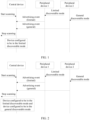
- peripheral devices include a peripheral device 1 configured to be in a limited discoverable mode and a peripheral device 2 configured to be in a generally discoverable mode.
- the peripheral device 1 may send an advertising event (limited), to indicate that the peripheral device 1 is configured to be in the limited discoverable mode.
- the peripheral device 2 may send an advertising event (general), to indicate that the peripheral device 2 is configured to be in the generally discoverable mode.
- the central device scans the advertising event (limited) and the advertising event (general) during the scan. In this case, the central device may obtain, based on the advertising events through filtering, a device configured to be in the limited discoverable mode. That is, the central device discovers the peripheral device 1.
- a device configured to be in the general discovery procedure may scan an advertising message, and obtain, in a scanning process through filtering, a device configured to be in the limited discoverable mode and a device configured to be in the generally discoverable mode. That is, a device configured to be in the non-discoverable mode is removed.
- peripheral devices include a peripheral device 1 configured to be in a limited discoverable mode and a peripheral device 2 configured to be in a generally discoverable mode.
- the peripheral device 1 may send an advertising event (limited), to indicate that the peripheral device 1 is configured to be in the limited discoverable mode.
- the peripheral device 2 may send an advertising event (general), to indicate that the peripheral device 2 is configured to be in the generally discoverable mode.
- the central device scans the advertising event (limited) and the advertising event (general) during the scan. In this case, the central device may obtain, based on the advertising events through filtering, a device configured to be in the limited discoverable mode and a device configured to be in the generally discoverable mode. That is, the central device discovers the peripheral device 1 and the peripheral device 2.
- the foregoing BLE protocol architecture supports only a single BLE access technology, and cannot meet diversified requirements for power consumption and bandwidths of different services (for example, an audio service and a video service) or a same application in different communication scenarios (for example, a communication scenario in which a standard sound quality is played in an audio service, and a communication scenario in which a lossless sound quality is played in the audio service).
- the BLE protocol architecture supports a small quantity of device discovery modes and device discovery procedures, and cannot meet requirements of more device discovery scenarios. For example, a requirement of a scenario in which a device expects to be discovered only by a previously paired device cannot be met, and a requirement of a scenario in which a device is searched for based on a device distance cannot be met.
- the central device needs to scan an advertising message sent by the peripheral device to discover the peripheral device.
- the peripheral device does not send an advertising message
- the peripheral device cannot be discovered. That is, the foregoing BLE protocol architecture cannot support a function of discovering a hidden device (that is, a device that does not send an advertising message, but only performs scanning and receives polling).
- an embodiment of this application provides a device discovery method.
- the method may include: obtaining, by a first device, request information of a first application, where the request information indicates a discoverable level of the first device; determining, by the first device based on the first application, an access technology corresponding to the first application; and advertising, based on the request information by using the access technology corresponding to the first application, a first message including first indication information, where the first indication information may indicate the discoverable level of the first device.
- the first device may dynamically schedule a plurality of access technologies based on an application, to meet diversified requirements for power consumption and bandwidths of different services or a same service in different communication scenarios.
- a plurality of discoverable levels are provided for the first device, so that more device discovery modes and device discovery procedures can be supported, to meet requirements of more device discovery scenarios.
- the device discovery method provided in this embodiment of this application may be applied to any communication system.
- the communication system may be a short-range communication system, a cellular communication system (for example, a long term evolution (long term evolution, LTE) system and new radio (new radio access technology, NR)), a worldwide interoperability for microwave access (worldwide interoperability for microwave access, WiMAX) communication system, and various types of next-generation communication systems (for example, a 6th generation (the 6th generation, 6G) mobile communication system).
- the short-range communication system may be a Bluetooth communication system, a Bluetooth low energy communication system, a wireless fidelity (wireless fidelity, Wi-Fi) communication system, various types of next-generation communication systems, or the like. This is not limited.
- the communication system is a short-range communication system.
- Each communication device in the short-range communication system may use a SparkLink new short-range protocol.
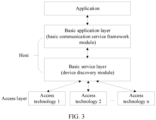
- an architecture of the SparkLink new short-range protocol may include an access layer, a host, and an application.
- the access layer may simultaneously support a plurality of access technologies, for example, a SparkLink-basic (SparkLink-basic, SLB) access technology, a SparkLink-low energy (SparkLink-low energy, SLE) access technology, and the like.
- a normalized host framework Above the access layer is a normalized host framework. The host can schedule access technologies supported by the access layer based on a requirement of the application (application, APP).
- the host may include a basic application layer and a basic service layer.
- the basic application layer may include a basic communication service framework module, and the basic service layer may include a device discovery module.
- the basic communication service framework module may be responsible for, in an application-oriented manner, undertaking a device discovery request delivered by the application, and determining, based on an application requirement, an underlying access technology that needs to be scheduled. In addition, a proper device discovery mode, a discoverable level that meets a requirement, a filter policy, and the like are selected by using a service provided by the device discovery module, and a specific device discovery request configuration is delivered to the device discovery module.
- the basic communication service framework module may further receive a device discovery result sent by the device discovery module, and distribute the device discovery result to each application based on the application requirement.
- the basic communication service framework module may determine, based on a quality of service (quality of service, QoS) capability requirement, a service type, and the like of the application, the underlying access technology that needs to be scheduled.
- quality of service quality of service, QoS
- QoS quality of service
- an application requirement is to play 1080P high-definition audio
- a bandwidth requirement of audio data after coding and compression on an underlying transport channel is 5 Mbps.
- a maximum bandwidth supported by a current SLE access technology is 4 Mbps
- a maximum bandwidth supported by an SLB access technology is about 120 Mbps
- the basic communication service framework module may determine that the SLE access technology cannot meet playing of the high-definition audio, to determine that a device supporting the SLB access technology needs to be discovered, and then invoke the SLB access technology to perform device discovery.
- the device discovery module may define a device discovery mode, and provide a plurality of device discoverable levels and filter policies.
- the device discovery module may undertake the device discovery request delivered by the basic communication service framework module, encapsulate a device discovery request command based on the underlying access technology selected in the device discovery request, and distribute the device discovery request command to the corresponding underlying access technology (for example, an access technology such as the SLB access technology or the SLE access technology).
- the device discovery module may further receive a device discovery result reported by the underlying access technology after the underlying access technology completes processing of the device discovery request command, filter based on a filter policy, and report a filtered device discovery result to the basic communication service framework module.
- the underlying access technology is used to receive the device discovery request command sent by the device discovery module.
- the underlying access technology may send an advertising message based on the device discovery request command, so that the current device is discovered.
- the underlying access technology executes a device discovery procedure based on the device discovery request command sent by the device discovery module, obtains a device discovery result, and reports the device discovery result to the device discovery module.
- the underlying access technology supports a filtering function (such as the SLE access technology)
- the underlying access technology may also perform preliminary filtering on the device discovery result based on the filter policy, and report the device discovery result after the preliminary filtering to the device discovery module.
- the filter policy may be indicated by the basic communication service framework module to the underlying access technology by using the device discovery module.
- the access technologies supported by the access layer may be access technologies such as an SLB access technology and an SLE access technology, or may be access technologies such as Bluetooth (Bluetooth, BT), BLE, a wireless local area network (wireless local area network, WLAN), and near field communication (near field communication, NFC).
- Bluetooth Bluetooth, BT
- BLE Bluetooth
- WLAN wireless local area network
- NFC near field communication
- the SLE access technology is an access technology that can implement fast discovery and connection and has an advantage of low energy.
- the advertiser device may usually select one or more advertising channels from three fixed advertising channels to sequentially send an advertising message, and the scanner device may sequentially perform scanning on the three advertising channels.
- the advertising message is received through scanning, the advertiser device may be discovered.
- the SLE access technology may support the scanner device in continuing to send a scan request to the advertiser device after receiving the advertising message, to request the advertiser device to send more device information.
- the advertiser device may send an advertising message (namely, ADV_EXT_IND) on an advertising channel A, an advertising channel B, and an advertising channel C.
- the ADV_EXT_IND is a basic advertising type of the SLE access technology.
- the host may configure the advertiser device to send basic advertising on the foregoing three advertising channels based on the SLE access technology.
- the ADV_EXT_IND may further carry time-frequency pointer information, which is used to point to extended advertising data (namely, AUX_ADV_IND) carried on a data channel.
- the scanner device may select an advertising channel in a scan window for scanning.
- the scanner device may continue to receive the AUX_ADV_IND on the data channel based on the time-frequency pointer information, and send a scan request (scan request), to request the advertiser device to continue to send more device information.
- the advertiser device may receive the scan request based on a receive window.
- a maximum length of the receive window may be a length of 15 scan requests, and the length may be reconfigured.
- the advertiser device may return a scan response (scan response) to the scanner device.
- the advertiser device may send an advertising message.
- the advertising message may include indication information indicating that the advertiser device expects to become a resource scheduling (grant, G) device, or include indication information indicating that the advertiser device expects to become a terminal (terminal, T) device.
- the scanner device may send a connection request to the advertiser device.
- the connection request may include indication information indicating that the scanner device expects to become a G device, or include indication information indicating that the scanner device expects to become a T device.
- the advertiser device After receiving the connection request, the advertiser device negotiates with the scanner device based on the connection request to determine that the advertiser device becomes a T device and the scanner device becomes a G device, and then establishes the connection; or the advertiser device negotiates with the scanner device to determine that the advertiser device becomes a G device and the scanner device becomes a T device, and then establishes the connection; or the negotiation fails, and the connection fails.
- the device that becomes the G device may serve as a resource scheduling device to schedule a resource.
- the advertising message sent by the advertiser device includes indication information indicating that the advertiser device expects to become a T device.
- the scanner device may send a connection request to the advertiser device. It is assumed that the connection request includes indication information indicating that the scanner device expects to become a G device, the advertiser device may determine, based on the connection request, that the advertiser device is a T device and the scanner device is a G device. A connection is successfully established to the scanner device, and the scanner device serves as a resource scheduling device to schedule a resource. It is assumed that the connection request includes indication information indicating that the scanner device expects to become a T device.
- the advertiser device may determine, based on the connection request, that the advertiser device is a G device, and the scanner device becomes a T device. A connection is successfully established to the scanner device, and the advertiser device serves as a resource scheduling device to schedule a resource. Alternatively, the advertiser device may reject to become a G device. That is, the advertiser device rejects to establish a connection to the scanner device.
- the advertising message sent by the advertiser device includes indication information indicating that the advertiser device expects to become a G device.
- the scanner device may send a connection request to the advertiser device. It is assumed that the connection request includes indication information indicating that the scanner device expects to become a T device, the advertiser device may determine, based on the connection request, that the advertiser device is a G device and the scanner device is a T device. A connection is successfully established to the scanner device, and the advertiser device serves as a resource scheduling device to schedule a resource. It is assumed that the connection request includes indication information indicating that the scanner device expects to become a G device.
- the advertiser device may determine, based on the connection request, that the advertiser device is a T device, and the scanner device becomes a G device. A connection is successfully established to the scanner device, and the scanner device serves as a resource scheduling device to schedule a resource. Alternatively, the advertiser device may reject to become a T device. That is, the advertiser device rejects to establish a connection to the scanner device.
- the SLB access technology is an access technology with a large bandwidth capability.
- devices can be classified into a G device and a T device.
- the G device may be a resource scheduling center.
- the G device sends an advertising message, and the T device scans and receives the advertising message of G device.
- the G device does not scan and discover the T device. That is, before the SLB access technology is connected, a device discovery procedure is unidirectional, and only the T device can discover the G device.
- the G device may periodically send a first sync signal (first sync signal, FTS), a second sync signal (second sync signal, STS), a master information block (master information block, MIB) message, and a system information block (system information block, SIB) message on a fixed time-frequency domain resource.
- first sync signal first sync signal
- second sync signal second sync signal
- MIB master information block
- SIB system information block
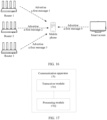
- FIG. 6 is a schematic diagram of composition of a communication apparatus 600 according to an embodiment of this application.
- the communication apparatus 600 may be an advertiser device or a chip or a system-on-a-chip in the advertiser device.
- the communication apparatus 600 may be a scanner device or a chip or a system-on-a-chip in the scanner device.
- the communication apparatus 600 includes a processor 601, a transceiver 602, and a communication line 603.
- the communication apparatus 600 may further include a memory 604.
- the processor 601, the memory 604, and the transceiver 602 may be connected through the communication line 603.
- the processor 601 is a central processing unit (central processing unit, CPU), a general-purpose processor, a network processor (network processor, NP), a digital signal processor (digital signal processor, DSP), a microprocessor, a microcontroller, a programmable logic device (programmable logic device, PLD), or any combination thereof.
- the processor 601 may be another apparatus having a processing function, for example, a circuit, a device, or a software module. This is not limited.
- the transceiver 602 is configured to communicate with another device or another communication network.
- the another communication network may be an Ethernet, a radio access network (radio access network, RAN), a wireless local area network (wireless local area network, WLAN), or the like.
- the transceiver 602 may be a module, a circuit, a transceiver, or any apparatus that can implement communication.
- the communication line 603 is configured to transmit information between components included in the communication apparatus 600.
- the memory 604 is configured to store instructions.
- the instructions may be a computer program.
- the memory 604 may be a read-only memory (read-only memory, ROM) or another type of static storage device that can store static information and/or instructions, or may be a random access memory (random access memory, RAM) or another type of dynamic storage device that can store information and/or instructions, or may be an electrically erasable programmable read-only memory (electrically erasable programmable read-only memory, EEPROM), a compact disc read-only memory (compact disc read-only memory, CD-ROM) or another optical disk storage, an optical disc storage (including a compact disc, a laser disc, an optical disc, a digital versatile disc, a Bluray disc, or the like), a magnetic disk storage medium or another magnetic storage device, or the like. This is not limited.
- the memory 604 may be independent of the processor 601, or may be integrated with the processor 601.
- the memory 604 may be configured to store instructions, program code, some data, or the like.
- the memory 604 may be located inside the communication apparatus 600, or may be located outside the communication apparatus 600. This is not limited.
- the processor 601 is configured to execute the instructions stored in the memory 604, to implement a device discovery method provided in the following embodiments of this application.
- the processor 601 may include one or more CPUs, for example, a CPU 0 and a CPU 1 in FIG. 6 .
- the communication apparatus 600 includes a plurality of processors.
- the communication apparatus 600 may further include a processor 607.
- the communication apparatus 600 further includes an output device 605 and an input device 606.
- the input device 606 is a device such as a keyboard, a mouse, a microphone, or a joystick
- the output device 605 is a device such as a display or a speaker (speaker).
- the communication apparatus 600 may be a desktop computer, a portable computer, a network server, a mobile phone, a tablet computer, a wireless terminal, an embedded device, a chip system, or a device having a similar structure in FIG. 6 .
- the composition structure shown in FIG. 7 does not constitute a limitation on the communication apparatus.
- the communication apparatus may include more or fewer components than those shown in the figure, some components may be combined, or there may be a different component arrangement.
- the chip system may include a chip, or may include a chip and another discrete device.
- a first device may be any advertiser device that uses the protocol architecture shown in FIG. 3 in a communication system
- a second device may be any scanner device that uses the protocol architecture shown in FIG. 3 in the communication system. Both the first device and the second device in the following embodiments may have the components shown in FIG. 6 .
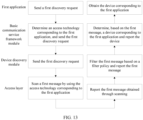
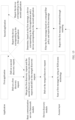
- FIG. 7 is a flowchart of a device discovery method applied to an advertiser device according to an embodiment of this application. As shown in FIG. 7 , the method may include the following steps.
- Step 701 A first device obtains request information of a first application.
- the request information may indicate a discoverable level of the first device.
- the request information may be used to request the first device to announce the discoverable level of the first device to the outside.
- the request information may be further used to request the first device to announce device information of the first device to the outside.
- the device information may be information such as a device type, a device appearance, device manufacturer information, or a device name. This is not limited.
- the discoverable level may include one or more of the following: The device expects to be discovered by a previously paired device, the device expects to be discovered by a device with a designated address or service set identifier (service set identifier, SSID), the device expects to be discovered by a device that supports a specific service or capability, the device is non-discoverable, the device is generally discoverable, or the device is preferentially discoverable.
- service set identifier service set identifier
- the foregoing discoverable levels may be configured in a device discovery module of the first device.
- the discoverable levels refer to the following Table 2: Table 2 Discoverable level Description
- the device is non-discoverable The device does not expect to be discovered by another device
- the device is generally discoverable The device expects to be discovered, but the requirement is not urgent
- the device is preferentially discoverable
- the device expects to be quickly discovered, and the requirement is urgent
- the device expects to be discovered by a previously paired device
- the paired device is a previously connected device, and a pairing record is reserved in the device, where for example, the pairing record may be a media access control (media access control, MAC) address, an internet protocol (internet protocol, IP) address, an identity (identity, ID), or the like of the previously paired device
- the device expects to be discovered by a device with a designated address or SSID
- the designated address may be a MAC address, an IP address, or the
- the request information may include the discoverable level of the first device, and the first device may determine the discoverable level of the first device based on the request information.
- the request information may include that the device expects to be discovered by a previously paired device, and the first device may determine, based on the request information, that the discoverable level of the first device is that the device expects to be discovered by a previously paired device.
- the request information may include one or more of the following information: identification information of the previously paired device, the designated address or SSID, the specific service or capability, or the like.
- the first device may determine the discoverable level of the first device based on the request information.
- the identification information of the device may be identity information that can be used to identify the device, such as a MAC address, an IP address, or an ID of the device. This is not limited.
- the request information includes an SSID.
- the first device may determine, based on the SSID, that the discoverable level of the first device is that the device expects to be discovered by a device with a designated address or SSID.
- the request information may further include an application requirement and/or a service type of the first application
- the first device may determine the discoverable level of the first device based on the application requirement and/or the service type of the first application.
- the request information includes the application requirement of the first application. It is assumed that the application requirement of the first application is to play audio.
- the first device may determine, based on the request information, that the discoverable level of the first device is that the device expects to be discovered by a device that supports a specific service or capability.
- a basic communication service framework module in the first device may obtain the request information of the first application, and determine the discoverable level of the first device based on the request information of the first application by invoking a discoverable level provided by the device discovery module (for example, the basic communication service framework module may obtain, by invoking an interface provided by the device discovery module, the discoverable level provided by the device discovery module).
- the request information further includes an advertising mode.
- the advertising mode may be advertising or polling advertising.
- the first device may notify the outside of the discoverable level of the first device through advertising.
- the advertising mode is polling advertising
- the first device may notify the outside of the discoverable level of the first device through polling advertising.
- the request information further includes advertising data.
- the advertising data may be a transmit power advertised by the first device, a service supported by the first device, state information of the first device, or the like. This is not limited.
- the first device may carry the advertising data when notifying the discoverable level of the first device to the outside.
- Step 702 The first device determines, based on the first application, an access technology corresponding to the first application.
- the first device may determine, based on the application requirement and/or the service type of the first application, the access technology corresponding to the first application.
- the application requirement of the first application may be a QoS capability requirement of the first application.
- the service type of the first application may be an audio service, a video service, a call service, or the like. This is not limited. Further, the audio service may be further classified into a standard audio playing service, a lossless audio playing service, and the like, and the video service may be further classified into a high-definition video playing service, a standard video playing service, and the like.
- the basic communication service framework module of the first device may determine, based on the first application, the access technology corresponding to the first application.
- the application requirement of the first application is to play 1080P high-definition audio
- a bandwidth requirement of audio data after coding and compression on an underlying transport channel is 5 Mbps.
- a maximum bandwidth supported by a current SLE access technology is 4 Mbps
- a maximum bandwidth supported by an SLB access technology is about 120 Mbps.
- the basic communication service framework module of the first device may determine that the SLB access technology can meet playing of the 1080P high-definition audio and the SLE access technology cannot meet playing of the 1080P high-definition audio, and therefore determine that the access technology corresponding to the first application is the SLB access technology.
- the service type of the first application is a standard audio playing service. It is assumed that the standard audio playing service corresponds to an SLE access technology. In this case, the basic communication service framework module of the first device may determine that the access technology corresponding to the first application is the SLE access technology.
- Step 703 The first device advertises a first message based on the request information by using the access technology corresponding to the first application.
- the basic communication service framework module of the first device may indicate, to the device discovery module, the access technology corresponding to the first application.
- the device discovery module may further indicate, to an access layer, the access technology corresponding to the first application, and the access layer determines and advertises the first message.
- the basic communication service framework module may indicate, in the request information, the access technology corresponding to the first application, convert the request information into request information that can be received by the device discovery module, and send the request information to the device discovery module.
- the device discovery module may determine, based on the received request information, the access technology corresponding to the first application, encapsulate a related parameter, convert the received request information into request information that can be received by the access layer, and send the request information to the access layer.
- the access layer determines the first message based on the request information, and advertises the first message.
- the access technology determined by the basic communication service framework module of the first device is the SLE access technology.
- the basic communication service framework module may indicate the SLE access technology in the request information, convert the request information into request information that can be received by the device discovery module, and send the request information to the device discovery module.
- the device discovery module encapsulates a related parameter based on the SLE access technology indicated in the received request information, converts the received request information into request information that can be received by the access layer, and sends the request information to the access layer.
- the access layer configures and advertises the first message based on the SLE access technology.
- the first message may include first indication information, and the first indication information may indicate the discoverable level of the first device.
- the basic communication service framework module of the first device may further include the discoverable level of the first device in the request information and send the request information to the device discovery module.
- the device discovery module includes the discoverable level of the first device in the request information and sends the request information to the access layer.
- the access layer determines the first indication information based on the discoverable level of the first device.
- the first device may include the first message in an advertising data payload of the advertising data for advertising.
- the advertising data may include an advertising data packet header and the advertising data payload.
- the first device may add advertising data of an advertising attribute type to the advertising data payload, and configure a corresponding bit to indicate the first indication information.
- a length of the advertising data of the advertising attribute type is 1 byte, and 3 bits in the byte may be used as the first indication information to indicate the discoverable level of the first device.
- bits 1 to 3 may be used as the first indication information to indicate the discoverable level of the first device.
- the discoverable level of the first device may be sequentially indicated as follows: The device is non-discoverable, the device is generally discoverable, the device is preferentially discoverable, the device expects to be discovered by a previously paired device, the device expects to be discovered by a device with a designated address or SSID, or the device expects to be discovered by a device that supports a specific service or capability.
- the device is non-discoverable Mandatory support 001
- the device is generally discoverable Mandatory support 010
- the device is preferentially discoverable Optional support 011
- the device expects to be discovered by a previously paired device Optional support 100
- the device expects to be discovered by a device with a designated address or SSID Optional support 101
- the device expects to be discovered by a device that supports a specific service or capability Optional support
- discoverable level that is of the first device and that is indicated in the first message may be mandatory support, or may be optional support.
- Table 3 is merely an example for description. This is not limited.
- the first device for example, a temperature sensor device having a simple function requirement only needs to support a mandatory support type, to reduce design complexity of the first device.
- the first device for example, a true wireless stereo (true wireless stereo, TWS) headset) having powerful functions may select to support a plurality of types, including a mandatory support type and an optional support type, to meet more abundant service requirements.
- the first message further includes one or more of the following information: the identification information of the previously paired device, the designated address or SSID, or the specific service or capability.
- the access layer of the first device may include the foregoing information in the advertising data payload.
- the first message may include the identification information of the previously paired device.
- the first message may include the specified address or SSID.
- the discoverable level of the first device is that the device expects to be discovered by a device that supports a specific service or capability, the first message may include the specific service or capability.
- a device that receives the first message may determine, based on the first message, whether the device is a device expected by the first device. If yes, the device may discover the first device and communicate with the first device. Otherwise, the device does not discover the first device. In other words, the first device is removed from a list of discovered devices or the first device is not determined as a discovered device.
- the first message further includes second indication information.
- the second indication information may indicate whether the first message is a polling advertising message.
- the first device may determine, based on the advertising mode indicated by the first application, whether to set the first message as a polling advertising message, or the first device may determine, based on the application requirement, the service type, and/or the like of the first application, whether to set the first message as a polling advertising message.
- the length of the advertising data of the advertising attribute type is 1 byte, and 1 bit in the byte may be used as the second indication information to indicate whether the first message is a polling advertising message.
- a bit 0 may be used as the second indication information to indicate whether the first message is a polling advertising message.
- the bit 0 may be set to 0 to indicate that the first message is a polling advertising message, and the bit 0 may be set to 1 to indicate that the first message is not a polling advertising message.
- the bit 0 may also be set to 1 to indicate that the first message is a polling advertising message, and the bit 0 may be set to 0 to indicate that the first message is not a polling advertising message.
- the first device is a TWS headset supporting dual connectivity
- second devices include a mobile phone A, a mobile phone B, and a mobile phone C
- the headset is connected to the mobile phone A.
- the headset may include, in a first message, first indication information configured to be that the device expects to be discovered by a previously paired device, and advertise the first message.
- the mobile phone C is a device that is previously paired with the headset, and the mobile phone B is not previously paired with the headset.
- the mobile phone C may determine, based on the first message, that the mobile phone C is a device that is previously paired with the headset, and further discover the headset and is connected to the headset. This prevents the headset from being rejected by the mobile phone C in a procedure of establishing a connection to the mobile phone C.
- the mobile phone B may determine that the mobile phone B is not previously paired with the headset (or it may be described as that the mobile phone B may identify that the headset is a non-discoverable device for the mobile phone B). If the mobile phone B attempts to establish a connection to the headset, the mobile phone B is rejected by the headset. Therefore, the mobile phone B does not attempt to establish a connection to the headset.
- the first device may dynamically schedule a plurality of access technologies based on an application, to meet diversified requirements for power consumption and bandwidths of different services or a same service in different communication scenarios.
- a plurality of discoverable levels are provided for the first device, so that more device discovery modes and device discovery procedures can be supported, to meet requirements of more device discovery scenarios.
- a second device may scan the first message advertised by the first device.
- the second device may send a polling response to the first device.
- the second device may scan, with reference to the following device discovery method shown in FIG. 12 , the first message advertised by the first device. Details are not described herein.
- the second device may parse the first message, and determine, based on the second indication information in the first message, whether the first message is a polling advertising message.
- the second device when the second device determines that the first device is a device corresponding to the first application, the second device sends a polling response to the first device.
- the second device may determine, based on the discoverable level in the first message obtained through scanning, whether the first device is the device corresponding to the first application.
- the polling response may be a scan request, and the first device may discover the second device based on the polling response.
- the first device may discover the hidden device based on a polling response sent by the hidden device.
- the scanner device may scan the first message advertised by the advertiser device, to discover the advertiser device.
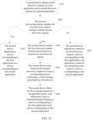
- FIG. 12 shows a device discovery method applied to a scanner device according to an embodiment of this application. As shown in FIG. 12 , the method may include the following steps.
- Step 1201 A second device obtains a first discovery request of a first application.
- the first discovery request may be used to request to discover a device corresponding to the first application.
- the device corresponding to the first application may be a device that executes the first application.
- the first discovery request may include information such as an application requirement, a service type, and/or the like of the first application.
- Step 1202 The second device determines, based on the first application, an access technology corresponding to the first application.
- the second device may determine, based on the application requirement and/or the service type of the first application, the access technology corresponding to the first application.
- Step 1203 The second device scans, by using the access technology corresponding to the first application, the first message advertised by the first device.
- a basic communication service framework module of the second device may indicate, to a device discovery module, the access technology corresponding to the first application.
- the device discovery module may further indicate, to an access layer, the access technology corresponding to the first application, and the access layer scans, based on the access technology corresponding to the first application, the first message advertised by the first device.
- the basic communication service framework module may indicate, in the first discovery request, the access technology corresponding to the first application, convert the first discovery request into a first discovery request that can be received by the device discovery module, and send the first discovery request to the device discovery module.
- the device discovery module may determine, based on the received first discovery request, the access technology corresponding to the first application, encapsulate a related parameter, convert the received first discovery request into a first discovery request that can be received by the access layer, and send the first discovery request to the access layer.
- the access layer scans the first message based on the first discovery request.
- the access technology determined by the basic communication service framework module of the second device is an SLE access technology.
- the basic communication service framework module may indicate the SLE access technology in the first discovery request, convert the first discovery request into a first discovery request that can be received by the device discovery module, and send the first discovery request to the device discovery module.
- the device discovery module encapsulates a related parameter based on the SLE access technology indicated in the received first discovery request, converts the received first discovery request into a first discovery request that can be received by the access layer, and sends the first discovery request to the access layer.
- the access layer scans the first message based on the SLE access technology.
- Step 1204 The second device filters the first message based on a filter policy corresponding to the first application, to determine the device corresponding to the first application.
- the access layer may report the first message obtained through scanning to the device discovery module.
- the device discovery module filters the first message based on the filter policy corresponding to the first application, and reports a filter result to the basic communication service framework module.
- the basic communication service framework module determines, based on the filter result, the device corresponding to the first application.
- the filter policy includes one or more of the following: discovering the previously paired device, discovering the device with the designated address or SSID, discovering the device that supports the specific service or capability, discovering a device within a specific range, disabling filtering, discovering a discoverable device, or discovering a preferential device.
- the foregoing filter policy may be configured in the device discovery module of the second device.
- Table 4 Filter policy Function description Requirement Disable filtering That is, the device discovery module receives all advertising messages obtained by the access layer through scanning or all received polling responses, and uploads the advertising messages or the polling responses to the basic communication service framework module
- Mandatory support Discover a discoverable device That is, a discoverable device is obtained through filtering, where the discoverable device includes a general discoverable device, a preferential discoverable device, a previously paired device, or a device directed to the second device
- Mandatory support Discover a preferential device That is, a preferential discoverable device is obtained through filtering
- Optional support Discover a device that supports a specific service or capability That is, a device that supports a specific service or capability required by an application is obtained through filtering
- the second device may calculate the distance between the peripheral device and the second device based on parameters such as advertising transmit power and signal strength, and obtain the device that meets the distance requirement.
- filter policy may be mandatory support, or may be optional support.
- Table 4 is merely an example for description. This is not limited.
- the second device (for example, a smart water meter reader) having a simple function requirement can meet a service requirement by supporting only some types, and does not need to support all types, to reduce design complexity of the second device.
- the second device (for example, an in-vehicle infotainment system or a mobile phone) having powerful functions may select to support all types, to meet more abundant service requirements.
- the first discovery request of the first application may be obtained by the basic communication service framework module in the second device, and the filter policy provided by the device discovery module is invoked based on the application requirement and/or the service type of the first application (for example, the basic communication service framework module may obtain the filter policy provided by the device discovery module by invoking an interface provided by the device discovery module). That is, the filter policy corresponding to the first application is determined.
- the basic communication service framework module of the second device may indicate the filter policy corresponding to the first application to the device discovery module of the second device.
- the device discovery module may filter, based on the filter policy corresponding to the first application, first messages reported by the access layer, and report a first message obtained through filtering to the basic communication service framework module.
- the basic communication service framework module determines, based on the first message obtained through filtering, the device corresponding to the first application.
- the first discovery request may further include one or more of the following information: identification information of the previously paired device, the designated address or SSID, or the specific service or capability.
- the device discovery module of the second device may filter the first messages based on the first discovery request and the filter policy corresponding to the first application.
- the first discovery request includes an SSID 1, an SSID 2, and an SSID 3, and the filter policy corresponding to the first application is to discover a device with a designated address or SSID.
- the device discovery module of the second device may obtain, through filtering based on the first discovery request and the filter policy corresponding to the first application, a first message with an SSID being the SSID 1, the SSID 2, or the SSID 3 in the first messages reported by the access layer, and report the first message obtained through filtering to the basic communication service framework module.
- the basic communication service framework module determines, based on the first message obtained through filtering, the device corresponding to the first application.
- the device discovery module determines whether the first messages are filtered by the device discovery module based on the filter policy; or the first messages are filtered by the access layer based on the filter policy; or the first messages are filtered by the device discovery module and the access layer based on the filter policy.
- the access layer may report the first messages obtained through scanning to the device discovery module, and the device discovery module filters the first messages based on the filter policy.
- the device discovery module may indicate the filter policy to the access layer.
- the access layer filters the first messages obtained through scanning, and reports a first message obtained through filtering to the device discovery module.
- the device discovery module reports the received first message to the basic communication service framework module.
- the device discovery module may indicate the filter policy to the access layer.
- the access layer performs preliminary filtering on the first messages obtained through scanning, and reports a first message obtained after the preliminary filtering to the device discovery module.
- the device discovery module filters the received first message based on the filter policy, and reports a filter result to the basic communication service framework module.
- the basic communication service framework module may determine a device corresponding to the first message as the device corresponding to the first application.
- the second device may dynamically schedule a plurality of access technologies based on an application, to meet diversified requirements for power consumption and bandwidths of different services or a same service in different communication scenarios.
- a plurality of filter policies are provided for the second device, so that more device discovery modes and device discovery procedures can be supported, to meet requirements of more device discovery scenarios.
- the second device may arbitrate and merge the discovery requests of the plurality of applications, to reduce a quantity of times of performing the foregoing device discovery method by the second device, and reduce power consumption of the second device. Particularly, a quantity of times of performing the foregoing device discovery method by the access layer in the second device is reduced, or overlapping commands executed by the access layer are reduced, and power consumption of the second device is reduced.
- the discovery requests of the plurality of applications may be arbitrated and merged by the basic communication service framework module of the second device.
- the discovery requests of the plurality of applications may be arbitrated and merged by the device discovery module of the second device. This is not limited.
- the second device obtains the first discovery request of the first application and a second discovery request of a second application is used, to describe how the second device arbitrates and merges the discovery requests of the plurality of applications.
- FIG. 14 is a flowchart of an arbitration and merging method according to this application. As shown in FIG. 14 , the method may include the following steps.
- Step 1401 A second device obtains a first discovery request of a first application and a second discovery request of a second application.
- the first discovery request is used to request to discover a device corresponding to the first application; and the second discovery request is used to request to discover a device corresponding to the second application.
- the second device may first obtain the first discovery request of the first application, and then obtain the second discovery request of the second application after a period of time; or the second device may simultaneously obtain the first discovery request of the first application and the second discovery request of the second application. This is not limited.
- Step 1402 The second device determines whether the first discovery request overlaps with the second discovery request. If yes, perform the following step 1403, or perform the following step 1404 to step 1406; otherwise, perform the following step 1407.
- the first discovery request When the first discovery request is completely consistent with the second discovery request, it may be determined that the first discovery request overlaps with the second discovery request. Alternatively, when a device type of the first discovery request is consistent with that of the second discovery request, it may also be determined that the first discovery request overlaps with the second discovery request.
- the first discovery request is used to request to discover an SLB Internet access device
- the second discovery request is used to request to discover an SLB projectable device. Because both the device corresponding to the first discovery request and the device corresponding to the second discovery request are SLB devices, it may be determined that the first discovery request overlaps with the second discovery request.
- the second device may determine whether the second discovery request overlaps with the first discovery request. Alternatively, after receiving the second discovery request, the second device may wait for a period of time, and determine all discovery requests received in the time period, to determine whether there is an overlapping discovery request.
- Step 1403 If the first discovery request overlaps with the second discovery request, the second device determines the device corresponding to the first application as the device corresponding to the second application.
- the second device when the second device first obtains the first discovery request of the first application, and determines, based on the first discovery request, the device corresponding to the first application, if the second device then obtains the second discovery request of the second application, and the second discovery request overlaps with the first discovery request, the second device may determine the device corresponding to the first application as the device corresponding to the second application.
- the second device when the second device first obtains the first discovery request of the first application, and performs the device discovery method based on the first discovery request, if the second device then obtains the second discovery request of the second application, and the second discovery request overlaps with the first discovery request, the second device may determine, after the device discovery method corresponding to the first discovery request ends, the device corresponding to the first application as the device corresponding to the second application.
- the second device when the second device simultaneously obtains the first discovery request of the first application and the second discovery request of the second application, and the second discovery request overlaps with the first discovery request, the second device may perform the device discovery method based on the first discovery request, determine the device corresponding to the first application, and determine the device corresponding to the first application as the device corresponding to the second application.
- Step 1404 The second device merges the first discovery request and the second discovery request into one discovery request.
- the first discovery request is used to request to discover an SLB Internet access device
- the second discovery request is used to request to discover an SLB projectable device.
- the merged discovery request may be used to request to discover an SLB device.
- Step 1405 The second device scans, based on the merged discovery request by using a corresponding access technology, a first message advertised by a first device.
- the corresponding access technology may be an access technology corresponding to both the first application and the second application.
- Step 1406 The second device filters the first message based on a merged filter policy, and determines a device obtained through filtering as a device corresponding to the first application and a device corresponding to the second application.
- the merged filter policy is a filter policy obtained by merging a filter policy corresponding to the first application and a filter policy corresponding to the second application.
- the second device may determine, based on the first discovery request, the filter policy corresponding to the first application, determine, based on the second discovery request, the filter policy corresponding to the second application, and merge the filter policy corresponding to the first application and the filter policy corresponding to the second application as a filter policy for filtering the first message.
- the first discovery request is used to request to discover an SLB Internet access device
- the second discovery request is used to request to discover an SLB projectable device.
- the second device may determine that the filter policy corresponding to the first application may be to discover a device that supports a specific service or capability, where the specific service or capability is to support an SLB access technology and support Internet access, and determine that the filter policy corresponding to the second application is to discover a device that supports a specific service or capability, where the specific service or capability is to support the SLB access technology and support projection.
- the filter policy corresponding to the first application and the filter policy corresponding to the second application are merged, it may be determined that the merged filter policy is to discover a device that supports a specific service or capability, where the specific service or capability is to support the SLB access technology.
- the filter policy is a filter policy corresponding to the merged discovery request.
- the second device may determine a filter policy based on the merged discovery request. For example, the first discovery request is used to request to discover an SLB Internet access device, and the second discovery request is used to request to discover an SLB projectable device. The second device may determine that the merged discovery request is used to request to discover an SLB device, and further determine that a filter policy corresponding to the merged discovery request is to discover a device that supports a specific service or capability, where the specific service or capability is to support an SLB access technology.
- the second device is a mobile phone
- a first application in the mobile phone delivers a first discovery request for searching for an SLB Internet access device
- a second application delivers a second discovery request for searching for an SLB projectable device.
- a basic communication service framework module in the mobile phone may merge the first discovery request and the second discovery request into a discovery request for searching for an SLB device, and deliver the merged discovery request to a device discovery module.
- the device discovery module converts the received discovery request into a discovery request that can be received by an access layer, and sends the discovery request to the access layer.
- the access layer scans first messages based on the discovery request by using the SLB access technology, and reports the first messages obtained through scanning to the device discovery module.
- the device discovery module filters the first messages based on the merged filter policy, and reports a first message obtained through filtering to the basic communication service framework module.
- the basic communication service framework module determines, based on a device corresponding to the first message, the SLB Internet access device as the device corresponding to the first application, and reports the device to the first application, and determines the SLB projectable device as the device corresponding to the second application, and reports the device to the second application.
- the first device includes a router 1, a router 2, a router 3, and a smart screen
- the second device is a mobile phone.
- the router 1 may advertise a first message 1
- the router 2 may advertise a first message 2
- the router 3 may advertise a first message 3
- the smart screen may advertise a first message 4.
- first messages obtained through scanning at the access layer of the second device include the first message 1, the first message 2, the first message 3, and the first message 4.
- the access layer may report the first message 1, the first message 2, the first message 3, and the first message 4 to the device discovery module.
- the device discovery module may obtain the first message 1, the first message 2, and the first message 4 through filtering based on the merged filter policy, and report the first message 1, the first message 2, and the first message 4 to the basic communication service framework module.
- the basic communication service framework module determines, based on the first message 1 and the first message 2, the router 1 and the router 2 as the device corresponding to the first application, and reports the device to the first application; and determines, based on the first message 4, the smart screen as the device corresponding to the second application, and reports the device to the second application.
- Step 1407 The second device determines, based on the first discovery request, a device corresponding to the first application, and determines, based on the second discovery request, a device corresponding to the second application.
- the second device may perform the device discovery method shown in FIG. 12 , and determine, based on the first discovery request, the device corresponding to the first application.
- the second device may also perform the device discovery method shown in FIG. 12 , and determine, based on the second discovery request, the device corresponding to the second application.
- the second device may arbitrate and merge the discovery requests of the plurality of applications, to reduce a quantity of times of performing the foregoing device discovery method by the second device, and reduce power consumption of the second device.
- the second device may further set a label for each application based on an application requirement of each application, and subsequently may distribute a device discovery result to each application based on the label.
- the device discovery result may include a device determined by the basic communication service framework module of the second device based on the first message.
- Labels corresponding to applications whose discovery requests overlap may be the same.
- applications include a first application, a second application, and a third application. It is assumed that a first discovery request of the first application overlaps with a second discovery request of the second application, and a third discovery request of the third application does not overlap with the first discovery request and the second discovery request, the second device may set a first label for the first application and the second application, and set a second label for the third application.
- the second device may report, based on the first label, the determined one or more devices to an application corresponding to the first label (for example, the first application, the second application, or an application whose label is the first label).
- the second device may report, based on the second label, the determined one or more devices to an application corresponding to the second label (for example, the third application or an application whose label is the second label).
- each device includes corresponding hardware structures and/or software modules for performing the functions.
- algorithm steps in the examples described with reference to embodiments disclosed in this specification can be implemented by hardware or a combination of hardware and computer software in this application. Whether a function is performed by hardware or hardware driven by computer software depends on particular applications and design constraints of the technical solutions. A person skilled in the art may use different methods to implement the described functions for each particular application, but it should not be considered that the implementation goes beyond the scope of this application.
- each device may be obtained through division based on the foregoing method examples.
- each functional module may be obtained through division based on each function, or two or more functions may be integrated into one processing module.
- the integrated module may be implemented in a form of hardware, or may be implemented in a form of a software functional module. It should be noted that, in embodiments of this application, division into the modules is an example and is merely logical function division. During actual implementation, there may be another division manner.
- FIG. 17 shows a communication apparatus 170.
- the communication apparatus 170 may perform actions performed by the first device in FIG. 7 to FIG. 16 .
- the communication apparatus 170 may perform actions performed by the second device in FIG. 7 to FIG. 16 .
- the communication apparatus 170 may include a transceiver module 1701 and a processing module 1702.
- the communication apparatus 170 may be a communication apparatus, or may be a chip used in the communication apparatus, or another combined device or component that has a function of the communication apparatus.
- the transceiver module 1701 may be a transceiver, and the transceiver may include an antenna, a radio frequency circuit, and the like;
- the processing module 1702 may be a processor (or a processing circuit), for example, a baseband processor, and the baseband processor may include one or more CPUs.
- the transceiver module 1701 may be a radio frequency unit; and the processing module 1702 may be a processor (or a processing circuit), for example, a baseband processor.
- the transceiver module 1701 may be an input/output interface of a chip (for example, a baseband chip); and the processing module 1702 may be a processor (or a processing circuit) of the chip system, and may include one or more central processing units.
- transceiver module 1701 in this embodiment of this application may be implemented by a transceiver or a transceiver-related circuit assembly; and the processing module 1702 may be implemented by a processor or a processor-related circuit assembly (or referred to as a processing circuit).
- the transceiver module 1701 may be configured to perform all receiving and sending operations performed by the communication apparatus in embodiments shown in FIG. 7 to FIG. 16 , and/or configured to support another process of the technology described in this specification.
- the processing module 1702 may be configured to perform all operations performed by the communication apparatus in embodiments shown in FIG. 7 to FIG. 16 except the receiving and sending operations, and/or configured to support another process of the technology described in this specification.
- the transceiver module 1701 in FIG. 17 may be replaced with a transceiver, and a function of the transceiver module 1701 may be integrated into the transceiver; and the processing module 1702 may be replaced with a processor, and a function of the processing module 1702 may be integrated into the processor.
- the communication apparatus 170 shown in FIG. 17 may further include a memory.
- the communication apparatus 170 in this embodiment of this application may be the communication apparatus shown in FIG. 6 .
- An embodiment of this application further provides a computer-readable storage medium. All or some of the procedures in the foregoing method embodiments may be implemented by a computer program instructing related hardware.
- the program may be stored in the foregoing computer-readable storage medium. When the program is executed, the procedures of the foregoing method embodiments may be included.
- the computer-readable storage medium may be an internal storage unit of a terminal (including a data transmitting end and/or a data receiving end) in any one of the foregoing embodiments, for example, a hard disk or a memory of the terminal.
- the computer-readable storage medium may be an external storage device of the terminal, for example, a plug-in hard disk, a smart media card (smart media card, SMC), a secure digital (secure digital, SD) card, a flash card (flash card), or the like that is configured on the terminal.
- the computer-readable storage medium may alternatively include both the internal storage unit and the external storage device of the terminal.
- the computer-readable storage medium is configured to store the computer program and other programs and data that are needed by the terminal.
- the computer-readable storage medium may be further configured to temporarily store data that has been output or is to be output.
- At least one (item) means one or more
- a plurality of means two or more
- at least two (items) means two, three, or more
- and "and/or” is used to describe an association relationship between associated objects and indicates that three relationships may exist.
- a and/or B may indicate the following three cases: Only A exists, only B exists, and both A and B exist, where A and B may be singular or plural.
- the character “/” generally indicates an “or” relationship between associated objects.
- At least one of the following items (pieces) or a similar expression thereof indicates any combination of these items, including a single item (piece) or any combination of a plurality of items (pieces).
- At least one item (piece) of a, b, or c may indicate a, b, c, a and b, a and c, b and c, or a, b, and c, where a, b, and c may be singular or plural.
- the disclosed apparatus and method may be implemented in other manners.
- the described apparatus embodiments are merely examples.
- division into the modules or units is merely logical function division and may be other division during actual implementation.
- a plurality of units or components may be combined or integrated into another apparatus, or some features may be ignored or not performed.
- the displayed or discussed mutual couplings or direct couplings or communication connections may be implemented through some interfaces. Indirect couplings or communication connections between apparatuses or units may be implemented in electronic, mechanical, or other forms.
- the units described as separate parts may or may not be physically separate, and parts displayed as units may be one or more physical units, may be located in one place, or may be distributed on different places. Some or all of the units may be selected based on an actual requirement to achieve objectives of the solutions in embodiments.
- functional units in embodiments of this application may be integrated into one processing unit, each of the units may exist alone physically, or two or more units are integrated into one unit.
- the integrated unit may be implemented in a form of hardware, or may be implemented in a form of a software functional unit.
- the integrated unit When the integrated unit is implemented in the form of a software functional unit and sold or used as an independent product, the integrated unit may be stored in a readable storage medium.
- the software product is stored in a storage medium and includes several instructions for instructing a device (which may be a single-chip microcomputer, a chip, or the like) or a processor (processor) to perform all or some of the steps of the methods described in embodiments of this application.
- the foregoing storage medium includes any medium that can store program code, such as a USB flash drive, a removable hard disk, a ROM, a RAM, a magnetic disk, or an optical disc.
Landscapes
- Engineering & Computer Science (AREA)
- Computer Networks & Wireless Communication (AREA)
- Signal Processing (AREA)
- Databases & Information Systems (AREA)
- Mobile Radio Communication Systems (AREA)
Applications Claiming Priority (2)
| Application Number | Priority Date | Filing Date | Title |
|---|---|---|---|
| CN202110897345.1A CN115915019B (zh) | 2021-08-05 | 2021-08-05 | 设备发现方法和装置 |
| PCT/CN2022/107218 WO2023011212A1 (zh) | 2021-08-05 | 2022-07-22 | 设备发现方法和装置 |
Publications (2)
| Publication Number | Publication Date |
|---|---|
| EP4380200A1 true EP4380200A1 (de) | 2024-06-05 |
| EP4380200A4 EP4380200A4 (de) | 2024-12-18 |
Family
ID=85155172
Family Applications (1)
| Application Number | Title | Priority Date | Filing Date |
|---|---|---|---|
| EP22851926.0A Pending EP4380200A4 (de) | 2021-08-05 | 2022-07-22 | Vorrichtungserkennungsverfahren und -vorrichtung |
Country Status (3)
| Country | Link |
|---|---|
| EP (1) | EP4380200A4 (de) |
| CN (2) | CN121099298A (de) |
| WO (1) | WO2023011212A1 (de) |
Cited By (1)
| Publication number | Priority date | Publication date | Assignee | Title |
|---|---|---|---|---|
| EP4380238A1 (de) * | 2021-08-02 | 2024-06-05 | Huawei Technologies Co., Ltd. | Verfahren zur vorrichtungsverbindung, elektronische vorrichtungen und system |
Family Cites Families (14)
| Publication number | Priority date | Publication date | Assignee | Title |
|---|---|---|---|---|
| US7603083B2 (en) * | 2005-09-06 | 2009-10-13 | Research In Motion Limited | Controlling visibility of a wireless device in discoverable mode |
| WO2014162175A1 (en) * | 2013-04-02 | 2014-10-09 | Broadcom Corporation | Method and apparatus for discovering devices and application users |
| US20140351446A1 (en) * | 2013-05-21 | 2014-11-27 | Samsung Electronics Co., Ltd. | Electronic device using logical channels for communication |
| CN105284166B (zh) * | 2013-06-28 | 2021-03-23 | 苹果公司 | 针对对等应用的网络辅助的设备对设备发现 |
| US10078811B2 (en) * | 2013-11-29 | 2018-09-18 | Fedex Corporate Services, Inc. | Determining node location based on context data in a wireless node network |
| WO2016036139A2 (ko) * | 2014-09-02 | 2016-03-10 | 엘지전자(주) | 블루투스 le(low energy) 기술을 이용하여 디바이스를 제어하기 위한 방법 및 장치 |
| US9743267B2 (en) * | 2015-12-16 | 2017-08-22 | Motorola Solutions, Inc. | Method, device, and system for improving device pairing between a scanning wireless radio communication device and target wireless electronic devices |
| DE112018003365T5 (de) * | 2017-06-30 | 2020-03-12 | Intel Corporation | V2x-kommunikationen unter verwendung mehrerer funkzugriffstechniken (mehrfach-rat) |
| WO2019013683A1 (en) * | 2017-07-14 | 2019-01-17 | Telefonaktiebolaget Lm Ericsson (Publ) | METHOD AND DEVICE FOR ADVERTISING WITHOUT CONNECTION WITH LOW ENERGY BLUETOOTH |
| CN108494610B (zh) * | 2018-05-23 | 2021-03-23 | 南京邮电大学 | 基于6LoBLE的低功耗蓝牙IPv6地址自动配置方法 |
| CN109068370A (zh) * | 2018-06-27 | 2018-12-21 | 努比亚技术有限公司 | 通信方法、移动终端及计算机可读存储介质 |
| US10772142B2 (en) * | 2018-07-25 | 2020-09-08 | Medtronic, Inc. | Wireless connection to peripheral device based on advertisement cadence |
| CN110913014A (zh) * | 2019-12-10 | 2020-03-24 | 扬州航盛科技有限公司 | 一种基于本地热点的Android手机与智能驾舱无感互联方法 |
| CN113170377A (zh) * | 2021-04-19 | 2021-07-23 | 华为技术有限公司 | 一种网络连接建立方法及相应的装置 |
-
2021
- 2021-08-05 CN CN202511135476.0A patent/CN121099298A/zh active Pending
- 2021-08-05 CN CN202110897345.1A patent/CN115915019B/zh active Active
-
2022
- 2022-07-22 EP EP22851926.0A patent/EP4380200A4/de active Pending
- 2022-07-22 WO PCT/CN2022/107218 patent/WO2023011212A1/zh not_active Ceased
Cited By (2)
| Publication number | Priority date | Publication date | Assignee | Title |
|---|---|---|---|---|
| EP4380238A1 (de) * | 2021-08-02 | 2024-06-05 | Huawei Technologies Co., Ltd. | Verfahren zur vorrichtungsverbindung, elektronische vorrichtungen und system |
| EP4380238B1 (de) * | 2021-08-02 | 2026-02-25 | Huawei Technologies Co., Ltd. | Verfahren zur vorrichtungsverbindung, elektronische vorrichtungen und system |
Also Published As
| Publication number | Publication date |
|---|---|
| CN121099298A (zh) | 2025-12-09 |
| WO2023011212A1 (zh) | 2023-02-09 |
| CN115915019B (zh) | 2025-09-02 |
| EP4380200A4 (de) | 2024-12-18 |
| CN115915019A (zh) | 2023-04-04 |
Similar Documents
| Publication | Publication Date | Title |
|---|---|---|
| US20220312517A1 (en) | D2d communication method, apparatus, and system | |
| CN103561449B (zh) | 无线接入方法和无线接入点 | |
| US12563616B2 (en) | Packet forwarding method, apparatus, and system | |
| CN114845391A (zh) | 一种传输寻呼消息的方法及装置 | |
| US20170006538A1 (en) | Wireless network access | |
| EP3364709B1 (de) | Verfahren und vorrichtungen zur herstellung einer datenverbindung | |
| US11019483B2 (en) | Access point supporting at least two virtual networks and method performed thereby for communicating with wireless device | |
| US12200741B2 (en) | Data processing method and apparatus, and system | |
| CN109151950B (zh) | 一种接入控制的方法、网络设备以及终端设备 | |
| US20240224300A1 (en) | Channel configuration method, and apparatus | |
| EP4304155A1 (de) | Verfahren und vorrichtung zur bluetooth-nachrichtenübertragung und bluetooth-netzwerk | |
| WO2022242340A1 (zh) | 广播和接收蓝牙数据包的方法、装置、终端及存储介质 | |
| JP7784418B2 (ja) | 通信方法及びデバイス | |
| WO2021089015A1 (zh) | 一种寻呼方法和装置 | |
| US20240357623A1 (en) | Broadcast communication method and apparatus | |
| EP4380200A1 (de) | Vorrichtungserkennungsverfahren und -vorrichtung | |
| US20250344289A1 (en) | Networking device communication method and electronic device | |
| US20220046756A1 (en) | Communication method, communication apparatus, and terminal device | |
| CN117998397A (zh) | 一种系统、感知电子设备下线的方法以及电子设备 | |
| CN114040515A (zh) | 一种隧道管理方法、装置及系统 | |
| JP7728983B2 (ja) | セミパーシステントスケジューリング方法、ユーザ機器、基地局、および通信システム | |
| US20260012790A1 (en) | Communication apparatus, control method, and non-transitory computer readable storage medium | |
| WO2025162167A1 (zh) | 数据传输方法、设备及存储介质 | |
| US20200305020A1 (en) | Data transmission method and device, and computer storage medium | |
| WO2024230225A9 (zh) | 网络接入方法及装置 |
Legal Events
| Date | Code | Title | Description |
|---|---|---|---|
| STAA | Information on the status of an ep patent application or granted ep patent |
Free format text: STATUS: THE INTERNATIONAL PUBLICATION HAS BEEN MADE |
|
| PUAI | Public reference made under article 153(3) epc to a published international application that has entered the european phase |
Free format text: ORIGINAL CODE: 0009012 |
|
| STAA | Information on the status of an ep patent application or granted ep patent |
Free format text: STATUS: REQUEST FOR EXAMINATION WAS MADE |
|
| 17P | Request for examination filed |
Effective date: 20240301 |
|
| AK | Designated contracting states |
Kind code of ref document: A1 Designated state(s): AL AT BE BG CH CY CZ DE DK EE ES FI FR GB GR HR HU IE IS IT LI LT LU LV MC MK MT NL NO PL PT RO RS SE SI SK SM TR |
|
| REG | Reference to a national code |
Ref country code: DE Ref legal event code: R079 Free format text: PREVIOUS MAIN CLASS: H04W0004060000 Ipc: H04W0004800000 |
|
| DAV | Request for validation of the european patent (deleted) | ||
| DAX | Request for extension of the european patent (deleted) | ||
| A4 | Supplementary search report drawn up and despatched |
Effective date: 20241115 |
|
| RIC1 | Information provided on ipc code assigned before grant |
Ipc: H04W 88/06 20090101ALN20241111BHEP Ipc: H04W 84/12 20090101ALN20241111BHEP Ipc: H04W 48/18 20090101ALN20241111BHEP Ipc: H04W 8/00 20090101ALI20241111BHEP Ipc: H04W 4/80 20180101AFI20241111BHEP |