EP4380227A2 - System und verfahren zur verbindungs- und weiterreichungsverwaltung über netzwerke und ssids hinweg - Google Patents
System und verfahren zur verbindungs- und weiterreichungsverwaltung über netzwerke und ssids hinweg Download PDFInfo
- Publication number
- EP4380227A2 EP4380227A2 EP23203560.0A EP23203560A EP4380227A2 EP 4380227 A2 EP4380227 A2 EP 4380227A2 EP 23203560 A EP23203560 A EP 23203560A EP 4380227 A2 EP4380227 A2 EP 4380227A2
- Authority
- EP
- European Patent Office
- Prior art keywords
- sta
- network
- ssid
- csd
- client
- Prior art date
- Legal status (The legal status is an assumption and is not a legal conclusion. Google has not performed a legal analysis and makes no representation as to the accuracy of the status listed.)
- Pending
Links
Images





Classifications
-
- H—ELECTRICITY
- H04—ELECTRIC COMMUNICATION TECHNIQUE
- H04W—WIRELESS COMMUNICATION NETWORKS
- H04W48/00—Access restriction; Network selection; Access point selection
- H04W48/20—Selecting an access point
-
- H—ELECTRICITY
- H04—ELECTRIC COMMUNICATION TECHNIQUE
- H04W—WIRELESS COMMUNICATION NETWORKS
- H04W36/00—Hand-off or reselection arrangements
- H04W36/34—Reselection control
- H04W36/38—Reselection control by fixed network equipment
- H04W36/385—Reselection control by fixed network equipment of the core network
-
- H—ELECTRICITY
- H04—ELECTRIC COMMUNICATION TECHNIQUE
- H04W—WIRELESS COMMUNICATION NETWORKS
- H04W84/00—Network topologies
- H04W84/02—Hierarchically pre-organised networks, e.g. paging networks, cellular networks, WLAN [Wireless Local Area Network] or WLL [Wireless Local Loop]
- H04W84/10—Small scale networks; Flat hierarchical networks
- H04W84/12—WLAN [Wireless Local Area Networks]
-
- H—ELECTRICITY
- H04—ELECTRIC COMMUNICATION TECHNIQUE
- H04W—WIRELESS COMMUNICATION NETWORKS
- H04W88/00—Devices specially adapted for wireless communication networks, e.g. terminals, base stations or access point devices
- H04W88/08—Access point devices
-
- H—ELECTRICITY
- H04—ELECTRIC COMMUNICATION TECHNIQUE
- H04W—WIRELESS COMMUNICATION NETWORKS
- H04W88/00—Devices specially adapted for wireless communication networks, e.g. terminals, base stations or access point devices
- H04W88/18—Service support devices; Network management devices
-
- H—ELECTRICITY
- H04—ELECTRIC COMMUNICATION TECHNIQUE
- H04W—WIRELESS COMMUNICATION NETWORKS
- H04W36/00—Hand-off or reselection arrangements
- H04W36/08—Reselecting an access point
-
- H—ELECTRICITY
- H04—ELECTRIC COMMUNICATION TECHNIQUE
- H04W—WIRELESS COMMUNICATION NETWORKS
- H04W36/00—Hand-off or reselection arrangements
- H04W36/14—Reselecting a network or an air interface
Definitions
- This disclosure is related to wireless communication networks.
- the wireless device In the area of wireless communication networks, there may be a wireless device that connects to a first access point when the wireless device is within range of the first access point.
- the first access point may provide two logical interfaces associated with two virtual networks, such as a public and private network.
- the wireless device may move and it may be appropriate to connect to a different access point and/or logical interface depending on a variety of factors.
- Systems, methods, and devices for steering an IEEE 802.11 station (STA) using a cloud server are disclosed herein.
- There may be a plurality of IEEE 802.11 access points (AP)s, where at least one AP of the plurality of APs operate at least a first virtual network.
- One or more APs of the plurality of APs may run a Client Steering Daemon (CSD) configured to perform unassociated STA monitoring that produces a log of data that may be sent to the cloud server on a regular or dynamic basis.
- the cloud server may receive the log data and transmit a signal to at least one of the APs of the plurality of APs to enable it to steer the STA between the first virtual network and a second virtual network.
- CSD Client Steering Daemon
- ISPs Internet Service Providers try to provide ubiquitous Wi-Fi Internet access to their customers through a number of approaches.
- ISPs may utilize customer deployed Wi-Fi equipment, such as Gateways (GWs), routers, Access Points (APs), and the like that operate on customer premises.
- GWs Gateways
- APs Access Points
- a customer that subscribes to ubiquitous Wi-Fi Internet service provided by an ISP may get access rights to the Internet through ISP deployed Wi-Fi networks, and/or other customer deployed Wi-Fi networks that operate within other customers' premises.
- ISPs may implement this by using two separate virtual networks in a physical Wi-Fi network.
- One of the virtual Wi-Fi networks is open to public access, whereas the other virtual Wi-Fi network is specific to private access.
- a virtual public Wi-Fi network that offers Internet access to any customer may be identified by one SSID (e.g., "SSID_public") and a virtual private Wi-Fi network that offers Internet access to one specific customer may use a different SSID (i.e., "SSID_private”).
- customers that have the credentials namely the network password (i.e., key) that utilizes a security standard (e.g., 802.1x, WPA, WPA2, etc.), for the specific network SSID may gain access to the Internet when they are in the vicinity of a Wi-Fi network that has the appropriate service.
- the vicinity or coverage of a Wi-Fi network may be an area around a broadcasting point, such as an AP, where a client or a station (STA), can connect to the AP.
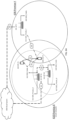
- FIG. 1 illustrates an example scenario of multiple wireless networks. Specifically, in the example there are two physically separate networks provided by 111 AP-X and 131 AP-Y at 110 Premise-X and 131 Premise-Y, respectively. Each AP provides both public and private Internet service.
- the public service 113 SSID_Public and 133 SSID_Public may be the same virtual networks among all networks, whereas the private SSID may be different for each physical network. For example, in FIG.
- Premise-X's private network's SSID is 112 "SSID_Private_X”
- 130 Premise-Y's private network's SSID is 132 "SSID_Private_Y.”
- various devices may belong to a network provided by an AP.
- 111 AP-X may "own” a TV 114 STA-X1 and/or a laptop 115 STA-X2 and be connected to the 112 SSID_Private_X, where 131 AP-Y may "own” a tablet 135 STA-Y2 and a laptop 136 STA-Y3 connected to 132 SSID_Private_Y, and also "own” 134 smart phone STA-Y1 even though it is currently connected to 113 SSID_Public of 111 AP-X.
- the customers of each premise may have subscribed for public and private Internet service from the ISP.
- a client device of one of the customers that is located outside the coverage of its own private network but within the coverage of another network that offers public Internet service, can gain access to the Internet through the SSID_Public virtual network.
- 134 STA-Y1 accesses the Internet through 113 SSID_Public when it is located within the coverage of 110 Premise-X.
- a virtual public network such as 113 SSID_Public or 133 SSID_Public, may limit Internet usage per client device, or it may share a small fraction of the total bandwidth, whereas a virtual private network, such as 112 SSID_Private_X and 132 SSID_Private_Y, may provide higher bandwidth and unlimited Internet access for each client device.
- a client such as smart phone 134 STA-Y1
- a client such as smart phone 134 STA-Y1
- 113 SSID_Public while outside of its private network 132 SSID_Private_Y may stay at a public SSID (i.e., 133 SSID_Public) even when it returns to the vicinity of its own private network 132 SSID_Private_Y.
- the decision as to which SSID to associate with may be controlled solely by the client, and the client may not employ reliable logic that can differentiate the QoS offered by different SSIDs, before establishing Link Layer connectivity (i.e., before association).
- Clients may employ SSID preference lists and initiate association to the first SSID in the list then if they cannot establish connection with the first SSID in the list, they try to associate with the second SSID in the list, and so on.
- a client may keep the last associated SSID on the top of the list.
- clients may favor SSIDs with the higher RSSI among the SSIDs they have the credentials for; however, if an SSID_Public and SSID_Private are on the same physical band, such as the 5 GHz band, then the AP's RSSI observed by the client may be the same for both SSIDs and the client may not favor one of the SSIDs based on its RSSI.
- a client may choose to connect with the last SSID it has associated with, choose to connect with the SSID it identifies first, or choose the SSID to connect to in a random fashion. In this example, the issue that a STA may not be connected to the preferred network/AP still needs to be addressed.
- SSID_Public SSID_Public
- AP-X and AP-Y are different access points that are spatially separated, possibly located in different customer premises.
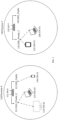
- FIG. 2A illustrates an example scenario similar to FIG. 1 with two different and spatially distributed Wi-Fi networks of 210 Premise-X and 230 Premise-Y.
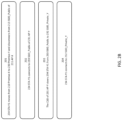
- FIG. 2B illustrates a flow chart of an example process to be carried out in the scenario of FIG. 2A .
- Each Wi-Fi network of 211 AP-X and 231 AP-Y provides a public virtual Wi-Fi network named 213 SSID_Public and 233 SSID_Public, respectively, as well as a separate private virtual Wi-Fi network named 212 SSID_Private_X and 232 SSID_Private_Y.
- 234 STA-Y1 belongs to 230 Premise-Y in that 234 STA-Y1 possesses the security credentials to access 232 SSID_Private_Y. Also, 234 STA-Y1 possesses the security credentials to access any "SSID_Public" of any network.
- 234 STA-Y1 Once 234 STA-Y1 goes out of the coverage of its own Wi-Fi network of 230 Premise-Y, it connects to the closest Wi-Fi network that provides public access Internet through "SSID_Public.” Specifically, 234 STA-Y1 may begin at 201 where it is located at 210 Premise-X and has a connection with 213 SSID_Public of 211 AP-X, and in doing so it gains access to the Internet while being located away from 230 Premise-Y where it belongs.
- the 234 STA-Y1 may travel at 202 back to 230 Premise-Y, where it may connect with 233 SSID_Public of 231 AP-Y since the public SSID was the name of the last successful connection at 211 AP-X. If 234 STA-Y1 establishes a connection with 233 SSID_Public in a situation where the public virtual network has service limitations, it would not be able to utilize the full extent of its own network's resources as would be provided if it connected to 232 SSID_Private_Y.
- 231 AP-Y may have a Client Steering Daemon (CSD) that manages client connections and roaming of various stations/client devices.
- CSDs running on different APs that reside in the same network may communicate with each other using the network communication infrastructure.
- an AP that does not employ a CSD may be considered a Legacy-AP.
- 111 AP-X and 131 AP-Y of FIG. 1 may be Legacy-APs.
- 231 AP-Y and 211 AP-X may employ a CSD.
- the 234 STA-Y1 may have secure credentials for a private network, such as 232 SSID_Private_Y, and my designate this network as the STA_Owner.
- the STA shall have established a connection with the private network at least once within a predetermined but configurable period of time.
- 231 AP-Y is designated as the STA_Owner of 234 STA_Y1, if 234 STA_Y1 has established connection with 232 SSID_Private_Y of 231 AP-Y at least once during the last 7 days.
- a CSD running on an AP may periodically check its interfaces if a client, which it is the STA_Owner of, is associated with its own public SSID. If the CSD detects a STA that satisfies this condition, it may steer the STA to the private network so that the STA can make use of the resources dedicated to the private network. For example, at 203 when it is detected that 234 STA-Y1 is on 233 SSID_Public, then the CSD of 231 AP-Y may steer 234 STA-Y1 to a different logical interface (i.e., preferred SSID 232 SSID_Private_Y).
- Steering at 204 may require that 234 STA-Y1 is first deauthenticated and blacklisted on every interface where SSID_Public is broadcasted on 230 Premise-Y so that 234 STA-Y1 disconnects and cannot reconnect to the public SSIDs (e.g., SSID_Public interfaces such as 213 SSID_Public and 233 SSID_Public), and then the 234 STA-Y1 may connect to 232 SSID_Private_Y.
- SSID_Public interfaces such as 213 SSID_Public and 233 SSID_Public
- Steering as discussed herein may mean that the client in question is deauthenticated from a particular interface of an AP it is currently connected to and at the same time blacklisted on all interfaces of the AP(s) that are not preferred, at which point the client may have no other option but to associate with the preferred network to which it belongs.
- the CSD may carry out cost evaluation in order to select the interface that provides the least end-to-end cost for a given STA.
- a STA may be steered to the interface that provides the minimum cost.
- a CSD may make use of further metrics for deciding whether to steer a client from a public SSID to a private SSID. For example, a CSD may choose to keep a client/STA in a public network based on one or more conditions, such as if the CSD concludes that the STA is so far away from an AP that steering it to a private network may reduce the private network's own capacity, and/or the public network is underutilized where as a private network is over utilized so the STA would be better off with the public network.
- the CSD may make use of RSSI, physical rate, and packet error rate (PER) information, whereas for the condition where the public network is underutilized the CSD may take into account of traffic (load) information on the Wi-Fi interfaces of the public and private networks. Note that all decision metrics listed herein may be used in combination or selectively in order to come to a determination.
- CSDs running on different APs that reside in different networks may require another means of communication, such as a Cloud Server accessed directly or via the Internet.
- the Cloud Server may be a remote server that stores client information, and gives responses to the queries of CSDs.
- the Cloud Server may direct an AP to carry out specific actions, such as deauthenticating a client, by using standard protocols such as TR-69, for example.
- An AP may not need to employ a CSD to communicate with a Cloud Server.
- Legacy-APs may communicate with a Cloud Server through any supported protocol, such as TR-69.
- Legacy-APs since they do not employ a CSD, may not push client information specifically gathered by the CSD to a Cloud Server, but a Cloud Server may make use of protocols such as TR-69 to manage Legacy-APs to run supported commands.
- STA_Owner information may be kept track of at a Cloud Server, and this information may be used by a CSD in client steering decisions.
- a Cloud Server may be used in any scenario or embodiment even though it may not be explicitly shown or referenced in all cases.
- a Cloud Server can request Legacy-APs to carry out certain actions, such as deauthenticating a STA, when it recognizes that a STA connected to the Legacy-AP through the public SSID is in fact in the vicinity of its STA_Owner.
- the STA_Owner may need to employ the CSD in order to detect the presence of the STA, and inform the Cloud Server about the detection.
- a Basic Service Set Identifier may be used to identify the STA_Owner. For example, if a STA_Z has established a connection with an AP-Z private network interface, then the BSSID (i.e., the MAC address) of this interface may be identified as the STA_Owner of the STA_Z.
- the BSSID i.e., the MAC address
- a client may have no STA_Owners, in which case the client would associate only with public networks.
- a client may have more than one STA_Owner, in which case it would be able to associate with more than one private network.
- Unassociated-client-monitoring functionality may help a CSD detect the presence of clients that are currently not associated with any interfaces of their STA_Owner.
- the CSD may keep track of every client that has associated with its private network with a timestamp of the last association and use this information to identify its unassociated clients, then the clients which are not currently associated with any interfaces of the STA_Owner may be regarded as unassociated clients.
- the CSD may command the AP to perform unassociated-client-monitoring by specifying when to monitor for a STA(s) and which STA(s) to monitor for.
- Table 1 is an example log created by a CSD as part of an unassociated-client-monitoring functionality.
- a CSD running on an AP may trigger periodic scans in every Wi-Fi channel available. For example, if the AP is operating in channel 100 of the 5 GHz band, it may periodically go to every other channel in the 5 GHz band for a very short duration of time, called dwell time, and listen to the channel. For purposes of this example, it may be assumed that the AP has a single Wi-Fi radio that operates in the 5 GHz band, and thus, it does not operate in more than one channel at the same time, however, the concepts disclosed herein may be applied to scenarios involving MIMO.
- the dwell time may be selected such that it does not cause traffic disruption in the operating channel.
- the AP may listen to Wi-Fi packets in both its operating channel and other non-operating channels (through scans), and try to identify any packets originating from its unassociated clients.
- a CSD may filter the scan results of the AP to identify any transmission from unassociated clients. If the CSD identifies a packet transmission with a MAC address to be a MAC address of an unassociated client, it logs the MAC address of the detected client/STA, the measured signal strength in terms of RSSI, the channel in which the observation is made, the BSSID (MAC) address present in the captured packet (as discussed herein, the term packet is used to denote a link layer frame), and/or the timestamp of the time at detection. In this way, the CSD may identify clients that are within range but are not currently connected to their preferred interface and/or network and/or SSID.
- the CSD may send this information to a Cloud Server right after the detection, or in other instances, it may send this information within its periodic messages to the Cloud Server. If periodic messages are employed, there may be a delay (i.e., the time between the actual time of detection and a Cloud Server's awareness of the event) correlated with the message transmission period.
- a CSD may check the Cloud Server to determine if any of the clients that are associated with its public network have been detected within the vicinity of its STA_Owner; also, the CSD may carry out this action periodically (i.e., the CSD periodically queries the Cloud Server for information) or based on some event (e.g., a new STA joining).
- the Cloud Server may send a message to the CSD that runs on the AP where the STA is currently associated, since the Cloud Server may know which BSSID the STA is currently associated with, and it may directly inform the CSD running on the AP where the STA is associated with that the STA's STA_Owner is in the vicinity of the STA, thereby commanding/causing steering of the AP currently associated with the STA to the AP of the STA_Owner.
- the steering may be between virtual networks, networks, specific SSIDs, APs of the same network (i.e., mesh networks) and any combination thereof.
- an AP may operate two virtual networks, an SSID_Private and an SSID_Public.
- a STA may be connected to SSID_Public, but the STA may have a better connection (e.g., unrestricted bandwidth) if the STA was connected to the SSID_Private.
- the AP may send the cloud server information that it monitored/logged based on the connections of the AP and observations made based on monitoring performed by the AP, and the cloud server may direct the AP to steer the STA to SSID_Private based on the received information.
- the AP may make a determination on its own, based on monitored information and/or preconfigured settings, that the STA should be connected to SSID_Private, and the AP may proceed to steer the STA from SSID_Public to SSID_Private.
- steering between virtual networks may include the AP disassociating the STA from SSID_Public, blacklisting the STA on SSID_Public, and initiating a connection through SSID_Private.
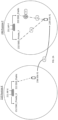
- FIG. 3A illustrates an example scenario similar to FIG. 2A , except the physically separated networks do in fact fall into the coverage range of one another.
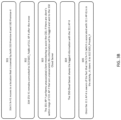
- FIG. 3B illustrates a flow chart of an example process related to the scenario of FIG. 3A .
- 311 AP-X and 331 AP-Y may be connected to a 350 Cloud Server, and 311 AP-X's coverage and 331 AP-Y's coverage may overlap.
- the 334 STA-Y1 may move 301 to a new location where 311 AP-X's and 331 AP-Y's coverage overlaps, and as a result, 334 STA-Y1 may remain connected 302 with 313 SSID_Public instead of transferring over to some network provided by 331 AP-Y; thus, even though 334 STA-Y1 comes back at 301 to the vicinity of its STA_Owner, (i.e., 330 Premise-Y), it still stays connected to 313 SSID_Public of 311 AP-X. In order to resolve this situation, a CSD of 331 AP-Y may employ unassociated-client-monitoring functionality.
- unassociated-client-monitoring may be performed, and the CSD of 331 AP-Y may send logged information from the results of the unassociated-client-monitoring to a 350 Cloud Server.
- the CSD of 311 AP-X may initiate steering at 305 of 334 STA-Y1 to the private network of 331 AP-Y, 332 SSID_Private_Y.
- FIG. 4A illustrates an example scenario similar to FIG. 3A , except 411 AP-X may be a legacy AP that does not employ a CSD.
- FIG. 4B illustrates a flow chart of an example process related to the scenario of FIG. 4A .
- 411 AP-X's coverage and 431 AP-Y's coverage overlap.
- 434 STA-Y1 is associated with the public Internet service provided by the Legacy 411 AP-X, 413 SSID_Public.
- 434 STA-Y1 comes back to the vicinity of its STA_Owner, (i.e., 430 Premise-Y), but still stays connected at 402 to 413 SSID_Public of 411 AP-X.
- the CSD running on 431 AP-Y may detect the presence of 434 STA-Y1 through its unassociated-client-monitor function, as discussed herein. Note that the CSD of 431 AP-Y knows that 434 STA-Y1 originally belonged to its private network.
- the CSD running on 431 AP-Y sends the information about the detected 434 STA-Y1 to the 450 Cloud Server at 403. Moreover, based on 434 STA-Y1's observed RSSI level, the CSD may prefer 434 STA-Y1 to connect to its 432 SSID_Public or one or more interfaces for 433 SSID_Private_Y if there are multiple interfaces defined for 433 SSID_Private_Y. Depending on its preference, the CSD of 431 AP-Y may blacklist 434 STA-Y1 on all its SSIDs (i.e., logical interfaces), except for the preferred logical interface (i.e., 433 SSID_Private_Y).
- the 450 Cloud Server Upon receiving the information from the CSD of 431 AP-Y, the 450 Cloud Server sends a deauthenticate 434 STA-Y1 command to Legacy 411 AP-X at 404. Since 431 AP-Y has blacklisted 434 STA-Y1 on all interfaces except for a preferred interface, once the 434 STA-Y1 is deauthenticated from 413 SSID_Public of Legacy 411 AP-X, the 434 STA-Y1 will associate with the preferred and only available interface available at 405 (i.e., it will associate with 432 SSID_Private_Y since it is not blacklisted).
- each network comprises only one Wi-Fi GW or AP
- this is not meant to be a limitation but rather a simplified explanation to demonstrate the disclosed concepts.
- These same concepts may also be applied to use cases where each network comprises multiple Wi-Fi GWs or APs.
- FIG. 5A illustrates a scenario similar to FIG. 3A in that there may be two networks that overlap that utilize CSDs connected to a Cloud Server, except one network may have multiple APs, 511 AP-X1 and 516 AP-X2, that form a mesh network at 510 Premise-X.
- a CSD may run on each mesh AP, and each mesh AP may communicate with each other.
- a CSD running on a mesh AP may communicate with a Cloud Server.
- FIG. 5B illustrates a flow chart of an example process related to the scenario of FIG. 5A .
- 534 STA-Y1 may move 501 to a location that is covered by both 510 Premise-X's network and 530 Premise-Y's network. Additionally, 534 STA-Y1's new location may be covered by both APs of 510 Premise-X's network, 511 AP-X1 and 516 AP-X2.
- At 502 after the move it may maintain its connection to 513 SSID_Public even though it is within range of its STA_Owner, and a preferred interface is available at 532 SSID_Private_Y, potentially offering a better connection.
- unassociated-client-monitoring may be performed and the CSD of 531 AP-Y may send logged information from the results of the unassociated-client-monitoring to a 550 Cloud Server.
- the CSDs of the mesh network of 510 Premise-X may not use a central controller to gather/send measured information to the 550 Cloud Server. Each CSD may individually send/gather information.
- the CSD running on 511 AP-X1 may learn that 534 STA-Y1 is in close vicinity of its STA_Owner 531 AP-Y, either through checking with or being informed by the 550 Cloud Server as discussed herein. Further, the CSD running on 516 AP-X2 may also learn that 534 STA-Y1 is in close vicinity of its STA_Owner 531 AP-Y.
- the CSD of 511 AP-X1 and the CSD of 516 AP-X2 may initiate steering of 534 STA-Y1; in this case the steering may include each AP blacklisting all of the SSID_Public interfaces of the mesh network of 510 Premise-X as well as 530 Premise-Y; thereafter, 534 STA-Y1 is associated with the preferred network/interface of 531 AP-Y, 532 SSID_Private_Y.
- any one specific client, or a group of clients may be steered to any one interface, or group of interfaces, using the techniques and concepts disclosed herein.
- FIG. 6A illustrates a scenario similar to FIG. 5A , except a mesh network at 610 Premise-X may have a central controller. Also, in this scenario a CSD may run on a central AP which in turn controls/commands/receives/sends information to each mesh AP.
- FIG. 6B illustrates a flow chart of an example process related to the scenario of FIG. 6A .
- 634 STA-Y1 may move 601 to a location that is covered by both 610 Premise-X's network and 630 Premise-Y's network. Additionally, 634 STA-Y1's new location may be covered by both APs of 610 Premise-X's network, 611 AP-X1 and 616 AP-X2.
- 634 STA-Y1's new location may be covered by both APs of 610 Premise-X's network, 611 AP-X1 and 616 AP-X2.
- At 602 after the move it may maintain its connection to 613 SSID_Public even though it is within range of its STA_Owner, and a preferred interface is available at 632 SSID_Private_Y, potentially offering a better connection.
- unassociated-client-monitoring may be performed and the CSD of 631 AP-Y may send logged information from the results of the unassociated-client-monitoring to a 650 Cloud Server.
- the CSDs of the mesh network of 610 Premise-X may use a central controller 611 AP-X1 to gather/send measured information to the 650 Cloud Server on behalf of all of the APs of the meshed network.
- the CSD running on 611 AP-X1 may learn that 634 STA-Y1 is in close vicinity of its STA_Owner 631 AP-Y, either through checking with or being informed by the 650 Cloud Server as discussed herein, and then communicate this information to 616 AP-X2.
- the CSD of 611 AP-X1 steers 634 STA-Y1 by deauthenticating 634 STA-Y1 and then blacklisting 634 STA-Y1 on all of the SSID_Public interfaces of the mesh network of 610 Premise-X, including sending a command to 631 AP-X2, as well as 630 Premise-Y. Thereafter, 634 STA-Y1 is associated with the preferred network/interface of 631 AP-Y, 632 SSID_Private_Y.
- FIG. 7 illustrates an embodiment where a client may be steered within a single network, among multiple logical interfaces each of which is identified by a different SSID.
- end-to-end cost calculation carried out by a CSD of the AP where the STA is associated, for deciding on where to steer the STA may take into account additional cost parameters, such as the priority of a logical interface (i.e., SSID).
- the 730 Premise-Y may have a mesh network with 2 APs, 771 AP-Y1 and 772 AP-Y2, where each AP may have four different logical interfaces with different SSIDs; 771 AP-Y1 may have 741 SSID_1, 742 SSID_2, 743 SSID_3, and 744 SSID_4, and 772 AP-Y2 may have 745 SSID_1, 746 SSID_2, 747 SSID_3, and 748 SSID_4.
- An SSID prioritization policy may be such that for each AP, SSID_1 is the highest priority, SSID_2 is the second, SSID_3 is the third, and SSID_4 is the fourth.
- SSID_1 may have precedence over SSID_2 depending on the calculated costs. For example, when 734 STA-Y1 moves 701 within range of 730 Premise-Y the end-to-end cost for the 734 STA-Y1 may be AP1_C1 if it was connected to 741 SSID_1 of 771 AP-Y1, whereas it may be AP2_C1 if it was connected to 745 SSID_1 of 772 AP-Y2.
- the end-to-end cost for the 734 STA-Y1 may be AP1_C2 if it was connected to 742 SSID_2 of 771 AP-Y1, and it may be AP2_C2 if it was connected to 746 SSID_2 of 772 AP-Y2.
- the policy that governs the decision of where to steer a client may be such that (1) if the alternatives have the same priority levels (e.g., AP1_C1 and AP2_C1) then a the client is steered to the one with the lowest cost; (ii) if the alternatives have different priority levels (e.g., AP1_C1 and AP2_C2 or AP1_C1 and AP1_C2) then the client is steered to the one that attains the highest priority while resulting in no more than N% (e.g., 10%) higher cost for each priority level between the alternatives.
- N% e.g. 10%
- AP1_C1 1400
- AP2_C3 1000
- AP1_C1 40% higher than AP2_C3.
- Client-based SSID priorities may be assigned, in addition to or in alternative to the concepts discussed herein. For example, there may be a first wireless client STA-1 for which the logical interface SSID_1 may have the highest priority, and there may be a second wireless client STA-2 for which the logical interface SSID_2 may have higher priority than logical interface SSID_1; in this way, a selected set of clients may be kept at designated SSIDs. Further, a set of clients that demand high QoS may be kept at one SSID that is allocated with the highest network resources, whereas another set of clients that has low QoS requirements may be kept at another SSID that has access to only limited network resources.
- any element as described herein may carry out the functions described with regard to another element (e.g., an AP may carry out the functions of a Cloud Server, and vice versa).
- the methods described herein may be implemented in a computer program, software, or firmware incorporated in a computer-readable medium for execution by a computer or processor in conjunction with a communications interface (e.g., receiver, transmitter, wireless interface, wired interface, transceiver, and the like).
- Examples of computer-readable media include electronic signals (transmitted over wired or wireless connections) and computer-readable storage media.
- Examples of computer-readable storage media include, but are not limited to, a read only memory (ROM), a random access memory (RAM), a register, cache memory, semiconductor memory devices, magnetic media such as internal hard disks and removable disks, magneto-optical media, and optical media such as CD-ROM disks, and digital versatile disks (DVDs).
- a processor in association with software may be used in conjunction with a communications interface for use in a GW, STA, AP, terminal, base station, RNC, computer, laptop, tablet, smartphone, server, or any host computer.
Landscapes
- Engineering & Computer Science (AREA)
- Computer Networks & Wireless Communication (AREA)
- Signal Processing (AREA)
- Computer Security & Cryptography (AREA)
- Mobile Radio Communication Systems (AREA)
Applications Claiming Priority (3)
| Application Number | Priority Date | Filing Date | Title |
|---|---|---|---|
| US201762500297P | 2017-05-02 | 2017-05-02 | |
| PCT/IB2018/000581 WO2018203136A1 (en) | 2017-05-02 | 2018-05-02 | System and method for connection and hand-over management across networks and ssids |
| EP18743570.6A EP3619970B1 (de) | 2017-05-02 | 2018-05-02 | System und verfahren zur verbindungs- und weiterreichungsverwaltung über netzwerke und ssid |
Related Parent Applications (1)
| Application Number | Title | Priority Date | Filing Date |
|---|---|---|---|
| EP18743570.6A Division EP3619970B1 (de) | 2017-05-02 | 2018-05-02 | System und verfahren zur verbindungs- und weiterreichungsverwaltung über netzwerke und ssid |
Publications (2)
| Publication Number | Publication Date |
|---|---|
| EP4380227A2 true EP4380227A2 (de) | 2024-06-05 |
| EP4380227A3 EP4380227A3 (de) | 2024-06-12 |
Family
ID=62981267
Family Applications (2)
| Application Number | Title | Priority Date | Filing Date |
|---|---|---|---|
| EP23203560.0A Pending EP4380227A3 (de) | 2017-05-02 | 2018-05-02 | System und verfahren zur verbindungs- und weiterreichungsverwaltung über netzwerke und ssids hinweg |
| EP18743570.6A Active EP3619970B1 (de) | 2017-05-02 | 2018-05-02 | System und verfahren zur verbindungs- und weiterreichungsverwaltung über netzwerke und ssid |
Family Applications After (1)
| Application Number | Title | Priority Date | Filing Date |
|---|---|---|---|
| EP18743570.6A Active EP3619970B1 (de) | 2017-05-02 | 2018-05-02 | System und verfahren zur verbindungs- und weiterreichungsverwaltung über netzwerke und ssid |
Country Status (4)
| Country | Link |
|---|---|
| US (3) | US10484923B2 (de) |
| EP (2) | EP4380227A3 (de) |
| CN (2) | CN114828115B (de) |
| WO (1) | WO2018203136A1 (de) |
Families Citing this family (9)
| Publication number | Priority date | Publication date | Assignee | Title |
|---|---|---|---|---|
| CN114189857B (zh) | 2017-05-11 | 2023-11-28 | 无线通信与技术公司 | 网关及由网关实施的方法 |
| US10362547B2 (en) * | 2017-05-17 | 2019-07-23 | Intel Corporation | Seamless and reliable chain of custody transfer over low power wireless protocol |
| US20200029246A1 (en) * | 2018-07-20 | 2020-01-23 | Hewlett Packard Enterprise Development Lp | Separation of radio chains between mission-critical devices and enterprise clients |
| US10959144B2 (en) * | 2018-11-08 | 2021-03-23 | Arris Enterprises Llc | Wireless client device detection and steering on a network with multiple access points |
| US10893460B1 (en) * | 2019-10-30 | 2021-01-12 | Xerox Corporation | Method and apparatus to limit wireless connectivity roaming of multi-function devices |
| CN113596864B (zh) * | 2020-04-30 | 2023-08-22 | 华为技术有限公司 | 终端漫游引导方法、装置、设备以及计算机可读存储介质 |
| CN116419230A (zh) * | 2022-01-05 | 2023-07-11 | 西安西电捷通无线网络通信股份有限公司 | 一种网络接入方法及装置 |
| US12238819B2 (en) * | 2022-06-02 | 2025-02-25 | Google Llc | System and method for wireless roaming |
| JP2024139499A (ja) * | 2023-03-27 | 2024-10-09 | 株式会社デンソー | ログ管理装置、電子制御システム、ログ管理方法、及びログ管理プログラム |
Family Cites Families (37)
| Publication number | Priority date | Publication date | Assignee | Title |
|---|---|---|---|---|
| JP2005532759A (ja) * | 2002-07-10 | 2005-10-27 | コーニンクレッカ フィリップス エレクトロニクス エヌ ヴィ | 複数のネットワークからのインタフェースの選択 |
| US7724740B1 (en) * | 2002-08-27 | 2010-05-25 | 3Com Corporation | Computer system and network interface supporting class of service queues |
| AU2003265860B2 (en) * | 2002-10-03 | 2009-04-30 | Cisco Technology, Inc. | Method for a wireless station to determine network metrics prior to associating with an access point |
| US20060078123A1 (en) * | 2003-01-09 | 2006-04-13 | Guillaume Bichot | Method and apparatus for banding multiple access points |
| US20070115899A1 (en) * | 2005-11-22 | 2007-05-24 | Shlomo Ovadia | Method, apparatus and system architecture for performing handovers between heterogeneous wireless networks |
| US7974249B2 (en) * | 2006-03-01 | 2011-07-05 | Dell Products L.P. | Virtual access point for configuration of a LAN |
| CN101141782B (zh) * | 2006-09-07 | 2012-08-29 | 日电(中国)有限公司 | 接入点辅助快速越区切换方法、设备和系统 |
| US20100041387A1 (en) * | 2008-08-15 | 2010-02-18 | Amit Khetawat | Method and Apparatus for Inter Home Node B Cell Update Handling |
| CN101931954B (zh) * | 2009-06-22 | 2013-02-27 | 南京中兴软件有限责任公司 | 一种基于业务区分改进无线局域网中实时业务QoS的方法 |
| US8620322B2 (en) * | 2010-04-14 | 2013-12-31 | Clearwire Ip Holdings Llc | Method and system of handover based on channel quality and loading |
| US8699456B2 (en) | 2010-10-26 | 2014-04-15 | Blackberry Limited | Methods and apparatus for use in improving network coverage for voice or data calls |
| US8762668B2 (en) * | 2010-11-18 | 2014-06-24 | Hitachi, Ltd. | Multipath switching over multiple storage systems |
| CN102421166A (zh) * | 2011-11-21 | 2012-04-18 | 华为技术有限公司 | 一种发现无线接入点的方法、装置与系统 |
| US9008045B2 (en) * | 2012-04-12 | 2015-04-14 | Time Warner Cable Enterprises Llc | Handoffs between access points in a Wi-Fi environment |
| KR101555495B1 (ko) * | 2012-07-12 | 2015-09-24 | 삼성에스디에스 주식회사 | 라디오 주파수 대역을 고려한 무선네트워크 접속 장치 및 방법 |
| EP2893692A4 (de) * | 2012-09-05 | 2016-06-08 | Nec Corp | Endgerät für drahtlose kommunikation, kommunikationsverfahren, programm, informationsverarbeitungsvorrichtung und verteilungsserver |
| CN104053199B (zh) * | 2013-03-13 | 2018-05-15 | 中国移动通信集团设计院有限公司 | 在无线局域网间切换的方法、切换管理装置和无线网络 |
| US20140337950A1 (en) * | 2013-05-07 | 2014-11-13 | Futurewei Technologies, Inc. | Method and Apparatus for Secure Communications in a Wireless Network |
| CN104380809B (zh) * | 2013-06-05 | 2018-08-14 | 华为技术有限公司 | 接入点的选择方法及装置 |
| US9590916B2 (en) * | 2013-09-04 | 2017-03-07 | Aruba Networks, Inc. | Method and system for dynamically prioritizing user connections on network |
| CN103874008A (zh) * | 2014-03-24 | 2014-06-18 | 中国科学院计算技术研究所 | 一种Femtocell架构下脱网自组网通信系统、方法及构建方法 |
| KR102239729B1 (ko) * | 2014-04-07 | 2021-04-13 | 인터디지털 씨이 페이튼트 홀딩스 | 이동 통신 네트워크에서 핸드오버를 제어하는 방법과 이러한 방법을 구현하는 장치 및 시스템 |
| EP3985942B1 (de) | 2014-06-23 | 2023-06-07 | Airties S.A.S. | System und verfahren zur auswahl einer optimalen kommunikationsroute in einem drahtlosnetzwerk |
| CN104202831A (zh) * | 2014-08-26 | 2014-12-10 | 南京熊猫电子股份有限公司 | 一种设备连接无线ap的系统和方法 |
| CN104602326B (zh) * | 2014-12-25 | 2018-12-11 | 清华大学 | 一种基于虚拟接入点实现用户服务细分的方法和装置 |
| US9538446B1 (en) * | 2015-07-29 | 2017-01-03 | Fortinet, Inc | Directed station roaming in cloud managed Wi-Fi network |
| CN104581888B (zh) * | 2015-02-05 | 2018-08-28 | 张会波 | 基于无线接入点的上网引导系统及方法 |
| US9913193B2 (en) * | 2015-02-20 | 2018-03-06 | Qualcomm Incorporated | Access point steering |
| US10034202B2 (en) * | 2015-05-15 | 2018-07-24 | Mediatek Inc. | Finer control of WLAN association for network-controlled LTE-WLAN internetworking |
| US20170111854A1 (en) * | 2015-10-15 | 2017-04-20 | Qualcomm Incorporated | Quality of service aware access point and device steering |
| US10327187B2 (en) * | 2015-12-04 | 2019-06-18 | Time Warner Cable Enterprises Llc | Apparatus and method for wireless network extensibility and enhancement |
| US9992723B2 (en) * | 2016-02-18 | 2018-06-05 | Qualcomm Incorporated | Techniques for handling data stall in WLAN |
| US11696216B2 (en) * | 2016-02-18 | 2023-07-04 | Comcast Cable Communications, Llc | SSID broadcast management to support priority of broadcast |
| US10708126B2 (en) * | 2016-03-18 | 2020-07-07 | Plume Design, Inc. | Cloud-based control of a Wi-Fi network |
| US10382552B2 (en) * | 2016-12-12 | 2019-08-13 | Verizon Patent And Licensing Inc. | User device ad-hoc distributed caching of content |
| US20180241450A1 (en) * | 2017-02-22 | 2018-08-23 | Qualcomm Incorporated | Access point controlled steering of wireless stations |
| US10159039B2 (en) * | 2017-04-19 | 2018-12-18 | Fortinet, Inc. | Steering wireless local area network (WLAN) clients |
-
2018
- 2018-05-02 CN CN202210276121.3A patent/CN114828115B/zh active Active
- 2018-05-02 EP EP23203560.0A patent/EP4380227A3/de active Pending
- 2018-05-02 US US15/969,474 patent/US10484923B2/en active Active
- 2018-05-02 EP EP18743570.6A patent/EP3619970B1/de active Active
- 2018-05-02 CN CN201880040779.6A patent/CN110771212B/zh active Active
- 2018-05-02 WO PCT/IB2018/000581 patent/WO2018203136A1/en not_active Ceased
-
2019
- 2019-11-12 US US16/681,377 patent/US11452022B2/en active Active
-
2022
- 2022-09-20 US US17/948,758 patent/US12550036B2/en active Active
Also Published As
| Publication number | Publication date |
|---|---|
| US11452022B2 (en) | 2022-09-20 |
| WO2018203136A1 (en) | 2018-11-08 |
| CN110771212A (zh) | 2020-02-07 |
| US20230076033A1 (en) | 2023-03-09 |
| CN110771212B (zh) | 2022-04-05 |
| US20200084687A1 (en) | 2020-03-12 |
| CN114828115B (zh) | 2024-01-16 |
| US20180324668A1 (en) | 2018-11-08 |
| EP3619970A1 (de) | 2020-03-11 |
| US12550036B2 (en) | 2026-02-10 |
| CN114828115A (zh) | 2022-07-29 |
| EP3619970B1 (de) | 2023-10-18 |
| US10484923B2 (en) | 2019-11-19 |
| EP4380227A3 (de) | 2024-06-12 |
| EP3619970C0 (de) | 2023-10-18 |
Similar Documents
| Publication | Publication Date | Title |
|---|---|---|
| US12550036B2 (en) | System and method for connection and hand-over management across networks and SSIDS | |
| US10368274B2 (en) | Method of controlling handover in mobile communication networks and apparatus and system implementing the method | |
| US9762389B2 (en) | Moderation of network and access point selection in an IEEE 802.11 communication system | |
| US11974218B2 (en) | Access network selection | |
| EP2792187B1 (de) | Anfrage-antwort-verfahren für drahtloses netzwerk | |
| EP2804422B1 (de) | Verkehrsentlastung an einem kleinen Zellzugriffspunkt | |
| EP3278627B1 (de) | Schnittstellenauswahl in einem drahtlosrouter | |
| EP3603211B1 (de) | Netzwerkentdeckung | |
| US10356706B2 (en) | Interface selection | |
| US11102696B1 (en) | Systems and methods for handover with dynamic quality of service (QoS) in a 5th generation (5G) network | |
| US20200107255A1 (en) | Access network selection | |
| KR20190135518A (ko) | 액세스 카테고리 및 확립 원인 | |
| KR20150026759A (ko) | 무선 랜에서 다중 연결을 지원하는 방법 및 장치 | |
| US20220312178A1 (en) | Sidelink relay selection | |
| US12267909B2 (en) | User equipment operating as relay via a sidelink connection | |
| US11617117B2 (en) | Methods and apparatuses for performing cell (re)selection in non-public network | |
| KR102482607B1 (ko) | 셀룰러 네트워크의 기지국과 함께 사용자 장비를 동작시키기 위한 방법 | |
| WO2013139289A1 (zh) | 通信系统中接入点间的干扰协调方法以及接入点设备 | |
| WO2023007020A1 (en) | Cell selecting technique | |
| US20250392404A1 (en) | Jamming mitigation in cbrs network | |
| HK1204197B (en) | Offloading at a small cell access point |
Legal Events
| Date | Code | Title | Description |
|---|---|---|---|
| PUAI | Public reference made under article 153(3) epc to a published international application that has entered the european phase |
Free format text: ORIGINAL CODE: 0009012 |
|
| REG | Reference to a national code |
Ref country code: DE Ref legal event code: R079 Free format text: PREVIOUS MAIN CLASS: H04W0028020000 Ipc: H04W0048200000 |
|
| STAA | Information on the status of an ep patent application or granted ep patent |
Free format text: STATUS: REQUEST FOR EXAMINATION WAS MADE |
|
| PUAL | Search report despatched |
Free format text: ORIGINAL CODE: 0009013 |
|
| 17P | Request for examination filed |
Effective date: 20231013 |
|
| AC | Divisional application: reference to earlier application |
Ref document number: 3619970 Country of ref document: EP Kind code of ref document: P |
|
| AK | Designated contracting states |
Kind code of ref document: A2 Designated state(s): AL AT BE BG CH CY CZ DE DK EE ES FI FR GB GR HR HU IE IS IT LI LT LU LV MC MK MT NL NO PL PT RO RS SE SI SK SM TR |
|
| AK | Designated contracting states |
Kind code of ref document: A3 Designated state(s): AL AT BE BG CH CY CZ DE DK EE ES FI FR GB GR HR HU IE IS IT LI LT LU LV MC MK MT NL NO PL PT RO RS SE SI SK SM TR |
|
| RIC1 | Information provided on ipc code assigned before grant |
Ipc: H04W 28/02 20090101ALI20240503BHEP Ipc: H04W 28/08 20230101ALI20240503BHEP Ipc: H04W 48/20 20090101AFI20240503BHEP |