EP4383256A2 - Geräuschunterdrückung mittels maschinenlernen - Google Patents
Geräuschunterdrückung mittels maschinenlernen Download PDFInfo
- Publication number
- EP4383256A2 EP4383256A2 EP24173039.9A EP24173039A EP4383256A2 EP 4383256 A2 EP4383256 A2 EP 4383256A2 EP 24173039 A EP24173039 A EP 24173039A EP 4383256 A2 EP4383256 A2 EP 4383256A2
- Authority
- EP
- European Patent Office
- Prior art keywords
- features
- band
- audio signal
- gains
- computer
- Prior art date
- Legal status (The legal status is an assumption and is not a legal conclusion. Google has not performed a legal analysis and makes no representation as to the accuracy of the status listed.)
- Pending
Links
Images

Classifications
-
- G—PHYSICS
- G10—MUSICAL INSTRUMENTS; ACOUSTICS
- G10L—SPEECH ANALYSIS TECHNIQUES OR SPEECH SYNTHESIS; SPEECH RECOGNITION; SPEECH OR VOICE PROCESSING TECHNIQUES; SPEECH OR AUDIO CODING OR DECODING
- G10L21/00—Speech or voice signal processing techniques to produce another audible or non-audible signal, e.g. visual or tactile, in order to modify its quality or its intelligibility
- G10L21/02—Speech enhancement, e.g. noise reduction or echo cancellation
- G10L21/0316—Speech enhancement, e.g. noise reduction or echo cancellation by changing the amplitude
- G10L21/0364—Speech enhancement, e.g. noise reduction or echo cancellation by changing the amplitude for improving intelligibility
-
- G—PHYSICS
- G10—MUSICAL INSTRUMENTS; ACOUSTICS
- G10L—SPEECH ANALYSIS TECHNIQUES OR SPEECH SYNTHESIS; SPEECH RECOGNITION; SPEECH OR VOICE PROCESSING TECHNIQUES; SPEECH OR AUDIO CODING OR DECODING
- G10L21/00—Speech or voice signal processing techniques to produce another audible or non-audible signal, e.g. visual or tactile, in order to modify its quality or its intelligibility
- G10L21/02—Speech enhancement, e.g. noise reduction or echo cancellation
- G10L21/0208—Noise filtering
-
- G—PHYSICS
- G10—MUSICAL INSTRUMENTS; ACOUSTICS
- G10L—SPEECH ANALYSIS TECHNIQUES OR SPEECH SYNTHESIS; SPEECH RECOGNITION; SPEECH OR VOICE PROCESSING TECHNIQUES; SPEECH OR AUDIO CODING OR DECODING
- G10L21/00—Speech or voice signal processing techniques to produce another audible or non-audible signal, e.g. visual or tactile, in order to modify its quality or its intelligibility
- G10L21/02—Speech enhancement, e.g. noise reduction or echo cancellation
- G10L21/0208—Noise filtering
- G10L21/0216—Noise filtering characterised by the method used for estimating noise
- G10L21/0232—Processing in the frequency domain
-
- G—PHYSICS
- G10—MUSICAL INSTRUMENTS; ACOUSTICS
- G10L—SPEECH ANALYSIS TECHNIQUES OR SPEECH SYNTHESIS; SPEECH RECOGNITION; SPEECH OR VOICE PROCESSING TECHNIQUES; SPEECH OR AUDIO CODING OR DECODING
- G10L21/00—Speech or voice signal processing techniques to produce another audible or non-audible signal, e.g. visual or tactile, in order to modify its quality or its intelligibility
- G10L21/02—Speech enhancement, e.g. noise reduction or echo cancellation
- G10L21/0316—Speech enhancement, e.g. noise reduction or echo cancellation by changing the amplitude
-
- G—PHYSICS
- G10—MUSICAL INSTRUMENTS; ACOUSTICS
- G10L—SPEECH ANALYSIS TECHNIQUES OR SPEECH SYNTHESIS; SPEECH RECOGNITION; SPEECH OR VOICE PROCESSING TECHNIQUES; SPEECH OR AUDIO CODING OR DECODING
- G10L21/00—Speech or voice signal processing techniques to produce another audible or non-audible signal, e.g. visual or tactile, in order to modify its quality or its intelligibility
- G10L21/02—Speech enhancement, e.g. noise reduction or echo cancellation
- G10L21/0316—Speech enhancement, e.g. noise reduction or echo cancellation by changing the amplitude
- G10L21/0324—Details of processing therefor
- G10L21/034—Automatic adjustment
-
- G—PHYSICS
- G10—MUSICAL INSTRUMENTS; ACOUSTICS
- G10L—SPEECH ANALYSIS TECHNIQUES OR SPEECH SYNTHESIS; SPEECH RECOGNITION; SPEECH OR VOICE PROCESSING TECHNIQUES; SPEECH OR AUDIO CODING OR DECODING
- G10L25/00—Speech or voice analysis techniques not restricted to a single one of groups G10L15/00 - G10L21/00
- G10L25/03—Speech or voice analysis techniques not restricted to a single one of groups G10L15/00 - G10L21/00 characterised by the type of extracted parameters
- G10L25/18—Speech or voice analysis techniques not restricted to a single one of groups G10L15/00 - G10L21/00 characterised by the type of extracted parameters the extracted parameters being spectral information of each sub-band
-
- G—PHYSICS
- G10—MUSICAL INSTRUMENTS; ACOUSTICS
- G10L—SPEECH ANALYSIS TECHNIQUES OR SPEECH SYNTHESIS; SPEECH RECOGNITION; SPEECH OR VOICE PROCESSING TECHNIQUES; SPEECH OR AUDIO CODING OR DECODING
- G10L25/00—Speech or voice analysis techniques not restricted to a single one of groups G10L15/00 - G10L21/00
- G10L25/27—Speech or voice analysis techniques not restricted to a single one of groups G10L15/00 - G10L21/00 characterised by the analysis technique
- G10L25/30—Speech or voice analysis techniques not restricted to a single one of groups G10L15/00 - G10L21/00 characterised by the analysis technique using neural networks
-
- G—PHYSICS
- G10—MUSICAL INSTRUMENTS; ACOUSTICS
- G10L—SPEECH ANALYSIS TECHNIQUES OR SPEECH SYNTHESIS; SPEECH RECOGNITION; SPEECH OR VOICE PROCESSING TECHNIQUES; SPEECH OR AUDIO CODING OR DECODING
- G10L25/00—Speech or voice analysis techniques not restricted to a single one of groups G10L15/00 - G10L21/00
- G10L25/78—Detection of presence or absence of voice signals
- G10L25/84—Detection of presence or absence of voice signals for discriminating voice from noise
-
- G—PHYSICS
- G10—MUSICAL INSTRUMENTS; ACOUSTICS
- G10L—SPEECH ANALYSIS TECHNIQUES OR SPEECH SYNTHESIS; SPEECH RECOGNITION; SPEECH OR VOICE PROCESSING TECHNIQUES; SPEECH OR AUDIO CODING OR DECODING
- G10L21/00—Speech or voice signal processing techniques to produce another audible or non-audible signal, e.g. visual or tactile, in order to modify its quality or its intelligibility
- G10L21/02—Speech enhancement, e.g. noise reduction or echo cancellation
- G10L21/0208—Noise filtering
- G10L21/0216—Noise filtering characterised by the method used for estimating noise
- G10L2021/02161—Number of inputs available containing the signal or the noise to be suppressed
- G10L2021/02163—Only one microphone
-
- G—PHYSICS
- G10—MUSICAL INSTRUMENTS; ACOUSTICS
- G10L—SPEECH ANALYSIS TECHNIQUES OR SPEECH SYNTHESIS; SPEECH RECOGNITION; SPEECH OR VOICE PROCESSING TECHNIQUES; SPEECH OR AUDIO CODING OR DECODING
- G10L21/00—Speech or voice signal processing techniques to produce another audible or non-audible signal, e.g. visual or tactile, in order to modify its quality or its intelligibility
- G10L21/02—Speech enhancement, e.g. noise reduction or echo cancellation
- G10L21/0208—Noise filtering
- G10L21/0216—Noise filtering characterised by the method used for estimating noise
- G10L2021/02168—Noise filtering characterised by the method used for estimating noise the estimation exclusively taking place during speech pauses
Definitions
- the present disclosure relates to audio processing, and in particular, to noise reduction.
- the mobile device may capture both stationary and non-stationary noise in a variety of use cases, including voice communications, development of user generated content, etc.
- Mobile devices may be constrained in power consumption and processing capacity, resulting in a challenge to develop noise reduction processes that are effective when implemented by mobile devices.
- a computer-implemented method of audio processing includes generating first band gains and a voice activity detection value of an audio signal using a machine learning model.
- the method further includes generating a background noise estimate based on the first band gains and the voice activity detection value.
- the method further includes generating second band gains by processing the audio signal using a Wiener filter controlled by the background noise estimate.
- the method further includes generating combined gains by combining the first band gains and the second band gains.
- the method further includes generating a modified audio signal by modifying the audio signal using the combined gains.
- an apparatus includes a processor and a memory.
- the processor is configured to control the apparatus to implement one or more of the methods described herein.
- the apparatus may additionally include similar details to those of one or more of the methods described herein.
- a non-transitory computer readable medium stores a computer program that, when executed by a processor, controls an apparatus to execute processing including one or more of the methods described herein.
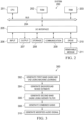
- FIG. 1 is a block diagram of a noise reduction system 100.
- the noise reduction system 100 may be implemented in a mobile device (e.g., see FIG. 2 ), such as a mobile telephone, a video camera with a microphone, etc.
- the components of the noise reduction system 100 may be implemented by a processor, for example as controlled according to one or more computer programs.
- the noise reduction system 100 includes a windowing block 102, a transform block 104, a band features analysis block 106, a neural network 108, a Wiener filter 110, a gain combination block 112, a band gains to bin gains block 114, a signal modification block 116, an inverse transform block 118, and an inverse windowing block 120.
- the noise reduction system 100 may include other components that (for brevity) are not described in detail.
- the windowing block 102 receives an audio signal 150, performs windowing on the audio signal 150, and generates audio frames 152.
- the audio signal 150 may be captured by a microphone of the mobile device that implements the noise reduction system 100.
- the audio signal 150 is a time domain signal that includes a sequence of audio samples.
- the audio signal 150 may be captured at a 48 kHz sampling rate with each sample quantized at a bit rate of 16 bits.
- Other example sampling rates may include 44.1 kHz, 96 kHz, 192 kHz, etc., and other bit rates may include 24 bits, 32 bits, etc.
- the windowing block 102 applies overlapping windows to the samples of the audio signal 150 to generate the audio frames 152.
- the windowing block 102 may implement various forms of windowing, including rectangular windows, triangular windows, trapezoidal windows, sine windows, etc.
- the transform block 104 receives the audio frames 152, performs a transform on the audio frames 152, and generates transform features 154.
- the transform may be a frequency domain transform, and the transform features 154 may include bin features and fundamental frequency parameters of each audio frame. (The transform features 154 may also be referred to as the bin features 154.)
- the fundamental frequency parameters may include the voice fundamental frequency, referred to as F0.
- the transform block 104 may implement various transforms, including a Fourier transform (e.g., a fast Fourier transform (FFT)), a quadrature mirror filter (QMF) domain transform, etc.
- FFT fast Fourier transform
- QMF quadrature mirror filter
- the transform block 104 may implement an FFT with an analysis window of 960 points and a frame shift of 480 points; alternatively, an analysis window of 1024 points and a frame shift of 512 points may be implemented.
- the number of bins in the transform features 154 is generally related to the number of points of the transform analysis; for example, a 960-point FFT results in 481 bins.
- the transform block 104 may implement various processes to determine fundamental frequency parameters of each audio frame. For example, when the transform is an FFT, the transform block 104 may extract the fundamental frequency parameters from the FFT parameters. As another example, the transform block 104 may extract the fundamental frequency parameters based on the autocorrelation of the time domain signals (e.g., the audio frames 152).
- the band features analysis block 106 receives the transform features 154, performs band analysis on the transform features 154, and generates band features 156.
- the band features 156 may be generated according to various scales, including the Mel scale, the Bark scale, etc.
- the number of bands in the band features 156 may be different when using different scales, for example 24 bands for the Bark scale, 80 bands for the Mel scale, etc.
- the band features analysis block 106 may combine the band features 156 with the fundamental frequency parameters (e.g., F0).
- the band features analysis block 106 may use rectangular bands.
- the band features analysis block 106 may also use triangular bands, with the peak response being at the boundary between bands.
- the band features 156 may be band energies, such as Mel bands energy, Bark bands energy, etc.
- the band features analysis block 106 may calculate the log value of Mel band energy and Bark band energy.
- the band features analysis block 106 may apply a discrete cosine transform (DCT) conversion of the band energy to generate new band features, to make the new band features less correlated than the original band features.
- DCT discrete cosine transform
- the band features analysis block 106 may generate the band features 156 as Mel-frequency cepstral coefficients (MFCCs), Bark-frequency cepstral coefficients (BFCCs), etc.
- the band features analysis block 106 may perform smoothing of the current frame and previous frames according to a smoothing value.
- the band features analysis block 106 may also perform a difference analysis by calculating a first order difference and a second order difference between the current frame and previous frames.
- the band features analysis block 106 may calculate a band harmonicity feature, which indicates how much of the current band is composed of a periodic signal. For example, the band features analysis block 106 may calculate the band harmonicity feature based on FFT frequency bind of the current frame. As another example, band features analysis block 106 may calculate the band harmonicity feature based on the correlation between the current frame and the previous frame.
- the band features 156 are fewer in number than the bin features 154, and thus reduce the dimensionality of the data input into the neural network 108.
- the bin features may be on the order of 513 or 481 bins, and the band features 156 may be on the order of 24 or 80 bands.
- the neural network 108 receives the band features 156, processes the band features 156 according to a model, and generates gains 158 and a voice activity decision (VAD) 160.
- the gains 158 may also be referred to as DGains, for example to indicate that they are the outputs of a neural network.
- the model has been trained offline; training the model, including preparation of the training data set, is discussed in a subsequent section.
- the neural network 108 uses the model to estimate the gain and voice activity for each band based on the band features 156 (e.g., including the fundamental frequency F0), and outputs the gains 158 and the VAD 160.
- the neural network 108 may be a full connected neural network (FCNN), a recurrent neural network (RNN), a convolutional neural network (CNN), another type of machine learning system, etc., or combinations thereof.
- the noise reduction system 100 may apply smoothing or limiting to the DGains outputs of the neural network 108.
- the noise reduction system 100 may apply average smoothing or median filtering to the gains 158, along the time axis, the frequency axis, etc.
- the noise reduction system 100 may apply limiting to the gains 158, with the largest gain being 1.0 and the smallest gain being different for different bands.
- the noise reduction system 100 sets a gain of 0.1 (e.g., -20 dB) as the smallest gain for the lowest 4 bands and sets a gain of 0.18 (e.g., -15 dB) as the smallest gain for the middle bands. Setting a minimum gain mitigates discontinuities in the DGains.
- the minimum gain values may be adjusted as desired; e.g., minimum gains of -12 dB, -15 dB, -18 dB, -20 dB, etc. may be set for various bands.
- the Wiener filter 110 receives the band features 156, the gains 158 and the VAD 160, performs Weiner filtering, and generates gains 162.
- the gains 162 may also be referred to as WGains, for example to indicate that they are the outputs of a Wiener filter.
- the Wiener filter 110 estimates the background noise in each band of the input signal 150, according to the band features 156. (The background noise may also be referred to as the stationary noise.)
- the Wiener filter 110 uses the gains 158 and the VAD 160 estimated by the neural network to control its filtering process.
- the Wiener filter 110 checks the band gains (according to the gains 158 (DGains)) for the given input frame. For bands with DGains less than 0.5, the Wiener filter 110 views these bands as noise frames and smooths the band energy of these frames to obtain an estimate of the background noise.
- the Wiener filter 110 may also track the average number of frames used to calculate the band energy for each band to obtain the noise estimation. When the average number for a given band is greater than a threshold number of frames, the Wiener filter 110 is applied to calculate a Wiener band gain for the given band. If the average number for the given band is less than the threshold number of frames, the Wiener band gain is 1.0 for the given band.
- the Wiener band gains for each of the bands are output as the gains 162, also referred to as Wiener gains (or WGains).
- the Wiener filter 110 estimates the background noise in each band based on the signal history (e.g., a number of frames of the input signal 150).
- the threshold number of frames gives the Wiener filter 110 a sufficient number of frames to result in a confident estimation of the background noise.
- the threshold number of frames is 50. When one frame is 10 ms, this corresponds to 0.5 seconds of the input signal 150. When the number of frames is less than the threshold, the Wiener filter 110 in effect is bypassed (e.g., the WGains are 1.0).
- the noise reduction system 100 may apply limiting to the WGains outputs of the Wiener filter 110, with the largest gain being 1.0 and the smallest gain being different for different bands.
- the noise reduction system 100 sets a gain of 0.1 (e.g., -20 dB) as the smallest gain for the lowest 4 bands and sets a gain of 0.18 (e.g., -15 dB) as the smallest gain for the middle bands.
- Setting a minimum gain mitigates discontinuities in the WGains.
- the minimum gain values may be adjusted as desired; e.g., minimum gains of -12 dB, -15 dB, -18 dB, -20 dB, etc. may be set for various bands.
- the gain combination block 112 receives the gains 158 (DGains) and the gains 162 (WGains), combines the gains, and generates gains 164.
- the gains 164 may also be referred to as band gains, combined band gains or CGains, for example to indicate that they are a combination of the DGains and the WGains.
- the gain combination block 112 may multiply the DGains and the WGains to generate the CGains, on a per-band basis.
- the noise reduction system 100 may apply limiting to the CGains outputs of the gain combination block 112, with the largest gain being 1.0 and the smallest gain being different for different bands.
- the noise reduction system 100 sets a gain of 0.1 (e.g., -20 dB) as the smallest gain for the lowest 4 bands and sets a gain of 0.18 (e.g., -15 dB) as the smallest gain for the middle bands.
- Setting a minimum gain mitigates discontinuities in the CGains.
- the minimum gain values may be adjusted as desired; e.g., minimum gains of -12 dB, -15 dB, -18 dB, -20 dB, etc. may be set for various bands.
- the band gains to bin gains block 114 receives the gains 164, converts the band gains to bin gains, and generates the gains 166 (also referred to as the bin gains). In effect, the band gains to bin gains block 114 performs an inverse of the processing performed by the band features analysis block 106, in order to convert the gains 164 from band gains to bin gains. For example, if the band features analysis block 106 processed 1024 points of FFT bins into 24 Bark scale bands, the band gains to bin gains block 114 converts the 24 Bark scale bands of the gains 164 into 1024 FFT bins of the gains 166.
- the band gains to bin gains block 114 may implement various techniques to convert the band gains to bin gains.
- the band gains to bin gains block 114 may use interpolation, e.g. linear interpolation.
- the signal modification block 116 receives the transform features 154 (which include the bin features and the fundamental frequency F0) and the gains 166, modifies the transform features 154 according to the gains 166, and generates modified transform features 168 (which include modified bin features and the fundamental frequency F0).
- the modified transform features 168 may also be referred to as the modified bin features 168.
- the signal modification block 116 may modify the amplitude spectrum of the bin features 154 based on the gains 166. In one implementation, the signal modification block 116 will leave unchanged the phase spectrum of the bin features 154 when generating the modified bin features 168.
- the signal modification block 116 will adjust the phase spectrum of the bin features 154 when generating the modified bin features 168, for example by performing an estimate based on the modified bin features 168.
- the signal modification block 116 may use a short-time Fourier transform to adjust the phase spectrum, e.g. by implementing of the Griffin-Lim process.
- the inverse transform block 118 receives the modified transform features 168, performs an inverse transform on the modified transform features 168, and generates audio frames 170.
- the inverse transform performed is an inverse of the transform performed by the transform block 104.
- the inverse transform block 118 may implement an inverse Fourier transform (e.g., an inverse FFT), an inverse QMF transform, etc.
- the inverse windowing block 120 receives the audio frames 170, performs inverse windowing on the audio frames 170, and generates an audio signal 172.
- the inverse windowing performed is an inverse of the windowing performed by the windowing block 102.
- the inverse windowing block 120 may perform overlap addition on the audio frames 170 to generate the audio signal 172.
- the combination of using the output of the neural network 108 to control the Wiener filter 110 may provide improved results over just using a neural network alone to perform noise reduction, as many neural networks operate using just a short memory.
- FIG. 2 shows a block diagram of an example system 200 suitable for implementing example embodiments of the present disclosure.
- System 200 includes one or more server computers or any client device.
- System 200 include any consumer devices, including but not limited to smart phones, media players, tablet computers, laptops, wearable computers, vehicle computers, game consoles, surround systems, kiosks, etc.
- the system 200 includes a central processing unit (CPU) 201 which is capable of performing various processes in accordance with a program stored in, for example, a read only memory (ROM) 202 or a program loaded from, for example, a storage unit 208 to a random access memory (RAM) 203.
- ROM read only memory
- RAM random access memory
- the data required when the CPU 201 performs the various processes is also stored, as required.
- the CPU 201, the ROM 202 and the RAM 203 are connected to one another via a bus 204.
- An input/output (I/O) interface 205 is also connected to the bus 204.
- the following components are connected to the I/O interface 205: an input unit 206, that may include a keyboard, a mouse, a touchscreen, a motion sensor, a camera, or the like; an output unit 207 that may include a display such as a liquid crystal display (LCD) and one or more speakers; the storage unit 208 including a hard disk, or another suitable storage device; and a communication unit 209 including a network interface card such as a network card (e.g., wired or wireless).
- the communication unit 209 may also communicate with wireless input and output components, e.g., a wireless microphone, wireless earbuds, wireless speakers, etc.
- the input unit 206 includes one or more microphones in different positions (depending on the host device) enabling capture of audio signals in various formats (e.g., mono, stereo, spatial, immersive, and other suitable formats).
- various formats e.g., mono, stereo, spatial, immersive, and other suitable formats.
- the output unit 207 include systems with various number of speakers. As illustrated in FIG. 2 , the output unit 207 (depending on the capabilities of the host device) can render audio signals in various formats (e.g., mono, stereo, immersive, binaural, and other suitable formats).
- various formats e.g., mono, stereo, immersive, binaural, and other suitable formats.
- the communication unit 209 is configured to communicate with other devices (e.g., via a network).
- a drive 210 is also connected to the I/O interface 205, as required.
- a removable medium 211 such as a magnetic disk, an optical disk, a magneto-optical disk, a flash drive or another suitable removable medium is mounted on the drive 210, so that a computer program read therefrom is installed into the storage unit 208, as required.
- the system 200 may implement one or more components of the noise reduction system 100 (see FIG. 1 ), for example by executing one or more computer programs on the CPU 201.
- the ROM 802, the RAM 803, the storage unit 808, etc. may store the model used by the neural network 108.
- a microphone connected to the input unit 206 may capture the audio signal 150, and a speaker connected to the output unit 207 may output sound corresponding to the audio signal 172.
- FIG. 3 is a flow diagram of a method 300 of audio processing.
- the method 300 may be implemented by a device (e.g., the system 200 of FIG. 2 ), as controlled by the execution of one or more computer programs.
- first band gains and a voice activity detection value of an audio signal are generated using a machine learning model.
- the CPU 201 may implement the neural network 108 to generate the gains 158 and the VAD 160 (see FIG. 1 ) by processing the band features 156 according to a model.
- a background noise estimate is generated based on the first band gains and the voice activity detection value.
- the CPU 201 may generate a background noise estimate based on the gains 158 and the VAD 160, as part of operating the Wiener filter 110.
- second band gains are generated by processing the audio signal using a Wiener filter controlled by the background noise estimate.
- the CPU 201 may implement the Wiener filter 110 to generate the gains 162 by processing the band features 156 as controlled by the background noise estimate (see 304). For example, when the number of noise frames exceeds a threshold (e.g., 50 noise frames) for a particular band, the Wiener filter generates the second band gains for that particular band.
- a threshold e.g., 50 noise frames
- combined gains are generated by combining the first band gains and the second band gains.
- the CPU 201 may implement the gain combination block 112 to generate the gains 164 by combining the gains 158 (from the neural network 108) and the gains 162 (from the Wiener filter 110).
- the first band gains and the second band gains may be combined by multiplication.
- the first band gains and the second band gains may be combined by selecting a maximum of the first band gains and the second band gains for each band. Limiting may be applied to the combined gains.
- the first band gains and the second band gains may be combined by multiplication or by selecting a maximum for each band, and limiting may be applied to the combined gains.
- a modified audio signal is generated by modifying the audio signal using the combined gains.
- the CPU 201 may implement the signal modification block 116 to generate the modified bin features 168 by modifying the bin features 154 using the gains 166.
- the method 300 may include other steps similar to those described above regarding the noise reduction system 100.
- a non-exhaustive discussion of example steps includes the following.
- a windowing step (cf. the windowing block 102) may be performed on the audio signal as part of generating the inputs to the neural network 108.
- a transform step (cf. the transform block 104) may be performed on the audio signal to convert time domain information to frequency domain information as part of generating the inputs to the neural network 108.
- a bins-to-bands conversion step (cf. the band features analysis block 106) may be performed on the audio signal to reduce the dimensionality of the inputs to the neural network 108.
- a bands-to-bins conversion step (cf.
- the band gains to bin gains block 114) may be performed to convert band gains (e.g., the gains 164) to bin gains (e.g., the gains 166).
- An inverse transform step (cf. the inverse transform block 118) may be performed to transform the modified bin features 168 from frequency domain information to time domain information (e.g., the audio frames 170).
- An inverse windowing step (cf. the inverse windowing block 120) may be performed to reconstruct the audio signal 172 as an inverse of the windowing step.
- the model used by the neural network 108 may be trained offline, then stored and used by the noise reduction system 100.
- a computer system may implement a model training system to train the model, for example by executing one or more computer programs. Part of training the model includes preparing the training data to generate the input features and target features.
- the input features may be calculated by the band feature calculation of noisy data (X).
- the target features are composed of ideal band gains and a VAD decision.
- the noisy data (X) may be is generated by combining clean speech (S) and noise data (N).
- S clean speech
- N noise data
- the VAD decision may be based on analysis of the clean speech S.
- the VAD decision is determined by an absolute threshold of energy of the current frame.
- Other VAD methods may be used in other implementations.
- the VAD can be manually labelled.
- E s (b) is the band b's energy of clean speech while E x (b) is the band b's energy of noisy speech.
- the model training system may perform data augmentation on the training data. Given an input speech file with S i and N i , the model training system will change S i and N i before mixing the noisy data.
- the data augmentation includes three general steps.
- the first step is to control of the amplitude of the clean speech.
- a common problem for noise reduction models is that they suppress low volume speech.
- the model training system performs data augmentation by preparing training data containing speech with various amplitudes.
- the model training system sets a random target average amplitude ranging from -45 dB to 0 dB (e.g., -45, -40, -35, -30, -25, -20, -15, -10, -5, 0).
- the model training system modifies the input speech file by the value a to match the target average amplitude.
- S m a ⁇ S i
- the second step is to control the signal to noise ratio (SNR).
- SNR signal to noise ratio
- the model training system will set a random target SNR.
- the target SNR is randomly chosen from a set of SNRs [-5, -3, 0, 3, 5, 10, 15, 18, 20, 30] with equal probability.
- the third step is to limit the mixed data.
- the model training system calculates the maximal absolute value of X m , noted as A max .
- the value 32,767 results from 16-bit quantization; this value may be adjusted as needed for other bit quantization precisions.
- the calculation of average amplitude and SNR may be performed according to various processes, as desired.
- the model training system may use a minimal threshold to remove the silence segments before calculating the average amplitude.
- data augmentation is used to increase the variety of the training data, by using a variety of target average amplitudes and target SNRs to adjust a segment of training data. For example, using 10 variations of the target average amplitude and 10 variations of the target SNR gives 100 variations of a single segment of training data.
- the data augmentation need not increase the size of the training data. If the training data is 100 hours prior to data augmentation, the full set of 10,000 hours of the augmented training data need not be used to train the model; the augmented training data set may be limited to a smaller size, e.g. 100 hours. More importantly, the data augmentation will increase variability in the amplitude and SNR in the training data.
- An embodiment may be implemented in hardware, executable modules stored on a computer readable medium, or a combination of both (e.g., programmable logic arrays). Unless otherwise specified, the steps executed by embodiments need not inherently be related to any particular computer or other apparatus, although they may be in certain embodiments. In particular, various general-purpose machines may be used with programs written in accordance with the teachings herein, or it may be more convenient to construct more specialized apparatus (e.g., integrated circuits) to perform the required method steps.
- embodiments may be implemented in one or more computer programs executing on one or more programmable computer systems each comprising at least one processor, at least one data storage system (including volatile and non-volatile memory and/or storage elements), at least one input device or port, and at least one output device or port.
- Program code is applied to input data to perform the functions described herein and generate output information.
- the output information is applied to one or more output devices, in known fashion.
- Each such computer program is preferably stored on or downloaded to a storage media or device (e.g., solid state memory or media, or magnetic or optical media) readable by a general or special purpose programmable computer, for configuring and operating the computer when the storage media or device is read by the computer system to perform the procedures described herein.
- a storage media or device e.g., solid state memory or media, or magnetic or optical media
- the inventive system may also be considered to be implemented as a computer-readable storage medium, configured with a computer program, where the storage medium so configured causes a computer system to operate in a specific and predefined manner to perform the functions described herein. (Software per se and intangible or transitory signals are excluded to the extent that they are unpatentable subject matter.)
- EEEs enumerated example embodiments
Landscapes
- Engineering & Computer Science (AREA)
- Physics & Mathematics (AREA)
- Multimedia (AREA)
- Audiology, Speech & Language Pathology (AREA)
- Human Computer Interaction (AREA)
- Signal Processing (AREA)
- Acoustics & Sound (AREA)
- Computational Linguistics (AREA)
- Health & Medical Sciences (AREA)
- Quality & Reliability (AREA)
- Spectroscopy & Molecular Physics (AREA)
- Artificial Intelligence (AREA)
- Evolutionary Computation (AREA)
- Circuit For Audible Band Transducer (AREA)
- Soundproofing, Sound Blocking, And Sound Damping (AREA)
- Feedback Control In General (AREA)
Applications Claiming Priority (6)
| Application Number | Priority Date | Filing Date | Title |
|---|---|---|---|
| CN2020106270 | 2020-07-31 | ||
| US202063068227P | 2020-08-20 | 2020-08-20 | |
| US202063110114P | 2020-11-05 | 2020-11-05 | |
| EP20206921 | 2020-11-11 | ||
| PCT/US2021/044166 WO2022026948A1 (en) | 2020-07-31 | 2021-08-02 | Noise reduction using machine learning |
| EP21755871.7A EP4189677B1 (de) | 2020-07-31 | 2021-08-02 | Geräuschreduzierung unter verwendung von maschinellem lernen |
Related Parent Applications (1)
| Application Number | Title | Priority Date | Filing Date |
|---|---|---|---|
| EP21755871.7A Division EP4189677B1 (de) | 2020-07-31 | 2021-08-02 | Geräuschreduzierung unter verwendung von maschinellem lernen |
Publications (2)
| Publication Number | Publication Date |
|---|---|
| EP4383256A2 true EP4383256A2 (de) | 2024-06-12 |
| EP4383256A3 EP4383256A3 (de) | 2024-06-26 |
Family
ID=77367484
Family Applications (2)
| Application Number | Title | Priority Date | Filing Date |
|---|---|---|---|
| EP21755871.7A Active EP4189677B1 (de) | 2020-07-31 | 2021-08-02 | Geräuschreduzierung unter verwendung von maschinellem lernen |
| EP24173039.9A Pending EP4383256A3 (de) | 2020-07-31 | 2021-08-02 | Geräuschunterdrückung mittels maschinenlernen |
Family Applications Before (1)
| Application Number | Title | Priority Date | Filing Date |
|---|---|---|---|
| EP21755871.7A Active EP4189677B1 (de) | 2020-07-31 | 2021-08-02 | Geräuschreduzierung unter verwendung von maschinellem lernen |
Country Status (5)
| Country | Link |
|---|---|
| US (1) | US20230267947A1 (de) |
| EP (2) | EP4189677B1 (de) |
| JP (2) | JP7667247B2 (de) |
| CN (2) | CN116057626B (de) |
| WO (1) | WO2022026948A1 (de) |
Families Citing this family (7)
| Publication number | Priority date | Publication date | Assignee | Title |
|---|---|---|---|---|
| ES3025478T3 (en) * | 2020-11-05 | 2025-06-09 | Dolby Laboratories Licensing Corp | Machine learning assisted spatial noise estimation and suppression |
| US11621016B2 (en) * | 2021-07-31 | 2023-04-04 | Zoom Video Communications, Inc. | Intelligent noise suppression for audio signals within a communication platform |
| EP4490726B1 (de) * | 2022-03-10 | 2025-11-19 | Dolby Laboratories Licensing Corporation | Verfahren und audioverarbeitungssystem zur unterdrückung von windgeräuschen |
| DE102022210839A1 (de) * | 2022-10-14 | 2024-04-25 | Fraunhofer-Gesellschaft zur Förderung der angewandten Forschung eingetragener Verein | Wiener-Filter-basierte Signalwiederherstellung mit gelernter Signal-zu-Rausch-Verhältnis-Abschätzung |
| KR20250012913A (ko) * | 2023-07-18 | 2025-01-31 | 삼성전자주식회사 | 전자 장치 및 그 제어 방법 |
| CN117854536B (zh) * | 2024-03-09 | 2024-06-07 | 深圳市龙芯威半导体科技有限公司 | 一种基于多维语音特征组合的rnn降噪方法及系统 |
| CN119049494B (zh) * | 2024-10-28 | 2025-03-25 | 中国海洋大学 | 一种基于谐波模型基频同步改进维纳滤波的语音增强方法 |
Citations (12)
| Publication number | Priority date | Publication date | Assignee | Title |
|---|---|---|---|---|
| US9053697B2 (en) | 2010-06-01 | 2015-06-09 | Qualcomm Incorporated | Systems, methods, devices, apparatus, and computer program products for audio equalization |
| CN105513605A (zh) | 2015-12-01 | 2016-04-20 | 南京师范大学 | 手机麦克风的语音增强系统和语音增强方法 |
| CN107863099A (zh) | 2017-10-10 | 2018-03-30 | 成都启英泰伦科技有限公司 | 一种新型双麦克风语音检测和增强方法 |
| CN109065067A (zh) | 2018-08-16 | 2018-12-21 | 福建星网智慧科技股份有限公司 | 一种基于神经网络模型的会议终端语音降噪方法 |
| CN109378013A (zh) | 2018-11-19 | 2019-02-22 | 南瑞集团有限公司 | 一种语音降噪方法 |
| US10224053B2 (en) | 2017-03-24 | 2019-03-05 | Hyundai Motor Company | Audio signal quality enhancement based on quantitative SNR analysis and adaptive Wiener filtering |
| CN110085249A (zh) | 2019-05-09 | 2019-08-02 | 南京工程学院 | 基于注意力门控的循环神经网络的单通道语音增强方法 |
| CN110211598A (zh) | 2019-05-17 | 2019-09-06 | 北京华控创为南京信息技术有限公司 | 智能语音降噪通信方法及装置 |
| US20190378531A1 (en) | 2016-05-30 | 2019-12-12 | Oticon A/S | Audio processing device and a method for estimating a signal-to-noise-ratio of a sound signal |
| CN110660407A (zh) | 2019-11-29 | 2020-01-07 | 恒玄科技(北京)有限公司 | 一种音频处理方法及装置 |
| US10546593B2 (en) | 2017-12-04 | 2020-01-28 | Apple Inc. | Deep learning driven multi-channel filtering for speech enhancement |
| CN111192599A (zh) | 2018-11-14 | 2020-05-22 | 中移(杭州)信息技术有限公司 | 一种降噪方法及装置 |
Family Cites Families (14)
| Publication number | Priority date | Publication date | Assignee | Title |
|---|---|---|---|---|
| JPH05232986A (ja) * | 1992-02-21 | 1993-09-10 | Hitachi Ltd | 音声信号用前処理方法 |
| US7464029B2 (en) | 2005-07-22 | 2008-12-09 | Qualcomm Incorporated | Robust separation of speech signals in a noisy environment |
| US8275611B2 (en) * | 2007-01-18 | 2012-09-25 | Stmicroelectronics Asia Pacific Pte., Ltd. | Adaptive noise suppression for digital speech signals |
| ES2678415T3 (es) * | 2008-08-05 | 2018-08-10 | Fraunhofer-Gesellschaft zur Förderung der angewandten Forschung e.V. | Aparato y procedimiento para procesamiento y señal de audio para mejora de habla mediante el uso de una extracción de característica |
| US8473287B2 (en) * | 2010-04-19 | 2013-06-25 | Audience, Inc. | Method for jointly optimizing noise reduction and voice quality in a mono or multi-microphone system |
| CA2835991C (en) * | 2013-01-29 | 2020-04-21 | Qnx Software Systems Limited | Sound field spatial stabilizer |
| JP6348427B2 (ja) * | 2015-02-05 | 2018-06-27 | 日本電信電話株式会社 | 雑音除去装置及び雑音除去プログラム |
| DK3252766T3 (da) | 2016-05-30 | 2021-09-06 | Oticon As | Audiobehandlingsanordning og fremgangsmåde til estimering af signal-til-støj-forholdet for et lydsignal |
| US10043530B1 (en) * | 2018-02-08 | 2018-08-07 | Omnivision Technologies, Inc. | Method and audio noise suppressor using nonlinear gain smoothing for reduced musical artifacts |
| CN109194595B (zh) * | 2018-09-26 | 2020-12-01 | 东南大学 | 一种基于神经网络的信道环境自适应ofdm接收方法 |
| JP7498560B2 (ja) | 2019-01-07 | 2024-06-12 | シナプティクス インコーポレイテッド | システム及び方法 |
| US11227586B2 (en) * | 2019-09-11 | 2022-01-18 | Massachusetts Institute Of Technology | Systems and methods for improving model-based speech enhancement with neural networks |
| CN111210021B (zh) * | 2020-01-09 | 2023-04-14 | 腾讯科技(深圳)有限公司 | 一种音频信号处理方法、模型训练方法以及相关装置 |
| ES2928295T3 (es) * | 2020-02-14 | 2022-11-16 | System One Noc & Dev Solutions S A | Método de mejora de las señales de voz telefónica basado en redes neuronales convolucionales |
-
2021
- 2021-08-02 US US18/007,005 patent/US20230267947A1/en active Pending
- 2021-08-02 JP JP2023505851A patent/JP7667247B2/ja active Active
- 2021-08-02 CN CN202180058353.5A patent/CN116057626B/zh active Active
- 2021-08-02 CN CN202610104888.6A patent/CN121862137A/zh active Pending
- 2021-08-02 EP EP21755871.7A patent/EP4189677B1/de active Active
- 2021-08-02 WO PCT/US2021/044166 patent/WO2022026948A1/en not_active Ceased
- 2021-08-02 EP EP24173039.9A patent/EP4383256A3/de active Pending
-
2025
- 2025-04-10 JP JP2025064895A patent/JP2025114577A/ja active Pending
Patent Citations (12)
| Publication number | Priority date | Publication date | Assignee | Title |
|---|---|---|---|---|
| US9053697B2 (en) | 2010-06-01 | 2015-06-09 | Qualcomm Incorporated | Systems, methods, devices, apparatus, and computer program products for audio equalization |
| CN105513605A (zh) | 2015-12-01 | 2016-04-20 | 南京师范大学 | 手机麦克风的语音增强系统和语音增强方法 |
| US20190378531A1 (en) | 2016-05-30 | 2019-12-12 | Oticon A/S | Audio processing device and a method for estimating a signal-to-noise-ratio of a sound signal |
| US10224053B2 (en) | 2017-03-24 | 2019-03-05 | Hyundai Motor Company | Audio signal quality enhancement based on quantitative SNR analysis and adaptive Wiener filtering |
| CN107863099A (zh) | 2017-10-10 | 2018-03-30 | 成都启英泰伦科技有限公司 | 一种新型双麦克风语音检测和增强方法 |
| US10546593B2 (en) | 2017-12-04 | 2020-01-28 | Apple Inc. | Deep learning driven multi-channel filtering for speech enhancement |
| CN109065067A (zh) | 2018-08-16 | 2018-12-21 | 福建星网智慧科技股份有限公司 | 一种基于神经网络模型的会议终端语音降噪方法 |
| CN111192599A (zh) | 2018-11-14 | 2020-05-22 | 中移(杭州)信息技术有限公司 | 一种降噪方法及装置 |
| CN109378013A (zh) | 2018-11-19 | 2019-02-22 | 南瑞集团有限公司 | 一种语音降噪方法 |
| CN110085249A (zh) | 2019-05-09 | 2019-08-02 | 南京工程学院 | 基于注意力门控的循环神经网络的单通道语音增强方法 |
| CN110211598A (zh) | 2019-05-17 | 2019-09-06 | 北京华控创为南京信息技术有限公司 | 智能语音降噪通信方法及装置 |
| CN110660407A (zh) | 2019-11-29 | 2020-01-07 | 恒玄科技(北京)有限公司 | 一种音频处理方法及装置 |
Non-Patent Citations (3)
| Title |
|---|
| JEAN-MARC VALIN: "A Hybrid DSP Deep Learning Approach to Real-Time Full-Band Speech Enhancement", IEEE 20TH INTERNATIONAL WORKSHOP ON MULTIMEDIA SIGNAL PROCESSING (MMSP), DOI: 10.1109/MMSP.2018.8547084 |
| XIA, Y.STERN, R.: "A Priori SNR Estimation Based on a Recurrent Neural Network for Robust Speech Enhancement", PROC. INTERSPEECH, 2018, pages 3274 - 3278, XP055785397, DOI: 10.21437/Interspeech.2018-2423 |
| ZHANG, Q.NICOLSON, A. M.WANG, M.PALIWAL, K.WANG, C.-X.: "DeepMMSE: A Deep Learning Approach to MMSE-based Noise Power Spectral Density Estimation", IEEE/ACM TRANSACTIONS ON AUDIO, SPEECH, AND LANGUAGE PROCESSING, pages 1 - 1 |
Also Published As
| Publication number | Publication date |
|---|---|
| CN116057626B (zh) | 2026-02-17 |
| JP7667247B2 (ja) | 2025-04-22 |
| JP2023536104A (ja) | 2023-08-23 |
| EP4189677A1 (de) | 2023-06-07 |
| CN121862137A (zh) | 2026-04-14 |
| CN116057626A (zh) | 2023-05-02 |
| JP2025114577A (ja) | 2025-08-05 |
| EP4383256A3 (de) | 2024-06-26 |
| US20230267947A1 (en) | 2023-08-24 |
| WO2022026948A1 (en) | 2022-02-03 |
| EP4189677B1 (de) | 2024-05-01 |
Similar Documents
| Publication | Publication Date | Title |
|---|---|---|
| EP4189677B1 (de) | Geräuschreduzierung unter verwendung von maschinellem lernen | |
| US10210883B2 (en) | Signal processing apparatus for enhancing a voice component within a multi-channel audio signal | |
| CN107731238B (zh) | 多声道信号的编码方法和编码器 | |
| CN106486131B (zh) | 一种语音去噪的方法及装置 | |
| KR101266894B1 (ko) | 특성 추출을 사용하여 음성 향상을 위한 오디오 신호를 프로세싱하기 위한 장치 및 방법 | |
| EP2164066B1 (de) | Rauschspektrumnachführung in verrauschten akustischen Signalen | |
| EP2828856B1 (de) | Audio-Klassifikation unter Verwendung von Harmonizitätsschätzung | |
| US9548064B2 (en) | Noise estimation apparatus of obtaining suitable estimated value about sub-band noise power and noise estimating method | |
| EP3807878B1 (de) | Auf tiefem neuronalem netz basierte sprachverbesserung | |
| US20210193149A1 (en) | Method, apparatus and device for voiceprint recognition, and medium | |
| EP3118852B1 (de) | Verfahren und vorrichtung zur verarbeitung von audiosignalen | |
| US12597434B2 (en) | Control of speech preservation in speech enhancement | |
| CN113345460B (zh) | 音频信号处理方法、装置、设备及存储介质 | |
| US9076446B2 (en) | Method and apparatus for robust speaker and speech recognition | |
| CN108053834A (zh) | 音频数据处理方法、装置、终端及系统 | |
| CN114360572A (zh) | 语音去噪方法、装置、电子设备及存储介质 | |
| JP6724290B2 (ja) | 音響処理装置、音響処理方法、及び、プログラム | |
| CN113593604A (zh) | 检测音频质量方法、装置及存储介质 | |
| US20250191601A1 (en) | Method and audio processing system for wind noise suppression | |
| US20240161762A1 (en) | Full-band audio signal reconstruction enabled by output from a machine learning model | |
| US12469513B2 (en) | System and method for replicating background acoustic properties using neural networks | |
| RU2842598C1 (ru) | Оценка и подавление пространственного шума на основе машинного обучения |
Legal Events
| Date | Code | Title | Description |
|---|---|---|---|
| PUAI | Public reference made under article 153(3) epc to a published international application that has entered the european phase |
Free format text: ORIGINAL CODE: 0009012 |
|
| STAA | Information on the status of an ep patent application or granted ep patent |
Free format text: STATUS: THE APPLICATION HAS BEEN PUBLISHED |
|
| REG | Reference to a national code |
Ref country code: DE Ref legal event code: R079 Free format text: PREVIOUS MAIN CLASS: G10L0021021600 Ipc: G10L0021020800 |
|
| PUAL | Search report despatched |
Free format text: ORIGINAL CODE: 0009013 |
|
| AC | Divisional application: reference to earlier application |
Ref document number: 4189677 Country of ref document: EP Kind code of ref document: P |
|
| AK | Designated contracting states |
Kind code of ref document: A2 Designated state(s): AL AT BE BG CH CY CZ DE DK EE ES FI FR GB GR HR HU IE IS IT LI LT LU LV MC MK MT NL NO PL PT RO RS SE SI SK SM TR |
|
| AK | Designated contracting states |
Kind code of ref document: A3 Designated state(s): AL AT BE BG CH CY CZ DE DK EE ES FI FR GB GR HR HU IE IS IT LI LT LU LV MC MK MT NL NO PL PT RO RS SE SI SK SM TR |
|
| RIC1 | Information provided on ipc code assigned before grant |
Ipc: G10L 21/0216 20130101ALN20240523BHEP Ipc: G10L 25/84 20130101ALI20240523BHEP Ipc: G10L 21/0316 20130101ALI20240523BHEP Ipc: G10L 25/30 20130101ALI20240523BHEP Ipc: G10L 21/0208 20130101AFI20240523BHEP |
|
| P01 | Opt-out of the competence of the unified patent court (upc) registered |
Free format text: CASE NUMBER: APP_37826/2024 Effective date: 20240625 |
|
| STAA | Information on the status of an ep patent application or granted ep patent |
Free format text: STATUS: REQUEST FOR EXAMINATION WAS MADE |
|
| 17P | Request for examination filed |
Effective date: 20241219 |
|
| STAA | Information on the status of an ep patent application or granted ep patent |
Free format text: STATUS: EXAMINATION IS IN PROGRESS |
|
| 17Q | First examination report despatched |
Effective date: 20251219 |