EP4383731A1 - Bildschirmprojektionsverfahren, -vorrichtung und -system - Google Patents
Bildschirmprojektionsverfahren, -vorrichtung und -system Download PDFInfo
- Publication number
- EP4383731A1 EP4383731A1 EP22871740.1A EP22871740A EP4383731A1 EP 4383731 A1 EP4383731 A1 EP 4383731A1 EP 22871740 A EP22871740 A EP 22871740A EP 4383731 A1 EP4383731 A1 EP 4383731A1
- Authority
- EP
- European Patent Office
- Prior art keywords
- projection
- condition
- electronic device
- content
- time
- Prior art date
- Legal status (The legal status is an assumption and is not a legal conclusion. Google has not performed a legal analysis and makes no representation as to the accuracy of the status listed.)
- Pending
Links
Images










Classifications
-
- G—PHYSICS
- G06—COMPUTING OR CALCULATING; COUNTING
- G06F—ELECTRIC DIGITAL DATA PROCESSING
- G06F3/00—Input arrangements for transferring data to be processed into a form capable of being handled by the computer; Output arrangements for transferring data from processing unit to output unit, e.g. interface arrangements
- G06F3/14—Digital output to display device ; Cooperation and interconnection of the display device with other functional units
- G06F3/1454—Digital output to display device ; Cooperation and interconnection of the display device with other functional units involving copying of the display data of a local workstation or window to a remote workstation or window so that an actual copy of the data is displayed simultaneously on two or more displays, e.g. teledisplay
-
- G—PHYSICS
- G09—EDUCATION; CRYPTOGRAPHY; DISPLAY; ADVERTISING; SEALS
- G09B—EDUCATIONAL OR DEMONSTRATION APPLIANCES; APPLIANCES FOR TEACHING, OR COMMUNICATING WITH, THE BLIND, DEAF OR MUTE; MODELS; PLANETARIA; GLOBES; MAPS; DIAGRAMS
- G09B5/00—Electrically-operated educational appliances
- G09B5/06—Electrically-operated educational appliances with both visual and audible presentation of the material to be studied
- G09B5/065—Combinations of audio and video presentations, e.g. videotapes, videodiscs, television systems
-
- G—PHYSICS
- G06—COMPUTING OR CALCULATING; COUNTING
- G06F—ELECTRIC DIGITAL DATA PROCESSING
- G06F16/00—Information retrieval; Database structures therefor; File system structures therefor
- G06F16/40—Information retrieval; Database structures therefor; File system structures therefor of multimedia data, e.g. slideshows comprising image and additional audio data
- G06F16/43—Querying
- G06F16/438—Presentation of query results
- G06F16/4387—Presentation of query results by the use of playlists
- G06F16/4393—Multimedia presentations, e.g. slide shows, multimedia albums
-
- G—PHYSICS
- G06—COMPUTING OR CALCULATING; COUNTING
- G06F—ELECTRIC DIGITAL DATA PROCESSING
- G06F3/00—Input arrangements for transferring data to be processed into a form capable of being handled by the computer; Output arrangements for transferring data from processing unit to output unit, e.g. interface arrangements
- G06F3/01—Input arrangements or combined input and output arrangements for interaction between user and computer
- G06F3/048—Interaction techniques based on graphical user interfaces [GUI]
- G06F3/0484—Interaction techniques based on graphical user interfaces [GUI] for the control of specific functions or operations, e.g. selecting or manipulating an object, an image or a displayed text element, setting a parameter value or selecting a range
- G06F3/04847—Interaction techniques to control parameter settings, e.g. interaction with sliders or dials
-
- G—PHYSICS
- G09—EDUCATION; CRYPTOGRAPHY; DISPLAY; ADVERTISING; SEALS
- G09G—ARRANGEMENTS OR CIRCUITS FOR CONTROL OF INDICATING DEVICES USING STATIC MEANS TO PRESENT VARIABLE INFORMATION
- G09G2370/00—Aspects of data communication
- G09G2370/16—Use of wireless transmission of display information
-
- G—PHYSICS
- G09—EDUCATION; CRYPTOGRAPHY; DISPLAY; ADVERTISING; SEALS
- G09G—ARRANGEMENTS OR CIRCUITS FOR CONTROL OF INDICATING DEVICES USING STATIC MEANS TO PRESENT VARIABLE INFORMATION
- G09G5/00—Control arrangements or circuits for visual indicators common to cathode-ray tube indicators and other visual indicators
- G09G5/12—Synchronisation between the display unit and other units, e.g. other display units, video-disc players
-
- H—ELECTRICITY
- H04—ELECTRIC COMMUNICATION TECHNIQUE
- H04N—PICTORIAL COMMUNICATION, e.g. TELEVISION
- H04N21/00—Selective content distribution, e.g. interactive television or video on demand [VOD]
- H04N21/40—Client devices specifically adapted for the reception of or interaction with content, e.g. set-top-box [STB]; Operations thereof
- H04N21/41—Structure of client; Structure of client peripherals
- H04N21/4104—Peripherals receiving signals from specially adapted client devices
- H04N21/4122—Peripherals receiving signals from specially adapted client devices additional display device, e.g. video projector
-
- H—ELECTRICITY
- H04—ELECTRIC COMMUNICATION TECHNIQUE
- H04N—PICTORIAL COMMUNICATION, e.g. TELEVISION
- H04N21/00—Selective content distribution, e.g. interactive television or video on demand [VOD]
- H04N21/40—Client devices specifically adapted for the reception of or interaction with content, e.g. set-top-box [STB]; Operations thereof
- H04N21/43—Processing of content or additional data, e.g. demultiplexing additional data from a digital video stream; Elementary client operations, e.g. monitoring of home network or synchronising decoder's clock; Client middleware
- H04N21/436—Interfacing a local distribution network, e.g. communicating with another STB or one or more peripheral devices inside the home
- H04N21/43615—Interfacing a Home Network, e.g. for connecting the client to a plurality of peripherals
-
- H—ELECTRICITY
- H04—ELECTRIC COMMUNICATION TECHNIQUE
- H04N—PICTORIAL COMMUNICATION, e.g. TELEVISION
- H04N21/00—Selective content distribution, e.g. interactive television or video on demand [VOD]
- H04N21/40—Client devices specifically adapted for the reception of or interaction with content, e.g. set-top-box [STB]; Operations thereof
- H04N21/47—End-user applications
- H04N21/485—End-user interface for client configuration
-
- H—ELECTRICITY
- H04—ELECTRIC COMMUNICATION TECHNIQUE
- H04N—PICTORIAL COMMUNICATION, e.g. TELEVISION
- H04N21/00—Selective content distribution, e.g. interactive television or video on demand [VOD]
- H04N21/80—Generation or processing of content or additional data by content creator independently of the distribution process; Content per se
- H04N21/85—Assembly of content; Generation of multimedia applications
- H04N21/858—Linking data to content, e.g. by linking an URL to a video object, by creating a hotspot
- H04N21/8586—Linking data to content, e.g. by linking an URL to a video object, by creating a hotspot by using a URL
Definitions
- the projection place includes a public leisure place
- the projection user group includes middle-aged and aged persons
- the projection condition includes a projection content condition in which the title of the projection content is a square dance related to fitness.
- the title of the projection content in the projection content condition is set to be the square dance related to the fitness, so that for the middle-aged and aged persons in a public place such as a park, a square dance or the like is projected.
- the projection place includes a multimedia teaching place; and the projection condition includes a projection content condition in which the type of the projection content is a teaching type.
- the projection place includes at least one of the following: a public accommodation place, a catering place, and a public cultural place; and the projection condition includes a projection content condition in which the title of the projection content is an advertisement or an introduction of a related subject of a place.
- the projection place includes a public leisure place, and the projection user group includes middle-aged and aged persons; and the projection condition includes a projection content condition in which the title of the projection content is a square dance related to fitness.
- the projection mode includes at least one of the following: a child/an adolescent mode and a timing payment mode; and the projection condition includes at least one projection time condition of the following: projection duration being less than preset duration, a time point being within a preset range, and a time point being not within a preset range.
- first and second are merely intended for a purpose of description, and shall not be understood as indicating or implying relative importance or implying a quantity of indicated technical features. Therefore, a feature limited by “first” or “second” may explicitly or implicitly include one or more features.
- the word such as “example” or “for example” is used to represent giving an example, an illustration, or a description. Any embodiment or design described as an “example” or “for example” in embodiments of this application should not be explained as being more preferred or having more advantages than another embodiment or design scheme. To be precise, use of the word “example”, “for example”, or the like is intended to present a related concept in a specific manner.
- FIG. 1A to FIG. 1C are schematic diagrams of an application environment according to an embodiment of this application.
- a projection system 10 includes a condition setting electronic device 11, a source electronic device 12, and a destination electronic device 13.
- the condition setting electronic device 11 and the destination electronic device 13, and the source electronic device 12 and the destination electronic device 13 may communicate with each other in a wired or wireless manner.
- a wired manner may be interconnection through a high-definition multimedia interface (High-Definition Multimedia Interface, HDMI), or by accessing a same router through optical fibers.
- a wireless manner may be interconnection through Bluetooth, Wi-Fi, a ZigBee network, or the like. This is not limited in this application.
- the condition setting electronic device 11 and the source electronic device 12 may separately be at least one of the following: a mobile phone, a tablet computer, a desktop computer, a laptop computer, a handheld computer, a notebook computer, an ultra-mobile personal computer (ultra-mobile personal computer, UMPC), a netbook, a personal digital assistant (personal digital assistant, PDA), a cellular phone, and the like.
- the destination electronic device 13 may be at least one of the following: a tablet computer, a desktop computer, a notebook computer, a smart television, a display device, and the like.
- the condition setting electronic device 11 and the source electronic device 12 may be the same or may be different.
- the condition setting electronic device 11 may set a projection condition of the destination electronic device 13.
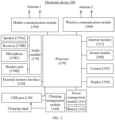
- FIG. 2 is a schematic diagram of a hardware structure of an electronic device according to an embodiment of this application.
- FIG. 2 is a schematic diagram of a structure of an electronic device 100.
- the electronic device may be a condition setting electronic device, or may be a source electronic device, or may be a destination electronic device.
- the condition setting electronic device and the source electronic device may separately be at least one of the following: a mobile phone, a tablet computer, a desktop computer, a laptop computer, a handheld computer, a notebook computer, an ultra-mobile personal computer (ultra-mobile personal computer, UMPC), a netbook, a personal digital assistant (personal digital assistant, PDA), a cellular phone, and the like.
- the destination electronic device may be at least one of the following: a tablet computer, a desktop computer, a notebook computer, a smart television, and the like.
- a specific type of the electronic device 100 is not specially limited in this embodiment of this application.
- the electronic device 100 may include a processor 110, an external memory interface 120, an internal memory 121, a universal serial bus (universal serial bus, USB) port 130, a charging management module 140, a power management module 141, a battery 142, an antenna 1, an antenna 2, a mobile communication module 150, a wireless communication module 160, an audio module 170, a speaker 170A, a receiver 170B, a microphone 170C, a headset jack 170D, a sensor module 180, a camera 193, a display 194, and the like.
- a processor 110 an external memory interface 120, an internal memory 121, a universal serial bus (universal serial bus, USB) port 130, a charging management module 140, a power management module 141, a battery 142, an antenna 1, an antenna 2, a mobile communication module 150, a wireless communication module 160, an audio module 170, a speaker 170A, a receiver 170B, a microphone 170C, a headset jack 170D, a sensor module 180,
- the structure shown in this embodiment of the present invention does not constitute a specific limitation on the electronic device 100.
- the electronic device 100 may include more or fewer components than those shown in the figure, or combine some components, or split some components, or have different component arrangements.
- the components shown in the figure may be implemented by hardware, software, or a combination of software and hardware.
- the processor 110 may include one or more processing units.
- the processor 110 may include an application processor (application processor, AP), a modem processor, a graphics processing unit (graphics processing unit, GPU), an image signal processor (image signal processor, ISP), a controller, a video codec, a digital signal processor (digital signal processor, DSP), a baseband processor, a neural-network processing unit (neural-network processing unit, NPU), and/or the like.
- Different processing units may be independent devices, or may be integrated into one or more processors.
- a memory may be further disposed in the processor 110, and is configured to store instructions and data.
- the memory in the processor 110 is a cache memory.
- the memory may store instructions or data that has been recently used or cyclically used by the processor 110. If the processor 110 needs to use the instructions or the data again, the instructions or the data may be directly invoked from the memory. This avoids repeated access and reduces waiting time of the processor 110, thereby improving system efficiency.
- the power management module 141 is configured to connect to the battery 142, the charging management module 140, and the processor 110.
- the power management module 141 receives an input from the battery 142 and/or the charging management module 140, and supplies power to the processor 110, the internal memory 121, the display 194, the camera 193, the wireless communication module 160, and the like.
- the power management module 141 may be further configured to monitor parameters such as a battery capacity, a battery cycle count, and a battery health status (electricity leakage or impedance).
- the power management module 141 may alternatively be disposed in the processor 110.
- the power management module 141 and the charging management module 140 may alternatively be disposed in a same device.
- a wireless communication function of the electronic device 100 may be implemented by using the antenna 1, the antenna 2, the mobile communication module 150, the wireless communication module 160, the modem processor, the baseband processor, and the like.
- the modem processor may include a modulator and a demodulator.
- the modulator is configured to modulate a to-be-sent low-frequency baseband signal into a medium-high-frequency signal.
- the demodulator is configured to demodulate a received electromagnetic wave signal into a low-frequency baseband signal. Then, the demodulator transmits the low-frequency baseband signal obtained through demodulation to the baseband processor for processing.
- the low-frequency baseband signal is processed by the baseband processor and then transmitted to the application processor.
- the application processor outputs a sound signal by using an audio device (which is not limited to the speaker 170A, the receiver 170B, and the like), or displays an image or a video by using the display 194.
- the modem processor may be an independent device.
- the modem processor may be independent of the processor 110, and may be disposed in a same device as the mobile communication module 150 or another functional module.
- the wireless communication module 160 may provide a wireless communication solution that is applied to the electronic device 100, and that includes a wireless local area network (wireless local area network, WLAN) (for example, a wireless fidelity (wireless fidelity, Wi-Fi) network), Bluetooth (Bluetooth, BT), a global navigation satellite system (global navigation satellite system, GNSS), frequency modulation (frequency modulation, FM), a near field communication (near field communication, NFC) technology, an infrared (infrared, IR) technology, and the like.
- the wireless communication module 160 may one or more devices integrating one or more communication processing modules.
- the wireless communication module 160 receives an electromagnetic wave by using the antenna 2, performs frequency modulation and filtering on an electromagnetic wave signal, and sends a processed signal to the processor 110.
- the wireless communication module 160 may further receive a to-be-sent signal from the processor 110, perform frequency modulation and amplification on the signal, and convert the signal into an electromagnetic wave for radiation by using the antenna 2.
- the antenna 1 and the mobile communication module 150 in the electronic device 100 are coupled, and the antenna 2 and the wireless communication module 160 are coupled, so that the electronic device 100 can communicate with a network and another device by using a wireless communication technology.
- the wireless communication technology may include a global system for mobile communications (global system for mobile communications, GSM), a general packet radio service (general packet radio service, GPRS), code division multiple access (code division multiple access, CDMA), wideband code division multiple access (wideband code division multiple access, WCDMA), time-division code division multiple access (time-division code division multiple access, TD-SCDMA), long term evolution (long term evolution, LTE), BT, a GNSS, a WLAN, NFC, FM, an IR technology, and/or the like.
- GSM global system for mobile communications
- GPRS general packet radio service
- code division multiple access code division multiple access
- CDMA wideband code division multiple access
- WCDMA wideband code division multiple access
- time-division code division multiple access time
- the electronic device 100 implements a display function by using the GPU, the display 194, the application processor, and the like.
- the GPU is a microprocessor for image processing and is connected to the display 194 and the application processor.
- the GPU is configured to perform mathematical and geometric computation for graphic rendering.
- the processor 110 may include one or more GPUs that execute program instructions to generate or change display information.
- the display 194 is configured to display images, videos, and the like.
- the display 194 includes a display panel.
- the display panel may be a liquid crystal display (liquid crystal display, LCD), an organic light-emitting diode (organic light-emitting diode, OLED), an active-matrix organic light-emitting diode (active-matrix organic light-emitting diode, AMOLED), a flexible light-emitting diode (flexible light-emitting diode, FLED), a mini-LED, a micro-LED, a micro-OLED, a quantum dot light-emitting diode (quantum dot light-emitting diode, QLED), or the like.
- the electronic device 100 may include one or N displays 194. N is a positive integer greater than 1.
- the electronic device 100 may implement a photographing function by using the ISP, the camera 193, the video codec, the GPU, the display 194, the application processor, and the like.
- the ISP is configured to process data fed back by the camera 193. For example, during photographing, a shutter is pressed, and light is transmitted to a photosensitive element of the camera through a lens. An optical signal is converted into an electrical signal, and the photosensitive element of the camera transmits the electrical signal to the ISP for processing, to convert the electrical signal into a visible image.
- the ISP may further perform algorithm optimization on noise, brightness, and complexion of the image.
- the ISP may further optimize parameters such as exposure and a color temperature of a photographing scenario.
- the ISP may be disposed in the camera 193.
- the camera 193 is configured to capture a static image or a video. An optical image of an object is generated through the lens, and is projected onto the photosensitive element.
- the photosensitive element may be a charge-coupled device (charge-coupled device, CCD) or a complementary metal-oxide-semiconductor (complementary metal-oxide-semiconductor, CMOS) phototransistor.
- CCD charge-coupled device
- CMOS complementary metal-oxide-semiconductor
- the photosensitive element converts the optical signal into the electrical signal, and then transmits the electrical signal to the ISP for converting the electrical signal into a digital image signal.
- the ISP outputs the digital image signal to the DSP for processing.
- the DSP converts the digital image signal into an image signal in a standard format such as RGB or YUV.
- the electronic device 100 may include one or N cameras 193. N is a positive integer greater than 1.
- the digital signal processor is configured to process a digital signal, and may process another digital signal in addition to the digital image signal. For example, when the electronic device 100 selects a frequency, the digital signal processor is configured to perform Fourier transform on frequency energy.
- the video codec is configured to compress or decompress a digital video.
- the electronic device 100 may support one or more types of video codecs. In this way, the electronic device 100 can play or record videos in a plurality of coding formats, for example, moving picture experts group (moving picture experts group, MPEG)-1, MPEG-2, MPEG-3, and MPEG-4.
- MPEG moving picture experts group
- the internal memory 121 may be configured to store one or more computer programs, and the one or more computer programs include instructions.
- the processor 110 may run the instructions stored in the internal memory 121, so that the electronic device 100 performs a projection method provided in some embodiments of this application, various functional applications, data processing, and the like.
- the internal memory 121 may include a program storage region and a data storage region.
- the program storage region may store an operating system.
- the program storage region may further store one or more applications (for example, Gallery and Contacts), and the like.
- the data storage region may store data (for example, a photo and a contact) created during use of the electronic device 100, and the like.
- the internal memory 121 may include a high-speed random access memory, and may further include a nonvolatile memory, such as one or more disk storage devices, a flash memory device, or a universal flash storage (universal flash storage, UFS).
- the processor 110 runs the instructions stored in the internal memory 121 and/or the instructions stored in the memory disposed in the processor, so that the electronic device 100 performs the projection method provided in embodiments of this application, various functional applications, and data processing.
- the electronic device 100 may implement an audio function such as music playing and recording by using the audio module 170, the speaker 170A, the receiver 170B, the microphone 170C, the headset jack 170D, the application processor, and the like.
- an audio function such as music playing and recording by using the audio module 170, the speaker 170A, the receiver 170B, the microphone 170C, the headset jack 170D, the application processor, and the like.
- the audio module 170 is configured to convert digital audio information into an analog audio signal for output, and is also configured to convert an analog audio input into a digital audio signal.
- the audio module 170 may be further configured to encode and decode an audio signal.
- the audio module 170 may be disposed in the processor 110, or some functional modules of the audio module 170 may be disposed in the processor 110.
- the receiver 170B also referred to as an "earpiece", is configured to convert an audio electrical signal into a sound signal.
- the receiver 170B may be put close to a human ear to listen to a voice.
- the foregoing electronic device 100 may further include one or more components such as a button, a motor, an indicator, and a SIM card interface. This is not limited in embodiments of this application.
- a user may set the projection condition of the destination electronic device by operating a remote control or the like or directly operating the destination electronic device.
- the user needs to operate the electronic device by using an administrator identity, to set the projection condition of the destination electronic device. If the user uses the administrator identity for the first time, the user may create an administrator password.
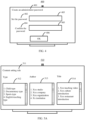
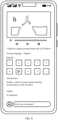
- the user may select projection time by operating the time displayed in the time setting region 532. For example, the user may tap 1. the T1-T2 in the time setting region 532 by using the direction buttons and the "OK" button on the remote control, to select the T1-T2 as the projection time.
- FIG. 5C is an example of the projection time setting page.
- the projection time setting page may further include another time, for example, T4 hours per round, an interval of T5 hours that is from previous projection and after which projection may be performed, T6-T7 during which projection is forbidden, and time from condition setting to T8 during which projection is allowed.
- the projection time setting page may further include time that the user is supported to customize, for example, projection is allowed in a specified time period (_: _ - _: _), projection is forbidden in a specified time period (_: _ - _: _), and projection duration is limited (projection duration limit: _ hours/minutes), so that the user can customize the time by operating the projection time setting page.
- the projection time setting page may further include a confirmation button for triggering the destination electronic device to determine the projection time.
- Content and a form of the projection time setting page are not limited in this application. It may be understood that the user may select one or more of the times on the projection time setting page. This is not limited in this application. It may be understood that a manner in which the user operates the content on the projection time setting page is not limited in this application.
- the projection device information is: the brand of the source electronic device is the mobile phone manufacturer H, the operator of the source electronic device is the operator Y, the operating system of the source electronic device is an Android system, the IP address of the source electronic device is 192.168.124.6, and the MAC address of the source electronic device is ac:e3:42:58:d3:fa.
- the destination electronic device determines that the projection information satisfies the projection condition, and performs the projection playback.
- to-be-viewed multimedia content is downloaded to the destination electronic device based on the url of the projection content in the projection information, and is played by using a player provided by the destination electronic device.
- an installed player is automatically started based on the url of the projection content in the projection information to connect to a multimedia server that provides the projection content, for playing. If the projection information does not satisfy the projection condition, the destination electronic device rejects projection playback.
- the destination electronic device determines that the projection information does not satisfy the projection condition, and rejects the projection playback.
- condition setting electronic device may further continue to set a projection condition, so that the source electronic device or another electronic device re-executes projection playback.
- a condition setting electronic device sets a projection condition by using an application (APP) installed on the condition setting electronic device.
- the projection condition may include the following: a. a projection content condition: a title: a square dance; and an author: an X studio; b. a projection device condition: a mobile phone of a brand H, and an operator Y; and c. a projection time condition: 18:00-21:00.
- the condition setting electronic device transmits the projection condition to a destination electronic device.
- the destination electronic device stores the projection condition.
- a source electronic device obtains projection information based on currently displayed multimedia content.
- the foregoing application scenario in which projection is performed in the park is merely a description of the projection method during an actual application.
- the projection method may be further used in another application scenario based on an actual requirement, for example, a scenario in which only projection playback of an advertisement/introduction video of a related subject can be performed, such as a restaurant, an exhibition hall, or a museum, or a scenario in which there is a time limit on projection playback, such as a child/an adolescent mode or a timing payment mode.
- a specific implementation process in another application scenario is similar to the application scenario in which projection is performed in the park. Details are not described herein again.
- the projection content, the projection time, and the projection device may be controlled.
- projection content of a classroom place in multimedia teaching may be controlled by using the projection method.
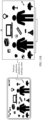
- FIG. 11A in the classroom place in the multimedia teaching, a source electronic device sends an entertainment video to a destination electronic device, and the destination electronic device does not play the video.
- FIG. 11A merely shows an example in which the destination electronic device does not play the video. Content and a form displayed when the destination electronic device does not play the video are not limited in this application.
- FIG. 11B in the classroom place in the multimedia teaching, a source electronic device sends a teaching video to a destination electronic device, and the destination electronic device performs projection playback of the teaching video.
- the projection mode includes at least one of the following: a child/an adolescent mode and a timing payment mode; and the projection condition includes at least one projection time condition of the following: projection duration being less than preset duration, a time point being within a preset range, and a time point being not within a preset range.
Landscapes
- Engineering & Computer Science (AREA)
- Multimedia (AREA)
- Theoretical Computer Science (AREA)
- Signal Processing (AREA)
- General Physics & Mathematics (AREA)
- Physics & Mathematics (AREA)
- Human Computer Interaction (AREA)
- Educational Technology (AREA)
- Educational Administration (AREA)
- General Engineering & Computer Science (AREA)
- Business, Economics & Management (AREA)
- Controls And Circuits For Display Device (AREA)
- Telephone Function (AREA)
Applications Claiming Priority (2)
| Application Number | Priority Date | Filing Date | Title |
|---|---|---|---|
| CN202111157748.9A CN115883913A (zh) | 2021-09-27 | 2021-09-27 | 投屏方法、设备及系统 |
| PCT/CN2022/114628 WO2023045687A1 (zh) | 2021-09-27 | 2022-08-24 | 投屏方法、设备及系统 |
Publications (2)
| Publication Number | Publication Date |
|---|---|
| EP4383731A1 true EP4383731A1 (de) | 2024-06-12 |
| EP4383731A4 EP4383731A4 (de) | 2024-11-27 |
Family
ID=85719711
Family Applications (1)
| Application Number | Title | Priority Date | Filing Date |
|---|---|---|---|
| EP22871740.1A Pending EP4383731A4 (de) | 2021-09-27 | 2022-08-24 | Bildschirmprojektionsverfahren, -vorrichtung und -system |
Country Status (4)
| Country | Link |
|---|---|
| US (1) | US12498896B2 (de) |
| EP (1) | EP4383731A4 (de) |
| CN (1) | CN115883913A (de) |
| WO (1) | WO2023045687A1 (de) |
Families Citing this family (2)
| Publication number | Priority date | Publication date | Assignee | Title |
|---|---|---|---|---|
| CN118870108B (zh) * | 2023-04-28 | 2025-12-26 | 华为技术有限公司 | 一种投屏方法及设备 |
| CN118138824B (zh) * | 2024-02-22 | 2025-01-24 | 中央广播电视总台 | 一种交互方法、移动终端、播放终端及交互系统 |
Family Cites Families (26)
| Publication number | Priority date | Publication date | Assignee | Title |
|---|---|---|---|---|
| US8674957B2 (en) * | 2011-02-04 | 2014-03-18 | Qualcomm Incorporated | User input device for wireless back channel |
| US20140282677A1 (en) * | 2013-03-12 | 2014-09-18 | Cbs Interactive Inc. | Second screen application linked to media content delivery |
| JP6286891B2 (ja) * | 2013-06-21 | 2018-03-07 | 株式会社リコー | 表示装置、表示システム、及び表示プログラム |
| JP2016178548A (ja) * | 2015-03-20 | 2016-10-06 | 株式会社リコー | コンテンツ出力装置、コンテンツ出力システム及びプログラム |
| US20160364574A1 (en) * | 2015-06-11 | 2016-12-15 | Microsoft Technology Licensing, Llc | Content projection over device lock screen |
| CN106686446B (zh) * | 2015-11-05 | 2020-07-14 | 腾讯科技(北京)有限公司 | 内容投射方法及移动终端 |
| US10284492B2 (en) * | 2016-08-10 | 2019-05-07 | Microsoft Technology Licensing, Llc | Control of casting to a media renderer |
| US11252477B2 (en) * | 2017-12-20 | 2022-02-15 | Videokawa, Inc. | Event-driven streaming media interactivity |
| CN109451345A (zh) | 2018-11-05 | 2019-03-08 | 四川长虹电器股份有限公司 | 一种Android智能电视上DLNA投屏权限管控的方法 |
| CN109922205A (zh) * | 2018-11-29 | 2019-06-21 | 努比亚技术有限公司 | 投屏实现方法、移动终端及计算机可读存储介质 |
| CN109889870A (zh) * | 2019-03-08 | 2019-06-14 | 浙江辉驿网络科技有限公司 | 一种可信投屏方法及系统 |
| CN110389736A (zh) * | 2019-06-05 | 2019-10-29 | 华为技术有限公司 | 一种投屏显示方法及电子设备 |
| CN110308885B (zh) * | 2019-06-25 | 2022-04-01 | 维沃移动通信有限公司 | 一种投屏方法及移动终端 |
| CN111026344A (zh) * | 2019-11-12 | 2020-04-17 | 浙江大搜车软件技术有限公司 | 投屏方法、系统、计算机设备和存储介质 |
| KR102709175B1 (ko) * | 2019-12-03 | 2024-09-25 | 삼성전자주식회사 | 모바일 장치의 컨텐츠를 디스플레이 장치에서 재생하는 방법 및 장치 |
| CN110933510B (zh) * | 2019-12-04 | 2021-06-25 | 广州云蝶科技有限公司 | 控制系统中的信息交互方法 |
| CN111901674B (zh) * | 2020-07-13 | 2021-08-03 | 腾讯科技(深圳)有限公司 | 一种视频播放控制方法及装置 |
| CN112019914B (zh) * | 2020-08-27 | 2021-10-22 | 北京字节跳动网络技术有限公司 | 投屏方法、装置、电子设备及计算机可读介质 |
| CN112073758B (zh) * | 2020-11-11 | 2021-02-05 | 深圳乐播科技有限公司 | 一种云桌面投屏方法、装置、计算机设备、计算机可读存储介质及云桌面投屏交互系统 |
| CN112565843A (zh) | 2020-12-02 | 2021-03-26 | 广州朗国电子科技有限公司 | 基于dlna的投屏控制方法、装置、一体机及存储介质 |
| CN112601116A (zh) * | 2020-12-11 | 2021-04-02 | 海信视像科技股份有限公司 | 一种显示设备及内容显示方法 |
| CN112861638B (zh) * | 2021-01-14 | 2025-02-18 | 华为技术有限公司 | 一种投屏方法及装置 |
| CN113268210B (zh) * | 2021-05-10 | 2024-10-25 | 深圳Tcl新技术有限公司 | 投屏方法、设备及存储介质 |
| WO2022242328A1 (zh) * | 2021-05-17 | 2022-11-24 | 海信视像科技股份有限公司 | 一种分屏播放方法及显示设备 |
| CN113411642B (zh) * | 2021-06-16 | 2022-11-22 | 北京字节跳动网络技术有限公司 | 投屏方法、装置、电子设备和存储介质 |
| CN113434105A (zh) * | 2021-06-28 | 2021-09-24 | 青岛海尔科技有限公司 | 投屏控制方法、装置、存储介质及电子设备 |
-
2021
- 2021-09-27 CN CN202111157748.9A patent/CN115883913A/zh active Pending
-
2022
- 2022-08-24 US US18/694,659 patent/US12498896B2/en active Active
- 2022-08-24 EP EP22871740.1A patent/EP4383731A4/de active Pending
- 2022-08-24 WO PCT/CN2022/114628 patent/WO2023045687A1/zh not_active Ceased
Also Published As
| Publication number | Publication date |
|---|---|
| EP4383731A4 (de) | 2024-11-27 |
| WO2023045687A1 (zh) | 2023-03-30 |
| US12498896B2 (en) | 2025-12-16 |
| CN115883913A (zh) | 2023-03-31 |
| US20240319953A1 (en) | 2024-09-26 |
Similar Documents
| Publication | Publication Date | Title |
|---|---|---|
| US12335217B2 (en) | Notification processing system, method, and electronic device | |
| US12413804B2 (en) | Content continuation method and electronic device | |
| US12019864B2 (en) | Multimedia data playing method and electronic device | |
| JP7324311B2 (ja) | オーディオ及びビデオ再生方法、端末、並びにオーディオ及びビデオ再生装置 | |
| CN113170279B (zh) | 基于低功耗蓝牙的通信方法及相关装置 | |
| CN113835649B (zh) | 一种投屏方法和终端 | |
| WO2021017909A1 (zh) | 一种通过nfc标签实现功能的方法、电子设备及系统 | |
| EP4246921B1 (de) | Chat-interaktionsverfahren, elektronische vorrichtung und server | |
| WO2021136114A1 (zh) | 占用设备的方法以及电子设备 | |
| US12498896B2 (en) | Projection method and system, and device | |
| US20250130689A1 (en) | Notification message processing method and device | |
| WO2022183941A1 (zh) | 消息回复的方法和装置 | |
| EP4387210A1 (de) | Bildschirmidentifizierungsverfahren für verteilte anzeige, medium und elektronische vorrichtung | |
| US12619349B2 (en) | Multimedia data playing method and electronic device | |
| CN118233118A (zh) | 一种登录应用的方法及相关装置 | |
| WO2022174664A1 (zh) | 一种直播方法、装置及系统 | |
| CN117193897A (zh) | 跨终端的屏幕交互方法、装置、终端设备及介质 | |
| CN121940572A (zh) | 内容投放方法及相关设备 | |
| WO2026086390A1 (zh) | 设备交互的方法、电子设备和系统 | |
| WO2023071730A1 (zh) | 声纹注册方法及电子设备 | |
| CN121437068A (zh) | 一种广告投放方法和系统 | |
| CN119718319A (zh) | 一种基于大数据处理的软件开发方法和系统 | |
| CN114338891A (zh) | 一种通信方法及装置 |
Legal Events
| Date | Code | Title | Description |
|---|---|---|---|
| STAA | Information on the status of an ep patent application or granted ep patent |
Free format text: STATUS: THE INTERNATIONAL PUBLICATION HAS BEEN MADE |
|
| PUAI | Public reference made under article 153(3) epc to a published international application that has entered the european phase |
Free format text: ORIGINAL CODE: 0009012 |
|
| STAA | Information on the status of an ep patent application or granted ep patent |
Free format text: STATUS: REQUEST FOR EXAMINATION WAS MADE |
|
| 17P | Request for examination filed |
Effective date: 20240308 |
|
| AK | Designated contracting states |
Kind code of ref document: A1 Designated state(s): AL AT BE BG CH CY CZ DE DK EE ES FI FR GB GR HR HU IE IS IT LI LT LU LV MC MK MT NL NO PL PT RO RS SE SI SK SM TR |
|
| A4 | Supplementary search report drawn up and despatched |
Effective date: 20241024 |
|
| RIC1 | Information provided on ipc code assigned before grant |
Ipc: H04N 21/41 20110101AFI20241018BHEP |
|
| DAV | Request for validation of the european patent (deleted) | ||
| DAX | Request for extension of the european patent (deleted) |