EP4383865A1 - Verfahren und vorrichtung zur übertragung einer paging-frühanzeige und vorrichtung - Google Patents
Verfahren und vorrichtung zur übertragung einer paging-frühanzeige und vorrichtung Download PDFInfo
- Publication number
- EP4383865A1 EP4383865A1 EP22851967.4A EP22851967A EP4383865A1 EP 4383865 A1 EP4383865 A1 EP 4383865A1 EP 22851967 A EP22851967 A EP 22851967A EP 4383865 A1 EP4383865 A1 EP 4383865A1
- Authority
- EP
- European Patent Office
- Prior art keywords
- target
- pei
- parameter
- determining
- resource location
- Prior art date
- Legal status (The legal status is an assumption and is not a legal conclusion. Google has not performed a legal analysis and makes no representation as to the accuracy of the status listed.)
- Pending
Links
Images


Classifications
-
- H—ELECTRICITY
- H04—ELECTRIC COMMUNICATION TECHNIQUE
- H04W—WIRELESS COMMUNICATION NETWORKS
- H04W52/00—Power management, e.g. Transmission Power Control [TPC] or power classes
- H04W52/02—Power saving arrangements
-
- H—ELECTRICITY
- H04—ELECTRIC COMMUNICATION TECHNIQUE
- H04W—WIRELESS COMMUNICATION NETWORKS
- H04W68/00—User notification, e.g. alerting and paging, for incoming communication, change of service or the like
- H04W68/02—Arrangements for increasing efficiency of notification or paging channel
-
- H—ELECTRICITY
- H04—ELECTRIC COMMUNICATION TECHNIQUE
- H04W—WIRELESS COMMUNICATION NETWORKS
- H04W52/00—Power management, e.g. Transmission Power Control [TPC] or power classes
- H04W52/02—Power saving arrangements
- H04W52/0209—Power saving arrangements in terminal devices
- H04W52/0212—Power saving arrangements in terminal devices managed by the network, e.g. network or access point is leader and terminal is follower
- H04W52/0216—Power saving arrangements in terminal devices managed by the network, e.g. network or access point is leader and terminal is follower using a pre-established activity schedule, e.g. traffic indication frame
-
- H—ELECTRICITY
- H04—ELECTRIC COMMUNICATION TECHNIQUE
- H04W—WIRELESS COMMUNICATION NETWORKS
- H04W52/00—Power management, e.g. Transmission Power Control [TPC] or power classes
- H04W52/02—Power saving arrangements
- H04W52/0209—Power saving arrangements in terminal devices
- H04W52/0225—Power saving arrangements in terminal devices using monitoring of external events, e.g. the presence of a signal
- H04W52/0229—Power saving arrangements in terminal devices using monitoring of external events, e.g. the presence of a signal where the received signal is a wanted signal
- H04W52/0235—Power saving arrangements in terminal devices using monitoring of external events, e.g. the presence of a signal where the received signal is a wanted signal where the received signal is a power saving command
-
- H—ELECTRICITY
- H04—ELECTRIC COMMUNICATION TECHNIQUE
- H04W—WIRELESS COMMUNICATION NETWORKS
- H04W56/00—Synchronisation arrangements
- H04W56/001—Synchronization between nodes
- H04W56/0015—Synchronization between nodes one node acting as a reference for the others
-
- H—ELECTRICITY
- H04—ELECTRIC COMMUNICATION TECHNIQUE
- H04W—WIRELESS COMMUNICATION NETWORKS
- H04W68/00—User notification, e.g. alerting and paging, for incoming communication, change of service or the like
-
- H—ELECTRICITY
- H04—ELECTRIC COMMUNICATION TECHNIQUE
- H04W—WIRELESS COMMUNICATION NETWORKS
- H04W68/00—User notification, e.g. alerting and paging, for incoming communication, change of service or the like
- H04W68/005—Transmission of information for alerting of incoming communication
-
- H—ELECTRICITY
- H04—ELECTRIC COMMUNICATION TECHNIQUE
- H04W—WIRELESS COMMUNICATION NETWORKS
- H04W68/00—User notification, e.g. alerting and paging, for incoming communication, change of service or the like
- H04W68/02—Arrangements for increasing efficiency of notification or paging channel
- H04W68/025—Indirect paging
-
- H—ELECTRICITY
- H04—ELECTRIC COMMUNICATION TECHNIQUE
- H04W—WIRELESS COMMUNICATION NETWORKS
- H04W76/00—Connection management
- H04W76/20—Manipulation of established connections
- H04W76/28—Discontinuous transmission [DTX]; Discontinuous reception [DRX]
-
- Y—GENERAL TAGGING OF NEW TECHNOLOGICAL DEVELOPMENTS; GENERAL TAGGING OF CROSS-SECTIONAL TECHNOLOGIES SPANNING OVER SEVERAL SECTIONS OF THE IPC; TECHNICAL SUBJECTS COVERED BY FORMER USPC CROSS-REFERENCE ART COLLECTIONS [XRACs] AND DIGESTS
- Y02—TECHNOLOGIES OR APPLICATIONS FOR MITIGATION OR ADAPTATION AGAINST CLIMATE CHANGE
- Y02D—CLIMATE CHANGE MITIGATION TECHNOLOGIES IN INFORMATION AND COMMUNICATION TECHNOLOGIES [ICT], I.E. INFORMATION AND COMMUNICATION TECHNOLOGIES AIMING AT THE REDUCTION OF THEIR OWN ENERGY USE
- Y02D30/00—Reducing energy consumption in communication networks
- Y02D30/70—Reducing energy consumption in communication networks in wireless communication networks
Definitions
- the present disclosure relates to the field of communication technologies, and in particular to a paging early indication transmission method, device and apparatus.
- a terminal Before receiving a paging message, a terminal first receives PEI; if the terminal is indicated to receive subsequent paging messages, the terminal continues to receive the paging message; otherwise, the terminal can enter low power consumption or sleep state, thereby reducing the power consumption of the terminal.
- PEI paging early indication
- RRC radio resource control
- a terminal before receiving a paging message, a terminal first receives PEI; if the terminal is indicated to receive subsequent paging messages, the terminal continues to receive the paging message; otherwise, the terminal can enter low power consumption or sleep state, thereby reducing the power consumption of the terminal.
- An object of the present disclosure is to provide a paging early indication transmission method, apparatus and device, which can determine resource locations of the PEI, thereby realizing transmission of the PEI.
- Embodiments of the present disclosure provide a paging early indication (PEI) transmission method, including:
- the method further includes: determining at least one of the target SSB, the target PO and the target PF.
- the determining the target SSB includes:
- the determining the target SSB according to a target parameter includes:
- the method further includes determining Y according to at least one of the following:
- the determining the target PO or determining the target PF includes one of the following:
- the target PF is one of multiple PFs corresponding to the PEI.
- the determining the resource location of the PEI according to at least one of the target SSB, target PO and target PF includes:
- the resource location of the PEI includes at least one of the following:
- the method further includes: when the resource location of the PEI includes the start location of the PEI and/or the monitoring start location of the PEI, determining the end location or monitoring end location of the PEI based on the start location and/or monitoring start location of the PEI as well as duration of the PEI.
- the first offset is less than a period length of the target SSB; or, the first offset is proportional to a period of the target SSB.
- the method further includes:
- the first condition includes: a distance between the resource location and a resource location of the target PO or target PF is greater than or equal to a first interval.
- the PEI includes X beams
- the resource location of the PEI include: X resource locations corresponding to the PEI of the X beams
- the receiving or detecting at the resource location, by the UE, PEI transmitted by a network device includes:
- the method further includes: determining a first frame number, wherein the first frame number is a frame number of a radio frame where the PEI is located.
- the method further includes:
- the determining a first frame number includes: determining the first frame number according to a third parameter, wherein the third parameter includes at least one of a second interval, a paging frame offset, DRX cycle, a total number of PFs in each DRX cycle, the number of POs included in each PF, the number of POs corresponding to one PEI, and UE_ID.
- the third parameter includes at least one of a second interval, a paging frame offset, DRX cycle, a total number of PFs in each DRX cycle, the number of POs included in each PF, the number of POs corresponding to one PEI, and UE_ID.
- the first frame number is related to a product of a fourth parameter, a fifth parameter and a sixth parameter;
- a result of modulo operation of a sum of the first frame number, the second interval and the paging frame offset, and the DRX cycle is equal to a product of the fourth parameter, the fifth parameter and the sixth parameter.
- the second interval is the number of radio frames between the first frame number and the target PF.
- the determining the first index includes:
- Embodiments of the present disclosure provides a paging early indication (PEI) transmission method, including:
- the method further includes: determining at least one of the target SSB, the target PO and the target PF.
- the determining the target SSB includes:
- the determining the target SSB according to a target parameter includes:
- the method further includes determining Y according to at least one of the following:
- the determining the target PO or determining the target PF includes one of the following:
- the target PF is one of multiple PFs corresponding to the PEI.
- the determining the resource location of the PEI according to at least one of the target SSB, target PO and target PF includes:
- the resource location of the PEI includes at least one of the following:
- the method further includes: when the resource location of the PEI includes the start location of the PEI and/or the monitoring start location of the PEI, determining the end location or monitoring end location of the PEI based on the start location and/or monitoring start location of the PEI as well as duration of the PEI.
- the first offset is less than a period length of the target SSB; or, the first offset is proportional to a period of the target SSB.
- the method further includes:
- the first condition includes: a distance between the resource location and a resource location of the target PO or target PF is greater than or equal to a first interval.
- the PEI includes X beams
- the resource location of the PEI include: X resource locations corresponding to the PEI of the X beams
- the transmitting at the resource location, PEI to the UE includes:
- the method further includes: determining a first frame number, wherein the first frame number is a frame number of a radio frame where the PEI is located.
- the method further includes:
- the determining a first frame number includes: determining the first frame number according to a third parameter, wherein the third parameter includes at least one of a second interval, a paging frame offset, DRX cycle, a total number of PFs in each DRX cycle, the number of POs included in each PF, the number of POs corresponding to one PEI, and UE_ID.
- the third parameter includes at least one of a second interval, a paging frame offset, DRX cycle, a total number of PFs in each DRX cycle, the number of POs included in each PF, the number of POs corresponding to one PEI, and UE_ID.
- the first frame number is related to a product of a fourth parameter, a fifth parameter and a sixth parameter;
- a result of modulo operation of a sum of the first frame number, the second interval and the paging frame offset, and the DRX cycle is equal to a product of the fourth parameter, the fifth parameter and the sixth parameter.
- the second interval is the number of radio frames between the first frame number and the target PF.
- the determining the first index includes:
- Embodiment of the present disclosure provides a user equipment (UE), including: a memory, a transceiver and a processor;
- UE user equipment
- the processor is used to read the computer programs in the memory and perform the following operations: determining at least one of the target SSB, the target PO and the target PF.
- the processor is used to read the computer programs in the memory and perform the following operations:
- the processor is used to read the computer programs in the memory and perform the following operations:
- the determining the target PO or determining the target PF includes one of the following:
- the processor is used to read the computer programs in the memory and perform the following operations:
- the processor is used to read the computer programs in the memory and perform the following operations: when the resource location of the PEI includes the start location of the PEI and/or the monitoring start location of the PEI, determining the end location or monitoring end location of the PEI based on the start location and/or monitoring start location of the PEI as well as duration of the PEI.
- the first offset is less than a period length of the target SSB; or, the first offset is proportional to a period of the target SSB.
- the processor is used to read the computer programs in the memory and perform the following operations:
- the first condition includes: a distance between the resource location and a resource location of the target PO or target PF is greater than or equal to a first interval.
- the PEI includes X beams, and the resource location of the PEI include: X resource locations corresponding to the PEI of the X beams; the processor is used to read the computer programs in the memory and perform the following operations:
- the processor is used to read the computer programs in the memory and perform the following operations: determining a first frame number, wherein the first frame number is a frame number of a radio frame where the PEI is located.
- the processor is used to read the computer programs in the memory and perform the following operations:
- the processor is used to read the computer programs in the memory and perform the following operations: determining the first frame number according to a third parameter, wherein the third parameter includes at least one of a second interval, a paging frame offset, DRX cycle, a total number of PFs in each DRX cycle, the number of POs included in each PF, the number of POs corresponding to one PEI, and UE_ID.
- the third parameter includes at least one of a second interval, a paging frame offset, DRX cycle, a total number of PFs in each DRX cycle, the number of POs included in each PF, the number of POs corresponding to one PEI, and UE_ID.
- the first frame number is related to a product of a fourth parameter, a fifth parameter and a sixth parameter;
- a result of modulo operation of a sum of the first frame number, the second interval and the paging frame offset, and the DRX cycle is equal to a product of the fourth parameter, the fifth parameter and the sixth parameter.
- the processor is used to read the computer programs in the memory and perform the following operations:
- Embodiments of the present disclosure provide a network device, including: a memory, a transceiver, and a processor;
- the processor is used to read the computer programs in the memory and perform the following operations: determining at least one of the target SSB, the target PO and the target PF.
- the processor is used to read the computer programs in the memory and perform the following operations:
- the processor is used to read the computer programs in the memory and perform the following operations:
- the determining the target PO or determining the target PF includes one of the following:
- the processor is used to read the computer programs in the memory and perform the following operations:
- the processor is used to read the computer programs in the memory and perform the following operations: when the resource location of the PEI includes the start location of the PEI and/or the monitoring start location of the PEI, determining the end location or monitoring end location of the PEI based on the start location and/or monitoring start location of the PEI as well as duration of the PEI.
- the first offset is less than a period length of the target SSB; or, the first offset is proportional to a period of the target SSB.
- the processor is used to read the computer programs in the memory and perform the following operations:
- the first condition includes: a distance between the resource location and a resource location of the target PO or target PF is greater than or equal to a first interval.
- the PEI includes X beams, and the resource location of the PEI include: X resource locations corresponding to the PEI of the X beams; the processor is used to read the computer programs in the memory and perform the following operations:
- the processor is used to read the computer programs in the memory and perform the following operations: determining a first frame number, wherein the first frame number is a frame number of a radio frame where the PEI is located.
- the processor is used to read the computer programs in the memory and perform the following operations:
- the processor is used to read the computer programs in the memory and perform the following operations: determining the first frame number according to a third parameter, wherein the third parameter includes at least one of a second interval, a paging frame offset, DRX cycle, a total number of PFs in each DRX cycle, the number of POs included in each PF, the number of POs corresponding to one PEI, and UE_ID.
- the third parameter includes at least one of a second interval, a paging frame offset, DRX cycle, a total number of PFs in each DRX cycle, the number of POs included in each PF, the number of POs corresponding to one PEI, and UE_ID.
- the first frame number is related to a product of a fourth parameter, a fifth parameter and a sixth parameter;
- a result of modulo operation of a sum of the first frame number, the second interval and the paging frame offset, and the DRX cycle is equal to a product of the fourth parameter, the fifth parameter and the sixth parameter.
- the processor is used to read the computer programs in the memory and perform the following operations:
- Embodiments of the present disclosure provide a paging early indication (PEI) transmission apparatus, including:
- Embodiments of the present disclosure provide a paging early indication (PEI) transmission apparatus, including:
- Embodiments of the present disclosure provide a processor-readable storage medium, including a computer program stored thereon; wherein the computer program, when executed by a processor, causes the processor to implement the steps of the forgoing paging early indication transmission method.
- the UE determines the resource location of the PEI based on one or more of the target SSB, target PO and target PF, or determines the resource location of the PEI based on the first frame number, thereby receiving or detecting, at the resource location, the PEI which is used to indicate an existence situation of paging, thereby reducing the power consumption of the UE.
- sequence numbers of the following processes do not imply the order of execution.
- the order of execution of each process should be determined by its function and internal logic, which should not constitute any limitation to the implementation processes of the embodiments of the application.
- association relationship between associated objects and indicate that there may be three relationships, for example, A and/or B means there are three situations, i.e., there is A alone, there are both of A and B, or, there is B alone.
- the character "f' generally means that relationship between associated objects before and after the character "/" is "or".
- plurality in the embodiments of the present disclosure means two or more, and other quantifiers are similar.
- the paging message includes two parts, namely paging PDCCH and paging Physical Downlink Shared Channel (PDSCH).
- paging PDCCH paging Physical Downlink Shared Channel
- PDSCH Physical Downlink Shared Channel
- the network side can configure a paging cycle, i.e., a DRX cycle, for the UE through high-level signaling (RRC signaling and/or core network signaling).
- the system information will also broadcast a default DRX cycle.
- the UE determines a final DRX cycle used to receive paging based on a minimum value of the DRX cycle configured by higher layer signaling and the default DRX cycle.
- the UE monitors one PO every DRX cycle.
- One PO is composed of a set of PDCCH monitoring occasions (MO), and can include multiple slots, such as subframes or Orthogonal frequency division multiplex (OFDM) symbols.
- Paging downlink control information (DCI) is transmitted on the PDCCH MO.
- a paging frame is a radio frame which can include one or more POs or start points of PO.
- the UE assumes that all transmission beams repeatedly transmit the same paging message and short message. Selecting an appropriate beam and receiving paging and short messages is implemented by the UE.
- SFN System Frame number
- T represents the DRX cycle, and its unit is a radio frame
- N represents a total number of PFs in each DRX cycle
- PF_offset represents an offset used to determine the paging frame
- UE_ID 5G-S-TMSI mod 1024, where 5G-S-TMSIis a 48-bit bit string.
- SIB1 System Information Block
- the UE determines a paging PDCCH monitoring occasion based on paging search space, first paging PDCCH monitoring occasion "firstPDCCH-MonitoringOccasionOfPO" configured in "DownlinkConfigCommonSIB” field and the number “nrofPDCCHMonitoringOccasionPerSSB-InPO" of paging PDCCH MOs corresponding to one SSB.
- first paging PDCCH monitoring occasion “firstPDCCH-MonitoringOccasionOfPO” configured in "DownlinkConfigCommonSIB” field and the number “nrofPDCCHMonitoringOccasionPerSSB-InPO" of paging PDCCH MOs corresponding to one SSB.
- the paging PDCCH monitoring occasion is the same as the remaining minimum system information (RMSI).
- Ns is 1 or 2.
- PO is a set of "S*X" continuous PDCCH monitoring occasions, where S represents the number of actually transmitted SSBs determined based on Synchronization Signal and PBCH block (SSB) location information carried by SIB1; X represents the number of PDCCH MOs corresponding to each SSB configured in "nrofPDCCHMonitoringOccasionPerSSB-InPO"; if value of X is not configured, X is equal to 1.
- the PDCCH monitoring occasion configured for paging do not overlap with uplink (UL ) symbols, and a first paging MO in the PF is numbered sequentially from 0.
- a start point of PDCCH MO in the (i_s+1)-th PO is a (i_s+1)-th value of a high-level parameter "firstPDCCH-MonitoringOccasionOfPO"; otherwise, the start point of the PDCCH MO in the (i_s+1)-th PO is equal to i_s*S*X.
- embodiments of the present disclosure provide a paging early indication transmission method, apparatus and device, which can determine resource locations of the PEI, thereby realizing transmission of the PEI.
- one embodiment of the present disclosure provides a paging early indication transmission method, which specifically includes the following steps.
- Step 11 determining, by a user equipment (UE), a resource location of the paging early indication (PEI) based on at least one of a target Synchronization Signal and PBCH block (SSB), a target paging occasion (PO) and a target paging frame (PF), or based on a first frame number.
- PEI paging early indication
- the target SSB is one SSB among multiple SSBs.
- the target PO is one PO among multiple POs.
- the target PF is one PF among multiple PFs.
- determining the resource location of the PEI it may be determined based on one of the target SSB, target PO and target PF or a combination of multiple thereof, for example, determining the resource location of the PEI based on the target SSB, determining the resource location of the PEI based on the target PO, determining the resource location of the PEI based on the target PF, determining the resource location of the PEI based on the target SSB and target PO, determining the resource location of the PEI based on the target SSB and target PF, etc., which are not listed here.
- the determining the resource location of the PEI based on the target SSB and the target PO can include: determining the target SSB based on the target PO, and determining the resource location of the PEI based on the target SSB.
- the determining the resource location of the PEI based on the target SSB and the target PF can include: determining the target SSB based on the target PF, and determine the resource location of PEI according to the target SSB.
- the first frame number is a frame number of a radio frame in which the PEI is located.
- the UE can determine the resource location of the PEI according to the first frame number.
- the radio frame corresponding to the first frame number may include one or more PEIs, or start locations of one or more PEIs.
- Step 12 receiving or detecting at the resource location, by the UE, PEI transmitted by the network device; where the PEI is used to indicate an existence situation of paging.
- the UE After the UE determines the resource location of the PEI, the UE receives or detects the PEI at the resource location.
- the PEI can be used to indicate the existence situation of paging, i.e., indicating whether there is paging, for example, "1" indicates that there is paging, and "0" indicates that there is no paging.
- the UE can determine whether the UE needs to receive paging messages based on the PEI. When the UE does not need to receive paging messages, the UE can enter a low power consumption or sleep state, thereby reducing power consumption of the UE.
- the UE determines the resource location of the PEI based on one or more of the target SSB, target PO and target PF, or determines the resource location of the PEI based on the first frame number, thereby receiving or detecting, at the resource location, the PEI which is used to indicate an existence situation of paging, thereby reducing the power consumption of the UE. Determining the resource location of PEI through SSB can make PEI closer to SSB, and in such case, greater power saving effect can be obtained.
- the UE in the idle state can receive the PEI immediately after receiving the SSB; when the PEI indicates that the there is no paging for the UE, the UE can enter the low-power sleep state as soon as possible, thereby reducing power consumption.
- One embodiment of the present application further provides a method for determining a resource location of PEI when one PEI is corresponding to multiple POs or multiple PFs.
- the method further includes: determining at least one of the target SSB, the target PO and the target PF.
- the following describes implementation methods for determining the target SSB, determining the target PO, and determining the target PF, respectively. It is to be noted that when determining more than one of the three above (such as target SSB and target PO), steps are the same as determining each separately.
- the determining the target SSB includes: determining the target SSB according to a target parameter; where the target parameter includes a target PO or target PF.
- the target SSB can be determined based on the target PO or the target PF, that is, the resource location of the PEI can be determined based on the target PO or the target PF; or, the target SSB can be determined based on the target PO or the target PF, and the resource location of the PEI can be determined based on the target SSB.
- the determining the target SSB according to the target parameter may include:
- the target SSB may be determined according to the location of the target PO or target PF and the distance between the target PO or target PF and the target SSB.
- the distance satisfies: Y * Period _ SSB ⁇ PO _ location ⁇ SSB _ location ⁇ Y + 1 * eriod _ SSB
- Period_SSB represents the period of SSB
- POlocation represents a position of the target PO (for example, a frame number, a subframe number, a slot number or an OFDM symbol where a start location of the first MO of the target PO is located);
- SSB_location represents location of the target SSB (for example, a frame number, a subframe number, a slot number or an OFDM symbol where a start location or an end location of the target SSB is located);
- PO_location-SSB_location represents a distance.
- Y1 1; when Y1 is greater than 1, the distance is the maximum distance or the minimum distance that satisfies the above conditions.
- the target SSB is SSB corresponding to the maximum distance or the minimum distance that satisfies the above conditions.
- Y is a function related to the number of SSBs between the target SSB and the target parameter.
- the determination manners of Y may include at least one of the following:
- the resource location of the PEI can be determined according to the target SSB, so that the UE receives or detects the PEI at the resource location.
- the manner of determining the target PO or determining the target PF may include one of the following:
- determining the target PO or the target PF may include directly determining the resource location of the PEI based on the target PO or the target PF; or, determining the target SSB based on the target PO or the target PF, and determining the resource location of the PEI based on the target SSB.
- determining the resource location of the PEI based on at least one of the target SSB, target PO and target PF includes: determining the resource location of the PEI according to the resource location of the target SSB, or the target PO or the target PF, and a first offset; where the first offset is an offset between the resource location of the PEI and the resource location of the target SSB, or the target PO or the target PF.
- the first offset may be configured by the network side, or may be agreed upon by a protocol, that is, an interval between the PEI and the target SSB, or an interval between the PEI and the target PO, or an interval between the PEI and the target PF, are fixed.
- a protocol that is, an interval between the PEI and the target SSB, or an interval between the PEI and the target PO, or an interval between the PEI and the target PF, are fixed.
- the manner of determining the first offset may include:
- the start location, end location, monitoring start location and monitoring end location of the PEI can be determined based on one or more of the target SSB, target PO and target PF.
- the start location or monitoring start location of the PEI can be determined first, and then the end location or monitoring end location of the PEI can be determined based on the start location or monitoring start location.
- the end location or monitoring end location of the PEI can be determined based on the start location and/or monitoring start location of the PEI as well as duration of the PEI.
- the duration of the PEI may be a fixed time value configured by the network side or specified by the protocol.
- the end location of PEI can be determined according to the start location and duration of PEI.
- the monitoring end location of the PEI can be determined based on the monitoring start location of the PEI and the duration of the PEI.
- the start location or monitoring start location of the PEI can also be determined based on the duration.
- the resource location of the PEI is determined based on one or more of the target SSB, target PO and target PF, it can further be judged whether the determined resource location satisfies a predetermined condition. When the condition is satisfied, the PEI can be received or detected at the determined resource location. The details are explained below.
- the method further includes: determining whether the resource location satisfies a first condition; if the first condition is not satisfied, updating the resource location to be a difference between the resource location and the period of the SSB.
- the first condition includes: a distance between the resource location and the resource location of the target PO or target PF is greater than or equal to the first interval.
- the first interval is the minimum value of the distance between the resource location of the PEI (preferably the end location or the monitoring end location) and the target PO or target PF.
- the resource location of the target PO or the target PF may be a position of the first MO of the target PO or a start location of the target PO, or the end location of the target PO.
- the end location or monitoring end location of the resource location may be judged.
- the end location satisfies the condition: PO_location-PEI_end ⁇ min_gap, where min_gap is the first interval which may be configured by the network side or reported by the UE.
- the step of receiving or detecting at the resource location, the PEI transmitted by the network device in the step 12 may be performed.
- the resource location of the PEI does not meet the first condition, the resource location needs to be updated as a difference between the resource location (that is, the resource location determined in the step 11) and the period of the SSB, that is, resource location updated as PEI_location-Period_SSB. That is, when the network device configures Y through the system message or broadcast signaling or Y is agreed in the protocol, the UE calculates and updates Y according to min_gap, and updates Y to Y+1.
- the PEI includes X beams
- the resource location of the PEI include: X resource locations corresponding to the PEI of the X beams.
- the receiving or detecting the PEI at the resource location may include: when a first resource location of the X resource locations overlaps with a resource location of a first signal, receiving or detecting the PEI at a second resource location, where the second resource location is a first resource location after the first resource location.
- the first resource location is, for example, the K-th resource location in the X resource locations.
- the first signal may include at least one of SSB, channel state information reference signal (CSI-RS), time-frequency tracking reference signal (TRS), PDCCH, PDSCH, demodulation reference signal (DMRS).
- CSI-RS channel state information reference signal
- TRS time-frequency tracking reference signal
- PDSCH demodulation reference signal
- DMRS demodulation reference signal
- the K-th resource location in multiple resource locations completely or partially overlaps with the resource location where signals such as SSB and TRS are located, the K-th resource location is invalid PEI resource location, and the (K+1)-th resource location is used to transmit the PEI of the K-th beam, that is, invalid PEI resource locations can be dropped or skipped, and valid PEI resource locations are postponed.
- the method further includes: determining the first frame number, where the first frame number is a frame number of a radio frame where the PEI is located.
- the UE determines the first frame number, that is, determines the frame number of the radio frame where the PEI is located.
- the first frame number may be represented by PEI_SFN.
- the method further includes: determining a first index, where the first index is an index of the PEI.
- the determining the resource location of the PEI based on the first frame number may include: determining the resource location of the PEI based on the first frame number and the first index.
- the first index is an index of a PEI, which may be an index of the PEI in at least one PEI included in the radio frame where the PEI is located.
- the determining, by the UE, the resource location of the PEI based on the first frame number may include: determining the resource location of the PEI only based on the first frame number; or, determining the resource location of the PEI based on the first frame number and the first index. For example, when the radio frame corresponding to the first frame number includes only one PEI, the resource location of the PEI can be determined only based on the first frame number; when the radio frame corresponding to the first frame number includes multiple PEIs, the resource location of the PEI can be determined based on the first frame number and the first index.
- the determining the first frame number includes: determining the first frame number according to a third parameter, where the third parameter includes at least one of a second interval (PEI_offset), a paging frame offset (PF_offset), DRX cycle (T), a total number (N) of PFs in each DRX cycle, the number (Ns) of POs included in each PF, the number (X) of POs corresponding to one PEI, and UE_ID.
- the third parameter includes at least one of a second interval (PEI_offset), a paging frame offset (PF_offset), DRX cycle (T), a total number (N) of PFs in each DRX cycle, the number (Ns) of POs included in each PF, the number (X) of POs corresponding to one PEI, and UE_ID.
- the second interval is an interval used to determine the first frame number, and the second interval can be used to describe the number of radio frames between the first frame number and the frame number (i.e., PF) where the PO is located.
- the paging frame offset is used to determine the offset of the PF.
- the first frame number may be determined according to one or more of the third parameters.
- the first frame number is related to a product of a fourth parameter, a fifth parameter and a sixth parameter.
- the fourth parameter is related to at least one of the DRX cycle and the total number of PFs in each DRX cycle.
- the fourth parameter satisfies (T div N).
- the fifth parameter is related to at least one of UE ID, the total number of PFs in each DRX cycle, and the sixth parameter.
- the sixth parameter is related to at least one of the number of POs corresponding to one PEI and the number of POs included in each PF.
- the fifth parameter is related to UE_ID, the total number (N) of PFs in each DRX cycle and the sixth parameter (A), then the fifth parameter can satisfy: floor((UE_ID mod N)/A).
- a result of modulo operation of a sum of the first frame number, the second interval and the paging frame offset, and the DRX cycle is equal to a product of the fourth parameter, the fifth parameter and the sixth parameter.
- PEI_SFN is the frame number (that is, the first frame number) of the radio frame where PEI is located
- PF_offset is the offset used to determine PF
- PEI_offset is the offset used to determine PEI_SFN
- T is the DRX cycle
- N is the total number of PFs in each DRX cycle
- Ns is the number of POs included in each PF
- X is the number of POs corresponding to one PEI
- UE_ID is 5G-S-
- PF_offset, T, N and Ns can be paging parameters configured by the network.
- PEI_SFN may be configured by the network device or agreed in a protocol, which is not limited in this embodiment.
- PEI_offset is used to describe radio frames between the frame number (PEI_SFN) where the PEI is located and the frame number (PF) where the PO is located, and its unit is a radio frame.
- X may be configured by the network device or agreed in the protocol, which is not limited in this embodiment.
- the determining the first index may include:
- the UE determines the first index, which is an index of the PEI in the first frame number, or an index of PEI in at least one PEI included in the radio frame where the PEI is located.
- the first index can be represented with PEI_i_s.
- the seventh parameter includes: UE_ID, the total number (N) of PFs in each DRX cycle, the number (Ns) of POs included in each PF, and the number (X) of POs corresponding to one PEI
- T, N, and Ns can be paging parameters configured by the network device.
- X may be configured by the network device or agreed in a protocol, which is not limited in this embodiment.
- PEI_i_s is the first index
- i_s is i_s corresponding to the PO determined by the UE
- X is the number of POs corresponding to one PEI
- Ns is the number of POs included in each PF
- the UE when the UE determines the resource location of the PEI, the UE may determine the resource location of the PEI based on the first frame number. The UE may determine the resource location of the PEI only based on the first frame number, or based on the first frame number and the first index, which is simple for the UE and has less impact on the protocol.
- the network device may also determine the resource location of the PEI based on at least one of the target SSB, target PO and target PF, or based on the first frame number, so as to transmit the PEI at the determined resource location, so that the UE can receive or detect PEI at the determined resource location.
- the method for the UE to determine the resource location of the PEI is also applicable to the network device and will not be repeated here.
- Embodiment 1 is described by taking an example in which the resource location of the paging early indication (PEI) is determined through the target SSB and the target SSB is determined through the target PO.
- the start location or end location of the PEI is determined according to the target SSB.
- Step 1 determining a target PO and determining a target SSB based on the target PO.
- solution one is a PO-dense scenario
- solution two is a PO-sparse scenario.
- Manner 1 the UE determines the target PO based on paging parameters N and Ns; where N represents the number of paging frames in one DRX cycle, and Ns represents the number of POs in one paging frame. Therefore, when values of N and Ns are relatively large, it indicates that POs are dense in the DRX cycle.
- the target PO is one PO of X POs
- the value of X is related to the paging parameters N and Ns. For example, when the values of Ns and N are relatively large, the value of X is large; and when the values of N and Ns are relatively small, the value of X is small.
- the parameter 0 may be an index of the PO in the X POs.
- SFN_PF is an SFN where the PF corresponding to the PO is located; N is the number of PFs in one DRX cycle; Ns is the number of POs in one PF; T is duration of the DRX cycle; and i_s is an index of the PO in the corresponding PF.
- this embodiment is not limited to that the PO corresponding to the parameter 0 with a value of 0 is the target PO.
- the protocol can predefine that the PO corresponding to the target parameter with a value of any one of 0, ..., X-1, is the target PO. Through predefinition, the network device and the UE will not have ambiguity about the parameter 0 corresponding to the target PO.
- the system message broadcast can also be used to notify that the PO corresponding to the parameter 0 with a value of any one of 0, ..., X-1, is the target PO, which is not limited thereto.
- Manner 2 the UE determines the target PO based on a parameter X of X POs corresponding to one PEI broadcast by the network device.
- this manner 2 The difference between this manner 2 and the above manner 1 is that the value of X is notified by the network device through system messages or other broadcast signaling, and the network device and the UE determine the target PO through the parameter X of X POs corresponding to one PEI which is broadcast.
- Manner 3 the UE determines the target PO according to a period of the PEI.
- the network device configures a period of the PEI through system messages or other broadcast signaling.
- the protocol specifies that the target PO is a first PO corresponding to a first PF in each period of the PEI.
- the target PO is one PO among every 8 POs of the network device. Therefore, in this embodiment, the value of X is 8; the period of SSB in FIG. 2 is 20ms.
- the manner for determining X can be any one of the above three manners.
- the target PF may also be determined; and in this embodiment, the target PO is preferably determined.
- the UE determines the target PF according to at least one of the paging parameter N and UE_ID; the UE determines the target PF according to the parameter X, where the parameter X is used to indicate that one PEI corresponds to X POs. It is to be noted that the UE can determine the target PF according to the period of the PEI. The following describes the manner for determining the target PF through specific embodiments.
- Manner 4 the UE determines the target PF according to the paging parameter N.
- the target PF is one PF in X1 PFs, and the value of X1 is related to the paging parameter N. For example, when the value of N is relatively large, the value of X1 is large; and when the value of N is relatively small, the value of X1 is small.
- the parameter 1 may be an index of the PF in X1 PFs.
- SFN_PF_1 represents the SFN where the PF is located; N is the number of PFs in one DRX cycle; T is the duration of the DRX cycle.
- this embodiment is not limited to the PF corresponding to the parameter 1 with a value of 0 as the target PF.
- the protocol can predefine that the PF corresponding to the parameter 1 with a value of any one of 0, ..., X-1 is the target PF. Through predefinition, the network device and the UE will not have ambiguity about the parameter 1 corresponding to the target PF.
- the system message broadcast can also be used to notify that the PF corresponding to the parameter 1 with a value of any one of 0, ..., X-1, is the target PF, which is not limited thereto.
- Manner 5 the UE determines the target PF based on a parameter X of X POs corresponding to one PEI broadcast by the network device.
- the target PF is determined through X1 and the manner 4.
- Manner 6 the UE determines the target PF according to a period of the PEI.
- the network device configures a period of the PEI through system messages or other broadcast signaling.
- the protocol specifies that the target PF is a first PF in each period of the PEI.
- the above manners 1-3 are optional implementation manners for determining the target PO, and the above manners 4-6 are optional implementation manners for determining the target PF.
- the UE may determine the target SSB based on the target PO/target PF. In this embodiment, determining the target SSB based on the target PO is taken as an example.
- the MIB message in the SSB carries frame number information. After synchronization, the UE can determine the frame number, slot, etc., where each SSB is located.
- a distance between the target SSB and the target PO needs to be greater than Y periods of SSB and less than or equal to (Y+Y1) periods of SSB.
- the number of frames between the target SSB and the target PO needs to be greater than the number of frames corresponding to Y periods of SSB and less than or equal to the number of frames corresponding to (Y+Y1) periods of SSB; or, the number of subframes between the target SSB and the target PO needs to be greater than the number of subframes corresponding to the Y periods of SSB and less than or equal to the number of subframes corresponding to (Y+Y1) periods of SSB; or, the number of slots between the target SSB and the target PO needs to be greater than the number of slots corresponding to the Y periods of SSB and less than or equal to the number of slots corresponding to (Y+Y1) periods of SSB; or, the number of OFDM symbols between the target SSB and the target PO needs to be greater than the number of OFDM
- the target SSB satisfies: Y * Period _ SSB ⁇ PO _ location ⁇ SSB _ location ⁇ Y + 1 * Period _ SSB
- PO_location is the location of the target PO (for example, the frame number, subframe number, slot number or OFDM symbol where a start location of a first MO of the target PO is located)
- SSB_location is the location of the target SSB (for example, the frame number, subframe number, slot number or OFDM symbol where a start location or end location of the target SSB is located).
- the frame number (SFN_SSB) where the target SSB is located needs to satisfy: Y * Period _ SSB ⁇ SFN _ PO ⁇ SFN _ SSB ⁇ Y + 1 * Period _ SSB where SFN_PO is the SFN where the PF corresponding to the target PO is located; and SFN_SSB is the SFN where the target SSB is located.
- the SSB that satisfies the formula can be obtained as the target SSB.
- Y in this formula can be determined as follows:
- the differences between the solution 2 and the solution 1 are the determination manners of the target PO.
- the UE determines that PO monitored by the UE itself is the target PO.
- the frame number (SFN_PO) of PF corresponding to the PO monitored by the UE itself is determined by PF, "first PDCCH-MonitoringOccasionOfPO" and subcarrier spacing.
- PF subcarrier spacing
- SCS subcarrier spacing
- the UE determines that PO monitored by the UE itself is the target PO.
- the UE can also determine that the PF where the PO monitored by the UE itself is located, is the target PF.
- the period of SSB is 20ms. In this embodiment, determining the target PO is taken as an example.
- the UE may determine the target SSB based on the target PO/target PF.
- determining the target SSB based on the target PO is taken as an example. This part of the solution is the same as the solution 1 and will not be repeated here.
- the above step 1 is to determine the target SSB.
- the following describes determining the resource location of the PEI based on the target SSB.
- Step 2 the UE determines the resource location of the PEI based on the target SSB.
- the start location or end location of the PEI can be determined based on the location of the target SSB.
- An offset of PEI (that is, a start location or end location of PEI) and the target SSB can be configured.
- a length of the offset is less than a length of the period of the SSB, and the offset is greater than or equal to 0.
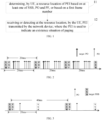
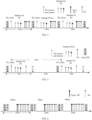
- the PEI is behind the SSB, as shown in FIG. 2 and FIG. 3 .
- the length of the offset is smaller than the length of period of the SSB to ensure: Y * Period _ SSB ⁇ SFN _ PO ⁇ SFN _ PEI ⁇ Y + 1 * Period _ SSB
- the offset can also be a negative number, that is, the PEI is in front of the SSB.
- Value of the offset can also be related to the period of SSB.
- the possible values of the offset are more or larger.
- the possible values of the offset are fewer or smaller. That is, the possible candidate values of the offset are proportional to the period of SSB.
- the interval offset between PEI (that is, the start location or end location of PEI) and the target SSB can also be fixed, that is, the interval offset can be agreed upon by the protocol.
- the PEI is located in a first slot of a frame next to a frame where the target SSB is located, or the PEI is located in a slot next to a slot where the target SSB is located.
- a duration of PEI can be configured or fixed, and the end location (or start location) of PEI is determined based on the start location (or end location) of PEI and the duration of PEI.
- a distance between the end position of PEI and PO needs to be greater than or equal to min_gap, for example, the following conditions need to be satisfied: PO_location-PEI_end ⁇ min_gap.
- the min_gap can be configured by the network side or reported by the UE. Or, the distance between the start location of PEI and PO needs to be greater than or equal to min_gap.
- the start location or end location of PEI can be updated to be PEI_location-Period_SSB. That is, when the network device configures Y through the system messages or broadcast signaling or Y is agreed in the protocol, the UE calculates whether the start location or end location of the PEI satisfies the conditions based on min_gap to determine whether to update Y When Y needs to be updated, Y is updated to Y+1.
- a resource location of the updated PEI satisfies: Y + 1 * Period _ SSB ⁇ SFN _ PO ⁇ SFN _ PEI ⁇ Y + 2 * Period _ SSB
- Step 3 the UE receives or detects the PEI at the resource location.
- PEI In NR, many signals are transmitted via different beams.
- PEI is likely to be the same as paging DCI, and PEI also has multiple PEI occasions.
- the K-th PEI occasion is corresponding to the K-th SSB.
- the beam for transmitting PEI on the K-th PEI occasion is corresponding to the beam for SSB at the K-th SSB location. That is, the number of PEI occasions is the same as the number of actually transmitted SSBs carried by SIB 1.
- the solution for determining the resource location of the PEI in the embodiment 1 includes determining multiple resource locations corresponding to the multi-beam PEI.
- the start location of the above PEI is a start location of PEI of the first beam.
- the end location of the PEI is an end location of the PEI of the last beam.
- the duration of the PEI includes the resource locations corresponding to PEIs of multiple beams.
- the specific method of how to determine resource locations corresponding to PEIs of multiple beams in the duration of the PEI is not limited in this embodiment of the application. It is assumed that the first PEI resource location in the duration of the PEI starts to be numbered, and the duration of the PEI includes multiple PEI resource locations.
- the K-th resource location among the multiple PEI resource locations completely or partially overlaps with the resource location where signals such as SSB and TRS are located
- the K-th resource location is an invalid PEI resource location
- the (K+1)-th PEI resource location is used to transmit the PEI of the K-th beam. That is, the invalid PEI resource location is dropped or skipped.
- the PEI originally transmitted at the invalid PEI resource location is postponed to the next valid PEI resource location for transmission.
- the network device transmits a PEI signal at the resource location, and the corresponding behavior of the step 3 at the UE side is that the UE receives the TRS/PEI signal at the resource location.
- the network device transmits the PEI at the resource location only if there is paging DCI at the PO.
- the network device transmits the PEI at the resource location only if there is paging DCI at the PO.
- the UE receives or detects the PEI at the determined resource location of PEI, and finally the UE receives the PEI.
- the network device will not transmit PEI at the determined resource location.
- the UE receives or detects the PEI at the determined resource location of the PEI, and finally the UE cannot receive the PEI.
- the PEI described in the present disclosure may be DCI-based PEI, or sequence-based PEI.
- the sequence-based PEI may be TRS-based PEI, or CSI-RS-based PEI, or secondary synchronization signal (SSS)-based PEI (SSS-based PEI).
- SSS secondary synchronization signal
- the embodiments of the present application do not specify the specific form, specific type, or specific format of PEI.
- the PEI can be used to indicate at least one of the following:
- Steps for the network device to implement the paging early indication transmission method are corresponding to those of the UE and will not be repeated here.
- Embodiment 2 is described by taking an example in which: the resource location of the PEI is determined through the target SSB and determine the target SSB through the target PO.
- a monitoring start location of the PEI is determined according to the target SSB.
- Step 1 determining a target PO and determining a target SSB based on the target PO.
- the step 1 of the embodiment 2 is implemented in the same manner as the step 1 of the embodiment 1, and will not be repeated here.
- Step 2 the UE determines the resource location of the PEI based on the target SSB.
- the monitoring start location of the PEI can be determined based on the location of the target SSB.
- An offset of the monitoring start location of the PEI and the target SSB can be configured.
- a length of the offset is less than a length of the period of the SSB, and the offset is greater than or equal to 0.
- the PEI is behind the SSB, as shown in FIG. 4 and FIG. 5.
- the length of the offset is smaller than the length of period of the SSB to ensure: Y * Period _ SSB ⁇ SFN _ PO ⁇ SFN _ PEI ⁇ Y + 1 * Period _ SSB
- the offset can also be a negative number, that is, the monitoring start location of the PEI is in front of the SSB.
- Value of the offset can also be related to the period of SSB.
- the possible values of the offset are more or larger.
- the possible values of the offset are fewer or smaller. That is, the possible candidate values of the offset are proportional to the period of SSB.
- the interval offset between the monitoring start location of the PEI and the target SSB can also be fixed, that is, the interval offset can be agreed upon by the protocol.
- the monitoring start location of the PEI is located in a first slot of a frame next to a frame where the target SSB is located, or the PEI is located in a slot next to a slot where the target SSB is located.
- a search space (SS) set of the PEI can be configured, such as multiple SS Set shown in FIG. 4 and FIG. 5 .
- the UE starts from the monitoring start location of the PEI to prepare for monitoring the PEI.
- the specific start location of PEI monitoring is indicated by "monitoringSlotPeriodicityAndOffset" of the search space set.
- duration is duration of multiple search spaces under multiple beams.
- a distance between the monitoring end position of PEI (PEI_end) and PO needs to be greater than or equal to min_gap, for example, the following conditions need to be satisfied: PO_location-(PEI_location+duration) ⁇ min_gap.
- the min_gap can be configured by the network side or reported by the UE.
- the monitoring start location of PEI can be updated to be PEI_location-Period_SSB. That is, when the network device configures Y through the system messages or broadcast signaling or Y is agreed in the protocol, the UE calculates whether the monitoring start location of the PEI satisfies the conditions based on min_gap to determine whether to update Y When Y needs to be updated, Y is updated to Y+1.
- a new monitoring start location of the PEI satisfies: Y + 1 * Period _ SSB ⁇ SFN _ PO ⁇ SFN _ PEI ⁇ Y + 2 * Period _ SSB
- Step 3 the UE receives or detects the PEI at the resource location.
- PEI In NR, many signals are transmitted via different beams.
- PEI is likely to be the same as paging DCI, and PEI also has multiple PEI occasions.
- the K-th PEI occasion is corresponding to the K-th SSB.
- the beam for transmitting PEI on the K-th PEI occasion is corresponding to the beam for SSB at the K-th SSB location. That is, the number of PEI occasions is the same as the number of actually transmitted SSBs carried by SIB1.
- the solution for determining the resource location of the PEI in the embodiment 2 includes determining multiple resource locations corresponding to the multi-beam PEI.
- the monitoring start location of the PEI is a monitoring start location of PEI of the first beam.
- the duration of the PEI includes the resource locations corresponding to PEIs of multiple beams.
- the specific method of how to determine resource locations corresponding to PEIs of multiple beams in the duration of the PEI is not limited in this embodiment of the application. It is assumed that the first PEI resource location in the duration of the PEI starts to be numbered, and the duration of the PEI includes multiple PEI resource locations.
- the K-th resource location among the multiple PEI resource locations completely or partially overlaps with the resource location where signals such as SSB and TRS are located
- the K-th resource location is an invalid PEI resource location
- the (K+1)-th PEI resource location is used to transmit the PEI of the K-th beam. That is, the invalid PEI resource location is dropped or skipped.
- the PEI originally transmitted at the invalid PEI resource location is postponed to the next valid PEI resource location for transmission.
- Steps for the network device to implement the paging early indication transmission method are corresponding to those of the UE and will not be repeated here.
- Embodiment 3 is described by taking an example in which the resource location of PEI is determined through the target PO.
- a start location or end location of the PEI is determined according to the target PO.
- Step 1 determining the target PO.
- solution one is a PO-dense scenario
- solution two is a PO-sparse scenario.
- the UE determines a target PO from multiple POs of the network device in the following manners.
- Manner 1 the UE determines the target PO based on paging parameters N and Ns; where N represents the number of paging frames in one DRX cycle, and Ns represents the number of POs in one paging frame. Therefore, when values of N and Ns are relatively large, it indicates that POs are dense in the DRX cycle.
- the target PO is one PO of X POs
- the value of X is related to the paging parameters N and Ns. For example, when the values of Ns and N are relatively large, the value of X is large; and when the values of N and Ns are relatively small, the value of X is small.
- the parameter 0 may be an index of the PO in the X POs.
- this embodiment is not limited to that the PO corresponding to the parameter 0 with a value of 0 is the target PO.
- the protocol can predefine that the PO corresponding to the target parameter with a value of any one of 0, ..., X-1, is the target PO. Through predefinition, the network device and the UE will not have ambiguity about the parameter 0 corresponding to the target PO.
- the system message broadcast can also be used to notify that the PO corresponding to the parameter 0 with a value of any one of 0, ..., X-1, is the target PO, which is not limited thereto.
- Manner 2 the UE determines the target PO based on a parameter X of X POs corresponding to one PEI broadcast by the network device.
- this manner 2 The difference between this manner 2 and the above manner 1 is that the value of X is notified by the network device through system messages or other broadcast signaling, and the network device and the UE determine the target PO through the parameter X of X POs corresponding to one PEI which is broadcast.
- Manner 3 the UE determines the target PO according to a period of the PEI.
- the network device configures a period of the PEI through system messages or other broadcast signaling.
- the protocol specifies that the target PO is a first PO corresponding to a first PF in each period of the PEI.
- the target PF may also be determined; and in this embodiment, the target PO is preferably determined.
- the UE determines the target PF according to at least one of the paging parameter N and UE_ID; the UE determines the target PF according to the parameter X, where the parameter X is used to indicate that one PEI corresponds to X POs.
- the UE can also determine the target PF according to the period of the PEI. The following describes the manner for determining the target PF through specific embodiments.
- Manner 4 the UE determines the target PF according to the paging parameter N.
- the target PF is one PF in X1 PFs, and the value of X1 is related to the paging parameter N. For example, when the value of N is relatively large, the value of X1 is large; and when the value of N is relatively small, the value of X1 is small.
- the parameter 1 may be an index of the PF in X1 PFs.
- SFN_PF_1 represents the SFN where the PF is located; N is the number of PFs in one DRX cycle; T is the duration of the DRX cycle.
- this embodiment is not limited to the PF corresponding to the parameter 1 with a value of 0 as the target PF.
- the protocol can predefine that the PF corresponding to the parameter 1 with a value of any one of 0, ..., X-1 is the target PF. Through predefinition, the network device and the UE will not have ambiguity about the parameter 1 corresponding to the target PF.
- the system message broadcast can also be used to notify that the PF corresponding to the parameter 1 with a value of any one of 0, ..., X-1, is the target PF, which is not limited thereto.
- Manner 5 the UE determines the target PF based on a parameter X of X POs corresponding to one PEI broadcast by the network device.
- the target PF is determined through X1 and the manner 4.
- Manner 6 the UE determines the target PF according to a period of the PEI.
- the network device configures a period of the PEI through system messages or other broadcast signaling.
- the protocol specifies that the target PF is a first PF in each period of the PEI.
- the above manners 1-3 are optional implementation manners for determining the target PO, and the above manners 4-6 are optional implementation manners for determining the target PF.
- the differences between the solution 2 and the solution 1 are the determination manners of the target PO.
- the UE determines that PO monitored by the UE itself is the target PO.
- the frame number (SFN_PO) of PF corresponding to the PO monitored by the UE itself is determined by PF, "first PDCCH-MonitoringOccasionOfPO" and subcarrier spacing.
- PF subcarrier spacing
- SCS subcarrier spacing
- the UE can also determine that the PF where the PO monitored by the UE itself is located, is the target PF.
- the target PO is preferably determined.
- Step 2 the UE determines the resource location of the PEI based on the target PO.
- the start location or end location of the PEI can be determined based on the location of the target PO.
- An offset of PEI (that is, a start location or end location of PEI) and the target PO can be configured.
- the start location or end location of the PEI is determined by the position of the target PO and the offset, for example, the frame number (SFN_PEI) where the start/end location of PEI is located, needs to satisfy: Y ⁇ Period _ SSB ⁇ SFN _ PO ⁇ SFN _ PEI ⁇ Y + 1 ⁇ Period _ SSB
- the offset can also be a negative number, that is, the PEI is in front of the SSB.
- Value of the offset can also be related to the period of SSB.
- the possible values of the offset are more or larger.
- the possible values of the offset are fewer or smaller. That is, the possible candidate values of the offset are proportional to the period of SSB.
- the interval offset between PEI (that is, the start location or end location of PEI) and the target SSB can also be fixed, that is, the interval offset can be agreed upon by the protocol.
- the PEI is located in a first slot of the first L frames of frame where the target PO is located.
- a duration of PEI can be configured or fixed, and the end location (or start location) of PEI is determined based on the start location (or end location) of PEI and the duration of PEI.
- a distance between the end position of PEI and PO needs to be greater than or equal to min_gap, for example, the following conditions need to be satisfied: PO_location-PEI_end ⁇ min_gap.
- the min_gap can be configured by the network side or reported by the UE. Or, the distance between the start location of PEI and PO needs to be greater than or equal to min_gap.
- the start location or end location of PEI can be updated to be PEI_location-Period_SSB.
- the UE starts monitoring the PEI at the start location of the PEI.
- Step 3 the UE receives or detects the PEI at the resource location.
- Steps for the network device to implement the paging early indication transmission method are corresponding to those of the UE and will not be repeated here.
- Embodiment 4 is described by taking an example in which the resource location of the PEI is determined through the target PO.
- a monitoring start location of the PEI is determined according to the target PO.
- Step 1 determining a target PO.
- the step 1 of the embodiment 4 is implemented in the same manner as the step 1 of the embodiment 3.
- the specific implementation process will not be repeated here.
- Step 2 the UE determines the resource location of the PEI based on the location of the target PO.
- the monitoring start location of the PEI can be determined based on the location of the target PO.
- An offset of the monitoring start location of the PEI and the target PO can be configured.
- the monitoring start location of the PEI is determined by the location of the target PO and the offset, for example, the frame number (SFN_PEI) where the monitoring start location of the PEI is located, needs to satisfy: Y * Period _ SSB ⁇ SFN _ PO ⁇ SFN _ PEI ⁇ Y + 1 ⁇ Period _ SSB
- the offset can also be a negative number, that is, the monitoring start location of the PEI is in front of the SSB.
- Value of the offset can also be related to the period of SSB.
- the possible values of the offset are more or larger.
- the possible values of the offset are fewer or smaller. That is, the possible candidate values of the offset are proportional to the period of SSB.
- the interval offset between the monitoring start location of the PEI and the target PO can also be fixed, that is, the interval offset can be agreed upon by the protocol.
- the monitoring start location of the PEI is located in a first slot of the first L frames of frame where the target PO is located.
- a search space (SS) set of the PEI can be configured.
- the UE starts from the monitoring start location of the PEI to prepare for monitoring the PEI.
- the specific start location of PEI monitoring is indicated by "monitoringSlotPeriodicity AndOffset" of the search space set.
- a distance between the monitoring end position of PEI (PEI_end) and PO needs to be greater than or equal to min_gap, for example, the following conditions need to be satisfied: PO_location-(PEI_location+duration) ⁇ min_gap.
- the min_gap can be configured by the network side or reported by the UE.
- the monitoring start location of PEI can be updated to be PEI_location-Period_SSB.
- the UE starts monitoring the PEI at the monitoring start location of the PEI.
- Step 3 the UE receives or detects the PEI at the resource location.
- Steps for the network device to implement the paging early indication transmission method are corresponding to those of the UE and will not be repeated here.
- the UE determines the resource location of the PEI based on one or more of the target SSB, target PO and target PF, and receives or detects, at the resource location, the PEI which is used to indicate an existence situation of paging, thereby reducing the power consumption of the UE. Determining the resource location of PEI through SSB can make PEI closer to SSB, and in such case, greater power saving effect can be obtained.
- the UE in the idle state can receive the PEI immediately after receiving the SSB; when the PEI indicates that the there is no paging for the UE, the UE can enter the low-power sleep state as soon as possible, thereby reducing power consumption.
- One embodiment of the present application further provides a method for determining a resource location of PEI when one PEI is corresponding to multiple POs or multiple PFs.
- Embodiment 5 is described by taking an example in which the resource location of the PEI is determined based on the first frame number and the first index.
- the UE and gNB determine the first frame number and the first index.
- the first frame number is a radio frame number where the PEI is located.
- the first index is an index of the PEI in one or more PEIs included in a radio frame corresponding to the first frame number.
- the UE and gNB determine the resource location of the PEI according to the first frame number and the first index.
- the UE receives or detects, at the resource location, the PEI transmitted by the gNB.
- the radio frame corresponding to the first frame number includes one or more PEIs, or start locations of one or more PEIs.
- the first index is an index of the PEI in at least one PEI included in the radio frame where the PEI is located, and is used to indicate a position of the PEI in the first frame number.
- Step 1 the UE determines a first frame number, which is a radio frame number where the PEI is located and represented by PEI_SFN.
- PEI_SFN is the frame number of the radio frame where PEI is located (that is, the first frame number)
- PF_offset is an offset used to determine PF
- PEI_offset is an offset used to determine PEI_SFN
- T is the DRX cycle
- N is a total number of PFs in each DRX cycle
- Ns is the number of POs included in each PF
- X is the number of POs corresponding to one PEI
- UE_ID is 5G-S-TMSI mod 1024.
- UE_ID is 5G-S-TMSI mod 1024.
- PF_offset, T, N and Ns can be paging parameters configured by the network.
- PEI_offset may be configured by the network device or agreed in a protocol, which is not limited in this embodiment.
- PEI_offset is used to describe radio frames between the frame number (PEI_SFN) where the PEI is located and the frame number (PF) where the PO is located, and its unit is a radio frame.
- X may be configured by the network device or agreed in the protocol, which is not limited in this embodiment.
- Step 2 the UE determines the first index.
- the first index may be determined in the following two manners:
- T, N, and Ns can be paging parameters configured by the network device.
- X may be configured by the network device or agreed in a protocol, which is not limited in this embodiment.
- PEI_i_s is the first index
- i_s is i_s corresponding to the PO determined by the UE
- X is the number of POs corresponding to one PEI
- Ns is the number of POs included in each PF
- the UE can determine the SFN where the PEI is located through the first frame number determined in the above step 1, and then determine the index of the PEI in at least one PEI included in the radio frame where the PEI is located based on the first index determined in the above step 2.
- the first index can be used to determine a specific resource location of the PEI in the first frame number. For example, if the first frame number includes 2 PEIs, then the network device configures two values for "firstPDCCH-MonitoringOccasionOfPEI".
- the UE determines a PEI PDCCH monitoring occasion based on paging search space, first PEI PDCCH monitoring occasion "firstPDCCH-MonitoringOccasionOfPEI" configured in "DownlinkConfigCommonSIB” field and the number “nrofPDCCHMonitoringOccasionPerSSB-InPO" of paging PDCCH MOs corresponding to one SSB.
- first PEI PDCCH monitoring occasion “firstPDCCH-MonitoringOccasionOfPEI” configured in "DownlinkConfigCommonSIB” field
- the PEI PDCCH monitoring occasion is the same as the remaining minimum system information (RMSI).
- PEI is a set of "S*X" continuous PDCCH monitoring occasions, where S represents the number of actually transmitted SSBs determined based on Synchronization Signal and PBCH block (SSB) location information carried by SIB1; X represents the number of PDCCH MOs corresponding to each SSB configured in "nrofPDCCHMonitoringOccasionPerSSB-InPEI"; if value of X is not configured, X is equal to 1.
- a start point of PDCCH MO in the (PEI_i_s+1)-th PEI is a (PEI_i_s+1)-th value in a high-level parameter "firstPDCCH-MonitoringOccasionOfPEI"; otherwise, the start point of the PDCCH MO in the (PEI_i_s+1)-th PEI is equal to i_s*S*X.
- the UE and gNB can determine the resource location of the PEI based on the determined first frame number and first index.
- the PEI is the PEI that the UE needs to monitor, and the PEI is used to indicate the paging situation of the PO that the UE needs to monitor.
- the fifth embodiment provides a method of determining the resource location of the PEI based on the first frame number and the first index. The determination method is simpler for the UE and has less impact on the protocol.
- One embodiment of the present application further provides a paging early indication transmission method, which is applied to a network device, as shown in FIG. 10 , including:
- the target SSB is one SSB among multiple SSBs.
- the target PO is one PO among multiple POs.
- the target PF is one PF among multiple PFs.
- the network device determines the resource location of the PEI, it may be determined based on one or more of the target SSB, target PO and target PF or a combination of multiple thereof.
- the first frame number is a frame number of a radio frame in which the PEI is located.
- the network device can determine the resource location of the PEI according to the first frame number.
- the radio frame corresponding to the first frame number may include one or more PEIs, or start locations of one or more PEIs.
- the network device After the network device determines the resource location of the PEI, the network device transmits the PEI at the resource location.
- the PEI can be used to indicate the existence situation of paging, i.e., indicating whether there is paging, for example, "1" indicates that there is paging, and "0" indicates that there is no paging.
- the UE can determine the resource location of the PEI by itself, receives the PEI, and then determines whether the UE needs to receive paging messages. When the UE does not need to receive paging messages, the UE can enter a low power consumption or sleep state, thereby reducing power consumption of the UE.
- the network device transmits the PEI at the resource location.
- the PEI can be used to indicate the existence situation of paging, that is, the PEI indicates whether there is paging or not; or, when there is no paging, the network device does not transmit PEI at the determined resource location.
- the network device determines the resource location of the PEI based on one or more of the target SSB, target PO and target PF, or determines the resource location of the PEI based on the first frame number, thereby transmitting, at the resource location, the PEI which is used to indicate an existence situation of paging.
- the UE determines whether it needs to receive paging messages according to indication of PEI. Determining the resource location of PEI through SSB can make PEI closer to SSB, and in such case, greater power saving effect can be obtained.
- One embodiment of the present application further provides a method for determining a resource location of PEI when one PEI is corresponding to multiple POs or multiple PFs.
- the method further includes: determining at least one of the target SSB, the target PO and the target PF.
- determining the target SSB includes: determining the target SSB according to a target parameter; where the target parameter include the target PO or target PF.
- the target SSB can be determined based on the target PO or the target PF, that is, the resource location of the PEI can be determined based on the target PO or the target PF; or, the target SSB can be determined based on the target PO or target PF, and the resource location of the PEI can be determined based on the target SSB.
- determining the target SSB according to the target parameter may include:
- the determination manners of Y may include at least one of the following:
- the resource location of the PEI can be determined according to the target SSB, so that the UE receives or detects the PEI at the resource location.
- the target SSB may be determined according to the position of the target PO or target PF and the distance between the target PO or target PF and the target SSB.
- the distance satisfies: Y * Period _ SSB ⁇ PO _ location ⁇ SSB _ location ⁇ Y + 1 * Period _ SSB
- Period_SSB represents the period of SSB
- POlocation represents a position of the target PO (for example, a frame number, a subframe number, a slot number or an OFDM symbol where a start location of the first MO of the target PO is located);
- SSB_location represents location of the target SSB (for example, a frame number, a subframe number, a slot number or an OFDM symbol where a start location or an end location of the target SSB is located);
- PO_location-SSB_location represents a distance.
- Y1 1; when Y1 is greater than 1, the distance is the maximum distance or the minimum distance that satisfies the above conditions.
- the target SSB is SSB corresponding to the maximum distance or the minimum distance that satisfies the above conditions.
- Y is a function related to the number of SSBs between the target SSB and the target parameter.
- the manner of determining the target PO or determining the target PF may include one of the following:
- the network device determining the target PO or the target PF may include directly determining the resource location of the PEI based on the target PO or the target PF; or, determining the target SSB based on the target PO or the target PF, and determining the resource location of the PEI based on the target SSB.
- determining the resource location of the PEI based on at least one of the target SSB, target PO and target PF includes: determining the resource location of the PEI according to the resource location of the target SSB, or the target PO or the target PF, and a first offset; where the first offset is an offset between the resource location of the PEI and the resource location of the target SSB, or the target PO or the target PF.
- the first offset may be configured by the network side, or may be agreed upon by a protocol, that is, an interval between the PEI and the target SSB, or an interval between the PEI and the target PO, or an interval between the PEI and the target PF, are fixed.
- a protocol that is, an interval between the PEI and the target SSB, or an interval between the PEI and the target PO, or an interval between the PEI and the target PF, are fixed.
- the manner of determining the first offset may include:
- the resource location of the PEI may include at least one of the following:
- the method further includes: when the resource location of the PEI includes the start location of the PEI and/or the monitoring start location of the PEI, determining the end location or monitoring end location of the PEI based on the start location and/or monitoring start location of the PEI as well as duration of the PEI.
- the end location of PEI can be determined according to the start location and duration of PEI.
- the monitoring end location of the PEI can be determined based on the monitoring start location of the PEI and the duration of the PEI.
- the start location or monitoring start location of the PEI can also be determined based on the duration.
- the resource location of the PEI after the resource location of the PEI is determined based on one or more of the target SSB, target PO and target PF, it can further be judged whether the determined resource location satisfies a predetermined condition. When the condition is satisfied, the PEI can be transmitted at the determined resource location. The details are explained below.
- the method further includes: determining whether the resource location satisfies a first condition; if the first condition is not satisfied, updating the resource location to be a difference between the resource location and the period of the SSB.
- the first condition includes: a distance between the resource location and the resource location of the target PO or target PF is greater than or equal to the first interval.
- the first interval is the minimum value of the distance between the resource location of the PEI (preferably the end location or the monitoring end location) and the target PO or target PF.
- the resource location of the target PO or the target PF may be a position of the first MO of the target PO or a start location of the target PO, or the end location of the target PO.
- the end location or monitoring end location of the resource location may be judged.
- the end location satisfies the condition: PO_location-PEI_end ⁇ min_gap, where min_gap is the first interval.
- the step of transmitting at the resource location, the PEI to the UE in the step 102 may be performed.
- the resource location needs to be updated as a difference between the resource location (that is, the resource location determined in the step 101) and the period of the SSB, that is, resource location updated as PEI_location-Period_SSB. That is, when the network device configures Y through the system message or broadcast signaling or Y is agreed in the protocol, the UE calculates and updates Y according to min_gap, and updates Y to Y+1.
- the PEI includes X beams
- the resource location of the PEI include: X resource locations corresponding to the PEI of the X beams.
- the transmitting the PEI at the resource location to the UE may include: when a first resource location of the X resource locations overlaps with a resource location of a first signal, transmitting the PEI at a second resource location, where the second resource location is a first resource location after the first resource location.
- the first resource location is, for example, the K-th resource location in the X resource locations.
- the first signal may include at least one of SSB, channel state information reference signal (CSI-RS), time-frequency tracking reference signal (TRS), PDCCH, PDSCH, demodulation reference signal (DMRS).
- CSI-RS channel state information reference signal
- TRS time-frequency tracking reference signal
- PDSCH demodulation reference signal
- DMRS demodulation reference signal
- the K-th resource location in multiple resource locations completely or partially overlaps with the resource location where signals such as SSB and TRS are located, the K-th resource location is invalid PEI resource location, and the (K+1)-th resource location is used to transmit the PEI of the K-th beam, that is, invalid PEI resource locations can be dropped or skipped, and valid PEI resource locations are postponed.
- the method further includes: determining the first frame number, where the first frame number is a frame number of a radio frame where the PEI is located.
- the network device determines the first frame number, that is, determines the frame number of the radio frame where the PEI is located.
- the first frame number may be represented by PEI_SFN.
- the method further includes: determining a first index, where the first index is an index of the PEI.
- the determining the resource location of the PEI based on the first frame number may include: determining the resource location of the PEI based on the first frame number and the first index.
- the first index is an index of a PEI, which may be an index of the PEI in at least one PEI included in the radio frame where the PEI is located.
- the determining, by the network device, the resource location of the PEI based on the first frame number may include: determining the resource location of the PEI only based on the first frame number; or, determining the resource location of the PEI based on the first frame number and the first index. For example, when the radio frame corresponding to the first frame number includes only one PEI, the resource location of the PEI can be determined only based on the first frame number; when the radio frame corresponding to the first frame number includes multiple PEIs, the resource location of the PEI can be determined based on the first frame number and the first index.
- the determining the first frame number includes: determining the first frame number according to a third parameter, where the third parameter includes at least one of a second interval (PEI_offset), a paging frame offset (PF_offset), DRX cycle (T), a total number (N) of PFs in each DRX cycle, the number (Ns) of POs included in each PF, the number (X) of POs corresponding to one PEI, and UE_ID.
- the third parameter includes at least one of a second interval (PEI_offset), a paging frame offset (PF_offset), DRX cycle (T), a total number (N) of PFs in each DRX cycle, the number (Ns) of POs included in each PF, the number (X) of POs corresponding to one PEI, and UE_ID.
- the second interval is an interval used to determine the first frame number, and the second interval can be used to describe the number of radio frames between the first frame number and the frame number (i.e., PF) where the PO is located.
- the paging frame offset is used to determine the offset of the PF.
- the first frame number may be determined according to one or more of the third parameters.
- the first frame number is related to a product of a fourth parameter, a fifth parameter and a sixth parameter.
- the fourth parameter is related to at least one of the DRX cycle and the total number of PFs in each DRX cycle.
- the fourth parameter satisfies (T div N).
- the fifth parameter is related to at least one of UE ID, the total number of PFs in each DRX cycle, and the sixth parameter.
- the sixth parameter is related to at least one of the number of POs corresponding to one PEI and the number of POs included in each PF.
- the fifth parameter is related to UE_ID, the total number (N) of PFs in each DRX cycle and the sixth parameter (A), then the fifth parameter can satisfy: floor((UE_ID mod N)/A).
- a result of modulo operation of a sum of the first frame number, the second interval and the paging frame offset, and the DRX cycle is equal to a product of the fourth parameter, the fifth parameter and the sixth parameter.
- PEI_SFN is the frame number (that is, the first frame number) of the radio frame where PEI is located
- PF_offset is the offset used to determine PF
- PEI_offset is the offset used to determine PEI_SFN
- T is the DRX cycle
- N is the total number of PFs in each DRX cycle
- Ns is the number of POs included in each PF
- X is the number of POs corresponding to one PEI
- UE_ID is 5G-S-
- PF_offset, T, N and Ns can be paging parameters configured by the network.
- PEI_SFN may be configured by the network device or agreed in a protocol, which is not limited in this embodiment.
- PEI_offset is used to describe radio frames between the frame number (PEI_SFN) where the PEI is located and the frame number (PF) where the PO is located, and its unit is a radio frame.
- X may be configured by the network device or agreed in the protocol, which is not limited in this embodiment.
- the determining the first index may include:
- the UE determines the first index, which is an index of the PEI in the first frame number, or an index of PEI in at least one PEI included in the radio frame where the PEI is located.
- the first index can be represented with PEI_i_s.
- the seventh parameter includes: UE_ID, the total number (N) of PFs in each DRX cycle, the number (Ns) of POs included in each PF, and the number (X) of POs corresponding to one PEI
- T, N, and Ns can be paging parameters configured by the network device.
- X may be configured by the network device or agreed in a protocol, which is not limited in this embodiment.
- PEI_i_s is the first index
- i_s is i_s corresponding to the PO determined by the UE
- X is the number of POs corresponding to one PEI
- Ns is the number of POs included in each PF
- the network device may determine the resource location of the PEI based on the first frame number.
- the network device may determine the resource location of the PEI only based on the first frame number, or based on the first frame number and the first index, which is simple for the network device and has less impact on the protocol.
- the implementation in which the UE determines the resource location of the PEI based on at least one of the target SSB, target PO, and target PF, or based on the first frame number is also applicable to the method embodiments of the network device, as shown in FIG. 2 to FIG. 9b , which will not be repeated here.
- one embodiment of the present application provides a paging early indication transmission apparatus 110, which is applied to user equipment and includes:
- the PEI is used to indicate the existence situation of paging.
- the apparatus further includes: a third determining unit is configured to determine at least one of the target SSB, the target PO and the target PF.
- the third determining unit includes: a first determination subunit configured to determine the target SSB according to the target parameter;
- target parameter includes target PO or target PF.
- the first determination subunit is specifically configured to determine the target SSB according to a position of the target parameter and a distance between the target parameter and the target SSB.
- the distance satisfies: greater than Y periods of SSBs and less than or equal to (Y+Y1) periods of SSBs, Y is the number of SSBs between the target SSB and the target parameter, Y1 ⁇ 1.
- the determination manners of Y may include at least one of the following:
- the manner of determining the target PO or determining the target PF may include one of the following:
- the first determining unit 111 is specifically configured to determine the resource location of the PEI according to the resource location of the target SSB, or the target PO or the target PF, and the first offset; where the first offset is an offset between the resource location of the PEI and the resource location of the target SSB, or the target PO or the target PF.
- the resource location of the PEI may include at least one of the following:
- the apparatus further includes: a fourth determination unit configured to, when the resource location of the PEI includes the start location of the PEI and/or the monitoring start location of the PEI, determine the end location or monitoring end location of the PEI based on the start location and/or monitoring start location of the PEI as well as duration of the PEI.
- a fourth determination unit configured to, when the resource location of the PEI includes the start location of the PEI and/or the monitoring start location of the PEI, determine the end location or monitoring end location of the PEI based on the start location and/or monitoring start location of the PEI as well as duration of the PEI.
- the first offset is less than the period length of the target SSB; or, the first offset is proportional to the period of the target SSB.
- the apparatus further includes:
- the first condition includes: a distance between the resource location and the resource location of the target PO or target PF is greater than or equal to the first interval.
- the PEI includes X beams
- the resource location of the PEI include: X resource locations corresponding to the PEI of the X beams.
- the detection unit is specifically configured to, when a first resource location of the X resource locations overlaps with a resource location of a first signal, receive or detect the PEI at a second resource location, where the second resource location is a first resource location after the first resource location.
- the apparatus further includes a ninth determining unit configured to determine a first frame number, where the first frame number is a frame number of a radio frame where the PEI is located.
- the apparatus further includes a tenth determination unit configured to determine a first index, where the first index is an index of the PEI.
- the first determining unit is specifically configured to determine the resource location of the PEI according to the first frame number and the first index.
- the ninth determination unit is specifically configured to determine the first frame number according to a third parameter, where the third parameter includes at least one of a second interval, a paging frame offset, DRX cycle, a total number of PFs in each DRX cycle, the number of POs included in each PF, the number of POs corresponding to one PEI, and UE_ID.
- the third parameter includes at least one of a second interval, a paging frame offset, DRX cycle, a total number of PFs in each DRX cycle, the number of POs included in each PF, the number of POs corresponding to one PEI, and UE_ID.
- the first frame number is related to a product of a fourth parameter, a fifth parameter and a sixth parameter.
- the fourth parameter is related to at least one of the DRX cycle and the total number of PFs in each DRX cycle.
- the fifth parameter is related to at least one of UE ID, the total number of PFs in each DRX cycle, and the sixth parameter.
- the sixth parameter is related to at least one of the number of POs corresponding to one PEI and the number of POs included in each PF.
- a result of modulo operation of a sum of the first frame number, the second interval and the paging frame offset, and the DRX cycle is equal to a product of the fourth parameter, the fifth parameter and the sixth parameter.
- the tenth determination unit is specifically configured to determine the first index according to a seventh parameter, where the seventh parameter includes at least one of: UE_ID, the total number of PFs in each DRX cycle, and the number of POs included in each PF, and the number of POs corresponding to one PEI; or, determine the first index based on an index of PO, the number of POs included in each PF, and the number of POs corresponding to one PEI.
- the UE determines the resource location of the PEI based on one or more of the target SSB, target PO and target PF, or determines the resource location of the PEI based on the first frame number, and receives or detects, at the resource location, the PEI which is used to indicate an existence situation of paging, thereby reducing the power consumption of the UE.
- one embodiment of the present application provides a paging early indication transmission apparatus 120, which is applied to a network device, including:
- the apparatus further includes: a sixth determination unit configured to determine at least one of the target SSB, the target PO, and the target PF.
- the sixth determining unit includes:
- the second determination subunit is specifically configured to determine the target SSB according to a position of the target parameter and a distance between the target parameter and the target SSB; where the distance satisfies: greater than Y periods of SSBs and less than or equal to (Y+Y1) periods of SSBs, Y is the number of SSBs between the target SSB and the target parameter, Y1 ⁇ 1.
- determination manners of Y may include at least one of the following:
- the manner of determining the target PO or determining the target PF may include one of the following:
- the second determination unit is specifically configured to determine the resource location of the PEI according to the resource location of the target SSB, or the target PO or the target PF, and the first offset; where the first offset is an offset between the resource location of the PEI and the resource location of the target SSB, or the target PO or the target PF.
- the resource location of the PEI may include at least one of the following:
- the apparatus further includes: a seventh determination unit configured to, when the resource location of the PEI includes the start location of the PEI and/or the monitoring start location of the PEI, determine the end location or monitoring end location of the PEI based on the start location and/or monitoring start location of the PEI as well as duration of the PEI.
- a seventh determination unit configured to, when the resource location of the PEI includes the start location of the PEI and/or the monitoring start location of the PEI, determine the end location or monitoring end location of the PEI based on the start location and/or monitoring start location of the PEI as well as duration of the PEI.
- the first offset is less than the period length of the target SSB; or the first offset is proportional to the period of the target SSB.
- the apparatus further includes:
- the first condition includes: a distance between the resource location and the resource location of the target PO or target PF is greater than or equal to the first interval.
- the PEI includes X beams
- the resource location of the PEI include: X resource locations corresponding to the PEI of the X beams.
- the transmission unit is specifically configured to: when a first resource location of the X resource locations overlaps with a resource location of a first signal, transmit the PEI at a second resource location to the UE, where the second resource location is a first resource location after the first resource location.
- the apparatus further includes an eleventh determining unit configured to determine a first frame number, where the first frame number is a frame number of a radio frame where the PEI is located.
- the apparatus further includes a twelfth determining unit configured to determine a first index, where the first index is an index of the PEI.
- the second determining unit is specifically configured to determine the resource location of the PEI according to the first frame number and the first index.
- the eleventh determination unit is specifically configured to determine the first frame number according to a third parameter, where the third parameter includes at least one of a second interval, a paging frame offset, DRX cycle, a total number of PFs in each DRX cycle, the number of POs included in each PF, the number of POs corresponding to one PEI, and UE_ID.
- the third parameter includes at least one of a second interval, a paging frame offset, DRX cycle, a total number of PFs in each DRX cycle, the number of POs included in each PF, the number of POs corresponding to one PEI, and UE_ID.
- the first frame number is related to a product of a fourth parameter, a fifth parameter and a sixth parameter.
- the fourth parameter is related to at least one of the DRX cycle and the total number of PFs in each DRX cycle.
- the fifth parameter is related to at least one of UE ID, the total number of PFs in each DRX cycle, and the sixth parameter.
- the sixth parameter is related to at least one of the number of POs corresponding to one PEI and the number of POs included in each PF.
- a result of modulo operation of a sum of the first frame number, the second interval and the paging frame offset, and the DRX cycle is equal to a product of the fourth parameter, the fifth parameter and the sixth parameter.
- the twelfth determining unit is specifically configured to determine the first index according to a seventh parameter, where the seventh parameter includes at least one of: UE_ID, the total number of PFs in each DRX cycle, and the number of POs included in each PF, and the number of POs corresponding to one PEI; or, determine the first index based on an index of PO, the number of POs included in each PF, and the number of POs corresponding to one PEI.
- the network device determines the resource location of the PEI based on one or more of the target SSB, target PO and target PF, or determines the resource location of the PEI based on the first frame number, thereby transmitting, at the resource location, the PEI which is used to indicate an existence situation of paging.
- the UE determines whether it needs to receive paging messages according to indication of PEI.
- each functional unit in each embodiment of the present application may be integrated into one processing unit, each unit may exist separately physically, or two or more units may be integrated into one unit.
- the foregoing integrated units may be implemented in the form of hardware or in the form of software functional units.
- the integrated units are realized in the form of software function units and sold or used as independent products, they may be stored in a processor-readable storage medium.
- the computer software product is stored in a storage medium, includes several instructions which enables a computer device (which may be a personal computer, a server, or a network device, etc.) or a processor to execute all or part of the steps of the methods described in various embodiments of the present disclosure.
- the storage medium includes various media capable of storing program codes such as U disk, mobile hard disk, ROM, RAM, magnetic disk or optical disk.
- one embodiment of the present disclosure further provides a user equipment (UE), including: a memory 1320, a transceiver 1300, and a processor 1310.
- the memory 1320 is used to store computer programs.
- the transceiver 1300 is used to transmit and receive data under the control of the processor 1310.
- the processor 1310 is used to read the computer programs in the memory and perform the following operations:
- the processor is configured to read the computer program in the memory and perform the following operations: determine at least one of the target SSB, the target PO and the target PF.
- the processor is configured to read the computer program in the memory and perform the following operations:
- the processor is configured to read the computer program in the memory and perform the following operations: determining the target SSB according to a position of the target parameter and a distance between the target parameter and the target SSB.
- the distance satisfies: greater than Y periods of SSBs and less than or equal to (Y+Y1) periods of SSBs, Y is the number of SSBs between the target SSB and the target parameter, Y1 ⁇ 1.
- the determination manners of Y may include at least one of the following:
- the manner of determining the target PO or determining the target PF may include one of the following:
- the processor is configured to read the computer program in the memory and perform the following operations:
- the resource location of the PEI may include at least one of the following:
- the processor is configured to read the computer program in the memory and perform the following operations: when the resource location of the PEI includes the start location of the PEI and/or the monitoring start location of the PEI, determining the end location or monitoring end location of the PEI based on the start location and/or monitoring start location of the PEI as well as duration of the PEI.
- the first offset is less than the period length of the target SSB; or, the first offset is proportional to the period of the target SSB.
- the processor is configured to read the computer program in the memory and perform the following operations:
- the first condition includes: a distance between the resource location and the resource location of the target PO or target PF is greater than or equal to the first interval.
- the PEI includes X beams
- the resource location of the PEI include: X resource locations corresponding to the PEI of the X beams.
- the processor is configured to read the computer program in the memory and perform the following operations:
- the processor is configured to read the computer program in the memory and perform the following operations: determining a first frame number, where the first frame number is a frame number of a radio frame where the PEI is located.
- the processor is configured to read the computer program in the memory and perform the following operations: determining a first index, where the first index is an index of the PEI.
- the processor determining the resource location of the PEI according to the first frame number includes: determining the resource location of the PEI according to the first frame number and the first index.
- the processor is configured to read the computer program in the memory and perform the following operations: determining the first frame number according to a third parameter, where the third parameter includes at least one of a second interval, a paging frame offset, DRX cycle, a total number of PFs in each DRX cycle, the number of POs included in each PF, the number of POs corresponding to one PEI, and UE_ID.
- the third parameter includes at least one of a second interval, a paging frame offset, DRX cycle, a total number of PFs in each DRX cycle, the number of POs included in each PF, the number of POs corresponding to one PEI, and UE_ID.
- the first frame number is related to a product of a fourth parameter, a fifth parameter and a sixth parameter.
- the fourth parameter is related to at least one of the DRX cycle and the total number of PFs in each DRX cycle.
- the fifth parameter is related to at least one of UE ID, the total number of PFs in each DRX cycle, and the sixth parameter.
- the sixth parameter is related to at least one of the number of POs corresponding to one PEI and the number of POs included in each PF.
- a result of modulo operation of a sum of the first frame number, the second interval and the paging frame offset, and the DRX cycle is equal to a product of the fourth parameter, the fifth parameter and the sixth parameter.
- the processor is configured to read the computer program in the memory and perform the following operations:
- the UE determines the resource location of the PEI based on one or more of the target SSB, target PO and target PF, or determines the resource location of the PEI based on the first frame number, and receives or detects, at the resource location, the PEI which is used to indicate an existence situation of paging, thereby reducing the power consumption of the UE.
- a bus architecture may include any number of interconnected bus and bridge. Specifically, various circuits of one or more processors, which are represented by the processor 1310, and one or more memories, which are represented by the memory 1320, are linked together.
- the bus architecture may link various other circuits, such as a peripheral device, voltage regulator and a power management circuit together. These features are well known in this field; therefore, this disclosure does not make further description on these features.
- the bus interface provides an interface.
- the transceiver 1310 may be multiple elements, including a transmitter and a receiver and provide units, which communicate with other devices on the transmission medium.
- a user interface 1330 may also be an interface capable of externally connecting required devices, and the connected devices include but are not limited to keypads, displays, speakers, microphones, joysticks, etc.
- the processor 1310 is responsible for managing the bus architecture and the normal processing.
- the memory 1320 may be used to store data used by the processor 1310 for performing operations.
- the processor 1310 may be a central processing unit (CPU), an application specific integrated circuit (ASIC), a field-programmable gate array (FPGA) or a complex programmable logic device (CPLD).
- the processor may also adopt multi-core architecture.
- the processor is configured to execute any of the methods provided by the embodiments of the present application according to obtained executable instructions by calling the computer program stored in the memory.
- the processor and the memory can also be physically separated.
- one embodiment of the present disclosure further provides a network device, including: a memory 1420, a transceiver 1400, and a processor 1410.
- the memory 1420 is used to store computer programs.
- the transceiver 1400 is used to transmit and receive data under the control of the processor 1410.
- the processor 1410 is used to read the computer program in the memory and perform the following operations: determining a resource location of the paging early indication (PEI) based on at least one of a target Synchronization Signal and PBCH block (SSB), a target paging occasion (PO) and a target paging frame (PF), or based on a first frame number.
- PEI paging early indication
- SSB target Synchronization Signal and PBCH block
- PO target paging occasion
- PF target paging frame
- the transceiver 1400 is configured to transmit the PEI to the user equipment at the resource location; where the PEI is used to indicate an existence situation of paging.
- the processor is configured to read the computer program in the memory and perform the following operations: determining at least one of the target SSB, the target PO, and the target PF.
- the processor is configured to read the computer program in the memory and perform the following operations:
- the processor is configured to read the computer program in the memory and perform the following operations:
- determination manners of Y may include at least one of the following:
- the manner of determining the target PO or determining the target PF may include one of the following:
- the processor is configured to read the computer program in the memory and perform the following operations: determining the resource location of the PEI according to the resource location of the target SSB, or the target PO or the target PF, and the first offset; where the first offset is an offset between the resource location of the PEI and the resource location of the target SSB, or the target PO or the target PF.
- the resource location of the PEI may include at least one of the following:
- the processor is configured to read the computer program in the memory and perform the following operations: when the resource location of the PEI includes the start location of the PEI and/or the monitoring start location of the PEI, determining the end location and/or monitoring end location of the PEI based on the start location and/or monitoring start location of the PEI as well as duration of the PEI.
- the first offset is less than the period length of the target SSB; or the first offset is proportional to the period of the target SSB.
- the processor is configured to read the computer program in the memory and perform the following operations:
- the first condition includes: a distance between the resource location and the resource location of the target PO or target PF is greater than or equal to the first interval.
- the PEI includes X beams
- the resource location of the PEI include: X resource locations corresponding to the PEI of the X beams.
- the processor is configured to read the computer program in the memory and perform the following operations: when a first resource location of the X resource locations overlaps with a resource location of a first signal, transmitting the PEI at a second resource location to the UE, where the second resource location is a first resource location after the first resource location.
- the processor is configured to read the computer program in the memory and perform the following operations: determining a first frame number, where the first frame number is a frame number of a radio frame where the PEI is located.
- the determining the resource location of the PEI according to the first frame number includes: determining the resource location of the PEI according to the first frame number and the first index.
- the processor is configured to read the computer program in the memory and perform the following operations: determining the first frame number according to a third parameter, where the third parameter includes at least one of a second interval, a paging frame offset, DRX cycle, a total number of PFs in each DRX cycle, the number of POs included in each PF, the number of POs corresponding to one PEI, and UE_ID.
- the third parameter includes at least one of a second interval, a paging frame offset, DRX cycle, a total number of PFs in each DRX cycle, the number of POs included in each PF, the number of POs corresponding to one PEI, and UE_ID.
- the first frame number is related to a product of a fourth parameter, a fifth parameter and a sixth parameter.
- the fourth parameter is related to at least one of the DRX cycle and the total number of PFs in each DRX cycle.
- the fifth parameter is related to at least one of UE ID, the total number of PFs in each DRX cycle, and the sixth parameter.
- the sixth parameter is related to at least one of the number of POs corresponding to one PEI and the number of POs included in each PF.
- a result of modulo operation of a sum of the first frame number, the second interval and the paging frame offset, and the DRX cycle is equal to a product of the fourth parameter, the fifth parameter and the sixth parameter.
- the processor is configured to read the computer program in the memory and perform the following operations:
- the network device determines the resource location of the PEI based on one or more of the target SSB, target PO and target PF, or determines the resource location of the PEI based on the first frame number, thereby transmitting, at the resource location, the PEI which is used to indicate an existence situation of paging.
- the UE determines whether it needs to receive paging messages according to indication of PEI.
- a bus architecture may include any number of interconnected bus and bridge. Specifically, various circuits of one or more processors, which are represented by the processor 1410, and one or more memories, which are represented by the memory 1420, are linked together.
- the bus architecture may link various other circuits, such as a peripheral device, voltage regulator and a power management circuit together. These features are well known in this field; therefore, this disclosure does not make further description on these features.
- the bus interface provides an interface.
- the transceiver 1400 may be multiple elements, including a transmitter and a receiver and provide units, which communicate with other devices on the transmission medium.
- the processor 1410 is responsible for managing the bus architecture and the normal processing.
- the memory 1420 may be used to store data used by the processor 1410 for performing operations.
- the processor 1410 may be a central processing unit (CPU), an application specific integrated circuit (ASIC), a field-programmable gate array (FPGA) or a complex programmable logic device (CPLD).
- the processor may also adopt multi-core architecture.
- the above network device provided by the embodiment of the present disclosure can implement all the method steps implemented by the above method embodiment applied to the network device, and can achieve the same technical effect.
- the parts and beneficial effects in this embodiment that are the same as those in the method embodiment will not be described in detail here.
- One embodiment of the present disclosure further provides a processor-readable storage medium, which includes a computer program stored thereon.
- the readable storage medium may be any available medium or data storage device that can be accessed by a processor, including but not limited to magnetic storage (such as floppy disk, hard disk, magnetic tape, magneto-optical disk (MO)), optical storage (such as CD, DVD, BD, HVD), and semiconductor memory (such as ROM, EPROM, EEPROM, non-volatile memory (Nand flash), solid-state drive (SSD)).
- magnetic storage such as floppy disk, hard disk, magnetic tape, magneto-optical disk (MO)
- optical storage such as CD, DVD, BD, HVD
- semiconductor memory such as ROM, EPROM, EEPROM, non-volatile memory (Nand flash), solid-state drive (SSD)
- processor-executable instructions may also be stored in a computer readable storage that may guide the computer or the other programmable data process devices to function in a certain way, so that the instructions stored in the computer readable storage may create a product including an instruction unit which achieves the functions assigned in one or more flows in the flow chart and/or one or more blocks in the block diagram.
- processor-executable instructions may also be loaded in the computer or the other programmable data process devices, so that a series of operation steps are executed on the computer or the other programmable devices to create processes achieved by the computer. Therefore, the instructions executed in the computer or the other programmable devices provide the steps for achieving the function assigned in one or more flows in the flow chart and/or one or more blocks in the block diagram.
- division of units in the embodiment of the present disclosure is only a logical function division; in actual implementation, all or part of the units may be integrated into one physical entity, or may also be physically separated. All of these units may be implemented in the form of using processing components to call software, or may be implemented by hardware, or some units are implemented in the form of using processing components to call software and some units are implemented by hardware.
- the determination unit may be a separate processing element, or may be integrated into a chip of the above device; in addition, the determination unit may also be stored in the form of program codes in the memory of the above device, and is called by a certain processing element of the above device to execute the function of the above determination unit.
- the implementation of other units is similar.
- each step of the above method or each of the above units may be completed by instructions of hardware integrated logic circuits or software in the processor element.
- each module, unit, sub-unit or sub-module may be one or more integrated circuits configured to implement the above method, such as one or more application specific integrated circuits (ASICs), or one or multiple digital signal processors (DSP), or one or more field programmable gate arrays (FPGA).
- ASICs application specific integrated circuits
- DSP digital signal processors
- FPGA field programmable gate arrays
- the processing element may be a general-purpose processor, such as a central processing unit (CPU) or other processors that can call the program codes.
- CPU central processing unit
- these units may be integrated together and implemented in the form of a system-on-a-chip (SOC).
- SOC system-on-a-chip
Landscapes
- Engineering & Computer Science (AREA)
- Computer Networks & Wireless Communication (AREA)
- Signal Processing (AREA)
- Mobile Radio Communication Systems (AREA)
Applications Claiming Priority (3)
| Application Number | Priority Date | Filing Date | Title |
|---|---|---|---|
| CN202110901344 | 2021-08-06 | ||
| CN202111165827.4A CN115707102B (zh) | 2021-08-06 | 2021-09-30 | 一种寻呼提前指示的传输方法、装置及设备 |
| PCT/CN2022/107917 WO2023011253A1 (zh) | 2021-08-06 | 2022-07-26 | 一种寻呼提前指示的传输方法、装置及设备 |
Publications (2)
| Publication Number | Publication Date |
|---|---|
| EP4383865A1 true EP4383865A1 (de) | 2024-06-12 |
| EP4383865A4 EP4383865A4 (de) | 2025-10-01 |
Family
ID=85155178
Family Applications (1)
| Application Number | Title | Priority Date | Filing Date |
|---|---|---|---|
| EP22851967.4A Pending EP4383865A4 (de) | 2021-08-06 | 2022-07-26 | Verfahren und vorrichtung zur übertragung einer paging-frühanzeige und vorrichtung |
Country Status (3)
| Country | Link |
|---|---|
| US (1) | US20240349241A1 (de) |
| EP (1) | EP4383865A4 (de) |
| WO (1) | WO2023011253A1 (de) |
Cited By (1)
| Publication number | Priority date | Publication date | Assignee | Title |
|---|---|---|---|---|
| WO2025160952A1 (en) * | 2024-02-02 | 2025-08-07 | Google Llc | Method for paging occasion adaptation |
Families Citing this family (1)
| Publication number | Priority date | Publication date | Assignee | Title |
|---|---|---|---|---|
| WO2023024005A1 (zh) * | 2021-08-26 | 2023-03-02 | Oppo广东移动通信有限公司 | 一种时间窗口的确定方法及装置、终端设备 |
Family Cites Families (3)
| Publication number | Priority date | Publication date | Assignee | Title |
|---|---|---|---|---|
| US8897818B2 (en) * | 2010-11-11 | 2014-11-25 | Blackberry Limited | System and method for reducing energy consumption of mobile devices using early paging indicator |
| WO2020216242A1 (en) * | 2019-04-25 | 2020-10-29 | Mediatek Inc. | Nr paging early indicator |
| CN113163476B (zh) * | 2021-01-15 | 2024-09-24 | 中兴通讯股份有限公司 | 信号发送和接收方法、装置、设备和存储介质 |
-
2022
- 2022-07-26 WO PCT/CN2022/107917 patent/WO2023011253A1/zh not_active Ceased
- 2022-07-26 US US18/294,999 patent/US20240349241A1/en active Pending
- 2022-07-26 EP EP22851967.4A patent/EP4383865A4/de active Pending
Cited By (1)
| Publication number | Priority date | Publication date | Assignee | Title |
|---|---|---|---|---|
| WO2025160952A1 (en) * | 2024-02-02 | 2025-08-07 | Google Llc | Method for paging occasion adaptation |
Also Published As
| Publication number | Publication date |
|---|---|
| WO2023011253A1 (zh) | 2023-02-09 |
| US20240349241A1 (en) | 2024-10-17 |
| EP4383865A4 (de) | 2025-10-01 |
Similar Documents
| Publication | Publication Date | Title |
|---|---|---|
| RU2474974C2 (ru) | Способ передачи сигнала вызова, мобильная станция и базовая станция радиосвязи | |
| US11903082B2 (en) | Discontinuous reception method, terminal device and network device | |
| CN111436096B (zh) | 分组唤醒信号的发送方法及装置 | |
| WO2019233175A1 (zh) | 信号传输方法及装置 | |
| EP4090085B1 (de) | Kommunikationsverfahren und -vorrichtung | |
| KR20190095357A (ko) | 불연속 수신 방법 및 장치 | |
| US20130286924A1 (en) | Method, device and user equipment for obtaining service reception state of user equipment side from network side | |
| EP3565368A1 (de) | Signalübertragungsverfahren zum diskontinuierlichen empfang, endgerätevorrichtung und netzwerkvorrichtung | |
| WO2017133462A1 (zh) | 系统消息更新指示的方法、装置及系统 | |
| EP4185020A1 (de) | Signalsende-/empfangsverfahren, knoten und netzwerkseitige vorrichtung | |
| EP4383865A1 (de) | Verfahren und vorrichtung zur übertragung einer paging-frühanzeige und vorrichtung | |
| CN113260022B (zh) | 一种信号传输方法及设备 | |
| EP3393182B1 (de) | Verfahren und vorrichtung zum senden und aktualisieren von systeminformationen | |
| CN114679764B (zh) | 寻呼指示方法、装置及设备 | |
| KR20100033353A (ko) | 이동통신 시스템에서 갱신 경보 메시지를 송수신 하는 방법 | |
| CN115915496B (zh) | Drx通信方法、终端及计算机可读存储介质 | |
| CN115707102B (zh) | 一种寻呼提前指示的传输方法、装置及设备 | |
| CN115209531B (zh) | 寻呼消息的接收方法、终端设备及电子设备 | |
| CN118075893A (zh) | 公共信号处理方法、装置及存储介质 | |
| CN117296345A (zh) | 处于rrc空闲和非活动状态的ue监测时机 | |
| GB2638237A (en) | Devices and methods for alerting and paging of a device | |
| GB2638236A (en) | Devices and methods for alerting and paging of a device | |
| GB2641487A (en) | Devices and methods for alerting and paging of a device | |
| WO2025146176A1 (zh) | 寻呼监听方法、终端及网络侧设备 | |
| CN120980644A (zh) | 系统信息更新方法、终端设备、网络设备及芯片系统 |
Legal Events
| Date | Code | Title | Description |
|---|---|---|---|
| STAA | Information on the status of an ep patent application or granted ep patent |
Free format text: STATUS: THE INTERNATIONAL PUBLICATION HAS BEEN MADE |
|
| PUAI | Public reference made under article 153(3) epc to a published international application that has entered the european phase |
Free format text: ORIGINAL CODE: 0009012 |
|
| STAA | Information on the status of an ep patent application or granted ep patent |
Free format text: STATUS: REQUEST FOR EXAMINATION WAS MADE |
|
| 17P | Request for examination filed |
Effective date: 20240229 |
|
| AK | Designated contracting states |
Kind code of ref document: A1 Designated state(s): AL AT BE BG CH CY CZ DE DK EE ES FI FR GB GR HR HU IE IS IT LI LT LU LV MC MK MT NL NO PL PT RO RS SE SI SK SM TR |
|
| DAV | Request for validation of the european patent (deleted) | ||
| DAX | Request for extension of the european patent (deleted) | ||
| A4 | Supplementary search report drawn up and despatched |
Effective date: 20250903 |
|
| RIC1 | Information provided on ipc code assigned before grant |
Ipc: H04W 68/00 20090101AFI20250828BHEP Ipc: H04W 72/00 20230101ALI20250828BHEP Ipc: H04W 52/02 20090101ALI20250828BHEP Ipc: H04W 76/28 20180101ALI20250828BHEP Ipc: H04W 68/02 20090101ALI20250828BHEP |