EP4385711A1 - Système et procédé pour l'optimisation de pavé dans la stéréolithographie. - Google Patents
Système et procédé pour l'optimisation de pavé dans la stéréolithographie. Download PDFInfo
- Publication number
- EP4385711A1 EP4385711A1 EP23177576.8A EP23177576A EP4385711A1 EP 4385711 A1 EP4385711 A1 EP 4385711A1 EP 23177576 A EP23177576 A EP 23177576A EP 4385711 A1 EP4385711 A1 EP 4385711A1
- Authority
- EP
- European Patent Office
- Prior art keywords
- cluster
- overlay
- clusters
- given
- region
- Prior art date
- Legal status (The legal status is an assumption and is not a legal conclusion. Google has not performed a legal analysis and makes no representation as to the accuracy of the status listed.)
- Pending
Links
Images




Classifications
-
- B—PERFORMING OPERATIONS; TRANSPORTING
- B29—WORKING OF PLASTICS; WORKING OF SUBSTANCES IN A PLASTIC STATE IN GENERAL
- B29C—SHAPING OR JOINING OF PLASTICS; SHAPING OF MATERIAL IN A PLASTIC STATE, NOT OTHERWISE PROVIDED FOR; AFTER-TREATMENT OF THE SHAPED PRODUCTS, e.g. REPAIRING
- B29C64/00—Additive manufacturing, i.e. manufacturing of three-dimensional [3D] objects by additive deposition, additive agglomeration or additive layering, e.g. by 3D printing, stereolithography or selective laser sintering
- B29C64/10—Processes of additive manufacturing
- B29C64/106—Processes of additive manufacturing using only liquids or viscous materials, e.g. depositing a continuous bead of viscous material
- B29C64/124—Processes of additive manufacturing using only liquids or viscous materials, e.g. depositing a continuous bead of viscous material using layers of liquid which are selectively solidified
-
- B—PERFORMING OPERATIONS; TRANSPORTING
- B29—WORKING OF PLASTICS; WORKING OF SUBSTANCES IN A PLASTIC STATE IN GENERAL
- B29C—SHAPING OR JOINING OF PLASTICS; SHAPING OF MATERIAL IN A PLASTIC STATE, NOT OTHERWISE PROVIDED FOR; AFTER-TREATMENT OF THE SHAPED PRODUCTS, e.g. REPAIRING
- B29C64/00—Additive manufacturing, i.e. manufacturing of three-dimensional [3D] objects by additive deposition, additive agglomeration or additive layering, e.g. by 3D printing, stereolithography or selective laser sintering
- B29C64/10—Processes of additive manufacturing
- B29C64/106—Processes of additive manufacturing using only liquids or viscous materials, e.g. depositing a continuous bead of viscous material
- B29C64/124—Processes of additive manufacturing using only liquids or viscous materials, e.g. depositing a continuous bead of viscous material using layers of liquid which are selectively solidified
- B29C64/129—Processes of additive manufacturing using only liquids or viscous materials, e.g. depositing a continuous bead of viscous material using layers of liquid which are selectively solidified characterised by the energy source therefor, e.g. by global irradiation combined with a mask
-
- B—PERFORMING OPERATIONS; TRANSPORTING
- B29—WORKING OF PLASTICS; WORKING OF SUBSTANCES IN A PLASTIC STATE IN GENERAL
- B29C—SHAPING OR JOINING OF PLASTICS; SHAPING OF MATERIAL IN A PLASTIC STATE, NOT OTHERWISE PROVIDED FOR; AFTER-TREATMENT OF THE SHAPED PRODUCTS, e.g. REPAIRING
- B29C64/00—Additive manufacturing, i.e. manufacturing of three-dimensional [3D] objects by additive deposition, additive agglomeration or additive layering, e.g. by 3D printing, stereolithography or selective laser sintering
- B29C64/20—Apparatus for additive manufacturing; Details thereof or accessories therefor
- B29C64/227—Driving means
- B29C64/236—Driving means for motion in a direction within the plane of a layer
-
- B—PERFORMING OPERATIONS; TRANSPORTING
- B29—WORKING OF PLASTICS; WORKING OF SUBSTANCES IN A PLASTIC STATE IN GENERAL
- B29C—SHAPING OR JOINING OF PLASTICS; SHAPING OF MATERIAL IN A PLASTIC STATE, NOT OTHERWISE PROVIDED FOR; AFTER-TREATMENT OF THE SHAPED PRODUCTS, e.g. REPAIRING
- B29C64/00—Additive manufacturing, i.e. manufacturing of three-dimensional [3D] objects by additive deposition, additive agglomeration or additive layering, e.g. by 3D printing, stereolithography or selective laser sintering
- B29C64/30—Auxiliary operations or equipment
- B29C64/386—Data acquisition or data processing for additive manufacturing
-
- B—PERFORMING OPERATIONS; TRANSPORTING
- B29—WORKING OF PLASTICS; WORKING OF SUBSTANCES IN A PLASTIC STATE IN GENERAL
- B29C—SHAPING OR JOINING OF PLASTICS; SHAPING OF MATERIAL IN A PLASTIC STATE, NOT OTHERWISE PROVIDED FOR; AFTER-TREATMENT OF THE SHAPED PRODUCTS, e.g. REPAIRING
- B29C64/00—Additive manufacturing, i.e. manufacturing of three-dimensional [3D] objects by additive deposition, additive agglomeration or additive layering, e.g. by 3D printing, stereolithography or selective laser sintering
- B29C64/30—Auxiliary operations or equipment
- B29C64/386—Data acquisition or data processing for additive manufacturing
- B29C64/393—Data acquisition or data processing for additive manufacturing for controlling or regulating additive manufacturing processes
-
- B—PERFORMING OPERATIONS; TRANSPORTING
- B33—ADDITIVE MANUFACTURING TECHNOLOGY
- B33Y—ADDITIVE MANUFACTURING, i.e. MANUFACTURING OF THREE-DIMENSIONAL [3D] OBJECTS BY ADDITIVE DEPOSITION, ADDITIVE AGGLOMERATION OR ADDITIVE LAYERING, e.g. BY 3D PRINTING, STEREOLITHOGRAPHY OR SELECTIVE LASER SINTERING
- B33Y10/00—Processes of additive manufacturing
-
- B—PERFORMING OPERATIONS; TRANSPORTING
- B33—ADDITIVE MANUFACTURING TECHNOLOGY
- B33Y—ADDITIVE MANUFACTURING, i.e. MANUFACTURING OF THREE-DIMENSIONAL [3D] OBJECTS BY ADDITIVE DEPOSITION, ADDITIVE AGGLOMERATION OR ADDITIVE LAYERING, e.g. BY 3D PRINTING, STEREOLITHOGRAPHY OR SELECTIVE LASER SINTERING
- B33Y30/00—Apparatus for additive manufacturing; Details thereof or accessories therefor
-
- B—PERFORMING OPERATIONS; TRANSPORTING
- B33—ADDITIVE MANUFACTURING TECHNOLOGY
- B33Y—ADDITIVE MANUFACTURING, i.e. MANUFACTURING OF THREE-DIMENSIONAL [3D] OBJECTS BY ADDITIVE DEPOSITION, ADDITIVE AGGLOMERATION OR ADDITIVE LAYERING, e.g. BY 3D PRINTING, STEREOLITHOGRAPHY OR SELECTIVE LASER SINTERING
- B33Y50/00—Data acquisition or data processing for additive manufacturing
-
- B—PERFORMING OPERATIONS; TRANSPORTING
- B33—ADDITIVE MANUFACTURING TECHNOLOGY
- B33Y—ADDITIVE MANUFACTURING, i.e. MANUFACTURING OF THREE-DIMENSIONAL [3D] OBJECTS BY ADDITIVE DEPOSITION, ADDITIVE AGGLOMERATION OR ADDITIVE LAYERING, e.g. BY 3D PRINTING, STEREOLITHOGRAPHY OR SELECTIVE LASER SINTERING
- B33Y50/00—Data acquisition or data processing for additive manufacturing
- B33Y50/02—Data acquisition or data processing for additive manufacturing for controlling or regulating additive manufacturing processes
Definitions
- the invention is directed to the field of three-dimensional (3D) printing.
- 3D printing techniques (otherwise known as additive manufacturing, rapid prototyping, or layered manufacturing) enable the fabrication of customized/complex objects without the need for molds or machining.
- the strategy behind the 3D printing techniques (also known as 3D photopolymerization) is based on using monomers/oligomers in a liquid state that can be cured/photopolymerized upon exposure to light source of specific wavelengths.
- Stereolithography is one of several technologies used to create 3D models. These technologies differ mainly by the light source they use. Digital Light Processing (DLP) is one variant of SLA (Stereolithographic Apparatus) known in the art.
- DLP Digital Light Processing
- DLP printers which may either have a bottom-up or top-down orientation, print a 3D model by dividing it into a plurality of horizontal layers, analyzing the pattern required to be printed for each horizontal layer, and projecting the pattern onto a liquid photosensitive material (e.g., photopolymer), which causes a photopolymerization thereof (i.e., the liquid photosensitive material solidifies) under the projected light.
- a liquid photosensitive material e.g., photopolymer
- the horizontal layers are formed on a building platform, which changes its position with the completion of each horizontal layer, exposing a new surface layer of liquid photosensitive material to be photopolymerized.
- the given horizontal layer is divided into a plurality of overlay regions, such that each of the plurality of overlay regions is an area, which a projector of the DLP printer is capable of projecting in a single emission of light.
- one or more overlay regions may include one or more pixels that are part of a plurality of pixels assembling the pattern directed to be printed on the given horizontal layer.
- the projector of the DLP printer travels from one overlay region to another according to a default trajectory involving passage along the entire plurality of regions of the given horizontal layer without considering the positioning of the one or more overlay regions possessing the one or more pixels that are part of the plurality of pixels assembling the pattern associated with the given horizontal layer.
- a three-dimensional (3D) printing system comprising: a movable projector capable of moving on a two-dimensional (2D) plane; a container capable of containing a photosensitive liquid material directed to solidify in response to an encounter with an emitted light generated by the moveable projector; a building platform directed to be movable perpendicularly to the 2D plane within the container; and, a processing circuitry configured to: obtain a 3D model for printing; divide the 3D model into a plurality of horizontal layers, wherein: (a) at least one of the plurality of horizontal layers includes one or more clusters, and (b) each of the one or more clusters is a closed geometric shape consisting of a plurality of pixels; for each given horizontal layer of the at least one of the plurality of horizontal layers, perform the following: detect the one or more clusters within the given horizontal layer; categorize each of the one or more clusters according to a predefined set of cluster-related categories
- the step of removing overlay regions that do not contain at least a portion of the at least one given categorized cluster give rise to one or more overlay sub-rows consisting of one or more of the remaining overlay regions, and wherein the system is further configured to: shift at least one overlay sub-row of the one or more overlay sub-rows, if necessary, such that at least a portion of at least one segment of a first overlay region of each of the one or more overlay sub-rows is found to be at a predetermined distance from at least a portion of the at least one given categorized cluster; and, remove overlay regions of the one or more remaining overlay regions that do not contain at least a portion of the at least one given categorized cluster.
- the determination of the projection pattern is preformed based on an algorithm directed for solving the Travelling Salesman Problem.
- the area of the overlay bounding zone consisting the at least one given categorized cluster includes overlay regions that do not need to be projected in order to fully print the cluster.
- the detection of the one or more clusters involves determining a positioning of a given cluster of the one or more clusters within the given horizontal layer.
- the categorization of the one or more clusters involves at least one of: (a) determining whether the given cluster of the one or more clusters fully matches the size of an overlay region or is fully fitted within an overlay region, and (b) determining whether at least one cluster of the one or more other clusters, excluding the given cluster, is located at a distance that is less than an overlay region's length or an overlay region's width from the given cluster.
- At least one cluster of the one or more clusters is considered to be a "fit and lonely” cluster if: (a) the at least one cluster is fully fitted within an overlay region of the plurality of overlay regions of the at least an area of the overlay bounding zone consisting the given categorized cluster, and (b) there are no other clusters of the one or more other clusters located at a distance that is less than an overlay region's length or an overlay region's width from the at least one cluster.
- the "fit and lonely" cluster is fully printed using a single region projection of the overlay region of the plurality of overlay regions containing the "fit and lonely” cluster.
- At least one cluster of the one or more clusters is considered to be a "fit with neighbors" cluster if: (a) the at least one cluster is fully fitted within an overlay region of the plurality of overlay regions of the at least an area of the overlay bounding zone consisting the given categorized cluster, and (b) at least one cluster of the one or more other clusters is located at a distance that is less than an overlay region's length or an overlay region's width from the at least one cluster.
- the "fit with neighbors" cluster is appended to be within the same overlay region of the plurality of overlay regions as another cluster of the one or more other clusters located at a distance that is less than an overlay region's length or an overlay region's width from the at least one cluster.
- the "fit with neighbors" cluster and the another cluster of the one or more clusters located at a distance that is less than an overlay region's length or an overlay region's width from the at least one cluster are printed using a single region projection of the overlay region of the plurality of overlay regions containing both the "fit and lonely" cluster and the another cluster.
- At least one cluster of the one or more clusters is considered to be a "fit and rare” cluster if the at least one cluster is fully fitted and fully matches the size of an overlay region of the plurality of overlay regions of the at least an area of the overlay bounding zone consisting the given categorized cluster.
- At least one cluster of the one or more clusters is considered to be a "big and lonely” cluster if: (a) the at least one cluster fully matches the size of an overlay region of the plurality of overlay regions of the at least an area of the overlay bounding zone consisting the given categorized cluster, (b) the at least one cluster is not fully fitted within the overlay region, and (c) there are no other clusters of the one or more other clusters located at a distance that is less than an overlay region's length or an overlay region's width from the at least one cluster.
- the "big and lonely” cluster is fully printed by dividing the "big and lonely” to a plurality of overlay regions and projecting each of the plurality of overlay regions using a single region projection.
- At least one cluster of the one or more clusters is considered to be a "big with neighbors" cluster if: (a) the at least one cluster fully matches the size of an overlay region of the plurality of overlay regions of the at least an area of the overlay bounding zone consisting the given categorized cluster, (b) the at least one cluster is not fully fitted within the overlay region, and (c) there are clusters of the one or more other clusters located at a distance that is less than an overlay region's length or an overlay region's width from the at least one cluster.
- At least a portion of the "big with neighbors" cluster is appended to the same overlay region of the plurality of overlay regions as another cluster of the one or more other clusters located at a distance that is less than an overlay region's length or an overlay region's width from the at least one cluster.
- the at least a portion of the "big with neighbors" cluster and the another cluster of the one or more other clusters located at a distance that is less than an overlay region's length or an overlay region's width from the at least one cluster are printed using a single region projection of the overlay region of the plurality of overlay regions containing both the at least a portion of the "big with neighbors" cluster and the another cluster.
- the projector is a Digital Light Processing (DLP) projector.
- DLP Digital Light Processing
- the projector is a laser.
- a method for three-dimensional (3D) printing comprising: obtaining a 3D model for printing; dividing the 3D model into a plurality of horizontal layers, wherein: (a) at least one of the plurality of horizontal layers includes one or more clusters, and (b) each of the one or more clusters is a closed geometric shape consisting of a plurality of pixels; for each given horizontal layer of the at least one of the plurality of horizontal layers, performing the following: detecting the one or more clusters within the given horizontal layer; categorizing each of the one or more clusters according to a predefined set of cluster-related categories, giving rise to one or more categorized clusters; for at least one of the one or more categorized clusters performing the following: determining an overlay bounding zone configured to contain the at least one given categorized cluster; dividing at least an area of the overlay bounding zone consisting the at least one given categorized cluster into one or more overlay regions arranged in one or more overlay rows such that at
- the step of removing overlay regions that do not contain at least a portion of the at least one given categorized cluster give rise to one or more overlay sub-rows consisting of one or more of the remaining overlay regions, and wherein the method is further configured to: shifting at least one overlay sub-row of the one or more overlay sub-rows, if necessary, such that at least a portion of at least one segment of a first overlay region of each of the one or more overlay sub-rows is found to be at a predetermined distance from at least a portion of the at least one given categorized cluster; and, removing overlay regions of the one or more remaining overlay regions that do not contain at least a portion of the at least one given categorized cluster.
- the determination of the projection pattern is preformed based on an algorithm directed for solving the Travelling Salesman Problem (TSP).
- TSP Travelling Salesman Problem
- the area of the overlay bounding zone consisting the at least one given categorized cluster includes overlay regions that do not need to be projected in order to fully print the cluster.
- the detection of the one or more clusters involves determining a positioning of a given cluster of the one or more clusters within the given horizontal layer.
- the categorization of the one or more clusters involves at least one of: (a) determining whether the given cluster of the one or more clusters fully matches the size of an overlay region or is fully fitted within an overlay region, and (b) determining whether at least one cluster of the one or more other clusters, excluding the given cluster, is located at a distance that is less than an overlay region's length or an overlay region's width from the given cluster.
- At least one cluster of the one or more clusters is considered to be a "fit and lonely” cluster if: (a) the at least one cluster is fully fitted within an overlay region of the plurality of overlay regions of the at least an area of the overlay bounding zone consisting the given categorized cluster, and (b) there are no other clusters of the one or more other clusters located at a distance that is less than an overlay region's length or an overlay region's width from the at least one cluster.
- the "fit and lonely" cluster is fully printed using a single region projection of the overlay region of the plurality of overlay regions containing the "fit and lonely” cluster.
- At least one cluster of the one or more clusters is considered to be a "fit with neighbors" cluster if: (a) the at least one cluster is fully fitted within an overlay region of the plurality of overlay regions of the at least an area of the overlay bounding zone consisting the given categorized cluster, and (b) at least one cluster of the one or more other clusters is located at a distance that is less than an overlay region's length or an overlay region's width from the at least one cluster.
- the "fit with neighbors" cluster is appended to be within the same overlay region of the plurality of overlay regions as another cluster of the one or more other clusters located at a distance that is less than an overlay region's length or an overlay region's width from the at least one cluster.
- the "fit with neighbors" cluster and the another cluster of the one or more clusters located at a distance that is less than an overlay region's length or an overlay region's width from the at least one cluster are printed using a single region projection of the overlay region of the plurality of overlay regions containing both the "fit and lonely" cluster and the another cluster.
- At least one cluster of the one or more clusters is considered to be a "fit and rare” cluster if the at least one cluster is fully fitted and fully matches the size of an overlay region of the plurality of overlay regions of the at least an area of the overlay bounding zone consisting the given categorized cluster.
- At least one cluster of the one or more clusters is considered to be a "big and lonely” cluster if: (a) the at least one cluster fully matches the size of an overlay region of the plurality of overlay regions of the at least an area of the overlay bounding zone consisting the given categorized cluster, (b) the at least one cluster is not fully fitted within the overlay region, and (c) there are no other clusters of the one or more other clusters located at a distance that is less than an overlay region's length or an overlay region's width from the at least one cluster.
- the "big and lonely” cluster is fully printed by dividing the "big and lonely” to a plurality of overlay regions and projecting each of the plurality of overlay regions using a single region projection.
- At least one cluster of the one or more clusters is considered to be a "big with neighbors" cluster if: (a) the at least one cluster fully matches the size of an overlay region of the plurality of overlay regions of the at least an area of the overlay bounding zone consisting the given categorized cluster, (b) the at least one cluster is not fully fitted within the overlay region, and (c) there are clusters of the one or more other clusters located at a distance that is less than an overlay region's length or an overlay region's width from the at least one cluster.
- At least a portion of the "big with neighbors" cluster is appended to the same overlay region of the plurality of overlay regions as another cluster of the one or more other clusters located at a distance that is less than an overlay region's length or an overlay region's width from the at least one cluster.
- the at least a portion of the "big with neighbors" cluster and the another cluster of the one or more other clusters located at a distance that is less than an overlay region's length or an overlay region's width from the at least one cluster are printed using a single region projection of the overlay region of the plurality of overlay regions containing both the at least a portion of the "big with neighbors" cluster and the another cluster.
- the projector is a Digital Light Processing (DLP) projector.
- DLP Digital Light Processing
- the projector is a laser.
- a non-transitory computer readable storage medium having computer readable program code embodied therewith, the computer readable program code, executable by at least one processor to perform a method for three-dimensional (3D) printing, the three-dimensional (3D) printing comprising one or more components, the method comprising: obtaining a 3D model for printing; dividing the 3D model into a plurality of horizontal layers, wherein: (a) at least one of the plurality of horizontal layers includes one or more clusters, and (b) each of the one or more clusters is a closed geometric shape consisting of a plurality of pixels; for each given horizontal layer of the at least one of the plurality of horizontal layers, performing the following: detecting the one or more clusters within the given horizontal layer; categorizing each of the one or more clusters according to a predefined set of cluster-related categories, giving rise to one or more categorized clusters; for at least one of the one or more categorized clusters performing the following:
- ⁇ should be expansively construed to cover any kind of electronic device with data processing capabilities, including, by way of non-limiting example, a personal desktop/laptop computer, a server, a computing system, a communication device, a smartphone, a tablet computer, a smart television, a processor (e.g., digital signal processor (DSP), a microcontroller, a field programmable gate array (FPGA), an application specific integrated circuit (ASIC), etc.), a group of multiple physical machines sharing performance of various tasks, virtual servers co-residing on a single physical machine, any other electronic computing device, and/or any combination thereof.
- DSP digital signal processor
- FPGA field programmable gate array
- ASIC application specific integrated circuit
- non-transitory is used herein to exclude transitory, propagating signals, but to otherwise include any volatile or non-volatile computer memory technology suitable to the application.
- the phrase “for example,” “such as”, “for instance” and variants thereof describe non-limiting embodiments of the presently disclosed subject matter.
- Reference in the specification to “one case”, “some cases”, “other cases” or variants thereof means that a particular feature, structure or characteristic described in connection with the embodiment(s) is included in at least one embodiment of the presently disclosed subject matter.
- the appearance of the phrase “one case”, “some cases”, “other cases” or variants thereof does not necessarily refer to the same embodiment(s).
- Fig. 1 illustrate a general schematic of the system architecture in accordance with an embodiment of the presently disclosed subject matter.
- Each module in Fig. 1 can be made up of any combination of software, hardware and/or firmware that performs the functions as defined and explained herein.
- the modules in Fig. 1 may be centralized in one location or dispersed over more than one location.
- the system may comprise fewer, more, and/or different modules than those shown in Fig. 1 .
- Any reference in the specification to a method should be applied mutatis mutandis to a system capable of executing the method and should be applied mutatis mutandis to a non-transitory computer readable medium that stores instructions that once executed by a computer result in the execution of the method.
- Any reference in the specification to a system should be applied mutatis mutandis to a method that may be executed by the system and should be applied mutatis mutandis to a non-transitory computer readable medium that stores instructions that may be executed by the system.
- Any reference in the specification to a non-transitory computer readable medium should be applied mutatis mutandis to a system capable of executing the instructions stored on the non-transitory computer readable medium, which should be applied mutatis mutandis to method that may be executed by a computer that reads the instructions stored on the non-transitory computer readable medium.
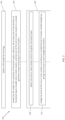
- FIG. 1 showing a schematic illustration of one example of a system for three-dimensional (3D) printing, in accordance with the presently disclosed subject matter.
- system 100 includes a moveable projector 102, a container 104 containing a photosensitive liquid material 106, a building platform 108 connected to a motor 110, and at least one controller 114.
- the system 100 may have a bottom-up orientation in which the moveable projector 102 (e.g., a Digital Light Processing (DLP) projector, a laser projector, and the like), capable of performing horizontal movement on X-Y plane (i.e., a two-dimensional (2D) plane), is placed beneath the container 104, and the motor 110, capable of performing vertical movement along a Z-axis, is placed above the container 104.
- the moveable projector 102 e.g., a Digital Light Processing (DLP) projector, a laser projector, and the like
- X-Y plane i.e., a two-dimensional (2D) plane
- 2D two-dimensional
- the positioning of the building platform 108 within the photosensitive liquid material 106 may create a gap between the building platform 108 and the bottom surface of the container 104, allowing a desired thickness of a layer of the photosensitive liquid material 106 to flow therebetween.
- this desired thickness of photosensitive liquid material 106 which can be modified by moving the building platform 108, using the motor 110, is exposed to the moveable projector 102 which project a beam of electromagnetic radiation (e.g., invisible or ultraviolet spectrum) on the exposed layer of the photosensitive material 106, causing photopolymerization (i.e., solidification) of the layer.
- the motor 110 is configured to elevate the building platform 108 according to the layer thickness, enabling additional photosensitive liquid material 106 to flow underneath the solidified layer. This process is repeated until the desired object is complete.
- the moveable projector 102, the building platform 108, and the motor 110 may be in communication with the at least one controller 114 such that the controller 114 can control the vertical movement of the motor 110 (and through the motor's 100 connection to the building platform 108 also the vertical movement of the building platform 108 (e.g., sequential and/or controlled shift of the movable stage 108 along Z-axis)), and the horizontal movement of the moveable projector 102.
- the at least one controller 114 can be one or more processing units (e.g., central processing units), microprocessors, microcontrollers, or any other computing devices or modules, including multiple and/or parallel and/or distributed processing units, which are adapted to independently or cooperatively process data for controlling relevant resources of the system for three-dimensional (3D) printing 100 and for enabling operations related to resources thereof.
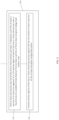
- the at least one controller 114 may be in communication with a network interface device and a memory (both not shown), and can include a printing control module 116 configured to perform a process for three-dimensional (3D) printing, as further detailed herein with respect to Figs. 2 and 5 .
- the memory may include a machine-accessible storage medium (or more specifically, a computer-readable storage medium) on which stored one or more sets of instructions (e.g., software) embodying any one or more of the methodologies or functions described herein.
- the software may also reside, completely or at least partially, within the memory and/or the at least one controller 114 during execution thereof by the system 100.
- the software may further be transmitted or received over a network via the network interface device.
- machine -readable storage medium should be taken to include a single medium or multiple media (e.g., centralized or distributed database, and/or associated caches and servers) that store the one or more sets of instructions.
- the term “machine-readable storage medium” shall also be taken to include any medium that is capable of storing or encoding a set of instructions for execution by the machine and that cause the machine to perform any one or more of the methodologies of the present presently disclosed subject matter.
- the term “machine-readable storage medium” shall accordingly be taken to include, but not limited to, solid-state memories, and optical and magnetic media.
- system 100 may also include, for example, a video display unit (e.g., flat panel display, such as OLED, or liquid crystal display (LCD) or a cathode ray tube (CRT)), an alphanumeric input device (e.g., a keyboard), a cursor control device (e.g., a mouse), a signal generation device (e.g., a speaker), and the like.
- a video display unit e.g., flat panel display, such as OLED, or liquid crystal display (LCD) or a cathode ray tube (CRT)
- an alphanumeric input device e.g., a keyboard
- a cursor control device e.g., a mouse
- signal generation device e.g., a speaker
- system for three-dimensional (3D) printing 100 may have a top-down orientation or any other orientation capable of performing sequence of operations of the presently disclosed subject matter, mutatis mutandis.
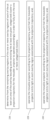
- FIG. 2 there is shown a flowchart illustrating one example of a sequence of operations carried out for three-dimensional (3D) printing, in accordance with the presently disclosed subject matter.
- the system for three-dimensional (3D) printing 100 can be configured to perform a three-dimensional (3D) printing process 200, e.g., utilizing a printing control module 116.
- system 100 obtains a 3D model for printing (block 202).
- the system 100 divides the obtained 3D model into a plurality of horizontal layers such that each horizontal layer of the plurality of horizontal layers represents a cross-section (e.g., surface geometry) of the 3D model to be printed.
- at least one horizontal layer includes one or more clusters, which are closed geometric shapes consisting of a plurality of pixels (block 204).
- the one or more clusters may have any geometric shape known in the art, for example, a ring shape, a round shape, a triangle shape, a square shape, and the like, and can be part of a pattern, corresponding to the cross-section (e.g., surface geometry) of the 3D model.
- the pattern may include regions configured to be fully or partially printed by the system 100 (e.g., the one or more clusters), as well as regions configured not to be printed at all.
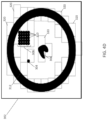
- system 100 obtains a 3D model 300 consisting of a plurality of square-shaped layers 302.
- Each square-shaped layer 302, as illustrated in Fig. 3A includes a pattern including four clusters: (a) a circle-shaped cluster 304, (b) a curved-shape cluster 306, (c) a square-shaped cluster 308 consisting of 25 circle-shaped clusters 310 arranged in a 5x5 configuration, and (d) a ring-shaped cluster 312 surrounding all three aforementioned clusters (i.e., the circle-shaped cluster 304, the curved-shape cluster 306, and the square-shaped cluster 308).
- system 100 detects the one or more clusters (block 208) by, for example, determining a positioning of each given cluster of the one or more clusters within the given horizontal layer.
- the detected one or more clusters are then each categorized according to a predefined set of cluster-related categories, giving rise to one or more categorized clusters (block 210).
- the predefined set of cluster-related categories can include, for example, categories such as a "fit and lonely” cluster, a "fit with neighbors” cluster, a "fit and rare” cluster, a "big and lonely” cluster, and a "big with neighbors” cluster, which will be further explained in detail hereafter.
- system 100 determines one or more overlay bounding zones, each configured to contain at least one given categorized cluster of the one or more categorized clusters (block 212), and divides at least an area of each of the one or more overlay bounding zones consisting the at least one given categorized cluster into one or more overlay regions arranged in one or more overlay rows (block 214).
- the one or more overlay regions are areas that the movable projector 102 is capable of individually projecting in a single emission of light, and at least some of these regions include at least a portion of the at least one given categorized cluster.
- the circle-shaped cluster 304 and the curved-shape cluster 306 are each contained by a respective square-shaped bounding zone (bounding zones 314 and 316, respectively), whereas the square-shaped cluster 308 and the ring-shaped cluster 312 are contained by the same square-shaped bounding zone, bounding zone 318.
- Each of square-shaped bounding zones 314, 316, and 318 is divided into one or more overlay regions 320 such that the square-shaped bounding zone 314 is divided into a single overly region 320 arranged in a single row, the square-shaped bounding zone 316 is divided into four overly regions 320 arranged in two rows, and the square-shaped bounding zone 318 is divided into 77 overly regions 320 arranged in eleven rows (seen in Figs 3B-2 to 3D-2 ).
- system 100 then shifts at least one overlay row of the one or more overlay rows, if necessary, so as to position at least a portion of at least one segment of a first overlay region of each of the at least one overlay row to be at a predetermined distance from at least a portion of the at least one given categorized cluster (block 216).
- the second row of the two rows of the square-shaped bounding zone 316 is shifted to the right so that a portion of its first overly region be at zero distance from the left side of the curved-shape cluster 306.
- the first three rows and the last five rows of the eleven rows of the square-shaped bounding zone 318 are shifted to the right so that a portion of their first overly region be at zero distance from the left side of the ring-shaped cluster 312.
- the shifting step was not made for the square-shaped bounding zone 314 containing the circle-shaped cluster 304, since, as seen in Fig. 3B-2 , a portion of the first overly region is already at zero distance from the circle-shaped cluster 304.
- system 100 removes from each of the one or more overlay bounding zones, overlay regions of the one or more overlay regions that do not contain at least a portion of the at least one given categorized cluster (block 218).
- the overly regions 320 which did not contain at least a portion of the curved-shape cluster 306 or at least a portion of the square-shaped cluster 308 and ring-shaped cluster 312 have been removed.
- the step of removing overlay regions that do not contain at least a portion of the at least one given categorized cluster (block 218) give rise to one or more overlay sub-rows consisting of one or more of the remaining overlay regions (block 220).
- the system 100 can shift at least one overlay sub-row of the one or more overlay sub-rows, if necessary, such that at least a portion of at least one segment of a first overlay region of each of the one or more overlay sub-rows is found to be at a predetermined distance from at least a portion of the at least one given categorized cluster (block 222).
- system 100 removes overlay regions of the one or more remaining overlay regions that do not contain at least a portion of the at least one given categorized cluster (block 224).
- Sub-rows 322 are shifted to the right such that at least a portion of at least one segment of a first overlay region of each of sub-rows 322 is found to be at zero distance from at least a portion of the ring-shaped cluster 312 ( Fig. 4C-1 ).
- overlay regions of sub-rows 322 that do not contain at least a portion of the ring-shaped cluster 312 are removed ( Fig. 4C-2 ).
- shifting and removing steps can be repeated so long as there are overlay regions 320 not containing at least a portion of the at least one given categorized cluster. It is to be further noted that the shifting of the rows and sub-rows, described therebefore, can be made towards other directions and not necessarily only to the right.
- system 100 determines from the remaining overlay regions of the one or more overlay regions of each of the at least an area of the overlay bounding zone consisting the at least one given categorized cluster a projection trajectory for the movable projector 102 to operate accordingly in order to fully print the one or more categorized clusters (block 226).
- system 100 determines from the remaining overlay regions of each of overlay bounding zones 314, 316, and 318 (see e.g., FIG.s 3B-1, 3C-1, 3D-1 ), a projection trajectory for the moveable projector 102 to operate accordingly in order to fully print the circle-shaped cluster 304, the curved-shape cluster 306, the square-shaped cluster 308, and the ring-shaped cluster 112 of the square-shaped layer 302.
- the projection trajectory consists of only overlay regions 320 that contain at least a portion of at least one of the circle-shaped cluster 304, the curved-shape cluster 306, the square-shaped cluster 308, or the ring-shaped cluster 112.
- the projection trajectory can be determined, for example, based on an algorithm directed for solving the Travelling Salesman Problem (TSP), whereby the "City" can be overlay regions 320, the circle-shaped cluster 304, the curved-shape cluster 306, the square-shaped cluster 308, the ring-shaped cluster 112, or a combination comprising the foregoing.
- TSP Travelling Salesman Problem
- system 100 operates the movable projector according to the projection trajectory, such that the moveable projector 102 emits light on each overlay region associated with the projection trajectory (block 228).
- system 100 moves the building platform 108 to enable printing of a subsequent horizontal layer of the plurality of horizontal layers (block 230).
- system 100 involves at least one of: (a) determining whether the given cluster of the one or more clusters fully matches the size of an overlay region or is fully fitted within an overlay region, and (b) determining whether at least one cluster of the one or more clusters is located at a distance that is less than an overlay region's length or an overlay region's width from the given cluster.
- the given cluster is fully fitted within an overlay region of the plurality of overlay regions of the at least an area of the overlay bounding zone consisting the given categorized cluster, and (b) there are no other clusters of the one or more clusters located at a distance that is less than an overlay region's length or an overlay region's width from the given cluster, the given cluster is categorized as a "fit and lonely” cluster.
- the "fit and lonely" cluster is fully printed using a single region projection of the overlay region of the plurality of overlay regions containing the "fit and lonely” cluster. For example, as seen in Figs.
- the circle-shaped cluster 304 is suited to be categorized as a "fit and lonely" cluster as it is fully fitted within an overlay region 320 and there are no other clusters of the one or more clusters (i.e., curved-shape cluster 306, square-shaped cluster 308, or any of the circle-shaped clusters 310 arranged in a 5x5 configuration, assembling the square-shaped cluster 308) located at a distance that is less than an overlay region's length or an overlay region's width from it.
- the one or more clusters i.e., curved-shape cluster 306, square-shaped cluster 308, or any of the circle-shaped clusters 310 arranged in a 5x5 configuration, assembling the square-shaped cluster 308 located at a distance that is less than an overlay region's length or an overlay region's width from it.
- the given cluster is categorized as a "fit with neighbors" cluster.
- the "fit with neighbors" cluster is appended to be within the same overlay region of the plurality of overlay regions as the at least one other cluster of the one or more clusters that is located at a distance less than an overlay region's length or an overlay region's width from the given cluster.
- the "fit with neighbors" cluster and the other cluster of the one or more clusters located at a distance that is less than an overlay region's length or an overlay region's width are printed using a single region projection of the overlay region of the plurality of overlay regions containing both the "fit with neighbors" cluster and the other cluster. For example, as seen in Figs.
- circle-shaped clusters of the circle-shaped clusters 310 arranged in a 5x5 configuration are suited to be categorized as "fit with neighbors" clusters as each given circle-shaped cluster 310 is fully fitted within an overlay region of the plurality of overlay regions, and at least one other circle-shaped cluster of circle-shaped clusters 310 is found to be at a distance that is less than an overlay region's length or an overlay region's width from the given circle-shaped cluster 310.
- the given cluster is categorized as a "fit and rare” cluster.
- the "fit and rare” cluster is printed using a single region projection of the overlay region of the plurality of overlay regions containing the "fit and rare” cluster. For example, a rectangle-shaped cluster with dimensions that are identical to a single overlay region's dimensions will be categorized as a "fit and rare” cluster (not shown).
- the given cluster In cases where (a) the given cluster fully matches the size of an overlay region of the plurality of overlay regions of the at least an area of the overlay bounding zone consisting the given categorized cluster, (b) the given cluster is not fully fitted within the overlay region, and (c) there are no other clusters of the one or more clusters located at a distance that is less than an overlay region's length or an overlay region's width from the given cluster, the given cluster is categorized as a "big and lonely” cluster.
- the "big and lonely" cluster is fully printed by dividing the "big and lonely” cluster into a plurality of overlay regions and projecting each of the plurality of overlay regions using a single region projection. For example, as seen in Figs.
- the curved-shaped cluster 306 is suited to be categorized as a "big and lonely" cluster as it fully matches the size of an overlay region 320, it is not fully fitted within the overlay region 320, and there are no other clusters of the one or more clusters (i.e., circle-shape cluster 304, square-shaped cluster 308, or any of the circle-shape clusters 310 arranged in a 5x5 configuration, assembling the square-shaped cluster 308) located at a distance that is less than an overlay region's length or an overlay region's width from it.
- clusters i.e., circle-shape cluster 304, square-shaped cluster 308, or any of the circle-shape clusters 310 arranged in a 5x5 configuration, assembling the square-shaped cluster 308 located at a distance that is less than an overlay region's length or an overlay region's width from it.
- the given cluster In cases where (a) the given cluster fully matches the size of an overlay region of the plurality of overlay regions of the at least an area of the overlay bounding zone consisting the given categorized cluster, (b) the given cluster is not fully fitted within the overlay region, and (c) there are other clusters of the one or more clusters located at a distance that is less than an overlay region's length or an overlay region's width from the given cluster, the given cluster is categorized as a "big with neighbors" cluster. In such cases, at least a portion of the "big with neighbors" cluster is appended to the same overlay region of the plurality of overlay regions as another cluster of the one or more clusters located at a distance that is less than an overlay region's length or an overlay region's width from it.
- the ring-shaped cluster 112 is suited to be categorized as a "big with neighbors" cluster as it fully matches the size of an overlay region 320, it is not fully fitted within the overlay region 320, and it has other clusters of the one or more clusters (e.g., the three circles 310 found on the right side of the first row of the square-shaped cluster 308) located at a distance that is less than an overlay region's length or an overlay region's width from at least a portion of it.
- system can be implemented, at least partly, as a suitably programmed computer.
- the presently disclosed subject matter contemplates a computer program being readable by a computer for executing the disclosed method.
- the presently disclosed subject matter further contemplates a machine-readable memory tangibly embodying a program of instructions executable by the machine for executing the disclosed method.
Landscapes
- Chemical & Material Sciences (AREA)
- Engineering & Computer Science (AREA)
- Materials Engineering (AREA)
- Manufacturing & Machinery (AREA)
- Physics & Mathematics (AREA)
- Mechanical Engineering (AREA)
- Optics & Photonics (AREA)
Applications Claiming Priority (1)
| Application Number | Priority Date | Filing Date | Title |
|---|---|---|---|
| PCT/US2022/052497 WO2024129053A1 (fr) | 2022-12-12 | 2022-12-12 | Optimisation de pavage |
Publications (1)
| Publication Number | Publication Date |
|---|---|
| EP4385711A1 true EP4385711A1 (fr) | 2024-06-19 |
Family
ID=86692853
Family Applications (1)
| Application Number | Title | Priority Date | Filing Date |
|---|---|---|---|
| EP23177576.8A Pending EP4385711A1 (fr) | 2022-12-12 | 2023-06-06 | Système et procédé pour l'optimisation de pavé dans la stéréolithographie. |
Country Status (3)
| Country | Link |
|---|---|
| US (1) | US20240308131A1 (fr) |
| EP (1) | EP4385711A1 (fr) |
| WO (1) | WO2024129053A1 (fr) |
Families Citing this family (1)
| Publication number | Priority date | Publication date | Assignee | Title |
|---|---|---|---|---|
| WO2022150305A1 (fr) * | 2021-01-05 | 2022-07-14 | Quadratic 3D, Inc. | Procédés d'impression tridimensionnelle volumétrique |
Citations (2)
| Publication number | Priority date | Publication date | Assignee | Title |
|---|---|---|---|---|
| CN111483140A (zh) * | 2020-03-05 | 2020-08-04 | 上海莘临科技发展有限公司 | 一种用于拼接式面曝光3d打印机中零件摆放的方法 |
| CN111805895A (zh) * | 2020-07-30 | 2020-10-23 | 沃尔创新(深圳)科技有限公司 | 一种大尺寸光固化3d打印方法和打印机 |
Family Cites Families (3)
| Publication number | Priority date | Publication date | Assignee | Title |
|---|---|---|---|---|
| WO2016138345A1 (fr) * | 2015-02-26 | 2016-09-01 | Stratasys, Inc. | Fabrication additive à assemblage décalé |
| EP3386718B1 (fr) * | 2015-12-11 | 2022-10-05 | Hewlett-Packard Development Company, L.P. | Classifications de densité sur la base de zones de plan |
| US10780640B2 (en) * | 2018-07-30 | 2020-09-22 | Intrepid Automation | Multiple image projection system for additive manufacturing |
-
2022
- 2022-12-12 US US18/029,565 patent/US20240308131A1/en not_active Abandoned
- 2022-12-12 WO PCT/US2022/052497 patent/WO2024129053A1/fr not_active Ceased
-
2023
- 2023-06-06 EP EP23177576.8A patent/EP4385711A1/fr active Pending
Patent Citations (2)
| Publication number | Priority date | Publication date | Assignee | Title |
|---|---|---|---|---|
| CN111483140A (zh) * | 2020-03-05 | 2020-08-04 | 上海莘临科技发展有限公司 | 一种用于拼接式面曝光3d打印机中零件摆放的方法 |
| CN111805895A (zh) * | 2020-07-30 | 2020-10-23 | 沃尔创新(深圳)科技有限公司 | 一种大尺寸光固化3d打印方法和打印机 |
Also Published As
| Publication number | Publication date |
|---|---|
| WO2024129053A1 (fr) | 2024-06-20 |
| US20240308131A1 (en) | 2024-09-19 |
Similar Documents
| Publication | Publication Date | Title |
|---|---|---|
| US10252468B2 (en) | Stereolithography printer | |
| CN104093547B (zh) | 3d打印系统 | |
| US9862150B2 (en) | Three dimensional printing apparatus and printing method thereof | |
| US20160096331A1 (en) | Shifting a Curing Location During 3D Printing | |
| US20180029299A1 (en) | Additive manufacturing with offset stitching | |
| JP2019532837A (ja) | 三次元物体の改良された付加製造 | |
| US20240116250A1 (en) | Method, System and Apparatus for Processing Slice Image for 3D Printing, and Storage Medium | |
| US12332631B2 (en) | Agent-based slicing for 3D object models | |
| KR102129995B1 (ko) | 3차원 인쇄 방법 및 3차원 인쇄 시스템 | |
| TW201636193A (zh) | 用於將光聚合材料曝光以逐層固化材料來建構3d物體的方法 | |
| EP3983222B1 (fr) | Système et méthode pour l'impression 3d d'une structure de support | |
| EP4385711A1 (fr) | Système et procédé pour l'optimisation de pavé dans la stéréolithographie. | |
| US10315359B2 (en) | Three-dimensional printing method | |
| CN113681898A (zh) | 三维物体打印方法、数据处理装置及计算机设备 | |
| US11707884B2 (en) | Sliding window screen for reducing resin refilling time in stereolithography | |
| JP2021501071A (ja) | 構造体積取得方法及び装置、非一時的なコンピュータ可読記憶媒体並びにプリンタ | |
| CN110722799A (zh) | 大幅面dlp型3d打印机错位均摊接缝消除方法及系统 | |
| IL323209A (en) | A method for 3D printing an object comprising multiple discrete elements | |
| Calderon et al. | BeamMaker: an open hardware high-resolution digital fabricator for the masses | |
| CN115139528A (zh) | 一种3d打印中的切片处理方法、装置、存储介质和电子设备 | |
| WO2021171282A1 (fr) | Système, procédé et support lisible par ordinateur pour l'impression en trois dimensions (3d) | |
| US20180339464A1 (en) | Three-dimensional printing method | |
| US20210146627A1 (en) | Methods of representing three dimensional articles to be produced using additive manufacturing processes in digital file formats | |
| JP2019123080A (ja) | 情報処理装置、情報処理方法及びプログラム | |
| US20180043631A1 (en) | Adaptive layer height |
Legal Events
| Date | Code | Title | Description |
|---|---|---|---|
| PUAI | Public reference made under article 153(3) epc to a published international application that has entered the european phase |
Free format text: ORIGINAL CODE: 0009012 |
|
| STAA | Information on the status of an ep patent application or granted ep patent |
Free format text: STATUS: THE APPLICATION HAS BEEN PUBLISHED |
|
| AK | Designated contracting states |
Kind code of ref document: A1 Designated state(s): AL AT BE BG CH CY CZ DE DK EE ES FI FR GB GR HR HU IE IS IT LI LT LU LV MC ME MK MT NL NO PL PT RO RS SE SI SK SM TR |
|
| P01 | Opt-out of the competence of the unified patent court (upc) registered |
Free format text: CASE NUMBER: APP_37858/2024 Effective date: 20240625 |
|
| STAA | Information on the status of an ep patent application or granted ep patent |
Free format text: STATUS: REQUEST FOR EXAMINATION WAS MADE |
|
| 17P | Request for examination filed |
Effective date: 20240805 |
|
| RBV | Designated contracting states (corrected) |
Designated state(s): AL AT BE BG CH CY CZ DE DK EE ES FI FR GB GR HR HU IE IS IT LI LT LU LV MC ME MK MT NL NO PL PT RO RS SE SI SK SM TR |
|
| STAA | Information on the status of an ep patent application or granted ep patent |
Free format text: STATUS: THE APPLICATION IS DEEMED TO BE WITHDRAWN |