EP4386622A1 - Procédé et système de classification d'ecg basée sur un réseau neuronal impulsionnel pour dispositifs périphériques portables - Google Patents
Procédé et système de classification d'ecg basée sur un réseau neuronal impulsionnel pour dispositifs périphériques portables Download PDFInfo
- Publication number
- EP4386622A1 EP4386622A1 EP23197705.9A EP23197705A EP4386622A1 EP 4386622 A1 EP4386622 A1 EP 4386622A1 EP 23197705 A EP23197705 A EP 23197705A EP 4386622 A1 EP4386622 A1 EP 4386622A1
- Authority
- EP
- European Patent Office
- Prior art keywords
- neural network
- spiking neural
- ecg
- spike
- series data
- Prior art date
- Legal status (The legal status is an assumption and is not a legal conclusion. Google has not performed a legal analysis and makes no representation as to the accuracy of the status listed.)
- Pending
Links
Images



Classifications
-
- G—PHYSICS
- G06—COMPUTING OR CALCULATING; COUNTING
- G06N—COMPUTING ARRANGEMENTS BASED ON SPECIFIC COMPUTATIONAL MODELS
- G06N3/00—Computing arrangements based on biological models
- G06N3/02—Neural networks
- G06N3/04—Architecture, e.g. interconnection topology
- G06N3/049—Temporal neural networks, e.g. delay elements, oscillating neurons or pulsed inputs
-
- G—PHYSICS
- G06—COMPUTING OR CALCULATING; COUNTING
- G06N—COMPUTING ARRANGEMENTS BASED ON SPECIFIC COMPUTATIONAL MODELS
- G06N3/00—Computing arrangements based on biological models
- G06N3/02—Neural networks
- G06N3/04—Architecture, e.g. interconnection topology
- G06N3/044—Recurrent networks, e.g. Hopfield networks
-
- G—PHYSICS
- G06—COMPUTING OR CALCULATING; COUNTING
- G06N—COMPUTING ARRANGEMENTS BASED ON SPECIFIC COMPUTATIONAL MODELS
- G06N3/00—Computing arrangements based on biological models
- G06N3/02—Neural networks
- G06N3/04—Architecture, e.g. interconnection topology
- G06N3/047—Probabilistic or stochastic networks
-
- G—PHYSICS
- G06—COMPUTING OR CALCULATING; COUNTING
- G06N—COMPUTING ARRANGEMENTS BASED ON SPECIFIC COMPUTATIONAL MODELS
- G06N3/00—Computing arrangements based on biological models
- G06N3/02—Neural networks
- G06N3/08—Learning methods
-
- G—PHYSICS
- G06—COMPUTING OR CALCULATING; COUNTING
- G06N—COMPUTING ARRANGEMENTS BASED ON SPECIFIC COMPUTATIONAL MODELS
- G06N3/00—Computing arrangements based on biological models
- G06N3/02—Neural networks
- G06N3/08—Learning methods
- G06N3/088—Non-supervised learning, e.g. competitive learning
-
- G—PHYSICS
- G16—INFORMATION AND COMMUNICATION TECHNOLOGY [ICT] SPECIALLY ADAPTED FOR SPECIFIC APPLICATION FIELDS
- G16H—HEALTHCARE INFORMATICS, i.e. INFORMATION AND COMMUNICATION TECHNOLOGY [ICT] SPECIALLY ADAPTED FOR THE HANDLING OR PROCESSING OF MEDICAL OR HEALTHCARE DATA
- G16H40/00—ICT specially adapted for the management or administration of healthcare resources or facilities; ICT specially adapted for the management or operation of medical equipment or devices
- G16H40/60—ICT specially adapted for the management or administration of healthcare resources or facilities; ICT specially adapted for the management or operation of medical equipment or devices for the operation of medical equipment or devices
- G16H40/67—ICT specially adapted for the management or administration of healthcare resources or facilities; ICT specially adapted for the management or operation of medical equipment or devices for the operation of medical equipment or devices for remote operation
-
- G—PHYSICS
- G16—INFORMATION AND COMMUNICATION TECHNOLOGY [ICT] SPECIALLY ADAPTED FOR SPECIFIC APPLICATION FIELDS
- G16H—HEALTHCARE INFORMATICS, i.e. INFORMATION AND COMMUNICATION TECHNOLOGY [ICT] SPECIALLY ADAPTED FOR THE HANDLING OR PROCESSING OF MEDICAL OR HEALTHCARE DATA
- G16H50/00—ICT specially adapted for medical diagnosis, medical simulation or medical data mining; ICT specially adapted for detecting, monitoring or modelling epidemics or pandemics
- G16H50/20—ICT specially adapted for medical diagnosis, medical simulation or medical data mining; ICT specially adapted for detecting, monitoring or modelling epidemics or pandemics for computer-aided diagnosis, e.g. based on medical expert systems
-
- G—PHYSICS
- G06—COMPUTING OR CALCULATING; COUNTING
- G06N—COMPUTING ARRANGEMENTS BASED ON SPECIFIC COMPUTATIONAL MODELS
- G06N3/00—Computing arrangements based on biological models
- G06N3/02—Neural networks
- G06N3/04—Architecture, e.g. interconnection topology
- G06N3/045—Combinations of networks
-
- G—PHYSICS
- G06—COMPUTING OR CALCULATING; COUNTING
- G06N—COMPUTING ARRANGEMENTS BASED ON SPECIFIC COMPUTATIONAL MODELS
- G06N7/00—Computing arrangements based on specific mathematical models
- G06N7/01—Probabilistic graphical models, e.g. probabilistic networks
Definitions
- the disclosure herein generally relates to spiking neural networks, and, more particularly, to method and system for spiking neural network-based ECG classifier for wearable edge devices.
- Electrocardiogram is one of the most extensively employed signals used to diagnose and predict cardiovascular diseases (CVDs) which provides opportunities for earlier prevention and intervention.
- CVDs cardiovascular diseases
- personal wearable devices have been introduced as cost-effective solutions for continuous ECG monitoring in daily life.
- ECG signal recorded by wearable electronic devices is with low-frequency and low-amplitude and is inevitably contaminated by a variety of noises and artifacts.
- Classical algorithms are mainly based on morphological features, such as the QRS complex and signal processing techniques such as Fourier transform, and wavelet transform.
- Visual inspection of recorded ECG signals during a visit to the cardiologist is the traditional form of arrhythmia detection.
- arrhythmias are difficult to detect from a short time window of the ECG signal. Therefore, continuous ECG monitoring is crucial in early detection of potential problems.
- Neural network algorithms automatically extract the features from ECG signals and hence, provide higher accuracy. This is because neural network based feature extraction is inherently more resilient to variations among different ECG waveforms
- employing deep neural networks have high computational intensity and large power consumption.
- several deep learning based ECG classification models have been developed that can classify ECG signals with higher accuracy based on features like heart rhythms.
- these deep learning based ECG classification models have computational complexity, memory, and power requirement.
- Existing deep learning based classification models lack in executing low-power, low-memory, and battery driven devices. In an effort to continuously monitor and detect abnormalities in patients ECG signals on portable devices, ECG heartbeat classification method based on a spiking neural network (SNN) is required.
- SNN spiking neural network
- Spiking neural networks are the third generation of neural networks and provide the opportunity for ultra-low power operation.
- the information is processed based on propagation of spike signals through the network and the timing of the spikes. Every neuron consumes energy only when it sends or receives spikes.
- a method for spiking neural network based ECG classifier for wearable edge devices includes a spiking neural network which receives a training dataset comprising a plurality of ECG time-series data from a plurality of sensors.
- the spiking neural network comprise at least one of a first spiking neural network and a second spiking neural network.
- the first spiking neural network comprise a reservoir-based spiking neural network and a feed forward based spiking neural network.
- Each of the spiking neural network comprise a logistic regression-based ECG classifier which is being trained to classify one or more class labels.
- the peak-based spike encoder of each spiking neural network obtains a plurality of encoded spike trains based on one or more peaks detected from each ECG time-series data. Further, the plurality of encoded spike trains are provided into at least one of the spiking neural network. Further, a reservoir of the first spiking neural network obtains neuronal trace values of a plurality of recurrently connected excitatory neurons for the plurality of encoded spike trains. Then, a spiking neural network layer (SNN) layer of the second spiking neural network obtains neuronal trace values of a plurality of neurons connected in a feed forward pattern.
- SNN spiking neural network layer
- a first set of spatio-temporal features are extracted for each ECG time-series data from the first spiking neural network based on the neuronal trace values of the plurality of excitatory neurons. Then, a second set of spatio-temporal features are extracted from the second spiking neural network based on the neuronal trace values of the plurality of feed forward neurons.
- the logistic regression-based ECG classifier of each of the spiking neural network are trained with the neuronal trace values of the plurality of recurrently connected excitatory neurons and the neuronal trace values of the plurality of neurons connected in the feed forward pattern to classify one or more class labels.
- a plurality of test dataset are received as input into at least one of the spiking neural network to obtain associated class label from the logistic regression-based ECG classifier.
- a method for spiking neural network based ECG classifier for wearable edge devices includes a spiking neural network which receives a training dataset comprising a plurality of ECG time-series data from a plurality of sensors.
- the spiking neural network comprise at least one of a first spiking neural network and a second spiking neural network.
- the spiking neural network comprise a reservoir-based spiking neural network and a feed forward based spiking neural network.
- Each of the spiking neural network comprise a logistic regression-based ECG classifier which is being trained to classify one or more class labels.
- the peak-based spike encoder of each spiking neural network obtains a plurality of encoded spike trains based on one or more peaks detected from each ECG time-series data. Further, the plurality of encoded spike trains are provided into at least one of the spiking neural network. Further, a reservoir of the first spiking neural network obtains neuronal trace values of a plurality of recurrently connected excitatory neurons for the plurality of encoded spike trains. Then, a spiking neural network layer (SNN) layer of the second spiking neural network obtains neuronal trace values of a plurality of neurons connected in a feed forward pattern.
- SNN spiking neural network layer
- a first set of spatio-temporal features are extracted for each ECG time-series data from the first spiking neural network based on the neuronal trace values of the plurality of excitatory neurons. Then, a second set of spatio-temporal features are extracted from the second spiking neural network based on the neuronal trace values of the plurality of feed forward neurons.
- the logistic regression-based ECG classifier of each of the spiking neural network are trained with the neuronal trace values of the plurality of recurrently connected excitatory neurons and the neuronal trace values of the plurality of neurons connected in the feed forward pattern to classify one or more class labels.
- a plurality of test dataset are received as input into at least one of the spiking neural network to obtain associated class label from the logistic regression-based ECG classifier.
- a non-transitory computer readable medium for the system includes a spiking neural network which receives a training dataset comprising a plurality of ECG time-series data from a plurality of sensors.
- the spiking neural network comprise at least one of a first spiking neural network and a second spiking neural network.
- the spiking neural network comprise a reservoir-based spiking neural network and a feed forward based spiking neural network.
- Each of the spiking neural network comprise a logistic regression-based ECG classifier which is being trained to classify one or more class labels.
- the peak-based spike encoder of each spiking neural network obtains a plurality of encoded spike trains based on one or more peaks detected from each ECG time-series data.
- the plurality of encoded spike trains are provided into at least one of the spiking neural network.
- a reservoir of the first spiking neural network obtains neuronal trace values of a plurality of recurrently connected excitatory neurons for the plurality of encoded spike trains.
- a spiking neural network layer (SNN) layer of the second spiking neural network obtains neuronal trace values of a plurality of neurons connected in a feed forward pattern.
- a first set of spatio-temporal features are extracted for each ECG time-series data from the first spiking neural network based on the neuronal trace values of the plurality of excitatory neurons.
- a second set of spatio-temporal features are extracted from the second spiking neural network based on the neuronal trace values of the plurality of feed forward neurons.
- the logistic regression-based ECG classifier of each of the spiking neural network are trained with the neuronal trace values of the plurality of recurrently connected excitatory neurons and the neuronal trace values of the plurality of neurons connected in the feed forward pattern to classify one or more class labels.
- a plurality of test dataset are received as input into at least one of the spiking neural network to obtain associated class label from the logistic regression-based ECG classifier.
- FIG. 1 through FIG.8 where similar reference characters denote corresponding features consistently throughout the figures, there are shown preferred embodiments and these embodiments are described in the context of the following exemplary system and/or method.
- Embodiments herein provide a method and system for spiking neural network based ECG classifier for wearable edge devices.
- the system may be alternatively referred as ECG time-series data classifier system 100.
- Real-time monitoring of ECG signal at wearable and implantable devices for example smart watch, pacemaker and the like are crucial for early clinical intervention of cardiovascular diseases.
- spiking neural network coupled with non-von Neumann Neuromorphic Computing (NC) platforms provides ECG time-series data classification at edge.
- the input ECG time-series data is first segmented into heartbeats.
- the heartbeat is split into a small number of windows, which are then encoded into spikes.
- the patterns in the generated spikes are automatically extracted by using one or more spiking neural network (SNN) architectures.
- the method of the present disclosure is implemented with two spiking neural network (SNN) architectures, where a first spiking neural network comprise a reservoir-based spiking neural network and a second spiking neural network comprise a feed-forward based spiking neural network.
- the SNNs are created using a Leaky-Integrate and Fire (LIF) neuron model as it is computationally easier to simulate.
- LIF Leaky-Integrate and Fire
- the first spiking neural network and the second spiking neural network comprise a peak-based spike encoder which improves performance with least computational effort and minimized power consumption.
- the disclosed system is further explained with the method as described in conjunction with FIG. 1 to FIG.8 below.
- FIG. 1 illustrates an exemplary block diagram of a system for ECG time-series data classifier using a spiking neural network, in accordance with some embodiments of the present disclosure.
- the batch processing system 100 includes processor (s) 104, communication interface (s), alternatively referred as or input/output (I/O) interface(s) 106, and one or more data storage devices or memory 102 operatively coupled to the processor (s) 104.
- the system 100, with the processor(s) is configured to execute functions of one or more functional blocks of the system 100.
- the processor (s) 104 can be one or more hardware processors 104.
- the one or more hardware processors 104 can be implemented as one or more microprocessors, microcomputers, microcontrollers, digital signal processors, central processing units, state machines, logic circuitries, and/or any devices that manipulate signals based on operational instructions.
- the processor(s) 104 is configured to fetch and execute computer-readable instructions stored in the memory.
- the system 100 can be implemented in a variety of computing systems, such as laptop computers, notebooks, hand-held devices, workstations, mainframe computers, servers, a network cloud, and the like.
- the I/O interface(s) 106 can include a variety of software and hardware interfaces, for example, a web interface, a graphical user interface, and the like and can facilitate multiple communications within a wide variety of networks N/W and protocol types, including wired networks, for example, LAN, cable, etc., and wireless networks, such as WLAN, cellular, or satellite.
- the I/O interface (s) 106 can include one or more ports for connecting a number of devices (nodes) of the system 100 to one another or to another server.
- the memory 102 may include any computer-readable medium known in the art including, for example, volatile memory, such as static random-access memory (SRAM) and dynamic random-access memory (DRAM), and/or non-volatile memory, such as read only memory (ROM), erasable programmable ROM, flash memories, hard disks, optical disks, and magnetic tapes.
- volatile memory such as static random-access memory (SRAM) and dynamic random-access memory (DRAM)
- non-volatile memory such as read only memory (ROM), erasable programmable ROM, flash memories, hard disks, optical disks, and magnetic tapes.
- ROM read only memory
- erasable programmable ROM erasable programmable ROM
- flash memories hard disks
- optical disks optical disks
- magnetic tapes magnetic tapes.
- the memory 102 may comprise information pertaining to input(s)/output(s) of each step performed by the processor(s) 104 of the system 100 and methods of the present disclosure. Functions of
- FIG.2 is an exemplary block diagram showing an architecture of a reservoir-based spiking neural network, in accordance with some embodiments of the present disclosure.
- the reservoir-based spiking neural network 200 comprise a peak-based spike encoder 202, a reservoir 204, and a logistic regression based classifier 206.
- a wearable ECG device communicates for example by Bluetooth to a mobile device (e.g., a mobile phone) carrying an application that buffers and uploads the data to a server through mobile or Wi-Fi networks.
- the reservoir-based spiking neural network 200 processes the training data comprising a plurality of ECG time-series data.
- the peak-based spike encoder 202 generates a plurality of encoded spike trains for the plurality of ECG time-series data.
- the reservoir 204 processes the plurality of encoded spike trains to obtain the neuronal trace values.
- the one or more connections between the peak-based spike encoder 202 and the reservoir is sparse.
- the reservoir 204 is a recurrently connected population of excitatory and inhibitory neurons.
- the connectivity between neurons are sparse, probabilistic and remain within the same population so that dynamical stability of the network is ensured.
- This neuronal population is very efficient in extracting one or more spatio-temporal features from ECG time-series data.
- Recurrent weights with directed cycles act as a non-linear random projection of the sparse input feature space to a higher dimensional spatio-temporal embedding, thereby generating explicit temporal features. These embeddings are captured in the form of neuronal traces of the reservoir neurons.
- the logistic regression based ECG classifier 206 of the system 200 is trained to determine corresponding class label by passing neuronal trace values of a plurality of recurrently connected excitatory neurons.
- FIG.3 is an exemplary block diagram showing an architecture of a second spiking neural network, in accordance with some embodiments of the present disclosure.
- the feed forward based spiking neural network 200 comprise a peak-based spike encoder 302, a spiking neural network (SNN) layer 304, and a logistic regression-based ECG classifier 306.
- SNN spiking neural network
- STDP spike timing dependent plasticity
- the peak-based spike encoder 302 generates the plurality of encoded spike trains for the plurality of ECG time-series data.
- the spiking neural network (SNN) layer 304 processes the plurality of encoded spike trains to obtain neuronal trace values.
- the SNN layer is a simple network topology where the neurons are connected across consecutive layers but not within same layer where full connectivity is used.
- the logistic regression-based ECG classifier 306 is trained to determine corresponding class label for the neuronal trace values of a plurality of feed forward neurons.
- FIG.4 illustrates an exemplary flow diagram of a processor implemented method for ECG time-series data classification using the spiking neural network, in accordance with some embodiments of the present disclosure.
- the system 100 comprises one or more data storage devices or the memory 102 operatively coupled to the processor(s) 104 and is configured to store instructions for execution of steps of the method 300 by the processor(s) or one or more hardware processors 104.
- the steps of the method 300 of the present disclosure will now be explained with reference to the components or blocks of the system 100 as depicted in FIG. 1 through FIG.3 and the steps of flow diagram as depicted in FIG.4 .
- the one or more hardware processors 104 obtain by a spiking neural network a training dataset comprising a plurality of ECG time-series data from a plurality of sensors, wherein the spiking neural network comprise at least one of a first spiking neural network and a second spiking neural network.
- Spiking neural network is a third generation of neural networks, referred to as SNNs, provides a low-power operation. In this type of network, the information is processed based on the propagation of spike signals through the network and the timing of the spikes. Dense network of neurons are interconnected which generates spikes from one neuron to other interconnected neuron.
- the first spiking neural network may be for example a reservoir-based spiking neural network 200 and a second spiking neural network may be for example a feed-forward spiking neural network 300.
- the spiking neural networks are not limited to the reservoir-based spiking neural network and the feed-forward spiking neural network.
- neurons communicate through electrical signals called spikes. For example, a neuron i fires at time t which generates a spike on its output at time t, only when its membrane potential reaches a specific threshold value. The information is encoded in the timing of the spikes, not in their amplitude.
- the training dataset comprise the plurality of ECG time-series data is the input to the reservoir-based spiking neural network 200.
- the training dataset may include for example ECG Atrial Fibrillation datasets with different attributes and university of California riverside (UCR) datasets namely ECG200, ECG5000 and the like.
- the plurality of ECG time-series data is represented as ⁇ F (1), F (2),.. F ( n ) ⁇ .
- F(t) is being one sample value in the time series and is further fetched by the peak-based spike encoder 202.
- the plurality of ECG time-series data are processed to obtains the neuronal trace values of a plurality of recurrently connected excitatory neurons.
- the peak-based spike encoder 202 processes the plurality of ECG time-series data to obtain a plurality of encoded spike trains based on one or more peaks.
- the reservoir 204 obtains the plurality of encoded spike trains from the peak-based spike encoder 202 and obtains neuronal trace values of a plurality of recurrently connected excitatory neurons. Further, a first set of spatio-temporal features are extracted for each ECG time-series data based on the neuronal trace values of the plurality of excitatory neurons.
- the logistic regression-based ECG classifier 206 of the reservoir-based spiking neural network 200 is trained by passing the neuronal trace values of the plurality of recurrently connected excitatory neurons to learn one or more class labels.
- the feed-forward spiking neural network 300 also fetches the training dataset as input.
- the training dataset comprise the plurality of ECG time-series data is represented as ⁇ F (1), F (2),.. F ( n ) ⁇ at time F ( t ).
- F ( t ) is being one sample value in the time series and is further fetched by the peak-based spike encoder 302.
- the plurality of ECG time-series data are processed to obtain neuronal trace values of a plurality of feed forward neurons.
- the peak-based spike encoder 302 processes the plurality of ECG time-series data to obtain a plurality of encoded spike trains based on one or more peaks detected.
- the SNN layer 304 obtains neuronal trace values of a plurality of feed forward neurons from the plurality of encoded spike trains. Further, a second set of spatio-temporal features are extracted based on the neuronal trace values of the plurality of feed forward neurons for each ECG time-series data from each feed-forward neuron.
- the logistic regression-based ECG classifier 306 is trained by a plurality of encoded spike trains based on one or more peaks detected from each ECG time-series data.
- the one or more hardware processors 104 train a logistic regression-based ECG classifier associated of at least one of the first spiking neural network and the second spiking neural network with the plurality of ECG time-series data.
- the peak-based spike encoder 202 of the reservoir-based spiking neural network 200 and the peak-based spike encoder 302 of the feed-forward spiking neural network 300 process the plurality of ECG time-series data to obtain the plurality of encoded spike trains by initially filtering the plurality of ECG time-series data by using a low pass filter.
- the plurality of ECG time-series data are passed through an integrate and fire (IF) neuron model having an initial membrane threshold value. Further, the method detects one or more spike trains of the plurality of ECG time-series data which occurred above a first threshold timestep and discards one or more spike trains that precede below the first threshold timestep.
- the first threshold timestep may be a value 200. Such example of threshold timestep shall not be construed as limiting the scope of the present disclosure.
- the one or more spike trains of each ECG time-series data comprising a positive slope and a negative slope are identified.
- the one or more spike trains of each ECG time-series data are classified as a first wave if the occurrence of each spike train is within a second threshold timestep and if maximum derivative of each ECG time-series data is lesser than half the maximum derivative of each spike train occurred at the time of previous instance.
- the first wave may be for example a T-wave.
- the second threshold timestep may be a value 360.
- the one or more spike trains of each ECG time-series data are classified as a second wave if the occurrence of each spike train is above the second threshold timestep and if maximum derivative of each ECG time-series data is greater than half the maximum derivative of each spike train occurred at the time of previous instance and if one or more spiking activities of each spike train exceeds a third threshold and otherwise classified as noise
- the initial membrane threshold value of the IF neuron model are adjusted based on the change occurred in the plurality of ECG time-series data and a previous spiking activity.
- the second wave may be for example a QRS-complex.
- the peaks, onsets, and offsets of ECG components are detected and their precise timings are taken as spike event times. For each of these components separate spike trains are obtained but the temporal correlation is maintained in the spike domain.
- step 406 process a plurality of test dataset received as input into at least one of the spiking neural network to obtain associated class label from the logistic regression-based ECG classifier.
- the plurality of test dataset are first encoded into one or more spike trains. Then each spike train is passed into at least one of the spiking neural network for feature extraction and learning. Neuronal activities are then presented to a simple linear classifier for final classification.
- each spiking neural network depend heavily on careful tuning of different network parameters.
- the major parameters are tuned with number of excitatory and inhibitory neurons ( N ex and N inhi respectively ) , Number of recurrent connections N rec various connectivity parameters like input encoder outdegree ( Input outdegree ) which controls the connection between the spike encoder and the reservoir.
- the feed-forward based spiking neural network 300 has number of neurons in the SNN layer.
- the membrane time constant (m) of LIF controls the decay of the neuronal membrane 291 potential and has been set to different values for different cases.
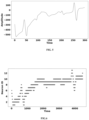
- FIG.5 through FIG.8 shows a performance comparison of a peak-based spike encoder versus a Gaussian encoder and a Delta modulator on a sample ECG time-series data, in accordance with some embodiments of the present disclosure.
- FIG.5 shows graphical representation of sample ECG time-series data having a small segment of an ECG signal of length 300 timesteps.
- FIG.6 shows graphical representation of a plurality of spike trains generated for the ECG time-series data using a Gaussian encoder representing the original ECG time-series data as a dense spike train (for example 15 times 80 magnified in time scale) resulting in a greater number of computations and processing time.
- the Gaussian encoder have a neuron-population based temporal encoding scheme which is frequently used due to its ability to capture granular details of the input test dataset.
- multiple neurons encode different segments of the input range. It encodes one input-value into a time magnified spike train.
- FIG.7 shows graphical representation of a plurality of spike trains generated for the ECG time-series data using the Delta modulator which encodes the ECG signal into two representative ON/OFF spike trains.
- Delta modulator is an ECG specific spike encoder where the change in value of ECG signal between two consecutive timesteps is encoded as spike events (ON or OFF based on positive or negative change) if the difference is above a certain threshold. Threshold determines the sparsity and pattern of encoded spike train.
- the on-demand nature of the encoding increases its efficiency.
- FIG.8 shows graphical representation of a plurality of spike trains generated for the ECG time-series data using a peak-based spike encoder, in accordance with some embodiments of the present disclosure.
- the peak-based spike encoder processes only the peaks and waves which are relevant for understanding the ECG signature. As a result, the number of spikes are extremely low and sparsely distributed in the time axis. While spike trains from both Gaussian encoder and the Delta modulator encoder have more granular information about the ECG signal, they may also include redundant noise that might hamper the final classification task. However, Peak encoder stresses upon ECG signal morphology instead of concentrating each and every value in the signal.
- the system 100 is validated with ECG Atrial Fibrillation datasets with different attributes and complexity.
- the method of the present disclosure was initially validated with UCR datasets such as ECG200, ECG5000, and the like.
- Each of the datasets contained ECG time-series data of people from different age group, gender recorded over different time period and having distinctive features.
- repository of freely available medical research data (PhysioNet) dataset provides ECG recording (between 30 sec and 60 sec in length), where the recording shows 4 classes for example normal sinus rhythm, atrial fibrillation (AF), an alternative rhythm, or is too noisy to be classified.
- PhysioNet medical research data
- the last one is widely known Massachusetts Institute of Technology arrhythmia database(MIT-BIH) having 48 half hour long two-channel ECG recordings of 47 participants.
- the method of the present disclosure is implemented using a graphical processing unit (GPU) based SNN simulator.
- GPU graphical processing unit
- both the spiking neural networks are tuned with parameters such as number of neurons and its associated connections, and neuronal model parameters obtains the best performance.
- the details of the SNN hyper-parameters are discussed in later embodiments.
- the reservoir-based spiking neural network 200 understands the dynamics of temporal varying ECG time-series data. However, the classification accuracy of the reservoir 204 is observed to be lower than that of existing deep learning as referred in Table 2. Gaussian encoder magnifies the whole ECG time-series data in temporal spike domain when focused on specific ECG wave signatures. As a result, one or more spikes enters into the first spiking neural network 200 and the neuronal activities of the reservoir 204 starts overlapping different classes thereby reducing the accuracy.
- the Delta modulator encoder improves the accuracy of the reservoir 204 on-demand encoding and resulting sparsity in spikes. However, when the method of the present disclosure the peak-based spike encoder 202 when coupled with the reservoir-based spiking neural network 200 achieves better accuracy when compared to other two existing encoders.
- the accuracy does not degrade much and improves the performance. It is observed that the peak-based spike encoder 202 achieves highest accuracy across all five datasets having variety in terms of size of training dataset and testing dataset, data complexity, length of each sample ECG time series and number of classes. Also, it has been experimentally noted that if the feed-forward based spiking neural network 300 is evaluated on PhysioNet data classifies normal and abnormal AF classes only, then it has achieved with 92% accuracy. Performance of peak based spike encoder is superlative because of efficient ECG morphology specific spike encoding.
- the number of synaptic operations is considered as the average number of spikes per timestep for the entire training and inference.
- the synaptic operations per timestep indicates an estimated energy consumption on NC platforms. Table 3 shows the best estimates for number of synaptic operations per timestep.
- the embodiments of present disclosure herein address unresolved problem of spiking neural networks.
- the embodiment thus provides method and system for spiking neural network based ECG classifier for wearable edge devices.
- the embodiments herein further provide the peak-based spike encoder helps achieving highest performance for classifying labels.
- Energy requirement of an SNN is directly proportional to total number of synaptic operations (SOP) executed during runtime.
- SOP synaptic operations
- Such computer-readable storage means contain program-code means for implementation of one or more steps of the method, when the program runs on a server or mobile device or any suitable programmable device.
- the hardware device can be any kind of device which can be programmed including e.g., any kind of computer like a server or a personal computer, or the like, or any combination thereof.
- the device may also include means which could be e.g., hardware means like e.g., an application-specific integrated circuit (ASIC), a field-programmable gate array (FPGA), or a combination of hardware and software means, e.g., an ASIC and an FPGA, or at least one microprocessor and at least one memory with software processing components located therein.
- the means can include both hardware means, and software means.
- the method embodiments described herein could be implemented in hardware and software.
- the device may also include software means. Alternatively, the embodiments may be implemented on different hardware devices, e.g., using a plurality of CPUs.
- the embodiments herein can comprise hardware and software elements.
- the embodiments that are implemented in software include but are not limited to, firmware, resident software, microcode, etc.
- the functions performed by various components described herein may be implemented in other components or combinations of other components.
- a computer-usable or computer readable medium can be any apparatus that can comprise, store, communicate, propagate, or transport the program for use by or in connection with the instruction execution system, apparatus, or device.
- a computer-readable storage medium refers to any type of physical memory on which information or data readable by a processor may be stored.
- a computer-readable storage medium may store instructions for execution by one or more processors, including instructions for causing the processor(s) to perform steps or stages consistent with the embodiments described herein.
- the term "computer-readable medium” should be understood to include tangible items and exclude carrier waves and transient signals, i.e., be non-transitory. Examples include random access memory (RAM), read-only memory (ROM), volatile memory, nonvolatile memory, hard drives, CD ROMs, DVDs, flash drives, disks, and any other known physical storage media.
Landscapes
- Engineering & Computer Science (AREA)
- Health & Medical Sciences (AREA)
- Physics & Mathematics (AREA)
- Theoretical Computer Science (AREA)
- Biomedical Technology (AREA)
- General Health & Medical Sciences (AREA)
- Data Mining & Analysis (AREA)
- General Physics & Mathematics (AREA)
- Evolutionary Computation (AREA)
- Biophysics (AREA)
- Molecular Biology (AREA)
- Computing Systems (AREA)
- General Engineering & Computer Science (AREA)
- Artificial Intelligence (AREA)
- Mathematical Physics (AREA)
- Software Systems (AREA)
- Life Sciences & Earth Sciences (AREA)
- Computational Linguistics (AREA)
- Public Health (AREA)
- Medical Informatics (AREA)
- Primary Health Care (AREA)
- Epidemiology (AREA)
- Pathology (AREA)
- Databases & Information Systems (AREA)
- Business, Economics & Management (AREA)
- General Business, Economics & Management (AREA)
- Probability & Statistics with Applications (AREA)
- Measurement And Recording Of Electrical Phenomena And Electrical Characteristics Of The Living Body (AREA)
Applications Claiming Priority (1)
| Application Number | Priority Date | Filing Date | Title |
|---|---|---|---|
| IN202221068002 | 2022-11-25 |
Publications (1)
| Publication Number | Publication Date |
|---|---|
| EP4386622A1 true EP4386622A1 (fr) | 2024-06-19 |
Family
ID=88093057
Family Applications (1)
| Application Number | Title | Priority Date | Filing Date |
|---|---|---|---|
| EP23197705.9A Pending EP4386622A1 (fr) | 2022-11-25 | 2023-09-15 | Procédé et système de classification d'ecg basée sur un réseau neuronal impulsionnel pour dispositifs périphériques portables |
Country Status (2)
| Country | Link |
|---|---|
| US (1) | US20240176987A1 (fr) |
| EP (1) | EP4386622A1 (fr) |
Families Citing this family (2)
| Publication number | Priority date | Publication date | Assignee | Title |
|---|---|---|---|---|
| CN118452838B (zh) * | 2024-07-09 | 2024-10-15 | 上海岩思类脑人工智能研究院有限公司 | 一种基于神经尖峰编码的麻醉状态检测方法及装置 |
| CN121436060B (zh) * | 2025-12-29 | 2026-04-07 | 浙江科技大学 | 一种基于自反馈掩模的液体状态机动力学优化系统及方法 |
-
2023
- 2023-09-15 US US18/368,859 patent/US20240176987A1/en active Pending
- 2023-09-15 EP EP23197705.9A patent/EP4386622A1/fr active Pending
Non-Patent Citations (4)
| Title |
|---|
| ANONYMOUS: "Electrocardiography - Wikipedia", 15 November 2022 (2022-11-15), pages 1 - 30, XP093160188, Retrieved from the Internet <URL:https://en.wikipedia.org/w/index.php?title=Electrocardiography&oldid=1122094984> [retrieved on 20240507] * |
| BANERJEE DIGHANCHAL DIGHANCHAL B@TCS COM ET AL: "Efficient Optimized Spike Encoding of Multivariate Time-series", 2022 7TH INTERNATIONAL CONFERENCE ON INTELLIGENT INFORMATION TECHNOLOGY, ACMPUB27, NEW YORK, NY, USA, 28 March 2022 (2022-03-28), pages 22 - 28, XP058853906, ISBN: 978-1-4503-9658-5, DOI: 10.1145/3517343.3517349 * |
| DEY SOUNAK ET AL: "Efficient Time Series Classification using Spiking Reservoir", 2022 INTERNATIONAL JOINT CONFERENCE ON NEURAL NETWORKS (IJCNN), IEEE, 18 July 2022 (2022-07-18), pages 1 - 8, XP034199568, DOI: 10.1109/IJCNN55064.2022.9892728 * |
| DIGHANCHAL BANERJEE: "An SNN Based ECG Classifier For Wearable Edge Devices", 2 December 2022 (2022-12-02), pages 1 - 7, XP093159718, Retrieved from the Internet <URL:https://openreview.net/pdf?id=V8yemRAs00-> [retrieved on 20240507] * |
Also Published As
| Publication number | Publication date |
|---|---|
| US20240176987A1 (en) | 2024-05-30 |
Similar Documents
| Publication | Publication Date | Title |
|---|---|---|
| Yan et al. | Energy efficient ECG classification with spiking neural network | |
| EP3885974B1 (fr) | Procédés et systèmes pour identifier la présence de sons cardiaques anormaux d'un sujet | |
| Zhao et al. | An explainable attention-based TCN heartbeats classification model for arrhythmia detection | |
| US20210307673A1 (en) | System and method for early and efficient prediction of epilectic seizures | |
| EP3367883B1 (fr) | Surveillance des activités quotidiennes d'une personne | |
| EP3895605A1 (fr) | Procédés et systèmes pour déterminer une activité cardiaque anormale | |
| AU2020349425A1 (en) | Systems and methods for seizure prediction and detection | |
| EP4386622A1 (fr) | Procédé et système de classification d'ecg basée sur un réseau neuronal impulsionnel pour dispositifs périphériques portables | |
| EP3735894B1 (fr) | Classification de fibrillation auriculaire basée sur une architecture de réseau neuronal utilisant un ecg à dérivation unique | |
| KR102141185B1 (ko) | 확률모델 및 기계학습과 함께 특징추출을 이용한 뇌전도 신호의 멀티 주파수 대역 계수 기반 간질 발작파 검출 시스템 | |
| US20090124919A1 (en) | Low power hardware algorithms and architectures for spike sorting and detection | |
| EP4085838B1 (fr) | Simulation de signaux biomédicaux spécifiques d'une maladie cardiovasculaire basée sur un réseau contradictoire génératif d'ensemble | |
| Oleiwi et al. | Developing Hybrid CNN-GRU Arrhythmia Prediction Models Using Fast Fourier Transform on Imbalanced ECG Datasets. | |
| Katsaouni et al. | Energy efficient convolutional neural networks for arrhythmia detection | |
| EP3330974B1 (fr) | Système et procédé de surveillance physiologique | |
| Mondal et al. | Convolutional neural network based ECG quality assessment using derivative signal | |
| Gennadievna | Arrhythmia detection using resampling and deep learning methods on unbalanced data | |
| Laudato et al. | Morphological classification of heartbeats in compressed ECG | |
| WO2020257158A1 (fr) | Système et procédé pour un capteur médical portatif et une analyse de diabète basé sur un réseau neuronal | |
| Banerjee et al. | Atrial fibrillation detector from ECG on wearable edge devices using spiking neural networks | |
| EP4434462B1 (fr) | Procédé et système de détermination d'anomalies cardiaques à l'aide d'un modèle de classification à base de chaos à partir d'ecg à dérivations multiples | |
| Kwiatkowski et al. | Phonocardiogram segmentation with tiny computing | |
| US12580079B2 (en) | Patient invariant model for freezing of gait detection based on empirical wavelet decomposition | |
| Krishna et al. | Prediction of cardiac arrhythmia using artificial neural network | |
| CN118038548A (zh) | 异常行为检测方法、装置、电子设备及存储介质 |
Legal Events
| Date | Code | Title | Description |
|---|---|---|---|
| PUAI | Public reference made under article 153(3) epc to a published international application that has entered the european phase |
Free format text: ORIGINAL CODE: 0009012 |
|
| STAA | Information on the status of an ep patent application or granted ep patent |
Free format text: STATUS: THE APPLICATION HAS BEEN PUBLISHED |
|
| AK | Designated contracting states |
Kind code of ref document: A1 Designated state(s): AL AT BE BG CH CY CZ DE DK EE ES FI FR GB GR HR HU IE IS IT LI LT LU LV MC ME MK MT NL NO PL PT RO RS SE SI SK SM TR |
|
| STAA | Information on the status of an ep patent application or granted ep patent |
Free format text: STATUS: REQUEST FOR EXAMINATION WAS MADE |
|
| 17P | Request for examination filed |
Effective date: 20240830 |
|
| RBV | Designated contracting states (corrected) |
Designated state(s): AL AT BE BG CH CY CZ DE DK EE ES FI FR GB GR HR HU IE IS IT LI LT LU LV MC ME MK MT NL NO PL PT RO RS SE SI SK SM TR |
|
| STAA | Information on the status of an ep patent application or granted ep patent |
Free format text: STATUS: EXAMINATION IS IN PROGRESS |
|
| 17Q | First examination report despatched |
Effective date: 20251119 |