EP4386764A1 - Une méthode de découverte de consortia microbiens pertinents pour les maladies utilisant un modèle d'apprentissage automatique - Google Patents
Une méthode de découverte de consortia microbiens pertinents pour les maladies utilisant un modèle d'apprentissage automatique Download PDFInfo
- Publication number
- EP4386764A1 EP4386764A1 EP23216682.7A EP23216682A EP4386764A1 EP 4386764 A1 EP4386764 A1 EP 4386764A1 EP 23216682 A EP23216682 A EP 23216682A EP 4386764 A1 EP4386764 A1 EP 4386764A1
- Authority
- EP
- European Patent Office
- Prior art keywords
- data
- cluster data
- microbial
- disease
- algorithm
- Prior art date
- Legal status (The legal status is an assumption and is not a legal conclusion. Google has not performed a legal analysis and makes no representation as to the accuracy of the status listed.)
- Pending
Links
Images









Classifications
-
- G—PHYSICS
- G16—INFORMATION AND COMMUNICATION TECHNOLOGY [ICT] SPECIALLY ADAPTED FOR SPECIFIC APPLICATION FIELDS
- G16B—BIOINFORMATICS, i.e. INFORMATION AND COMMUNICATION TECHNOLOGY [ICT] SPECIALLY ADAPTED FOR GENETIC OR PROTEIN-RELATED DATA PROCESSING IN COMPUTATIONAL MOLECULAR BIOLOGY
- G16B10/00—ICT specially adapted for evolutionary bioinformatics, e.g. phylogenetic tree construction or analysis
-
- G—PHYSICS
- G16—INFORMATION AND COMMUNICATION TECHNOLOGY [ICT] SPECIALLY ADAPTED FOR SPECIFIC APPLICATION FIELDS
- G16H—HEALTHCARE INFORMATICS, i.e. INFORMATION AND COMMUNICATION TECHNOLOGY [ICT] SPECIALLY ADAPTED FOR THE HANDLING OR PROCESSING OF MEDICAL OR HEALTHCARE DATA
- G16H50/00—ICT specially adapted for medical diagnosis, medical simulation or medical data mining; ICT specially adapted for detecting, monitoring or modelling epidemics or pandemics
- G16H50/20—ICT specially adapted for medical diagnosis, medical simulation or medical data mining; ICT specially adapted for detecting, monitoring or modelling epidemics or pandemics for computer-aided diagnosis, e.g. based on medical expert systems
-
- G—PHYSICS
- G16—INFORMATION AND COMMUNICATION TECHNOLOGY [ICT] SPECIALLY ADAPTED FOR SPECIFIC APPLICATION FIELDS
- G16B—BIOINFORMATICS, i.e. INFORMATION AND COMMUNICATION TECHNOLOGY [ICT] SPECIALLY ADAPTED FOR GENETIC OR PROTEIN-RELATED DATA PROCESSING IN COMPUTATIONAL MOLECULAR BIOLOGY
- G16B20/00—ICT specially adapted for functional genomics or proteomics, e.g. genotype-phenotype associations
-
- G—PHYSICS
- G16—INFORMATION AND COMMUNICATION TECHNOLOGY [ICT] SPECIALLY ADAPTED FOR SPECIFIC APPLICATION FIELDS
- G16B—BIOINFORMATICS, i.e. INFORMATION AND COMMUNICATION TECHNOLOGY [ICT] SPECIALLY ADAPTED FOR GENETIC OR PROTEIN-RELATED DATA PROCESSING IN COMPUTATIONAL MOLECULAR BIOLOGY
- G16B40/00—ICT specially adapted for biostatistics; ICT specially adapted for bioinformatics-related machine learning or data mining, e.g. knowledge discovery or pattern finding
- G16B40/20—Supervised data analysis
-
- G—PHYSICS
- G16—INFORMATION AND COMMUNICATION TECHNOLOGY [ICT] SPECIALLY ADAPTED FOR SPECIFIC APPLICATION FIELDS
- G16B—BIOINFORMATICS, i.e. INFORMATION AND COMMUNICATION TECHNOLOGY [ICT] SPECIALLY ADAPTED FOR GENETIC OR PROTEIN-RELATED DATA PROCESSING IN COMPUTATIONAL MOLECULAR BIOLOGY
- G16B40/00—ICT specially adapted for biostatistics; ICT specially adapted for bioinformatics-related machine learning or data mining, e.g. knowledge discovery or pattern finding
- G16B40/30—Unsupervised data analysis
Definitions
- the present disclosure relates to a method of drawing disease-relevant microbial consortia using machine-learning model.
- next-generation probiotics that treat diseases using gut microorganisms do not transplant the entire flora of a healthy person (Fecal microbiota transplantation; FMT), but selectively treat only microorganisms destroyed by disease, so disease-specific treatment (LBP) is possible.
- FMT Fecal microbiota transplantation
- LBP disease-specific treatment
- European Patent No. 3097211 presents a method of analyzing microbial information in patients using a sampling kit to obtain microbial information of patients
- Chinese Patent No. 114854847 provides a method of generating a machine learning model that determines a disease based on genetic or microbial information of a host.
- the present application intends to provide a method for deriving microbial community data (hereinafter referred to as disease-microbial consortium) related to specific diseases.
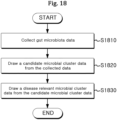
- the present disclosure provides, a method of drawing microbial cluster data using a machine learning model by computing device, comprising: (1) a process of collecting gut microbiota data to draw a candidate microbial cluster data from the collected data; and (2) a process of drawing a disease relevant microbial cluster data from the candidate microbial cluster data.
- a device of drawing microbial cluster data using a machine learning model by computing device comprising: a collecting unit configured to collect gut microbiota data; a candidate consortium drawing unit configured to draw a candidate microbial cluster data from the collected data; and a disease-relevant consortium drawing unit configured to draw a disease relevant microbial cluster data from the candidate microbial cluster data.
- Effect of the present application comprises drawing not only information of individual microorganism related to a specific disease, but also microbe consortiums related to a specific disease such as microbiome, microbiota, or etc.
- Machine Learning refers to artificial applications where computer programs use algorithms to find patterns in given data. It primarily denotes the field in which computers learn from data and improve through experience.
- the machine learning algorithms used in this specification are just examples, and all machine learning methods or types that can be used for the invention disclosed herein should be interpreted as included.
- machine learning methods may include (1) supervised learning, (2) unsupervised learning, (3) reinforcement learning, (4) semi-supervised learning, and more specifically, Naive Bayes Classification, Logistic Regression, Decision tree, Random forest, Boosting (XGBoost/ensemble boosting/AdaBoost/Gradient Boost/ LightGBM/CatBoost, etc.), Perceptron, Support Vector Machine, Quadratic classifiers, Clustering (K-means clustering, Bayesian network clustering, etc.), among others.
- Boosting XGBoost/ensemble boosting/AdaBoost/Gradient Boost/ LightGBM/CatBoost, etc.
- Perceptron Perceptron
- Support Vector Machine Quadratic classifiers
- Clustering K-means clustering, Bayesian network clustering, etc.
- gut microbiota refers to a complex microbial community living in the digestive tract, digestive microbial, or gastrointestinal microbes, in the gut of humans and other animals.
- Supervised Learning in machine learning refers to the process where the model labels specific data groups for learning purposes, while “Unsupervised Learning” means the model clusters similar features within a specific data group without predefined objectives to predict results for new data.
- Clustering refers to dividing the entire data into groups of similar entities (data) within the given data.
- Quality Control means the process of creating quality standards to maintain the consistency of product quality, ensuring adherence to these standards in all manufacturing processes.
- consortium refers to clustered data, and for example, “candidate microbial consortia” means microbial cluster data that could be candidates for the final microbial cluster data desired by the invention.
- Disease-relevant microbial consortium refers to microbial cluster data that can distinguish between patients with a disease and those without, indicating a set of symbiotic relationships of microorganisms found in a specific disease.
- the present disclosure aims to draw a microbial cluster that can be used when developing effective probiotics for a specific disease.
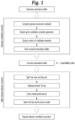
- the invention includes (1) drawing a candidate microbial cluster data related to specific disease, which is collected by preprocessing a gut microbiota data (a taxonomy abundance table) and (2) training the machine learning model using the collected candidate microbial cluster data (hereinafter referred as candidate consortium), and selecting a model with the highest predictive performance to draw a disease-microbial consortium ( Fig. 1 ).
- the process described in (1) involves drawing candidate microbial consortia using unsupervised learning algorithms, while the process in (2) entails using supervised learning algorithms to draw microbial data (disease-relevant microbial consortium) most relevant to a specific disease from the candidate microbial consortia.
- the mentioned specific diseases could include obesity, Clostridioides Difficile Infection (CDI), Rheumatoid Arthritis (RA), but are not limited to these.
- Example 1 Generation of candidate microbial consortia
- the relative taxonomic abundance values are converted to percentage per sample.
- similarity i.e., 1-distance
- six kinds of similarity measurements were applied to all pairs of taxonomies. For this, the distances were computed using the SciPy (v1.8.0) Python library, then the similarity was obtained by subtracting the calculated distances from 1.
- the present inventors employed three types of clustering algorithms with methodological variations, encompassing hierarchical clustering, K-means clustering, and Gaussian mixture model (GMM). These algorithms were applied to a matrix of pairwise taxanomic similarities, which was calculated by using taxanomic abundance across samples.
- the exploration of hyperparameter Ncluster which represents the number of clusters, ranged from 21 to 60.
- Each cluster represents a microbial consortium.
- the specifics of the similarity measurements, algorithm variations, and Nclustervalues used in these procedures can be found in Table 1. Through this process, a total of 1,680 approaches for generating candidate microbial consortia (primary cluster data) were generated for each disease.
- the abundance of the consortium was defined as the arithmetic sum of the taxa within a cluster.
- the objective of this process is to identify the most pertinent microbial consortium associated with disease using ML-based approach.
- the present inventors selected the microbial consortium with the highest feature importance from the ML model that exhibited the best predictive performance.
- the ML model adjusted the importance of features, and a higher predictive performance of the ML model indicates that the adjusted feature importance can reliably contributes to predicting future unseen data ( Fig. 3 ).
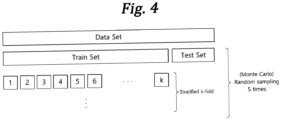
- the present inventors trained ML model using all kinds of candidate microbial consortia generated through the process of Example 1.
- ML machine learning
- MC Monte Carlo
- the training set was utilized for ML model training, employing four types of ML algorithms: Logistic regression, Na ⁇ ve Bayes, Random Forest, and support vector machines (SVM).
- the hyperparameters of each ML algorithm were determined using the GridSearch strategy. This strategy involved conducting k-fold cross-validation (CV) with various combinations of hyperparameters to identify the best-performing hyperparameters based on CV performance. In both MC sampling and k-fold CV, the ratio of the healthy / disease samples is preserved.
- the best-performing ML model was selected through a two-step process:
- the selection of the best-performing ML algorithm involved comparing the median predictive performances of each algorithm against each other.
- the algorithm with the highest median predictive performance was chosen as the best-performing ML algorithm.
- the ML model with the highest predictive performance within the selected algorithm was determined as the best-performing ML model.
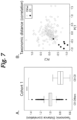
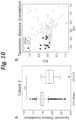
- the disease-relevant microbial consortium was identified using the absolute value of the feature importance from the best-performing ML model. To validate the relevance of the microbial consortium to the disease, the present inventors compared the abundance of the consortium in healthy individuals with that in individuals with the disease. Furthermore, to determine the interconnectedness of the consortium members, the present inventors compared the distances between microbes within the consortium and those outside of the consortium.
- the present inventors created a classifier based on a statistical test. Specifically, in the training set, the present inventors employed a Mann-Whitney U test (MWU) to identify the most discriminatory consortium abundance between the disease and healthy groups. Subsequently, the threshold for classifying disease and healthy samples was determined based on the highest predictive performance observed in the training set. The predictive performance of the statistical-based method was then evaluated using the test set.
- MNU Mann-Whitney U test
- 16S rRNA amplicon sequencing data were obtained from the MicrobiomeHD database (https://doi.org/10.6084/m9.figshare.14531724.v1) for three cohorts encompassing different diseases. Information regarding the data for each cohort is provided in Table 3.
- Table 3 Cohort 1 Cohort 2 Cohort 3 Disease Obesity CDI RA Author (Year) Goodrich (2014) Schubert (2014) Littman (2013) Assay Type 16S rRNA 16S rRNA 16S rRNA Nationality British American American Healthy 428 153 28 Non-healthy 185 84 44 Reference number (see [Reference] below) 11) 12) 13)
- the present inventors performed MC sampling with an 8:2 ratio to split the dataset into training and test sets. This process was repeated 5 times. Additionally, the present inventors employed a stratified 2-fold division for GridSearch cross-validation (CV). For the STAT method, MC sampling with an 8:2 ratio was applied 50 times to split the dataset into training and test sets. The performance evaluation was based on AUROC. In terms of selecting best-performing ML algorithm and model cohort4 was used. For cross-cohort prediction, cohort4 was used as the training cohort due to its optimal balance between healthy and disease samples, and cohorts and cohorts were utilized as test cohorts.
- CV GridSearch cross-validation
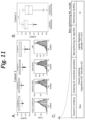
- ML model The best-performing ML model in the logistic regression algorithm exhibited 0.796 AUROC ( Fig. 5C ).
- C0 includes Ruminococcaceae families (Table 5). This finding aligns with a previous study conducted by Peters et al. (2018) 6) , which reported a depletion of certain Ruminococcaceae genera, such as Oscillibacter, in obese individuals. Additionally, C0 includes other genera such as Incertae Sedis XIII, Desulfovibrionaceae, and unclassified species. These findings suggest that our pipeline has the potential to identify both previously reported and novel members of the obesity-relevant consortium, indicating its comprehensive capability.
- Random Forest was found as the best-performing ML algorithm.
- the algorithm demonstrated the highest performance (median AUROC: 0.994) compared with the other four ML algorithms ( Fig. 8A ).
- the predictive performance of the ML algorithm outperformed that of the method based on statistical approach ( Fig. 8B ).
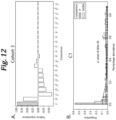
- the best-performing ML model in the random forest showed an AUROC of 1.0 ( Fig. 8C ).
- C17 The validity of the identified CDI-relevant microbial consortium (C17) was further supported by previous research.
- the members of C17 included Lachnospiraceae and Ruminococcus (Table 6) . This observation aligns with a previous study by Martinez et al.(2022) 7) , which reported the depletion of some Lachnospiraceae and Ruminococcus in CDI individuals.
- C17 included the other genera, such as Acholeplasma and Anaerovorax.
- C1 The validity of the identified RA-relevant microbe consortium C1 was further supported by previous study.
- the internal members of C1 included Prevotella [Table 7].
- Several studies 8)9)10) have reported an increase in Prevotella in RA (rheumatoid arthritis) groups compared to healthy groups.
- C1 included other genera, such as Ancerotruncus, Pseudoflavonifractor, Dialister, and so on.
- pipeline of the present disclosure is capable of discovering disease-relevant microbial consortium using whole metagenome sequencing data.
- Whole metagenome sequencing data offers the advantage of identifying microbes at the species level, whereas 16S rRNA amplicon sequencing provides information at the genus level.
- the present inventors tried to confirm whether the present disclosure could discover a disease-relevant microbial consortia well regardless of the type of sequencing data.
- Random forest was found as the best-performing ML algorithm.
- the algorithm exhibited the highest predictive performance (median AUROC: 0.854) ( Fig. 14A ). It can predict the disease status of patients better than statistical-based method, significantly ( Fig. 14B ).
- Fig. 14C The best-performing ML model in the random forest exhibited an AUROC of 0.959 ( Fig. 14C ).
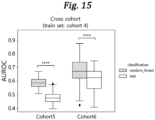
- the present inventors further validated that the best-performing ML algorithm is generally able to predict disease status of obese individuals.
- the best-performing ML algorithm can predict disease status better than that of statistical-based approach in two independent datasets ( Fig. 15 ).
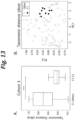
- the present inventors confirmed that microbial members of C3 were closely related with each other.
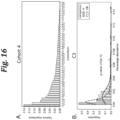
- the distance between internal members of C3 was found to be closer than the distance between the members of consortium C3 and other consortium members ( Fig. 17A ).
- the distance was visualized using PCA plots ( Fig. 17B ).
- consortium C3 The validity of the identified obesity-relevant microbe consortium (C3) was further supported by previous research.
- the present disclosure successfully identified disease-relevant microbial consortia across various diseases and sequencing platforms, indicating its versatility and applicability in diverse scenarios. This highlights the potential for the pipeline to be employed in comprehensive settings.
- the present disclosure demonstrates the capability to discover novel microbial members within a disease-relevant consortium. This not only expands our understanding of the microbial communities associated with diseases but also aids in the development of strategies for discovering new microbes that could potentially alleviate diseases. Thus, the developed pipeline contributes to advancing our knowledge of disease-associated microbial communities and supports the exploration of new avenues for disease management.
Landscapes
- Engineering & Computer Science (AREA)
- Health & Medical Sciences (AREA)
- Medical Informatics (AREA)
- Life Sciences & Earth Sciences (AREA)
- Physics & Mathematics (AREA)
- Data Mining & Analysis (AREA)
- General Health & Medical Sciences (AREA)
- Bioinformatics & Cheminformatics (AREA)
- Public Health (AREA)
- Biotechnology (AREA)
- Biophysics (AREA)
- Spectroscopy & Molecular Physics (AREA)
- Evolutionary Biology (AREA)
- Theoretical Computer Science (AREA)
- Bioinformatics & Computational Biology (AREA)
- Epidemiology (AREA)
- Databases & Information Systems (AREA)
- Computer Vision & Pattern Recognition (AREA)
- Software Systems (AREA)
- Evolutionary Computation (AREA)
- Bioethics (AREA)
- Artificial Intelligence (AREA)
- Biomedical Technology (AREA)
- Proteomics, Peptides & Aminoacids (AREA)
- Genetics & Genomics (AREA)
- Molecular Biology (AREA)
- Analytical Chemistry (AREA)
- Chemical & Material Sciences (AREA)
- Pathology (AREA)
- Primary Health Care (AREA)
- Animal Behavior & Ethology (AREA)
- Physiology (AREA)
- Measuring Or Testing Involving Enzymes Or Micro-Organisms (AREA)
- Medical Treatment And Welfare Office Work (AREA)
Applications Claiming Priority (2)
| Application Number | Priority Date | Filing Date | Title |
|---|---|---|---|
| KR20220174923 | 2022-12-14 | ||
| KR1020230171560A KR20240092579A (ko) | 2022-12-14 | 2023-11-30 | 머신러닝 모델을 사용하여 특정 질병에 관련된 미생물 군집 데이터를 도출하는 방법 |
Publications (1)
| Publication Number | Publication Date |
|---|---|
| EP4386764A1 true EP4386764A1 (fr) | 2024-06-19 |
Family
ID=89854547
Family Applications (1)
| Application Number | Title | Priority Date | Filing Date |
|---|---|---|---|
| EP23216682.7A Pending EP4386764A1 (fr) | 2022-12-14 | 2023-12-14 | Une méthode de découverte de consortia microbiens pertinents pour les maladies utilisant un modèle d'apprentissage automatique |
Country Status (3)
| Country | Link |
|---|---|
| US (1) | US12512224B2 (fr) |
| EP (1) | EP4386764A1 (fr) |
| JP (1) | JP7748113B2 (fr) |
Cited By (1)
| Publication number | Priority date | Publication date | Assignee | Title |
|---|---|---|---|---|
| CN118657232A (zh) * | 2024-07-22 | 2024-09-17 | 广东粤海水务检测技术有限公司 | 预测模型构建方法、对地下水致病原微生物进行检测的方法和计算机程序产品 |
Families Citing this family (1)
| Publication number | Priority date | Publication date | Assignee | Title |
|---|---|---|---|---|
| US20250079002A1 (en) * | 2023-08-28 | 2025-03-06 | NEC Laboratories Europe GmbH | Interpretable domain adaptation for optimizing cross-cohort predictions from medical data |
Citations (2)
| Publication number | Priority date | Publication date | Assignee | Title |
|---|---|---|---|---|
| EP3097211A2 (fr) | 2014-01-25 | 2016-11-30 | Ubiome Inc. | Procédé et système d'analyse du microbiome |
| CN114854847A (zh) | 2022-05-23 | 2022-08-05 | 深圳华大基因股份有限公司 | 构建鉴定感染性疾病和非感染性疾病的机器学习模型的方法 |
Family Cites Families (8)
| Publication number | Priority date | Publication date | Assignee | Title |
|---|---|---|---|---|
| JP6637885B2 (ja) * | 2013-07-21 | 2020-01-29 | ペンデュラム セラピューティクス, インコーポレイテッド | マイクロバイオームの特性解明、モニタリング、および処置のための方法およびシステム |
| US20180200312A1 (en) * | 2017-01-17 | 2018-07-19 | The Regents Of The University Of California | Methods and Compositions for Enhancing Memory and/or Reducing Fear and/or Pain of a Host by Administering a Probiotic |
| EP3927839A4 (fr) * | 2019-02-20 | 2023-03-01 | Psomagen, Inc. | Procédé et système de diagnostic compagnon dérivé du microbiome |
| CN109852714B (zh) * | 2019-03-07 | 2020-06-16 | 南京世和基因生物技术有限公司 | 一种肠癌早期诊断和腺瘤诊断标志物及用途 |
| JPWO2020213732A1 (ja) * | 2019-04-18 | 2021-04-30 | 株式会社サイキンソー | 過敏性腸症候群の検査方法 |
| JP7382049B2 (ja) * | 2019-04-19 | 2023-11-16 | 株式会社新明和 | 腸内細菌叢の細菌に対する餌を選択するための装置及びプログラム |
| EP4259815A4 (fr) * | 2020-12-08 | 2024-10-09 | Pluton Biosciences, Inc. | Production de consortiums microbiens fonctionnels |
| CN115472214B (zh) * | 2022-10-25 | 2025-09-26 | 复旦大学附属中山医院 | 基于多组学特征的结直肠癌中免疫相关微生物的识别方法 |
-
2023
- 2023-12-13 JP JP2023210030A patent/JP7748113B2/ja active Active
- 2023-12-13 US US18/537,992 patent/US12512224B2/en active Active
- 2023-12-14 EP EP23216682.7A patent/EP4386764A1/fr active Pending
Patent Citations (2)
| Publication number | Priority date | Publication date | Assignee | Title |
|---|---|---|---|---|
| EP3097211A2 (fr) | 2014-01-25 | 2016-11-30 | Ubiome Inc. | Procédé et système d'analyse du microbiome |
| CN114854847A (zh) | 2022-05-23 | 2022-08-05 | 深圳华大基因股份有限公司 | 构建鉴定感染性疾病和非感染性疾病的机器学习模型的方法 |
Non-Patent Citations (12)
| Title |
|---|
| BEGHINI F ET AL.: "Integrating taxonomic, functional, and strain-level profiling of diverse microbial communities with biobakery 3", ELIFE, 2021 |
| DAN KNIGHTS: "Human-Associated Microbial Signatures: Examining Their Predictive Value", CELL HOST & MICROBE, vol. 10, no. 4, 19 October 2011 (2011-10-19), NL, pages 292 - 296, XP093153703, ISSN: 1931-3128, Retrieved from the Internet <URL:https://pdf.sciencedirectassets.com/273614/1-s2.0-S1931312811X00112/1-s2.0-S1931312811002873/main.pdf?X-Amz-Security-Token=IQoJb3JpZ2luX2VjEMj//////////wEaCXVzLWVhc3QtMSJHMEUCIEMZDxDcN0tn4Rkji47iBzEjCc7CejZd5bagUczFiLCoAiEA9b8NHqnxvB3KykHo6mwmqZSPa4Nkq1ocMkrigySUgGkqswUIERAFGgwwNTkwMDM1NDY4NjUiDEzu1> DOI: 10.1016/j.chom.2011.09.003 * |
| GUPTA VK ET AL.: "A predictive index for health status using species-level gut microbiome profiling", NATURE COMMUNICATIONS, vol. 11, 2020, pages 4635 |
| JIE Z ET AL.: "The gut microbiome in atherosclerotic cardiovascular disease", NATURE COMMUNICATIONS, vol. 8, 2017, pages 845 |
| LE CHATELIER E ET AL.: "Richness of human gut microbiome correlates with metabolic markers", NATURE, vol. 500, 2013, pages 541 - 546, XP037438197, DOI: 10.1038/nature12506 |
| LIU R ET AL.: "Gut microbiome and serum metabolome alterations in obesity and after weight-loss intervention", NATURE MEDICINE, vol. 23, 2017, pages 859 - 868, XP093119213, DOI: 10.1038/nm.4358 |
| MARTINEZ E ET AL.: "Gut Microbiota Composition Associated with Clostridioides difficile Colonization and Infection", PATHOGENS, vol. 11, no. 7, 2022, pages 781 |
| PETERS BA ET AL.: "A taxonomic signature of obesity in a large study of American adults", NATURE SCIENTIFIC REPORTS, vol. 8, 2018, pages 9749, XP055802215, DOI: 10.1038/s41598-018-28126-1 |
| SCHER JU ET AL.: "Expansion of intestinal Prevotella copri correlates with enhanced susceptibility to arthritis", ELIFE, vol. 2, 2013, pages e01202 |
| SCHUBERT AM ET AL.: "Microbiome Data Distinguish Patients with Clostridium difficile Infection and Non-C", DIFFICILE-ASSOCIATED DIARRHEA FROM HEALTHY CONTROLS, MBIO, vol. 5, no. 3, 2014, pages e01021 - 14 |
| XU ET AL.: "Interactions between Gut Microbiota and Immunomodulatory Cells", RHEUMATOID ARTHRITIS, MEDIATORS OF INFLAMMATION, 2020 |
| ZHAO T ET AL.: "Gut microbiota and rheumatoid arthritis: From pathogenesis to novel therapeutic opportunities", FRONTIERS IMMUNOLOGY, vol. 13, 2022, pages 1007165 |
Cited By (1)
| Publication number | Priority date | Publication date | Assignee | Title |
|---|---|---|---|---|
| CN118657232A (zh) * | 2024-07-22 | 2024-09-17 | 广东粤海水务检测技术有限公司 | 预测模型构建方法、对地下水致病原微生物进行检测的方法和计算机程序产品 |
Also Published As
| Publication number | Publication date |
|---|---|
| JP2024085406A (ja) | 2024-06-26 |
| US12512224B2 (en) | 2025-12-30 |
| US20240203593A1 (en) | 2024-06-20 |
| JP7748113B2 (ja) | 2025-10-02 |
Similar Documents
| Publication | Publication Date | Title |
|---|---|---|
| Weis et al. | Machine learning for microbial identification and antimicrobial susceptibility testing on MALDI-TOF mass spectra: a systematic review | |
| Zhao et al. | A reliable method for colorectal cancer prediction based on feature selection and support vector machine | |
| Chen et al. | Applying particle swarm optimization-based decision tree classifier for cancer classification on gene expression data | |
| EP4386764A1 (fr) | Une méthode de découverte de consortia microbiens pertinents pour les maladies utilisant un modèle d'apprentissage automatique | |
| CN107075588B (zh) | 用于微生物组来源的诊断和治疗的方法及系统 | |
| US11621055B2 (en) | Microorganism-related significance index metrics | |
| Del Coz et al. | Learning Nondeterministic Classifiers. | |
| Zhang et al. | Prediction of virus-host infectious association by supervised learning methods | |
| Nalbantoglu et al. | RAIphy: phylogenetic classification of metagenomics samples using iterative refinement of relative abundance index profiles | |
| López-Cortés et al. | MSDeepAMR: antimicrobial resistance prediction based on deep neural networks and transfer learning | |
| Chen et al. | Kernel methods for regression analysis of microbiome compositional data | |
| Albanese et al. | Explaining diversity in metagenomic datasets by phylogenetic-based feature weighting | |
| Xia et al. | Instance-based domain adaptation in nlp via in-target-domain logistic approximation | |
| Gouda et al. | Comparison of machine learning models for bluetongue risk prediction: a seroprevalence study on small ruminants | |
| Naor-Hoffmann et al. | Predicting the pathogenicity of bacterial genomes using widely spread protein families | |
| Ma et al. | Comprehensive gut microbiota composition and microbial interactions among the three age groups | |
| Sharifi-Noghabi et al. | Deep genomic signature for early metastasis prediction in prostate cancer | |
| CN119948567A (zh) | 两个相互竞争的菌群作为针对人类疾病的核心微生物组特征 | |
| Liu et al. | Ensemble component selection for improving ICA based microarray data prediction models | |
| Olaguez-Gonzalez et al. | Assessment of machine learning strategies for simplified detection of autism spectrum disorder based on the gut microbiome composition | |
| Zhou et al. | Kernel principal components based cascade forest towards disease identification with human microbiota | |
| KR20240092579A (ko) | 머신러닝 모델을 사용하여 특정 질병에 관련된 미생물 군집 데이터를 도출하는 방법 | |
| Li et al. | Personalized colorectal cancer survivability prediction with machine learning methods | |
| CN118197426A (zh) | 使用机器学习模型导出特定疾病相关微生物集群数据的方法 | |
| Smedley et al. | Identifying transcription patterns of histology and radiomics features in NSCLC with neural networks |
Legal Events
| Date | Code | Title | Description |
|---|---|---|---|
| PUAI | Public reference made under article 153(3) epc to a published international application that has entered the european phase |
Free format text: ORIGINAL CODE: 0009012 |
|
| STAA | Information on the status of an ep patent application or granted ep patent |
Free format text: STATUS: REQUEST FOR EXAMINATION WAS MADE |
|
| 17P | Request for examination filed |
Effective date: 20231214 |
|
| AK | Designated contracting states |
Kind code of ref document: A1 Designated state(s): AL AT BE BG CH CY CZ DE DK EE ES FI FR GB GR HR HU IE IS IT LI LT LU LV MC ME MK MT NL NO PL PT RO RS SE SI SK SM TR |