EP4386768A1 - System zur ermittlung und planung des aktiven schlafapnoe-falls und betriebsverfahren dafür - Google Patents
System zur ermittlung und planung des aktiven schlafapnoe-falls und betriebsverfahren dafür Download PDFInfo
- Publication number
- EP4386768A1 EP4386768A1 EP23154488.3A EP23154488A EP4386768A1 EP 4386768 A1 EP4386768 A1 EP 4386768A1 EP 23154488 A EP23154488 A EP 23154488A EP 4386768 A1 EP4386768 A1 EP 4386768A1
- Authority
- EP
- European Patent Office
- Prior art keywords
- risk
- patient
- osa
- patient case
- accordance
- Prior art date
- Legal status (The legal status is an assumption and is not a legal conclusion. Google has not performed a legal analysis and makes no representation as to the accuracy of the status listed.)
- Withdrawn
Links
Images


Classifications
-
- G—PHYSICS
- G16—INFORMATION AND COMMUNICATION TECHNOLOGY [ICT] SPECIALLY ADAPTED FOR SPECIFIC APPLICATION FIELDS
- G16H—HEALTHCARE INFORMATICS, i.e. INFORMATION AND COMMUNICATION TECHNOLOGY [ICT] SPECIALLY ADAPTED FOR THE HANDLING OR PROCESSING OF MEDICAL OR HEALTHCARE DATA
- G16H50/00—ICT specially adapted for medical diagnosis, medical simulation or medical data mining; ICT specially adapted for detecting, monitoring or modelling epidemics or pandemics
- G16H50/70—ICT specially adapted for medical diagnosis, medical simulation or medical data mining; ICT specially adapted for detecting, monitoring or modelling epidemics or pandemics for mining of medical data, e.g. analysing previous cases of other patients
-
- G—PHYSICS
- G16—INFORMATION AND COMMUNICATION TECHNOLOGY [ICT] SPECIALLY ADAPTED FOR SPECIFIC APPLICATION FIELDS
- G16H—HEALTHCARE INFORMATICS, i.e. INFORMATION AND COMMUNICATION TECHNOLOGY [ICT] SPECIALLY ADAPTED FOR THE HANDLING OR PROCESSING OF MEDICAL OR HEALTHCARE DATA
- G16H10/00—ICT specially adapted for the handling or processing of patient-related medical or healthcare data
- G16H10/60—ICT specially adapted for the handling or processing of patient-related medical or healthcare data for patient-specific data, e.g. for electronic patient records
-
- G—PHYSICS
- G16—INFORMATION AND COMMUNICATION TECHNOLOGY [ICT] SPECIALLY ADAPTED FOR SPECIFIC APPLICATION FIELDS
- G16H—HEALTHCARE INFORMATICS, i.e. INFORMATION AND COMMUNICATION TECHNOLOGY [ICT] SPECIALLY ADAPTED FOR THE HANDLING OR PROCESSING OF MEDICAL OR HEALTHCARE DATA
- G16H15/00—ICT specially adapted for medical reports, e.g. generation or transmission thereof
-
- G—PHYSICS
- G16—INFORMATION AND COMMUNICATION TECHNOLOGY [ICT] SPECIALLY ADAPTED FOR SPECIFIC APPLICATION FIELDS
- G16H—HEALTHCARE INFORMATICS, i.e. INFORMATION AND COMMUNICATION TECHNOLOGY [ICT] SPECIALLY ADAPTED FOR THE HANDLING OR PROCESSING OF MEDICAL OR HEALTHCARE DATA
- G16H20/00—ICT specially adapted for therapies or health-improving plans, e.g. for handling prescriptions, for steering therapy or for monitoring patient compliance
- G16H20/70—ICT specially adapted for therapies or health-improving plans, e.g. for handling prescriptions, for steering therapy or for monitoring patient compliance relating to mental therapies, e.g. psychological therapy or autogenous training
-
- G—PHYSICS
- G16—INFORMATION AND COMMUNICATION TECHNOLOGY [ICT] SPECIALLY ADAPTED FOR SPECIFIC APPLICATION FIELDS
- G16H—HEALTHCARE INFORMATICS, i.e. INFORMATION AND COMMUNICATION TECHNOLOGY [ICT] SPECIALLY ADAPTED FOR THE HANDLING OR PROCESSING OF MEDICAL OR HEALTHCARE DATA
- G16H40/00—ICT specially adapted for the management or administration of healthcare resources or facilities; ICT specially adapted for the management or operation of medical equipment or devices
- G16H40/40—ICT specially adapted for the management or administration of healthcare resources or facilities; ICT specially adapted for the management or operation of medical equipment or devices for the management of medical equipment or devices, e.g. scheduling maintenance or upgrades
-
- G—PHYSICS
- G16—INFORMATION AND COMMUNICATION TECHNOLOGY [ICT] SPECIALLY ADAPTED FOR SPECIFIC APPLICATION FIELDS
- G16H—HEALTHCARE INFORMATICS, i.e. INFORMATION AND COMMUNICATION TECHNOLOGY [ICT] SPECIALLY ADAPTED FOR THE HANDLING OR PROCESSING OF MEDICAL OR HEALTHCARE DATA
- G16H40/00—ICT specially adapted for the management or administration of healthcare resources or facilities; ICT specially adapted for the management or operation of medical equipment or devices
- G16H40/60—ICT specially adapted for the management or administration of healthcare resources or facilities; ICT specially adapted for the management or operation of medical equipment or devices for the operation of medical equipment or devices
- G16H40/67—ICT specially adapted for the management or administration of healthcare resources or facilities; ICT specially adapted for the management or operation of medical equipment or devices for the operation of medical equipment or devices for remote operation
-
- G—PHYSICS
- G16—INFORMATION AND COMMUNICATION TECHNOLOGY [ICT] SPECIALLY ADAPTED FOR SPECIFIC APPLICATION FIELDS
- G16H—HEALTHCARE INFORMATICS, i.e. INFORMATION AND COMMUNICATION TECHNOLOGY [ICT] SPECIALLY ADAPTED FOR THE HANDLING OR PROCESSING OF MEDICAL OR HEALTHCARE DATA
- G16H50/00—ICT specially adapted for medical diagnosis, medical simulation or medical data mining; ICT specially adapted for detecting, monitoring or modelling epidemics or pandemics
- G16H50/20—ICT specially adapted for medical diagnosis, medical simulation or medical data mining; ICT specially adapted for detecting, monitoring or modelling epidemics or pandemics for computer-aided diagnosis, e.g. based on medical expert systems
-
- G—PHYSICS
- G16—INFORMATION AND COMMUNICATION TECHNOLOGY [ICT] SPECIALLY ADAPTED FOR SPECIFIC APPLICATION FIELDS
- G16H—HEALTHCARE INFORMATICS, i.e. INFORMATION AND COMMUNICATION TECHNOLOGY [ICT] SPECIALLY ADAPTED FOR THE HANDLING OR PROCESSING OF MEDICAL OR HEALTHCARE DATA
- G16H50/00—ICT specially adapted for medical diagnosis, medical simulation or medical data mining; ICT specially adapted for detecting, monitoring or modelling epidemics or pandemics
- G16H50/30—ICT specially adapted for medical diagnosis, medical simulation or medical data mining; ICT specially adapted for detecting, monitoring or modelling epidemics or pandemics for calculating health indices; for individual health risk assessment
Definitions
- the present system relates to a system that screens individuals for suspected obstructive sleep apnea and, more particularly, to a system that utilizes health information to screen individuals for suspected obstructive sleep apnea to enable active case-finding, diagnosis and treatment and a method of operation thereof.
- Undiagnosed health conditions are a major problem faced by the general population. Oftentimes, these undiagnosed health conditions persist until a significant event occurs that is obviously manifested, thereby enabling identification of at least the manifestation (e.g., heart attack) and follow-on testing to identify root causes of the manifestation.
- OSA undiagnosed obstructive sleep apnea
- the prevalence of obstructive sleep apnea (that is, its diagnosis) associated with accompanying daytime sleepiness is approximately 3 to 7% for adult men and 2 to 5% for adult women in the general population.
- OSA can have a negative impact on an affected individual's everyday quality-of-life, mood, productivity, and safety in daily life due to daytime sleepiness. Since the indications of OSA are often ignored until there is some overt manifestation, there is a significant increase in the costs associated with treating OSA following the overt manifestation. For example, OSA increases cardiovascular risk including risks of systemic hypertension, pulmonary hypertension, all-cause mortality, congestive heart failure, cardiovascular disease, atrial fibrillation, stroke, arrhythmias, and myocardial infarction (MI), all of which can increase healthcare utilization costs of these individuals once these symptoms are manifested or otherwise identified. In addition, OSA may result in fatigue, episodes of drowsy driving, increased risk of accidents and other quality of life problems or symptoms, such as a decrease in daytime vitality.
- MI myocardial infarction
- a diagnosis of OSA typically requires a sleep study such as full polysomnography, which is an expensive and time-consuming procedure that is performed in a sleep clinic. Therefore, sending an individual unnecessarily to a sleep clinic for a diagnosis should be avoided.
- polysomnography is not readily available for many individuals with suspected OSA, mainly due to its cost ( e.g., which may be thousands of dollars) but also the long waiting lines for people to undergo the test.
- Less expensive and more accessible procedures such as home-based nasal airflow analysis or a home sleep study can be used to aid the diagnosis, or pre-diagnosis of OSA but these are less accurate and may often misdiagnose OSA.
- accurately recognizing latent OSA in individuals enabling treatment is vital to reduce disease burden and improve quality-of-life in the general population.
- OSA obstructive sleep apnea
- OSA typically, a diagnosis of OSA occurs when signs and symptoms are developed and present.
- OSA can start before signs and symptoms develop or can be recognized by patients, their partners, or physicians, which is known as early onset of OSA.
- the prevalence for OSA among the general population is considered sufficiently high to justify the use of a screening instrument, if the screening method is good enough (i.e., has high test validity) and cost effective.
- Early recognition of OSA can initiate effective treatment.
- An ideal screening test for OSA should have high validity in testing, that is, being extremely sensitive and extremely specific.
- STOP-BANG TM is considered by some to be the most sensitive clinical screening tool to detect unrecognized sleep apnea.
- these clinical screening tools are hampered by low levels of specificity and do not perform sufficiently well in correctly identifying individuals who do not happen to have OSA (e.g., result in a high number of false positive assessments).
- highly specific tests are required to reduce false positives, just to contain the cost in follow-up diagnosis and reduce patient concerns about a positive test result which turns out to be false, which can greatly inconvenience the individual who was misdiagnosed at great cost.
- embodiments of the present system provide features and advantages which obviate conventional diagnostic systems and methods.
- a system for mass screening a patient cohort for previously undiagnosed medical conditions among whom there may be a potential absence of clear symptoms in early onset of the medical condition such as provided by embodiments of the present system.
- the inefficiency of existing mass screening, the potential absence of clear symptoms in early onset of the medical condition, and low test validity of existing screening tools are a real problem and disadvantage to achieve high yield in finding, for example, unrecognized/undiagnosed OSA cases.
- Embodiments of the present system overcome these and other disadvantages of existing screening tools and methods and provide a system and method which can achieve high yield in finding patients that suffer from unrecognized/undiagnosed medical conditions which can justify expensive and time-consuming follow-on diagnostic testing to diagnose cases among the general population. It should also be appreciated that embodiments of the present system provide an efficient mass screening system and method for detecting early onset of given medical conditions with higher test validity than existing screening tools.
- system The system(s), device(s), method(s), arrangements(s), interface(s), computer program(s), processes, etc., (hereinafter each of which will be referred to as system, unless the context indicates otherwise), described herein address problems in prior art systems.
- a_screening system including: at least one controller configured to: query a plurality of selected data sources for medical records to extract medical status information (MSI) of patients in a patient cohort; form patient cohort data (PCD) including patient case records, each of the patient case records including the extracted MSI of the patients in the patient cohort; exclude patient case records from the PCD that are determined to be disqualified according to exclusion rules (ERS), and update the PCD accordingly; determine risk factors that are present for each patient case record of the updated PCD in accordance with a comparison of the MSI for corresponding patient case records with risk factors for obstructive sleep apnea (OSA); determine a total risk score for each of the corresponding patient case records in accordance with a total of the determined risk factors that are determined to be present for the corresponding patient case records; determine a predicted probability of suspected OSA based upon a logistic function of the determined total risk score for each of the corresponding patient case records; assign each of the corresponding patient case records
- the at least one controller may be further configured to render the determined follow-up procedure on a rendering device of the system under the control of the at least one controller.
- the at least one controller may be further configured to render one or more of the total risk score, the predicted probability of suspected OSA, and the determined risk category on the rendering device.
- the at least one controller may be further configured to determine an estimated risk as at least one of odds, log odds, and probability based upon a logistic function of the determined total risk score for each of the corresponding patient case records.
- the at least one controller may be further configured to determine a system capacity limit.
- the at least one controller may be further configured to communicate with at least one sleep monitoring unit (SMU) (102) and to determine a cumulative capacity of the at least one SMU to conduct sleep tests and base the system capacity limit in accordance with a sum of the determined cumulative capacity.
- SMU sleep monitoring unit
- the at least one controller may be further configured to render a diagnostic follow-up based on the assigned category risk.
- a screening system for an undiagnosed medical condition including: at least one controller which is configured to: query a plurality of selected data sources for medical records to extract medical status information (MSI) of patients in a patient cohort; form patient cohort data (PCD) including patient case records, each of the patient case records including the extracted MSI of the patients in the patient cohort; exclude patient case records from the PCD that are determined to be disqualified according to exclusion rules (ERS), and update the PCD accordingly; determine risk factors that are present for each patient case record of the updated PCD in accordance with a comparison of the MSI for the corresponding patient case records with risk factors associated with the undiagnosed medical condition; determine a total risk score for each of the corresponding patient case records in accordance with a total of the determined risk factors that are determined to be present for the corresponding patient case records; determine a predicted probability of the undiagnosed medical condition based upon a logistic function of the determined total risk score for each of the corresponding patient case records
- the at least one controller may be further configured to determine a follow-up procedure for each patient case record in accordance with the assigned risk category or risk level for the corresponding patient case records.
- the at least one controller may be further configured to render the determined follow-up procedure on a rendering device.
- the at least one controller may be further configured to render one or more of the total risk score, the predicted probability of the undiagnosed medical condition, and the determined risk category or risk level on the rendering device.
- the at least one controller may be further configured to determine an estimated risk as at least one of odds, log odds, and probability based upon a logistic function of the determined total risk score for each of the corresponding patient case records.
- the at least one controller may be further configured to determine a system capacity limit.
- the at least one controller may be further configured to communicate with at least one monitoring unit and to determine a cumulative capacity of the at least one monitoring unit to conduct tests and base the system capacity limit in accordance with a sum of the determined cumulative capacity.
- the at least one controller may be further configured to render a diagnostic follow-up based on the assigned risk category or risk level.
- a method for screening for a given undiagnosed medical condition in a patient cohort including acts of: querying a plurality of selected data sources for medical records to extract medical status information (MSI) of patients in the patient cohort; forming patient cohort data (PCD) including patient case records, each of the patient case records including the extracted MSI of the patients in the patient cohort; excluding patient case records from the PCD that are determined to be disqualified according to exclusion rules (ERS), and updating the PCD accordingly; determining risk factors that are present for each patient case record of the updated PCD in accordance with a comparison of the MSI for the corresponding patient case records with risk factors associated with the undiagnosed medical condition; determine a total risk score for each of the corresponding patient case records in accordance with a total of the determined risk factors that are determined to be present for the corresponding patient case records; determining a predicted probability of the undiagnosed medical condition based upon a logistic function of the determined total risk score for each of
- the method may include an act of rendering the determined follow-up procedure on a rendering device.
- the method may include acts of: annotating the updated PCD with one or more of the total risk score, the estimated risk predicted probability of the undiagnosed medical condition, and the determined risk category or risk level; and storing the annotated PCD on a storage device.
- the method may include acts of: determining a cumulative capacity of a plurality of monitoring units (102) to conduct tests; and determining a follow-up procedure for each patient case record in accordance with the assigned risk category or risk level for the corresponding patient case records and in accordance with the determined cumulative capacity of the plurality of monitoring units.
- the terms “about”, substantially and “approximately” denote an interval of accuracy that a person skilled in the art will understand to still ensure the technical effect of the feature in question which in some cases may also denote “within engineering tolerances.”
- the terms may indicate a deviation from the indicated numerical value(s) of ⁇ 20 %, ⁇ 15 %, ⁇ 10 %, ⁇ 5 %, ⁇ 1 % ⁇ 0.5 % or ⁇ 0.1 %.
- clinician, clinicians, and/or formatives thereof may include a professional such as a doctor, a clinician, a technologist, an operator, an expert, medical specialist, medical specialist a technician, and/or the like, who may operate and/or review information related to the patient such as system information, and/or data generated by embodiments of the present system and associated data and/or the like unless the context indicates otherwise.
- a professional such as a doctor, a clinician, a technologist, an operator, an expert, medical specialist, medical specialist a technician, and/or the like, who may operate and/or review information related to the patient such as system information, and/or data generated by embodiments of the present system and associated data and/or the like unless the context indicates otherwise.
- patient, patients, and/or formatives thereof may include patients or other individuals (e.g., persons, subjects, subjects-under-test, etc.) or other users who may be receiving any type of sleep apnea monitoring or assessment using systems, machines, processes, and/or methods operating in accordance with embodiments of the present system.
- individuals e.g., persons, subjects, subjects-under-test, etc.
- users who may be receiving any type of sleep apnea monitoring or assessment using systems, machines, processes, and/or methods operating in accordance with embodiments of the present system.
- the present system relates to a system and method to provide for pre-screening of individuals for given suspected undiagnosed medical condition(s).
- OSA obstructive sleep apnea
- the discussion regarding OSA herein should be understood to apply to other medical conditions with suitable adjustments to system portions and as such, are understood to be within the scope of the appended claims unless explicitly indicated otherwise.
- the present system may relate to a system that pre-screens individuals for OSA.
- the present system may relate more particularly to a system that searches health records to pre-screen individuals for undiagnosed medical condition(s), such as OSA, to enable a pathway comprising active case-finding, diagnosis and treatment and a method of operation thereof.
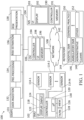
- FIG. 1 illustratively shows a schematic block diagram of a portion of a system 100 (hereinafter the system 100) operating in accordance with embodiments of the present system.
- the system 100 may include one or more of a sleep monitoring unit (SMU) 102, a mobile station (MS) 104, a clinical service center (CSC) 106, a network 108, a repository 142 and an obstructive sleep apnea (OSA) pre-screening stage (OSAPS) 131, one or more of which may communicate with the other via any suitable communication method or methods such as wired, wireless, and/or optical communication methods, such as over the network 108.
- the system 100 including the OSAPS 131 may be adapted to identify undiagnosed medical condition(s) besides OSA with suitable adjustments to system portions and as such, should be understood to be considered in the following discussion and encompassed by the claims that follow.
- the network 108 may include any suitable network such as an ad-hoc network, a body area network (BAN), a personal area network (e.g., e.g., Bluetooth TM , etc.), a Zigbee network, Wi-Fi, a local area network (LAN), a wide area network (WAN), a telephony network, a cellular network (e.g., 5G, etc.), etc.
- the SMU 102, the MS 104, the CSC 106, the network 108, the repository 142, and the OSAPS 131 may be controlled by at least one controller which may control the overall operation of the system and may include one or more logic devices such as a microprocessor and/or the like.
- the at least one controller may access a memory and may obtain system setting information (SSI) which may include one or more of operating parameters (e.g., scan type, etc.), operating settings, threshold values, warnings, display settings, user information, patient information such as patient identification (ID), patient records, content (e.g., video, audio, etc.), etc.
- SSI system setting information
- the at least one controller may generate and render an interface with which the patient and/or clinician may, for example, interact with to, for example, set, reset, select, and/or adjust one or more settings of the SSI and/or enter information (e.g., ID, test type, settings, parameters (e.g., test duration), results, etc.) which may be stored in the SSI in a memory of the system.
- information e.g., ID, test type, settings, parameters (e.g., test duration), results, etc.
- the test duration may be employed by the system to determine system capacity which may be employed to determine a time bound capacity of the diagnostic pathway such as may be provided by the SMU 102.
- test duration is 8 hours
- the system may process three tests in a 24 hour period (e.g., 24 hrs/8 hours/test) which may be the capacity of the SMU 102 (although other times are also envisioned).
- the at least one controller may be a local and/or distributed throughout the system.
- the MS 104 may include any suitable mobile station(s) such as a smart-phone (e.g., an I-Phone, a Galaxy phone, etc.), a personal digital assistant (PDA), a smart watch (e.g., an Apple TM Watch TM , a Galaxy TM watch, etc.), a smart ring, smart headband (generally, token) and/or the like, and may include a memory 191, at least one controller 190, a user interface (UI) 193, and a transceiver (Tx/Rx) configured to communicate with the network 108.
- a smart-phone e.g., an I-Phone, a Galaxy phone, etc.
- PDA personal digital assistant
- a smart watch e.g., an Apple TM Watch TM , a Galaxy TM watch, etc.
- a smart headband generally, token
- Tx/Rx transceiver
- the UI 193 may provide an interface with which a user (e.g., the patient, the clinician, etc.) may interact, such interfaces may include, inter alia, a touch-screen display 192, an optical sensor such as a camera, a proximity sensor, a speaker, and/or a microphone. However, other user interfaces are also envisioned.
- the UI 193 may render information, such as content, etc., on a display and/or a speaker for the convenience of the patient or clinician, and may receive information entered by the patient or clinician such as selections, requests, commands, patient or clinician settings, etc., using any suitable input method such as gesture inputs, a touch input, voice input, etc.
- the memory 191 may store information for use by the system such as the SSI, sleep monitoring information (SMI), system settings, system parameters, operating parameters, and/or combinations thereof, as discussed herein.
- the patient identification (ID) may be employed to identify the patient and corresponding test results.
- the MS 104 may transmit information such as operating parameters, instructions, requests, commands (e.g., a synchronization command, etc.), to the SMU 102, and may receive information generated by the SMU 102 such as the SSI, system capacity (or portions thereof), operating parameters, and/or combinations thereof, from the SMU 102 for further processing.
- the MS 104 may further receive and/or transmit SMI as will be discussed below.
- Data transfer may occur on periodic and/or non-periodic intervals as may be set forth in the SSI or requested by the system (e.g., the SMU 102, the CSC 106, and/or the MS 104), patient, and/or clinician.
- the system e.g., the SMU 102, the CSC 106, and/or the MS 104
- MS 104 For the sake of clarity, only a single MS 104 is discussed unless the context indicates otherwise.
- other MSs may be employed by the system.
- a clinician such as a doctor may have an MS which may receive information such as SSI, SMI, etc., from other portions of the system for further review, processing, and/or storage.
- the CSC 106 may include one or more of a controller 194, a memory 196 and a UI 198.
- the controller 194 may control the overall operation of the CSC 106 and, as such, may receive information, such as the SSI, SMI and/or other information from the SMU 102 and/or MS 104 for further processing.
- the controller 194 may control operation of the OSAPS 131 and may transmit queries to the repository 142 and may receive results of the corresponding queries from the repository 142 and provide these to the OSAPS 131, although the OSAPS 131 may also utilize a controller that is separate from the CSC 106.
- the CSC 106 may further communicate with the SMU 102 and/or MS 104 to, for example, transmit diagnostic results of the processing (e.g., OSA detected, OSA not detected, etc.) to be rendered on a rendering device of the MS 104 for the convenience of the user.
- the diagnostic results may be stored in the SMI in a memory of the system.
- the CSC 106 may process data in real time or may obtain data that has been stored in a memory of the system.
- One or more controllers of the system 100 may employ machine learning and/or artificial intelligence (AI) engines to process information generated by the system such as the SMI as well as data provided to the system such as historical information and may be operative to detect for example, the presence or absence of obstructive sleep apnea (OSA), the severity of the OSA, etc., may store and/or update results in a memory of the system (e.g., within the SMI), and/or may forward these results to the corresponding patient or clinician for their convenience as for example may be set forth in the SSI.
- the SMI may be accessed by one or more of the CSC 106, the MS 104 and the SMU 102 of the system for further review, processing, and/or analysis.
- the SMU 102 may include one or more of a controller 120, a Tx/Rx 128, a memory 126, sensors 114-1 through 114-N (generally sensors 114, where N is an integer) and a user interface (UI) 118 with which a user, such as the patient or clinician, may interact.
- the controller 120 may control the overall operation of the SMU 102 and may communicate with one or more of the CSC 106, the MS 104, the network 108, the repository 142 and the OSAPS 131 via the Tx/Rx 128.
- the controller 120 may include one or more logic devices such as a microprocessor ( ⁇ P) 130 and may control the overall operation of the SMU 102. It should be appreciated that in some embodiments the controller 120 may include digital and/or analog control circuitry. It is further envisioned that the SMU 102 may be a standalone unit with its own power supply.
- the UI 118 may include a display 122 (e.g., a touch-screen display) and a user input interface 124 which may be combined with or separate from each other.
- the user input interface 124 may include a keyboard, a mouse, a trackball, touch sensitive sensor, or other device, such as a touch-sensitive display, which may be stand alone or part of a system, such as part of a laptop, a personal digital assistant (PDA), a mobile phone (e.g., a smart phone), a smart watch, an e-reader, a monitor, a smart or dumb terminal or other device for communicating with the controller 120 via any operable link such as a wired and/or wireless communication link.
- PDA personal digital assistant
- the user input interface 124 may be operable for interacting with the controller 120 including enabling interaction within the UI 118 as described herein.
- the controller 120, the sensors 114, the user input interface 124, the user interface (UI) 118, the memory 126 and the network 108 may all or partly be a portion of a computer system or other device.
- the UI 118 may be operative to provide audio/visual feedback as well as graphical user interfaces (GUIs) to the user of the present system and may inform the operator of operating parameters, operating states, etc.
- GUIs graphical user interfaces
- the controller 120 may be operative to render content, such as still or video information, as well as audio information on a rendering device of the system such as on the display 122 and/or speaker of the UI 118.
- This information may include information related to operating parameters, instructions, feedback, and/or other information related to an operation of the system, or portions thereof, such as SSI or portions thereof, SMI, application data, data generated by the system, operating parameters, etc., and/or combinations thereof.
- Clinical decision support CDS may be employed to analyze data generated by the system and may generate determinations which may be stored in the system and/or may be rendered for the convenience of the patient and/or clinician, for example depending upon settings in the SSI.
- the controllers discussed herein may be operable for providing control signals and/or performing operations in response to input signals from the user input device 124 as well as in response to other devices of a network, such as the sensors 114, and executing instructions stored in the memory 126.
- the ⁇ P 130 may include one or more of a microprocessor, an application-specific and/or general-use integrated circuit(s), a logic device, etc. Further, the ⁇ P 130 may be a dedicated processor for performing in accordance with the present system and/or may be a generalpurpose processor wherein only one of many functions operates for performing in accordance with the present system.
- the ⁇ P 130 may operate utilizing a program portion, multiple program segments, and/or may be a hardware device utilizing a dedicated or multi-purpose integrated circuit. It is envisioned that one or more portions of the SMU 102, such as the controller 120, may be operationally coupled to the memory 126, the user interface (UI) 118 including a rendering device such as the display 122, the sensors 114, the user input interface 124 and the network 108.
- UI user interface
- the memory 126 include any suitable memory configured to store information used or generated by the SMU 102, such as operating instructions, the SSI, the SMI, etc.
- the memory 126 may store information related to test types such as sensors employed by the test type, instructions for running the test type, the operating flow of the test type, SSI and SMI generated by the test type.
- the memory 126 may be any type of device for storing application data as well as other data related to the described operation such as data generated by the system, operating parameters, SSI, SMI, etc., and/or combinations thereof.
- the application data, data generated by the system, operating parameters, SSI, SMI, etc., and/or combinations thereof, may be received by the controller 120 for configuring (e.g., programming) the controller 120 to perform operation acts in accordance with the present system.
- the controller e.g., the controller 120 so configured becomes a special purpose machine particularly suited for performing in accordance with embodiments of the present system.
- the methods of the present system are particularly suited to be carried out by a computer software program, such program containing modules corresponding to one or more of the individual steps or acts described and/or envisioned by the present system.
- a computer software program such program containing modules corresponding to one or more of the individual steps or acts described and/or envisioned by the present system.
- Such program may of course be embodied in a computer-readable medium, such as an integrated chip, a peripheral device or memory, such as the memory 126 or other memory coupled to the controller 120.
- the program and/or program portions contained in the memory 126 may configure the controller 120 to implement the methods, operational acts, and functions disclosed herein.
- the memories may be distributed, for example between the clients and/or servers, or local, and the controller 120, where additional processors may be provided, may also be distributed or may be singular.
- the memories may be implemented as electrical, magnetic, optical memory and/or any combination of these or other types of storage devices.
- the term "memory" should be construed broadly enough to encompass any information able to be read from or written to an address in an addressable space accessible by the ⁇ P 130 of the controller 120. With this definition, information accessible through a network such as the network 108 is still within the memory, for instance, because the ⁇ P 130 may retrieve the information from the network 108 for operation in accordance with embodiments of the present system.
- the SMU 102 may include any suitable measurement system or systems that monitor the patient's physiological changes over time during a (sleep) study period using one or more test types to determine physiological changes of the patient from which sleep features of the patient may be derived. These test types may have process flows and operations that may be stored in the SSI and may be selected by the SSI, the patient, and/or the clinician as may be desired.
- the SMU 102 may monitor the patient's physiology over a study period using one or more test types (e.g., each corresponding to a different type of sleep study such as full diagnostic polysomnography, home sleep study, etc.), etc., and form corresponding sensor information which may be processed in accordance with the corresponding test type and thereafter, be stored as test results in the SMI.
- test types e.g., each corresponding to a different type of sleep study such as full diagnostic polysomnography, home sleep study, etc.
- the study period may include a time period during which the patient is monitored. This time period may vary depending upon the type of sleep study and information of such may be provided to a controller of the system to determine, for example, a system capacity limit which may be expressed as a rate indicative of a number of patients that can be referred in a given amount of time.
- each SMU 102 may have its own capacity limit. These capacity limits may vary in accordance with a test type. Accordingly, the CSC 106 may communicate with the SMUs 102 to determine each of their capacity limits to determine the system capacity limit. Thus, the system may determine the sum of the capacity limits from each SMU 102 to determine an overall capacity limit for use in determining risk as discussed herein.
- the SMI may include information related to the capacity limit which may be updated in real time by the system to reflect the actual time taken to run each test or test type at the SMU 102. Then, this information may be provided to a controller of the system for further processing and storage in, for example, the SSI. It is also envisioned that the controller of the system may determine the time period (for each SMU) in accordance with a desired capacity limit and may inform each SMU of a time period in which it should perform a sleep study and may store information of such in the SSI. Each SMU may then perform a corresponding sleep study in accordance with its allocated time period.
- test types may employ one of more sensor types to capture biological signals that may then be processed in accordance with their corresponding test type and stored in the SMI for later use.
- Suitable test types e.g., types of sleep studies
- PSG Polysomnography
- the information from the sensors is processed to form corresponding sensor information that may be formed into an electrogram, electrooculogram, electromyogram, electrocardiogram, respectively depending upon study type, and may be stored in the SMI for use and/or further processing.
- the system may apply machine learning algorithms or the like to analyze one or more of the electrogram, electrooculogram, electromyogram, electrocardiogram, and derive, or otherwise determine corresponding SMI.
- the SMI may then be provided to the CSC 106 for further processing.
- one or more electrodes such as may be provided by a Philips TM SmartSleep TM headband, Philips TM NightBalance TM and/or the like, may be employed.
- one or more functions of the patient during sleep may be tracked with other modalities either alone, or in combination with, for example the EEG, such as heart rate variability (e.g., measured with ECG, PPG, bed sensors, remote PPG cameras, etc.) or respiratory variability (e.g., measured with surrogate measures of respiratory effort based on bioimpedance, thoracic or abdominal belts, PPG blood volume amplitude variations, bed sensors, radio-frequency (RF)/Doppler radar, infrared cameras, etc.).
- heart rate variability e.g., measured with ECG, PPG, bed sensors, remote PPG cameras, etc.
- respiratory variability e.g., measured with surrogate measures of respiratory effort based on bioimpedance, thoracic or abdominal belts, PPG blood volume amplitude variations, bed sensors
- the sensors of the system may vary based upon the test type and/or system and/or patient preferences.
- the sensors 114 may vary in accordance with the (sleep) test type employed to track the one or more bodily functions of the patient during sleep.
- the controller 120 may operate in accordance with the type of sleep test or tests employed to track the one or more signals corresponding to the physiological changes of the patient over the study period and may process these signals in accordance with the test type.
- the sensors when for example performing a PSG-type test, may record one or more of eye movement, oxygen and/or carbon dioxide levels in the blood, heart rate, rhythm, breathing rate and rhythm, and airflow through the mouth and nose, and snoring and form corresponding sensor information that may be processed in accordance with the PSG-type test to determine the respiratory status of the patient which may then be stored in the SMI along with the processed signals, etc.
- the sensors 114 may be situated at one or more portions of the system and may sense related parameters, form corresponding sensor information, and provide this sensor information to the controller 120 for further processing.
- the sensors 114 may include sensors which may be specific to a (sleep) test type being performed.
- the sensors 114 may be distributed throughout the system 100 and/or may be local to the SMU 102.
- the controller 120 may receive signals (e.g., analog and/or digital signals) from the sensors 114, amplify (e.g., using one or more amplifiers) and/or condition these signals (e.g., using one or more signal conditioners), convert these signals (e.g., using one or more analog-to-digital (A/D) converters) to digital signals as desired (e.g., at a desired sampling rate (as may be set in the SSI)) to form corresponding information which may be further processed and/or may be stored in the SMI for later use and/or processing to, for example, determine the respiratory status of the patient (e.g., OSA detected, OSA not detected, inconclusive, etc.).
- signals e.g., analog and/or digital signals
- amplify e.g., using one or more amplifiers
- condition these signals e.g., using one or more signal conditioners
- convert these signals e.g., using one or more analog-to-digital
- the repository 142 may include one or more healthcare repositories such as, each of which may be considered data sources for medical records such as electronic health records (EHRs), electronic medical records (EMRs), and/or the like and, in this regard, may for example, include one or more data repositories for medical records such as a hospital EMR 144, an ambulatory EMR 146, an administrative claim 148, a general practice EMR 150, another EMR 152, etc.
- EMRs electronic health records
- Each of these repositories may have the same or different formats or querying rules for accessing and/or file retrieval such as may be employed by the Centers for Medicare and Medicaid Services (CMS) system.
- CMS Centers for Medicare and Medicaid Services
- each of the repositories may be stored in the SSI for later use.
- EMR electronic medical record
- each of these types of electronically stored medical information is referred to herein as an electronic medical record (EMR) though other types of electronically stored health records are understood to be within the scope of the discussion herein and the appended claims.
- EMR electronic medical record
- the operation of the OSA processing stage (OSAPS) 131 is described with reference to operations performed on a healthcare repository such as one including CMS insurance claims data which will be the focus of the present description for the sake of clarity.
- a healthcare repository such as one including CMS insurance claims data which will be the focus of the present description for the sake of clarity.
- other embodiments of the present system may be operative with other types of healthcare data repositories and/or other patient information without departing from the spirit and scope of the appended claims.
- the OSAPS 131 may perform an OSA pre-screening operation as a first step for a pathway to actively find suspected OSA cases in a population (such as a patient cohort) and may include one or more of a data ingestion module 132, a pre-processing module 134, a risk estimation module 136, and a risk presentation module 138, one or more of which may be realized in software and/or hardware, such as specific circuitry, programmable or otherwise, and controlled by a controller of the system such as the controller 194 of the CSC 106.
- the data-ingestion module 132 may extract medical status information (MSI) of patients of the patient cohort on demographics, medical history on diagnoses, procedures, symptoms, and/or signs, from one or more selected repositories and may form a corresponding patient cohort dataset (PCD) including the corresponding MSI.
- the PCD may be stored by the system for further processing. Further, the PCD may be provided to the pre-processing module 134, the risk estimation module 136, and/or the risk presentation module 138 and may be updated by any of these modules.
- the data-ingestion module 132 may be operative to query the selected repositories in accordance with querying rules for the corresponding repository of the selected repositories from the repository 142.
- the PCD may include the MSI and related information (e.g., ID, etc.) for each patient (e.g., case) of the patient cohort independently.
- the PCD from the repositories may be linked (e.g., together and/or within the PCD for given repositories) in accordance with various data source entities (DSEs) such as: a patient identifier (ID), an event identifier, a location identifier, coding elements including diseases/diagnoses (e.g., International Classification of Diseases (ICD)-9/10 codes), medical procedures (e.g., Healthcare Common Procedure Coding System (HCPCS)/Current Procedural Terminology (CPT) codes) and prescriptions to provide a complete overview of the PCD.
- DSEs data source entities
- ICD International Classification of Diseases
- HPCS Healthcare Common Procedure Coding System
- CPT Current Procedural Terminology
- the SSI may provide a reference to identify the DSEs and corresponding repositories and vice versa.
- the CMS insurance claims data may be sourced from one or more repositories such as the EMR 144, the ambulatory EMR 146, the general practice EMR 150, and/or the administrative claims 148 data repositories as may be set in the SSI, set by a clinician and/or otherwise selected by the system.
- CMS insurance claims data are ingested to form the PCD, in which case, the MSI may be read from: DENOMINATOR, HOSPICE, INPATIENT, OUTPATIENT, CARRIER, HHA and SNF claim files and revenue center files for the years available or specified (e.g., full year).
- DENOMINATOR is a specific file containing all CMS beneficiaries annually entitled or enrolled even for one day in the calendar year. It is a key data file as it lists all eligible beneficiaries with some essential data about them.
- the data-ingestion module 132 may then provide the PCD including the associated MSI to the pre-processing module 134 for further processing.
- the pre-processing module 134 may then obtain the PCD and may be configured to exclude patient cases/records (hereinafter cases or patient cases) from the patient cohort data of the PCD that are found to be disqualified for further analysis such as: patients without insurance coverage within a specified period, patients who were not alive within a specified period (i.e., patients that died), patients with a confirmed diagnosis of a selected condition (e.g., OSA in the present embodiments) or a related condition, patients who already receive treatment related to the selected condition (e.g., OSA in the present embodiments and which may receive continuous positive airway pressure (CPAP)), patients with an age beyond a relevant age or within or outside a specific age range (e.g., outside of or beyond a threshold age range, for example, the threshold range may be 20 through 70 years old, which may exclude children and those over 70), and patients with
- ERS exclusion rules
- the PCD may include CMS claims data using, for example, an ICD-10 coding.
- the ICD-10-CM International Classification of Diseases, Tenth Revision, Clinical Modification
- ICD-10-CM International Classification of Diseases, Tenth Revision, Clinical Modification
- the pre-processing module 134 may identify the following patient cases for the corresponding actions as listed: Exclude patient cases with an age beyond the specified age and/or age range as may be set by age thresholds, such as greater than or equal to 30 years old and less than or equal to 80 years old (e.g., between 30 and 80 years of age). The process may do this, for example, by locating age in the DENOMINATOR file and excluding cases if the age does not comply with the specified age range thresholds.
- ICD-10 codes which can be used to specify general sleep apnea as a diagnosis to be found in IP claims: "G47.30” (unspecified); “G47.31” (Primary central sleep apnea); “G47.32” (High altitude periodic breathing); “G47.33” (Obstructive sleep apnea (adult) (pediatric)); “G47.34” (Idiopathic sleep related non-obstructive alveolar hypoventilation); G47.35” (Congenital central alveolar hypoventilation syndrome); "G47.36” (Sleep related hypoventilation in conditions classified elsewhere); “G47.37” (Central sleep apnea in conditions classified elsewhere); “G47.39” (Other sleep apnea); “Z99.89” (Used to code dependence of the C-PAP device).
- IP Claims keep only the columns “DESY_SORT_KEY, CLAIM_NO, CLM_THRU_DT, CLM_DRG_CD,” all columns with a prefix named “ICD_DGNS_CD,” and all columns with prefix named “ICD_PRCDR_CD.”
- the process may then update the PCD to reflect the excluded patient cases using any suitable method such as tagging the excluded patient cases in the PCD to indicate that they are excluded.
- tagged patients may be removed from the list to save search time.
- the process may check whether a person is tagged or not if tagged patients are not excluded. The process may then provide the updated PCD including the still active patient cases (e.g., after the one or more exclusions) to the risk estimation module 136.
- the ERS may generally define one or more of an age range, an insurance plan, an insured date range, an illness type, and a diagnosis type, and/or combinations thereof, which are to be excluded from (e.g., removed from the dataset) further analysis unless otherwise desired.
- the PCD may be assessed in accordance with the ERS to determine whether one or more patient cases are to be excluded. This may be done for each patient case in the PCD. Excluded patient cases may be tagged and the PCD may be updated accordingly.
- the ERS may be defined in the SSI and may be set and/or reset by the system and/or clinician. The updated PCD may then be provided to the risk estimation module 136.
- the risk estimation module 136 may be operative to specify a diagnostic capacity limit (or confirmation target).
- the diagnostic capacity limit indicates how many or what portion of the population (e.g., the patients in the PCD which were not excluded) should be indicated as positive for the selected condition (e.g., OSA in the present embodiments) and also indicated to be referred to a follow-up diagnostic pathway.
- a diagnostic confirmation target is a threshold value. For example, if an estimated probability (or likelihood) of suspected OSA passes the diagnostic confirmation target (threshold), the case may be considered positive, otherwise negative.
- Such a threshold may be determined "optimally" by a receiver operating characteristic (ROC) curve analysis and in consultation with clinical experts.
- ROC receiver operating characteristic
- a capacity limit is the number of positive cases that one allows (or can handle simultaneously) in the system as a diagnostic follow-up. The capacity limit is based on logistics and resources of being able to reach out and monitor patients. Accordingly, the capacity may be considered as a rate. In addition, when the capacity is limited, one may be stricter by increasing the threshold i.e., only letting patients through who have a high probability of suspected OSA. Likewise, the present system may be laxer with a lower threshold when there is more capacity. It should be appreciated that the diagnostic capacity limit is inherently time bound.
- the diagnostic capacity limit (or confirmation target) is expressed as a rate indicating the number of patients that can be referred to follow up diagnostics (e.g., a diagnostic polysomnography or Sleep Study using, for example, the SMU 102) in a given amount of time.
- the diagnostic capacity limit may be set by the system and/or clinician and may be stored in the SSI.
- the risk estimation module 136 may further compute a risk score for the selected condition (e.g., an OSA risk score in the present illustrative embodiments) for each patient case, for example, based on a presence and/or an absence of recognized risk factors in the patient case.
- a risk score for the selected condition e.g., an OSA risk score in the present illustrative embodiments
- patient cases with (insurance) claims may be sought in the specified period that may have corresponding ICD-10 codes or medications referring to common risk factors, symptoms, and/or signs for OSA which may generally be referred to as risk factors as illustrated in Table 1 below.
- RISK FACTORS FOR OSA CONDITIONS
- male gender as indicated in the DENOMINATOR file or a female with menopausal and other peri- or postmenopausal disorders in women, ICD10 N95 age ⁇ 40 (more severe OSA) or age > 60 (more frequent OSA) in the DENOMINATOR file; reported sleep problems ICD-10-CM G47.9 or nocturia ICD-10 F35.1 snoring ICD-10-CM R06.83; respiratory arrest ICD-10-CM R09.2/J96; intermittent oxygen desaturation - SO2 ⁇ 90% (e.g., indicative of hypoxemia) ICD-10 R09.02 or bradycardia ICD-10 R00.1 (heart rate (HR) ⁇ 40) or cyanosis ICD-10 R23.0; fatigue ICD-10 R53.83; hypertrophy of tonsils ICD-10 J35.1 or other general symptoms and signs ICD-10 R68.89; nicotine dependence, cigarettes, uncomplicated ICD-10 F17.
- CPT and HCPCS codes are listed under CPT and HCPCS codes and may be obtained from a database (e.g., available at www.ncbi.nlm.nih.gov/pmc/articles/PMC6812077/pdf/pcrj200112.pdf) by the system and stored in the SSI.
- the risk estimation module 136 may then utilize these (22) risk factors (e.g., risk factors, symptoms, and/or signs) and/or others, to determine whether they are present in a patient case, and for each one that is determined to be present, the process may assign a point (e.g., to increase a counter which may initially be set to 0 for each patient case). As readily appreciated, another tallying system may be suitably applied, such as providing a different weight to one or more given risk factors. In any event, thereafter, the process may tally the assigned points (e.g., risk factor points) to determine a total point score which is equal to a total risk score (e.g., an OSA total risk score) for the patient case.
- a total point score e.g., an OSA total risk score
- the total score for the risk factors may be referred to as a total risk score and may be determined by calculating the total number of points accumulated for the corresponding patient case.
- the total risk score in the present embodiments may run from 0 to 22 as shown in Table 1.
- the process may determine a weighted score calculation for each risk factor (e.g., 22 above for OSA), as various risk factors, symptoms and signs, may contribute to a different extent to the total risk of a suspected condition (e.g., OSA in the present embodiments).
- These weights may be learned by analyzing training data and may be continuously recalculated and/or updated and stored in the SSI for later use. In this latter case the total risk score may be less than or greater than 22 depending upon the weights and which risk factors are determined to be present.
- the risk estimation module 136 may further determine an estimated risk (e.g., as an odds, log odds and/or probability) based upon a logistic function.
- a logistic function of the total OSA risk score may be used to estimate the predicted probability of suspected OSA (e.g., a risk estimate): exp ⁇ + total OSA risk score * ⁇ / 1 + exp ⁇ + total OSA risk score * ⁇ ; the predicted odds may be estimated as: exp ⁇ + total OSA risk score * ⁇ ; and the predicted log odds may be equal to the linear predictor: ⁇ + total OSA risk score * ⁇ , where, ⁇ is an intercept that refers to an estimated baseline log odds for suspected OSA when all risk factors are not met (e.g., set to zero) and ⁇ is a slope .
- the slope may be derived using (advanced) regression analysis.
- Both the intercept ⁇ and the slope ⁇ may be estimated by means of a calibration procedure using (new-unseen) PCD (data) and that has true positive and true negative cases of patient with OSA as outcome or dependent variable.
- the coefficients of the logistic model refer to the ⁇ and ⁇ .
- the predicted probability of suspected OSA may then be defined as: exp ⁇ / 1 + exp ⁇ .
- ⁇ expresses the spread or extremeness of the probability that someone is suspected of OSA given the present risk factors.
- This slope is 0.2 /log(2) (there is a 0.2-point increase when the odds double) as a scaling factor enabling the system to use the full scale of 22 points (in the present embodiments, however this value may change depending upon the number of risk factors employed, weighting, etc.) to have a probability running from 0 to 1.
- FIG. 3 illustratively shows a graph 300 of OSA screening probability as a logistic function of the number of risk factor present in a patient and contained in a OSA risk score in accordance with embodiments of the present system.
- FIG. 4 illustratively shows a graph 400 of the odds of being susceptible of having OSA as a function of the number of risk factors present in a patient and contained in a OSA risk score in accordance with embodiments of the present system. More particularly, with reference to FIG. 3 , a plot 302 of the OSA risk score vs the OSA screening probability is illustrated.
- the plot 302 may be used for the conversion of the total OSA risk score, counting the number of risk factors for suspected OSA, into a predicted (OSA screening) probability for helping in pre-screening for OSA using the illustrated 22 risk factors described above with respect to Table 1.
- a plot 402 of the OSA risk score vs. the OSA odds is illustrated.
- the plot 402 may be used for the conversion of the total OSA risk score, counting the number of risk factors for suspected OSA present, into predicted (OSA) odds, for helping in pre-screening for OSA using the illustrated 22 risk factors described above.
- these values may be adjusted by the system and/or user to avoid overestimation, underestimation, and/or exaggeration of risk of suspected OSA in the patient cohort population. This is especially true if the model is used on an new, unknown cohort or a cohort with specific attributes, such as obese population, morbid population, etc. It is envisioned that the system may adjust the intercept ⁇ to correct for underestimation or overestimation of risks. The system may also adjust the slope ⁇ to correct for any risk under-exaggeration or overexaggeration.
- the system may then provide a stratified random sample of the excluded patient cases (from the PCD) that had a diagnosis already and are treated as positive patient cases in the model fit and the included patient cases without a diagnosis who are treated as the negative patient cases in the model fit.
- the random sample may be stratified to ensure a correct reflection of the baseline mean probability (prevalence) of an OSA diagnosis in the patient cohort population (e.g., the PCD).
- an adjustment of ⁇ ' and ⁇ ' may be performed by the system if sufficient data for model fitting are available.
- scoring or screening instruments may be validated on a regular basis (e.g., periodically) with data from the cohort, to do a re-calibration.
- the risk estimation module 136 may then assign patient cases to a risk category (e.g., low, intermediate, high) or risk level (e.g., integers 1 to 10) as may be set forth in the SSI.
- a risk category e.g., low, intermediate, high
- risk level e.g., integers 1 to 10.
- the system may determine and apply risk thresholds to indicate high risk, intermediate risk, or low risk for OSA.
- a direct method may apply thresholds on the predicted probability for OSA.
- the thresholds may be predetermined or may be determined from the current PCD.
- ROC Receiver Operating Characteristics
- the OSA risk score is used as a decision variable running from 0 to 22 (for a case wherein there are 22 accessed risks).
- the sensitivity true positives or recall
- specificity true negatives or fall-out
- Two risk score thresholds need to be found - to discern three risk categories.
- the low risk threshold needs to be found between, for instance, 0 and 5 with good sensitivity and specificity.
- the high risk threshold needs to be found between 5 and 11 and also should have good sensitivity and specificity. Criteria of what constitutes good sensitivity and specificity dependent on context (e.g., sensitivity + specificity > 1.5).
- patient cases may be assigned to a corresponding risk category (e.g., low, intermediate, high), or risk level (e.g., 1 to 10), by matching a corresponding estimated risk with the thresholds for each risk category or risk level.
- a corresponding risk category e.g., low, intermediate, high
- risk level e.g., 1 to 10
- patient cases with a high risk of suspected OSA may have a risk estimate that is determined to be 0.20 or higher.
- Patient cases with moderate risk may have a risk estimate that is determined to be equal or between 0.10 and 0.20.
- Patient cases with low risk may have a risk estimate that is below 0.10.
- High risk cases may be marked as positive cases.
- the chosen threshold values may be changed, but dictate the specificity, sensitivity, and precision, of the pre-screening algorithm.
- thresholds By adjusting one or more of the thresholds, it is possible to maximize specificity at the expense of sensitivity (or vice versa) that is better in “ruling out” or, conversely, "ruling in” OSA. It is further envisioned that in some embodiments, other thresholds may be used, as for example may result from an in-depth analysis of the (updated) PCD, such as may be provided by receiver operating characteristic (ROC) curve analysis, decision curve analysis, and/or the like.
- ROC receiver operating characteristic
- a method for applying thresholds may employ the log odds for suspected OSA. Accordingly, the system may transform the determined log odds to a negatively scaled OSA score. This score may then be re-scaled, for example, such that every fixed number of point increases of a scale of the OSA (e.g., 50 points of the scale in the present embodiments, although other values are also envisioned) of the scaled OSA score is a doubling of the odds for OSA.
- This method of scaling is known in the literature as Points to Double the Odds (PDO) scaling. It transforms into points that are deemed to be more meaningful in practice and only needs a linear transformation.
- a re-scaling of the OSA score may then be congruent to the computed odds and probabilities of the original OSA risk score. Accordingly, a truncation threshold on the scaled score as multiples of the doubling of the odds.
- FIG. 5 which illustratively shows a graph 500 including a re-scaled version of the OSA risk score in accordance with embodiments of the present system.
- the graph 500 shows a graph illustrating the odds of being susceptible of having OSA as a function of a scaled OSA score in accordance with embodiments of the present system More particularly, the graph 500 illustrates the OSA risk score, counting the number of risk factors present, transformed such that every 50-point increase (as illustrated by the rise/run 504) in the scaled OSA risk score is indicative of a doubling of the odds.
- each threshold defines a patient group with a group variation of odds of a factor of 2.
- Each patient group may be assigned to a risk level (e.g., risk levels 1 to 10).
- Groups of patient cases may also be rolled up into a secondary risk level hierarchy, for example, of only two or three risk categories (e.g., low, intermediate, high) in accordance with the system settings, as for example may be defined in the SSI.
- the risk estimation module 136 may, for example, determine a follow-up procedure for each patient case based on the determined risk level or risk category for each patient case. Accordingly, the risk estimation module 136 may assign each risk group an OSA follow-up care procedure selected from available procedures such as: (1) no action; (2) OSA screening survey; (3) home analysis; (4) diagnostic polysomnography; and/or other procedures as may be determined by the system, a clinician and/or set in the SSI.
- available procedures such as: (1) no action; (2) OSA screening survey; (3) home analysis; (4) diagnostic polysomnography; and/or other procedures as may be determined by the system, a clinician and/or set in the SSI.
- lowlevel risk groups may be assigned a "not recommended for OSA screening confirmation" (e.g., see, (1) above where the system may exclude a corresponding patient from a diagnostic follow-up for OSA screening).
- the system may take into account the diagnostic capacity and may refer cases for a diagnostic follow-up starting from the highest risk patient cases (e.g., highest risk patients) and working towards lower risk patients in accordance with the determined risk level (or category) for each patient case in the corresponding risk level (or category) as long as the capacity limit (as discussed above-which is indicative of the diagnostic capacity or the target) has not been exceeded, for a given time period.
- the system may be set to assign 50 cases a day to follow up procedures such as diagnostic polysomnography if that is the diagnostic capacity or diagnostic target.
- the system may communicate with the SMUs to determine the cumulative capacity to conduct sleep tests and may employ a feedback loop to determine the system's capacity limit. For example, if the diagnostic capacity limit is 50, the system may recommend 50 cases per day starting with the highest risk patients.
- the risk estimation module 136 may update each patient case (record) to include information related to the OSA risk score, the estimated risk (as odds, log odds, and/or probability), the predicted probability of suspected OSA, the assigned risk category, and the proposed follow-up procedure(s) and may update the PCD accordingly, store the updated PCD in a memory of the system for later use, and/or may forward the updated PCD to the risk presentation module 138.
- the risk presentation module 138 upon receiving the updated PCD from the risk estimation module 136, may then render the determined follow-up procedure(s) (which may include treatment options) for each patient case (in a particular risk level or risk category) and may associate this information with each corresponding patient case and may store this information in a memory of the system for later analysis and/or use.
- various methods exist to present the OSA risk information to the patient, clinician, etc.
- each patient's case or record may be annotated with a total OSA risk score, and risk level (e.g., high, moderate, low).
- risk score may be further annotated with the corresponding risk factors, symptoms and signs for suspected OSA as identified from the data.
- multiple patient cases may be ordered and displayed list-wise on total OSA risk estimate from high to low risk.
- the cases at the top of the list are the cases with the highest risk of OSA who require immediate attention from the medical professional.
- the clinician may decide for high risk cases to conduct the next step in the OSA screening and a diagnosis pathway in accordance with embodiments of the present system.
- the risk presentation module 138 may render, on a rendering device of the system (e.g., display 192, display 122, etc.), one or more of the patient ID, the computed estimated risk, the assigned risk level and/or risk category (e.g., high risk for OSA, etc.), and the determined follow-up procedure for a corresponding patient case as may be determined by the system.
- a rendering device of the system e.g., display 192, display 122, etc.
- Other data from the updated PCD may also be rendered as may be requested by, for example, the patient and/or clinician.
- the risk presentation module 138 may render a UI such as a graphical user interface (GUI) with which the patient or clinician may interact to view information, update information, schedule the corresponding patient to undergo the determined follow-up procedure or procedures, etc. Thereafter the risk presentation module 138 may further update the corresponding patient cases (record) to reflect any changes that may have been made such as scheduling determined follow-up procedure(s) and may update the PCD accordingly and store this information in a memory of the system (e.g., 196, 191, etc.) for further use.
- GUI graphical user interface
- Embodiments of the present system may provide an OSA processing stage that may employ a pre-screening algorithm to detect patients with suspected but unrecognized OSA by means of a database query or search.
- a risk estimation scheme i.e., a formula
- this algorithm may identify patients (represented as records or cases in the database) who have a specific risk (e.g., high, moderate, or low) for suspected OSA by analyzing the recorded data on demographics and clinical history alone for each patient. Patients' cases with high, moderate, or low risk may be indicated as positive, intermediate or negative cases for OSA, respectively. High and intermediate patient cases may subsequently be presented to a clinician as a candidate to be referred to follow-up screening or diagnosis.
- Follow-up care may include, for example, one or more of: screening with traditional clinical screening tools (e.g., STOP-BANG, and/or the like), nasal flow analyses, a home sleep study, an in-lab sleep study using polysomnography, and/or other treatment/diagnostic options.
- the treatment options may include one or more of: surgery on the anatomy causing the obstruction (for example, removing the uvula or tonsils), fitting a mandibular repositioning device (MRA), providing continuous positive airway pressure (CPAP), etc.
- MRA mandibular repositioning device
- CPAP continuous positive airway pressure
- the pre-screening algorithm may be implemented in hardware and/or software and may access patient records in any suitable medical database such as GP (e.g., ambulatory or out-patient) software systems, hospital EMR systems and/or administrative claims data from a health insurer or care provider systems.
- GP e.g., ambulatory or out-patient
- Clear advantages of the pre-screening stage may include: low cost in its execution; applicable in various clinical domains using GP ambulatory systems, in-patient EMR or administrative claims data from insurance; safe and non-invasive screening; identification of suspected OSA or unknown underlying patients suffering from sleep apnea; increase in specificity (and hence precision) of follow-up procedures; contribution to the overall improvement in yield of finding OSA; and facilitator to initiate an early OSA treatment.
- the method may employ common risk factors of OSA including male gender, increasing age (e.g., OSA is more frequent in elderly patients - older than 60 years - and more severe in young patients - younger than 40 years), overweight, large neck size (e.g., > 17 inch for male, > 16 inch for female), enlarged tonsils, craniofacial structure, smoking, drinking, family history, stroke, endocrinopathy and hypertension, comorbidities that are often connected (without knowing the nature) to sleep apnea, diabetes, heart failure, stroke, cancer (e.g., to some extent), obesity, post-traumatic stress syndrome, and depression.
- common risk factors of OSA including male gender, increasing age (e.g., OSA is more frequent in elderly patients - older than 60 years - and more severe in young patients - younger than 40 years), overweight, large neck size (e.g., > 17 inch for male, > 16 inch for female), enlarged tonsils, craniofacial structure, smoking, drinking, family history, stroke, endocrin
- Symptoms of OSA to be aware of may include reported sleep problems, daytime sleepiness/fatigue, loud snoring, respiratory arrest or witnessed apneas (e.g., by a third party such as a partner of the patient), restless sleep, abrupt awakenings, nocturia, unrefreshing sleep, dry mouth or sore throat in the morning, noctumal/early morning chest pain, sexual dysfunction, morning headache, cognitive or concentration problems, low mood, and/or even depression during the day.
- Signs of OSA which the system may recognize may include one or more of oxygen desaturation, bradycardia, and cyanosis.
- the system may exclude patient cases that disqualify for the OSA risk estimation. Excluded patient cases need to be left out of the analysis or may require specific attention. Exclusion criteria are defined, for example, for patient cases which are not covered by an insurance plan in a specified period; patient cases who are not alive throughout a specified period; patient cases who already have a confirmed diagnosis of OSA or related condition; patient cases who already receive treatment to manage OSA (e.g., CPAP); patient cases who have an age that is beyond a relevant or specific age range; and/or patient cases who are indicated to be in an end-of-life or palliative care stage.
- OSA e.g., CPAP
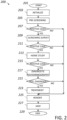
- FIG. 2 illustratively shows a functional flow diagram performed by a process 200 in accordance with embodiments of the present system.
- the process 200 provides a pathway to actively find, for example, suspected OSA cases in a population.
- the process 200 may be performed using one or more processors, computers, controllers, etc., communicating over a network and may obtain information from, and/or store information to, one or more memories which may be local and/or remote from each other.
- the process 200 may include one of more of the following acts.
- the acts of process 200 may be performed using a controller operating in accordance with embodiments of the present system.
- one or more of these acts may be combined and/or separated into sub-acts, or performed serially or in parallel, as may be desired. Further, one or more of these acts may be skipped depending upon settings.
- the process may be described with reference to a single SMU and a single patient case. However, without limitation, it should be understood that the process may employ a plurality of SMUs and a plurality of patient cases each of which may include a separate workflow such as a subworkflow and/or patient cases may be processed within a single work flow.
- the process 200 may start during act 201 and then proceed to act 203.
- the process may initialize by performing an initialization routine.
- the process may load SSI and may set system settings in accordance with the SSI.
- the process may further obtain machine learning models and/or algorithms that may process data generated by the process 200 in accordance with embodiments of the present system.
- the SSI may further include information related to test type (e.g., study type), test process flow, test sensor parameters, and/or other settings.
- the process may continue to act 205 during which the process may perform a pre-screening operation.
- the OSA pre-screening stage e.g., OSAPS 131
- the OSA pre-screening stage may perform an OSA pre-screening operation as discussed herein to ingest data obtained in accordance with a database query or search, form corresponding PCD and thereafter search for risk factors, symptoms, and signs to identify suspected OSA in a patient cohort.
- Risk estimation may be performed which may include determination of one more risk score(s) which may be further annotated with corresponding risk factors, symptoms and signs for suspected OSA as identified from the data.
- suspected OSA cases in the patient cohort may be tagged as positive patient cases and the PCD may be updated to reflect this finding.
- Each of the patient cases that are marked positive may have an OSA risk assigned thereto such as low, medium, or high.
- Patient cases with high, moderate, or low risk may be indicated as positive, intermediate, or negative cases for OSA, respectively.
- positive and intermediate cases will be considered as positive in the present embodiments.
- the process may analyze the PCD to determine whether patient cases from the patient cohort are marked positive (e.g., for OSA). Accordingly, if it is determined that patient cases from the patient cohort are marked positive, the process may continue to act 209. Conversely, if it is determined that no patient cases from the patient cohort are marked positive, the process may continue to act 225.
- patient cases from the patient cohort are marked positive (e.g., for OSA).
- the process may for example perform a screening survey on the patient cases that were marked positive from the patient cohort.
- a controller of the system may generate and render on a rendering device of the system a user interface with which the clinician and/or patient may interact to provide/answer questions from the screening survey that may be rendered on the rendering device. The answers may be utilized to determine whether the patient has OSA.
- This screening survey may include, for example, screening with one or more clinical screening tools for screening for sleep apnea such as STOP-BANG TM (SB), Epworth Sleepiness Scale TM (ESS), 4-Variable screening tool TM (4-V) and Berlin Questionnaire TM , and/or the like.
- These clinical screening tools may vary in purpose (e.g., estimating high risk of OSA, detecting daytime sleepiness or insomnia, etc.). Thereafter, patient cases may be marked positive or negative for OSA (e.g., whether it is likely or not that a corresponding patient has OSA) and the PCD may be updated by the system to reflect this accordingly.
- a clinician e.g., a doctor during consultation with a patient
- the process may continue to act 211.
- the process may determine whether patient cases from the patient cohort (as reflected in the updated PCD that was updated/analyzed during act 209) are determined to be positive. Accordingly, when it is determined that cases from the patient cohort are determined to be positive, the process may continue to act 213. Conversely, when it is determined that no patient cases from the patient cohort are determined to be positive, the process may continue to act 225.
- a home study (e.g., a sleep study) process may be performed for the patient cases (e.g., for the corresponding patients) that were determined to be positive. Accordingly, the process may interact with sensors (e.g., see, sensors 114, FIG. 1 ) and/or a controller of a home study system to observe whether the patient exhibits symptoms of OSA.
- the home study may employ one or more of electrode sensors, nasal flow analysis, and/or other sleep study sensors at home covering one or more nights to determine whether the patient exhibits symptoms of OSA (e.g., whether the patient exhibits physiological symptoms consistent with an OSA diagnosis).
- the process may mark (e.g., by the home study) the corresponding patient case positive. Conversely, the home study may mark patient cases negative if it is determined that the corresponding patient does not exhibit OSA symptoms.
- the process may update the PCD to reflect the findings of the home study.
- the process may continue to act 215 during which it may determine whether patient cases from the patient cohort are marked positive (e.g., for OSA) by the home study. Accordingly, when it is determined that patient cases from the patient cohort are marked positive by the home study, the process may continue to act 217. Conversely, when it is determined that no patient cases from the patient cohort are marked positive by the home study, the process may continue to act 225.
- act 215 may determine whether patient cases from the patient cohort are marked positive (e.g., for OSA) by the home study. Accordingly, when it is determined that patient cases from the patient cohort are marked positive by the home study, the process may continue to act 217. Conversely, when it is determined that no patient cases from the patient cohort are marked positive by the home study, the process may continue to act 225.
- the process may perform diagnostic polysomnography (e.g., for example, by the SMU 102 of FIG. 1 ) on the patient cases that were marked positive during act 209. Accordingly, the process may interact with sensors and/or a controller of a diagnostic polysomnography system to determine whether the patient has detected OSA during the polysomnography testing. If so, the system may mark the patient case for this patient positive in the affirmative (e.g., reflecting a positive diagnosis) by the diagnostic polysomnography. Conversely, during the diagnostic polysomnography, the system may mark a patient case negative (e.g., reflecting a negative diagnosis) if it is determined that the corresponding patient does not have OSA during the polysomnography testing.
- diagnostic polysomnography e.g., for example, by the SMU 102 of FIG. 1
- the process may interact with sensors and/or a controller of a diagnostic polysomnography system to determine whether the patient has detected OSA during the polysomnography testing. If so, the system may mark the patient case for this
- the process may then update the PCD to reflect the findings of this act.
- the diagnostic polysomnography may be performed by a sleep study center or the like and may employ full diagnostic polysomnography. This act may confirm and/or otherwise strengthen findings of OSA that may have been determined during previous acts.
- the process may continue to act 221 during which the process may determine whether patient cases from the patient cohort have a positive diagnosis (e.g., from the diagnostic polysomnography act). Accordingly, if it is determined that patient cases from the patient cohort have a positive diagnosis, the process may continue to act 223. Conversely, if it is determined that no patient cases from the patient cohort have a positive diagnosis, the process may continue to act 225.
- a positive diagnosis e.g., from the diagnostic polysomnography act.
- the process may determine one or more treatment plans or options such as health services, CPAP, oral appliances, surgery, weight control, smoking cessation, exercise, limiting alcohol, limiting sedatives, etc., for each patient case from the patient cohort that received a positive diagnosis as a result of the diagnostic polysomnography.
- the process may update the PCD to reflect the determined treatment plans for each patient case that was determined from the patient cohort to have a positive diagnosis.
- the process may continue to act 225.
- results of the process 200 may be rendered.
- the process may render on a rendering device of the system, an indication (e.g., results/findings of the process 200) of whether a corresponding patient case from the patient cohort has OSA and the determined treatment plans for this patient case. These findings may then be provided to the corresponding patient and/or clinician associated with the patient such as a doctor of the patient, etc. If no patients are found to have OSA, the process may render an indication of such for the convenience of a user and/or clinician.
- a user interface may be provided to interact with the system.
- the process may continue to act 227, during which the process may update the PCD to reflect the findings and determinations of the process for each patient of the patient cohort. Further, the process may store the updated PCD in a memory of the system for later use and/or processing. After completing act 227, the process may continue to act 229 wherein it may end.
- Embodiments of the present system may provide a method that is flexible and may be adjusted or calibrated to a cohort at hand (e.g., a patient cohort).
- patient cases with a confirmed diagnosis in the cohort express the mean prior probability or prevalence of OSA in the cohort allowing to correct for over or underestimation of risks for OSA in a given population.
- the method may be adjusted to correct for over- or under-exaggeration of OSA risk in a population, such as cases with a diagnosis who would receive a too low (or too high) risk estimate and cases without a diagnosis who would receive a too high (or too low) risk estimate.
- Embodiments of the present system may be integrated into various sleep apnea solutions and sleep monitoring solutions.
- the solution may also be used to screen for sleep apnea in hospitals, institutions, nursing homes, and/or other care settings.
- a clinician may not be necessary for performing sleep analysis using embodiments of the present system, rather a patient may employ sensors coupled to a controller to perform a home sleep study or the like. This can enhance user convenience and reduce costs.
Landscapes
- Engineering & Computer Science (AREA)
- Health & Medical Sciences (AREA)
- Public Health (AREA)
- Medical Informatics (AREA)
- Primary Health Care (AREA)
- Epidemiology (AREA)
- General Health & Medical Sciences (AREA)
- Biomedical Technology (AREA)
- Data Mining & Analysis (AREA)
- General Business, Economics & Management (AREA)
- Business, Economics & Management (AREA)
- Databases & Information Systems (AREA)
- Pathology (AREA)
- Child & Adolescent Psychology (AREA)
- Developmental Disabilities (AREA)
- Hospice & Palliative Care (AREA)
- Psychiatry (AREA)
- Psychology (AREA)
- Social Psychology (AREA)
- Measuring And Recording Apparatus For Diagnosis (AREA)
- Measurement Of The Respiration, Hearing Ability, Form, And Blood Characteristics Of Living Organisms (AREA)
Priority Applications (1)
| Application Number | Priority Date | Filing Date | Title |
|---|---|---|---|
| US18/532,032 US20240194355A1 (en) | 2022-12-13 | 2023-12-07 | Assessing a subject's adherene to a treatment for a condition |
Applications Claiming Priority (1)
| Application Number | Priority Date | Filing Date | Title |
|---|---|---|---|
| US202263432102P | 2022-12-13 | 2022-12-13 |
Publications (1)
| Publication Number | Publication Date |
|---|---|
| EP4386768A1 true EP4386768A1 (de) | 2024-06-19 |
Family
ID=85158599
Family Applications (1)
| Application Number | Title | Priority Date | Filing Date |
|---|---|---|---|
| EP23154488.3A Withdrawn EP4386768A1 (de) | 2022-12-13 | 2023-02-01 | System zur ermittlung und planung des aktiven schlafapnoe-falls und betriebsverfahren dafür |
Country Status (2)
| Country | Link |
|---|---|
| US (1) | US20240194355A1 (de) |
| EP (1) | EP4386768A1 (de) |
Families Citing this family (1)
| Publication number | Priority date | Publication date | Assignee | Title |
|---|---|---|---|---|
| US20250079007A1 (en) * | 2023-08-30 | 2025-03-06 | Zachary Oatley | System and Method for Performing a Multi-Step, Multi-Factorial Decision Analysis |
Citations (5)
| Publication number | Priority date | Publication date | Assignee | Title |
|---|---|---|---|---|
| US20160067220A1 (en) * | 2011-10-14 | 2016-03-10 | Hospira, Inc. | Methods of treating pediatric patients using dexmedetomidine |
| WO2020139845A1 (en) * | 2018-12-28 | 2020-07-02 | Resmed Inc. | Prediction of usage or compliance |
| US20200273579A1 (en) * | 2017-10-24 | 2020-08-27 | Adventia Technology, LLC | Systems, methods, and devices for aggregated health data processing and treatment recommendation generation platforms |
| US20210158894A1 (en) * | 2018-01-09 | 2021-05-27 | The Board Of Trustees Of The Leland Stanford Junior University | Processes for Genetic and Clinical Data Evaluation and Classification of Complex Human Traits |
| US20210193320A1 (en) * | 2016-10-05 | 2021-06-24 | HVH Precision Analytics, LLC | Machine-learning based query construction and pattern identification for hereditary angioedema |
Family Cites Families (11)
| Publication number | Priority date | Publication date | Assignee | Title |
|---|---|---|---|---|
| US20020013906A1 (en) * | 2000-06-14 | 2002-01-31 | Walter Wallach | Secure medical test and result delivery system |
| US10512429B2 (en) * | 2004-12-23 | 2019-12-24 | ResMed Pty Ltd | Discrimination of cheyne-stokes breathing patterns by use of oximetry signals |
| US10600516B2 (en) * | 2012-12-12 | 2020-03-24 | Advanced Healthcare Systems, Inc. | Healthcare administration method for complex case and disease management |
| US20170308981A1 (en) * | 2016-04-22 | 2017-10-26 | New York University | Patient condition identification and treatment |
| US20180166174A1 (en) * | 2016-08-02 | 2018-06-14 | Thomas J. Lewis | Disease Mitigation and Elimination Health Learning Engine |
| EP3460808A1 (de) * | 2017-09-21 | 2019-03-27 | Koninklijke Philips N.V. | Bestimmung eines patientenstatus basierend auf messbaren medizinischen eigenschaften |
| US20200005940A1 (en) * | 2017-11-10 | 2020-01-02 | Koninklijke Philips N.V. | System and method for generating a care services combination for a user |
| WO2020081866A1 (en) * | 2018-10-18 | 2020-04-23 | Proterixbio, Inc. | Methods for targeted assessment and treatment of chronic obstructive pulmonary disease and acute events and mortality associated therewith |
| CN113710151B (zh) * | 2018-11-19 | 2025-04-11 | 瑞思迈传感器技术有限公司 | 用于检测呼吸障碍的方法和设备 |
| US20210007659A1 (en) * | 2019-06-28 | 2021-01-14 | Teleplus Healthcare LLC | System and method for sleep disorders: screening, testing and management |
| CA3089395A1 (en) * | 2020-06-18 | 2021-12-18 | University Of Manitoba | Systems and methods for screening obstructive sleep apnea during wakefulness using anthropometric information and tracheal breathing sounds |
-
2023
- 2023-02-01 EP EP23154488.3A patent/EP4386768A1/de not_active Withdrawn
- 2023-12-07 US US18/532,032 patent/US20240194355A1/en active Pending
Patent Citations (6)
| Publication number | Priority date | Publication date | Assignee | Title |
|---|---|---|---|---|
| US20160067220A1 (en) * | 2011-10-14 | 2016-03-10 | Hospira, Inc. | Methods of treating pediatric patients using dexmedetomidine |
| US20210193320A1 (en) * | 2016-10-05 | 2021-06-24 | HVH Precision Analytics, LLC | Machine-learning based query construction and pattern identification for hereditary angioedema |
| US20200273579A1 (en) * | 2017-10-24 | 2020-08-27 | Adventia Technology, LLC | Systems, methods, and devices for aggregated health data processing and treatment recommendation generation platforms |
| US20210158894A1 (en) * | 2018-01-09 | 2021-05-27 | The Board Of Trustees Of The Leland Stanford Junior University | Processes for Genetic and Clinical Data Evaluation and Classification of Complex Human Traits |
| WO2020139845A1 (en) * | 2018-12-28 | 2020-07-02 | Resmed Inc. | Prediction of usage or compliance |
| CN113875187A (zh) * | 2018-12-28 | 2021-12-31 | 瑞思迈公司 | 使用或依从性的预测 |
Also Published As
| Publication number | Publication date |
|---|---|
| US20240194355A1 (en) | 2024-06-13 |
Similar Documents
| Publication | Publication Date | Title |
|---|---|---|
| US20200258637A1 (en) | Health risk score for risk stratification and compliance monitoring for next best action | |
| US20210004715A1 (en) | Methods and systems for medical record searching with transmittable machine learning | |
| US20190122770A1 (en) | Lightweight Clinical Pregnancy Preterm Birth Predictive System and Method | |
| Suls et al. | Measuring multimorbidity: selecting the right instrument for the purpose and the data source | |
| US20150248537A1 (en) | Personalized Health Score Generator | |
| US20190279767A1 (en) | Systems and methods for creating an expert-trained data model | |
| US20140095201A1 (en) | Leveraging Public Health Data for Prediction and Prevention of Adverse Events | |
| US11322250B1 (en) | Intelligent medical care path systems and methods | |
| CN104207753A (zh) | 个人健康监视系统 | |
| JP2016157430A (ja) | 被験者の健康状態を予測する方法およびシステム | |
| US11640858B2 (en) | Digital therapeutic platform | |
| US12315604B2 (en) | Recurring remote monitoring with real-time exchange to analyze health data and generate action plans | |
| US11449792B2 (en) | Methods and systems for generating a supplement instruction set using artificial intelligence | |
| CN112749321B (zh) | 数据处理方法、客户端、服务器、系统及存储介质 | |
| US20210134461A1 (en) | Methods and systems for prioritizing comprehensive prognoses and generating an associated treatment instruction set | |
| US20210407667A1 (en) | Systems and methods for prediction of unnecessary emergency room visits | |
| Dhamanti et al. | Smart home healthcare for chronic disease management: a scoping review | |
| CN112750512A (zh) | 数据处理方法、客户端、服务器、系统及存储介质 | |
| Frengley et al. | Chronic comorbid illnesses predict the clinical course of 866 patients requiring prolonged mechanical ventilation in a long-term, acute-care hospital | |
| US20240194355A1 (en) | Assessing a subject's adherene to a treatment for a condition | |
| US12283379B2 (en) | Automatic early prediction of neurodegenerative diseases | |
| US20250331720A1 (en) | Remote Health Monitoring System | |
| EP4134976B1 (de) | System und verfahren zur vorhersage des risikos eines patienten zur entwicklung einer atherosklerotischen kardiovaskulären erkrankung | |
| Lal et al. | Enhancing patient care and monitoring through AI and IoT in healthcare | |
| Puckett et al. | Utilizing natural language processing to identify pediatric patients experiencing status epilepticus |
Legal Events
| Date | Code | Title | Description |
|---|---|---|---|
| PUAI | Public reference made under article 153(3) epc to a published international application that has entered the european phase |
Free format text: ORIGINAL CODE: 0009012 |
|
| STAA | Information on the status of an ep patent application or granted ep patent |
Free format text: STATUS: THE APPLICATION HAS BEEN PUBLISHED |
|
| AK | Designated contracting states |
Kind code of ref document: A1 Designated state(s): AL AT BE BG CH CY CZ DE DK EE ES FI FR GB GR HR HU IE IS IT LI LT LU LV MC ME MK MT NL NO PL PT RO RS SE SI SK SM TR |
|
| STAA | Information on the status of an ep patent application or granted ep patent |
Free format text: STATUS: THE APPLICATION IS DEEMED TO BE WITHDRAWN |
|
| 18D | Application deemed to be withdrawn |
Effective date: 20241220 |