EP4386892A1 - Festkörpersekundärbatterie und verfahren zur herstellung davon - Google Patents
Festkörpersekundärbatterie und verfahren zur herstellung davon Download PDFInfo
- Publication number
- EP4386892A1 EP4386892A1 EP23212551.8A EP23212551A EP4386892A1 EP 4386892 A1 EP4386892 A1 EP 4386892A1 EP 23212551 A EP23212551 A EP 23212551A EP 4386892 A1 EP4386892 A1 EP 4386892A1
- Authority
- EP
- European Patent Office
- Prior art keywords
- solid electrolyte
- active material
- positive electrode
- formula
- particle diameter
- Prior art date
- Legal status (The legal status is an assumption and is not a legal conclusion. Google has not performed a legal analysis and makes no representation as to the accuracy of the status listed.)
- Pending
Links
Images


Classifications
-
- H—ELECTRICITY
- H01—ELECTRIC ELEMENTS
- H01M—PROCESSES OR MEANS, e.g. BATTERIES, FOR THE DIRECT CONVERSION OF CHEMICAL ENERGY INTO ELECTRICAL ENERGY
- H01M10/00—Secondary cells; Manufacture thereof
- H01M10/05—Accumulators with non-aqueous electrolyte
- H01M10/056—Accumulators with non-aqueous electrolyte characterised by the materials used as electrolytes, e.g. mixed inorganic/organic electrolytes
- H01M10/0561—Accumulators with non-aqueous electrolyte characterised by the materials used as electrolytes, e.g. mixed inorganic/organic electrolytes the electrolyte being constituted of inorganic materials only
- H01M10/0562—Solid materials
-
- H—ELECTRICITY
- H01—ELECTRIC ELEMENTS
- H01M—PROCESSES OR MEANS, e.g. BATTERIES, FOR THE DIRECT CONVERSION OF CHEMICAL ENERGY INTO ELECTRICAL ENERGY
- H01M10/00—Secondary cells; Manufacture thereof
- H01M10/05—Accumulators with non-aqueous electrolyte
- H01M10/056—Accumulators with non-aqueous electrolyte characterised by the materials used as electrolytes, e.g. mixed inorganic/organic electrolytes
- H01M10/0564—Accumulators with non-aqueous electrolyte characterised by the materials used as electrolytes, e.g. mixed inorganic/organic electrolytes the electrolyte being constituted of organic materials only
- H01M10/0565—Polymeric materials, e.g. gel-type or solid-type
-
- H—ELECTRICITY
- H01—ELECTRIC ELEMENTS
- H01M—PROCESSES OR MEANS, e.g. BATTERIES, FOR THE DIRECT CONVERSION OF CHEMICAL ENERGY INTO ELECTRICAL ENERGY
- H01M4/00—Electrodes
- H01M4/02—Electrodes composed of, or comprising, active material
- H01M4/13—Electrodes for accumulators with non-aqueous electrolyte, e.g. for lithium-accumulators; Processes of manufacture thereof
- H01M4/133—Electrodes based on carbonaceous material, e.g. graphite-intercalation compounds or CFx
-
- H—ELECTRICITY
- H01—ELECTRIC ELEMENTS
- H01M—PROCESSES OR MEANS, e.g. BATTERIES, FOR THE DIRECT CONVERSION OF CHEMICAL ENERGY INTO ELECTRICAL ENERGY
- H01M4/00—Electrodes
- H01M4/02—Electrodes composed of, or comprising, active material
- H01M4/13—Electrodes for accumulators with non-aqueous electrolyte, e.g. for lithium-accumulators; Processes of manufacture thereof
- H01M4/134—Electrodes based on metals, Si or alloys
-
- H—ELECTRICITY
- H01—ELECTRIC ELEMENTS
- H01M—PROCESSES OR MEANS, e.g. BATTERIES, FOR THE DIRECT CONVERSION OF CHEMICAL ENERGY INTO ELECTRICAL ENERGY
- H01M4/00—Electrodes
- H01M4/02—Electrodes composed of, or comprising, active material
- H01M4/36—Selection of substances as active materials, active masses, active liquids
- H01M4/362—Composites
- H01M4/364—Composites as mixtures
-
- H—ELECTRICITY
- H01—ELECTRIC ELEMENTS
- H01M—PROCESSES OR MEANS, e.g. BATTERIES, FOR THE DIRECT CONVERSION OF CHEMICAL ENERGY INTO ELECTRICAL ENERGY
- H01M4/00—Electrodes
- H01M4/02—Electrodes composed of, or comprising, active material
- H01M4/36—Selection of substances as active materials, active masses, active liquids
- H01M4/58—Selection of substances as active materials, active masses, active liquids of inorganic compounds other than oxides or hydroxides, e.g. sulfides, selenides, tellurides, halogenides or LiCoFy; of polyanionic structures, e.g. phosphates, silicates or borates
- H01M4/583—Carbonaceous material, e.g. graphite-intercalation compounds or CFx
-
- H—ELECTRICITY
- H01—ELECTRIC ELEMENTS
- H01M—PROCESSES OR MEANS, e.g. BATTERIES, FOR THE DIRECT CONVERSION OF CHEMICAL ENERGY INTO ELECTRICAL ENERGY
- H01M4/00—Electrodes
- H01M4/02—Electrodes composed of, or comprising, active material
- H01M4/36—Selection of substances as active materials, active masses, active liquids
- H01M4/58—Selection of substances as active materials, active masses, active liquids of inorganic compounds other than oxides or hydroxides, e.g. sulfides, selenides, tellurides, halogenides or LiCoFy; of polyanionic structures, e.g. phosphates, silicates or borates
- H01M4/583—Carbonaceous material, e.g. graphite-intercalation compounds or CFx
- H01M4/587—Carbonaceous material, e.g. graphite-intercalation compounds or CFx for inserting or intercalating light metals
-
- H—ELECTRICITY
- H01—ELECTRIC ELEMENTS
- H01M—PROCESSES OR MEANS, e.g. BATTERIES, FOR THE DIRECT CONVERSION OF CHEMICAL ENERGY INTO ELECTRICAL ENERGY
- H01M4/00—Electrodes
- H01M4/02—Electrodes composed of, or comprising, active material
- H01M4/62—Selection of inactive substances as ingredients for active masses, e.g. binders, fillers
-
- H—ELECTRICITY
- H01—ELECTRIC ELEMENTS
- H01M—PROCESSES OR MEANS, e.g. BATTERIES, FOR THE DIRECT CONVERSION OF CHEMICAL ENERGY INTO ELECTRICAL ENERGY
- H01M4/00—Electrodes
- H01M4/02—Electrodes composed of, or comprising, active material
- H01M4/62—Selection of inactive substances as ingredients for active masses, e.g. binders, fillers
- H01M4/621—Binders
- H01M4/622—Binders being polymers
-
- H—ELECTRICITY
- H01—ELECTRIC ELEMENTS
- H01M—PROCESSES OR MEANS, e.g. BATTERIES, FOR THE DIRECT CONVERSION OF CHEMICAL ENERGY INTO ELECTRICAL ENERGY
- H01M4/00—Electrodes
- H01M4/02—Electrodes composed of, or comprising, active material
- H01M4/62—Selection of inactive substances as ingredients for active masses, e.g. binders, fillers
- H01M4/621—Binders
- H01M4/622—Binders being polymers
- H01M4/623—Binders being polymers fluorinated polymers
-
- H—ELECTRICITY
- H01—ELECTRIC ELEMENTS
- H01M—PROCESSES OR MEANS, e.g. BATTERIES, FOR THE DIRECT CONVERSION OF CHEMICAL ENERGY INTO ELECTRICAL ENERGY
- H01M4/00—Electrodes
- H01M4/02—Electrodes composed of, or comprising, active material
- H01M2004/021—Physical characteristics, e.g. porosity, surface area
-
- H—ELECTRICITY
- H01—ELECTRIC ELEMENTS
- H01M—PROCESSES OR MEANS, e.g. BATTERIES, FOR THE DIRECT CONVERSION OF CHEMICAL ENERGY INTO ELECTRICAL ENERGY
- H01M4/00—Electrodes
- H01M4/02—Electrodes composed of, or comprising, active material
- H01M2004/026—Electrodes composed of, or comprising, active material characterised by the polarity
- H01M2004/027—Negative electrodes
-
- H—ELECTRICITY
- H01—ELECTRIC ELEMENTS
- H01M—PROCESSES OR MEANS, e.g. BATTERIES, FOR THE DIRECT CONVERSION OF CHEMICAL ENERGY INTO ELECTRICAL ENERGY
- H01M4/00—Electrodes
- H01M4/02—Electrodes composed of, or comprising, active material
- H01M2004/026—Electrodes composed of, or comprising, active material characterised by the polarity
- H01M2004/028—Positive electrodes
-
- H—ELECTRICITY
- H01—ELECTRIC ELEMENTS
- H01M—PROCESSES OR MEANS, e.g. BATTERIES, FOR THE DIRECT CONVERSION OF CHEMICAL ENERGY INTO ELECTRICAL ENERGY
- H01M2300/00—Electrolytes
- H01M2300/0017—Non-aqueous electrolytes
- H01M2300/0065—Solid electrolytes
- H01M2300/0068—Solid electrolytes inorganic
-
- H—ELECTRICITY
- H01—ELECTRIC ELEMENTS
- H01M—PROCESSES OR MEANS, e.g. BATTERIES, FOR THE DIRECT CONVERSION OF CHEMICAL ENERGY INTO ELECTRICAL ENERGY
- H01M2300/00—Electrolytes
- H01M2300/0017—Non-aqueous electrolytes
- H01M2300/0065—Solid electrolytes
- H01M2300/0068—Solid electrolytes inorganic
- H01M2300/008—Halides
-
- H—ELECTRICITY
- H01—ELECTRIC ELEMENTS
- H01M—PROCESSES OR MEANS, e.g. BATTERIES, FOR THE DIRECT CONVERSION OF CHEMICAL ENERGY INTO ELECTRICAL ENERGY
- H01M2300/00—Electrolytes
- H01M2300/0088—Composites
- H01M2300/0091—Composites in the form of mixtures
-
- Y—GENERAL TAGGING OF NEW TECHNOLOGICAL DEVELOPMENTS; GENERAL TAGGING OF CROSS-SECTIONAL TECHNOLOGIES SPANNING OVER SEVERAL SECTIONS OF THE IPC; TECHNICAL SUBJECTS COVERED BY FORMER USPC CROSS-REFERENCE ART COLLECTIONS [XRACs] AND DIGESTS
- Y02—TECHNOLOGIES OR APPLICATIONS FOR MITIGATION OR ADAPTATION AGAINST CLIMATE CHANGE
- Y02E—REDUCTION OF GREENHOUSE GAS [GHG] EMISSIONS, RELATED TO ENERGY GENERATION, TRANSMISSION OR DISTRIBUTION
- Y02E60/00—Enabling technologies; Technologies with a potential or indirect contribution to GHG emissions mitigation
- Y02E60/10—Energy storage using batteries
Definitions
- a positive electrode for an all-solid secondary battery with improved density and reduced grain boundary resistance.
- a positive electrode for an all-solid secondary battery includes a first positive active material, a second positive active material, a first solid electrolyte, and a second solid electrolyte, wherein the first positive active material has a D50 particle diameter that is greater than a D50 particle diameter of the second positive active material, wherein the first solid electrolyte has a first D50 particle diameter of about 0.5 micrometers ( ⁇ m) to about 1.5 ⁇ m, wherein the first solid electrolyte has a particle size distribution that satisfies Equation 1, wherein the second solid electrolyte has a second D50 particle diameter of about 2 ⁇ m to about 5 ⁇ m, wherein a ratio of the first D50 particle diameter to the second D50 particle diameter satisfies Equation 2, and wherein an amount of the first solid electrolyte in the positive electrode is greater than an amount of the second solid electrolyte in the positive electrode, by weight: d 1 90 ⁇ d 1 10 / d 1 50 ⁇ 2
- Equation 1 (d 1 90 - d 1 10) / d 1 50 is less than or equal to 1.9, less than or equal to 1.8, less than or equal to 1.7, for example, in the range of 1 to 1.9, 1.5 to 1.8, or 1.65 to 1.75.
- the second D50 particle diameter is about 2 ⁇ m to about 4 ⁇ m, about 2 ⁇ m to about 3.5 ⁇ m, or 2 ⁇ m to about 3 ⁇ m.
- the second solid electrolyte has a particle size distribution that satisfies Equation 3: d 2 90 ⁇ d 2 10 / d 2 50 ⁇ 3.5 wherein, in Equation 3,
- a ratio of the amount of the second solid electrolyte in the positive electrode to the amount of the first solid electrolyte in the positive electrode may satisfy Equation 4: 0.1 ⁇ y/x ⁇ 1 wherein, in Equation 4,
- a ratio of the amount of the second solid electrolyte in the positive electrode to the amount of the first solid electrolyte in the positive electrode may satisfy Equation 5: 0.25 ⁇ y/x ⁇ 0.66 wherein, in Equation 5,
- the first solid electrolyte and the second solid electrolyte may each independently comprise a plurality of monolith particles (or one body particles).
- a ratio of a D50 particle diameter of the second positive active material (i.e., the small-diameter positive active material) to a D50 particle diameter of the first solid electrolyte may satisfy Equation 6, and a ratio of a D50 particle diameter of the first positive active material (i.e., the large-diameter positive active material) to a D50 particle diameter of the second solid electrolyte may satisfy Equation 7: 3 ⁇ ⁇ 1 ⁇ 30 3 ⁇ ⁇ 2 ⁇ 30 wherein, in Equations 6 and 7,
- a total amount of the first solid electrolyte and the second solid electrolyte combined may be about 2 parts by weight to about 70 parts by weight, with respect to 100 parts by weight of a total weight of the first positive active material (i.e., the large-diameter positive active material) and the second positive active material (i.e., the small-diameter positive active material) combined.
- a D50 particle size of the first positive active material may be about 14 ⁇ m or greater, or about 14 ⁇ m to about 20 ⁇ m
- a D50 particle size of the second positive active material i.e., the small-diameter positive active material
- An ionic conductivity of the first solid electrolyte and the second solid electrolyte may each independently about 1 millisiemens per centimeter (mS/cm) to about 7 mS/cm at 25°C.
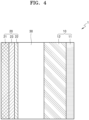
- an all-solid secondary battery includes the above-described positive electrode; a negative electrode; and a solid electrolyte arranged between the positive electrode and the negative electrode.
- the negative electrode may include a negative current collector, and/or a first negative active material layer arranged on the negative current collector, wherein the first negative active material layer may include a carbon-containing negative active material; or a carbon-containing negative active material, and a first negative active material including at least one of a metal or a metalloid.
- the carbon-containing negative active material may include amorphous carbon
- the first negative active material may include indium, silicon, gallium, tin, aluminum, titanium, zirconium, niobium, germanium, antimony, bismuth, gold, platinum, palladium, magnesium, silver, zinc, nickel, iron, cobalt, chromium, cesium, sodium, potassium, calcium, yttrium, tantalum, hafnium, barium, vanadium, strontium, lanthanum, or a combination thereof.
- the negative current collector, the first negative active material layer, or a region therebetween may be a Li metal-free region that does not contain lithium (Li) metal, in an initial state or a post-discharge state of the all-solid secondary battery.
- a method of preparing an all-solid secondary battery includes providing a positive electrode including a first positive active material, a second positive active material, a first solid electrolyte, and a second solid electrolyte; providing a negative electrode; preparing a solid electrolyte; and arranging the positive electrode, the solid electrolyte, and the negative electrode to prepare the all-solid secondary battery.
- a positive electrode is formed by including an active material, a sulfide-containing solid electrolyte, and a conductive agent, and a solid electrolyte is arranged between a negative electrode and the positive electrode to allow transfer of lithium ions.
- a sulfide-containing solid electrolyte having a small particle size.
- the first solid electrolyte i.e., the small-diameter solid electrolyte
- the second solid electrolyte i.e., the large-diameter solid electrolyte
- a contact area between the bimodal positive active material and the solid electrolyte increases and the pores in the positive electrode decrease, so that occurrence of overvoltage due to the pores may be prevented in advance.
- the first solid electrolyte i.e., the small-diameter solid electrolyte
- the second solid electrolyte i.e., the large-diameter solid electrolyte
- the ratio (d 1 50/d 2 50) of the first D50 particle diameter (d 1 50) of the first solid electrolyte to the second D50 particle diameter (d 2 50) of the second solid electrolyte may be about 0.2 to about 0.9, about 0.2 to about 0.8, about 0.2 to about 0.7, or about 0.2 to about 0.55.
- the ratio of the amount of the second solid electrolyte to the amount of the first solid electrolyte may satisfy Equation 4 below, and/or for example, may satisfy Equation 5 below: 0.1 ⁇ y / x ⁇ 1 0.25 ⁇ y / x ⁇ 0.66 wherein, in Equations 4 and 5,
- D10 particle diameter means an average diameter of particles whose cumulative volume corresponds to 10 vol% in a particle size distribution
- D90 particle diameter means an average diameter of particles whose cumulative volume corresponds to 90 vol% in the particle size distribution
- Average particle diameters of the first solid electrolyte and the second solid electrolyte mean median diameters D50 measured by using, for example, a laser-type particle size distribution analyzer.
- the compound represented by Formula 1b may be a compound including M1 and M2 and not including M3.
- the compound represented by Formula 1 may be, for example, a compound represented by one of Formulas 1c and 1d below: Formula 1c Li a PS y M2 z M3 w wherein, in Formula 1c, M2 may be one or more elements selected from group 17 of the periodic table, M3 may be S m O n , 4 ⁇ a ⁇ 8, 3 ⁇ y ⁇ 7, 0 ⁇ z ⁇ 2, 0 ⁇ w ⁇ 2, 1 ⁇ m ⁇ 4, and 1.5 ⁇ n ⁇ 5, wherein the compound represented by Formula 1c is a compound not including M1, and including M2 and M3, Formula 1d Li a M1 x PS y M2 z M3 w , wherein, in Formula 1d, M1 may be one or more metalloid element or metal element from Group 1 to Group 15 of the Periodic Table of the Elements, other than Li, M2 may be one or more element from Group 17 of the Periodic Table of the Elements, M3 may be S m O n , 4 ⁇ a ⁇ 8, 0 ⁇ x ⁇ 1, 3 ⁇ y ⁇ 7,
- the compound represented by Formula 1 may be, for example, a compound represented by Formula 2 below: Formula 2 Li 7-m' ⁇ v-z M1 v PS 6-z-w M2 z M3 w , wherein, in Formula 2, M1 may be one or more metalloid element or metal element from Group 1 to Group 15 of the Periodic Table of the Elements, provide that M1 is not Li, m may be an oxidation number of M1, M2 may be one or more element from Group 17 of the Periodic Table of the Elements, M3 may be S m O n , 0 ⁇ v ⁇ 1, 0 ⁇ z ⁇ 2, 0 ⁇ w ⁇ 2, 1 ⁇ m ⁇ 4, 1.5 ⁇ n ⁇ 5, 1 ⁇ m' ⁇ 2, and 0 ⁇ v+w ⁇ 3.
- M1 may be one or more metalloid element or metal element from Group 1 to Group 15 of the Periodic Table of the Elements, provide that M1 is not Li
- m may be an oxidation number of M1
- M2 may be one or more element from Group 17 of the Periodic Table of the
- M1 may be one or more metalloid element or metal element from Group 1 to Group 15 of the Periodic Table of the Elements, provided that M1 is not Li, m' may be an oxidation number of M1, M2 may be one or more element from Group 17 of the Periodic Table of the Elements, M3 may be S m O n , 0 ⁇ v ⁇ 1, 0 ⁇ z ⁇ 2, 0 ⁇ w ⁇ 2, 1.5 ⁇ n ⁇ 5, and 1 ⁇ m ⁇ 2.
- M4 may be, for example, one metalloid element, one metal element, or two or more metalloid elements or metal elements.
- a D50 particle size of the first positive active material may be about 14 ⁇ m or greater, for example, about 14 ⁇ m to about 20 ⁇ m.
- a D50 particle size of the second positive active material i.e., the small-diameter positive active material
- the D50 particle diameter of the negative active material is, for example, a median diameter (D50) measured by using a laser particle size distribution device.
- the negative electrode may include a negative current collector and a first negative active material layer containing a negative active material disposed on the negative current collector, the negative active material may include a carbon-containing negative active material and at least one of a metal negative active material or a metalloid negative active material, and the carbon-containing negative active material may include at least one of amorphous carbon or crystalline carbon.
- the metal negative active material or the metalloid negative active material may be at least one of gold, platinum, palladium, silicon, silver, aluminum, bismuth, tin, or zinc.
- a thickness of the first negative active material layer may be, for example, about 50% or less, about 40% or less, about 30% or less, about 20% or less, about 10% or less, or about 5% or less of a thickness of the positive active material layer.
- the thickness of the first negative active material layer may be, for example, about 1 ⁇ m to about 20 ⁇ m, about 2 ⁇ m to about 10 ⁇ m, or about 3 ⁇ m to about 7 ⁇ m.
- the solid electrolyte layer 30 may use a styrene-butadiene-styrene copolymer, a (meth)acrylic resin, or a combination thereof as a binder.
- the positive electrode contains the positive active material, and the positive active material may be a compound capable of reversibly absorbing and desorbing lithium ions, and may be for example, at least one of a lithium transition metal oxide having a layered crystal structure, a lithium transition metal oxide having an olivine crystal structure, or a lithium transition metal oxide having a spinel crystal structure.
- the positive electrode 10 may further include additives such as a conductive agent, a binder, a filler, a dispersant, an ion conductive supplement, or the like, in addition to the positive active material, and the solid electrolyte described herein.
- the conductive agent may be, for example, graphite, carbon black, acetylene black, Ketjen black, carbon fiber, metal powder, a combination thereof, or the like.
- the binder may be, for example, a styrene butadiene rubber (SBR), a polytetrafluoroethylene, a poly(vinylidene fluoride), a polyethylene, a combination thereof, or the like.
- SBR styrene butadiene rubber
- As the filler, a dispersant, an ion conductive supplement, a combination thereof, or the like, that may be added in the positive electrode 10 any suitable material used in an electrode of an all-solid secondary battery may be used.
- a positive active material having a coating film of aLi 2 O-ZrO 2 was prepared according to the following method.
- a precursor of aLi 2 O-ZrO 2 was coated on particle surfaces of the fine powder of the positive active material.
- the obtained mixture was pressed with a uniaxial pressure to prepare pellets having a thickness of about 10 mm and a diameter of about 13 mm.
- the pellets were placed in a carbon crucible and the carbon crucible was vacuum-sealed by using a quartz glass tube.
- the vacuum-sealed pellets were subjected to a first heat treatment by using an electric furnace at 300°C for 12 hours at a rate of 1.0°C/min, and a second heat treatment was performed at 475°C for 18 hours at a rate of 1.0°C/min. Then, the pellets were cooled to room temperature at a rate of 1.0°C/min.
- the product obtained after cooling was ball milled at about 300 rpm for 24 hours to perform a grinding process, and then dried in a vacuum at 80°C for 24 hours to prepare a small-diameter sulfide-containing solid electrolyte Li 5.72 Cu 0.03 PS 4.725 (SO 4 ) 0.025 Cl 1.25 having an D50 particle diameter of about 1.8 ⁇ m.
- Example 2 A (0.8 ⁇ m) / CuZn (2.1 ⁇ m) (8:2)
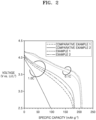
- the battery was charged at a constant current of 1.0 C until the battery voltage reached 4.2 V. Subsequently, the battery was discharged at a constant current of 1.0 C until the battery voltage reached 2.5 V.
- Charge/discharge characteristics of the all-solid secondary battery were evaluated by the following charge/discharge tests.
- the charge/discharge tests were performed by placing the all-solid secondary battery in a thermostat at 45°C.
- the battery was charged at a constant current of 0.33 C until the battery voltage reached 4.25 V. Subsequently, the battery was discharged at a constant current of 0.33 C until the battery voltage reached 2.5 V.
- the battery was charged at a constant current of 1.0 C until the battery voltage reached 4.2 V. Subsequently, the battery was discharged at a constant current of 1.0 C until the battery voltage reached 2.5 V.
- CuGe represents (Li 5.72 Cu 0.03 )(P 0.99 Ge 0.01 )S 4.75 Cl 1.25
- a solid electrolyte was prepared in a similar manner as in Preparation Example 5, except that CuGe having an average particle diameter (D50) of 1.8 ⁇ m, and CuGe having an average particle diameter (D50) of 3.9 ⁇ m used GeS 2 as a Ge precursor instead of zinc sulfide as a zinc precursor, and the grinding resultant was dried at 150°C for 12 hours.
- CuSn represents (Li 5.72 Cu 0.03 )(P 0.99 Sn 0.01 )S 4.75 Cl 1.25
- a solid electrolyte was prepared in a similar manner as in Preparation Example 5, except that CuSn having an average particle diameter (D50) of 2.2 ⁇ m, and CuSn having an average particle diameter (D50) of 3.8 ⁇ m used SnS 2 as a Sn precursor instead of zinc sulfide as a zinc precursor, and the grinding resultant was dried at 80 °C for 24 hours.
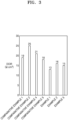
- Table 6 The results in Table 6 are for experiments conducted at a dry room dew point temperature of -60 to -70°C, and the results in Table 7 are for experiments conducted at a dry room dew point temperature of -45 to -55°C.
- Table 6 Class Comparative Example 1 A (0.8 ⁇ m)
- Example 2 A/CuZn Comparative Example 1 air 3 days
- Example 2 air 3 days 0.1 C (mAh/g) 206 210 205 209 0.33 C (mAh/g) 192 195 190 195 1.0 C (mAh/g) 176 181 173 (reduced by 1.7%) 179 (reduced by 1.1 %)
- Table 7 The results of Table 7 below are for those performed when the dew point temperature of the dry room was -45°C to -55°C.
- Table 7 Class Example 5 A(0.8 ⁇ m) / A(2.0 ⁇ m) (7:3)
- Example 2 A/CuZn
- Example 5 air 3 days
- Example 2 air 3 days 0.1 C (mAh/g) 209 210 205 208 0.33 C (mAh/g) 196 195 188 192 1.0 C (mAh/g) 181 181 130 (reduced by 28 %) 152 (reduced by 16 %)
- a particle size distribution Span1 of the first solid electrolyte prepared according to Preparation Examples 3 and 8 and a particle size distribution Span2 of the second solid electrolyte prepared according to Preparation Examples 4 to 7 and 9 are shown in Tables 8 and 9, respectively.
- the particle size distribution Span1 is (d 1 90-d 1 10/ 1 150)
- the particle size distribution Span2 is (d 2 90-d 2 10/d 2 50).
Landscapes
- Chemical & Material Sciences (AREA)
- Chemical Kinetics & Catalysis (AREA)
- Electrochemistry (AREA)
- General Chemical & Material Sciences (AREA)
- Inorganic Chemistry (AREA)
- Engineering & Computer Science (AREA)
- Composite Materials (AREA)
- Physics & Mathematics (AREA)
- Condensed Matter Physics & Semiconductors (AREA)
- General Physics & Mathematics (AREA)
- Manufacturing & Machinery (AREA)
- Materials Engineering (AREA)
- Dispersion Chemistry (AREA)
- Secondary Cells (AREA)
- Battery Electrode And Active Subsutance (AREA)
Applications Claiming Priority (2)
| Application Number | Priority Date | Filing Date | Title |
|---|---|---|---|
| KR20220174955 | 2022-12-14 | ||
| KR1020230166676A KR20240093335A (ko) | 2022-12-14 | 2023-11-27 | 전고체 이차전지용 양극, 이를 포함하는 전고체이차전지 및 그 제조방법 |
Publications (1)
| Publication Number | Publication Date |
|---|---|
| EP4386892A1 true EP4386892A1 (de) | 2024-06-19 |
Family
ID=88978550
Family Applications (1)
| Application Number | Title | Priority Date | Filing Date |
|---|---|---|---|
| EP23212551.8A Pending EP4386892A1 (de) | 2022-12-14 | 2023-11-28 | Festkörpersekundärbatterie und verfahren zur herstellung davon |
Country Status (2)
| Country | Link |
|---|---|
| US (1) | US20240213526A1 (de) |
| EP (1) | EP4386892A1 (de) |
Families Citing this family (1)
| Publication number | Priority date | Publication date | Assignee | Title |
|---|---|---|---|---|
| CN118658964B (zh) * | 2024-08-08 | 2024-11-15 | 深圳市贝特瑞新能源技术研究院有限公司 | 锂金属复合负极及其制备方法、锂离子电池 |
Citations (2)
| Publication number | Priority date | Publication date | Assignee | Title |
|---|---|---|---|---|
| US20200251714A1 (en) * | 2018-04-26 | 2020-08-06 | Lg Chem, Ltd. | Cathode for Solid Electrolyte Battery and Solid Electrolyte Battery Comprising Same |
| US20220123369A1 (en) * | 2020-10-20 | 2022-04-21 | Samsung Sdi Co., Ltd. | Bipolar stack unit cell structure and all-solid secondary battery including the same |
-
2023
- 2023-11-28 EP EP23212551.8A patent/EP4386892A1/de active Pending
- 2023-11-30 US US18/524,090 patent/US20240213526A1/en active Pending
Patent Citations (2)
| Publication number | Priority date | Publication date | Assignee | Title |
|---|---|---|---|---|
| US20200251714A1 (en) * | 2018-04-26 | 2020-08-06 | Lg Chem, Ltd. | Cathode for Solid Electrolyte Battery and Solid Electrolyte Battery Comprising Same |
| US20220123369A1 (en) * | 2020-10-20 | 2022-04-21 | Samsung Sdi Co., Ltd. | Bipolar stack unit cell structure and all-solid secondary battery including the same |
Also Published As
| Publication number | Publication date |
|---|---|
| US20240213526A1 (en) | 2024-06-27 |
Similar Documents
| Publication | Publication Date | Title |
|---|---|---|
| KR102895756B1 (ko) | 전고체이차전지 및 그 제조방법 | |
| US12278333B2 (en) | Solid electrolyte, electrochemical battery including the solid electrolyte, and method of preparing the solid electrolyte | |
| US12308385B2 (en) | All-solid secondary battery and method of preparing same | |
| US11682790B2 (en) | Sulfide-based solid electrolyte, all-solid secondary battery including the same, and method of preparing the sulfide-based solid electrolyte | |
| JP7106702B2 (ja) | 全固体二次電池用正極、及びそれを含む全固体二次電池 | |
| JP2023542358A (ja) | 固体イオン伝導体化合物、それを含む固体電解質、それを含む電気化学セル、及びその製造方法 | |
| EP3819964A1 (de) | Festelektrolyt, elektrochemische zelle mit festelektrolyt und verfahren zur herstellung eines festelektrolyts | |
| EP4386881A1 (de) | Negativelektrodenschicht für festkörpersekundärbatterie und festkörpersekundärbatterie damit | |
| KR102895753B1 (ko) | 고체 전해질, 이를 포함하는 전기화학전지 및 고체 전해질의 제조방법 | |
| EP4366020A1 (de) | Festkörperelektrolyt, lithiumbatterie mit dem festkörperelektrolyt und herstellungsverfahren für den festkörperelektrolyt | |
| KR20210055581A (ko) | 고체 전해질, 이를 포함하는 전기화학전지 및 고체 전해질의 제조방법 | |
| CN118198253A (zh) | 用于全固体二次电池的正极、全固体二次电池及制备其的方法 | |
| US20230327186A1 (en) | Sulfide-based solid electrolyte, method for preparing same, and electrochemical cell comprising same | |
| KR102807840B1 (ko) | 전고체 이차전지용 황화물계 고체전해질, 이를 포함하는 전고체 이차전지, 및 이의 제조방법 | |
| JP7507385B2 (ja) | 正極材料、および、電池 | |
| EP4386892A1 (de) | Festkörpersekundärbatterie und verfahren zur herstellung davon | |
| KR20240020095A (ko) | 황화물계 고체전해질, 이를 포함하는 전고체 이차전지, 및 이의 제조방법 | |
| KR20240093335A (ko) | 전고체 이차전지용 양극, 이를 포함하는 전고체이차전지 및 그 제조방법 | |
| EP4578825A1 (de) | Poröser kohlenstoff-ag-verbundstoff, anode damit und lithium-ionen-sekundärbatterie mit der anode | |
| EP4641659A1 (de) | Negativelektrode und lithium-ionen-sekundärbatterie mit negativelektrode | |
| EP4641660A1 (de) | Anode und lithium-ionen-sekundärbatterie mit der anode | |
| EP4738445A1 (de) | Festkörperbatterie und verfahren zur herstellung davon | |
| EP4715894A1 (de) | Verfahren zur herstellung einer positiven elektrodenaufschlämmung für eine festkörperbatterie und damit hergestellte positive elektrode für eine festkörperbatterie | |
| KR20260035581A (ko) | 고체 전해질 막, 이를 포함하는 전고체 전지, 및 고체 전해질 막의 제조 방법 | |
| EP4697394A1 (de) | Kathode und feststoffbatterie damit |
Legal Events
| Date | Code | Title | Description |
|---|---|---|---|
| PUAI | Public reference made under article 153(3) epc to a published international application that has entered the european phase |
Free format text: ORIGINAL CODE: 0009012 |
|
| STAA | Information on the status of an ep patent application or granted ep patent |
Free format text: STATUS: REQUEST FOR EXAMINATION WAS MADE |
|
| 17P | Request for examination filed |
Effective date: 20240328 |
|
| AK | Designated contracting states |
Kind code of ref document: A1 Designated state(s): AL AT BE BG CH CY CZ DE DK EE ES FI FR GB GR HR HU IE IS IT LI LT LU LV MC ME MK MT NL NO PL PT RO RS SE SI SK SM TR |