EP4387309A1 - Procédé et appareil de mise à jour de session de calcul, et dispositif de communication - Google Patents
Procédé et appareil de mise à jour de session de calcul, et dispositif de communication Download PDFInfo
- Publication number
- EP4387309A1 EP4387309A1 EP22855377.2A EP22855377A EP4387309A1 EP 4387309 A1 EP4387309 A1 EP 4387309A1 EP 22855377 A EP22855377 A EP 22855377A EP 4387309 A1 EP4387309 A1 EP 4387309A1
- Authority
- EP
- European Patent Office
- Prior art keywords
- computing
- message
- function
- resource
- computing power
- Prior art date
- Legal status (The legal status is an assumption and is not a legal conclusion. Google has not performed a legal analysis and makes no representation as to the accuracy of the status listed.)
- Pending
Links
Images





Classifications
-
- H—ELECTRICITY
- H04—ELECTRIC COMMUNICATION TECHNIQUE
- H04M—TELEPHONIC COMMUNICATION
- H04M15/00—Arrangements for metering, time-control or time indication ; Metering, charging or billing arrangements for voice wireline or wireless communications, e.g. VoIP
- H04M15/66—Policy and charging system
-
- H—ELECTRICITY
- H04—ELECTRIC COMMUNICATION TECHNIQUE
- H04W—WIRELESS COMMUNICATION NETWORKS
- H04W72/00—Local resource management
- H04W72/04—Wireless resource allocation
- H04W72/044—Wireless resource allocation based on the type of the allocated resource
-
- H—ELECTRICITY
- H04—ELECTRIC COMMUNICATION TECHNIQUE
- H04L—TRANSMISSION OF DIGITAL INFORMATION, e.g. TELEGRAPHIC COMMUNICATION
- H04L12/00—Data switching networks
- H04L12/02—Details
- H04L12/14—Charging, metering or billing arrangements specially adapted for data communications, e.g. authentication, authorisation and accounting [AAA] framework
- H04L12/1403—Architecture for metering, charging or billing
- H04L12/1407—Policy-and-charging control [PCC] architecture
-
- H—ELECTRICITY
- H04—ELECTRIC COMMUNICATION TECHNIQUE
- H04L—TRANSMISSION OF DIGITAL INFORMATION, e.g. TELEGRAPHIC COMMUNICATION
- H04L41/00—Arrangements for maintenance, administration or management of data switching networks, e.g. of packet switching networks
- H04L41/08—Configuration management of networks or network elements
- H04L41/0894—Policy-based network configuration management
-
- H—ELECTRICITY
- H04—ELECTRIC COMMUNICATION TECHNIQUE
- H04M—TELEPHONIC COMMUNICATION
- H04M15/00—Arrangements for metering, time-control or time indication ; Metering, charging or billing arrangements for voice wireline or wireless communications, e.g. VoIP
- H04M15/80—Rating or billing plans; Tariff determination aspects
- H04M15/8016—Rating or billing plans; Tariff determination aspects based on quality of service [QoS]
-
- H—ELECTRICITY
- H04—ELECTRIC COMMUNICATION TECHNIQUE
- H04W—WIRELESS COMMUNICATION NETWORKS
- H04W24/00—Supervisory, monitoring or testing arrangements
- H04W24/02—Arrangements for optimising operational condition
-
- H—ELECTRICITY
- H04—ELECTRIC COMMUNICATION TECHNIQUE
- H04W—WIRELESS COMMUNICATION NETWORKS
- H04W48/00—Access restriction; Network selection; Access point selection
- H04W48/18—Selecting a network or a communication service
-
- H—ELECTRICITY
- H04—ELECTRIC COMMUNICATION TECHNIQUE
- H04L—TRANSMISSION OF DIGITAL INFORMATION, e.g. TELEGRAPHIC COMMUNICATION
- H04L41/00—Arrangements for maintenance, administration or management of data switching networks, e.g. of packet switching networks
- H04L41/50—Network service management, e.g. ensuring proper service fulfilment according to agreements
- H04L41/5003—Managing SLA; Interaction between SLA and QoS
- H04L41/5019—Ensuring fulfilment of SLA
-
- H—ELECTRICITY
- H04—ELECTRIC COMMUNICATION TECHNIQUE
- H04L—TRANSMISSION OF DIGITAL INFORMATION, e.g. TELEGRAPHIC COMMUNICATION
- H04L41/00—Arrangements for maintenance, administration or management of data switching networks, e.g. of packet switching networks
- H04L41/50—Network service management, e.g. ensuring proper service fulfilment according to agreements
- H04L41/5061—Network service management, e.g. ensuring proper service fulfilment according to agreements characterised by the interaction between service providers and their network customers, e.g. customer relationship management
- H04L41/5067—Customer-centric QoS measurements
-
- H—ELECTRICITY
- H04—ELECTRIC COMMUNICATION TECHNIQUE
- H04W—WIRELESS COMMUNICATION NETWORKS
- H04W28/00—Network traffic management; Network resource management
- H04W28/16—Central resource management; Negotiation of resources or communication parameters, e.g. negotiating bandwidth or QoS [Quality of Service]
- H04W28/24—Negotiating SLA [Service Level Agreement]; Negotiating QoS [Quality of Service]
-
- H—ELECTRICITY
- H04—ELECTRIC COMMUNICATION TECHNIQUE
- H04W—WIRELESS COMMUNICATION NETWORKS
- H04W76/00—Connection management
- H04W76/10—Connection setup
- H04W76/11—Allocation or use of connection identifiers
-
- H—ELECTRICITY
- H04—ELECTRIC COMMUNICATION TECHNIQUE
- H04W—WIRELESS COMMUNICATION NETWORKS
- H04W76/00—Connection management
- H04W76/20—Manipulation of established connections
- H04W76/22—Manipulation of transport tunnels
-
- H—ELECTRICITY
- H04—ELECTRIC COMMUNICATION TECHNIQUE
- H04W—WIRELESS COMMUNICATION NETWORKS
- H04W88/00—Devices specially adapted for wireless communication networks, e.g. terminals, base stations or access point devices
- H04W88/14—Backbone network devices
Definitions
- This application pertains to the field of communication technologies, and specifically, relates to a computing session update method and apparatus, a network function entity, and a terminal.
- a communication system in the related art cannot have communication and computing requirements of a large number of users comprehensively considered, provide users with both communication resources and computing power resources that meet computing service requirements, or update allocation of communication resources and computing power resources in a network.
- Embodiments of this application provide a computing session update method and apparatus, a network function entity, and a terminal, so as to resolve a problem in the related art that a network cannot update, based on a change in a computing service requirement or a change in a network status, allocation of a communication resource and a computing power resource that are allocated to a user.
- a computing session update method including:
- a computing session update method including:
- a computing session update method including:
- a computing session update method including:
- a computing session update method including: obtaining, by a terminal, a fourth message transmitted by an access and mobility management function AMF, where the fourth message is used to indicate at least one of a computing power resource and a communication resource that are updated by a first function for a computing session, and the first function includes at least one of a session management function SMF and a computing power management function.
- a computing session update apparatus including:
- a computing session update apparatus including:
- a computing session update apparatus including:
- a computing session update apparatus including:
- a computing session update apparatus including: a fifth obtaining module, configured to obtain a fourth message transmitted by an access and mobility management function AMF, where the fourth message is used to indicate at least one of a computing power resource and a communication resource that are updated by a first function for a computing session, and the first function includes at least one of a session management function SMF and a computing power management function.
- a network function entity including a processor, a memory, and a program or instructions stored in the memory and capable of running on the processor, where when the program or instructions are executed by the processor, the steps of the computing session update method according to the first aspect are implemented, or the steps of the computing session update method according to the second aspect are implemented, or the steps of the computing session update method according to the third aspect are implemented, or the steps of the computing session update method according to the fourth aspect are implemented.
- a terminal includes a processor, a memory, and a program or instructions stored in the memory and capable of running on the processor, and when the program or instructions are executed by the processor, the steps of the method according to the fifth aspect are implemented.
- a terminal including a processor and a communication interface, where the communication interface is configured to obtain a fourth message transmitted by an access and mobility management function AMF, the fourth message is used to indicate at least one of a computing power resource and a communication resource that are updated by a first function for a computing session, and the first function includes at least one of a session management function SMF and a computing power management function.
- a readable storage medium stores a program or instructions, and when the program or instructions are executed by a processor, the steps of the computing session update method according to the first aspect are implemented, or the steps of the computing session update method according to the second aspect are implemented, or the steps of the computing session update method according to the third aspect are implemented, or the steps of the computing session update method according to the fourth aspect are implemented, or the steps of the computing session update method according to the fifth aspect are implemented.
- a chip including a processor and a communication interface, the communication interface is coupled to the processor, and the processor is configured to run a program or instructions to implement the steps of the computing session update method according to the first aspect, or implement the steps of the computing session update method according to the second aspect, or implement the steps of the computing session update method according to the third aspect, or implement the steps of the computing session update method according to the fourth aspect, or implement the steps of the computing session update method according to the fifth aspect.
- a computer program product is provided, where the computer program product is stored in a non-transitory storage medium, and the computer program product is executed by at least one processor to implement the steps of the computing session update method according to the first aspect, or implement the steps of the computing session update method according to the second aspect, or implement the steps of the computing session update method according to the third aspect, or implement the steps of the computing session update method according to the fourth aspect, or implement the steps of the computing session update method according to the fifth aspect.
- a communication device is provided, and is configured to perform the steps of the computing session update method according to the first aspect, or perform the steps of the computing session update method according to the second aspect, or perform the steps of the computing session update method according to the third aspect, or perform the steps of the computing session update method according to the fourth aspect, or perform the steps of the computing session update method according to the fifth aspect.
- the first function can update, based on the obtained first message, at least one of the communication resource and the computing power resource for the computing session, so as to update allocation of a communication resource and/or a computing power resource in a network.
- first, second, and the like in this specification and the claims of this application are used to distinguish between similar objects rather than to describe a specific order or sequence. It should be understood that terms used in this way are interchangeable in appropriate circumstances, so that the embodiments of this application can be implemented in an order other than the order illustrated or described herein.
- the objects distinguished by “first” and “second” usually belong to one category, and the number of objects is not limited. For example, there may be one or more first objects.
- “and/or” represents at least one of connected objects, and the character “/” typically represents an “or” relationship between the associated objects.
- LTE Long Term Evolution
- LTE-A Long Term Evolution-Advanced
- CDMA code division multiple access
- Time Division Multiple Access Time Division Multiple Access
- FDMA frequency division multiple access
- OFDMA Orthogonal Frequency Division Multiple Access
- SC-FDMA single-carrier Frequency-Division Multiple Access
- system and “network” in the embodiments of this application are usually used interchangeably, and the technologies described herein may be used in the aforementioned systems and radio technologies, and may also be used in other systems and radio technologies.
- a new radio New Radio, NR
- NR New Radio
- 6G 6th Generation
- a computing power resource needs to be provided for a user. Therefore, in the embodiments of this application, a computing resource node (or referred to as a computing and storage resource node) or another new function entity is added to a network architecture for providing one or both of a computing resource and a storage resource. Management and updates of a communication resource and a computing power resource need to be considered. Therefore, in the embodiments of this application, a computing power management function, a computing power control function, or another similar function entity is added to the network architecture.
- a terminal (User Equipment, UE)-base station (NR NodeB, gNB)-user plane function (User Plane Function, UPF) user plane channel and a protocol data unit (Protocol Data Unit, PDU) session are established for a user to provide a communication service for the user.
- the established PDU session needs to meet a communication service requirement (Quality of Service, QoS) of the user.
- QoS Quality of Service
- a UE-gNB-UPF-computing and storage resource node computing session is established for the user to provide a communication and computing service for the user.
- the computing session needs to meet a computing service requirement of the user, to be specific, meet both communication QoS and computing QoS of the computing service.
- the computing session includes a plurality of computing bearers. Each computing bearer has its own computing QoS and communication QoS, and needs to meet both a service round trip (round trip) delay requirement and a computing service requirement.
- the computing session may also be referred to as a PDU session during implementation. To be specific, the computing session is implemented as an enhanced PDU session. In this case, the computing bearer may also be referred to as a QoS flow or bearer during implementation.
- FIG. 1b shows a network architecture according to an embodiment of this application.
- Network elements include a terminal (UE), a mobility management function (Access and Mobility Management Function, AMF), a session management function (Session Management Function, SMF), a computing power management function (also referred to as a computing power management network element), a policy control function (Policy Control Function, PCF), and an application function (Application Function, AF).
- the computing power management function is a new network element for managing and controlling a computing and storage resource node. As shown in FIG.
- the SMF can manage a user plane function (User Plane Function, UPF), to be specific, allocate a UPF-side communication resource and a base station-side communication resource for a user based on communication QoS of the user.
- UPF User Plane Function
- the computing power management function can manage the computing and storage resource node, to be specific, allocate the computing and storage resource node based on computing QoS of the user.
- the terminal may also be referred to as a terminal device or user equipment (User Equipment, UE).
- the terminal may be a terminal-side device such as a mobile phone, a tablet personal computer (Tablet Personal Computer), a laptop computer (Laptop Computer) or a notebook computer, a personal digital assistant (Personal Digital Assistant, PDA), a palmtop computer, a netbook, an ultra-mobile personal computer (ultra-mobile personal computer, UMPC), a mobile internet device (Mobile Internet Device, MID), an augmented reality (augmented reality, AR)/virtual reality (VR) device, a robot, a wearable device (Wearable Device), vehicle user equipment (Vehicle User Equipment, VUE), pedestrian user equipment (Pedestrian User Equipment, PUE), or smart household (a home appliance with a wireless communication function, for example, a refrigerator, a television, a washing machine, or furniture).
- a terminal-side device such as a mobile phone, a tablet personal computer (Tablet Personal Computer), a laptop computer
- the wearable device includes a smart watch, a smart band, a smart headset, smart glasses, smart jewelry (a smart bangle, a smart bracelet, a smart ring, a smart necklace, a smart anklet, or a smart ankle chain), a smart wristband, smart clothing, a game console, and the like. It should be noted that a specific type of the terminal is not limited in this embodiment of this application.
- FIG. 2 is a first flowchart of a computing session update method according to an embodiment of this application.
- the computing session update method is performed by a first function. As shown in FIG. 2 , the computing session update method includes the following steps.
- Step 201 The first function obtains a first message, where the first function includes at least one of an SMF and a computing power management function, and the first message is used for requesting to update at least one of a communication resource and a computing power resource for a computing session.
- Step 202 The first function updates at least one of the computing power resource and the communication resource for the computing session based on the first message.
- the computing session is a session that includes both a communication resource and a computing power resource and that is established by a wireless mobile network to meet a computing service requirement of a user.
- the computing session is a special session between UE and a computing power management/computing power resource node.
- the computing session may further provide user data with a computing service requested by the user while transmitting communication data for the user.
- the computing session may include one or more computing bearers. Each computing bearer has its own computing QoS and communication QoS, and needs to meet both a service round trip (round trip) delay requirement and a computing service requirement.
- the computing session may also be referred to as a PDU session during implementation. To be specific, the computing session is implemented as an enhanced PDU session.
- a computing session identity document (Identity document, ID) identifies the computing session, and is allocated by the UE and transmitted to a network when the computing session is established.
- the computing session ID and a PDU session ID are in a one-to-one binding relationship. The binding relationship is determined by the UE, and is then transmitted to the network (UE and computing power control function layer ID) when the computing session is established.
- the computing power resource includes at least one of the following: a computing resource and a storage resource.
- the first function includes at least one of the SMF and the computing power management function.
- the first function includes only the SMF, in other words, the first function is an independently deployed SMF.
- the first function includes only the computing power management function, in other words, the first function is an independently deployed computing power management function.
- the first function may include both the SMF and the computing power management function.
- the computing power management function may be a functional sub-module deployed in the SMF, or the SMF is a functional sub-module deployed in the computing power management function, or the SMF and the computing power management function are functional sub-modules deployed in a same network function entity.
- step 201 includes the following step: The first function obtains a first message transmitted by a PCF.
- the first function obtains the first message used for requesting to update the communication resource and/or the computing power resource for the computing session.
- the first function may obtain the first message transmitted by the PCF, where the first message may carry at least one of an updated computing power management policy and an updated communication management policy, so that the first function determines updated computing power QoS information and/or updated communication QoS information based on at least one of the updated computing power management policy and the updated communication management policy, and the first function can update the computing power resource and/or the communication resource for the computing session.
- the network can provide a communication and computing service for the user through a terminal, and the computing session needs to meet the computing service requirement of the user, where the computing service requirement includes both a communication requirement and a computing requirement.
- the first function can update a corresponding computing power resource and/or a corresponding communication resource for the computing session, so that data, related to the computing session, of the terminal can be transmitted to a computing and storage resource node, and the computing and storage resource node performs computing and feeds back a computing result.
- the terminal can still complete a corresponding computing task, and both a processing delay (a transmission delay and a computing delay) and a computing result (for example, accuracy of a model trained by an AI model can meet a requirement) can meet a service requirement of the user.
- a processing delay a transmission delay and a computing delay
- a computing result for example, accuracy of a model trained by an AI model can meet a requirement
- costs and power consumption of the terminal can be reduced.
- the PCF may transmit the first message to the first function in a case that the PCF has obtained a second message.
- that the PCF obtains a second message may include any one of the following:
- the AF may transmit the second message to the PCF in a case that the AF has received a computing service modification request from the terminal through application layer interaction.
- the AF may directly transmit the second message to the PCF, or may transmit the second message to the PCF through a network exposure function (Network Exposure Function, NEF).
- NEF Network Exposure Function
- the PCF receives the second message transmitted by the AF, the AF transmits an overall computing service requirement to the PCF through the second message, and the PCF determines, through coordination, the updated computing power management policy and the updated communication management policy according to the computing service requirement.
- the AF may divide the computing service requirement into a computing power requirement and a communication requirement, and then the PCF determines the updated computing power management policy and the updated communication management policy according to the computing power requirement and the communication requirement respectively.
- the second message may be a computing service modification request, and the second message includes at least one of the following: a terminal identifier, a computing service identifier, a PDU session identifier, a computing session identifier, a computing service requirement, a computing service quality of experience (Quality of Experience, QoE) requirement, a data network name (Data Network Name, DNN), and single network slice selection assistance information (Single Network Slice Selection Assistance Information, S-NSSAI).
- the terminal identifier may be an internet protocol (Internet Protocol, IP) address of the terminal, an external identifier of the terminal, or the like.
- the computing service identifier may be an identifier allocated to the terminal for a computing service.
- the computing service QoE requirement may include a computing task delay and/or a computing service error rate.
- the computing service requirement includes at least one of the following: delay information of the computing service, an accuracy rate of the computing service, a computing volume of the computing service, a storage requirement, a type of the computing service, and an IP address of the computing service.
- the second message further includes at least one of the following: a policy update request indication, a communication QoS status notification, and a computing power QoS status notification.
- the first message includes at least one of the following: a terminal identifier, a PDU session identifier, a computing session identifier, an updated computing power management policy, and an updated communication management policy.
- step 202 may include the following steps: The first function obtains at least one of an updated computing power management policy and an updated communication management policy based on the first message.
- the first function determines updated communication QoS information according to the obtained updated communication management policy, and updates allocation of the communication resource for the computing session based on the determined updated communication QoS information in a case that the first function includes the SMF and has obtained the updated communication management policy.
- the first function determines updated computing power QoS information according to the obtained updated computing power management policy, and updates allocation of the computing power resource for the computing session based on the determined updated computing power QoS information in a case that the first function includes the computing power management function and has obtained the updated computing power management policy.
- the first message may carry at least one of the updated computing power management policy and the updated communication management policy, so that the first function can determine the updated computing power QoS information and/or the updated communication QoS information based on at least one of the updated computing power management policy and the updated communication management policy, and the first function can update the computing power resource and/or the communication resource for the computing session.
- the first function includes the SMF, or the first function is the SMF, and the computing power management function is an independently deployed network function, that is, the first function does not include the computing power management function.
- the PCF queries for a corresponding SMF and computing power management function in a context of the computing session.
- the PCF determines the updated communication management policy and computing power management policy based on the second message, and transmits a first message to each of the corresponding SMF and computing power management function, where a first message transmitted to the SMF carries the updated communication management policy, and a first message transmitted to the computing power management function carries the updated computing power management policy.
- the SMF determines updated QoS information according to the obtained updated communication management policy, and updates allocation of the communication resource for the computing session based on the updated QoS information.
- the computing power management function determines the updated computing power QoS information according to the obtained updated computing power management policy, and updates allocation of the computing power resource for the computing session based on the updated computing power QoS information.
- the first function includes the SMF and the SMF has obtained the updated communication management policy
- that the first function determines updated communication QoS information according to the obtained updated communication management policy, and updates allocation of the communication resource for the computing session based on the determined updated communication QoS information includes:
- the first function determines the updated communication QoS information according to the obtained updated communication management policy, obtains the updated N4 interface rule based on the updated communication QoS information, and transmits the updated N4 interface rule to the UPF, to enable the UPF to update a communication resource for a corresponding computing session according to the updated N4 interface rule.
- the first function can further transfer the updated communication QoS information to a base station and the terminal after determining the updated communication QoS information.
- the first function determines updated computing power QoS information according to the obtained updated computing power management policy, and updates allocation of the computing power resource for the computing session based on the determined updated computing power QoS information in a case that the first function includes the computing power management function and has obtained the updated computing power management policy includes:
- the first function determines the updated computing power QoS information according to the updated computing power management policy, and transmits the updated computing power QoS information to a selected computing and storage resource node, so that the computing and storage resource node can update the computing power resource for the computing session based on the updated computing power QoS information.
- a computing capability of the computing and storage resource node selected by the computing power management function can meet a computing resource requirement and a storage resource requirement in the computing power QoS information.
- the computing resource requirement may be a requirement for at least 100 units of graphics processing unit (Graphics Processing Unit, GPU) resources, a requirement for supporting a specific algorithm (for example, a deep neural network (Deep Neural Networks, DNN) algorithm), or the like; and the storage resource requirement may be a requirement for 100 units of storage resources, or the like.
- GPU Graphics Processing Unit
- DNN deep neural network
- the method further includes: the first function receives a feedback message transmitted by the computing and storage resource node, where the feedback message includes at least one of the following: a computing resource IP address, a storage resource IP address, a computing resource size, and a storage resource size.
- the computing and storage resource node can obtain information such as the computing resource IP address, the computing resource size, the storage resource IP address, and the storage resource size based on an updated computing power resource for the computing session, and feed back the information to the computing power management function of the first function, so that the computing power management function can learn of a status of the computing and storage resource node.
- the computing power QoS information includes at least one of the following: computing power, a sample data volume, a storage resource, a computing delay, a computing accuracy rate, and a computing speed.
- the method further includes the following step:
- the first function transmits, to the PCF, a third message used for responding to the first message.
- the first function updates the computing power resource and/or the communication resource for the computing session based on the first message transmitted by the PCF, and after the update is completed, the first function may transmit the third message to the PCF to respond to the first message transmitted by the PCF.
- the first function includes the SMF.
- the SMF has received the first message transmitted by the PCF, where the first message carries the updated communication management policy.
- the SMF updates the communication resource for the computing session based on the first message
- the SMF transmits the third message to the PCF, where the third message may be a communication management policy update response.
- the computing power management function has received the first message transmitted by the PCF, where the first message carries the updated computing power management policy. After the computing power management function updates the computing power resource for the computing session based on the first message, the computing power management function transmits the third message to the PCF, where the third message may be a computing power management policy update response.
- the first function includes the SMF and the computing power management function
- the first function updates the communication resource and the computing power resource for the computing session based on the first message
- the first function transmits the third message to the PCF, where the third message may include a communication management policy response and a computing power management policy update response.
- the method may further include the following step:
- the first function transmits a fourth message to the terminal through an AMF, where the fourth message is used to indicate at least one of an updated computing power resource and an updated communication resource that are allocated by the first function.
- the first function may first transmit a notification message to the AMF, where the notification message is used to indicate at least one of the updated computing power resource and the updated communication resource that are allocated by the first function.
- the AMF transmits the fourth message to the terminal based on the notification message, to notify the terminal of the updated computing power resource and/or the updated communication resource for the computing session.
- the first function includes at least one of the SMF and the computing power management function. Therefore, that the first function transmits a fourth message to the terminal through an AMF also includes several possible cases. Optionally, that the first function transmits a fourth message to the terminal through an AMF includes any one of the following:
- the first function may transmit the first notification message to the AMF.
- the first notification message includes a PDU session modification command or a computing session modification command.
- the AMF can transmit the fourth message to the terminal based on the first notification message, to notify the terminal of the updated computing power resource and/or the updated communication resource for the computing session.
- the fourth message includes the PDU session modification command or the computing session modification command.
- the first function includes only the SMF
- the first function updates the communication resource for the computing session based on the first message
- the computing power management function updates the computing power resource for the computing session based on the first message
- the computing power management function notifies the SMF of the computing power resource allocation status of the computing power management function.
- the SMF transmits the third notification message to the AMF based on the computing power resource allocation status and the communication resource allocation status of the SMF.
- the third notification message includes a PDU session modification command or a computing session modification command.
- the AMF can transmit the fourth message to the terminal based on the third notification message, to notify the terminal of the updated computing power resource and/or the updated communication resource for the computing session.
- the fourth message includes the PDU session modification command or the computing session modification command.
- the first function may transmit the second notification message to the AMF.
- the second notification message includes a PDU session modification command or a computing session modification command.
- the AMF can transmit the fourth message to the terminal based on the first notification message, to notify the terminal of the updated computing power resource and/or the updated communication resource for the computing session.
- the fourth message includes the PDU session modification command or the computing session modification command.
- the first function includes only the computing power management function
- the first function updates the computing power resource for the computing session based on the first message
- the SMF updates the communication resource for the computing session based on the first message
- the SMF can notify the computing power management function of the communication resource allocation status of the SMF.
- the computing power management function transmits the fourth notification message to the AMF based on the communication resource allocation status and the computing power resource allocation status of the computing power management function.
- the third notification message includes a PDU session modification command or a computing session modification command.
- the AMF can transmit the fourth message to the terminal based on the fourth notification message, to notify the terminal of the updated computing power resource and/or the updated communication resource for the computing session.
- the fourth message includes the PDU session modification command or the computing session modification command.
- the method further includes the following step: The first function receives a fifth message transmitted by the AMF, where the fifth message is used for responding to any one of the first notification message, the second notification message, the third notification message, and the fourth notification message.
- the terminal transmits, to the AMF, a seventh message used for responding to the fourth message, to notify the AMF that the terminal has learned of the updated computing power resource and/or the updated communication resource for the computing session, where the seventh message includes a PDU session modification complete message or a computing session modification complete message.
- the AMF can transmit the fifth message to the first function based on the seventh message, to respond to a notification message transmitted by the first function, where the notification message is any one of the first notification message, the second notification message, the third notification message, and the fourth notification message.
- the notification message transmitted by the first function to the AMF is the first notification message
- the fifth message transmitted by the AMF to the first function is used for responding to the first notification message.
- the fifth message includes the PDU session modification complete message or the computing session modification complete message.
- the first function can update, based on the obtained first message, at least one of the communication resource and the computing power resource for the computing session, to update and allocate a communication resource and/or a computing power resource in the network.
- FIG. 3 is a second flowchart of a computing session update method according to an embodiment of this application.
- the computing session update method is performed by a PCF. As shown in FIG. 3 , the computing session update method includes the following steps.
- Step 301 The PCF obtains a second message, where the second message is used for requesting to update at least one of a communication management policy and a computing power management policy.
- Step 302 The PCF determines at least one of an updated communication management policy and an updated computing power management policy based on the second message.
- Step 303 The PCF transmits a first message to a first function according to at least one of the updated communication management policy and the updated computing power management policy.
- the first function includes at least one of a session management function SMF and a computing power management function.
- the first message is used for requesting to update at least one of a communication resource and a computing power resource for a computing session.
- the computing power resource includes at least one of the following: a computing resource and a storage resource.
- the first message includes at least one of the following: a terminal identifier, a PDU session identifier, a computing session identifier, the updated computing power management policy, and the updated communication management policy.
- the PCF determines the updated communication management policy and/or the updated computing power management policy based on the second message, and can transmit the first message to the first function according to the updated communication management policy and/or the updated computing power management policy, so that the first function updates a corresponding communication resource and/or a corresponding computing power resource for the computing session based on the first message, data, related to the computing session, of a terminal can be transmitted to a computing resource node, and the computing resource node performs computing and feeds back a computing result.
- the terminal can still complete a corresponding computing task, and both a processing delay (a transmission delay and a computing delay) and a computing result (for example, accuracy of a model trained by an AI model can meet a requirement) can meet a service requirement of the user.
- a processing delay a transmission delay and a computing delay
- a computing result for example, accuracy of a model trained by an AI model can meet a requirement
- costs and power consumption of the terminal can be reduced.
- that the PCF obtains a second message includes any one of the following:
- the AF may transmit the second message to the PCF in a case that the AF has received a computing service modification request from the terminal through application layer interaction.
- the AF may directly transmit the second message to the PCF, or may transmit the second message to the PCF through an NEF.
- the PCF receives the second message transmitted by the AF, the AF transmits an overall computing service requirement to the PCF through the second message, and the PCF determines, through coordination, the updated computing power management policy and the updated communication management policy according to the computing service requirement.
- the AF may divide the computing service requirement into a computing power requirement and a communication requirement, and then the PCF determines the updated computing power management policy and the updated communication management policy according to the computing power requirement and the communication requirement respectively.
- the second message may be a computing service modification request, and the second message includes at least one of the following: a terminal identifier, a computing service identifier, a PDU session identifier, a computing session identifier, a computing service requirement, a computing service QoE requirement, a DNN, and S-NSSAI.
- the computing service requirement includes at least one of the following: delay information of the computing service, an accuracy rate of the computing service, a computing volume of the computing service, a storage requirement, a type of the computing service, and an IP address of the computing service.
- the second message further includes at least one of the following: a policy update request indication, a communication QoS status notification, and a computing power QoS status notification.
- the method may further include the following step: The PCF determines, based on the second message, the first function corresponding to the computing session.
- the PCF may determine the corresponding first function in a context of the computing session based on the second message, to be specific, determine a corresponding SMF and/or a corresponding computing power management function.
- the PCF receives the second message transmitted by the AF to trigger the PCF to determine the updated communication management policy and the updated computing power management policy that correspond to the computing session, where the updated communication management policy needs to be transmitted to the SMF corresponding to the computing session, and the updated computing power management policy needs to be transmitted to the computing power management function corresponding to the computing session.
- the PCF needs to determine the SMF and the computing power management function that correspond to the computing session, to transmit the updated communication management policy and the updated computing power management policy to the SMF and the computing power management function respectively.
- the method may further include the following step: The PCF receives a third message that is transmitted by the first function and that is used for responding to the first message.
- the first function updates the computing power resource and/or the communication resource for the computing session according to the updated computing power management policy and/or the updated communication management policy that are carried in the first message.
- the computing power resource and/or the communication resource for the computing session based on the first message refer to the descriptions in the embodiment of FIG. 2 . Details are not described in this embodiment of this application again.
- the first function transmits the third message to the PCF to respond to the first message transmitted by the PCF.
- the first function includes the SMF
- the SMF transmits the third message to the PCF, where the third message may be a communication management policy update response.
- the computing power management function transmits the third message to the PCF, where the third message may be a computing power management policy update response.
- the first function includes the SMF and the computing power management function
- the first function updates the communication resource and the computing power resource for the computing session based on the first message
- the first function transmits the third message to the PCF, where the third message may include a communication management policy response and a computing power management policy update response.
- the PCF determines the updated communication management policy and/or the updated computing power management policy based on the second message, and can transmit the first message to the first function according to the updated communication management policy and/or the updated computing power management policy, so that the first function updates and allocates the communication resource and/or the computing power resource for the computing session based on the first message.
- FIG. 4 is a third flowchart of a computing session update method according to an embodiment of this application.
- the computing session update method is performed by an AMF.
- the computing session update method includes the following steps.
- Step 401 The AMF obtains a notification message transmitted by a first function.
- the first function includes at least one of a session management function SMF and a computing power management function.
- the notification message is triggered after the first function updates at least one of a computing power resource and a communication resource for a computing session based on a first message.
- the first function transmits the notification message to the AMF to notify the AMF of an updated computing power resource and/or an updated communication resource for the computing session.
- the first function includes the SMF and/or the computing power management function. Therefore, there may be different implementations of obtaining, by the AMF, the notification message transmitted by the first function.
- the notification message is any one of a first notification message, a second notification message, a third notification message, and a fourth notification message.
- a specific implementation still refer to the descriptions in the embodiment of FIG. 2 . Details are not described in this embodiment again.
- the notification message includes at least one of the following: a PDU session identifier, a computing session identifier, communication resource update information, a communication quality of service QoS rule, computing power resource update information, and a computing power QoS rule.
- the computing power resource update information includes at least one of the following: a computing resource IP address, a storage resource IP address, a computing resource size, and a storage resource size.
- the method may further include at least one of the following:
- the AMF can learn of the computing power resource and/or the communication resource that are updated by the first function for the computing session.
- the AMF transmits the fourth message and the sixth message to the terminal and the base station-side device respectively, to notify the terminal of the updated computing power resource and/or the updated communication resource for the computing session, and notify the base station-side device of the updated communication resource for the computing session.
- the method further includes the following steps:
- the AMF receives a seventh message that is transmitted by the terminal and that is used for responding to the fourth message.
- the AMF transmits a fifth message to the first function based on the seventh message, where the fifth message is used for responding to the notification message.
- the terminal can transmit the seventh message to the AMF, to notify the AMF that the terminal has learned of the updated computing power resource and/or the updated communication resource for the computing session, where the seventh message may include a PDU session modification complete message. Further, the AMF can transmit the fifth message to the first function based on the seventh message, to respond to the notification message transmitted by the first function, where the fifth message may include a PDU session modification complete message.
- the fourth message includes at least one of the following: a PDU session identifier, a computing session identifier, communication resource update information, a communication QoS rule, computing power resource update information, and a computing power QoS rule.
- the computing power resource update information includes at least one of the following: a computing resource IP address, a storage resource IP address, a computing resource size, and a storage resource size.
- the AMF obtains the notification message transmitted by the first function, to learn of the computing power resource and/or the communication resource that are updated by the first function for the computing session, so that a network function in a communication network can learn of the update and the allocation of the computing power resource and/or the communication resource for the computing session.
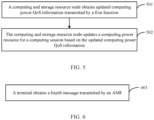
- FIG. 5 is a fourth flowchart of a computing session update method according to an embodiment of this application.
- the computing session update method is performed by a computing and storage resource node. As shown in FIG. 5 , the computing session update method includes the following steps.
- Step 501 The computing and storage resource node obtains updated computing power QoS information transmitted by a first function.
- Step 502 The computing and storage resource node updates a computing power resource for a computing session based on the updated computing power QoS information.
- the first function includes at least one of a session management function SMF and a computing power management function.
- the updated computing power QoS information is determined by the first function according to an updated computing power management policy obtained by the first function based on a first message.
- the first message is used for requesting to update at least one of a communication resource and the computing power resource for the computing session.
- the first function can obtain the updated computing power management policy based on the first message, and determine the updated computing power QoS information according to the updated computing power management policy.
- the first function transmits the updated computing power QoS information to the computing and storage resource node, to enable the computing and storage resource node to update the computing power resource for the computing session based on the updated computing power QoS information.
- the method further includes the following step: The computing and storage resource node transmits a feedback message to the first function, where the feedback message includes at least one of the following: a computing resource internet protocol IP address, a storage resource IP address, a computing resource size, and a storage resource size.
- the computing and storage resource node can obtain information such as the computing resource IP address, the computing resource size, the storage resource IP address, and the storage resource size based on an updated computing power resource for the computing session, and feed back the information to the first function, so that the first function can learn of a status of the computing and storage resource node.
- data related to the computing session can be transmitted to the computing and storage resource node, and the computing and storage resource node performs computing and feeds back a computing result.
- the terminal can still complete a corresponding computing task, thereby reducing costs and power consumption of the terminal.
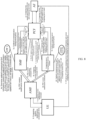
- FIG. 6 is a fifth flowchart of a computing session update method according to an embodiment of this application.
- the computing session update method is performed by a terminal. As shown in FIG. 6 , the computing session update method includes the following steps.
- Step 601 The terminal obtains a fourth message transmitted by an AMF.
- the fourth message is used to indicate at least one of a computing power resource and a communication resource that are updated by a first function for a computing session.
- the first function includes at least one of a session management function SMF and a computing power management function.
- the fourth message includes at least one of the following: a PDU session identifier, a computing session identifier, communication resource update information, a communication quality of service QoS rule, computing power resource update information, and a computing power QoS rule.
- the computing power resource update information includes at least one of the following: a computing resource internet protocol IP address, a storage resource IP address, a computing resource size, and a storage resource size.
- the AMF after obtaining a notification message transmitted by the first function, the AMF can learn of a computing power resource and/or a communication resource that are updated by the first function for the computing session. In this case, the AMF transmits the fourth message to the terminal, so that the terminal can learn of the updated computing power resource and/or the updated communication resource for the computing session.
- the method further includes the following step: The terminal transmits, to the AMF, a seventh message used for responding to the fourth message.
- the terminal can transmit the seventh message to the AMF, to notify the AMF that the terminal has learned of the updated computing power resource and/or the updated communication resource for the computing session, where the seventh message may include a PDU session modification complete message.
- FIG. 7 is a sixth flowchart of a computing session update method according to an embodiment of this application. As shown in FIG. 7 , the computing session update method includes the following specific steps.
- Step 0 UE and an AF exchange computing service requirement information and current computing service experience QoE of the terminal at an application layer to obtain a computing service requirement that needs to be indicated to a network.
- Step 1 A PCF obtains a second message, where the second message is used for requesting to update at least one of a communication management policy and a computing power management policy.
- the second message may include a terminal identifier, a computing service identifier, a PDU session identifier, a computing session identifier, a computing service requirement, and the like.
- step 1 may include any one of the following steps 1a to 1c.
- Step 1a The PCF obtains a second message transmitted by the AF.
- Step 1b The PCF obtains a second message transmitted by an SMF in a case that a communication resource of the SMF does not meet a preset communication resource, where the second message includes at least a policy update request indication and a communication QoS status notification.
- Step 1c The PCF obtains a second message transmitted by a computing power management function in a case that a computing power resource of the computing power management function does not meet a preset computing power resource, where the second message includes at least a policy update request indication and a computing power QoS status notification.
- Step 2a The PCF queries, based on the second message, for an SMF corresponding to a computing session.
- a trigger condition for this step is as follows: The PCF determines that a communication management policy currently corresponding to the UE cannot meet a computing service requirement of a request of the second message, in other words, the PCF determines that the communication management policy currently corresponding to the UE needs to be modified.
- a purpose of the step is to enable the PCF to initiate a subsequent communication management policy update process to the SMF.
- the PCF may query, based on a context record of the PCF or from a UDM, for the SMF corresponding to the computing session of the UE.
- Step 2b The PCF queries, based on the second message, for a computing power management function corresponding to the computing session.
- a trigger condition for this step is as follows: The PCF determines that a computing power management policy currently corresponding to the UE cannot meet a computing service requirement of a request of the second message, in other words, the PCF determines that the computing power management policy currently corresponding to the UE needs to be modified.
- a purpose of the step is to enable the PCF to initiate a subsequent computing power management policy update process to the computing power management function.
- the PCF may query, based on a historical record of the PCF or from the UDM, for the computing power management function corresponding to the computing session of the UE.
- Step 3a The PCF transmits an updated communication management policy to the SMF to trigger the communication management policy update process of the SMF.
- the communication management policy update process of the SMF subsequently triggers the SMF to initiate a PDU session modification process to modify a specific QoS flow in a PDU session or create a QoS flow, so as to ensure that the QoS flow can adapt to a QoS requirement corresponding to the computing session.
- Step 3b The PCF transmits an updated computing power management policy to the computing power management function.
- the PCF initiates a computing power modification request message to the computing power management function.
- the computing power modification request message includes the updated computing power management policy.
- the computing power modification request message may further include information that is related to the computing session and that is transmitted by the AF, for example, include a computing task type, a computing session identifier, and a computing service QoE requirement.
- Step 4a The SMF determines updated communication QoS information according to the obtained updated communication management policy, and transmits the updated communication QoS information to a base station-side device (an updated QoS profile (profile)), a UPF (an updated N4 interface rule), and the terminal (updated communication QoS).
- the SMF triggers the PDU session modification process based on the communication management policy update process, for example, modifies a corresponding N4 interface rule, or establishes or modifies an N3 tunnel to trigger a QoS flow establishment or modification process.
- Step 4b The computing power management function determines updated computing power QoS information according to the obtained updated computing power management policy, and transmits the updated computing power QoS information to a computing and storage resource node.
- the computing power management function selects a corresponding computing and storage resource node based on the updated computing power QoS information.
- the selected computing and storage resource node has a computing function and a storage function. The two functions may be combined and deployed on one node, or may be separately deployed on different nodes.
- a computing capability of the selected computing and storage resource node meets a computing resource requirement and a storage resource requirement in the computing power management policy.
- Step 5a The SMF transmits a communication policy update response to the PCF to notify the PCF of whether the communication management policy in step 4a is successfully updated.
- Step 5b The computing power management function transmits a computing power policy update response to the PCF.
- the computing power policy update response includes identification information or IP address information of the computing and storage resource node allocated by the computing power management function.
- the identification information the computing and storage resource node is used for addressing the computing and storage resource node.
- the UE transmits uplink computing task data to the computing and storage resource node for computing.
- the IP address is used as a destination IP address for the UE to transmit the uplink computing task data, to ensure that the computing task data can be transmitted to the computing and storage resource node for computing.
- Step 6 The computing power management function notifies the SMF of a computing power resource allocation status of the computing power management function.
- the computing power resource allocation status includes the identification information or the IP address information of the computing and storage resource node allocated by the computing power management function.
- the computing capability of the selected computing and storage resource node meets the computing resource requirement and the storage resource requirement in the computing power management policy.
- Step 7 The SMF transmits a PDU session modification command to the AMF.
- Step 8 The AMF transmits a PDU session modification command to the UE.
- Step 9 The UE transmits a PDU session modification command ACK to the AMF.
- Step 10 The AMF transmits a PDU session modification command ACK to the SMF.
- Step 11 The PCF transmits a computing session modification response to the AF.
- the computing session modification response includes the identification information or the IP address information of the computing and storage resource node allocated by the computing power management function, and may further include QoE of the computing session that is assessed by the PCF and that can actually be achieved by the computing power management policy and/or the communication management policy.
- FIG. 8 is a seventh flowchart of a computing session update method according to an embodiment of this application. As shown in FIG. 8 , the computing session update method includes the following specific steps.
- Step 0 UE and an AF exchange computing service requirement information and current computing service experience QoE of the terminal at an application layer to obtain a computing service requirement that needs to be indicated to a network.
- Step 1 A PCF obtains a second message, where the second message is used for requesting to update at least one of a communication management policy and a computing power management policy.
- the second message may include a terminal identifier, a computing service identifier, a PDU session identifier, a computing session identifier, a computing service requirement, and the like.
- step 1 may include any one of the following steps 1a to 1c.
- Step 1a The PCF obtains a second message transmitted by the AF.
- Step lb The PCF obtains a second message transmitted by an SMF in a case that a communication resource of the SMF does not meet a preset communication resource, where the second message includes at least a policy update request indication and a communication QoS status notification.
- Step 1c The PCF obtains a second message transmitted by a computing power management function in a case that a computing power resource of the computing power management function does not meet a preset computing power resource, where the second message includes at least a policy update request indication and a computing power QoS status notification.
- Step 2a The PCF queries, based on the second message, for an SMF corresponding to a computing session.
- a trigger condition for this step is as follows: The PCF determines that a communication management policy currently corresponding to the UE cannot meet a computing service requirement of a request of the second message, in other words, the PCF determines that the communication management policy currently corresponding to the UE needs to be modified.
- a purpose of the step is to enable the PCF to initiate a subsequent communication management policy update process to the SMF.
- the PCF may query, based on a context record of the PCF or from a UDM, for the SMF corresponding to the computing session of the UE.
- Step 2b The PCF queries, based on the second message, for a computing power management function corresponding to the computing session.
- a trigger condition for this step is as follows: The PCF determines that a computing power management policy currently corresponding to the UE cannot meet a computing service requirement of a request of the second message, in other words, the PCF determines that the computing power management policy currently corresponding to the UE needs to be modified.
- a purpose of the step is to enable the PCF to initiate a subsequent computing power management policy update process to the computing power management function.
- the PCF may query, based on a context record of the PCF or from the UDM, for the computing power management function corresponding to the computing session of the UE.
- Step 3a The PCF transmits an updated communication management policy to the SMF to trigger the communication management policy update process of the SMF.
- the communication management policy update process of the SMF subsequently triggers the SMF to initiate a PDU session modification process to modify a specific QoS flow in a PDU session or create a QoS flow, so as to ensure that the QoS flow can adapt to a QoS requirement corresponding to the computing session.
- Step 3b The PCF transmits an updated computing power management policy to the computing power management function.
- the PCF initiates a computing power modification request message to the computing power management function.
- the computing power modification request message includes the updated computing power management policy.
- the computing power modification request message may further include information that is related to the computing session and that is transmitted by the AF, for example, include a computing task type, a computing session identifier, and a computing service QoE requirement.
- Step 4a The SMF determines updated communication QoS information according to the obtained updated communication management policy, and transmits the updated communication QoS information to a base station-side device (an updated QoS profile), a UPF (an updated N4 interface rule), and the terminal (updated communication QoS). Specifically, the SMF triggers the PDU session modification process based on the communication management policy update process, for example, modifies a corresponding N4 interface rule, or establishes or modifies an N3 tunnel to trigger a QoS flow establishment or modification process.
- Step 4b The computing power management function determines updated computing power QoS information according to the obtained updated computing power management policy, and transmits the updated computing power QoS information to a computing and storage resource node.
- the computing power management function selects a corresponding computing and storage resource node based on the updated computing power QoS information.
- the selected computing and storage resource node has a computing function and a storage function. The two functions may be combined and deployed on one node, or may be separately deployed on different nodes.
- a computing capability of the selected computing and storage resource node meets a computing resource requirement and a storage resource requirement in the computing power management policy.
- Step 5a The SMF transmits a communication policy update response to the PCF to notify the PCF of whether the communication management policy in step 4a is successfully updated.
- Step 5b The computing power management function transmits a computing power policy update response to the PCF.
- the computing power policy update response includes identification information or IP address information of the computing and storage resource node allocated by the computing power management function.
- the identification information the computing and storage resource node is used for addressing the computing and storage resource node.
- the UE transmits uplink computing task data to the computing and storage resource node for computing.
- the IP address is used as a destination IP address for the UE to transmit the uplink computing task data, to ensure that the computing task data can be transmitted to the computing and storage resource node for computing.
- Step 6a The SMF transmits a PDU session modification command to the AMF.
- Step 6b The computing power management function transmits a computing power session modification command to the AMF.
- Step 7 The AMF transmits a computing session modification command to the UE.
- Step 8 The UE transmits a computing session modification command ACK to the AMF.
- Step 9a The AMF transmits a PDU session modification command ACK to the SMF.
- Step 9b The AMF transmits a computing session modification command ACK to the computing power management function.
- Step 10 The PCF transmits a computing session modification response to the AF.
- the computing session modification response includes the identification information or the IP address information of the computing and storage resource node allocated by the computing power management function, and may further include QoE of the computing session that is assessed by the PCF and that can actually be achieved by the computing power management policy and/or the communication management policy.
- the computing session update method provided in the embodiments of this application may be performed by a computing session update apparatus, or by a control module that is in the computing session update apparatus and that is configured to perform the computing session update method.
- a computing session update apparatus provided in the embodiments of this application is described by using an example in which the computing session update apparatus updates a computing session.
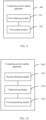
- FIG. 9 is a first structural diagram of a computing session update apparatus according to an embodiment of this application.
- the computing session update apparatus 900 includes:
- the first message includes at least one of the following:
- the computing power resource includes at least one of the following: a computing resource and a storage resource.
- the first obtaining module 901 is further configured to: obtain a first message transmitted by a policy control function PCF.
- the first update module 902 is further configured to:
- the first update module 902 is further configured to:
- the first update module 902 is further configured to:
- the first obtaining module 901 is further configured to: receive a feedback message transmitted by the computing and storage resource node, where the feedback message includes at least one of the following: a computing resource internet protocol IP address, a storage resource IP address, a computing resource size, and a storage resource size.
- the computing power QoS information includes at least one of the following: computing power, a sample data volume, a storage resource, a computing delay, a computing accuracy rate, and a computing speed.
- the apparatus is further configured to: transmit, to the PCF, a third message used for responding to the first message.
- the apparatus is further configured to: transmit a fourth message to a terminal through an access and mobility management function AMF, where the fourth message is used to indicate at least one of an updated computing power resource and an updated communication resource that are allocated by the apparatus.
- the apparatus is further configured to perform any one of the following operations:
- the first obtaining module 901 is further configured to: receive a fifth message transmitted by the AMF, where the fifth message is used for responding to at least one of the first notification message, the second notification message, the third notification message, and the fourth notification message.
- computing session update apparatus 900 provided in this embodiment of this application is capable of implementing the processes implemented by the first function in the method embodiment of FIG. 2 , with the same technical effect achieved. To avoid repetition, details are not described herein again.
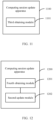
- FIG. 10 is a second structural diagram of a computing session update apparatus according to an embodiment of this application. As shown in FIG. 10 , the computing session update apparatus 1000 includes:
- the second obtaining module 1001 is configured to perform any one of the following operations:
- the second message includes at least one of the following:
- the determining module 1002 is further configured to: determine, based on the second message, the first function corresponding to the computing session.
- the second obtaining module 1001 is further configured to: receive a third message that is transmitted by the first function and that is used for responding to the first message.
- the second message includes at least one of the following:
- the computing service requirement includes at least one of the following: delay information of the computing service, an accuracy rate of the computing service, a computing volume of the computing service, a storage requirement, a type of the computing service, and an IP address of the computing service.
- the computing power resource includes at least one of the following: a computing resource and a storage resource.
- the first message includes at least one of the following:
- computing session update apparatus 1000 provided in this embodiment of this application is capable of implementing the processes implemented by the PCF in the method embodiment of FIG. 3 , with the same technical effect achieved. To avoid repetition, details are not described herein again.
- FIG. 11 is a third structural diagram of a computing session update apparatus according to an embodiment of this application. As shown in FIG. 11 , the computing session update apparatus 1100 includes:
- the notification message includes at least one of the following: a protocol data unit PDU session identifier, a computing session identifier, communication resource update information, a communication quality of service QoS rule, computing power resource update information, and a computing power QoS rule.
- the apparatus is further configured to perform at least one of the following operations:
- the apparatus is further configured to:
- the fourth message includes at least one of the following: a PDU session identifier, a computing session identifier, communication resource update information, a communication QoS rule, computing power resource update information, and a computing power QoS rule.
- the computing power resource update information includes at least one of the following: a computing resource internet protocol IP address, a storage resource IP address, a computing resource size, and a storage resource size.
- computing session update apparatus 1100 provided in this embodiment of this application is capable of implementing the processes implemented by the AMF in the method embodiment of FIG. 4 , with the same technical effect achieved. To avoid repetition, details are not described herein again.
- FIG. 12 is a fourth structural diagram of a computing session update apparatus according to an embodiment of this application. As shown in FIG. 12 , the computing session update apparatus 1200 includes:
- the apparatus is further configured to: transmit a feedback message to the first function, where the feedback message includes at least one of the following: a computing resource internet protocol IP address, a storage resource IP address, a computing resource size, and a storage resource size.
- the computing session update apparatus 1200 provided in this embodiment of this application is capable of implementing the processes implemented by the computing and storage resource node in the method embodiment of FIG. 5 , with the same technical effect achieved. To avoid repetition, details are not described herein again.
- FIG. 13 is a fifth structural diagram of a computing session update apparatus according to an embodiment of this application.
- the computing session update apparatus 1300 includes: a fifth obtaining module 1301, configured to obtain a fourth message transmitted by an access and mobility management function AMF, where the fourth message is used to indicate at least one of a computing power resource and a communication resource that are updated by a first function for a computing session, and the first function includes at least one of a session management function SMF and a computing power management function.
- the fourth message includes at least one of the following: a protocol data unit PDU session identifier, a computing session identifier, communication resource update information, a communication quality of service QoS rule, computing power resource update information, and a computing power QoS rule.
- the computing power resource update information includes at least one of the following: a computing resource internet protocol IP address, a storage resource IP address, a computing resource size, and a storage resource size.
- the apparatus is further configured to: transmit, to the AMF, a seventh message used for responding to the fourth message.
- computing session update apparatus 1300 provided in this embodiment of this application is capable of implementing the processes implemented by the terminal in the method embodiment of FIG. 6 , with the same technical effect achieved. To avoid repetition, details are not described herein again.
- the computing session update apparatus in the embodiments of this application may be an apparatus, or an apparatus or an electronic device with an operating system, or may be a component, an integrated circuit, or a chip in a terminal.
- the apparatus or the electronic device may be a mobile terminal or a non-mobile terminal.
- the mobile terminal may include but is not limited to the aforementioned types of terminals, and the non-mobile terminal may be a server, a network attached storage (Network Attached Storage, NAS), a personal computer (personal computer, PC), a television (television, TV), a teller machine, a self-service machine, or the like. This is not specifically limited in the embodiments of this application.
- an embodiment of this application further provides a communication device 1400, including a processor 1401, a memory 1402, and a program or instructions stored in the memory 1402 and capable of running on the processor 1401.
- a communication device 1400 including a processor 1401, a memory 1402, and a program or instructions stored in the memory 1402 and capable of running on the processor 1401.
- the communication device 1400 is a network function entity, and when the program or instructions are executed by the processor 1401, the processes of the method embodiment of FIG. 2 are implemented, or the processes of the method embodiment of FIG. 3 are implemented, or the processes of the method embodiment of FIG. 4 are implemented, or the processes of the method embodiment of FIG. 5 are implemented, with the same technical effect achieved.
- the communication device 1400 is a terminal, and when the program or instructions are executed by the processor 1401, the processes of the method embodiment of FIG. 6 are implemented, with the same technical effect achieved. To avoid repetition, details are not described herein again.
- An embodiment of this application further provides a terminal, including a processor and a communication interface.
- the communication interface is configured to obtain a fourth message transmitted by an AMF.
- the terminal embodiment corresponds to the foregoing terminal-side method embodiment, and all implementation processes and implementations of the foregoing method embodiment are applicable to the terminal embodiment, with the same technical effect achieved.
- FIG. 15 is a schematic diagram of a hardware structure of a terminal for implementing an embodiment of this application.
- the terminal 1500 includes but is not limited to at least some of components such as a radio frequency unit 1501, a network module 1502, an audio output unit 1503, an input unit 1504, a sensor 1505, a display unit 1506, a user input unit 1507, an interface unit 1508, a memory 1509, and a processor 1510.
- the terminal 1500 may further include a power supply (for example, a battery) that supplies power to each component.
- the power supply may be logically connected to the processor 1510 by using a power management system, to implement functions such as charging management, discharging management, and power consumption management by using the power management system.
- the terminal structure shown in FIG. 15 does not constitute a limitation on the terminal.
- the terminal may include more or fewer components than those shown in the figure, or some components may be combined, or there may be a different component layout. Details are not described herein again.
- the input unit 1504 may include a graphics processing unit (Graphics Processing Unit, GPU) 15041 and a microphone 15042.
- the graphics processing unit 15041 processes image data of a static picture or a video that is obtained by an image capture apparatus (for example, a camera) in a video capture mode or an image capture mode.
- the display unit 1506 may include a display panel 15061.
- the display panel 15061 may be configured in a form of a liquid crystal display, an organic light-emitting diode, or the like.
- the user input unit 1507 includes a touch panel 15071 and other input devices 15072.
- the touch panel 15071 is also referred to as a touchscreen.
- the touch panel 15071 may include two parts: a touch detection apparatus and a touch controller.
- the other input devices 15072 may include but are not limited to a physical keyboard, a function key (such as a volume control key or an on/off key), a trackball, a mouse, and a joystick. Details are not described herein.
- the radio frequency unit 1501 receives downlink data from a network-side device and then transmits the downlink data to the processor 1510 for processing; and transmits uplink data to the network-side device.
- the radio frequency unit 1501 includes but is not limited to an antenna, at least one amplifier, a transceiver, a coupler, a low noise amplifier, a duplexer, and the like.
- the memory 1509 may be configured to store software programs or instructions and various data.
- the memory 1509 may mainly include a program or instruction storage region and a data storage region.
- the program or instruction storage region may store an operating system, an application program or instructions required by at least one function (for example, an audio play function or an image play function), and the like.
- the memory 1509 may include a high-speed random access memory, or may include a non-volatile memory, where the non-volatile memory may be a read-only memory (Read-Only Memory, ROM), a programmable read-only memory (Programmable ROM, PROM), an erasable programmable read-only memory (Erasable PROM, EPROM), an electrically erasable programmable read-only memory (Electrically EPROM, EEPROM), or a flash memory, for example, at least one magnetic disk storage device, a flash memory, or another non-volatile solid-state storage device.
- ROM Read-Only Memory
- PROM programmable read-only memory
- Erasable PROM Erasable PROM
- EPROM electrically erasable programmable read-only memory
- EEPROM electrically erasable programmable read-only memory
- flash memory for example, at least one magnetic disk storage device, a flash memory, or another non-volatile solid-state
- the processor 1510 may include one or more processing units.
- the processor 1510 may integrate an application processor and a modem processor.
- the application processor mainly processes an operating system, a user interface, an application program or instructions, and the like.
- the modem processor mainly processes wireless communication, for example, a baseband processor. It can be understood that the modem processor may alternatively be not integrated in the processor 1510.
- the radio frequency unit 1501 is configured to obtain a fourth message transmitted by an AMF, where the fourth message is used to indicate at least one of a computing power resource and a communication resource that are updated by a first function for a computing session, and the first function includes at least one of a session management function SMF and a computing power management function.
- the fourth message includes at least one of the following: a protocol data unit PDU session identifier, a computing session identifier, communication resource update information, a communication quality of service QoS rule, computing power resource update information, and a computing power QoS rule.
- the computing power resource update information includes at least one of the following: a computing resource internet protocol IP address, a storage resource IP address, a computing resource size, and a storage resource size.
- the radio frequency unit 1501 is further configured to transmit, to the AMF, a seventh message used for responding to the fourth message.
- the terminal can learn of the updated computing power resource and/or the updated communication resource for the computing session based on the fourth message transmitted by the AMF, data, related to the computing session, of the terminal can be transmitted to a computing and storage resource node, and the computing and storage resource node performs computing and feeds back a computing result.
- the terminal can still complete a corresponding computing task, thereby reducing costs and power consumption of the terminal.
- An embodiment of this application further provides a readable storage medium.
- the readable storage medium stores a program or instructions.
- the processes of the method embodiment of FIG. 2 are implemented, or the processes of the method embodiment of FIG. 3 are implemented, or the processes of the method embodiment of FIG. 4 are implemented, or the processes of the method embodiment of FIG. 5 are implemented, or the processes of the method embodiment of FIG. 6 are implemented, with the same technical effect achieved. To avoid repetition, details are not described herein again.
- the processor is a processor in the terminal in the foregoing embodiments.
- the readable storage medium includes a computer-readable storage medium, for example, a computer read-only memory (Read-Only Memory, ROM), a random access memory (Random Access Memory, RAM), a magnetic disk, or an optical disc.
- An embodiment of this application further provides a chip.
- the chip includes a processor and a communication interface.
- the communication interface is coupled to the processor.
- the processor is configured to run a program or instructions, to implement the processes of the method embodiment of FIG. 2 , or implement the processes of the method embodiment of FIG. 3 , or implement the processes of the method embodiment of FIG. 4 , or implement the processes of the method embodiment of FIG. 5 , or implement the processes of the method embodiment of FIG. 6 , with the same technical effect achieved. To avoid repetition, details are not described herein again.
- the chip provided in the embodiments of this application may also be referred to as a system-level chip, a system on chip, a chip system, a system-on-a-chip, or the like.
- An embodiment of this application further provides a communication network function entity, including a processor, a memory, and a program or instructions stored in the memory and capable of running on the processor.
- a communication network function entity including a processor, a memory, and a program or instructions stored in the memory and capable of running on the processor.
- the terms "include” and “comprise”, or any of their variants are intended to cover a non-exclusive inclusion, such that a process, a method, an article, or an apparatus that includes a list of elements not only includes those elements but also includes other elements that are not expressly listed, or further includes elements inherent to such a process, method, article, or apparatus.
- an element preceded by "includes a " does not preclude the existence of other identical elements in the process, method, article, or apparatus that includes the element.
- the methods in the foregoing embodiments may be implemented by using software in combination with a necessary common hardware platform, or certainly may be implemented by using hardware. However, in most cases, the former is a preferred implementation.
- the technical solutions of this application essentially or the part contributing to the conventional technology may be implemented in a form of a computer software product.
- the computer software product may be stored in a storage medium (for example, a ROM/RAM, a magnetic disk, or a compact disc), and includes several instructions for instructing a terminal (which may be a mobile phone, a computer, a server, an air conditioner, a network device, or the like) to perform the methods in the embodiments of this application.
Landscapes
- Engineering & Computer Science (AREA)
- Computer Networks & Wireless Communication (AREA)
- Signal Processing (AREA)
- Computer Security & Cryptography (AREA)
- Quality & Reliability (AREA)
- Mobile Radio Communication Systems (AREA)
Applications Claiming Priority (2)
| Application Number | Priority Date | Filing Date | Title |
|---|---|---|---|
| CN202110915801.0A CN115915181A (zh) | 2021-08-10 | 2021-08-10 | 计算会话更新方法、装置及通信设备 |
| PCT/CN2022/110833 WO2023016396A1 (fr) | 2021-08-10 | 2022-08-08 | Procédé et appareil de mise à jour de session de calcul, et dispositif de communication |
Publications (2)
| Publication Number | Publication Date |
|---|---|
| EP4387309A1 true EP4387309A1 (fr) | 2024-06-19 |
| EP4387309A4 EP4387309A4 (fr) | 2024-11-27 |
Family
ID=85200583
Family Applications (1)
| Application Number | Title | Priority Date | Filing Date |
|---|---|---|---|
| EP22855377.2A Pending EP4387309A4 (fr) | 2021-08-10 | 2022-08-08 | Procédé et appareil de mise à jour de session de calcul, et dispositif de communication |
Country Status (4)
| Country | Link |
|---|---|
| US (1) | US20240188047A1 (fr) |
| EP (1) | EP4387309A4 (fr) |
| CN (1) | CN115915181A (fr) |
| WO (1) | WO2023016396A1 (fr) |
Families Citing this family (9)
| Publication number | Priority date | Publication date | Assignee | Title |
|---|---|---|---|---|
| CN115915179A (zh) * | 2021-08-10 | 2023-04-04 | 维沃移动通信有限公司 | 计算会话更新方法、装置、终端及网络功能实体 |
| CN118741614A (zh) * | 2023-03-28 | 2024-10-01 | 华为技术有限公司 | 用于通信的方法、装置和计算机可读存储介质 |
| CN121176072A (zh) * | 2023-05-08 | 2025-12-19 | 瑞典爱立信有限公司 | 用于会话规则报告的方法和装置 |
| CN118945159B (zh) * | 2023-05-10 | 2026-01-30 | 中国移动通信有限公司研究院 | 信息处理方法、装置、网络侧设备及可读存储介质 |
| CN119450412A (zh) * | 2023-08-02 | 2025-02-14 | 维沃软件技术有限公司 | 会话修改方法、会话修改装置和通信设备 |
| WO2026007078A1 (fr) * | 2024-07-04 | 2026-01-08 | 北京小米移动软件有限公司 | Procédés de demande de puissance de calcul, appareil, dispositif de communication, système de communication et support de stockage |
| CN121397748A (zh) * | 2024-07-22 | 2026-01-23 | 大唐移动通信设备有限公司 | 算力参数处理方法、装置及设备 |
| CN121604032A (zh) * | 2024-08-15 | 2026-03-03 | 华为技术有限公司 | 通信方法、装置及系统 |
| CN118843150B (zh) * | 2024-09-20 | 2025-03-14 | 中国电信股份有限公司 | 算网业务处理方法及相关设备 |
Family Cites Families (12)
| Publication number | Priority date | Publication date | Assignee | Title |
|---|---|---|---|---|
| US7929443B1 (en) * | 2004-03-02 | 2011-04-19 | Nortel Networks Limited | Session based resource allocation in a core or edge networking device |
| US11134410B2 (en) * | 2017-12-25 | 2021-09-28 | Nokia Solutions And Networks Oy | Quality of service (QoS) control in mobile edge computing (MEC) |
| CN112400352B (zh) * | 2019-01-21 | 2023-12-29 | Oppo广东移动通信有限公司 | 一种资源管理方法、设备及存储介质 |
| CN118945216A (zh) * | 2019-03-13 | 2024-11-12 | 交互数字专利控股公司 | 动态网络能力配置 |
| WO2020249183A1 (fr) * | 2019-06-11 | 2020-12-17 | Nokia Technologies Oy | Appareil, procédé et programme informatique |
| CN112752253B (zh) * | 2019-10-30 | 2021-10-29 | 大唐移动通信设备有限公司 | 消息传输方法及装置 |
| KR20210054419A (ko) * | 2019-11-05 | 2021-05-13 | 삼성전자주식회사 | 이동통신 시스템에서 어플리케이션 서버의 정보 제공 장치 및 방법 |
| BR112022013147A2 (pt) * | 2019-12-31 | 2022-10-18 | Interdigital Patent Holdings Inc | Equipamento de usuário, e, servidor que hospeda uma função rede |
| DE102021100660A1 (de) * | 2020-01-14 | 2021-07-15 | Intel Corporation | Netzwerkbasierte medienverarbeitung (nbmp) anwendungsunterstützung für netzwerkanalysedienste in 5g-systemen |
| EP4102869A4 (fr) * | 2020-03-27 | 2023-07-19 | Samsung Electronics Co., Ltd. | Procédé de gestion de session en fonction d'une application de politique d'équipement utilisateur dans un système de communication sans fil |
| CN113115332B (zh) * | 2021-03-23 | 2022-08-12 | 中国联合网络通信集团有限公司 | 一种upf确定方法及装置 |
| CN115915179A (zh) * | 2021-08-10 | 2023-04-04 | 维沃移动通信有限公司 | 计算会话更新方法、装置、终端及网络功能实体 |
-
2021
- 2021-08-10 CN CN202110915801.0A patent/CN115915181A/zh active Pending
-
2022
- 2022-08-08 WO PCT/CN2022/110833 patent/WO2023016396A1/fr not_active Ceased
- 2022-08-08 EP EP22855377.2A patent/EP4387309A4/fr active Pending
-
2024
- 2024-02-10 US US18/438,455 patent/US20240188047A1/en active Pending
Also Published As
| Publication number | Publication date |
|---|---|
| US20240188047A1 (en) | 2024-06-06 |
| WO2023016396A1 (fr) | 2023-02-16 |
| CN115915181A (zh) | 2023-04-04 |
| EP4387309A4 (fr) | 2024-11-27 |
Similar Documents
| Publication | Publication Date | Title |
|---|---|---|
| EP4387309A1 (fr) | Procédé et appareil de mise à jour de session de calcul, et dispositif de communication | |
| US12549496B2 (en) | Method for allocating resource for computing task | |
| EP4300922A1 (fr) | Procédé et appareil de mise en oeuvre de service de puissance de calcul natif, dispositif de réseau et terminal | |
| US20240188046A1 (en) | Computing session update method and apparatus, terminal, and network side device | |
| JP2024504313A (ja) | データ伝送方法、端末及びネットワーク側機器 | |
| WO2023246584A1 (fr) | Procédé et appareil de traitement de puissance de calcul, et dispositif de communication | |
| WO2024022267A1 (fr) | Procédé de migration de tâche de capacité de calcul et dispositif de communication | |
| JP7553694B2 (ja) | エンドツーエンドQoS需要情報の分割方法、端末及びネットワーク側機器 | |
| EP4633104A1 (fr) | Procédé d'entraînement de modèle, terminal et dispositif côté réseau | |
| WO2024001954A1 (fr) | Procédés et appareil de configuration d'identifiant, terminal et support de stockage | |
| CN115714785B (zh) | 算力资源的确定方法和设备 | |
| US20240031906A1 (en) | Method and apparatus for determining communication mode, and related device | |
| WO2023207947A1 (fr) | Procédé de reconfiguration de cellules, appareil, terminal et dispositif côté réseau | |
| CN115696463B (zh) | 多终端联合会话管理方法、网络侧设备及终端 | |
| WO2023185929A1 (fr) | Procédé et appareil de commande de ressources, terminal et dispositif côté réseau | |
| CN116567781B (zh) | 传输方法、装置、终端、网络侧设备及可读存储介质 | |
| EP4503720A1 (fr) | Procédé de négociation de période d'indisponibilité d'un terminal, terminal et dispositif côté réseau | |
| EP4362578A1 (fr) | Procédé et appareil de traitement de ressources, dispositif électronique et support de stockage | |
| WO2024093712A1 (fr) | Procédé de traitement de liaison de communication de relais, procédé de configuration de liaison de communication relais, procédé de traitement de terminal relais et dispositif associé | |
| WO2024140570A1 (fr) | Procédé et appareil de configuration de politique, terminal, dispositif côté réseau, et support de stockage lisible | |
| CN120224486A (zh) | 通信处理方法、装置、终端及网络侧设备 | |
| WO2025026317A1 (fr) | Procédé et dispositif de libération de service d'ia | |
| WO2025195234A1 (fr) | Procédé d'enregistrement de capacité de terminal, procédé d'acquisition, appareil, terminal et dispositif | |
| CN121152039A (zh) | 业务数据传输方法、业务数据传输策略配置方法及设备 | |
| CN119450410A (zh) | 会话修改方法、信息转发方法、装置和通信设备 |
Legal Events
| Date | Code | Title | Description |
|---|---|---|---|
| STAA | Information on the status of an ep patent application or granted ep patent |
Free format text: STATUS: THE INTERNATIONAL PUBLICATION HAS BEEN MADE |
|
| PUAI | Public reference made under article 153(3) epc to a published international application that has entered the european phase |
Free format text: ORIGINAL CODE: 0009012 |
|
| STAA | Information on the status of an ep patent application or granted ep patent |
Free format text: STATUS: REQUEST FOR EXAMINATION WAS MADE |
|
| 17P | Request for examination filed |
Effective date: 20240308 |
|
| AK | Designated contracting states |
Kind code of ref document: A1 Designated state(s): AL AT BE BG CH CY CZ DE DK EE ES FI FR GB GR HR HU IE IS IT LI LT LU LV MC MK MT NL NO PL PT RO RS SE SI SK SM TR |
|
| DAV | Request for validation of the european patent (deleted) | ||
| DAX | Request for extension of the european patent (deleted) | ||
| A4 | Supplementary search report drawn up and despatched |
Effective date: 20241029 |
|
| RIC1 | Information provided on ipc code assigned before grant |
Ipc: H04M 15/00 20240101ALN20241023BHEP Ipc: H04L 41/5051 20220101ALN20241023BHEP Ipc: H04L 41/50 20220101ALN20241023BHEP Ipc: H04L 12/14 20240101ALI20241023BHEP Ipc: H04W 48/18 20090101ALI20241023BHEP Ipc: H04W 28/24 20090101ALI20241023BHEP Ipc: H04W 24/02 20090101AFI20241023BHEP |