EP4388764B1 - Identification de station de pré-association protégée - Google Patents
Identification de station de pré-association protégée Download PDFInfo
- Publication number
- EP4388764B1 EP4388764B1 EP22730652.9A EP22730652A EP4388764B1 EP 4388764 B1 EP4388764 B1 EP 4388764B1 EP 22730652 A EP22730652 A EP 22730652A EP 4388764 B1 EP4388764 B1 EP 4388764B1
- Authority
- EP
- European Patent Office
- Prior art keywords
- unique identifier
- station
- access point
- response
- network
- Prior art date
- Legal status (The legal status is an assumption and is not a legal conclusion. Google has not performed a legal analysis and makes no representation as to the accuracy of the status listed.)
- Active
Links
Images




Classifications
-
- H—ELECTRICITY
- H04—ELECTRIC COMMUNICATION TECHNIQUE
- H04W—WIRELESS COMMUNICATION NETWORKS
- H04W12/00—Security arrangements; Authentication; Protecting privacy or anonymity
- H04W12/02—Protecting privacy or anonymity, e.g. protecting personally identifiable information [PII]
-
- H—ELECTRICITY
- H04—ELECTRIC COMMUNICATION TECHNIQUE
- H04L—TRANSMISSION OF DIGITAL INFORMATION, e.g. TELEGRAPHIC COMMUNICATION
- H04L61/00—Network arrangements, protocols or services for addressing or naming
- H04L61/50—Address allocation
- H04L61/5038—Address allocation for local use, e.g. in LAN or USB networks, or in a controller area network [CAN]
-
- H—ELECTRICITY
- H04—ELECTRIC COMMUNICATION TECHNIQUE
- H04L—TRANSMISSION OF DIGITAL INFORMATION, e.g. TELEGRAPHIC COMMUNICATION
- H04L63/00—Network architectures or network communication protocols for network security
- H04L63/04—Network architectures or network communication protocols for network security for providing a confidential data exchange among entities communicating through data packet networks
- H04L63/0407—Network architectures or network communication protocols for network security for providing a confidential data exchange among entities communicating through data packet networks wherein the identity of one or more communicating identities is hidden
- H04L63/0414—Network architectures or network communication protocols for network security for providing a confidential data exchange among entities communicating through data packet networks wherein the identity of one or more communicating identities is hidden during transmission, i.e. party's identity is protected against eavesdropping, e.g. by using temporary identifiers, but is known to the other party or parties involved in the communication
-
- H—ELECTRICITY
- H04—ELECTRIC COMMUNICATION TECHNIQUE
- H04W—WIRELESS COMMUNICATION NETWORKS
- H04W12/00—Security arrangements; Authentication; Protecting privacy or anonymity
- H04W12/60—Context-dependent security
- H04W12/69—Identity-dependent
- H04W12/75—Temporary identity
-
- H—ELECTRICITY
- H04—ELECTRIC COMMUNICATION TECHNIQUE
- H04L—TRANSMISSION OF DIGITAL INFORMATION, e.g. TELEGRAPHIC COMMUNICATION
- H04L2101/00—Indexing scheme associated with group H04L61/00
- H04L2101/60—Types of network addresses
- H04L2101/618—Details of network addresses
- H04L2101/622—Layer-2 addresses, e.g. medium access control [MAC] addresses
Definitions
- This disclosure relates to an improved handling of unique identifiers for stations.
- An aspect of the present disclosure provides a method for an access point to provide one or more features to a station.
- the method comprises outputting a unique identifier request to the station prior to associating with the station, wherein the unique identifier request includes a request that the station respond with a unique identifier that is to be used by the access point for the station, establishing a secure connection with the station, receiving a unique identifier response from the station via the secure connection, determining that the station supports creating and delivering the unique identifier based on an indication provided within the unique identifier response, determining that the unique identifier response provides the unique identifier to be used for the station, wherein the unique identifier is different from a media access control (MAC) address of the station, and providing access to the one or more features to the station based on the unique identifier received in the unique identifier response.
- MAC media access control
- the method is such that establishing the secure connection with the station comprises exchanging one or more encryption keys with the station.
- the method is such that establishing the secure connection comprises a pre-association security negotiation.
- the method further comprises after associating the station with the access point, providing to the station network information specifying a network or network access for the station.
- establishing the secure connection with the station comprises exchanging one or more encryption keys with the station.
- establishing the secure connection comprises a pre-association security negotiation.
- the unique identifier comprises any of a universal unique identifier, a random number, a pseudorandom number, a preconfigured identifier, or any combination thereof.
- FIG. 1 is a block diagram illustrating an example network environment 100 operable to facilitate management of a unique identifier for a station.
- video, voice, and/or data services may be delivered to one or more stations 105 over one or more signal paths.
- Stations 105 may include a laptop, mobile device, tablet, computer, set-top box (STB), gaming device, wearable device, and any other device operable to receive video, voice, and/or data services.
- STB set-top box
- various data, multimedia, and/or voice services may be delivered to the stations 105, including but not limited to streaming video, streaming audio, file transfer, email, telephony services, and others.
- the station 105 may be using the same unique identifier (e.g., a unique identifier provided to the access point 115 through a unique identifier response) as the one that was used by the station 105 during the first association.
- the access point 115 may recognize that the station 105 is using the same unique identifier as one that was previously used by the station during a previous association.
- the access point 115 may use authorization(s) and/or behaviors, and/or enable one or more services or features that were used and/or enabled during a previous association between the access point 115 and the station 105.
- the access point 115 may use these authorization(s) and/or permissions, and/or enable these services or features without requesting corresponding authorization(s) and/or permission(s) from the station 105 during the second/subsequent association(s) between the access point 115 and the station 105.
- a station 105 may be configured with one or more requirements and/or limitations to be placed on an associated unique identifier. For example, the station 105 may decline to provide a unique identifier to an access point 115 when a type of network and/or an encryption status of a network with which the station 105 is associated do not meet certain criteria. Based on the network type and/or encryption status of a network, the station 105 may respond to a unique identifier request with a unique identifier response that does not include a unique identifier.
- the station 105 may generate a unique identifier response that provides the access point 115 with a unique identifier for the station 105 but limits the use or duration for which the access point 115 may use/store the unique identifier (e.g., a use limitation may be included in the unique identifier response).
- a station 105 may generate a unique identifier based upon an algorithm with which the station 105 is configured and/or based upon a user input of a unique identifier or criteria for generating a unique identifier. For example, an end user may input a unique identifier to be used by the station 105, or the station 105 may be configured to generate a random unique identifier based upon a key.
- the unique identifier provided by the station 105 may be an identifier other than a MAC address of the station 105 or it may be the MAC address of the station 105.
- the action frame may be available to an access point 115 after a station 105 has become associated.
- the action frame and response may be encrypted, assuming that the association is with a secure SSID so that the unique identifier provided by the station 105 within a response is protected from a person who is receiving the wireless transmission.
- a station 105 may consider only responding to the unique identifier request if the SSID is secure. For example, the station 105 may be configured to disregard a unique identifier request when the station 105 is associated with a network that is not secure (e.g., a public network or unencrypted network).
- a unique identifier may be required to be from a local MAC address space, or to take a certain form such as the UUID form popularized by Microsoft.
- a scenario may exist where only a specific configuration may be accepted by an access point as a unique identifier.
- an access point 115 may be able to ask any station 105 for a permanent unique identifier (e.g., a permanent MAC address, serial number, or other identifier).
- a station 105 may present a local MAC address or an otherwise randomized MAC address while probing or after association. For some access points 115 and associated network services, a local MAC address that may change with each ESS association may restrict the services that an access point 115 can offer without additional authentication.
- An access point may use the unique identifier request message to request that an associated station 105 provide an identifying value that can be used across association events to consistently identify the particular station 105, even if its MAC address changes.
- the unique identifier request message may also include vendor specific information. Since the unique identifier request message is sent after a secure association is in place and PMF has been negotiated between the requesting access point 115 and the target station 105, then the unique identifier in the unique identifier response will be secure and kept private.
- a station 105 may receive a unique identifier request message from its associated access point 115 after a secure association is in place.
- the station 105 may respond with a unique identifier response that declines to provide the requesting access point 115 with a unique identifier, for example, if the station 105 does not trust the access point 115.
- the station 105 may respond with a unique identifier and also indicate the amount of time that the access point 115 may expect that unique identifier to be valid in an identifier duration field. If the station 105 does not indicate an identifier duration for the unique identifier, then the access point 115 may consider the unique identifier to be permanent.
- the unique identifier response may also include vendor specific information.
- An access point 115 might restrict access to the DS (downstream) in an implementation specific manner based on the unique identifier response or lack thereof from the station 105.
- FIG. 2A shows an example format for a unique identifier request 205.
- the unique identifier request 205 may be transmitted from an access point 115 of FIG. 1 to a station 105 of FIG. 1 after the station 105 is associated with the access point 115.
- the unique identifier request 205 may be, for example, a secured action frame.
- the unique identifier request 205 may include a requesting network type field 210 and an encryption enabled field 215.
- FIG. 2B shows an example format for a unique identifier response 220.
- the unique identifier response 220 may be transmitted from a station 105 to an access point 115 in response to receiving a unique identifier request from the access point 115.
- the unique identifier response 220 may be, for example, a secured action frame.
- the unique identifier response 220 may include a response code field 225, an optional identifier length field 230, an optional unique identifier field 235, an optional identifier duration field 240, and/or an optional vendor specific information field 245.
- a value (e.g., 1 byte) within the identifier length field 230 may be used to identify the length of a unique identifier that is provided.
- a unique identifier to be used by the access point for the station may be provided within the unique identifier field 235.
- the vendor specific information field 245 may be used to provide any additional information or parameters associated with the station.
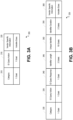
- FIG. 3A shows an example format for a unique identifier request 305 that includes an ID (identifier) query action field.
- the unique identifier request 305 may be transmitted from an access point 115 of FIG. 1 to a station 105 of FIG. 1 after the station 105 is associated with the access point 115.
- the unique identifier request 305 may include a category field 310, an ID query action field 315, and an optional vendor specific information field 320.
- an ID query action field may be included within the unique identifier request and/or unique identifier response.
- Two action frame formats are defined to allow an access point 115 to query a station 105 for a unique identifier.
- An ID query action field, in the octet field immediately after the category field differentiates the formats.
- the ID query may be sent whether or not the station 105 provided a local MAC address.
- the ID query request frame uses the action frame body format. It is transmitted from an access point to a station to request that the station provide a unique identifier that the access point may store and use for future identification of the station.
- the format of the action field in the ID query request frame is shown in FIG. 3A .
- the vendor specific information field 320 is optionally present and may include one or more vendor-specific elements.
- FIG. 3B shows an example format for a unique identifier response 325 that includes an ID query action field.
- the unique identifier response 325 may be transmitted from a station 105 to an access point 115 in response to receiving a unique identifier request from the access point 115.
- the unique identifier response 325 may include a category field 330, an ID query action field 335, an ID query response field 340, an optional identifier length field 345, an optional unique identifier field 350, an optional identifier duration 355, and an optional vendor specific information field 360.
- the ID query response frame uses the action frame body format.
- the unique identifier response 325 is transmitted from a station to an access point in response to a request that the station provide a unique non-transitory identifier.
- a value in the ID query response field may be used to identify whether the station declines to provide a unique identifier, or the station is providing a unique identifier. The station has the option to indicate that it will not provide a unique identifier value or that it will.
- the ID query response field value is 0, the identifier length field, unique identifier field, identifier duration field and vendor specific information field are not present.
- the ID query response field value is 1, the identifier length field, unique identifier field, identifier duration field and vendor specific information field are optionally present.
- the identifier length field indicates the length of the response in octets.
- the unique identifier field provides the identification value that the requesting access point may use to identify this station without regard to the MAC address used by the station in the MAC header.
- the unique identifier field 350 may have one or more minimal requirements (e.g., 16 octets, large enough to allow the use of a UUID, etc.).
- a station may indicate that the unique identifier is permanent by not including this field while including a unique identifier in the unique identifier response 325. Otherwise, the lifetime of the unique identifier is as indicated.
- the station capabilities information elements exchanged during association may include an extended capability bit to indicate whether a station can support an ID query action frame.
- the extended capability bit may be set to 1 to indicate that a station can support an ID query action frame.
- a user may direct a station to not share a permanent or semi-permanent identifier, so a station may still decline to provide a unique identifier even though it indicates support for the message.
- the vendor specific information field is optionally present when the ID query response field is 0 or 1 and includes one or more vendor-specific elements.
- FIG. 4 is a block diagram illustrating an example access point 115 operable to facilitate management of a unique identifier for a station 105.
- the access point 115 may include a subscriber interface 405, a network interface 410, a unique identifier exchange module 415, and a unique identifier data store 420.
- the station 105 may include a LAN interface 425 and a unique identifier exchange module 430.
- communications may be output to and/or received from one or more stations 105 through a subscriber interface 405.
- Wireless communications and messages comprising data, video, and/or voice communications, may be output from and/or received through the subscriber interface 405.
- the subscriber interface 405 may be configured to receive and/or output communications using various communication techniques, protocols, and standards (e.g., Wi-Fi).
- communications may be output to and/or received from one or more upstream networks (e.g., broadband access network 120 of FIG. 1 , WAN 125 of FIG. 1 , etc.) through the network interface 410.
- upstream networks e.g., broadband access network 120 of FIG. 1 , WAN 125 of FIG. 1 , etc.
- the unique identifier exchange module 415 may generate and output unique identifier request messages.
- the unique identifier exchange module 415 may receive unique identifier response messages from stations 105, and the unique identifier exchange module 415 may ignore or store unique identifiers provided by unique identifier response messages according to various limitations and/or use/storage requirements retrieved from the unique identifier response messages.
- the unique identifier exchange module 415 may store unique identifiers for one or more stations 105 within the unique identifier data store 420 (e.g., an association between a unique identifier and a station from which the unique identifier is received may be stored).
- the unique identifier provided by a unique identifier response that is received from a station may be stored as an identifier to be used to identify the specific station.
- the access point 115 may disable one or more features or services offered to the station by the access point, wherein the one or more services require the use of a consistent and unique identifier of the station.
- a station 105 may transmit communications to and receive wireless communications from an access point 115 through the LAN interface 425.
- the unique identifier exchange module 430 may receive unique identifier request messages from the access point 115 and generate and output unique identifier response messages. In embodiments, the unique identifier exchange module 430 may retrieve and/or generate a unique identifier for the station 105, and the unique identifier exchange module 430 may populate a unique identifier response message with the unique identifier for the station and/or one or more other field values (e.g., identifier duration value, vendor specific information, etc.). The unique identifier exchange module 430 may be configured with parameters and requirements (e.g., network type and/or encryption status requirements) for responding to a unique identifier request message.
- parameters and requirements e.g., network type and/or encryption status requirements
- FIG. 5 is a flowchart illustrating an example process 500 operable to facilitate managing a unique identifier recovered from a unique identifier response that is received from a station.
- the process 500 can begin after a station (e.g., station 105 of FIG. 1 ) is associated with an access point (e.g., access point 115 of FIG. 1 ).
- the unique identifier response/request messages may be facilitated by a unique identifier exchange module 415 of FIG. 4 and/or a unique identifier exchange module 430 of FIG. 4 .
- the process 500 can begin at 505, when a unique identifier request is output to a station 105.
- the access point 115 may generate and transmit a unique identifier request (e.g., unique identifier request 205 of FIG. 2A or 305 of FIG. 3A ) to the station 105.
- the unique identifier request comprises a request that the station respond with a unique identifier that is to be used by the access point for the station.
- a unique identifier response may be received from the station.
- the access point 115 may receive the unique identifier response (e.g., unique identifier response 220 of FIG. 2B or 325 of FIG. 3B ) from the station 105, and the unique identifier response may include an indication that the station either is or is not providing a unique identifier that is to be used for the station.
- the indication may be provided within a response code field 225 of FIG. 2B or ID query response field 340 of FIG. 3B .
- a determination may be made whether the unique identifier response provides a unique identifier to be used for the station.
- the access point 115 may make this determination based upon whether a unique identifier is present within the unique identifier response or based upon whether the unique identifier response provides an indication whether a unique identifier is provided by the response.
- the process 500 may proceed to 520.
- the access point 115 may store the unique identifier for the station 105.
- the access point 115 e.g., unique identifier exchange module 415 of FIG. 4
- the access point 115 may retrieve the unique identifier from the unique identifier response and store the unique identifier (e.g., within the unique identifier data store 420 of FIG. 4 ) as the identifier to be used for the station 105.
- the access point 115 may then provide a variety of features (e.g., parental controls, end user tracking, etc.) to an end user by utilizing the stored association between the station and the unique identifier that is retrieved from the unique identifier response.
- the access point 115 may enable, for the station 105, one or more features that are offered to stations for which a unique identifier is known.
- the process 500 may proceed to 525.
- the station 105 may be flagged as a station without a unique identifier.
- the access point may flag the station 105 as having declined or as being unable to provide a unique identifier other than an identifier that is already known (e.g., a MAC address of the station 105) to the access point 115.
- the access point 115 may simply do nothing in response to the determination that a unique identifier is not provided by the unique identifier response.
- FIG. 6 is a flowchart illustrating an example process 600 operable to facilitate managing a unique identifier recovered from a unique identifier response that is received from a station that supports an exchange of unique identifier messages.
- the process 600 can begin after a station (e.g., station 105 of FIG. 1 ) is associated with an access point (e.g., access point 115 of FIG. 1 ).
- Unique identifier response/request messages may be facilitated by a unique identifier exchange module 415 of FIG. 4 and/or a unique identifier exchange module 430 of FIG. 4 .
- the process 600 can begin at 605, when a unique identifier request is output to a station 105.
- the access point 115 may generate and transmit a unique identifier request (e.g., unique identifier request 205 of FIG. 2A or 305 of FIG. 3A ) to the station 105.
- the unique identifier request may include a request that the station respond with a unique identifier that is to be used by the access point for the station.
- a unique identifier response may be received from the station.
- the access point 115 may receive the unique identifier response (e.g., unique identifier response 220 of FIG. 2B or 325 of FIG. 3B ) from the station 105, and the unique identifier response may include an indication whether the station 105 supports the creation and delivery of a unique identifier to the access point 115 (e.g., the indication may be provided within a response code field 225 of FIG. 2B , an ID query action field 335 of FIG. 3B , an ID query response field 340 of FIG. 3B , or other field of the response).
- the unique identifier response may include an indication that the station either is or is not providing a unique identifier that is to be used for the station.
- the indication may be provided within a response code field 225 of FIG. 2B or ID query response field 340 of FIG. 3B .
- a determination may be made whether the station supports the creation and delivery of a unique identifier to the access point. For example, the access point 115 may determine whether the station 105 can provide a unique identifier (other than a known identifier such as a MAC address) based upon an indication provided within the unique identifier response. In embodiments, this determination may be made based upon the value of a capability bit. For example, if the capability bit is not set, the access point 115 may not ask the station 105 for a unique identifier.
- the process 600 may proceed to 620.
- the station 105 may be flagged as a station without a unique identifier.
- the access point 115 may flag the station 105 as being unable to provide a unique identifier other than an identifier that is already known (e.g., a MAC address of the station 105) to the access point 115.
- the access point 115 may simply do nothing in response to the determination that the station cannot provide a unique identifier.
- the process 600 may proceed to 625.
- a determination may be made whether the unique identifier response provides a unique identifier to be used for the station.
- the access point 115 may make this determination based upon whether a unique identifier is present within the unique identifier response or based upon whether the unique identifier response provides an indication whether a unique identifier is provided by the response.
- the process 600 may proceed to 620.
- the station 105 may be flagged as a station without a unique identifier.
- the access point may flag the station 105 as having declined or as being unable to provide a unique identifier other than an identifier that is already known (e.g., a MAC address of the station 105) to the access point 115.
- the access point 115 may simply do nothing in response to the determination that a unique identifier is not provided by the unique identifier response.
- the process 600 may proceed to 630.
- the access point 115 may store the unique identifier for the station 105.
- the access point 115 e.g., unique identifier exchange module 415 of FIG. 4
- the access point 115 may retrieve the unique identifier from the unique identifier response and store the unique identifier (e.g., within the unique identifier data store 420 of FIG. 4 ) as the identifier to be used for the station 105.
- the access point 115 may then provide a variety of features (e.g., parental controls, end user tracking, etc.) to an end user by utilizing the stored association between the station and the unique identifier that is retrieved from the unique identifier response.
- the access point 115 may enable, for the station 105, one or more features that are offered to stations for which a unique identifier is known.
- FIG. 7 is a flowchart illustrating an example process 700 operable to facilitate managing a unique identifier recovered from a unique identifier response that is received from a station, wherein the unique identifier response includes an identifier duration field.
- the process 700 can begin after a station (e.g., station 105 of FIG. 1 ) is associated with an access point (e.g., access point 115 of FIG. 1 ).
- Unique identifier response/request messages may be facilitated by a unique identifier exchange module 415 of FIG. 4 and/or a unique identifier exchange module 430 of FIG. 4 .
- the process 700 can begin at 705, when a unique identifier request is output to a station 105.
- the access point 115 may generate and transmit a unique identifier request (e.g., unique identifier request 205 of FIG. 2A or 305 of FIG. 3A ) to the station 105.
- the unique identifier request may include a request that the station respond with a unique identifier that is to be used by the access point for the station.
- a unique identifier response may be received from the station.
- the access point 115 may receive the unique identifier response (e.g., unique identifier response 220 of FIG. 2B or 325 of FIG. 3B ) from the station 105, and the unique identifier response may include an indication that the station either is or is not providing a unique identifier that is to be used for the station.
- the indication may be provided within a response code field 225 of FIG. 2B or ID query response field 340 of FIG. 3B .
- a determination may be made whether the unique identifier response provides a unique identifier to be used for the station.
- the access point 115 may make this determination based upon whether a unique identifier is present within the unique identifier response or based upon whether the unique identifier response provides an indication whether a unique identifier is provided by the response.
- the process 700 may proceed to 720.
- the station 105 may be flagged as a station without a unique identifier.
- the access point may flag the station 105 as having declined or as being unable to provide a unique identifier other than an identifier that is already known (e.g., a MAC address of the station 105) to the access point 115.
- the access point 115 may simply do nothing in response to the determination that a unique identifier is not provided by the unique identifier response.
- the process 700 may proceed to 725.
- a determination may be made whether an identifier duration is provided within the unique identifier response.
- the unique identifier response may include an identifier duration field (e.g., identifier duration field 240 of FIG. 2B or identifier duration field 355 of FIG. 3B ). If the identifier duration field has a value of zero (0) or is otherwise left blank, the access point 115 (e.g., the unique identifier exchange module 415) may determine that no identifier duration is provided. If the identifier duration field has a value other than zero (0), the access point 115 (e.g., the unique identifier exchange module 415) may determine that an identifier duration is provided.
- the process 700 may proceed to 730.
- the access point 115 may store the unique identifier for the station 105 for a default duration.
- the access point 115 may store the unique identifier for the station for a default duration, the default duration being the duration of a current association between the station 105 and the access point 115, permanently storing the unique identifier at the access point 115, or some other duration of time that is set as the default duration.
- the access point 115 e.g., unique identifier exchange module 415 of FIG.
- the access point 115 may retrieve the unique identifier from the unique identifier response and store the unique identifier (e.g., within the unique identifier data store 420 of FIG. 4 ) as the identifier to be used for the station 105. It will be appreciated that the access point 115 may then provide a variety of features (e.g., parental controls, end user tracking, etc.) to an end user by utilizing the stored association between the station and the unique identifier that is retrieved from the unique identifier response. For example, the access point 115 may enable, for the station 105, one or more features that are offered to stations for which a unique identifier is known.
- features e.g., parental controls, end user tracking, etc.
- the process 700 may proceed to 735.
- the access point 115 may store the unique identifier for the station 105 for the specific duration that is provided by the unique identifier response. For example, a value within the identifier duration field of the unique identifier response may indicate a duration of time (e.g., number of seconds, minutes, etc.) for which the unique identifier is to be used by the access point 115, and the access point 115 may only use the unique identifier for the station for the indicated duration of time.
- the access point 115 e.g., unique identifier exchange module 415 of FIG.
- the access point 115 may retrieve the unique identifier from the unique identifier response and store the unique identifier (e.g., within the unique identifier data store 420 of FIG. 4 ) as the identifier to be used for the station 105. It will be appreciated that the access point 115 may then provide a variety of features (e.g., parental controls, end user tracking, etc.) to an end user by utilizing the stored association between the station and the unique identifier that is retrieved from the unique identifier response. For example, the access point 115 may enable, for the station 105, one or more features that are offered to stations for which a unique identifier is known.
- features e.g., parental controls, end user tracking, etc.
- FIG. 8 is a flowchart illustrating an example process 800 operable to facilitate managing a unique identifier recovered from a unique identifier response that is received from a station, wherein the access point permanently stores the unique identifier when an identifier duration response is not provided.
- the process 800 can begin after a station (e.g., station 105 of FIG. 1 ) is associated with an access point (e.g., access point 115 of FIG. 1 ).
- Unique identifier response/request messages may be facilitated by a unique identifier exchange module 415 of FIG. 4 and/or a unique identifier exchange module 430 of FIG. 4 .
- the process 800 can begin at 805, when a unique identifier request is output to a station 105.
- a unique identifier response may be received from the station.
- the access point 115 may receive the unique identifier response (e.g., unique identifier response 220 of FIG. 2B or 325 of FIG. 3B ) from the station 105, and the unique identifier response may include an indication that the station either is or is not providing a unique identifier that is to be used for the station.
- the indication may be provided within a response code field 225 of FIG. 2B or ID query response field 340 of FIG. 3B .
- the access point 115 may retrieve the unique identifier from the unique identifier response and store the unique identifier (e.g., within the unique identifier data store 420 of FIG. 4 ) as the identifier to be used for the station 105. It will be appreciated that the access point 115 may then provide a variety of features (e.g., parental controls, end user tracking, etc.) to an end user by utilizing the stored association between the station and the unique identifier that is retrieved from the unique identifier response. For example, the access point 115 may enable, for the station 105, one or more features that are offered to stations for which a unique identifier is known.
- features e.g., parental controls, end user tracking, etc.
- the station 105 may determine the type of network (e.g., private network, public network, hotspot network, etc.) with which the station is associated and/or whether the network is encrypted or unencrypted.
- the type of network e.g., private network, public network, hotspot network, etc.
- a determination may be made whether a unique identifier generation feature is enabled for the identified network type and/or encryption status.
- the station 105 e.g., the unique identifier exchange module 430
- the station 105 may be configured with, for example, a filter to only allow the station 105 to provide an access point 115 with a unique identifier when the network with which the station 105 is associated is of a certain type and/or utilizing a certain encryption status or level.
- the station 105 may be configured to only provide an access point with a unique identifier when the network with which the station is associated is a private network and/or an encrypted network.
- the process 900 may proceed to 925.
- a unique identifier response may be generated, wherein the unique identifier response includes a unique identifier for the station.
- the station 105 may be configured to generate a unique identifier (e.g., random generation, preconfigured identifier, user input identifier, etc.) to be used by the access point 115.
- the station 105 may populate one or more other fields of the unique identifier response with values to indicate additional requirements/limitations of the use of the unique identifier by the access point 115 (e.g., identifier duration values, vendor specific options, etc.).
- the unique identifier response generated by the station 105 may be output to the access point 115 from which the unique identifier request was received.
- FIG. 10 is a flowchart illustrating an example process 1000 operable to facilitate managing a unique identifier recovered from a unique identifier response that is received from a station following a second or subsequent association between an access point and the station.
- the process 1000 can begin after a station (e.g., station 105 of FIG. 1 ) is associated with an access point (e.g., access point 115 of FIG. 1 ).
- the association between the access point 115 and the station 105 may be an association that occurs after a previous association between the access point 115 and the station 105 has ended.
- the station 105 may be using a different identifier (e.g., rMAC) than the station 105 used during a previous association with the access point 115, but the station 105 may, during the current association, use the same unique identifier (e.g., the unique identifier provided in a unique identifier response) as the one used by the station 105 during a previous association with the access point 115.
- the unique identifier response/request messages may be facilitated by a unique identifier exchange module 415 of FIG. 4 and/or a unique identifier exchange module 430 of FIG. 4 .
- the process 1000 can begin at 1005, when a unique identifier request is output to a station 105.
- the access point 115 may generate and transmit a unique identifier request (e.g., unique identifier request 205 of FIG. 2A or 305 of FIG. 3A ) to the station 105.
- the unique identifier request comprises a request that the station respond with a unique identifier that is to be used by the access point for the station.
- a unique identifier response may be received from the station.
- the access point 115 may receive the unique identifier response (e.g., unique identifier response 220 of FIG. 2B or 325 of FIG. 3B ) from the station 105, and the unique identifier response may include an indication that the station either is or is not providing a unique identifier that is to be used for the station.
- the indication may be provided within a response code field 225 of FIG. 2B or ID query response field 340 of FIG. 3B .
- a determination may be made whether the unique identifier response provides a unique identifier to be used for the station.
- the access point 115 may make this determination based upon whether a unique identifier is present within the unique identifier response or based upon whether the unique identifier response provides an indication whether a unique identifier is provided by the response.
- the process 1000 may proceed to 1025.
- a determination may be made whether the provided unique identifier is already stored at the access point 115.
- the access point 115 may have stored the unique identifier for the station 105 during a previous association between the station 105 and the access point 115, wherein the previous association has ended.
- the process 1000 may proceed to 1030.
- the access point 115 may store the unique identifier for the station 105.
- the access point 115 e.g., unique identifier exchange module 415 of FIG. 4
- the access point 115 may retrieve the unique identifier from the unique identifier response and store the unique identifier (e.g., within the unique identifier data store 420 of FIG. 4 ) as the identifier to be used for the station 105.
- the access point 115 may then provide a variety of features (e.g., parental controls, end user tracking, etc.) to an end user by utilizing the stored association between the station and the unique identifier that is retrieved from the unique identifier response.
- the access point 115 may enable, for the station 105, one or more features that are offered to stations for which a unique identifier is known.
- the process 1000 may proceed to 1035.
- the access point 115 may use authorization(s) and/or behavior(s) used during a previous association between the access point 115 and the station 105.
- the access point 115 may use authorization(s) and/or behaviors, and/or enable one or more services or features that were used and/or enabled during a previous association between the access point 115 and the station 105.
- the access point 115 may use authorization(s) and/or behaviors, and/or enable one or more services or features that were used and/or enabled during a previous association between the access point 115 and the station 105 without requesting corresponding authorization(s) and/or permission(s) from the station 105 during the current association between the access point 115 and the station 105.
- FIG. 11 is a block diagram of a hardware configuration 1100 operable to facilitate management of a unique identifier for a station.
- the hardware configuration 1100 can include a processor 1110, a memory 1120, a storage device 1130, and an input/output device 1140. Each of the components 1110, 1120, 1130, and 1140 can, for example, be interconnected using a system bus 1150.
- the processor 1110 can be capable of processing instructions for execution within the hardware configuration 1100. In one implementation, the processor 1110 can be a single-threaded processor. In another implementation, the processor 1110 can be a multi-threaded processor.
- the processor 1110 can be capable of processing instructions stored in the memory 1120 or on the storage device 1130.
- the memory 1120 can store information within the hardware configuration 1100.
- the memory 1120 can be a computer-readable medium.
- the memory 1120 can be a volatile memory unit.
- the memory 1120 can be a non-volatile memory unit.
- the input/output device can include driver devices configured to send communications to, and receive communications from one or more networks (e.g., local network 110 of FIG. 1 , broadband access network 120 of FIG. 1 , WAN 125 of FIG. 1 , etc.).
- networks e.g., local network 110 of FIG. 1 , broadband access network 120 of FIG. 1 , WAN 125 of FIG. 1 , etc.
- a network parameter can comprise a network identifier or information associated with the establishment of the secure connection.
- the station can identify the network indicated by the network identifier and then confirm or verify that the network is actually the network indicated by the network identifier (for example, not a spoofing attempt) based on the ability to establish the secure connection.
- a user with a station can transition to a particular network location, such as a store with a network identifier of "STORE-A NETWORK".
- the station can detect that the network (or the Wi-Fi connection) claims to be the network associated with the particular network location (for example, "STORE-A NETWORK").
- the access point 115 can provide network information to the station 105.
- the network information can comprise information specifying a network or a network access for the station 105.
- the network information can be provided prior to or without associating the access point 115 and the station 105.
- FIG. 13 is a flowchart illustrating an example process 1300 operable to facilitate communicating a unique identifier via a secure connection.
- the process 1300 begins prior to a station (for example, a station 105 of FIG. 1 ) associating with an access point (for example, access point 115 of FIG. 1 ).
- the unique identifier response and/or unique identifier request may be facilitated by a unique identifier exchange module 415 of FIG. 4 and/or a unique identifier exchange module 430 of station 105 of FIG. 4 .
- the process 1300 can begin at 1305, when a unique identifier request is output to a station 105 from an access point 115.
- a secure connection (such as any of a secured protected link, secured communication path, secure tunnel, any other secure connection, or any combination thereof) is established between the access point and the station.
- a secure tunnel such as a pre-association security negotiation (PASN) tunnel
- PASN pre-association security negotiation
- the station 105 can determine based on the unique identifier request from the access point 115 that a secure connection should be established or is required between the access point 115 and the station 105 so that a unique identifier associated with the station 105 can be sent to the access point 115 via the secure connection.
- PASN pre-association security negotiation
- the station 105 can initiate the secure connection with the access point 115 and once the secure connection is established the station 105 can send the unique identifier to the access point 115. Sending the unique identifier over the secure connection ensures that the unique identifier is not intercepted by an unauthorized, malicious, or otherwise unintended device, network, or system.
- the access point can receive the unique identifier response (for example, a unique identifier response 220 of FIG. 2B or 325 of FIG. 3B ) from the station via the secure connection, for example, as discussed with reference to step 120 of FIG. 12 .
- the unique identifier response comprises a unique identifier that is to be used by the access point for the station.
- the station can determine that the unique identifier of or associated with the station should be sent to the access point based on the unique identifier request from the access point 115, the establishment of the secure connection, or both.
- Steps 1315, 1320, and 1325 are similar to or the same as steps 515, 520, and 525 as discussed with reference to FIG. 5 .
- the access point can provide one or more features associated with the received unique identifier from the station, for example, as discussed with reference to step 1222 of FIG. 12 .
- the unique identifier exchange module 415 of the access point 115 can facilitate the use of one or more unique identifiers so as to enable or disable one or more services and/or one or more features provided to corresponding one or more stations 105.
- the access point 115 can provide one or more benefits associated with a business (such as a retail business or an online business) or entity, for example, one or more frequent shopper benefits, to a user of a station 105 based on the unique identifier received via the unsolicited unique identifier response from the station 105.
- a business such as a retail business or an online business
- entity for example, one or more frequent shopper benefits
- the access point 115 can disable a service or prevent access to a service by a user of the corresponding station 105.
- the access point 115 can associate the station 105 with the access point 115, determine that the station 105 should be within the network and facilitate connectivity to the network, determining that the station 115 should not be within the network, provide access to a service or feature associated with an application or a network resource, such as a frequent shopper service, provide an enabled or disabled access to any one or more services or one or more features, or any combination thereof.
- a service or feature associated with an application or a network resource such as a frequent shopper service
- any one or more of steps 715, 720, 725, 730, and 735 of FIG. 7 , steps 815, 820, 825, 830, 835, 840, and 845 of FIG. 8 , and steps 1015, 1020, 1025, 1030, 1035 of FIG. 10 can be performed. While the steps of FIGS. 5-10 and 12-13 are presented in a certain order, the present disclosure contemplates that any one or more steps can be performed simultaneously, substantially simultaneously, repeatedly, or not at all (omitted).
- Such instructions can, for example, comprise interpreted instructions, such as script instructions, e.g., JavaScript or ECMAScript instructions, or executable code, or other instructions stored in a computer readable medium.
- a computer program (also known as a program, software, software application, script, or code) can be written in any form of programming language, including compiled or interpreted languages, or declarative or procedural languages, and it can be deployed in any form, including as a stand-alone program or as a module, component, subroutine, or other unit suitable for use in a computing environment.
- a computer program does not necessarily correspond to a file in a file system.
- a program can be stored in a portion of a file that holds other programs or data (e.g., one or more scripts stored in a markup language document), in a single file dedicated to the program in question, or in multiple coordinated files (e.g., files that store one or more modules, sub programs, or portions of code).
- a computer program can be deployed to be executed on one computer or on multiple computers that are located at one site or distributed across multiple sites and interconnected by a communication network.
- the processes and logic flows described in this specification are performed by one or more programmable processors executing one or more computer programs to perform functions by operating on input data and generating output thereby tying the process to a particular machine (e.g., a machine programmed to perform the processes described herein).
- the processes and logic flows can also be performed by, and apparatus can also be implemented as, special purpose logic circuitry, e.g., an FPGA (field programmable gate array) or an ASIC (application specific integrated circuit).
- Computer readable media suitable for storing computer program instructions and data include all forms of non-volatile memory, media and memory devices, including by way of example semiconductor memory devices (e.g., EPROM, EEPROM, and flash memory devices); magnetic disks (e.g., internal hard disks or removable disks); magneto optical disks; and CD ROM and DVD ROM disks.
- semiconductor memory devices e.g., EPROM, EEPROM, and flash memory devices
- magnetic disks e.g., internal hard disks or removable disks
- magneto optical disks e.g., CD ROM and DVD ROM disks.
- the processor and the memory can be supplemented by, or incorporated in, special purpose logic circuitry.
Landscapes
- Engineering & Computer Science (AREA)
- Computer Security & Cryptography (AREA)
- Computer Networks & Wireless Communication (AREA)
- Signal Processing (AREA)
- Computer Hardware Design (AREA)
- Computing Systems (AREA)
- General Engineering & Computer Science (AREA)
- Mobile Radio Communication Systems (AREA)
- Small-Scale Networks (AREA)
Claims (15)
- Procédé (1300) permettant à un point d'accès (115) de fournir une ou plusieurs caractéristiques à
une station (105), le procédé (1300) comprenant :la fourniture en sortie (1305) d'une demande d'identifiant unique à la station (105) avant l'association à la station (105), dans lequel la demande d'identifiant unique comprend une demande que la station (105) réponde avec un identifiant unique qui doit être utilisé par le point d'accès (115) pour la station (105) ;l'établissement (1307) en réponse à la fourniture en sortie de la demande d'identifiant unique,d'une connexion sécurisée avec la station (105) :la réception (1310) d'une réponse d'identifiant unique provenant de la station (105) via la connexion sécurisée ;la détermination que la station (105) prend en charge la création et la fourniture en sortie de l'identifiant unique sur la base d'une indication fournie dans la réponse d'identifiant unique ;la détermination (1315) que la réponse d'identifiant unique fournit l'identifiant unique à utiliser pour la station (105), dans lequel l'identifiant unique est différent d'une adresse de commande d'accès au support (MAC) de la station (105) ; etla fourniture (1222) d'un accès aux une ou plusieurs caractéristiques à la station (105) sur la base de l'identifiant unique reçu dans la réponse d'identifiant unique. - Procédé selon la revendication 1, dans lequel
l'établissement de la connexion sécurisée avec la station comprend l'échange d'une ou plusieurs clés de chiffrement avec la station. - Procédé selon la revendication 1, dans lequel
l'établissement de la connexion sécurisée comprend une négociation de sécurité de pré-association. - Procédé selon la revendication 1, dans lequel l'identifiant unique comprend l'un quelconque parmi un identifiant unique universel, un nombre aléatoire, un nombre pseudo-aléatoire, un identifiant préconfiguré, ou une combinaison quelconque de ceux-ci.
- Procédé selon la revendication 1, comprenant en outre :
l'association de la station au point d'accès. - Procédé selon la revendication 5, comprenant en outre :
après l'association de la station au point d'accès, la fourniture à la station d'informations de réseau spécifiant un réseau ou un accès au réseau pour la station. - Procédé selon la revendication 1, dans lequel la fourniture de l'accès aux une ou plusieurs caractéristiques à la station sur la base de l'identifiant unique reçu dans la réponse d'identifiant unique comprend la fourniture d'un ou de plusieurs avantages associés à un commerce de détail ou à un commerce en ligne.
- Point d'accès (115) pour fournir l'accès à une ou plusieurs caractéristiques à une station (105), le point d'accès (115) comprenant :une mémoire (1120) stockant une ou plusieurs instructions lisibles par ordinateur ; etun processeur (1110) configuré pour exécuter les une ou plusieurs instructions lisibles par ordinateur pour :fournir en sortie une demande d'identifiant unique à la station (105) avant l'association à la station (105), dans lequel la demande d'identifiant unique comprend une demande que la station (105) réponde avec un identifiant unique qui doit être utilisé par le point d'accès (115) pour la station (105) ;établir, en réponse à la fourniture en sortie de la demande d'identifiant unique, une connexion sécurisée avec la station (105) ;recevoir une réponse d'identifiant unique provenant de la station (105) via la connexion sécurisée ;déterminer que la station (105) prend en charge la création et la fourniture en sortie de l'identifiant unique sur la base d'une indication fournie dans la réponse d'identifiant unique ;déterminer que la réponse d'identifiant unique fournit l'identifiant unique à utiliser pour la station (105), dans lequel l'identifiant unique est différent d'une adresse de commande d'accès au support (MAC) de la station (105) ; etfournir un accès aux une ou plusieurs caractéristiques à la station (105) sur la base de l'identifiant unique reçu dans la réponse d'identifiant unique.
- Point d'accès selon la revendication 8, dans lequel l'établissement de la connexion sécurisée avec la station comprend l'échange d'une ou plusieurs clés de chiffrement avec la station.
- Point d'accès selon la revendication 8, dans lequel l'établissement de la connexion sécurisée comprend une négociation de sécurité de pré-association.
- Point d'accès selon la revendication 8, dans lequel l'identifiant unique comprend l'un quelconque parmi un identifiant unique universel, un nombre aléatoire, un nombre pseudo-aléatoire, un identifiant préconfiguré, ou une combinaison quelconque de ceux-ci.
- Point d'accès selon la revendication 1, dans lequel le processeur est en outre configuré pour exécuter les une ou plusieurs instructions lisibles par ordinateur pour :
associer la station avec le point d'accès. - Point d'accès selon la revendication 12, dans lequel le processeur est en outre configuré pour exécuter les une ou plusieurs instructions lisibles par ordinateur pour :
après l'association de la station au point d'accès, fournir à la station d'informations de réseau spécifiant un réseau ou un accès au réseau pour la station. - Point d'accès selon la revendication 1, dans lequel la fourniture de l'accès aux une ou plusieurs caractéristiques à la station sur la base de l'identifiant unique reçu dans la réponse d'identifiant unique comprend la fourniture d'un ou de plusieurs avantages associés à un commerce de détail ou à un commerce en ligne.
- Support non transitoire lisible par ordinateur (1120) d'un point d'accès (115) stockant une ou plusieurs instructions lisibles par ordinateur pour fournir l'accès à une ou plusieurs caractéristiques à une station (105), les une ou plusieurs instructions lisibles par ordinateur qui, lorsqu'elles sont exécutées par un processeur (1110) du point d'accès (115), amènent le point d'accès (115) à réaliser le procédé selon l'une quelconque des revendications 1 à 7.
Applications Claiming Priority (2)
| Application Number | Priority Date | Filing Date | Title |
|---|---|---|---|
| US17/406,692 US12047866B2 (en) | 2019-01-15 | 2021-08-19 | Protected pre-association device identification |
| PCT/US2022/029987 WO2023022772A1 (fr) | 2021-08-19 | 2022-05-19 | Identification de station de pré-association protégée |
Publications (2)
| Publication Number | Publication Date |
|---|---|
| EP4388764A1 EP4388764A1 (fr) | 2024-06-26 |
| EP4388764B1 true EP4388764B1 (fr) | 2025-07-02 |
Family
ID=82058380
Family Applications (1)
| Application Number | Title | Priority Date | Filing Date |
|---|---|---|---|
| EP22730652.9A Active EP4388764B1 (fr) | 2021-08-19 | 2022-05-19 | Identification de station de pré-association protégée |
Country Status (5)
| Country | Link |
|---|---|
| EP (1) | EP4388764B1 (fr) |
| CA (1) | CA3229256A1 (fr) |
| MX (1) | MX2024002134A (fr) |
| TW (1) | TW202329711A (fr) |
| WO (1) | WO2023022772A1 (fr) |
Family Cites Families (3)
| Publication number | Priority date | Publication date | Assignee | Title |
|---|---|---|---|---|
| US20160135041A1 (en) * | 2014-11-10 | 2016-05-12 | Qualcomm Incorporated | Wi-fi privacy in a wireless station using media access control address randomization |
| US11109302B2 (en) * | 2019-01-15 | 2021-08-31 | Arris Enterprises Llc | Handling of unique identifiers for stations |
| US11706255B2 (en) * | 2019-07-29 | 2023-07-18 | Cable Television Laboratories, Inc. | Systems and methods for obtaining permanent MAC addresses |
-
2022
- 2022-05-19 MX MX2024002134A patent/MX2024002134A/es unknown
- 2022-05-19 EP EP22730652.9A patent/EP4388764B1/fr active Active
- 2022-05-19 WO PCT/US2022/029987 patent/WO2023022772A1/fr not_active Ceased
- 2022-05-19 CA CA3229256A patent/CA3229256A1/fr active Pending
- 2022-08-19 TW TW111131277A patent/TW202329711A/zh unknown
Also Published As
| Publication number | Publication date |
|---|---|
| MX2024002134A (es) | 2024-05-03 |
| CA3229256A1 (fr) | 2023-02-23 |
| WO2023022772A1 (fr) | 2023-02-23 |
| EP4388764A1 (fr) | 2024-06-26 |
| TW202329711A (zh) | 2023-07-16 |
Similar Documents
| Publication | Publication Date | Title |
|---|---|---|
| US12047866B2 (en) | Protected pre-association device identification | |
| US12041529B2 (en) | Handling of unique identifiers for stations | |
| US12137345B2 (en) | Using a network requirements field to provide a station access to a network | |
| US12317169B2 (en) | Protected pre-association station identification | |
| US20240048985A1 (en) | Secure password sharing for wireless networks | |
| US12495451B2 (en) | Method and mechanism to assign a unique identifier to a station from an access point | |
| US12047867B2 (en) | Unsolicited handling of unique identifier for stations | |
| EP4388764B1 (fr) | Identification de station de pré-association protégée | |
| EP4388763B1 (fr) | Gestion non sollicitée d'identifiants uniques pour des stations | |
| US12356192B2 (en) | Communicating types of private identifiers supported in a WLAN network | |
| US12317069B2 (en) | Protected pre-association station identification | |
| EP4424052A1 (fr) | Utilisation d'un champ d'exigences de réseau pour fournir un accès de station à un réseau | |
| WO2023136994A1 (fr) | Communication de types d'identifiants privés pris en charge dans un réseau wlan | |
| WO2023215185A1 (fr) | Procédé et mécanisme pour attribuer un identifiant unique à une station à partir d'un point d'accès | |
| WO2023101835A1 (fr) | Identification de station de pré-association protégée | |
| WO2023101834A1 (fr) | Identification de station de pré-association protégée |
Legal Events
| Date | Code | Title | Description |
|---|---|---|---|
| STAA | Information on the status of an ep patent application or granted ep patent |
Free format text: STATUS: UNKNOWN |
|
| STAA | Information on the status of an ep patent application or granted ep patent |
Free format text: STATUS: THE INTERNATIONAL PUBLICATION HAS BEEN MADE |
|
| PUAI | Public reference made under article 153(3) epc to a published international application that has entered the european phase |
Free format text: ORIGINAL CODE: 0009012 |
|
| STAA | Information on the status of an ep patent application or granted ep patent |
Free format text: STATUS: REQUEST FOR EXAMINATION WAS MADE |
|
| 17P | Request for examination filed |
Effective date: 20240304 |
|
| AK | Designated contracting states |
Kind code of ref document: A1 Designated state(s): AL AT BE BG CH CY CZ DE DK EE ES FI FR GB GR HR HU IE IS IT LI LT LU LV MC MK MT NL NO PL PT RO RS SE SI SK SM TR |
|
| RAP1 | Party data changed (applicant data changed or rights of an application transferred) |
Owner name: RUCKUS IP HOLDINGS LLC |
|
| DAV | Request for validation of the european patent (deleted) | ||
| DAX | Request for extension of the european patent (deleted) | ||
| GRAP | Despatch of communication of intention to grant a patent |
Free format text: ORIGINAL CODE: EPIDOSNIGR1 |
|
| STAA | Information on the status of an ep patent application or granted ep patent |
Free format text: STATUS: GRANT OF PATENT IS INTENDED |
|
| INTG | Intention to grant announced |
Effective date: 20250224 |
|
| RIC1 | Information provided on ipc code assigned before grant |
Ipc: H04W 12/75 20210101ALI20250214BHEP Ipc: H04L 61/5038 20220101ALI20250214BHEP Ipc: H04L 9/40 20220101ALI20250214BHEP Ipc: H04W 12/02 20090101AFI20250214BHEP |
|
| GRAS | Grant fee paid |
Free format text: ORIGINAL CODE: EPIDOSNIGR3 |
|
| GRAA | (expected) grant |
Free format text: ORIGINAL CODE: 0009210 |
|
| STAA | Information on the status of an ep patent application or granted ep patent |
Free format text: STATUS: THE PATENT HAS BEEN GRANTED |
|
| AK | Designated contracting states |
Kind code of ref document: B1 Designated state(s): AL AT BE BG CH CY CZ DE DK EE ES FI FR GB GR HR HU IE IS IT LI LT LU LV MC MK MT NL NO PL PT RO RS SE SI SK SM TR |
|
| REG | Reference to a national code |
Ref country code: GB Ref legal event code: FG4D |
|
| REG | Reference to a national code |
Ref country code: CH Ref legal event code: EP |
|
| REG | Reference to a national code |
Ref country code: DE Ref legal event code: R096 Ref document number: 602022016939 Country of ref document: DE |
|
| REG | Reference to a national code |
Ref country code: IE Ref legal event code: FG4D |
|
| REG | Reference to a national code |
Ref country code: NL Ref legal event code: MP Effective date: 20250702 |
|
| PG25 | Lapsed in a contracting state [announced via postgrant information from national office to epo] |
Ref country code: PT Free format text: LAPSE BECAUSE OF FAILURE TO SUBMIT A TRANSLATION OF THE DESCRIPTION OR TO PAY THE FEE WITHIN THE PRESCRIBED TIME-LIMIT Effective date: 20251103 |
|
| PG25 | Lapsed in a contracting state [announced via postgrant information from national office to epo] |
Ref country code: NL Free format text: LAPSE BECAUSE OF FAILURE TO SUBMIT A TRANSLATION OF THE DESCRIPTION OR TO PAY THE FEE WITHIN THE PRESCRIBED TIME-LIMIT Effective date: 20250702 |
|
| REG | Reference to a national code |
Ref country code: AT Ref legal event code: MK05 Ref document number: 1810698 Country of ref document: AT Kind code of ref document: T Effective date: 20250702 |
|
| PG25 | Lapsed in a contracting state [announced via postgrant information from national office to epo] |
Ref country code: IS Free format text: LAPSE BECAUSE OF FAILURE TO SUBMIT A TRANSLATION OF THE DESCRIPTION OR TO PAY THE FEE WITHIN THE PRESCRIBED TIME-LIMIT Effective date: 20251102 |
|
| PG25 | Lapsed in a contracting state [announced via postgrant information from national office to epo] |
Ref country code: NO Free format text: LAPSE BECAUSE OF FAILURE TO SUBMIT A TRANSLATION OF THE DESCRIPTION OR TO PAY THE FEE WITHIN THE PRESCRIBED TIME-LIMIT Effective date: 20251002 |
|
| REG | Reference to a national code |
Ref country code: LT Ref legal event code: MG9D |
|
| PG25 | Lapsed in a contracting state [announced via postgrant information from national office to epo] |
Ref country code: AT Free format text: LAPSE BECAUSE OF FAILURE TO SUBMIT A TRANSLATION OF THE DESCRIPTION OR TO PAY THE FEE WITHIN THE PRESCRIBED TIME-LIMIT Effective date: 20250702 |
|
| PG25 | Lapsed in a contracting state [announced via postgrant information from national office to epo] |
Ref country code: FI Free format text: LAPSE BECAUSE OF FAILURE TO SUBMIT A TRANSLATION OF THE DESCRIPTION OR TO PAY THE FEE WITHIN THE PRESCRIBED TIME-LIMIT Effective date: 20250702 |
|
| PG25 | Lapsed in a contracting state [announced via postgrant information from national office to epo] |
Ref country code: HR Free format text: LAPSE BECAUSE OF FAILURE TO SUBMIT A TRANSLATION OF THE DESCRIPTION OR TO PAY THE FEE WITHIN THE PRESCRIBED TIME-LIMIT Effective date: 20250702 |
|
| PG25 | Lapsed in a contracting state [announced via postgrant information from national office to epo] |
Ref country code: GR Free format text: LAPSE BECAUSE OF FAILURE TO SUBMIT A TRANSLATION OF THE DESCRIPTION OR TO PAY THE FEE WITHIN THE PRESCRIBED TIME-LIMIT Effective date: 20251003 |
|
| PG25 | Lapsed in a contracting state [announced via postgrant information from national office to epo] |
Ref country code: CZ Free format text: LAPSE BECAUSE OF FAILURE TO SUBMIT A TRANSLATION OF THE DESCRIPTION OR TO PAY THE FEE WITHIN THE PRESCRIBED TIME-LIMIT Effective date: 20250702 Ref country code: SE Free format text: LAPSE BECAUSE OF FAILURE TO SUBMIT A TRANSLATION OF THE DESCRIPTION OR TO PAY THE FEE WITHIN THE PRESCRIBED TIME-LIMIT Effective date: 20250702 |
|
| PG25 | Lapsed in a contracting state [announced via postgrant information from national office to epo] |
Ref country code: LV Free format text: LAPSE BECAUSE OF FAILURE TO SUBMIT A TRANSLATION OF THE DESCRIPTION OR TO PAY THE FEE WITHIN THE PRESCRIBED TIME-LIMIT Effective date: 20250702 |
|
| PG25 | Lapsed in a contracting state [announced via postgrant information from national office to epo] |
Ref country code: PL Free format text: LAPSE BECAUSE OF FAILURE TO SUBMIT A TRANSLATION OF THE DESCRIPTION OR TO PAY THE FEE WITHIN THE PRESCRIBED TIME-LIMIT Effective date: 20250702 Ref country code: BG Free format text: LAPSE BECAUSE OF FAILURE TO SUBMIT A TRANSLATION OF THE DESCRIPTION OR TO PAY THE FEE WITHIN THE PRESCRIBED TIME-LIMIT Effective date: 20250702 |
|
| PG25 | Lapsed in a contracting state [announced via postgrant information from national office to epo] |
Ref country code: RS Free format text: LAPSE BECAUSE OF FAILURE TO SUBMIT A TRANSLATION OF THE DESCRIPTION OR TO PAY THE FEE WITHIN THE PRESCRIBED TIME-LIMIT Effective date: 20251002 |
|
| PG25 | Lapsed in a contracting state [announced via postgrant information from national office to epo] |
Ref country code: ES Free format text: LAPSE BECAUSE OF FAILURE TO SUBMIT A TRANSLATION OF THE DESCRIPTION OR TO PAY THE FEE WITHIN THE PRESCRIBED TIME-LIMIT Effective date: 20250702 |
|
| PG25 | Lapsed in a contracting state [announced via postgrant information from national office to epo] |
Ref country code: SM Free format text: LAPSE BECAUSE OF FAILURE TO SUBMIT A TRANSLATION OF THE DESCRIPTION OR TO PAY THE FEE WITHIN THE PRESCRIBED TIME-LIMIT Effective date: 20250702 |
|
| PG25 | Lapsed in a contracting state [announced via postgrant information from national office to epo] |
Ref country code: DK Free format text: LAPSE BECAUSE OF FAILURE TO SUBMIT A TRANSLATION OF THE DESCRIPTION OR TO PAY THE FEE WITHIN THE PRESCRIBED TIME-LIMIT Effective date: 20250702 |
|
| PG25 | Lapsed in a contracting state [announced via postgrant information from national office to epo] |
Ref country code: IT Free format text: LAPSE BECAUSE OF FAILURE TO SUBMIT A TRANSLATION OF THE DESCRIPTION OR TO PAY THE FEE WITHIN THE PRESCRIBED TIME-LIMIT Effective date: 20250702 |
|
| PG25 | Lapsed in a contracting state [announced via postgrant information from national office to epo] |
Ref country code: SK Free format text: LAPSE BECAUSE OF FAILURE TO SUBMIT A TRANSLATION OF THE DESCRIPTION OR TO PAY THE FEE WITHIN THE PRESCRIBED TIME-LIMIT Effective date: 20250702 Ref country code: EE Free format text: LAPSE BECAUSE OF FAILURE TO SUBMIT A TRANSLATION OF THE DESCRIPTION OR TO PAY THE FEE WITHIN THE PRESCRIBED TIME-LIMIT Effective date: 20250702 |