EP4389146A2 - Thérapie immunoconjuguée par tnf-a pour le traitement de tumeurs cérébrales - Google Patents
Thérapie immunoconjuguée par tnf-a pour le traitement de tumeurs cérébrales Download PDFInfo
- Publication number
- EP4389146A2 EP4389146A2 EP24170718.1A EP24170718A EP4389146A2 EP 4389146 A2 EP4389146 A2 EP 4389146A2 EP 24170718 A EP24170718 A EP 24170718A EP 4389146 A2 EP4389146 A2 EP 4389146A2
- Authority
- EP
- European Patent Office
- Prior art keywords
- tnfα
- immunoconjugate
- use according
- seq
- administered
- Prior art date
- Legal status (The legal status is an assumption and is not a legal conclusion. Google has not performed a legal analysis and makes no representation as to the accuracy of the status listed.)
- Pending
Links
Images


Classifications
-
- C—CHEMISTRY; METALLURGY
- C07—ORGANIC CHEMISTRY
- C07K—PEPTIDES
- C07K14/00—Peptides having more than 20 amino acids; Gastrins; Somatostatins; Melanotropins; Derivatives thereof
- C07K14/435—Peptides having more than 20 amino acids; Gastrins; Somatostatins; Melanotropins; Derivatives thereof from animals; from humans
- C07K14/52—Cytokines; Lymphokines; Interferons
- C07K14/525—Tumour necrosis factor [TNF]
-
- A—HUMAN NECESSITIES
- A61—MEDICAL OR VETERINARY SCIENCE; HYGIENE
- A61K—PREPARATIONS FOR MEDICAL, DENTAL OR TOILETRY PURPOSES
- A61K47/00—Medicinal preparations characterised by the non-active ingredients used, e.g. carriers or inert additives; Targeting or modifying agents chemically bound to the active ingredient
- A61K47/50—Medicinal preparations characterised by the non-active ingredients used, e.g. carriers or inert additives; Targeting or modifying agents chemically bound to the active ingredient the non-active ingredient being chemically bound to the active ingredient, e.g. polymer-drug conjugates
- A61K47/51—Medicinal preparations characterised by the non-active ingredients used, e.g. carriers or inert additives; Targeting or modifying agents chemically bound to the active ingredient the non-active ingredient being chemically bound to the active ingredient, e.g. polymer-drug conjugates the non-active ingredient being a modifying agent
- A61K47/68—Medicinal preparations characterised by the non-active ingredients used, e.g. carriers or inert additives; Targeting or modifying agents chemically bound to the active ingredient the non-active ingredient being chemically bound to the active ingredient, e.g. polymer-drug conjugates the non-active ingredient being a modifying agent the modifying agent being an antibody, an immunoglobulin or a fragment thereof, e.g. an Fc-fragment
- A61K47/6801—Drug-antibody or immunoglobulin conjugates defined by the pharmacologically or therapeutically active agent
- A61K47/6803—Drugs conjugated to an antibody or immunoglobulin, e.g. cisplatin-antibody conjugates
- A61K47/6811—Drugs conjugated to an antibody or immunoglobulin, e.g. cisplatin-antibody conjugates the drug being a protein or peptide, e.g. transferrin or bleomycin
- A61K47/6813—Drugs conjugated to an antibody or immunoglobulin, e.g. cisplatin-antibody conjugates the drug being a protein or peptide, e.g. transferrin or bleomycin the drug being a peptidic cytokine, e.g. an interleukin or interferon
-
- A—HUMAN NECESSITIES
- A61—MEDICAL OR VETERINARY SCIENCE; HYGIENE
- A61K—PREPARATIONS FOR MEDICAL, DENTAL OR TOILETRY PURPOSES
- A61K31/00—Medicinal preparations containing organic active ingredients
- A61K31/16—Amides, e.g. hydroxamic acids
- A61K31/17—Amides, e.g. hydroxamic acids having the group >N—C(O)—N< or >N—C(S)—N<, e.g. urea, thiourea, carmustine
- A61K31/175—Amides, e.g. hydroxamic acids having the group >N—C(O)—N< or >N—C(S)—N<, e.g. urea, thiourea, carmustine having the group, >N—C(O)—N=N— or, e.g. carbonohydrazides, carbazones, semicarbazides, semicarbazones; Thioanalogues thereof
-
- A—HUMAN NECESSITIES
- A61—MEDICAL OR VETERINARY SCIENCE; HYGIENE
- A61K—PREPARATIONS FOR MEDICAL, DENTAL OR TOILETRY PURPOSES
- A61K31/00—Medicinal preparations containing organic active ingredients
- A61K31/33—Heterocyclic compounds
- A61K31/395—Heterocyclic compounds having nitrogen as a ring hetero atom, e.g. guanethidine or rifamycins
- A61K31/495—Heterocyclic compounds having nitrogen as a ring hetero atom, e.g. guanethidine or rifamycins having six-membered rings with two or more nitrogen atoms as the only ring heteroatoms, e.g. piperazine or tetrazines
-
- A—HUMAN NECESSITIES
- A61—MEDICAL OR VETERINARY SCIENCE; HYGIENE
- A61K—PREPARATIONS FOR MEDICAL, DENTAL OR TOILETRY PURPOSES
- A61K38/00—Medicinal preparations containing peptides
- A61K38/16—Peptides having more than 20 amino acids; Gastrins; Somatostatins; Melanotropins; Derivatives thereof
- A61K38/17—Peptides having more than 20 amino acids; Gastrins; Somatostatins; Melanotropins; Derivatives thereof from animals; from humans
- A61K38/19—Cytokines; Lymphokines; Interferons
- A61K38/191—Tumor necrosis factors [TNF], e.g. lymphotoxin [LT], i.e. TNF-beta
-
- A—HUMAN NECESSITIES
- A61—MEDICAL OR VETERINARY SCIENCE; HYGIENE
- A61K—PREPARATIONS FOR MEDICAL, DENTAL OR TOILETRY PURPOSES
- A61K39/00—Medicinal preparations containing antigens or antibodies
- A61K39/395—Antibodies; Immunoglobulins; Immune serum, e.g. antilymphocytic serum
- A61K39/39533—Antibodies; Immunoglobulins; Immune serum, e.g. antilymphocytic serum against materials from animals
- A61K39/3955—Antibodies; Immunoglobulins; Immune serum, e.g. antilymphocytic serum against materials from animals against proteinaceous materials, e.g. enzymes, hormones, lymphokines
-
- A—HUMAN NECESSITIES
- A61—MEDICAL OR VETERINARY SCIENCE; HYGIENE
- A61K—PREPARATIONS FOR MEDICAL, DENTAL OR TOILETRY PURPOSES
- A61K45/00—Medicinal preparations containing active ingredients not provided for in groups A61K31/00 - A61K41/00
- A61K45/06—Mixtures of active ingredients without chemical characterisation, e.g. antiphlogistics and cardiaca
-
- A—HUMAN NECESSITIES
- A61—MEDICAL OR VETERINARY SCIENCE; HYGIENE
- A61P—SPECIFIC THERAPEUTIC ACTIVITY OF CHEMICAL COMPOUNDS OR MEDICINAL PREPARATIONS
- A61P35/00—Antineoplastic agents
-
- C—CHEMISTRY; METALLURGY
- C07—ORGANIC CHEMISTRY
- C07K—PEPTIDES
- C07K16/00—Immunoglobulins [IG], e.g. monoclonal or polyclonal antibodies
- C07K16/18—Immunoglobulins [IG], e.g. monoclonal or polyclonal antibodies against material from animals or humans
-
- A—HUMAN NECESSITIES
- A61—MEDICAL OR VETERINARY SCIENCE; HYGIENE
- A61K—PREPARATIONS FOR MEDICAL, DENTAL OR TOILETRY PURPOSES
- A61K39/00—Medicinal preparations containing antigens or antibodies
- A61K2039/505—Medicinal preparations containing antigens or antibodies comprising antibodies
-
- A—HUMAN NECESSITIES
- A61—MEDICAL OR VETERINARY SCIENCE; HYGIENE
- A61K—PREPARATIONS FOR MEDICAL, DENTAL OR TOILETRY PURPOSES
- A61K39/00—Medicinal preparations containing antigens or antibodies
- A61K2039/54—Medicinal preparations containing antigens or antibodies characterised by the route of administration
-
- A—HUMAN NECESSITIES
- A61—MEDICAL OR VETERINARY SCIENCE; HYGIENE
- A61K—PREPARATIONS FOR MEDICAL, DENTAL OR TOILETRY PURPOSES
- A61K39/00—Medicinal preparations containing antigens or antibodies
- A61K2039/545—Medicinal preparations containing antigens or antibodies characterised by the dose, timing or administration schedule
-
- A—HUMAN NECESSITIES
- A61—MEDICAL OR VETERINARY SCIENCE; HYGIENE
- A61K—PREPARATIONS FOR MEDICAL, DENTAL OR TOILETRY PURPOSES
- A61K39/00—Medicinal preparations containing antigens or antibodies
- A61K2039/55—Medicinal preparations containing antigens or antibodies characterised by the host/recipient, e.g. newborn with maternal antibodies
-
- C—CHEMISTRY; METALLURGY
- C07—ORGANIC CHEMISTRY
- C07K—PEPTIDES
- C07K2317/00—Immunoglobulins specific features
- C07K2317/50—Immunoglobulins specific features characterized by immunoglobulin fragments
- C07K2317/56—Immunoglobulins specific features characterized by immunoglobulin fragments variable (Fv) region, i.e. VH and/or VL
- C07K2317/565—Complementarity determining region [CDR]
-
- C—CHEMISTRY; METALLURGY
- C07—ORGANIC CHEMISTRY
- C07K—PEPTIDES
- C07K2317/00—Immunoglobulins specific features
- C07K2317/60—Immunoglobulins specific features characterized by non-natural combinations of immunoglobulin fragments
- C07K2317/62—Immunoglobulins specific features characterized by non-natural combinations of immunoglobulin fragments comprising only variable region components
- C07K2317/622—Single chain antibody (scFv)
-
- C—CHEMISTRY; METALLURGY
- C07—ORGANIC CHEMISTRY
- C07K—PEPTIDES
- C07K2319/00—Fusion polypeptide
- C07K2319/33—Fusion polypeptide fusions for targeting to specific cell types, e.g. tissue specific targeting, targeting of a bacterial subspecies
Definitions
- the present invention relates to immunoconjugates, compositions, methods and uses for treating brain tumors, especially glioma, by administration of a tumour necrosis factor alpha (TNF ⁇ ) immunoconjugate.
- TNF ⁇ tumour necrosis factor alpha
- Brain tumors comprise primary and secondary tumors.
- Primary brain tumors are neoplasms that originate from cells of the brain or meninges, in contrast to secondary brain tumors such as brain metastases or malignant lymphomas (PCNSL), which originate outside the central nervous system (CNS).
- PCNSL brain metastases or malignant lymphomas
- Glioma is a type of tumor that occurs in the brain and spinal cord and starts in the glial cells of the brain or the spine.
- a glioma can affect brain function and be live threatening, depending on its location and rate of growth.
- Gliomas along with meningiomas are the most common types of primary brain tumors. They are classified histologically according to the type of glial cell involved in the tumorigenesis (astrocytes, oligodendrocytes, ependymal cells) and molecularly according to genetic features, which can help predict how the tumor will behave over time and which treatments are most likely to work.
- Gliomas are graded according to the four-tiered WHO system ranging from grade I to IV, indicating malignancy.
- the cornerstone of glioma therapy is the greatest possible but non-functional resection, which can be curative in the case of WHO grade I glioma.
- a macroscopically complete resection is often possible, but the diffuse infiltrating character of the disease means that this is usually not a curative resection.
- the extent of resection is a prognostic factor.
- Postoperative radiotherapy (RT) improves survival, the time of RT may vary according to risk factors and WHO grade.
- the third pillar of therapy is drug-based tumor therapy.
- Predictive markers are LOH1p /19q status and MGMT promoter methylation.
- a variety of treatments including radiotherapy or radiosurgery, surgery, chemotherapy or combination of these options as well as supportive care are available for patients with no response or progression after initial therapy, but survival is highly variable on an individual basis. Patients with adequate performance status that have not received prior cytotoxic therapy may benefit from chemotherapy.
- treatment options include supportive care, reoperation, re-irradiation, systemic therapies and combined modality therapy.
- Several options are available for second-line chemotherapy, but no standard of care has been established.
- glioma remains a life-threatening disease. While the 5-year relative survival rate for all cancers combined in the United States was 69% between 2008 and 2014, the 5-year relative survival rate for brain and other nervous system cancers in the same period was only 35%. High grade glioma and especially glioblastoma is one of the most challenging to treat cancers with a very poor prognosis and a median survival in the range of only 16 months with standard of care treatment. Because of the poor prognosis and the limited treatment options for these patients, novel treatment options are urgently needed.
- Tumour necrosis factor alpha is a cytokine produced by many cell types, mainly activated monocytes and macrophages. It is expressed as a 26 kDa integral transmembrane precursor protein from which a mature protein of approximately 17 kDa is released by proteolytic cleavage.
- the soluble bioactive TNF ⁇ is a homotrimer that binds cell surface receptors. TNF ⁇ has been shown to induce necrosis of solid tumours. It exerts its effects mainly on the endothelium of the tumour-associated vasculature, with increased permeability, upregulation of tissue factor, fibrin deposition and thrombosis, and massive destruction of the endothelial cells.
- WO2001/062298 which is hereby incorporated by reference in its entirety, described immunoconjugates comprising TNF ⁇ , fused to antibody L19.
- L19 specifically binds the ED-B domain of fibronectin isoform B-FN, which is one of the best-known markers of angiogenesis ( US patent n° 8,097,254 ).
- ED-B is an extra domain of 91 amino acids found in the B-FN isoform and is identical in mouse, rat, rabbit, dog and man.
- B-FN accumulates around neovascular structures in aggressive tumours and other tissues undergoing angiogenesis, such as the endometrium in the proliferative phase and some ocular structures in pathological conditions but is otherwise undetectable in normal adult tissues.
- the present inventors have determined that the administration of immunoconjugates comprising TNF ⁇ and can be used to successfully treat brain tumors.
- one aspect of the invention provides a method of treating a brain tumor by administering a TNF ⁇ immunoconjugate to the patient.
- the invention provides a TNF ⁇ immunoconjugate for use in a method of treating a brain tumor in a patient, the method comprising administering the TNF ⁇ immunoconjugate to the patient.
- the invention provides the use of a TNF ⁇ immunoconjugate in the manufacture of a medicament for the treatment of a brain tumor in a patient, the treatment comprising administering the TNF ⁇ immunoconjugate.
- the brain tumor is a glioma.
- the glioma may be a Grade III/IV glioma.
- the glioma may be an isocitrate dehydrogenase (IDH) wildtype glioma.
- the Grade III/IV glioma is at first relapse when the treatment is administered.
- the glioma is a Grade IV glioblastoma.
- the Grade IV glioblastoma may be newly diagnosed when the treatment is administered.
- the Grade IV glioblastoma may be at first relapse when the treatment is administered.
- the TNF ⁇ immunoconjugate comprises TNF ⁇ linked to an antibody molecule that binds to a splice isoform of an extracellular matrix component.
- the splice isoform of fibronectin may be B-FN.
- the TNF ⁇ immunoconjugate comprises TNF ⁇ linked to an antibody molecule comprising L19 complementarity determining regions (CDRs), wherein the amino acid sequences of the CDRs correspond with those set forth in SEQ ID NOs: 1-6.
- the antibody molecule comprises the L19 VH domain SEQ ID NO: 7 and the L19 VL domain SEQ ID NO: 9.
- the TNF ⁇ immunoconjugate comprises TNF ⁇ linked to an antibody molecule which is a single chain Fv (scFv), optionally wherein the antibody molecule is L19 (scFv) SEQ ID NO: 10.
- the TNF ⁇ immunoconjugate may have the amino acid sequence of SEQ ID NO: 13.
- the treatments disclosed herein typically involve the administration of the immunoconjugate by intravenous injection.
- the immunoconjugate can be administered by intratumoural or intrathecal injection.
- the immunoconjugate is administered in combination with radiotherapy and/or in combination with another anticancer agent, e.g. a chemotherapy.
- the immunoconjugate is administered in combination with a chemotherapy.
- the chemotherapy may be an alkylating agent.
- the alkylating agent may be lomustine.
- the lomustine may be administered at a dose that is within the range of 50-200 mg/m 2 , or 75-150 mg/m 2 .
- the lomustine may be administered at a dose of about 80, about 90, about 100, or about 110 mg/m 2 .
- lomustine is administered at a dose of between about 90 and about 110 mg/m 2 .
- the lomustine is administered at a dose of about 90 mg/m 2 .
- Combination therapies involving lomustine may be particularly useful for treating a glioblastoma at first relapse.
- the chemotherapy is temozolomide (TMZ).
- TMZ temozolomide
- the TMZ may be administered at a dose that is within the range of 50-300 mg/m 2 , or 75-200 mg/m 2 .
- Combination treatments e.g. those involving TMZ, may involve radiotherapy as well.
- the radiotherapy can be administered at daily fractions of 2 Gy (a total of 60 Gy in 30 fractions).
- TMZ is preferably administered at 75 mg/m 2 or at doses between 150 and 200 mg/m 2 in the maintenance setting.
- Combination therapies involving TMZ and radiotherapy may be particularly useful for treating a newly diagnosed glioblastoma.
- L19-TNF ⁇ When administered in combination with lomustine, L19-TNF ⁇ can be given at doses between 5 and 20 ⁇ g/Kg, preferably between 8 and 15 ⁇ g/Kg, more preferably between 10 and 13 ⁇ g/Kg. When administered in combination with TMZ, L19-TNF ⁇ can be given at doses of between 5 and 20 ⁇ g/Kg, preferably between 6 and 15 ⁇ g/Kg, more between 7 and 13 ⁇ g/Kg.
- L19-TNF ⁇ When administered without chemotherapy (i.e., as a monotherapy, or in combination with radiotherapy alone), L19-TNF ⁇ can be given at doses between 5 and 20 ⁇ g/Kg, preferably between 6 and 18 ⁇ g/Kg, between 7 and 17 ⁇ g/Kg or between 8 and 15 ⁇ g/Kg, more preferably between 10 and 13 ⁇ g/Kg.
- the TNF ⁇ immunoconjugate may be administered just once in the context of the medical uses and treatments of the present invention.
- the medical uses and treatments of the present invention may involve multiple administrations of the TNF ⁇ immunoconjugate.
- the medical uses and treatments of the present invention may involve chemotherapy, radiotherapy and/or surgery (each of which may be performed before, concurrently with, or after TNF ⁇ immunoconjugate administration).
- tumor necrosis can be observed after TNF ⁇ immunoconjugate administration.
- tumor necrosis is detectable a day after the TNF ⁇ immunoconjugate was administered.
- the medical uses and methods of the invention can optionally include the step of sending the patient for an evaluation of tumor necrosis at a timepoint after TNF ⁇ immunoconjugate administration, e.g. 1 day after, 2 days after, 3 days after, 4 days after, 5 days after, 6 days after, about a week after, about 10 days after, about two weeks after or about a month after the TNF ⁇ immunoconjugate is administered.
- the medical uses and methods of the invention can also include taking a decision regarding further therapy, and optionally performing said further therapy, after viewing the results of the evaluation of tumor necrosis.
- tumor necrosis will be observed at one or more of these time points.
- the skilled person is readily able to use techniques such as perfusion MRI to measure tumor necrosis.
- Perfusion MRI can discriminate between dead tumor areas and live regions of tumor cells; this technique can be applied to the present clinical setting.
- Further therapy may comprise further administration of the medical uses and/or treatments of the present invention. Additionally, or alternatively, further therapy may comprise chemotherapy, radiotherapy and/or surgery.
- the medical uses and/or treatments of the present invention (which involve the TNF ⁇ immunoconjugate being administered to the patient, as disclosed herein), a reduction of blood perfusion to the tumor can be observed after TNF ⁇ immunoconjugate administration. In some cases, a reduction of blood perfusion to the tumor is detectable a day after the TNF ⁇ immunoconjugate is administered to the patient.
- the medical uses and methods of the invention can optionally include the step of sending the patient for observation of tumor blood perfusion at a timepoint after TNF ⁇ immunoconjugate administration, e.g.
- the medical uses and methods of the invention can also include the subsequent step of taking a decision regarding further therapy, and optionally performing said further therapy, after viewing the results of the tumor blood perfusion observation.
- the skilled person is readily able to use techniques such as perfusion MRI to perform this observation.
- Perfusion MRI is a common method of monitoring brain tumors; and can be applied to the present clinical setting.
- Further therapy may comprise further administration of the medical uses and/or treatments of the present invention. Additionally, or alternatively, further therapy may comprise chemotherapy, radiotherapy and/or surgery.
- the medical uses and/or treatments of the present invention (which involve the TNF ⁇ immunoconjugate being administered to the patient, as disclosed herein), surgery can be performed on the brain tumor.
- some of the tumor has been removed prior to the medical use/method of the present invention being performed.
- some, or all of the tumor will be removed after the medical uses and/or treatments of the present invention are performed.
- infiltration of T cells into the tumor tissue can be observed after TNF ⁇ immunoconjugate administration.
- the detection of T cell infiltration can be achieved by immunohistochemistry performed on a tumor sample obtained via surgery.
- the infiltrating T cells may be CD4+ T cells (so called 'helper T cells') and/or CD8+ T cells (so called 'cytotoxic T cells').
- surgery precedes and follows TNF ⁇ immunoconjugate administration (e.g. with chemo/radiotherapy).
- the extent of T cell infiltration before TNF ⁇ immunoconjugate administration can be compared with the extent of T cell infiltration after TNF ⁇ immunoconjugate administration.
- the increase of T cell infiltration can be observed in CD4+ T cell count.
- the increase of T cell infiltration can be observed in CD8+ T cell count.
- the skilled person is readily able to use techniques such as immunohistochemistry, or flow cytometry, to detect and count T cells in a sample. Appropriate reagents are widely available. Such techniques involve using anti-T cell antibodies to stain the T cells in a mixed-cell sample.
- a number of splice isoforms of tumour extracellular matrix components are known, and antibody molecules targeting any such isoform may be used to selectively target the cancer. These include splice isoforms of fibronectin, such as B-FN.
- B-FN includes an extra domain ED-B, and antibody molecules of the invention are preferably targeted to this domain.
- a preferred antibody molecule comprises the complementarity determining regions (CDRs) of antibody L19.
- VH CDR 1 SFSMS SEQ ID NO: 1
- VH CDR 2 SISGSSGTTYYADSVKG
- SEQ ID NO: 2 VH CDR 3 PFPYFDY
- VL CDR 1 RASQSVSSSFLA SEQ ID NO: 4
- VLCDR 2 YASSRAT SEQ ID NO: 5
- VL CDR 3 QQTGRIPPT SEQ ID NO: 6
- the TNF ⁇ immunoconjugate preferably comprises TNF ⁇ linked to an antibody molecule comprising the L19 CDRs.
- the antibody molecule in the immunoconjugate may bind the same extracellular matrix component, optionally the same splice isoform, e.g. they may bind the same domain.
- the antibody molecule (of the TNF ⁇ immunoconjugate) comprises the L19 VH domain and/or the L19 VL domain.
- Amino acid sequences of the L19 VH and VL domains are SEQ ID NO: 7 and SEQ ID NO: 9 respectively ( Figure 2 ).
- the antibody molecule is a single chain Fv (scFv) or other antibody fragment of low molecular weight and/or lacking an Fc region. These properties assist with targeting and tissue penetration of the immunoconjugate at the tumour site.
- a preferred antibody molecule is scFv-L19, which is an scFv comprising an L19 VH domain and an L19 VL domain, wherein the VH and VL are conjoined in a single polypeptide chain by a peptide linker sequence.
- linkers can be used both within the context of linking VH and VL domains; and within the context of linking the antibody domain to the TNF domain.
- the skilled person can readily identify linkers that can be used to retain the functionality of the domains that they are linking.
- the VH domain contains VH CDR1, CDR2 and CDR3 sequences
- the VL domain contains VL CDR1, CDR2 and CDR3 sequences.
- the VH domain may have an amino acid sequence as set out in Figure 2 (SEQ ID NO: 7).
- the VL domain may have an amino acid sequence as set out in Figure 2 (SEQ ID NO: 9).
- the VH and VL domains are normally joined by a peptide linker such as the 12-residue linker shown in Figure 2 (SEQ ID NO: 8).
- the scFv-L19 comprises or consists of the amino acid sequence shown in Figure 2 (SEQ ID NO: 10).
- a molecular linker such as a peptide may be used to join the cytokine to the antibody molecule, facilitating expression of all or part of the immunoconjugate as a fusion protein.
- the antibody molecule is also a single chain molecule, such as scFv
- the entire immunoconjugate polypeptide chain may conveniently be produced as a fusion protein.
- the fusion proteins are then assembled into trimers, allowing TNF ⁇ to adopt its normal trimeric form.
- the immunoconjugate carries a detectable and/or functional label, such as a radioactive isotope.
- Radiolabelled L19 and its use in cancer therapy, has been previously described ( WO2003/076469 , WO2005/023318 ).
- the immunoconjugates are injected directly at the cancer site, i.e. at the tumour / lesion responsible for causing the cancer.
- the injection needle is inserted through an intracranial route to access the lesion.
- Treatments that may be used in combination with the invention include the administration of chemotherapy and/or radiotherapy.
- the chemotherapy is the alkylating agent temozolomide (TMZ) or lomustine.
- TMZ may be administered at 75-200 mg/m 2 .
- the lomustine may be administered at a dose that is within the range of 50-200 mg/m 2 , or 75-150 mg/m 2 .
- the lomustine may be administered at a dose of about 80, about 90, about 100 or about 110 mg/m 2 .
- lomustine may be administered at 90 mg/m 2 .
- radiotherapy may be administered at 20-100 Gy, preferably 40-80 Gy, more preferably at 60 Gy.
- the radiotherapy may be fractionated. For instance, the dose may be split into fractions of about 2 Gy.
- the radiotherapy is administered at 60 Gy/30 fractions given at 2 Gy on Days 1-5 of each week of treatment, for 6 weeks of treatment.
- An antibody molecule is an immunoglobulin whether natural or partly or wholly synthetically produced.
- the term also covers any polypeptide or protein comprising an antibody antigen-binding site.
- this term covers antibody fragments and derivatives, including any polypeptide comprising an antibody antigen-binding site, whether natural or wholly or partially synthetic. Fusion proteins comprising an antibody antigen-binding site, or equivalent, fused to another polypeptide are therefore included. Cloning and expression of chimeric antibodies is well known ( EP0120694 , EP0125023 ).
- human hybridomas can be made as previously described.
- Phage display is another established technique ( WO92/01047 ).
- Transgenic mice in which the mouse antibody genes are inactivated and functionally replaced with human antibody genes while leaving intact other components of the mouse immune system can be used for isolating human antibodies.
- Synthetic antibody molecules may be created by expression from genes generated by means of oligonucleotides synthesised and assembled within suitable expression vectors.
- Antibody fragments are preferred in conjugates of the invention owing to their small size and minimised interaction with other molecules and receptors (e.g. Fc receptor).
- Fc receptor molecules and receptors
- Particularly preferred are single chain Fv molecules (scFv), wherein a VH domain and a VL domain are linked by a peptide linker which allows the two domains to associate to form an antigen binding site.
- scFv may be stabilised by the incorporation of disulphide bridges linking the VH and VL domains.
- VH dAbs occur naturally in camelids (e.g. camel, llama) and may be produced by immunising a camelid with a target antigen, isolating antigen-specific B cells and directly cloning dAb genes from individual B cells. dAbs are also producible in cell culture. Their small size, good solubility and temperature stability makes them particularly physiologically useful and suitable for selection and affinity maturation.
- An antigen-binding site is the part of a molecule that specifically binds to and is complementary to all or part of the target antigen.
- an antibody molecule it is referred to as the antibody antigen-binding site, and comprises the part of the antibody that specifically binds to and is complementary to all or part of the target antigen.
- an antibody antigen-binding site may be provided by one or more antibody variable domains.
- an antibody antigen-binding site comprises an antibody light chain variable region (VL) and an antibody heavy chain variable region (VH).
- the term "specific” may be used to refer to the situation in which one member of a specific binding pair will not show any significant binding to molecules other than its specific binding partner(s).
- the term is also applicable where e.g. an antigen-binding site is specific for a particular epitope that is carried by a number of antigens, in which case the antibody carrying the antigen-binding site will be able to bind to the various antigens carrying the epitope.
- the antibody molecule preferably binds an extracellular matrix component which is a marker of tumour growth.
- the extracellular matrix (ECM) is remodelled during tumour growth, and alternative splice variants of ECM components may be selectively expressed at the site of the lesion.
- fibronectin For example, the B-FN isoform of fibronectin contains an extra domain ED-B.
- An antibody molecule preferably binds specifically to ED-B of fibronectin isoform B-FN.
- the antibody molecule may comprise the L19 CDRs.
- the antibody molecule may be a scFv having a VH domain with an amino acid sequence comprising VH CDR1, VH CDR2 and/or VH CDR3 of L19, and a VL domain with an amino acid sequence comprising VL CDR1, VL CDR2 and/or VL CDR3 of L19.
- An antibody molecule may comprise a VH domain having an amino acid sequence with at least 60%, 65%, 70%, 75%, 80%, 85%, 90%, 95% or 100% sequence identity with the amino acid sequence of the L19 VH domain as set out in SEQ ID NO: 7, and/or comprises a VL domain having an amino acid sequence with at least 60%, 65%, 70%, 75%, 80%, 85%, 90%, 95% or 100% sequence identity with the amino acid sequence of the L19 VL domain as set out in SEQ ID NO: 9.
- the antibody molecule is an scFv(L19) comprising an L19 VH domain (SEQ ID NO: 7) and an L19 VL domain (SEQ ID NO: 9).
- the antibody molecule is L19(scFv) having the amino acid sequence SEQ ID NO: 10 ( Figure 2 ).
- Modified forms of the L19 VH and/or VL domain may be employed in immunoconjugates of the invention, for example an antibody molecule may comprise the L19 VH or L19 VL domain in which 1, 2, 3, 4 or 5 amino acid substitutions have been made in a CDR and/or framework region, while retaining specific binding to fibronectin ED-B.
- amino acid substitutions are preferably conservative, e.g. substitution of one hydrophobic residue for another, one polar residue for another, arginine for lysine, glutamic for aspartic acid, or glutamine for asparagine.
- nucleic acid molecules encoding the immunoconjugates and parts thereof also form part of the invention.
- the nucleic acid molecule may be a vector, e.g. a plasmid suitable for expression of the nucleotide sequence. Normally the nucleotide sequence is operably linked to a regulatory element such as a promoter for transcription.
- the nucleic acid molecules may be contained in a host cell, which may be a cell cotransfected with the nucleic acid molecules or a daughter of such a cell.
- a host cell which may be a cell cotransfected with the nucleic acid molecules or a daughter of such a cell.
- Cells especially eukaryotic cells e.g. HEK and CHO cells, or bacterial cells e.g. Escherichia coli, containing the nucleic acid molecules also form part of the invention.
- Immunoconjugates of the invention may be produced using recombinant techniques, for example by expressing all or part of the immunoconjugate as a fusion protein. Normally the expression is performed in a host cell containing nucleic acid, as described above. Expression may therefore comprise culturing such a host cell. For TNF ⁇ fusion proteins, trimerisation of the subunits may occur in the cell or during purification of the fusion proteins from the cell.
- the antibody molecule is conjugated with the cytokine by means of a peptide bond, e.g. within a fusion protein comprising the TNF ⁇ and the antibody molecule or a polypeptide chain thereof. See WO2001/062298 .
- An example of a suitable linker is set out in SEQ ID NO: 12.
- TNF ⁇ used in immunoconjugates of the invention is preferably human TNF ⁇ .
- the human TNF ⁇ preferably comprises or consists of the amino acid sequence set out in SEQ ID NO: 11.
- Antibody molecules are preferably human or humanised antibody molecules.
- the L19-huTNF ⁇ conjugate may comprise or consist of the amino acid sequence set out in SEQ ID NO: 13.
- Immunoconjugates and compositions in accordance with the present invention may comprise, in addition to the active ingredient (immunoconjugate), a pharmaceutically acceptable excipient, carrier, buffer, stabiliser or other materials well known to those skilled in the art. Such materials should be non-toxic and should not interfere with the efficacy of the active ingredient.
- the immunoconjugate may be in the form of a parenterally acceptable aqueous solution which is pyrogen-free and has suitable pH, isotonicity and stability.
- the therapeutic uses and methods described herein can be applied to different types of brain tumor.
- the tumor may be any unwanted cell proliferation (or any disease manifesting itself by unwanted cell proliferation), neoplasm or tumor.
- the brain tumor could be a primary malignant neoplasm of brain, a secondary malignant neoplasm of brain, a secondary malignant neoplasm of brain and cerebral meninges, a benign neoplasm of brain and central nervous system or a neoplasm of uncertain behaviour of brain.
- the neoplasm may be a glioma.
- Some embodiments of this invention involve the use of the TNF immunoconjugate administered in combination with chemotherapy.
- Chemotherapy may be based on alkylating agents such as, chlorambucil, melphalan, cyclophosphamide, chlormethine, uramustine, ifosfamide, bemdamustine, carmustine, lomustine, streptozocin, busulfan, procarbazine, dacarbazine and temozolomide.
- Chemotherapy may be also based on alkylating-like agents such as cisplatin, carboplatin, dicycloplatin, eptaplatin, lobaplatin, miriplatin, nedaplatin, oxalilatin, picoplatin, satraplatin,
- compositions may include a pharmaceutically acceptable "excipient" composed of materials that are considered safe and effective.
- “Pharmaceutically acceptable” refers to molecular entities and compositions that are "generally regarded as safe”, e.g., that are physiologically tolerable and do not typically produce an allergic or similar untoward reaction, such as gastric upset and the like, when administered to a human.
- the excipients may include solvents, solubility enhancers, suspending agents, buffering agents, isotonicity agents, antioxidants or antimicrobial preservatives. Certain compositions of L19-TNF ⁇ are disclosed in WO2018/011404 .
- the patient with progressive disease underwent re-section and the tissue from this surgery, i.e. after treatment with L19-TNF ⁇ , was compared with the tissue obtained during first surgery.
- a significant increase in tumor-infiltrating CD4 and CD8 T-cells in the tumor after L19-TNF ⁇ treatment was detected.
- increased levels of cleaved caspase-3 were found suggesting a higher number of dead tumor cells, as shown in Figure 1B .
- This example describes the effect of a combination therapy on a patient with recurrent glioblastoma after chemoradiotherapy followed by temozolomide maintenance therapy.
- the patient had been pretreated for newly diagnosed glioblastoma with resection and chemoradiotherapy followed by temozolomide maintenance therapy.
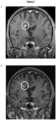
- Contrast enhanced MRI was performed initially, before receiving the lomustine and L19-TNF (baseline image; see Figure 3A ) and 40 days after baseline image ( Figure 3B ). The tumour was substantially reduced.
- the TNF ⁇ immunoconjugate for the use according to any one of the preceding paragraphs, wherein the TNF ⁇ immunoconjugate comprises TNF ⁇ linked to an antibody molecule comprising L19 complementarity determining regions (CDRs), wherein the L19 CDRs are: VH CDR1 SFSMS SEQ ID NO: 1 VH CDR 2 SISGSSGTTYYADSVKG SEQ ID NO: 2 VH CDR 3 PFPYFDY SEQ ID NO: 3 VL CDR 1 RASQSVSSSFLA SEQ ID NO: 4 VL CDR 2 YASSRAT SEQ ID NO: 5 VL CDR 3 QQTGRIPPT SEQ ID NO: 6 6.
- CDRs complementarity determining regions
- the TNF ⁇ immunoconjugate has an amino acid sequence of SEQ ID NO: 13.
- TTZ alkylating agent temozolomide
- Amino acid sequence of L19 CDRs L19 CDR1 VH -SFSMS (SEQ ID NO: 1) L19 CDR2 VH -SISGSSGTTYYADSVKG (SEQ ID NO: 2) L19 CDR3 VH -PFPYFDY (SEQ ID NO: 3) L19 CDR1 VL -RASQSVSSSFLA (SEQ ID NO: 4) L19 CDR2 VL -YASSRAT (SEQ ID NO: 5) L19 CDR3 VL -QQTGRIPPT (SEQ ID NO: 6) Amino acid sequence of the L19 VH domain (SEQ ID NO: 7) Amino acid sequence of the linker between VH and VL (SEQ ID NO: 8) GDGSSGGSGGAS Amino acid sequence of the L19 VL domain (SEQ ID NO: 9) Amino acid sequence of the L19 scFv (SEQ ID NO: 10) Amino acid sequence of the soluble form of the extracellular domain of human TNF
- a TNF ⁇ immunoconjugate for use in a method of treating a brain tumor in a patient, the method comprising administering the TNF ⁇ immunoconjugate in combination with chemotherapy to the patient, wherein the TNF ⁇ immunoconjugate comprises TNF ⁇ linked to an antibody molecule comprising L19 complementarity determining regions (CDRs), wherein the L19 CDRs are: VH CDR1 SFSMS SEQ ID NO: 1 VH CDR 2 SISGSSGTTYYADSVKG SEQ ID NO: 2 VH CDR 3 PFPYFDY SEQ ID NO: 3 VL CDR 1 RASQSVSSSFLA SEQ ID NO: 4 VL CDR 2 YASSRAT SEQ ID NO: 5 VL CDR 3 QQTGRIPPT SEQ ID NO: 6 2.
- CDRs complementarity determining regions
- IDH isocitrate dehydrogenase
- the TNF ⁇ immunoconjugate for the use according any of the preceding clauses wherein tumor necrosis is detectable one day after the TNF ⁇ immunoconjugate is administered to the patient.
- the TNF ⁇ immunoconjugate for the use according any of the preceding clauses wherein a reduction of blood perfusion to the tumor is detectable one day after the TNF ⁇ immunoconjugate is administered to the patient.
- 26. The TNF ⁇ immunoconjugate for the use according any of the preceding clauses, wherein the method induces infiltration of T cells into the tumor.
Landscapes
- Health & Medical Sciences (AREA)
- Life Sciences & Earth Sciences (AREA)
- Chemical & Material Sciences (AREA)
- Medicinal Chemistry (AREA)
- General Health & Medical Sciences (AREA)
- Veterinary Medicine (AREA)
- Pharmacology & Pharmacy (AREA)
- Animal Behavior & Ethology (AREA)
- Public Health (AREA)
- Bioinformatics & Cheminformatics (AREA)
- Engineering & Computer Science (AREA)
- Organic Chemistry (AREA)
- Epidemiology (AREA)
- Immunology (AREA)
- Molecular Biology (AREA)
- Proteomics, Peptides & Aminoacids (AREA)
- General Chemical & Material Sciences (AREA)
- Chemical Kinetics & Catalysis (AREA)
- Nuclear Medicine, Radiotherapy & Molecular Imaging (AREA)
- Biophysics (AREA)
- Genetics & Genomics (AREA)
- Zoology (AREA)
- Gastroenterology & Hepatology (AREA)
- Biochemistry (AREA)
- Microbiology (AREA)
- Mycology (AREA)
- Endocrinology (AREA)
- Toxicology (AREA)
- Medicines That Contain Protein Lipid Enzymes And Other Medicines (AREA)
- Peptides Or Proteins (AREA)
- Medicines Containing Antibodies Or Antigens For Use As Internal Diagnostic Agents (AREA)
- Acyclic And Carbocyclic Compounds In Medicinal Compositions (AREA)
- Medicinal Preparation (AREA)
- Biomedical Technology (AREA)
- Neurology (AREA)
- Neurosurgery (AREA)
- Medicines Containing Material From Animals Or Micro-Organisms (AREA)
Applications Claiming Priority (3)
| Application Number | Priority Date | Filing Date | Title |
|---|---|---|---|
| EP20176157 | 2020-05-22 | ||
| PCT/EP2021/063758 WO2021234178A1 (fr) | 2020-05-22 | 2021-05-24 | THÉRAPIE À BASE D'UN IMMUNOCONJUGUÉ DE TNFα POUR LE TRAITEMENT DE TUMEURS CÉRÉBRALES |
| EP21726426.6A EP4153232B1 (fr) | 2020-05-22 | 2021-05-24 | Thérapie à base d'un immunoconjugué de tnf-a pour le traitement de tumeurs cérébrales |
Related Parent Applications (2)
| Application Number | Title | Priority Date | Filing Date |
|---|---|---|---|
| EP21726426.6A Division-Into EP4153232B1 (fr) | 2020-05-22 | 2021-05-24 | Thérapie à base d'un immunoconjugué de tnf-a pour le traitement de tumeurs cérébrales |
| EP21726426.6A Division EP4153232B1 (fr) | 2020-05-22 | 2021-05-24 | Thérapie à base d'un immunoconjugué de tnf-a pour le traitement de tumeurs cérébrales |
Publications (2)
| Publication Number | Publication Date |
|---|---|
| EP4389146A2 true EP4389146A2 (fr) | 2024-06-26 |
| EP4389146A3 EP4389146A3 (fr) | 2024-10-02 |
Family
ID=70802794
Family Applications (2)
| Application Number | Title | Priority Date | Filing Date |
|---|---|---|---|
| EP24170718.1A Pending EP4389146A3 (fr) | 2020-05-22 | 2021-05-24 | Thérapie immunoconjuguée par tnf-a pour le traitement de tumeurs cérébrales |
| EP21726426.6A Active EP4153232B1 (fr) | 2020-05-22 | 2021-05-24 | Thérapie à base d'un immunoconjugué de tnf-a pour le traitement de tumeurs cérébrales |
Family Applications After (1)
| Application Number | Title | Priority Date | Filing Date |
|---|---|---|---|
| EP21726426.6A Active EP4153232B1 (fr) | 2020-05-22 | 2021-05-24 | Thérapie à base d'un immunoconjugué de tnf-a pour le traitement de tumeurs cérébrales |
Country Status (18)
| Country | Link |
|---|---|
| US (2) | US11872288B2 (fr) |
| EP (2) | EP4389146A3 (fr) |
| JP (1) | JP7352040B2 (fr) |
| CN (1) | CN115666645A (fr) |
| AU (2) | AU2021276573B2 (fr) |
| CA (1) | CA3177566C (fr) |
| DK (1) | DK4153232T3 (fr) |
| ES (1) | ES2987329T3 (fr) |
| FI (1) | FI4153232T3 (fr) |
| HR (1) | HRP20241274T1 (fr) |
| HU (1) | HUE068804T2 (fr) |
| LT (1) | LT4153232T (fr) |
| PL (1) | PL4153232T3 (fr) |
| PT (1) | PT4153232T (fr) |
| RS (1) | RS65944B1 (fr) |
| SI (1) | SI4153232T1 (fr) |
| SM (1) | SMT202400493T1 (fr) |
| WO (1) | WO2021234178A1 (fr) |
Families Citing this family (3)
| Publication number | Priority date | Publication date | Assignee | Title |
|---|---|---|---|---|
| JP7352040B2 (ja) * | 2020-05-22 | 2023-09-27 | フィロジェン エッセ.ピー.アー. | 脳腫瘍の治療のためのTNFα免疫コンジュゲート療法 |
| JP2025513943A (ja) | 2022-03-21 | 2025-05-01 | ピロゲン エス.ピー.エー | TNFα免疫複合体製剤 |
| CN119836298A (zh) | 2022-09-01 | 2025-04-15 | 菲洛根股份公司 | 用于非黑色素瘤皮肤癌的TNFα和白细胞介素-2组合疗法 |
Citations (8)
| Publication number | Priority date | Publication date | Assignee | Title |
|---|---|---|---|---|
| EP0120694A2 (fr) | 1983-03-25 | 1984-10-03 | Celltech Limited | Procédés pour la production des polypeptides ou protéines à chaînes multiples |
| EP0125023A1 (fr) | 1983-04-08 | 1984-11-14 | Genentech, Inc. | Préparations d'immunoglobuline recombinante, méthodes pour leur préparation, séquences d'ADN, vecteurs d'expression et cellules d'hôtes recombinantes |
| WO1992001047A1 (fr) | 1990-07-10 | 1992-01-23 | Cambridge Antibody Technology Limited | Procede de production de chainon de paires a liaison specifique |
| WO2001062298A2 (fr) | 2000-02-24 | 2001-08-30 | Philogen S.R.L. | Compositions et procedes de traitement de l'angiogenese dans des lesions pathologiques |
| WO2003076469A2 (fr) | 2002-03-11 | 2003-09-18 | Philogen S.P.A. | Ciblage selectif d'un systeme vasculaire tumoral au moyen de molecules d'anticorps |
| WO2005023318A1 (fr) | 2003-09-10 | 2005-03-17 | Philogen S.P.A | Ciblage selectif de systeme vasculaire tumoral au moyen de molecules d'anticorps radiomarquees |
| US8097254B2 (en) | 1998-05-11 | 2012-01-17 | Eidgenossische Technische Hochschule Zurich | Specific binding molecules for scintigraphy, conjugates containing them and therapeutic method for treatment of angiogenesis |
| WO2018011404A1 (fr) | 2016-07-15 | 2018-01-18 | Philogen S.P.A | Compositions d'anticorps |
Family Cites Families (6)
| Publication number | Priority date | Publication date | Assignee | Title |
|---|---|---|---|---|
| MXPA04006517A (es) * | 2002-01-03 | 2005-03-31 | Schering Ag | Conjugados que comprenden un anticuerpo especifico para el dominio ed-b de fibronectina y sus usos para la deteccion y tratamiento de tumores. |
| EP1781284B1 (fr) * | 2004-08-25 | 2010-10-13 | The University of Chicago | Utilisation d'une combinaison comprenant du temozolomide et un tnf-alpha pour le traitement d'un glioblastome |
| CA2648484A1 (fr) * | 2006-05-08 | 2007-11-15 | Philogen Spa | Cytokines ciblees par des anticorps pour therapie |
| EP3156069B8 (fr) * | 2008-06-20 | 2020-10-21 | Duke University | Compositions, procédés et kits permettant de provoquer une réponse immunitaire |
| GB201715008D0 (en) * | 2017-09-18 | 2017-11-01 | Inst De Medicina Molecular Faculdade De Medicina Univ De Lisboa | TRPV2 Antagonists |
| JP7352040B2 (ja) * | 2020-05-22 | 2023-09-27 | フィロジェン エッセ.ピー.アー. | 脳腫瘍の治療のためのTNFα免疫コンジュゲート療法 |
-
2021
- 2021-05-24 JP JP2022570616A patent/JP7352040B2/ja active Active
- 2021-05-24 FI FIEP21726426.6T patent/FI4153232T3/fi active
- 2021-05-24 EP EP24170718.1A patent/EP4389146A3/fr active Pending
- 2021-05-24 US US17/999,444 patent/US11872288B2/en active Active
- 2021-05-24 RS RS20241036A patent/RS65944B1/sr unknown
- 2021-05-24 PT PT217264266T patent/PT4153232T/pt unknown
- 2021-05-24 WO PCT/EP2021/063758 patent/WO2021234178A1/fr not_active Ceased
- 2021-05-24 AU AU2021276573A patent/AU2021276573B2/en active Active
- 2021-05-24 PL PL21726426.6T patent/PL4153232T3/pl unknown
- 2021-05-24 LT LTEPPCT/EP2021/063758T patent/LT4153232T/lt unknown
- 2021-05-24 EP EP21726426.6A patent/EP4153232B1/fr active Active
- 2021-05-24 ES ES21726426T patent/ES2987329T3/es active Active
- 2021-05-24 CN CN202180036945.7A patent/CN115666645A/zh active Pending
- 2021-05-24 HU HUE21726426A patent/HUE068804T2/hu unknown
- 2021-05-24 SM SM20240493T patent/SMT202400493T1/it unknown
- 2021-05-24 CA CA3177566A patent/CA3177566C/fr active Active
- 2021-05-24 SI SI202130199T patent/SI4153232T1/sl unknown
- 2021-05-24 DK DK21726426.6T patent/DK4153232T3/da active
- 2021-05-24 HR HRP20241274TT patent/HRP20241274T1/hr unknown
-
2023
- 2023-10-03 US US18/480,153 patent/US12377161B2/en active Active
-
2024
- 2024-03-20 AU AU2024201834A patent/AU2024201834A1/en active Pending
Patent Citations (8)
| Publication number | Priority date | Publication date | Assignee | Title |
|---|---|---|---|---|
| EP0120694A2 (fr) | 1983-03-25 | 1984-10-03 | Celltech Limited | Procédés pour la production des polypeptides ou protéines à chaînes multiples |
| EP0125023A1 (fr) | 1983-04-08 | 1984-11-14 | Genentech, Inc. | Préparations d'immunoglobuline recombinante, méthodes pour leur préparation, séquences d'ADN, vecteurs d'expression et cellules d'hôtes recombinantes |
| WO1992001047A1 (fr) | 1990-07-10 | 1992-01-23 | Cambridge Antibody Technology Limited | Procede de production de chainon de paires a liaison specifique |
| US8097254B2 (en) | 1998-05-11 | 2012-01-17 | Eidgenossische Technische Hochschule Zurich | Specific binding molecules for scintigraphy, conjugates containing them and therapeutic method for treatment of angiogenesis |
| WO2001062298A2 (fr) | 2000-02-24 | 2001-08-30 | Philogen S.R.L. | Compositions et procedes de traitement de l'angiogenese dans des lesions pathologiques |
| WO2003076469A2 (fr) | 2002-03-11 | 2003-09-18 | Philogen S.P.A. | Ciblage selectif d'un systeme vasculaire tumoral au moyen de molecules d'anticorps |
| WO2005023318A1 (fr) | 2003-09-10 | 2005-03-17 | Philogen S.P.A | Ciblage selectif de systeme vasculaire tumoral au moyen de molecules d'anticorps radiomarquees |
| WO2018011404A1 (fr) | 2016-07-15 | 2018-01-18 | Philogen S.P.A | Compositions d'anticorps |
Also Published As
| Publication number | Publication date |
|---|---|
| EP4153232B1 (fr) | 2024-06-26 |
| CA3177566C (fr) | 2024-01-02 |
| HUE068804T2 (hu) | 2025-01-28 |
| PL4153232T3 (pl) | 2024-12-16 |
| LT4153232T (lt) | 2024-10-10 |
| DK4153232T3 (da) | 2024-08-12 |
| EP4389146A3 (fr) | 2024-10-02 |
| RS65944B1 (sr) | 2024-10-31 |
| HRP20241274T1 (hr) | 2024-12-06 |
| US12377161B2 (en) | 2025-08-05 |
| AU2021276573A1 (en) | 2022-11-17 |
| FI4153232T3 (fi) | 2024-09-25 |
| SMT202400493T1 (it) | 2025-01-14 |
| JP7352040B2 (ja) | 2023-09-27 |
| ES2987329T3 (es) | 2024-11-14 |
| JP2023522791A (ja) | 2023-05-31 |
| PT4153232T (pt) | 2024-10-02 |
| US20240197903A1 (en) | 2024-06-20 |
| SI4153232T1 (sl) | 2024-12-31 |
| WO2021234178A1 (fr) | 2021-11-25 |
| CA3177566A1 (fr) | 2021-11-25 |
| CN115666645A (zh) | 2023-01-31 |
| US11872288B2 (en) | 2024-01-16 |
| AU2024201834A1 (en) | 2024-05-16 |
| US20230233702A1 (en) | 2023-07-27 |
| AU2021276573B2 (en) | 2023-12-21 |
| EP4153232A1 (fr) | 2023-03-29 |
Similar Documents
| Publication | Publication Date | Title |
|---|---|---|
| US12377161B2 (en) | TNF-alpha immunoconjugate therapy for the treatment of brain tumors | |
| US12084518B2 (en) | Trispecific binding proteins and methods of use | |
| EP2760886B1 (fr) | Polythérapie par immunocytokine | |
| WO2018160671A1 (fr) | Inhibiteurs de point de contrôle ciblés et méthodes d'utilisation | |
| JP6242484B2 (ja) | 特定の改善されたヒト二重特異性EGFRvIII抗体結合分子 | |
| CN106459153A (zh) | 蛋白裂解酶和u型纤溶酶原激活物的底物和其它可裂解部分及其使用方法 | |
| JP6154895B2 (ja) | ヒト二重特異性EGFRvIII抗体結合分子 | |
| KR20200006985A (ko) | 인간 알파 태아단백-특이적 t 세포 수용체 및 이의 용도 | |
| CN112805036A (zh) | 通过施用抗体-药物缀合物对转移性脑肿瘤的治疗 | |
| WO2015070210A1 (fr) | Ciblage multivalent et via epha3 de tumeurs | |
| KR20220097952A (ko) | 암 치료를 위한 her2/4-1bb 이중특이적 융합 단백질 | |
| US20230001006A1 (en) | Amhrii-binding antibody drug conjugates and their use thereof in the treatment of cancers | |
| Tao et al. | Customizing a tridomain TRAIL variant to achieve active tumor homing and endogenous albumin-controlled release of the molecular machine in vivo | |
| EP3864039A2 (fr) | Thérapie ciblée contre un cancer neuroendocrinien | |
| TW201809013A (zh) | 用於藥物遞送之抗體融合蛋白 | |
| JP2018511306A (ja) | 治療 | |
| CN114025791A (zh) | 癌症治疗 | |
| US20230086800A1 (en) | Antibody fragments conjugated to peg-plga nanoparticles improve immunotherapy against cancer cells | |
| WO2024133630A1 (fr) | Commutateur moléculaire pouvant être perturbé chimiquement et son utilisation | |
| KR20260007595A (ko) | 다중 표적 약물 접합체 및 암 치료를 위한 이의 용도 | |
| JP2026023561A (ja) | Vsig2に特異的に結合する物質を含む癌の治療剤 | |
| EA045360B1 (ru) | Способы и композиции, усиливающие эффективность опосредованной суперантигеном иммунотерапии злокачественных опухолей |
Legal Events
| Date | Code | Title | Description |
|---|---|---|---|
| PUAI | Public reference made under article 153(3) epc to a published international application that has entered the european phase |
Free format text: ORIGINAL CODE: 0009012 |
|
| STAA | Information on the status of an ep patent application or granted ep patent |
Free format text: STATUS: THE APPLICATION HAS BEEN PUBLISHED |
|
| AC | Divisional application: reference to earlier application |
Ref document number: 4153232 Country of ref document: EP Kind code of ref document: P |
|
| AK | Designated contracting states |
Kind code of ref document: A2 Designated state(s): AL AT BE BG CH CY CZ DE DK EE ES FI FR GB GR HR HU IE IS IT LI LT LU LV MC MK MT NL NO PL PT RO RS SE SI SK SM TR |
|
| REG | Reference to a national code |
Ref country code: DE Ref legal event code: R079 Free format text: PREVIOUS MAIN CLASS: A61K0045060000 Ipc: A61K0039395000 |
|
| PUAL | Search report despatched |
Free format text: ORIGINAL CODE: 0009013 |
|
| AK | Designated contracting states |
Kind code of ref document: A3 Designated state(s): AL AT BE BG CH CY CZ DE DK EE ES FI FR GB GR HR HU IE IS IT LI LT LU LV MC MK MT NL NO PL PT RO RS SE SI SK SM TR |
|
| RIC1 | Information provided on ipc code assigned before grant |
Ipc: A61K 45/06 20060101ALI20240826BHEP Ipc: C07K 16/18 20060101ALI20240826BHEP Ipc: C07K 14/525 20060101ALI20240826BHEP Ipc: A61P 35/00 20060101ALI20240826BHEP Ipc: A61K 38/19 20060101ALI20240826BHEP Ipc: A61K 31/495 20060101ALI20240826BHEP Ipc: A61K 31/175 20060101ALI20240826BHEP Ipc: A61K 39/395 20060101AFI20240826BHEP |
|
| STAA | Information on the status of an ep patent application or granted ep patent |
Free format text: STATUS: REQUEST FOR EXAMINATION WAS MADE |
|
| 17P | Request for examination filed |
Effective date: 20250401 |