EP4389961A1 - Objet textile avec couche protectrice, procédé de fabrication de l'objet textile avec la couche protectrice, utilisation de l'objet textile et produit programme d'ordinateur avec une couche intermédiaire de simulation - Google Patents
Objet textile avec couche protectrice, procédé de fabrication de l'objet textile avec la couche protectrice, utilisation de l'objet textile et produit programme d'ordinateur avec une couche intermédiaire de simulation Download PDFInfo
- Publication number
- EP4389961A1 EP4389961A1 EP22215340.5A EP22215340A EP4389961A1 EP 4389961 A1 EP4389961 A1 EP 4389961A1 EP 22215340 A EP22215340 A EP 22215340A EP 4389961 A1 EP4389961 A1 EP 4389961A1
- Authority
- EP
- European Patent Office
- Prior art keywords
- protective layer
- textile
- textile object
- layer
- anode
- Prior art date
- Legal status (The legal status is an assumption and is not a legal conclusion. Google has not performed a legal analysis and makes no representation as to the accuracy of the status listed.)
- Pending
Links
- 239000004753 textile Substances 0.000 title claims abstract description 75
- 239000011241 protective layer Substances 0.000 title claims abstract description 37
- 230000000694 effects Effects 0.000 title claims abstract description 6
- 238000004519 manufacturing process Methods 0.000 title claims abstract description 6
- 238000004088 simulation Methods 0.000 title 1
- 239000010410 layer Substances 0.000 claims abstract description 20
- 239000010405 anode material Substances 0.000 claims abstract description 9
- 239000012620 biological material Substances 0.000 claims abstract description 7
- 239000010406 cathode material Substances 0.000 claims abstract description 7
- 238000009825 accumulation Methods 0.000 claims abstract description 6
- 238000004590 computer program Methods 0.000 claims abstract description 6
- 230000002401 inhibitory effect Effects 0.000 claims abstract description 5
- XLYOFNOQVPJJNP-UHFFFAOYSA-N water Substances O XLYOFNOQVPJJNP-UHFFFAOYSA-N 0.000 claims description 32
- NUJOXMJBOLGQSY-UHFFFAOYSA-N manganese dioxide Chemical compound O=[Mn]=O NUJOXMJBOLGQSY-UHFFFAOYSA-N 0.000 claims description 26
- BQCADISMDOOEFD-UHFFFAOYSA-N Silver Chemical compound [Ag] BQCADISMDOOEFD-UHFFFAOYSA-N 0.000 claims description 12
- 239000004332 silver Substances 0.000 claims description 12
- 229910052709 silver Inorganic materials 0.000 claims description 9
- 238000000034 method Methods 0.000 claims description 8
- 238000005507 spraying Methods 0.000 claims description 7
- 238000002604 ultrasonography Methods 0.000 claims description 7
- 229910000420 cerium oxide Inorganic materials 0.000 claims description 6
- BMMGVYCKOGBVEV-UHFFFAOYSA-N oxo(oxoceriooxy)cerium Chemical compound [Ce]=O.O=[Ce]=O BMMGVYCKOGBVEV-UHFFFAOYSA-N 0.000 claims description 5
- 239000000126 substance Substances 0.000 claims description 4
- 229910001923 silver oxide Inorganic materials 0.000 claims description 3
- 239000000243 solution Substances 0.000 description 13
- MIVBAHRSNUNMPP-UHFFFAOYSA-N manganese(2+);dinitrate Chemical compound [Mn+2].[O-][N+]([O-])=O.[O-][N+]([O-])=O MIVBAHRSNUNMPP-UHFFFAOYSA-N 0.000 description 10
- 244000005700 microbiome Species 0.000 description 10
- 229920002477 rna polymer Polymers 0.000 description 8
- 229940024606 amino acid Drugs 0.000 description 7
- 235000001014 amino acid Nutrition 0.000 description 7
- 150000001413 amino acids Chemical class 0.000 description 7
- 238000006243 chemical reaction Methods 0.000 description 7
- QGZKDVFQNNGYKY-UHFFFAOYSA-N Ammonia Chemical compound N QGZKDVFQNNGYKY-UHFFFAOYSA-N 0.000 description 6
- 239000002585 base Substances 0.000 description 6
- 239000012286 potassium permanganate Substances 0.000 description 6
- 239000003792 electrolyte Substances 0.000 description 5
- 239000011572 manganese Substances 0.000 description 5
- 230000003647 oxidation Effects 0.000 description 5
- 238000007254 oxidation reaction Methods 0.000 description 5
- NINIDFKCEFEMDL-UHFFFAOYSA-N Sulfur Chemical compound [S] NINIDFKCEFEMDL-UHFFFAOYSA-N 0.000 description 4
- 239000010408 film Substances 0.000 description 4
- 229910052760 oxygen Inorganic materials 0.000 description 4
- 239000001301 oxygen Substances 0.000 description 4
- 229930182852 proteinogenic amino acid Natural products 0.000 description 4
- MTCFGRXMJLQNBG-UHFFFAOYSA-N serine Chemical compound OCC(N)C(O)=O MTCFGRXMJLQNBG-UHFFFAOYSA-N 0.000 description 4
- SQGYOTSLMSWVJD-UHFFFAOYSA-N silver(1+) nitrate Chemical compound [Ag+].[O-]N(=O)=O SQGYOTSLMSWVJD-UHFFFAOYSA-N 0.000 description 4
- 239000007921 spray Substances 0.000 description 4
- 229910052717 sulfur Inorganic materials 0.000 description 4
- 239000011593 sulfur Substances 0.000 description 4
- 229930024421 Adenine Natural products 0.000 description 3
- GFFGJBXGBJISGV-UHFFFAOYSA-N Adenine Chemical compound NC1=NC=NC2=C1N=CN2 GFFGJBXGBJISGV-UHFFFAOYSA-N 0.000 description 3
- HEMHJVSKTPXQMS-UHFFFAOYSA-M Sodium hydroxide Chemical compound [OH-].[Na+] HEMHJVSKTPXQMS-UHFFFAOYSA-M 0.000 description 3
- OUUQCZGPVNCOIJ-UHFFFAOYSA-M Superoxide Chemical class [O-][O] OUUQCZGPVNCOIJ-UHFFFAOYSA-M 0.000 description 3
- 229910021529 ammonia Inorganic materials 0.000 description 3
- 230000000845 anti-microbial effect Effects 0.000 description 3
- 230000000840 anti-viral effect Effects 0.000 description 3
- QVGXLLKOCUKJST-UHFFFAOYSA-N atomic oxygen Chemical compound [O] QVGXLLKOCUKJST-UHFFFAOYSA-N 0.000 description 3
- 244000052616 bacterial pathogen Species 0.000 description 3
- 230000015572 biosynthetic process Effects 0.000 description 3
- 125000003178 carboxy group Chemical group [H]OC(*)=O 0.000 description 3
- HSJPMRKMPBAUAU-UHFFFAOYSA-N cerium(3+);trinitrate Chemical compound [Ce+3].[O-][N+]([O-])=O.[O-][N+]([O-])=O.[O-][N+]([O-])=O HSJPMRKMPBAUAU-UHFFFAOYSA-N 0.000 description 3
- 230000002068 genetic effect Effects 0.000 description 3
- WQYVRQLZKVEZGA-UHFFFAOYSA-N hypochlorite Chemical compound Cl[O-] WQYVRQLZKVEZGA-UHFFFAOYSA-N 0.000 description 3
- 238000011065 in-situ storage Methods 0.000 description 3
- 239000007788 liquid Substances 0.000 description 3
- 239000000463 material Substances 0.000 description 3
- 229930182817 methionine Natural products 0.000 description 3
- 239000002245 particle Substances 0.000 description 3
- 239000002244 precipitate Substances 0.000 description 3
- CIWBSHSKHKDKBQ-JLAZNSOCSA-N Ascorbic acid Chemical compound OC[C@H](O)[C@H]1OC(=O)C(O)=C1O CIWBSHSKHKDKBQ-JLAZNSOCSA-N 0.000 description 2
- WSFSSNUMVMOOMR-UHFFFAOYSA-N Formaldehyde Chemical compound O=C WSFSSNUMVMOOMR-UHFFFAOYSA-N 0.000 description 2
- HNDVDQJCIGZPNO-YFKPBYRVSA-N L-histidine Chemical compound OC(=O)[C@@H](N)CC1=CN=CN1 HNDVDQJCIGZPNO-YFKPBYRVSA-N 0.000 description 2
- KDXKERNSBIXSRK-YFKPBYRVSA-N L-lysine Chemical compound NCCCC[C@H](N)C(O)=O KDXKERNSBIXSRK-YFKPBYRVSA-N 0.000 description 2
- FFEARJCKVFRZRR-BYPYZUCNSA-N L-methionine Chemical compound CSCC[C@H](N)C(O)=O FFEARJCKVFRZRR-BYPYZUCNSA-N 0.000 description 2
- PWHULOQIROXLJO-UHFFFAOYSA-N Manganese Chemical compound [Mn] PWHULOQIROXLJO-UHFFFAOYSA-N 0.000 description 2
- WAEMQWOKJMHJLA-UHFFFAOYSA-N Manganese(2+) Chemical class [Mn+2] WAEMQWOKJMHJLA-UHFFFAOYSA-N 0.000 description 2
- 229960000643 adenine Drugs 0.000 description 2
- 150000001299 aldehydes Chemical class 0.000 description 2
- 230000000844 anti-bacterial effect Effects 0.000 description 2
- 239000004599 antimicrobial Substances 0.000 description 2
- 125000006615 aromatic heterocyclic group Chemical group 0.000 description 2
- DRVWBEJJZZTIGJ-UHFFFAOYSA-N cerium(3+);oxygen(2-) Chemical class [O-2].[O-2].[O-2].[Ce+3].[Ce+3] DRVWBEJJZZTIGJ-UHFFFAOYSA-N 0.000 description 2
- 239000003638 chemical reducing agent Substances 0.000 description 2
- 238000010276 construction Methods 0.000 description 2
- 238000011109 contamination Methods 0.000 description 2
- 238000001035 drying Methods 0.000 description 2
- 239000007789 gas Substances 0.000 description 2
- 125000002887 hydroxy group Chemical group [H]O* 0.000 description 2
- AMWRITDGCCNYAT-UHFFFAOYSA-L hydroxy(oxo)manganese;manganese Chemical compound [Mn].O[Mn]=O.O[Mn]=O AMWRITDGCCNYAT-UHFFFAOYSA-L 0.000 description 2
- 229910052756 noble gas Inorganic materials 0.000 description 2
- 235000018102 proteins Nutrition 0.000 description 2
- 108090000623 proteins and genes Proteins 0.000 description 2
- 102000004169 proteins and genes Human genes 0.000 description 2
- 150000003212 purines Chemical class 0.000 description 2
- 150000003230 pyrimidines Chemical class 0.000 description 2
- 239000003642 reactive oxygen metabolite Substances 0.000 description 2
- 230000010076 replication Effects 0.000 description 2
- 229910001961 silver nitrate Inorganic materials 0.000 description 2
- 150000003462 sulfoxides Chemical class 0.000 description 2
- 230000014616 translation Effects 0.000 description 2
- 230000001960 triggered effect Effects 0.000 description 2
- MTCFGRXMJLQNBG-REOHCLBHSA-N (2S)-2-Amino-3-hydroxypropansäure Chemical compound OC[C@H](N)C(O)=O MTCFGRXMJLQNBG-REOHCLBHSA-N 0.000 description 1
- LLYKDRUXMXWKGU-QNOJAMNLSA-N (2r)-2-[(1s)-1,2-dihydroxyethyl]-3,4-dihydroxy-2h-furan-5-one;(2r,3s,4r,5r)-2,3,4,5,6-pentahydroxyhexanal Chemical compound OC[C@@H](O)[C@@H](O)[C@H](O)[C@@H](O)C=O.OC[C@H](O)[C@H]1OC(=O)C(O)=C1O LLYKDRUXMXWKGU-QNOJAMNLSA-N 0.000 description 1
- 101710134784 Agnoprotein Proteins 0.000 description 1
- NLXLAEXVIDQMFP-UHFFFAOYSA-N Ammonium chloride Substances [NH4+].[Cl-] NLXLAEXVIDQMFP-UHFFFAOYSA-N 0.000 description 1
- VHUUQVKOLVNVRT-UHFFFAOYSA-N Ammonium hydroxide Chemical group [NH4+].[OH-] VHUUQVKOLVNVRT-UHFFFAOYSA-N 0.000 description 1
- 241000537222 Betabaculovirus Species 0.000 description 1
- WQZGKKKJIJFFOK-GASJEMHNSA-N Glucose Natural products OC[C@H]1OC(O)[C@H](O)[C@@H](O)[C@@H]1O WQZGKKKJIJFFOK-GASJEMHNSA-N 0.000 description 1
- 235000019766 L-Lysine Nutrition 0.000 description 1
- ODKSFYDXXFIFQN-BYPYZUCNSA-N L-arginine Chemical compound OC(=O)[C@@H](N)CCCN=C(N)N ODKSFYDXXFIFQN-BYPYZUCNSA-N 0.000 description 1
- 229930064664 L-arginine Natural products 0.000 description 1
- 235000014852 L-arginine Nutrition 0.000 description 1
- 241000589248 Legionella Species 0.000 description 1
- 208000007764 Legionnaires' Disease Diseases 0.000 description 1
- 239000004472 Lysine Substances 0.000 description 1
- XUYPXLNMDZIRQH-LURJTMIESA-N N-acetyl-L-methionine Chemical compound CSCC[C@@H](C(O)=O)NC(C)=O XUYPXLNMDZIRQH-LURJTMIESA-N 0.000 description 1
- 241000208125 Nicotiana Species 0.000 description 1
- 235000002637 Nicotiana tabacum Nutrition 0.000 description 1
- ISWSIDIOOBJBQZ-UHFFFAOYSA-N Phenol Chemical compound OC1=CC=CC=C1 ISWSIDIOOBJBQZ-UHFFFAOYSA-N 0.000 description 1
- KWYUFKZDYYNOTN-UHFFFAOYSA-M Potassium hydroxide Chemical compound [OH-].[K+] KWYUFKZDYYNOTN-UHFFFAOYSA-M 0.000 description 1
- 241001522306 Serinus serinus Species 0.000 description 1
- FOIXSVOLVBLSDH-UHFFFAOYSA-N Silver ion Chemical compound [Ag+] FOIXSVOLVBLSDH-UHFFFAOYSA-N 0.000 description 1
- SRIDXRLSTQBAPG-UHFFFAOYSA-M [O-2].[O-2].[OH-].[Mn+2].[Ce+3] Chemical compound [O-2].[O-2].[OH-].[Mn+2].[Ce+3] SRIDXRLSTQBAPG-UHFFFAOYSA-M 0.000 description 1
- QZEVOEHYGMMPOR-UHFFFAOYSA-M [O-2].[OH-].[Mn+2].[Ag+] Chemical compound [O-2].[OH-].[Mn+2].[Ag+] QZEVOEHYGMMPOR-UHFFFAOYSA-M 0.000 description 1
- 239000000443 aerosol Substances 0.000 description 1
- 150000001412 amines Chemical class 0.000 description 1
- 235000011114 ammonium hydroxide Nutrition 0.000 description 1
- 239000003443 antiviral agent Substances 0.000 description 1
- 239000007864 aqueous solution Substances 0.000 description 1
- 229960005070 ascorbic acid Drugs 0.000 description 1
- 235000010323 ascorbic acid Nutrition 0.000 description 1
- 239000011668 ascorbic acid Substances 0.000 description 1
- 238000000889 atomisation Methods 0.000 description 1
- 239000003637 basic solution Substances 0.000 description 1
- WQZGKKKJIJFFOK-VFUOTHLCSA-N beta-D-glucose Chemical compound OC[C@H]1O[C@@H](O)[C@H](O)[C@@H](O)[C@@H]1O WQZGKKKJIJFFOK-VFUOTHLCSA-N 0.000 description 1
- 239000012159 carrier gas Substances 0.000 description 1
- 230000003197 catalytic effect Effects 0.000 description 1
- 229910000421 cerium(III) oxide Inorganic materials 0.000 description 1
- 238000004140 cleaning Methods 0.000 description 1
- BERDEBHAJNAUOM-UHFFFAOYSA-N copper(I) oxide Inorganic materials [Cu]O[Cu] BERDEBHAJNAUOM-UHFFFAOYSA-N 0.000 description 1
- LBJNMUFDOHXDFG-UHFFFAOYSA-N copper;hydrate Chemical compound O.[Cu].[Cu] LBJNMUFDOHXDFG-UHFFFAOYSA-N 0.000 description 1
- SZDVDUDLIIZMKX-UHFFFAOYSA-N copper;pyridine Chemical compound [Cu].C1=CC=NC=C1.C1=CC=NC=C1.C1=CC=NC=C1.C1=CC=NC=C1.C1=CC=NC=C1.C1=CC=NC=C1 SZDVDUDLIIZMKX-UHFFFAOYSA-N 0.000 description 1
- 238000009826 distribution Methods 0.000 description 1
- 239000003651 drinking water Substances 0.000 description 1
- 235000020188 drinking water Nutrition 0.000 description 1
- 239000000428 dust Substances 0.000 description 1
- 230000005684 electric field Effects 0.000 description 1
- -1 formaldehyde, phenols Chemical class 0.000 description 1
- 125000000524 functional group Chemical group 0.000 description 1
- 239000008103 glucose Substances 0.000 description 1
- 239000008236 heating water Substances 0.000 description 1
- 229960002885 histidine Drugs 0.000 description 1
- 150000002500 ions Chemical class 0.000 description 1
- 229910052748 manganese Inorganic materials 0.000 description 1
- VASIZKWUTCETSD-UHFFFAOYSA-N manganese(II) oxide Inorganic materials [Mn]=O VASIZKWUTCETSD-UHFFFAOYSA-N 0.000 description 1
- 239000002105 nanoparticle Substances 0.000 description 1
- 239000004745 nonwoven fabric Substances 0.000 description 1
- 239000007800 oxidant agent Substances 0.000 description 1
- 239000003973 paint Substances 0.000 description 1
- 230000035755 proliferation Effects 0.000 description 1
- 230000028327 secretion Effects 0.000 description 1
- 239000000779 smoke Substances 0.000 description 1
- 210000002023 somite Anatomy 0.000 description 1
- 238000003860 storage Methods 0.000 description 1
- 239000000758 substrate Substances 0.000 description 1
- 210000004243 sweat Anatomy 0.000 description 1
- 239000010409 thin film Substances 0.000 description 1
- 231100000167 toxic agent Toxicity 0.000 description 1
- 230000032258 transport Effects 0.000 description 1
- 230000003253 viricidal effect Effects 0.000 description 1
Images
Classifications
-
- D—TEXTILES; PAPER
- D06—TREATMENT OF TEXTILES OR THE LIKE; LAUNDERING; FLEXIBLE MATERIALS NOT OTHERWISE PROVIDED FOR
- D06M—TREATMENT, NOT PROVIDED FOR ELSEWHERE IN CLASS D06, OF FIBRES, THREADS, YARNS, FABRICS, FEATHERS OR FIBROUS GOODS MADE FROM SUCH MATERIALS
- D06M16/00—Biochemical treatment of fibres, threads, yarns, fabrics, or fibrous goods made from such materials, e.g. enzymatic
-
- D—TEXTILES; PAPER
- D06—TREATMENT OF TEXTILES OR THE LIKE; LAUNDERING; FLEXIBLE MATERIALS NOT OTHERWISE PROVIDED FOR
- D06M—TREATMENT, NOT PROVIDED FOR ELSEWHERE IN CLASS D06, OF FIBRES, THREADS, YARNS, FABRICS, FEATHERS OR FIBROUS GOODS MADE FROM SUCH MATERIALS
- D06M11/00—Treating fibres, threads, yarns, fabrics or fibrous goods made from such materials, with inorganic substances or complexes thereof; Such treatment combined with mechanical treatment, e.g. mercerising
- D06M11/32—Treating fibres, threads, yarns, fabrics or fibrous goods made from such materials, with inorganic substances or complexes thereof; Such treatment combined with mechanical treatment, e.g. mercerising with oxygen, ozone, ozonides, oxides, hydroxides or percompounds; Salts derived from anions with an amphoteric element-oxygen bond
- D06M11/36—Treating fibres, threads, yarns, fabrics or fibrous goods made from such materials, with inorganic substances or complexes thereof; Such treatment combined with mechanical treatment, e.g. mercerising with oxygen, ozone, ozonides, oxides, hydroxides or percompounds; Salts derived from anions with an amphoteric element-oxygen bond with oxides, hydroxides or mixed oxides; with salts derived from anions with an amphoteric element-oxygen bond
- D06M11/38—Oxides or hydroxides of elements of Groups 1 or 11 of the Periodic Table
-
- D—TEXTILES; PAPER
- D06—TREATMENT OF TEXTILES OR THE LIKE; LAUNDERING; FLEXIBLE MATERIALS NOT OTHERWISE PROVIDED FOR
- D06M—TREATMENT, NOT PROVIDED FOR ELSEWHERE IN CLASS D06, OF FIBRES, THREADS, YARNS, FABRICS, FEATHERS OR FIBROUS GOODS MADE FROM SUCH MATERIALS
- D06M11/00—Treating fibres, threads, yarns, fabrics or fibrous goods made from such materials, with inorganic substances or complexes thereof; Such treatment combined with mechanical treatment, e.g. mercerising
- D06M11/32—Treating fibres, threads, yarns, fabrics or fibrous goods made from such materials, with inorganic substances or complexes thereof; Such treatment combined with mechanical treatment, e.g. mercerising with oxygen, ozone, ozonides, oxides, hydroxides or percompounds; Salts derived from anions with an amphoteric element-oxygen bond
- D06M11/36—Treating fibres, threads, yarns, fabrics or fibrous goods made from such materials, with inorganic substances or complexes thereof; Such treatment combined with mechanical treatment, e.g. mercerising with oxygen, ozone, ozonides, oxides, hydroxides or percompounds; Salts derived from anions with an amphoteric element-oxygen bond with oxides, hydroxides or mixed oxides; with salts derived from anions with an amphoteric element-oxygen bond
- D06M11/48—Oxides or hydroxides of chromium, molybdenum or tungsten; Chromates; Dichromates; Molybdates; Tungstates
- D06M11/485—Oxides or hydroxides of manganese; Manganates
-
- D—TEXTILES; PAPER
- D06—TREATMENT OF TEXTILES OR THE LIKE; LAUNDERING; FLEXIBLE MATERIALS NOT OTHERWISE PROVIDED FOR
- D06M—TREATMENT, NOT PROVIDED FOR ELSEWHERE IN CLASS D06, OF FIBRES, THREADS, YARNS, FABRICS, FEATHERS OR FIBROUS GOODS MADE FROM SUCH MATERIALS
- D06M11/00—Treating fibres, threads, yarns, fabrics or fibrous goods made from such materials, with inorganic substances or complexes thereof; Such treatment combined with mechanical treatment, e.g. mercerising
- D06M11/32—Treating fibres, threads, yarns, fabrics or fibrous goods made from such materials, with inorganic substances or complexes thereof; Such treatment combined with mechanical treatment, e.g. mercerising with oxygen, ozone, ozonides, oxides, hydroxides or percompounds; Salts derived from anions with an amphoteric element-oxygen bond
- D06M11/50—Treating fibres, threads, yarns, fabrics or fibrous goods made from such materials, with inorganic substances or complexes thereof; Such treatment combined with mechanical treatment, e.g. mercerising with oxygen, ozone, ozonides, oxides, hydroxides or percompounds; Salts derived from anions with an amphoteric element-oxygen bond with hydrogen peroxide or peroxides of metals; with persulfuric, permanganic, pernitric, percarbonic acids or their salts
-
- D—TEXTILES; PAPER
- D06—TREATMENT OF TEXTILES OR THE LIKE; LAUNDERING; FLEXIBLE MATERIALS NOT OTHERWISE PROVIDED FOR
- D06M—TREATMENT, NOT PROVIDED FOR ELSEWHERE IN CLASS D06, OF FIBRES, THREADS, YARNS, FABRICS, FEATHERS OR FIBROUS GOODS MADE FROM SUCH MATERIALS
- D06M11/00—Treating fibres, threads, yarns, fabrics or fibrous goods made from such materials, with inorganic substances or complexes thereof; Such treatment combined with mechanical treatment, e.g. mercerising
- D06M11/32—Treating fibres, threads, yarns, fabrics or fibrous goods made from such materials, with inorganic substances or complexes thereof; Such treatment combined with mechanical treatment, e.g. mercerising with oxygen, ozone, ozonides, oxides, hydroxides or percompounds; Salts derived from anions with an amphoteric element-oxygen bond
- D06M11/36—Treating fibres, threads, yarns, fabrics or fibrous goods made from such materials, with inorganic substances or complexes thereof; Such treatment combined with mechanical treatment, e.g. mercerising with oxygen, ozone, ozonides, oxides, hydroxides or percompounds; Salts derived from anions with an amphoteric element-oxygen bond with oxides, hydroxides or mixed oxides; with salts derived from anions with an amphoteric element-oxygen bond
- D06M11/45—Oxides or hydroxides of elements of Groups 3 or 13 of the Periodic Table; Aluminates
-
- D—TEXTILES; PAPER
- D06—TREATMENT OF TEXTILES OR THE LIKE; LAUNDERING; FLEXIBLE MATERIALS NOT OTHERWISE PROVIDED FOR
- D06M—TREATMENT, NOT PROVIDED FOR ELSEWHERE IN CLASS D06, OF FIBRES, THREADS, YARNS, FABRICS, FEATHERS OR FIBROUS GOODS MADE FROM SUCH MATERIALS
- D06M11/00—Treating fibres, threads, yarns, fabrics or fibrous goods made from such materials, with inorganic substances or complexes thereof; Such treatment combined with mechanical treatment, e.g. mercerising
- D06M11/58—Treating fibres, threads, yarns, fabrics or fibrous goods made from such materials, with inorganic substances or complexes thereof; Such treatment combined with mechanical treatment, e.g. mercerising with nitrogen or compounds thereof, e.g. with nitrides
- D06M11/64—Treating fibres, threads, yarns, fabrics or fibrous goods made from such materials, with inorganic substances or complexes thereof; Such treatment combined with mechanical treatment, e.g. mercerising with nitrogen or compounds thereof, e.g. with nitrides with nitrogen oxides; with oxyacids of nitrogen or their salts
Definitions
- the invention relates to a textile object with a protective layer on a textile surface of the textile object and to a method for producing the textile object with the protective layer and a use of the textile object.
- a computer program product with a digital twin for simulating an effect of the protective layer of the textile object is specified.
- Textile objects include seats and headrests in long-distance trains. These textile objects are heavily contaminated.
- the object of the present invention is to reduce the contamination of a textile object with germs.
- a textile object with a textile surface wherein a protective layer for inhibiting an accumulation of biological material is arranged on the textile surface, the protective layer has at least one anode layer with at least one anode material and at least one cathode layer with at least one cathode material, and the anode layer and the cathode layer are designed such that at least one galvanic micro-cell with micro-anode and micro-cathode is formed in the presence of moisture.
- the textile object is used in a container for water.
- the container for water is selected at least from the group of containers for standing water and containers for flowing water.
- the container for water is, for example, a water boiler for heating water.
- any container for storing or carrying water e.g. pipe system
- any container for storing or carrying water is conceivable.
- a computer program product with a digital twin for simulating the effect of the protective layer of the textile object is specified.
- Biomaterial is understood here to mean a material that contains genetic information and can reproduce itself (e.g. microorganisms) or can be reproduced in a biological system (e.g. viruses).
- the protective layer makes it difficult or impossible for biological material to settle in the presence of water. This means that no biofilm can form on the textile surface or on the protective layer applied to the textile surface.
- a galvanic micro-cell (galvanic micro-element) is an electrochemical reactor. In the presence of moisture, an electrolyte required for the galvanic micro-element is created.
- Moisture can be contained in various media, e.g. in air (humidity) or in exhalations (sweat), secretions and excrements of living beings. With the help of the moisture in the various media, the micro-galvanic elements are formed. This is how (micro)electric fields can be created. At the (micro)cathode, reactive oxygen radicals are formed with the help of oxygen dissolved in the water. such as hyperoxides (superoxides) and hydroxyl radicals are formed electrochemically. Nucleic bases, which are contained in the nucleic acids DNA and RNA (ribonucleic acids) and are responsible for genetic information, consist of a basic structure of heterocyclic aromatic amines (purines and pyrimidines) with double bonds.
- the radicals mentioned have unpaired electrons in the outer electron shell and attack the double bonds of the amines by filling their outer electron shell with the ⁇ electrons in order to achieve the noble gas configuration. This is accompanied by a loss of the double bond system in the ring and the nucleic bases can no longer pass on their information for protein biosynthesis and the replication of the nucleic acids DNA and RNA is interrupted.
- the microorganism also has a proteinogenic amino acid with sulfur.
- the sulfur of the amino acid can be oxidized to a sulfoxide by reactive oxygen species.
- a hydroxyl group of a side chain of a proteinogenic amino acid can be oxidized to an aldehyde or a carboxyl group with the help of reactive oxygen species.
- a chemically modified amino acid is formed. The chemically modified amino acid can no longer participate in the construction of vital proteins. As a result, the microorganism dies.
- the cathode material is manganese dioxide (manganese oxide, manganese dioxide, MnO 2 ).
- Manganese dioxide is characterized by an antimicrobial and antiviral effect.
- the anode material is selected from the group of silver and cerium oxide.
- the anode material is porous silver.
- a porosity of the silver layer is selected from the range of 10 vol.% to 90 vol.% and in particular from the range of 50 vol.% to 90 vol.%.
- a layer thickness of the protective layer is preferably selected from the range of 1 ⁇ m to 10 ⁇ m and in particular from the range of 2 ⁇ m to 5 ⁇ m.
- the textile object is selected from the group of seat cushions and textile fleece.
- the seat cushions and headrests are installed in public transport, for example. These seat cushions and headrests show contamination with germs because they are often not cleaned daily, but only during major intermediate or basic cleanings that are carried out every few weeks.
- the fleece with the protective layer is, for example, attached to the back of an object that is not visible.
- a wet-chemical spraying method is preferably used to arrange the protective layer.
- Ultrasound is used in particular for the wet-chemical spraying method.
- a spraying technique using ultrasound is used.
- the container 6 for water is a pipe system.
- the container 6 for water is a water boiler.
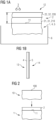
- the textile object 1 has a textile surface 11, wherein a protective layer 2 for inhibiting an accumulation of biological material 3 is arranged on the textile surface 11.
- the protective layer 2 has at least one anode layer 21 with anode material 210 and at least one cathode layer 22 with cathode material 220.
- the anode layer 21 and the cathode layer 22 are designed such that in the presence of moisture at least one galvanic micro-cell 12 with micro-anode 31 and micro-cathode 32 is formed.
- the cathode material 220 is manganese dioxide and the anode material is silver or cerium oxide.
- the textile body 1 is a textile fleece 5, with which seat cushions 4 are designed in trains.
- the textile fleece 5 is provided with a silver-manganese dioxide or a cerium oxide-manganese dioxide protective layer.
- Figure 1B shows a combination of a cushion 4 and a textile fleece 5.
- the textile fleece 5 is arranged on the back side 14 of the cushion 4.
- the front side 13 of the poster 4 is uncovered.
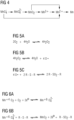
- Both the silver and the manganese dioxide and the cerium oxides (Ce 2 O 3 and CeO 2 ) are formed in situ wet-chemically on the starting textile surface 100 or on the textile surface 11 from the corresponding electrolyte.
- the manganese(II) nitrate solution is adjusted to pH 8 either by adding ammonia or by adding a basic amino acid such as L-lysine.
- a basic amino acid such as L-lysine.
- Other basic amino acids such as L-histidine or L-arginine can also be used.
- the manganese(II) salt is oxidized by the potassium permanganate to manganese(IV) oxide and the potassium permanganate is reduced by the manganese(II) salt to manganese(IV) oxide.
- Manganese(IV) oxide comes from both the reducing agent (manganese(II) nitrate) and the oxidizing agent (KMnO 4 ).
- Manganese dioxide is insoluble in aqueous and basic solutions and forms a precipitate on the surface to be coated. The precipitate is then dried in an oven at 110°C under atmospheric oxygen for 24 hours.
- Silver is formed from a low concentration (5g/liter to 25g/liter) silver nitrate solution and glucose-ascorbic acid solution.
- All of the solutions mentioned can be applied to the textile fleece by spraying them using normal paint spray guns with compressed gas or using special nozzle shapes using ultrasound.
- Each partner of the antimicrobial system is made up of two corresponding electrolytes, which are sprayed separately onto the textile fleece simultaneously using two nozzles so that the respective bactericidal and virucidal particles are formed in situ.
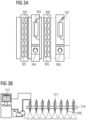
- Figure 3A shows nozzle arrangements in width and depth.
- a cerium(III) nitrate solution is sprayed on and in the second row 302 the precipitant for cerium(III) oxide.
- the precipitant is an ammonia solution.
- a heat source infrared radiator 303 or hot air blower 304 for drying.
- Rows 305 and 306 are also very close to each other, so that potassium permanganate and manganese (II) nitrate can be sprayed simultaneously. After drying With infrared radiator 307 or hot air blower 308 in atmospheric oxygen at 110°C for several hours, the long and wide textile fleece or fleece webs are ready and can be fed for further processing, e.g. as lining material for the upholstered seats.
- textile objects in the form of clothing especially in the form of medical clothing or in the form of masks with a nose-mouth area or in the form of textile fleeces in filter systems are intended.
- FIG. 3B shows a schematic representation of ultrasonic nozzles 309 arranged on a bridge frame 310.
- Each ultrasonic nozzle 309 has a liquid supply channel 311 and an electrical plug for the ultrasonic generator as well as a piezo element for transmitting the ultrasound to the spray medium.
- the liquid supply channels 311 are fed from a reservoir via a pump.
- a central control unit 312 transmits a voltage to the electrical contacts of the ultrasonic nozzles so that the piezo element can perform a mechanical movement. These movements are transmitted to the spray medium.
- the advantage of ultrasonic atomization is the uniform formation and distribution of the droplet size in order to produce thin films in the range of 1 ⁇ m, since the spray medium is atomized without pressure.
- a thin liquid film is formed at the head of the nozzle, in which the piezo element is located, and the vibrations of the piezo create standing waves in the film.
- the peaks of the standing waves detach at sufficiently high vibration amplitudes and form small droplets.
- the droplets are guided onto the substrate via a carrier gas, which is also supplied as a forming gas.
- the main factor influencing the droplet size is the frequency of the ultrasound application.
- the size of the droplets is inversely proportional to two-thirds of the frequency.
- the sulfur in a sulfur-containing proteinogenic amino acid can be converted to a sulfoxide or the hydroxyl group in the side chain of a proteinogenic amino acid to an aldehyde or carboxyl group.
- a chemically The altered amino acid can no longer participate in the construction of vital proteins. Consequently, the microorganism dies.
- Nucleic bases which are contained in the nucleic acids DNA and RNA and are responsible for the genetic information, consist of a basic structure of heterocyclic aromatic amines (purines and pyrimidines) with double bonds. Radicals such as superoxide (hyperoxide) or hydroxyl radicals with single unpaired electrons in the outer electron shell attack the double bonds by filling their outer electron shell with the ⁇ electrons in order to achieve the noble gas configuration. This results in a loss of the double bond system in the ring and the nucleic bases can no longer pass on their information for protein biosynthesis and the replication of the nucleic acids DNA and RNA is interrupted. Here too, the microorganism dies.
- a catalytically supported redox process is triggered at the micro-anode (silver) when it comes into contact with a charged shell of the micro-organism. In this case, too, the microorganisms are destroyed by oxidation. The micro-anode then returns to its original state.
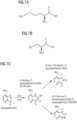
- FIGS. 7A and 7B are examples of proteinogenic amino acids whose functional groups can be oxidatively modified by means of the invention.
- Figure 7C shows, based on the oxidation of adenine (nucleic base in DNA and RNA), basic reactions that are triggered in molecules of a microorganism with the help of the invention, so that proliferation of the microorganism and thus accumulation of multiplied microorganisms is not possible.
- adenine nucleic base in DNA and RNA
- the effect of the protective layer is simulated using a computer program product.
- the computer program product has a digital twin.
Landscapes
- Engineering & Computer Science (AREA)
- Textile Engineering (AREA)
- Life Sciences & Earth Sciences (AREA)
- Chemical & Material Sciences (AREA)
- Biochemistry (AREA)
- Chemical Kinetics & Catalysis (AREA)
- General Chemical & Material Sciences (AREA)
- Microbiology (AREA)
- Chemical Or Physical Treatment Of Fibers (AREA)
Priority Applications (1)
| Application Number | Priority Date | Filing Date | Title |
|---|---|---|---|
| EP22215340.5A EP4389961A1 (fr) | 2022-12-21 | 2022-12-21 | Objet textile avec couche protectrice, procédé de fabrication de l'objet textile avec la couche protectrice, utilisation de l'objet textile et produit programme d'ordinateur avec une couche intermédiaire de simulation |
Applications Claiming Priority (1)
| Application Number | Priority Date | Filing Date | Title |
|---|---|---|---|
| EP22215340.5A EP4389961A1 (fr) | 2022-12-21 | 2022-12-21 | Objet textile avec couche protectrice, procédé de fabrication de l'objet textile avec la couche protectrice, utilisation de l'objet textile et produit programme d'ordinateur avec une couche intermédiaire de simulation |
Publications (1)
| Publication Number | Publication Date |
|---|---|
| EP4389961A1 true EP4389961A1 (fr) | 2024-06-26 |
Family
ID=84547425
Family Applications (1)
| Application Number | Title | Priority Date | Filing Date |
|---|---|---|---|
| EP22215340.5A Pending EP4389961A1 (fr) | 2022-12-21 | 2022-12-21 | Objet textile avec couche protectrice, procédé de fabrication de l'objet textile avec la couche protectrice, utilisation de l'objet textile et produit programme d'ordinateur avec une couche intermédiaire de simulation |
Country Status (1)
| Country | Link |
|---|---|
| EP (1) | EP4389961A1 (fr) |
Citations (3)
| Publication number | Priority date | Publication date | Assignee | Title |
|---|---|---|---|---|
| WO2021190912A1 (fr) * | 2020-03-24 | 2021-09-30 | Siemens Aktiengesellschaft | Matériau fibreux pour utilisation antibactérienne et/ou antivirale, filtre, protection buccale/nasale, utilisation dans la protection buccale/nasale, et procédé de production d'un matériau fibreux |
| EP3915377A1 (fr) * | 2020-05-26 | 2021-12-01 | AgXX Intellectual Property Holding GmbH | Compresse hybride antiseptique pour le traitement local des plaies |
| WO2022142126A1 (fr) * | 2020-12-29 | 2022-07-07 | 北方工业大学 | Système de commande jumelée numérique pour cellule d'électrolyse d'aluminium |
-
2022
- 2022-12-21 EP EP22215340.5A patent/EP4389961A1/fr active Pending
Patent Citations (4)
| Publication number | Priority date | Publication date | Assignee | Title |
|---|---|---|---|---|
| WO2021190912A1 (fr) * | 2020-03-24 | 2021-09-30 | Siemens Aktiengesellschaft | Matériau fibreux pour utilisation antibactérienne et/ou antivirale, filtre, protection buccale/nasale, utilisation dans la protection buccale/nasale, et procédé de production d'un matériau fibreux |
| EP3915377A1 (fr) * | 2020-05-26 | 2021-12-01 | AgXX Intellectual Property Holding GmbH | Compresse hybride antiseptique pour le traitement local des plaies |
| EP3915374A1 (fr) * | 2020-05-26 | 2021-12-01 | AGXX Intellectual Property Holding GmbH | Composition bioactive de destruction des cellules |
| WO2022142126A1 (fr) * | 2020-12-29 | 2022-07-07 | 北方工业大学 | Système de commande jumelée numérique pour cellule d'électrolyse d'aluminium |
Non-Patent Citations (1)
| Title |
|---|
| DATABASE INSPEC [online] THE INSTITUTION OF ELECTRICAL ENGINEERS, STEVENAGE, GB; 2022, LI Q ET AL: "Study on Two-Phase Permeation of Oxygen and Electrolyte in Lithium Air Battery Electrode Based on Digital Twin", XP002809362, Database accession no. 22875124 * |
Similar Documents
| Publication | Publication Date | Title |
|---|---|---|
| EP1239528B1 (fr) | Procédé de preparation d'un électrode multicouche ou d'un ensemble membrane-électrode, et électrode a diffusion de gaz | |
| DE3881677T2 (de) | Verfahren zur behandlung von abgas durch bestrahlung mit elektronenstrahlen. | |
| DE3823732A1 (de) | Katalysator zum kracken von ozon | |
| DE10392572T5 (de) | Verfahren zur Herstellung von mesoporösen TiO2-Dünnfilmen mit hohen fotokatalytischen und antibakteriellen Wirksamkeiten | |
| DE202013012156U1 (de) | Desinfektionsvorrichtung | |
| EP2935105A1 (fr) | Générateur de gaz ammoniac et son utilisation pour la réduction d'oxydes d'azote dans les gaz d'échappement | |
| Graf et al. | Teamlead–Führung 4.0 | |
| DE102009041248A1 (de) | Bioaktiv beschichtete Metallimplantate und Verfahren zu deren Herstellung | |
| EP4389961A1 (fr) | Objet textile avec couche protectrice, procédé de fabrication de l'objet textile avec la couche protectrice, utilisation de l'objet textile et produit programme d'ordinateur avec une couche intermédiaire de simulation | |
| DE2928911A1 (de) | Elektrode fuer die wasserelektrolyse | |
| WO1984000298A1 (fr) | Procede de fabrication de compositions d'effet relaxant et se fixant sur la peau | |
| WO2011120703A1 (fr) | Procédé de désinfection de locaux et dispositif de nébulisation | |
| DE102013217085A1 (de) | Verfahren zur Verbesserung der Biokompatibilität einer Oberfläche | |
| Klein et al. | Distributed Leadership: Formen, Wirkungen und Spannungsfelder. | |
| CN109201425A (zh) | 一种可生成负氧离子的光学幕布喷涂工艺及应用 | |
| DE102023114710B4 (de) | Verfahren zur Abluftreinigung und Partikelmodul | |
| EP4389941A1 (fr) | Objet métallique avec couche protectrice, procédé de fabrication de l'objet métallique avec la couche protectrice et produit programme d'ordinateur avec un jumeau numérique pour la simulation de l'effet | |
| Siebrand et al. | Interaction between vibronic coupling and spin—orbit coupling in pyrazine | |
| DE2544117A1 (de) | Membranen aus vernetztem, gegebenenfalls substituiertem polyacrylamid, verfahren zu deren herstellung und verwendung derselben | |
| Bielecke et al. | Sich selbst begegnen im Konflikt–Blickwechsel 5: Grenzerfahrungen in der Mediation. | |
| Meyer | Lean Leadership–ein zukunftsorientiertes pflegerisches Führungsmodell?-Ein Aktionsforschungsprojekt in einer psychiatrischen Universitätsklinik | |
| DE439544C (de) | Desinfektionsmittel | |
| Untereinheiten | 35. Bakteriengeißeln, Chemotaxis | |
| EP1683583B1 (fr) | Dispositif et procédé d'application de revêtement en poudre | |
| Dumouchel | ICLASS’W |
Legal Events
| Date | Code | Title | Description |
|---|---|---|---|
| PUAI | Public reference made under article 153(3) epc to a published international application that has entered the european phase |
Free format text: ORIGINAL CODE: 0009012 |
|
| STAA | Information on the status of an ep patent application or granted ep patent |
Free format text: STATUS: THE APPLICATION HAS BEEN PUBLISHED |
|
| AK | Designated contracting states |
Kind code of ref document: A1 Designated state(s): AL AT BE BG CH CY CZ DE DK EE ES FI FR GB GR HR HU IE IS IT LI LT LU LV MC ME MK MT NL NO PL PT RO RS SE SI SK SM TR |
|
| STAA | Information on the status of an ep patent application or granted ep patent |
Free format text: STATUS: REQUEST FOR EXAMINATION WAS MADE |
|
| 17P | Request for examination filed |
Effective date: 20241219 |