EP4390631A1 - Verfahren und vorrichtung zum öffnen von schwebenden benachrichtigungen - Google Patents
Verfahren und vorrichtung zum öffnen von schwebenden benachrichtigungen Download PDFInfo
- Publication number
- EP4390631A1 EP4390631A1 EP23807074.2A EP23807074A EP4390631A1 EP 4390631 A1 EP4390631 A1 EP 4390631A1 EP 23807074 A EP23807074 A EP 23807074A EP 4390631 A1 EP4390631 A1 EP 4390631A1
- Authority
- EP
- European Patent Office
- Prior art keywords
- terminal device
- banner notification
- interface
- duration
- region
- Prior art date
- Legal status (The legal status is an assumption and is not a legal conclusion. Google has not performed a legal analysis and makes no representation as to the accuracy of the status listed.)
- Pending
Links
Images














Classifications
-
- G—PHYSICS
- G06—COMPUTING OR CALCULATING; COUNTING
- G06F—ELECTRIC DIGITAL DATA PROCESSING
- G06F3/00—Input arrangements for transferring data to be processed into a form capable of being handled by the computer; Output arrangements for transferring data from processing unit to output unit, e.g. interface arrangements
- G06F3/01—Input arrangements or combined input and output arrangements for interaction between user and computer
- G06F3/011—Arrangements for interaction with the human body, e.g. for user immersion in virtual reality
- G06F3/013—Eye tracking input arrangements
-
- G—PHYSICS
- G06—COMPUTING OR CALCULATING; COUNTING
- G06F—ELECTRIC DIGITAL DATA PROCESSING
- G06F3/00—Input arrangements for transferring data to be processed into a form capable of being handled by the computer; Output arrangements for transferring data from processing unit to output unit, e.g. interface arrangements
- G06F3/01—Input arrangements or combined input and output arrangements for interaction between user and computer
- G06F3/048—Interaction techniques based on graphical user interfaces [GUI]
- G06F3/0481—Interaction techniques based on graphical user interfaces [GUI] based on specific properties of the displayed interaction object or a metaphor-based environment, e.g. interaction with desktop elements like windows or icons, or assisted by a cursor's changing behaviour or appearance
- G06F3/04812—Interaction techniques based on cursor appearance or behaviour, e.g. being affected by the presence of displayed objects
Definitions
- This application relates to the field of terminal technologies, and in particular, to a banner notification opening method and an apparatus.
- terminal devices With the development of terminal technologies, functional requirements of users for terminal devices are becoming increasingly diversified. For example, the users may interact with the terminal devices to control the terminal devices.
- the terminal device may display, in an upper region of a display, a banner notification corresponding to the message, so that the user senses a message content change in time. Further, when receiving a trigger operation performed by the user on the banner notification, the terminal device may open the banner notification, for example, expand the banner notification and/or open an application interface corresponding to the banner notification.
- Embodiments of this application provide a banner notification opening method and apparatus, to simplify a manner of opening a banner notification in an upper region of a display.
- an embodiment of this application provides a banner notification opening method.
- the method includes: A terminal device displays a first interface.
- the first interface includes a first banner notification.
- the first banner notification is in a first region.
- the first banner notification is a banner notification initiated by a first application.
- the terminal device displays a second banner notification on the first interface when the terminal device detects that a gaze point is in the first region.
- the second banner notification is the expanded first banner notification.
- Message content in the second banner notification is more than message content in the first banner notification.
- the terminal device displays a second interface when the terminal device detects that a gaze point is in the first region.
- the second interface is a displayed interface of the first application.
- the second interface includes message content in a second banner notification. In this way, based on a status in which a user gazes at a banner notification, the terminal device can conveniently expand the banner notification or display an application interface corresponding to the banner notification.
- the first interface may be an interface for receiving a banner notification
- the second interface may be an application interface corresponding to the banner notification
- the method further includes: The terminal device displays the second interface after displaying the second banner notification on the first interface, when the terminal device detects that the gaze point is in the first region. In this way, based on the status in which the user gazes at the banner notification, the terminal device can also edit the expanded banner notification and display the application interface corresponding to the banner notification.
- that the terminal device displays the second interface after displaying the second banner notification on the first interface, when the terminal device detects that the gaze point is in the first region includes that the terminal device displays the second interface after displaying the second banner notification on the first interface, when the first banner notification is allowed to be expanded and the terminal device detects that the gaze point is in the first region. In this way, when detecting that the gaze point is in the first region, based on a status whether the banner notification is allowed to be expanded, the terminal device can determine whether the banner notification is expanded and display the application interface corresponding to the banner notification.
- a first switch and a second switch are disposed in the terminal device, the first switch is configured to expand the first banner notification when it is detected that the gaze point is in the first region, the second switch is configured to open the first application when it is detected that the gaze point is in the first region or a second region, and the second region is a region in which the second banner notification is located.
- the terminal device displays the second interface after displaying the second banner notification on the first interface, when the first banner notification is allowed to be expanded and the terminal device detects that the gaze point is in the first region includes that when the first switch is on, the second switch is on, the first banner notification is allowed to be expanded, and the terminal device detects that the gaze point is in the first region, the terminal device displays the second interface after displaying the second banner notification on the first interface.
- the terminal device may set the first switch and the second switch according to a requirement, so that the terminal device can control, in an eye tracking function based on statuses of the first switch and the second switch and a status whether the banner notification is expanded, whether to expand the banner notification and/or open the application corresponding to the banner notification.
- the terminal device completes calibration of the eye tracking function
- the first switch and the second switch are in an on state by default. Therefore, that the first switch is off and/or the second switch is off described in this embodiment of this application may be understood as that the user turns off the first switch and/or the second switch after the first switch and the second switch are in the on state by default.
- the method further includes: When duration of displaying the first banner notification is greater than or equal to first duration, the terminal device cancels display of the first banner notification. Alternatively, when total duration of displaying the first banner notification and the second banner notification is greater than or equal to first duration, the terminal device cancels display of the second banner notification. In this way, the terminal device may cancel display of the banner notification when determining that duration of displaying the banner notification reaches the first duration.
- that the terminal device displays the second interface after displaying the second banner notification on the first interface, when the terminal device detects that the gaze point is in the first region includes that when the terminal device detects that duration in which the gaze point is in the first region is greater than or equal to second duration, the terminal device displays the second banner notification on the first interface; and after the terminal device displays the second banner notification, the terminal device displays the second interface when the terminal device detects that duration in which the gaze point is in the second region is greater than or equal to seventh duration.
- the seventh duration includes third duration and fifth duration
- the first interface further includes a gaze cursor
- the gaze cursor is used to indicate a position of the gaze point on a display. That the terminal device displays the second interface when the terminal device detects that duration in which the gaze point is in the second region is greater than or equal to seventh duration includes that when the terminal device detects that the duration in which the gaze point is in the second region is greater than or equal to the third duration, the terminal device displays a first progress bar at a start position on an outer side of the gaze cursor; and after the terminal device displays the first progress bar at the start position, when the terminal device detects that the duration in which the gaze point is in the second region is greater than or equal to the fifth duration, the terminal device displays the first progress bar at an end position on an outer side of the gaze point, and further displays the second interface.
- the terminal device may determine the position of the gaze point on the display based on the gaze cursor, determine, based on the third duration, whether to start the progress bar, and determine, based on the fifth duration, whether to open the interface corresponding to the banner notification, and adequately identify a gaze status of the user, to improve banner notification opening accuracy.
- that the terminal device displays a second banner notification on the first interface when the terminal device detects that a gaze point is in the first region includes that the terminal device displays the second banner notification on the first interface, when the first switch is on, the second switch is off, the first banner notification is allowed to be expanded, and the terminal device detects that the gaze point is in the first region.
- the terminal device may set the first switch and the second switch according to a requirement, so that the terminal device can control, in an eye tracking function based on statuses of the first switch and the second switch and a status whether the banner notification is expanded, whether to expand the banner notification and/or open the application corresponding to the banner notification.
- the terminal device may monitor the banner notification; and when detecting the banner notification, determine whether the banner notification is expanded, and enable the eye tracking function. Because the second switch is in an off state, when the banner notification is in an expanded state, even if the gaze point is continuously on the expanded banner notification, the terminal device does not open the application interface corresponding to the banner notification.
- that the terminal device displays a second banner notification on the first interface when the terminal device detects that a gaze point is in the first region includes that the terminal device displays the second banner notification on the first interface when the terminal device detects that the duration in which the gaze point is in the first region is greater than or equal to the second duration.
- that the terminal device displays a second interface when the terminal device detects that a gaze point is in the first region includes that the terminal device displays the second interface when the terminal device determines that a preset condition is met and the terminal device detects that the gaze point is in the first region.
- the preset condition includes: that the first switch is off, the second switch is on, and the first banner notification is allowed to be expanded; or that the first switch is on, the second switch is on, and the first banner notification is not allowed to be expanded; or that the first switch is off, the second switch is on, and the first banner notification is not allowed to be expanded.
- the terminal device may set the first switch and the second switch according to the requirement, so that the terminal device can control, in the eye tracking function based on the statuses of the first switch and the second switch and the status whether the banner notification is expanded, whether to expand the banner notification and/or open the application corresponding to the banner notification.
- the terminal device does not monitor the banner notification, and therefore cannot enable the eye tracking function.
- that the terminal device displays a second interface when the terminal device detects that a gaze point is in the first region includes that the terminal device displays the second interface when the terminal device detects that the duration in which the gaze point is in the first region is greater than or equal to eighth duration.
- the eighth duration includes fourth duration and the fifth duration
- the first interface further includes the gaze cursor
- the gaze cursor is used to indicate the position of the gaze point on the display. That the terminal device displays the second interface when the terminal device detects that the duration in which the gaze point is in the first region is greater than or equal to eighth duration includes that when the terminal device detects that the duration in which the gaze point is in the first region is greater than or equal to the fourth duration, the terminal device displays a second progress bar at a start position on the outer side of the gaze cursor; and after the terminal device displays the second progress bar at the start position, when the terminal device detects that the duration in which the gaze point is in the first region is greater than or equal to the fifth duration, the terminal device displays the second progress bar at an end position on an outer side of the gaze point, and further displays the second interface.
- the terminal device may determine the position of the gaze point on the display based on the gaze cursor, determine, based on the fourth duration, whether to start the progress bar, and determine, based on the fifth duration, whether to open the interface corresponding to the banner notification, and adequately identify a gaze status of the user, to improve banner notification opening accuracy.
- the method further includes: The terminal device displays the gaze cursor on the first interface when the terminal device detects that the gaze point is in a preset region.
- the preset region includes the first region.
- the preset region is 1/3 of the display.
- the gaze cursor is used to indicate the position of the gaze point on the display. In this way, the terminal device may display the gaze cursor when detecting that the gaze point is in the preset region, to indicate the position of the gaze point on the display, thereby improving user experience of using the eye tracking function.
- a third switch is disposed in the terminal device, the third switch is configured to enable or disable display of the gaze cursor, and that the terminal device displays the gaze cursor on the first interface when the terminal device detects that the gaze point is in a preset region includes that when the terminal device detects that the gaze point is in the preset region and the third switch is on, the terminal device displays the gaze cursor on the first interface.
- the user may turn on or off the third switch according to a usage habit of the eye tracking function.
- the terminal device may display the gaze cursor when the gaze point is in the preset region and the third switch is on, to improve flexibility of using the eye tracking function by the user.
- the method further includes: The terminal device cancels display of the gaze cursor when the terminal device detects that the gaze point is not in the preset region or duration in which the gaze point leaves the first region or the second region is greater than or equal to sixth duration.
- the terminal device may determine that the user no longer needs to open a banner notification based on a gaze status. Therefore, the terminal device may cancel display of the gaze cursor, thereby reducing interference of the gaze cursor to interface display.
- the method further includes: When the terminal device determines that a preset function is not enabled and receives a third banner notification for a first time, the terminal device displays a third interface.
- the third interface includes the third banner notification and a first control used to enable the preset function.
- the terminal device displays a fourth interface in response to an operation on the first control.
- the fourth interface includes an identifier used to indicate that the preset function is not enabled. In this way, when receiving the banner notification for the first time and detecting that the eye tracking function is not enabled, the terminal device may prompt the user to enable the eye tracking function to improve experience of using the eye tracking function by the user.
- the preset function may be the eye tracking function described in this embodiment of this application.
- the third banner notification may be a banner notification 301 in FIG. 3A
- the first control may be a control 303.
- the third banner notification may be a banner notification 304 in FIG. 3B
- the first control may be a control 306.
- the fourth interface may be an interface shown in FIG. 3C .
- the method further includes: The terminal device displays a fifth interface when the terminal device receives a first operation on the third interface.
- the fifth interface is an interface corresponding to a notification center of the terminal device.
- the fifth interface includes the first control and information used to indicate a recommendation to enable the preset function. In this way, the terminal device may implement a gentle notification in the notification center, and recommend the user to use the eye tracking function when use of another function by the user is not interfered with.
- the fifth interface may be an interface shown in FIG. 4A .
- the first control may be a control 403.
- an embodiment of this application provides a banner notification opening apparatus.
- the banner opening apparatus includes a display unit and a processing unit.
- the display unit is configured to display a first interface.
- the first interface includes a first banner notification.
- the first banner notification is located in a first region.
- the first banner notification is a banner notification initiated by a first application.
- the display unit is further configured to display a second banner notification on the first interface.
- the second banner notification is the expanded first banner notification.
- Message content in the second banner notification is more than message content in the first banner notification.
- the display unit is further configured to display a second interface.
- the second interface is a displayed interface of the first application.
- the second interface includes message content in a second banner notification.
- the display unit is configured to display the second interface after displaying the second banner notification on the first interface, when the processing unit detects that the gaze point is in the first region.
- the display unit when the first banner notification is allowed to be expanded and the processing unit detects that the gaze point is in the first region, the display unit is further configured to display the second interface after displaying the second banner notification on the first interface.
- a first switch and a second switch are disposed in the terminal device, the first switch is configured to expand the first banner notification when it is detected that the gaze point is in the first region, the second switch is configured to open the first application when it is detected that the gaze point is in the first region or a second region, and the second region is a region in which the second banner notification is located.
- the first switch is on
- the second switch is on
- the first banner notification is allowed to be expanded
- the processing unit detects that the gaze point is in the first region
- the display unit is further configured to display the second interface after displaying the second banner notification on the first interface.
- the processing unit when duration of displaying the first banner notification is greater than or equal to first duration, the processing unit is further configured to cancel display of the first banner notification.
- the processing unit when total duration of displaying the first banner notification and the second banner notification is greater than or equal to first duration, the processing unit is further configured to cancel display of the second banner notification.
- the display unit when the processing unit detects that duration in which the gaze point is in the first region is greater than or equal to second duration, the display unit is further configured to display the second banner notification on the first interface; and after the display unit displays the second banner notification, the display unit is further configured to display the second interface when the processing unit detects that duration in which the gaze point is in the second region is greater than or equal to seventh duration.
- the seventh duration includes third duration and fifth duration
- the first interface further includes a gaze cursor
- the gaze cursor is used to indicate a position of the gaze point on a display.
- the processing unit detects that the duration in which the gaze point is in the second region is greater than or equal to the third duration
- the display unit is further configured to display a first progress bar at a start position on an outer side of the gaze cursor.
- the display unit displays the first progress bar at the start position
- the processing unit detects that the duration in which the gaze point is in the second region is greater than or equal to the fifth duration
- the display unit is further configured to display the first progress bar at an end position on an outer side of the gaze point, and further display the second interface.
- the display unit is further configured to display the second banner notification on the first interface when the first switch is on, the second switch is off, the first banner notification is allowed to be expanded, and the processing unit detects that the gaze point is in the first region.
- the display unit is further configured to display the second banner notification on the first interface when the processing unit detects that the duration in which the gaze point is in the first region is greater than or equal to the second duration.
- the display unit is further configured to display the second interface when the processing unit determines that a preset condition is met, and the processing unit detects that the gaze point is in the first region.
- the preset condition includes: that the first switch is off, the second switch is on, and the first banner notification is allowed to be expanded; or that the first switch is on, the second switch is on, and the first banner notification is not allowed to be expanded; or that the first switch is off, the second switch is on, and the first banner notification is not allowed to be expanded.
- the display unit is further configured to display the second interface when the processing unit detects that the duration in which the gaze point is in the first region is greater than or equal to eighth duration.
- the eighth duration includes fourth duration and the fifth duration
- the first interface further includes a gaze cursor
- the gaze cursor is used to indicate a position of the gaze point on a display.
- the processing unit detects that the duration in which the gaze point is in the first region is greater than or equal to the fourth duration
- the display unit is further configured to display a second progress bar at a start position on an outer side of the gaze cursor.
- the display unit displays the second progress bar at the start position
- the display unit is further configured to display the second progress bar at an end position on an outer side of the gaze point, and further display the second interface.
- the display unit is further configured to display the gaze cursor on the first interface when the processing unit detects that the gaze point is in a preset region.
- the preset region includes the first region.
- the preset region is 1/3 of the display.
- the gaze cursor is used to indicate the position of the gaze point on the display.
- a third switch is disposed in the terminal device, the third switch is configured to enable or disable display of the gaze cursor, and when the processing unit detects that the gaze point is in the preset region and the third switch is on, the display unit is further configured to display the gaze cursor on the first interface.
- the processing unit is further configured to cancel display of the gaze cursor when the processing unit detects that the gaze point is not in the preset region or duration in which the gaze point leaves the first region or the second region is greater than or equal to sixth duration.
- the display unit when the processing unit determines that a preset function is not enabled and receives a third banner notification for a first time, the display unit is further configured to display a third interface.
- the third interface includes the third banner notification and a first control used to enable the preset function.
- the display unit is further configured to display a fourth interface in response to an operation on the first control.
- the fourth interface includes an identifier used to indicate that the preset function is not enabled.
- the display unit is further configured to display a fifth interface when the processing unit receives a first operation on the third interface.
- the fifth interface is an interface corresponding to a notification center of the terminal device.
- the fifth interface includes the first control and information used to indicate a recommendation to enable the preset function.
- an embodiment of this application provides a terminal device, including a processor and a memory.
- the memory is configured to store code instructions.
- the processor is configured to run the code instructions, so that an electronic device performs the method described in the first aspect or any implementation of the first aspect.
- an embodiment of this application provides a computer-readable storage medium.
- the computer-readable storage medium stores instructions. When the instructions are executed, a computer performs the method described in the first aspect or any implementation of the first aspect.
- a computer program product includes a computer program.
- a computer program When the computer program is run, a computer performs the method described in the first aspect or any implementation of the first aspect.
- first and second are used in embodiments of this application to distinguish between same items or similar items that provide basically same functions or purposes.
- a first value and a second value are merely used to distinguish between different values, and are not intended to limit a sequence thereof.
- a person skilled in the art may understand that the terms such as “first” and “second” do not limit a quantity and an execution sequence, and the terms such as “first” and “second” unnecessarily define a difference.
- At least one indicates one or more
- a plurality of indicates two or more.
- the term “and/or” describes an association relationship between associated objects, and indicates that three relationships may exist.
- a and/or B may indicate the following three cases: Only A exists, both A and B exist, and only B exists, where A and B may be singular or plural.
- the character “/” generally indicates that the associated objects are in an "or” relationship.
- At least one of the following items” or a similar expression thereof indicates any combination of these items, including a single item or any combination of a plurality of items.
- At least one of a, b, or c may represent a, b, c, a and b, a and c, b and c, or a, b, and c, where a, b, and c may be singular or plural.
- An expandable banner notification may be a banner notification that is allowed to be expanded.
- a terminal device may display a banner notification, and the banner notification may include a control used to expand the banner notification.
- the terminal device receives an operation performed by the user on the control for expanding the banner notification, the terminal device displays the expanded banner notification.
- Message content in the expanded banner notification is more than message content in the unexpanded banner notification.
- An unexpandable banner notification may be a banner notification that is not allowed to be expanded.
- a terminal device may display a banner notification.
- the terminal device receives a trigger operation performed by a user in any position in the banner notification, the terminal device opens an application interface corresponding to the banner notification.
- the application interface includes message content in the banner notification.
- the unexpandable banner notification does not include the control used to expand the banner notification.
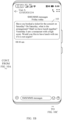
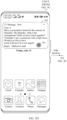
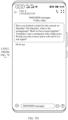
- FIG. 1A , FIG. 1B , and FIG. 1C are a schematic diagram of a scenario according to an embodiment of this application.
- a terminal device is a mobile phone and a banner notification is a banner notification sent by a Messages application is used for description.
- This example does not constitute a limitation on this embodiment of this application.
- the terminal device may display an interface shown in FIG. 1A .
- the interface may include a banner notification 101.
- the banner notification 101 may include one or more of the following: message content, a control 102 used to expand the banner notification, a control used to reply to the message, or a control used to mark the message as read.
- the message content may be sent by a user A.
- the message content may be displayed as "Have you booked a ticket for the concert on Saturday? On Saturday ". It may be understood that the banner notification 101 may include the control 102 when the banner notification 101 is allowed to be expanded.
- the interface shown in FIG. 1A may be a home screen of the terminal device, or may be another interface.
- the Clock application, the Calendar application, the Gallery application, the Notepad application, the Camera application, the Contacts application, the Phone application, the Messages application, and the like may be displayed on the home screen.
- content displayed on the home screen of the terminal device and an interface covered by the banner notification 101 are not specifically limited.
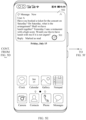
- the terminal device may display an interface shown in FIG. 1B .
- the interface may be a Messages application interface corresponding to the banner notification 101.
- the interface may include information 103. Complete information content may be displayed in the information 103.
- the complete information content may be "Have you booked a ticket for the concert on Saturday? On Saturday, what is the arrangement? Shall we have lunch together? yesterday I saw a restaurant with a high score. would you like to have lunch with me if it is not urgent?".
- the user may reply to the message on the interface shown in FIG. 1B or view the complete message content.
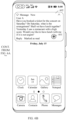
- the terminal device may display an interface shown in FIG. 1C .
- the interface may include an expanded banner notification 104.
- Complete message content may be displayed in the expanded banner notification 104.
- the complete message content is consistent with the message content displayed on the interface shown in FIG. 1B . Details are not described herein again.
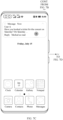
- the terminal device may also display the interface shown in FIG. 1B .
- the unexpandable banner notification does not include the control 102.
- An application interface corresponding to the banner notification can be directly opened through tapping any position of the unexpandable banner notification.
- the scenario in which it is inconvenient for the user to trigger the terminal device may include a scenario such as a conference scenario, a mobile phone hold by a single hand, or a cooking scenario.
- An application corresponding to the banner notification may be understood as an application for sending the banner notification.
- an embodiment of this application provides a banner notification opening method, so that a terminal device can flexibly expand a banner notification and/or open an application interface corresponding to the banner notification when detecting that a gaze position (or referred to as a gaze point) of a user is in a region in which the banner notification is located.
- the foregoing terminal device may also be referred to as a terminal (terminal), user equipment (user equipment, UE), a mobile station (mobile station, MS), a mobile terminal (mobile terminal, MT), or the like.
- the terminal device may be a mobile phone (mobile phone), a smart television, a wearable device, a tablet computer (Pad), a computer with wireless sending and receiving functions, a virtual reality (virtual reality, VR) terminal device, an augmented reality (augmented reality, AR) terminal device, a wireless terminal in industrial control (industrial control), a wireless terminal in self-driving (self-driving), a wireless terminal in remote medical surgery (remote medical surgery), a wireless terminal in a smart grid (smart grid), a wireless terminal in transportation safety (transportation safety), a wireless terminal in a smart city (smart city), and/or a wireless terminal in a smart home (smart home).
- a specific technology and a specific device form that are used by the terminal device are not limited in embodiments of
- FIG. 2 is a schematic diagram of a hardware structure of a terminal device according to an embodiment of this application.
- the terminal device may include a processor 110, an external memory interface 120, an internal memory 121, a universal serial bus (universal serial bus, USB) interface 130, a charging management module 140, a power management module 141, an antenna 1, an antenna 2, a mobile communication module 150, a wireless communication module 160, an audio module 170, a speaker 170A, a telephone receiver 170B, a microphone 170C, a headset jack 170D, a sensor module 180, a button 190, an indicator 192, a camera 193, a display 194, and the like.
- a processor 110 an external memory interface 120, an internal memory 121, a universal serial bus (universal serial bus, USB) interface 130, a charging management module 140, a power management module 141, an antenna 1, an antenna 2, a mobile communication module 150, a wireless communication module 160, an audio module 170, a speaker 170A, a telephone receiver 170B, a microphone 170C, a headset jack 170D, a sensor module 180,
- the sensor module 180 may include one or more of the following: for example, a pressure sensor, a gyroscope sensor, a barometric pressure sensor, a magnetic sensor, an acceleration sensor, a range sensor, an optical proximity sensor, a fingerprint sensor, a temperature sensor, a touch sensor, an ambient light sensor, or a bone conduction sensor.
- the structure illustrated in this embodiment of this application does not constitute a specific limitation on the terminal device.
- the terminal device may include more or fewer components than those shown in the figure, or some components may be combined, or some components may be split, or different component arrangements may be used.
- the components in the figure may be implemented by hardware, software, or a combination of software and hardware.
- the processor 110 may include one or more processing units. Different processing units may be separate devices, or may be integrated into one or more processors.
- the processor 110 may be further provided with a memory configured to store instructions and data.
- the USB interface 130 is an interface that conforms to a USB standard specification, and may be specifically a Mini USB interface, a Micro USB interface, a USB Type C interface, or the like.
- the USB interface 130 may be configured to connect to a charger to charge the terminal device, or may be configured to transmit data between the terminal device and a peripheral device, or may be configured to connect to a headset to play audio through the headset.
- the interface may be alternatively configured to connect to another device, for example, an AR device.
- the charging management module 140 is configured to receive a charging input from the charger.
- the charger may be a wireless charger, or may be a wired charger.
- the power management module 141 is configured to connect to the charging management module 140 and the processor 110.
- a wireless communication function of the terminal device may be implemented by using the antenna 1, the antenna 2, the mobile communication module 150, the wireless communication module 160, a modem, a baseband processor, and the like.
- the antenna 1 and the antenna 2 are configured to transmit and receive electromagnetic wave signals.
- An antenna in the terminal device may be configured to cover one or more communication frequency bands. Different antennas may be multiplexed to improve utilization of the antennas.
- the mobile communication module 150 may provide a solution to wireless communication such as 2G/3G/4G/5G applied to the terminal device.
- the mobile communication module 150 may include at least one filter, a switch, a power amplifier, a low noise amplifier (low noise amplifier, LNA), and the like.
- the mobile communication module 150 may receive an electromagnetic wave through the antenna 1, perform processing such as filtering or amplification on the received electromagnetic wave, and transmit the electromagnetic wave to the modem for demodulation.
- the wireless communication module 160 may provide a solution to wireless communication including a wireless local area network (wireless local area networks, WLAN) (such as a wireless fidelity (wireless fidelity, Wi-Fi) network), Bluetooth (bluetooth, BT), a global navigation satellite system (global navigation satellite system, GNSS), frequency modulation (frequency modulation, FM), and the like applied to the terminal device.
- WLAN wireless local area networks
- WLAN wireless local area networks
- Bluetooth blue, BT
- GNSS global navigation satellite system
- FM frequency modulation
- the modem may include a modulator and a demodulator.
- the modulator is configured to modulate a to-be-sent low-frequency baseband signal into a medium-high-frequency signal.
- the demodulator is configured to demodulate a received electromagnetic wave signal into a low-frequency baseband signal. Then, the demodulator sends the low-frequency baseband signal obtained through demodulation to the baseband processor for processing.
- the low-frequency baseband signal is processed by the baseband processor and then sent to the application processor.
- the application processor outputs a sound signal through an audio device (that is not limited to a speaker, a telephone receiver, and the like), or displays an image or a video through the display 194.
- the modem may be a separate device.
- the modem may be independent of the processor 110, and is disposed in a same device as the mobile communication module 150 or another functional module.
- the terminal device may implement a display function by using the GPU, the display 194, the application processor, and the like.
- the GPU is a microprocessor for image processing and is connected to the display 194 and the application processor.
- the GPU is configured to perform mathematical and geometric calculations and graphics rendering.
- the display 194 is configured to display an image, a video, or the like.
- the display 194 includes a display panel.
- the terminal device may include one or N displays 194, where N is a positive integer greater than 1.
- the terminal device may implement a photographing function by using an ISP, the camera 193, a video codec, the GPU, the display 194, the application processor, and the like.
- the camera 193 is configured to capture a static image or a video.
- the terminal device may include one or N cameras 193, where N is a positive integer greater than 1.
- the external memory interface 120 may be configured to connect to an external storage card, for example, a Micro SD card, to extend a storage capability of the terminal device.
- the external storage card communicates with the processor 110 through the external memory interface 120, to implement a data storage function. For example, files such as music and a video are stored in the external storage card.
- the internal memory 121 may be configured to store computer-executable program code.
- the executable program code includes instructions.
- the internal memory 121 may include a program storage area and a data storage area.
- the terminal device may implement an audio function, for example, music playback and recording, by using the audio module 170, the speaker 170A, the telephone receiver 170B, the microphone 170C, the headset jack 170D, the application processor, and the like.
- an audio function for example, music playback and recording
- the audio module 170 is configured to convert digital audio information into an analog audio signal for output, and is also configured to convert an analog audio input into a digital audio signal.
- the speaker 170A also referred to as a "horn” is configured to convert an electrical audio signal into a sound signal.
- the terminal device may listen to music or answer a call in a hands-free mode by using the speaker 170A.
- the telephone receiver 170B also referred to as an "earpiece”, is configured to convert an audio electrical signal into a sound signal. When the terminal device receives a call or a voice message, the telephone receiver 170B can be placed close to an ear to receive the voice.
- the headset jack 170D is configured to connect to a wired headset.
- the microphone 170C also referred to as a "mic” or "mike” is configured to convert a sound signal into an electrical signal. In this embodiment of this application, the terminal device may have one microphone 170C.
- the button 190 includes a power button, a volume button, and the like.
- the button 190 may be a mechanical button, or may be a touch key.
- the terminal device may receive a button input and generate a button signal input related to user settings and function control of the terminal device.
- the indicator 192 may be an indicator light, may be configured to indicate a charging status or a power change, and may also be configured to indicate a message, a missed call, a notification, and the like.
- an operating system for example, an iOS operating system, an Android (android) operating system, or a Windows operating system, is further run on the foregoing components of the device.
- An application can be installed and run on the operating system.
- a software system of the terminal device may use a layered architecture, an event-driven architecture, a microkernel architecture, a microservice architecture, a cloud architecture, or the like. Details are not described herein.
- the terminal device described in embodiments of this application may support an eye tracking function.
- the eye tracking function may be understood as follows: The terminal device tracks a position of a gaze point, and determines, through tracking the position of the gaze point, whether to expand a banner notification and/or open an application corresponding to the banner notification.
- the terminal device may recommend the eye tracking function by using a prompt capsule (refer to an embodiment corresponding to FIG. 3A , FIG. 3B , FIG. 3C , and FIG. 3D ) and/or recommend the eye tracking function by using a gentle notification function of a notification bar (refer to an embodiment corresponding to FIG. 4A , FIG. 4B , and FIG. 4C ).
- the terminal device may recommend the eye tracking function again by using a gentle notification of the notification bar (refer to the embodiment corresponding to FIG. 4A , FIG. 4B , and FIG. 4C ) after a preset time period (for example, 7 days or 14 days) starting from the first time of recommendation.
- a gentle notification of the notification bar (refer to the embodiment corresponding to FIG. 4A , FIG. 4B , and FIG. 4C ) after a preset time period (for example, 7 days or 14 days) starting from the first time of recommendation.
- the "first time” herein may indicate that a banner notification is received for a first time in the following cases: 1.
- the user buys a new mobile phone, and the new mobile phone includes the eye tracking function corresponding to the method described in this embodiment of this application.
- the user upgrades a software system of an old mobile phone, and an upgraded system version includes the eye tracking function corresponding to the method described in this embodiment of this application.
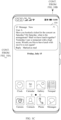
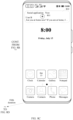
- FIG. 3A , FIG. 3B , FIG. 3C , and FIG. 3D are a schematic diagram of an interface of recommending an eye tracking function according to an embodiment of this application.
- a terminal device may display an interface shown in FIG. 3A , when the terminal device receives a banner notification for a first time, detects that the eye tracking function is not enabled, and determines that the banner notification supports expansion (as shown in FIG. 1C ).
- a terminal device may display an interface shown in FIG. 3B , when the terminal device receives a banner notification for a first time, detects that the eye tracking function is not enabled, and determines that the banner notification does not support expansion.
- the interface may include a banner notification 301 and a prompt capsule 302.
- the banner notification 301 includes a control used to expand the banner notification.
- the prompt capsule 302 includes a control 303 used to enable the eye tracking function.
- the prompt capsule 302 is used to prompt the user to gaze to expand the banner notification.
- the prompt capsule 302 may be displayed as Gaze to expand the notification.
- the control 303 may be displayed as Tap-to-open.
- the interface may include a banner notification 304 and a prompt capsule 305.
- the banner notification 304 does not include a control used to expand the banner notification.
- the prompt capsule 305 includes a control 306 used to enable the eye tracking function.
- the prompt capsule 305 is used to prompt the user to gaze at the banner notification to open an application interface corresponding to the banner notification.
- the prompt capsule 305 may be displayed as Gaze at the notification to open.
- the control 306 may be displayed as Tap-to-open.
- the prompt capsule 302 may prompt the user that the notification can be expanded through gaze; or when the banner notification 304 does not support expansion, the prompt capsule 305 may prompt the user that an application corresponding to the banner notification can be opened through gaze.
- the terminal device may display an interface shown in FIG. 3C , when the terminal device receives a trigger operation performed by the user on the control 303 shown in FIG. 3A or receives a trigger operation performed by the user on the control 306 on the interface shown in FIG. 3B .
- the interface may be a setting interface corresponding to a smart sensing function in system settings of the terminal device.
- the interface may include a control 307 (or referred to as an eye tracking control 307) used to enable and calibrate the eye tracking function.
- a word “Uncalibrated” may be displayed around the control 307. The word “Uncalibrated” may be used to indicate that the user does not enable the eye tracking function.
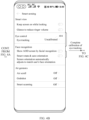
- the terminal device may display an interface shown in FIG. 3D .
- the interface may include a first switch 308, a second switch 309, a switch description, and a third switch 310.
- the first switch 308, the second switch 309, and the third switch 310 may be all in an on state by default after calibration is completed.
- the terminal device may subsequently set on/off statuses of the first switch 308, the second switch 309, and the third switch 310 without further calibration.
- a word “Calibrated” may be displayed around the control 307 on the interface.
- the word “Calibrated” is used to indicate that the user has calibrated the eye tracking function.
- the on/off statuses of the three switches on the interface shown in FIG. 3D indicate whether the eye tracking function is enabled (a specific case is described below).
- the switch description is used to indicate that the terminal device may dynamically track an auxiliary screen operation based on a human eye, and perform content indicated by the first switch or the second switch when a focus on the banner notification is recognized.
- the terminal device When the first switch 308 is in the on state, for the banner notification that supports expansion, the terminal device expands content of the banner notification when detecting that the user gazes at the banner notification.
- the terminal device When the first switch 308 is in the off state, for the banner notification that supports expansion, the terminal device cannot expand the content of the banner notification even if detecting that the user gazes at the banner notification.
- the first switch 308 is applicable to the banner notification that supports expansion, and the first switch 308 is not applicable to the banner notification that does not support expansion. Even if the first switch 308 is in the on state, for the banner notification that does not support expansion, the content of the banner notification cannot be expanded through gaze of the user.
- the terminal device can open the application corresponding to the banner notification when detecting that the user gazes at the banner notification.
- the terminal device cannot open the application corresponding to the banner notification even if detecting that the user gazes at the banner notification.
- the second switch 309 is applicable to the banner notification that supports expansion and the banner notification that does not support expansion.
- the application corresponding to the banner notification can be opened through gaze of the user.
- the second switch 309 is in the off state, for both the banner notification that supports expansion and the banner notification that does not support expansion, the application corresponding to the banner notification cannot be opened through gaze of the user.
- the terminal device When the third switch 310 is in the on state and the terminal device receives the banner notification, the terminal device enables the eye tracking function described in this embodiment of this application.
- the terminal device may display a gaze cursor when the terminal device detects eye movement data and a gaze point indicated in the eye movement data is in a preset region of a display.
- the gaze cursor is not displayed even if the terminal device detects the eye movement data and the gaze point indicated in the eye movement data is in the preset region on the display.
- the terminal device cannot enable the eye tracking function even if the third switch 310 is in the on state.
- the eye movement data may be understood as a position of a human face, a position of the human eye, and/or the like.
- the eye movement data is not biological data that indicates the user.
- An area of the preset region occupies 1/3 of a total area of the display.
- the preset region is an upper region of the display.
- any interface described in the following embodiments corresponding to FIG. 5A to FIG. 9E may be an interface displayed when the third switch 310 is on.
- the terminal device cannot display the gaze cursor based on a gaze status of the user and cannot display progress motion effect on an outermost side of the gaze cursor based on the gaze status of the user, content indicated by the first switch and/or the second switch may be still executed based on the gaze status of the user for the banner notification.
- the terminal device may set, according to a user requirement, the first switch 308, the second switch 309, and the third switch 310 that are on by default.
- the terminal device when receiving the banner notification for the first time and detecting that the eye tracking function is not enabled, the terminal device may prompt the user to enable the eye tracking function to improve experience of using the eye tracking function by the user.
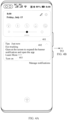
- FIG. 4A , FIG. 4B , and FIG. 4C are a schematic diagram of another interface of recommending an eye tracking function according to an embodiment of this application.
- a terminal device receives a banner notification for a first time and detects that an eye tracking function is not enabled.
- the terminal device may display the interface shown in FIG. 3A or FIG. 3B , and may also display a notification of the Tips application in a notification center. For example, when the terminal device receives an operation that a user slides down from the top of a display, the terminal device displays an interface shown in FIG. 4A .
- the interface may include a notification of the Tips application. Content of the notification includes information that indicates the eye tracking function.
- the interface may include a notification 401 initiated by the Tips application.
- the notification 401 is used to recommend the user to use the eye tracking function.
- the notification 401 may include text information 402 used to recommend use of the eye tracking function and a control 403 used to enable the eye tracking function.
- the text information 402 may be displayed as "Gaze at the screen, expand the banner notification, and open the application. Learn More".
- the control 403 may be displayed as Enable.
- the terminal device may display an interface shown in FIG. 4B .
- the interface shown in FIG. 4B may include a control 404.
- a word “Uncalibrated” may be displayed around the control 404.
- the word “Uncalibrated” may be used to indicate that the user does not enable the eye tracking function.
- the terminal device When the terminal device receives a trigger operation performed by the user on the control 404 and completes calibration for eye tracking on the interface shown in FIG. 4B , the terminal device may display an interface shown in FIG. 4C .
- the interface shown in FIG. 4C is the same as the interface shown in FIG. 3D . Details are not described herein again.
- the terminal device may recommend the eye tracking function again to the user by using a gentle notification of a notification bar.
- the terminal device may display the notification of the Tips application again in a notification center after a preset time period (for example, 7 days or 14 days) starting from the first time of recommending the eye tracking function.
- the terminal device displays the interface shown in FIG. 4A .
- the interface shown in FIG. 4A includes the notification of the Tips application.
- the content of the notification includes information that indicates the eye tracking function.
- the terminal device does not need to display the notification of the Tips application again in the notification center.
- the terminal device may implement a plurality of recommendations for the eye tracking function, to improve frequency of using the eye tracking function by the user and experience of using the eye tracking function by the user.
- the terminal device may determine, based on setting statuses of the user for the first switch and the second switch and whether the banner notification supports expansion, how to implement display when a gaze point is on the banner notification.
- Any interface described in the following embodiments corresponding to FIG. 5A to FIG. 8E may be an interface displayed when the third switch 310 is on.
- the terminal device completes calibration of the eye tracking function
- the first switch and the second switch are in an on state by default. Therefore, that the first switch is off and/or the second switch is off described in this embodiment of this application may be understood as that the user turns off the first switch and/or the second switch after the first switch and the second switch are in the on state by default.
- That the first switch and the second switch are both off may be understood as a case in which calibration is completed for the eye tracking function, but the eye tracking function is disabled, and therefore, the terminal device does not need to monitor the banner notification.
- the terminal device may monitor the banner notification; and when detecting the banner notification, determine, based on whether the banner notification supports expansion, whether to enable the eye tracking function.
- the terminal device may enable the eye tracking function. For example, when detecting that the gaze point is in a region in which the banner notification is located, the terminal device expands the banner notification and opens an application corresponding to the banner notification.
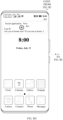
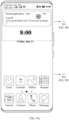
- FIG. 5A , FIG. 5B , FIG. 5C , FIG. 5D , FIG. 5E , and FIG. 5F are a schematic diagram of a banner notification opening interface according to an embodiment of this application.
- the terminal device may monitor a banner notification. For example, when the terminal device detects the banner notification and determines that the banner notification supports expansion, the terminal device enables the eye tracking function. When the user gazes at a preset region, the terminal device displays an interface shown in FIG. 5A .
- the interface may include a gaze cursor 501, a banner notification 502, and a prompt capsule 503.
- the banner notification 502 may include a control 504 used to expand the banner notification.
- the gaze cursor 501 is used to indicate a gaze point of the user.
- the gaze cursor 501 is not in a region in which the banner notification 502 is located.
- the gaze cursor 501 is in a preset region of a display.
- the gaze cursor 501 may be a translucent icon that includes two concentric circles. The two circles have different depth. A color of an inner circle is darker than a color of an outer circle.
- the gaze cursor 501 presents same display effect in different display modes of the terminal device.
- the different display modes may include a dark-color mode, a light-color mode, and the like.
- the terminal device may not display the gaze cursor 501.
- the terminal device may display a solid dot in a position of the gaze point, expand the dot within duration such as 200 ms, and transparently display the dot until the gaze cursor 501 is displayed.
- the preset region occupies 1/3 of a total area of the display.
- the preset region is an upper region of the display.
- the preset region may be a region in a dashed-line box in FIG. 5A .
- the preset region includes the banner notification 502.
- the prompt capsule 503 is used to prompt the user that content of the banner notification can be expanded and an interface corresponding to the banner notification can be opened through gazing at the banner notification.
- the prompt capsule 503 can be displayed when the eye tracking function is enabled and a banner notification appears in first two times (or first three times) or the like, to indicate the user to gaze at the banner notification. Then, the prompt capsule 503 may no longer be displayed.
- the terminal device may display an interface shown in FIG. 5B .
- the gaze cursor 501 is in the region in which the banner notification 502 is located.
- the banner notification 502 on the interface shown in FIG. 5B may be scaled up based on a scale-up ratio.
- the scale-up ratio may be a value such as 102%. It may be understood that duration from display to disappearance of the banner notification may be first duration. In other words, the banner notification may disappear when display duration reaches the first duration.
- the first duration may be 5 seconds, or an allowed value range of the first duration may be 5 seconds to 10 seconds.
- the terminal device For a process of expanding the banner notification 502, when the terminal device detects that duration in which the gaze point is continuously on the banner notification 502 reaches second duration, the terminal device expands the banner notification 502, and an interface displayed by the terminal device is switched from FIG. 5B to FIG. 5C .
- the terminal device may display an interface shown in FIG. 5C .
- the second duration may be duration of expanding the banner notification.
- the second duration may be 500 milliseconds.
- An allowed value range of the second duration may be 400 milliseconds to 1 second.
- the interface may include the expanded banner notification 502.
- Complete information content may be displayed in the expanded banner notification 502.
- the gaze cursor 501 is in a region in which the expanded banner notification 502 is located.
- An area occupied by the expanded banner notification 502 shown in FIG. 5C may be greater than the area occupied by the banner notification 502 shown in FIG. 5B .
- the terminal device In a process of starting a progress bar of the gaze cursor 501, when the terminal device detects that duration in which the gaze point is continuously on the expanded banner notification 502 reaches third duration, the terminal device starts the progress bar on an outermost side of the gaze cursor 501, and an interface displayed by the terminal device is switched from the interface shown in FIG. 5C to an interface shown in FIG. 5D .
- the terminal device On the interface shown in FIG. 5C , when the terminal device detects that the duration in which the gaze point is in the region in which the expanded banner notification 502 is located reaches third duration, and determines that the second switch is turned on, the terminal device may start the circular progress bar on the outer side of the gaze cursor 501, so that the progress bar is in a start position.
- the third duration may be duration from expansion of the banner notification to start of the progress bar on the outer side of the gaze cursor, for example, duration in which the interface shown in FIG. 5C is switched to the interface shown in FIG. 5D .
- the third duration may be 2 seconds.
- An allowed value range of the third duration may be 1.5 seconds to 4 seconds.
- the terminal device In a process of completing a progress of the gaze cursor 501, when the terminal device detects that duration in which the gaze point is continuously on the expanded banner notification 502 reaches fifth duration, the terminal device completes rotation of the gaze cursor 501.
- An interface displayed by the terminal device is switched from the interface shown in FIG. 5D to an interface shown in FIG. 5E .
- the progress bar On the interface shown in FIG. 5D , when it is determined that duration from start of the progress bar on the outermost side of the gaze cursor to completion of the progress reaches the fifth duration, the progress bar is in an end position.
- the terminal device displays the interface shown in FIG. 5E . Further, the terminal device may display an interface shown in FIG. 5F , when the progress of the cursor is completed.
- the fifth duration may be duration from start of the gaze cursor to completion of the gaze cursor, for example, duration in which the interface shown in FIG. 5C is switched to the interface shown in FIG. 5F .
- the fifth duration may be 800 milliseconds.
- An allowed range of the fifth duration may be 500 milliseconds to 2 seconds.
- the terminal device starts the circular progress bar on the outer side of the gaze cursor 501.
- the outermost progress bar of the gaze cursor 501 starts to rotate clockwise from a due north direction, and presents a dark color at a rotation position. With rotation of the progress bar, a length in the dark color gradually increases until the outermost progress bar of the gaze cursor 501 presents the dark color.
- the progress of the gaze cursor 501 is completed.
- the terminal device may start the progress bar of the gaze cursor 501, complete the progress bar of the gaze cursor 501, and further open the application corresponding to the banner notification.
- the seventh duration may be a sum of the third duration and the fifth duration.
- displayed brightness of the progress bar on the outer side of the gaze cursor 501 may be different.
- the interface may be the interface corresponding to the expanded banner notification 502. Display of the banner notification and the gaze cursor may be canceled on the interface.
- Information 505 may be displayed on the interface. Information content in the information 505 may be consistent with the information content in the expanded banner notification 502. Details are not described herein.
- the terminal device may interrupt eye tracking of the banner notification in FIG. 5B to FIG. 5E , and enable eye tracking of the new banner notification based on a status in which the new banner notification is expanded.
- a process of performing eye tracking on the new banner notification may be the same as the method for starting eye tracking in the embodiment corresponding to FIG. 5A , FIG. 5B , FIG. 5C , FIG. 5D , FIG. 5E , and FIG. 5F . Details are not described herein again.
- display of the banner notification may be canceled when display duration reaches duration after which the banner notification disappears, and display of the gaze cursor may be canceled when duration in which the gaze point of the user leaves the banner notification reaches sixth duration or the gaze point leaves the preset region.
- display of the gaze cursor may be canceled when duration in which the gaze point of the user leaves the banner notification reaches sixth duration or the gaze point leaves the preset region.
- the sixth duration may be duration in which the eye tracking function exits.
- An allowed value range of the sixth duration may be 500 milliseconds to 2 seconds.
- the sixth duration may be 1 second.
- the terminal device when the first switch is on, the second switch is off, and the terminal device detects the banner notification and determines that the banner notification supports expansion, the terminal device may enable the eye tracking function. For example, when detecting that the gaze point is in the region in which the banner notification is located, the terminal device expands the banner notification.
- FIG. 6A and FIG. 6B are a schematic diagram of another banner notification opening interface according to an embodiment of this application.
- the terminal device may monitor a banner notification. For example, when the terminal device receives the banner notification and determines that the banner notification supports expansion, the terminal device may enable an eye tracking function. When detecting that a gaze point is in a region in which the banner notification is located, the terminal device may display an interface shown in FIG. 6A .
- the interface may include a gaze cursor 601, a banner notification 602, and a prompt capsule 603.
- the banner notification 602 may include a control 604 used to expand the banner notification.
- the gaze cursor 601 is in a region in which the banner notification 602 is located.
- the terminal device For a process of expanding the banner notification 602, when the terminal device detects that duration in which the gaze point is continuously on the banner notification 602 reaches second duration, the terminal device expands the banner notification 602, and an interface displayed by the terminal device is switched from FIG. 6A to FIG. 6B .
- the terminal device may display an interface shown in FIG. 6B .
- the gaze cursor 601 is in the region in which the expanded banner notification 602 is located, and content displayed on the interface shown in FIG. 6B may be similar to the interface shown in FIG. 5C . Details are not described herein again.
- the terminal device does not open an application interface corresponding to the banner notification.
- display of the banner notification may be canceled when display duration reaches duration after which the banner notification disappears, and display of the gaze cursor may be canceled when duration in which the gaze point of the user leaves the banner notification reaches sixth duration or the gaze point leaves a preset region.
- the terminal device when the first switch is off, the second switch is on, and the terminal device detects the banner notification and determines that the banner notification supports expansion, the terminal device may enable the eye tracking function. For example, when detecting that the gaze point is in the region in which the banner notification is located, the terminal device opens an application corresponding to the banner notification.
- FIG. 7A , FIG. 7B , FIG. 7C , and FIG. 7D are a schematic diagram of still another banner notification opening interface according to an embodiment of this application.
- the terminal device may monitor a banner notification. For example, when the terminal device receives the banner notification and determines that the banner notification supports expansion, the terminal device may enable an eye tracking function. When detecting that a gaze point is in a region in which the banner notification is located, the terminal device may display an interface shown in FIG. 7A . Content displayed on the interface may be similar to the interface shown in FIG. 5B . Details are not described herein again.
- the terminal device In a process of starting a gaze cursor, when the terminal device detects that duration in which the gaze point is continuously on the banner notification reaches fourth duration, the terminal device starts a progress bar on the outermost side of the gaze cursor, and an interface displayed by the terminal device is switched from the interface shown in FIG. 7A to an interface shown in FIG. 7B .
- the terminal device On the interface shown in FIG. 7A , when the terminal device detects that duration in which the gaze point is continuously in the region in which the banner notification is located reaches the fourth duration, the terminal device may start rotation of the progress bar on the outermost side of the gaze cursor and display an interface shown in FIG. 7B .
- the fourth duration may be duration from moving the gaze cursor to the banner notification to starting rotation of the progress bar of the gaze cursor.
- the fourth duration may be 500 milliseconds.
- An allowed value range of the fourth duration may be 400 milliseconds to 2 seconds.
- the terminal device In a process of completing a progress of the gaze cursor 501, when detecting that duration in which the gaze point is continuously in the region in which the banner notification is located reaches fifth duration, the terminal device completes rotation of the progress bar. An interface displayed by the terminal device is switched from the interface shown in FIG. 7B to an interface shown in FIG. 7C . Further, after displaying the interface shown in FIG. 7C , the terminal device may open an application corresponding to the banner notification, and display an interface shown in FIG. 7D .
- the terminal device may start the progress bar of the gaze cursor, complete the progress bar of the gaze cursor, and further open the application corresponding to the banner notification.
- the eighth duration may be a sum of the fourth duration and the fifth duration.
- the terminal device may enable the eye tracking function. For example, when detecting that the gaze point is in the region in which the banner notification is located, the terminal device opens the application corresponding to the banner notification.
- the terminal device may enable eye tracking. For example, when detecting that the gaze point is in the region in which the banner notification is located, the terminal device opens the application corresponding to the banner notification.
- FIG. 8A , FIG. 8B , FIG. 8C , FIG. 8D , and FIG. 8E describe opening of the application corresponding to the banner notification by using an example in which the first switch is off, the second switch is on, and the banner notification does not support expansion.
- FIG. 8A , FIG. 8B , FIG. 8C , FIG. 8D , and FIG. 8E are a schematic diagram of yet another banner notification opening interface according to an embodiment of this application.
- the banner notification is a banner notification 802 sent by a social application is used as an example for description.
- the banner notification 802 does not support expansion.
- the terminal device may monitor a banner notification. For example, when the terminal device detects the banner notification and determines that the banner notification does not support expansion, the terminal device may enable an eye tracking function. When detecting that a gaze point is in a preset region, the terminal device displays an interface shown in FIG. 8A .
- the interface may include a gaze cursor 801, the banner notification 802, and a prompt capsule 803.
- the prompt capsule 803 is used to prompt a user that an interface corresponding to the banner notification can be opened through gazing at the banner notification.
- the prompt capsule 803 can be displayed when the eye tracking function is enabled and the banner notification appears in first two times (or first three times) or the like, to indicate the user to gaze at the banner notification.
- the gaze cursor 801 is in the preset region. For description of the preset region, refer to the embodiment corresponding to FIG. 5A , FIG. 5B , FIG. 5C , FIG. 5D , FIG. 5E , and FIG. 5F .
- the terminal device may display an interface shown in FIG. 8B .
- the gaze cursor 801 is in the region in which the banner notification 802 is located.
- the banner notification 802 on the interface shown in FIG. 8B may be scaled up based on a scale-up ratio.
- the scale-up ratio may be a value such as 102%.
- the terminal device In a process of starting the gaze cursor 801, when the terminal device detects that duration in which the gaze point is continuously on the banner notification 802 reaches fourth duration, the terminal device starts a progress bar on the outermost side of the gaze cursor 801, and an interface displayed by the terminal device is switched from the interface shown in FIG. 8B to an interface shown in FIG. 8C .
- the terminal device In a process of completing a progress of the gaze cursor 801, when detecting that duration in which the gaze point is continuously in the region in which the banner notification 802 is located reaches fifth duration, the terminal device completes rotation of the progress bar. An interface displayed by the terminal device is switched from the interface shown in FIG. 8C to an interface shown in FIG. 8D . Further, after displaying the interface shown in FIG. 8D , the terminal device may open an application corresponding to the banner notification 802, and display an interface shown in FIG. 8E .
- the interface may be an interface of the social application.
- the interface may include information 804.
- Information content in the banner notification 802 may be fully displayed in the information 804. Further, the user may view the complete content in the banner notification 802 or reply to a message on the interface shown in FIG. 8E .
- display of the banner notification may be canceled when display duration reaches duration after which the banner notification disappears, and display of the gaze cursor may be canceled when duration in which the gaze point of the user leaves the banner notification reaches sixth duration or the gaze point leaves the preset region.
- the terminal device may start the progress bar of the gaze cursor, complete the progress bar of the gaze cursor, and further open the application corresponding to the banner notification.
- the eighth duration may be a sum of the fourth duration and the fifth duration.
- the terminal device may flexibly expand the banner notification and/or open the application interface corresponding to the banner notification, when detecting that the gaze point is in the region in which the banner notification is located and gaze duration meets a specific condition.
- FIG. 9A , FIG. 9B , FIG. 9C , FIG. 9D , and FIG. 9E are a schematic diagram of an interface on which a gaze cursor disappears according to an embodiment of this application.
- display of a gaze cursor may be canceled when duration in which a gaze point of a user leaves a banner notification reaches sixth duration, or canceled when a gaze point leaves a preset region.
- the terminal device displays an interface shown in FIG. 9A , and a gaze cursor 901 on the interface is in a region in which the banner notification is located.
- the gaze cursor 901 moves along with the gaze point of the user to a preset region on an interface shown in FIG. 9B (a dashed-line region on the interface shown in FIG. 9B ).
- a display box of the banner notification is scaled down, and timing is started.
- the terminal device When the terminal device detects that the duration in which the gaze point of the user leaves the banner notification reaches sixth duration, the terminal device may end an eye tracking procedure, and further cancel display of the gaze cursor 901. In a process of canceling display of the gaze cursor 901, the terminal device may switch from the interface shown in FIG. 9B to an interface shown in FIG. 9C .
- the gaze cursor 901 gradually shrinks inward, and a color of the gaze cursor 901 gradually deepens.
- the gaze cursor 901 is displayed as a dot with the deepest color. Further, the gaze cursor 901 on the interface shown in FIG. 9C may disappear.
- the terminal device displays the interface shown in FIG. 9A , and the gaze cursor 901 on the interface is in the region in which the banner notification is located.
- the terminal device detects that the gaze point of the user leaves the preset region, the gaze cursor 901 moves along with the gaze point of the user to a lower side of the preset region on an interface shown in FIG. 9D , and display of the gaze cursor 901 is gradually canceled.
- the terminal device may switch from the interface shown in FIG. 9D to an interface shown in FIG. 9E .
- the gaze cursor 901 gradually shrinks inward, and the color of the gaze cursor 901 gradually deepens.
- the gaze cursor 901 is displayed as a dot with the deepest color. Further, the gaze cursor 901 on the interface shown in FIG. 9E may disappear.
- display duration of the banner notification may not reach duration after which a banner disappears, and therefore, a position of the banner notification may not change.
- the banner notification and the gaze cursor 901 both disappear.
- the terminal device may display the interface shown in FIG. 9A .
- the terminal device may display the interface shown in FIG. 9A .
- an embodiment of this application provides a banner notification opening method.
- FIG. 10C , and FIG. 10D are a schematic diagram of a banner notification opening procedure according to an embodiment of this application.
- the banner notification opening method may include the following steps.
- a terminal device displays a banner notification.
- the banner notification may be a banner notification that supports expansion or may be a banner notification that does not support expansion.
- the terminal device may display a banner notification corresponding to the message.
- the banner notification may carry an identifier used to indicate whether expansion is supported.
- S1002 The terminal device determines whether the banner notification supports expansion.
- the terminal device may perform a step shown in S1014.
- the terminal device may perform a step shown in S1003.
- S1003 The terminal device determines whether a second switch is on.
- the terminal device may perform a step shown in S1005.
- the terminal device may perform a step shown in S1004.
- S1004 The terminal device does not enable an eye tracking function.
- the terminal device may cancel display of the banner notification when the eye tracking function is not enabled and the terminal device determines that duration in which the banner notification is displayed reaches duration after which the banner notification disappears.
- the terminal device enables the eye tracking function and detects a gaze at the banner notification.
- Detecting the gaze at the banner notification may be understood as that the terminal device detects that a gaze point of the user is in a region in which the banner notification is located. For example, the terminal device may display the interface shown in FIG. 8B , when enabling the eye tracking function and detecting the gaze at the banner notification.
- S1006 The terminal device determines whether the gaze at the banner notification reaches fourth duration.
- the terminal device may perform a step shown in S1007.
- the terminal device may perform a step shown in S1010. That the gaze at the banner notification reaches 500 milliseconds may be understood as that duration in which the gaze point is in the region in which the banner notification is located is greater than or equal to 500 milliseconds. That the gaze at the banner notification does not reach 500 milliseconds may be understood as that duration in which the gaze point is in the region in which the banner notification is located is less than 500 milliseconds.
- S1007 The terminal device starts a gaze cursor progress.
- the gaze cursor progress may be understood as the progress bar for starting to display the gaze cursor described in the embodiments corresponding to FIG. 5A to FIG. 8E .
- the terminal device may display, in a process of starting the gaze cursor progress, the interface shown in FIG. 8C .
- the terminal device determines whether the cursor progress is completed (fifth duration).
- the fifth duration may be 800 milliseconds.
- the terminal device may perform a step shown in S1009.
- the terminal device may perform a step shown in S1010.
- the terminal device opens an application corresponding to the banner notification.
- the terminal device may display the interface shown in FIG. 8D , when opening the application corresponding to the banner notification.
- S1010 The terminal device determines whether duration in which the gaze leaves the banner notification reaches sixth duration.
- the terminal device may perform a step shown in S1011.
- the terminal device may perform a step shown in S1012.
- S1011 The terminal device disables the eye tracking function and cancels display of the banner notification when the duration after which the banner notification disappears is reached.
- the terminal device may cancel display of the gaze cursor when determining to disable the eye tracking function.
- S1012 The terminal device determines whether the duration after which the banner notification disappears is reached.
- the duration after which the banner notification disappears may be alternatively first duration.
- the terminal device may perform a step shown in S1013.
- the terminal device may perform the step shown in S1005 and continue to detect a status in which the user gazes at the banner notification.
- the terminal device may start the gaze cursor progress again, and open the application corresponding to the banner notification when the cursor progress is completed.
- the terminal device may start the gaze cursor progress again. Further, when the terminal device detects that a time in which the gaze leaves the banner notification does not reach 1 second but the duration in which the banner notification is displayed is about 5.5 seconds that exceeds, by 5 seconds, the duration after which the banner notification disappears, the terminal device may cancel display of the banner notification and the gaze cursor.
- a process of opening the banner notification after the terminal device cancels display of the banner notification is interrupted.
- the gaze cursor disappears accordingly if exists on the interface.
- the terminal device may start again the process of opening the banner notification.
- S1014 The terminal device determines whether a first switch is on.
- the terminal device may perform a step shown in S1015.
- the terminal device may perform the step shown in S1003.
- S1015 The terminal device enables the eye tracking function and detects the gaze at the banner notification.
- the terminal device may display the interface shown in FIG. 5B (or FIG. 6A ), when enabling the eye tracking function and detecting that the gaze point is in the region in which the banner notification is located.
- S1016 The terminal device determines whether the gaze at the banner notification reaches second duration.
- the terminal device may perform a step shown in S1019.
- the terminal device may perform a step shown in S1017.
- S1017 The terminal device determines whether the duration after which the banner notification disappears is reached.
- the terminal device may perform a step shown in S1018.
- the terminal device may perform the step shown in S1015 and continue to detect a status in which the user gazes at the banner notification.
- the terminal device may display the interface shown in FIG. 5C (or FIG. 6B ), when expanding the banner notification.
- S1020 The terminal device determines whether the second switch is on.
- the terminal device may perform a step shown in S1024.
- the terminal device may perform a step shown in S1021.
- the terminal device determines that the second switch is not on, regardless of how to gaze at the banner notification, the terminal device does not open the application corresponding to the banner notification. Therefore, the terminal device may perform steps shown in S1021 to S1023, and perform a process of canceling display of the banner notification.
- S1021 The terminal device determines whether the duration in which the gaze leaves the banner notification reaches the sixth duration.
- the terminal device may perform a step shown in S1022.
- the terminal device may perform a step shown in S1023.
- S1022 The terminal device disables the eye tracking function and cancels display of the banner notification when the duration after which the banner notification disappears is reached.
- S1023 The terminal device cancels display of the banner notification at a time point at which the banner notification disappears.
- S1024 The terminal device detects the continuous gaze at the banner notification.
- S1025 The terminal device determines whether a continuous gaze time reaches third duration.
- the terminal device may perform a step shown in S1030.
- the terminal device may perform a step shown in S1026.
- S1026 The terminal device determines whether the duration in which the gaze leaves the banner notification reaches the sixth duration.
- the terminal device may perform a step shown in S1027.
- the terminal device may perform a step shown in S1028.
- S1027 The terminal device disables the eye tracking function and cancels display of the banner notification when the duration after which the banner notification disappears is reached.
- S1028 The terminal device determines whether the duration after which the banner notification disappears is reached.
- the terminal device may perform a step shown in S1029.
- the terminal device may perform the step shown in S1024 and continue to detect a status in which the user gazes at the banner notification.
- S1029 The terminal device cancels display of the banner notification.
- S1030 The terminal device starts a gaze cursor progress.
- the terminal device may display the interface shown in FIG. 5D , in a process of starting the gaze cursor progress.
- S1031 The terminal device determines whether the cursor progress is completed (fifth duration). When the terminal device determines that the cursor progress is completed, the terminal device may perform a step shown in S1032. Alternatively, when the terminal device determines that the cursor progress is not completed, the terminal device may perform a step shown in S1026.
- the terminal device opens an application corresponding to the banner notification.
- the terminal device may display the interface shown in FIG. 5E , when determining to open the application corresponding to the banner notification.
- the terminal device may interrupt a process of opening the banner notification, and continue to perform at least one step of S1002 to S1032 during a next time of detecting a banner notification. It may be understood that, in an execution process of the eye tracking function, a priority of a trigger operation of the user is higher than a running priority of the eye tracking function.
- the terminal device when the terminal device detects that the user turns off the first switch and the second switch when the banner notification pops up (or in a process in which the banner notification pops up), the terminal device does not detect a gaze status of the user.
- the terminal device when the terminal device detects that the user turns on the first switch or the second switch when the banner notification pops up (or in a process in which the banner notification pops up), the terminal device may detect a gaze status of the user. It may be understood that in a process in which the banner notification appears, the terminal device may constantly detect statuses of the first switch and the second switch, and determine, based on the statuses of the first switch and the second switch, whether to respond to the gaze of the user.
- the terminal device in a landscape mode pops up a banner notification.
- the banner notification does not reach the duration after which the banner notification disappears, and the terminal device may continue to detect the gaze status of the user. It may be understood that switching between the landscape mode and the portrait mode does not affect the default duration after which the banner notification disappears.
- an embodiment of this application provides a banner notification opening method, so that a terminal device can flexibly expand a banner notification and/or open an application interface corresponding to the banner notification when detecting that a gaze position of a user is in a region in which the banner notification is located and gaze duration meets a specific condition, thereby improving use experience of using the eye tracking function by the user.
- the banner notification opening method provided in this embodiment of this application is not limited to opening a banner notification of a social application and a banner notification of the Messages application, and may be further applied to opening a banner notification of another type of application such as a banner notification of a news application or a banner notification of a short video application. This is not specifically limited in this embodiment of this application.
- the banner notification opening method provided in this embodiment of this application may also be applied to expanding any notification from a notification bar and/or opening an application interface corresponding to any notification. This is not limited in this embodiment of this application.
- the banner notification opening method provided in this embodiment of this application does not affect display logic of a current banner notification on the terminal device. For example, when the terminal device detects a new banner notification in a process of opening an old banner notification (for example, performing any step shown in S901 to S932), the new banner notification is normally displayed, and a process of opening the old banner notification fails. In this case, the user may interact with the new banner notification through eye movement.
- user information including but not limited to user equipment information, user personal information, and the like
- data including but not limited to data used for analysis, stored data, displayed data, and the like
- collection, use, and processing of the related data need to comply with relevant laws, regulations, and standards, and a corresponding operation entry is provided for the user to choose to authorize or reject.
- FIG. 11 is a schematic diagram of a structure of a banner notification opening apparatus according to an embodiment of this application.
- the banner notification opening apparatus may be a terminal device in embodiments of this application, or may be a chip or a chip system in a terminal device.
- the banner notification opening apparatus 1100 may be used in a communication device, a circuit, a hardware component, or a chip; and the banner notification opening apparatus includes a display unit 1101 and a processing unit 1102.
- the display unit 1101 is configured to support the banner notification opening apparatus 1100 in performing a display step.
- the processing unit 1102 is configured to support the banner notification opening apparatus 1100 in performing an information processing step.
- the banner opening apparatus 1100 includes the display unit 1101 and the processing unit 1102.
- the display unit 1101 is configured to display a first interface.
- the first interface includes a first banner notification.
- the first banner notification is in a first region.
- the first banner notification is a banner notification initiated by a first application.
- the display unit 1101 is further configured to display a second banner notification on the first interface.
- the second banner notification is an expanded first banner notification.
- Message content in the second banner notification is more than message content in the first banner notification.
- the display unit 1101 is further configured to display a second interface.
- the second interface is a displayed interface of the first application.
- the second interface includes message content in a second banner notification.
- the banner notification opening apparatus 1100 may also include a communication unit 1103.
- the communication unit is configured to support the banner notification opening apparatus 1100 in performing data sending and data receiving steps.
- the communication unit 1103 may be an input or output interface, a pin, or a circuit.
- the banner notification opening apparatus may further include a storage unit 1104.
- the processing unit 1102 is connected to the storage unit 1104 through a line.
- the storage unit 1104 may include one or more memories.
- the memory may be one or more components configured to store a program or data in a device or a circuit.
- the storage unit 1104 may exist independently, and is connected to the processing unit 1102 included in the banner notification opening apparatus through a communication line.
- the storage unit 1104 may be alternatively integrated with the processing unit 1102.
- the storage unit 1104 may store computer-executable instructions of the method in a terminal device, so that the processing unit 1102 performs the method in the foregoing embodiments.
- the storage unit 1104 may be a register, a cache, a RAM, or the like, and the storage unit 1104 may be integrated with the processing unit 1102.
- the storage unit 1104 may be a read-only memory (read-only memory, ROM) or another type of static storage device that may store static information and instructions.
- the storage unit 1104 may be independent of the processing unit 1102.
- FIG. 12 is a schematic diagram of a hardware structure of another terminal device according to an embodiment of this application.
- the terminal device includes a processor 1201, a communication line 1204, and at least one communication interface (a communication interface 1203 is used as an example for description in FIG. 12 ).
- the processor 1201 may be a general-purpose central processing unit (central processing unit, CPU), a microprocessor, an application-specific integrated circuit (application-specific integrated circuit, ASIC), or one or more integrated circuits configured to control program execution of the solutions of this application.
- CPU central processing unit
- ASIC application-specific integrated circuit
- the communication line 1204 may include a circuit for transferring information between the foregoing components.
- the communication interface 1203 is any apparatus such as a transceiver, and is configured to communicate with another device or communication network such as the Ethernet, or a wireless local area network (wireless local area networks, WLAN).
- a transceiver such as the Ethernet, or a wireless local area network (wireless local area networks, WLAN).
- WLAN wireless local area networks
- the terminal device may further include a memory 1202.
- the memory 1202 may be a read-only memory (read-only memory, ROM) or another type of static storage device that can store static information and instructions, or a random access memory (random access memory, RAM) or another type of dynamic storage device that can store information and instructions; or may be an electrically erasable programmable read-only memory (electrically erasable programmable read-only memory, EEPROM), a compact disc read-only memory (compact disc read-only memory, CD-ROM) or another compact disc storage, an optical disc storage (including a compact disc, a laser disc, an optical disc, a digital versatile disc, a Blu-ray optical disc, and the like), a magnetic disk storage medium or another magnetic storage device, or any other medium that can be used to carry or store expected program code in a form of an instruction or a data structure and that can be accessed by a computer, but not limited thereto.
- the memory may exist independently, and is connected to the processor through the communication line 1204. The memory may be alternatively integrated with the processor.
- the memory 1202 is configured to store computer-executable instructions for performing the solutions of this application, and the processor 1201 controls execution.
- the processor 1201 is configured to execute the computer-executable instructions stored in the memory 1202, to implement the method provided in embodiments of this application.
- the computer-executable instructions in this embodiment of this application may also be referred to as application code. This is not specifically limited in this embodiment of this application.
- the processor 1201 may include one or more CPUs, for example, a CPU 0 and a CPU 1 in FIG. 12 .
- the terminal device may include one or more processors, for example, a processor 1201 and a processor 1205 in FIG. 12 .
- processors may be a single-core (single-CPU) processor, or may be a multi-core (multi-CPU) processor.
- the processor herein may be one or more devices, circuits, and/or processing cores configured to process data (for example, computer program instructions).
- the computer program product includes one or more computer instructions. When the computer program instructions are loaded and executed on a computer, all or some of the procedures or functions according to embodiments of this application are generated.
- the computer may be a general-purpose computer, a dedicated computer, a computer network, or another programmable apparatus.
- the computer instructions may be stored in a computer-readable storage medium, or may be transmitted from a computer-readable storage medium to another computer-readable storage medium.
- the computer instructions may be transmitted from a website, computer, server, or data center to another website, computer, server, or data center in a wired (for example, a coaxial cable, an optical fiber, or a digital subscriber line (digital subscriber line, DSL)) or wireless (for example, infrared, radio, or microwave) manner.
- the computer-readable storage medium may be any usable medium that can be stored in a computer, or a data storage device such as a server or a data center into which one or more usable media are integrated.
- the usable medium may include a magnetic medium (for example, a floppy disk, a hard disk, or a magnetic tape), an optical medium (for example, a digital versatile disc (digital versatile disc, DVD)), or a semiconductor medium (for example, a solid state disk (solid state disk, SSD)).
- a magnetic medium for example, a floppy disk, a hard disk, or a magnetic tape
- an optical medium for example, a digital versatile disc (digital versatile disc, DVD)
- a semiconductor medium for example, a solid state disk (solid state disk, SSD)
- An embodiment of this application further provides a computer-readable storage medium. All or some of the methods described in the foregoing embodiments may be implemented by software, hardware, firmware, or any combination thereof.
- the computer-readable medium may include a computer storage medium and a communication medium, and may further include any medium that can transfer a computer program from one place to another place.
- the storage medium may be any target medium accessible to a computer.
- the computer-readable medium may include a compact disc read-only memory (compact disc read-only memory, CD-ROM), a RAM, a ROM, an EEPROM, or another optical disc memory.
- the computer-readable medium may include a magnetic disk memory or another magnetic disk storage device.
- any connection line may be appropriately referred to as a computer-readable medium.
- a magnetic disk and an optical disc used herein include a compact disc (CD), a laser disc, an optical disc, a digital versatile disc (digital versatile disc, DVD), a floppy disk, and a blue ray disc.
- the magnetic disk usually reproduces data in a magnetic manner, and the optical disc reproduces data optically by using laser.
Landscapes
- Engineering & Computer Science (AREA)
- General Engineering & Computer Science (AREA)
- Theoretical Computer Science (AREA)
- Human Computer Interaction (AREA)
- Physics & Mathematics (AREA)
- General Physics & Mathematics (AREA)
- User Interface Of Digital Computer (AREA)
Applications Claiming Priority (7)
| Application Number | Priority Date | Filing Date | Title |
|---|---|---|---|
| CN202210549347 | 2022-05-20 | ||
| CN202210549604 | 2022-05-20 | ||
| CN202210764445.1A CN116027887B (zh) | 2022-05-20 | 2022-06-30 | 一种显示方法和电子设备 |
| CN202210761048.9A CN116048243B (zh) | 2022-05-20 | 2022-06-30 | 一种显示方法和电子设备 |
| CN202310226969.XA CN118555326A (zh) | 2023-02-27 | 2023-02-27 | 打开横幅通知的方法和装置 |
| CN202310216799.7A CN118550402A (zh) | 2023-02-27 | 2023-02-27 | 校准方法和装置 |
| PCT/CN2023/095373 WO2023222125A1 (zh) | 2022-05-20 | 2023-05-19 | 打开横幅通知的方法和装置 |
Publications (2)
| Publication Number | Publication Date |
|---|---|
| EP4390631A1 true EP4390631A1 (de) | 2024-06-26 |
| EP4390631A4 EP4390631A4 (de) | 2025-05-21 |
Family
ID=88834720
Family Applications (1)
| Application Number | Title | Priority Date | Filing Date |
|---|---|---|---|
| EP23807074.2A Pending EP4390631A4 (de) | 2022-05-20 | 2023-05-19 | Verfahren und vorrichtung zum öffnen von schwebenden benachrichtigungen |
Country Status (4)
| Country | Link |
|---|---|
| US (1) | US20240411362A1 (de) |
| EP (1) | EP4390631A4 (de) |
| JP (1) | JP7835890B2 (de) |
| WO (1) | WO2023222125A1 (de) |
Family Cites Families (23)
| Publication number | Priority date | Publication date | Assignee | Title |
|---|---|---|---|---|
| US9977496B2 (en) * | 2010-07-23 | 2018-05-22 | Telepatheye Inc. | Eye-wearable device user interface and augmented reality method |
| US9916006B2 (en) * | 2010-07-23 | 2018-03-13 | Telepatheye Inc. | Eye-wearable device user interface and method |
| US8593375B2 (en) * | 2010-07-23 | 2013-11-26 | Gregory A Maltz | Eye gaze user interface and method |
| US9557812B2 (en) * | 2010-07-23 | 2017-01-31 | Gregory A. Maltz | Eye gaze user interface and calibration method |
| US10120438B2 (en) * | 2011-05-25 | 2018-11-06 | Sony Interactive Entertainment Inc. | Eye gaze to alter device behavior |
| US10394320B2 (en) * | 2012-01-04 | 2019-08-27 | Tobii Ab | System for gaze interaction |
| US20170235360A1 (en) * | 2012-01-04 | 2017-08-17 | Tobii Ab | System for gaze interaction |
| US10488919B2 (en) * | 2012-01-04 | 2019-11-26 | Tobii Ab | System for gaze interaction |
| US20140195918A1 (en) * | 2013-01-07 | 2014-07-10 | Steven Friedlander | Eye tracking user interface |
| WO2015064165A1 (ja) | 2013-11-01 | 2015-05-07 | ソニー株式会社 | 情報処理装置、情報処理方法、およびプログラム |
| WO2016085212A1 (ko) * | 2014-11-24 | 2016-06-02 | 삼성전자 주식회사 | 디스플레이를 제어하는 전자 장치 및 방법 |
| US10048751B2 (en) * | 2016-03-31 | 2018-08-14 | Verizon Patent And Licensing Inc. | Methods and systems for gaze-based control of virtual reality media content |
| US10394316B2 (en) * | 2016-04-07 | 2019-08-27 | Hand Held Products, Inc. | Multiple display modes on a mobile device |
| CN106951093A (zh) * | 2017-03-31 | 2017-07-14 | 联想(北京)有限公司 | 一种数据处理方法及装置 |
| CN107608514A (zh) * | 2017-09-20 | 2018-01-19 | 维沃移动通信有限公司 | 信息处理方法及移动终端 |
| JP6312184B2 (ja) | 2017-10-25 | 2018-04-18 | 株式会社コナミデジタルエンタテインメント | 端末装置、及びプログラム |
| US11730389B2 (en) * | 2019-01-28 | 2023-08-22 | Incremed Ag | Method and system for supporting medical interventions |
| US11137875B2 (en) * | 2019-02-22 | 2021-10-05 | Microsoft Technology Licensing, Llc | Mixed reality intelligent tether for dynamic attention direction |
| CN109814723B (zh) * | 2019-02-25 | 2021-11-16 | 努比亚技术有限公司 | 消息显示方法、系统、穿戴式设备及存储介质 |
| CN110825226A (zh) * | 2019-10-30 | 2020-02-21 | 维沃移动通信有限公司 | 消息查看方法及终端 |
| JP7455651B2 (ja) | 2020-04-27 | 2024-03-26 | キヤノン株式会社 | 電子機器及びその制御方法 |
| US11954242B2 (en) * | 2021-01-04 | 2024-04-09 | Apple Inc. | Devices, methods, and graphical user interfaces for interacting with three-dimensional environments |
| EP4405797A1 (de) * | 2021-09-23 | 2024-07-31 | Apple Inc. | Vorrichtungen, verfahren und grafische benutzeroberflächen für inhaltsanwendungen |
-
2023
- 2023-05-19 EP EP23807074.2A patent/EP4390631A4/de active Pending
- 2023-05-19 WO PCT/CN2023/095373 patent/WO2023222125A1/zh not_active Ceased
- 2023-05-19 US US18/699,814 patent/US20240411362A1/en active Pending
- 2023-05-19 JP JP2024561634A patent/JP7835890B2/ja active Active
Also Published As
| Publication number | Publication date |
|---|---|
| WO2023222125A1 (zh) | 2023-11-23 |
| WO2023222125A9 (zh) | 2024-05-10 |
| JP7835890B2 (ja) | 2026-03-25 |
| JP2025515440A (ja) | 2025-05-15 |
| EP4390631A4 (de) | 2025-05-21 |
| US20240411362A1 (en) | 2024-12-12 |
Similar Documents
| Publication | Publication Date | Title |
|---|---|---|
| US20240056629A1 (en) | Method for outputting audio and electronic device for the same | |
| CN113325996B (zh) | 分屏显示方法和装置 | |
| CN111176506A (zh) | 一种屏幕显示方法及电子设备 | |
| EP4012544B1 (de) | Verfahren und vorrichtung zur spaltbildschirmverarbeitung | |
| KR20150127989A (ko) | 사용자 인터페이스 제공 방법 및 장치 | |
| EP4404038B1 (de) | Schnittstellenanzeigeverfahren und -vorrichtung | |
| WO2021169399A1 (zh) | 一种暂存应用界面的方法及电子设备 | |
| CN113220385A (zh) | 一种移动终端横竖屏自动设置方法 | |
| US20250390209A1 (en) | Cross-device content transfer method and apparatus | |
| CN114995701B (zh) | 悬浮窗控制方法及相关装置 | |
| CN117724782A (zh) | 一种桌面布局切换方法和电子设备 | |
| EP4390631A1 (de) | Verfahren und vorrichtung zum öffnen von schwebenden benachrichtigungen | |
| CN119148905A (zh) | 工具栏的显示方法和装置 | |
| CN117714760B (zh) | 同步播放方法和装置 | |
| CN111831575A (zh) | 逻辑地址范围的存储方法、装置及存储设备 | |
| CN118555326A (zh) | 打开横幅通知的方法和装置 | |
| EP4394569A1 (de) | Verfahren und vorrichtung zum verbergen von fotos | |
| CN117348827B (zh) | 显示模式切换时的显示方法及电子设备 | |
| CN113268294B (zh) | 界面设置的方法和装置 | |
| WO2024087961A1 (zh) | 显示方法和穿戴式设备 | |
| EP4733911A1 (de) | Anzeigeverfahren und -vorrichtung | |
| WO2025218321A9 (zh) | 一种图标布局的方法及相关设备 | |
| CN120780492A (zh) | 数据传输的方法和电子设备 | |
| CN116088726A (zh) | 应用图标的显示方法和终端设备 | |
| CN117311580A (zh) | 分屏方法和可折叠电子设备 |
Legal Events
| Date | Code | Title | Description |
|---|---|---|---|
| STAA | Information on the status of an ep patent application or granted ep patent |
Free format text: STATUS: THE INTERNATIONAL PUBLICATION HAS BEEN MADE |
|
| PUAI | Public reference made under article 153(3) epc to a published international application that has entered the european phase |
Free format text: ORIGINAL CODE: 0009012 |
|
| STAA | Information on the status of an ep patent application or granted ep patent |
Free format text: STATUS: REQUEST FOR EXAMINATION WAS MADE |
|
| 17P | Request for examination filed |
Effective date: 20240322 |
|
| AK | Designated contracting states |
Kind code of ref document: A1 Designated state(s): AL AT BE BG CH CY CZ DE DK EE ES FI FR GB GR HR HU IE IS IT LI LT LU LV MC ME MK MT NL NO PL PT RO RS SE SI SK SM TR |
|
| RIC1 | Information provided on ipc code assigned before grant |
Ipc: G06F 3/01 20060101AFI20241220BHEP |
|
| A4 | Supplementary search report drawn up and despatched |
Effective date: 20250423 |
|
| RIC1 | Information provided on ipc code assigned before grant |
Ipc: G06F 3/01 20060101AFI20250415BHEP |
|
| DAV | Request for validation of the european patent (deleted) | ||
| DAX | Request for extension of the european patent (deleted) | ||
| GRAP | Despatch of communication of intention to grant a patent |
Free format text: ORIGINAL CODE: EPIDOSNIGR1 |
|
| STAA | Information on the status of an ep patent application or granted ep patent |
Free format text: STATUS: GRANT OF PATENT IS INTENDED |
|
| INTG | Intention to grant announced |
Effective date: 20251105 |
|
| GRAS | Grant fee paid |
Free format text: ORIGINAL CODE: EPIDOSNIGR3 |
|
| GRAJ | Information related to disapproval of communication of intention to grant by the applicant or resumption of examination proceedings by the epo deleted |
Free format text: ORIGINAL CODE: EPIDOSDIGR1 |
|
| GRAL | Information related to payment of fee for publishing/printing deleted |
Free format text: ORIGINAL CODE: EPIDOSDIGR3 |
|
| STAA | Information on the status of an ep patent application or granted ep patent |
Free format text: STATUS: REQUEST FOR EXAMINATION WAS MADE |
|
| GRAP | Despatch of communication of intention to grant a patent |
Free format text: ORIGINAL CODE: EPIDOSNIGR1 |
|
| STAA | Information on the status of an ep patent application or granted ep patent |
Free format text: STATUS: GRANT OF PATENT IS INTENDED |
|
| INTC | Intention to grant announced (deleted) | ||
| INTG | Intention to grant announced |
Effective date: 20260318 |
|
| GRAA | (expected) grant |
Free format text: ORIGINAL CODE: 0009210 |
|
| STAA | Information on the status of an ep patent application or granted ep patent |
Free format text: STATUS: THE PATENT HAS BEEN GRANTED |