EP4390924A1 - Dispositif électronique d'enregistrement audio et son procédé de fonctionnement - Google Patents
Dispositif électronique d'enregistrement audio et son procédé de fonctionnement Download PDFInfo
- Publication number
- EP4390924A1 EP4390924A1 EP22881250.9A EP22881250A EP4390924A1 EP 4390924 A1 EP4390924 A1 EP 4390924A1 EP 22881250 A EP22881250 A EP 22881250A EP 4390924 A1 EP4390924 A1 EP 4390924A1
- Authority
- EP
- European Patent Office
- Prior art keywords
- electronic device
- audio
- earbud
- audio data
- camera
- Prior art date
- Legal status (The legal status is an assumption and is not a legal conclusion. Google has not performed a legal analysis and makes no representation as to the accuracy of the status listed.)
- Granted
Links
Images





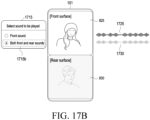

Classifications
-
- H—ELECTRICITY
- H04—ELECTRIC COMMUNICATION TECHNIQUE
- H04N—PICTORIAL COMMUNICATION, e.g. TELEVISION
- H04N7/00—Television systems
- H04N7/14—Systems for two-way working
- H04N7/141—Systems for two-way working between two video terminals, e.g. videophone
- H04N7/142—Constructional details of the terminal equipment, e.g. arrangements of the camera and the display
-
- H—ELECTRICITY
- H04—ELECTRIC COMMUNICATION TECHNIQUE
- H04W—WIRELESS COMMUNICATION NETWORKS
- H04W4/00—Services specially adapted for wireless communication networks; Facilities therefor
- H04W4/80—Services using short range communication, e.g. near-field communication [NFC], radio-frequency identification [RFID] or low energy communication
-
- G—PHYSICS
- G11—INFORMATION STORAGE
- G11B—INFORMATION STORAGE BASED ON RELATIVE MOVEMENT BETWEEN RECORD CARRIER AND TRANSDUCER
- G11B20/00—Signal processing not specific to the method of recording or reproducing; Circuits therefor
- G11B20/10—Digital recording or reproducing
- G11B20/10527—Audio or video recording; Data buffering arrangements
-
- G—PHYSICS
- G06—COMPUTING OR CALCULATING; COUNTING
- G06F—ELECTRIC DIGITAL DATA PROCESSING
- G06F3/00—Input arrangements for transferring data to be processed into a form capable of being handled by the computer; Output arrangements for transferring data from processing unit to output unit, e.g. interface arrangements
- G06F3/01—Input arrangements or combined input and output arrangements for interaction between user and computer
- G06F3/048—Interaction techniques based on graphical user interfaces [GUI]
- G06F3/0484—Interaction techniques based on graphical user interfaces [GUI] for the control of specific functions or operations, e.g. selecting or manipulating an object, an image or a displayed text element, setting a parameter value or selecting a range
-
- G—PHYSICS
- G06—COMPUTING OR CALCULATING; COUNTING
- G06F—ELECTRIC DIGITAL DATA PROCESSING
- G06F3/00—Input arrangements for transferring data to be processed into a form capable of being handled by the computer; Output arrangements for transferring data from processing unit to output unit, e.g. interface arrangements
- G06F3/16—Sound input; Sound output
- G06F3/165—Management of the audio stream, e.g. setting of volume, audio stream path
-
- H—ELECTRICITY
- H04—ELECTRIC COMMUNICATION TECHNIQUE
- H04M—TELEPHONIC COMMUNICATION
- H04M1/00—Substation equipment, e.g. for use by subscribers
- H04M1/60—Substation equipment, e.g. for use by subscribers including speech amplifiers
- H04M1/6033—Substation equipment, e.g. for use by subscribers including speech amplifiers for providing handsfree use or a loudspeaker mode in telephone sets
- H04M1/6041—Portable telephones adapted for handsfree use
- H04M1/6058—Portable telephones adapted for handsfree use involving the use of a headset accessory device connected to the portable telephone
- H04M1/6066—Portable telephones adapted for handsfree use involving the use of a headset accessory device connected to the portable telephone including a wireless connection
-
- H—ELECTRICITY
- H04—ELECTRIC COMMUNICATION TECHNIQUE
- H04N—PICTORIAL COMMUNICATION, e.g. TELEVISION
- H04N21/00—Selective content distribution, e.g. interactive television or video on demand [VOD]
- H04N21/40—Client devices specifically adapted for the reception of or interaction with content, e.g. set-top-box [STB]; Operations thereof
- H04N21/43—Processing of content or additional data, e.g. demultiplexing additional data from a digital video stream; Elementary client operations, e.g. monitoring of home network or synchronising decoder's clock; Client middleware
- H04N21/4302—Content synchronisation processes, e.g. decoder synchronisation
- H04N21/4307—Synchronising the rendering of multiple content streams or additional data on devices, e.g. synchronisation of audio on a mobile phone with the video output on the TV screen
-
- H—ELECTRICITY
- H04—ELECTRIC COMMUNICATION TECHNIQUE
- H04N—PICTORIAL COMMUNICATION, e.g. TELEVISION
- H04N23/00—Cameras or camera modules comprising electronic image sensors; Control thereof
- H04N23/60—Control of cameras or camera modules
- H04N23/63—Control of cameras or camera modules by using electronic viewfinders
- H04N23/631—Graphical user interfaces [GUI] specially adapted for controlling image capture or setting capture parameters
-
- H—ELECTRICITY
- H04—ELECTRIC COMMUNICATION TECHNIQUE
- H04N—PICTORIAL COMMUNICATION, e.g. TELEVISION
- H04N23/00—Cameras or camera modules comprising electronic image sensors; Control thereof
- H04N23/60—Control of cameras or camera modules
- H04N23/66—Remote control of cameras or camera parts, e.g. by remote control devices
- H04N23/661—Transmitting camera control signals through networks, e.g. control via the Internet
-
- H—ELECTRICITY
- H04—ELECTRIC COMMUNICATION TECHNIQUE
- H04N—PICTORIAL COMMUNICATION, e.g. TELEVISION
- H04N5/00—Details of television systems
- H04N5/76—Television signal recording
- H04N5/765—Interface circuits between an apparatus for recording and another apparatus
- H04N5/77—Interface circuits between an apparatus for recording and another apparatus between a recording apparatus and a television camera
- H04N5/772—Interface circuits between an apparatus for recording and another apparatus between a recording apparatus and a television camera the recording apparatus and the television camera being placed in the same enclosure
-
- H—ELECTRICITY
- H04—ELECTRIC COMMUNICATION TECHNIQUE
- H04N—PICTORIAL COMMUNICATION, e.g. TELEVISION
- H04N7/00—Television systems
- H04N7/14—Systems for two-way working
- H04N7/15—Conference systems
-
- H—ELECTRICITY
- H04—ELECTRIC COMMUNICATION TECHNIQUE
- H04N—PICTORIAL COMMUNICATION, e.g. TELEVISION
- H04N9/00—Details of colour television systems
- H04N9/79—Processing of colour television signals in connection with recording
- H04N9/80—Transformation of the television signal for recording, e.g. modulation, frequency changing; Inverse transformation for playback
- H04N9/82—Transformation of the television signal for recording, e.g. modulation, frequency changing; Inverse transformation for playback the individual colour picture signal components being recorded simultaneously only
- H04N9/8205—Transformation of the television signal for recording, e.g. modulation, frequency changing; Inverse transformation for playback the individual colour picture signal components being recorded simultaneously only involving the multiplexing of an additional signal and the colour video signal
- H04N9/8227—Transformation of the television signal for recording, e.g. modulation, frequency changing; Inverse transformation for playback the individual colour picture signal components being recorded simultaneously only involving the multiplexing of an additional signal and the colour video signal the additional signal being at least another television signal
-
- H—ELECTRICITY
- H04—ELECTRIC COMMUNICATION TECHNIQUE
- H04R—LOUDSPEAKERS, MICROPHONES, GRAMOPHONE PICK-UPS OR LIKE ACOUSTIC ELECTROMECHANICAL TRANSDUCERS; ELECTRIC HEARING AIDS; PUBLIC ADDRESS SYSTEMS
- H04R3/00—Circuits for transducers
- H04R3/005—Circuits for transducers for combining the signals of two or more microphones
-
- H—ELECTRICITY
- H04—ELECTRIC COMMUNICATION TECHNIQUE
- H04R—LOUDSPEAKERS, MICROPHONES, GRAMOPHONE PICK-UPS OR LIKE ACOUSTIC ELECTROMECHANICAL TRANSDUCERS; ELECTRIC HEARING AIDS; PUBLIC ADDRESS SYSTEMS
- H04R5/00—Stereophonic arrangements
- H04R5/04—Circuit arrangements, e.g. for selective connection of amplifier inputs/outputs to loudspeakers, for loudspeaker detection, or for adaptation of settings to personal preferences or hearing impairments
-
- H—ELECTRICITY
- H04—ELECTRIC COMMUNICATION TECHNIQUE
- H04S—STEREOPHONIC SYSTEMS
- H04S1/00—Two-channel systems
- H04S1/007—Two-channel systems in which the audio signals are in digital form
-
- H—ELECTRICITY
- H04—ELECTRIC COMMUNICATION TECHNIQUE
- H04M—TELEPHONIC COMMUNICATION
- H04M2250/00—Details of telephonic subscriber devices
- H04M2250/02—Details of telephonic subscriber devices including a Bluetooth® interface
-
- H—ELECTRICITY
- H04—ELECTRIC COMMUNICATION TECHNIQUE
- H04M—TELEPHONIC COMMUNICATION
- H04M2250/00—Details of telephonic subscriber devices
- H04M2250/52—Details of telephonic subscriber devices including functional features of a camera
-
- H—ELECTRICITY
- H04—ELECTRIC COMMUNICATION TECHNIQUE
- H04N—PICTORIAL COMMUNICATION, e.g. TELEVISION
- H04N9/00—Details of colour television systems
- H04N9/79—Processing of colour television signals in connection with recording
- H04N9/80—Transformation of the television signal for recording, e.g. modulation, frequency changing; Inverse transformation for playback
- H04N9/82—Transformation of the television signal for recording, e.g. modulation, frequency changing; Inverse transformation for playback the individual colour picture signal components being recorded simultaneously only
- H04N9/8205—Transformation of the television signal for recording, e.g. modulation, frequency changing; Inverse transformation for playback the individual colour picture signal components being recorded simultaneously only involving the multiplexing of an additional signal and the colour video signal
- H04N9/8211—Transformation of the television signal for recording, e.g. modulation, frequency changing; Inverse transformation for playback the individual colour picture signal components being recorded simultaneously only involving the multiplexing of an additional signal and the colour video signal the additional signal being a sound signal
-
- H—ELECTRICITY
- H04—ELECTRIC COMMUNICATION TECHNIQUE
- H04R—LOUDSPEAKERS, MICROPHONES, GRAMOPHONE PICK-UPS OR LIKE ACOUSTIC ELECTROMECHANICAL TRANSDUCERS; ELECTRIC HEARING AIDS; PUBLIC ADDRESS SYSTEMS
- H04R1/00—Details of transducers, loudspeakers or microphones
- H04R1/10—Earpieces; Attachments therefor ; Earphones; Monophonic headphones
- H04R1/1016—Earpieces of the intra-aural type
-
- H—ELECTRICITY
- H04—ELECTRIC COMMUNICATION TECHNIQUE
- H04R—LOUDSPEAKERS, MICROPHONES, GRAMOPHONE PICK-UPS OR LIKE ACOUSTIC ELECTROMECHANICAL TRANSDUCERS; ELECTRIC HEARING AIDS; PUBLIC ADDRESS SYSTEMS
- H04R2201/00—Details of transducers, loudspeakers or microphones covered by H04R1/00 but not provided for in any of its subgroups
- H04R2201/10—Details of earpieces, attachments therefor, earphones or monophonic headphones covered by H04R1/10 but not provided for in any of its subgroups
- H04R2201/107—Monophonic and stereophonic headphones with microphone for two-way hands free communication
-
- H—ELECTRICITY
- H04—ELECTRIC COMMUNICATION TECHNIQUE
- H04R—LOUDSPEAKERS, MICROPHONES, GRAMOPHONE PICK-UPS OR LIKE ACOUSTIC ELECTROMECHANICAL TRANSDUCERS; ELECTRIC HEARING AIDS; PUBLIC ADDRESS SYSTEMS
- H04R2420/00—Details of connection covered by H04R, not provided for in its groups
- H04R2420/07—Applications of wireless loudspeakers or wireless microphones
-
- H—ELECTRICITY
- H04—ELECTRIC COMMUNICATION TECHNIQUE
- H04R—LOUDSPEAKERS, MICROPHONES, GRAMOPHONE PICK-UPS OR LIKE ACOUSTIC ELECTROMECHANICAL TRANSDUCERS; ELECTRIC HEARING AIDS; PUBLIC ADDRESS SYSTEMS
- H04R2499/00—Aspects covered by H04R or H04S not otherwise provided for in their subgroups
- H04R2499/10—General applications
- H04R2499/11—Transducers incorporated or for use in hand-held devices, e.g. mobile phones, PDA's, camera's
-
- H—ELECTRICITY
- H04—ELECTRIC COMMUNICATION TECHNIQUE
- H04R—LOUDSPEAKERS, MICROPHONES, GRAMOPHONE PICK-UPS OR LIKE ACOUSTIC ELECTROMECHANICAL TRANSDUCERS; ELECTRIC HEARING AIDS; PUBLIC ADDRESS SYSTEMS
- H04R5/00—Stereophonic arrangements
- H04R5/033—Headphones for stereophonic communication
Definitions
- the binaural wireless audio device may include a primary earbud (e.g., a right earbud) and a secondary earbud (e.g., a left earbud) connectable to the electronic device (e.g., a smartphone).
- the primary earbud may transmit audio data to the electronic device through a connection to the electronic device, and the electronic device may transmit audio data (or audio content) to the primary earbud.
- the primary earbud may forward audio data (or audio content) received from the electronic device through wireless communication to the secondary earbud and output the audio data through the speaker.
- the secondary earbud may be synchronized with the primary earbud and output audio data received from the primary earbud or the electronic device through a speaker.
- the electronic device When the electronic device receives audio data from a binaural wireless audio device, even if both earbuds have microphones, respectively, only monaural audio data from a primary earbud may be transmitted to the electronic device, resulting in the degraded audio quality of an image captured by the electronic device.
- An electronic device includes a first camera, a second camera, a display, a communication circuit, and at least one processor operatively coupled to the first camera, the second camera, and the communication circuit.
- the at least one processor is configured to display a first image obtained from the first camera and a second image obtained from the second camera through the display in a multiple camera recording mode.
- the at least one processor is configured to display an audio input selection screen related to a plurality of audio inputs through the display.
- the audio input selection screen includes an item to select a microphone of the electronic device and an item to select an external electronic device connected to the electronic device through at least one Bluetooth communication link.
- the at least one processor is configured to receive a first user input selecting the external electronic device through the audio input selection screen.
- the at least one processor is configured to, in response to the first user input, establish a first communication link and a second communication link for supporting binaural recording with a first earbud and a second earbud included in the external electronic device, respectively, through the communication circuit.
- the at least one processor is configured to receive first audio data obtained from the first earbud through the first communication link, and receive second audio data obtained from the second earbud through the second communication link, while performing a recording using the first camera and the second camera simultaneously.
- the at least one processor is configured to store the first image in synchronization with the first audio data, and store the second image in synchronization with the second audio data.
- An audio recording method performed by an electronic device includes displaying a first image obtained from a first camera and a second image obtained from a second camera through a display in a multiple camera recording mode.
- the audio recording method includes displaying an audio input selection screen related to a plurality of audio inputs through the display.
- the audio input selection screen includes an item to select a microphone of the electronic device and an item to select an external electronic device connected to the electronic device through at least one Bluetooth communication link.
- the audio recording method includes receiving a first user input selecting the external electronic device through the audio input selection screen.
- the audio recording method includes, in response to the first user input, establishing a first communication link and a second communication link for supporting binaural recording with a first earbud and a second earbud included in the external electronic device, respectively.
- the audio recording method includes receiving first audio data obtained from the first earbud through the first communication link, and receiving second audio data obtained from the second earbud through the second communication link, while performing a recording using the first camera and the second camera simultaneously.
- the audio recording method includes storing the first image in synchronization with the first audio data, and storing the second image in synchronization with the second audio data.
- a non-transitory computer-readable storage medium storing at least one program includes instructions which when executed by at least one processor of an electronic device, configure the electronic device to display a first image obtained from the first camera and a second image obtained from the second camera through the display in a multiple camera recording mode, display an audio input selection screen related to a plurality of audio inputs through the display, wherein the audio input selection screen includes an item to select a microphone of the electronic device and an item to select an external electronic device connected to the electronic device through at least one Bluetooth communication link, receive a first user input selecting the external electronic device through the audio input selection screen, establish, in response to the first user input, a first communication link and a second communication link for supporting binaural recording with a first earbud and a second earbud included in the external electronic device, respectively, through the communication circuit, receive first audio data obtained from the first earbud through the first communication link, and receive second audio data obtained from the second earbud through the second communication link, while performing a recording using the first camera and the second camera simultaneously
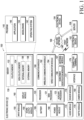
- FIG. 1 is a block diagram illustrating an electronic device 101 in a network environment 100 according to various embodiments.
- the electronic device 101 in the network environment 100 may communicate with an electronic device 102 via a first network 198 (e.g., a short-range wireless communication network), or an electronic device 104 or a server 108 via a second network 199 (e.g., a long-range wireless communication network).
- a first network 198 e.g., a short-range wireless communication network
- an electronic device 104 or a server 108 via a second network 199 (e.g., a long-range wireless communication network).
- the electronic device 101 may communicate with the electronic device 104 via the server 108.
- the processor 120 may include a main processor 121 (e.g., a central processing unit (CPU) or an application processor (AP)), or an auxiliary processor 123 (e.g., a graphics processing unit (GPU), a neural processing unit (NPU), an image signal processor (ISP), a sensor hub processor, or a communication processor (CP)) that is operable independently from, or in conjunction with, the main processor 121.
- a main processor 121 e.g., a central processing unit (CPU) or an application processor (AP)
- auxiliary processor 123 e.g., a graphics processing unit (GPU), a neural processing unit (NPU), an image signal processor (ISP), a sensor hub processor, or a communication processor (CP)
- the main processor 121 may be adapted to consume less power than the main processor 121, or to be specific to a specified function.
- the auxiliary processor 123 may be implemented as separate from, or as part of the main processor 121.
- the auxiliary processor 123 may control at least some of functions or states related to at least one component (e.g., the display module 160, the sensor module 176, or the communication module 190) among the components of the electronic device 101, instead of the main processor 121 while the main processor 121 is in an inactive (e.g., sleep) state, or together with the main processor 121 while the main processor 121 is in an active state (e.g., executing an application).
- the auxiliary processor 123 e.g., an image signal processor or a communication processor
- the artificial neural network may be a deep neural network (DNN), a convolutional neural network (CNN), a recurrent neural network (RNN), a restricted boltzmann machine (RBM), a deep belief network (DBN), a bidirectional recurrent deep neural network (BRDNN), deep Q-network or a combination of two or more thereof but is not limited thereto.
- the artificial intelligence model may, additionally or alternatively, include a software structure other than the hardware structure.
- the memory 130 may store various data used by at least one component (e.g., the processor 120 or the sensor module 176) of the electronic device 101.
- the various data may include, for example, software (e.g., the program 140) and input data or output data for a command related thereto.
- the memory 130 may include the volatile memory 132 or the non-volatile memory 134.
- the sound output module 155 may output sound signals to the outside of the electronic device 101.
- the sound output module 155 may include, for example, a speaker or a receiver.
- the speaker may be used for general purposes, such as playing multimedia or playing record.
- the receiver may be used for receiving incoming calls. According to an embodiment, the receiver may be implemented as separate from, or as part of the speaker.
- the display module 160 may visually provide information to the outside (e.g., a user) of the electronic device 101.
- the display module 160 may include, for example, a display, a hologram device, or a projector and control circuitry to control a corresponding one of the display, hologram device, and projector.
- the display module 160 may include a touch sensor adapted to detect a touch, or a pressure sensor adapted to measure the strength of force incurred by the touch.
- the haptic module 179 may convert an electrical signal into a mechanical stimulus (e.g., a vibration or a movement) or electrical stimulus which may be recognized by a user via his tactile sensation or kinesthetic sensation.
- the haptic module 179 may include, for example, a motor, a piezoelectric element, or an electric stimulator.
- the power management module 188 may manage power supplied to the electronic device 101.
- the power management module 188 may be implemented as at least part of, for example, a power management integrated circuit (PMIC).
- PMIC power management integrated circuit
- the communication module 190 may support establishing a direct (e.g., wired) communication channel or a wireless communication channel between the electronic device 101 and the external electronic device (e.g., the electronic device 102, the electronic device 104, or the server 108) and performing communication via the established communication channel.
- the communication module 190 may include one or more communication processors that are operable independently from the processor 120 (e.g., the application processor (AP)) and supports a direct (e.g., wired) communication or a wireless communication.
- AP application processor
- the communication module 190 may include a wireless communication module 192 (e.g., a cellular communication module, a short-range wireless communication module, or a global navigation satellite system (GNSS) communication module) or a wired communication module 194 (e.g., a local area network (LAN) communication module or a power line communication (PLC) module).
- a wireless communication module 192 e.g., a cellular communication module, a short-range wireless communication module, or a global navigation satellite system (GNSS) communication module
- GNSS global navigation satellite system
- wired communication module 194 e.g., a local area network (LAN) communication module or a power line communication (PLC) module.
- LAN local area network
- PLC power line communication
- a corresponding one of these communication modules may communicate with the external electronic device via the first network 198 (e.g., a short-range communication network, such as BluetoothTM, wireless-fidelity (Wi-Fi) direct, or infrared data association (IrDA)) or the second network 199 (e.g., a long-range communication network, such as a legacy cellular network, a 5G network, a next-generation communication network, the Internet, or a computer network (e.g., LAN or wide area network (WAN)).
- first network 198 e.g., a short-range communication network, such as BluetoothTM, wireless-fidelity (Wi-Fi) direct, or infrared data association (IrDA)
- the second network 199 e.g., a long-range communication network, such as a legacy cellular network, a 5G network, a next-generation communication network, the Internet, or a computer network (e.g., LAN or wide area network (WAN)).
- the wireless communication module 192 may identify and authenticate the electronic device 101 in a communication network, such as the first network 198 or the second network 199, using subscriber information (e.g., international mobile subscriber identity (IMSI)) stored in the subscriber identification module 196.
- subscriber information e.g., international mobile subscriber identity (IMSI)
- the wireless communication module 192 may support a 5G network, after a 4G network, and next-generation communication technology, e.g., new radio (NR) access technology.
- the NR access technology may support enhanced mobile broadband (eMBB), massive machine type communications (mMTC), or ultra-reliable and low-latency communications (URLLC).
- eMBB enhanced mobile broadband
- mMTC massive machine type communications
- URLLC ultra-reliable and low-latency communications
- the wireless communication module 192 may support a high-frequency band (e.g., the mmWave band) to achieve, e.g., a high data transmission rate.
- the wireless communication module 192 may support various technologies for securing performance on a high-frequency band, such as, e.g., beamforming, massive multiple-input and multiple-output (massive MIMO), full dimensional MIMO (FD-MIMO), array antenna, analog beam-forming, or large scale antenna.
- the wireless communication module 192 may support various requirements specified in the electronic device 101, an external electronic device (e.g., the electronic device 104), or a network system (e.g., the second network 199).
- the wireless communication module 192 may support a peak data rate (e.g., 20Gbps or more) for implementing eMBB, loss coverage (e.g., 164dB or less) for implementing mMTC, or U-plane latency (e.g., 0.5ms or less for each of downlink (DL) and uplink (UL), or a round trip of 1ms or less) for implementing URLLC.
- a peak data rate e.g., 20Gbps or more
- loss coverage e.g., 164dB or less
- U-plane latency e.g., 0.5ms or less for each of downlink (DL) and uplink (UL), or a round trip of 1ms or less
- the antenna module 197 may transmit or receive a signal or power to or from the outside (e.g., the external electronic device) of the electronic device 101.
- the antenna module 197 may include an antenna including a radiating element composed of a conductive material or a conductive pattern formed in or on a substrate (e.g., a printed circuit board (PCB)).
- the antenna module 197 may include a plurality of antennas (e.g., array antennas). In such a case, at least one antenna appropriate for a communication scheme used in the communication network, such as the first network 198 or the second network 199, may be selected, for example, by the communication module 190 (e.g., the wireless communication module 192) from the plurality of antennas.
- the antenna module 197 may form an mmWave antenna module.
- the mmWave antenna module may include a printed circuit board, a RFIC disposed on a first surface (e.g., the bottom surface) of the printed circuit board, or adjacent to the first surface and capable of supporting a designated high-frequency band (e.g., the mmWave band), and a plurality of antennas (e.g., array antennas) disposed on a second surface (e.g., the top or a side surface) of the printed circuit board, or adjacent to the second surface and capable of transmitting or receiving signals of the designated high-frequency band.
- a RFIC disposed on a first surface (e.g., the bottom surface) of the printed circuit board, or adjacent to the first surface and capable of supporting a designated high-frequency band (e.g., the mmWave band)
- a plurality of antennas e.g., array antennas
- At least some of the above-described components may be coupled mutually and communicate signals (e.g., commands or data) therebetween via an inter-peripheral communication scheme (e.g., a bus, general purpose input and output (GPIO), serial peripheral interface (SPI), or mobile industry processor interface (MIPI)).
- an inter-peripheral communication scheme e.g., a bus, general purpose input and output (GPIO), serial peripheral interface (SPI), or mobile industry processor interface (MIPI)
- the one or more external electronic devices receiving the request may perform the at least part of the function or the service requested, or an additional function or an additional service related to the request, and transfer an outcome of the performing to the electronic device 101.
- the electronic device 101 may provide the outcome, with or without further processing of the outcome, as at least part of a reply to the request.
- a cloud computing, distributed computing, mobile edge computing (MEC), or client-server computing technology may be used, for example.
- the electronic device 101 may provide ultra low-latency services using, e.g., distributed computing or mobile edge computing.
- the external electronic device 104 may include an internet-of-things (IoT) device.
- the server 108 may be an intelligent server using machine learning and/or a neural network.
- the external electronic device 104 or the server 108 may be included in the second network 199.
- the electronic device 101 may be applied to intelligent services (e.g., smart home, smart city, smart car, or healthcare) based on 5G communication technology or IoT-related technology.
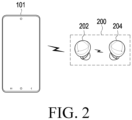
- FIG. 2 is a diagram illustrating connection between a user terminal (e.g., the electronic device 101) and a binaural wireless audio device 200 according to an embodiment.
- the pair of audio devices included in the binaural wireless audio device 200 may establish a communication connection with each other and transmit and/or receive data (e.g., audio data and/or control data) to and/or from each other.
- the communication connection may be established using, but is not limited to, D2D communication such as Wi-Fi direct or Bluetooth (e.g., using a communication circuit supporting the communication (e.g., a communication circuit 320 in FIG. 3 )), as described above.
- the first earbud 202 serving as the primary device may output an audio to a speaker based on audio data received from the user terminal (e.g., the electronic device 101), and transmit the audio data to the second earbud 204 serving as the secondary device, as well.
- the secondary device may receive audio data transmitted from the user terminal (e.g., the electronic device 101) to the primary device by sniffing, based on connection information provided by the primary device.
- the first earbud 202 may exchange audio data and/or control data with the user terminal (e.g., the electronic device 101) based on audio over BLE (AoBLE), and the second earbud 204 may exchange audio data and/or control data with the user terminal (e.g., the electronic device 101) based on AoBLE.
- AoBLE audio over BLE
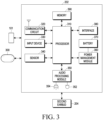
- the communication circuit 320 may include at least one of a wireless communication module (e.g., a Bluetooth communication module, a cellular communication module, a wireless-fidelity (Wi-Fi) communication module, a near field communication (NFC) communication module, or a global navigation satellite system (GNSS) communication module) or a wired communication module (e.g., a local area network (LAN) communication module or a power line communication (PLC) communication module).
- a wireless communication module e.g., a Bluetooth communication module, a cellular communication module, a wireless-fidelity (Wi-Fi) communication module, a near field communication (NFC) communication module, or a global navigation satellite system (GNSS) communication module
- a wired communication module e.g., a local area network (LAN) communication module or a power line communication (PLC) communication module.
- the battery 370 may supply power to at least one component of the first earbud 202.
- the battery 370 may include, for example, a rechargeable battery.
- the first earbud 202 may charge the battery 370 to a predetermined charge level and then be turned on or turn on at least a portion of the communication circuit 310.
- the processor 310 may control at least one other component (e.g., hardware or software component) connected to the processor 310, for example, by executing software and performing various data processing or computations. According to an embodiment, as at least part of data processing or a computation, the processor 310 may load instructions or data received from another component (e.g., the sensor 340 or the communication circuit 320) into the volatile memory 390, process the instructions or data stored in the volatile memory 390, and store the resulting data in non-volatile memory.
- another component e.g., the sensor 340 or the communication circuit 320
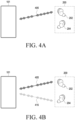
- FIGS. 4A and 4B are diagrams illustrating connection between the electronic device 101 and the binaural wireless audio device 200 according to an embodiment.
- the first earbud 202 set as a primary earbud out of the first earbud 202 and the second earbud 204 may transmit audio data input through its microphone (e.g., the microphone 352) to the electronic device 101 through the communication link 405. Therefore, when the electronic device 101 performs audio recording through the first earbud 202, audio data in a monaural format may be input to the electronic device 101.
- its microphone e.g., the microphone 352
- audio data in a monaural format may be input to the electronic device 101.
- the binaural wireless audio device 200 may include the first earbud 202 and the second earbud 204 that support Bluetooth classic (e.g., Bluetooth basic rate (BR)/enhanced data rate (EDR)) and/or BLE, and the electronic device 101 may be connected to the binaural wireless audio device 200 using binaural recording technology.
- Bluetooth classic e.g., Bluetooth basic rate (BR)/enhanced data rate (EDR)
- EDR enhanced data rate
- BLE Bluetooth basic rate
- each of the first earbud 202 and the second earbud 204 may include a microphone (e.g., the microphone 352).
- each of a first communication link and a second communication link 415 may be an LE link based on Bluetooth LE audio technology.
- the LE audio technology may support a low complexity communications codec (LC3), which is a higher quality and lower power audio codec compared to classic audio technology using SCO, and support multi-stream audio transmission between the electronic device 101 and the binaural wireless audio device 200.
- the electronic device 101 may receive audio data from the first earbud 202 through the first communication link 410 and audio data from the second earbud 204 through the second communication link 415.
- LC3 low complexity communications codec
- audio data encoded using a specific codec may be transmitted between the electronic device 101 and the first earbud 202 through an SCO link (e.g., the communication link 405), and the codec may be, for example, a continuous variable slope delta (CVSD) or modified sub band codec (mSBC).
- CVSD codec which is a mandatory support for a device using Bluetooth SCO, may support mono streams and a sampling rate of 8KHz.
- An mSBC codec may provide a higher quality audio than the CVSD codec, and provide richer audio quality using a sampling rate of 16KHz, although supporting mono streams like the CVSD codec.
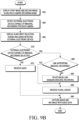
- the electronic device 101 may receive audio data from the external electronic device selected in operation 970 or from the microphone 705 of the electronic device 101, and proceed to operation 995.
- the electronic device 101 may receive monaural audio data using an existing single communication link (e.g., the communication link 405) established with the selected external electronic device.
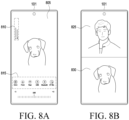
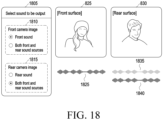
- the electronic device 101 may mix and store the audio data with the first image 825 obtained from the front camera 701 and the second image 830 obtained from the rear camera 703.
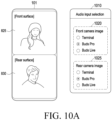
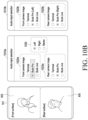
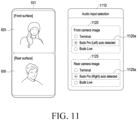
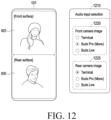
- the electronic device 101 may receive a user input selecting the left microphone for the front camera 701 through the option selection screen 1030 and display a first selection screen 1020b including information indicating the use of the left microphone (e.g., the first earbud 202) for the front camera 701 and a second selection screen 1025b including information indicating the use of the right microphone (e.g., the second earbud 204) for the rear camera 703.
- a first selection screen 1020b including information indicating the use of the left microphone (e.g., the first earbud 202) for the front camera 701
- a second selection screen 1025b including information indicating the use of the right microphone (e.g., the second earbud 204) for the rear camera 703.
- the electronic device 101 may receive monaural first audio data from the first earbud 202 and mix and store the first audio data with the first image 825 from the front camera 701, and may receive monaural second audio data from the second earbud 204 and mix and store the second audio data with the second image 830 from the rear camera 703.
- the electronic device 101 may display, along with the second image 830, a name (e.g., "Buds Pro (Right)") identifying a second audio device (e.g., the second earbud 204 or another audio device) selected for the second image 830 and information 1510 indicating an audio reception sensitivity of the second audio data 1520 received from the second audio device.
- the second audio device may be an audio device (e.g., the second earbud 204) paired with the first audio device or a separate binaural wireless audio device.
- FIG. 16 is a flowchart illustrating an operation of playing or extracting audio data which is input through binaural recording according to an embodiment. According to embodiments, at least one of the operations described below may be omitted, combined with another operation, or reordered.
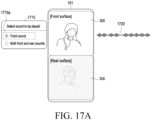
- the first image 825, the second image 830, and a plurality of audio data generated simultaneously through multiple camera recording may be stored in a single file, and the electronic device 101 may execute operation 1605 or operation 1610 according to a user input.
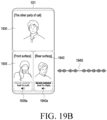
- the electronic device 101 may display a name (e.g., "Buds Pro (Left)”) identifying the first earbud 202 corresponding to the third image 1935 and information 1935a indicating the audio reception sensitivity of the first audio data 1945 received from the first earbud 202, along with the third image 1935 from the front camera 701. Meanwhile, the electronic device 101 may display a name (e.g., "Buds Pro (Right)") identifying the second earbud 204 corresponding to the fourth image 1915 and information 1940a indicating that the second earbud 204 has not been selected, along with the fourth image 1915 from the rear camera 703.
- a name e.g., "Buds Pro (Left)
- the electronic device 101 may display a name (e.g., "Buds Pro (Right)") identifying the second earbud 204 corresponding to the fourth image 1915 and information 1940a indicating that the second earbud 204 has not been selected, along with the fourth image 1915 from the rear camera 703.
- the at least one camera may be configured to detect the presence of the first earbud within a recording field of view of the first camera, or detect the presence of the first earbud in a recording direction of the first camera by the communication circuit.
- Various embodiments as set forth herein may be implemented as software (e.g., the program 140) including one or more instructions that are stored in a storage medium (e.g., internal memory 136 or external memory 138) that is readable by a machine (e.g., the electronic device 101).
- a processor e.g., the processor 120
- the machine e.g., the electronic device 101
- the one or more instructions may include a code generated by a complier or a code executable by an interpreter.
- each component e.g., a module or a program of the above-described components may include a single entity or multiple entities, and some of the multiple entities may be separately disposed in different components. According to various embodiments, one or more of the above-described components may be omitted, or one or more other components may be added. Alternatively or additionally, a plurality of components (e.g., modules or programs) may be integrated into a single component. In such a case, according to various embodiments, the integrated component may still perform one or more functions of each of the plurality of components in the same or similar manner as they are performed by a corresponding one of the plurality of components before the integration.
Landscapes
- Engineering & Computer Science (AREA)
- Signal Processing (AREA)
- Multimedia (AREA)
- Physics & Mathematics (AREA)
- Theoretical Computer Science (AREA)
- Acoustics & Sound (AREA)
- Human Computer Interaction (AREA)
- General Engineering & Computer Science (AREA)
- General Health & Medical Sciences (AREA)
- Health & Medical Sciences (AREA)
- Computer Networks & Wireless Communication (AREA)
- General Physics & Mathematics (AREA)
- Otolaryngology (AREA)
- Audiology, Speech & Language Pathology (AREA)
- Telephone Function (AREA)
- Studio Devices (AREA)
Applications Claiming Priority (2)
| Application Number | Priority Date | Filing Date | Title |
|---|---|---|---|
| KR1020210137805A KR20230054158A (ko) | 2021-10-15 | 2021-10-15 | 오디오 레코딩을 위한 전자 장치 및 그 동작 방법 |
| PCT/KR2022/014358 WO2023063621A1 (fr) | 2021-10-15 | 2022-09-26 | Dispositif électronique d'enregistrement audio et son procédé de fonctionnement |
Publications (3)
| Publication Number | Publication Date |
|---|---|
| EP4390924A1 true EP4390924A1 (fr) | 2024-06-26 |
| EP4390924A4 EP4390924A4 (fr) | 2024-12-25 |
| EP4390924B1 EP4390924B1 (fr) | 2026-02-25 |
Family
ID=85988405
Family Applications (1)
| Application Number | Title | Priority Date | Filing Date |
|---|---|---|---|
| EP22881250.9A Active EP4390924B1 (fr) | 2021-10-15 | 2022-09-26 | Dispositif électronique d'enregistrement audio et son procédé de fonctionnement |
Country Status (4)
| Country | Link |
|---|---|
| US (1) | US12581032B2 (fr) |
| EP (1) | EP4390924B1 (fr) |
| KR (1) | KR20230054158A (fr) |
| WO (1) | WO2023063621A1 (fr) |
Families Citing this family (3)
| Publication number | Priority date | Publication date | Assignee | Title |
|---|---|---|---|---|
| US12604148B2 (en) * | 2022-02-11 | 2026-04-14 | Starkey Laboratories, Inc. | Audio processing using ear-wearable device and wearable vision device |
| CN117459673A (zh) * | 2022-07-19 | 2024-01-26 | 奥图码股份有限公司 | 用于视频会议的电子装置和方法 |
| WO2025079810A1 (fr) * | 2023-10-11 | 2025-04-17 | Samsung Electronics Co., Ltd. | Procédé et dispositif électronique de commande de connexion entre des dispositifs |
Family Cites Families (19)
| Publication number | Priority date | Publication date | Assignee | Title |
|---|---|---|---|---|
| JP4379078B2 (ja) * | 2003-10-29 | 2009-12-09 | パナソニック株式会社 | 携帯電話装置 |
| US8451312B2 (en) | 2010-01-06 | 2013-05-28 | Apple Inc. | Automatic video stream selection |
| KR101987462B1 (ko) | 2012-11-09 | 2019-06-11 | 엘지전자 주식회사 | 이동 단말기 및 이동 단말기의 제어 방법 |
| CN104699445A (zh) | 2013-12-06 | 2015-06-10 | 华为技术有限公司 | 一种音频信息处理方法及装置 |
| US10171903B2 (en) * | 2014-05-08 | 2019-01-01 | Matthew Marrin | Portable binaural recording, processing and playback device |
| KR102340251B1 (ko) | 2014-06-27 | 2021-12-16 | 삼성전자주식회사 | 데이터 관리 방법 및 그 방법을 처리하는 전자 장치 |
| US9693009B2 (en) * | 2014-09-12 | 2017-06-27 | International Business Machines Corporation | Sound source selection for aural interest |
| US9747068B2 (en) * | 2014-12-22 | 2017-08-29 | Nokia Technologies Oy | Audio processing based upon camera selection |
| KR20170010485A (ko) | 2015-07-20 | 2017-02-01 | 엘지전자 주식회사 | 단말 장치 및 단말 장치의 제어 방법 |
| KR102339798B1 (ko) | 2015-08-21 | 2021-12-15 | 삼성전자주식회사 | 전자 장치의 음향 처리 방법 및 그 전자 장치 |
| BE1023504B1 (fr) | 2015-09-02 | 2017-04-10 | Big Boy Systems | Dispositf d'enregistrement audio-video portable |
| KR20170037462A (ko) * | 2015-09-25 | 2017-04-04 | 엘지전자 주식회사 | 이동단말기 및 그 제어방법 |
| EP3503579B1 (fr) | 2017-12-20 | 2022-03-23 | Nokia Technologies Oy | Dispositif multi-caméras |
| KR102119239B1 (ko) | 2018-01-29 | 2020-06-04 | 구본희 | 바이노럴 스테레오 오디오 생성 방법 및 이를 위한 장치 |
| CN109068207B (zh) * | 2018-07-04 | 2023-05-09 | 广州希脉创新科技有限公司 | 一种耳机及耳机系统 |
| US12245179B2 (en) * | 2018-12-07 | 2025-03-04 | Huawei Technologies Co., Ltd. | Point-to-multipoint data transmission method and electronic device |
| CN113365013B (zh) * | 2020-03-06 | 2025-06-17 | 华为技术有限公司 | 一种音频处理方法及设备 |
| EP4278350B1 (fr) * | 2021-01-12 | 2025-07-23 | Dolby Laboratories Licensing Corporation | Détection et amélioration du discours dans des enregistrements binauraux |
| US12438739B2 (en) * | 2021-05-15 | 2025-10-07 | Apple Inc. | Method and system for processing remote active speech during a call |
-
2021
- 2021-10-15 KR KR1020210137805A patent/KR20230054158A/ko active Pending
-
2022
- 2022-09-26 EP EP22881250.9A patent/EP4390924B1/fr active Active
- 2022-09-26 WO PCT/KR2022/014358 patent/WO2023063621A1/fr not_active Ceased
-
2024
- 2024-03-11 US US18/601,270 patent/US12581032B2/en active Active
Also Published As
| Publication number | Publication date |
|---|---|
| KR20230054158A (ko) | 2023-04-24 |
| EP4390924B1 (fr) | 2026-02-25 |
| WO2023063621A1 (fr) | 2023-04-20 |
| US20240212719A1 (en) | 2024-06-27 |
| US12581032B2 (en) | 2026-03-17 |
| EP4390924A4 (fr) | 2024-12-25 |
Similar Documents
| Publication | Publication Date | Title |
|---|---|---|
| EP4203458A1 (fr) | Dispositif électronique de capture d'image, procédé et support de stockage non transitoire | |
| EP4390924B1 (fr) | Dispositif électronique d'enregistrement audio et son procédé de fonctionnement | |
| US12198732B2 (en) | Electronic device for processing audio data and method for operating same | |
| US11818781B2 (en) | Communication method between multi devices in Bluetooth communication environment and electronic device therefor | |
| US12200789B2 (en) | Electronic device for transmitting data packets in Bluetooth network environment, and method therefor | |
| EP4262236A1 (fr) | Dispositif électronique permettant de traiter des données audio, et procédé de fonctionnement associé | |
| KR102912036B1 (ko) | 다중 장치 간 통신 방법 및 이를 위한 전자 장치 | |
| US20230413348A1 (en) | Method for transmitting audio data in electronic device | |
| US20230284300A1 (en) | Electronic device for performing matching between electronic devices and operation method thereof | |
| US20230155733A1 (en) | Device and method for transmitting response packet | |
| US12082279B2 (en) | Electronic device for switching communication connections according to noise environment and method for controlling the same | |
| US12526857B2 (en) | Electronic device for providing user interface related to plurality of external electronic devices and operating method thereof | |
| US12495108B2 (en) | Electronic device and method for providing user interface during call | |
| US12506506B2 (en) | Electronic device for communication and operation method thereof | |
| US20250224917A1 (en) | Hearable device and portable electronic device for performing sound-related function | |
| EP4481536A1 (fr) | Dispositif électronique et procédé de transmission d'informations relatives à une charge d'une batterie dans un dispositif électronique | |
| US20260025865A1 (en) | Electronic device for receiving audio and operation method therefor | |
| KR102948211B1 (ko) | 무선 환경 내에서 위치 정보에 기반하여 외부 전자 장치를 제어하기 위한 블루투스 통신을 수행하는 전자 장치 및 방법 | |
| EP4586737A1 (fr) | Dispositif électronique de communication par connexion bluetooth et son procédé de fonctionnement | |
| US20250106274A1 (en) | Electronic device for providing audio service, and operation method therefor | |
| US20230106680A1 (en) | Device and method for transmitting data | |
| KR20260059409A (ko) | 오디오를 번역하는 전자 장치 및 그 저장 매체 | |
| KR20240008221A (ko) | 통화 녹음을 수행하기 위한 전자 장치 및 그의 동작 방법 | |
| KR20250105044A (ko) | 브로드캐스트 서비스를 관리하는 전자 장치 및 그 동작 방법 | |
| KR20240133476A (ko) | 오디오를 수신하는 전자 장치 및 그 동작 방법 |
Legal Events
| Date | Code | Title | Description |
|---|---|---|---|
| STAA | Information on the status of an ep patent application or granted ep patent |
Free format text: STATUS: THE INTERNATIONAL PUBLICATION HAS BEEN MADE |
|
| PUAI | Public reference made under article 153(3) epc to a published international application that has entered the european phase |
Free format text: ORIGINAL CODE: 0009012 |
|
| STAA | Information on the status of an ep patent application or granted ep patent |
Free format text: STATUS: REQUEST FOR EXAMINATION WAS MADE |
|
| 17P | Request for examination filed |
Effective date: 20240320 |
|
| AK | Designated contracting states |
Kind code of ref document: A1 Designated state(s): AL AT BE BG CH CY CZ DE DK EE ES FI FR GB GR HR HU IE IS IT LI LT LU LV MC MK MT NL NO PL PT RO RS SE SI SK SM TR |
|
| REG | Reference to a national code |
Ref country code: DE Ref legal event code: R079 Free format text: PREVIOUS MAIN CLASS: G11B0020100000 Ipc: H04M0001600000 Ref document number: 602022031342 Country of ref document: DE |
|
| A4 | Supplementary search report drawn up and despatched |
Effective date: 20241125 |
|
| RIC1 | Information provided on ipc code assigned before grant |
Ipc: H04R 5/033 20060101ALN20241119BHEP Ipc: H04N 9/82 20060101ALN20241119BHEP Ipc: H04W 4/80 20180101ALI20241119BHEP Ipc: H04R 3/00 20060101ALI20241119BHEP Ipc: H04N 5/77 20060101ALI20241119BHEP Ipc: G06F 3/16 20060101ALI20241119BHEP Ipc: H04M 1/60 20060101AFI20241119BHEP |
|
| DAV | Request for validation of the european patent (deleted) | ||
| DAX | Request for extension of the european patent (deleted) | ||
| GRAP | Despatch of communication of intention to grant a patent |
Free format text: ORIGINAL CODE: EPIDOSNIGR1 |
|
| STAA | Information on the status of an ep patent application or granted ep patent |
Free format text: STATUS: GRANT OF PATENT IS INTENDED |
|
| RIC1 | Information provided on ipc code assigned before grant |
Ipc: H04M 1/60 20060101AFI20250923BHEP Ipc: G06F 3/16 20060101ALI20250923BHEP Ipc: H04N 5/77 20060101ALI20250923BHEP Ipc: H04R 3/00 20060101ALI20250923BHEP Ipc: H04W 4/80 20180101ALI20250923BHEP Ipc: H04N 9/82 20060101ALN20250923BHEP Ipc: H04R 5/033 20060101ALN20250923BHEP |
|
| INTG | Intention to grant announced |
Effective date: 20251014 |
|
| GRAS | Grant fee paid |
Free format text: ORIGINAL CODE: EPIDOSNIGR3 |
|
| GRAA | (expected) grant |
Free format text: ORIGINAL CODE: 0009210 |
|
| STAA | Information on the status of an ep patent application or granted ep patent |
Free format text: STATUS: THE PATENT HAS BEEN GRANTED |
|
| AK | Designated contracting states |
Kind code of ref document: B1 Designated state(s): AL AT BE BG CH CY CZ DE DK EE ES FI FR GB GR HR HU IE IS IT LI LT LU LV MC MK MT NL NO PL PT RO RS SE SI SK SM TR |
|
| REG | Reference to a national code |
Ref country code: CH Ref legal event code: F10 Free format text: ST27 STATUS EVENT CODE: U-0-0-F10-F00 (AS PROVIDED BY THE NATIONAL OFFICE) Effective date: 20260225 Ref country code: GB Ref legal event code: FG4D |
|
| REG | Reference to a national code |
Ref country code: DE Ref legal event code: R096 Ref document number: 602022031342 Country of ref document: DE |
|
| REG | Reference to a national code |
Ref country code: IE Ref legal event code: FG4D |