EP4393581A2 - Microcapsules de polyurée/polyuréthane biodégradables - Google Patents
Microcapsules de polyurée/polyuréthane biodégradables Download PDFInfo
- Publication number
- EP4393581A2 EP4393581A2 EP24170337.0A EP24170337A EP4393581A2 EP 4393581 A2 EP4393581 A2 EP 4393581A2 EP 24170337 A EP24170337 A EP 24170337A EP 4393581 A2 EP4393581 A2 EP 4393581A2
- Authority
- EP
- European Patent Office
- Prior art keywords
- acid
- polyisocyanate
- wax
- crosslinking
- microcapsules
- Prior art date
- Legal status (The legal status is an assumption and is not a legal conclusion. Google has not performed a legal analysis and makes no representation as to the accuracy of the status listed.)
- Withdrawn
Links
Images

Classifications
-
- B—PERFORMING OPERATIONS; TRANSPORTING
- B01—PHYSICAL OR CHEMICAL PROCESSES OR APPARATUS IN GENERAL
- B01J—CHEMICAL OR PHYSICAL PROCESSES, e.g. CATALYSIS OR COLLOID CHEMISTRY; THEIR RELEVANT APPARATUS
- B01J13/00—Colloid chemistry, e.g. the production of colloidal materials or their solutions, not otherwise provided for; Making microcapsules or microballoons
- B01J13/02—Making microcapsules or microballoons
- B01J13/06—Making microcapsules or microballoons by phase separation
- B01J13/14—Polymerisation; cross-linking
-
- A—HUMAN NECESSITIES
- A01—AGRICULTURE; FORESTRY; ANIMAL HUSBANDRY; HUNTING; TRAPPING; FISHING
- A01N—PRESERVATION OF BODIES OF HUMANS OR ANIMALS OR PLANTS OR PARTS THEREOF; BIOCIDES, e.g. AS DISINFECTANTS, AS PESTICIDES OR AS HERBICIDES; PEST REPELLANTS OR ATTRACTANTS; PLANT GROWTH REGULATORS
- A01N25/00—Biocides, pest repellants or attractants, or plant growth regulators, characterised by their forms, or by their non-active ingredients or by their methods of application, e.g. seed treatment or sequential application; Substances for reducing the noxious effect of the active ingredients to organisms other than pests
- A01N25/26—Biocides, pest repellants or attractants, or plant growth regulators, characterised by their forms, or by their non-active ingredients or by their methods of application, e.g. seed treatment or sequential application; Substances for reducing the noxious effect of the active ingredients to organisms other than pests in coated particulate form
- A01N25/28—Microcapsules or nanocapsules
-
- A—HUMAN NECESSITIES
- A23—FOODS OR FOODSTUFFS; TREATMENT THEREOF, NOT COVERED BY OTHER CLASSES
- A23L—FOODS, FOODSTUFFS OR NON-ALCOHOLIC BEVERAGES, NOT OTHERWISE PROVIDED FOR; PREPARATION OR TREATMENT THEREOF
- A23L27/00—Spices; Flavouring agents or condiments; Artificial sweetening agents; Table salts; Dietetic salt substitutes; Preparation or treatment thereof
- A23L27/70—Fixation, conservation, or encapsulation of flavouring agents
- A23L27/72—Encapsulation
-
- A—HUMAN NECESSITIES
- A23—FOODS OR FOODSTUFFS; TREATMENT THEREOF, NOT COVERED BY OTHER CLASSES
- A23P—SHAPING OR WORKING OF FOODSTUFFS, NOT FULLY COVERED BY A SINGLE OTHER SUBCLASS
- A23P10/00—Shaping or working of foodstuffs characterised by the products
- A23P10/30—Encapsulation of particles, e.g. foodstuff additives
-
- A—HUMAN NECESSITIES
- A23—FOODS OR FOODSTUFFS; TREATMENT THEREOF, NOT COVERED BY OTHER CLASSES
- A23P—SHAPING OR WORKING OF FOODSTUFFS, NOT FULLY COVERED BY A SINGLE OTHER SUBCLASS
- A23P10/00—Shaping or working of foodstuffs characterised by the products
- A23P10/30—Encapsulation of particles, e.g. foodstuff additives
- A23P10/35—Encapsulation of particles, e.g. foodstuff additives with oils, lipids, monoglycerides or diglycerides
-
- A—HUMAN NECESSITIES
- A61—MEDICAL OR VETERINARY SCIENCE; HYGIENE
- A61K—PREPARATIONS FOR MEDICAL, DENTAL OR TOILETRY PURPOSES
- A61K8/00—Cosmetics or similar toiletry preparations
- A61K8/02—Cosmetics or similar toiletry preparations characterised by special physical form
- A61K8/11—Encapsulated compositions
-
- A—HUMAN NECESSITIES
- A61—MEDICAL OR VETERINARY SCIENCE; HYGIENE
- A61K—PREPARATIONS FOR MEDICAL, DENTAL OR TOILETRY PURPOSES
- A61K8/00—Cosmetics or similar toiletry preparations
- A61K8/18—Cosmetics or similar toiletry preparations characterised by the composition
- A61K8/72—Cosmetics or similar toiletry preparations characterised by the composition containing organic macromolecular compounds
- A61K8/84—Cosmetics or similar toiletry preparations characterised by the composition containing organic macromolecular compounds obtained by reactions otherwise than those involving only carbon-carbon unsaturated bonds
-
- A—HUMAN NECESSITIES
- A61—MEDICAL OR VETERINARY SCIENCE; HYGIENE
- A61K—PREPARATIONS FOR MEDICAL, DENTAL OR TOILETRY PURPOSES
- A61K8/00—Cosmetics or similar toiletry preparations
- A61K8/18—Cosmetics or similar toiletry preparations characterised by the composition
- A61K8/72—Cosmetics or similar toiletry preparations characterised by the composition containing organic macromolecular compounds
- A61K8/84—Cosmetics or similar toiletry preparations characterised by the composition containing organic macromolecular compounds obtained by reactions otherwise than those involving only carbon-carbon unsaturated bonds
- A61K8/87—Polyurethanes
-
- A—HUMAN NECESSITIES
- A61—MEDICAL OR VETERINARY SCIENCE; HYGIENE
- A61K—PREPARATIONS FOR MEDICAL, DENTAL OR TOILETRY PURPOSES
- A61K9/00—Medicinal preparations characterised by special physical form
- A61K9/48—Preparations in capsules, e.g. of gelatin, of chocolate
- A61K9/50—Microcapsules having a gas, liquid or semi-solid filling; Solid microparticles or pellets surrounded by a distinct coating layer, e.g. coated microspheres, coated drug crystals
- A61K9/5005—Wall or coating material
- A61K9/5021—Organic macromolecular compounds
- A61K9/5031—Organic macromolecular compounds obtained otherwise than by reactions only involving carbon-to-carbon unsaturated bonds, e.g. polyethylene glycol, poly(lactide-co-glycolide)
-
- A—HUMAN NECESSITIES
- A61—MEDICAL OR VETERINARY SCIENCE; HYGIENE
- A61Q—SPECIFIC USE OF COSMETICS OR SIMILAR TOILETRY PREPARATIONS
- A61Q13/00—Formulations or additives for perfume preparations
-
- A—HUMAN NECESSITIES
- A61—MEDICAL OR VETERINARY SCIENCE; HYGIENE
- A61Q—SPECIFIC USE OF COSMETICS OR SIMILAR TOILETRY PREPARATIONS
- A61Q19/00—Preparations for care of the skin
-
- A—HUMAN NECESSITIES
- A61—MEDICAL OR VETERINARY SCIENCE; HYGIENE
- A61Q—SPECIFIC USE OF COSMETICS OR SIMILAR TOILETRY PREPARATIONS
- A61Q19/00—Preparations for care of the skin
- A61Q19/10—Washing or bathing preparations
-
- B—PERFORMING OPERATIONS; TRANSPORTING
- B01—PHYSICAL OR CHEMICAL PROCESSES OR APPARATUS IN GENERAL
- B01J—CHEMICAL OR PHYSICAL PROCESSES, e.g. CATALYSIS OR COLLOID CHEMISTRY; THEIR RELEVANT APPARATUS
- B01J13/00—Colloid chemistry, e.g. the production of colloidal materials or their solutions, not otherwise provided for; Making microcapsules or microballoons
- B01J13/02—Making microcapsules or microballoons
- B01J13/06—Making microcapsules or microballoons by phase separation
- B01J13/14—Polymerisation; cross-linking
- B01J13/16—Interfacial polymerisation
-
- B—PERFORMING OPERATIONS; TRANSPORTING
- B01—PHYSICAL OR CHEMICAL PROCESSES OR APPARATUS IN GENERAL
- B01J—CHEMICAL OR PHYSICAL PROCESSES, e.g. CATALYSIS OR COLLOID CHEMISTRY; THEIR RELEVANT APPARATUS
- B01J13/00—Colloid chemistry, e.g. the production of colloidal materials or their solutions, not otherwise provided for; Making microcapsules or microballoons
- B01J13/02—Making microcapsules or microballoons
- B01J13/20—After-treatment of capsule walls, e.g. hardening
- B01J13/206—Hardening; drying
-
- C—CHEMISTRY; METALLURGY
- C11—ANIMAL OR VEGETABLE OILS, FATS, FATTY SUBSTANCES OR WAXES; FATTY ACIDS THEREFROM; DETERGENTS; CANDLES
- C11D—DETERGENT COMPOSITIONS; USE OF SINGLE SUBSTANCES AS DETERGENTS; SOAP OR SOAP-MAKING; RESIN SOAPS; RECOVERY OF GLYCEROL
- C11D17/00—Detergent materials or soaps characterised by their shape or physical properties
- C11D17/0039—Coated compositions or coated components in the compositions, (micro)capsules
-
- C—CHEMISTRY; METALLURGY
- C11—ANIMAL OR VEGETABLE OILS, FATS, FATTY SUBSTANCES OR WAXES; FATTY ACIDS THEREFROM; DETERGENTS; CANDLES
- C11D—DETERGENT COMPOSITIONS; USE OF SINGLE SUBSTANCES AS DETERGENTS; SOAP OR SOAP-MAKING; RESIN SOAPS; RECOVERY OF GLYCEROL
- C11D3/00—Other compounding ingredients of detergent compositions covered in group C11D1/00
- C11D3/0005—Other compounding ingredients characterised by their effect
- C11D3/001—Softening compositions
-
- C—CHEMISTRY; METALLURGY
- C11—ANIMAL OR VEGETABLE OILS, FATS, FATTY SUBSTANCES OR WAXES; FATTY ACIDS THEREFROM; DETERGENTS; CANDLES
- C11D—DETERGENT COMPOSITIONS; USE OF SINGLE SUBSTANCES AS DETERGENTS; SOAP OR SOAP-MAKING; RESIN SOAPS; RECOVERY OF GLYCEROL
- C11D3/00—Other compounding ingredients of detergent compositions covered in group C11D1/00
- C11D3/16—Organic compounds
- C11D3/20—Organic compounds containing oxygen
- C11D3/22—Carbohydrates or derivatives thereof
- C11D3/222—Natural or synthetic polysaccharides, e.g. cellulose, starch, gum, alginic acid or cyclodextrin
-
- C—CHEMISTRY; METALLURGY
- C11—ANIMAL OR VEGETABLE OILS, FATS, FATTY SUBSTANCES OR WAXES; FATTY ACIDS THEREFROM; DETERGENTS; CANDLES
- C11D—DETERGENT COMPOSITIONS; USE OF SINGLE SUBSTANCES AS DETERGENTS; SOAP OR SOAP-MAKING; RESIN SOAPS; RECOVERY OF GLYCEROL
- C11D3/00—Other compounding ingredients of detergent compositions covered in group C11D1/00
- C11D3/16—Organic compounds
- C11D3/37—Polymers
- C11D3/3703—Macromolecular compounds obtained otherwise than by reactions only involving carbon-to-carbon unsaturated bonds
- C11D3/3726—Polyurethanes
-
- C—CHEMISTRY; METALLURGY
- C11—ANIMAL OR VEGETABLE OILS, FATS, FATTY SUBSTANCES OR WAXES; FATTY ACIDS THEREFROM; DETERGENTS; CANDLES
- C11D—DETERGENT COMPOSITIONS; USE OF SINGLE SUBSTANCES AS DETERGENTS; SOAP OR SOAP-MAKING; RESIN SOAPS; RECOVERY OF GLYCEROL
- C11D3/00—Other compounding ingredients of detergent compositions covered in group C11D1/00
- C11D3/50—Perfumes
- C11D3/502—Protected perfumes
- C11D3/505—Protected perfumes encapsulated or adsorbed on a carrier, e.g. zeolite or clay
-
- A—HUMAN NECESSITIES
- A61—MEDICAL OR VETERINARY SCIENCE; HYGIENE
- A61K—PREPARATIONS FOR MEDICAL, DENTAL OR TOILETRY PURPOSES
- A61K2800/00—Properties of cosmetic compositions or active ingredients thereof or formulation aids used therein and process related aspects
- A61K2800/40—Chemical, physico-chemical or functional or structural properties of particular ingredients
- A61K2800/41—Particular ingredients further characterized by their size
- A61K2800/412—Microsized, i.e. having sizes between 0.1 and 100 microns
-
- A—HUMAN NECESSITIES
- A61—MEDICAL OR VETERINARY SCIENCE; HYGIENE
- A61K—PREPARATIONS FOR MEDICAL, DENTAL OR TOILETRY PURPOSES
- A61K47/00—Medicinal preparations characterised by the non-active ingredients used, e.g. carriers or inert additives; Targeting or modifying agents chemically bound to the active ingredient
- A61K47/30—Macromolecular organic or inorganic compounds, e.g. inorganic polyphosphates
- A61K47/34—Macromolecular compounds obtained otherwise than by reactions only involving carbon-to-carbon unsaturated bonds, e.g. polyesters, polyamino acids, polysiloxanes, polyphosphazines, copolymers of polyalkylene glycol or poloxamers
-
- C—CHEMISTRY; METALLURGY
- C11—ANIMAL OR VEGETABLE OILS, FATS, FATTY SUBSTANCES OR WAXES; FATTY ACIDS THEREFROM; DETERGENTS; CANDLES
- C11D—DETERGENT COMPOSITIONS; USE OF SINGLE SUBSTANCES AS DETERGENTS; SOAP OR SOAP-MAKING; RESIN SOAPS; RECOVERY OF GLYCEROL
- C11D2111/00—Cleaning compositions characterised by the objects to be cleaned; Cleaning compositions characterised by non-standard cleaning or washing processes
- C11D2111/10—Objects to be cleaned
- C11D2111/12—Soft surfaces, e.g. textile
Definitions
- the present invention relates to a process for producing biodegradable polyurea/polyurethane microcapsules which enclose at least one lipophilic active ingredient, preferably perfume- or aroma-containing polyurea/polyurethane microcapsules which have a balanced balance of biodegradability, stability and performance compared to microcapsules of the prior art.
- the present invention relates to biodegradable polyurea/polyurethane microcapsules comprising at least one lipophilic active ingredient, which are obtainable by the process according to the invention.
- the invention described herein relates to the use of such microcapsules or microcapsule dispersions which comprise the microcapsules according to the invention for producing household products, textile care products, detergents, fabric softeners, cleaning agents, scent boosters, scent lotions or fragrance enhancers, cosmetics, personal care products, agricultural products, pharmaceutical products or print coatings for paper.
- the present invention relates to consumer products which comprise such microcapsules or microcapsule dispersions.
- Microcapsules are particles that consist of a core and a wall material surrounding the core, where the core can be a solid, liquid or gaseous substance that is surrounded by a polymeric dense, permeable or semi-permeable wall material.
- the core can be a solid, liquid or gaseous substance that is surrounded by a polymeric dense, permeable or semi-permeable wall material.
- the core is also called the inner phase. Names such as outer phase, shell or coating are also used for the wall.
- the diameter of the microcapsules typically varies in the range of 1 to 1000 ⁇ m.
- the wall thickness is typically 0.5 to 150 ⁇ m. Typically, loadings of 25 to 95 wt.%, but also those of 1 to 99 wt.% are possible.
- the aim of encapsulation is, among other things, to protect the encapsulated substances or active ingredients, to release them at a specific time, to convert liquids into a manageable powder form, to delay the loss of volatile components (e.g. in the case of fragrances or flavorings), to prevent premature chemical reactions with other mixture components or to ensure better handling before or during processing.
- Lipophilic or hydrophobic active ingredients, such as fragrances or flavorings can be easily incorporated into numerous and different application formulations through encapsulation.
- microcapsules can be released in various ways and is based in particular on one of the mechanisms described below: mechanical destruction of the capsule by crushing or shearing; destruction of the capsule by melting of the wall material, destruction of the capsules by dissolution of the wall material or diffusion of the active substances through the capsule wall.
- the shell can consist of either natural, semi-synthetic or synthetic materials.
- Natural shell materials are, for example, gum arabic, agar-agar, agarose, maltodextrins, alginic acid or its salts, e.g. sodium alginate or calcium alginate, fats and fatty acids, cetyl alcohol, collagen, chitosan, lecithins, gelatin, albumin, shellac, polysaccharides such as starch or dextran, polypeptides, protein hydrolysates, sucrose and waxes.
- Semi-synthetic shell materials include chemically modified celluloses, in particular cellulose esters and cellulose ethers, e.g.
- Synthetic shell materials are, for example, polymers such as polyacrylates, polyamides, polyvinyl alcohol or polyvinylpyrrolidone.
- microcapsules with different properties in terms of diameter, size distribution and physical and/or chemical properties are created.
- Polyurea microcapsules or polyurea/polyurethane microcapsules formed by polymerization between a polyisocyanate and a polyamine and/or a diol or polyol are well-known capsules used in a variety of technical fields, including perfumery.
- Polyurea microcapsules which are obtained by reaction of two polyisocyanates and a polyamine, are, for example, in the WO 2011/161229 or WO 2011/160733 described. According to WO 2011/161229 or WO 2011/160733 The polyurea microcapsules are produced in the presence of polyvinylpyrrolidone (PVP) as a protective colloid.
- PVP polyvinylpyrrolidone
- WO 2012/107323 discloses polyurea microcapsules having a polyurea shell comprising the reaction product of a polyisocyanate with guanazole (3,5-diamino)-1,2,4-triazole) and an amino acid in the presence of anionic stabilizers or surfactants such as anionic polyvinyl alcohol.
- the EP 0 537 467 B describes microcapsules made from polyisocyanates containing polyethylene oxide groups in the presence of stabilizers such as polyvinyl alcohol.
- stabilizers such as polyvinyl alcohol.
- Microencapsulation can be carried out in an oil phase emulsified in a continuous aqueous phase, generally stabilized by a surfactant system such as polyvinyl alcohols or carboxylated and sulfonated derivatives thereof.
- the exemplary prior art delivery systems described above exhibit both good stability, namely the ability to retain the active ingredient and thus the ability of the capsules to avoid the loss of volatile components, and good performance, for example fragrance release in the case of fragrance capsules.
- microcapsules have the disadvantage that the polymeric capsule wall or capsule shell material has a large Polymer content is required to ensure sufficient stability and to avoid excessive losses of active ingredients.
- microencapsulation releases plastic into the environment, which can cause problems as "microplastics".
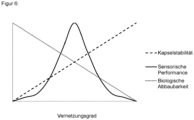
- the stability of the microcapsules increases, but at the same time the ability of the capsule shell to biodegrade decreases.
- the performance for example sensory performance, is lower because the number of microcapsules that break open due to pressure, friction, etc. and release active ingredients decreases. If they are too unstable, they are destroyed during storage and do not perform either.
- the present invention was based on the complex task of providing a process for producing microcapsules which, on the one hand, makes it possible to provide microcapsules with a lower polymer content which simultaneously show high stability as well as excellent release behavior of the encapsulated active ingredients and have properties that are as biodegradable as possible.
- the capsule shell or capsule wall comprises at least polyurea and polyurethane crosslinking matrices or crosslinking units and a release agent which is incorporated into the capsule shell or capsule wall.
- Polyisocyanates with two isocyanate groups are also called diisocyanates.
- Polyisocyanates can be classified into aliphatic, cycloaliphatic, hydroaromatic, aromatic or heterocyclic isocyanates or polyisocyanates.
- the polyisocyanates according to the invention can be linear or branched.
- the at least one polyisocyanate having two or more isocyanate groups is selected from the group of aliphatic polyisocyanates and/or aromatic polyisocyanates.
- the at least one polyisocyanate is a Combination of two different aliphatic polyisocyanates or a combination of an aliphatic and aromatic polyisocyanate.
- the cyclic aliphatic polyisocyanate molecule comprises at least 1, i.e. 1, 2, 3, 4 or more non-aromatic ring structures, the ring structure itself preferably consisting only of C atoms. Of course, the C atoms of the ring structure can carry suitable substituents.
- the at least 1-ring structures preferably consist independently of 3, 4, 5, 6, 7 or 8-membered rings.
- the cyclic aliphatic molecule preferably comprises 2 to 20 C atoms, such as 3 to 15 C atoms, 4 to 12 C atoms, 5 to 10 C atoms, 6 to 9 C atoms or 7 to 8 C atoms.
- the polyisocyanate is an aromatic polyisocyanate.
- aromatic polyisocyanate refers to any polyisocyanate compound in which two or more isocyanate groups are directly bonded to aromatic C atoms and comprises, for example, a phenyl, tolyl, xylyl, naphthyl or diphenyl unit as an aromatic component, as well as derivatives of such polyisocyanate compounds.
- derivatives of linear, branched and/or cyclic aliphatic polyisocyanates are used.
- a derivative as used here is understood in its broadest sense as a compound which is derived from a compound by a chemical reaction.
- Examples of derivatives include oligomers and/or adducts of the above-mentioned linear or branched aliphatic polyisocyanates.
- Preferred oligomers are biurets, isocyanurates, Uretdiones, iminooxadiazinediones and preferred adducts are trimethylolpropane adducts. These oligomers/adducts are well known in the art and are described, for example, in US4855490A or US 4144268 A disclosed.
- Exemplary aliphatic polyisocyanates include those commercially available, e.g., BAYHYDUR N304 and BAYHYDUR N3Q5, which are aliphatic water-dispersible polyisocyanates based on hexamethylene diisocyanate, DESMODUR N3400, DESMODUR N3600, DESMODUR N3700, and DESMODUR N3900, which are low viscosity, polyfunctional aliphatic polyisocyanates based on hexamethylene diisocyanate, and DESMODUR 3600 and DESMODUR N100, which are aliphatic polyisocyanates based on hexamethylene diisocyanate, each of which is available from Bayer Corporation, Pittsburgh, PA.
- BAYHYDUR N304 and BAYHYDUR N3Q5 which are aliphatic water-dispersible polyisocyanates based on hexamethylene diisocyanate
- DESMODUR N3400 DESMODUR N3600
- aliphatic polyisocyanates obtained from renewable raw materials such as PDI (Stabio D-370N or D-376N from Mitsui Chemicals Inc., Japan). It has been found that such aliphatic polyisocyanates obtained from renewable raw materials do not impair the quality/properties of the core-shell capsules.
- the at least one polyisocyanate and the at least one active ingredient to be encapsulated are completely dissolved in the solvent or in the solvent mixture. If a solvent does not ensure sufficient solubility of the isocyanates, it is possible to overcome this disadvantage by using suitable solubility promoters.
- Preferred solvents for the internal non-aqueous phase are immiscible with water and do not react with the isocyanate component(s) or the active ingredient component(s) and have little or no odor in the amounts used.
- Suitable and preferred lipophilic solvents are: Guerbet alcohols based on fatty alcohols with 6 to 18, preferably 8 to 10, carbon atoms, esters of linear C6 to C22 fatty acids with linear or branched C6 to C22 fatty alcohols or esters of branched C6 to C13 carboxylic acids with linear or branched C6 to C22 fatty alcohols, such as myristyl myristate, myristyl palmitate, myristyl stearate, myristyl isostearate, myristyl oleate, myristyl behenate, myristyl rucate, cetyl myristate, cetyl palmitate, cetyl stearate, cetyl isostearate, cetyl oleate, cetyl behenate, cetyl erucate, stearyl myristate, stearyl palmitate, stearyl stearate, stearyl isostearate, ste
- esters of linear C6 to C22 fatty acids with branched alcohols in particular 2-ethylhexanol, esters of C18 to C38 alkylhydroxycarboxylic acids with linear or branched C6 to C22 fatty acids, in particular dioctylalate, esters of linear or branched fatty acids with polyhydric alcohols (such as propylene glycol, dimerdiol or trimertriol) and/or Guerbet alcohols, triglycerides based on C6 to C10 fatty acids, liquid mono-/di-/triglyceride mixtures of C6 to C18 fatty acids, esters of C6 to C22 fatty alcohols and/or Guerbet alcohols with aromatic carboxylic acids, in particular benzoic acid, esters of C2 to C12 dicarboxylic acids with linear or branched alcohols with 1 to 22 carbon atoms or polyols with 2 to 10 carbon atoms and 2 to 6 hydroxyl groups,
- lipophilic active ingredients are particularly lipophilic fragrances or fragrance mixtures of two or more fragrances (perfume oils) or flavorings or flavoring mixtures of two or more flavorings (flavors) or also biogenic principles.
- H.M. Acetals: FLOROPAL; HEPTANAL-DIETHYL ACETAL; NONANDIENAL DIETHYL ACETAL; OKOUMAL; PHENYLACET ALD.
- the fragrance mixtures or perfume oils are preferably selected from the group consisting of extracts of natural raw materials; essential oils, concretes, absolutes, resins, resinoids, balms, tinctures, such as, for example, amber tincture; amyris oil; angelica seed oil; angelica root oil; anise oil; armoise oil; valerian oil; basil oil; tree moss absolute; bay oil; mugwort oil; Benzoin resin; Bergamot oil; Beeswax absolute; Birch tar oil; Bitter almond oil; Savory oil; Bucco leaf oil; Cabreuva oil; Cade oil; Calmus oil; Camphor oil; Cananga oil; Cardamom oil; Cascarilla oil; Cassia oil; Cassie absolute; Castoreum absolute; Cedar leaf oil; Cedarwood oil; Cistus oil; Citronella oil; Lemon oil; Copaiva balsam; Copaiva balsam oil; Coriander oil; Costus root oil; Cumin oil; Cypress oil; Davana oil; D
- Exemplary cooling agents used as lipophilic active ingredients in the preparation of the microcapsules of the invention include one or more of menthol and menthol derivatives (for example L-menthol, D-menthol, racemic menthol, isomenthol, neoisomenthol, neomenthol), menthyl ethers (for example (1-menthoxy)-2-propanediol, (1-menthoxy)-2-methyl-1,2-propanediol, 1-menthyl methyl ether), menthyl esters (for example menthyl formate, menthyl acetate, menthyl isobutyrate, menthyl lactate, L-menthyl L-lactate, L-menthyl D-lactate, menthyl (2-methoxy) acetate, menthyl (2-methoxyethoxy) acetate, menthyl pyroglutamate), menthyl carbonates (for example Menthylpropylene
- the heat-causing or spicy active ingredients are preferably selected from the group consisting of: paprika powder, chili pepper powder, extracts from paprika, extracts from pepper, extracts from chili pepper, extracts from ginger roots, extracts from grains of paradise (Aframomum melegueta), extracts from paracress (Jambu oleoresin; Spilanthes acmella, or Spilanthes oleracea), extracts from Japanese pepper (Zanthoxylum piperitum), extracts from Kaempferia galanga, extracts from Alpinia galanga, extracts from water pepper (Polygonium hydropiper), capsaicinoids, in particular capsaicin, dihydrocapsaicin or nonivamide; gingerols, in particular gingerol-[6], gingerol-[8], or gingerol-[10]; Shogaols, in particular shogaol-[6], shogaol-[8], shogao
- the active ingredients causing a tingling sensation are preferably selected from the group consisting of 2E,4E-decadienoic acid-N-isobutylamide (trans-pellitorin), in particular those as described in the WO 2004/043906 ; 2E,4Z-decadienoic acid-N-isobutylamide (cis-pellitorin), in particular those as described in the WO 2004/000787 ; 2Z,4Z-decadienoic acid-N-isobutylamide; 2Z,4E-decadienoic acid-N-isobutylamide; 2E,4E-decadienoic acid-N-([2S]-2-methylbutyl)amide; 2E,4E-decadienoic acid-N-([2S]-2-methylbutyl)amide; 2E,4E-decadienoic acid-N-([2R]-2-methylbutylamide); 2E,4Z-decadienoic acid-N-
- Biogenic principles are active ingredients with biological activity, for example tocopherol, tocopherol acetate, tocopherol palmitate, ascorbic acid, carnotine, carnosine, caffeine, (deoxy)ribonucleic acid and its fragmentation products, ⁇ -glucans, retinol, bisabolol, allantoin, phytantriol, panthenol, AHA acids, amino acids, ceramides, pseudoceramides, essential oils, plant extracts and vitamin complexes.
- substances for printing coatings for paper are also used as the active ingredient to be encapsulated or as the core material, as described in the US2800457A , the disclosure of which is incorporated in its entirety by this reference in the present description.
- the proportion of the one or more active ingredient components to the internal non-aqueous phase is preferably between 50:1 and 20:1, even more preferably between 40:1 and 30:1.
- the first polymerization and/or crosslinking step (a) of the process according to the invention comprises providing a external aqueous phase comprising at least one protective colloid and optionally an emulsifier (a2).
- the protective colloid and optionally the emulsifier are dissolved in the external aqueous phase, preferably an aqueous solvent.
- Suitable solvents are water or mixtures of water with at least one water-miscible organic solvent.
- Suitable organic solvents are, for example, glycerin, 1,2-propanediol, 1,3-propanediol, ethanediol, diethylene glycol, triethylene glycol and other analogues.
- the solvent is preferably water.
- a protective colloid is a polymer system that prevents the emulsified, suspended or dispersed components from clumping together (agglomeration, coagulation, flocculation) in suspension or dispersion.
- protective colloids bind large amounts of water and, depending on the concentration, produce high viscosities in aqueous solutions.
- the protective colloid attaches itself to the primary particles with its hydrophobic part and applies its polar, i.e. hydrophilic, molecular part to the aqueous phase. Through this attachment to the interface, it lowers the interfacial tension and prevents the agglomeration of the primary particles. It also stabilizes the emulsion and promotes the formation of comparatively smaller droplets and thus also corresponding microcapsules.
- the protective colloid has emulsifying properties in addition to the above-mentioned properties. If the protective colloid has sufficient emulsifying properties, such as, for example, carboxymethylcellulose, acid-modified starch, polyvinyl alcohol, ammonium derivatives of polyvinyl alcohol, polystyrene sulfonates, polyvinylpyrollidones, polyvinyl acrylates, the use of an emulsifier can advantageously even be dispensed with in the process according to the invention.
- the external aqueous phase preferably comprises at least one protective colloid selected from polyvinylpyrrolidones, polyvinyl alcohols and mixtures thereof.
- Polyvinylpyrrolidones are particularly preferred.
- Commercial standard polyvinylpyrrolidones have molecular weights in the range of approximately 2500 to 750,000 g/mol.
- Polyvinyl alcohol or its ammonium derivatives, 1,3,5-trihydroxybenzene or starches, in particular modified starches, or animal or vegetable polymers are particularly preferably used as protective colloids for producing the microcapsules according to the invention.
- Starches, in particular modified starches, or animal or vegetable polymers are naturally occurring substances that are biodegradable.
- the present process can thus provide bio-based and biodegradable capsule shells.
- the starch and the animal and vegetable polymers therefore also function as so-called bio-crosslinkers.
- the starch used in the process according to the invention is selected from the group consisting of corn starch, potato starch, rye starch, wheat starch, barley starch, oat starch, rice starch, pea starch, tapioca starch and mixtures thereof.
- the chemically modified starches are preferably acid-modified starches, alkali-modified starches, oxidized starches, acetylated starches, succinated starches or ocentylsuccinated starches.
- combinations of two or more different protective colloids can also be used to produce the microcapsule according to the invention.
- the ratio of the amount of protective colloid or protective colloids used to the aqueous phase is preferably in a range of 1:50 to 1:10, more preferably in a range of 1:40 to 1:30, according to the present invention.
- the at least one protective colloid can, but does not have to, be part of the capsule shell.
- protective colloids with a higher reactivity as described above, will react more quickly or more easily with the isocyanate groups of the polyisocyanate component and thus form polyurethane crosslinking units which are part of the capsule shell or capsule wall, in amounts of 0.1 to a maximum of 15% by weight, but preferably in the range of 1 to 5% by weight and even more preferably of 1.5 to 3% by weight, based on the weight of the capsules.
- ampholytic surfactants are N-alkylglycines, N-alkylpropionic acids, N-alkylaminobutyric acids, N-alkyliminodipropionic acids, N-hydroxyethyl-N-alkylamidopropylglycines, N-alkyltaurines, N-alkylsarcosines, 2-alkylaminopropionic acids and alkylaminoacetic acids, each with about 8 to 18 C atoms in the alkyl group.
- Particularly preferred ampholytic surfactants are N-cocoalkylaminopropionate, cocoacylaminoethylaminopropionate and C12/18 acylsarcosine.
- the amount of stabilizers used can be in the range from 0.01 to 10 wt.% and in particular in the range from 0.1 to 3 wt.%, in each case based on the external aqueous phase.
- the emulsified or dispersed oil droplets with the core material i.e. the encapsulated active ingredients
- the cross-linking matrix or the cross-linking units are enclosed at the interface by the cross-linking matrix or the cross-linking units on the outside and thus a capsule wall is generated, which makes diffusion of the encapsulated active ingredient more difficult.
- a catalyst to the emulsion or dispersion accelerates the reaction between polyisocyanates and the amino acid or amino acid hydrochloride and catalyzes the reaction in favor of the formation of a polyurea cross-linking matrix.
- DABCO and the aforementioned catalysts preferably catalyze the polyurethane reaction between the at least one polymerizable polyisocyanate having two or more isocyanate groups and the diols or polyols.
- Particularly stable capsules could be produced using the catalyst diazabicyclo[2.2.2]octane (DABCO).
- DABCO diazabicyclo[2.2.2]octane
- a combination of two different ones of the above-mentioned hydroxyl group donors can also be used to produce the microcapsule according to the invention.
- a particularly advantageous combination has therefore proven to be glycerin with starch or with modified starch or the combination of glycerin with quaternized hydroxyethylcellulose or gum arabic type Seyal; such combinations make use of the properties of both hydroxyl group donors described above: high reaction rate of the glycerin on the one hand and the number of polymerizable functional groups of the starch on the other.
- the step of further crosslinking by addition of the hydroxyl group donor is carried out at stirring speeds of 900 rpm to 1700 rpm, preferably 1000 rpm to 1300 rpm.
- Arginine is particularly preferably used as a cross-linking agent in the process according to the invention because of its water solubility.
- a third crosslinking matrix or third crosslinking units are formed in the process according to the invention to build up the capsule shell or capsule wall.
- These third crosslinking units are based on the polyaddition reaction of individual polymers or oligomers of the polyisocyanate or polyisocyanates with the amino acid to form a capsule shell or capsule wall based on a polyurea structure.
- the third crosslinking in the process of the invention is carried out for a period of time of about 10 minutes to 20 minutes, preferably for a period of time of 12 to 18 minutes, and most preferably for a period of time of about 15 minutes.
- polyurea and polyurethane crosslinking units or crosslinking matrices can be generated that build up the capsule shell or the capsule wall.
- the first, second and third polyurea and polyurethane crosslinking units are further spatially crosslinked with one another and with each other by the sequential crosslinking steps.
- the stirring power is reduced, preferably to a stirring speed of about 800 to 1200 rpm, in order not to immediately break down the cross-linking units that are forming to form the capsule shell.
- the capsules produced by the process according to the invention are present as raw microcapsules in the form of an aqueous dispersion or a slurry.
- the microcapsules in the slurry still have a flexible shell that is not particularly stable and therefore breaks easily.
- the shell of the microcapsules is hardened.
- Hardening is preferably carried out by gradually raising the microcapsule dispersion to a temperature of at least 60 °C, preferably to a temperature in the range of 60 to 65 °C, up to a maximum of the boiling point of the microcapsule dispersion. Hardening is usually carried out over a period of at least 60 minutes, preferably 2 to 4 hours.
- the saturated fatty acids are preferred.
- Most preferred in the process according to the invention is the use of the animal and vegetable waxes specified above due to their lower melting points, which facilitate incorporation into the microcapsule shell or microcapsule wall.
- microcapsules An important criterion for the usability of microcapsules is the weight ratio of core material to capsule wall material. While on the one hand the aim is to have as high a proportion of core material as possible in order to enable the capsules to be as useful as possible, on the other hand it is necessary that the capsules still have a sufficient proportion of capsule wall material to ensure the stability of the capsules.
Landscapes
- Chemical & Material Sciences (AREA)
- Life Sciences & Earth Sciences (AREA)
- Health & Medical Sciences (AREA)
- Organic Chemistry (AREA)
- Chemical Kinetics & Catalysis (AREA)
- Engineering & Computer Science (AREA)
- General Health & Medical Sciences (AREA)
- Wood Science & Technology (AREA)
- Dispersion Chemistry (AREA)
- Oil, Petroleum & Natural Gas (AREA)
- Public Health (AREA)
- Veterinary Medicine (AREA)
- Animal Behavior & Ethology (AREA)
- Polymers & Plastics (AREA)
- Food Science & Technology (AREA)
- Epidemiology (AREA)
- Molecular Biology (AREA)
- Birds (AREA)
- Biophysics (AREA)
- Toxicology (AREA)
- Environmental Sciences (AREA)
- Zoology (AREA)
- Dentistry (AREA)
- Plant Pathology (AREA)
- Pest Control & Pesticides (AREA)
- Agronomy & Crop Science (AREA)
- Dermatology (AREA)
- Medicinal Chemistry (AREA)
- Bioinformatics & Cheminformatics (AREA)
- Pharmacology & Pharmacy (AREA)
- Nutrition Science (AREA)
- Emergency Medicine (AREA)
- Manufacturing Of Micro-Capsules (AREA)
- Polyurethanes Or Polyureas (AREA)
- Fats And Perfumes (AREA)
- Cosmetics (AREA)
- Detergent Compositions (AREA)
Priority Applications (1)
| Application Number | Priority Date | Filing Date | Title |
|---|---|---|---|
| EP24170337.0A EP4393581A3 (fr) | 2020-08-06 | 2020-08-06 | Microcapsules de polyurée/polyuréthane biodégradables |
Applications Claiming Priority (3)
| Application Number | Priority Date | Filing Date | Title |
|---|---|---|---|
| EP24170337.0A EP4393581A3 (fr) | 2020-08-06 | 2020-08-06 | Microcapsules de polyurée/polyuréthane biodégradables |
| PCT/EP2020/072204 WO2022028706A1 (fr) | 2020-08-06 | 2020-08-06 | Microcapsules de polyurée/polyuréthane biodégradables |
| EP20754224.2A EP3969165B1 (fr) | 2020-08-06 | 2020-08-06 | Microcapsules de polyurée/polyuréthane biodégradables |
Related Parent Applications (1)
| Application Number | Title | Priority Date | Filing Date |
|---|---|---|---|
| EP20754224.2A Division EP3969165B1 (fr) | 2020-08-06 | 2020-08-06 | Microcapsules de polyurée/polyuréthane biodégradables |
Publications (2)
| Publication Number | Publication Date |
|---|---|
| EP4393581A2 true EP4393581A2 (fr) | 2024-07-03 |
| EP4393581A3 EP4393581A3 (fr) | 2024-07-10 |
Family
ID=72046888
Family Applications (2)
| Application Number | Title | Priority Date | Filing Date |
|---|---|---|---|
| EP20754224.2A Active EP3969165B1 (fr) | 2020-08-06 | 2020-08-06 | Microcapsules de polyurée/polyuréthane biodégradables |
| EP24170337.0A Withdrawn EP4393581A3 (fr) | 2020-08-06 | 2020-08-06 | Microcapsules de polyurée/polyuréthane biodégradables |
Family Applications Before (1)
| Application Number | Title | Priority Date | Filing Date |
|---|---|---|---|
| EP20754224.2A Active EP3969165B1 (fr) | 2020-08-06 | 2020-08-06 | Microcapsules de polyurée/polyuréthane biodégradables |
Country Status (8)
| Country | Link |
|---|---|
| US (1) | US20230287308A1 (fr) |
| EP (2) | EP3969165B1 (fr) |
| JP (1) | JP7546145B2 (fr) |
| KR (1) | KR20230045064A (fr) |
| CN (1) | CN116490265B (fr) |
| BR (1) | BR112023002136A2 (fr) |
| ES (1) | ES2982401T3 (fr) |
| WO (1) | WO2022028706A1 (fr) |
Families Citing this family (7)
| Publication number | Priority date | Publication date | Assignee | Title |
|---|---|---|---|---|
| CN116676044B (zh) * | 2023-08-03 | 2023-10-27 | 北京科技大学 | 抑菌抗粘附疏水防污涂层及其制备方法 |
| CN117604785B (zh) * | 2023-11-16 | 2026-04-03 | 江南大学 | 一种利用真菌子实体制备生物基皮革的方法 |
| WO2025128667A1 (fr) * | 2023-12-13 | 2025-06-19 | Encapsys, Llc | Particules d'administration dégradables à partir d'isocyanates mélangés comprenant une fraction aromatique et du chitosane |
| WO2025128660A1 (fr) * | 2023-12-13 | 2025-06-19 | Encapsys, Llc | Particules d'administration dégradables séchées à partir d'isocyanates mélangés comprenant une fraction aromatique et du chitosane |
| CN118048070B (zh) * | 2023-12-28 | 2026-01-06 | 青岛奥海瑞泰实业有限公司 | 一种中空板的表面油墨印刷工艺 |
| WO2025252858A1 (fr) | 2024-06-04 | 2025-12-11 | Eurofragance Sl | Systèmes de distribution à faible teneur en polymère |
| CN119075852B (zh) * | 2024-11-07 | 2025-02-21 | 山东金铸基药业有限公司 | 一种山苍子精油微胶囊的制备方法 |
Citations (15)
| Publication number | Priority date | Publication date | Assignee | Title |
|---|---|---|---|---|
| US2800457A (en) | 1953-06-30 | 1957-07-23 | Ncr Co | Oil-containing microscopic capsules and method of making them |
| US4144268A (en) | 1976-02-11 | 1979-03-13 | Commonwealth Scientific And Industrial Research Organization | Preparation of bisulphite adducts of biruet-polyisocyanates |
| US4855490A (en) | 1982-06-18 | 1989-08-08 | Mobay Corporation | Liquid polyisocyanate adduct mixtures possessing good compatibility with apolar solvents |
| EP0537467A1 (fr) | 1991-09-16 | 1993-04-21 | Bayer Ag | Microcapsules à partir d'isocyanates avec des groupes contenant des oxydes de polyéthylène |
| WO2004000787A2 (fr) | 2002-06-20 | 2003-12-31 | Symrise Gmbh & Co. Kg | Preparation de cis-pellitorine et son utilisation comme arome |
| WO2004026840A1 (fr) | 2002-09-18 | 2004-04-01 | Unilever Plc | Derives de tetrahydropyrimidine-2-one et leurs utilisations |
| WO2004043906A2 (fr) | 2002-11-14 | 2004-05-27 | Symrise Gmbh & Co. Kg | Utilisation de trans-pellitorine comme substance aromatique |
| WO2007096592A1 (fr) | 2006-02-22 | 2007-08-30 | Reaxa Limited | Systeme de catalyseur/ligand microencapsule |
| EP1958627A2 (fr) | 2007-01-04 | 2008-08-20 | Symrise GmbH & Co. KG | Utilisation d'esters d'acide de menthyl-3-oxycarboxylique déterminés en tant que substances de refroidissement physiologiques actives |
| EP2033688A2 (fr) | 2007-08-20 | 2009-03-11 | Symrise GmbH & Co. KG | Dérivés d'acide oxalique et leur utilisation en tant que matières de refroidissement physiologiques |
| US20100273887A1 (en) | 2007-08-16 | 2010-10-28 | Symrise Gmbh & Co. Kg | Mixtures comprising pellitorin and uses thereof |
| WO2011160733A1 (fr) | 2010-06-25 | 2011-12-29 | Cognis Ip Management Gmbh | Procédé de production de microcapsules |
| WO2011161229A1 (fr) | 2010-06-25 | 2011-12-29 | Givaudan Sa | Procédé de production de microcapsules |
| WO2012107323A1 (fr) | 2011-02-07 | 2012-08-16 | Firmenich Sa | Microcapsules de polyurée |
| US20170216802A1 (en) | 2014-07-29 | 2017-08-03 | Symrise Ag | Process for the Production of Solid Cooling Agents |
Family Cites Families (18)
| Publication number | Priority date | Publication date | Assignee | Title |
|---|---|---|---|---|
| DE10138996A1 (de) * | 2001-08-15 | 2003-02-27 | Basf Ag | Mikrokapseldispersion |
| JP2003326850A (ja) * | 2002-05-15 | 2003-11-19 | Fuji Photo Film Co Ltd | マイクロカプセル液及びそれを用いた感熱記録材料 |
| DE10223916A1 (de) * | 2002-05-29 | 2003-12-11 | Bayer Cropscience Ag | Mikrokapsel-Formulierungen |
| US9079152B2 (en) * | 2003-05-11 | 2015-07-14 | Ben Gurion University Of The Negev Research And Development Authority | Encapsulated essential oils |
| JP5415284B2 (ja) * | 2007-02-13 | 2014-02-12 | ジボダン エス エー | マイクロカプセル |
| DE102008002145A1 (de) * | 2008-06-02 | 2009-12-03 | Symrise Gmbh & Co. Kg | Kapsel mit organisch-anorganischer Hybridwand |
| BRPI0915228B1 (pt) * | 2008-06-16 | 2018-07-10 | Firmenich Sa | Processo de preparo de microcápsulas de poliureia |
| US9816059B2 (en) * | 2009-09-18 | 2017-11-14 | International Flavors & Fragrances | Stabilized capsule compositions |
| US20120148644A1 (en) * | 2009-09-18 | 2012-06-14 | Lewis Michael Popplewell | Encapsulated Active Materials |
| WO2015023961A1 (fr) * | 2013-08-15 | 2015-02-19 | International Flavors & Fragrances Inc. | Capsules en polyurée ou polyuréthane |
| US20170252274A1 (en) * | 2013-08-16 | 2017-09-07 | International Flavors & Fragrances Inc. | Polyurea capsules prepared with aliphatic isocyanates and amines |
| WO2016144798A1 (fr) * | 2015-03-06 | 2016-09-15 | International Flavors & Fragrances Inc. | Compositions à microcapsule haute performance |
| EP3280525B2 (fr) * | 2015-04-07 | 2026-03-25 | Firmenich SA | Procédé de préparation de microcapsules de polyurée |
| BR112017026245A2 (pt) * | 2015-06-05 | 2018-09-11 | Firmenich & Cie | microcápsulas com alta deposição em superfícies |
| US11173465B2 (en) * | 2015-12-15 | 2021-11-16 | Firmenich Sa | Process for preparing polyurea microcapsules with improved deposition |
| EP3423028B1 (fr) * | 2016-02-29 | 2020-04-08 | Symrise AG | Procédé de production de capsules à stabilité ameliorée à l'égard des tensides, comprenant des parfums |
| BR112018076803B1 (pt) * | 2016-07-01 | 2022-05-03 | International Flavors & Fragrances Inc | Composição estável de microcápsula, e, produto de consumo |
| WO2019171929A1 (fr) * | 2018-03-05 | 2019-09-12 | 富士フイルム株式会社 | Composition comprenant des microcapsules |
-
2020
- 2020-08-06 EP EP20754224.2A patent/EP3969165B1/fr active Active
- 2020-08-06 EP EP24170337.0A patent/EP4393581A3/fr not_active Withdrawn
- 2020-08-06 BR BR112023002136A patent/BR112023002136A2/pt not_active Application Discontinuation
- 2020-08-06 ES ES20754224T patent/ES2982401T3/es active Active
- 2020-08-06 WO PCT/EP2020/072204 patent/WO2022028706A1/fr not_active Ceased
- 2020-08-06 JP JP2023507904A patent/JP7546145B2/ja active Active
- 2020-08-06 US US18/019,794 patent/US20230287308A1/en active Pending
- 2020-08-06 KR KR1020237007578A patent/KR20230045064A/ko active Pending
- 2020-08-06 CN CN202080105964.6A patent/CN116490265B/zh active Active
Patent Citations (15)
| Publication number | Priority date | Publication date | Assignee | Title |
|---|---|---|---|---|
| US2800457A (en) | 1953-06-30 | 1957-07-23 | Ncr Co | Oil-containing microscopic capsules and method of making them |
| US4144268A (en) | 1976-02-11 | 1979-03-13 | Commonwealth Scientific And Industrial Research Organization | Preparation of bisulphite adducts of biruet-polyisocyanates |
| US4855490A (en) | 1982-06-18 | 1989-08-08 | Mobay Corporation | Liquid polyisocyanate adduct mixtures possessing good compatibility with apolar solvents |
| EP0537467A1 (fr) | 1991-09-16 | 1993-04-21 | Bayer Ag | Microcapsules à partir d'isocyanates avec des groupes contenant des oxydes de polyéthylène |
| WO2004000787A2 (fr) | 2002-06-20 | 2003-12-31 | Symrise Gmbh & Co. Kg | Preparation de cis-pellitorine et son utilisation comme arome |
| WO2004026840A1 (fr) | 2002-09-18 | 2004-04-01 | Unilever Plc | Derives de tetrahydropyrimidine-2-one et leurs utilisations |
| WO2004043906A2 (fr) | 2002-11-14 | 2004-05-27 | Symrise Gmbh & Co. Kg | Utilisation de trans-pellitorine comme substance aromatique |
| WO2007096592A1 (fr) | 2006-02-22 | 2007-08-30 | Reaxa Limited | Systeme de catalyseur/ligand microencapsule |
| EP1958627A2 (fr) | 2007-01-04 | 2008-08-20 | Symrise GmbH & Co. KG | Utilisation d'esters d'acide de menthyl-3-oxycarboxylique déterminés en tant que substances de refroidissement physiologiques actives |
| US20100273887A1 (en) | 2007-08-16 | 2010-10-28 | Symrise Gmbh & Co. Kg | Mixtures comprising pellitorin and uses thereof |
| EP2033688A2 (fr) | 2007-08-20 | 2009-03-11 | Symrise GmbH & Co. KG | Dérivés d'acide oxalique et leur utilisation en tant que matières de refroidissement physiologiques |
| WO2011160733A1 (fr) | 2010-06-25 | 2011-12-29 | Cognis Ip Management Gmbh | Procédé de production de microcapsules |
| WO2011161229A1 (fr) | 2010-06-25 | 2011-12-29 | Givaudan Sa | Procédé de production de microcapsules |
| WO2012107323A1 (fr) | 2011-02-07 | 2012-08-16 | Firmenich Sa | Microcapsules de polyurée |
| US20170216802A1 (en) | 2014-07-29 | 2017-08-03 | Symrise Ag | Process for the Production of Solid Cooling Agents |
Non-Patent Citations (5)
| Title |
|---|
| EIGENVERLAGMONTCLAIR, N.J., PERFUME AND FLAVOR CHEMICALS, 1969 |
| H. SURBURGJ. PANTEN: "Common Fragrance and Flavor Materials", 2006, WILEY-VCH |
| K.C. FRISCHL.P. RUMAO, CATALYSIS IN ISOCYANATE REACTIONS, POLYMER REVIEWS, vol. 5, no. 1, 1970, pages 103 - 149 |
| K.C. FRISCHL.P. RUMAO: "Catalysis in Isocyanate Reactions", POLYMER, vol. 5, no. 1, 1970, pages 103 - 149 |
| M.F. SONNENSCHEIN: "Polyurethanes: Science, Technology, Markets, and Trends", 2015, JOHN WILEY & SONS, article "Introduction to Polyurethane Chemistry", pages: 105 - 126 |
Also Published As
| Publication number | Publication date |
|---|---|
| EP3969165B1 (fr) | 2024-05-15 |
| CN116490265B (zh) | 2025-11-21 |
| EP3969165C0 (fr) | 2024-05-15 |
| US20230287308A1 (en) | 2023-09-14 |
| ES2982401T3 (es) | 2024-10-16 |
| KR20230045064A (ko) | 2023-04-04 |
| JP7546145B2 (ja) | 2024-09-05 |
| EP4393581A3 (fr) | 2024-07-10 |
| EP3969165A1 (fr) | 2022-03-23 |
| JP2023538273A (ja) | 2023-09-07 |
| CN116490265A (zh) | 2023-07-25 |
| WO2022028706A1 (fr) | 2022-02-10 |
| BR112023002136A2 (pt) | 2023-03-07 |
Similar Documents
| Publication | Publication Date | Title |
|---|---|---|
| EP4192614B1 (fr) | Processus de préparation de microcapsules | |
| EP3969165B1 (fr) | Microcapsules de polyurée/polyuréthane biodégradables | |
| EP3924102B1 (fr) | Procédé de production de microcapsules | |
| EP3969163B1 (fr) | Microcapsules de polyurée/polyuréthane biodégradables | |
| WO2023147889A1 (fr) | Procédé de production de microcapsules | |
| EP3969162B1 (fr) | Microcapsules de polyurée/polyuréthane | |
| DE202023002916U1 (de) | Pflanzenprotein-basierte Mikrokapseln |
Legal Events
| Date | Code | Title | Description |
|---|---|---|---|
| PUAI | Public reference made under article 153(3) epc to a published international application that has entered the european phase |
Free format text: ORIGINAL CODE: 0009012 |
|
| STAA | Information on the status of an ep patent application or granted ep patent |
Free format text: STATUS: REQUEST FOR EXAMINATION WAS MADE |
|
| REG | Reference to a national code |
Ref country code: DE Ref legal event code: R079 Free format text: PREVIOUS MAIN CLASS: B01J0013200000 Ipc: B01J0013140000 |
|
| PUAL | Search report despatched |
Free format text: ORIGINAL CODE: 0009013 |
|
| 17P | Request for examination filed |
Effective date: 20240415 |
|
| AC | Divisional application: reference to earlier application |
Ref document number: 3969165 Country of ref document: EP Kind code of ref document: P |
|
| AK | Designated contracting states |
Kind code of ref document: A2 Designated state(s): AL AT BE BG CH CY CZ DE DK EE ES FI FR GB GR HR HU IE IS IT LI LT LU LV MC MK MT NL NO PL PT RO RS SE SI SK SM TR |
|
| AK | Designated contracting states |
Kind code of ref document: A3 Designated state(s): AL AT BE BG CH CY CZ DE DK EE ES FI FR GB GR HR HU IE IS IT LI LT LU LV MC MK MT NL NO PL PT RO RS SE SI SK SM TR |
|
| RIC1 | Information provided on ipc code assigned before grant |
Ipc: C11D 3/50 20060101ALI20240603BHEP Ipc: C09B 67/02 20060101ALI20240603BHEP Ipc: A61K 9/50 20060101ALI20240603BHEP Ipc: A61K 8/11 20060101ALI20240603BHEP Ipc: A23P 10/30 20160101ALI20240603BHEP Ipc: A01N 25/28 20060101ALI20240603BHEP Ipc: B01J 13/20 20060101ALI20240603BHEP Ipc: B01J 13/16 20060101ALI20240603BHEP Ipc: B01J 13/14 20060101AFI20240603BHEP |
|
| STAA | Information on the status of an ep patent application or granted ep patent |
Free format text: STATUS: THE APPLICATION IS DEEMED TO BE WITHDRAWN |
|
| 18D | Application deemed to be withdrawn |
Effective date: 20250111 |