EP4393660A1 - Verfahren zur erzeugung trainierter modelle, vorrichtung zur erzeugung trainierter modelle, trainiertes modell und vorrichtung zur schätzung des wartungszustands - Google Patents
Verfahren zur erzeugung trainierter modelle, vorrichtung zur erzeugung trainierter modelle, trainiertes modell und vorrichtung zur schätzung des wartungszustands Download PDFInfo
- Publication number
- EP4393660A1 EP4393660A1 EP22861475.6A EP22861475A EP4393660A1 EP 4393660 A1 EP4393660 A1 EP 4393660A1 EP 22861475 A EP22861475 A EP 22861475A EP 4393660 A1 EP4393660 A1 EP 4393660A1
- Authority
- EP
- European Patent Office
- Prior art keywords
- holding
- target object
- inference
- model
- holding mode
- Prior art date
- Legal status (The legal status is an assumption and is not a legal conclusion. Google has not performed a legal analysis and makes no representation as to the accuracy of the status listed.)
- Pending
Links
Images



Classifications
-
- B—PERFORMING OPERATIONS; TRANSPORTING
- B25—HAND TOOLS; PORTABLE POWER-DRIVEN TOOLS; MANIPULATORS
- B25J—MANIPULATORS; CHAMBERS PROVIDED WITH MANIPULATION DEVICES
- B25J13/00—Controls for manipulators
- B25J13/08—Controls for manipulators by means of sensing devices, e.g. viewing or touching devices
-
- B—PERFORMING OPERATIONS; TRANSPORTING
- B25—HAND TOOLS; PORTABLE POWER-DRIVEN TOOLS; MANIPULATORS
- B25J—MANIPULATORS; CHAMBERS PROVIDED WITH MANIPULATION DEVICES
- B25J9/00—Program-controlled manipulators
- B25J9/16—Program controls
- B25J9/1628—Program controls characterised by the control loop
- B25J9/163—Program controls characterised by the control loop learning, adaptive, model based, rule based expert control
-
- B—PERFORMING OPERATIONS; TRANSPORTING
- B25—HAND TOOLS; PORTABLE POWER-DRIVEN TOOLS; MANIPULATORS
- B25J—MANIPULATORS; CHAMBERS PROVIDED WITH MANIPULATION DEVICES
- B25J9/00—Program-controlled manipulators
- B25J9/16—Program controls
- B25J9/1602—Program controls characterised by the control system, structure, architecture
- B25J9/161—Hardware, e.g. neural networks, fuzzy logic, interfaces, processor
-
- B—PERFORMING OPERATIONS; TRANSPORTING
- B25—HAND TOOLS; PORTABLE POWER-DRIVEN TOOLS; MANIPULATORS
- B25J—MANIPULATORS; CHAMBERS PROVIDED WITH MANIPULATION DEVICES
- B25J9/00—Program-controlled manipulators
- B25J9/16—Program controls
- B25J9/1612—Program controls characterised by the hand, wrist, grip control
-
- G—PHYSICS
- G05—CONTROLLING; REGULATING
- G05B—CONTROL OR REGULATING SYSTEMS IN GENERAL; FUNCTIONAL ELEMENTS OF SUCH SYSTEMS; MONITORING OR TESTING ARRANGEMENTS FOR SUCH SYSTEMS OR ELEMENTS
- G05B2219/00—Program-control systems
- G05B2219/30—Nc systems
- G05B2219/39—Robotics, robotics to robotics hand
- G05B2219/39484—Locate, reach and grasp, visual guided grasping
-
- G—PHYSICS
- G05—CONTROLLING; REGULATING
- G05B—CONTROL OR REGULATING SYSTEMS IN GENERAL; FUNCTIONAL ELEMENTS OF SUCH SYSTEMS; MONITORING OR TESTING ARRANGEMENTS FOR SUCH SYSTEMS OR ELEMENTS
- G05B2219/00—Program-control systems
- G05B2219/30—Nc systems
- G05B2219/39—Robotics, robotics to robotics hand
- G05B2219/39543—Recognize object and plan hand shapes in grasping movements
-
- G—PHYSICS
- G05—CONTROLLING; REGULATING
- G05B—CONTROL OR REGULATING SYSTEMS IN GENERAL; FUNCTIONAL ELEMENTS OF SUCH SYSTEMS; MONITORING OR TESTING ARRANGEMENTS FOR SUCH SYSTEMS OR ELEMENTS
- G05B2219/00—Program-control systems
- G05B2219/30—Nc systems
- G05B2219/40—Robotics, robotics mapping to robotics vision
- G05B2219/40571—Camera, vision combined with force sensor
-
- G—PHYSICS
- G05—CONTROLLING; REGULATING
- G05B—CONTROL OR REGULATING SYSTEMS IN GENERAL; FUNCTIONAL ELEMENTS OF SUCH SYSTEMS; MONITORING OR TESTING ARRANGEMENTS FOR SUCH SYSTEMS OR ELEMENTS
- G05B2219/00—Program-control systems
- G05B2219/30—Nc systems
- G05B2219/40—Robotics, robotics mapping to robotics vision
- G05B2219/40584—Camera, non-contact sensor mounted on wrist, indep from gripper
Definitions
- the present disclosure relates to a trained model generation method, a trained model generation device, a trained model, and a holding mode inference device.
- Patent Literature 1 A method for appropriately holding an object having a certain shape by a robot hand is known (see, for example, Patent Literature 1).
- Patent Literature 1 Japanese Unexamined Patent Application Publication No. 2005-169564
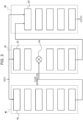
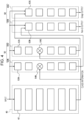
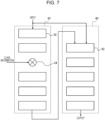
- a trained model includes a class inference model, a first holding mode inference model, and a second holding mode inference model.
- the class inference model infers, based on an inference image of a holding target object to be held by a robot, a classification result obtained by classifying the holding target object into a predetermined holding category.
- the first holding mode inference model infers, based on the classification result and the inference image, a first holding mode for the holding target object.
- the second holding mode inference model infers, based on the first holding mode and the inference image, a second holding mode for the holding target object.
- the trained model generation method includes generating the trained model by performing learning using learning data including a learning image of a learning target object corresponding to the holding target object.
- a trained model includes a class inference model, a first holding mode inference model, and a second holding mode inference model.
- the class inference model infers, based on an inference image of a holding target object to be held by a robot, a classification result obtained by classifying the holding target object into a predetermined holding category.
- the first holding mode inference model infers, based on the classification result and the inference image, a first holding mode for the holding target object.
- the second holding mode inference model infers, based on the first holding mode and the inference image, a second holding mode for the holding target object.
- the trained model generation device generates the trained model by performing learning using learning data including a learning image of a learning target object corresponding to the holding target object.
- a trained model includes a class inference model, a first holding mode inference model, and a second holding mode inference model.
- the class inference model infers, based on an inference image of a holding target object to be held by a robot, a classification result obtained by classifying the holding target object into a predetermined holding category.
- the first holding mode inference model infers, based on the classification result and the inference image, a first holding mode for the holding target object.
- the second holding mode inference model infers, based on the first holding mode and the inference image, a second holding mode for the holding target object.
- a holding mode inference device infers, using a trained model, a mode in which a robot holds a target object.
- the trained model includes a class inference model, a first holding mode inference model, and a second holding mode inference model.
- the class inference model infers, based on an inference image of a holding target object to be held by the robot, a classification result obtained by classifying the holding target object into a predetermined holding category.
- the first holding mode inference model infers, based on the classification result and the inference image, a first holding mode for the holding target object.
- the second holding mode inference model infers, based on the first holding mode and the inference image, a second holding mode for the holding target object.
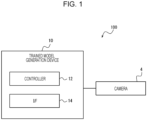
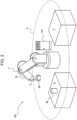
- a robot control system 100 includes a robot 2, a robot control device 110, a trained model generation device 10, and a camera 4.
- the robot 2 holds, by an end effector 2B, a holding target object 80 and performs work.
- the holding target object 80 is also simply referred to as a target object.
- the robot control device 110 controls the robot 2.
- the trained model generation device 10 generates a trained model to be used to determine a mode in which the robot 2 holds the holding target object 80.
- the mode in which the robot 2 holds the holding target object 80 is also simply referred to as a holding mode.
- the holding mode includes a position at which the robot 2 touches the holding target object 80, a force to be applied to the holding target object 80 by the robot 2, or the like.
- the robot 2 is capable of controlling the position of the end effector 2B by operating the arm 2A.
- the end effector 2B may include a shaft serving as reference of a direction in which the end effector 2B acts on the holding target object 80.
- the robot 2 is capable of controlling the direction of the shaft of the end effector 2B by operating the arm 2A.
- the robot 2 controls the start and end of an operation in which the end effector 2B acts on the holding target object 80.
- the robot 2 controls the operation of the end effector 2B while controlling the position of the end effector 2B or the direction of the shaft of the end effector 2B, thereby being capable of moving or processing the holding target object 80.
- the sensor may include a force sensor or a tactile sensor that detects, as physical information of the robot 2, a force, a distributed pressure, a slip, or the like acting on the robot 2.
- the sensor may include a motion sensor that detects, as the physical information of the robot 2, the position or posture of the robot 2 or the speed or acceleration of the robot 2.
- the sensor may include a current sensor that detects, as the physical information of the robot 2, a current flowing through a motor that drives the robot 2.
- the sensor may include a torque sensor that detects, as the physical information of the robot 2, a torque of a motor that drives the robot 2.
- the sensor outputs detected physical information of the robot 2 to the robot control device 110.
- the sensor detects and outputs the physical information of the robot 2 at a predetermined timing.
- the sensor outputs the physical information of the robot 2 as time-series data.
- the robot control system 100 includes the camera 4 attached to the end effector 2B of the robot 2.
- the camera 4 may photograph the holding target object 80 in a direction from the end effector 2B toward the holding target object 80. That is, the camera 4 photographs the holding target object 80 in a direction in which the end effector 2B holds the holding target object 80.
- An image captured by photographing the holding target object 80 in the direction in which the end effector 2B holds the holding target object 80 is also referred to as a holding target image (inference image).
- the inference image is an image for inferring a holding target and includes the holding target object 80.
- the camera 4 may include a depth sensor and may be configured to be capable of acquiring depth data of the holding target object 80.
- the trained model generation device 10 includes a controller 12 and an interface (I/F) 14.
- the interface 14 acquires information or data from an external device, and outputs information or data to an external device.
- the interface 14 acquires learning data.
- the interface 14 acquires, as learning data, an image (learning image) obtained by photographing the holding target object 80 (learning target object) by the camera 4 and class information of the holding target object 80.
- the learning image is an image of a learning target object.
- the controller 12 performs learning based on the learning data and generates a trained model used for determining a holding mode for the holding target object 80 in the robot control device 110.
- the controller 12 outputs the generated trained model to the robot control device 110 via the interface 14.
- the controller 12 may include a storage unit.
- the storage unit may include an electromagnetic storage medium such as a magnetic disk, or may include a memory such as a semiconductor memory or a magnetic memory.
- the storage unit stores various pieces of information.
- the storage unit stores a program or the like to be executed by the controller 12.
- the storage unit may be configured as a non-transitory readable medium.
- the storage unit may function as a work memory of the controller 12. At least a part of the storage unit may be configured separately from the controller 12.
- the interface 14 may include a communication device configured to be capable of wired or wireless communication.
- the communication device may be configured to be capable of communication in a communication scheme based on various communication standards.
- the communication device can be configured using a known communication technique.
- the interface 14 may include an output device that outputs information, data, or the like to a user.
- the output device may include, for example, a display device that displays information, data, or the like to a user.
- the display device may include, for example, a liquid crystal display (LCD), an organic electro-luminescence (EL) display, an inorganic EL display, a plasma display panel (PDP), or the like.
- the display device is not limited to these displays, and may include other various types of displays.
- the display device may include a light-emitting device such as a light emission diode (LED) or a laser diode (LD).
- the display device may include other various devices.
- the output device may include, for example, an audio output device such as a speaker that outputs auditory information such as voice.
- the output device may include a vibration device that vibrates to provide tactile information to a user.
- the output device is not limited to these examples, and may include other various devices.
- the interface 14 may be configured to be connectable to an external output device.
- the interface 14 may output information to the external output device so that the external output device outputs the information to a user.
- the interface 14 may be configured to be connectable to a display device 20, which will be described below, as the external output device.
- the robot control device 110 determines a holding mode by using a trained model generated by the trained model generation device 10 and controls the robot 2 such that the robot 2 holds the holding target object 80 in the determined holding mode.
- the robot control device 110 may include at least one processor to provide control and processing capabilities for executing various functions.
- the individual components of the robot control device 110 may include at least one processor. Multiple components among the components of the robot control device 110 may be implemented by one processor.
- the entire robot control device 110 may be implemented by one processor.
- the processor can execute a program for implementing the various functions of the robot control device 110.
- the processor may be configured to be the same as or similar to the processor used in the trained model generation device 10.
- the robot control device 110 may include a storage unit.
- the storage unit may be configured to be the same as or similar to the storage unit used in the trained model generation device 10.
- the class inference model 40 outputs a class inference result as class information.
- the class that can be inferred by the class inference model 40 may be determined based on the shape of the holding target object 80.
- the class that can be inferred by the class inference model 40 may be determined based on various characteristics such as the surface state or the hardness of the holding target object 80.
- the number of classes that can be inferred by the class inference model 40 is four.
- the four classes are referred to as a first class, a second class, a third class, and a fourth class, respectively.
- the number of classes may be three or less or may be five or more.
Landscapes
- Engineering & Computer Science (AREA)
- Robotics (AREA)
- Mechanical Engineering (AREA)
- Automation & Control Theory (AREA)
- General Health & Medical Sciences (AREA)
- Orthopedic Medicine & Surgery (AREA)
- Health & Medical Sciences (AREA)
- Physics & Mathematics (AREA)
- Artificial Intelligence (AREA)
- Evolutionary Computation (AREA)
- Fuzzy Systems (AREA)
- Mathematical Physics (AREA)
- Software Systems (AREA)
- Human Computer Interaction (AREA)
- Image Analysis (AREA)
Applications Claiming Priority (2)
| Application Number | Priority Date | Filing Date | Title |
|---|---|---|---|
| JP2021139421 | 2021-08-27 | ||
| PCT/JP2022/032290 WO2023027187A1 (ja) | 2021-08-27 | 2022-08-26 | 学習済みモデル生成方法、学習済みモデル生成装置、学習済みモデル、及び保持態様の推定装置 |
Publications (2)
| Publication Number | Publication Date |
|---|---|
| EP4393660A1 true EP4393660A1 (de) | 2024-07-03 |
| EP4393660A4 EP4393660A4 (de) | 2025-08-20 |
Family
ID=85321677
Family Applications (1)
| Application Number | Title | Priority Date | Filing Date |
|---|---|---|---|
| EP22861475.6A Pending EP4393660A4 (de) | 2021-08-27 | 2022-08-26 | Verfahren zur erzeugung trainierter modelle, vorrichtung zur erzeugung trainierter modelle, trainiertes modell und vorrichtung zur schätzung des wartungszustands |
Country Status (5)
| Country | Link |
|---|---|
| US (1) | US20240351198A1 (de) |
| EP (1) | EP4393660A4 (de) |
| JP (1) | JP7717169B2 (de) |
| CN (1) | CN117836101A (de) |
| WO (1) | WO2023027187A1 (de) |
Families Citing this family (1)
| Publication number | Priority date | Publication date | Assignee | Title |
|---|---|---|---|---|
| JP2024120253A (ja) * | 2023-02-24 | 2024-09-05 | 本田技研工業株式会社 | 操作方法学習装置、操作方法学習システム、操作方法学習方法、およびプログラム |
Family Cites Families (8)
| Publication number | Priority date | Publication date | Assignee | Title |
|---|---|---|---|---|
| JP4001105B2 (ja) | 2003-12-11 | 2007-10-31 | トヨタ自動車株式会社 | ロボットによる任意形状物体の把持方法 |
| EP3606707A2 (de) | 2017-06-28 | 2020-02-12 | Google LLC | Maschinenlernverfahren und vorrichtung für semantisches robotisches erfassen |
| US11097418B2 (en) * | 2018-01-04 | 2021-08-24 | X Development Llc | Grasping of an object by a robot based on grasp strategy determined using machine learning model(s) |
| JP7171294B2 (ja) * | 2018-07-31 | 2022-11-15 | キヤノン株式会社 | 情報処理装置、情報処理方法及びプログラム |
| JP7377627B2 (ja) * | 2019-06-04 | 2023-11-10 | グローリー株式会社 | 物体検出装置、物体把持システム、物体検出方法及び物体検出プログラム |
| JP2021070122A (ja) * | 2019-10-31 | 2021-05-06 | ミネベアミツミ株式会社 | 学習データ生成方法 |
| JP7479756B2 (ja) | 2020-03-04 | 2024-05-09 | ダイハツ工業株式会社 | 変速機 |
| JP2021003805A (ja) * | 2020-10-07 | 2021-01-14 | 株式会社東芝 | 物体ハンドリング装置、および制御方法 |
-
2022
- 2022-08-26 US US18/686,363 patent/US20240351198A1/en active Pending
- 2022-08-26 JP JP2023544012A patent/JP7717169B2/ja active Active
- 2022-08-26 EP EP22861475.6A patent/EP4393660A4/de active Pending
- 2022-08-26 CN CN202280057447.5A patent/CN117836101A/zh active Pending
- 2022-08-26 WO PCT/JP2022/032290 patent/WO2023027187A1/ja not_active Ceased
Also Published As
| Publication number | Publication date |
|---|---|
| JP7717169B2 (ja) | 2025-08-01 |
| US20240351198A1 (en) | 2024-10-24 |
| EP4393660A4 (de) | 2025-08-20 |
| JPWO2023027187A1 (de) | 2023-03-02 |
| WO2023027187A1 (ja) | 2023-03-02 |
| CN117836101A (zh) | 2024-04-05 |
Similar Documents
| Publication | Publication Date | Title |
|---|---|---|
| CN114206558B (zh) | 基于来自远程客户端设备的输入的高效机器人控制 | |
| CN117103277B (zh) | 一种基于多模态数据融合的机械手臂感知方法 | |
| JP2023542055A (ja) | オブジェクトインスタンスの分類および認識のための対話型触覚認知方法 | |
| JP2025147230A (ja) | ロボットの保持態様決定装置、保持態様決定方法、及びロボット制御システム | |
| CN116472551A (zh) | 调整参数的装置、机器人系统、方法以及计算机程序 | |
| CN117794709A (zh) | 握持参数估计设备和握持参数估计方法 | |
| US20240351198A1 (en) | Trained model generation method, trained model generation device, trained model, and holding mode inference device | |
| JP7482719B2 (ja) | ロボット制御装置、ロボット制御システム、及びロボット制御方法 | |
| WO2022085699A1 (ja) | システム制御装置、ロボット制御方法、端末装置、端末制御方法、及びロボット制御システム | |
| JP7651691B2 (ja) | 保持位置決定装置、及び保持位置決定方法 | |
| US20240383151A1 (en) | Estimation device, estimation method, and control device | |
| US20240265691A1 (en) | Trained model generating device, trained model generating method, and recognition device | |
| KR20240081551A (ko) | 로봇 제어를 위한 데이터셋 획득 시스템 및 방법 | |
| US20250351247A1 (en) | Data obtaining device, data obtaining method, and data obtaining stage | |
| US20240265669A1 (en) | Trained model generating device, trained model generating method, and recognition device | |
| US20260011124A1 (en) | Data obtaining device, data obtaining method, and data obtaining stage | |
| WO2023171687A1 (ja) | ロボット制御装置及びロボット制御方法 | |
| WO2024253174A1 (ja) | 教示データ生成装置、ロボットコントローラ、ロボット制御システム、及び教示データ生成方法 | |
| WO2025013784A1 (ja) | 処理装置、プログラム、表示装置及び処理システム | |
| WO2024225276A1 (ja) | ロボット制御装置、ロボット制御システム、学習済みモデル、及び、学習済みモデルの生成方法 |
Legal Events
| Date | Code | Title | Description |
|---|---|---|---|
| STAA | Information on the status of an ep patent application or granted ep patent |
Free format text: STATUS: THE INTERNATIONAL PUBLICATION HAS BEEN MADE |
|
| PUAI | Public reference made under article 153(3) epc to a published international application that has entered the european phase |
Free format text: ORIGINAL CODE: 0009012 |
|
| STAA | Information on the status of an ep patent application or granted ep patent |
Free format text: STATUS: REQUEST FOR EXAMINATION WAS MADE |
|
| 17P | Request for examination filed |
Effective date: 20240229 |
|
| AK | Designated contracting states |
Kind code of ref document: A1 Designated state(s): AL AT BE BG CH CY CZ DE DK EE ES FI FR GB GR HR HU IE IS IT LI LT LU LV MC MK MT NL NO PL PT RO RS SE SI SK SM TR |
|
| DAV | Request for validation of the european patent (deleted) | ||
| DAX | Request for extension of the european patent (deleted) | ||
| REG | Reference to a national code |
Ref country code: DE Ref legal event code: R079 Free format text: PREVIOUS MAIN CLASS: B25J0013080000 Ipc: B25J0009160000 |
|
| A4 | Supplementary search report drawn up and despatched |
Effective date: 20250718 |
|
| RIC1 | Information provided on ipc code assigned before grant |
Ipc: B25J 9/16 20060101AFI20250714BHEP Ipc: B25J 13/08 20060101ALI20250714BHEP Ipc: G05B 19/4155 20060101ALI20250714BHEP |