EP4393957A1 - Liposome-exosome hybride lié par un peptide, exosome lié par un peptide, composition les contenant et procédé pour leur formation - Google Patents
Liposome-exosome hybride lié par un peptide, exosome lié par un peptide, composition les contenant et procédé pour leur formation Download PDFInfo
- Publication number
- EP4393957A1 EP4393957A1 EP22861370.9A EP22861370A EP4393957A1 EP 4393957 A1 EP4393957 A1 EP 4393957A1 EP 22861370 A EP22861370 A EP 22861370A EP 4393957 A1 EP4393957 A1 EP 4393957A1
- Authority
- EP
- European Patent Office
- Prior art keywords
- peptide
- exosome
- binding
- liposome
- cells
- Prior art date
- Legal status (The legal status is an assumption and is not a legal conclusion. Google has not performed a legal analysis and makes no representation as to the accuracy of the status listed.)
- Pending
Links
Images















Classifications
-
- C—CHEMISTRY; METALLURGY
- C07—ORGANIC CHEMISTRY
- C07K—PEPTIDES
- C07K14/00—Peptides having more than 20 amino acids; Gastrins; Somatostatins; Melanotropins; Derivatives thereof
- C07K14/435—Peptides having more than 20 amino acids; Gastrins; Somatostatins; Melanotropins; Derivatives thereof from animals; from humans
- C07K14/705—Receptors; Cell surface antigens; Cell surface determinants
-
- A—HUMAN NECESSITIES
- A61—MEDICAL OR VETERINARY SCIENCE; HYGIENE
- A61K—PREPARATIONS FOR MEDICAL, DENTAL OR TOILETRY PURPOSES
- A61K47/00—Medicinal preparations characterised by the non-active ingredients used, e.g. carriers or inert additives; Targeting or modifying agents chemically bound to the active ingredient
- A61K47/50—Medicinal preparations characterised by the non-active ingredients used, e.g. carriers or inert additives; Targeting or modifying agents chemically bound to the active ingredient the non-active ingredient being chemically bound to the active ingredient, e.g. polymer-drug conjugates
- A61K47/69—Medicinal preparations characterised by the non-active ingredients used, e.g. carriers or inert additives; Targeting or modifying agents chemically bound to the active ingredient the non-active ingredient being chemically bound to the active ingredient, e.g. polymer-drug conjugates the conjugate being characterised by physical or galenical forms, e.g. emulsion, particle, inclusion complex, stent or kit
- A61K47/6905—Medicinal preparations characterised by the non-active ingredients used, e.g. carriers or inert additives; Targeting or modifying agents chemically bound to the active ingredient the non-active ingredient being chemically bound to the active ingredient, e.g. polymer-drug conjugates the conjugate being characterised by physical or galenical forms, e.g. emulsion, particle, inclusion complex, stent or kit the form being a colloid or an emulsion
- A61K47/6911—Medicinal preparations characterised by the non-active ingredients used, e.g. carriers or inert additives; Targeting or modifying agents chemically bound to the active ingredient the non-active ingredient being chemically bound to the active ingredient, e.g. polymer-drug conjugates the conjugate being characterised by physical or galenical forms, e.g. emulsion, particle, inclusion complex, stent or kit the form being a colloid or an emulsion the form being a liposome
-
- A—HUMAN NECESSITIES
- A61—MEDICAL OR VETERINARY SCIENCE; HYGIENE
- A61K—PREPARATIONS FOR MEDICAL, DENTAL OR TOILETRY PURPOSES
- A61K35/00—Medicinal preparations containing materials or reaction products thereof with undetermined constitution
- A61K35/12—Materials from mammals; Compositions comprising non-specified tissues or cells; Compositions comprising non-embryonic stem cells; Genetically modified cells
- A61K35/28—Bone marrow; Haematopoietic stem cells; Mesenchymal stem cells of any origin, e.g. adipose-derived stem cells
-
- A—HUMAN NECESSITIES
- A61—MEDICAL OR VETERINARY SCIENCE; HYGIENE
- A61K—PREPARATIONS FOR MEDICAL, DENTAL OR TOILETRY PURPOSES
- A61K47/00—Medicinal preparations characterised by the non-active ingredients used, e.g. carriers or inert additives; Targeting or modifying agents chemically bound to the active ingredient
- A61K47/50—Medicinal preparations characterised by the non-active ingredients used, e.g. carriers or inert additives; Targeting or modifying agents chemically bound to the active ingredient the non-active ingredient being chemically bound to the active ingredient, e.g. polymer-drug conjugates
- A61K47/51—Medicinal preparations characterised by the non-active ingredients used, e.g. carriers or inert additives; Targeting or modifying agents chemically bound to the active ingredient the non-active ingredient being chemically bound to the active ingredient, e.g. polymer-drug conjugates the non-active ingredient being a modifying agent
- A61K47/62—Medicinal preparations characterised by the non-active ingredients used, e.g. carriers or inert additives; Targeting or modifying agents chemically bound to the active ingredient the non-active ingredient being chemically bound to the active ingredient, e.g. polymer-drug conjugates the non-active ingredient being a modifying agent the modifying agent being a protein, peptide or polyamino acid
-
- A—HUMAN NECESSITIES
- A61—MEDICAL OR VETERINARY SCIENCE; HYGIENE
- A61K—PREPARATIONS FOR MEDICAL, DENTAL OR TOILETRY PURPOSES
- A61K47/00—Medicinal preparations characterised by the non-active ingredients used, e.g. carriers or inert additives; Targeting or modifying agents chemically bound to the active ingredient
- A61K47/50—Medicinal preparations characterised by the non-active ingredients used, e.g. carriers or inert additives; Targeting or modifying agents chemically bound to the active ingredient the non-active ingredient being chemically bound to the active ingredient, e.g. polymer-drug conjugates
- A61K47/51—Medicinal preparations characterised by the non-active ingredients used, e.g. carriers or inert additives; Targeting or modifying agents chemically bound to the active ingredient the non-active ingredient being chemically bound to the active ingredient, e.g. polymer-drug conjugates the non-active ingredient being a modifying agent
- A61K47/62—Medicinal preparations characterised by the non-active ingredients used, e.g. carriers or inert additives; Targeting or modifying agents chemically bound to the active ingredient the non-active ingredient being chemically bound to the active ingredient, e.g. polymer-drug conjugates the non-active ingredient being a modifying agent the modifying agent being a protein, peptide or polyamino acid
- A61K47/64—Drug-peptide, drug-protein or drug-polyamino acid conjugates, i.e. the modifying agent being a peptide, protein or polyamino acid which is covalently bonded or complexed to a therapeutically active agent
-
- A—HUMAN NECESSITIES
- A61—MEDICAL OR VETERINARY SCIENCE; HYGIENE
- A61K—PREPARATIONS FOR MEDICAL, DENTAL OR TOILETRY PURPOSES
- A61K47/00—Medicinal preparations characterised by the non-active ingredients used, e.g. carriers or inert additives; Targeting or modifying agents chemically bound to the active ingredient
- A61K47/50—Medicinal preparations characterised by the non-active ingredients used, e.g. carriers or inert additives; Targeting or modifying agents chemically bound to the active ingredient the non-active ingredient being chemically bound to the active ingredient, e.g. polymer-drug conjugates
- A61K47/69—Medicinal preparations characterised by the non-active ingredients used, e.g. carriers or inert additives; Targeting or modifying agents chemically bound to the active ingredient the non-active ingredient being chemically bound to the active ingredient, e.g. polymer-drug conjugates the conjugate being characterised by physical or galenical forms, e.g. emulsion, particle, inclusion complex, stent or kit
- A61K47/6901—Conjugates being cells, cell fragments, viruses, ghosts, red blood cells or viral vectors
-
- A—HUMAN NECESSITIES
- A61—MEDICAL OR VETERINARY SCIENCE; HYGIENE
- A61K—PREPARATIONS FOR MEDICAL, DENTAL OR TOILETRY PURPOSES
- A61K9/00—Medicinal preparations characterised by special physical form
- A61K9/10—Dispersions; Emulsions
- A61K9/127—Synthetic bilayered vehicles, e.g. liposomes or liposomes with cholesterol as the only non-phosphatidyl surfactant
- A61K9/1271—Non-conventional liposomes, e.g. PEGylated liposomes or liposomes coated or grafted with polymers
- A61K9/1272—Non-conventional liposomes, e.g. PEGylated liposomes or liposomes coated or grafted with polymers comprising non-phosphatidyl surfactants as bilayer-forming substances, e.g. cationic lipids or non-phosphatidyl liposomes coated or grafted with polymers
-
- A—HUMAN NECESSITIES
- A61—MEDICAL OR VETERINARY SCIENCE; HYGIENE
- A61P—SPECIFIC THERAPEUTIC ACTIVITY OF CHEMICAL COMPOUNDS OR MEDICINAL PREPARATIONS
- A61P43/00—Drugs for specific purposes, not provided for in groups A61P1/00-A61P41/00
-
- C—CHEMISTRY; METALLURGY
- C07—ORGANIC CHEMISTRY
- C07K—PEPTIDES
- C07K17/00—Carrier-bound or immobilised peptides; Preparation thereof
- C07K17/02—Peptides being immobilised on, or in, an organic carrier
-
- C—CHEMISTRY; METALLURGY
- C07—ORGANIC CHEMISTRY
- C07K—PEPTIDES
- C07K7/00—Peptides having 5 to 20 amino acids in a fully defined sequence; Derivatives thereof
- C07K7/04—Linear peptides containing only normal peptide links
- C07K7/06—Linear peptides containing only normal peptide links having 5 to 11 amino acids
-
- C—CHEMISTRY; METALLURGY
- C07—ORGANIC CHEMISTRY
- C07K—PEPTIDES
- C07K7/00—Peptides having 5 to 20 amino acids in a fully defined sequence; Derivatives thereof
- C07K7/04—Linear peptides containing only normal peptide links
- C07K7/08—Linear peptides containing only normal peptide links having 12 to 20 amino acids
-
- C—CHEMISTRY; METALLURGY
- C12—BIOCHEMISTRY; BEER; SPIRITS; WINE; VINEGAR; MICROBIOLOGY; ENZYMOLOGY; MUTATION OR GENETIC ENGINEERING
- C12N—MICROORGANISMS OR ENZYMES; COMPOSITIONS THEREOF; PROPAGATING, PRESERVING, OR MAINTAINING MICROORGANISMS; MUTATION OR GENETIC ENGINEERING; CULTURE MEDIA
- C12N15/00—Mutation or genetic engineering; DNA or RNA concerning genetic engineering, vectors, e.g. plasmids, or their isolation, preparation or purification; Use of hosts therefor
- C12N15/09—Recombinant DNA-technology
- C12N15/11—DNA or RNA fragments; Modified forms thereof; Non-coding nucleic acids having a biological activity
- C12N15/113—Non-coding nucleic acids modulating the expression of genes, e.g. antisense oligonucleotides; Antisense DNA or RNA; Triplex- forming oligonucleotides; Catalytic nucleic acids, e.g. ribozymes; Nucleic acids used in co-suppression or gene silencing
-
- C—CHEMISTRY; METALLURGY
- C12—BIOCHEMISTRY; BEER; SPIRITS; WINE; VINEGAR; MICROBIOLOGY; ENZYMOLOGY; MUTATION OR GENETIC ENGINEERING
- C12N—MICROORGANISMS OR ENZYMES; COMPOSITIONS THEREOF; PROPAGATING, PRESERVING, OR MAINTAINING MICROORGANISMS; MUTATION OR GENETIC ENGINEERING; CULTURE MEDIA
- C12N5/00—Undifferentiated human, animal or plant cells, e.g. cell lines; Tissues; Cultivation or maintenance thereof; Culture media therefor
- C12N5/06—Animal cells or tissues; Human cells or tissues
- C12N5/0602—Vertebrate cells
- C12N5/0652—Cells of skeletal and connective tissues; Mesenchyme
- C12N5/0662—Stem cells
- C12N5/0663—Bone marrow mesenchymal stem cells (BM-MSC)
-
- G—PHYSICS
- G01—MEASURING; TESTING
- G01N—INVESTIGATING OR ANALYSING MATERIALS BY DETERMINING THEIR CHEMICAL OR PHYSICAL PROPERTIES
- G01N33/00—Investigating or analysing materials by specific methods not covered by groups G01N1/00 - G01N31/00
- G01N33/48—Biological material, e.g. blood, urine; Haemocytometers
- G01N33/50—Chemical analysis of biological material, e.g. blood, urine; Testing involving biospecific ligand binding methods; Immunological testing
- G01N33/53—Immunoassay; Biospecific binding assay; Materials therefor
- G01N33/569—Immunoassay; Biospecific binding assay; Materials therefor for microorganisms, e.g. protozoa, bacteria, viruses
- G01N33/56966—Animal cells
-
- C—CHEMISTRY; METALLURGY
- C12—BIOCHEMISTRY; BEER; SPIRITS; WINE; VINEGAR; MICROBIOLOGY; ENZYMOLOGY; MUTATION OR GENETIC ENGINEERING
- C12N—MICROORGANISMS OR ENZYMES; COMPOSITIONS THEREOF; PROPAGATING, PRESERVING, OR MAINTAINING MICROORGANISMS; MUTATION OR GENETIC ENGINEERING; CULTURE MEDIA
- C12N2310/00—Structure or type of the nucleic acid
- C12N2310/10—Type of nucleic acid
- C12N2310/14—Type of nucleic acid interfering nucleic acids [NA]
-
- C—CHEMISTRY; METALLURGY
- C12—BIOCHEMISTRY; BEER; SPIRITS; WINE; VINEGAR; MICROBIOLOGY; ENZYMOLOGY; MUTATION OR GENETIC ENGINEERING
- C12N—MICROORGANISMS OR ENZYMES; COMPOSITIONS THEREOF; PROPAGATING, PRESERVING, OR MAINTAINING MICROORGANISMS; MUTATION OR GENETIC ENGINEERING; CULTURE MEDIA
- C12N2320/00—Applications; Uses
- C12N2320/30—Special therapeutic applications
- C12N2320/32—Special delivery means, e.g. tissue-specific
-
- C—CHEMISTRY; METALLURGY
- C12—BIOCHEMISTRY; BEER; SPIRITS; WINE; VINEGAR; MICROBIOLOGY; ENZYMOLOGY; MUTATION OR GENETIC ENGINEERING
- C12N—MICROORGANISMS OR ENZYMES; COMPOSITIONS THEREOF; PROPAGATING, PRESERVING, OR MAINTAINING MICROORGANISMS; MUTATION OR GENETIC ENGINEERING; CULTURE MEDIA
- C12N2502/00—Coculture with; Conditioned medium produced by
- C12N2502/13—Coculture with; Conditioned medium produced by connective tissue cells; generic mesenchyme cells, e.g. so-called "embryonic fibroblasts"
- C12N2502/1352—Mesenchymal stem cells
- C12N2502/1358—Bone marrow mesenchymal stem cells (BM-MSC)
-
- G—PHYSICS
- G01—MEASURING; TESTING
- G01N—INVESTIGATING OR ANALYSING MATERIALS BY DETERMINING THEIR CHEMICAL OR PHYSICAL PROPERTIES
- G01N2333/00—Assays involving biological materials from specific organisms or of a specific nature
- G01N2333/435—Assays involving biological materials from specific organisms or of a specific nature from animals; from humans
- G01N2333/705—Assays involving receptors, cell surface antigens or cell surface determinants
- G01N2333/70596—Molecules with a "CD"-designation not provided for elsewhere in G01N2333/705
Definitions
- the invention disclosed in PTL 1 relates to an initial study of a drug delivery system using a hybrid liposome exosome.
- the hybrid liposome exosome disclosed in PTL 1 is expected to have relatively improved targeting, but has a problem that it is not possible to deliver an active component with a sufficient concentration to target cells for practical use as a carrier for a drug delivery system.
- the peptide comprises a repeating sequence composed of 3 to 4 amino acid residues comprising a predetermined hydrophobic amino acid residue, an acidic amino acid residue and/or a polar amino acid residue, and at least one residue of amino acid residues constituting the repeating sequence is one of a glutamic acid residue, an aspartic acid residue, a glutamine residue, and an asparagine residue.
- a sixth aspect of the present invention is the peptide-binding hybrid liposome exosome according to any one of the first to fifth aspects, wherein the peptide is any of peptides having amino acid sequences shown in SEQ ID NOs: 1 to 5.
- the sphingophospholipid, glycosphingolipid, glycerophospholipid, glyceroglycolipid, ether type phospholipid, and ether type glycolipid have polar groups derived from phosphate groups and polar groups derived from sugars in their molecules. According to the seventh aspect of the present invention, since such phosphate groups or polar groups derived from polar groups can react with polar groups of the peptide, the complex lipid and the peptide can be easily bonded.
- An eleventh aspect of the present invention is a peptide-binding hybrid liposome exosome formed by the method of forming a peptide-binding hybrid liposome exosome according to the tenth aspect.
- a composition containing a peptide-binding hybrid liposome exosome similar to the peptide-binding hybrid liposome exosome according to the first aspect of the present invention is obtained. Therefore, it is possible to impart an additional function related to incorporation into target cells to the peptide-binding hybrid liposome exosome, and thereby it is possible to provide a carrier for a drug delivery system that can deliver an active component with a higher concentration into target cells.
- the thirteenth aspect of the present invention it is possible to select a composition containing a peptide-binding hybrid liposome exosome similar to the peptide-binding hybrid liposome exosome according to the first aspect of the present invention. Therefore, it is possible to impart an additional function related to incorporation into target cells to the peptide-binding hybrid liposome exosome, and thereby it is possible to provide a carrier for a drug delivery system that can deliver an active component with a higher concentration into target cells.
- the peptide-binding exosome comprises in a lipid bilayer peptide-binding lipid derivatives in which peptide binds to a hydrophilic part of a complex lipid. Since the peptide-binding lipid derivatives are easily exposed on the outer surface of the peptide-binding exosome, it is possible to impart an additional function related to incorporation into target cells to the peptide-binding exosome, and thereby it is possible to provide a carrier for a drug delivery system that can deliver an active component with a higher concentration into target cells.
- a fifteenth aspect of the present invention is the peptide-binding hybrid liposome exosome according to the fourteenth aspect, wherein the peptide has 10 to 30 amino acid residues, and the peptide is at least one basic amino acid residue.
- a seventeenth aspect of the present invention is the peptide-binding hybrid liposome exosome according to the sixteenth aspect, wherein the peptide has 2 to 5 consecutive basic amino acid residues.
- the peptide-binding hybrid liposome exosome comprises in a lipid bilayer peptide-binding lipid derivatives in which peptide binds to a hydrophilic part of a complex lipid. Since the peptide-binding lipid derivatives are easily exposed on the outer surface of the peptide-binding hybrid liposome exosome, it is possible to impart an additional function regarding endosome release from the peptide-binding hybrid liposome exosome after being incorporated into endosomes of target cells, and thereby it is possible to provide a carrier for a drug delivery system that can deliver an active component with a higher concentration into target cells.
- a peptide-binding hybrid liposome exosome comprises in a lipid bilayer an exosome marker protein selected from CD63, CD81, and CD9 and peptide-binding lipid derivatives in which a peptide binds to a hydrophilic part of a complex lipid.
- the present invention is not limited to the peptide-binding hybrid liposome exosome, and a peptide-binding exosome to which a predetermined peptide binds without the exosome being fused with a liposome also falls within the scope of the present invention.
- CD9 is a single-chain membrane protein having a molecular weight of 24 kDa and belongs to the tetraspan family.
- the CD9 antigen has four transmembrane domains and has a structure in which both the N-terminal and the C-terminal are present in the cell. It is found that CD9 is present in ⁇ granules of platelets, monocytes, pre-B cells, eosinophils, basophils, activated T cells and the like. It is thought that CD9 is associated with molecules such as very late activation (VLA) integrin molecules and HLA-DR, and involved in adhesion between cells, signal transmission, and cell motility.
- VLA very late activation
- pluripotent stem cells mesenchymal stem cells, ectoderm-derived cells, mesoderm-derived cells, and endoderm-derived cells, for example, the following cells may be exemplified.
- Pluripotent stem cells are cells that potentially have an ability to differentiate into various tissues of a living body, and specifically, cells that can differentiate into any of endoderm, mesoderm, and ectoderm. Examples of such cells include embryonic stem cells (ES cells) and induced pluripotent stem cells (iPS cells).
- ES cells embryonic stem cells
- iPS cells induced pluripotent stem cells
- ectoderm-derived cells include keratinizing epithelial cells (epidermal keratinocytes, epidermal basal cells, nail keratin-producing cells, nail bed basal cells, medullary hair stem cells, cortical hair stem cells, cuticular hair stem cells, cuticular root sheath cells, Huxley layer root sheath cells, Henle layer root sheath cells, outer root sheath cells, and hair follicle cells), stratified epithelial cells (single-layer squamous epithelial cells of the cornea, tongue, oral cavity, esophagus, anal canal, urethra, and vagina; basal cells of the cornea, tongue, oral cavity, esophagus, anal canal, urethra, and vagina; and bladder epidermal cells), inner hair cells of the organ of Corti, outer hair cells of the organ of Corti, basal cells of the olfactory epithelium, cold sensory neurons
- endoderm-derived cells include salivary gland mucus cells, salivary gland (n1) cells, von Ebner gland cells of the taste buds, mammary gland cells, lacrimal gland cells, auditory canal gland cells, eccrine glands, glandular dark cells, eccrine gland clear cells, apocrine gland cells, eyelash gland cells, sebaceous gland cells, Bowman's gland cells of the epithelial cells of the nose, Brunner's gland cells of the duodenum, seminal vesicle cells, prostate cells, bulbourethral gland cells, Bartholin gland cells, urethral gland cells, endometrial cells, goblet cells, gastric mucosal cells, principal cells of the stomach, parietal cells, pancreatic acinar cells, paneth cells of the small intestine, type II pneumocytes of the lungs, clara cells of the lungs, anterior pituitary cells (growth hormone-secreting cells, prolactin-secreting cells, pituit
- the culture supernatant containing an exosome does not contain any solid component other than the exosome, and if the exosome concentration operation is not required depending on characteristics of an operation to be performed, the above separation and concentration operation may not be performed.
- the medium that can be used in cell culture for obtaining exosomes is not particularly limited and any general cell culture medium can be used.
- any general cell culture medium can be used.
- the peptide-binding hybrid liposome exosome of the present embodiment comprises in a lipid bilayer peptide-binding lipid derivatives in which a peptide binds to a hydrophilic part of a complex lipid.
- the method of forming a peptide-binding hybrid liposome exosome of the present invention is not particularly limited, the peptide-binding hybrid liposome exosome of the present embodiment is obtained by forming a liposome containing peptide-binding lipid derivatives and fusing the liposome with an exosome.
- the peptide that binds to peptide-binding lipid derivatives preferably has 10 to 30 amino acid residues.
- the number of amino acid residues of the peptide is within the above range, the function of the peptide that binds to peptide-binding lipid derivatives is sufficiently secured, and a bulky peptide is unlikely to inhibit fusion of the lipid bilayer of the peptide-binding hybrid liposome exosome and the lipid bilayer of the endosome.
- the peptide may have, for example, 10 to 27, 15 to 20, or 17 to 19 amino acid sequences.
- the above peptide is preferably a peptide that forms an ⁇ -helix structure with a hydrophobic surface in an endosome or a peptide having a basic residue.
- a peptide that forms an ⁇ -helix structure with a hydrophobic surface in an endosome generally has a certain repeating sequence with a pitch of 3 to 4 residues as amino acid residues.
- Such a repeating sequence preferably contains a small bulk hydrophobic amino acid, a small bulk acidic amino acid and/or a polar amino acid.
- acidic groups contained in the side chains of acidic amino acids have properties as weak acids, and thus the peptide-binding hybrid liposome exosome is incorporated into an endosome, and when the surrounding environment becomes acidic, the groups are protonated and tend to form an ⁇ -helix structure with a hydrophobic surface together with other hydrophobic amino acid residues.
- the hydrophobic amino acid residue contained in the repeating sequence is preferably at least one selected from an alanine residue, a leucine residue, and a methionine residue and more preferably at least one selected from an alanine residue and a leucine residue.
- at least one residue of amino acid residues constituting the repeating sequence is preferably at least one selected from an acidic amino acid residue and a polar amino acid residue described below.
- the acidic amino acid residue contained in the repeating sequence is preferably at least one selected from an aspartic acid residue and a glutamic acid residue and more preferably a glutamic acid residue.
- these complex lipids have polar groups derived from phosphate groups in their molecules, polar groups derived from sugars, and the like, such polar groups can react with polar groups of the peptide, and the complex lipid and the peptide can be easily bonded.
- saturated aliphatic groups and unsaturated aliphatic groups constituting hydrophobic groups of diacylglycerol moieties constituting glycerophospholipids and glyceroglycolipids are generally saturated aliphatic groups and unsaturated aliphatic groups derived from saturated or unsaturated fatty acids having 12 to 20 carbon atoms.
- linkers are commercially available from Thermo Fisher Scientific Inc., and those skilled in the art can appropriately use such commercially available products.
- peptide-binding lipid derivatives may be formed using complex lipid derivatives obtained by introducing the crosslinking agent into the complex lipid (commercially available from Avanti Polar Lipids, Inc.) via the linker.
- the synthesized antigens are short-chain peptides, they are bonded to carrier proteins in order to improve immunogenicity thereof.
- carrier proteins include keyhole limpet hemocyanin (KLH) and bovine serum albumin (BSA), and the proteins can be bonded to the antigens using a commonly used method such as a maleimide method.
- KLH keyhole limpet hemocyanin
- BSA bovine serum albumin
- conjugated antigens or unconjugated antigens are mixed with an adjuvant and rabbits are immunized.
- A is an area of a peak indicating the peptide-binding hybrid liposome exosome labeled with both the first fluorescent dye and the second fluorescent dye
- B is an area of a peak indicating the exosome labeled with only the first fluorescent dye
- C is an area of a peak indicating the liposome labeled with only the second fluorescent dye
- A is an area of a peak indicating the peptide-binding hybrid liposome exosome labeled with both the first fluorescent dye and the second fluorescent dye
- B is an area of a peak indicating the exosome labeled with only the first fluorescent dye
- C is an area of a peak indicating the liposome labeled with only the second fluorescent dye
- a PS Capture exosome flow cytometry kit (commercially available from FUJIFILM Wako Pure Chemical Corporation) can be used, and details of some protocols utilizing this kit are described in Nakai, W. et al., A novel affinity-based method for the isolation of highly purified extracellular vesicles. Sci. Rep. 6, 33935 , the content of which is incorporated into a part of this specification by reference, but if there is any part that contradicts the description of a specific flow to be described below, the description of a specific flow to be described below has priority.
- Fig. 3 a conceptual diagram of exosome flow cytometry using a phosphatidylserine-binding protein Tim4
- a protein 2 Tim4
- Tim4 which has an ability to bind to phosphatidylserine, binds to a magnetic bead 1, and this binds to a calcium ion 3-dependent exosome 4.
- a fluorescence-labeled antibody 5 specific to the exosome 4 bound to the magnetic bead 1 a flow cytometry peak (y) specific to the exosome 4 bound to the magnetic bead 1 is observed.
- the calcium ion is removed using a chelating agent, and thus the exosome 4 is released from the magnetic bead 1.
- a supernatant is collected by centrifuging a cell culture supernatant at 300 ⁇ g, 4°C, 5 minutes; 1,200 ⁇ g, 4°C, 20 minutes; and 10,000 ⁇ g, 4°C, 30 minutes.
- the composition sufficiently exhibits the effect of peptide-binding hybrid liposome exosomes. That is, such a peptide-binding hybrid liposome exosome contained in such a peptide-binding hybrid liposome exosome-containing composition has an additional function related to incorporation into target cells, and can deliver an active component with a higher concentration into target cells.
- the peptide-binding lipid derivatives can be easily introduced into the peptide-binding hybrid liposome exosome without applying a strong load, and an active component can be easily encapsulated when the liposome is formed.
- some descriptions that overlap the descriptions in the first embodiment may be omitted.
- the medium of HepG2 cells prepared in the same manner as in [Preparation of HeG2 cells] in Experimental Example 1 and cultured in a 96-well microplate was removed. Each well was washed twice with 100 ⁇ l/well of a serum-free DMEM (H-Glc). Then, a sample medium containing siRNA was added at 100 ⁇ l/well. In this case, siRNA was added at 1 pmol/well. This was cultured under conditions of 37°C and 5% CO 2 . Here, the sample medium containing siRNA was added 72 hours after HepG2 cells were seeded in the 96-well microplate.
- H-Glc serum-free DMEM
- siRNA when siRNA was encapsulated into a liposome and administered to HepG2 cells, the growth inhibitory effect was checked.
- SP1#3 was used as siRNA to be encapsulated.
- a solution was prepared so that the lyophilized liposome was at a concentration of 1 mg/40 ⁇ l in PBS(-).
- the siRNA solution was added thereto and mixed with a liposome solution.
- RNA encapsulating solution liposome encapsulation kit, Lipocapsulater, commercially available from Hygieia Bioscience
- RNA encapsulation kit liposome encapsulation kit, Lipocapsulater, commercially available from Hygieia Bioscience
- VIVASPIN500 commercially available from Funakoshi
- a solution of a peptide having an amino acid sequence shown in SEQ ID NO: 1 was added to a 20 mM borate buffer solution (pH 8.6).
- a peptide having an amino acid sequence shown in SEQ ID NO: 1 was added to a liposome.
- the powder DSPE-PEG2000-NHS (1,2-distearoyl-sn-glycero-3-phosphatidylethanolamine-N-[carboxy(polyethylene glycol) 2000, NHS ester], 880138, Croda International Plc.
- a DSPE-PEG2000-NHS solution was added to the siRNA-encapsulated liposome solution.
- a mixed solution containing siRNA-encapsulated Lipocapsulater FD-U PL and DSPE-PEG2000-NHS was heated at 37°C for 30 minutes.
- a mixed solution containing siRNA-encapsulated Lipocapsulater FD-S PL and DSPE-PEG2000-NHS was heated at 60°C for 30 minutes.
- the temperature was raised to 60°C.
- the prepared peptide-binding siRNA-encapsulated liposome was mixed with a DMEM (H-Glc) medium. Using the exosome-depleted FBS, the final concentration was adjusted to 1% for FBS (exosome-depleted) DMEM (G-Glc).
- the siRNA-encapsulated liposome solution was added 72 hours after HepG2 cells were seeded in the 96-well microplate.
- BM-derived MSC-derived exosomes (PCS-500-012, SBI, American Type Culture Collection (ATCC)) were suspended in an assay medium (final concentration of 1% for FBS (exosome-depleted) DMEM (H-Glc)).
- an aspirator the medium of HepG2 cells prepared in the same manner as in [Preparation of HeG2 cells] in Experimental Example 1 and cultured in a 96-well microplate was removed. Each well was washed twice with 100 ⁇ l/well of a serum-free DMEM (H-Glc).
- the MSC-derived exosome solution was added 72 hours after HepG2 cells were seeded in the 96-well microplate.
- a solution of a peptide having an amino acid sequence shown in SEQ ID NO: 1 was added to a 20 mM borate buffer solution (pH 8.6).
- Lipofectamine registered trademark
- SEQ ID NO: 1 was added to a 20 mM borate buffer solution (pH 8.6).
- Lipofectamine registered trademark
- SEQ ID NO: 1 was diluted in a serum-free DMEM to prepare a 10% Lipofectamine solution.
- An exosome solution (SCRC-4000-EXM, American Type Culture Collection (ATCC)) containing exosomes secreted from adipose-derived stem cells Adipo MSC, the peptide solution, and a 10% Lipofectamine solution were mixed. After mixing with a vortex mixer, the mixture was left at room temperature for 20 minutes.
- a serum-free DMEM and a 10% FBS (exosome-depleted) DMEM (H-Glc) were added, and the concentration of the medium was adjusted so that the final concentration was 1% for the FBS (exosome-depleted) DMEM (G-Glc).
- the medium of HepG2 cells prepared in the same manner as in [Preparation of HeG2 cells] in Experimental Example 1 was removed. Each well was washed twice with 100 ⁇ l/well of a serum-free DMEM (H-Glc).
- the peptide-binding MSC-derived exosome solution was added 24 hours after HepG2 cells were seeded in the 96-well microplate.
- HEK293 cells derived from human kidney cells instead of the adipose-derived stem cells Adipo MSC. More specifically, 5.0 ⁇ 10 5 HEK293 cells were seeded in a 100 mm culture dish.
- the medium for cell culture was prepared using an HE100 medium (GMEP) containing a glutamine, penicillin, and streptomycin solution, with a total amount of 10 ml. 3 days after culture started, the medium was removed by suction, and 10 ml of the new HE100 medium was added. The supernatant was collected 7 days after seeding.
- Exosomes were collected according to the protocol of Capturem Exosome Isolation Kit (Cell Culture) (commercially available from Takara Bio Inc.).
- peptide-binding liposomes were prepared using a FAM-labeled peptide having an amino acid sequence shown in SEQ ID NO: 3, an Antennapedia FITC-labeled peptide having an amino acid sequence shown in SEQ ID NO: 5, Lipocapsulater FD-U PL, and Lipocapsulater FD-S PL.
- 1.2 ⁇ 10 5 BM MSC cells were seeded in a T75 flask.
- the medium was prepared using MesenCult ACF Plus Medium Kit (commercially available from Veritas Corporation), with a total amount of 15 ml. After 3 days, the medium was removed by suction, and 15 ml of a new MesenCult ACF Plus Medium was added. 7 days after seeding, the supernatant was collected. Exosomes were collected according to the protocol of Capturem Exosome Isolation Kit (Cell Culture) (commercially available from Takara Bio Inc.).
- the peptide-added liposome and exosome solutions were mixed, and a PEG 8000 solution was added so that the concentration was 30%.
- the mixture was left at 40°C for 2 hours, and the peptide-binding liposome and the exosome were fused.
- a PBS buffer solution was added instead of the PEG 8000 solution.
- a sample for flow cytometry was prepared according to the protocol of PS Capture exosome flow cytometry kit (commercially available from FUJIFILM Wako Pure Chemical Corporation).
- PS Capture exosome flow cytometry kit commercially available from FUJIFILM Wako Pure Chemical Corporation.
- Attune registered trademark
- Acoustic Focusing Flow Cytometer commercially available from Thermo Fisher Scientific Inc.
- PE-Cy7-labeled anti-human CD63 mouse antibody clone H5C6 RUO commercially available from Novus Biologicals
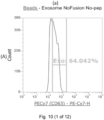
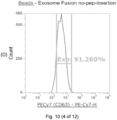
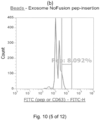
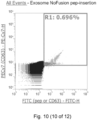
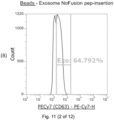
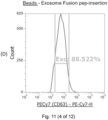
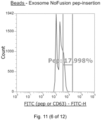
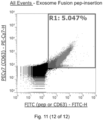
- FIG. 10 shows the results of flow cytometry performed on peptide-binding hybrid liposome exosomes, and as control groups, (A) shows the results of flow cytometry performed when no peptide was bound to a liposome and an operation of fusing a liposome with an exosome was not performed, (B) shows the results of flow cytometry performed when a peptide was bound to a liposome and an operation of fusing a liposome with an exosome was not performed, and (C) shows the results of flow cytometry performed when no peptide was bound to a liposome and an operation of fusing a liposome with an exosome was performed.
- (a) shows the relationship between the intensity (horizontal axis) of the exosome-labeled fluorescent dye and the count number (vertical axis)
- (b) shows the relationship between the intensity (horizontal axis) of the peptide-labeled fluorescent dye and the count number (vertical axis)
- (c) shows scatter plots of the intensity (horizontal axis) of the peptide-labeled fluorescent dye and the intensity (vertical axis) of the exosome-labeled fluorescent dye.
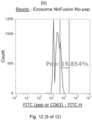
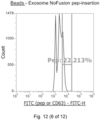
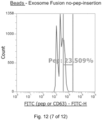
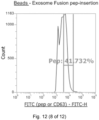
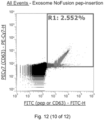
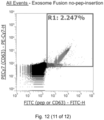
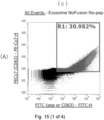
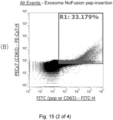
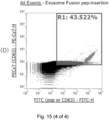
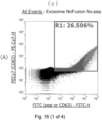
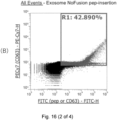
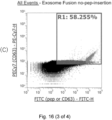
- the above experiment was performed in the same manner using rabbit polyclonal antibodies that specifically bind to the above peptide as primary antibodies against the above peptide, and fluorescently labeling peptides with fluorescence-labeled anti-rabbit antibodies.
- experiment results similar to the above experiment results were obtained.
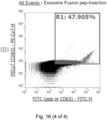
- the results are shown in Fig. 15 and Fig. 16 .
- the rabbit polyclonal antibodies that specifically bind to the above peptide were prepared according to the method described in the above (Method of producing antibodies against exosome marker proteins and peptides constituting peptide-binding lipid derivatives).
- Adipo MSC-derived exosomes were hybridized with (peptide-binding) siRNA-encapsulated liposomes.
- the prepared (peptide-binding) hybrid liposome exosomes were added to HepG2 cells, Hela cells, and Caco2 cells, and the influence on growth was examined.
- peptides were added to liposomes rather than to Adipo MSC-derived exosomes.
- culture conditions for cells to which exosomes were delivered in addition to following the method described in Experimental Example 1, the number of Hela cells seeded and the number of Caco2 cells seeded were adjusted to 5,000 cells/100 ⁇ l/well (96-well microplate) and 5,000 cells/100 ⁇ l/well (96-well microplate), respectively.
- peptide-binding liposomes were prepared using peptides having amino acid sequences shown in SEQ ID NO: 1, SEQ ID NO: 2, SEQ ID NO: 3 and SEQ ID NO: 5, Lipocapsulater FD-U PL, and Lipocapsulater FD-S PL.
- the liposome to which the peptide was added and an Adipo MSC-derived exosome solution were mixed.
- a PEG 8000 solution was added so that the concentration was 30% and left at 40°C for 2 hours, and peptide-added liposomes and Adipo MSC-derived exosomes were fused.
- a PBS buffer solution was added instead of the PEG 8000 solution.
- a serum-free DMEM and a 10% FBS (exosome-depleted) DMEM (H-Glc) were added, and the concentration of the medium was adjusted so that the final concentration was 1% for the FBS (exosome-depleted) DMEM (G-Glc).
Landscapes
- Health & Medical Sciences (AREA)
- Life Sciences & Earth Sciences (AREA)
- Chemical & Material Sciences (AREA)
- Engineering & Computer Science (AREA)
- General Health & Medical Sciences (AREA)
- Medicinal Chemistry (AREA)
- Organic Chemistry (AREA)
- Bioinformatics & Cheminformatics (AREA)
- Molecular Biology (AREA)
- Genetics & Genomics (AREA)
- Biomedical Technology (AREA)
- Animal Behavior & Ethology (AREA)
- Public Health (AREA)
- Pharmacology & Pharmacy (AREA)
- Veterinary Medicine (AREA)
- Immunology (AREA)
- Epidemiology (AREA)
- Zoology (AREA)
- Biochemistry (AREA)
- Proteomics, Peptides & Aminoacids (AREA)
- Cell Biology (AREA)
- Biotechnology (AREA)
- Biophysics (AREA)
- Hematology (AREA)
- Wood Science & Technology (AREA)
- Developmental Biology & Embryology (AREA)
- Microbiology (AREA)
- General Engineering & Computer Science (AREA)
- Dispersion Chemistry (AREA)
- Virology (AREA)
- Physics & Mathematics (AREA)
- Urology & Nephrology (AREA)
- General Physics & Mathematics (AREA)
- Analytical Chemistry (AREA)
- Food Science & Technology (AREA)
- Plant Pathology (AREA)
- Pathology (AREA)
- Tropical Medicine & Parasitology (AREA)
- Rheumatology (AREA)
- Chemical Kinetics & Catalysis (AREA)
Applications Claiming Priority (2)
| Application Number | Priority Date | Filing Date | Title |
|---|---|---|---|
| JP2021135828 | 2021-08-23 | ||
| PCT/JP2022/031768 WO2023027082A1 (fr) | 2021-08-23 | 2022-08-23 | Liposome-exosome hybride lié par un peptide, exosome lié par un peptide, composition les contenant et procédé pour leur formation |
Publications (2)
| Publication Number | Publication Date |
|---|---|
| EP4393957A1 true EP4393957A1 (fr) | 2024-07-03 |
| EP4393957A4 EP4393957A4 (fr) | 2026-04-22 |
Family
ID=85322794
Family Applications (1)
| Application Number | Title | Priority Date | Filing Date |
|---|---|---|---|
| EP22861370.9A Pending EP4393957A4 (fr) | 2021-08-23 | 2022-08-23 | Liposome-exosome hybride lié par un peptide, exosome lié par un peptide, composition les contenant et procédé pour leur formation |
Country Status (4)
| Country | Link |
|---|---|
| US (1) | US20250009903A1 (fr) |
| EP (1) | EP4393957A4 (fr) |
| JP (1) | JPWO2023027082A1 (fr) |
| WO (1) | WO2023027082A1 (fr) |
Families Citing this family (2)
| Publication number | Priority date | Publication date | Assignee | Title |
|---|---|---|---|---|
| CN119679962B (zh) * | 2023-09-22 | 2025-11-14 | 广州国家实验室 | 递送系统及其制备方法和应用 |
| CN119119204B (zh) * | 2024-11-11 | 2025-03-18 | 南昌大学 | 温敏特异性多肽和基于温差特异性无损分离外泌体的方法 |
Family Cites Families (12)
| Publication number | Priority date | Publication date | Assignee | Title |
|---|---|---|---|---|
| JP6137894B2 (ja) * | 2013-03-22 | 2017-05-31 | 国立大学法人京都大学 | リポソーム−エキソソームハイブリッドベシクル及びその調製法 |
| KR102396026B1 (ko) * | 2014-01-21 | 2022-05-09 | 안자리움 바이오사이언시스 아게 | 하이브리도좀, 이를 포함하는 조성물, 이의 제조 방법 및 이의 용도 |
| AU2015342939A1 (en) * | 2014-11-07 | 2017-05-18 | Wisconsin Alumni Research Foundation | Targeting DNA vaccines to B cells |
| WO2016167367A1 (fr) * | 2015-04-15 | 2016-10-20 | 国立大学法人京都大学 | Nanosupport amphiphile ciblant et son procédé de production |
| IL272786B2 (en) * | 2017-08-25 | 2025-03-01 | Codiak Biosciences Inc | Preparation of therapeutic exosomes using membrane proteins |
| WO2019099942A1 (fr) * | 2017-11-17 | 2019-05-23 | Codiak Biosciences, Inc. | Compositions d'exosomes modifiés et procédés de chargement de charges d'exosomes luminaux |
| AU2018386215B2 (en) * | 2017-12-15 | 2024-11-28 | Board Of Regents, The University Of Texas System | Methods and compositions for treating cancer using exosomes-associated gene editing |
| US20220362295A1 (en) * | 2019-04-22 | 2022-11-17 | TCR2 Therapeutics Inc. | Compositions and methods for tcr reprogramming using fusion proteins |
| KR102547446B1 (ko) * | 2019-11-29 | 2023-06-26 | 서울대학교산학협력단 | 무표지 폴리다이아세틸렌 리포좀 기반의 엑소좀의 검출 방법 |
| JP2021135828A (ja) | 2020-02-27 | 2021-09-13 | 富士通株式会社 | リクエスト処理システムおよびリクエスト処理方法 |
| WO2021211460A1 (fr) * | 2020-04-13 | 2021-10-21 | City Of Hope | Exosomes ciblés sur le récepteur cellulaire |
| EP4458349A4 (fr) * | 2021-12-28 | 2025-08-06 | Sekisui Chemical Co Ltd | Exosome, son procédé de formation et composition le contenant |
-
2022
- 2022-08-23 JP JP2023543938A patent/JPWO2023027082A1/ja active Pending
- 2022-08-23 US US18/684,960 patent/US20250009903A1/en active Pending
- 2022-08-23 EP EP22861370.9A patent/EP4393957A4/fr active Pending
- 2022-08-23 WO PCT/JP2022/031768 patent/WO2023027082A1/fr not_active Ceased
Also Published As
| Publication number | Publication date |
|---|---|
| WO2023027082A1 (fr) | 2023-03-02 |
| JPWO2023027082A1 (fr) | 2023-03-02 |
| US20250009903A1 (en) | 2025-01-09 |
| EP4393957A4 (fr) | 2026-04-22 |
Similar Documents
| Publication | Publication Date | Title |
|---|---|---|
| EP4458349A1 (fr) | Exosome, son procédé de formation et composition le contenant | |
| Kristensen et al. | The hard protein corona of stealth liposomes is sparse | |
| Sun et al. | An antisense oligonucleotide-loaded blood–brain barrier penetrable nanoparticle mediating recruitment of endogenous neural stem cells for the treatment of Parkinson’s disease | |
| Bourseau-Guilmain et al. | Development and characterization of immuno-nanocarriers targeting the cancer stem cell marker AC133 | |
| JP2023514525A (ja) | 合成細胞外小胞のボトムアップアセンブリ | |
| EP3261677B1 (fr) | Transplantation ciblée de mitochondries dans des hépatocytes | |
| US20150238637A1 (en) | Blood-brain Barrier Epitopes and Uses Thereof | |
| Schmidt et al. | Siglec-6 mediates the uptake of extracellular vesicles through a noncanonical glycolipid binding pocket | |
| Park et al. | Receptor-mediated gene delivery into human mesenchymal stem cells using hyaluronic acid-shielded polyethylenimine/pDNA nanogels | |
| CN113769106A (zh) | 用于肿瘤免疫治疗的融合细胞膜纳米囊泡、其制备方法及应用 | |
| EP4393957A1 (fr) | Liposome-exosome hybride lié par un peptide, exosome lié par un peptide, composition les contenant et procédé pour leur formation | |
| Ma et al. | Improved intracellular delivery of exosomes by surface modification with fluorinated peptide dendrimers for promoting angiogenesis and migration of HUVECs | |
| US20190167589A1 (en) | Biomimetic proteolipid vesicle compositions and uses thereof | |
| Wöll et al. | Sortaggable liposomes: evaluation of reaction conditions for single-domain antibody conjugation by Sortase-A and targeting of CD11b+ myeloid cells | |
| Tello et al. | Hybrid lipid nanoparticles derived from human mesenchymal stem cell extracellular vesicles by microfluidic sonication for collagen I mRNA delivery to human tendon progenitor stem cells | |
| Labrak et al. | Impact of anti-PDGFRα antibody surface functionalization on LNC uptake by oligodendrocyte progenitor cells | |
| Rauch-Wirth et al. | Transduction enhancing EF-C peptide nanofibrils are endocytosed by macropinocytosis and subsequently degraded | |
| Sato et al. | Cell membrane fusion induced by surface modification with cell-penetrating peptide–lipid conjugates that facilitates close contact between distinct membranes | |
| Goldbloom-Helzner et al. | Assessing the conjugation efficiency of surface-modified extracellular vesicles using single nanovesicle analysis technologies | |
| Naskalska et al. | Cargo loading and surface display using enlarged MS2 virus-like particles | |
| Xue et al. | Engineered self-assembly of plant proteins into α-ketoglutarate-loaded nanoplatforms for osteoarthritis treatment | |
| WO2025205716A1 (fr) | Vésicule extracellulaire contenant un lipide azide, son procédé de production et composition la contenant | |
| Oliveira et al. | vCPP2319 interacts with metastatic breast cancer extracellular vesicles (EVs) and transposes a human blood-brain barrier model | |
| EP4674431A1 (fr) | Nanoparticules lipidiques, composition pharmaceutique et procédé de production de nanoparticules lipidiques | |
| Bian | Determination of LAMP-2B From HEK293T Cells Transfected by pCMV6-lamp2b-Myc-DDK |
Legal Events
| Date | Code | Title | Description |
|---|---|---|---|
| STAA | Information on the status of an ep patent application or granted ep patent |
Free format text: STATUS: THE INTERNATIONAL PUBLICATION HAS BEEN MADE |
|
| PUAI | Public reference made under article 153(3) epc to a published international application that has entered the european phase |
Free format text: ORIGINAL CODE: 0009012 |
|
| STAA | Information on the status of an ep patent application or granted ep patent |
Free format text: STATUS: REQUEST FOR EXAMINATION WAS MADE |
|
| 17P | Request for examination filed |
Effective date: 20240221 |
|
| AK | Designated contracting states |
Kind code of ref document: A1 Designated state(s): AL AT BE BG CH CY CZ DE DK EE ES FI FR GB GR HR HU IE IS IT LI LT LU LV MC MK MT NL NO PL PT RO RS SE SI SK SM TR |
|
| DAV | Request for validation of the european patent (deleted) | ||
| DAX | Request for extension of the european patent (deleted) | ||
| A4 | Supplementary search report drawn up and despatched |
Effective date: 20260323 |
|
| RIC1 | Information provided on ipc code assigned before grant |
Ipc: C07K 17/02 20060101AFI20260317BHEP Ipc: A61K 35/12 20150101ALI20260317BHEP Ipc: A61K 45/00 20060101ALI20260317BHEP Ipc: A61K 47/69 20170101ALI20260317BHEP Ipc: A61P 43/00 20060101ALI20260317BHEP Ipc: C07K 7/06 20060101ALI20260317BHEP Ipc: C07K 7/08 20060101ALI20260317BHEP Ipc: C07K 14/705 20060101ALI20260317BHEP Ipc: C12N 5/071 20100101ALI20260317BHEP Ipc: C12N 5/0735 20100101ALI20260317BHEP Ipc: C12N 5/0775 20100101ALI20260317BHEP Ipc: C12N 15/11 20060101ALI20260317BHEP Ipc: C12Q 1/24 20060101ALI20260317BHEP Ipc: G01N 33/53 20060101ALI20260317BHEP Ipc: A61K 35/28 20150101ALI20260317BHEP Ipc: A61K 47/62 20170101ALI20260317BHEP Ipc: C12N 15/113 20100101ALI20260317BHEP |