EP4394677A1 - Erkennung eines gerätestatus über tag-reader-modulationen - Google Patents
Erkennung eines gerätestatus über tag-reader-modulationen Download PDFInfo
- Publication number
- EP4394677A1 EP4394677A1 EP23220486.7A EP23220486A EP4394677A1 EP 4394677 A1 EP4394677 A1 EP 4394677A1 EP 23220486 A EP23220486 A EP 23220486A EP 4394677 A1 EP4394677 A1 EP 4394677A1
- Authority
- EP
- European Patent Office
- Prior art keywords
- tag
- identifier
- reading
- reader device
- read data
- Prior art date
- Legal status (The legal status is an assumption and is not a legal conclusion. Google has not performed a legal analysis and makes no representation as to the accuracy of the status listed.)
- Pending
Links
Images
Classifications
-
- G—PHYSICS
- G06—COMPUTING OR CALCULATING; COUNTING
- G06Q—INFORMATION AND COMMUNICATION TECHNOLOGY [ICT] SPECIALLY ADAPTED FOR ADMINISTRATIVE, COMMERCIAL, FINANCIAL, MANAGERIAL OR SUPERVISORY PURPOSES; SYSTEMS OR METHODS SPECIALLY ADAPTED FOR ADMINISTRATIVE, COMMERCIAL, FINANCIAL, MANAGERIAL OR SUPERVISORY PURPOSES, NOT OTHERWISE PROVIDED FOR
- G06Q10/00—Administration; Management
- G06Q10/08—Logistics, e.g. warehousing, loading or distribution; Inventory or stock management
- G06Q10/083—Shipping
- G06Q10/0833—Tracking
-
- G—PHYSICS
- G06—COMPUTING OR CALCULATING; COUNTING
- G06K—GRAPHICAL DATA READING; PRESENTATION OF DATA; RECORD CARRIERS; HANDLING RECORD CARRIERS
- G06K7/00—Methods or arrangements for sensing record carriers, e.g. for reading patterns
- G06K7/10—Methods or arrangements for sensing record carriers, e.g. for reading patterns by electromagnetic radiation, e.g. optical sensing; by corpuscular radiation
- G06K7/10009—Methods or arrangements for sensing record carriers, e.g. for reading patterns by electromagnetic radiation, e.g. optical sensing; by corpuscular radiation sensing by radiation using wavelengths larger than 0.1 mm, e.g. radio-waves or microwaves
- G06K7/10366—Methods or arrangements for sensing record carriers, e.g. for reading patterns by electromagnetic radiation, e.g. optical sensing; by corpuscular radiation sensing by radiation using wavelengths larger than 0.1 mm, e.g. radio-waves or microwaves the interrogation device being adapted for miscellaneous applications
-
- G—PHYSICS
- G06—COMPUTING OR CALCULATING; COUNTING
- G06K—GRAPHICAL DATA READING; PRESENTATION OF DATA; RECORD CARRIERS; HANDLING RECORD CARRIERS
- G06K7/00—Methods or arrangements for sensing record carriers, e.g. for reading patterns
- G06K7/10—Methods or arrangements for sensing record carriers, e.g. for reading patterns by electromagnetic radiation, e.g. optical sensing; by corpuscular radiation
- G06K7/10009—Methods or arrangements for sensing record carriers, e.g. for reading patterns by electromagnetic radiation, e.g. optical sensing; by corpuscular radiation sensing by radiation using wavelengths larger than 0.1 mm, e.g. radio-waves or microwaves
- G06K7/10316—Methods or arrangements for sensing record carriers, e.g. for reading patterns by electromagnetic radiation, e.g. optical sensing; by corpuscular radiation sensing by radiation using wavelengths larger than 0.1 mm, e.g. radio-waves or microwaves using at least one antenna particularly designed for interrogating the wireless record carriers
- G06K7/10356—Methods or arrangements for sensing record carriers, e.g. for reading patterns by electromagnetic radiation, e.g. optical sensing; by corpuscular radiation sensing by radiation using wavelengths larger than 0.1 mm, e.g. radio-waves or microwaves using at least one antenna particularly designed for interrogating the wireless record carriers using a plurality of antennas, e.g. configurations including means to resolve interference between the plurality of antennas
-
- H—ELECTRICITY
- H04—ELECTRIC COMMUNICATION TECHNIQUE
- H04W—WIRELESS COMMUNICATION NETWORKS
- H04W4/00—Services specially adapted for wireless communication networks; Facilities therefor
- H04W4/02—Services making use of location information
- H04W4/029—Location-based management or tracking services
-
- H—ELECTRICITY
- H04—ELECTRIC COMMUNICATION TECHNIQUE
- H04W—WIRELESS COMMUNICATION NETWORKS
- H04W4/00—Services specially adapted for wireless communication networks; Facilities therefor
- H04W4/30—Services specially adapted for particular environments, situations or purposes
- H04W4/35—Services specially adapted for particular environments, situations or purposes for the management of goods or merchandise
Definitions
- a model e.g., a Convolutional Neural Network (CNN)
- CNN Convolutional Neural Network
- parameters e.g., weights, coefficients
- hyperparameters e.g., choice of loss function and number of hidden layers
- An RFID reader device reads data emitted from or located within RFID tags.
- RFID readers and tags use a defined radio frequency and protocol to transmit and receive data.
- RFID and other tag-reader technologies are currently static in functionality.
- conventional RFID technologies can only detect the presence of some item or perform quick and dirty trilateration of an item.
- existing RFID technologies can detect the presence of a package based on the RFID tag attached to the package transmitting data to a RFID reader. The RFID reader then decodes the data and then maps the decoded data to the particular package.
- a given RFID tag If a given RFID tag is able to receive that interrogation signal - because it is in range of the interrogation signal (distance), and not blocked by any absorbing or reflecting material ("visible/non-visible") - then it will respond to that interrogation signal with a response that is captured by the RFID reader, which means that the presence indication will be received because the reader device will be able to read the tag data contained in the response.
- the RFID tag is not in range of the interrogation signal and/or blocked by an absorbing or reflecting material, embodiments receive the absence indication because the RFID tag will not respond to that interrogation signal and therefore the reader device will not be able to receive and read the data contained in a response signal.
- the RFID reader typically has no idea what tags are nearby or visible until it listens for responses.
- the one or more predefined read characteristics correspond to expected behavior for a machine or apparatus.
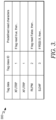
- the predefined read characteristics may be criteria or rules for different tag-reader modulations of a given tag class.
- Various tags in an environment may be coupled to a particular machine or apparatus.
- Such machine or apparatus may have one or more expected behaviors.
- a conveyor belt is expected to drive at varying speeds and parcels on the top of the conveyor belts are expected to move along the conveyor belts at the same speed.
- a vertical sliding door is expected to slide up or down to open or shut.
- Some embodiments then compare the one or more predefined read characteristics with at least one of: the first indication, a signal strength level associated with first data, or the second indication. And based at least in part on the comparing, some embodiments then generate a score indicative of a predicted state that the machine or apparatus is in. For example, based on the first data being transmitted at a first RSSI level, compared to a rule that states that any data transmitted or received within a signal strength range (that includes the first RSSI level), this indicates that an unmanned aerial vehicle (UAV) has landed on a railing or landing pad. Accordingly, particular embodiments generate a high confidence level score (.90) that the UAV vehicle has landed on a railing because of the high RSSI level between the classified tag and the reader.
- UAV unmanned aerial vehicle
- Some embodiments improve existing sensor-based technologies because they use tag-reader components and functionality. For example, particular embodiments improve camera sensors, laser/photo eye sensors, radar, lidar, accelerometers, gyroscopes, and many more sensors because tag-reader technologies are not as costly, do not require tedious configuration, installation, testing, and/or programming.
- Tags transmit identifying data (e.g., tag IDs or unique identifiers) and readers read the transmitted data by decoding the data.
- identifying data e.g., tag IDs or unique identifiers
- Such simple functionality and components only require minimal configuration or installation to ensure that a tag is emitting data and the reader can read the tag. But no extensive testing, programming, or model training is needed.
- Tags are typically cheap in cost, and both tags and readers are easy to install on any suitable surface.
- a tag that has a size of 2x4 inches may include an adhesive flat surface that can be placed on any corresponding flat surface without the need for wires or other bulky equipment installation.
- readers may already be implemented in environments to address material tracking challenges, making implementation of these techniques extremely low cost. Accordingly, one technical solution is the use of a reader device and tag, such as a RFID reader and tag combination, as well as receiving an indication that a reader device has read data transmitted from a tag.
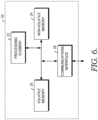
- a non-volatile computer-readable storage medium may include a floppy disk, flexible disk, hard disk, solid-state storage (SSS) (e.g., a solid state drive (SSD), solid state card (SSC), solid state module (SSM)), enterprise flash drive, magnetic tape, or any other non-transitory magnetic medium, and/or the like.
- SSD solid state drive
- SSC solid state card
- SSM solid state module
- Such functions, operations, and/or processes may include, for example, transmitting, receiving, operating on, processing, displaying, storing, determining, creating/generating, monitoring, evaluating, comparing, and/or similar terms used herein interchangeably.
- these functions, operations, and/or processes can be performed on data, content, information/data, and/or similar terms used herein interchangeably.
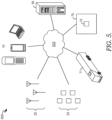
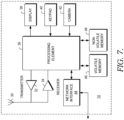
- the mobile computing entity(s) 10 may include other input mechanisms, such as scanners (e.g., barcode scanners), microphones, accelerometers, RFID readers, and/or the like configured to capture and store various information types for the mobile computing entity(s) 10.
- a scanner may be used to capture parcel/item/shipment information/data from an item indicator disposed on a surface of a shipment or other item.
- the mobile computing entity(s) 10 may be configured to associate any captured input information/data, for example, via the onboard processing element 36.
- scan data captured via a scanner may be associated with image data captured via the camera 42 such that the scan data is provided as contextual data associated with the image data.
- the reader (or “reader device”) s generally responsible for interrogating or reading data emitted from or located on the tag.
- the reader may also write data to the tag.
- the reader may be any suitable reader machine, manufacture, or module.
- the reader can be an RFID reader, a near-field communication (NFC) reader, optical scanner, optical reader, bar code scanner, magnetic ink character recognition reader, beacon reader, or the like.
- the reader can be coupled to or placed in any suitable location, such as a particular distance, orientation, and/or height from storage unit, on the ceiling of a building, on the floor of the building, one the walls of the building, and/or on any structure within a geographical area.
- the reader may be a handheld device.
- the tag printer may comprise a device capable of printing and/or encoding tags (e.g., RFID tags), for example.
- the tag printers is an RFID printer.
- the tag printer may be configured to receive instructions and/or data-e.g., over the network(s) 110-and print and/or encode a tag with data (which may comprise or be based on the received instructions and/or data).
- the tag printer may receive an instruction to print a tag comprising an identification code, write the identification code to memory associated with the tag (e.g., EPC memory associated with an RFID tag), and print the tag.
- a “set of' items” means there exists one or more items; there must exist at least one item, but there can also be two, three, or more items.
- a “subset of” items means there exists one or more items within a grouping of items that contain a common characteristic.
- a "plurality of" items means there exists more than one item; there must exist at least two items, but there can also be three, four, or more items.
- a system which comprises at least one computer processor; and one or more computer storage media storing computer-useable instructions that, when used by the at least one computer processor, cause the at least one computer processor to perform operations comprising: receiving at least one of: a presence indication that a reader device has read first data transmitted from a first tag, or an absence indication that the reader device has not read the first data, the first tag being coupled to a machine or apparatus; classifying the first tag; based at least in part on the classification of the first tag, associating the first tag to one or more predefined read characteristics associated with the first tag, the one or more predefined read characteristics associated with the first tag corresponding to expected behavior for the machine or apparatus; comparing the one or more predefined read characteristics with at least one of: the presence indication, a signal strength level associated with the first data, or the absence indication; and based at least in part on the comparing, generating a score indicative of a predicted state that the machine or apparatus is in.
- the operations may further comprise: in response to the generating of the score, transmitting a signal that causes the machine or apparatus to change its state.
- the score indicative of a predicted state that the machine or apparatus is in may be based on the receiving of the absence indication that the first reader device has not read the first data.
- the score indicative of a predicted state that the machine or apparatus is in may be based on a comparison of the signal strength value associated with the first data and a signal strength value indicated in the one or more predefined read characteristics.
- the reader device and first tag may be located in a logistics enclosure, wherein the logistics enclosure includes at least one of: a logistics vehicle or a logistics facility.
- the operations may further comprise: receiving at least one of: a third indication that the reader device or a second reader device has read second data transmitted from a second tag, or a fourth indication that the reader device or the second reader device has not read the second data, the second tag being coupled to the machine or apparatus; classifying the second tag; based at least in part on the classification of the second tag, associating the second tag to the one or more predefined read characteristics; comparing the one or more predefined read characteristics with at least one of: the second data, the third indication, or the fourth indication, wherein the score that is indicative of the predicted stated that the machine or apparatus is in is further based at least in part on the comparing of the one or more predefined read characteristics with at least one of: the second data, the third indication, or the fourth indication.
- the operations may further comprise: receiving a third indication that the reader device or a second reader device has read second data transmitted from a second tag, the second tag being coupled to a parcel; receiving a fourth indication that the reader device or the second reader device has read third data transmitted from a third tag, the third tag being coupled to a logistics enclosure; based at least in part on the reader device or the second reader device reading: the first data from the first tag coupled to the machine or apparatus, reading the second data, and the reading of the third data, generating a second score indicative of a prediction of at least one of: a location of the parcel, whether the parcel is in motion, and a travel trajectory of the parcel.
- the one or more predefined read characteristics may include a presence and absence of reads of the first data of the first tag, and wherein the machine or apparatus is a door, and wherein the expected behavior is the door being open or closed, and wherein the score indicates a prediction of whether the door is open or closed.
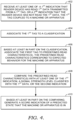
- a computer-implemented comprising: receiving one of: a first indication that a reader device has read first data transmitted from a first tag, or a second indication that the reader device has not read the first data, the first tag being coupled to a machine or apparatus; at least partially responsive to the receiving, associating the first tag to a classification of the tag; based at least in part on the associating of the first tag to the classification, associating the first tag or the classification to one or more predefined read characteristics, the one or more predefined read characteristics corresponding to potential operational behavior of the machine or apparatus; and based at least in part on the associating of the first tag or classification to the one or more predefined read characteristics and at least one of: the first indication, a signal strength associated with the first data, and the second indication, generating a score indicative of a predicted state that the machine or apparatus is in.
- RFID tags are much less expensive than camera sensors, laser/photo eye sensors, etc.
- the information provided by the tag presence, absence. or combined sequence of both by a RFID reader can enable logic necessary for duplicating existing methods for a fraction of the cost.
- the description here is a set of mechanisms and methods for utilizing RFID technology in place of traditional sensors. Automating the identification of location, speed, or general status of equipment and packages both inside and out of facilities has long been pursued. The business decisions made possible by correlation analysis on information provided remotely through RFID tags and readers facilitates enormous savings. Compared to traditional methodology where the three main classifications of data transmission: presence, absence, and defined patterns of both, for specific encoded information are utilized for obtaining and calculating at an itemized level. A novel use case can be created by translating the traditional data through either digital or analog lenses. Then taking this translated data and combining with known manipulations of readable states such as: controlled shuttering of presence and/or absence, known defined motion, or by equipment reference tags being brought together.
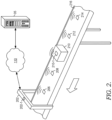
- the on-metal tag would be either hidden by the body of the cargo area (bulkhead door) or be swung away, out of the readable rage (barn door). Therefore, while the door is open the tag will remain mostly, if not completely, absent and when closed the tag signal will be repeatedly read as present.
- Door tag box - Absence vs. Presence - a metal box specifically designed to work with gravity to open and close for vertically sliding rear doors. While open the tag will be read as present, and when closed the tag signal will remain mostly, if not completely, absent.
- Presence vs. Absence PVA
- Absence vs Presence AVP
- PVA Presence vs. Absence
- AVP Absence vs Presence
- the First embodiment utilizes the simpler of the two, digital, on/off signaling.
- the periodic nature of the presence produced in both scenarios can be utilized to determine belt speed by analyzing the period against time: perforations, the belt would create a shuttering effect. The timing of the shuttering and read rates could then be utilized to calculate a belt speed.
- Tag density analysis - damage prevention and dispatch of personnel through the identification of an increasing density of tags that are known to be in motion at a given location combined with the absence of tag reads at a later location downstream, a building can automatically shut down a belt or series of belts to prevent unnecessary damage to the parcels/units in motion. Personnel can then be notified automatically to the area in question to investigate the potential jam or other issues highlighted by the data density.
- camera systems of different types would be needed to do this kind of logic.
- Car to Car transfers Loss prevention, theft. and customer satisfaction.
- packages can be tracked in transfer between equipment. Previously this would require a DIA D scan by both drivers but can now be automated across the two cars. Occasionally parcels are not scanned when transferred between two cars, so this additional information can improve load quality and automation in routing dispatch. This would be applied when cars are backed up to each other for larger package transfers.
- the on-board RFID systems would read the reference tag from the opposite car and assume the predefined behavior of a car link. Packages then would be over read in both cars across into the opposite car, but packages that had drastically changing phase angles, RSSI, etc. could be determined to be in motion. Should a package be placed tag down against metal and disappear. Tt could still be determined to have been transferred even after cars depart and no longer link together, without reading said specific transferred tags.
- Sentinel Box - damage prevention, loss prevention, and dispatch- A mobile RFID reader inside a sturdy box to be utilized in manual and automated facilities. This box will be placed on the belt and scan along its traveled path isolating tags which are both in motion and more importantly those that are not. Reference tags and implied box motion by reference tag presence/absence and the fact that the box is places on a conveyor belt at to be utilized for location and positioning. RSSI values are tracked to identify when tags are passed. This can be utilized to identify tags not in motion. These tags can be reference tags, parcels, and customer tags separated from clustered packaging. By identifying packages not in motion, personnel can be dispatched to a specific area to search and find parcels or contents that have fallen off the belt or gotten stuck on the belt. This reduces both service failures and loss from damages.
- Automated delivery scans - theft prevention - In addition to tracking transfers between areas within the company, destination scans can be automated. By utilizing a combination of digital presence/absence scans inside and outside of the vehicle, combined with analog RSSI, phase angle, etc. data, a parcel's motion can be tracked inside and outside of the car. A package that is identified as leaving the car can be connected to existing location data provided by the on-board telematics system and confirm the target destination as a delivery point. Removal of the package at an incorrect location (utilizing and combining with Telematics locationing data) or movement of the package (assumed through analog translations) combined with door status detection technology (mentioned above, or more traditional sensors) can highlight areas of concern for theft prevention.
Landscapes
- Engineering & Computer Science (AREA)
- Physics & Mathematics (AREA)
- Health & Medical Sciences (AREA)
- Toxicology (AREA)
- General Physics & Mathematics (AREA)
- Theoretical Computer Science (AREA)
- Electromagnetism (AREA)
- General Health & Medical Sciences (AREA)
- Artificial Intelligence (AREA)
- Computer Vision & Pattern Recognition (AREA)
- Business, Economics & Management (AREA)
- Economics (AREA)
- Development Economics (AREA)
- Computer Networks & Wireless Communication (AREA)
- Entrepreneurship & Innovation (AREA)
- Human Resources & Organizations (AREA)
- Marketing (AREA)
- Operations Research (AREA)
- Quality & Reliability (AREA)
- Strategic Management (AREA)
- Tourism & Hospitality (AREA)
- General Business, Economics & Management (AREA)
- General Factory Administration (AREA)
- Control Of Conveyors (AREA)
Applications Claiming Priority (1)
| Application Number | Priority Date | Filing Date | Title |
|---|---|---|---|
| US202263436261P | 2022-12-30 | 2022-12-30 |
Publications (1)
| Publication Number | Publication Date |
|---|---|
| EP4394677A1 true EP4394677A1 (de) | 2024-07-03 |
Family
ID=89573359
Family Applications (1)
| Application Number | Title | Priority Date | Filing Date |
|---|---|---|---|
| EP23220486.7A Pending EP4394677A1 (de) | 2022-12-30 | 2023-12-28 | Erkennung eines gerätestatus über tag-reader-modulationen |
Country Status (3)
| Country | Link |
|---|---|
| US (2) | US12353945B2 (de) |
| EP (1) | EP4394677A1 (de) |
| CA (1) | CA3224946A1 (de) |
Citations (3)
| Publication number | Priority date | Publication date | Assignee | Title |
|---|---|---|---|---|
| WO2011038018A1 (en) * | 2009-09-23 | 2011-03-31 | Earthsearch Communications International, Inc. | Device and process for monitoring secure storage and delivery of items |
| US20190325173A1 (en) * | 2018-04-20 | 2019-10-24 | Walmart Apollo, Llc | Systems and methods of establishing rfid null zones in detecting products in a retail environment |
| US20210198040A1 (en) * | 2019-12-31 | 2021-07-01 | United Parcel Service Of America, Inc. | Asset Loading System |
Family Cites Families (10)
| Publication number | Priority date | Publication date | Assignee | Title |
|---|---|---|---|---|
| WO1996024210A2 (en) * | 1995-02-02 | 1996-08-08 | Cabletron Systems, Inc. | Method and apparatus for learning network behavior trends and predicting future behavior of communications networks |
| JPH09179902A (ja) * | 1995-12-25 | 1997-07-11 | Hitachi Ltd | 高信頼物流管理方法およびシステム |
| US8031051B2 (en) * | 2003-12-08 | 2011-10-04 | Mieko Ishii | Privacy protection method, device for transmitting identifier for privacy protection, privacy protection system and program, and monitoring system |
| JP4495960B2 (ja) * | 2003-12-26 | 2010-07-07 | キヤノンItソリューションズ株式会社 | プロセスと品質との関係についてのモデル作成装置 |
| JP4313795B2 (ja) * | 2005-09-30 | 2009-08-12 | 富士通マイクロエレクトロニクス株式会社 | 非接触タグ、非接触タグの制御方法 |
| US9607188B2 (en) * | 2014-09-29 | 2017-03-28 | Rfmicron, Inc. | Radio frequency identification (RFID) tag(s) and sensor(s) |
| EP3697110A1 (de) * | 2012-01-08 | 2020-08-19 | ImagiStar LLC | Behälter für tragbare gegenstände, die fehlende und/oder zusätzliche behälterinhalte identifizieren |
| US20150149250A1 (en) * | 2013-06-06 | 2015-05-28 | Zih Corp. | Method, apparatus, and computer program product to ascertain supply and demand analytics and outputting events based on real-time data for proximity and movement of individuals and objects |
| US20140365194A1 (en) * | 2013-06-06 | 2014-12-11 | Zih Corp. | Method, apparatus, and computer program product for dynamics/kinetics model selection |
| US10872209B2 (en) * | 2018-10-13 | 2020-12-22 | Massachusetts Institute Of Technology | Methods and apparatus for radio frequency sensing in diverse environments |
-
2023
- 2023-12-20 US US18/391,149 patent/US12353945B2/en active Active
- 2023-12-28 CA CA3224946A patent/CA3224946A1/en active Pending
- 2023-12-28 EP EP23220486.7A patent/EP4394677A1/de active Pending
-
2025
- 2025-06-04 US US19/228,570 patent/US20250298999A1/en active Pending
Patent Citations (3)
| Publication number | Priority date | Publication date | Assignee | Title |
|---|---|---|---|---|
| WO2011038018A1 (en) * | 2009-09-23 | 2011-03-31 | Earthsearch Communications International, Inc. | Device and process for monitoring secure storage and delivery of items |
| US20190325173A1 (en) * | 2018-04-20 | 2019-10-24 | Walmart Apollo, Llc | Systems and methods of establishing rfid null zones in detecting products in a retail environment |
| US20210198040A1 (en) * | 2019-12-31 | 2021-07-01 | United Parcel Service Of America, Inc. | Asset Loading System |
Also Published As
| Publication number | Publication date |
|---|---|
| US12353945B2 (en) | 2025-07-08 |
| US20240220747A1 (en) | 2024-07-04 |
| CA3224946A1 (en) | 2024-06-30 |
| US20250298999A1 (en) | 2025-09-25 |
Similar Documents
| Publication | Publication Date | Title |
|---|---|---|
| US12112294B2 (en) | Multi-phase consolidation optimization tool | |
| US20190156283A1 (en) | Automatically predicting shipper behavior using machine learning models | |
| US20240249234A1 (en) | Systems and methods for providing delivery time estimates | |
| US12346844B2 (en) | Using randomness compensating factors to improve forecast accuracy | |
| US20240220914A1 (en) | Self-healing logistics network technology | |
| US11742964B2 (en) | Location sensing technology for detecting asset location | |
| US12475427B2 (en) | Computer applications that determine a parcel position error | |
| US20250103832A1 (en) | Intelligent logistics vehicle for detecting asset location | |
| US20260120046A1 (en) | Wearable reader device technology for guiding a user to load an asset in an assigned logistics vehicle | |
| US20260120045A1 (en) | Reader device technology for determining that an asset is loaded to the assigned logistics vehicle | |
| EP4394677A1 (de) | Erkennung eines gerätestatus über tag-reader-modulationen |
Legal Events
| Date | Code | Title | Description |
|---|---|---|---|
| PUAI | Public reference made under article 153(3) epc to a published international application that has entered the european phase |
Free format text: ORIGINAL CODE: 0009012 |
|
| STAA | Information on the status of an ep patent application or granted ep patent |
Free format text: STATUS: THE APPLICATION HAS BEEN PUBLISHED |
|
| AK | Designated contracting states |
Kind code of ref document: A1 Designated state(s): AL AT BE BG CH CY CZ DE DK EE ES FI FR GB GR HR HU IE IS IT LI LT LU LV MC ME MK MT NL NO PL PT RO RS SE SI SK SM TR |
|
| STAA | Information on the status of an ep patent application or granted ep patent |
Free format text: STATUS: REQUEST FOR EXAMINATION WAS MADE |
|
| 17P | Request for examination filed |
Effective date: 20241126 |
|
| RBV | Designated contracting states (corrected) |
Designated state(s): AL AT BE BG CH CY CZ DE DK EE ES FI FR GB GR HR HU IE IS IT LI LT LU LV MC ME MK MT NL NO PL PT RO RS SE SI SK SM TR |