EP4394705A1 - Verfahren und vorrichtung zur kalibrierung einer an einem fahrzeug montierten kamera - Google Patents
Verfahren und vorrichtung zur kalibrierung einer an einem fahrzeug montierten kamera Download PDFInfo
- Publication number
- EP4394705A1 EP4394705A1 EP22216952.6A EP22216952A EP4394705A1 EP 4394705 A1 EP4394705 A1 EP 4394705A1 EP 22216952 A EP22216952 A EP 22216952A EP 4394705 A1 EP4394705 A1 EP 4394705A1
- Authority
- EP
- European Patent Office
- Prior art keywords
- vehicle
- feature points
- camera
- motion trajectory
- images
- Prior art date
- Legal status (The legal status is an assumption and is not a legal conclusion. Google has not performed a legal analysis and makes no representation as to the accuracy of the status listed.)
- Pending
Links
Images

Classifications
-
- H—ELECTRICITY
- H04—ELECTRIC COMMUNICATION TECHNIQUE
- H04N—PICTORIAL COMMUNICATION, e.g. TELEVISION
- H04N5/00—Details of television systems
- H04N5/14—Picture signal circuitry for video frequency region
- H04N5/144—Movement detection
- H04N5/145—Movement estimation
-
- G—PHYSICS
- G06—COMPUTING OR CALCULATING; COUNTING
- G06T—IMAGE DATA PROCESSING OR GENERATION, IN GENERAL
- G06T7/00—Image analysis
- G06T7/80—Analysis of captured images to determine intrinsic or extrinsic camera parameters, i.e. camera calibration
-
- G—PHYSICS
- G06—COMPUTING OR CALCULATING; COUNTING
- G06T—IMAGE DATA PROCESSING OR GENERATION, IN GENERAL
- G06T7/00—Image analysis
- G06T7/10—Segmentation; Edge detection
-
- G—PHYSICS
- G06—COMPUTING OR CALCULATING; COUNTING
- G06T—IMAGE DATA PROCESSING OR GENERATION, IN GENERAL
- G06T7/00—Image analysis
- G06T7/20—Analysis of motion
-
- G—PHYSICS
- G06—COMPUTING OR CALCULATING; COUNTING
- G06V—IMAGE OR VIDEO RECOGNITION OR UNDERSTANDING
- G06V10/00—Arrangements for image or video recognition or understanding
- G06V10/20—Image preprocessing
- G06V10/24—Aligning, centring, orientation detection or correction of the image
-
- G—PHYSICS
- G06—COMPUTING OR CALCULATING; COUNTING
- G06V—IMAGE OR VIDEO RECOGNITION OR UNDERSTANDING
- G06V10/00—Arrangements for image or video recognition or understanding
- G06V10/40—Extraction of image or video features
- G06V10/44—Local feature extraction by analysis of parts of the pattern, e.g. by detecting edges, contours, loops, corners, strokes or intersections; Connectivity analysis, e.g. of connected components
- G06V10/443—Local feature extraction by analysis of parts of the pattern, e.g. by detecting edges, contours, loops, corners, strokes or intersections; Connectivity analysis, e.g. of connected components by matching or filtering
-
- G—PHYSICS
- G06—COMPUTING OR CALCULATING; COUNTING
- G06V—IMAGE OR VIDEO RECOGNITION OR UNDERSTANDING
- G06V10/00—Arrangements for image or video recognition or understanding
- G06V10/40—Extraction of image or video features
- G06V10/50—Extraction of image or video features by performing operations within image blocks; by using histograms, e.g. histogram of oriented gradients [HoG]; by summing image-intensity values; Projection analysis
-
- G—PHYSICS
- G06—COMPUTING OR CALCULATING; COUNTING
- G06V—IMAGE OR VIDEO RECOGNITION OR UNDERSTANDING
- G06V10/00—Arrangements for image or video recognition or understanding
- G06V10/70—Arrangements for image or video recognition or understanding using pattern recognition or machine learning
- G06V10/77—Processing image or video features in feature spaces; using data integration or data reduction, e.g. principal component analysis [PCA] or independent component analysis [ICA] or self-organising maps [SOM]; Blind source separation
-
- G—PHYSICS
- G06—COMPUTING OR CALCULATING; COUNTING
- G06V—IMAGE OR VIDEO RECOGNITION OR UNDERSTANDING
- G06V20/00—Scenes; Scene-specific elements
- G06V20/10—Terrestrial scenes
-
- G—PHYSICS
- G06—COMPUTING OR CALCULATING; COUNTING
- G06V—IMAGE OR VIDEO RECOGNITION OR UNDERSTANDING
- G06V20/00—Scenes; Scene-specific elements
- G06V20/50—Context or environment of the image
- G06V20/56—Context or environment of the image exterior to a vehicle by using sensors mounted on the vehicle
- G06V20/58—Recognition of moving objects or obstacles, e.g. vehicles or pedestrians; Recognition of traffic objects, e.g. traffic signs, traffic lights or roads
-
- G—PHYSICS
- G06—COMPUTING OR CALCULATING; COUNTING
- G06V—IMAGE OR VIDEO RECOGNITION OR UNDERSTANDING
- G06V20/00—Scenes; Scene-specific elements
- G06V20/70—Labelling scene content, e.g. deriving syntactic or semantic representations
-
- H—ELECTRICITY
- H04—ELECTRIC COMMUNICATION TECHNIQUE
- H04N—PICTORIAL COMMUNICATION, e.g. TELEVISION
- H04N23/00—Cameras or camera modules comprising electronic image sensors; Control thereof
- H04N23/60—Control of cameras or camera modules
- H04N23/61—Control of cameras or camera modules based on recognised objects
-
- H—ELECTRICITY
- H04—ELECTRIC COMMUNICATION TECHNIQUE
- H04N—PICTORIAL COMMUNICATION, e.g. TELEVISION
- H04N23/00—Cameras or camera modules comprising electronic image sensors; Control thereof
- H04N23/60—Control of cameras or camera modules
- H04N23/68—Control of cameras or camera modules for stable pick-up of the scene, e.g. compensating for camera body vibrations
- H04N23/681—Motion detection
-
- B—PERFORMING OPERATIONS; TRANSPORTING
- B60—VEHICLES IN GENERAL
- B60W—CONJOINT CONTROL OF VEHICLE SUB-UNITS OF DIFFERENT TYPE OR DIFFERENT FUNCTION; CONTROL SYSTEMS SPECIALLY ADAPTED FOR HYBRID VEHICLES; ROAD VEHICLE DRIVE CONTROL SYSTEMS FOR PURPOSES NOT RELATED TO THE CONTROL OF A PARTICULAR SUB-UNIT
- B60W2420/00—Indexing codes relating to the type of sensors based on the principle of their operation
- B60W2420/40—Photo, light or radio wave sensitive means, e.g. infrared sensors
- B60W2420/403—Image sensing, e.g. optical camera
-
- B—PERFORMING OPERATIONS; TRANSPORTING
- B60—VEHICLES IN GENERAL
- B60W—CONJOINT CONTROL OF VEHICLE SUB-UNITS OF DIFFERENT TYPE OR DIFFERENT FUNCTION; CONTROL SYSTEMS SPECIALLY ADAPTED FOR HYBRID VEHICLES; ROAD VEHICLE DRIVE CONTROL SYSTEMS FOR PURPOSES NOT RELATED TO THE CONTROL OF A PARTICULAR SUB-UNIT
- B60W2420/00—Indexing codes relating to the type of sensors based on the principle of their operation
- B60W2420/40—Photo, light or radio wave sensitive means, e.g. infrared sensors
- B60W2420/408—Radar; Laser, e.g. lidar
-
- B—PERFORMING OPERATIONS; TRANSPORTING
- B60—VEHICLES IN GENERAL
- B60W—CONJOINT CONTROL OF VEHICLE SUB-UNITS OF DIFFERENT TYPE OR DIFFERENT FUNCTION; CONTROL SYSTEMS SPECIALLY ADAPTED FOR HYBRID VEHICLES; ROAD VEHICLE DRIVE CONTROL SYSTEMS FOR PURPOSES NOT RELATED TO THE CONTROL OF A PARTICULAR SUB-UNIT
- B60W60/00—Drive control systems specially adapted for autonomous road vehicles
-
- G—PHYSICS
- G06—COMPUTING OR CALCULATING; COUNTING
- G06T—IMAGE DATA PROCESSING OR GENERATION, IN GENERAL
- G06T2207/00—Indexing scheme for image analysis or image enhancement
- G06T2207/10—Image acquisition modality
- G06T2207/10016—Video; Image sequence
-
- G—PHYSICS
- G06—COMPUTING OR CALCULATING; COUNTING
- G06T—IMAGE DATA PROCESSING OR GENERATION, IN GENERAL
- G06T2207/00—Indexing scheme for image analysis or image enhancement
- G06T2207/10—Image acquisition modality
- G06T2207/10028—Range image; Depth image; 3D point clouds
-
- G—PHYSICS
- G06—COMPUTING OR CALCULATING; COUNTING
- G06T—IMAGE DATA PROCESSING OR GENERATION, IN GENERAL
- G06T2207/00—Indexing scheme for image analysis or image enhancement
- G06T2207/20—Special algorithmic details
- G06T2207/20081—Training; Learning
-
- G—PHYSICS
- G06—COMPUTING OR CALCULATING; COUNTING
- G06T—IMAGE DATA PROCESSING OR GENERATION, IN GENERAL
- G06T2207/00—Indexing scheme for image analysis or image enhancement
- G06T2207/30—Subject of image; Context of image processing
- G06T2207/30241—Trajectory
-
- G—PHYSICS
- G06—COMPUTING OR CALCULATING; COUNTING
- G06T—IMAGE DATA PROCESSING OR GENERATION, IN GENERAL
- G06T2207/00—Indexing scheme for image analysis or image enhancement
- G06T2207/30—Subject of image; Context of image processing
- G06T2207/30244—Camera pose
-
- G—PHYSICS
- G06—COMPUTING OR CALCULATING; COUNTING
- G06T—IMAGE DATA PROCESSING OR GENERATION, IN GENERAL
- G06T2207/00—Indexing scheme for image analysis or image enhancement
- G06T2207/30—Subject of image; Context of image processing
- G06T2207/30248—Vehicle exterior or interior
- G06T2207/30252—Vehicle exterior; Vicinity of vehicle
Definitions
- the present inventive concept relates to the field of autonomous vehicles. In particular, but not exclusively, it is related to methods and devices for calibrating a set of extrinsic parameters of a camera mounted on a vehicle.
- ADAS advanced driver-assistance systems
- ADAS advanced driver-assistance systems
- ADAS which are being implemented in an increasing portion of modern vehicles, to increase vehicle safety and more generally road safety.
- ADAS - which for instance may be represented by adaptive cruise control (ACC), collision avoidance system, forward collision warning, lane support systems, etc.
- ACC adaptive cruise control
- ADAS and AD may also be referred to under the common term Automated Driving System (ADS) corresponding to all of the different levels of automation as for example defined by the SAE J3016 levels (0 - 5) of driving automation.
- ADS Automated Driving System
- the method comprises determining an area representing a sky in the sequence of images. Further, the method comprises removing, from the set of feature points, a subset of feature points, the subset of feature points belonging to the area representing the sky, thereby forming an updated set of feature points. Further, the method comprises determining a first motion trajectory of the vehicle over the plurality of time instances, based on the updated set of feature points. Further, the method comprises obtaining a second motion trajectory of the vehicle over the plurality of time instances, wherein the second motion trajectory is based on motion data obtained from one or more other sensors of the vehicle. Further, the method comprises calibrating the camera by adjusting the set of extrinsic parameters of the camera based on a difference between the first motion trajectory and the second motion trajectory.
- a (non-transitory) computer-readable storage medium storing one or more programs configured to be executed by one or more processors of a processing device, the one or more programs comprising instructions for performing the method according to any one of the embodiments of the first aspect.
- a device for calibrating a set of extrinsic parameters of a mounted on a vehicle comprises control circuitry.
- the control circuitry is configured to obtain a sequence of images, captured by the camera, wherein each image of the sequence of images depicts a portion of a surrounding environment of the vehicle in a respective time instance of a plurality of time instances. Further, the control circuitry is configured to determine a set of feature points in the sequence of images. Further, the control circuitry is configured to determine an area representing a sky in the sequence of images. Further, the control circuitry is configured to remove, from the set of feature points, a subset of feature points belonging to the area representing the sky.
- first, second, etc. may be used herein to describe various elements or features, these elements should not be limited by these terms. These terms are only used to distinguish one element from another.
- a first signal could be termed a second signal, and, similarly, a second signal could be termed a first signal, without departing from the scope of the embodiments.
- the first signal and the second signal are both signals, but they are not the same signal.
- Extrinsic calibration of vehicle-mounted cameras is typically performed by determining a camera-based motion estimation (also referred to as visual odometry) using the camera to be calibrated and comparing it with a motion estimation based on other motion sensors (also referred to as wheel odometry), such as accelerometers, gyroscopes, and wheel encoders. By comparing these trajectories, it is possible to find out if the camera has moved and by how much, and to compute a new calibration to compensate for the movement.
- a camera-based motion estimation also referred to as visual odometry
- wheel odometry other motion sensors
- Visual odometry refers to a process of estimating a position and orientation of a camera based on visual information that the camera acquires of its surrounding environment. The process involves tracking the movement of the camera over time, by analyzing a sequence of images taken by the camera. The resulting estimate of the cameras motion may be referred to as the visual odometry estimate. Visual odometry can be used in a variety of applications, including (but not limited to) autonomous vehicles, robotics, and augmented reality.
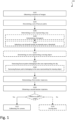
- Figure 1 is a flowchart illustrating some embodiments of a method 100 for calibrating a set of extrinsic parameters of a camera mounted on a vehicle.
- the method 100 may be used to re-calibrate the set of extrinsic parameters, after an initial calibration has been made.
- the method 100 may for instance be performed after a certain amount of time, or at a set time interval, to ensure that the camera stays calibrated.
- the method 100 may be performed on demand, e.g. in response to detecting that the calibration of the camera has deteriorated.
- the method 100 of Fig. 1 comprises some steps which are illustrated as boxes in solid lines and some steps which are illustrated in broken lines.
- the steps which are shown in solid lines are steps which are comprised in the broadest example embodiment of the method 100.
- the steps which are comprised in broken lines are examples of a number of optional steps which may form part of a number of alternative embodiments. It should be appreciated that these steps need not be performed in order. Furthermore, it should be appreciated that not all of the steps need to be performed.
- the example steps may be performed in any order and in any combination.
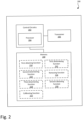
- the method 100 is preferably performed by a device such as the device 200 as described below in connection with Fig. 2 .
- the device 200 may be part of an Automated Driving System (ADS) of a vehicle, such as the vehicle 300 as described below in connection with Fig. 3 .
- ADS Automated Driving System
- the vehicle may be equipped with an ADS.
- the camera may thus be part of a vision system of the ADS.
- a "vehicle” is any form of motorized transport.
- the vehicle 300 may be any road vehicle such as a car (as illustrated herein), a motorcycle, a (cargo) truck, a bus, a smart bicycle, etc.
- the different steps are described in more detail with reference to Fig. 1 . Even though illustrated in a specific order, the steps of the method 100 may be performed in any suitable order, in parallel, as well as multiple times. For instance the steps (which is further described below) of determining S118 a first motion trajectory (and the steps leading up to this) and obtaining S120 a second motion trajectory can be performed interchangeably.
- the method 100 comprises obtaining S102 a sequence of images, captured by the camera.
- obtaining is to, throughout the present disclosure, be interpreted broadly and encompasses receiving, retrieving, collecting, acquiring, and so forth directly and/or indirectly between two entities configured to be in communication with each other or further with other external entities.
- obtaining S102 the sequence of images may comprise capturing the sequence of images by the camera, or requesting the camera to capture the sequence of images.
- the sequence of images may be obtained S102 by receiving or retrieving the sequence of images from e.g. a memory, a remote device, or a remote server.
- the control circuitry 202 is configured to obtain a sequence of images, captured by the camera, wherein each image of the sequence of images depicts a portion of a surrounding environment of the vehicle in a respective time instance of a plurality of time instances. This may be performed e.g. by execution of the first obtaining function 210.
- the control circuitry 202 is further configured to obtain a second motion trajectory of the vehicle over the plurality of time instances, wherein the second motion trajectory is based on motion data obtained from one or more other sensors of the vehicle. This may be performed e.g. by execution of the second obtaining function 220.
- Examples of cellular radio technologies are GSM, GPRS, EDGE, LTE, 5G, 5G NR, and so on, also including future cellular solutions.
- GSM Global System for Mobile communications
- GPRS Global System for Mobile communications
- EDGE Evolved Universal Terrestrial Radio Access
- LTE Long Term Evolution
- 5G 5G NR
- future cellular solutions such as Wi-Fi, Wi-Fi, Wi-Fi, Wi-Fi, and so on, also including future cellular solutions.
- LAN Wireless Local Area
- ETSI is working on cellular standards for vehicle communication and for instance 5G is considered as a suitable solution due to the low latency and efficient handling of high bandwidths and communication channels.
- the communication system 326 may accordingly provide the possibility to send output to a remote location (e.g. remote operator or control center) and/or to receive input from a remote location by means of the one or more antennas. Moreover, the communication system 326 may be further configured to allow the various elements of the vehicle 300 to communicate with each other. As an example, the communication system 326 may provide a local network setup, such as CAN bus, 12C, Ethernet, optical fibers, and so on. Local communication within the vehicle 300 may also be of a wireless type with protocols such as WiFi, LoRa, Zigbee, Bluetooth, or similar mid/short range technologies.
- the localization module 312 and/or the perception module 314 may be communicatively connected to the sensor system 320 in order to receive sensory data from the sensor system 320.
- the localization module 312 and/or the perception module 314 may further transmit control instructions to the sensor system 320.
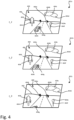
- the first, second and third images 402a, 402b, 402c herein represent different views of the surrounding environment of a moving vehicle, in the three consecutive time instances. Objects in the images therefore appear to be moving towards a camera capturing the images. It should however be appreciated that the images are just for illustrative purposes, and should not be seen as representative of a real world scenario. For example, relative sizes, shapes and perspectives of objects shown in the first to third images 402a-c may not represent a real world scenario.
- a number of feature points 404a-k represented by star shapes.
- the number and placement of the feature points 404a-k should not be seen as limiting, but merely as an illustrative example.
- the feature points 404a-k may form the set of feature points as described in the foregoing.
- different feature points may be determined in the different images. For instance, feature point denoted 404k in the third image 402c, is not present in the first and second image 402a, 402b. Further, the feature point denoted 404h, which is present in the first and second images 402a, 402b, is not present in the third image 402c.
- the term “if” may be construed to mean “when” or “upon” or “in response to” depending on the context.
- the phrase “if it is determined' or “when it is determined” or “in an instance of” may be construed to mean “upon determining” or “in response to determining” or “upon detecting and identifying occurrence of an event” or “in response to detecting occurrence of an event” depending on the context.
Landscapes
- Engineering & Computer Science (AREA)
- Theoretical Computer Science (AREA)
- Physics & Mathematics (AREA)
- General Physics & Mathematics (AREA)
- Multimedia (AREA)
- Computer Vision & Pattern Recognition (AREA)
- Signal Processing (AREA)
- Computing Systems (AREA)
- Artificial Intelligence (AREA)
- Databases & Information Systems (AREA)
- Evolutionary Computation (AREA)
- General Health & Medical Sciences (AREA)
- Medical Informatics (AREA)
- Software Systems (AREA)
- Computational Linguistics (AREA)
- Health & Medical Sciences (AREA)
- Traffic Control Systems (AREA)
- Image Analysis (AREA)
Priority Applications (3)
| Application Number | Priority Date | Filing Date | Title |
|---|---|---|---|
| EP22216952.6A EP4394705A1 (de) | 2022-12-28 | 2022-12-28 | Verfahren und vorrichtung zur kalibrierung einer an einem fahrzeug montierten kamera |
| CN202311818558.6A CN118264761A (zh) | 2022-12-28 | 2023-12-27 | 用于校准安装在车辆上的摄像头的方法和装置 |
| US18/398,103 US12394093B2 (en) | 2022-12-28 | 2023-12-27 | Method and device for calibrating a camera mounted on a vehicle |
Applications Claiming Priority (1)
| Application Number | Priority Date | Filing Date | Title |
|---|---|---|---|
| EP22216952.6A EP4394705A1 (de) | 2022-12-28 | 2022-12-28 | Verfahren und vorrichtung zur kalibrierung einer an einem fahrzeug montierten kamera |
Publications (1)
| Publication Number | Publication Date |
|---|---|
| EP4394705A1 true EP4394705A1 (de) | 2024-07-03 |
Family
ID=84688319
Family Applications (1)
| Application Number | Title | Priority Date | Filing Date |
|---|---|---|---|
| EP22216952.6A Pending EP4394705A1 (de) | 2022-12-28 | 2022-12-28 | Verfahren und vorrichtung zur kalibrierung einer an einem fahrzeug montierten kamera |
Country Status (3)
| Country | Link |
|---|---|
| US (1) | US12394093B2 (de) |
| EP (1) | EP4394705A1 (de) |
| CN (1) | CN118264761A (de) |
Families Citing this family (1)
| Publication number | Priority date | Publication date | Assignee | Title |
|---|---|---|---|---|
| US12037001B1 (en) * | 2021-07-21 | 2024-07-16 | Ambarella International Lp | Dynamic actuation map using a neural network fed by visual odometry |
Family Cites Families (29)
| Publication number | Priority date | Publication date | Assignee | Title |
|---|---|---|---|---|
| DE102006062061B4 (de) | 2006-12-29 | 2010-06-10 | Fraunhofer-Gesellschaft zur Förderung der angewandten Forschung e.V. | Vorrichtung, Verfahren und Computerprogramm zum Bestimmen einer Position basierend auf einem Kamerabild von einer Kamera |
| EP2199983A1 (de) * | 2008-12-22 | 2010-06-23 | Nederlandse Centrale Organisatie Voor Toegepast Natuurwetenschappelijk Onderzoek TNO | Verfahren zur Schätzung einer Bewegung eines Systems mit mehreren Kameras, System mit mehreren Kameras und Computerprogrammprodukt |
| US10306206B2 (en) * | 2013-07-23 | 2019-05-28 | The Regents Of The University Of California | 3-D motion estimation and online temporal calibration for camera-IMU systems |
| US9955056B2 (en) * | 2015-03-16 | 2018-04-24 | Qualcomm Incorporated | Real time calibration for multi-camera wireless device |
| US10013761B2 (en) * | 2015-03-24 | 2018-07-03 | Intel Corporation | Automatic orientation estimation of camera system relative to vehicle |
| GB201616097D0 (en) * | 2016-09-21 | 2016-11-02 | Univ Oxford Innovation Ltd | Segmentation of path proposals |
| US10621753B2 (en) * | 2017-09-29 | 2020-04-14 | Intel IP Corporation | Extrinsic calibration of camera systems |
| US10733761B2 (en) * | 2018-06-29 | 2020-08-04 | Zoox, Inc. | Sensor calibration |
| WO2020112213A2 (en) * | 2018-09-13 | 2020-06-04 | Nvidia Corporation | Deep neural network processing for sensor blindness detection in autonomous machine applications |
| CN109345596B (zh) * | 2018-09-19 | 2024-07-12 | 阿波罗智能技术(北京)有限公司 | 多传感器标定方法、装置、计算机设备、介质和车辆 |
| CN112714913B (zh) * | 2018-09-26 | 2024-11-01 | 法弗人工智能有限公司 | 结构注释 |
| WO2020154911A1 (en) | 2019-01-29 | 2020-08-06 | SZ DJI Technology Co., Ltd. | Sky determination in environment detection for mobile platforms, and associated systems and methods |
| US11204417B2 (en) * | 2019-05-08 | 2021-12-21 | GM Global Technology Operations LLC | Selective attention mechanism for improved perception sensor performance in vehicular applications |
| KR102297683B1 (ko) | 2019-07-01 | 2021-09-07 | (주)베이다스 | 복수의 카메라들을 캘리브레이션하는 방법 및 장치 |
| GB2594111B (en) * | 2019-12-18 | 2023-06-07 | Motional Ad Llc | Camera-to-LiDAR calibration and validation |
| EP4173285A1 (de) * | 2020-06-25 | 2023-05-03 | Mobileye Vision Technologies Ltd. | Bewegungsbasierte online-kalibrierung einer multikamera |
| JP7314878B2 (ja) * | 2020-08-11 | 2023-07-26 | トヨタ自動車株式会社 | キャリブレーションシステム、キャリブレーション方法及びキャリブレーションプログラム |
| CN116437989A (zh) * | 2020-11-03 | 2023-07-14 | 涛普高尔夫瑞典公司 | 使用由一个或多个传感器登记的未经验证的检测进行三维物体跟踪 |
| WO2023059365A1 (en) * | 2021-10-08 | 2023-04-13 | Nodar Inc. | Real-time perception system for small objects at long range for autonomous vehicles |
| US20230343229A1 (en) * | 2022-04-25 | 2023-10-26 | Xtend Reality Expansion Ltd. | Systems and methods for managing unmanned vehicle interactions with various payloads |
| US11772667B1 (en) * | 2022-06-08 | 2023-10-03 | Plusai, Inc. | Operating a vehicle in response to detecting a faulty sensor using calibration parameters of the sensor |
| US12400365B2 (en) * | 2022-06-14 | 2025-08-26 | Volkswagen Group of America Investments, LLC | Systems and methods for autonomous vehicle sensor calibration and validation |
| EP4303835B1 (de) * | 2022-07-06 | 2025-09-24 | Zenseact AB | Annotation von objekten in bilderrahmen |
| US12299903B2 (en) * | 2022-09-01 | 2025-05-13 | Qualcomm Incorporated | Global motion modeling for automotive image data |
| KR20240043456A (ko) * | 2022-09-27 | 2024-04-03 | 현대자동차주식회사 | 차량 및 그 제어 방법 |
| CN115272494B (zh) * | 2022-09-29 | 2022-12-30 | 腾讯科技(深圳)有限公司 | 相机与惯性测量单元的标定方法、装置和计算机设备 |
| US12244938B2 (en) * | 2022-12-09 | 2025-03-04 | Nvidia Corporation | Brightness based chromaticity weighting for improved illuminant color estimation for auto white balancing |
| US12574652B2 (en) * | 2022-12-09 | 2026-03-10 | Nvidia Corporation | Fallback mechanism for auto white balancing |
| US20240230866A1 (en) * | 2023-01-05 | 2024-07-11 | Gm Cruise Holdings Llc | Online calibration of misalignment between vehicle sensors |
-
2022
- 2022-12-28 EP EP22216952.6A patent/EP4394705A1/de active Pending
-
2023
- 2023-12-27 US US18/398,103 patent/US12394093B2/en active Active
- 2023-12-27 CN CN202311818558.6A patent/CN118264761A/zh active Pending
Non-Patent Citations (2)
| Title |
|---|
| RYOICHI ISHIKAWA ET AL: "LiDAR and Camera Calibration using Motion Estimated by Sensor Fusion Odometry", ARXIV.ORG, CORNELL UNIVERSITY LIBRARY, 201 OLIN LIBRARY CORNELL UNIVERSITY ITHACA, NY 14853, 14 April 2018 (2018-04-14), XP080870771 * |
| TAO WENYU ET AL: "A sky region segmentation method for outdoor visual-inertial SLAM", 2021 6TH INTERNATIONAL CONFERENCE ON INTELLIGENT COMPUTING AND SIGNAL PROCESSING (ICSP), IEEE, 9 April 2021 (2021-04-09), pages 1108 - 1113, XP033906732, DOI: 10.1109/ICSP51882.2021.9408771 * |
Also Published As
| Publication number | Publication date |
|---|---|
| US20240221219A1 (en) | 2024-07-04 |
| CN118264761A (zh) | 2024-06-28 |
| US12394093B2 (en) | 2025-08-19 |
Similar Documents
| Publication | Publication Date | Title |
|---|---|---|
| US11675084B2 (en) | Determining yaw error from map data, lasers, and cameras | |
| US12085403B2 (en) | Vehicle localisation | |
| US20210004566A1 (en) | Method and apparatus for 3d object bounding for 2d image data | |
| EP3674971A1 (de) | Verfahren und system zum trainieren eines maschinenlernalgorithmus zum erfassen von entfernten objekten | |
| US11281916B2 (en) | Method of tracking objects in a scene | |
| CN113962301B (zh) | 一种多源输入信号融合的路面质量检测方法及系统 | |
| CN113008248A (zh) | 用于生成和更新数字地图的方法和系统 | |
| JP2018048949A (ja) | 物体識別装置 | |
| CN118625339A (zh) | 用于估计车辆速度的方法 | |
| US20220276054A1 (en) | Estimation device, estimation method, program product for estimation | |
| US12394093B2 (en) | Method and device for calibrating a camera mounted on a vehicle | |
| US12466433B2 (en) | Autonomous driving LiDAR technology | |
| US20250078477A1 (en) | Method for collecting data for subsequent training of an object detection model | |
| US20240425056A1 (en) | Model-based road estimation | |
| US20240328793A1 (en) | Vehicle localization | |
| US20240135252A1 (en) | Lane-assignment for traffic objects on a road | |
| US12555389B2 (en) | Apparatus, method, and computer program for estimating road edge | |
| Alrousan et al. | Multi-sensor fusion in slow lanes for lane keep assist system | |
| CN116026359A (zh) | 用于估算自主车辆六自由度(6DoF)定位参数的校准管线 | |
| CN114076971A (zh) | 用于确定行驶路径线和载具的纵向轴线之间的角度和最短距离的系统和方法 | |
| EP4468257A1 (de) | Verfahren und vorrichtung zur bestimmung des freiraums | |
| EP4431974A1 (de) | Erzeugung einer darstellung einer umgebung eines fahrzeugs | |
| US12450863B2 (en) | Information processing device and information processing method for object detection and three-dimensional mapping | |
| EP4575991A1 (de) | Verfahren zur bereitstellung einer freiraumschätzung mit bewegungsdaten | |
| EP4675307A1 (de) | Verfahren zur freiraumerweiterung für autonomes fahren |
Legal Events
| Date | Code | Title | Description |
|---|---|---|---|
| PUAI | Public reference made under article 153(3) epc to a published international application that has entered the european phase |
Free format text: ORIGINAL CODE: 0009012 |
|
| STAA | Information on the status of an ep patent application or granted ep patent |
Free format text: STATUS: THE APPLICATION HAS BEEN PUBLISHED |
|
| AK | Designated contracting states |
Kind code of ref document: A1 Designated state(s): AL AT BE BG CH CY CZ DE DK EE ES FI FR GB GR HR HU IE IS IT LI LT LU LV MC ME MK MT NL NO PL PT RO RS SE SI SK SM TR |
|
| STAA | Information on the status of an ep patent application or granted ep patent |
Free format text: STATUS: REQUEST FOR EXAMINATION WAS MADE |
|
| 17P | Request for examination filed |
Effective date: 20241211 |