EP4395420A2 - Iot-verstärkernetzwerk mit geringer leistung - Google Patents
Iot-verstärkernetzwerk mit geringer leistung Download PDFInfo
- Publication number
- EP4395420A2 EP4395420A2 EP24177149.2A EP24177149A EP4395420A2 EP 4395420 A2 EP4395420 A2 EP 4395420A2 EP 24177149 A EP24177149 A EP 24177149A EP 4395420 A2 EP4395420 A2 EP 4395420A2
- Authority
- EP
- European Patent Office
- Prior art keywords
- iot
- booster
- accordance
- node
- network
- Prior art date
- Legal status (The legal status is an assumption and is not a legal conclusion. Google has not performed a legal analysis and makes no representation as to the accuracy of the status listed.)
- Pending
Links
- 238000012545 processing Methods 0.000 claims abstract description 11
- 238000004891 communication Methods 0.000 claims description 14
- 230000000694 effects Effects 0.000 claims description 6
- 230000009471 action Effects 0.000 description 2
- 238000013461 design Methods 0.000 description 2
- 238000005516 engineering process Methods 0.000 description 2
- QVFWZNCVPCJQOP-UHFFFAOYSA-N chloralodol Chemical compound CC(O)(C)CC(C)OC(O)C(Cl)(Cl)Cl QVFWZNCVPCJQOP-UHFFFAOYSA-N 0.000 description 1
- 238000000034 method Methods 0.000 description 1
- 238000012986 modification Methods 0.000 description 1
- 230000004048 modification Effects 0.000 description 1
- 230000008569 process Effects 0.000 description 1
- 230000001360 synchronised effect Effects 0.000 description 1
Images
Classifications
-
- H—ELECTRICITY
- H04—ELECTRIC COMMUNICATION TECHNIQUE
- H04W—WIRELESS COMMUNICATION NETWORKS
- H04W16/00—Network planning, e.g. coverage or traffic planning tools; Network deployment, e.g. resource partitioning or cells structures
- H04W16/24—Cell structures
- H04W16/26—Cell enhancers or enhancement, e.g. for tunnels, building shadow
-
- H—ELECTRICITY
- H04—ELECTRIC COMMUNICATION TECHNIQUE
- H04W—WIRELESS COMMUNICATION NETWORKS
- H04W4/00—Services specially adapted for wireless communication networks; Facilities therefor
- H04W4/80—Services using short range communication, e.g. near-field communication [NFC], radio-frequency identification [RFID] or low energy communication
-
- H—ELECTRICITY
- H04—ELECTRIC COMMUNICATION TECHNIQUE
- H04W—WIRELESS COMMUNICATION NETWORKS
- H04W56/00—Synchronisation arrangements
- H04W56/001—Synchronization between nodes
-
- H—ELECTRICITY
- H04—ELECTRIC COMMUNICATION TECHNIQUE
- H04W—WIRELESS COMMUNICATION NETWORKS
- H04W4/00—Services specially adapted for wireless communication networks; Facilities therefor
- H04W4/30—Services specially adapted for particular environments, situations or purposes
- H04W4/38—Services specially adapted for particular environments, situations or purposes for collecting sensor information
-
- H—ELECTRICITY
- H04—ELECTRIC COMMUNICATION TECHNIQUE
- H04W—WIRELESS COMMUNICATION NETWORKS
- H04W84/00—Network topologies
- H04W84/18—Self-organising networks, e.g. ad-hoc networks or sensor networks
-
- Y—GENERAL TAGGING OF NEW TECHNOLOGICAL DEVELOPMENTS; GENERAL TAGGING OF CROSS-SECTIONAL TECHNOLOGIES SPANNING OVER SEVERAL SECTIONS OF THE IPC; TECHNICAL SUBJECTS COVERED BY FORMER USPC CROSS-REFERENCE ART COLLECTIONS [XRACs] AND DIGESTS
- Y02—TECHNOLOGIES OR APPLICATIONS FOR MITIGATION OR ADAPTATION AGAINST CLIMATE CHANGE
- Y02D—CLIMATE CHANGE MITIGATION TECHNOLOGIES IN INFORMATION AND COMMUNICATION TECHNOLOGIES [ICT], I.E. INFORMATION AND COMMUNICATION TECHNOLOGIES AIMING AT THE REDUCTION OF THEIR OWN ENERGY USE
- Y02D30/00—Reducing energy consumption in communication networks
- Y02D30/70—Reducing energy consumption in communication networks in wireless communication networks
Definitions
- IoT networks have a few common characteristics, two of which are very important. They must be able to operate over a very long range, and must be able to operate with very low power consumption.
- the uplink power available at the device may not be sufficient to reach the base station and therefore a link to the Internet cannot be established. Further, when using high uplink power to communicate with the base station, the battery life of an IoT node may be severely impacted. Lastly, because of limited processing power and energy available in the node, only limited decisions can be made based on the captured data. This forces more frequent communications with the Internet, which can reduce the overall lifespan of the IoT node.
- the IoT Node includes one or more sensors, such as a sensor processor or processing element, and an IoT Modem that can connect to the internet or a private IoT network to deliver data to an IoT Hub application.
- the IoT Node may also include one or more short range wireless links, such as Bluetooth Low Energy (BTLE), which preferably operate with considerably reduced power consumption.
- BTLE Bluetooth Low Energy
- the IoT Node may communicate directly to a base station and through the base station be connected to the IoT Network (which could be the internet). Alternatively, the IoT Node may connect to a base station through a repeater.
- a system for improving communication with an Internet of Things (IoT) hub via an IoT network comprising one or more wireless communication networks
- the system comprising: one or more IoT nodes, each individual IoT node including a sensor to sense a physical representation of an environment associated with the individual IoT node, a sensor processor to generate a value of the physical representation, and a first IoT modem to transmit the value of the physical representation in a wireless signal on a wireless channel; an IoT booster in communication between the one or more IoT nodes and the IoT network, the IoT booster having a signal booster to receive the value of the physical representation transmitted by the first IoT modem of the individual IoT node on the wireless channel, and boost the wireless signal containing the value of the physical representation, and further having a second IoT modem to transmit the boosted wireless signal to the IoT hub via the IoT network.
- IoT Internet of Things
- the first IoT modem of the IoT node may be connected to the IoT network to deliver data to the IoT Hub.
- the first IoT modem may be configured to connect to the IoT network by communicating with a base station through the IoT booster.
- the IoT node can be connected to the base station through the IoT booster, and in some implementations, the base station is far-away from the IoT booster.
- the first IoT modem may be connected to the signal booster of the IoT booster.
- the signal booster of the IoT booster may be connected to the second IoT modem.
- the IoT Hub can either host or execute an application to which the data is delivered.
- the IoT network may be one of: the internet; and a private network.
- the individual IoT node is configured with an On/Off schedule.
- the sensor processor of the individual IoT node is further configured to synchronize its processing activity with the On/Off schedule of the individual IoT node.
- the short range wireless channel is a Bluetooth Low Energy channel.
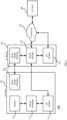
- FIG. 1 illustrates an implementation of a system 100.
- the system 100 includes an IoT node 102 and an IoT booster 104 connected to an IoT hub 106 via an IoT network 108, such as a communication network.
- the IoT network 108 can include any number of wired or wireless communication nodes and channels.
- the IoT node 102 includes one or more sensors 110, and/or a sensor processor 112 or other form of processing element, and an IoT modem 114 that can connect to the Internet or a private IoT network 108 to deliver data to an application hosted by, or executed by, the IoT hub 106.
- the IoT node 102 may also include one or more short range wireless links (such as BTLE).
- the IoT node 102 can communicate directly to a base station, and through the base station be connected to the IoT network 108, which can be the Internet.
- the IoT node 102 may connect to a base station through a repeater, such as the IoT booster 104 shown in FIG. 1 .
- the IoT booster 104 contains a signal booster 118 (such as the Cel-Fi ® GO-X signal booster) as well as a second IoT modem 120.
- the IoT booster 104 can also include a short range wireless link (such as BTLE).
- the IoT booster 104 receives a signal from the IoT modem 114 in the IoT node 102, and boosts this signal to allow it to be received by the base station and to then be relayed to the IoT network 108.
- the IoT booster 104 may also receive signals from the IoT node 102 using the short range wireless link. In both cases (connection via the short range wireless link or the IoT modem link), multiple IoT nodes 102 can connect to a single IoT booster 104.
- the low power IoT booster network shown in FIG. 1 addresses various problems with current technology. It improves the overall link budget between IoT nodes 102, which can be deployed in, or associated with, an appliance or other object, and the IoT network 108 and IoT hub 106, to allow for a much further reach. This can be achieved in a number of ways, such as increased uplink power for the booster as compared to the IoT modem 114 in the IoT node 102. It can also lead to an improved antenna design, and placement of the antenna connected to the donor side of the booster, as well as improves the overall battery life of the IoT nodes 102. IoT nodes 102 can reduce their Tx power levels as they only need to reach the IoT booster 104 and not the far-away base station or IoT hub 106.
- the use of a sensor processor 112 allows complex decision making at the edge of the network and system 100. This reduces the number of times an IoT node 102 must contact the network, and as such, reduces the total energy expensed by the system 100.
- the IoT booster 104 takes on the task of communicating with the IoT network 108 in an efficient manner. If the IoT booster 104 is not energy efficient, the overall system will be less efficient.
- the IoT booster 104 incorporates a wireless signal booster that can be switched on and off depending on whether the boosting functions is needed by devices connected via the IoT booster 104.
- the wireless signal booster receives a schedule from devices connecting through the IoT booster 104 to the IoT network 108 of when the booster must be turned ON and provide signal boosting functionality. Further, the wireless signal booster receives a schedule from devices connecting through the booster to the network of when the booster must be turned ON and provide signal boosting functionality where the schedule is delivered to the booster using the short range wireless link.
- a wireless signal booster receives a schedule from devices connecting through the booster to the network of when the booster must be turned ON and provide signal boosting functionality where the schedule is delivered to the booster via remote server.
- a wireless signal booster incorporates a wireless modem and where the wake-up schedule for the booster is determined by the wake-up schedule for the incorporated wireless modem.
- a processing system can combine the wake-up schedules of multiple IoT nodes 102 as well as the IoT booster 104 into a single wake-up schedule design to optimize the power efficiency of the system.
- the system can synchronize the wake-up schedule of a number of devices connected to a wireless signal booster in order to reduce the time the booster must be awake and relaying a signal.
- the sensor processor 112 is provided in an IoT node 102 that synchronizes its processing activity with the On/Off schedule of the IoT node 102.
- the sensor processor 112 further can synchronize its processing activity with the On/Off schedule of the IoT booster 104, and requires no timed clock element, but whose operation can at least be coarsely synchronized with external events, to process input signals thereby reducing the overall power consumed by the sensor processor.
Landscapes
- Engineering & Computer Science (AREA)
- Computer Networks & Wireless Communication (AREA)
- Signal Processing (AREA)
- Mobile Radio Communication Systems (AREA)
- Arrangements For Transmission Of Measured Signals (AREA)
Applications Claiming Priority (3)
| Application Number | Priority Date | Filing Date | Title |
|---|---|---|---|
| US201862619703P | 2018-01-19 | 2018-01-19 | |
| PCT/US2019/014341 WO2019144038A2 (en) | 2018-01-19 | 2019-01-18 | Low power lot booster network |
| EP19741452.7A EP3741143B1 (de) | 2018-01-19 | 2019-01-18 | Iot-verstärkernetzwerk mit geringer leistung |
Related Parent Applications (1)
| Application Number | Title | Priority Date | Filing Date |
|---|---|---|---|
| EP19741452.7A Division EP3741143B1 (de) | 2018-01-19 | 2019-01-18 | Iot-verstärkernetzwerk mit geringer leistung |
Publications (2)
| Publication Number | Publication Date |
|---|---|
| EP4395420A2 true EP4395420A2 (de) | 2024-07-03 |
| EP4395420A3 EP4395420A3 (de) | 2024-07-10 |
Family
ID=67298313
Family Applications (2)
| Application Number | Title | Priority Date | Filing Date |
|---|---|---|---|
| EP19741452.7A Active EP3741143B1 (de) | 2018-01-19 | 2019-01-18 | Iot-verstärkernetzwerk mit geringer leistung |
| EP24177149.2A Pending EP4395420A3 (de) | 2018-01-19 | 2019-01-18 | Iot-verstärkernetzwerk mit geringer leistung |
Family Applications Before (1)
| Application Number | Title | Priority Date | Filing Date |
|---|---|---|---|
| EP19741452.7A Active EP3741143B1 (de) | 2018-01-19 | 2019-01-18 | Iot-verstärkernetzwerk mit geringer leistung |
Country Status (6)
| Country | Link |
|---|---|
| US (1) | US11477663B2 (de) |
| EP (2) | EP3741143B1 (de) |
| AU (2) | AU2019208328A1 (de) |
| CA (1) | CA3088668A1 (de) |
| ES (1) | ES2984953T3 (de) |
| WO (1) | WO2019144038A2 (de) |
Families Citing this family (2)
| Publication number | Priority date | Publication date | Assignee | Title |
|---|---|---|---|---|
| WO2020242822A1 (en) * | 2019-05-30 | 2020-12-03 | D. H. Pace Company, Inc. | Systems and methods for door and dock equipment servicing |
| CN118660325A (zh) * | 2020-07-31 | 2024-09-17 | 上海新微技术研发中心有限公司 | 基于局域无线自组网的NB-IoT网络系统及组网方法 |
Family Cites Families (15)
| Publication number | Priority date | Publication date | Assignee | Title |
|---|---|---|---|---|
| US4468785A (en) * | 1981-06-10 | 1984-08-28 | Gould Inc. | Telemetry system with signal booster for digital data transmission through a transmission line |
| US7705747B2 (en) | 2005-08-18 | 2010-04-27 | Terahop Networks, Inc. | Sensor networks for monitoring pipelines and power lines |
| US7978062B2 (en) * | 2007-08-31 | 2011-07-12 | Cardiac Pacemakers, Inc. | Medical data transport over wireless life critical network |
| US8816904B2 (en) | 2009-01-06 | 2014-08-26 | Jeremy Keith Raines | Intelligent signal booster |
| US20130201316A1 (en) * | 2012-01-09 | 2013-08-08 | May Patents Ltd. | System and method for server based control |
| US11627186B2 (en) * | 2012-05-17 | 2023-04-11 | Digi International, Inc. | Wireless network of environmental sensor units |
| US20140329498A1 (en) * | 2013-05-02 | 2014-11-06 | Qualcomm Incorporated | Systems and methods for power save during initial link setup |
| JP6148797B2 (ja) * | 2013-08-30 | 2017-06-14 | フラウンホーファー−ゲゼルシャフト・ツール・フェルデルング・デル・アンゲヴァンテン・フォルシュング・アインゲトラーゲネル・フェライン | 信号を送信する方法及び装置 |
| US20160323156A1 (en) * | 2015-04-28 | 2016-11-03 | Kiban Labs, Inc. | System and method for performing wireless spectrum analysis and configuring wireless networks using an internet of things (iot) system |
| US20170019853A1 (en) * | 2015-07-14 | 2017-01-19 | Intel Corporation | Power saving architectures and techniques in wireless networks |
| US10129853B2 (en) | 2016-06-08 | 2018-11-13 | Cognitive Systems Corp. | Operating a motion detection channel in a wireless communication network |
| US20180211176A1 (en) * | 2017-01-20 | 2018-07-26 | Alchemy IoT | Blended IoT Device Health Index |
| US20180277123A1 (en) * | 2017-03-22 | 2018-09-27 | Bragi GmbH | Gesture controlled multi-peripheral management |
| US20180352397A1 (en) * | 2017-06-05 | 2018-12-06 | Intel IP Corporation | Synchronizing connectivity in wireless communication networks |
| US20200037267A1 (en) * | 2018-07-24 | 2020-01-30 | Stephanie Gray | System, method and apparatus for reducing exposure to electromagnetic radiation |
-
2019
- 2019-01-18 EP EP19741452.7A patent/EP3741143B1/de active Active
- 2019-01-18 AU AU2019208328A patent/AU2019208328A1/en not_active Abandoned
- 2019-01-18 ES ES19741452T patent/ES2984953T3/es active Active
- 2019-01-18 WO PCT/US2019/014341 patent/WO2019144038A2/en not_active Ceased
- 2019-01-18 US US16/252,438 patent/US11477663B2/en active Active
- 2019-01-18 EP EP24177149.2A patent/EP4395420A3/de active Pending
- 2019-01-18 CA CA3088668A patent/CA3088668A1/en active Pending
-
2022
- 2022-01-13 AU AU2022200205A patent/AU2022200205B2/en active Active
Also Published As
| Publication number | Publication date |
|---|---|
| WO2019144038A3 (en) | 2020-01-16 |
| ES2984953T3 (es) | 2024-10-31 |
| EP3741143A2 (de) | 2020-11-25 |
| WO2019144038A2 (en) | 2019-07-25 |
| AU2019208328A1 (en) | 2020-07-30 |
| AU2022200205A1 (en) | 2022-02-10 |
| AU2022200205B2 (en) | 2023-12-07 |
| US11477663B2 (en) | 2022-10-18 |
| EP3741143A4 (de) | 2021-09-08 |
| EP3741143B1 (de) | 2024-05-22 |
| EP4395420A3 (de) | 2024-07-10 |
| CA3088668A1 (en) | 2019-07-25 |
| US20190230518A1 (en) | 2019-07-25 |
Similar Documents
| Publication | Publication Date | Title |
|---|---|---|
| Mousavifar et al. | Wireless energy harvesting and spectrum sharing in cognitive radio | |
| US8670357B2 (en) | Methods and apparatus for controlling peer to peer communications | |
| US12143930B2 (en) | Signal-repeater device operable in low-power repeater-operational mode | |
| US20170223628A1 (en) | Low power wireless communication device and remote management techniques | |
| AU2022200205B2 (en) | Low power iot booster network | |
| KR20070073138A (ko) | 다중 홉 릴레이 방식의 광대역 무선 접속 통신 시스템에서투명 중계하기 위한 장치 및 방법 | |
| WO2015054164A1 (en) | Systems and methods for noise floor optimization in distributed antenna system with direct digital interface to base station | |
| US9735872B2 (en) | Remote device of optical relay system | |
| WO2023064277A3 (en) | Transmission of multi-sim device | |
| WO2016071686A1 (en) | Energy harvesting in a wireless communication network | |
| CA2592167A1 (en) | Field sensing network | |
| AU2021269425B2 (en) | Low power cellular base station | |
| US11363594B2 (en) | Time-domain resource determination method and apparatus, and computer storage medium | |
| CN101500248A (zh) | 一种天线校准方法及装置 | |
| JP2013510529A (ja) | 高速の再構成を伴うデジタル透明プロセッサを用いた人工衛星用信号経路指定能力の動的管理 | |
| Panga et al. | Leveraging wake-up radios in UAV-Aided LoRa networks: Some preliminary results on a random-access scheme | |
| US20170332319A1 (en) | Communication device, communication method, and program | |
| KR102006568B1 (ko) | 중계기를 이용하는 인지무선 통신 제어 장치 및 방법 | |
| CN105376039A (zh) | 时分双工系统信号的传输方法及装置 | |
| JP2000258566A (ja) | 無線通信システム | |
| EP4510735A1 (de) | Ressourcenmultiplexverfahren eines repeaters, repeater und netzwerkseitige vorrichtung | |
| TRAN et al. | Secrecy Outage Analysis of Wireless-Powered UAV-Enabled Backscatter Communication Networks | |
| Moritz et al. | On the performance of network-coded cooperative communications with wireless energy transfer under a realistic power consumption model | |
| Zhao et al. | Dynamic Hybrid Timing Switching and Power Splitting SWIPT for Multi-hop AF Relaying Systems | |
| Kim et al. | Optimum relay sharing with statistical channel information in multiple-sensor relaying networks |
Legal Events
| Date | Code | Title | Description |
|---|---|---|---|
| PUAI | Public reference made under article 153(3) epc to a published international application that has entered the european phase |
Free format text: ORIGINAL CODE: 0009012 |
|
| REG | Reference to a national code |
Ref country code: DE Ref legal event code: R079 Free format text: PREVIOUS MAIN CLASS: H04W0052000000 Ipc: H04W0004800000 |
|
| STAA | Information on the status of an ep patent application or granted ep patent |
Free format text: STATUS: THE APPLICATION HAS BEEN PUBLISHED |
|
| PUAL | Search report despatched |
Free format text: ORIGINAL CODE: 0009013 |
|
| AC | Divisional application: reference to earlier application |
Ref document number: 3741143 Country of ref document: EP Kind code of ref document: P |
|
| AK | Designated contracting states |
Kind code of ref document: A2 Designated state(s): AL AT BE BG CH CY CZ DE DK EE ES FI FR GB GR HR HU IE IS IT LI LT LU LV MC MK MT NL NO PL PT RO RS SE SI SK SM TR |
|
| AK | Designated contracting states |
Kind code of ref document: A3 Designated state(s): AL AT BE BG CH CY CZ DE DK EE ES FI FR GB GR HR HU IE IS IT LI LT LU LV MC MK MT NL NO PL PT RO RS SE SI SK SM TR |
|
| RIC1 | Information provided on ipc code assigned before grant |
Ipc: H04W 52/00 20090101ALI20240531BHEP Ipc: H04W 4/80 20180101AFI20240531BHEP |
|
| STAA | Information on the status of an ep patent application or granted ep patent |
Free format text: STATUS: REQUEST FOR EXAMINATION WAS MADE |
|
| STAA | Information on the status of an ep patent application or granted ep patent |
Free format text: STATUS: EXAMINATION IS IN PROGRESS |
|
| 17P | Request for examination filed |
Effective date: 20250110 |
|
| 17Q | First examination report despatched |
Effective date: 20250203 |