EP4397321A2 - Lymphocytes t génétiquement modifiés à interruption de regnase-1 et/ou de tgfbrii ayant une fonctionnalité et une persistance améliorées - Google Patents
Lymphocytes t génétiquement modifiés à interruption de regnase-1 et/ou de tgfbrii ayant une fonctionnalité et une persistance améliorées Download PDFInfo
- Publication number
- EP4397321A2 EP4397321A2 EP24162548.2A EP24162548A EP4397321A2 EP 4397321 A2 EP4397321 A2 EP 4397321A2 EP 24162548 A EP24162548 A EP 24162548A EP 4397321 A2 EP4397321 A2 EP 4397321A2
- Authority
- EP
- European Patent Office
- Prior art keywords
- cells
- gene
- car
- tgfbrii
- reg1
- Prior art date
- Legal status (The legal status is an assumption and is not a legal conclusion. Google has not performed a legal analysis and makes no representation as to the accuracy of the status listed.)
- Pending
Links
Images




















Classifications
-
- C—CHEMISTRY; METALLURGY
- C12—BIOCHEMISTRY; BEER; SPIRITS; WINE; VINEGAR; MICROBIOLOGY; ENZYMOLOGY; MUTATION OR GENETIC ENGINEERING
- C12N—MICROORGANISMS OR ENZYMES; COMPOSITIONS THEREOF; PROPAGATING, PRESERVING, OR MAINTAINING MICROORGANISMS; MUTATION OR GENETIC ENGINEERING; CULTURE MEDIA
- C12N5/00—Undifferentiated human, animal or plant cells, e.g. cell lines; Tissues; Cultivation or maintenance thereof; Culture media therefor
- C12N5/06—Animal cells or tissues; Human cells or tissues
- C12N5/0602—Vertebrate cells
- C12N5/0634—Cells from the blood or the immune system
- C12N5/0636—T lymphocytes
-
- C—CHEMISTRY; METALLURGY
- C07—ORGANIC CHEMISTRY
- C07K—PEPTIDES
- C07K14/00—Peptides having more than 20 amino acids; Gastrins; Somatostatins; Melanotropins; Derivatives thereof
- C07K14/435—Peptides having more than 20 amino acids; Gastrins; Somatostatins; Melanotropins; Derivatives thereof from animals; from humans
- C07K14/705—Receptors; Cell surface antigens; Cell surface determinants
- C07K14/70578—NGF-receptor/TNF-receptor superfamily, e.g. CD27, CD30, CD40, CD95
-
- A—HUMAN NECESSITIES
- A61—MEDICAL OR VETERINARY SCIENCE; HYGIENE
- A61K—PREPARATIONS FOR MEDICAL, DENTAL OR TOILETRY PURPOSES
- A61K40/00—Cellular immunotherapy
- A61K40/10—Cellular immunotherapy characterised by the cell type used
- A61K40/11—T-cells, e.g. tumour infiltrating lymphocytes [TIL] or regulatory T [Treg] cells; Lymphokine-activated killer [LAK] cells
-
- A—HUMAN NECESSITIES
- A61—MEDICAL OR VETERINARY SCIENCE; HYGIENE
- A61K—PREPARATIONS FOR MEDICAL, DENTAL OR TOILETRY PURPOSES
- A61K40/00—Cellular immunotherapy
- A61K40/30—Cellular immunotherapy characterised by the recombinant expression of specific molecules in the cells of the immune system
- A61K40/31—Chimeric antigen receptors [CAR]
-
- A—HUMAN NECESSITIES
- A61—MEDICAL OR VETERINARY SCIENCE; HYGIENE
- A61K—PREPARATIONS FOR MEDICAL, DENTAL OR TOILETRY PURPOSES
- A61K40/00—Cellular immunotherapy
- A61K40/40—Cellular immunotherapy characterised by antigens that are targeted or presented by cells of the immune system
- A61K40/41—Vertebrate antigens
- A61K40/42—Cancer antigens
- A61K40/4202—Receptors, cell surface antigens or cell surface determinants
- A61K40/421—Immunoglobulin superfamily
- A61K40/4211—CD19 or B4
-
- A—HUMAN NECESSITIES
- A61—MEDICAL OR VETERINARY SCIENCE; HYGIENE
- A61K—PREPARATIONS FOR MEDICAL, DENTAL OR TOILETRY PURPOSES
- A61K40/00—Cellular immunotherapy
- A61K40/40—Cellular immunotherapy characterised by antigens that are targeted or presented by cells of the immune system
- A61K40/41—Vertebrate antigens
- A61K40/42—Cancer antigens
- A61K40/4202—Receptors, cell surface antigens or cell surface determinants
- A61K40/4214—Receptors for cytokines
- A61K40/4215—Receptors for tumor necrosis factors [TNF], e.g. lymphotoxin receptor [LTR], CD30
-
- A—HUMAN NECESSITIES
- A61—MEDICAL OR VETERINARY SCIENCE; HYGIENE
- A61K—PREPARATIONS FOR MEDICAL, DENTAL OR TOILETRY PURPOSES
- A61K40/00—Cellular immunotherapy
- A61K40/40—Cellular immunotherapy characterised by antigens that are targeted or presented by cells of the immune system
- A61K40/41—Vertebrate antigens
- A61K40/42—Cancer antigens
- A61K40/4231—Cytokines
- A61K40/4232—Tumor necrosis factors [TNF] or CD70
-
- A—HUMAN NECESSITIES
- A61—MEDICAL OR VETERINARY SCIENCE; HYGIENE
- A61K—PREPARATIONS FOR MEDICAL, DENTAL OR TOILETRY PURPOSES
- A61K40/00—Cellular immunotherapy
- A61K40/40—Cellular immunotherapy characterised by antigens that are targeted or presented by cells of the immune system
- A61K40/41—Vertebrate antigens
- A61K40/42—Cancer antigens
- A61K40/4244—Enzymes
- A61K40/4251—Kinases, e.g. Raf or Src
-
- A—HUMAN NECESSITIES
- A61—MEDICAL OR VETERINARY SCIENCE; HYGIENE
- A61K—PREPARATIONS FOR MEDICAL, DENTAL OR TOILETRY PURPOSES
- A61K48/00—Medicinal preparations containing genetic material which is inserted into cells of the living body to treat genetic diseases; Gene therapy
-
- C—CHEMISTRY; METALLURGY
- C07—ORGANIC CHEMISTRY
- C07K—PEPTIDES
- C07K14/00—Peptides having more than 20 amino acids; Gastrins; Somatostatins; Melanotropins; Derivatives thereof
- C07K14/435—Peptides having more than 20 amino acids; Gastrins; Somatostatins; Melanotropins; Derivatives thereof from animals; from humans
- C07K14/705—Receptors; Cell surface antigens; Cell surface determinants
- C07K14/70503—Immunoglobulin superfamily
- C07K14/7051—T-cell receptor (TcR)-CD3 complex
-
- C—CHEMISTRY; METALLURGY
- C07—ORGANIC CHEMISTRY
- C07K—PEPTIDES
- C07K14/00—Peptides having more than 20 amino acids; Gastrins; Somatostatins; Melanotropins; Derivatives thereof
- C07K14/435—Peptides having more than 20 amino acids; Gastrins; Somatostatins; Melanotropins; Derivatives thereof from animals; from humans
- C07K14/705—Receptors; Cell surface antigens; Cell surface determinants
- C07K14/70503—Immunoglobulin superfamily
- C07K14/70521—CD28, CD152
-
- C—CHEMISTRY; METALLURGY
- C07—ORGANIC CHEMISTRY
- C07K—PEPTIDES
- C07K14/00—Peptides having more than 20 amino acids; Gastrins; Somatostatins; Melanotropins; Derivatives thereof
- C07K14/435—Peptides having more than 20 amino acids; Gastrins; Somatostatins; Melanotropins; Derivatives thereof from animals; from humans
- C07K14/705—Receptors; Cell surface antigens; Cell surface determinants
- C07K14/70575—NGF/TNF-superfamily, e.g. CD70, CD95L, CD153, CD154
-
- C—CHEMISTRY; METALLURGY
- C07—ORGANIC CHEMISTRY
- C07K—PEPTIDES
- C07K14/00—Peptides having more than 20 amino acids; Gastrins; Somatostatins; Melanotropins; Derivatives thereof
- C07K14/435—Peptides having more than 20 amino acids; Gastrins; Somatostatins; Melanotropins; Derivatives thereof from animals; from humans
- C07K14/705—Receptors; Cell surface antigens; Cell surface determinants
- C07K14/70596—Molecules with a "CD"-designation not provided for elsewhere
-
- C—CHEMISTRY; METALLURGY
- C07—ORGANIC CHEMISTRY
- C07K—PEPTIDES
- C07K14/00—Peptides having more than 20 amino acids; Gastrins; Somatostatins; Melanotropins; Derivatives thereof
- C07K14/435—Peptides having more than 20 amino acids; Gastrins; Somatostatins; Melanotropins; Derivatives thereof from animals; from humans
- C07K14/705—Receptors; Cell surface antigens; Cell surface determinants
- C07K14/71—Receptors; Cell surface antigens; Cell surface determinants for growth factors; for growth regulators
-
- C—CHEMISTRY; METALLURGY
- C07—ORGANIC CHEMISTRY
- C07K—PEPTIDES
- C07K16/00—Immunoglobulins [IG], e.g. monoclonal or polyclonal antibodies
- C07K16/18—Immunoglobulins [IG], e.g. monoclonal or polyclonal antibodies against material from animals or humans
- C07K16/28—Immunoglobulins [IG], e.g. monoclonal or polyclonal antibodies against material from animals or humans against receptors, cell surface antigens or cell surface determinants
- C07K16/2803—Immunoglobulins [IG], e.g. monoclonal or polyclonal antibodies against material from animals or humans against receptors, cell surface antigens or cell surface determinants against the immunoglobulin superfamily
-
- C—CHEMISTRY; METALLURGY
- C07—ORGANIC CHEMISTRY
- C07K—PEPTIDES
- C07K16/00—Immunoglobulins [IG], e.g. monoclonal or polyclonal antibodies
- C07K16/18—Immunoglobulins [IG], e.g. monoclonal or polyclonal antibodies against material from animals or humans
- C07K16/28—Immunoglobulins [IG], e.g. monoclonal or polyclonal antibodies against material from animals or humans against receptors, cell surface antigens or cell surface determinants
- C07K16/2875—Immunoglobulins [IG], e.g. monoclonal or polyclonal antibodies against material from animals or humans against receptors, cell surface antigens or cell surface determinants against the NGF/TNF superfamily, e.g. CD70, CD95L, CD153, CD154
-
- C—CHEMISTRY; METALLURGY
- C07—ORGANIC CHEMISTRY
- C07K—PEPTIDES
- C07K16/00—Immunoglobulins [IG], e.g. monoclonal or polyclonal antibodies
- C07K16/18—Immunoglobulins [IG], e.g. monoclonal or polyclonal antibodies against material from animals or humans
- C07K16/28—Immunoglobulins [IG], e.g. monoclonal or polyclonal antibodies against material from animals or humans against receptors, cell surface antigens or cell surface determinants
- C07K16/2878—Immunoglobulins [IG], e.g. monoclonal or polyclonal antibodies against material from animals or humans against receptors, cell surface antigens or cell surface determinants against the NGF-receptor/TNF-receptor superfamily, e.g. CD27, CD30, CD40, CD95
-
- C—CHEMISTRY; METALLURGY
- C07—ORGANIC CHEMISTRY
- C07K—PEPTIDES
- C07K16/00—Immunoglobulins [IG], e.g. monoclonal or polyclonal antibodies
- C07K16/18—Immunoglobulins [IG], e.g. monoclonal or polyclonal antibodies against material from animals or humans
- C07K16/28—Immunoglobulins [IG], e.g. monoclonal or polyclonal antibodies against material from animals or humans against receptors, cell surface antigens or cell surface determinants
- C07K16/30—Immunoglobulins [IG], e.g. monoclonal or polyclonal antibodies against material from animals or humans against receptors, cell surface antigens or cell surface determinants from tumour cells
-
- C—CHEMISTRY; METALLURGY
- C12—BIOCHEMISTRY; BEER; SPIRITS; WINE; VINEGAR; MICROBIOLOGY; ENZYMOLOGY; MUTATION OR GENETIC ENGINEERING
- C12N—MICROORGANISMS OR ENZYMES; COMPOSITIONS THEREOF; PROPAGATING, PRESERVING, OR MAINTAINING MICROORGANISMS; MUTATION OR GENETIC ENGINEERING; CULTURE MEDIA
- C12N15/00—Mutation or genetic engineering; DNA or RNA concerning genetic engineering, vectors, e.g. plasmids, or their isolation, preparation or purification; Use of hosts therefor
- C12N15/09—Recombinant DNA-technology
- C12N15/11—DNA or RNA fragments; Modified forms thereof; Non-coding nucleic acids having a biological activity
- C12N15/111—General methods applicable to biologically active non-coding nucleic acids
-
- C—CHEMISTRY; METALLURGY
- C12—BIOCHEMISTRY; BEER; SPIRITS; WINE; VINEGAR; MICROBIOLOGY; ENZYMOLOGY; MUTATION OR GENETIC ENGINEERING
- C12N—MICROORGANISMS OR ENZYMES; COMPOSITIONS THEREOF; PROPAGATING, PRESERVING, OR MAINTAINING MICROORGANISMS; MUTATION OR GENETIC ENGINEERING; CULTURE MEDIA
- C12N15/00—Mutation or genetic engineering; DNA or RNA concerning genetic engineering, vectors, e.g. plasmids, or their isolation, preparation or purification; Use of hosts therefor
- C12N15/09—Recombinant DNA-technology
- C12N15/11—DNA or RNA fragments; Modified forms thereof; Non-coding nucleic acids having a biological activity
- C12N15/113—Non-coding nucleic acids modulating the expression of genes, e.g. antisense oligonucleotides; Antisense DNA or RNA; Triplex- forming oligonucleotides; Catalytic nucleic acids, e.g. ribozymes; Nucleic acids used in co-suppression or gene silencing
-
- C—CHEMISTRY; METALLURGY
- C12—BIOCHEMISTRY; BEER; SPIRITS; WINE; VINEGAR; MICROBIOLOGY; ENZYMOLOGY; MUTATION OR GENETIC ENGINEERING
- C12N—MICROORGANISMS OR ENZYMES; COMPOSITIONS THEREOF; PROPAGATING, PRESERVING, OR MAINTAINING MICROORGANISMS; MUTATION OR GENETIC ENGINEERING; CULTURE MEDIA
- C12N15/00—Mutation or genetic engineering; DNA or RNA concerning genetic engineering, vectors, e.g. plasmids, or their isolation, preparation or purification; Use of hosts therefor
- C12N15/09—Recombinant DNA-technology
- C12N15/11—DNA or RNA fragments; Modified forms thereof; Non-coding nucleic acids having a biological activity
- C12N15/113—Non-coding nucleic acids modulating the expression of genes, e.g. antisense oligonucleotides; Antisense DNA or RNA; Triplex- forming oligonucleotides; Catalytic nucleic acids, e.g. ribozymes; Nucleic acids used in co-suppression or gene silencing
- C12N15/1138—Non-coding nucleic acids modulating the expression of genes, e.g. antisense oligonucleotides; Antisense DNA or RNA; Triplex- forming oligonucleotides; Catalytic nucleic acids, e.g. ribozymes; Nucleic acids used in co-suppression or gene silencing against receptors or cell surface proteins
-
- C—CHEMISTRY; METALLURGY
- C12—BIOCHEMISTRY; BEER; SPIRITS; WINE; VINEGAR; MICROBIOLOGY; ENZYMOLOGY; MUTATION OR GENETIC ENGINEERING
- C12N—MICROORGANISMS OR ENZYMES; COMPOSITIONS THEREOF; PROPAGATING, PRESERVING, OR MAINTAINING MICROORGANISMS; MUTATION OR GENETIC ENGINEERING; CULTURE MEDIA
- C12N15/00—Mutation or genetic engineering; DNA or RNA concerning genetic engineering, vectors, e.g. plasmids, or their isolation, preparation or purification; Use of hosts therefor
- C12N15/09—Recombinant DNA-technology
- C12N15/63—Introduction of foreign genetic material using vectors; Vectors; Use of hosts therefor; Regulation of expression
- C12N15/79—Vectors or expression systems specially adapted for eukaryotic hosts
- C12N15/85—Vectors or expression systems specially adapted for eukaryotic hosts for animal cells
- C12N15/86—Viral vectors
-
- C—CHEMISTRY; METALLURGY
- C12—BIOCHEMISTRY; BEER; SPIRITS; WINE; VINEGAR; MICROBIOLOGY; ENZYMOLOGY; MUTATION OR GENETIC ENGINEERING
- C12N—MICROORGANISMS OR ENZYMES; COMPOSITIONS THEREOF; PROPAGATING, PRESERVING, OR MAINTAINING MICROORGANISMS; MUTATION OR GENETIC ENGINEERING; CULTURE MEDIA
- C12N15/00—Mutation or genetic engineering; DNA or RNA concerning genetic engineering, vectors, e.g. plasmids, or their isolation, preparation or purification; Use of hosts therefor
- C12N15/09—Recombinant DNA-technology
- C12N15/87—Introduction of foreign genetic material using processes not otherwise provided for, e.g. co-transformation
- C12N15/90—Stable introduction of foreign DNA into chromosome
- C12N15/902—Stable introduction of foreign DNA into chromosome using homologous recombination
- C12N15/907—Stable introduction of foreign DNA into chromosome using homologous recombination in mammalian cells
-
- C—CHEMISTRY; METALLURGY
- C12—BIOCHEMISTRY; BEER; SPIRITS; WINE; VINEGAR; MICROBIOLOGY; ENZYMOLOGY; MUTATION OR GENETIC ENGINEERING
- C12N—MICROORGANISMS OR ENZYMES; COMPOSITIONS THEREOF; PROPAGATING, PRESERVING, OR MAINTAINING MICROORGANISMS; MUTATION OR GENETIC ENGINEERING; CULTURE MEDIA
- C12N5/00—Undifferentiated human, animal or plant cells, e.g. cell lines; Tissues; Cultivation or maintenance thereof; Culture media therefor
- C12N5/10—Cells modified by introduction of foreign genetic material
- C12N5/12—Fused cells, e.g. hybridomas
- C12N5/16—Animal cells
-
- C—CHEMISTRY; METALLURGY
- C12—BIOCHEMISTRY; BEER; SPIRITS; WINE; VINEGAR; MICROBIOLOGY; ENZYMOLOGY; MUTATION OR GENETIC ENGINEERING
- C12N—MICROORGANISMS OR ENZYMES; COMPOSITIONS THEREOF; PROPAGATING, PRESERVING, OR MAINTAINING MICROORGANISMS; MUTATION OR GENETIC ENGINEERING; CULTURE MEDIA
- C12N9/00—Enzymes; Proenzymes; Compositions thereof; Processes for preparing, activating, inhibiting, separating or purifying enzymes
- C12N9/14—Hydrolases (3)
- C12N9/16—Hydrolases (3) acting on ester bonds (3.1)
- C12N9/22—Ribonucleases [RNase]; Deoxyribonucleases [DNase]
-
- A—HUMAN NECESSITIES
- A61—MEDICAL OR VETERINARY SCIENCE; HYGIENE
- A61K—PREPARATIONS FOR MEDICAL, DENTAL OR TOILETRY PURPOSES
- A61K2239/00—Indexing codes associated with cellular immunotherapy of group A61K40/00
- A61K2239/31—Indexing codes associated with cellular immunotherapy of group A61K40/00 characterized by the route of administration
-
- A—HUMAN NECESSITIES
- A61—MEDICAL OR VETERINARY SCIENCE; HYGIENE
- A61K—PREPARATIONS FOR MEDICAL, DENTAL OR TOILETRY PURPOSES
- A61K2239/00—Indexing codes associated with cellular immunotherapy of group A61K40/00
- A61K2239/38—Indexing codes associated with cellular immunotherapy of group A61K40/00 characterised by the dose, timing or administration schedule
-
- A—HUMAN NECESSITIES
- A61—MEDICAL OR VETERINARY SCIENCE; HYGIENE
- A61K—PREPARATIONS FOR MEDICAL, DENTAL OR TOILETRY PURPOSES
- A61K2239/00—Indexing codes associated with cellular immunotherapy of group A61K40/00
- A61K2239/46—Indexing codes associated with cellular immunotherapy of group A61K40/00 characterised by the cancer treated
- A61K2239/48—Blood cells, e.g. leukemia or lymphoma
-
- A—HUMAN NECESSITIES
- A61—MEDICAL OR VETERINARY SCIENCE; HYGIENE
- A61K—PREPARATIONS FOR MEDICAL, DENTAL OR TOILETRY PURPOSES
- A61K2239/00—Indexing codes associated with cellular immunotherapy of group A61K40/00
- A61K2239/46—Indexing codes associated with cellular immunotherapy of group A61K40/00 characterised by the cancer treated
- A61K2239/54—Pancreas
-
- A—HUMAN NECESSITIES
- A61—MEDICAL OR VETERINARY SCIENCE; HYGIENE
- A61K—PREPARATIONS FOR MEDICAL, DENTAL OR TOILETRY PURPOSES
- A61K2239/00—Indexing codes associated with cellular immunotherapy of group A61K40/00
- A61K2239/46—Indexing codes associated with cellular immunotherapy of group A61K40/00 characterised by the cancer treated
- A61K2239/56—Kidney
-
- A—HUMAN NECESSITIES
- A61—MEDICAL OR VETERINARY SCIENCE; HYGIENE
- A61K—PREPARATIONS FOR MEDICAL, DENTAL OR TOILETRY PURPOSES
- A61K38/00—Medicinal preparations containing peptides
-
- A—HUMAN NECESSITIES
- A61—MEDICAL OR VETERINARY SCIENCE; HYGIENE
- A61K—PREPARATIONS FOR MEDICAL, DENTAL OR TOILETRY PURPOSES
- A61K40/00—Cellular immunotherapy
- A61K40/50—Cellular immunotherapy characterised by the use of allogeneic cells
-
- C—CHEMISTRY; METALLURGY
- C07—ORGANIC CHEMISTRY
- C07K—PEPTIDES
- C07K2317/00—Immunoglobulins specific features
- C07K2317/60—Immunoglobulins specific features characterized by non-natural combinations of immunoglobulin fragments
- C07K2317/62—Immunoglobulins specific features characterized by non-natural combinations of immunoglobulin fragments comprising only variable region components
- C07K2317/622—Single chain antibody (scFv)
-
- C—CHEMISTRY; METALLURGY
- C07—ORGANIC CHEMISTRY
- C07K—PEPTIDES
- C07K2319/00—Fusion polypeptide
- C07K2319/01—Fusion polypeptide containing a localisation/targetting motif
- C07K2319/02—Fusion polypeptide containing a localisation/targetting motif containing a signal sequence
-
- C—CHEMISTRY; METALLURGY
- C07—ORGANIC CHEMISTRY
- C07K—PEPTIDES
- C07K2319/00—Fusion polypeptide
- C07K2319/01—Fusion polypeptide containing a localisation/targetting motif
- C07K2319/03—Fusion polypeptide containing a localisation/targetting motif containing a transmembrane segment
-
- C—CHEMISTRY; METALLURGY
- C12—BIOCHEMISTRY; BEER; SPIRITS; WINE; VINEGAR; MICROBIOLOGY; ENZYMOLOGY; MUTATION OR GENETIC ENGINEERING
- C12N—MICROORGANISMS OR ENZYMES; COMPOSITIONS THEREOF; PROPAGATING, PRESERVING, OR MAINTAINING MICROORGANISMS; MUTATION OR GENETIC ENGINEERING; CULTURE MEDIA
- C12N2310/00—Structure or type of the nucleic acid
- C12N2310/10—Type of nucleic acid
- C12N2310/20—Type of nucleic acid involving clustered regularly interspaced short palindromic repeats [CRISPR]
-
- C—CHEMISTRY; METALLURGY
- C12—BIOCHEMISTRY; BEER; SPIRITS; WINE; VINEGAR; MICROBIOLOGY; ENZYMOLOGY; MUTATION OR GENETIC ENGINEERING
- C12N—MICROORGANISMS OR ENZYMES; COMPOSITIONS THEREOF; PROPAGATING, PRESERVING, OR MAINTAINING MICROORGANISMS; MUTATION OR GENETIC ENGINEERING; CULTURE MEDIA
- C12N2310/00—Structure or type of the nucleic acid
- C12N2310/30—Chemical structure
- C12N2310/31—Chemical structure of the backbone
- C12N2310/315—Phosphorothioates
-
- C—CHEMISTRY; METALLURGY
- C12—BIOCHEMISTRY; BEER; SPIRITS; WINE; VINEGAR; MICROBIOLOGY; ENZYMOLOGY; MUTATION OR GENETIC ENGINEERING
- C12N—MICROORGANISMS OR ENZYMES; COMPOSITIONS THEREOF; PROPAGATING, PRESERVING, OR MAINTAINING MICROORGANISMS; MUTATION OR GENETIC ENGINEERING; CULTURE MEDIA
- C12N2310/00—Structure or type of the nucleic acid
- C12N2310/30—Chemical structure
- C12N2310/32—Chemical structure of the sugar
- C12N2310/321—2'-O-R Modification
-
- C—CHEMISTRY; METALLURGY
- C12—BIOCHEMISTRY; BEER; SPIRITS; WINE; VINEGAR; MICROBIOLOGY; ENZYMOLOGY; MUTATION OR GENETIC ENGINEERING
- C12N—MICROORGANISMS OR ENZYMES; COMPOSITIONS THEREOF; PROPAGATING, PRESERVING, OR MAINTAINING MICROORGANISMS; MUTATION OR GENETIC ENGINEERING; CULTURE MEDIA
- C12N2310/00—Structure or type of the nucleic acid
- C12N2310/30—Chemical structure
- C12N2310/35—Nature of the modification
- C12N2310/352—Nature of the modification linked to the nucleic acid via a carbon atom
- C12N2310/3521—Methyl
-
- C—CHEMISTRY; METALLURGY
- C12—BIOCHEMISTRY; BEER; SPIRITS; WINE; VINEGAR; MICROBIOLOGY; ENZYMOLOGY; MUTATION OR GENETIC ENGINEERING
- C12N—MICROORGANISMS OR ENZYMES; COMPOSITIONS THEREOF; PROPAGATING, PRESERVING, OR MAINTAINING MICROORGANISMS; MUTATION OR GENETIC ENGINEERING; CULTURE MEDIA
- C12N2510/00—Genetically modified cells
-
- C—CHEMISTRY; METALLURGY
- C12—BIOCHEMISTRY; BEER; SPIRITS; WINE; VINEGAR; MICROBIOLOGY; ENZYMOLOGY; MUTATION OR GENETIC ENGINEERING
- C12N—MICROORGANISMS OR ENZYMES; COMPOSITIONS THEREOF; PROPAGATING, PRESERVING, OR MAINTAINING MICROORGANISMS; MUTATION OR GENETIC ENGINEERING; CULTURE MEDIA
- C12N2750/00—MICROORGANISMS OR ENZYMES; COMPOSITIONS THEREOF; PROPAGATING, PRESERVING, OR MAINTAINING MICROORGANISMS; MUTATION OR GENETIC ENGINEERING; CULTURE MEDIA ssDNA viruses
- C12N2750/00011—Details
- C12N2750/14011—Parvoviridae
- C12N2750/14111—Dependovirus, e.g. adenoassociated viruses
- C12N2750/14141—Use of virus, viral particle or viral elements as a vector
- C12N2750/14143—Use of virus, viral particle or viral elements as a vector viral genome or elements thereof as genetic vector
Definitions
- Chimeric antigen receptor (CAR) T-cell therapy uses genetically modified T cells to more specifically and efficiently target and kill cancer cells. After T cells have been collected from the blood, the cells are engineered to include CARs on their surface. The CARs may be introduced into the T cells using CRISPR/Cas9 gene editing technology. When these allogeneic CAR T cells are injected into a patient, the receptors enable the T cells to kill cancer cells.
- CAR Chimeric antigen receptor
- T cells having improved persistence in culture are desired in CAR T therapy. Such T cells live longer in both in vitro and in vivo, thereby conferring benefits in CAR T cell manufacturing and clinical applications. However, it remains challenging to improve persistence of T cells in culture.
- the present disclosure is based, at least in part, on the development of genetically edited T cells carrying a disrupted Regnase 1 ( Reg1 ) gene (e.g., "Reg1 Knockout T cells"), a disrupted TGFBRII gene (e.g.
- the Reg1 disrupted T cells, the TGFBRII disrupted T cells, or the Reg1/TGFBRII double disrupted T cells disclosed herein can further be genetically engineered to express a chimeric antigen receptor (CAR) targeting an antigen of interest, e.g., an antigen associated with an undesired cell such as a cancer cell, and to comprise one or more additional disrupted genes, for example, TRAC , ⁇ 2M , CD70 , or a combination thereof.
- CAR chimeric antigen receptor
- the resultant CAR-expressing, Reg1 disrupted T cells exhibit enhanced cytotoxic activity against target cells and anti-tumor activity as compared with CAR-T cells having a wild-type Reg1 gene.
- the current disclosure is related to the development of genetically engineered CAR T cells that comprise a disrupted Reg1 gene.
- the genetically engineered CAR T cells are further genetically engineered to comprise a disrupted cluster of differentiation 70 (CD70) gene.
- CD70 disrupted cluster of differentiation 70
- the CAR T cells described herein may express anti-CD70 CAR, anti-cluster of differentiation 19 (CD19) CAR or anti-B-cell maturation antigen (anti-BCMA) CAR.
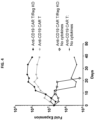
- the genetically edited T cells disclosed herein showed enhanced cell expansion, longevity and proliferation capacity in culture, enhanced potency (e.g ., enhanced cytotoxicity), and enhanced CAR-T efficacy in animal models (via, e.g., longer persistence). Further, the genetically edited T cells showed cytokine-dependent growth, indicating safety. In addition, disrupting both the Reg1 and TGFBRII genes exhibited synergistic effects in anti-tumor activity and CAR-T cell expansion and persistence as observed in animal models.
- the present disclosure provides, in some aspects, a population of genetically engineered T cells, comprising: (i) a disrupted Regnase-1 ( Reg1 ) gene; and/or (ii) a disrupted Transforming Growth Factor Beta Receptor II (TGFBRII) gene.
- the population of genetically engineered T cells comprises (i).
- population of genetically engineered T cells comprises (ii).
- the population of genetically engineered T cells comprises both (i) and (ii). Any of the genetically engineered T cells may be further engineered to express a chimeric antigen receptor (CAR).
- CAR chimeric antigen receptor
- the population of genetically engineered T cells disclosed herein has one or more of the following features: (a) improved cell growth activity; (b) enhanced persistence; (c) reduced T cell exhaustion; (d) resistant to inhibitory effects induced by TGF- ⁇ ; (e) enhanced cell killing capacity; and (f) resistant to inhibitory effects by fibroblasts and/or inhibitory factors secreted thereby.
- the disrupted Reg1 gene is genetically edited in exon 1, exone 2, exon 3, or exon 4. In some examples, the disrupted Reg1 gene is genetically edited in exon 2 and/or exon 4. Alternatively or in addition, the disrupted TGFBRII gene is genetically edited in exon 1, exon 2, exon 3, exon 4, or exon 5. In some examples, the disrupted TGFBRII gene is genetically edited in exon 4. In other examples, the disrupted TGFBRII gene is genetically edited in exon 5.
- the disrupted Reg1 gene, the disrupted TGFBRII gene, or both can be genetically edited by a CRISPR/Cas-mediated gene editing system.
- the V H comprises the amino acid sequence of SEQ ID NO: 143 and the V L comprises the amino acid sequence of SEQ ID NO: 144.
- the anti-CD70 scFv comprises the amino acid sequence of SEQ ID NO: 140 or 142.
- the anti-CD70 CAR comprises the amino acid sequence of SEQ ID NO: 138 (with an N-terminal signal peptide) or SEQ ID NO:354 (without N-terminal signal peptide).
- the method disclosed herein may comprise delivering to the T cells one or more ribonucleoprotein particles (RNP), which may comprise the RNA-guided nuclease, one or more of the gRNAs, and the nucleic acid encoding the CAR.
- RNP ribonucleoprotein particles
- the RNA-guided nuclease is a Cas9 nuclease, for example, a S. pyogenes Cas9 nuclease.
- the method comprising disrupting the TRAC gene by a CRISPR/Cas-mediated gene editing system comprising a gRNA comprising the nucleotide sequence of SEQ ID NO: 59 and the nucleic acid encoding the CAR is inserted at the site targeted by the gRNA.
- the method may comprise delivering to the T cells a nucleic acid encoding a CAR, which is specific to CD70, and genetically editing the CD70 gene to disrupt its expression.
- the genetically engineered T cells having a disrupted TGFBRII gene, a disrupted Reg1 gene, or a combination thereof, and optionally one or more additional genetic edits, for example, a disrupted TRAC gene, a disrupted ⁇ 2M gene, a disrupted CD70 gene, and/or an inserted nucleic acid coding for a chimeric antigen receptor (CAR), or a combination thereof.
- a disrupted TRAC gene for example, a disrupted TRAC gene, a disrupted ⁇ 2M gene, a disrupted CD70 gene, and/or an inserted nucleic acid coding for a chimeric antigen receptor (CAR), or a combination thereof.
- CAR chimeric antigen receptor
- Targeted editing may be used to disrupt endogenous gene expression.
- “Targeted integration” refers to a process involving insertion of one or more exogenous sequences, with or without deletion of an endogenous sequence at the insertion site. Targeted integration can result from targeted gene editing when a donor template containing an exogenous sequence is present.
- the genetically engineered T cells may comprise a disrupted TGFBRII gene, which encodes Transforming Growth Factor Receptor Type II (TGFBRII).
- TGFBRII receptors are a family of serine/threonine kinase receptors involved in the TGF ⁇ signaling pathway. These receptors bind growth factor and cytokine signaling proteins in the TGF ⁇ family, for example, TGF ⁇ s (TGF ⁇ 1, TGF ⁇ 2, and TGF ⁇ 3), bone morphogenetic proteins (BMPs), growth differentiation factors (GDFs), activin and inhibin, myostatin, anti-Müllerian hormone (AMH), and NODAL.
- TGF ⁇ s TGF ⁇ 1, TGF ⁇ 2, and TGF ⁇ 3
- BMPs bone morphogenetic proteins
- GDFs growth differentiation factors
- AH anti-Müllerian hormone
- NODAL NODAL
- an edited TRAC gene may comprise a nucleotide sequence selected from the following sequences in Table 24. It is known to those skilled in the art that different nucleotide sequences in an edited gene such as an edited TRAC gene (e.g., those in Table 24 ) may be generated by a single gRNA such as the one listed in Table 23 (TA-1).
- Suitable target site/gRNA can be used for each target gene disclosed herein, for example, those known in the art or disclosed herein. Additional examples can be found in, e.g., WO2019097305 , the relevant disclosures of which are incorporated by reference herein for the purpose and subject matter referenced herein.
- Such genetically engineered T cells may maintain the ability to be activated after 6 weeks ( e.g., after 7 weeks, after 8 weeks, after 9 weeks, or after 10 weeks) in culture. Further, such genetically engineered T cells have an increased expansion capacity, which can be at least 10-fold ( e.g., at least 15-fold) higher than the non-engineered counterparts, i.e., T cells having the same genetic background as the engineered T cells disclosed herein except that the counterpart T cells have a wild-type Reg1 gene.
- the genetically engineered T cells disclosed may grow faster and longer than the non-engineered T cells, for example, as observed in vitro cell culture.
- the genetically engineered T cells may grow at least 50% (e.g., at least 1-fold, at least 2-fold, at least 5-fold, or more) than the non-engineered T cells in a conventional in vitro T cell culture ( e.g., as described in Examples below).
- the genetically engineered T cells may maintain a high growth rate (e.g., having substantially the same growth rate or with only a slight reduction) in vitro for at least 20 days (e.g., at least 25 days, at least 30 days, at least 35 days, at least 40 days, at least 45 days, at least 50 days, or longer).
- a high growth rate e.g., having substantially the same growth rate or with only a slight reduction
- at least 20 days e.g., at least 25 days, at least 30 days, at least 35 days, at least 40 days, at least 45 days, at least 50 days, or longer.
- the genetically engineered T cells may exhibit a reduced level of cell exhaustion as relative to the non-engineered T cell counterpart. In some instances, a reduced level of cell exhaustion is reflected by a higher level of central memory T cells in the whole T cell population.
- the population of genetically engineered T cells disclosed may comprise a higher number of central memory T cells as compared to non-engineered T cell counterparts. For example, in some instances the population of genetically engineered T cells include a higher number of central memory T cells that are characterized by enhanced expression of CD27 and/or CD45RO as compared to non-engineered T cell counterparts. In some instances, the population of genetically engineered T cells disclosed exhibit reduced T cell exhaustion, which is characterized, for example, by reduced expression of PD-1 and/or TIM3 as compared to non-engineered T cell counterparts.
- such genetically engineered T cells may exhibit enhanced cytotoxicity activity, for example, against undesired cells (e.g., tumor cells) expressing an antigen targeted by the CAR expressed in the CAR-T cells, as compared with the non-engineered counterpart.
- Such genetically engineered T cells e.g., CAR-T cells
- the genetically engineered T cells with a disrupted TGFBRII gene may be resistant to inhibitory factors secreted by fibroblasts.
- such genetically engineered T cells may be expandable in culture for greater than 4 weeks, for example, greater than 5 weeks, greater than 6 weeks, greater than 8 weeks, and greater than 10 weeks.
- the genetically engineered T cells comprise a disrupted TGFBRII gene, and a disrupted CD70 gene, Reg1 gene, or both may be expandable after 6 weeks (e.g., after 7 weeks, after 8 weeks, after 9 weeks, or after 10 weeks) in culture.
- Such genetically engineered T cells may maintain the ability to be activated after 6 weeks ( e.g., after 7 weeks, after 8 weeks, after 9 weeks, or after 10 weeks) in culture.
- Such genetically engineered T cells may exhibit more improved growth and expansion capacity relative to the T cells having the same genetic background except for an undisrupted TGFBRII gene, and an undisrupted CD70 gene and/or Reg1 gene.
- any of the genetically engineered T cell having a disrupted TGFBRII gene and a disrupted Reg1 gene, and optionally one or more additional genetic edits may have expansion advantage (e.g., in vivo ) over counterpart T cells, i.e., having the disrupted TGFBRII gene or the disrupted Reg1 gene (but not both), as well as the other additional genetic edits.
- CAR-T cells having disruptions of both the TGFBRII gene and the Reg1 gene were found to be more potent in cancer treatment than the counterpart T cells as observed in xenograft mouse models. Accordingly, CAR-T cells having disruptions of both the TGFBRII gene and the Reg1 gene would be expected to show superior cancer treatment efficacy.
- the genetically engineered T cells disclosed herein can be prepared by genetic editing of parent T cells or precursor cells thereof via a conventional gene editing method or those described herein.
- T cells can be isolated from a mixture of immune cells (e.g., those described herein) to produce an isolated T cell population.
- immune cells e.g., those described herein
- cytotoxic and helper T lymphocytes can be sorted into naive, memory, and effector T cell subpopulations either before or after activation, expansion, and/or genetic modification.
- a specific subpopulation of T cells expressing one or more of the following cell surface markers: TCRab, CD3, CD4, CD8, CD27 CD28, CD38 CD45RA, CD45RO, CD62L, CD127, CD122, CD95, CD197, CCR7, KLRG1, MCH-I proteins and/or MCH-II proteins, can be further isolated by positive or negative selection techniques.
- a specific subpopulation of T cells, expressing one or more of the markers selected from the group consisting of TCRab, CD4 and/or CD8, is further isolated by positive or negative selection techniques.
- subpopulations of T cells may be isolated by positive or negative selection prior to genetic engineering and/or post genetic engineering.
- An isolated population of T cells may express one or more of the T cell markers, including, but not limited to a CD3+, CD4+, CD8+, or a combination thereof.
- the T cells are isolated from a donor, or subject, and first activated and stimulated to proliferate in vitro prior to undergoing gene editing.
- T cells from a suitable source can be subjected to one or more rounds of stimulation, activation and/or expansion.
- T cells can be activated and expanded generally using methods as described, for example, in U.S. Patents 6,352,694 ; 6,534,055 ; 6,905,680 ; 6,692,964 ; 5,858,358 ; 6,887,466 ; 6,905,681 ; 7,144,575 ; 7,067,318 ; 7,172,869 ; 7,232,566 ; 7,175,843 ; 5,883,223 ; 6,905,874 ; 6,797,514 ; and 6,867,041 .
- T cells can be activated and expanded for about 1 day to about 4 days, about 1 day to about 3 days, about 1 day to about 2 days, about 2 days to about 3 days, about 2 days to about 4 days, about 3 days to about 4 days, or about 1 day, about 2 days, about 3 days, or about 4 days prior to introduction of the genome editing compositions into the T cells.
- T cells are activated and expanded for about 4 hours, about 6 hours, about 12 hours, about 18 hours, about 24 hours, about 36 hours, about 48 hours, about 60 hours, or about 72 hours prior to introduction of the gene editing compositions into the T cells.
- T cells are activated at the same time that genome editing compositions are introduced into the T cells.
- the T cell population can be expanded and/or activated after the genetic editing as disclosed herein. T cell populations or isolated T cells generated by any of the gene editing methods described herein are also within the scope of the present disclosure.
- any of the genetically engineered T cells can be prepared using conventional gene editing methods or those described herein to edit one or more of the target genes disclosed herein (targeted editing).
- Targeted editing can be achieved either through a nuclease-independent approach, or through a nuclease-dependent approach.
- nuclease-independent targeted editing approach homologous recombination is guided by homologous sequences flanking an exogenous polynucleotide to be introduced into an endogenous sequence through the enzymatic machinery of the host cell.
- the exogenous polynucleotide may introduce deletions, insertions or replacement of nucleotides in the endogenous sequence.
- nuclease-dependent approach can achieve targeted editing with higher frequency through the specific introduction of double strand breaks (DSBs) by specific rare-cutting nucleases (e.g ., endonucleases).
- DSBs double strand breaks
- endonucleases e.g ., endonucleases
- DNA repair mechanisms for example, non-homologous end joining (NHEJ), which occurs in response to DSBs.
- NHEJ non-homologous end joining
- DNA repair by NHEJ often leads to random insertions or deletions (indels) of a small number of endogenous nucleotides.
- repair can also occur by a homology directed repair (HDR).
- HDR homology directed repair
- gene disruption may occur by deletion of a genomic sequence using two guide RNAs.
- Methods of using CRISPR-Cas gene editing technology to create a genomic deletion in a cell are known (Bauer DE et al. Vis. Exp. 2015; 95:e52118).
- Available endonucleases capable of introducing specific and targeted DSBs include, but not limited to, zinc-finger nucleases (ZFN), transcription activator-like effector nucleases (TALEN), and RNA-guided CRISPR-Cas9 nuclease (CRISPR/Cas9; Clustered Regular Interspaced Short Palindromic Repeats Associated 9). Additionally, DICE (dual integrase cassette exchange) system utilizing phiC31 and Bxb1 integrases may also be used for targeted integration. Some exemplary approaches are disclosed in detail below.
- the CRISPR-Cas9 system is a naturally-occurring defense mechanism in prokaryotes that has been repurposed as an RNA-guided DNA-targeting platform used for gene editing. It relies on the DNA nuclease Cas9, and two noncoding RNAs, crisprRNA (crRNA) and transactivating RNA (tracrRNA), to target the cleavage of DNA.
- CRISPR is an abbreviation for Clustered Regularly Interspaced Short Palindromic Repeats, a family of DNA sequences found in the genomes of bacteria and archaea that contain fragments of DNA (spacer DNA) with similarity to foreign DNA previously exposed to the cell, for example, by viruses that have infected or attacked the prokaryote.
- CRISPR CRISPR-associated proteins
- RNA molecules comprising the spacer sequence, which associates with and targets Cas (CRISPR-associated) proteins able to recognize and cut the foreign, exogenous DNA.
- Cas CRISPR-associated proteins
- Numerous types and classes of CRISPR/Cas systems have been described (see, e.g., Koonin et al., (2017) Curr Opin Microbiol 37:67-78 ).
- crRNA drives sequence recognition and specificity of the CRISPR-Cas9 complex through Watson-Crick base pairing typically with a 20 nucleotide (nt) sequence in the target DNA. Changing the sequence of the 5' 20nt in the crRNA allows targeting of the CRISPR-Cas9 complex to specific loci.
- the CRISPR-Cas9 complex only binds DNA sequences that contain a sequence match to the first 20 nt of the crRNA, if the target sequence is followed by a specific short DNA motif (with the sequence NGG) referred to as a protospacer adjacent motif (PAM).
- PAM protospacer adjacent motif
- tracrRNA hybridizes with the 3' end of crRNA to form an RNA-duplex structure that is bound by the Cas9 endonuclease to form the catalytically active CRISPR-Cas9 complex, which can then cleave the target DNA.
- NHEJ non-homologous end joining
- HDR homology-directed repair
- NHEJ is a robust repair mechanism that appears highly active in the majority of cell types, including non-dividing cells. NHEJ is error-prone and can often result in the removal or addition of between one and several hundred nucleotides at the site of the DSB, though such modifications are typically ⁇ 20 nt. The resulting insertions and deletions (indels) can disrupt coding or noncoding regions of genes.
- HDR uses a long stretch of homologous donor DNA, provided endogenously or exogenously, to repair the DSB with high fidelity. HDR is active only in dividing cells, and occurs at a relatively low frequency in most cell types. In many embodiments of the present disclosure, NHEJ is utilized as the repair operant.
- the Cas9 (CRISPR associated protein 9) endonuclease is used in a CRISPR method for making the genetically engineered T cells as disclosed herein.
- the Cas9 enzyme may be one from Streptococcus pyogenes, although other Cas9 homologs may also be used. It should be understood, that wild-type Cas9 may be used or modified versions of Cas9 may be used ( e.g., evolved versions of Cas9, or Cas9 orthologues or variants), as provided herein.
- Cas9 may be substituted with another RNA-guided endonuclease, such as Cpfl (of a class II CRISPR/Cas system).
- the CRISPR/Cas system comprises components derived from a Type-I, Type-II, or Type-III system.
- Updated classification schemes for CRISPR/Cas loci define Class 1 and Class 2 CRISPR/Cas systems, having Types I to V or VI ( Makarova et al., (2015) Nat Rev Microbiol, 13(11):722-36 ; Shmakov et al., (2015) Mol Cell, 60:385-397 ).
- Class 2 CRISPR/Cas systems have single protein effectors.
- Class 2 Cas nucleases include, for example, Cas9, Cpfl, C2c1, C2c2, and C2c3 proteins.
- the Cpfl nuclease Zetsche et al., (2015) Cell 163:1-13 ) is homologous to Cas9, and contains a RuvC-like nuclease domain.
- the Cas nuclease is from a Type-II CRISPR/Cas system (e.g., a Cas9 protein from a CRISPR/Cas9 system).
- the Cas nuclease is from a Class 2 CRISPR/Cas system (a single-protein Cas nuclease such as a Cas9 protein or a Cpfl protein).
- the Cas9 and Cpf1 family of proteins are enzymes with DNA endonuclease activity, and they can be directed to cleave a desired nucleic acid target by designing an appropriate guide RNA, as described further herein.
- a Cas nuclease may comprise more than one nuclease domain.
- a Cas9 nuclease may comprise at least one RuvC-like nuclease domain (e.g ., Cpfl) and at least one HNH-like nuclease domain (e.g ., Cas9).
- the Cas9 nuclease introduces a DSB in the target sequence.
- the Cas9 nuclease is modified to contain only one functional nuclease domain.
- a conserved amino acid within a Cas9 nuclease domain is substituted to reduce or alter a nuclease activity.
- the Cas nuclease nickase comprises an amino acid substitution in the RuvC-like nuclease domain.
- Exemplary amino acid substitutions in the RuvC-like nuclease domain include D10A (based on the S. pyogenes Cas9 nuclease).
- the nickase comprises an amino acid substitution in the HNH-like nuclease domain.
- gRNAs Guide RNAs
- the gRNA also comprises a second RNA called the tracrRNA sequence.
- the CRISPR repeat sequence and tracrRNA sequence hybridize to each other to form a duplex.
- the crRNA forms a duplex.
- the duplex binds a site-directed polypeptide, such that the guide RNA and site-direct polypeptide form a complex.
- the genome-targeting nucleic acid provides target specificity to the complex by virtue of its association with the site-directed polypeptide. The genome-targeting nucleic acid thus directs the activity of the site-directed polypeptide.
- each guide RNA is designed to include a spacer sequence complementary to its genomic target sequence. See Jinek et al., Science, 337, 816-821 (2012 ) and Deltcheva et al., Nature, 471, 602-607 (2011 ).
- the genome-targeting nucleic acid e.g., gRNA
- the genome-targeting nucleic acid is a double-molecule guide RNA.
- the genome-targeting nucleic acid e.g., gRNA
- the genome-targeting nucleic acid is a single-molecule guide RNA.
- a single-molecule guide RNA (referred to as a "sgRNA") in a Type II system comprises, in the 5' to 3' direction, an optional spacer extension sequence, a spacer sequence, a minimum CRISPR repeat sequence, a single-molecule guide linker, a minimum tracrRNA sequence, a 3' tracrRNA sequence and an optional tracrRNA extension sequence.
- the optional tracrRNA extension may comprise elements that contribute additional functionality (e.g ., stability) to the guide RNA.
- the single-molecule guide linker links the minimum CRISPR repeat and the minimum tracrRNA sequence to form a hairpin structure.
- the optional tracrRNA extension comprises one or more hairpins.
- a single-molecule guide RNA in a Type V system comprises, in the 5' to 3' direction, a minimum CRISPR repeat sequence and a spacer sequence.
- the indel frequency (editing frequency) of a particular CRISPR/Cas nuclease system, comprising one or more specific gRNAs may be determined using a TIDE analysis, which can be used to identify highly efficient gRNA molecules for editing a target gene.
- a highly efficient gRNA yields a gene editing frequency of higher than 80%.
- a gRNA is considered to be highly efficient if it yields a gene editing frequency of at least 80%, at least 85%, at least 90%, at least 95%, or 100%.
- RNPs are useful for gene editing, at least because they minimize the risk of promiscuous interactions in a nucleic acid-rich cellular environment and protect the RNA from degradation.
- Methods for forming RNPs are known in the art.
- an RNP containing an RNA-guided nuclease e.g., a Cas nuclease, such as a Cas9 nuclease
- one or more gRNAs targeting one or more genes of interest can be delivered a cell (e.g., a T cell).
- an RNP can be delivered to a T cell by electroporation.
- the anti-PTK7 antibody discloses herein may comprise the light chain CDR1, light chain CDR2, and light chain CDR3 set forth as SEQ ID NOs:343-345, respectively as determined by the Kabat method.
- the anti-BCMA scFv may comprise a V H comprising the amino acid sequence of SEQ ID NO: 346 and a V L comprises the amino acid sequence of SEQ ID NO: 347. See Sequence Table 27 below.
- the anti-CD19 CAR disclosed herein may comprise the amino acid sequence of SEQ ID NO: 118, which may be encoded by the nucleotide sequence of SEQ ID NO: 117.
- the anti-CD19 CAR may be a mature form without the N-terminal signal peptide, e.g., comprising the amino acid sequence of SEQ ID NO:353.
- the anti-BCMA CAR disclosed herein may comprise the amino acid sequence of SEQ ID NO: 146, which may be encoded by the nucleotide sequence of SEQ ID NO: 145.
- the anti-CDBCMA CAR may be a mature form without the N-terminal signal peptide, e.g., comprising the amino acid sequence of SEQ ID NO:355.
- the anti-CD33 CAR disclosed herein may comprise the amino acid sequence of SEQ ID NO: 338 or 339.
- the anti-CD33 CAR may be a mature form without the N-terminal signal peptide, e.g., comprising the amino acid sequence of SEQ ID NO:356 or 357.
- Non-limiting examples of methods for introducing nucleic acid into a cell include: lipofection, transfection (e.g ., calcium phosphate transfection, transfection using highly branched organic compounds, transfection using cationic polymers, dendrimer-based transfection, optical transfection, particle-based transfection (e.g., nanoparticle transfection), or transfection using liposomes (e.g ., cationic liposomes)), microinjection, electroporation, cell squeezing, sonoporation, protoplast fusion, impalefection, hydrodynamic delivery, gene gun, magnetofection, viral transfection, and nucleofection.
- lipofection e.g ., calcium phosphate transfection, transfection using highly branched organic compounds, transfection using cationic polymers, dendrimer-based transfection, optical transfection, particle-based transfection (e.g., nanoparticle transfection), or transfection using liposomes (e.g ., cationic liposome
- a nucleic acid encoding a CAR construct can be delivered to a cell using an adeno-associated virus (AAV).
- AAVs are small viruses which integrate site-specifically into the host genome and can therefore deliver a transgene, such as CAR.
- ITRs Inverted terminal repeats
- rep and cap proteins are present flanking the AAV genome and/or the transgene of interest and serve as origins of replication.
- rep and cap proteins which, when transcribed, form capsids which encapsulate the AAV genome for delivery into target cells.
- Surface receptors on these capsids which confer AAV serotype, which determines which target organs the capsids will primarily bind and thus what cells the AAV will most efficiently infect.
- the AAV for use in delivering the CAR-coding nucleic acid is AAV serotype 6 (AAV6).
- Adeno-associated viruses are among the most frequently used viruses for gene therapy for several reasons. First, AAVs do not provoke an immune response upon administration to mammals, including humans. Second, AAVs are effectively delivered to target cells, particularly when consideration is given to selecting the appropriate AAV serotype. Finally, AAVs have the ability to infect both dividing and non-dividing cells because the genome can persist in the host cell without integration. This trait makes them an ideal candidate for gene therapy.
- a nucleic acid encoding a CAR (e.g., via a donor template, which can be carried by a viral vector such as an adeno-associated viral (AAV) vector) can be designed such that it can insert into a location within a ⁇ 2M gene to disrupt the ⁇ 2M gene in the genetically engineered T cells and express the CAR polypeptide. Disruption of ⁇ 2M leads to loss of function of the endogenous MHC Class I complexes. For example, a disruption in the ⁇ 2M gene can be created with an endonuclease such as those described herein and one or more gRNAs targeting one or more ⁇ 2M genomic regions. Any of the gRNAs specific to a ⁇ 2M gene and the target regions disclosed herein can be used for this purpose.
- a nucleic acid encoding a CAR (e.g., via a donor template, which can be carried by a viral vector such as an adeno-associated viral (AAV) vector) can be designed such that it can insert into a location within a CD70 gene to disrupt the CD70 gene in the genetically engineered T cells and express the CAR polypeptide. Disruption of CD70 leads to loss of function of the endogenous CD70 protein.
- a disruption in the CD70 gene can be created with an endonuclease such as those described herein and one or more gRNAs targeting one or more CD70 genomic regions. Any of the gRNAs specific to a CD70 gene and the target regions disclosed herein can be used for this purpose.
- a genomic deletion in the CD70 gene and replacement by a CAR coding segment can be created by homology directed repair or HDR (e.g., using a donor template, which may be part of a viral vector such as an adeno-associated viral (AAV) vector).
- a disruption in the CD70 gene can be created with an endonuclease as those disclosed herein and one or more gRNAs targeting one or more CD70 genomic regions, and inserting a CAR coding segment into the CD70 gene .
- a nucleic acid encoding a CAR (e.g., via a donor template, which can be carried by a viral vector such as an adeno-associated viral (AAV) vector) can be designed such that it can insert into a location within a Reg1 gene to disrupt the Reg1 gene in the genetically engineered T cells and express the CAR polypeptide. Disruption of Reg1 leads to loss of function of the endogenous Reg1 protein.
- a disruption in the Reg1 gene can be created with an endonuclease such as those described herein and one or more gRNAs targeting one or more Reg1 genomic regions. Any of the gRNAs specific to a Reg1 gene and the target regions disclosed herein can be used for this purpose.
- a nucleic acid encoding a CAR (e.g., via a donor template, which can be carried by a viral vector such as an adeno-associated viral (AAV) vector) can be designed such that it can insert into a location within a TGFBRII gene to disrupt the TGFBRII gene in the genetically engineered T cells and express the CAR polypeptide.
- Disruption of Reg1 leads to loss of function of the endogenous TGFBRII receptor.
- a disruption in the TGFBRII gene can be created with an endonuclease such as those described herein and one or more gRNAs targeting one or more TGFBRII genomic regions. Any of the gRNAs specific to a TGFBRII gene and the target regions disclosed herein can be used for this purpose.
- the donor sequence is designed with flanking residues which are complementary to the sequence surrounding the DSB site in the target gene (hereinafter “homology arms”), such as the TRAC gene.
- homology arms serve as the template for DSB repair and allow HDR to be an essentially error-free mechanism.
- the rate of homology directed repair (HDR) is a function of the distance between the mutation and the cut site so choosing overlapping or nearby target sites is important. Templates can include extra sequences flanked by the homologous regions or can contain a sequence that differs from the genomic sequence, thus allowing sequence editing.
- a donor template may have no regions of homology to the targeted location in the DNA and may be integrated by NHEJ-dependent end joining following cleavage at the target site.
- a donor template can be DNA or RNA, single-stranded and/or double-stranded, and can be introduced into a cell in linear or circular form. If introduced in linear form, the ends of the donor sequence can be protected ( e.g., from exonucleolytic degradation) by methods known to those of skill in the art. For example, one or more dideoxynucleotide residues are added to the 3' terminus of a linear molecule and/or self-complementary oligonucleotides are ligated to one or both ends. See, for example, Chang et al., (1987) Proc. Natl. Acad. Sci.
- a donor template can be introduced into a cell as part of a vector molecule having additional sequences such as, for example, replication origins, promoters and genes encoding antibiotic resistance.
- a donor template can be introduced into a cell as naked nucleic acid, as nucleic acid complexed with an agent such as a liposome or poloxamer, or can be delivered by viruses (e.g ., adenovirus, AAV, herpesvirus, retrovirus, lentivirus and integrase defective lentivirus (IDLV)).
- viruses e.g ., adenovirus, AAV, herpesvirus, retrovirus, lentivirus and integrase defective lentivirus (IDLV)
- a donor template in some embodiments, can be inserted at a site nearby an endogenous prompter (e.g., downstream or upstream) so that its expression can be driven by the endogenous promoter.
- the donor template may comprise an exogenous promoter and/or enhancer, for example, a constitutive promoter, an inducible promoter, or tissue-specific promoter to control the expression of the CAR gene.
- the exogenous promoter is an EF1 ⁇ promoter, see , e.g. , SEQ ID NO: 167 provided in Table 28 below. Other promoters may be used.
- exogenous sequences may also include transcriptional or translational regulatory sequences, for example, promoters, enhancers, insulators, internal ribosome entry sites, sequences encoding 2A peptides and/or polyadenylation signals.
- a donor template for delivering an anti-CD19 CAR may be an AAV vector inserted with a nucleic acid fragment comprising the coding sequence of the anti-CD19 CAR, and optionally regulatory sequences for expression of the anti-CD19 CAR (e.g., a promoter such as the EF1a promoter provided in the sequence Table), which can be flanked by homologous arms for inserting the coding sequence and the regulatory sequences into a genomic locus of interest.
- the nucleic acid fragment is inserted in the endogenous TRAC gene locus, thereby disrupting expression of the TRAC gene.
- the nucleic acid may replace a fragment in the TRAC gene, for example, a fragment comprising the nucleotide sequence of SEQ ID NO: 69.
- the donor template for delivering the anti-CD19 CAR may comprise a nucleotide sequence of SEQ ID NO: 117, which can be inserted into a disrupted TRAC gene, for example, replacing the fragment of SEQ ID NO: 69.
- the nucleic acid may replace a fragment in the TRAC gene, for example, a fragment comprising the nucleotide sequence of SEQ ID NO: 69.
- the donor template for delivering the anti- BCMA CAR may comprise a nucleotide sequence of SEQ ID NO: 145, which can be inserted into a disrupted TRAC gene, for example, replacing the fragment of SEQ ID NO: 69.
- a donor template for delivering an anti-CD70 CAR may be an AAV vector inserted with a nucleic acid fragment comprising the coding sequence of the anti-CD70 CAR, and optionally regulatory sequences for expression of the anti-CD70 CAR (e.g., a promoter such as the EF1a promoter provided in the sequence Table), which can be flanked by homologous arms for inserting the coding sequence and the regulatory sequences into a genomic locus of interest.
- the nucleic acid fragment is inserted in the endogenous TRAC gene locus, thereby disrupting expression of the TRAC gene.
- the nucleic acid may replace a fragment in the TRAC gene, for example, a fragment comprising the nucleotide sequence of SEQ ID NO: 69.
- the donor template for delivering the anti-CD70 CAR may comprise a nucleotide sequence of SEQ ID NO: 139, which can be inserted into a disrupted TRAC gene, for example, replacing the fragment of SEQ ID NO: 69.
- the genetically engineered T cells having a disrupted Reg1 gene, additional disrupted genes, e.g., ⁇ 2M, TRAC, CD70, and further expressing a chimeric antigen receptor (CAR) can be produced by sequential targeting of the genes of interest.
- the Reg1 gene may be disrupted first, followed by disruption of TRAC and ⁇ 2M genes and CAR insertion.
- TRAC and ⁇ 2M genes may be disrupted first, followed by CAR insertion and disruption of the Reg1 gene.
- the genetically engineered T cells disclosed herein may be produced by multiple, sequential electroporation events with multiple RNPs targeting the genes of interest, e.g., Reg1, ⁇ 2M, TRAC, CD70, etc.
- the genetically engineered CAR T cells disclosed herein may be produced by a single electroporation event with an RNP complex comprising an RNA-guided nuclease and multiple gRNAs targeting the genes of interest, e.g., Reg1, ⁇ 2M, TRAC, CD70, etc.
- gene disruption encompasses gene modification through gene editing (e.g ., using CRISPR/Cas gene editing to insert or delete one or more nucleotides).
- a disrupted gene may contain one or more mutations (e.g ., insertion, deletion, or nucleotide substitution, etc. ) relative to the wild-type counterpart so as to substantially reduce or completely eliminate the activity of the encoded gene product.
- the one or more mutations may be located in a non-coding region, for example, a promoter region, a regulatory region that regulates transcription or translation; or an intron region.
- the one or more mutations may be located in a coding region (e.g., in an exon).
- the disrupted gene does not express or expresses a substantially reduced level of the encoded protein. In other instances, the disrupted gene expresses the encoded protein in a mutated form, which is either not functional or has substantially reduced activity.
- a disrupted gene is a gene that does not encode functional protein.
- a cell that comprises a disrupted gene does not express ( e.g., at the cell surface) a detectable level (e.g. by antibody, e.g ., by flow cytometry) of the protein encoded by the gene.
- a cell that does not express a detectable level of the protein may be referred to as a knockout cell.
- a cell having a ⁇ 2M gene edit may be considered a ⁇ 2M knockout cell if ⁇ 2M protein cannot be detected at the cell surface using an antibody that specifically binds ⁇ 2M protein.
- such a population of genetically engineered T cells may comprise about 70-99% Reg1 - cells, for example about 90-97% Reg1 - cells, about 70-99% TGFBRII - cells, e.g., for example about 80-89% TGFBRII - cells, about 70-99% TCR - cells, for example about 90-99% TCR - cells, and/or optionally about 60-99% ⁇ 2M - cells, for example about 60-82% ⁇ 2M - cells, and/or optionally about 70-99% CD70 - cells, for example about 90-99% CD70 - cells,.
- the cell population may also contain at least about 30%-50% ( e.g., at least 60%) cells expressing the CAR.
- Also provided herein is population of genetically engineered immune cells e.g., T cells such as human T cells
- a disrupted Reg1 gene e.g., a disrupted TGFBRII gene, or a combination thereof
- an anti-CD19 CAR e.g., those disclosed herein.
- the population of genetically engineered immune cells e.g., T cells such as human T cells
- the population of genetically engineered immune cells comprising both a disrupted Reg1 gene and a disrupted TGFBRII gene, and expressing an anti-CD19 CAR, e.g., those disclosed herein.
- the anti-CD19 CAR-T cells disclosed herein which express any of the anti-CD19 CAR disclosed herein (e.g., the anti-CD19 CAR comprising the amino acid sequence of SEQ ID NO: 106), may also comprise a disrupted TRAC gene and/or a disrupted ⁇ 2M gene as also disclosed herein.
- the population of genetically engineered T cells are anti-CD19 CAR cells that further comprise a disrupted Regnanse-1 gene.
- anti-CD19 CAR cells are CD19-directed T cells having disrupted TRAC gene and ⁇ 2M gene.
- the nucleic acid encoding the anti-CD19 CAR can be inserted in the disrupted TRAC gene at the site of SEQ ID NO: 69, which is replaced by the nucleic acid encoding the anti-CD19 CAR, thereby disrupting expression of the TRAC gene.
- the disrupted TRAC gene in the anti-CD19 CAR cells may comprise the nucleotide sequence of SEQ ID NO: 119.
- CRISPR-Cas9-mediated gene editing involves at least a sgRNA targeting Reg1 (e.g., REG1-Z03 (SEQ ID NO: 22), REG1-Z05 (SEQ ID NO: 30), REG1-Z06 (SEQ ID NO: 34) or REG1-Z10 (SEQ ID NO: 50)), and optionally TA-1 sgRNA (SEQ ID NO: 59), which targets the TRAC locus, and ⁇ 2M-1 sgRNA (SEQ ID NO: 63), which targets the ⁇ 2M locus.
- Reg1 e.g., REG1-Z03 (SEQ ID NO: 22), REG1-Z05 (SEQ ID NO: 30), REG1-Z06 (SEQ ID NO: 34) or REG1-Z10 (SEQ ID NO: 50
- TA-1 sgRNA SEQ ID NO: 59
- ⁇ 2M-1 sgRNA SEQ ID NO: 63
- Anti-CD19 CAR T cells that comprise a disrupted TGFBRII gene can be produced via ex vivo genetic modification using the CRISPR/Cas9 (Clustered Regularly Interspaced Short Palindromic Repeats/CRISPR associated protein 9) technology to disrupt targeted genes ( TGFBRII , optionally TRAC and/or ⁇ 2M genes), and adeno-associated virus (AAV) transduction to deliver the anti-CD19 CAR construct.
- CRISPR-Cas9-mediated gene editing involves at least a sgRNA targeting TGFBRII (e.g.
- the anti-CD19 CAR T cells are composed of an anti-CD19 single-chain antibody fragment (scFv, which may comprise the amino acid sequence of SEQ ID NO: 120), followed by a CD8 hinge and transmembrane domain (e.g ., comprising the amino acid sequence of SEQ ID NO: 97) that is fused to an intracellular co-signaling domain of CD28 ( e.g. , SEQ ID NO: 101) and a CD3 ⁇ signaling domain (e.g ., SEQ ID NO: 103).
- the anti-CD19 CAR T cells comprises the amino acid sequence of SEQ ID NO: 118.
- At least 50% of a population of anti-CD19 CAR T cells may not express a detectable level of ⁇ 2M surface protein.
- at least 55%, at least 60%, at least 70%, at least 75%, at least 80%, at least 85%, at least 90%, or at least 95% of the anti-CD19 CAR T cells may not express a detectable level of ⁇ 2M surface protein.
- the genetically engineered T cell population may be the anti-CD19 CAR T cells disclosed herein that further comprise a disrupted TGFBRII gene.
- the disrupted TGFBRII gene may comprise a nucleotide sequence selected from those listed in Tables 40-48 below.
- the anti-CD19 CAR T cells may comprise at least 80% TGFBRII - cells, for example, at least 85%, at least 90%, at least 95%, at least 98% or above TGFBRII - cells.
- the anti-BCMA CAR T cells disclosed herein which express any of the anti-BCMA CAR disclosed herein (e.g. , the anti-BCMA CAR comprising the amino acid sequence of SEQ ID NO: 146), may also comprise a disrupted TRAC gene and/or a disrupted ⁇ 2M gene as also disclosed herein.
- Anti-BCMA CAR T cells that comprise a disrupted Reg1 gene can be produced via ex vivo genetic modification using the CRISPR/Cas9 (Clustered Regularly Interspaced Short Palindromic Repeats/CRISPR associated protein 9) technology to disrupt targeted genes (Reg1, and optionally TRAC and ⁇ 2M genes), and adeno-associated virus (AAV) transduction to deliver the anti-BCMA CAR construct.
- CRISPR-Cas9-mediated gene editing involves at least three guide RNAs (sgRNAs), as described above for anti-CD19 CAR T cells.
- At least 30% of a population of anti-BCMA CAR T cells express a detectable level of the anti-BCMA CAR.
- at least 40%, at least 50%, at least 60%, at least 70%, at least 75%, at least 80%, at least 85%, at least 90%, or at least 95% of the anti-BCMA CAR T cells express a detectable level of the anti-BCMA CAR.
- the population of anti-BCMA CAR T cells may comprise more than one gene edit (e.g. , in more than one gene), which may be an edit described herein.
- the population of anti-BCMA CAR T cells may comprise a disrupted TRAC gene via the CRISPR/Cas technology using the TA-1 TRAC gRNA.
- the anti-BCMA CAR T cells may comprise a deletion in the TRAC gene relative to unmodified T cells.
- the anti-CD19 CAR T cells may comprise a deletion of the fragment AGAGCAACAGTGCTGTGGCC (SEQ ID NO: 69) in the TRAC gene.
- the genetically engineered T cell population may be the anti-BCMA CAR T cells disclosed herein that further comprise a disrupted TGFBRII gene and a disrupted Reg1 gene.
- the disrupted Reg 1 gene may comprise any of the sequences provided in Tables 29-38 below.
- the disrupted TGFBRII gene may comprise a nucleotide sequence selected from those listed in Tables 40-48 below.
- the anti-BCMA CAR T cells may comprise at least 80% TGFBRII - cells, for example, at least 85%, at least 90%, at least 95%, at least 98% or above TGFBRII - cells.
- the anti-BCMA CAR T cells may comprise at least 80% Reg1 - cells, for example, at least 85%, at least 90%, at least 95%, at least 98% or above Reg - cells.
- the anti-BCMA CAR T cells may comprise at least 60% Reg1 - /TGFBRII - cells, for example, at least 65%, at least 70%, at least 75%, at least 80%, at least 85%, at least 90%, at least 95%, at least 98% or above Reg1 - /TGFBRII - cells.
- At least 50% of a population of anti-CD70 CAR T cells may not express a detectable level of two surface proteins, e.g., does not express a detectable level of ⁇ 2M and TRAC proteins, ⁇ 2M and CD70 proteins, or TRAC and CD70 proteins.
- 50%-100%, 50%-90%, 50%-80%, 50%-70%, 50%-60%, 60%-100%, 60%-90%, 60%-80%, 60%-70%, 70%-100%, 70%-90%, 70%-80%, 80%-100%, 80%-90%, or 90%-100% of the engineered T cells of a population does not express a detectable level of two surface proteins.
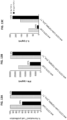
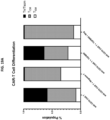
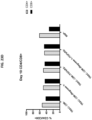
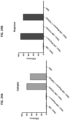
- CD27 and CD45 RO T central memory T cell markers were assessed on TRAC-/ ⁇ 2M-/CD70-/anti-CD70 CAR+ and TRAC-/ ⁇ 2M-/CD70-/Reg1-/anti-CD70 CAR+ cells.
- Cells were stained using commercial antibodies for CD27 (Biolegend, clone M-T271) and CD45 RO (Biolegend, clone UCHL1) and analyzed by flow cytometry.
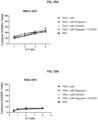
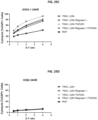
- TRAC-/ ⁇ 2M-/anti-CD19 CAR+ and TRAC-/ ⁇ 2M-/Reg1-/anti-CD19 CAR+ cells were assessed. 5 ⁇ 10 6 cells were plated approximately 2 weeks post cell production (Day 0) in 10 mL of full media containing IL2, IL7 and human serum, or in serum-containing media lacking cytokines (IL-2 and IL-7). Fresh full media or media lacking cytokines were added to the respective cultures once per week. The volume of media added allowed for the cultures to maintain a density of approximately 1-2 million cells/mL.
- TRAC-/ ⁇ 2M-/anti-CD19 CAR+ or TRAC-/ ⁇ 2M-/Reg1-/anti-CD19 CAR+ were no longer detectable at 40 days in the cultures that lacked cytokines, indicating that any potential off-target effects due to genome editing did not induce growth factor independent growth/proliferation to the cells ( FIG. 4 ).
- the cells only proliferated in the presence of cytokines (full media that contains cytokines) and did not proliferate in the presence of serum alone. Thus, genome editing did not induce any adverse events that allow the cells to grow in the absence of cytokine, growth factor or antigen stimulation.
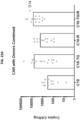
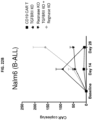
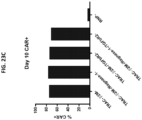
- mice were individually housed in ventilated microisolator cages, maintained under pathogen-free conditions, 5-7 days prior to the start of the study. At the start of the study, the mice were divided into 5 treatment groups as shown in Table 5.
- This example describes efficient editing of the TGFBRII gene in primary human T cells ex vivo using CRISPR/Cas9 gene editing.
- Genomic segments of the TGFBRII gene containing the first five (5) protein coding exons were used as input in gRNA design software.
- the genomic segments also included flanking splice site acceptor/donor sequences. Desired gRNAs were those that would lead to insertions or deletions in the coding sequence, disrupting the amino acid sequence of TFBRII, leading to out of frame/loss of function allele(s) (referred to as "TGFBRII knockout alleles" or "TGFBRII disrupted alleles").
- TGFBRII-targeting gRNAs On-target and off-target editing efficiencies of various TGFBRII-targeting gRNAs noted above were examined following the method disclosed in the above section. Briefly, activated T cells were transfected (electroporated) with a ribonucleoprotein particle (RNP) containing Cas9 nuclease and a synthetic modified sgRNA targeting the TGFBRII gene (sequences in Table 39 below) or controls (no Cas9, no gRNA).
- RNP ribonucleoprotein particle
- gRNAs showed no off-target effect with an on-target editing rate greater than 85%, which includes TGFBRII_Ex1_T1, TGFBRII-Ex1-T2, TGFBRII_Ex1_T3, TGFBRII_Ex2_T1 and TGFBRII_Ex5_T1 as shown in Table 6 below. Table 6.
- Tables 29-38 list potential indel sequences that may be generated by the gRNAs disclosed herein (deletions as dashes and insertions in bold).
- Cas9:sgRNA RNPs (1 ⁇ M Cas9, 5 ⁇ M gRNA) were delivered to activated human T cells by electroporation, followed by incubation with the recombinant adeno-associated adenoviral vectors (AAVs), serotype 6 (AAV6) (MOI 50,000).
- the nucleofection mix contained the Nucleofector TM Solution, 5 ⁇ 10 6 cells, 1 ⁇ M Cas9, and 5 ⁇ M gRNA (as described in Hendel et al., Nat Biotechnol. 2015; 33(9):985-989 , PMID: 26121415).
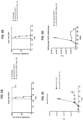
- anti-CD70 CAR T cells with TGFBRII disruption were incubated with or without 50 ng/ml of recombinant human TGF- ⁇ , and the T cell expansion was monitored at day 2 and day 8 post-incubation with TGF- ⁇ and compared to mock cells.
- Mock cells FIG. 8B
- FIGs. 8C-8K T cells with TGFBRII knocked-out were protected against the inhibitory effect of TGF- ⁇ on T cell expansion. The extent of protection varied with the sgRNA used to disrupt the TGFBRII gene.
- T cells that were transfected with gRNA targeting exon 1, 4 and 5 (TGFBRII_EX1_T2, TGFBRII_EX4_T1, TGFBRII_EX4_T2, TGFBRII_EX5_T1) showed the most resistance against a TGF- ⁇ inhibitory effect. Sequences of these gRNAs are provided in Table 39 below.
- Example 10 Cell Killing Function of Anti-CD70 CAR T Cells with TGFBRII Disruption.
- T cells were checked for CAR expression by flow cytometry. Both anti-CD70 CAR T cells and anti-CD70 CAR T cells lacking TGFBRII expressed nearly equivalent amount of CAR on their surface (71.5% CAR + cells versus 73.7%
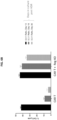
- CAR T cells were removed from the culture by aspiration and 100 ⁇ L Cell titer-Glo (Promega) was added to each well of the plate to assess the number of remaining viable cells. The amount of light emitted per well was then quantified using a plate reader. Cells with TGFBRII knock out exhibited a more potent cell killing of RCC-derived cells following 24-hour co-incubation. The anti-CD70 CAR T cells demonstrated higher potency when TGFBRII was knocked out, which is clearly visible at two T cell: A498 ratios (0.05:1 and 0.1:1) ( FIG. 9 ).
- This example describes the production of allogeneic human T cells that lack expression of the TRAC gene, ⁇ 2M gene and CD70 gene, and express a chimeric antigen receptor (CAR) targeting CD70 and how they are susceptible to the inhibitory effect of fibroblasts, which are a major component of solid tumor microenvironment (TME).
- the edited CAR T cells further comprised knock out of the TGFBRII gene.
- activated human T cells we electroporated with a recombinant adeno-associated adenoviral vectors, serotype 6 (AAV6) (MOI 50, 000), and Cas9:sgRNA RNPs (1 ⁇ M Cas9, 5 ⁇ M gRNA).
- Recombinant AAV comprised the nucleotide sequence of SEQ ID NO: 169 (encoding anti-CD70 CAR comprising the amino acid sequence of SEQ ID NO: 138).
- the following sgRNAs were used: TRAC (SEQ ID NO: 58), ⁇ 2M (SEQ ID NO: 62), CD70 (SEQ ID NO: 54) and TGFBRII (SEQ ID NO: 301).
- a cell killing assay was used to assess the inhibitory effect of fibroblast on anti-CD70 CAR T cells to kill CD70+ adherent tumor cell lines: H1975 (Non-small cell lung cancer), Hs-766T (Pancreatic carcinoma), or SK-OV3 (Ovarian cancer).
- the cell kill assay was performed as described in example 3. Briefly, Adherent cells were seeded in 96-well plates at 50,000 cells per well and left overnight at 37 °C and the fibroblast cells (LL 86 (LeSa) ATCC ® CCL-190 TM ) were added to the top chamber of a transwell plate without direct contact with target cells. The next day edited anti-CD70 CAR T cells were added to the wells containing target cells.
- CAR T cells were removed from the culture by aspiration and 100 ⁇ L Cell titer-Glo (Promega) was added to each well of the plate to assess the number of remaining viable cells. The amount of light emitted per well was then quantified using a plate reader. As shown in FIG. 14 , the presence of the fibroblast cells on the top chamber led to a decrease of the cell kill capacity of anti-CD70 CAR T cells against the target cells which might suggest that these fibroblast secreted a factor that decrease anti-CD70 CAR T killing effect.
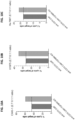
- TGFBRII KO improved the cell killing ability of anti-CD70 CAR T cells against pancreatic tumor cells, Hs-766T ( FIG. 15A ), kidney tumor cells, A498 ( FIG. 15B ), and lung tumor cells, H1975 ( FIG. 15C ) in the presence of fibroblasts.
- Example 12 Generation of CAR T cells with Disrupted TGFBRII and Regnase-1 Genes.
- Allogeneic human T cells that lack expression of the TRAC gene, ⁇ 2M gene, CD70 gene, TGFBRII gene and Regnase-1 gene, and express a chimeric antigen receptor (CAR) targeting CD70 were produced.
- Activated human T cells were electroporated with Cas9:sgRNA RNPs (1 ⁇ M Cas9, 5 ⁇ M gRNA), followed by incubation with a recombinant adeno-associated adenoviral vectors, serotype 6 (AAV6) (MOI 50, 000).
- Recombinant AAV comprised the nucleotide sequence of SEQ ID NO: 169 (encoding anti-CD70 CAR comprising the amino acid sequence of SEQ ID NO: 138).
- the following sgRNAs were used: TRAC (SEQ ID NO: 58), ⁇ 2M (SEQ ID NO: 62), CD70 (SEQ ID NO:54), TGFBRII (SEQ ID NO: 313) and REG-1 (SEQ ID NO: 51).
- the sgRNAs which form RNPs with the Cas9 enzyme, can be introduced into the T cells in a single electroporation event to produce the resulting modified cell populations shown in Table 7 below. Alternatively, they can be introduced into the T cells in two sequential electroporation events to produce the resulting cell populations.
- T cells were checked for CAR expression by flow cytometry. Both anti-CD70 CAR T cells and anti-CD70 CAR T cells that lack Regnase expressed nearly equivalent amount of CAR on their surface at day 7 post HDR. The results are provided in Table 7A below. Table 7A.
- Example 13 Disruption of Regnase-1 and TGFBRII increases CAR T Cell Killing Upon Serial Rechallenge in vitro.
- the anti-CD70 CAR + T cells used in this experiment contained the following edits:
- CAR T cells were first co-cultured with ACHN cells (4,000 CAR T cells, 16,000 tumor cells) on D0 and re-challenged with tumor cells as follows: 16,000 tumor cells on D2 and D4; 40,000 cells on D7; 50,000 cells on D9; 50,000 cells on D11).
- Example 14 Treatment Efficacy of Anti-CD70 CART Cells with Multiple Gene Disruptions in the Subcutaneous Renal Cell Carcinoma Tumor Xenograft Model
- T cells expressing a CD70 CAR with TGFBRII and/or Regnase gene edits to eliminate renal cell carcinoma cells that express medium levels of CD70 was evaluated in vivo using a subcutaneous renal cell carcinoma (CAKI-1) tumor xenograft mouse model.
- Anti-CD70 CAR+ T cells were produced as described above. See, e.g., Example 13.
- mice were individually housed in ventilated microisolator cages, maintained under pathogen-free conditions, 5-7 days prior to the start of the study. Mice received a subcutaneous inoculation of 5 ⁇ 10 6 Caki-1 renal cell carcinoma cells/mouse in the right hind flank. When mean tumor size reached target of ⁇ 70 mm 3 , the mice were further divided into 5 treatment groups as shown in Table 9.
- Treatment groups Group CAR-T Caki-1 cells CAR-T cell treatment ( i.v. ) N 1 None 5 ⁇ 10 6 cells/mouse None 4 2 Anti-CD70 CAR T cells: anti-CD70 CAR+/TRAC-/B2M-/CD70- 5 ⁇ 10 6 cells/mouse 1 ⁇ 10 7 cells/mouse 4 3 Anti-CD70 CAR T + Reg KO cells: anti-CD70 CAR+/TRAC-/B2M-/CD70-/Reg- 5 ⁇ 10 6 cells/mouse 1 ⁇ 10 7 cells/mouse 4 4 Anti-CD70 CAR T + TGFBRII KO cells: anti-CD70 CAR+/TRAC-/B2M-/CD70-/TGFBRII- 5 ⁇ 10 6 cells/mouse 1 ⁇ 10 7 cells/mouse 4 5 Anti-CD70 CAR T + Reg
- tumor volume was measured 2 times weekly ( ⁇ every 3-4 days) from day of treatment initiation.
- anti-CD70 CAR T cells with both TGFBRII and Regnase genes KO began to show a significant effect on reducing tumor volume compared to other treatment groups.
- the anti-CD70 CAR T + Reg KO + TGFBRII KO cells had completely eliminated tumor growth in the subcutaneous CAKI-1 model ( FIG. 17A ).
- NSCLC Non-Small Cell Lung Carcinoma
- T cells expressing a CD70 CAR with TGFBRII and/or Regnase gene edits to eliminate lung adenocarcinoma cells that express moderate levels of CD70 was evaluated in vivo using a subcutaneous lung carcinoma (NCI-H1975) tumor xenograft mouse model.
- Anti-CD70 CAR+ T cells were produced as described herein. See, e.g ., Example 13.
- mice were individually housed in ventilated microisolator cages, maintained under pathogen-free conditions, 5-7 days prior to the start of the study. Mice received a subcutaneous inoculation of 5 ⁇ 10 6 NCI-H1975 lung carcinoma cells/mouse in the right hind flank. When mean tumor size reached target of ⁇ 85 mm 3 , the mice were further divided into 5 treatment groups as shown in Table 10.
- Treatment groups Group CAR-T NCI-H1975 cells CAR+ T cell treatment ( i.v .) N 1 None 5x10 6 cells/mouse None 4 2 Anti-CD70 CAR T cells: anti-CD70 CAR+/TRAC-/B2M-/CD70- 5x10 6 cells/mouse 1x10 7 cells/mouse 4 3 Anti-CD70 CAR T + Reg KO cells: anti-CD70 CAR+/TRAC-/B2M-/CD70-/Reg- 5x10 6 cells/mouse 1x10 7 cells/mouse 4 4 Anti-CD70 CAR T + TGFBRII KO cells: anti-CD70 CAR+/TRAC-/B2M-/CD70-/TGFBRII- 5x10 6 cells/mouse 1x10 7 cells/mouse 4 5 Anti-CD70 CAR
- Tumor volume was measured 2 times weekly from day of treatment initiation.
- animal treated with anti-CD70 CAR T cells having the TGFBRII edit exhibited attenuated tumor growth.
- Tumors treated with anti-CAR T cells with both TGFBRII and Regnase genes disrupted began to show a decrease in tumor volume by day 8 post-injection and cleared tumors by day 29 in 4 mice out of 4. This complete regression of tumors in treated animals continued through day 53 post injection.
- Treatment with anti-CD70 CAR+/TRAC-/B2M-/CD70-/Reg-/TGFBRII- T cells resulted in potent activity against established H1975 lung cancer xenografts through 53 days post injection ( FIG. 17B ).
- Example 15 Tumor re-challenge model Renal Cell Carcinoma Large Tumor Xenograft Model
- the efficacy of anti-CD70 CAR T cells having TGFBRII and/or Regnase-1 genes disrupted were tested in a subcutaneous A498 xenograft model with an ACHN re-challenge.
- Anti-CD70 CAR T cells anti-CD70 CAR+/TRAC-/B2M-/CD70- 5x10 6 cells/mouse 8x10 6 cells/mouse 5 3
- Anti-CD70 CAR T + Reg KO cells anti-CD70 CAR+/TRAC-/B2M-/CD70-/Reg- 5x10 6 cells/mouse 8x10 6 cells/mouse 5 4
- Anti-CD70 CAR T + TGFBRII KO cells anti-CD70 CAR+/TRAC-/B2M-/CD70-/TGFBRII- 5x10 6 cells/mouse 8x10 6 cells/mouse 5 5
- Anti-CD70 CAR T + Reg KO + TGFBRII KO cells anti-CD70 CAR+/TRAC-/B2M-/CD70-/Reg-/TGFBRII- 5x10 6 cells/mouse 8x10 6 cells/mouse 5 5
- mice treated with all CAR T cell populations having a disrupted TGFBRII and/or Regnase gene showed complete clearance of the A498 tumor by day 50.
- mice were rechallenged with a new RCC tumor cell (ACHN) only CAR T Cells with both Regnase and TGFBRII edits were able to clear the tumor compared to cells with either Regnase-1 or TGFBRII disruptions alone ( FIG. 18B ).
- Example 16 Analysis of T cell Fraction in Renal Cell Carcinoma (CAKI-1) Tumor Xenograft Model
- Example 17 Assessment of Anti-CD19 CAR-T Cells Having TGFBRII and/or Regnase-1 Gene Disruptions in an Intravenous Disseminated Models in NOG Mice
- the Intravenous Disseminated Model (Disseminated Model) using the Nalm-6 Human Acute Lymphoblastic Leukemia tumor cell line in NOG mice was used to further demonstrate the efficacy of anti-CD19 CAR T cells with TGFBRII and/or Regnase-1 gene edits. Efficacy of various anti-CD19 CAR T populations were evaluated in the Disseminated Model using methods employed by Translations Drug Development, LLC (Scottsdale, AZ) and described herein.
- mice were individually housed in ventilated microisolator cages, maintained under pathogen-free conditions, 5-7 days prior to the start of the study.
- the mice were divided into 5 treatment groups as shown in Table 12.
- mice in Groups 2-4 received an intravenous injection of 0.5 ⁇ 10 6 Nalm6 cells/mouse. The mice were inoculated intravenously to model disseminated disease.
- Treatment Groups 2-4 received a single 200 ⁇ l intravenous dose of CAR+ T cells per Table 12. Table 12. Treatment groups.
- mice were monitored daily and body weight was measured two times weekly as described above.
- TGFBRII gene editing combined with Regnase editing induced a maintained NALM6 tumor regression at an early time point (day 18) post tumor inoculation, compared to either edit alone. This reduction in tumor size was maintain ( FIG. 20A ).
- the sharp decline in tumor size in the TGFBRII KO group at day 74 post tumor inoculation represents only 5 of 15 mince. Ten of the 15 mice in TGFBRIIKO group had already reached the tumor BLI endpoint.
- the Intravenous Disseminated Model (Disseminated Model) using the JeKo-1 Human Mantle cell lymphoma (MCL) tumor cell line in NOG mice was used to further demonstrate the efficacy of anti-CD19 CAR T cells with TGFBRII and/or Regnase gene edits. Efficacy of various anti-CD19 CAR T populations were evaluated in the Disseminated Model using methods employed by Translations Drug Development, LLC (Scottsdale, AZ) and described herein.
- mice were individually housed in ventilated microisolator cages, maintained under pathogen-free conditions, 5-7 days prior to the start of the study.
- the mice were divided into 5 treatment groups as shown in Table 13.
- mice in Groups 2-4 received an intravenous injection of 0.5 ⁇ 10 6 JeKo-1 cells/mouse. The mice were inoculated intravenously to model disseminated disease.
- Treatment Groups 2-4 received a single 200 ⁇ l intravenous dose of CAR T cells per Table 13. Table 13. Treatment groups.
- Group CAR T JeKo-1 Cells i.v.) anti-CD19 CAR+ T cell Treatment (i.v.) N 1 Untreated 5x10 6 cells/mouse None 5 2 Anti-CD19 CAR T cells: anti-CD19 CAR+/TRAC-B2M- 5x10 6 cells/mouse 4x10 6 cells/mouse* 5 3 Anti-CD19 CAR T + Reg KO cells: anti-CD19 CAR+/TRAC-/B2M-/Reg- 5x10 6 cells/mouse 4x10 6 cells/mouse* 5 4 Anti-CD19 CAR T + TGFBRII KO cells: anti-CD19 CAR+/TRAC-/B2M-/TGFBRII- 5x10 6 cells/mouse 4x10 6 cells/mouse* 5 5 Anti-CD19 CAR T + TGFBRII KO cells
- mice were monitored daily and body weight was measured two times weekly as described above.
- CAR T cell expansion was assessed by measuring the CAR copy number by ddPCR of DNA isolated from blood samples collected throughout the Jeko-1 and Nalm-6 studies as described above.
- ddPCR droplet digital PCR
- ddPCR was performed using the Bio-Rad Automated Droplet Generator, Bio-Rad T100 Thermal Cycler, and Bio-Rad QX200 Droplet Reader machine(s) (Bio-rad Laboratories, Hercules, CA). QuantaSoft Version 1.7.4.0917 (Bio-rad Laboratories) software was used to calculate the absolute number of integrated CAR copies per sample. Finally, the number of detected CAR alleles was divided by the input total DNA amount to compute the absolute number of CAR copies per mass of input sample.
- the ddPCR assay detects the number of copies of integrated CAR transgene per mass of genomic DNA (gDNA) by amplifying an 866 bp amplicon spanning endogenous TRAC sequence and the CAR expression cassette promotor (EF-1 ⁇ ).
- qualification of the assay yielded linear data (R 2 >0.95) within the range tested (2 to 300,000 copies per ug of gDNA) as well as generated a % relative error (%RE) and % coefficient of variation (% CV) within normal ranges (%RE ⁇ 100% and %CV ⁇ 20%) for conditions ⁇ LLOQ.
- the LLOD and LLOQ were calculated based on the available data and the LLOD was set to 5 copies per 0.2 ⁇ g of gDNA and the LLOQ was set to 40 copies per 0.2 ⁇ g.
- Table 14 Primers and probes used for ddPCR CAR primers and probe CTX110-20-30_dd_1 Forward GGCACCATATTCATTTTGCAGGTGAA (SEQ ID NO: 11) CTX110-20-30_dd_1 Reverse ATGTGCGCTCTGCCCACTGACGGGC (SEQ ID NO: 12) CTX110-20-30_dd_1 Probe (FAM) AGACATGAGGTCTATGGACTTCAGGCTCC (SEQ ID NO: 13)
- Activated primary human T cells were electroporated with Cas9/sgRNA RNP complexes (200 pmol Cas9, 1000 pmol gRNA) to generate cells edited for TRAC-/ ⁇ 2M-, TRAC-/ ⁇ 2M-/Regnase-1-, TRAC-/ ⁇ 2M-/TGFBRII- and TRAC-/ ⁇ 2M-/Regnase-1-/TGFBRII-.
- Sequence encoding anti-BCMA CAR was inserted into the TRAC locus using recombinant AAV6 carrying the DNA sequence for anti-BCMA CAR (SEQ ID NO: 170).
- TRAC SEQ ID NO: 58
- ⁇ 2M SEQ ID NO: 62
- Reg-1 SEQ ID NO: 51; REG1-Z10
- TGFBRII SEQ ID NO: 313
- Flowcytometry was used to verify the editing for TRAC, ⁇ 2M and the insertion and expression of anti-BCMA CAR. Briefly, about one week post electroporation, cells were stained with anti-human TCR, anti-human ⁇ 2M and recombinant biotinylated human BCMA/streptavidin-APC to assess the levels of editing for TRAC and ⁇ 2M, and insertion of the nucleotide sequence encoding anti-BCMA CAR.
- TRAC-/ ⁇ 2M-, TRAC-/ ⁇ 2M-/Reg-1-, TRAC-/ ⁇ 2M-/TGFBRII- and TRAC-/ ⁇ 2M-/Reg-1-/TGFBRII- anti-BCMA CAR+ T-cells show consistent rates of CAR insertion (>70%), while the unedited RNP- T-cells have no detectable staining for anti-BCMA CAR ( FIG. 23C ).
- the ratio of CD4/CD8 T cells as assessed by flow cytometry in the TRAC- ⁇ 2M-, TRAC-/ ⁇ 2M-/Reg-1-, TRAC-/ ⁇ 2M-/TGFBRII- and TRAC-/ ⁇ 2M-/Reg-1-/TGFBRII-anti-BCMA CAR+ T-cells were found to be consistent in the range of 55-60%/40-45% across all the samples ( FIG. 23D ).
- TIDE analysis was performed for the verification of editing rates for Reg-1 and TGFBRII genes. Briefly, about one week post electroporation, two million cells from TRAC-/ ⁇ 2M-, TRAC-/ ⁇ 2M-/Reg-1-, TRAC-/ ⁇ 2M-/TGFBRII- and TRAC-/( ⁇ 2M-/Reg-1-/TGFBRII-anti-BCMA CAR+ T-cells and two million unedited T-cells from the same donor were removed from culture and transferred to 1.5mL microcentrifuge tubes. Cells were spun down in a tabletop microcentrifuge at 300g for 10 minutes and the resulting supernatant was discarded.
- the cells were washed twice with 1000 uL 1X PBS and the cell pellets were frozen at -80 °C. The frozen cell pellets were then used for the extraction of genomic DNA using QIAamp DNA Blood Mini Kit (Qiagen, catalog # 51106). Gene-specific primers were used to amplify the region flanking the cut sites of Reg-1 and TGFBRII (Invitrogen TM Platinum TM SuperFi TM II Green PCR Master Mix; catalog # 12369050) and the PCR amplicons derived were subsequently sequenced and analyzed by TIDE to determine the indel patterns/frequencies (editing frequencies).
- Reg-1 and TGFBRII Invitrogen TM Platinum TM SuperFi TM II Green PCR Master Mix
- the analyzed indel frequencies were found to be within the expected range of 65-80% for TGF sgRNA and >80% for the Regnase-1 sgRNA, respectively ( FIGs. 24A and 24B ).
- a cytotoxicity (cell kill) assay was used to assess the ability of the TRAC-/ ⁇ 2M-, TRAC-/ ⁇ 2M-/Reg-1-, TRAC-/ ⁇ 2M-/TGFBRII- and TRAC-/ ⁇ 2M-/Reg-1-/TGFBRII- anti-BCMA CAR+ T-cells (produced by the methods disclosed herein, see, e.g., Example 18) to cause cell lysis in two target cell lines, MM.1S (multiple myeloma cell line) and JeKo-1 (mantle cell lymphoma cell line). Unedited RNP- cells without CAR were used as a negative control to determine the specific lysis by CAR+ T cells.
- the target cell lines were stained with eBioscience TM Cell Proliferation Dye eFluor TM 670 (Thermofisher Scientific; catalog# 65-0840-85) per manufacturer's instructions and seeded into 96-well plates at 50,000 cells per well.
- CAR T-cells or RNP- T cells were added to the wells containing target cells at ratios of 0, 0.5:1, 1:1, 2:1, or 4:1 (T cell: target cell) and incubated further for approximately 4 hours for MM.1S and 24 hours for JeKo-1. After the respective incubation period, the 96-well plates were spun down at 300g for 10 minutes and 100 ⁇ L of supernatant was removed for cytokine quantification.
- Cells were then washed once with 1X PBS and stained with 150 ul of 1XPBS supplemented with 0.5% BSA and 5 ⁇ g/mL DAPI (Invitrogen; catalog# D3571) and incubated for 15 minutes in dark. Post-incubation, cells were washed-off DAPI, resuspended in 150 ⁇ l of 1XPBS supplemented with 0.5% BSA, and acquired and analyzed using a flow cytometer. Target cells were identified via eFluor-based fluorescence and then divided into live and dead cells based on their DAPI fluorescence.
- the TRAC-/ ⁇ 2M-/Reg-1-/TGFBRII- anti-BCMA CAR+ T-cells exhibited greater cytotoxicity towards the MM.1S ( FIG. 25A ) and JeKo-1 cell lines ( FIG. 25C ) compared to TRAC-/ ⁇ 2M-, TRAC-/ ⁇ 2M-/Regnase-1- or TRAC-/ ⁇ 2M-/TGFBRII- anti-BCMA CAR+ T-cells. Comparative data from K562 cells (as controls) are provided in FIG. 25B and FIG. 25D .
- a subcutaneous tumor mouse model was utilized to assess the in vivo efficacy of allogeneic anti-BCMA CARs with the following gene disruptions: 1) ⁇ 2M and TRAC, 2) ⁇ 2M, TRAC, and TGFBRII, 3) ⁇ 2M, TRAC, and Reg-1, and 4) ⁇ 2M, TRAC, TGFBRII, and Reg-1.
- the subcutaneous tumor mouse model utilized the BCMA+ multiple myeloma derived RPMI-8226 tumor cell line in NSG mice.
- the TGFBRII gene was edited via CRISPR/Cas-mediated gene editing using the TGFBRII Ex5_T1 guide (SEQ ID NO. 313).
- the Reg-1 gene was edited via CRISPR/Cas-mediated gene editing using the Z10 guide (SEQ ID NO. 51).
- the anti-BCMA CAR T cells express an anti-BCMA CAR comprising the amino acid sequence of SEQ ID NO: 146). See also the sequence Tables 22, 23, 27, and 39 below.
- mice were individually housed in ventilated microisolator cages, maintained under pathogen-free conditions, 5-7 days prior to the start of the study. On day 1, mice received a subcutaneous inoculation of 1 ⁇ 10 7 RPMI-8226 cells/mouse in the right hind flank. Nine days later (Day 10), the tumor inoculation sites were inspected to determine if the tumors were palpable. After confirming palpability, the mice were further divided into 5 treatment groups as shown in Table 1.
- mice were subjected to gross observations daily, while tumor volume and body weight were measured twice weekly ( ⁇ every 3-4 days) starting on Day 10. A significant endpoint was the time to peri-morbidity and the effect of T-cell engraftment was also assessed. The percentage of animal mortality and time to death were recorded for every group in the study. Mice were euthanized prior to reaching a moribund state. Mice may be defined as moribund and sacrificed if one or more of the following criteria were met:
- mice in groups receiving TRAC-/ ⁇ 2M-/TGFBRII-/Reg-1- anti-BCMA CAR+ T-cells saw an increase in survival relative to untreated mice; mice treated TRAC-/ ⁇ 2M- anti-BCMA CAR+ T-cells, TRAC-/ ⁇ 2M-/TGFBRII anti-BCMA CAR+ T-cells, or TRAC-/ ⁇ 2M-/Reg-1-anti-BCMA CAR+ T-cells ( FIG. 26B ). Mice receiving TRAC-B2M-/TGFBRII-/Regnase-anti-BCMA CAR+ T cells showed significant tumor regression, while none of the other conditions tested showed significant inhibition of tumor growth ( FIG. 26A ). These data demonstrate that disruption of TGFBRII and Reg-1 in CAR T cells increases efficacy of CAR T cells in a mouse xenograft tumor model.
- a subcutaneous tumor mouse model was utilized to further assess the in vivo efficacy of TRAC-/P2M- anti-BCMA CAR+ T-cells and TRAC-/ ⁇ 2M-/TGFBRII-/Reg-1/anti-BCMA CAR+ T-cells.
- the subcutaneous tumor mouse model utilized the low BCMA expressing mantle cell lymphoma derived JeKo-1 tumor cell line in NSG mice.
- the TGFBRII gene was edited via CRISPR/Cas-mediated gene editing using TGFBRII Ex5_T1 guide (SEQ ID NO: 313).
- the Reg-1 gene was edited via CRISPR/Cas-mediated gene editing using the Z10 guide (SEQ ID NO: 51).
- the anti-BCMA CAR T cells express an anti-BCMA CAR comprising the amino acid sequence of SEQ ID NO: 146. See also the sequence Tables 22, 23, 27, and 39 below.
- mice were individually housed in ventilated microisolator cages, maintained under pathogen-free conditions, 5-7 days prior to the start of the study. On day 1, mice received a subcutaneous inoculation of 5 ⁇ 10 6 JeKo-1 cells/mouse in the right hind flank. Tumors were then periodically sized in via calipers. Once average tumor size reached an average of 150mm 3 (with an acceptable range of 125-175mm 3 ), the mice were further divided into 3 treatment groups as shown in Table 1.
- mice were subjected to gross observations daily, while tumor volume and body weight were measured twice weekly ( ⁇ every 3-4 days) starting on Day 1. A significant endpoint was the time to peri-morbidity and the effect of T-cell engraftment was also assessed. The percentage of animal mortality and time to death were recorded for every group in the study. Mice were euthanized prior to reaching a moribund state. Mice may be defined as moribund and sacrificed if one or more of the following criteria were met:
- mice in groups receiving TRAC-/ ⁇ 2M-/TGFBRII-/Reg-1- anti-BCMA CAR+ T-cells saw a significant increase in survival relative to both untreated mice and mice treated TRAC-/ ⁇ 2M- anti-BCMA CAR+ T-cells ( FIG. 27B ).
- the TRAC-/ ⁇ 2M-TGFBRII-/Reg-1- anti-BCMA CAR+ T-cells showed lower expression of the T-cell exhaustion markers Lag3 and PD1 relative to the TRAC-/ ⁇ 2M-anti-BCMA CAR+ T-cells ( FIG. 27D ).
- the overall level of hCD45+ cells in circulation had equalized between groups ( FIG. 27E ), but the expression of Lag3 and PD1 remained lower in mice treated with TRAC-/ ⁇ 2M-TGFBRII-/Reg-1- anti-BCMA CAR+ T-cells ( FIG. 27F ).
- Example 22 Generation of Anti-PTK7 CAR T Cells with Disrupted TGFBRII and Regnase-1 Genes.
- Allogeneic human T cells that lack expression of the TRAC gene, ⁇ 2M gene, TGFBRII gene and Reg-1 gene, and express a chimeric antigen receptor (CAR) targeting PTK7 were produced.
- Activated human T cells were electroporated with Cas9:sgRNA RNPs (1 ⁇ M Cas9, 5 ⁇ M gRNA), followed by incubation with a recombinant adeno-associated adenoviral vectors, serotype 6 (AAV6) (MOI 50, 000).
- Recombinant AAV comprised a nucleotide sequence encoding an anti-PTK7 CAR comprising the amino acid sequence of SEQ ID NO: 349.
- the following sgRNAs were used: TRAC (SEQ ID NO: 58), ⁇ 2M (SEQ ID NO: 62), TGFBRII (SEQ ID NO: 313) and REGNASE-1 (SEQ ID NO: 51).
- the sgRNAs which form RNPs with the Cas9 enzyme, can be introduced into the T cells in a single electroporation event to produce the resulting modified cell populations shown in Table 17 below. After the electroporation, the cells were transduced with the recombinant AAV to introduce the donor template encoding for the anti-PTK7 CAR.
- T cells were checked for CAR expression by flow cytometry. Both anti-PTK7 CAR T cells and anti-PTK7 CAR T cells that lack TGFBRII and anti-PTK7 CAR T cells that lack TGFBRII and Regnase expressed nearly equivalent amount of CAR on their surface at day 7 post HDR. The results are provided in Table 18 below. Table 18.
- TGFBRII and/or Reg- 1 disruption in anti-Ptk7 CAR T cells e.g .,_anti-PTK7 CAR+/TRAC-/B2M-/TGFBRII- or anti-PTK7 CAR+/TRAC-/B2M-/TGFBRII-/Reg-1-
- Example 23 Disruption of TGFBRII Alone Increases CAR T Cell Killing Upon Serial Rechallenge in vitro.
- the anti-PTK7 CAR + T cells generated above were serially rechallenged with PTK7+ osteosarcoma cancer cell line, Saos2, and evaluated for their ability to kill the PTK7+ osteosarcoma cancer cell line Saos2.
- the anti-PTK7 CAR + T cells used in this experiment contained the following edits:
- Example 24 Treatment Efficacy of Anti-PTK7 CART Cells with Multiple Gene Disruptions in the Subcutaneous Pancreatic Cell Carcinoma Tumor Xenograft Model
- mice were individually housed in ventilated microisolator cages, maintained under pathogen-free conditions, 5-7 days prior to the start of the study. Mice received a subcutaneous inoculation of 5 ⁇ 10 6 Hs766T pancreatic cell carcinoma cells/mouse in the right hind flank. When mean tumor size reached target of ⁇ 50 mm 3 , the mice were further divided into 3 treatment groups as shown in Table 21.
- Treatment groups Group CAR-T Hs766T cells CAR-T cell treatment ( i.v .) N 1 None 5 ⁇ 10 6 cells/mouse None 5 2
- Anti-PTK7 CAR T cells anti-PTK7 CAR+/TRAC-/B2M- 5 ⁇ 10 6 cells/mouse 0.5 ⁇ 10 7 cells/mouse 5 3
- Anti-PTK7 CAR T + TGFBRII KO cells anti-PTK7 CAR+/TRAC-/B2M-/TGFBRII- 5 ⁇ 10 6 cells/mouse 0.5 ⁇ 10 7 cells/mouse 5
- tumor volume was measured 2 times weekly ( ⁇ every 3-4 days) from day of treatment initiation.
- anti-PTK7 CAR T cells with and without TGFBRII gene KO began to show a significant effect on reducing tumor volume compared to no treatment group 1.
- the anti-PTK7CAR T with and without TGFBRII KO cells had completely eliminated tumor growth in the subcutaneous Hs766T model ( FIG. 30A ).
- Example 25 Analysis of T cell Fraction in Pancreatic Cell Carcinoma (Hs766T) Tumor Xenograft Model
- mice with Hs766T tumors, 47 days after CAR T administration were taken from mice with Hs766T tumors, 47 days after CAR T administration. Briefly, 100ul of mouse whole blood was collected via submandibular vein. Red blood cell lysis buffer was used to achieve optimal lysis of erythrocytes with minimal effect on lymphocytes. Human CD45 and mouse CD45 were used as a biomarker to separate human and mouse cells by FACS. The blood samples were evaluated by flow cytometry looking for absolute human CD45+ counts as well as memory T cell subsets. Staining for CD45RO+CD27+ was used to define central memory T cells.
- sgRNA Sequences and Target Gene Sequences for TRAC, ⁇ 2M , and CD70 sgRNA Sequences SEQ ID NO: CD70 sgRNA (CD70-7) Modified 54 Unmodified 55 CD70 sgRNA spacer Modified 56 Unmodified 57 TRAC sgRNA (TA-1) Modified 58 Unmodified 59 TRAC sgRNA spacer Modified 60 Unmodified 61 ⁇ 2 M sgRNA ( ⁇ 2M-1) Modified 62 Unmodified 63 ⁇ 2 M sgRNA spacer Modified 64 Unmodified 65 Target Sequences (PAM) CD70 target sequence with (PAM) 66 CD70 target sequence 67 TRAC target sequence with (PAM) 68 TRAC target sequence 69 ⁇ 2 M target sequence with (PAM) 70 ⁇ 2 M target sequence 71
- n refers to the spacer sequence at the 5' end.
- Sequence Table 24 Edited TRAC Gene Sequence. Description Sequence (Deletions indicated by dashes (-); insertions indicated by bold ) SEQ ID NO: TRAC gene edit 75 TRAC gene edit 76 TRAC gene edit 77 TRAC gene edit 78 TRAC gene edit 79 TRAC gene edit 80 TRAC gene edit 81 TRAC gene edit 82 Sequence Table 25. Edited ⁇ 2M Gene Sequence.
- Reference on-target sequence a GATGGGAGCAACG (TGG)CCAT (SEQ ID NO: 104) SEQ ID NO: Gene Edited Sequence b Donor 1 (%) Donor 2 (%) Mean (%) Std. Dev.
- Reference on-target sequence a CCGCGGGACTAGA (GGG)AGCT (SEQ ID NO: 268) SEQ ID NO: Gene Edited Sequence b Donor 1 (%) Donor 2 (%) Mean (%) Std. Dev.
- Reference on-target sequence a CATCACGACGCGT (GGG)TGGC(SEQ ID NO: 280) SEQ ID NO: Gene Edited Sequence b Donor 1 (%) Donor 2 (%) Mean (%) Std. Dev.
- Reference on-target sequence a CACGACGCGTGGG (TGG)CAAG(SEQ ID NO: 286) SEQ ID NO: Gene Edited Sequence b Donor 1 (%) Donor 2 (%) Mean (%) Std. Dev.
- Reference on-target sequence a TCTGACGGGATCG(TGG)TTTC(SEQ ID NO: 292) SEQ ID NO: Gene Edited Sequence b Donor 1 (%) Donor 2 (%) Mean (%) Std. Dev.
- Reference on-target sequence a CCACGCGTCGTGA (TGG)TGTG(SEQ ID NO: 298) SEQ ID NO: Gene Edited Sequence b Donor 1 (%) Donor 2 (%) Mean (%) Std. Dev.
- Reference on-target sequence a CCGTCAGACTCGT (AGG)CCAG (SEQ ID NO: 310) SEQ ID NO: Gene Edited Sequence b Donor 1(%) Donor 2 (%) Mean (%) Std. Dev.
- Reference on-target sequence a CATGACTTTATTC(TGG)AAGA (SEQ ID NO: 394) SEQ ID NO: Gene Edited Sequence b Donor 1 (%) Donor 2 (%) Mean (%) Std.
- Reference on-target sequence a GTCCTATTACAGC(TGG)GGCA(SEQ ID NO: 407) SEQ ID NO: Gene Edited Sequence b Donor 1 (%) Donor 2 (%) Mean (%) Std.
- Reference on-target sequence a ACTTGTTAGCCCC(AGG)GCCA (SEQ ID NO: 419) SEQ ID NO: Gene Edited Sequence Donor 1 (%) Donor 2 (%) Mean (%) Std.
- Reference on-target sequence a AACTGCCTCTATA (TGG) TGTG (SEQ ID NO: 434) SEQ ID NO: Gene Edited Sequence Donor 1 (%) Donor 2 (%) Mean (%) Std.
- inventive embodiments are presented by way of example only and that, within the scope of the appended claims and equivalents thereto, inventive embodiments may be practiced otherwise than as specifically described and claimed.
- inventive embodiments of the present disclosure are directed to each individual feature, system, article, material, kit, and/or method described herein.
Landscapes
- Health & Medical Sciences (AREA)
- Life Sciences & Earth Sciences (AREA)
- Chemical & Material Sciences (AREA)
- Genetics & Genomics (AREA)
- Organic Chemistry (AREA)
- Engineering & Computer Science (AREA)
- General Health & Medical Sciences (AREA)
- Zoology (AREA)
- Biomedical Technology (AREA)
- Molecular Biology (AREA)
- Immunology (AREA)
- Bioinformatics & Cheminformatics (AREA)
- Wood Science & Technology (AREA)
- Biochemistry (AREA)
- Biotechnology (AREA)
- General Engineering & Computer Science (AREA)
- Biophysics (AREA)
- Medicinal Chemistry (AREA)
- Cell Biology (AREA)
- Microbiology (AREA)
- Proteomics, Peptides & Aminoacids (AREA)
- Animal Behavior & Ethology (AREA)
- Veterinary Medicine (AREA)
- Epidemiology (AREA)
- Public Health (AREA)
- Gastroenterology & Hepatology (AREA)
- Toxicology (AREA)
- Plant Pathology (AREA)
- Physics & Mathematics (AREA)
- Hematology (AREA)
- Mycology (AREA)
- Virology (AREA)
- Pharmacology & Pharmacy (AREA)
- Micro-Organisms Or Cultivation Processes Thereof (AREA)
- Medicines Containing Material From Animals Or Micro-Organisms (AREA)
- Developmental Biology & Embryology (AREA)
Applications Claiming Priority (5)
| Application Number | Priority Date | Filing Date | Title |
|---|---|---|---|
| US202063082357P | 2020-09-23 | 2020-09-23 | |
| US202063124429P | 2020-12-11 | 2020-12-11 | |
| US202163225673P | 2021-07-26 | 2021-07-26 | |
| PCT/IB2021/058704 WO2022064428A1 (fr) | 2020-09-23 | 2021-09-23 | Lymphocytes t génétiquement modifiés à interruption de regnase-1 et/ou de tgfbrii ayant une fonctionnalité et une persistance améliorées |
| EP21787042.7A EP4176048B1 (fr) | 2020-09-23 | 2021-09-23 | Lymphocytes t génétiquement modifiés à interruption de regnase-1 et/ou de tgfbrii ayant une fonctionnalité et une persistance améliorées |
Related Parent Applications (2)
| Application Number | Title | Priority Date | Filing Date |
|---|---|---|---|
| EP21787042.7A Division EP4176048B1 (fr) | 2020-09-23 | 2021-09-23 | Lymphocytes t génétiquement modifiés à interruption de regnase-1 et/ou de tgfbrii ayant une fonctionnalité et une persistance améliorées |
| EP21787042.7A Division-Into EP4176048B1 (fr) | 2020-09-23 | 2021-09-23 | Lymphocytes t génétiquement modifiés à interruption de regnase-1 et/ou de tgfbrii ayant une fonctionnalité et une persistance améliorées |
Publications (2)
| Publication Number | Publication Date |
|---|---|
| EP4397321A2 true EP4397321A2 (fr) | 2024-07-10 |
| EP4397321A3 EP4397321A3 (fr) | 2024-09-04 |
Family
ID=78080385
Family Applications (2)
| Application Number | Title | Priority Date | Filing Date |
|---|---|---|---|
| EP21787042.7A Active EP4176048B1 (fr) | 2020-09-23 | 2021-09-23 | Lymphocytes t génétiquement modifiés à interruption de regnase-1 et/ou de tgfbrii ayant une fonctionnalité et une persistance améliorées |
| EP24162548.2A Pending EP4397321A3 (fr) | 2020-09-23 | 2021-09-23 | Lymphocytes t génétiquement modifiés à interruption de regnase-1 et/ou de tgfbrii ayant une fonctionnalité et une persistance améliorées |
Family Applications Before (1)
| Application Number | Title | Priority Date | Filing Date |
|---|---|---|---|
| EP21787042.7A Active EP4176048B1 (fr) | 2020-09-23 | 2021-09-23 | Lymphocytes t génétiquement modifiés à interruption de regnase-1 et/ou de tgfbrii ayant une fonctionnalité et une persistance améliorées |
Country Status (12)
| Country | Link |
|---|---|
| US (6) | US20220090012A1 (fr) |
| EP (2) | EP4176048B1 (fr) |
| JP (1) | JP7899165B2 (fr) |
| KR (1) | KR20230074515A (fr) |
| CN (1) | CN116322716A (fr) |
| AU (1) | AU2021347907A1 (fr) |
| CA (1) | CA3192280A1 (fr) |
| ES (1) | ES2993268T3 (fr) |
| IL (1) | IL301012A (fr) |
| MX (1) | MX2023003365A (fr) |
| TW (1) | TW202229545A (fr) |
| WO (1) | WO2022064428A1 (fr) |
Families Citing this family (21)
| Publication number | Priority date | Publication date | Assignee | Title |
|---|---|---|---|---|
| SG11202108452WA (en) * | 2019-02-04 | 2021-09-29 | Ksq Therapeutics Inc | Combination gene targets for improved immunotherapy |
| KR20210137085A (ko) | 2019-03-05 | 2021-11-17 | 엔카르타, 인크. | Cd19 유도된 키메라 항원 수용체 및 면역 요법에서 이의 용도 |
| MX2022015586A (es) | 2020-06-12 | 2023-03-15 | Nkarta Inc | Linfocitos citolíticos naturales modificados genéticamente para inmunoterapia de cáncer dirigida a cd70. |
| WO2023007373A1 (fr) * | 2021-07-26 | 2023-02-02 | Crispr Therapeutics Ag | Procédés de fabrication de cellules car-t génétiquement modifiées |
| WO2023084399A1 (fr) | 2021-11-09 | 2023-05-19 | Crispr Therapeutics Ag | Cellules immunitaires génétiquement modifiées exprimant des récepteurs antigéniques chimériques masqués spécifiques de la protéine tyrosine kinase 7 |
| WO2023111913A1 (fr) | 2021-12-15 | 2023-06-22 | Crispr Therapeutics Ag | Cellule anti-liv1 modifiée avec lyse de régnase-1 et/ou tgfbrii |
| US20230346836A1 (en) | 2021-12-22 | 2023-11-02 | Crispr Therapeutics Ag | Genetically engineered t cells with disrupted casitas b-lineage lymphoma proto-oncogene-b (cblb) and uses thereof |
| US20230331841A1 (en) | 2022-03-23 | 2023-10-19 | Crispr Therapeutics Ag | Anti-cd83 car-t cells with regnase-1 and/or tgfbrii disruption |
| WO2023180968A1 (fr) | 2022-03-23 | 2023-09-28 | Crispr Therapeutics Ag | Cellules car-t anti-cd19 avec de multiples éditions géniques et leurs utilisations thérapeutiques |
| CN119451992A (zh) | 2022-06-29 | 2025-02-14 | 克里斯珀医疗股份公司 | 靶向gpc-3的嵌合抗原受体和表达其的免疫细胞用于治疗用途 |
| WO2024023802A2 (fr) | 2022-07-29 | 2024-02-01 | Crispr Therapeutics Ag | Cellules immunitaires génétiquement modifiées ayant un gène transporteur associé au traitement des antigènes-2 (tap-2) interrompu |
| WO2024023801A2 (fr) | 2022-07-29 | 2024-02-01 | Crispr Therapeutics Ag | Cellules immunitaires génétiquement modifiées ayant un transporteur interrompu associé à un gène de traitement d'antigène -1 (tap -1) |
| WO2024023804A2 (fr) | 2022-07-29 | 2024-02-01 | Crispr Therapeutics Ag | Cellules immunitaires génétiquement modifiées ayant un gène protéine de liaison transporteur associé au traitement des antigènes (tapbp) interrompu |
| EP4587477A2 (fr) * | 2022-09-14 | 2025-07-23 | Ohio State Innovation Foundation | Méthodes de reprogrammation de lymphocytes t épuisés et d'amplification d'une thérapie de blocage de point de contrôle immunitaire pour le cancer |
| WO2024062388A2 (fr) | 2022-09-20 | 2024-03-28 | Crispr Therapeutics Ag | Cellules immunitaires génétiquement modifiées exprimant un récepteur antigénique chimérique ciblant cd20 |
| US20240115703A1 (en) * | 2022-10-10 | 2024-04-11 | Crispr Therapeutics Ag | Genetically engineered anti-cd19 car-t cells for use in treating b-cell malignancies |
| WO2024229098A2 (fr) * | 2023-05-01 | 2024-11-07 | Wisconsin Alumni Research Foundation | Méthodes et systèmes de prédiction de produits de lymphocytes t puissants |
| US12500832B2 (en) | 2023-08-28 | 2025-12-16 | Ciena Corporation | Establishing and advertising co-routed bidirectional paths across multiple domains |
| WO2025126049A2 (fr) | 2023-12-11 | 2025-06-19 | Crispr Therapeutics Ag | Édition génétique multiplex |
| IL330230A (en) * | 2023-12-20 | 2026-08-01 | Intellia Therapeutics Inc | Engineered T cells |
| CN117844811A (zh) * | 2024-03-08 | 2024-04-09 | 上海恒润达生生物科技股份有限公司 | 靶向敲除CD70基因的sgRNA组合物及其应用 |
Citations (26)
| Publication number | Priority date | Publication date | Assignee | Title |
|---|---|---|---|---|
| WO1998053060A1 (fr) | 1997-05-23 | 1998-11-26 | Gendaq Limited | Proteines de liaison d'acide nucleique |
| WO1998053059A1 (fr) | 1997-05-23 | 1998-11-26 | Medical Research Council | Proteines de liaison d'acide nucleique |
| US5858358A (en) | 1992-04-07 | 1999-01-12 | The United States Of America As Represented By The Secretary Of The Navy | Methods for selectively stimulating proliferation of T cells |
| US6140081A (en) | 1998-10-16 | 2000-10-31 | The Scripps Research Institute | Zinc finger binding domains for GNN |
| WO2002016536A1 (fr) | 2000-08-23 | 2002-02-28 | Kao Corporation | Detergent bactericide antisalissures, destine aux surfaces dures |
| US6352694B1 (en) | 1994-06-03 | 2002-03-05 | Genetics Institute, Inc. | Methods for inducing a population of T cells to proliferate using agents which recognize TCR/CD3 and ligands which stimulate an accessory molecule on the surface of the T cells |
| US6453242B1 (en) | 1999-01-12 | 2002-09-17 | Sangamo Biosciences, Inc. | Selection of sites for targeting by zinc finger proteins and methods of designing zinc finger proteins to bind to preselected sites |
| WO2003016496A2 (fr) | 2001-08-20 | 2003-02-27 | The Scripps Research Institute | Domaines de fixation en doigt de zinc pour cnn |
| US6534261B1 (en) | 1999-01-12 | 2003-03-18 | Sangamo Biosciences, Inc. | Regulation of endogenous gene expression in cells using zinc finger proteins |
| US6534055B1 (en) | 1988-11-23 | 2003-03-18 | Genetics Institute, Inc. | Methods for selectively stimulating proliferation of T cells |
| US6692964B1 (en) | 1995-05-04 | 2004-02-17 | The United States Of America As Represented By The Secretary Of The Navy | Methods for transfecting T cells |
| US6797514B2 (en) | 2000-02-24 | 2004-09-28 | Xcyte Therapies, Inc. | Simultaneous stimulation and concentration of cells |
| US6867041B2 (en) | 2000-02-24 | 2005-03-15 | Xcyte Therapies, Inc. | Simultaneous stimulation and concentration of cells |
| US6905680B2 (en) | 1988-11-23 | 2005-06-14 | Genetics Institute, Inc. | Methods of treating HIV infected subjects |
| US6905874B2 (en) | 2000-02-24 | 2005-06-14 | Xcyte Therapies, Inc. | Simultaneous stimulation and concentration of cells |
| US7067318B2 (en) | 1995-06-07 | 2006-06-27 | The Regents Of The University Of Michigan | Methods for transfecting T cells |
| US7175843B2 (en) | 1994-06-03 | 2007-02-13 | Genetics Institute, Llc | Methods for selectively stimulating proliferation of T cells |
| US7888121B2 (en) | 2003-08-08 | 2011-02-15 | Sangamo Biosciences, Inc. | Methods and compositions for targeted cleavage and recombination |
| US20110145940A1 (en) | 2009-12-10 | 2011-06-16 | Voytas Daniel F | Tal effector-mediated dna modification |
| US7972854B2 (en) | 2004-02-05 | 2011-07-05 | Sangamo Biosciences, Inc. | Methods and compositions for targeted cleavage and recombination |
| WO2013052523A1 (fr) | 2011-10-03 | 2013-04-11 | modeRNA Therapeutics | Nucléosides, nucléotides et acides nucléiques modifiés, et leurs utilisations |
| WO2013151666A2 (fr) | 2012-04-02 | 2013-10-10 | modeRNA Therapeutics | Polynucléotides modifiés destinés à la production de produits biologiques et de protéines associées à une maladie humaine |
| WO2019097305A2 (fr) | 2017-05-12 | 2019-05-23 | Crispr Therapeutics Ag | Matériaux et procédés de génie cellulaire et leurs utilisations en immuno-oncologie |
| WO2019215500A1 (fr) | 2018-05-11 | 2019-11-14 | Crispr Therapeutics Ag | Procédés et compositions pour le traitement du cancer |
| WO2020095107A1 (fr) | 2018-11-07 | 2020-05-14 | Crispr Therapeutics Ag | Immunothérapie cellulaire anti-cd33 contre le cancer |
| WO2021053849A1 (fr) | 2019-09-19 | 2021-03-25 | フランスベッド株式会社 | Dispositif de lit |
Family Cites Families (17)
| Publication number | Priority date | Publication date | Assignee | Title |
|---|---|---|---|---|
| JPWO2010098429A1 (ja) | 2009-02-27 | 2012-09-06 | 国立大学法人大阪大学 | 免疫アジュバント組成物、及びその利用 |
| US20160145348A1 (en) | 2013-03-14 | 2016-05-26 | Fred Hutchinson Cancer Research Center | Compositions and methods to modify cells for therapeutic objectives |
| US20180112198A1 (en) | 2015-04-15 | 2018-04-26 | Saint Louis University | Tumor suppression by mcpip1 |
| JP2017002928A (ja) | 2015-06-05 | 2017-01-05 | 株式会社デンソー | 複数軸駆動用アクチュエータ |
| WO2017002928A1 (fr) | 2015-06-30 | 2017-01-05 | 岸本 忠三 | Nouvel agent thérapeutique contre les maladies pulmonaires et/ou méthode de criblage de ces dernières |
| EP4339287A3 (fr) * | 2015-07-31 | 2024-05-22 | Regents Of The University Of Minnesota | Cellules modifiées et procédés de thérapie |
| US11352631B2 (en) * | 2015-12-18 | 2022-06-07 | Sangamo Therapeutics, Inc. | Targeted disruption of the T cell receptor |
| US11166985B2 (en) * | 2017-05-12 | 2021-11-09 | Crispr Therapeutics Ag | Materials and methods for engineering cells and uses thereof in immuno-oncology |
| CA3081456A1 (fr) * | 2017-11-01 | 2019-05-09 | Editas Medicine, Inc. | Procedes, compositions et composants pour l'edition crispr-cas9 de tgfbr2 dans des cellules t pour l'immunotherapie |
| CA3093919A1 (fr) | 2018-03-15 | 2019-09-19 | KSQ Therapeutics, Inc. | Compositions de regulation genique et procedes pour ameliorer l'immunotherapie |
| EP3765094A4 (fr) * | 2018-03-15 | 2021-12-22 | KSQ Therapeutics, Inc. | Compositions de régulation génique et procédés pour améliorer l'immunothérapie |
| WO2019235581A1 (fr) | 2018-06-06 | 2019-12-12 | 国立大学法人大阪大学 | MÉTHODE DE TRAITEMENT ET/OU DE PRÉVENTION DE MALADIES LIÉES À LA Regnase-1 |
| WO2020032160A1 (fr) | 2018-08-09 | 2020-02-13 | 国立大学法人大阪大学 | Agent thérapeutique de la maladie inflammatoire de l'intestin et procédé de criblage associé |
| CN110904045A (zh) * | 2018-09-17 | 2020-03-24 | 中国科学院动物研究所 | 经修饰的t细胞、其制备方法及用途 |
| KR20210116526A (ko) * | 2019-01-16 | 2021-09-27 | 빔 테라퓨틱스, 인크. | 증진된 항-신생물 활성 및 면역억제 내성을 갖는 변형된 면역 세포 |
| CA3138633A1 (fr) * | 2019-04-30 | 2020-11-05 | Crispr Therapeutics Ag | Therapie cellulaire allogenique de malignites de lymphocytes b a l'aide de lymphocytes t genetiquement modifies ciblant cd19 |
| AU2020382219A1 (en) | 2019-11-13 | 2022-05-12 | Crispr Therapeutics Ag | Manufacturing process for making T cells expressing chimeric antigen receptors |
-
2021
- 2021-09-23 KR KR1020237013253A patent/KR20230074515A/ko not_active Withdrawn
- 2021-09-23 WO PCT/IB2021/058704 patent/WO2022064428A1/fr not_active Ceased
- 2021-09-23 MX MX2023003365A patent/MX2023003365A/es unknown
- 2021-09-23 JP JP2023518205A patent/JP7899165B2/ja active Active
- 2021-09-23 TW TW110135390A patent/TW202229545A/zh unknown
- 2021-09-23 EP EP21787042.7A patent/EP4176048B1/fr active Active
- 2021-09-23 EP EP24162548.2A patent/EP4397321A3/fr active Pending
- 2021-09-23 AU AU2021347907A patent/AU2021347907A1/en active Pending
- 2021-09-23 CN CN202180062948.8A patent/CN116322716A/zh active Pending
- 2021-09-23 US US17/483,100 patent/US20220090012A1/en not_active Abandoned
- 2021-09-23 ES ES21787042T patent/ES2993268T3/es active Active
- 2021-09-23 CA CA3192280A patent/CA3192280A1/fr active Pending
- 2021-09-23 IL IL301012A patent/IL301012A/en unknown
- 2021-10-04 US US17/493,253 patent/US11679130B2/en active Active
- 2021-10-04 US US17/493,280 patent/US11497773B2/en active Active
- 2021-10-04 US US17/493,271 patent/US11679131B2/en active Active
-
2022
- 2022-11-10 US US18/054,521 patent/US11857574B2/en active Active
-
2025
- 2025-02-18 US US19/056,007 patent/US20250179146A1/en active Pending
Patent Citations (33)
| Publication number | Priority date | Publication date | Assignee | Title |
|---|---|---|---|---|
| US6534055B1 (en) | 1988-11-23 | 2003-03-18 | Genetics Institute, Inc. | Methods for selectively stimulating proliferation of T cells |
| US6905680B2 (en) | 1988-11-23 | 2005-06-14 | Genetics Institute, Inc. | Methods of treating HIV infected subjects |
| US6887466B2 (en) | 1988-11-23 | 2005-05-03 | Genetics Institute, Inc. | Methods for selectively stimulating proliferation of T cells |
| US5883223A (en) | 1988-11-23 | 1999-03-16 | Gray; Gary S. | CD9 antigen peptides and antibodies thereto |
| US7144575B2 (en) | 1988-11-23 | 2006-12-05 | The Regents Of The University Of Michigan | Methods for selectively stimulating proliferation of T cells |
| US7232566B2 (en) | 1988-11-23 | 2007-06-19 | The United States As Represented By The Secretary Of The Navy | Methods for treating HIV infected subjects |
| US5858358A (en) | 1992-04-07 | 1999-01-12 | The United States Of America As Represented By The Secretary Of The Navy | Methods for selectively stimulating proliferation of T cells |
| US6352694B1 (en) | 1994-06-03 | 2002-03-05 | Genetics Institute, Inc. | Methods for inducing a population of T cells to proliferate using agents which recognize TCR/CD3 and ligands which stimulate an accessory molecule on the surface of the T cells |
| US6905681B1 (en) | 1994-06-03 | 2005-06-14 | Genetics Institute, Inc. | Methods for selectively stimulating proliferation of T cells |
| US7175843B2 (en) | 1994-06-03 | 2007-02-13 | Genetics Institute, Llc | Methods for selectively stimulating proliferation of T cells |
| US6692964B1 (en) | 1995-05-04 | 2004-02-17 | The United States Of America As Represented By The Secretary Of The Navy | Methods for transfecting T cells |
| US7172869B2 (en) | 1995-05-04 | 2007-02-06 | The United States Of America As Represented By The Secretary Of The Navy | Methods for transfecting T cells |
| US7067318B2 (en) | 1995-06-07 | 2006-06-27 | The Regents Of The University Of Michigan | Methods for transfecting T cells |
| WO1998053060A1 (fr) | 1997-05-23 | 1998-11-26 | Gendaq Limited | Proteines de liaison d'acide nucleique |
| WO1998053059A1 (fr) | 1997-05-23 | 1998-11-26 | Medical Research Council | Proteines de liaison d'acide nucleique |
| WO1998053058A1 (fr) | 1997-05-23 | 1998-11-26 | Gendaq Limited | Proteines de liaison d'acide nucleique |
| US6140081A (en) | 1998-10-16 | 2000-10-31 | The Scripps Research Institute | Zinc finger binding domains for GNN |
| US6453242B1 (en) | 1999-01-12 | 2002-09-17 | Sangamo Biosciences, Inc. | Selection of sites for targeting by zinc finger proteins and methods of designing zinc finger proteins to bind to preselected sites |
| US6534261B1 (en) | 1999-01-12 | 2003-03-18 | Sangamo Biosciences, Inc. | Regulation of endogenous gene expression in cells using zinc finger proteins |
| US6905874B2 (en) | 2000-02-24 | 2005-06-14 | Xcyte Therapies, Inc. | Simultaneous stimulation and concentration of cells |
| US6867041B2 (en) | 2000-02-24 | 2005-03-15 | Xcyte Therapies, Inc. | Simultaneous stimulation and concentration of cells |
| US6797514B2 (en) | 2000-02-24 | 2004-09-28 | Xcyte Therapies, Inc. | Simultaneous stimulation and concentration of cells |
| WO2002016536A1 (fr) | 2000-08-23 | 2002-02-28 | Kao Corporation | Detergent bactericide antisalissures, destine aux surfaces dures |
| WO2003016496A2 (fr) | 2001-08-20 | 2003-02-27 | The Scripps Research Institute | Domaines de fixation en doigt de zinc pour cnn |
| US7888121B2 (en) | 2003-08-08 | 2011-02-15 | Sangamo Biosciences, Inc. | Methods and compositions for targeted cleavage and recombination |
| US7972854B2 (en) | 2004-02-05 | 2011-07-05 | Sangamo Biosciences, Inc. | Methods and compositions for targeted cleavage and recombination |
| US20110145940A1 (en) | 2009-12-10 | 2011-06-16 | Voytas Daniel F | Tal effector-mediated dna modification |
| WO2013052523A1 (fr) | 2011-10-03 | 2013-04-11 | modeRNA Therapeutics | Nucléosides, nucléotides et acides nucléiques modifiés, et leurs utilisations |
| WO2013151666A2 (fr) | 2012-04-02 | 2013-10-10 | modeRNA Therapeutics | Polynucléotides modifiés destinés à la production de produits biologiques et de protéines associées à une maladie humaine |
| WO2019097305A2 (fr) | 2017-05-12 | 2019-05-23 | Crispr Therapeutics Ag | Matériaux et procédés de génie cellulaire et leurs utilisations en immuno-oncologie |
| WO2019215500A1 (fr) | 2018-05-11 | 2019-11-14 | Crispr Therapeutics Ag | Procédés et compositions pour le traitement du cancer |
| WO2020095107A1 (fr) | 2018-11-07 | 2020-05-14 | Crispr Therapeutics Ag | Immunothérapie cellulaire anti-cd33 contre le cancer |
| WO2021053849A1 (fr) | 2019-09-19 | 2021-03-25 | フランスベッド株式会社 | Dispositif de lit |
Non-Patent Citations (31)
| Title |
|---|
| "Antibodies: a practice approach", 1988, IRL PRESS |
| "Cell and Tissue Culture: Laboratory Procedures", 1993, J. WILEY AND SONS |
| "Current Protocols in Immunology", 1991 |
| "DNA Cloning: A practical Approach", vol. 1, 2, 1985 |
| "Gene Transfer Vectors for Mammalian Cells", 1987, HUMANA PRESS |
| "Handbook of Experimental Immunology", 1994, ACADEMIC PRESS, INC |
| "Immobilized Cells and Enzymes", 1986, 1RL PRESS |
| "Molecular Cloning: A Laboratory Manual", 1989, COLD SPRING HARBOR PRESS |
| "Monoclonal antibodies: a practical approach", 2000, OXFORD UNIVERSITY PRESS |
| "The Antibodies", 1995, HARWOOD ACADEMIC PUBLISHERS |
| B. PERBAL ET AL.: "A practical Guide To Molecular Cloning", 1984 |
| BAUER DE ET AL., VIS. EXP., vol. 95, 2015, pages e52118 |
| BERGER ET AL., J. CLIN. INVESTIG., vol. 118, 2008, pages 294 - 305 |
| C. A. JANEWAYP. TRAVERS: "Immunobiology", 1997 |
| CHANG ET AL., PROC. NATL. ACAD. SCI. USA, vol. 84, 1987, pages 4959 - 4963 |
| DELTCHEVA ET AL., NATURE, vol. 471, 2011, pages 602 - 607 |
| E. HARLOWD. LANE: "Using antibodies: a laboratory manual", 1999, COLD SPRING HARBOR LABORATORY PRESS |
| ENBLAD ET AL., HUMAN GENE THERAPY, vol. 26, no. 8, 2015, pages 498 - 505 |
| GOODCHILD, BIOCONJUGATE CHEMISTRY, vol. 1, no. 3, 1990, pages 165 - 187 |
| HENDEL ET AL., NAT BIOTECHNOL., vol. 33, no. 9, 2015, pages 985 - 989 |
| J. P. MATHERP. E. ROBERTS: "Introduction to Cell and Tissue Culture", 1998, PLENUM PRESS |
| JINEK ET AL., SCIENCE, vol. 337, 2012, pages 816 - 821 |
| KAKARLAGOTTSCHALK, CANCER J, vol. 20, no. 2, 2014, pages 151 - 155 |
| KOONIN ET AL., CURR OPIN MICROBIOL, vol. 37, 2017, pages 67 - 78 |
| MAKAROVA ET AL., NAT REV MICROBIOL, vol. 13, no. 11, 2015, pages 722 - 36 |
| MAUDE ET AL., BLOOD, vol. 125, no. 26, 2015, pages 4017 - 4023 |
| NEHLS ET AL., SCIENCE, vol. 272, 1996, pages 886 - 889 |
| SHMAKOV ET AL., MOL CELL, vol. 60, 2015, pages 385 - 397 |
| VERMAECKSTEIN, ANNUAL REVIEW OF BIOCHEMISTRY, vol. 76, 1998, pages 99 - 134 |
| WANG ET AL., JOVE, 2019 |
| ZETSCHE ET AL., CELL, vol. 163, 2015, pages 1 - 13 |
Also Published As
| Publication number | Publication date |
|---|---|
| CA3192280A1 (fr) | 2022-03-31 |
| US11679130B2 (en) | 2023-06-20 |
| US20220016173A1 (en) | 2022-01-20 |
| EP4397321A3 (fr) | 2024-09-04 |
| US20250179146A1 (en) | 2025-06-05 |
| US20220088077A1 (en) | 2022-03-24 |
| TW202229545A (zh) | 2022-08-01 |
| US20220090012A1 (en) | 2022-03-24 |
| KR20230074515A (ko) | 2023-05-30 |
| MX2023003365A (es) | 2023-03-29 |
| ES2993268T3 (en) | 2024-12-26 |
| WO2022064428A1 (fr) | 2022-03-31 |
| AU2021347907A1 (en) | 2023-04-20 |
| JP7899165B2 (ja) | 2026-08-03 |
| US11679131B2 (en) | 2023-06-20 |
| EP4176048B1 (fr) | 2024-09-11 |
| US11497773B2 (en) | 2022-11-15 |
| IL301012A (en) | 2023-05-01 |
| US11857574B2 (en) | 2024-01-02 |
| EP4176048A1 (fr) | 2023-05-10 |
| CN116322716A (zh) | 2023-06-23 |
| JP2023542348A (ja) | 2023-10-06 |
| US20230263828A1 (en) | 2023-08-24 |
| US20220088078A1 (en) | 2022-03-24 |
Similar Documents
| Publication | Publication Date | Title |
|---|---|---|
| US11857574B2 (en) | Genetically engineered T cells with Regnase-1 and/or TGFBRII disruption have improved functionality and persistence | |
| US12344656B2 (en) | Genetically engineered T cells having improved persistence in culture | |
| US20230346836A1 (en) | Genetically engineered t cells with disrupted casitas b-lineage lymphoma proto-oncogene-b (cblb) and uses thereof | |
| US12553030B2 (en) | Genetically engineered T cells with PTPN2 knockout have improved functionality and anti-tumor activity | |
| US20220193134A1 (en) | Co-use of lenalidomide with car-t cells | |
| US20230303713A1 (en) | Anti-cd19 car-t cells with multiple gene edits and therapeutic uses thereof | |
| WO2024062388A2 (fr) | Cellules immunitaires génétiquement modifiées exprimant un récepteur antigénique chimérique ciblant cd20 | |
| WO2024023804A2 (fr) | Cellules immunitaires génétiquement modifiées ayant un gène protéine de liaison transporteur associé au traitement des antigènes (tapbp) interrompu | |
| WO2024023802A2 (fr) | Cellules immunitaires génétiquement modifiées ayant un gène transporteur associé au traitement des antigènes-2 (tap-2) interrompu | |
| US20230128917A1 (en) | Genetically engineered immune cells having a disrupted cd83 gene | |
| WO2024023801A2 (fr) | Cellules immunitaires génétiquement modifiées ayant un transporteur interrompu associé à un gène de traitement d'antigène -1 (tap -1) | |
| HK40096853A (en) | Genetically engineered t cells with regnase-1 and/or tgfbrii disruption have improved functionality and persistence | |
| TW202346575A (zh) | 具有regnase-1及/或tgfbrii破壞的抗cd83 car-t細胞 |
Legal Events
| Date | Code | Title | Description |
|---|---|---|---|
| PUAI | Public reference made under article 153(3) epc to a published international application that has entered the european phase |
Free format text: ORIGINAL CODE: 0009012 |
|
| STAA | Information on the status of an ep patent application or granted ep patent |
Free format text: STATUS: THE APPLICATION HAS BEEN PUBLISHED |
|
| AC | Divisional application: reference to earlier application |
Ref document number: 4176048 Country of ref document: EP Kind code of ref document: P |
|
| AK | Designated contracting states |
Kind code of ref document: A2 Designated state(s): AL AT BE BG CH CY CZ DE DK EE ES FI FR GB GR HR HU IE IS IT LI LT LU LV MC MK MT NL NO PL PT RO RS SE SI SK SM TR |
|
| REG | Reference to a national code |
Ref country code: DE Ref legal event code: R079 Free format text: PREVIOUS MAIN CLASS: A61K0048000000 Ipc: C12N0005078300 |
|
| PUAL | Search report despatched |
Free format text: ORIGINAL CODE: 0009013 |
|
| AK | Designated contracting states |
Kind code of ref document: A3 Designated state(s): AL AT BE BG CH CY CZ DE DK EE ES FI FR GB GR HR HU IE IS IT LI LT LU LV MC MK MT NL NO PL PT RO RS SE SI SK SM TR |
|
| RIC1 | Information provided on ipc code assigned before grant |
Ipc: C12N 15/90 20060101ALI20240801BHEP Ipc: C12N 15/113 20100101ALI20240801BHEP Ipc: A61K 48/00 20060101ALI20240801BHEP Ipc: A61K 38/00 20060101ALI20240801BHEP Ipc: A61K 39/00 20060101ALI20240801BHEP Ipc: C12N 15/85 20060101ALI20240801BHEP Ipc: C12N 15/10 20060101ALI20240801BHEP Ipc: A61K 35/17 20150101ALI20240801BHEP Ipc: C12N 5/0783 20100101AFI20240801BHEP |
|
| STAA | Information on the status of an ep patent application or granted ep patent |
Free format text: STATUS: REQUEST FOR EXAMINATION WAS MADE |
|
| 17P | Request for examination filed |
Effective date: 20250220 |
|
| STAA | Information on the status of an ep patent application or granted ep patent |
Free format text: STATUS: EXAMINATION IS IN PROGRESS |