EP4397332A2 - Dispositif médical biodégradable non poreux et ses procédés de fabrication et d'utilisation - Google Patents
Dispositif médical biodégradable non poreux et ses procédés de fabrication et d'utilisation Download PDFInfo
- Publication number
- EP4397332A2 EP4397332A2 EP24156085.3A EP24156085A EP4397332A2 EP 4397332 A2 EP4397332 A2 EP 4397332A2 EP 24156085 A EP24156085 A EP 24156085A EP 4397332 A2 EP4397332 A2 EP 4397332A2
- Authority
- EP
- European Patent Office
- Prior art keywords
- structural layer
- biodegradable
- fibrinogen
- sheet
- medical device
- Prior art date
- Legal status (The legal status is an assumption and is not a legal conclusion. Google has not performed a legal analysis and makes no representation as to the accuracy of the status listed.)
- Withdrawn
Links
Images
Classifications
-
- A—HUMAN NECESSITIES
- A61—MEDICAL OR VETERINARY SCIENCE; HYGIENE
- A61L—METHODS OR APPARATUS FOR STERILISING MATERIALS OR OBJECTS IN GENERAL; DISINFECTION, STERILISATION OR DEODORISATION OF AIR; CHEMICAL ASPECTS OF BANDAGES, DRESSINGS, ABSORBENT PADS OR SURGICAL ARTICLES; MATERIALS FOR BANDAGES, DRESSINGS, ABSORBENT PADS OR SURGICAL ARTICLES
- A61L15/00—Chemical aspects of, or use of materials for, bandages, dressings or absorbent pads
- A61L15/16—Bandages, dressings or absorbent pads for physiological fluids such as urine or blood, e.g. sanitary towels, tampons
- A61L15/42—Use of materials characterised by their function or physical properties
- A61L15/64—Use of materials characterised by their function or physical properties specially adapted to be resorbable inside the body
-
- A—HUMAN NECESSITIES
- A61—MEDICAL OR VETERINARY SCIENCE; HYGIENE
- A61L—METHODS OR APPARATUS FOR STERILISING MATERIALS OR OBJECTS IN GENERAL; DISINFECTION, STERILISATION OR DEODORISATION OF AIR; CHEMICAL ASPECTS OF BANDAGES, DRESSINGS, ABSORBENT PADS OR SURGICAL ARTICLES; MATERIALS FOR BANDAGES, DRESSINGS, ABSORBENT PADS OR SURGICAL ARTICLES
- A61L15/00—Chemical aspects of, or use of materials for, bandages, dressings or absorbent pads
- A61L15/16—Bandages, dressings or absorbent pads for physiological fluids such as urine or blood, e.g. sanitary towels, tampons
- A61L15/42—Use of materials characterised by their function or physical properties
- A61L15/425—Porous materials, e.g. foams or sponges
-
- A—HUMAN NECESSITIES
- A61—MEDICAL OR VETERINARY SCIENCE; HYGIENE
- A61L—METHODS OR APPARATUS FOR STERILISING MATERIALS OR OBJECTS IN GENERAL; DISINFECTION, STERILISATION OR DEODORISATION OF AIR; CHEMICAL ASPECTS OF BANDAGES, DRESSINGS, ABSORBENT PADS OR SURGICAL ARTICLES; MATERIALS FOR BANDAGES, DRESSINGS, ABSORBENT PADS OR SURGICAL ARTICLES
- A61L15/00—Chemical aspects of, or use of materials for, bandages, dressings or absorbent pads
- A61L15/16—Bandages, dressings or absorbent pads for physiological fluids such as urine or blood, e.g. sanitary towels, tampons
- A61L15/22—Bandages, dressings or absorbent pads for physiological fluids such as urine or blood, e.g. sanitary towels, tampons containing macromolecular materials
- A61L15/26—Macromolecular compounds obtained otherwise than by reactions only involving carbon-to-carbon unsaturated bonds; Derivatives thereof
-
- A—HUMAN NECESSITIES
- A61—MEDICAL OR VETERINARY SCIENCE; HYGIENE
- A61L—METHODS OR APPARATUS FOR STERILISING MATERIALS OR OBJECTS IN GENERAL; DISINFECTION, STERILISATION OR DEODORISATION OF AIR; CHEMICAL ASPECTS OF BANDAGES, DRESSINGS, ABSORBENT PADS OR SURGICAL ARTICLES; MATERIALS FOR BANDAGES, DRESSINGS, ABSORBENT PADS OR SURGICAL ARTICLES
- A61L15/00—Chemical aspects of, or use of materials for, bandages, dressings or absorbent pads
- A61L15/16—Bandages, dressings or absorbent pads for physiological fluids such as urine or blood, e.g. sanitary towels, tampons
- A61L15/22—Bandages, dressings or absorbent pads for physiological fluids such as urine or blood, e.g. sanitary towels, tampons containing macromolecular materials
- A61L15/28—Polysaccharides or their derivatives
-
- A—HUMAN NECESSITIES
- A61—MEDICAL OR VETERINARY SCIENCE; HYGIENE
- A61L—METHODS OR APPARATUS FOR STERILISING MATERIALS OR OBJECTS IN GENERAL; DISINFECTION, STERILISATION OR DEODORISATION OF AIR; CHEMICAL ASPECTS OF BANDAGES, DRESSINGS, ABSORBENT PADS OR SURGICAL ARTICLES; MATERIALS FOR BANDAGES, DRESSINGS, ABSORBENT PADS OR SURGICAL ARTICLES
- A61L15/00—Chemical aspects of, or use of materials for, bandages, dressings or absorbent pads
- A61L15/16—Bandages, dressings or absorbent pads for physiological fluids such as urine or blood, e.g. sanitary towels, tampons
- A61L15/22—Bandages, dressings or absorbent pads for physiological fluids such as urine or blood, e.g. sanitary towels, tampons containing macromolecular materials
- A61L15/32—Proteins, polypeptides; Degradation products or derivatives thereof, e.g. albumin, collagen, fibrin, gelatin
-
- A—HUMAN NECESSITIES
- A61—MEDICAL OR VETERINARY SCIENCE; HYGIENE
- A61L—METHODS OR APPARATUS FOR STERILISING MATERIALS OR OBJECTS IN GENERAL; DISINFECTION, STERILISATION OR DEODORISATION OF AIR; CHEMICAL ASPECTS OF BANDAGES, DRESSINGS, ABSORBENT PADS OR SURGICAL ARTICLES; MATERIALS FOR BANDAGES, DRESSINGS, ABSORBENT PADS OR SURGICAL ARTICLES
- A61L15/00—Chemical aspects of, or use of materials for, bandages, dressings or absorbent pads
- A61L15/16—Bandages, dressings or absorbent pads for physiological fluids such as urine or blood, e.g. sanitary towels, tampons
- A61L15/38—Bandages, dressings or absorbent pads for physiological fluids such as urine or blood, e.g. sanitary towels, tampons containing enzymes
-
- A—HUMAN NECESSITIES
- A61—MEDICAL OR VETERINARY SCIENCE; HYGIENE
- A61L—METHODS OR APPARATUS FOR STERILISING MATERIALS OR OBJECTS IN GENERAL; DISINFECTION, STERILISATION OR DEODORISATION OF AIR; CHEMICAL ASPECTS OF BANDAGES, DRESSINGS, ABSORBENT PADS OR SURGICAL ARTICLES; MATERIALS FOR BANDAGES, DRESSINGS, ABSORBENT PADS OR SURGICAL ARTICLES
- A61L15/00—Chemical aspects of, or use of materials for, bandages, dressings or absorbent pads
- A61L15/16—Bandages, dressings or absorbent pads for physiological fluids such as urine or blood, e.g. sanitary towels, tampons
- A61L15/40—Bandages, dressings or absorbent pads for physiological fluids such as urine or blood, e.g. sanitary towels, tampons containing ingredients of undetermined constitution or reaction products thereof, e.g. plant or animal extracts
-
- A—HUMAN NECESSITIES
- A61—MEDICAL OR VETERINARY SCIENCE; HYGIENE
- A61L—METHODS OR APPARATUS FOR STERILISING MATERIALS OR OBJECTS IN GENERAL; DISINFECTION, STERILISATION OR DEODORISATION OF AIR; CHEMICAL ASPECTS OF BANDAGES, DRESSINGS, ABSORBENT PADS OR SURGICAL ARTICLES; MATERIALS FOR BANDAGES, DRESSINGS, ABSORBENT PADS OR SURGICAL ARTICLES
- A61L15/00—Chemical aspects of, or use of materials for, bandages, dressings or absorbent pads
- A61L15/16—Bandages, dressings or absorbent pads for physiological fluids such as urine or blood, e.g. sanitary towels, tampons
- A61L15/42—Use of materials characterised by their function or physical properties
- A61L15/44—Medicaments
-
- A—HUMAN NECESSITIES
- A61—MEDICAL OR VETERINARY SCIENCE; HYGIENE
- A61L—METHODS OR APPARATUS FOR STERILISING MATERIALS OR OBJECTS IN GENERAL; DISINFECTION, STERILISATION OR DEODORISATION OF AIR; CHEMICAL ASPECTS OF BANDAGES, DRESSINGS, ABSORBENT PADS OR SURGICAL ARTICLES; MATERIALS FOR BANDAGES, DRESSINGS, ABSORBENT PADS OR SURGICAL ARTICLES
- A61L15/00—Chemical aspects of, or use of materials for, bandages, dressings or absorbent pads
- A61L15/16—Bandages, dressings or absorbent pads for physiological fluids such as urine or blood, e.g. sanitary towels, tampons
- A61L15/42—Use of materials characterised by their function or physical properties
- A61L15/58—Adhesives
-
- A—HUMAN NECESSITIES
- A61—MEDICAL OR VETERINARY SCIENCE; HYGIENE
- A61L—METHODS OR APPARATUS FOR STERILISING MATERIALS OR OBJECTS IN GENERAL; DISINFECTION, STERILISATION OR DEODORISATION OF AIR; CHEMICAL ASPECTS OF BANDAGES, DRESSINGS, ABSORBENT PADS OR SURGICAL ARTICLES; MATERIALS FOR BANDAGES, DRESSINGS, ABSORBENT PADS OR SURGICAL ARTICLES
- A61L15/00—Chemical aspects of, or use of materials for, bandages, dressings or absorbent pads
- A61L15/16—Bandages, dressings or absorbent pads for physiological fluids such as urine or blood, e.g. sanitary towels, tampons
- A61L15/42—Use of materials characterised by their function or physical properties
- A61L15/58—Adhesives
- A61L15/585—Mixtures of macromolecular compounds
-
- A—HUMAN NECESSITIES
- A61—MEDICAL OR VETERINARY SCIENCE; HYGIENE
- A61L—METHODS OR APPARATUS FOR STERILISING MATERIALS OR OBJECTS IN GENERAL; DISINFECTION, STERILISATION OR DEODORISATION OF AIR; CHEMICAL ASPECTS OF BANDAGES, DRESSINGS, ABSORBENT PADS OR SURGICAL ARTICLES; MATERIALS FOR BANDAGES, DRESSINGS, ABSORBENT PADS OR SURGICAL ARTICLES
- A61L31/00—Materials for other surgical articles, e.g. stents, stent-grafts, shunts, surgical drapes, guide wires, materials for adhesion prevention, occluding devices, surgical gloves, tissue fixation devices
- A61L31/005—Ingredients of undetermined constitution or reaction products thereof
-
- A—HUMAN NECESSITIES
- A61—MEDICAL OR VETERINARY SCIENCE; HYGIENE
- A61L—METHODS OR APPARATUS FOR STERILISING MATERIALS OR OBJECTS IN GENERAL; DISINFECTION, STERILISATION OR DEODORISATION OF AIR; CHEMICAL ASPECTS OF BANDAGES, DRESSINGS, ABSORBENT PADS OR SURGICAL ARTICLES; MATERIALS FOR BANDAGES, DRESSINGS, ABSORBENT PADS OR SURGICAL ARTICLES
- A61L31/00—Materials for other surgical articles, e.g. stents, stent-grafts, shunts, surgical drapes, guide wires, materials for adhesion prevention, occluding devices, surgical gloves, tissue fixation devices
- A61L31/04—Macromolecular materials
- A61L31/043—Proteins; Polypeptides; Degradation products thereof
- A61L31/047—Other specific proteins or polypeptides not covered by A61L31/044 - A61L31/046
-
- A—HUMAN NECESSITIES
- A61—MEDICAL OR VETERINARY SCIENCE; HYGIENE
- A61L—METHODS OR APPARATUS FOR STERILISING MATERIALS OR OBJECTS IN GENERAL; DISINFECTION, STERILISATION OR DEODORISATION OF AIR; CHEMICAL ASPECTS OF BANDAGES, DRESSINGS, ABSORBENT PADS OR SURGICAL ARTICLES; MATERIALS FOR BANDAGES, DRESSINGS, ABSORBENT PADS OR SURGICAL ARTICLES
- A61L31/00—Materials for other surgical articles, e.g. stents, stent-grafts, shunts, surgical drapes, guide wires, materials for adhesion prevention, occluding devices, surgical gloves, tissue fixation devices
- A61L31/14—Materials characterised by their function or physical properties, e.g. injectable or lubricating compositions, shape-memory materials, surface modified materials
-
- C—CHEMISTRY; METALLURGY
- C08—ORGANIC MACROMOLECULAR COMPOUNDS; THEIR PREPARATION OR CHEMICAL WORKING-UP; COMPOSITIONS BASED THEREON
- C08L—COMPOSITIONS OF MACROMOLECULAR COMPOUNDS
- C08L1/00—Compositions of cellulose, modified cellulose or cellulose derivatives
- C08L1/08—Cellulose derivatives
- C08L1/26—Cellulose ethers
-
- A—HUMAN NECESSITIES
- A61—MEDICAL OR VETERINARY SCIENCE; HYGIENE
- A61L—METHODS OR APPARATUS FOR STERILISING MATERIALS OR OBJECTS IN GENERAL; DISINFECTION, STERILISATION OR DEODORISATION OF AIR; CHEMICAL ASPECTS OF BANDAGES, DRESSINGS, ABSORBENT PADS OR SURGICAL ARTICLES; MATERIALS FOR BANDAGES, DRESSINGS, ABSORBENT PADS OR SURGICAL ARTICLES
- A61L2300/00—Biologically active materials used in bandages, wound dressings, absorbent pads or medical devices
- A61L2300/20—Biologically active materials used in bandages, wound dressings, absorbent pads or medical devices containing or releasing organic materials
- A61L2300/252—Polypeptides, proteins, e.g. glycoproteins, lipoproteins, cytokines
-
- A—HUMAN NECESSITIES
- A61—MEDICAL OR VETERINARY SCIENCE; HYGIENE
- A61L—METHODS OR APPARATUS FOR STERILISING MATERIALS OR OBJECTS IN GENERAL; DISINFECTION, STERILISATION OR DEODORISATION OF AIR; CHEMICAL ASPECTS OF BANDAGES, DRESSINGS, ABSORBENT PADS OR SURGICAL ARTICLES; MATERIALS FOR BANDAGES, DRESSINGS, ABSORBENT PADS OR SURGICAL ARTICLES
- A61L2300/00—Biologically active materials used in bandages, wound dressings, absorbent pads or medical devices
- A61L2300/20—Biologically active materials used in bandages, wound dressings, absorbent pads or medical devices containing or releasing organic materials
- A61L2300/252—Polypeptides, proteins, e.g. glycoproteins, lipoproteins, cytokines
- A61L2300/254—Enzymes, proenzymes
-
- A—HUMAN NECESSITIES
- A61—MEDICAL OR VETERINARY SCIENCE; HYGIENE
- A61L—METHODS OR APPARATUS FOR STERILISING MATERIALS OR OBJECTS IN GENERAL; DISINFECTION, STERILISATION OR DEODORISATION OF AIR; CHEMICAL ASPECTS OF BANDAGES, DRESSINGS, ABSORBENT PADS OR SURGICAL ARTICLES; MATERIALS FOR BANDAGES, DRESSINGS, ABSORBENT PADS OR SURGICAL ARTICLES
- A61L2300/00—Biologically active materials used in bandages, wound dressings, absorbent pads or medical devices
- A61L2300/40—Biologically active materials used in bandages, wound dressings, absorbent pads or medical devices characterised by a specific therapeutic activity or mode of action
- A61L2300/418—Agents promoting blood coagulation, blood-clotting agents, embolising agents
-
- A—HUMAN NECESSITIES
- A61—MEDICAL OR VETERINARY SCIENCE; HYGIENE
- A61L—METHODS OR APPARATUS FOR STERILISING MATERIALS OR OBJECTS IN GENERAL; DISINFECTION, STERILISATION OR DEODORISATION OF AIR; CHEMICAL ASPECTS OF BANDAGES, DRESSINGS, ABSORBENT PADS OR SURGICAL ARTICLES; MATERIALS FOR BANDAGES, DRESSINGS, ABSORBENT PADS OR SURGICAL ARTICLES
- A61L2300/00—Biologically active materials used in bandages, wound dressings, absorbent pads or medical devices
- A61L2300/60—Biologically active materials used in bandages, wound dressings, absorbent pads or medical devices characterised by a special physical form
- A61L2300/606—Coatings
- A61L2300/608—Coatings having two or more layers
-
- A—HUMAN NECESSITIES
- A61—MEDICAL OR VETERINARY SCIENCE; HYGIENE
- A61L—METHODS OR APPARATUS FOR STERILISING MATERIALS OR OBJECTS IN GENERAL; DISINFECTION, STERILISATION OR DEODORISATION OF AIR; CHEMICAL ASPECTS OF BANDAGES, DRESSINGS, ABSORBENT PADS OR SURGICAL ARTICLES; MATERIALS FOR BANDAGES, DRESSINGS, ABSORBENT PADS OR SURGICAL ARTICLES
- A61L2300/00—Biologically active materials used in bandages, wound dressings, absorbent pads or medical devices
- A61L2300/60—Biologically active materials used in bandages, wound dressings, absorbent pads or medical devices characterised by a special physical form
- A61L2300/606—Coatings
- A61L2300/608—Coatings having two or more layers
- A61L2300/61—Coatings having two or more layers containing two or more active agents in different layers
-
- A—HUMAN NECESSITIES
- A61—MEDICAL OR VETERINARY SCIENCE; HYGIENE
- A61L—METHODS OR APPARATUS FOR STERILISING MATERIALS OR OBJECTS IN GENERAL; DISINFECTION, STERILISATION OR DEODORISATION OF AIR; CHEMICAL ASPECTS OF BANDAGES, DRESSINGS, ABSORBENT PADS OR SURGICAL ARTICLES; MATERIALS FOR BANDAGES, DRESSINGS, ABSORBENT PADS OR SURGICAL ARTICLES
- A61L2400/00—Materials characterised by their function or physical properties
- A61L2400/04—Materials for stopping bleeding
Definitions
- Embodiments of the invention have been particularly developed for making flexible yet burst-resistant biodegradable, non-porous medical devices, where the devices' adhesive component renders them particularly useful as a hemostat in the treatment and/or prevention of mild to severe as well as arterial bleedings.
- Embodiments of the invention will be described hereinafter with reference to these applications. However, it will be appreciated that the invention is not limited to this particular field of use.
- Hemostats are known in the art as adjunctive measures to improve hemostasis during surgical procedures.
- hemostats are used for hemorrhage control when residual bleeding persists.
- Topical hemostats encompass a wide variety of products, typically configured for application in challenging surgical settings or for patients are affected by congenital or acquired coagulation disorders.
- hemostatic sealants which as the nomenclature indicates are typically used as hemostats and as sealants are also known.
- sealants are usually low viscosity liquids that only polymerize at the site of injury, trauma or surgery, i.e. in situ, such as to form a solid film and to a-traumatically connect themselves and adjacent tissues through covalent polymerisation.
- synthetic sealants comprising cyanoacrylates and/or polyethylene glycol-PEG and semisynthetic sealants comprising glutaraldehyde albumin-derived sealants are usually distinguished.
- the polymerisation reaction is a non-enzymatic, chemical reaction and is therefore independent of the blood coagulation cascade.
- Synthetic and semi-synthetic sealants are generally not biodegradable as such and most of the polymeric components ultimately need to be cleared from the patient's body.
- safety considerations with PEG-based sealants include the risk of impaired renal function, due to the renal clearance of the polyethylene glycol.
- PEG-based sealants are manufactured both as pads of different sizes and as flowing products. Given PEG's propensity to swell, caution must be taken when applying such sealants near compression-sensitive tissues such as nerves. While allergic reactions to PEG are still rare, such excipient allergies are becoming more prevalent and can be severe. Similarly, allergic reactions to albumin-containing devices are to be considered in addition to keeping the potential risk of transmission of communicable diseases or viruses from the human serum albumin component in mind.
- adhesive hemostatic devices which comprise fibrinogen and thrombin such as to actively participate at the end of the coagulation cascade to form a hemostatic fibrin clot.
- fibrinogen and thrombin such as to actively participate at the end of the coagulation cascade to form a hemostatic fibrin clot.
- Such devices are available, for example, in liquid flowable form (fibrin glues) or in association with stiff collagen fleece (patch) and are particularly suitable for application in patients affected by congenital or acquired coagulation disorders.
- One aspect is the speed of hemostasis, the characteristics of fibrin clot and the agent's safety profile.
- a higher fibrinogen concentration tends to produce a stronger, but slow forming clot, whereas higher thrombin concentrations result in rapid clot formation, but the clot formed is not as strong.
- Liquid fibrin adhesives are typically applied by means of a single or double syringe system such as to allow clot formation in situ.
- Safety concerns include the fact that when using syringe systems, particular care must be taken not to inject any of the liquid adhesive containing thrombin intravascularly because this can readily lead to thrombosis, hypotension and potentially even death.
- liquid fibrin adhesives are not well-suited to stem severe or even arterial bleeding due to the streaming effect of the flowing blood, i.e. they tend to be simply washed away before exerting their function.
- solid fibrin adhesives which comprise a mechanical support such as that offered by a collagen or an oxidized cellulose matrix, do not suffer from the streaming effect and are therefore also used in the context of stronger bleeds.
- the mechanical support provided by the collagen or oxidized cellulose matrices of such patches is typically limited again, as these materials are regularly stiff and/or brittle and only have little flexibility or resistance to burst pressure.
- these patches are often clearly three-dimensional structures such as sponges or relatively thick wads, i.e. regularly having a thickness in the range of one to several millimeters.
- fibrin patches are often porous, which renders them less suitable as sealants in circumstances where leakages must be stopped quickly.
- biodegradable medical devices which have a high degree of flexibility and high mechanical strength and which can easily be affixed to a site of injury or surgically-induced trauma such as to act in hemorrhage control stemming even severe bleeds are needed.
- the present invention relates to a biodegradable, non-porous medical device comprising:
- the structural layer of (a) above is a particularly flexible and burst-resistant layer.
- the sheet-like structural layer is a flexible plasma-based or a flexible cryoprecipitate-based film.
- the biodegradable, non-porous medical device of the first aspect combines several selected features, which provide for a unique combination of device characteristics, rendering the device particularly advantageous for the treatment of mild to severe and even arterial bleeds.
- the distal thrombin layer - once in contact with blood (or any aqueous solution or exudate) - allows for the device to become an activator of clot formation via the patient's own coagulation system on the one hand and to be selectively affixed at the site of injury, trauma or surgery through the fibrinogen covalently connected to the sheet-like structural layer on the other.
- biodegradable, non-porous medical device can advantageously be prepared without significant wastage of materials when following a particular sequence of production steps
- non-porous in general refers to structures or devices that have such a low degree of porosity such that they do not allow for transmission of liquids such as water or blood through the structure or device itself. Therefore, such structures or devices can act at sealants to stem the immediate flow of such liquids. While even non-porous structures or devices of the present disclosure may absorb liquids over time, in contrast to other hemostatic patches or sponges the non-porous structures or devices of the present disclosure are not configured to be absorbents in order to quench flowing liquids and are not prone to significant swelling.
- sheet-like in general means something that is of a thin, substantially planar form, such as in the sense of a "sheet of paper”.
- film in general means, thin, substantially planar, membranous structures, which can also be described as sheets.
- film in the context of the present disclosure expressly encompasses single-layered films or sheets as well as composite multi-layered films or sheets.
- a film in the context of the present disclosure may comprise pharmaceutically-active agents either topically applied to the film, homogeneously distributed throughout the film or encapsulated between the film layers of a multi-layered film.
- film also encompasses structures that allow for the release of substances such as pharmaceutically-active agents from the film.
- film in the context of the present disclosure also encompasses a thin, substantially planar, membranous scaffold upon which, or within which, pharmaceutically-active agents may be contained. Accordingly, the term film when used to describe embodiments of the present invention also encompasses plasma-based vessels or delivery devices for pharmaceutically-active agents comprised on or within the film.
- water-activatable adhesive component means a multilayered component of the device of the present invention that mediates affixation of the medical device of the present invention to the site of injury, trauma or surgery, where the device is to be used as a hemostat.
- the layer most distant to the structural layer of the device is a thrombin layer.
- thrombin layer that mediates the adhesive properties of the adhesive component when rehydrated by an aqueous solution such as blood because in such an aqueous environment, the thrombin immediately acts upon both the fibrinogen contained in the blood itself but also in adhesive component proximal to the structural layer such as to initiate immediate fibrin clot formation, which affixes the medical device to the site of injury, trauma or surgery through the polymerization of fibrin molecules, which are - at least partially - covalently connected to the structural layer of the device.
- water-free conditions means conditions without any substantial amount of water being present. Thereby, under such water-fee conditions chemical reactions reliant on the presence of water cannot occur.
- Water-free conditions for example exist in non-aqueous organic solvents. Examples of such organic solvents are alcohols such as dry ethanol or glycerol, dry acetone, dry dichloromethane, etc. Accordingly, reactive agents that typically become activated in the presence of water can be provided in a non-aqueous solvent, i.e. under water-free condition, such as, for example thrombin in a solution of 0.1% to 2% polyvinylpyrrolidone in dry ethanol.
- multi-reactive NHS-ester means an ester of N -Hydroxysuccinimide (NHS), which comprises several, i.e. two or more, reactive groups capable of chemically reacting with amine groups.
- the several reactive groups are several NHS-ester groups interspaced on a backbone or linker structure.
- a covalent connection between the backbone of a multi-reactive NHS-ester with a first protein as well as with a second protein can be achieved such that the first and the second proteins are covalently connected to the same backbone or linker of the original multi-reactive NHS-ester and, as a result, are covalently connected to each other via this linker.
- non-reactive refers to the linker's inability to react with amine groups, in particular with the primary amine groups, of peptides or proteins anymore.
- the term "flexible” means that a structure such as a plasma-based or cryoprecipitate-based film or structural layer is capable of bending, even in tight turns, without breaking.
- a flexible film or structural layer in the context of the present disclosure is capable of folding without breaking and, as such, the degree of flexibility can be expressed by way of fold numbers or fold endurance as defined below.
- a structural layer's degree of flexibility can be expressed by the structural layer's burst pressure also as defined below.
- plasma-based in general, means structures and materials such as the structural layer of the devices according to the present invention, which are produced from blood plasma as the source material.
- plasma-based structures or materials are understood to be plasma-based structures or materials.
- cryoprecipitate-based in general, means structures and materials such as the structural layer of the devices according to the present invention, which are produced from cryoprecipitate as the source material.
- cryoprecipitate if the majority of the components of such structures or materials is cryoprecipitate, they are understood to be cryoprecipitate-based structures or materials.
- the cryoprecipitate itself is also obtained from plasma by methods well known in the field.
- burst pressure means the maximum pressure a structure can withstand before breaking or disrupting.
- burst pressure particularly means the maximum pressure the medical device of the invention can withstand before breaking or disrupting.
- this characteristic of the device is provided through the particular structural layer, which is highly flexible, fully biodegradable and stable despite its minimal thickness.
- adhesion refers to post-trauma, post-surgical or so-called surgery-induced tissue adhesions, which result from the formation of scar tissue. While adhesion is part of the normal healing response to tissue trauma, it can lead to severe post-surgical complications when a stable cross-connection between otherwise unconnected tissues arises as a result of adhesions.
- adhesions form between organs and/or tissues that are normally separate, such as the intestines, bowels, uterus, ovaries and other organs, causing dysfunction and other possibly severe complications.
- adhesions can lead to small bowel obstruction, female infertility and pain.
- adhesions often make subsequent surgery more difficult and limit subsequent treatment options. For example, adhesions often impede subsequent minimally invasive surgery.
- the medical devices of the present invention despite having an adhesive component on one side are suitable to act also as an "adhesion barrier" as they keep damaged tissue separate from the surrounding tissue, thereby preventing undesirable adhesion through the beneficial properties of the opposing side of the particular structural layer they comprise.
- activator of the coagulation system means substances, particles or agents that initiate coagulation/clotting. Such activators may initiate coagulation at any stage of the coagulation cascade and, as such, include agents acting on the intrinsic, extrinsic and common pathways of coagulation.
- hemostat means devices suitable to reduce and ultimately stop bleeding.
- the term encompasses plasma- and cryoprecipitate-based devices and films suitable to close blood vessels.
- hemostats in the context of the present disclosure include plasma- and cryoprecipitate-based devices that can close blood vessels as a physical barrier as well as plasma- and cryoprecipitate-based devices that can deliver hemostatic agents to the site of bleeding to close the blood vessel as well as combinations thereof.
- exemplary is used in the sense of providing examples, as opposed to indicating quality. That is, an "exemplary embodiment” is an embodiment provided as an example, as opposed to necessarily being an embodiment of exemplary quality.
- both the flexibility, elasticity and/or mechanical strength of the structural layer as well as the immediate fixation at the site of injury, trauma or surgery mediated by the specifically-developed adhesive component of the biodegradable, non-porous medical device of the present invention are important for such devices to be efficiently and successfully used as hemostats for stopping mild to severe bleedings and even for stopping arterial bleedings.
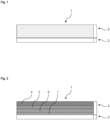
- the non-porous medical device (1) of the present invention illustrated in Figure 1 provides the required flexibility, elasticity, mechanical strength as well as fixation properties required for the device to seal such bleeds, i.e. the flexibility necessary for the device to conform to the physiological topology of the site of the bleed and the fixation properties to withstand even arterial blood pressure and the streaming effects at the site of a bleed.
- the biodegradable, non-porous medical device of the present invention comprises:
- the biodegradable, non-porous medical devices of the present invention are typically non-toxic, non-interfering with normal healing, non-interfering with immunological functions, applicable in various settings such as bleeding and anastomotic surgery and are, due to their flexibility, elasticity and high mechanical strength easy to handle and easy to apply.
- the structural layer is a flexible plasma-based or a flexible cryoprecipitate-based film
- the film comprises between 0.5 and 10 International Units (IU) of thrombin per ml of plasma, has a thickness ranging from 0.005 to 0.1 mm, and is characterized by a burst pressure of 50 to 1000 mm Hg.
- the residual moisture content of the structural layer is below 10%, in particular the residual moisture content is between 2 and 6%, such as between 3 and 5% or is 2%, 3%, 4%, 5%, 6%, 7%, 8% or 9%.
- the flexible, plasma-based or cryoprecipitate-based films when used as the structural layer in the devices of the present invention can have a thickness ranging from about 0.005 to 0.1 mm, or from about 0.005 to 0.09 mm, or from about 0.0075 to 0.08 mm, or from about 0.01 to 0.08 mm, or from about 0.01 to 0.07 mm, or from about 0.015 to 0.065 mm, or from about 0.02 to 0.06 mm, or from about 0.02 to 0.055 mm, or from about 0.02 to 0.05 mm, or from about 0.02 to 0.04 mm, or from about 0.02 to 0.03 mm, or about 0.01 mm, or about 0.02 mm, or about 0.03 mm, or about 0.04 mm, or about 0.05 mm, or about 0.06 mm.
- composition and degree of cross-linking between the components of the plasma- or cryoprecipitate-based films when used as structural layer influences the degradation speed of the device as such. Specifically, a high degree of cross-linking correlates with slow degradation, and a low degree of cross-linking correlates with fast degradation. Accordingly, controlling the degree of cross-linking within the structural layer itself allows for the control of the rate or speed of degradation and therefore allows for the device to be further customized according to its application.
- step (b)(i) comprises covalently connecting the fibrinogen to the one side of the structural layer using a suitable cross-linking agent.
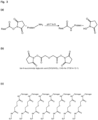
- the cross-linking agent is a multi-reactive NHS-ester such as an NHS-ester comprising several reactive groups capable of chemically reacting with amine groups.
- the several reactive groups are several NHS-ester groups interspaced on a backbone or linker structure.
- the cross-linking agent is bis-N-succinimidyl diglycolic acid (DIG(NHS) 2 ; CAS-No 373614-12-1 ).
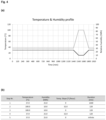
- the clotting process Upon transfer into the mold, the clotting process should last for at least 60 minutes.
- a highly flexible plasma-based structural layer was prepared by mixing 60 ml plasma with either 580-620 ⁇ l thrombin (300 IU/ml) or 580-620 ⁇ l calcium solution (2 M Ca 2+ ) or 580-620 ⁇ l thrombin (300 IU/ml) together with about 580-620 ⁇ l calcium solution (2 M Ca 2+ ), subsequently incubating the mixture at 25-37°C for about 15 minutes, in a 4"x4" (about 10x10 cm) mold and pressurizing the obtained plasma clot in the mold via a pressing plate such that a pressure of about 4.57 psi (31.5 kPa) is exerted onto the structural layer for about 60 seconds.
- a highly flexible plasma-based structural layer was prepared by mixing 120 ml plasma with either 1180-1220 ⁇ l thrombin (300 IU/ml) or 1180-1220 ⁇ l calcium solution (2 M Ca 2+ ) or 1180-1220 ⁇ l thrombin (300 IU/ml) together with about 1180-1220 ⁇ l calcium solution (2 M Ca 2+ ), subsequently incubating the mixture at 25-37°C for about 15 minutes, in a 4"x4" (about 10x10 cm) mold and pressurizing the obtained plasma clot in the mold via a pressing plate such that a pressure of about 4.57 psi (31.5 kPa) is exerted onto the structural layer for about 60 seconds.
- Structural Layer B (dry) prepared as described directly above, was subsequently soaked in 10 % glycerol for 10 minutes. This soaked Structural Layer B is indicated as "Structural Layer B (soaked)" in Table 1 below.
Landscapes
- Health & Medical Sciences (AREA)
- Chemical & Material Sciences (AREA)
- Life Sciences & Earth Sciences (AREA)
- Veterinary Medicine (AREA)
- Epidemiology (AREA)
- Animal Behavior & Ethology (AREA)
- General Health & Medical Sciences (AREA)
- Public Health (AREA)
- Materials Engineering (AREA)
- Engineering & Computer Science (AREA)
- Hematology (AREA)
- Chemical Kinetics & Catalysis (AREA)
- Heart & Thoracic Surgery (AREA)
- Surgery (AREA)
- Vascular Medicine (AREA)
- Botany (AREA)
- Zoology (AREA)
- Dispersion Chemistry (AREA)
- Medicinal Chemistry (AREA)
- Polymers & Plastics (AREA)
- Organic Chemistry (AREA)
- Materials For Medical Uses (AREA)
- Adhesives Or Adhesive Processes (AREA)
Applications Claiming Priority (3)
| Application Number | Priority Date | Filing Date | Title |
|---|---|---|---|
| EP22161125 | 2022-03-09 | ||
| PCT/EP2023/055892 WO2023170148A1 (fr) | 2022-03-09 | 2023-03-08 | Dispositif médical biodégradable non poreux et ses procédés de fabrication et d'utilisation |
| EP23710700.8A EP4262901B1 (fr) | 2022-03-09 | 2023-03-08 | Dispositif médical biodégradable et non poreux et ses procédés de fabrication et d'utilisation |
Related Parent Applications (1)
| Application Number | Title | Priority Date | Filing Date |
|---|---|---|---|
| EP23710700.8A Division EP4262901B1 (fr) | 2022-03-09 | 2023-03-08 | Dispositif médical biodégradable et non poreux et ses procédés de fabrication et d'utilisation |
Publications (2)
| Publication Number | Publication Date |
|---|---|
| EP4397332A2 true EP4397332A2 (fr) | 2024-07-10 |
| EP4397332A3 EP4397332A3 (fr) | 2024-07-17 |
Family
ID=80685227
Family Applications (2)
| Application Number | Title | Priority Date | Filing Date |
|---|---|---|---|
| EP23710700.8A Active EP4262901B1 (fr) | 2022-03-09 | 2023-03-08 | Dispositif médical biodégradable et non poreux et ses procédés de fabrication et d'utilisation |
| EP24156085.3A Withdrawn EP4397332A3 (fr) | 2022-03-09 | 2023-03-08 | Dispositif médical biodégradable non poreux et ses procédés de fabrication et d'utilisation |
Family Applications Before (1)
| Application Number | Title | Priority Date | Filing Date |
|---|---|---|---|
| EP23710700.8A Active EP4262901B1 (fr) | 2022-03-09 | 2023-03-08 | Dispositif médical biodégradable et non poreux et ses procédés de fabrication et d'utilisation |
Country Status (9)
| Country | Link |
|---|---|
| US (1) | US20250177601A1 (fr) |
| EP (2) | EP4262901B1 (fr) |
| CN (1) | CN118613290A (fr) |
| AU (1) | AU2023230196A1 (fr) |
| CA (1) | CA3242935A1 (fr) |
| ES (1) | ES2976086T3 (fr) |
| IL (1) | IL315042A (fr) |
| MX (1) | MX2024010996A (fr) |
| WO (1) | WO2023170148A1 (fr) |
Family Cites Families (2)
| Publication number | Priority date | Publication date | Assignee | Title |
|---|---|---|---|---|
| JP4480270B2 (ja) * | 1998-05-19 | 2010-06-16 | ジ・アメリカン・ナショナル・レッド・クロス | 止血サンドウィッチ包帯 |
| CA3024511A1 (fr) * | 2016-05-31 | 2017-12-07 | Octapharma Ag | Films a base de plasma et procedes pour les fabriquer et les utiliser |
-
2023
- 2023-03-08 CA CA3242935A patent/CA3242935A1/fr active Pending
- 2023-03-08 MX MX2024010996A patent/MX2024010996A/es unknown
- 2023-03-08 AU AU2023230196A patent/AU2023230196A1/en active Pending
- 2023-03-08 ES ES23710700T patent/ES2976086T3/es active Active
- 2023-03-08 CN CN202380018706.8A patent/CN118613290A/zh active Pending
- 2023-03-08 EP EP23710700.8A patent/EP4262901B1/fr active Active
- 2023-03-08 IL IL315042A patent/IL315042A/en unknown
- 2023-03-08 WO PCT/EP2023/055892 patent/WO2023170148A1/fr not_active Ceased
- 2023-03-08 EP EP24156085.3A patent/EP4397332A3/fr not_active Withdrawn
- 2023-09-14 US US18/837,556 patent/US20250177601A1/en active Pending
Also Published As
| Publication number | Publication date |
|---|---|
| AU2023230196A1 (en) | 2024-07-18 |
| WO2023170148A1 (fr) | 2023-09-14 |
| IL315042A (en) | 2024-10-01 |
| EP4397332A3 (fr) | 2024-07-17 |
| CA3242935A1 (fr) | 2025-01-24 |
| EP4262901A1 (fr) | 2023-10-25 |
| ES2976086T3 (es) | 2024-07-23 |
| MX2024010996A (es) | 2024-09-17 |
| US20250177601A1 (en) | 2025-06-05 |
| CN118613290A (zh) | 2024-09-06 |
| EP4262901B1 (fr) | 2024-02-07 |
Similar Documents
| Publication | Publication Date | Title |
|---|---|---|
| US11383002B2 (en) | Plasma-based films and methods for making and using the same | |
| US6074663A (en) | Method of using cross-linked fibrin material | |
| AU2004206150B2 (en) | Hemostatic materials | |
| ES2370458T3 (es) | Combinación para la adherencia de tejidos biológicos. | |
| EP4262901B1 (fr) | Dispositif médical biodégradable et non poreux et ses procédés de fabrication et d'utilisation | |
| JP5889188B2 (ja) | 組織接着用シート製剤 | |
| HK40115621A (zh) | 可生物降解无孔医学装置及其制造和使用方法 | |
| RU2807892C1 (ru) | Местное гемостатическое средство | |
| HK40004635B (en) | Plasma-based films and methods for making and using the same | |
| HK40077098B (zh) | 基於血浆的膜及其制造和使用方法 | |
| RU2774632C2 (ru) | Пленки на основе плазмы и способы их получения и использования | |
| RU2792931C2 (ru) | Пленки на основе плазмы и способы их получения и использования | |
| HK40077098A (en) | Plasma-based films and methods for making and using the same | |
| KR20250008770A (ko) | 물 활성화 하이드로겔 기반 의료용 패치, 유연한 기재 및 이러한 패치의 제조 및 사용 방법 |
Legal Events
| Date | Code | Title | Description |
|---|---|---|---|
| PUAI | Public reference made under article 153(3) epc to a published international application that has entered the european phase |
Free format text: ORIGINAL CODE: 0009012 |
|
| REG | Reference to a national code |
Ref country code: DE Ref legal event code: R079 Free format text: PREVIOUS MAIN CLASS: A61L0031140000 Ipc: A61L0015260000 |
|
| STAA | Information on the status of an ep patent application or granted ep patent |
Free format text: STATUS: THE APPLICATION HAS BEEN PUBLISHED |
|
| PUAL | Search report despatched |
Free format text: ORIGINAL CODE: 0009013 |
|
| AC | Divisional application: reference to earlier application |
Ref document number: 4262901 Country of ref document: EP Kind code of ref document: P |
|
| AK | Designated contracting states |
Kind code of ref document: A2 Designated state(s): AL AT BE BG CH CY CZ DE DK EE ES FI FR GB GR HR HU IE IS IT LI LT LU LV MC ME MK MT NL NO PL PT RO RS SE SI SK SM TR |
|
| AK | Designated contracting states |
Kind code of ref document: A3 Designated state(s): AL AT BE BG CH CY CZ DE DK EE ES FI FR GB GR HR HU IE IS IT LI LT LU LV MC ME MK MT NL NO PL PT RO RS SE SI SK SM TR |
|
| RIC1 | Information provided on ipc code assigned before grant |
Ipc: A61L 31/14 20060101ALI20240607BHEP Ipc: A61L 31/04 20060101ALI20240607BHEP Ipc: A61L 31/00 20060101ALI20240607BHEP Ipc: A61L 15/40 20060101ALI20240607BHEP Ipc: A61L 15/58 20060101ALI20240607BHEP Ipc: A61L 15/42 20060101ALI20240607BHEP Ipc: A61L 15/38 20060101ALI20240607BHEP Ipc: A61L 15/28 20060101ALI20240607BHEP Ipc: A61L 15/26 20060101AFI20240607BHEP |
|
| STAA | Information on the status of an ep patent application or granted ep patent |
Free format text: STATUS: THE APPLICATION IS DEEMED TO BE WITHDRAWN |
|
| 18D | Application deemed to be withdrawn |
Effective date: 20250118 |