EP4397355A2 - Vaskuläre zugangsvorrichtungen, systeme und verfahren zur überwachung der gesundheit eines patienten - Google Patents
Vaskuläre zugangsvorrichtungen, systeme und verfahren zur überwachung der gesundheit eines patienten Download PDFInfo
- Publication number
- EP4397355A2 EP4397355A2 EP24177710.1A EP24177710A EP4397355A2 EP 4397355 A2 EP4397355 A2 EP 4397355A2 EP 24177710 A EP24177710 A EP 24177710A EP 4397355 A2 EP4397355 A2 EP 4397355A2
- Authority
- EP
- European Patent Office
- Prior art keywords
- parameter
- temperature
- patient
- predetermined
- sensing element
- Prior art date
- Legal status (The legal status is an assumption and is not a legal conclusion. Google has not performed a legal analysis and makes no representation as to the accuracy of the status listed.)
- Withdrawn
Links
Images



Classifications
-
- A—HUMAN NECESSITIES
- A61—MEDICAL OR VETERINARY SCIENCE; HYGIENE
- A61B—DIAGNOSIS; SURGERY; IDENTIFICATION
- A61B5/00—Measuring for diagnostic purposes; Identification of persons
- A61B5/0002—Remote monitoring of patients using telemetry, e.g. transmission of vital signals via a communication network
- A61B5/0004—Remote monitoring of patients using telemetry, e.g. transmission of vital signals via a communication network characterised by the type of physiological signal transmitted
- A61B5/0008—Temperature signals
-
- A—HUMAN NECESSITIES
- A61—MEDICAL OR VETERINARY SCIENCE; HYGIENE
- A61B—DIAGNOSIS; SURGERY; IDENTIFICATION
- A61B5/00—Measuring for diagnostic purposes; Identification of persons
- A61B5/0002—Remote monitoring of patients using telemetry, e.g. transmission of vital signals via a communication network
- A61B5/0031—Implanted circuitry
-
- A—HUMAN NECESSITIES
- A61—MEDICAL OR VETERINARY SCIENCE; HYGIENE
- A61B—DIAGNOSIS; SURGERY; IDENTIFICATION
- A61B5/00—Measuring for diagnostic purposes; Identification of persons
- A61B5/02—Detecting, measuring or recording for evaluating the cardiovascular system, e.g. pulse, heart rate, blood pressure or blood flow
- A61B5/0205—Simultaneously evaluating both cardiovascular conditions and different types of body conditions, e.g. heart and respiratory condition
-
- A—HUMAN NECESSITIES
- A61—MEDICAL OR VETERINARY SCIENCE; HYGIENE
- A61B—DIAGNOSIS; SURGERY; IDENTIFICATION
- A61B5/00—Measuring for diagnostic purposes; Identification of persons
- A61B5/02—Detecting, measuring or recording for evaluating the cardiovascular system, e.g. pulse, heart rate, blood pressure or blood flow
- A61B5/021—Measuring pressure in heart or blood vessels
- A61B5/0215—Measuring pressure in heart or blood vessels by means inserted into the body
-
- A—HUMAN NECESSITIES
- A61—MEDICAL OR VETERINARY SCIENCE; HYGIENE
- A61B—DIAGNOSIS; SURGERY; IDENTIFICATION
- A61B5/00—Measuring for diagnostic purposes; Identification of persons
- A61B5/06—Devices, other than using radiation, for detecting or locating foreign bodies ; Determining position of diagnostic devices within or on the body of the patient
- A61B5/065—Determining position of the probe employing exclusively positioning means located on or in the probe, e.g. using position sensors arranged on the probe
-
- A—HUMAN NECESSITIES
- A61—MEDICAL OR VETERINARY SCIENCE; HYGIENE
- A61B—DIAGNOSIS; SURGERY; IDENTIFICATION
- A61B5/00—Measuring for diagnostic purposes; Identification of persons
- A61B5/103—Measuring devices for testing the shape, pattern, colour, size or movement of the body or parts thereof, for diagnostic purposes
- A61B5/11—Measuring movement of the entire body or parts thereof, e.g. head or hand tremor or mobility of a limb
- A61B5/1118—Determining activity level
-
- A—HUMAN NECESSITIES
- A61—MEDICAL OR VETERINARY SCIENCE; HYGIENE
- A61B—DIAGNOSIS; SURGERY; IDENTIFICATION
- A61B5/00—Measuring for diagnostic purposes; Identification of persons
- A61B5/145—Measuring characteristics of blood in vivo, e.g. gas concentration or pH-value ; Measuring characteristics of body fluids or tissues, e.g. interstitial fluid or cerebral tissue
- A61B5/14503—Measuring characteristics of blood in vivo, e.g. gas concentration or pH-value ; Measuring characteristics of body fluids or tissues, e.g. interstitial fluid or cerebral tissue invasive, e.g. introduced into the body by a catheter or needle or using implanted sensors
-
- A—HUMAN NECESSITIES
- A61—MEDICAL OR VETERINARY SCIENCE; HYGIENE
- A61B—DIAGNOSIS; SURGERY; IDENTIFICATION
- A61B5/00—Measuring for diagnostic purposes; Identification of persons
- A61B5/48—Other medical applications
- A61B5/4836—Diagnosis combined with treatment in closed-loop systems or methods
- A61B5/4839—Diagnosis combined with treatment in closed-loop systems or methods combined with drug delivery
-
- A—HUMAN NECESSITIES
- A61—MEDICAL OR VETERINARY SCIENCE; HYGIENE
- A61B—DIAGNOSIS; SURGERY; IDENTIFICATION
- A61B5/00—Measuring for diagnostic purposes; Identification of persons
- A61B5/68—Arrangements of detecting, measuring or recording means, e.g. sensors, in relation to patient
- A61B5/6846—Arrangements of detecting, measuring or recording means, e.g. sensors, in relation to patient specially adapted to be brought in contact with an internal body part, i.e. invasive
- A61B5/6847—Arrangements of detecting, measuring or recording means, e.g. sensors, in relation to patient specially adapted to be brought in contact with an internal body part, i.e. invasive mounted on an invasive device
- A61B5/686—Permanently implanted devices, e.g. pacemakers, other stimulators, biochips
-
- A—HUMAN NECESSITIES
- A61—MEDICAL OR VETERINARY SCIENCE; HYGIENE
- A61B—DIAGNOSIS; SURGERY; IDENTIFICATION
- A61B5/00—Measuring for diagnostic purposes; Identification of persons
- A61B5/68—Arrangements of detecting, measuring or recording means, e.g. sensors, in relation to patient
- A61B5/6846—Arrangements of detecting, measuring or recording means, e.g. sensors, in relation to patient specially adapted to be brought in contact with an internal body part, i.e. invasive
- A61B5/6867—Arrangements of detecting, measuring or recording means, e.g. sensors, in relation to patient specially adapted to be brought in contact with an internal body part, i.e. invasive specially adapted to be attached or implanted in a specific body part
-
- A—HUMAN NECESSITIES
- A61—MEDICAL OR VETERINARY SCIENCE; HYGIENE
- A61B—DIAGNOSIS; SURGERY; IDENTIFICATION
- A61B5/00—Measuring for diagnostic purposes; Identification of persons
- A61B5/68—Arrangements of detecting, measuring or recording means, e.g. sensors, in relation to patient
- A61B5/6846—Arrangements of detecting, measuring or recording means, e.g. sensors, in relation to patient specially adapted to be brought in contact with an internal body part, i.e. invasive
- A61B5/6867—Arrangements of detecting, measuring or recording means, e.g. sensors, in relation to patient specially adapted to be brought in contact with an internal body part, i.e. invasive specially adapted to be attached or implanted in a specific body part
- A61B5/6876—Blood vessel
-
- A—HUMAN NECESSITIES
- A61—MEDICAL OR VETERINARY SCIENCE; HYGIENE
- A61B—DIAGNOSIS; SURGERY; IDENTIFICATION
- A61B5/00—Measuring for diagnostic purposes; Identification of persons
- A61B5/72—Signal processing specially adapted for physiological signals or for diagnostic purposes
- A61B5/7235—Details of waveform analysis
- A61B5/7246—Details of waveform analysis using correlation, e.g. template matching or determination of similarity
-
- A—HUMAN NECESSITIES
- A61—MEDICAL OR VETERINARY SCIENCE; HYGIENE
- A61B—DIAGNOSIS; SURGERY; IDENTIFICATION
- A61B5/00—Measuring for diagnostic purposes; Identification of persons
- A61B5/72—Signal processing specially adapted for physiological signals or for diagnostic purposes
- A61B5/7235—Details of waveform analysis
- A61B5/7264—Classification of physiological signals or data, e.g. using neural networks, statistical classifiers, expert systems or fuzzy systems
-
- A—HUMAN NECESSITIES
- A61—MEDICAL OR VETERINARY SCIENCE; HYGIENE
- A61M—DEVICES FOR INTRODUCING MEDIA INTO, OR ONTO, THE BODY; DEVICES FOR TRANSDUCING BODY MEDIA OR FOR TAKING MEDIA FROM THE BODY; DEVICES FOR PRODUCING OR ENDING SLEEP OR STUPOR
- A61M39/00—Tubes, tube connectors, tube couplings, valves, access sites or the like, specially adapted for medical use
- A61M39/02—Access sites
- A61M39/0208—Subcutaneous access sites for injecting or removing fluids
-
- A—HUMAN NECESSITIES
- A61—MEDICAL OR VETERINARY SCIENCE; HYGIENE
- A61M—DEVICES FOR INTRODUCING MEDIA INTO, OR ONTO, THE BODY; DEVICES FOR TRANSDUCING BODY MEDIA OR FOR TAKING MEDIA FROM THE BODY; DEVICES FOR PRODUCING OR ENDING SLEEP OR STUPOR
- A61M39/00—Tubes, tube connectors, tube couplings, valves, access sites or the like, specially adapted for medical use
- A61M39/02—Access sites
- A61M39/0247—Semi-permanent or permanent transcutaneous or percutaneous access sites to the inside of the body
-
- A—HUMAN NECESSITIES
- A61—MEDICAL OR VETERINARY SCIENCE; HYGIENE
- A61B—DIAGNOSIS; SURGERY; IDENTIFICATION
- A61B2560/00—Constructional details of operational features of apparatus; Accessories for medical measuring apparatus
- A61B2560/02—Operational features
- A61B2560/0204—Operational features of power management
- A61B2560/0214—Operational features of power management of power generation or supply
- A61B2560/0219—Operational features of power management of power generation or supply of externally powered implanted units
-
- A—HUMAN NECESSITIES
- A61—MEDICAL OR VETERINARY SCIENCE; HYGIENE
- A61B—DIAGNOSIS; SURGERY; IDENTIFICATION
- A61B2560/00—Constructional details of operational features of apparatus; Accessories for medical measuring apparatus
- A61B2560/04—Constructional details of apparatus
- A61B2560/0406—Constructional details of apparatus specially shaped apparatus housings
-
- A—HUMAN NECESSITIES
- A61—MEDICAL OR VETERINARY SCIENCE; HYGIENE
- A61B—DIAGNOSIS; SURGERY; IDENTIFICATION
- A61B2562/00—Details of sensors; Constructional details of sensor housings or probes; Accessories for sensors
- A61B2562/16—Details of sensor housings or probes; Details of structural supports for sensors
- A61B2562/168—Fluid filled sensor housings
-
- A—HUMAN NECESSITIES
- A61—MEDICAL OR VETERINARY SCIENCE; HYGIENE
- A61B—DIAGNOSIS; SURGERY; IDENTIFICATION
- A61B5/00—Measuring for diagnostic purposes; Identification of persons
- A61B5/0002—Remote monitoring of patients using telemetry, e.g. transmission of vital signals via a communication network
- A61B5/0004—Remote monitoring of patients using telemetry, e.g. transmission of vital signals via a communication network characterised by the type of physiological signal transmitted
- A61B5/0006—ECG or EEG signals
-
- A—HUMAN NECESSITIES
- A61—MEDICAL OR VETERINARY SCIENCE; HYGIENE
- A61B—DIAGNOSIS; SURGERY; IDENTIFICATION
- A61B5/00—Measuring for diagnostic purposes; Identification of persons
- A61B5/0002—Remote monitoring of patients using telemetry, e.g. transmission of vital signals via a communication network
- A61B5/0015—Remote monitoring of patients using telemetry, e.g. transmission of vital signals via a communication network characterised by features of the telemetry system
- A61B5/0022—Monitoring a patient using a global network, e.g. telephone networks, internet
-
- A—HUMAN NECESSITIES
- A61—MEDICAL OR VETERINARY SCIENCE; HYGIENE
- A61B—DIAGNOSIS; SURGERY; IDENTIFICATION
- A61B5/00—Measuring for diagnostic purposes; Identification of persons
- A61B5/0002—Remote monitoring of patients using telemetry, e.g. transmission of vital signals via a communication network
- A61B5/0015—Remote monitoring of patients using telemetry, e.g. transmission of vital signals via a communication network characterised by features of the telemetry system
- A61B5/0024—Remote monitoring of patients using telemetry, e.g. transmission of vital signals via a communication network characterised by features of the telemetry system for multiple sensor units attached to the patient, e.g. using a body or personal area network
-
- A—HUMAN NECESSITIES
- A61—MEDICAL OR VETERINARY SCIENCE; HYGIENE
- A61B—DIAGNOSIS; SURGERY; IDENTIFICATION
- A61B5/00—Measuring for diagnostic purposes; Identification of persons
- A61B5/103—Measuring devices for testing the shape, pattern, colour, size or movement of the body or parts thereof, for diagnostic purposes
- A61B5/11—Measuring movement of the entire body or parts thereof, e.g. head or hand tremor or mobility of a limb
- A61B5/112—Gait analysis
-
- A—HUMAN NECESSITIES
- A61—MEDICAL OR VETERINARY SCIENCE; HYGIENE
- A61B—DIAGNOSIS; SURGERY; IDENTIFICATION
- A61B5/00—Measuring for diagnostic purposes; Identification of persons
- A61B5/145—Measuring characteristics of blood in vivo, e.g. gas concentration or pH-value ; Measuring characteristics of body fluids or tissues, e.g. interstitial fluid or cerebral tissue
- A61B5/14532—Measuring characteristics of blood in vivo, e.g. gas concentration or pH-value ; Measuring characteristics of body fluids or tissues, e.g. interstitial fluid or cerebral tissue for measuring glucose, e.g. by tissue impedance measurement
-
- A—HUMAN NECESSITIES
- A61—MEDICAL OR VETERINARY SCIENCE; HYGIENE
- A61M—DEVICES FOR INTRODUCING MEDIA INTO, OR ONTO, THE BODY; DEVICES FOR TRANSDUCING BODY MEDIA OR FOR TAKING MEDIA FROM THE BODY; DEVICES FOR PRODUCING OR ENDING SLEEP OR STUPOR
- A61M39/00—Tubes, tube connectors, tube couplings, valves, access sites or the like, specially adapted for medical use
- A61M39/02—Access sites
- A61M2039/0205—Access sites for injecting media
-
- A—HUMAN NECESSITIES
- A61—MEDICAL OR VETERINARY SCIENCE; HYGIENE
- A61M—DEVICES FOR INTRODUCING MEDIA INTO, OR ONTO, THE BODY; DEVICES FOR TRANSDUCING BODY MEDIA OR FOR TAKING MEDIA FROM THE BODY; DEVICES FOR PRODUCING OR ENDING SLEEP OR STUPOR
- A61M39/00—Tubes, tube connectors, tube couplings, valves, access sites or the like, specially adapted for medical use
- A61M39/02—Access sites
- A61M39/0247—Semi-permanent or permanent transcutaneous or percutaneous access sites to the inside of the body
- A61M2039/0258—Semi-permanent or permanent transcutaneous or percutaneous access sites to the inside of the body for vascular access, e.g. blood stream access
-
- A—HUMAN NECESSITIES
- A61—MEDICAL OR VETERINARY SCIENCE; HYGIENE
- A61M—DEVICES FOR INTRODUCING MEDIA INTO, OR ONTO, THE BODY; DEVICES FOR TRANSDUCING BODY MEDIA OR FOR TAKING MEDIA FROM THE BODY; DEVICES FOR PRODUCING OR ENDING SLEEP OR STUPOR
- A61M39/00—Tubes, tube connectors, tube couplings, valves, access sites or the like, specially adapted for medical use
- A61M39/02—Access sites
- A61M39/0247—Semi-permanent or permanent transcutaneous or percutaneous access sites to the inside of the body
- A61M2039/0267—Semi-permanent or permanent transcutaneous or percutaneous access sites to the inside of the body comprising sensors or electrical contacts
-
- A—HUMAN NECESSITIES
- A61—MEDICAL OR VETERINARY SCIENCE; HYGIENE
- A61M—DEVICES FOR INTRODUCING MEDIA INTO, OR ONTO, THE BODY; DEVICES FOR TRANSDUCING BODY MEDIA OR FOR TAKING MEDIA FROM THE BODY; DEVICES FOR PRODUCING OR ENDING SLEEP OR STUPOR
- A61M39/00—Tubes, tube connectors, tube couplings, valves, access sites or the like, specially adapted for medical use
- A61M39/02—Access sites
- A61M39/0247—Semi-permanent or permanent transcutaneous or percutaneous access sites to the inside of the body
- A61M2039/027—Semi-permanent or permanent transcutaneous or percutaneous access sites to the inside of the body having a particular valve, seal or septum
-
- A—HUMAN NECESSITIES
- A61—MEDICAL OR VETERINARY SCIENCE; HYGIENE
- A61M—DEVICES FOR INTRODUCING MEDIA INTO, OR ONTO, THE BODY; DEVICES FOR TRANSDUCING BODY MEDIA OR FOR TAKING MEDIA FROM THE BODY; DEVICES FOR PRODUCING OR ENDING SLEEP OR STUPOR
- A61M2205/00—General characteristics of the apparatus
- A61M2205/04—General characteristics of the apparatus implanted
-
- A—HUMAN NECESSITIES
- A61—MEDICAL OR VETERINARY SCIENCE; HYGIENE
- A61M—DEVICES FOR INTRODUCING MEDIA INTO, OR ONTO, THE BODY; DEVICES FOR TRANSDUCING BODY MEDIA OR FOR TAKING MEDIA FROM THE BODY; DEVICES FOR PRODUCING OR ENDING SLEEP OR STUPOR
- A61M2205/00—General characteristics of the apparatus
- A61M2205/33—Controlling, regulating or measuring
- A61M2205/3303—Using a biosensor
-
- A—HUMAN NECESSITIES
- A61—MEDICAL OR VETERINARY SCIENCE; HYGIENE
- A61M—DEVICES FOR INTRODUCING MEDIA INTO, OR ONTO, THE BODY; DEVICES FOR TRANSDUCING BODY MEDIA OR FOR TAKING MEDIA FROM THE BODY; DEVICES FOR PRODUCING OR ENDING SLEEP OR STUPOR
- A61M2205/00—General characteristics of the apparatus
- A61M2205/33—Controlling, regulating or measuring
- A61M2205/3368—Temperature
-
- A—HUMAN NECESSITIES
- A61—MEDICAL OR VETERINARY SCIENCE; HYGIENE
- A61M—DEVICES FOR INTRODUCING MEDIA INTO, OR ONTO, THE BODY; DEVICES FOR TRANSDUCING BODY MEDIA OR FOR TAKING MEDIA FROM THE BODY; DEVICES FOR PRODUCING OR ENDING SLEEP OR STUPOR
- A61M2205/00—General characteristics of the apparatus
- A61M2205/35—Communication
- A61M2205/3507—Communication with implanted devices, e.g. external control
- A61M2205/3523—Communication with implanted devices, e.g. external control using telemetric means
-
- A—HUMAN NECESSITIES
- A61—MEDICAL OR VETERINARY SCIENCE; HYGIENE
- A61M—DEVICES FOR INTRODUCING MEDIA INTO, OR ONTO, THE BODY; DEVICES FOR TRANSDUCING BODY MEDIA OR FOR TAKING MEDIA FROM THE BODY; DEVICES FOR PRODUCING OR ENDING SLEEP OR STUPOR
- A61M2205/00—General characteristics of the apparatus
- A61M2205/35—Communication
- A61M2205/3546—Range
- A61M2205/3561—Range local, e.g. within room or hospital
-
- G—PHYSICS
- G16—INFORMATION AND COMMUNICATION TECHNOLOGY [ICT] SPECIALLY ADAPTED FOR SPECIFIC APPLICATION FIELDS
- G16H—HEALTHCARE INFORMATICS, i.e. INFORMATION AND COMMUNICATION TECHNOLOGY [ICT] SPECIALLY ADAPTED FOR THE HANDLING OR PROCESSING OF MEDICAL OR HEALTHCARE DATA
- G16H50/00—ICT specially adapted for medical diagnosis, medical simulation or medical data mining; ICT specially adapted for detecting, monitoring or modelling epidemics or pandemics
- G16H50/20—ICT specially adapted for medical diagnosis, medical simulation or medical data mining; ICT specially adapted for detecting, monitoring or modelling epidemics or pandemics for computer-aided diagnosis, e.g. based on medical expert systems
Definitions
- the present technology is generally directed to vascular access devices and associated systems and methods of use.
- the present technology is directed to vascular access devices and associated systems and methods for monitoring patient health.
- Anticancer treatments have brought about definite advances in patient survival rates.
- treatment is associated with significant toxicity that is potentially life-threatening, and can often result in poor treatment adherence, impaired quality of life, and mortality.
- Systematic monitoring of the patient's health during chemotherapy treatment is therefore crucial to early detection of life-threatening health conditions.
- One conventional approach to monitoring patient health is soliciting feedback from the patient at regular intervals (for example, when the patient comes in for treatment) using standardized patient-reported outcome (“PRO”) questionnaires.
- PRO patient-reported outcome
- the information received on PRO questionnaires can have limited diagnostic value, as the time to treat may have passed, or the patient may have inaccurately reported their symptoms or forgotten to report some symptoms altogether.
- the vascular access devices, systems, and methods of the present technology are configured to obtain patient physiological data while the vascular access device is implanted within the patient, and determine one or more physiological parameters based on the measurements.
- the system may determine certain physiological parameters, for example, that indicate one or more symptoms of a health condition that requires immediate medical attention or hospitalization.
- physiological parameters can include those related to temperature, patient movement/activity level, heart rate, respiratory rate, blood oxygen saturation, and/or other suitable parameters described herein. Based on these parameters, the system may provide an indication to the patient and/or clinician that the patient has contracted or is at risk of contracting an adverse health condition.
- the system of the present technology may be especially beneficial for cancer patients undergoing chemotherapy, as chemotherapy comes with many side effects that could be fatal to the patient if not treated immediately. Therefore, early detection of known symptoms is crucial to patient quality of life and survival.
- the present technology relates to vascular access devices, systems, and methods for monitoring patient health.
- An overview of the devices, systems, and methods of the present technology are described below with reference to FIGS. 1-3 and Section I.
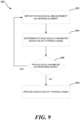
- Selected systems and methods of the present technology for monitoring one or more physiological parameters are described below with reference to FIGS. 4-9 and Section II.
- FIG. 1 is a schematic representation of a system 10 for monitoring the health of a patient via a vascular access device 100 (or "device 100") in accordance with the present technology.
- the device 100 is configured to be implanted within a human patient H, such as at a subcutaneous location along an upper region of the patient's chest.
- the device 100 may include a sensing element 110 configured to obtain physiological measurements that are used by the system 10 to determine one or more physiological parameters indicative of the patient's health.
- the system 10 may detect a medical condition (such as sepsis) or associated symptom(s) based on the physiological parameter(s) and provide an indication of the detected symptom or condition to the patient, caregiver, and/or medical care team.
- a medical condition such as sepsis
- associated symptom(s) based on the physiological parameter(s) and provide an indication of the detected symptom or condition to the patient, caregiver, and/or medical care team.
- the device 100 may be configured to communicate wirelessly with a local computing device 150, which can be, for example, a smart device (e.g., a smartphone, a tablet, or other handheld device having a processor and memory), a special-purpose interrogation device, or other suitable device.
- a local computing device 150 can be, for example, a smart device (e.g., a smartphone, a tablet, or other handheld device having a processor and memory), a special-purpose interrogation device, or other suitable device.
- Communication between the device 100 and the local computing device 150 can be mediated by, for example, near-field communication (NFC), infrared wireless, Bluetooth, ZigBee, Wi-Fi, inductive coupling, capacitive coupling, or any other suitable wireless communication link.
- NFC near-field communication
- infrared wireless Bluetooth
- ZigBee ZigBee
- Wi-Fi wireless local computing device
- the system 10 may further include first remote computing device(s) 160 (or server(s)), and the local computing device 150 may in turn be in communication with first remote computing device(s) 160 over a wired or wireless communications link (e.g., the Internet, public and private intranet, a local or extended Wi-Fi network, cell towers, the plain old telephone system (POTS), etc.).
- the first remote computing device(s) 160 may include one or more own processor(s) and memory.
- the memory may be a tangible, non-transitory computer-readable medium configured to store instructions executable by the processor(s).
- the memory may also be configured to function as a remote database, i.e., the memory may be configured to permanently or temporarily store data received from the local computing device 150 (such as one or more physiological measurements or parameters and/or other patient information).
- the first remote computing device(s) 160 can additionally or alternatively include, for example, server computers associated with a hospital, a medical provider, medical records database, insurance company, or other entity charged with securely storing patient data and/or device data.
- a remote location 170 e.g., a hospital, clinic, insurance office, medical records database, operator's home, etc.
- an operator may access the data via a second remote computing device 172, which can be, for example a personal computer, smart device (e.g., a smartphone, a tablet, or other handheld device having a processor and memory), or other suitable device.
- the operator may access the data, for example, via a web-based application.
- the obfuscated data provided by the device 100 can be de-obfuscated (e.g., unencrypted) at the remote location 170.
- the device 100 may communicate with remote computing devices 160 and/or 172 without the intermediation of the local computing device 150.
- the vascular access device 100 may be connected via Wi-Fi or other wireless communications link to a network such as the Internet.
- the device 100 may be in communication only with the local computing device 150, which in turn is in communication with remote computing devices 160 and/or 172.
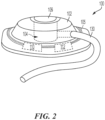
- FIG. 2 shows an example of a vascular access device 100 (or "device 100") configured for use with the system 10 of the present technology.
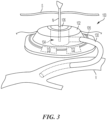
- the device 100 comprises a housing 102 configured to be implanted within a human patient, a fluid reservoir 104 contained within the housing 102, and a septum 106 adjacent the reservoir 104 and configured to receive a needle therethrough for delivery of a fluid (such as a therapeutic or diagnostic agent) to the reservoir 104 (as described in greater detail below with respect to FIG. 3 ).
- the housing 102 may be made of a biocompatible plastic, metal, ceramic, medical grade silicone, or other material that provides sufficient rigidity and strength to prevent needle puncture.
- the septum 106 can be, for example, a self-sealing membrane made of silicone or other deformable, self-sealing, biocompatible material.
- the device 100 may include a catheter 130 that extends distally from the housing 102 and is in fluid communication with the reservoir 104.
- the catheter 130 can be configured to mate with an outlet port of the device 100 via a barb connector or other suitable mechanical connection.
- the catheter 130 may be a single or multi-lumen catheter.
- the device 100 includes multiple separate catheters.
- the clinician may advance fluid through the needle N, which then flows through the reservoir 104, the catheter 130, and into the vessel V, or the physician may advance fluid through the needle to fill the reservoir for postponed delivery into the vessel V.
- the clinician can apply suction via the needle N, thereby withdrawing fluid (e.g., blood) from the vessel V into the catheter 130, into the fluid reservoir 104, and into the needle N.
- the clinician removes the needle N, the self-sealing septum 106 resumes a closed configuration, and the device 100 may remain in place beneath the patient's skin S.
- the device 10 includes a sensing element 110 coupled to the housing 102 and configured to obtain physiological measurements.
- a single sensing element 110 is illustrated for clarity, in various embodiments, the device 100 may include a plurality of sensing elements 110 disposed within or otherwise coupled to the housing 102. In some embodiments, one or more such sensing elements 110 may be disposed on separate structural components that are separated from the housing 102.
- the term "sensing element" may refer to a single sensor or a plurality of discrete, separate sensors.
- the device 100 may include at least one controller 112 communicatively coupled to the sensing element 110.
- the controller 112 may include one or more processors, software components, and memory (not shown).
- the one or more processors include one or more computing components configured to process the physiological measurements received from the sensing element 110 according to instructions stored in the memory.
- the memory may be a tangible, non-transitory computer-readable medium configured to store instructions executable by the one or more processors.
- the memory may be data storage that can be loaded with one or more of the software components executable by the one or more processors to achieve certain functions.
- the functions may involve causing the sensing element 110 to obtain physiological data from the patient.
- the functions may involve processing the physiological data to determine one or more physiological parameters and/or provide an indication to the patient and/or clinician of one or more symptoms or medical conditions associated with the determined physiological parameters or symptoms.
- the controller 112 may also include a data communications unit configured to securely transmit data between the device 100 and external computing devices (e.g., local computing device 150, remote computing devices 160 and 170, etc.).
- the controller 112 includes a localization unit configured to emit a localization signal (e.g., lights that transilluminate a patient's skin, vibration, a magnetic field, etc.) to aid a clinician in localizing the device 100 when implanted within a patient.
- the controller 112 can also include a wireless charging unit (such as a coil) configured to recharge a battery (not shown) of the device 100 when in the presence of an interrogation device (e.g., local device 150 or another suitable device).
- the system 10 may be configured to continuously and/or periodically obtain physiological measurements via the sensing element 110 in communication with the device 100.
- the sensing element 110 may be carried by the housing 102 and/or the catheter 130, and/or may include a sensing component separate from the housing 102 and catheter 130 but physically or communicatively coupled to the housing 102 and/or catheter 130.
- the sensing element 110 may be implanted at the same location as the device 100 or at a different location, or may be positioned on the patient at an exterior location (e.g., on the patient's skin).
- the sensing element 110 may be permanently coupled to the device 100, or may be configured to temporarily couple to the device 100.
- the sensing element 110 may comprise at least one sensor completely enclosed by the housing 102 and at least one sensor that is partially or completely positioned at an external location, whether directly on the housing 102 and/or catheter 130 or separated from the housing 102 and/or catheter 130 (but still physically coupled to the housing 102 and/or catheter 130 via a wired connection, for example.) In some embodiments, at least a portion of the sensing element 110 is positioned at and/or exposed to an interior region of the reservoir 104.
- the sensing element 110 may include a separate controller (not shown) that comprises one or more processors and/or software components. In such embodiments, the sensing element 110 may process at least some of the physiological measurements to determine one or more physiological parameters, and then transmit those physiological parameters to the controller 112 of the device 100 (with or without the underlying physiological data). In some examples, the sensing element 110 may only partially process at least some of the physiological measurements before transmitting the data to the controller 112. In such embodiments, the controller 112 may further process the received physiological data to determine one or more physiological parameters. The local computing device 150 and/or the remote computing devices 160, 170 may also process some or all of the physiological measurements obtained by the sensing element 110 and/or physiological parameters determined by the sensing element 110 and/or the controller 112.
- the sensing element 110 may include memory.
- the memory may be a non-transitory computer-readable medium configured to permanently and/or temporarily store the physiological measurements obtained by the sensing element 110.
- the memory may be a tangible, non-transitory computer-readable medium configured to store instructions executable by the processor(s).
- the sensing element(s) 110 and/or controller 112 may identify, monitor, and communicate patient information by electromagnetic, acoustic, motion, optical, thermal, or biochemical sensing elements or means.
- the sensing element(s) 110 may include, for example, one or more temperature sensing elements (e.g., one or more thermocouples, one or more digital temperature sensors, one or more thermistors or other type of resistance temperature detector, etc.), one or more impedance sensing elements (e.g., one or more electrodes), one or more pressure sensing elements, one or more optical sensing elements, one or more flow sensing elements (e.g., a Doppler velocity sensing element, an ultrasonic flow meter, etc.), one or more ultrasonic sensing elements, one or more pulse oximeters, one or more chemical sensing elements, one or more movement sensing elements (e.g., one or more accelerometers), one or more pH sensing elements, an electrocardiogram ("ECG" or "EKG”) unit, one or more electrocardi
- the sensing element 110 may comprise one or more electromagnetic sensing elements configured to measure and/or detect, for example, impedance, voltage, current, or magnetic field sensing capability with a wire, wires, wire bundle, magnetic node, and/or array of nodes.
- the sensing element 110 may comprise one or more acoustic sensing elements configured to measure and/or detect, for example, sound frequency, within human auditory range or below or above frequencies of human auditory range, beat or pulse pattern, tonal pitch melody, and/or song.
- the sensing element 110 may comprise one or more motion sensing elements configured to measure and/or detect, for example, vibration, movement pulse, pattern or rhythm of movement, intensity of movement, and/or speed of movement. Motion communication may occur by a recognizable response to a signal.
- This response may be by vibration, pulse, movement pattern, direction, acceleration, or rate of movement.
- Motion communication may also be by lack of response, in which case a physical signal, vibration, or bump to the environment yields a motion response in the surrounding tissue that can be distinguished from the motion response of the sensing element 110.
- Motion communication may also be by characteristic input signal and responding resonance.
- the sensing element 110 may comprise one or more optical sensing elements which may include, for example, illuminating light wavelength, light intensity, on/off light pulse frequency, on/off light pulse pattern, passive glow or active glow when illuminated with special light such as UV or "black light", or display of recognizable shapes or characters. It also includes characterization by spectroscopy, interferometry, response to infrared illumination, and/or optical coherence tomography.
- the sensing element 110 may comprise one or more thermal sensing elements configured to measure and/or detect, for example, device 100 temperature relative to surrounding environment, the temperature of the device 100 (or portion thereof), the temperature of the environment surrounding the device 100 and/or sensing element 110, or differential rate of the device temperature change relative to surroundings when the device environment is heated or cooled by external means.
- the sensing element 110 may comprise one or more biochemical devices which may include, for example, the use of a catheter, a tubule, wicking paper, or wicking fiber to enable micro-fluidic transport of bodily fluid for sensing of protein, RNA, DNA, antigen, and/or virus with a micro-array chip.
- the system 10 and/or the sensing element 110 may be configured to evaluate liver function (e.g., by evaluation and/or detection of AST, ALT, alkaline phosphatase, gamma glutamyl transferase, troponin, etc.), heart function (e.g., by evaluation and/or detection of troponin), coagulation (e.g., via determination of prothrombin time (PT), partial thromboplastin time (PTT), and international normalized ratio (INR)), and/or blood counts (e.g., hemoglobin or hematocrit, white blood cell levels with differential, and platelets).
- liver function e.g., by evaluation and/or detection of AST, ALT, alkaline phosphatase, gamma glutamyl transferase, troponin, etc.
- heart function e.g., by evaluation and/or detection of troponin
- coagulation e.g., via determination of prothrombin time (PT), partial thro
- the system 10 and/or the sensing element 110 may be configured to detect and/or measure circulating tumor cells, circulating tumor DNA, circulating RNA, multi gene sequencing of germ line or tumor DNA, markers of inflammation such as cytokines, C reactive protein, erythrocyte sedimentation rate, tumor markers (PSA, beta-HCG, AFP, LDH, CA 125, CA 19-9, CEA, etc.), and others.
- markers of inflammation such as cytokines, C reactive protein, erythrocyte sedimentation rate, tumor markers (PSA, beta-HCG, AFP, LDH, CA 125, CA 19-9, CEA, etc.
- the system 10 may determine one or more physiological parameters based on the physiological measurements and/or one or more other physiological parameter(s).
- the system 10 may be configured to determine physiological parameters such as heart rate, temperature, blood pressure (e.g., systolic blood pressure, diastolic blood pressure, mean blood pressure), blood flow rate, blood velocity, pulse wave speed, volumetric flow rate, reflected pressure wave amplitude, augmentation index, flow reserve, resistance reserve, resistive index, capacitance reserve, hematocrit, heart rhythm, electrocardiogram (ECG) tracings, body fat percentage, activity level, body movement, falls, gait analysis, seizure activity, blood glucose levels, drug/medication levels, blood gas constituents and blood gas levels (e.g., oxygen, carbon dioxide, etc.), lactate levels, hormone levels (such as cortisol, thyroid hormone (T4, T3, free T4, free T3), TSH, ACTH, parathyroid hormone), and/or any correlates and/or derivatives of the foregoing measurements and
- blood pressure
- the system 10 may also determine and/or monitor derivatives of any of the foregoing physiological parameters (also referred to herein as "physiological parameters"), such as a rate of change of a particular parameter, a change in a particular parameter over a particular time frame, etc.
- physiological parameters also referred to herein as "physiological parameters”
- the system 10 may be configured to determine as temperature over a specified time, a maximum temperature, a maximum average temperature, a minimum temperature, a temperature at a predetermined or calculated time relative to a predetermined or calculated temperature, an average temperature over a specified time, a maximum blood flow, a minimum blood flow, a blood flow at a predetermined or calculated time relative to a predetermined or calculated blood flow, an average blood flow over time, a maximum impedance, a minimum impedance, an impedance at a predetermined or calculated time relative to a predetermined or calculated impedance, a change in impedance over a specified time, a change in impedance relative to a change in temperature over a specified time, a change in heart rate over time, a change in respiratory rate over time, activity level over a specified time and/or at a specified time of day, and other suitable derivatives.
- the system 10 of the present technology is configured to provide an indication of the patient's health to the patient and/or a clinician.
- the controller 112 may compare one or more of the physiological parameters to a predetermined threshold or range and, based on the comparison, provide an indication of the patient's health. For instance, if the determined physiological parameter(s) is above or below the predetermined threshold or outside of the predetermined range, the system 10 may provide an indication that the patient is at risk of, or has already developed, a medical condition characterized by symptoms associated with the determined physiological parameters.
- a predetermined range refers to a set range of values
- outside of a/the predetermined range refers to (a) a measured or calculated range of values that only partially overlap the predetermined range or do not overlap any portion of a predetermined range of values.
- a predetermined threshold refers to a single value or range of values
- a parameter that is "outside" of "a predetermined threshold” refers to a situation where the parameter is (a) a measured or calculated value that exceeds or fails to meet a predetermined value, (b) a measured or calculated value that falls outside of a predetermined range of values, (c) a measured or calculated range of values that only partially overlaps a predetermined range of values or does not overlap any portion of a predetermined range of values, or (d) a measured or calculated range of values where none of the values overlap with a predetermined value.
- Predetermined parameter thresholds and/or ranges can be empirically determined to create a look-up table.
- Look-up table values can be empirically determined, for example, based on clinical studies and/or known healthy or normal values or ranges of values.
- the predetermined threshold may additionally or alternatively be based on a particular patient's baseline physiological parameters.
- Medical conditions detected and/or indicated by the system 10 may include, for example, sepsis, pulmonary embolism, metastatic spinal cord compression, anemia, dehydration/volume depletion, vomiting, pneumonia, congestive heart failure, performance status, arrythmia, neutropenic fever, acute myocardial infarction, pain, opioid toxicity, nicotine or other drug addiction or dependency, hyperglycemic/diabetic ketoacidosis, hypoglycemia, hyperkalemia, hypercalcemia, hyponatremia, one or more brain metastases, superior vena cava syndrome, gastrointestinal hemorrhage, immunotherapy-induced or radiation pneumonitis, immunotherapy-induced colitis, diarrhea, cerebrovascular accident, stroke, pathological fracture, hemoptysis, hematemesis, medication-induced QT prolongation, heart block, tumor lysis syndrome, sickle cell anemia crisis, gastroparesis/cyclic vomiting syndrome, hemophilia, cystic fibrosis, chronic pain, and/or seizure
- the term "at least one of A, B, and C” means any of A, B, or C individually, as well as any combination of two or more of A, B, and C.
- “at least one of A, B, and C” includes A, B, C, AB, AC, BC, and ABC.
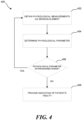
- FIG. 4 shows a process 400 configured to determine one or more physiological parameters and provide an indication of one or more medical conditions, which includes an indication that the patient is developing or at risk of developing a medical condition, as well as an indication that the patient has already developed the medical condition.
- the process 400 can be implemented by one or more aspects of the system of the present technology (such as system 10).
- the process 400 comprises one or more instructions stored in memory (e.g., the memory of the device 100 and/or the memory of the sensing element 110) and executed by one or more processors (e.g., the controller 112, the controller of the sensing element 110, a processor of the local computing device 150 ( FIG. 1 ), a processor of the remote computing device(s) 160, and/or a processor of the remote computing device(s) 170) of a monitoring system (e.g., system 10).
- processors e.g., the controller 112
- the controller of the sensing element 110 e.g., the controller 112
- the controller of the sensing element 110
- Various embodiments of the process 400 include one or more operations, functions, and actions illustrated by blocks 402 through 408. Although the blocks are illustrated in sequential order, these blocks may also be performed in parallel, and/or in a different order than the order disclosed and described herein. Also, the various blocks may be combined into fewer blocks, divided into additional blocks, and/or removed based upon a desired implementation.
- each block may represent a module, a segment, or a portion of program code, which includes one or more instructions executable by one or more processors for implementing specific logical functions or steps in the process.
- the program code may be stored on any type of computer readable medium, for example, such as a storage device including a disk or hard drive.
- the computer readable medium may include non-transitory computer readable media, for example, such as tangible, non-transitory computer-readable media that stores data for short periods of time like register memory, processor cache, and Random-Access Memory (RAM).
- the computer readable medium may also include non-transitory media, such as secondary or persistent long-term storage, like read only memory (ROM), optical or magnetic disks, compact-disc read only memory (CD-ROM), for example.
- the computer readable media may also be any other volatile or non-volatile storage systems.
- the computer readable medium may be considered a computer readable storage medium, for example, or a tangible storage device.
- each block in FIG. 4 may represent circuitry that is wired to perform the specific logical functions in the process.
- the process 400 obtains physiological measurements via a sensing element (such as any of the sensing elements 110 described herein) coupled to a vascular access device (such as any of the vascular access devices 100 described herein) while the device is implanted within the patient.
- the process 400 may determine at least one physiological parameter (such as any of the physiological parameters described herein) based on the physiological measurements.
- the process 400 may compare the at least one physiological parameter to a predetermined threshold and, based on the comparison, cause the system 10 to provide an indication of the patient's health (block 408).
- the system 10 may provide an indication that the patient is at risk of, or has already developed, a medical condition characterized by symptoms associated with the determined physiological parameters.
- the indication may be an auditory indication (e.g., a bell or chime, a verbal communication, etc.) and/or a visual indication (e.g., text, emitting light, etc.) communicated locally via the local computing device 150 ( FIG. 1 ) and/or remotely via the remote computing device 170 ( FIG. 1 ).
- the process 400 may determine the particular medical condition or potential medical conditions indicated by the physiological parameters and communicate those condition(s) via the indication.
- the process 400 may not explicitly communicate the particular condition in the indication but still provide an alert that the patient's data needs review by a medical professional.
- the process 400 may cause an indication of the patient's health even when the physiological parameters are within a predetermined threshold.
- the process 400 may provide regular health updates via the local computing device 150 ( FIG. 1 ) and/or remote computing device 170 ( FIG. 1 ), which may include a simple report of certain ones of the patient's physiological parameters and/or an assessment of one or more of the parameters.
- an indication that the patient is septic includes an indication that the patient is progressing towards sepsis.
- each block may represent a module, a segment, or a portion of program code, which includes one or more instructions executable by one or more processors for implementing specific logical functions or steps in the process.
- the program code may be stored on any type of computer readable medium, for example, such as a storage device including a disk or hard drive.
- the computer readable medium may include non-transitory computer readable media, for example, such as tangible, non-transitory computer-readable media that stores data for short periods of time like register memory, processor cache, and Random-Access Memory (RAM).
- the computer readable medium may also include non-transitory media, such as secondary or persistent long-term storage, like read only memory (ROM), optical or magnetic disks, compact-disc read only memory (CD-ROM), for example.
- the computer readable media may also be any other volatile or non-volatile storage systems.
- the computer readable medium may be considered a computer readable storage medium, for example, or atangible storage device.
- each block in FIG. 5 may represent circuitry that is wired to perform the specific logical functions in the process.
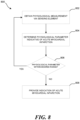
- the process 500 obtains physiological measurements via a sensing element (such as any of the sensing elements 110 described herein) coupled to a vascular access device (such as any of the vascular access devices 100 described herein) while the device is implanted within the patient.
- the physiological measurements may include at least temperature, for example.
- the process 500 may determine at least one physiological parameter indicative of sepsis (block 504), such as at least one of a temperature parameter, a heart rate parameter, a respiratory rate parameter, and an activity level parameter, each of which is discussed in greater detail below.
- a common symptom of sepsis is a measured body temperature outside of a normal range (i.e., hypothermia or a fever).
- the system of the present technology is configured to determine a temperature parameter, such as instantaneous body temperature, a change in body temperature over time, a rate of change in body temperature over time, an average body temperature over time, etc.
- a temperature parameter such as instantaneous body temperature, a change in body temperature over time, a rate of change in body temperature over time, an average body temperature over time, etc.
- the process 500 may provide an indication that the patient is septic.
- the process 500 may provide an indication that the patient is septic if the process 500 determines (a) a body temperature of the patient is outside of a predetermined temperature threshold of 96-100°F, 95-100°F; or 95-101.3°F; (b) a body temperature is outside of a predetermined threshold of 96-100°F, 95-100°F; or 95-101.3°F for a predetermined amount of time; (c) an instantaneous or average body temperature is greater than 100°F or 101°F; (d) an instantaneous or average body temperature is greater than 100°F or 101°F for a predetermined amount of time; (e) an instantaneous or average body temperature is less than 96°F or 95°F; (f) an instantaneous or average body temperature is less than 96°F or 95°F for a predetermined amount of time; (g) at least a 2% change in body temperature from a baseline temperature; and/or (h) at least a 2% change in body temperature from a baseline
- the system of the present technology is configured to determine a heart rate parameter, such as a heart rate of the patient. As shown in FIG. 5 , if the process 500 determines at block 506 that each of the temperature parameter and the heart rate parameter are outside of corresponding predetermined thresholds, then the process 500 may provide an indication that the patient is septic.
- the process 500 may provide an indication that the patient is septic if the process 500 determines the temperature parameter is outside of a predetermined temperature threshold, and if (a) the heart rate of the patient is greater than 90 beats per minute, 95 beats per minute, or 100 beats per minute, (b) the heart rate of the patient is greater than 90 beats per minute, 95 beats per minute, or 100 beats per minute for a predetermined amount of time; (c) the heart rate of the patient increases at least 10%, 15%, 20%, or 25% from a reference heart rate of the patient; and/or (d) the heart rate of the patient increases at least 10%, 15%, 20%, or 25% from a reference heart rate of the patient over a predetermined amount of time.
- the process 500 may provide an indication that the patient is septic if the process 500 determines the temperature parameter is outside of a predetermined temperature threshold, and if (a) the respiratory rate of the patient is greater than 15, 16, 17, 18, 19, 20, 21, or 22 breaths per minute, and/or (b) the respiratory rate of the patient is greater than 15, 16, 17, 18, 19, 20, 21, or 22 breaths per minute for a predetermined amount of time.
- the system of the present technology is configured to determine a movement parameter.
- the sensing element 110 may include an accelerometer or other sensor configured to detect and/or measure movement (or derivatives thereof), and the physiological measurements may include at least movement of the patient.
- the process 700 may also include measurements obtained by one or more movement detection elements positioned or worn at locations on the patient's body separate from the device 100.
- the process 500 may determine at least one movement parameter and/or a performance status, such as any of the movement parameters and performance statuses described below with respect to FIG. 7 .
- the process 500 may provide an indication that the patient is septic.
- the process 500 may provide an indication that the patient is septic if the process 500 determines the temperature parameter is outside of a predetermined temperature threshold (above or below), and a movement parameter of the patient is less than a predetermined threshold, as septic patients are lethargic and less active.
- the predetermined threshold for example, may be based on a baseline activity level of the patient.
- the process 500 may also determine one or more additional physiological parameters indicative of sepsis, such as central venous pressure.
- the process 500 may provide an indication that the patient is septic, for example, by determining the central venous pressure is below 2 mm/Hg.
- the system 10 may be configured to obtain and store a blood sample from the patient for later analysis.
- the device 10 may include one or more discrete receptacles for temporarily storing blood.
- the receptacles may be contained within the housing, or may be separate compartments fluidly coupled to the catheter 130 and/or the housing 102.
- the device 10 may contain a first catheter coupled to the reservoir (such as catheter 130) and a second catheter coupled to the receptacle(s).
- the device 10 may be configured to draw blood at pre-set times or at pre-set intervals, or in response to detection of one or more systems or medical conditions.
- the blood sample(s) obtained by the system may be saved for later analysis to determine one or more indicators of sepsis, such as a blood pH less than 7.2, a serum lactate greater than 2 mmol/L, 3 mmol/L, or 4 mmol/L, and/or a procalcitonin level above 2 ng/mL.
- indicators of sepsis such as a blood pH less than 7.2, a serum lactate greater than 2 mmol/L, 3 mmol/L, or 4 mmol/L, and/or a procalcitonin level above 2 ng/mL.
- CHF Congestive heart failure
- pulmonary embolism represents a common cause of acute CHF and as such detection of acute CHF can be a surrogate clinical marker for acute pulmonary embolism.
- the system of the present technology is configured to determine one or more physiological parameters indicative of CHF and provide an indication to the patient and/or physician that indicates that the patient has CHF.
- FIG. 6 shows a process 600 configured to determine one or more physiological parameters characterizing CHF (and/or one or more corresponding symptoms) and provide an indication of CHF to the patient and/or physician.
- the process 600 can be implemented by one or more aspects of the system of the present technology (such as system 10).
- the process 600 comprises one or more instructions stored in memory (e.g., the memory of the device 100 and/or the memory of the sensing element 110) and executed by one or more processors (e.g., the controller 112, the controller of the sensing element 110, a processor of the local computing device 150 ( FIG. 1 ), a processor of the remote computing device(s) 160, and/or a processor of the remote computing device(s) 170) of a monitoring system (e.g., system 10).
- processors e.g., the controller 112
- the controller of the sensing element 110 e.g., the controller 112
- the controller of the sensing element 110 e.g., the controller 112
- Various embodiments of the process 600 include one or more operations, functions, and actions illustrated by blocks 602 through 608. Although the blocks are illustrated in sequential order, these blocks may also be performed in parallel, and/or in a different order than the order disclosed and described herein. Also, the various blocks may be combined into fewer blocks, divided into additional blocks, and/or removed based upon a desired implementation.
- the computer readable medium may also include non-transitory media, such as secondary or persistent long-term storage, like read only memory (ROM), optical or magnetic disks, compact-disc read only memory (CD-ROM), for example.
- the computer readable media may also be any other volatile or non-volatile storage systems.
- the computer readable medium may be considered a computer readable storage medium, for example, or a tangible storage device.
- each block in FIG. 6 may represent circuitry that is wired to perform the specific logical functions in the process.
- the process 600 may be configured to determine CVP based on the physiological measurements obtained by the sensing element 110. As shown in FIG. 6 , if the process 600 determines at block 606 that the patient's CVP is outside of the predetermined temperature threshold, then the process 600 may provide an indication that the patient has CHF. For example, the process 600 may provide an indication that the patient has CHF if the process 600 determines the CVP is greater than 4 mm Hg, 5 mm Hg, or 6 mm Hg.
- the process 600 may also determine one or more additional physiological parameters indicative of CHF, such as: (a) oxygen saturation less than a baseline or other predetermined threshold, (b) heart rate greater than baseline or other predetermined threshold (as the patient's heart rate increases in an attempt to maintain cardiac output); (c) irregular heart rhythm; (d) a respiratory rate greater than baseline or other predetermined threshold (e.g., greater than 15, 16, 17, 18, 19, 20, 21, or 22 breaths per minute); and/or (d) high or low blood pressure.
- low blood pressure refers to a blood pressure lower than 90 mm Hg systolic or 60 mm Hg diastolic.
- high blood pressure refers to a blood pressure between 120-129 mm Hg systolic and less than 80 mm Hg diastolic, or between 130-139 mm Hg systolic or between 80-89 mm Hg diastolic, or at least 140 mm Hg systolic or at least 90 mm Hg diastolic, or over 180 mm Hg systolic and/or over 120 mm Hg diastolic.
- Performance status is highly correlated with survival outcomes.
- One method of evaluating performance status is the ECOG Scale, which describes a patient's level of functioning in terms of their ability to care for them self, daily activity, and physical ability (walking, working, etc.).
- the ECOG Scale includes the following categories: (0) Fully active, able to carry on all pre-disease performance without restriction; (1) restricted in physically strenuous activity but ambulatory and able to carry out work of a light or sedentary nature, e.g., light house work, office work; (2) ambulatory and capable of all selfcare but unable to carry out any work activities; up and about more than 50% of waking hours; (3) capable of only limited selfcare; confined to bed or chair more than 50% of waking hours; (4) completely disabled; cannot carry on any selfcare; totally confined to bed or chair; (5) dead.
- the devices, systems, and methods of the present technology may also be used to assess and provide indications of performance status based on methods other than the ECOG Scale, such as the Karnofsky Performance Status and others.
- Various embodiments of the process 700 include one or more operations, functions, and actions illustrated by blocks 702 through 708. Although the blocks are illustrated in sequential order, these blocks may also be performed in parallel, and/or in a different order than the order disclosed and described herein. Also, the various blocks may be combined into fewer blocks, divided into additional blocks, and/or removed based upon a desired implementation.
- the computer readable medium may also include non-transitory media, such as secondary or persistent long-term storage, like read only memory (ROM), optical or magnetic disks, compact-disc read only memory (CD-ROM), for example.
- the computer readable media may also be any other volatile or non-volatile storage systems.
- the computer readable medium may be considered a computer readable storage medium, for example, or a tangible storage device.
- each block in FIG. 7 may represent circuitry that is wired to perform the specific logical functions in the process.
- the process 700 may determine a performance status and indicate the performance status to the patient and/or physician (as shown at block 708). For example, using the aforementioned ECOG Scale, if the process 700 determines a movement parameter of less than 20 feet traveled over a 24-hour period, the process 700 may indicate a performance status grade of "3." Thresholds for different levels of performance status may be based on the patient's baseline activity level and/or an age- or medical condition-adjusted activity level. The recommended number of steps per day is 10,000, though Americans average about 5,000-7,000 steps per day.
- Thresholds based on movement parameters other than step count may also be utilized.
- the PSG may be relative to a particular patient's baseline activity level, such that a PSG of 0 is the patient's baseline activity level, and a 0-25% reduction in activity is a PSG of 1, a 25-50% reduction in activity is a PSG of 2, a 50-75% reduction in activity is a PSG of 3, and a greater than 75% reduction in activity is a PSG of 4.
- "activity" and/or "activity level” may be determined based on one or more of the movement parameters. It will be appreciated that other scales may be utilized.
- Various embodiments of the process 800 include one or more operations, functions, and actions illustrated by blocks 802 through 808. Although the blocks are illustrated in sequential order, these blocks may also be performed in parallel, and/or in a different order than the order disclosed and described herein. Also, the various blocks may be combined into fewer blocks, divided into additional blocks, and/or removed based upon a desired implementation.
- the process 800 may also determine one or more additional physiological parameters indicative of acute MI, such as: (a) a respiratory rate greater than baseline or other predetermined threshold (acute MI is often associated with shortness of breath which would be detected as increased respiratory rate), (b) oxygen saturation less than baseline or other predetermined threshold, and (c) performance status and/or movement outside of predetermined movement profile and/or activity level less than baseline or predetermined threshold.
- a respiratory rate greater than baseline or other predetermined threshold acute MI is often associated with shortness of breath which would be detected as increased respiratory rate
- oxygen saturation less than baseline or other predetermined threshold oxygen saturation less than baseline or other predetermined threshold
- performance status and/or movement outside of predetermined movement profile and/or activity level less than baseline or predetermined threshold For example, patients with acute MI may show a sudden decrease in activity level, exhibit a "slumping" position/motion, and/or develop syncope.
- the system is configured to determine one or more physiological parameters indicative of superior vena cava syndrome ("SVC Syndrome") and provide an indication of SVC Syndrome.
- SVC Syndrome superior vena cava syndrome
- the system may provide an indication of SVC Syndrome based on determining: heart rate greater than baseline or other predetermined threshold (due to a combination of pain and decreased preload, heart rate will increase in SVC syndrome); respiratory rate greater than baseline or other predetermined threshold; movement outside of predetermined movement profile and/or activity level less than baseline or predetermined threshold; and/or normal central venous pressure.
- the system is configured to determine one or more physiological parameters indicative of a cerebrovascular accident ("CVA") and provide an indication of a CVA.
- CVA cerebrovascular accident
- the system may provide an indication of a CVA based on determining, for example: movement outside of predetermined movement profile and/or activity level less than baseline or predetermined threshold (patients with CVA will display sudden focal neurologic deficits that may be detected as movement or gait disorders); respiratory rate greater than baseline or other predetermined threshold; increased intracranial pressure can lead to low respiratory rate or erratic breathing pattern; heart rate less than baseline or other predetermined threshold; and/or high or increased blood pressure.
- Detection of excessive vomiting may be determined via detecting one or more movements indicative of vomiting, alone or in combination with: (a) one or more electrolyte abnormalities, such as blood potassium levels greater than baseline or other predetermined threshold and blood calcium levels less than baseline or other predetermined threshold); (b) renal dysfunction from dehydration (e.g., by determining BUN levels greater than baseline or other predetermined threshold and/or blood creatinine levels greater than baseline or other predetermined threshold).
- electrolyte abnormalities such as blood potassium levels greater than baseline or other predetermined threshold and blood calcium levels less than baseline or other predetermined threshold
- renal dysfunction from dehydration e.g., by determining BUN levels greater than baseline or other predetermined threshold and/or blood creatinine levels greater than baseline or other predetermined threshold.
Landscapes
- Health & Medical Sciences (AREA)
- Life Sciences & Earth Sciences (AREA)
- Engineering & Computer Science (AREA)
- Heart & Thoracic Surgery (AREA)
- General Health & Medical Sciences (AREA)
- Veterinary Medicine (AREA)
- Biomedical Technology (AREA)
- Public Health (AREA)
- Animal Behavior & Ethology (AREA)
- Physics & Mathematics (AREA)
- Biophysics (AREA)
- Molecular Biology (AREA)
- Surgery (AREA)
- Medical Informatics (AREA)
- Pathology (AREA)
- Physiology (AREA)
- Cardiology (AREA)
- Pulmonology (AREA)
- Computer Networks & Wireless Communication (AREA)
- Artificial Intelligence (AREA)
- Anesthesiology (AREA)
- Hematology (AREA)
- Psychiatry (AREA)
- Signal Processing (AREA)
- Computer Vision & Pattern Recognition (AREA)
- Vascular Medicine (AREA)
- Oral & Maxillofacial Surgery (AREA)
- Dentistry (AREA)
- Gastroenterology & Hepatology (AREA)
- Mathematical Physics (AREA)
- Fuzzy Systems (AREA)
- Chemical & Material Sciences (AREA)
- Bioinformatics & Cheminformatics (AREA)
- Medicinal Chemistry (AREA)
- Pharmacology & Pharmacy (AREA)
- Optics & Photonics (AREA)
- Human Computer Interaction (AREA)
- Evolutionary Computation (AREA)
- Measuring And Recording Apparatus For Diagnosis (AREA)
- Measuring Pulse, Heart Rate, Blood Pressure Or Blood Flow (AREA)
Applications Claiming Priority (3)
| Application Number | Priority Date | Filing Date | Title |
|---|---|---|---|
| US16/197,083 US11096582B2 (en) | 2018-11-20 | 2018-11-20 | Vascular access devices, systems, and methods for monitoring patient health |
| PCT/US2019/062416 WO2020106842A1 (en) | 2018-11-20 | 2019-11-20 | Vascular access devices, systems, and methods for monitoring patient health |
| EP19829713.7A EP3883460B1 (de) | 2018-11-20 | 2019-11-20 | Vaskuläre zugangsvorrichtungen, systeme und verfahren zur überwachung der gesundheit eines patienten |
Related Parent Applications (1)
| Application Number | Title | Priority Date | Filing Date |
|---|---|---|---|
| EP19829713.7A Division EP3883460B1 (de) | 2018-11-20 | 2019-11-20 | Vaskuläre zugangsvorrichtungen, systeme und verfahren zur überwachung der gesundheit eines patienten |
Publications (2)
| Publication Number | Publication Date |
|---|---|
| EP4397355A2 true EP4397355A2 (de) | 2024-07-10 |
| EP4397355A3 EP4397355A3 (de) | 2024-08-28 |
Family
ID=69063858
Family Applications (2)
| Application Number | Title | Priority Date | Filing Date |
|---|---|---|---|
| EP24177710.1A Withdrawn EP4397355A3 (de) | 2018-11-20 | 2019-11-20 | Vaskuläre zugangsvorrichtungen, systeme und verfahren zur überwachung der gesundheit eines patienten |
| EP19829713.7A Active EP3883460B1 (de) | 2018-11-20 | 2019-11-20 | Vaskuläre zugangsvorrichtungen, systeme und verfahren zur überwachung der gesundheit eines patienten |
Family Applications After (1)
| Application Number | Title | Priority Date | Filing Date |
|---|---|---|---|
| EP19829713.7A Active EP3883460B1 (de) | 2018-11-20 | 2019-11-20 | Vaskuläre zugangsvorrichtungen, systeme und verfahren zur überwachung der gesundheit eines patienten |
Country Status (7)
| Country | Link |
|---|---|
| US (3) | US11096582B2 (de) |
| EP (2) | EP4397355A3 (de) |
| JP (1) | JP7478148B2 (de) |
| CN (1) | CN113993444A (de) |
| AU (1) | AU2019384794B2 (de) |
| CA (1) | CA3120531A1 (de) |
| WO (1) | WO2020106842A1 (de) |
Families Citing this family (19)
| Publication number | Priority date | Publication date | Assignee | Title |
|---|---|---|---|---|
| US11766550B2 (en) | 2017-05-21 | 2023-09-26 | Veris Health, Inc. | Implantable medication infusion port with physiologic monitoring |
| CN113939882A (zh) | 2018-11-20 | 2022-01-14 | 维瑞思健康公司 | 用于可植入血管接入设备的无线充电、定位和数据通信 |
| US11096582B2 (en) | 2018-11-20 | 2021-08-24 | Veris Health Inc. | Vascular access devices, systems, and methods for monitoring patient health |
| EP3998936B1 (de) | 2019-07-17 | 2025-09-03 | Nxgenport Inc | Implantierbarer venenzugangsport mit entfernten physiologischen überwachungsfähigkeiten |
| US20210298635A1 (en) * | 2020-03-26 | 2021-09-30 | Covidien Lp | Systems and methods for sedation-level monitoring |
| WO2022005790A1 (en) * | 2020-07-02 | 2022-01-06 | Smiths Medical Asd, Inc. | Port adapted to be frequently accessed |
| US20230363714A1 (en) * | 2020-10-08 | 2023-11-16 | University Of Pittsburgh - Of The Commonwealth System Of Higher Education | Device for Measurement of Core Body Temperature and Temperature Monitoring Methods |
| US12226609B2 (en) * | 2020-12-16 | 2025-02-18 | Medtronic, Inc. | Method to detect inadvertent delivery of drug to a subcutaneous pocket |
| WO2022162301A1 (fr) * | 2021-01-27 | 2022-08-04 | Octogone Medical | Système de prédiction de rupture ou de décollement de plaque vasculaire pouvant entraîner un accident vasculaire cérébral et/ou de prédiction d'une thrombose vasculaire |
| JP2024516492A (ja) * | 2021-03-08 | 2024-04-16 | メドトロニック,インコーポレイテッド | 急性の健康状態事象の監視及び検証 |
| AU2022309839A1 (en) * | 2021-07-12 | 2024-01-04 | Baxter Healthcare Sa | Systems for multi-level thermal management of electronic devices |
| US12521045B2 (en) | 2021-09-01 | 2026-01-13 | Medtronic, Inc. | Cardiac and temperature monitor |
| US20250072838A1 (en) * | 2021-09-21 | 2025-03-06 | Veris Health, Inc. | Vascular access devices, systems, and methods |
| EP4468949A4 (de) * | 2022-01-28 | 2025-08-27 | Veris Health Inc | Gefässmessvorrichtungen, -systeme und -verfahren |
| CN114652351B (zh) * | 2022-05-24 | 2022-10-14 | 苏州圣泽医疗科技有限公司 | 基于超声多普勒的连续血压测量方法、装置和电子设备 |
| GB2620589A (en) * | 2022-07-12 | 2024-01-17 | Opto Biosystems Ltd | An implantable sensor and a wearable detector |
| WO2024102408A1 (en) | 2022-11-09 | 2024-05-16 | Bard Access Systems, Inc. | Systems for preventing or treating vascular access device-related thrombosis |
| WO2025199303A1 (en) * | 2024-03-20 | 2025-09-25 | Northwestern University | Implantable smartport for ultrasonic, electrical, and optical monitoring of cardiac functions during chemotherapy |
| CN120167901B (zh) * | 2025-03-24 | 2025-11-25 | 焕然新生(深圳)健康管理有限公司 | 一种糖尿病的逆转管理方法、系统和介质 |
Family Cites Families (144)
| Publication number | Priority date | Publication date | Assignee | Title |
|---|---|---|---|---|
| US4834720A (en) | 1987-12-24 | 1989-05-30 | Becton, Dickinson And Company | Implantable port septum |
| US4929236A (en) | 1988-05-26 | 1990-05-29 | Shiley Infusaid, Inc. | Snap-lock fitting catheter for an implantable device |
| US4846191A (en) | 1988-05-27 | 1989-07-11 | Data Sciences, Inc. | Device for chronic measurement of internal body pressure |
| US4861341A (en) | 1988-07-18 | 1989-08-29 | Woodburn Robert T | Subcutaneous venous access device and needle system |
| US5185003A (en) | 1989-04-11 | 1993-02-09 | B. Braun Melsungen Ag | Port for injecting medicaments |
| DE8904527U1 (de) | 1989-04-11 | 1989-11-30 | B. Braun Melsungen Ag, 3508 Melsungen | Port zur Einspritzung von Medikamenten |
| US5167638A (en) | 1989-10-27 | 1992-12-01 | C. R. Bard, Inc. | Subcutaneous multiple-access port |
| US5360407A (en) | 1991-08-29 | 1994-11-01 | C. R. Bard, Inc. | Implantable dual access port with tactile ridge for position sensing |
| US5399168A (en) | 1991-08-29 | 1995-03-21 | C. R. Bard, Inc. | Implantable plural fluid cavity port |
| US5281205A (en) | 1992-03-11 | 1994-01-25 | Mcpherson William E | Vascular access system and clearing method |
| US5423334A (en) | 1993-02-01 | 1995-06-13 | C. R. Bard, Inc. | Implantable medical device characterization system |
| US5562618A (en) | 1994-01-21 | 1996-10-08 | Sims Deltec, Inc. | Portal assembly and catheter connector |
| US5387192A (en) | 1994-01-24 | 1995-02-07 | Sims Deltec, Inc. | Hybrid portal and method |
| US5476460A (en) | 1994-04-29 | 1995-12-19 | Minimed Inc. | Implantable infusion port with reduced internal volume |
| US5620419A (en) | 1994-10-14 | 1997-04-15 | Cook Pacemaker Corporation | Port stabilizer ring |
| US5637102A (en) | 1995-05-24 | 1997-06-10 | C. R. Bard, Inc. | Dual-type catheter connection system |
| US6113572A (en) | 1995-05-24 | 2000-09-05 | C. R. Bard, Inc. | Multiple-type catheter connection systems |
| US5989216A (en) | 1995-06-29 | 1999-11-23 | Sims Deltec, Inc. | Access portal and method |
| US5951512A (en) | 1996-05-28 | 1999-09-14 | Horizon Medical Products, Inc. | Infusion port with modified drug reservoir |
| US6086555A (en) | 1997-01-17 | 2000-07-11 | C. R. Bard, Inc. | Dual reservoir vascular access port with two-piece housing and compound septum |
| US5833654A (en) | 1997-01-17 | 1998-11-10 | C. R. Bard, Inc. | Longitudinally aligned dual reservoir access port |
| US6213973B1 (en) | 1998-01-12 | 2001-04-10 | C. R. Bard, Inc. | Vascular access port with elongated septum |
| EP1137451A4 (de) | 1998-12-07 | 2003-05-21 | Std Mfg Inc | Implantierbarer gefässzugang |
| US8177762B2 (en) | 1998-12-07 | 2012-05-15 | C. R. Bard, Inc. | Septum including at least one identifiable feature, access ports including same, and related methods |
| US6562023B1 (en) | 1999-04-23 | 2003-05-13 | Deltec Inc. | Catheter connector including seal ring and method |
| US6804558B2 (en) | 1999-07-07 | 2004-10-12 | Medtronic, Inc. | System and method of communicating between an implantable medical device and a remote computer system or health care provider |
| US7181505B2 (en) | 1999-07-07 | 2007-02-20 | Medtronic, Inc. | System and method for remote programming of an implantable medical device |
| US20020052539A1 (en) | 1999-07-07 | 2002-05-02 | Markus Haller | System and method for emergency communication between an implantable medical device and a remote computer system or health care provider |
| US7039810B1 (en) | 1999-11-02 | 2006-05-02 | Medtronic, Inc. | Method and apparatus to secure data transfer from medical device systems |
| CA2401777A1 (en) | 1999-12-21 | 2001-06-28 | Bozidar Ferek-Petric | System for dynamic remote networking with implantable medical devices |
| US6650939B2 (en) | 2000-03-17 | 2003-11-18 | Medtronic, Inc. | Universal interface for implantable medical device data management |
| US7831301B2 (en) | 2001-03-16 | 2010-11-09 | Medtronic, Inc. | Heart failure monitor quicklook summary for patient management systems |
| US6622050B2 (en) | 2000-03-31 | 2003-09-16 | Medtronic, Inc. | Variable encryption scheme for data transfer between medical devices and related data management systems |
| US6922592B2 (en) | 2000-04-04 | 2005-07-26 | Medtronic, Inc. | Implantable medical device controlled by a non-invasive physiological data measurement device |
| US6478783B1 (en) | 2000-05-26 | 2002-11-12 | H. Robert Moorehead | Anti-sludge medication ports and related methods |
| US7324949B2 (en) | 2001-03-26 | 2008-01-29 | Medtronic, Inc. | Implantable medical device management system |
| US6997914B2 (en) | 2001-04-02 | 2006-02-14 | Horizon Medical Products, Inc. | Implantable access port |
| US20030014091A1 (en) | 2001-05-25 | 2003-01-16 | Rastegar Jahangir S. | Implantable wireless and battery-free communication system for diagnostics sensors |
| US20030144711A1 (en) | 2002-01-29 | 2003-07-31 | Neuropace, Inc. | Systems and methods for interacting with an implantable medical device |
| US20160317797A1 (en) | 2002-04-02 | 2016-11-03 | Angiodynamics, Inc. | Implantable Access Port |
| US7037273B2 (en) | 2002-05-22 | 2006-05-02 | Cardiac Pacemakers, Inc. | Core body temperature monitoring in heart failure patients |
| US6847844B2 (en) | 2002-06-06 | 2005-01-25 | University Of Pittsburgh Of The Commonwealth System Of Higher Education | Method of data communication with implanted device and associated apparatus |
| US7069086B2 (en) | 2002-08-08 | 2006-06-27 | Cardiac Pacemakers, Inc. | Method and system for improved spectral efficiency of far field telemetry in a medical device |
| US7070591B2 (en) | 2002-09-17 | 2006-07-04 | Transoma Medical, Inc. | Vascular access port with physiological sensor |
| US6962580B2 (en) | 2002-09-17 | 2005-11-08 | Transoma Medical, Inc. | Vascular access port with needle detector |
| US7686762B1 (en) | 2002-10-03 | 2010-03-30 | Integrated Sensing Systems, Inc. | Wireless device and system for monitoring physiologic parameters |
| FR2846245B1 (fr) | 2002-10-25 | 2005-03-25 | Braun Medical | Dispositif medical implantable par voie sous-cutanee |
| US7177684B1 (en) | 2003-07-03 | 2007-02-13 | Pacesetter, Inc. | Activity monitor and six-minute walk test for depression and CHF patients |
| US7351233B2 (en) | 2003-10-14 | 2008-04-01 | Parks Robert A | Subcutaneous vascular access port, needle and kit, and methods of using same |
| US20050124980A1 (en) | 2003-12-03 | 2005-06-09 | Sanders Scott W. | Port stem marking for catheter placement |
| US8608727B2 (en) | 2004-03-01 | 2013-12-17 | Smiths Medical Asd, Inc. | Delivery system and method |
| US7622306B2 (en) * | 2004-04-20 | 2009-11-24 | Board Of Regents, The University Of Texas System | Using plasma proteomic pattern for diagnosis, classification, prediction of response to therapy and clinical behavior, stratification of therapy, and monitoring disease in hematologic malignancies |
| NL1026492C2 (nl) | 2004-06-24 | 2005-12-28 | Pan Consult B V | Inrichting voor het met behulp van ultrageluid bestralen van een doelgebied in een menselijk of dierlijk lichaam. |
| EP1773442A2 (de) | 2004-07-26 | 2007-04-18 | C.R.Bard, Inc. | Port-design und verfahren zu seinem zusammenbau |
| WO2006026748A1 (en) | 2004-08-31 | 2006-03-09 | Lifescan Scotland Limited | Method of manufacturing an auto-calibrating sensor |
| WO2006066023A2 (en) | 2004-12-14 | 2006-06-22 | C. R. Bard, Inc. | Fast clear port |
| US7775966B2 (en) | 2005-02-24 | 2010-08-17 | Ethicon Endo-Surgery, Inc. | Non-invasive pressure measurement in a fluid adjustable restrictive device |
| US7909804B2 (en) | 2005-02-07 | 2011-03-22 | C. R. Bard, Inc. | Vascular access port with integral attachment mechanism |
| US8029482B2 (en) | 2005-03-04 | 2011-10-04 | C. R. Bard, Inc. | Systems and methods for radiographically identifying an access port |
| US9474888B2 (en) | 2005-03-04 | 2016-10-25 | C. R. Bard, Inc. | Implantable access port including a sandwiched radiopaque insert |
| US7785302B2 (en) | 2005-03-04 | 2010-08-31 | C. R. Bard, Inc. | Access port identification systems and methods |
| US7947022B2 (en) | 2005-03-04 | 2011-05-24 | C. R. Bard, Inc. | Access port identification systems and methods |
| US10307581B2 (en) | 2005-04-27 | 2019-06-04 | C. R. Bard, Inc. | Reinforced septum for an implantable medical device |
| DE602006019587D1 (de) | 2005-04-27 | 2011-02-24 | Bard Inc C R | Spritzenpumpesystem zur Injektion von Kontrastmittel in einer intravenösen Leitung |
| EP1874393B1 (de) | 2005-04-27 | 2017-09-06 | C.R.Bard, Inc. | Infusionsvorrichtungen |
| US20070016089A1 (en) | 2005-07-15 | 2007-01-18 | Fischell David R | Implantable device for vital signs monitoring |
| US8827904B2 (en) | 2005-08-31 | 2014-09-09 | Medtronic, Inc. | Automatic parameter status on an implantable medical device system |
| USD546440S1 (en) | 2005-09-27 | 2007-07-10 | C.R. Bard, Inc. | Injectable power port |
| CA2626787A1 (en) | 2005-09-30 | 2007-04-12 | Angiodynamics, Inc. | Implantable medical device |
| WO2007054841A1 (en) * | 2005-11-08 | 2007-05-18 | Koninklijke Philips Electronics, N.V. | Method for detecting critical trends in multi-parameter patient monitoring and clinical data using clustering |
| US7963945B2 (en) | 2005-12-14 | 2011-06-21 | Hewlett-Packard Development Company, L.P. | Replaceable supplies for IV fluid delivery systems |
| US8301254B2 (en) | 2006-01-09 | 2012-10-30 | Greatbatch Ltd. | Cross-band communications in an implantable device |
| US8660659B2 (en) | 2006-01-09 | 2014-02-25 | Greatbatch Ltd. | Cross-band communications in an implantable device |
| US7762999B2 (en) | 2006-02-01 | 2010-07-27 | Ethicon Endo-Surgery, Inc. | Injection port |
| US9186455B2 (en) | 2006-02-14 | 2015-11-17 | B. Braun Medical Inc. | Port access device |
| US7972314B2 (en) | 2006-03-29 | 2011-07-05 | Medical Components, Inc. | Venous access port base |
| US8491547B2 (en) | 2006-04-28 | 2013-07-23 | Medtronic, Inc. | Septum monitoring system and method for an implantable therapeutic substance delivery device |
| US7780590B2 (en) | 2006-05-31 | 2010-08-24 | Allergan, Inc. | Method for locating an implanted fluid access port |
| US9101264B2 (en) | 2006-06-15 | 2015-08-11 | Peerbridge Health, Inc. | Wireless electrode arrangement and method for patient monitoring via electrocardiography |
| US7974924B2 (en) | 2006-07-19 | 2011-07-05 | Mvisum, Inc. | Medical data encryption for communication over a vulnerable system |
| US7965180B2 (en) | 2006-09-28 | 2011-06-21 | Semiconductor Energy Laboratory Co., Ltd. | Wireless sensor device |
| US20080114308A1 (en) * | 2006-11-13 | 2008-05-15 | Di Palma Giorgio | Vascular Access Port with Catheter Connector |
| WO2009081262A1 (en) | 2007-12-18 | 2009-07-02 | Insuline Medical Ltd. | Drug delivery device with sensor for closed-loop operation |
| US7942863B2 (en) | 2007-03-29 | 2011-05-17 | Medtronic, Inc. | Detecting needle entry into a port of an infusion device |
| US7844336B2 (en) * | 2007-04-10 | 2010-11-30 | Cardiac Pacemakers, Inc. | Implantable medical device configured as a pedometer |
| US20080275349A1 (en) * | 2007-05-02 | 2008-11-06 | Earlysense Ltd. | Monitoring, predicting and treating clinical episodes |
| US8271080B2 (en) * | 2007-05-23 | 2012-09-18 | Cardiac Pacemakers, Inc. | Decongestive therapy titration for heart failure patients using implantable sensor |
| USD574950S1 (en) | 2007-09-07 | 2008-08-12 | C.R. Bard, Inc. | Implantable port device |
| EP2190517A4 (de) | 2007-09-07 | 2012-08-15 | Angiodynamics Inc | Implantierbarer anschluss |
| US8535280B2 (en) | 2007-09-26 | 2013-09-17 | Medtronic, In | Pressure based refill status monitor for implantable pumps |
| US20190201678A9 (en) | 2007-10-05 | 2019-07-04 | Angiodynamics, Inc. | Dual Reservoir Implantable Access Port |
| AU2008308451A1 (en) | 2007-10-05 | 2009-04-09 | Angiodynamics, Inc. | Dual reservoir implantable access port |
| US9579496B2 (en) | 2007-11-07 | 2017-02-28 | C. R. Bard, Inc. | Radiopaque and septum-based indicators for a multi-lumen implantable port |
| US8401659B2 (en) | 2008-01-15 | 2013-03-19 | Cardiac Pacemakers, Inc. | Implantable medical device with wireless communications |
| JP5052679B2 (ja) | 2008-01-15 | 2012-10-17 | カーディアック ペースメイカーズ, インコーポレイテッド | アンテナを有する埋込型医療デバイス |
| WO2009114115A1 (en) | 2008-03-10 | 2009-09-17 | S.E.A. Medical Systems, Inc. | Intravenous fluid monitoring |
| US9023063B2 (en) | 2008-04-17 | 2015-05-05 | Apollo Endosurgery, Inc. | Implantable access port device having a safety cap |
| US8439835B1 (en) * | 2008-06-30 | 2013-05-14 | Bruce A. McKinley | System and method for diagnosis and management of sepsis |
| ES2985873T3 (es) | 2008-10-10 | 2024-11-07 | Implantica Patent Ltd | Medios de fijación para conjunto de control médico implantable |
| EP3978066B1 (de) | 2008-10-31 | 2025-01-15 | C. R. Bard, Inc. | Systeme zur identifizierung eines zugangsanschlusses |
| US8932271B2 (en) | 2008-11-13 | 2015-01-13 | C. R. Bard, Inc. | Implantable medical devices including septum-based indicators |
| US9421325B2 (en) | 2008-11-20 | 2016-08-23 | Medtronic, Inc. | Pressure based refill status monitor for implantable pumps |
| CN102281816B (zh) * | 2008-11-20 | 2015-01-07 | 人体媒介公司 | 用于确定危重护理参数的方法和设备 |
| US8672917B2 (en) | 2009-01-05 | 2014-03-18 | Medtronic, Inc. | Pressure monitoring to control delivery of therapeutic agent |
| EP2391413A4 (de) | 2009-01-29 | 2015-04-01 | Vital Access Corp | Ports für gefässzugang und zugehörige verfahren |
| US10022094B2 (en) | 2009-02-04 | 2018-07-17 | Pfm Medical, Inc. | X-ray discernable marker for power injectable vascular access port |
| US20120172711A1 (en) | 2009-02-04 | 2012-07-05 | Marshall Kerr | Injectable Vascular Access Port with Discernable Markers for Identification |
| US8092435B2 (en) | 2009-10-16 | 2012-01-10 | Smiths Medical Asd, Inc. | Portal with septum embedded indicia |
| US9079004B2 (en) | 2009-11-17 | 2015-07-14 | C. R. Bard, Inc. | Overmolded access port including anchoring and identification features |
| US9011388B2 (en) | 2010-06-04 | 2015-04-21 | Smiths Medical Asd, Inc. | Passive safety portal device |
| US9017256B2 (en) | 2010-09-22 | 2015-04-28 | Milieu Institute, Llc | System and method for physiological monitoring |
| USD676955S1 (en) | 2010-12-30 | 2013-02-26 | C. R. Bard, Inc. | Implantable access port |
| US9072881B2 (en) | 2011-03-19 | 2015-07-07 | Michael J. Dalton | Vascular access port |
| US8920390B2 (en) | 2011-03-19 | 2014-12-30 | Michael J. Dalton | Vascular access port with tubular shaped septum |
| DE102011078711A1 (de) | 2011-07-06 | 2013-01-10 | Robert Bosch Gmbh | Vaskulare Zugangsvorrichtung mit auslesbarer Speichereinheit |
| US20130150811A1 (en) | 2011-12-12 | 2013-06-13 | Angiodynamics, Inc. | High-Flow Port Stem |
| US20140088519A1 (en) | 2012-09-26 | 2014-03-27 | Marshall Kerr | Method and Apparatus Providing Interface Between Subcutaneous Port and Patient Tissue |
| US11420033B2 (en) | 2013-01-23 | 2022-08-23 | C. R. Bard, Inc. | Low-profile single and dual vascular access device |
| EP3342391B1 (de) | 2013-01-23 | 2025-01-22 | C. R. Bard, Inc. | Zugangsport mit niedrigem profil |
| TW201440745A (zh) | 2013-03-14 | 2014-11-01 | Smiths Medical Asd Inc | 門靜脈及其隔膜 |
| GB201305378D0 (en) | 2013-03-25 | 2013-05-08 | Denke Medical Ltd | Medical device |
| EP2859911A1 (de) | 2013-10-11 | 2015-04-15 | qSTAR Medical SAS | Portvorrichtungen für vaskulären Zugang mit integrierten Sensoren |
| US20150112315A1 (en) | 2013-10-22 | 2015-04-23 | International Business Machines Corporation | Controlling access to an intravenous catheter |
| WO2015097251A2 (en) | 2013-12-23 | 2015-07-02 | Eric Chevalier | Vibrating medical device for minimally invasive procedures |
| USD748249S1 (en) | 2014-06-05 | 2016-01-26 | B. Braun Melsungen Ag | Modular port for containers for clinical application intended for the administration of drugs and feeds |
| US9642556B2 (en) | 2014-06-27 | 2017-05-09 | Intel Corporation | Subcutaneously implantable sensor devices and associated systems and methods |
| US11406347B2 (en) * | 2014-10-23 | 2022-08-09 | Medtronic, Inc. | Acoustic monitoring to detect medical condition |
| CN104740765B (zh) | 2015-01-31 | 2017-03-22 | 北京品驰医疗设备有限公司 | 一种植入式医疗系统 |
| EP3254212A1 (de) | 2015-02-03 | 2017-12-13 | Medtronic Inc. | Systeme und verfahren zur regulierung der behandlung und überwachung einer implantierbaren medizinischen vorrichtung |
| CN113598720B (zh) * | 2015-09-25 | 2024-08-23 | C·R·巴德股份有限公司 | 具有监测功能的导管组件 |
| EP3410923B1 (de) * | 2016-02-01 | 2021-10-13 | Medtronic Ardian Luxembourg S.à.r.l. | System zur überwachung und beurteilung einer nervenmodulationstherapie |
| US10321292B2 (en) | 2016-05-20 | 2019-06-11 | Pacesetter, Inc. | Dynamic announcing for creation of wireless communication connections |
| US20180103859A1 (en) | 2016-07-30 | 2018-04-19 | Catalina F Provenzano | Systems, Devices, and/or Methods for Managing Patient Monitoring |
| US10610678B2 (en) | 2016-08-11 | 2020-04-07 | Angiodynamics, Inc. | Bi-directional, pressure-actuated medical valve with improved fluid flow control and method of using such |
| KR20190071808A (ko) * | 2016-11-02 | 2019-06-24 | 레스퍼러토리 모션 인코포레이티드 | 호흡 조기 경고 점수 계산 시스템 및 방법 |
| US11426513B2 (en) | 2016-11-29 | 2022-08-30 | Geoffrey Louis Tyson | Implantable devices for drug delivery in response to detected biometric parameters associated with an opioid drug overdose and associated systems and methods |
| JP7132633B2 (ja) | 2016-12-27 | 2022-09-07 | ヴァソニクス・インコーポレイテッド | カテーテルハウジング |
| US11766550B2 (en) | 2017-05-21 | 2023-09-26 | Veris Health, Inc. | Implantable medication infusion port with physiologic monitoring |
| BR112020011772A2 (pt) | 2017-12-15 | 2020-11-17 | Gastroklenz Inc. | sistema de monitoramento do sensor para tratamen-tos com base em cateter permanentes |
| CN113939882A (zh) | 2018-11-20 | 2022-01-14 | 维瑞思健康公司 | 用于可植入血管接入设备的无线充电、定位和数据通信 |
| US11096582B2 (en) | 2018-11-20 | 2021-08-24 | Veris Health Inc. | Vascular access devices, systems, and methods for monitoring patient health |
| AU2019384549B2 (en) | 2018-11-20 | 2024-09-19 | Veris Health Inc. | Vascular access devices for monitoring patient health |
| JP2023502869A (ja) | 2019-11-18 | 2023-01-26 | ヴェーリス ヘルス, インコーポレイテッド | 患者の健康状態を監視するための血管アクセスデバイス、システム、および方法 |
| JP2024506641A (ja) | 2020-12-21 | 2024-02-14 | ヴェーリス ヘルス インコーポレイテッド | 埋込可能モニタのための無線通信および電力節約 |
-
2018
- 2018-11-20 US US16/197,083 patent/US11096582B2/en active Active
-
2019
- 2019-11-20 AU AU2019384794A patent/AU2019384794B2/en active Active
- 2019-11-20 EP EP24177710.1A patent/EP4397355A3/de not_active Withdrawn
- 2019-11-20 CA CA3120531A patent/CA3120531A1/en active Pending
- 2019-11-20 JP JP2021528841A patent/JP7478148B2/ja active Active
- 2019-11-20 CN CN201980089469.8A patent/CN113993444A/zh active Pending
- 2019-11-20 WO PCT/US2019/062416 patent/WO2020106842A1/en not_active Ceased
- 2019-11-20 EP EP19829713.7A patent/EP3883460B1/de active Active
-
2021
- 2021-08-03 US US17/444,329 patent/US12232852B2/en active Active
-
2025
- 2025-01-22 US US19/033,669 patent/US20250160659A1/en active Pending
Non-Patent Citations (1)
| Title |
|---|
| BASCH ET AL.: "Overall Survival Results of a Trial Assessing Patient-Reported Outcomes for Symptom Monitoring During Routine Cancer Treatment", JAMA, vol. 318, no. 2, 11 July 2017 (2017-07-11) |
Also Published As
| Publication number | Publication date |
|---|---|
| WO2020106842A1 (en) | 2020-05-28 |
| US20250160659A1 (en) | 2025-05-22 |
| CN113993444A (zh) | 2022-01-28 |
| JP2022510602A (ja) | 2022-01-27 |
| US20210361166A1 (en) | 2021-11-25 |
| CA3120531A1 (en) | 2020-05-28 |
| AU2019384794A1 (en) | 2021-07-08 |
| EP3883460A1 (de) | 2021-09-29 |
| EP4397355A3 (de) | 2024-08-28 |
| US11096582B2 (en) | 2021-08-24 |
| JP7478148B2 (ja) | 2024-05-02 |
| EP3883460B1 (de) | 2024-05-29 |
| US12232852B2 (en) | 2025-02-25 |
| AU2019384794B2 (en) | 2024-12-12 |
| US20200155003A1 (en) | 2020-05-21 |
Similar Documents
| Publication | Publication Date | Title |
|---|---|---|
| US12232852B2 (en) | Vascular access devices, systems, and methods for monitoring patient health | |
| US8628471B2 (en) | System and method for predicting patient health within a patient management system | |
| AU2019384549B2 (en) | Vascular access devices for monitoring patient health | |
| EP1102196A2 (de) | Automatisiertes Sammlungs und Analyse- Patienten ,Pflegesystem und Verfahren zur Diagnose und Ueberwachung des kongestiven Herzversagens und dessen Ergebnisse | |
| EP1102198A2 (de) | Automatisiertes Sammlungs und Analyse- Patienten, Pflegesystem und Verfahren zur Diagnose und Ueberwachung von Ateminsuffizienzen und dessen Ergebnisse | |
| CN110769742A (zh) | 用于评定患者的健康状况的系统和方法 | |
| US20220386961A1 (en) | Vascular access devices, systems, and methods for monitoring patient health | |
| US20170281020A1 (en) | Rapid Detection of Bleeding Following Injury | |
| WO2017218431A1 (en) | Rapid detection of bleeding following injury | |
| US20240075271A1 (en) | Wireless Communication and Power Conservation for Implantable Monitors | |
| Scardovi et al. | Remote monitoring of severe heart failure | |
| EP4252245A1 (de) | Symptomlogger | |
| US20250276165A1 (en) | Vascular access devices, systems, and methods | |
| CN121569347A (zh) | 一种用于使用动态预测指标监测心力衰竭状况的系统和方法 |
Legal Events
| Date | Code | Title | Description |
|---|---|---|---|
| PUAI | Public reference made under article 153(3) epc to a published international application that has entered the european phase |
Free format text: ORIGINAL CODE: 0009012 |
|
| STAA | Information on the status of an ep patent application or granted ep patent |
Free format text: STATUS: THE APPLICATION HAS BEEN PUBLISHED |
|
| AC | Divisional application: reference to earlier application |
Ref document number: 3883460 Country of ref document: EP Kind code of ref document: P |
|
| AK | Designated contracting states |
Kind code of ref document: A2 Designated state(s): AL AT BE BG CH CY CZ DE DK EE ES FI FR GB GR HR HU IE IS IT LI LT LU LV MC MK MT NL NO PL PT RO RS SE SI SK SM TR |
|
| REG | Reference to a national code |
Ref country code: DE Ref legal event code: R079 Free format text: PREVIOUS MAIN CLASS: A61M0039020000 Ipc: A61B0005000000 |
|
| PUAL | Search report despatched |
Free format text: ORIGINAL CODE: 0009013 |
|
| AK | Designated contracting states |
Kind code of ref document: A3 Designated state(s): AL AT BE BG CH CY CZ DE DK EE ES FI FR GB GR HR HU IE IS IT LI LT LU LV MC MK MT NL NO PL PT RO RS SE SI SK SM TR |
|
| RIC1 | Information provided on ipc code assigned before grant |
Ipc: A61M 39/02 20060101ALI20240724BHEP Ipc: A61B 5/145 20060101ALI20240724BHEP Ipc: A61B 5/06 20060101ALI20240724BHEP Ipc: A61B 5/0215 20060101ALI20240724BHEP Ipc: A61B 5/0205 20060101ALI20240724BHEP Ipc: A61B 5/00 20060101AFI20240724BHEP |
|
| STAA | Information on the status of an ep patent application or granted ep patent |
Free format text: STATUS: REQUEST FOR EXAMINATION WAS MADE |
|
| 17P | Request for examination filed |
Effective date: 20250219 |
|
| STAA | Information on the status of an ep patent application or granted ep patent |
Free format text: STATUS: EXAMINATION IS IN PROGRESS |
|
| 17Q | First examination report despatched |
Effective date: 20251009 |
|
| STAA | Information on the status of an ep patent application or granted ep patent |
Free format text: STATUS: THE APPLICATION HAS BEEN WITHDRAWN |
|
| 18W | Application withdrawn |
Effective date: 20260209 |