EP4397585A2 - Système de commande de bicyclette - Google Patents
Système de commande de bicyclette Download PDFInfo
- Publication number
- EP4397585A2 EP4397585A2 EP24175867.1A EP24175867A EP4397585A2 EP 4397585 A2 EP4397585 A2 EP 4397585A2 EP 24175867 A EP24175867 A EP 24175867A EP 4397585 A2 EP4397585 A2 EP 4397585A2
- Authority
- EP
- European Patent Office
- Prior art keywords
- bicycle
- processor
- shifting
- data
- cadence
- Prior art date
- Legal status (The legal status is an assumption and is not a legal conclusion. Google has not performed a legal analysis and makes no representation as to the accuracy of the status listed.)
- Pending
Links
Images





Classifications
-
- B—PERFORMING OPERATIONS; TRANSPORTING
- B62—LAND VEHICLES FOR TRAVELLING OTHERWISE THAN ON RAILS
- B62M—RIDER PROPULSION OF WHEELED VEHICLES OR SLEDGES; POWERED PROPULSION OF SLEDGES OR SINGLE-TRACK CYCLES; TRANSMISSIONS SPECIALLY ADAPTED FOR SUCH VEHICLES
- B62M9/00—Transmissions characterised by use of an endless chain, belt, or the like
- B62M9/04—Transmissions characterised by use of an endless chain, belt, or the like of changeable ratio
- B62M9/06—Transmissions characterised by use of an endless chain, belt, or the like of changeable ratio using a single chain, belt, or the like
- B62M9/10—Transmissions characterised by use of an endless chain, belt, or the like of changeable ratio using a single chain, belt, or the like involving different-sized wheels, e.g. rear sprocket chain wheels selectively engaged by the chain, belt, or the like
- B62M9/12—Transmissions characterised by use of an endless chain, belt, or the like of changeable ratio using a single chain, belt, or the like involving different-sized wheels, e.g. rear sprocket chain wheels selectively engaged by the chain, belt, or the like the chain, belt, or the like being laterally shiftable, e.g. using a rear derailleur
- B62M9/121—Rear derailleurs
- B62M9/122—Rear derailleurs electrically or fluid actuated; Controls thereof
-
- B—PERFORMING OPERATIONS; TRANSPORTING
- B62—LAND VEHICLES FOR TRAVELLING OTHERWISE THAN ON RAILS
- B62M—RIDER PROPULSION OF WHEELED VEHICLES OR SLEDGES; POWERED PROPULSION OF SLEDGES OR SINGLE-TRACK CYCLES; TRANSMISSIONS SPECIALLY ADAPTED FOR SUCH VEHICLES
- B62M9/00—Transmissions characterised by use of an endless chain, belt, or the like
- B62M9/04—Transmissions characterised by use of an endless chain, belt, or the like of changeable ratio
- B62M9/06—Transmissions characterised by use of an endless chain, belt, or the like of changeable ratio using a single chain, belt, or the like
- B62M9/10—Transmissions characterised by use of an endless chain, belt, or the like of changeable ratio using a single chain, belt, or the like involving different-sized wheels, e.g. rear sprocket chain wheels selectively engaged by the chain, belt, or the like
- B62M9/12—Transmissions characterised by use of an endless chain, belt, or the like of changeable ratio using a single chain, belt, or the like involving different-sized wheels, e.g. rear sprocket chain wheels selectively engaged by the chain, belt, or the like the chain, belt, or the like being laterally shiftable, e.g. using a rear derailleur
- B62M9/131—Front derailleurs
- B62M9/133—Front derailleurs changing gears automatically
-
- B—PERFORMING OPERATIONS; TRANSPORTING
- B62—LAND VEHICLES FOR TRAVELLING OTHERWISE THAN ON RAILS
- B62J—CYCLE SADDLES OR SEATS; AUXILIARY DEVICES OR ACCESSORIES SPECIALLY ADAPTED TO CYCLES AND NOT OTHERWISE PROVIDED FOR, e.g. ARTICLE CARRIERS OR CYCLE PROTECTORS
- B62J99/00—Subject matter not provided for in other groups of this subclass
-
- B—PERFORMING OPERATIONS; TRANSPORTING
- B62—LAND VEHICLES FOR TRAVELLING OTHERWISE THAN ON RAILS
- B62M—RIDER PROPULSION OF WHEELED VEHICLES OR SLEDGES; POWERED PROPULSION OF SLEDGES OR SINGLE-TRACK CYCLES; TRANSMISSIONS SPECIALLY ADAPTED FOR SUCH VEHICLES
- B62M25/00—Actuators for gearing speed-change mechanisms specially adapted for cycles
- B62M25/08—Actuators for gearing speed-change mechanisms specially adapted for cycles with electrical or fluid transmitting systems
-
- B—PERFORMING OPERATIONS; TRANSPORTING
- B62—LAND VEHICLES FOR TRAVELLING OTHERWISE THAN ON RAILS
- B62M—RIDER PROPULSION OF WHEELED VEHICLES OR SLEDGES; POWERED PROPULSION OF SLEDGES OR SINGLE-TRACK CYCLES; TRANSMISSIONS SPECIALLY ADAPTED FOR SUCH VEHICLES
- B62M6/00—Rider propulsion of wheeled vehicles with additional source of power, e.g. combustion engine or electric motor
- B62M6/40—Rider propelled cycles with auxiliary electric motor
- B62M6/45—Control or actuating devices therefor
-
- B—PERFORMING OPERATIONS; TRANSPORTING
- B62—LAND VEHICLES FOR TRAVELLING OTHERWISE THAN ON RAILS
- B62M—RIDER PROPULSION OF WHEELED VEHICLES OR SLEDGES; POWERED PROPULSION OF SLEDGES OR SINGLE-TRACK CYCLES; TRANSMISSIONS SPECIALLY ADAPTED FOR SUCH VEHICLES
- B62M6/00—Rider propulsion of wheeled vehicles with additional source of power, e.g. combustion engine or electric motor
- B62M6/40—Rider propelled cycles with auxiliary electric motor
- B62M6/45—Control or actuating devices therefor
- B62M6/50—Control or actuating devices therefor characterised by detectors or sensors, or arrangement thereof
-
- B—PERFORMING OPERATIONS; TRANSPORTING
- B62—LAND VEHICLES FOR TRAVELLING OTHERWISE THAN ON RAILS
- B62M—RIDER PROPULSION OF WHEELED VEHICLES OR SLEDGES; POWERED PROPULSION OF SLEDGES OR SINGLE-TRACK CYCLES; TRANSMISSIONS SPECIALLY ADAPTED FOR SUCH VEHICLES
- B62M9/00—Transmissions characterised by use of an endless chain, belt, or the like
- B62M9/04—Transmissions characterised by use of an endless chain, belt, or the like of changeable ratio
- B62M9/06—Transmissions characterised by use of an endless chain, belt, or the like of changeable ratio using a single chain, belt, or the like
- B62M9/10—Transmissions characterised by use of an endless chain, belt, or the like of changeable ratio using a single chain, belt, or the like involving different-sized wheels, e.g. rear sprocket chain wheels selectively engaged by the chain, belt, or the like
- B62M9/12—Transmissions characterised by use of an endless chain, belt, or the like of changeable ratio using a single chain, belt, or the like involving different-sized wheels, e.g. rear sprocket chain wheels selectively engaged by the chain, belt, or the like the chain, belt, or the like being laterally shiftable, e.g. using a rear derailleur
- B62M9/131—Front derailleurs
- B62M9/132—Front derailleurs electrically or fluid actuated; Controls thereof
Definitions
- the pedal assist motor may turn a driving chainring independent of cranks of the bicycle. This aspect exists so that when the assist motor is active, the rider does not sense motor torque in the legs of the rider if the rider slows a pedaling rate faster than the assist motor may react. In some ebike systems, this function is exploited as a feature in which the rider may be walking beside the ebike and may push a button to enable the motor assist at a low speed to help push the ebike up a steep incline without the cranks and pedals rotating unsafely.
- a method for controlling one or more electrically powered components of a bicycle includes identifying, by a processor in communication with an electrically powered component of the one or more electrically powered components, sensor data.
- the sensor data identifies a state of the bicycle.
- the method also includes determining, by the processor, a rider engagement status based on the identified sensor data, and stopping or preventing, by the processor, movement of the electrically powered component based on the determined rider engagement status.
- the electrically powered component is an assist motor. stopping or preventing movement of the electrically powered component includes stopping or preventing movement of the assist motor when the determined rider engagement status indicates that the user is subject to the predetermined deacceleration.
- the electrically powered component is a first electrically powered component
- the one or more electrically powered components include a second electrically powered component.
- the first electrically powered component is an assist motor
- the second electrically powered component is a derailleur motor.
- the method further includes stopping or preventing, by the processor, movement of the second electrically powered component based on the determined rider engagement status.
- the wheel speed data includes first wheel speed data and second wheel speed data. Identifying the sensor data includes receiving the first wheel speed data from a first wheel speed sensor. The received first wheel speed data represents a first wheel speed. The first wheel speed is a wheel speed of a first wheel of the bicycle. Identifying the sensor data also includes receiving the second wheel speed data from a second wheel speed sensor. The received second wheel speed data represents a second wheel speed. The second wheel speed is a wheel speed of a second wheel of the bicycle. Determining the rider engagement status includes comparing the first wheel speed data to the second wheel speed data and determining the rider engagement status based on the comparison.
- determining the rider engagement status based on the calculated difference includes comparing the calculated difference to a predetermined difFerence, and determining the bicycle is supported off a surface, on which the bicycle is supportable, when the calculated difference is greater than the predetermined difference. Stopping or preventing movement of the electrically powered component based on the determined rider engagement status includes stopping or preventing movement of the electrically powered component when the bicycle is determined to be supported off the surface.
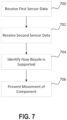
- a method for controlling an electric bicycle includes receiving, by a processor, first sensor data from a first sensor of the electric bicycle, and receiving, by the processor, second sensor data from a second sensor of the electric bicycle. The method also includes identifying, by the processor, based on the first sensor data and the second sensor data, whether the electric bicycle is supported, such that a wheel of the electric bicycle is drivable without translation of the electric bicycle. The method includes preventing, by the processor, movement of an electrically powered component of the electric bicycle based on the identifying.
- comparing the first wheel speed to the second wheel speed includes determining a difference between the first wheel speed and the second wheel speed.
- the identifying further includes comparing the determined difference to a predetermined difference.
- Preventing movement of the electrically powered component includes preventing movement of the electrically powered component based on the comparison of the determined difference to the predetermined difference.
- the method further includes, after preventing the movement of the electrically powered component of the electric bicycle, receiving, by the processor, a user input, and allowing the movement of the electrically powered component of the electric bicycle based on the received user input.
- receiving the first sensor data from the first sensor includes one of receiving bicycle orientation data from an orientation sensor of the electric bicycle, receiving first wheel speed data from a first wheel speed sensor of the electric bicycle, receiving second wheel speed data from a second wheel speed sensor of the electric bicycle, receiving crank speed data from a cadence sensor of the electric bicycle, receiving strain data from a strain gauge of the electric bicycle, and receiving acceleration data from an accelerometer, a gyroscope, or a combination thereof.
- Receiving the second sensor data from the second sensor includes another of receiving bicycle orientation data from an orientation sensor of the electric bicycle, receiving first wheel speed data from a first wheel speed sensor of the electric bicycle, receiving second wheel speed data from a second wheel speed sensor of the electric bicycle, receiving crank speed data from a cadence sensor of the electric bicycle, receiving strain data from a strain gauge of the electric bicycle, and receiving acceleration data from an accelerometer, a gyroscope, or a combination thereof.
- receiving the first sensor data from the first sensor includes receiving strain data from a strain gauge of a crank arm, a frame, a handlebar, or a seat of the electric bicycle.
- a method for controlling electronic shifting of a bicycle includes determining, by a processor, whether the bicycle is moving based on first sensor data received from a first sensor of the bicycle. When the bicycle is determined to be moving, the method further includes determining, by the processor, a rider engagement status. The determining of the rider engagement status includes identifying, by the processor, second sensor data from a second sensor of the bicycle, identifying, by the processor, third sensor data from a third sensor of the bicycle, and determining the rider engagement status based on the second sensor data and the third sensor data. When the determined rider engagement status indicates the bicycle is being ridden, the method includes enabling use of an assist motor for the electronic shifting of the bicycle.
- the method further includes identifying the first sensor data. Identifying the first sensor data includes receiving wheel speed data from a wheel speed sensor of the bicycle. Identifying the second sensor data includes receiving crank strain data from a strain gauge at a crank of the bicycle. Identifying the third sensor data includes receiving crank speed data from a crank speed sensor of the bicycle. Determining the rider engagement status includes calculating, by the processor, an input power based on the received crank strain data and the received crank speed data, comparing the calculated input power to a predetermined threshold power, and determining the rider engagement status based on the comparison of the calculated input power to the predetermined threshold power.
- the method when the bicycle is determined to not be moving, the method includes, disabling the use of the assist motor for the electronic shifting of the bicycle
- the method further includes identifying, by the processor, a motor current of the assist motor.
- the method further includes comparing, by the processor, the identified motor current of the assist motor to a predetermined maximum motor current, and, based on the comparison, disabling the use of the assist motor for the electronic shifting of the bicycle when the identified motor current of the assist motor is greater than the predetermined maximum motor current.
- a method for controlling electronic shifting of a bicycle includes determining, by a processor, whether the bicycle is moving. When the bicycle is determined to be moving, the method further includes determining, by the processor, whether the bicycle is being pedaled. When the bicycle is determined to be free of pedaling, the method includes causing an assist motor of the bicycle to provide power to a drive train of the bicycle for the electronic shifting of the bicycle.
- determining whether the bicycle is moving includes receiving, by the processor, wheel speed data from a wheel speed sensor of the bicycle, and determining whether the bicycle is moving based on the received wheel speed data.
- determining whether the bicycle is being pedaled includes receiving, by the processor, crank data from one or more crank sensors of the bicycle, and determining whether the bicycle is being pedaled based on the received crank data.
- receiving crank data from the one or more crank sensors comprises receiving crank cadence data from a cadence sensor of the bicycle, receiving crank angular position data from an angular position sensor of the bicycle, receiving crank angular velocity data from an angular velocity sensor of the bicycle, or any combination thereof.
- the method further includes estimating, by the processor, continuously or at a predetermined interval, an angular position of the crank arm based on the received crank data, and causing the assist motor of the bicycle to provide power to the drive train of the bicycle for the electronic shifting of the bicycle when the estimated angular position of the crank arm matches a predetermined angular position of the crank arm.
- the predetermined angular position of the crank arm corresponds to a vertical position of the crank arm.
- causing the assist motor of the bicycle to provide power to the drive train of the bicycle for the electronic shifting of the bicycle includes causing the assist motor of the bicycle to provide power to the drive train of the bicycle for a period of time such that a single gear is shifted.
- the determining of whether the bicycle is moving, the determining of whether the bicycle is being pedaled, and the causing of the assist motor of the bicycle to provide power to the drive train of the bicycle for the electronic shifting of the bicycle are part of a mode of operation of the bicycle.
- the method further includes initiating, by the processor, the mode of operation of the bicycle.
- the method further includes receiving a user input.
- Initiating the mode of operation of the bicycle includes initiating the mode of operation of the bicycle based on the received user input.
- initiating the mode of operation of the bicycle includes automatically initiating the mode of operation of the bicycle when the bicycle is determined to be moving and the bicycle is determined to be free of pedaling.
- the method further includes receiving, by the processor, wheel speed data from a wheel speed sensor of the bicycle continuously or at a predetermined interval. After the mode of operation of the bicycle is initiated, the method includes controlling the assist motor for the electronic shifting of the bicycle based on the received wheel speed data.
- a controller for a bicycle includes a processor configured to determine whether the bicycle is moving.
- the processor is further configured, when the bicycle is determined to be moving, to determine whether the bicycle is being pedaled.
- the processor is configured, when the bicycle is determined to be free of pedaling, cause an assist motor of the bicycle to provide power to a drive train of the bicycle for electronic shifting of the rear derailleur.
- the processor is further configured to estimate, continuously or at a predetermined interval, an angular position of the crank arm based on the received crank data.
- the causing of the assist motor of the bicycle to provide power to the drive train of the bicycle for electronic shifting of the rear derailleur includes causing the assist motor of the bicycle to provide power to the drive train of the bicycle for the electronic shifting of the rear derailleur when the estimated angular position of the crank arm matches a predetermined angular position of the crank arm
- a method for controlling electronic shifting of a bicycle includes receiving, by a processor, wheel speed data from a wheel speed sensor of the bicycle, and determining, by the processor, whether the bicycle is moving based on the received wheel speed data.
- the method further comprises identifying, by the processor, crank data representing a crank speed, a crank cadence, or the crank speed and the crank cadence of a crank arm of the bicycle, and determining whether the bicycle is being pedaled based on the identified crank data.
- the method includes causing an assist motor of the bicycle to provide power to a drive train of the bicycle for the electronic shifting of the bicycle
- identifying the crank data includes receiving, by the processor, the crank data from one or more crank sensors of the bicycle.
- comparing the identified cadence to the predetermined target cadence includes determining a difference between the identified cadence and the predetermined target cadence. Initiating the electronic shifting of the bicycle based on the comparison includes initiating the electronic shifting of the bicycle when the determined difference is greater than a predetermined difFerence.
- the method further includes identifying, by the processor, a target gear based on the determined difference and a predetermined gear ratio table. Initiating the electronic shifting of the bicycle includes shifting a derailleur of the bicycle to the identified target gear.
- the method further includes receiving, by the processor, a signal generated in response to a user input.
- the received signal indicates a derailleur of the bicycle is to be shifted.
- the method further includes shifting the derailleur based on the received signal.
- a method for controlling electronic shifting of a bicycle includes initiating, by a processor, automatic control of the electronic shifting of the bicycle.
- the method further includes identifying, by the processor, a minimum gear, beyond which a derailleur is not shiftable during the automatic control of the electronic shifting when the bicycle is in a particular state, and receiving, by the processor, cadence data from a cadence sensor of the bicycle.
- the method includes identifying, by the processor, a target gear based on the received cadence data, and comparing, by the processor, the identified target gear to the identified minimum gear.
- the method also includes preventing or allowing, by the processor, the shifting of the derailleur of the bicycle to the identified target gear based on the comparison.
- the method further includes receiving, by the processor, orientation data from an orientation sensor of the bicycle.
- the orientation data represents an orientation of the bicycle.
- the method also includes determining, by the processor, whether the bicycle is traveling up an incline based on the received orientation data. Preventing or allowing the shifting of the derailleur of the bicycle to the identified target gear based on the comparison includes, when the identified target gear is beyond the identified minimum gear, allowing the shifting of the derailleur of the bicycle to the identified target gear when the bicycle is determined to be traveling up the incline.
- the method further includes adjusting, by the processor, the minimum gear.
- a bicycle with an electric pedal assist motor capable of driving a chainring independent of cranks is provided.
- the bicycle includes wheel speed sensors and crank cadence sensors.
- the wheel speed sensors and the crank cadence sensors measure wheel speed and crank cadence, respectively, and provide the measured wheel speed and crank cadence to an electric rear derailleur or a controller of the bicycle.
- the electric rear derailleur for example, is configured to instruct an e-bike controller to activate motor overdrive based on the measured wheel speed and/or the measured crank cadence.
- crank assembly 124 operatively coupled to a rear cassette 126 via a chain 128.
- the crank assembly includes crank arms 130 and pedals 132, as well as at least one chainring 134 configured to operatively couple with the chain 128 to transmit force and/or power exerted onto the crank assembly 124 to the chain 128.
- This force and/or power is transmitted to the rear cassette 126 by the chain 128, whereby a motivating force 136 and/or power is transmitted to the rear wheel 114 from the rear cassette 126.
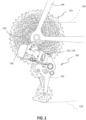
- the drive train 122 includes the gear changer (e.g., a rear derailleur 102 in the illustrated embodiment), other transmissions such as an internal gear hub, a gear box, and/or a continuously variable transmission may be applied to the bicycle 100.
- the drive train 122 may also include a power assist device 140.
- Pedaling torque is applied to the crank assembly 124 by a rider using the pedals 132 and crank arms 130.
- the power assist device 140 is configured to assist the rotation of the rear wheel 114.
- the power assist device 140 is configured to assist the rotation of the wheel rear 114 via a coupled connection to the crank assembly 124.
- the power assist device 140 includes a power assist motor 141 that is powered by a remote power source 142.
- the intermediate power connector 104 may include circuitry for transforming the electrical energy provided by the remote battery 142 into a form that is usable by the derailleur 102.
- the intermediate power connector 104 may include circuitry for voltage reduction, voltage rectification, as well as other power transformation circuitry and/or devices or combinations thereof.
- the intermediate power connector 104 may also include communication circuitry and/or other devices.
- the intermediate power connector 104 may include a wireless transmitter and/or receiver, CANbus to wireless translator, wired data connector, a CANbus to derailleur protocol translator, and/or other devices or circuitry and combinations thereof.
- the controller of the derailleur and/or the e-bike controller wirelessly actuates a motor module of the derailleur 102 and/or an assist motor and operates the derailleur 102 for executing gear changes and gear selection. Additionally or alternatively, the controller of the derailleur and/or the e-bike controller may be configured to control gear shifting of a front gear changer.
- the one or more sensors include, for example, a pedal speed sensor 304, a wheel speed sensor 306, and a torque sensor 308.
- the pedal speed sensor 304 measures a rotational speed of at least one of the crank arms 130
- the wheel speed sensor 306 measures a rotational speed of at least one of the wheels 114, 112
- the torque sensor 308 measures a torque on the crank assembly 124 and/or a torque on an output shaft of the assist motor 140.
- the control system 300 may include more, fewer, and/or different sensors.
- the one or more sensors may include more than one wheel speed sensors 306, one for the front wheel 112 and one for the rear wheel 114.
- the pedal speed sensor 304, the wheel speed sensor 306, and the torque sensor 308 may be any number of different types of sensors.
- the pedal speed sensor 304 and the wheel speed sensor 306 may be a combined speed and cadence sensor.
- the speed and cadence sensor may include a spoke magnet attached to a spoke of the front wheel 112 or the rear wheel 114 and/or a cadence magnet attached to one of the crank arms 130, and a sensor attached to the frame 106 of the bicycle 100 (e.g., a Hall effect sensor).
- the power assist device 140, the rear derailleur 102, and the one or more sensors may be in direct communication with the e-bike controller 302.
- the pedal speed sensor 304, the wheel speed sensor 306, and the torque sensor 308 may be in direct communication with the e-bike controller 302.
- at least some components of the control system 300 may be in indirect communication with the e-bike controller 302.
- the wheel speed sensor 306 and/or the pedal speed sensor 304 may be in direct communication with the rear derailleur 102 and indirect communication with the with the e-bike controller 302 via the rear derailleur 102.
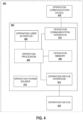
- FIG. 4 is a block diagram of an operation component 400.
- the operation component 400 may be or may be part of one or more of the previously described components such as, for example, the rear derailleur 102, the e-bike controller 302, and a front gear changer.
- the operation component 400 may also be another component, such as the power assist device 140, an internal gearbox component, a suspension or an adjustable suspension component, or an adjustable seating component.
- a plurality of operation components 400 may be provided.
- the processes and logic flows described in this specification may be performed by one or more programmable processors executing one or more computer programs to perform functions by operating on input data and generating output.
- the processes and logic flows may also be performed by, and the apparatus may also be implemented as, special purpose logic circuitry (e.g., an FPGA or an ASIC).
- the term 'circuitry' or 'circuit' refers to all of the following: (a) hardware-only circuit implementations (such as implementations in only analog and/or digital circuitry) and (b) to combinations of circuits and software (and/or firmware), such as (as applicable): (i) to a combination of processor(s) or (ii) to portions of processor(s)/software (including digital signal processor(s)), software, and memory(ies) that work together to cause an apparatus, such as a mobile phone or server, to perform various functions) and (c) to circuits, such as a microprocessor(s) or a portion of a microprocessor(s), that require software or firmware for operation, even if the software or firmware is not physically present.
- a computer may be embedded in another device such as, for example, a mobile telephone, a personal digital assistant ("PDA”), a mobile audio player, a Global Positioning System (“GPS”) receiver, a control unit, a rear derailleur, or a front gear changer, to name just a few.
- Computer readable media suitable for storing computer program instructions and data include all forms of non-volatile memory, media and memory devices, including by way of example semiconductor memory devices (e.g., EPROM, EEPROM, and flash memory devices); magnetic disks (e.g., internal hard disks or removable disks); magneto optical disks; and CD-ROM and DVD-ROM disks.
- the processor and the memory may be supplemented by, or incorporated in, special purpose logic circuitry.
- the operation communication device 416 provides for data and/or signal communication from the operation component 400 to another component of the bicycle 100, or an external device such as a mobile phone or other computing device.
- the operation communication device communicates the data using any operable connection.
- An operable connection may be one in which signals, physical communications, and/or logical communications may be sent and/or received.
- An operable connection may include a physical interface, an electrical interface, and/or a data interface.
- the control communication device may be configured to communicate wirelessly, and as such include one or more antennae.
- the control communication device provides for wireless communications in any now known or later developed format.
- a processor initiates a mode (e.g., a full automatic mode) for a bicycle.
- a derailleur e.g., the derailleur 102
- the processor may initiate the full automatic mode based on user input or automatically based on sensed riding conditions.
- the processor is a processor of the derailleur and initiates the full automatic mode based on instructions from another processor that received the user input or identified the sensed riding conditions (e.g., the e-bike controller 302).
- the automatic shifting performance of the method described above increases the faster the current wheel or the current crank speed may be accurately updated.
- the magnet does not pass by the Hall effect sensor or the reed switch again, so the time to update the speed becomes infinite.
- the processor has a maximum time between activations, beyond which the crank speed or the wheel speed is assumed to be 0 (e.g., greater than 2 seconds, efFectively stopped). If the rider has decelerated from 60 RPM to 0 RPM within 1 revolution of the wheel, the processor would have to wait two seconds to make that determination
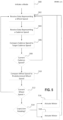
- the processor compares the data representing the cadence speed (e.g., current cadence speed) received in act 504 to a target cadence speed.
- the target cadence speed may be user defined.
- the bicycle may include one or more control devices (e.g., two control buttons) mounted on the handlebars of the bicycle.
- the two control buttons may be in communication (e.g., wireless communication and/or wired communication) with, for example, the e-bike controller 302 and/or other components on the bicycle.
- One of the two control buttons may generate a signal instructing an increase in the target cadence speed when pressed, and the other of the two control buttons may generate a signal instructing a decrease in the target cadence speed when pressed.
- a single press of either of the two control buttons for example, increments or decrements the target cadence speed (e.g., a setpoint) by a configurable number of RPM.
- the setpoint is adjustable within functionally practical predetermined bounds (e.g., 60 RPMs - 120 RPMs). The rider attempting to adjust beyond the limits of the predetermined bounds has no effect on the setpoint. In other words, the setpoint will remain at the lower bound or the higher bound.
- the predetermined bounds may also be adjustable.
- shifter buttons that control the rear derailleur upshift and downshift actions may be dual purposed to control the setpoint of the automatic shifting target cadence.
- the upshift and downshift buttons may trigger the upshift and downshift actions of the rear derailleur, respectively, if the shifter button is pressed for less than a predetermined amount of time (e.g., less than 300 milliseconds). If a shifter button is pressed and held for longer than the predetermined amount of time (e.g., a long press), the long press may be considered a setpoint adjustment command and may increment or decrement the target cadence.
- a predetermined amount of time e.g., less than 300 milliseconds
- Each setpoint adjustment may only modify the target cadence by a small amount (e.g., 1 RPM) to achieve a precise adjustment.
- a long press may be followed by one or more shorter presses (e.g., less than 300 milliseconds). As long as each shorter press occurs within some threshold time after the previous press (e.g., 800 milliseconds), the shorter presses may each cause an additional increment or decrement to the setpoint.
- a memory in communication with the processor (e.g., a memory of the derailleur 102 or a memory of the e-bike controller 302) stores a gear ratio table and upshift/downshift tables.
- the processor recalculates the gear ratio table and the upshift/downshift tables based on the adjusted setpoint. If a closest gear ratio changes at the time of the setpoint adjustment, the derailleur immediately shifts, ignoring hysteresis built into the upshift/downshift tables.
- the setpoint adjustment is configured through a system control interface (e.g., an e-bike system control interface).
- the system control interface may be capable of displaying a current setpoint and directly adjusting the setpoint on the rear derailleur.
- the setpoint adjustment is executed via a mobile device application in direct communication with the rear derailleur.
- the processor determines whether the current cadence speed received in act 504 is within a range (e.g., within 3 RPMs) relative to the target cadence speed based on the comparison of act 506. If the current cadence speed is within the range, the method returns to act 502. If the current cadence speed is outside of the range, the method moves to act 510.
- a range e.g., within 3 RPMs
- act 512 the processor determines whether the current wheel speed is greater than or less than the predetermined minimum wheel speed based on the comparison in act 510. If the processor determines the current wheel speed is less than the predetermined minimum wheel speed, a shift is not initiated, and the method returns to act 502. If the processor determines the current wheel speed is greater than the predetermined minimum wheel speed, the method moves to act 514.
- the feature of overdriving chainring while not pedaling is limited by speed of bicycle. This provides that the chainring is not to be driven at a speed such that torque is applied to the wheel. Because of this, the method described above may not be applied when the bicycle is moving very slowly or is stopped.
- a hub capable of decoupling the cassette may be used.
- the control system may decouple or declutch the cassette from the rear hub to allow forward motion of the cassette without applying torque to the wheel.
- the derailleur may change gears, and the assist motor may run in overdrive to select a desirable gear for the slow or stopped condition.
- the crank speed sensor may be used to detect resumed rider input into the system. The control system recouples the cassette to the hub when rider pedaling or faster rider pedaling is detected.
- the processor determines whether the crank arm is rotating. For example, the processor determines whether the crank arm is rotating based on the current cadence speed received at act 504. If the current cadence speed is greater than zero, the method moves to act 516. If the current cadence speed is equal to zero or approximately zero (e.g., less than or equal to 1 RPMs), the method moves to act 518.
- the processor instructs a motor (e.g., a motor of the derailleur or the assist motor 140) to actuate and shift to maintain a gear that results in a rider cadence close to (e.g., within the range discussed above) the target cadence speed identified in act 506.
- a motor e.g., a motor of the derailleur or the assist motor 140
- the method returns to act 502.
- the derailleur may adjust a minimum timing between shifts based on current wheel speed, current cog, current rider cadence, or some other parameter to provide that each shift is completed before a next shift is attempted. This timing is optimized to allow shifting as fast as possible without inducing a shift failure.
- the assist motor is to not run without the user pedaling such that the motor is accelerating or maintaining the bicycle speed. This is not difficult if the current wheel speed is accurate.
- the wheel speed sensor may, however, update the current wheel speed only once per revolution of the wheel.
- the bicycle may drop below a speed of the assist motor before the wheel speed sensor has reported the speed change.
- An accelerometer or inertial measurement unit (IMU) of the bicycle may be used to supplement the wheel speed sensor data by disabling the assist motor in the event of a significant deceleration. If a rapid deceleration event occurs, the assist motor may be temporarily stopped (e.g., if currently running) until wheel speed data has been updated.
- the processor instructs, for example, the assist motor to run for a period of time to allow the chain to derail to a target cog (e.g., with the motor of the derailleur).
- a target cog e.g., with the motor of the derailleur
- the assist motor When using the assist motor to facilitate shifting while the rider is not pedaling, the assist motor should be running the drivetrain slower than the bicycle is moving.
- a threshold for an amount of current consumed by the assist motor e.g., proportional to the torque the assist motor is applying to the drivetrain
- This is an intentionally redundant method of shutting down the assist motor to the speed calculation. It is important that the assist motor not apply unexpected torque to the drivetrain, causing unexpected acceleration of the bicycle.
- a rate at which the assist motor, for example, drives the chain to facilitate shifting while the rider is not pedaling is to be low enough such that for a current gear ratio and the current wheel speed, no torque is transmitted to driving elements of a hub (e.g., chainring_rpm ⁇ current_gear_ratio * current_wheel_speed + safety_margin). It is desirable to complete the shift as fast as possible. Accordingly, the chainring may be driven as fast as possible without applying torque to, for example, the rear wheel.
- the assist motor speed may therefore be set as a function of the current gear ratio and the current wheel speed.
- the motor output torque is limited below a threshold during a motor aided shifting event. For example, the motor output torque may be limited to two ("2") newton-meters ("N m").
- the assist motor run for as little time as is needed to complete the commanded shift. Any time the chainring is turning the opportunity for a chainring derailment is increased (e.g., with the low pedaling loads of the motor assisted shift).
- the duration that the motor runs may be a function of the currently selected cog, as different cogs have different expected times to complete shift.
- the rear derailleur e.g., the processor and/or one or more sensors of the rear derailleur
- the motor may run until the derailleur has detected the completion of the shift.
- the automatic shifting described above may operate with the motor drive function while not pedaling (e.g., overdriving the chainring while not pedaling) even if the bicycle is configured for zero rider assistance.
- the assist motor may only run when the derailleur is shifting and not pedaling to facilitate shifting. When the rider is pedaling, the non-assisting mode of the e-bike system is honored.
- the processor determines whether the bicycle is being pedaled. In one embodiment, the processor determines whether the bicycle is being pedaled by receiving crank data from one or more crank sensors of the bicycle and determining whether the bicycle is being pedaled based on the received crank data. For example, the processor may determine the bicycle is being pedaled when the received crank data indicates a crank speed is greater than zero.
- the one or more crank sensors of the bicycle may include any number of different types of crank sensors.
- the processor may receive crank cadence data from one or more cadence sensors of the bicycle, crank angular position data from one or more angular position sensors of the bicycle, crank angular velocity data from one or more angular velocity sensors of the bicycle, or any combination thereof.
- the processor causes an assist motor of the bicycle to provide power to a drive train of the bicycle for the electronic shifting of the bicycle.
- the processor causes the assist motor of the bicycle to provide power to the drive train of the bicycle for a period of time such that a single gear is shifted. If a number of gears are to be shifted, the assist motor may be activated a number of different times.
- Derailleur actions may be timed and/or otherwise correlated with angular position of the crank arm.
- derailleur shift operations may be timed to act with particular angular positions of the crank arm.
- the processor may execute the shifting based on the estimated angular position of the crank.
- the processor causes the assist motor of the bicycle to provide power to the drive train of the bicycle for the electronic shifting of the bicycle when the estimated angular position of the crank arm matches a predetermined angular position of the crank arm.
- the predetermined angular position of the crank arm corresponds to a vertical position of the crank arm.
- the determining of whether the bicycle is moving, the determining of whether the bicycle is being pedaled, and the causing of the assist motor of the bicycle to provide power to the drive train of the bicycle for the electronic shifting of the bicycle may be part of a mode of operation of the bicycle.
- the processor may initiate the mode of operation of the bicycle based on, for example, sensor data (e.g., when the bicycle is determined to be moving and free of pedaling) and/or user input (e.g., interaction with one or more buttons at the handlebars).
- the combination of wheel speed, crank cadence, and rider torque may be used in combination to determine if the bicycle is being lightly pedaled in a work stand or is actively being ridden. If the wheel speed accelerates from zero to some significant value that would trigger an automatic shift, the amount of energy input by the rider to achieve this speed may be used to determine if the bicycle is actively being ridden by the integral ⁇ 0 t _ elapsed ⁇ t ⁇ ⁇ t dt . If the energy used to accelerate the rider and bicycle is below a predetermined threshold, it may be inferred that the bicycle may be being pushed or pedaled in a stand. This assumption may not be valid if the bicycle starts moving down an incline. An accelerometer or other orientation-sensing device may be used to supplement this decision. The processor may calculate the amount of energy and compare the calculated energy to the predetermined threshold. The predetermined threshold may be set based on experimental data.
- a processor that is in communication with an electrically powered component of the bicycle identifies sensor data.
- the sensor data identifies a state of the bicycle.
- the electrically powered component may be any number of electrically powered components of the bicycle including, for example, an assist motor for an ebike or a derailleur motor for automatic shifting.
- the method is applied to more than one electrically powered component in parallel. For example, the method may stop or prevent movement of both the assist motor and the motor of the derailleur.
- the processor determines whether the bicycle is subject to a predetermined deacceleration as the rider engagement status based on the identified sensor data.
- the sensor data may be acceleration data from one or more accelerometers and/or gyroscopes of the bicycle, and the processor may calculate a deacceleration based on the sensor data.
- the processor may compare the calculated deacceleration to the predetermined deacceleration and identify the rider engagement status based on the comparison.
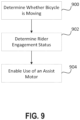
- FIG. 9 is a flowchart of yet another embodiment of a method for electromechanical control of components of a bicycle (e.g., the bicycle 100).
- the acts may be performed using any combination of the components indicated in previous figures.
- the following acts may be performed by at least some components of the control system 300, as well as additional or other components.
- the acts may be performed by, for example, the rear derailleur 138, the e-bike controller 302, the power assist device 140, the one or more sensors, or any combination thereof. Additional, different, or fewer acts may be provided.
- the acts are performed in the order shown or in other orders. The acts may be repeated.
- the processor determines a rider engagement status.
- the determining of the rider engagement status includes identifying, by the processor, second sensor data from a second sensor of the bicycle and identifying, by the processor, third sensor data from a third sensor of the bicycle.
- the processor receives, as the second sensor data, crank strain data from a strain gauge, for example, at a crank of the bicycle, and receives, as the third sensor data, crank speed data from a crank speed sensor.
- the processor determines the rider engagement status based on the second sensor data and the third sensor data. For example, the processor calculates an input power based on the received crank strain data and the received crank speed data and compares the calculated input power to a predetermined threshold power (e.g., indicating the bicycle is being pedaled by a rider, not by hand). The processor may determine the rider engagement status based on the comparison of the calculated input power to the predetermined threshold power. For example, the processor may determine the rider engagement status as the bicycle being ridden by the user when the calculated input power is greater than the predetermined threshold power.
- a predetermined threshold power e.g., indicating the bicycle is being pedaled by a rider, not by hand.
- the processor may determine the rider engagement status based on the comparison of the calculated input power to the predetermined threshold power. For example, the processor may determine the rider engagement status as the bicycle being ridden by the user when the calculated input power is greater than the predetermined threshold power.
- Modern cassettes provide an extremely wide gear ratio range so that the rider may easily pedal up steep hills as well as efFectively pedal down hills or with a strong tailwind.
- a rider begins pedaling from a standstill, it is desirable to be in a low gear but typically not the lowest gear, depending on the gears installed on bike. If the rider is in a very large cog as the bicycle accelerates from a stop on flat ground, the rider will quickly be at an uncomfortably high pedaling cadence.
- the derailleur has a configurable minimum cog that the automatic shifting method may not shift beyond as the rider decelerates without pedaling (e.g., coasts) to a low speed or stop.
- the pedaling load (e.g., bottom bracket torque from rider) may provide an additional input to determine if the bicycle should shift to a lower gear than the configured minimum.
- the method may require that the rider be pedaling and be applying torque above a minimum threshold to shift to a lower gear than the configured minimum.
- inventions of the disclosure may be referred to herein, individually and/or collectively, by the term "invention" merely for convenience and without intending to voluntarily limit the scope of this application to any particular invention or inventive concept.
- inventions may be referred to herein, individually and/or collectively, by the term "invention" merely for convenience and without intending to voluntarily limit the scope of this application to any particular invention or inventive concept.
- specific embodiments have been illustrated and described herein, it should be appreciated that any subsequent arrangement designed to achieve the same or similar purpose may be substituted for the specific embodiments shown.
- This disclosure is intended to cover any and all subsequent adaptations or variations of various embodiments. Combinations of the above embodiments, and other embodiments not specifically described herein, are apparent to those of skill in the art upon reviewing the description.
Landscapes
- Engineering & Computer Science (AREA)
- Chemical & Material Sciences (AREA)
- Combustion & Propulsion (AREA)
- Mechanical Engineering (AREA)
- Transportation (AREA)
- Electric Propulsion And Braking For Vehicles (AREA)
- Automatic Cycles, And Cycles In General (AREA)
- Control Of Transmission Device (AREA)
Applications Claiming Priority (3)
| Application Number | Priority Date | Filing Date | Title |
|---|---|---|---|
| US201962806308P | 2019-02-15 | 2019-02-15 | |
| US16/787,894 US11530015B2 (en) | 2019-02-15 | 2020-02-11 | Bicycle control system |
| EP20157562.8A EP3696073B1 (fr) | 2019-02-15 | 2020-02-17 | Méthode de commande de bicyclette |
Related Parent Applications (2)
| Application Number | Title | Priority Date | Filing Date |
|---|---|---|---|
| EP20157562.8A Division EP3696073B1 (fr) | 2019-02-15 | 2020-02-17 | Méthode de commande de bicyclette |
| EP20157562.8A Division-Into EP3696073B1 (fr) | 2019-02-15 | 2020-02-17 | Méthode de commande de bicyclette |
Publications (2)
| Publication Number | Publication Date |
|---|---|
| EP4397585A2 true EP4397585A2 (fr) | 2024-07-10 |
| EP4397585A3 EP4397585A3 (fr) | 2024-10-30 |
Family
ID=69630228
Family Applications (2)
| Application Number | Title | Priority Date | Filing Date |
|---|---|---|---|
| EP24175867.1A Pending EP4397585A3 (fr) | 2019-02-15 | 2020-02-17 | Système de commande de bicyclette |
| EP20157562.8A Active EP3696073B1 (fr) | 2019-02-15 | 2020-02-17 | Méthode de commande de bicyclette |
Family Applications After (1)
| Application Number | Title | Priority Date | Filing Date |
|---|---|---|---|
| EP20157562.8A Active EP3696073B1 (fr) | 2019-02-15 | 2020-02-17 | Méthode de commande de bicyclette |
Country Status (5)
| Country | Link |
|---|---|
| US (5) | US11530015B2 (fr) |
| EP (2) | EP4397585A3 (fr) |
| CN (1) | CN111572695B (fr) |
| DE (1) | DE102020001018A1 (fr) |
| TW (5) | TWI879157B (fr) |
Families Citing this family (19)
| Publication number | Priority date | Publication date | Assignee | Title |
|---|---|---|---|---|
| US11260936B2 (en) * | 2018-07-31 | 2022-03-01 | Planet Rider, Llc | Gearless power conversion system employing two electric machines |
| US11459062B2 (en) * | 2019-09-06 | 2022-10-04 | Shimano Inc. | Bicycle derailleur |
| TWI723663B (zh) * | 2019-12-04 | 2021-04-01 | 彥豪金屬工業股份有限公司 | 撥鏈器檔位控制系統 |
| EP4019355A1 (fr) * | 2020-12-22 | 2022-06-29 | Mahle International GmbH | Vélo électrique |
| JP7524050B2 (ja) * | 2020-12-25 | 2024-07-29 | 株式会社シマノ | 人力駆動車用の制御装置 |
| CN115140232A (zh) * | 2021-03-31 | 2022-10-04 | 株式会社岛野 | 人力驱动车用的控制装置 |
| US12103639B2 (en) | 2021-06-03 | 2024-10-01 | Sram, Llc | Bicycle control system |
| US12103640B2 (en) | 2021-06-03 | 2024-10-01 | Sram, Llc | Bicycle control system |
| TWI782578B (zh) * | 2021-06-16 | 2022-11-01 | 信邦電子股份有限公司 | 自行車電控系統及使用者身分認證方法 |
| US11704949B2 (en) | 2021-07-21 | 2023-07-18 | Sinbon Electronics Company Ltd. | User verifying bicycle control system and user verification method thereof |
| DE102021122525A1 (de) | 2021-08-31 | 2023-03-02 | Delta Force Solutions GmbH | Tretlager und Fahrzeug |
| IT202200005039A1 (it) * | 2022-03-15 | 2023-09-15 | Campagnolo Srl | Dispositivo di comando di bicicletta a radiotrasmissione |
| JP2024004744A (ja) * | 2022-06-29 | 2024-01-17 | 株式会社シマノ | 人力駆動車用の制御装置 |
| US20260008519A1 (en) * | 2022-07-12 | 2026-01-08 | Classified Cycling Bv | Wireless control device for a bicycle, bicycle, set, combination and method |
| DE112022007832A5 (de) * | 2022-09-29 | 2025-07-10 | Zf Friedrichshafen Ag | Verfahren zur steuerung eines schaltvorgangs |
| DE102022212294A1 (de) * | 2022-11-18 | 2024-05-23 | Robert Bosch Gesellschaft mit beschränkter Haftung | Verfahren zum Ermitteln einer Trittfrequenz eines Fahrrads |
| DE102022214173A1 (de) * | 2022-12-21 | 2024-06-27 | Robert Bosch Gesellschaft mit beschränkter Haftung | Verfahren zum Vorhersagen eines Zeitpunkts eines zukünftigen Extremwerts in einem Drehmomentverlauf eines Fahrzeugs |
| US12391327B2 (en) | 2023-02-28 | 2025-08-19 | Sram, Llc | Automatic bicycle system and user profile identification |
| US20250108885A1 (en) * | 2023-09-28 | 2025-04-03 | Sram Deutschland Gmbh | Methods for controlling shifting of a bicycle |
Citations (3)
| Publication number | Priority date | Publication date | Assignee | Title |
|---|---|---|---|---|
| US9234580B1 (en) | 2015-05-28 | 2016-01-12 | Shimano Inc. | Control device for an automatic transmission of a bicycle |
| WO2016130833A1 (fr) * | 2015-02-13 | 2016-08-18 | Civilized Cycles Incorporated | Systèmes, procédés et dispositifs de transmission pour bicyclette électrique |
| DE102017009847A1 (de) | 2016-10-21 | 2018-04-26 | Sram, Llc | Elektrisches Fahrradsteuergerät und -system |
Family Cites Families (144)
| Publication number | Priority date | Publication date | Assignee | Title |
|---|---|---|---|---|
| US4490127A (en) | 1981-05-29 | 1984-12-25 | Sanyo Electric Co., Ltd. | Electrically operated transmission gear system for bicycles |
| CA2062549C (fr) | 1991-05-07 | 1995-11-07 | Robert Willis Brittain | Roue motrice pour tracteur sur chenilles |
| US5261858A (en) * | 1992-06-19 | 1993-11-16 | Browning Automatic Transmission | Method and system for computer-controlled bicycle gear shifting |
| JP2506047B2 (ja) | 1993-07-26 | 1996-06-12 | ヤマハ発動機株式会社 | 電動自転車 |
| EP0832816A1 (fr) | 1996-09-26 | 1998-04-01 | Mitsubishi Heavy Industries, Ltd. | Unité de propulsion pour une bicyclette avec moteur électrique |
| JP3321045B2 (ja) | 1996-12-20 | 2002-09-03 | 株式会社シマノ | 自転車の電気的操作装置 |
| US6047230A (en) | 1997-02-27 | 2000-04-04 | Spencer; Marc D. | Automatic bicycle transmission |
| DE19721573A1 (de) * | 1997-05-23 | 1998-11-26 | Werner Posselt | Verfahren zum Betreiben einer Brennkraftmaschine |
| US5941332A (en) | 1997-07-09 | 1999-08-24 | Dimick; Mark O. | Motorized bicycle |
| CN2312173Y (zh) | 1997-11-25 | 1999-03-31 | 北京中技克美谐波传动有限责任公司 | 一种电动助力自行车 |
| US5941333A (en) | 1998-01-07 | 1999-08-24 | Giant Manufacturing Co., Ltd. | Bicycle with a planetary-gear-train type transmission and an auxilliary electrical transmission |
| TW385773U (en) | 1998-04-30 | 2000-03-21 | Lin Shou Mei | Improved apparatus for hub type motor transmission mechanism for electric bicycle |
| US6152250A (en) | 1998-07-07 | 2000-11-28 | Shu-Hsien; Li | Power driving control system of electrically-assisted bicycle |
| US6196347B1 (en) | 1998-09-22 | 2001-03-06 | Industrial Technology Research Institute | Power transmission and pedal force sensing system for an electric bicycle |
| US6676549B1 (en) * | 1998-12-18 | 2004-01-13 | Shimano, Inc. | Motion sensor for use with a bicycle sprocket assembly |
| US6296072B1 (en) | 1999-01-20 | 2001-10-02 | Opti-Bike Llc | Electric bicycle and methods |
| IT1310744B1 (it) | 1999-11-26 | 2002-02-22 | Campagnolo Srl | Dispositivo sensore della posizione operativa di un sistema di cambiodi velocita' per bicicletta, e sistema di cambio di velocita' |
| JP4458388B2 (ja) | 2000-03-01 | 2010-04-28 | 本田技研工業株式会社 | 電動自転車 |
| JP2002019685A (ja) | 2000-07-06 | 2002-01-23 | Sanyo Electric Co Ltd | 前輪駆動電動自転車 |
| DE10201611A1 (de) | 2001-01-16 | 2002-07-18 | Atd Gmbh | Wellendichtung |
| JP4251385B2 (ja) | 2001-01-19 | 2009-04-08 | 富士電機機器制御株式会社 | 開閉器の取付構造 |
| JP3566682B2 (ja) | 2001-09-21 | 2004-09-15 | 株式会社シマノ | 自転車用変速制御装置及びそれに用いられる手動変速制御装置 |
| US20030100392A1 (en) * | 2001-11-23 | 2003-05-29 | Tadashi Ichida | Method and apparatus for shifting a bicycle transmission |
| US6734376B2 (en) * | 2002-06-19 | 2004-05-11 | Shimano Inc. | Electrical switch device for bicycle |
| JP3770394B2 (ja) * | 2003-02-25 | 2006-04-26 | 株式会社シマノ | 自転車用変速制御装置 |
| JP3717076B2 (ja) | 2003-03-11 | 2005-11-16 | 株式会社シマノ | 二輪車用変速制御装置 |
| JP4054739B2 (ja) | 2003-09-24 | 2008-03-05 | 株式会社シマノ | 自転車用変速制御装置 |
| US7406367B2 (en) | 2004-08-26 | 2008-07-29 | Shimano Inc. | Input circuit for bicycle component |
| US7547021B2 (en) | 2006-09-22 | 2009-06-16 | Nirve Sports, Ltd. | Propelled bicycle with automatic transmission |
| ITMI20071181A1 (it) * | 2007-06-12 | 2008-12-13 | Campagnolo Srl | Metodo di controllo elettronico di un cambio di bicicletta e sistema elettronico per bicicletta |
| EP2234869B1 (fr) * | 2007-12-21 | 2012-07-04 | Fallbrook Technologies Inc. | Transmissions automatiques et procedes correspondants |
| EP2088071B1 (fr) * | 2008-02-06 | 2013-12-11 | Campagnolo S.r.l. | Procédé pour contrôler électroniquement un changement de vitesses de bicyclette et système électronique de bicyclette |
| CN101244753B (zh) * | 2008-03-17 | 2010-07-14 | 哈尔滨工业大学 | 具有多种运动和反馈模式的运动训练脚踏车 |
| US8212426B2 (en) | 2008-04-21 | 2012-07-03 | Shimano Inc. | Bicycle electrical wiring unit |
| JP2010055261A (ja) | 2008-08-27 | 2010-03-11 | Nec Corp | 通報装置、通報方法およびプログラム |
| JP5238464B2 (ja) | 2008-11-21 | 2013-07-17 | ヤマハ発動機株式会社 | 制御システムおよびそれを備えた鞍乗り型車両 |
| CN201390360Y (zh) * | 2009-03-10 | 2010-01-27 | 周文政 | 动力车双驱动装置 |
| DE102009054756A1 (de) | 2009-12-16 | 2011-06-22 | Robert Bosch GmbH, 70469 | Elektrisches Zweirad |
| KR101147995B1 (ko) | 2009-12-22 | 2012-05-24 | (주)엠비아이 | 페달링 어시스트 변속기 |
| KR20110131002A (ko) * | 2010-05-28 | 2011-12-06 | 이동진 | 전기동력 자전거 |
| CN102346446A (zh) | 2010-07-26 | 2012-02-08 | 久鼎金属实业股份有限公司 | 自行车自动变速控制系统 |
| TW201204596A (en) | 2010-07-26 | 2012-02-01 | J D Components Co Ltd | Bicycle automatic transmission control system |
| US8378673B2 (en) | 2010-11-09 | 2013-02-19 | Techway Industrial Co., Ltd. | Derailleur cable detecting assembly for an electric-auxiliary bicycle |
| TW201226259A (en) | 2010-12-31 | 2012-07-01 | J D Components Co Ltd | Pedaling assistance power supply system of a bicycle |
| JP5634273B2 (ja) | 2011-01-07 | 2014-12-03 | パナソニック株式会社 | 電動自転車 |
| CN102745299B (zh) * | 2011-04-18 | 2014-07-02 | 久鼎金属实业股份有限公司 | 助力自行车的变速控制系统 |
| JP5211212B2 (ja) | 2011-07-27 | 2013-06-12 | 株式会社シマノ | 自転車用モータ制御装置および自転車 |
| JP5237421B2 (ja) | 2011-08-29 | 2013-07-17 | 株式会社シマノ | 自転車用制御装置 |
| JP5496158B2 (ja) | 2011-08-29 | 2014-05-21 | 株式会社シマノ | 自転車用制御装置 |
| JP5566975B2 (ja) | 2011-08-29 | 2014-08-06 | 株式会社シマノ | 自転車用制御装置 |
| US8886417B2 (en) * | 2011-09-09 | 2014-11-11 | Sram, Llc | Bicycles with electronic shifting systems and methods |
| JP5276735B1 (ja) | 2012-04-06 | 2013-08-28 | 株式会社シマノ | 自転車用制御装置 |
| EP3825215B1 (fr) | 2012-04-25 | 2024-03-20 | Fox Factory, Inc. | Commande de la suspension |
| JP5689849B2 (ja) | 2012-05-18 | 2015-03-25 | マイクロスペース株式会社 | モータ駆動制御装置 |
| CN103507908A (zh) | 2012-06-28 | 2014-01-15 | 久鼎金属实业股份有限公司 | 助力自行车的骑乘安全防护系统 |
| CN103569303B (zh) * | 2012-07-18 | 2016-04-13 | 久鼎金属实业股份有限公司 | 以踩踏位置为判断基础的助力自行车换挡系统 |
| US8878658B2 (en) * | 2012-09-12 | 2014-11-04 | Shimano Inc. | Gear shift notification apparatus having a preselected notification pattern |
| KR20140038048A (ko) | 2012-09-19 | 2014-03-28 | 주식회사 만도 | 전기 자전거 및 그 제어방법 |
| EP2898404A4 (fr) | 2012-09-21 | 2016-05-25 | Civilized Cycles Inc | Systèmes de bicyclette électrique polyvalente |
| TWI534037B (zh) | 2012-09-24 | 2016-05-21 | 國立成功大學 | 二輪中置動力電動車之自動變檔系統 |
| US8909424B2 (en) * | 2012-10-11 | 2014-12-09 | Sram, Llc | Electronic shifting systems and methods |
| TWI525017B (zh) * | 2012-10-25 | 2016-03-11 | A shift system that reduces the speed of the motor when the bicycle is turned | |
| CN103786827B (zh) | 2012-11-01 | 2017-06-30 | 久鼎金属实业股份有限公司 | 助力自行车换挡时降低马达转速的换挡系统 |
| JP6228442B2 (ja) | 2012-12-14 | 2017-11-08 | ヤマハ発動機株式会社 | 駆動ユニット及び電動補助自転車 |
| DE102013200485A1 (de) | 2013-01-15 | 2014-07-17 | Robert Bosch Gmbh | Verfahren und Vorrichtung zur Detektion einer Wartungssituation bei einem Zweirad |
| JP5575938B1 (ja) | 2013-02-07 | 2014-08-20 | 株式会社シマノ | 自転車用制御装置 |
| US9243692B2 (en) | 2013-02-19 | 2016-01-26 | Sram, Llc | Electric bicycle transmission |
| DE102013206163A1 (de) | 2013-04-08 | 2014-10-09 | Robert Bosch Gmbh | Pedalgetriebenes Fahrzeug sowie Verfahren zum Betreiben des pedalgetriebenen Fahrzeugs |
| CN104108452A (zh) | 2013-04-18 | 2014-10-22 | 久鼎金属实业股份有限公司 | 电助力自行车的助力控制方法 |
| TWI504533B (zh) | 2013-06-20 | 2015-10-21 | Univ Shu Te | Bicycle automatic transmission system |
| TWI562933B (en) | 2013-07-24 | 2016-12-21 | Univ Nat Cheng Kung | Automatic and manual electrical gear shifting apparatus for electric vehicles |
| JP5686876B1 (ja) | 2013-09-25 | 2015-03-18 | 株式会社シマノ | 変速制御システム |
| DE102013220293A1 (de) * | 2013-10-08 | 2015-04-09 | Robert Bosch Gmbh | Motorisch und mit Muskelkraft betreibbares Fahrzeug mit Gangwechsel-Unterstützung |
| WO2015073791A1 (fr) | 2013-11-15 | 2015-05-21 | Robert Bosch Gmbh | Système de changement de vitesse automatique pour une bicyclette électrique |
| JP5774748B1 (ja) * | 2014-04-28 | 2015-09-09 | 株式会社シマノ | 変速制御装置 |
| US9371103B2 (en) * | 2014-05-19 | 2016-06-21 | Shimano Inc. | Bicycle shift notification apparatus |
| JP5869620B2 (ja) | 2014-05-23 | 2016-02-24 | 株式会社シマノ | 自転車用電動構成部品 |
| JP5778830B1 (ja) | 2014-05-29 | 2015-09-16 | 株式会社シマノ | 自転車用の変速制御装置、電動アシストシステム、および、自転車用の変速制御方法 |
| TWM508499U (zh) | 2014-06-23 | 2015-09-11 | Shimano Kk | 自行車的變速控制裝置 |
| JP5873143B2 (ja) | 2014-07-08 | 2016-03-01 | ヤマハ発動機株式会社 | 鞍乗り型車両 |
| JP5986150B2 (ja) * | 2014-07-17 | 2016-09-06 | 株式会社シマノ | 自転車用制御装置、自転車用制御装置を備える電動アシスト自転車、及び電動アシスト自転車のモータ制御方法 |
| US9682744B2 (en) | 2014-07-30 | 2017-06-20 | Shimano Inc. | Bicycle shifting control apparatus |
| US20170225742A1 (en) | 2014-08-05 | 2017-08-10 | Fallbrook Intellectual Property Company Llc | Components, systems and methods of bicycle-based network connectivity and methods for controlling a bicycle having network connectivity |
| TW201617583A (zh) | 2014-08-05 | 2016-05-16 | 福柏克智慧財產有限責任公司 | 單車、用於單車的控制器以及控制單車的變速器的方法 |
| US20160039497A1 (en) * | 2014-08-08 | 2016-02-11 | Armando Mastracci | Gear Selection for Multi-Geared, Pedal-Operated Vehicles |
| US9611002B1 (en) * | 2014-08-28 | 2017-04-04 | Sunluxe Enterprises Limited | Motorized bicycle with pedal regeneration with automatic assistance |
| BE1022240B1 (fr) | 2014-09-02 | 2016-03-04 | E2 Drives Sa | Groupe motopropulseur pour un vehicule a pedales |
| US20160072942A1 (en) | 2014-09-09 | 2016-03-10 | Via Telecom Co., Ltd. | Design and implementation of virtual tty application manager |
| US9402578B2 (en) | 2014-09-26 | 2016-08-02 | Shimano Inc. | Crank angle indicating system |
| US10017225B2 (en) | 2014-10-08 | 2018-07-10 | Shimano Inc. | Bicycle transmission control device |
| US9517764B2 (en) | 2014-10-23 | 2016-12-13 | Ford Global Technologies, Llc | Methods and system for operating a hybrid vehicle in cruise control mode |
| US9452345B2 (en) | 2014-11-05 | 2016-09-27 | Future Motion, Inc. | Rider detection system |
| CN204236732U (zh) * | 2014-11-14 | 2015-04-01 | 彼得·约翰森 | 踏板控制动力系统 |
| DE102014224666B4 (de) | 2014-12-02 | 2017-04-06 | Robert Bosch Gmbh | Erkennung eines Schaltvorgangs |
| DE102015000422A1 (de) * | 2015-01-14 | 2016-07-14 | Sram Deutschland Gmbh | Verfahren und Vorrichtung zum Steuern automatischer Schaltvorgänge einer elektrischen Gangschaltvorrichtung eines Fahrrads |
| US9789928B2 (en) | 2015-03-06 | 2017-10-17 | Shimano Inc. | Bicycle transmission apparatus |
| EP3072797B1 (fr) | 2015-03-23 | 2021-01-27 | ZEHUS S.p.A. | Système de commande de bicyclette assistée à pédales |
| WO2016177084A1 (fr) | 2015-05-05 | 2016-11-10 | 深圳市家信信息科技开发有限公司 | Dispositif de commande d'assistance et procédé de commande d'assistance pour vélo à assistance, et procédé de changement automatique de vitesse pour celui-ci |
| JP3199830U (ja) | 2015-06-30 | 2015-09-10 | 株式会社シマノ | 自転車の変速制御システム |
| EP3127799A1 (fr) | 2015-08-07 | 2017-02-08 | Armando Mastracci | Sélection automatique de vitesse pour véhicules à pédales et multi-engrenage |
| DE202015005747U1 (de) | 2015-08-18 | 2016-11-21 | Canyon Bicycles Gmbh | Hinterradnabe sowie Fahrradachse |
| DE102015222056A1 (de) | 2015-11-10 | 2017-05-11 | Robert Bosch Gmbh | Notabschaltanordnung und Fahrzeug |
| JP2017114449A (ja) | 2015-12-25 | 2017-06-29 | 株式会社シマノ | 自転車用ドライブユニット、および、その制御装置 |
| US9809276B2 (en) | 2016-02-29 | 2017-11-07 | Shimano Inc. | Electric bicycle derailleur control system |
| CN107128428B (zh) * | 2016-02-29 | 2020-11-17 | 株式会社岛野 | 自行车用控制装置及自行车用驱动装置 |
| US9873287B2 (en) | 2016-02-29 | 2018-01-23 | Shimano Inc. | Bicycle hub assembly and bicycle transmission system |
| US10023266B2 (en) * | 2016-05-11 | 2018-07-17 | Fallbrook Intellectual Property Company Llc | Systems and methods for automatic configuration and automatic calibration of continuously variable transmissions and bicycles having continuously variable transmissions |
| SG10201604920YA (en) | 2016-06-16 | 2018-01-30 | Neuron Mobility Pte Ltd | Short Distance Mobility Sharing System |
| JP6778520B2 (ja) | 2016-06-28 | 2020-11-04 | ヤマハ発動機株式会社 | 電動補助自転車及び駆動システム |
| US10416186B2 (en) | 2016-07-06 | 2019-09-17 | Sram, Llc | Pedal activity sensor and methods of pedaling analysis |
| US10313445B2 (en) | 2016-07-07 | 2019-06-04 | Rolf Østergaard ApS | Sensor device for a bicycle |
| IT201600080244A1 (it) | 2016-07-29 | 2018-01-29 | Campagnolo Srl | Metodo di controllo di un motore di un deragliatore di un cambio elettronico di bicicletta e componente atto ad eseguire tale metodo |
| CN106314201B (zh) | 2016-08-24 | 2018-07-27 | 深圳市踏路科技有限公司 | 平板车控制方法及装置 |
| US10232736B2 (en) * | 2016-08-26 | 2019-03-19 | Velocomp Llc | Drivetrain control for a motor-assisted vehicle |
| TWI605976B (zh) * | 2016-09-23 | 2017-11-21 | 國立清華大學 | 自行車自動換檔方法及系統 |
| DE102016218374B3 (de) | 2016-09-23 | 2018-02-22 | Robert Bosch Gmbh | Steuerungsverfahren und Vorrichtungen zur Schiebehilfe für ein Elektrofahrrad |
| US10370061B2 (en) | 2016-10-21 | 2019-08-06 | Sram, Llc | Bicycle control device and system |
| JP6927689B2 (ja) | 2016-10-31 | 2021-09-01 | 株式会社シマノ | 自転車用制御装置およびこれを含む自転車用制御システム |
| US20180162475A1 (en) | 2016-12-12 | 2018-06-14 | Egreen Technology Inc. | Cycling record system |
| DE102016225489B4 (de) | 2016-12-19 | 2020-08-06 | Robert Bosch Gmbh | Verfahren zur Einstellung einer Komponente eines Zweirads auf einen definierten Betriebszustand und Vorrichtungen |
| WO2018123162A1 (fr) | 2016-12-28 | 2018-07-05 | ヤマハ発動機株式会社 | Système d'assistance électrique et véhicule à assistance électrique |
| US10152875B2 (en) | 2017-01-10 | 2018-12-11 | GM Global Technology Operations LLC | Systems and methods to detect unexpected electric bicycle events |
| KR101885715B1 (ko) | 2017-01-31 | 2018-09-10 | 주식회사 이랜텍 | 전기 자전거 구동 제어 시스템 |
| US10843757B2 (en) | 2017-03-08 | 2020-11-24 | Shimano Inc. | Bicycle electric telescopic apparatus, bicycle power supply system, and bicycle electric component system |
| US10953950B2 (en) | 2017-03-08 | 2021-03-23 | Shimano Inc. | Bicycle electric device and bicycle wireless control system |
| JP2018157381A (ja) | 2017-03-17 | 2018-10-04 | 日本電産株式会社 | 電動車両のモータの制御装置、電気ロック機構、および電動車両 |
| US10300809B2 (en) | 2017-05-10 | 2019-05-28 | Guan Hung Technology Co., Ltd. | Control system for electric bicycles |
| TWM548125U (zh) | 2017-05-26 | 2017-09-01 | 樹德科技大學 | 踏板感測式之自行車驅動裝置 |
| JP6916047B2 (ja) | 2017-06-16 | 2021-08-11 | 株式会社シマノ | 自転車用制御装置 |
| CN207000726U (zh) | 2017-07-20 | 2018-02-13 | 苏州八方电机科技有限公司 | 一种用于电动自行车上的双测速管理装置 |
| US10933752B2 (en) | 2017-10-31 | 2021-03-02 | Tomcar Holding Company LLC | Regenerative braking for electric and hybrid vehicles |
| CN109895929B (zh) | 2017-12-07 | 2022-03-29 | 弗莱克斯有限公司 | 用于电动助力自行车的电子离合器 |
| JP7060974B2 (ja) * | 2018-02-07 | 2022-04-27 | ヤマハ発動機株式会社 | 電動補助自転車及びその駆動システム |
| JP6867325B2 (ja) * | 2018-03-22 | 2021-04-28 | 株式会社シマノ | 人力駆動車両用制御装置 |
| US10941857B2 (en) * | 2018-03-28 | 2021-03-09 | Avraham Sonenthal | Self-shifting bicycle that shifts as a function of power output |
| JP6985217B2 (ja) * | 2018-07-09 | 2021-12-22 | 株式会社シマノ | 制御データ作成装置、コンポーネント制御装置、制御データ作成方法、コンポーネント制御方法、およびコンピュータプログラム |
| JP7078500B2 (ja) | 2018-09-10 | 2022-05-31 | 株式会社シマノ | 人力駆動車用制御装置 |
| JP7120871B2 (ja) * | 2018-10-02 | 2022-08-17 | 株式会社シマノ | 制御装置および変速システム |
| CN109018184B (zh) | 2018-10-23 | 2020-12-08 | 深圳市几米物联有限公司 | 自行车智能变速方法、智能变速装置及智能变速自行车 |
| US11428279B2 (en) | 2018-11-26 | 2022-08-30 | Fox Factory, Inc. | Suspension enhancing hub and rear derailleur assembly |
| US12208858B2 (en) * | 2019-02-15 | 2025-01-28 | Sram, Llc | Bicycle control system |
| US11518472B2 (en) | 2019-02-15 | 2022-12-06 | Sram, Llc | Bicycle control system |
| US10569836B2 (en) * | 2019-03-25 | 2020-02-25 | Hazem Nihad Hamed | Automatic bicycle shifter and chain driver |
| JP7285149B2 (ja) * | 2019-06-27 | 2023-06-01 | 株式会社シマノ | 人力駆動車用の制御装置 |
-
2020
- 2020-02-11 US US16/787,894 patent/US11530015B2/en active Active
- 2020-02-14 TW TW112139963A patent/TWI879157B/zh active
- 2020-02-14 TW TW112113974A patent/TWI822630B/zh active
- 2020-02-14 TW TW109104788A patent/TWI781373B/zh active
- 2020-02-14 TW TW113141644A patent/TW202532293A/zh unknown
- 2020-02-14 TW TW111136561A patent/TWI802511B/zh active
- 2020-02-17 DE DE102020001018.0A patent/DE102020001018A1/de active Pending
- 2020-02-17 EP EP24175867.1A patent/EP4397585A3/fr active Pending
- 2020-02-17 EP EP20157562.8A patent/EP3696073B1/fr active Active
- 2020-02-17 CN CN202010096201.1A patent/CN111572695B/zh active Active
-
2022
- 2022-08-29 US US17/897,897 patent/US11964731B2/en active Active
- 2022-11-17 US US17/989,056 patent/US11999442B2/en active Active
-
2024
- 2024-02-22 US US18/584,098 patent/US12319384B2/en active Active
- 2024-04-02 US US18/624,482 patent/US12409910B2/en active Active
Patent Citations (3)
| Publication number | Priority date | Publication date | Assignee | Title |
|---|---|---|---|---|
| WO2016130833A1 (fr) * | 2015-02-13 | 2016-08-18 | Civilized Cycles Incorporated | Systèmes, procédés et dispositifs de transmission pour bicyclette électrique |
| US9234580B1 (en) | 2015-05-28 | 2016-01-12 | Shimano Inc. | Control device for an automatic transmission of a bicycle |
| DE102017009847A1 (de) | 2016-10-21 | 2018-04-26 | Sram, Llc | Elektrisches Fahrradsteuergerät und -system |
Also Published As
| Publication number | Publication date |
|---|---|
| US20240190533A1 (en) | 2024-06-13 |
| US11530015B2 (en) | 2022-12-20 |
| TW202037524A (zh) | 2020-10-16 |
| TW202306834A (zh) | 2023-02-16 |
| US20240246635A1 (en) | 2024-07-25 |
| US20230078776A1 (en) | 2023-03-16 |
| EP4397585A3 (fr) | 2024-10-30 |
| EP3696073A1 (fr) | 2020-08-19 |
| TW202340031A (zh) | 2023-10-16 |
| US20200262516A1 (en) | 2020-08-20 |
| TWI822630B (zh) | 2023-11-11 |
| DE102020001018A1 (de) | 2020-08-20 |
| EP3696073B1 (fr) | 2026-03-18 |
| CN111572695B (zh) | 2022-06-24 |
| US12319384B2 (en) | 2025-06-03 |
| US11999442B2 (en) | 2024-06-04 |
| TWI879157B (zh) | 2025-04-01 |
| TWI781373B (zh) | 2022-10-21 |
| US12409910B2 (en) | 2025-09-09 |
| US11964731B2 (en) | 2024-04-23 |
| TWI802511B (zh) | 2023-05-11 |
| US20230092352A1 (en) | 2023-03-23 |
| TW202532293A (zh) | 2025-08-16 |
| TW202421496A (zh) | 2024-06-01 |
| CN111572695A (zh) | 2020-08-25 |
Similar Documents
| Publication | Publication Date | Title |
|---|---|---|
| US12263911B2 (en) | Bicycle control system | |
| US20230294791A1 (en) | Bicycle control system | |
| US12409910B2 (en) | Bicycle control system | |
| US12208858B2 (en) | Bicycle control system | |
| US20250108885A1 (en) | Methods for controlling shifting of a bicycle |
Legal Events
| Date | Code | Title | Description |
|---|---|---|---|
| PUAI | Public reference made under article 153(3) epc to a published international application that has entered the european phase |
Free format text: ORIGINAL CODE: 0009012 |
|
| STAA | Information on the status of an ep patent application or granted ep patent |
Free format text: STATUS: REQUEST FOR EXAMINATION WAS MADE |
|
| 17P | Request for examination filed |
Effective date: 20240515 |
|
| AC | Divisional application: reference to earlier application |
Ref document number: 3696073 Country of ref document: EP Kind code of ref document: P |
|
| AK | Designated contracting states |
Kind code of ref document: A2 Designated state(s): AL AT BE BG CH CY CZ DE DK EE ES FI FR GB GR HR HU IE IS IT LI LT LU LV MC MK MT NL NO PL PT RO RS SE SI SK SM TR |
|
| PUAL | Search report despatched |
Free format text: ORIGINAL CODE: 0009013 |
|
| AK | Designated contracting states |
Kind code of ref document: A3 Designated state(s): AL AT BE BG CH CY CZ DE DK EE ES FI FR GB GR HR HU IE IS IT LI LT LU LV MC MK MT NL NO PL PT RO RS SE SI SK SM TR |
|
| RIC1 | Information provided on ipc code assigned before grant |
Ipc: B62M 9/122 20100101ALI20240923BHEP Ipc: B62M 25/08 20060101AFI20240923BHEP |
|
| STAA | Information on the status of an ep patent application or granted ep patent |
Free format text: STATUS: EXAMINATION IS IN PROGRESS |
|
| 17Q | First examination report despatched |
Effective date: 20251223 |