EP4397674A1 - Caspase-2-inhibitorverbindungen - Google Patents
Caspase-2-inhibitorverbindungen Download PDFInfo
- Publication number
- EP4397674A1 EP4397674A1 EP23382003.4A EP23382003A EP4397674A1 EP 4397674 A1 EP4397674 A1 EP 4397674A1 EP 23382003 A EP23382003 A EP 23382003A EP 4397674 A1 EP4397674 A1 EP 4397674A1
- Authority
- EP
- European Patent Office
- Prior art keywords
- hydrogen
- halogen
- independently selected
- alkyl
- asp
- Prior art date
- Legal status (The legal status is an assumption and is not a legal conclusion. Google has not performed a legal analysis and makes no representation as to the accuracy of the status listed.)
- Withdrawn
Links
Images





Classifications
-
- C—CHEMISTRY; METALLURGY
- C07—ORGANIC CHEMISTRY
- C07K—PEPTIDES
- C07K7/00—Peptides having 5 to 20 amino acids in a fully defined sequence; Derivatives thereof
- C07K7/04—Linear peptides containing only normal peptide links
- C07K7/06—Linear peptides containing only normal peptide links having 5 to 11 amino acids
-
- A—HUMAN NECESSITIES
- A61—MEDICAL OR VETERINARY SCIENCE; HYGIENE
- A61P—SPECIFIC THERAPEUTIC ACTIVITY OF CHEMICAL COMPOUNDS OR MEDICINAL PREPARATIONS
- A61P25/00—Drugs for disorders of the nervous system
-
- A—HUMAN NECESSITIES
- A61—MEDICAL OR VETERINARY SCIENCE; HYGIENE
- A61P—SPECIFIC THERAPEUTIC ACTIVITY OF CHEMICAL COMPOUNDS OR MEDICINAL PREPARATIONS
- A61P3/00—Drugs for disorders of the metabolism
Definitions
- the present invention relates to new peptide derivatives, pharmaceutical compositions comprising them and their use in the prevention and/or treatment of Caspase-2 mediated diseases or disorders.
- Caspases are a family of evolutionary conserved cysteine-dependent endoproteases that hydrolyze their substrates after specific aspartic acid residues (Lamkanfi, 2002). Caspases have been associated with a wide range of biological activities such as apoptosis (Ramirez and Salvesen, 2018), inflammation (Vande Walle, 2016), cell differentiation (Fernando, 2002) and metabolism (Shalini, 2015).
- initiator caspases activate executioner caspases (e.g., caspases-3 and -7) via proteolytic cleavage.
- Executioner caspases then go on to cleave protein substrates, leading to an organized dismantling of the cell and ultimately cell death.
- Initiator caspase activation during apoptosis is mediated by two main pathways: the mitochondrial or intrinsic pathway and the death receptor or extrinsic pathway.
- the intrinsic pathway is activated in response to cellular stress (e.g., ROS, cytotoxic drugs, DNA damage) and results in the activation of the initiator caspase-2 (Shalini, 2015).
- Active caspase-2 cleaves Bid and truncated Bid (tBid) activate mitochondrial permeabilization through regulation of Bax and Bak (Enoksson, 2004).
- Mitochondrial cytochrome c is then released to the cytosol inducing the oligomerization of Apaf-1, forming a large heptameric complex known as the apoptosome (Bao, 2007).
- the apoptosome recruits and activates the initiator caspase, caspase-9, which can directly cleave and activate the executioner caspases, caspase-3 and -7(Bao, 2007).
- the inhibitor Ac-VDVAD-CHO is more potent against caspase-3 than to caspase-2. This raises some doubts about the validity of the data generated with this reagent when employed in a cellular context as a 'selective' caspase-2 inhibitor.
- Several publications have already expressed the specificity concerns regarding existing inhibitors and stressed the urgent need for more selective inhibitors in the caspase field (Pereira, 2008; Berger, 2006; McStay, 2008; Benkova, 2009; Yun, 2007; Krumschnabel, 2009; Kitevska, 2009; Schweizer, 2007; Poreba, 2019 (“ Caspase selective reagents for diagnosing apoptotic mchanisms" Poreba et al. Cell Death and Differentiation . In this paper (mainly in supplemental section) we provided a detailed kinetic analysis of caspase inhibitors/probes made based on natural amino acid sequences).
- warheads used in caspase inhibitors design; however, all of them work in a similar manner. Their mechanism of action relies on nucleophilic attack of the active site cysteine on the electrophilic center, thus forming a transitional (reversible) or covalent (irreversible) caspase-inhibitor complex (Evans, 2006).
- the most significant feature of a particular warhead is its ability to target only active site cysteine residue, omitting other free nucleophiles in the proteome.
- the catalytic mechanism of the targeted proteolytic enzyme plays an important role in the selection of an appropriate warhead.
- Poreba et al. (2019) also disclose Caspase-2 inhibitors constituted by five amino acid units in L-stereochemistry.
- Compound NH-23-C2 (NH-ldc-hGlu-Thr(Bzl)-Ser-Asp) was found to have the highest Caspase-2 inhibitory activity among the assayed compounds but still with no selectivity for Caspase-3 and limited selectivity for Caspase-8.
- C 1-6 alkoxyl refers to a group of formula -O-C 1-6 alkyl, wherein C 1-6 alkyl is an alkyl group as defined above, preferably C 1-3 alkyl.
- Examples of C 1-6 alkoxyl include methoxy, ethoxy, propoxy, iso-propoxy, butoxy, tert-butoxy, iso-butoxy and sec-butoxy, preferably methoxy.
- stereoisomer is a general term for all isomers of individual molecules that differ only in the orientation of their atoms in space. Therefore, stereoisomer compounds are molecules that are non-superimposable mirror images of each other and include enantiomers and diastereomers.
- chiral center refers to a carbon atom to which four different groups are attached.
- enantiomer and “enantiomeric form” refer to one of the two stereoisomers of a compound that are mirror images of each other that are non-superimposable.
- Enantiomer compounds are optically active, wherein one enantiomer rotates the plane of polarized light in one direction and the other one rotates the plane of polarized light in the opposite direction and form a racemic compound when present in equal quantities.
- racemic or “racemate” refers to a mixture that has equal amounts of enantiomers and which mixture is optically inactive.
- diastereomer and “diastereomeric form” refer to stereoisomers of a compound with more than one chiral center that are not mirror images of one another.
- enantiomerically enriched or diastereomerically enriched describes a mixture of two enantiomers or a mixture of diastereomers in which one enantiomer or diastereomer is present in greater amount than the other enantiomer or diastereomer.
- any given compound referred to herein is intended to represent any one of a racemate, one or more enantiomeric forms and one or more diastereomeric forms. All the stereoisomers including enantiomers and diastereoisomers of the compounds referred to herein, and mixtures thereof (including racemic mixtures, enantiomerically enriched mixtures and diastereomerically enriched mixtures), are considered within the scope of the present invention.
- fluorophore refers to a molecule or moiety that can re-emit light upon light excitation.
- the present specification exemplifies potent and selective caspase-2 ligands.
- the present application exemplifies compounds of formula (I): or a salt, solvate or stereoisomer thereof; wherein R2 and R3 can each be independently H, and R2 and R 3 can also be absent so to result in the deprotonated form CO(O - ), wherein
- the present specification discloses specific ligands of formula (I) having a free primary amine group at P2. Specifically, the present application exemplifies that peptides corresponding to Idc-hGlu-Thr(Bzl)-[Lys/Orn/Dab]-Asp-OR1 are indeed potent and selective ligands for caspase 2 (see examples 2 and 3).
- peptide-based therapeutics show rapid in vivo proteolysis, poor oral bioavailability and tend to display poor pharmacokinetics. More precisely, peptide-based caspase inhibitors have limited clinical applications due to their poor pharmacokinetic properties, including poor oral bioavailability, cell permeability, and metabolic stability.
- Methylation of carboxy group of the sidechain of aminoacids confers beneficial properties on the peptide, such as increase in solubility in aqueous and/or- organic solvents, resistance to proteolytic degradation, diffusion cross membranes and increased oral bioavailability ( Gordon DJ, J. Pept. Res. 2002;60:34-55 , Adessi C, Biol. Chem. 2003;278(16):13905-13911 ., Kokkoni N. Biochemistry. 2006;45:9906-9918 ).
- R 1 can be a moiety such as a fluorophore (to be use in the context of substrates) selected from a group of formula: wherein
- the present invention is directed to a pharmaceutical composition
- a pharmaceutical composition comprising a compound of any of the above formulae as defined herein wherein R 1 is a warhead such as AOMK, or a salt, solvate or stereoisomer thereof, and at least one pharmaceutically acceptable excipient.
- excipients and auxiliary substances necessary to manufacture the desired pharmaceutical form of administration of the pharmaceutical composition of the invention will depend, among other factors, on the elected administration pharmaceutical form.
- Said pharmaceutical forms of administration of the pharmaceutical composition will be manufactured according to conventional methods known by the skilled person in the art.
- compositions include any solid (tablets, pills, capsules, granules etc.) or liquid (solutions, suspensions or emulsions) compositions for oral, topical or parenteral administration.
- the mentioned formulations can be prepared using standard methods such as those described or referred to in the European and US Pharmacopoeias and similar reference texts.
- the compounds or compositions of the present invention may be administered by any suitable method, such as oral, sublingual, intranasal, intraocular, parenteral, subcutaneous, intramuscular, intravenous, or transdermal administration.
- the effective amount of a compound of the invention to be administered will depend on the relative efficacy of the compound chosen, the severity of the disorder being treated and/or prevented and the patient's weight.
- the active compounds can be administered one or more times a day, for example 1, 2, 3, or 4 times daily, with typical total daily doses in the range from about 0.01 mg/kg of body weight/day to about 1000 mg/kg of body weight/day.
- the effective dosage amount of a compounds of the invention is about 500 mg/kg of body weight/day or less.
- the effective dosage amount of a compound of the invention is about 100 mg/kg of body weight/day or less.
- the effective dosage amount ranges from about 0.01 mg/kg of body weight/day to about 100 mg/kg of body weight/day of a compound of the invention; in another embodiment, from about 0.02 mg/kg of body weight/day to about 50 mg/kg of body weight/day; and in another embodiment, from about 0.025 mg/kg of body weight/day to about 20 mg/kg of body weight/day.
- R 1 is a group comprising a fluorophore moiety
- R 1 is a group comprising a fluorophore moiety
- the invention refers to the in vitro use of a compound of the invention as defined herein wherein R 1 is a group comprising a fluorophore moiety, or a salt, solvate or stereoisomer thereof, to determine Caspase-2 activity.
- Caspase-2 activity in a cell or a tissue can be determined by contacting a compound as defined herein wherein R 1 is a group comprising a fluorophore moiety, or a salt, solvate or stereoisomer thereof, with a sample comprising said cell or tissue and measuring the fluorescent signal emitted upon light excitation.
- the invention is directed to a compound of the invention wherein R 1 is a warhead such as AOMK, or a salt, solvate or stereoisomer thereof, for use as a medicament.
- R 1 is a warhead such as AOMK, or a salt, solvate or stereoisomer thereof, for use as a medicament.
- the invention is directed to a compound of the invention where R1 is a warhead such as AOMK, or a salt, solvate or stereoisomer thereof, for use in the prevention and/or treatment of a disease or disorder associated with an increased Caspase-2 activation selected from degenerative diseases such as Alzheimer's disease, Huntington's disease, Parkinson's disease, mild cognitive impairment, amyotrophic lateral sclerosis and Creutzfeld-Jacob disease, adrenoleukodystrophy; neonatal brain damage in particular neonatal brain ischemia; traumatic brain injury; kidney ischemia; hypoxia-ischemia injuries; stroke-like situations brain injuries; heart ischemia; myocardial infarction; amyotrophic lateral sclerosis; retinal damages; ophthalmic diseases such as age-macular degeneration, diabetic retinopathy, retinitis pigmentosa, blunt ocular injury, ischemic optic neuropathy and glaucoma; cytotoxicity prevention, particularly
- the invention is directed to a compound of the invention where R1 is a warhead such as AOMK, or a salt, solvate or stereoisomer thereof, for use in the prevention and/or treatment of nonalcoholic fatty liver disease (NAFLD).
- R1 is a warhead such as AOMK, or a salt, solvate or stereoisomer thereof, for use in the prevention and/or treatment of nonalcoholic fatty liver disease (NAFLD).
- treatment means administration of a compound or composition according to the invention to ameliorate or eliminate the disease or one or more symptoms associated with said disease.
- Treatment also encompasses ameliorating or eliminating the physiological sequelae of the disease.
- prevention means administration of a compound or composition according to the invention to reduce the risk of acquiring or developing the disease or one or more symptoms associated with said disease.
- Fmoc-protected amino acids were purchased from Iris Biotech GmbH (Marktredwitz, Germany), Sigma-Aldrich (Poznan, Tru), Bachem (Torrance, CA, USA), Creosalus (Louisville, KY, USA), PE Biosciences Limited (Hong Kong, China) and Combi-Blocks (San Diego, USA).
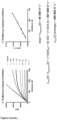
- the lowest inhibitor concentration was at least 4-fold higher that the caspase concentration in the assay.
- the caspase 60uL was first pre-warmed in the assay buffer in the 96-well plate for 15 min at 37C and then pre-incubated with the inhibitor (20uL) for another 15 min at 37C. Next, the substrate (20uL) was added to the enzyme-inhibitor mixture and the progress of reaction (ACC release) was monitored overtime.
- NASH in vitro cellular model of NASH was used to test the efficacy of caspase-2 inhibitors preventing intracellular accumulation of lipids.
- HepG2 cells are exposed for 24 h to "NASH conditions" including lipogenic (glucose, insulin, fatty acids) and inflammatory and pro-apoptotic (TNF- ⁇ , IL- 1 ⁇ , and TGF- ⁇ ) triggers.
- NASH conditions including lipogenic (glucose, insulin, fatty acids) and inflammatory and pro-apoptotic (TNF- ⁇ , IL- 1 ⁇ , and TGF- ⁇ ) triggers.
- TGF- ⁇ inflammatory and pro-apoptotic
- Cells show a significantly increase in intracellular lipid load of at least 2-fold relative to the untriggered controls.
- This model has shown to correlate with human NASH pathology (Boeckmans et al. 2019).
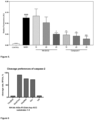
- NASH-triggered HepG2 cultures were treated with KIN inhibitors at 10 ⁇ M for 24 h and inhibition of intracellular lipid-accumulation was quantified as described in Material and Methods. As shown in Figure 4 , all tested caspase-2 inhibitors were able to inhibit lipid accumulation under NASH-conditions. Compounds 1, 2 and 3 showed a significantly higher percentage of inhibition than NH-23-C2 compound.
- the efficacy of Caspase-2 inhibitors in preventing intracellular lipid accumulation was used to compare the efficacy of NH-23-C2 and compound 1.
- Cells were incubated with NASH conditions and the caspase-2 inhibitors at 10, 20 and 25 ⁇ M to analyze its protection against lipid accumulation.
- compound 1 showed a better efficacy than NH-23-C2 inhibiting intracellular lipid accumulation under NASH conditions.
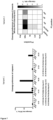
- the final concentration of substrate was 10 ⁇ M, and the final concentration of caspase-2 was 10nM.
- the caspase-2 assay buffer was 20mM Pipes, 100mM NaCl, sucrose 10% (w/v), 10mM DTT, pH 7.2-7.4. The caspase-2 was preincubated in buffer at 37°C for 15 min before added to the substrate.
- reaction was carried out for 24 h and repeated for another 24 h with the use of 1.5 eq. of the Fmoc-L-Asp(tBu)-OH/HATU/2,4,6-collidine reagents. Then the Fmoc-L-Asp(tBu)-ACC-resin was washed three times with DMF, followed by Fmoc deprotection with 20% piperidine in DMF, and washing the resin six times with DMF. Next, Fmoc-L-Dab(Boc)-OH was coupled into P2 position. 2.5 eq. of this amino acid (0.6 mmol, 264 mg), 2.5 eq. of HATU (0.6 mmol, 229 mg), and 2.5 eq.
- HOBt 1.2 mmol, 180 mg
- DICI 5 eq. of DICI (1.2 mmol, 160 ⁇ L) were diluted in DMF and pre-activated for 3 min. Then the mixture was poured onto the resin and the cartridge was agitated for 3 h. The slurry was filtrated and washed three times with DMF. The P3 complete coupling was confirmed by a ninhydrin test. Next, the Fmoc group was removed with 20% piperidine in DMF and the H2N-Mix-Dab(Boc)-Asp(tBu)-ACC-resin was divided into 5 portion (0.05 mmol each).
- the P4 coupling was performed using a MultiChem 48-well synthesis apparatus (FlexChem from SciGene, CA, USA). 5 portions of resin were placed in the 48-well cartridge and swollen with DCM for 30 min. Then the DCM was filtrated, and resin was washed three times with DMF. In 5 1.5-mL tubes, 2.5 eq. of various amino acids (0.12 mmol) was mixed with 1 mL of DMF containing 2.5 eq. of HATU (0.12 mmol, 46 mg) and 2.5 eq. of 2,4,6-collidine (0.12 mmol, 16 ⁇ L) and poured onto the resin. The P4 coupling reaction was carried out for 4 h, followed by a ninhydrin test.
- the reaction was carried out for 3 h, followed by washing the slurry with DMF (six times), and performing a ninhydrin test to confirm complete coupling.
- the Fmoc group was removed with 20% piperidine in DMF, and the resin was washed six times with DMF, 3 times with DCM and 3 times with MeOH. Resin was dried out is a desiccator over P2O5 overnight. All substrates were cleaved from the resin using ice-cold TFA/TPS/water (% v/v/v, 95/2.5/2.5) mixture for 2 h (shaking once per 15 min). The solution from each well was collected separately and the remaining resin was washed with TFA.
- Substrates were then precipitated with ice-cold Et2O for 30 min and centrifuged. Next, the supernatant was discarded, and the pellet was re-suspended in ice-cold Et2O and centrifuged again. The supernatant was then discarded and the pellet was allowed to dry out, and was dissolved in 5 mL of 1:1 waterACN mixture, frozen at -80 °C and lyophilized. The final product (white powder) was then dissolved in dimethyl sulfoxide (DMSO) to the final concentration of 10 mM and stored at -80 °C until use.
- DMSO dimethyl sulfoxide
- composition of isokinetic mixture used in this particular synthesis (total amount - 1.2 mmol)
- the final concentration of substrate was 10 ⁇ M, and the final concentration of caspase-2 was 10nM.
- the caspase-2 assay buffer was 20mM Pipes, 100mM NaCl, sucrose 10% (w/v), 10mM DTT, pH 7.2-7.4. The caspase-2 was preincubated in buffer at 37 C degree for 15 min before added to the substrate.
- P4 must be hGlu independently of the natural amino acid used in P3 which can be any of the natural amino acids selected from the list consisting of Ala (Alanine), Arg (Arginine), Asn (Asparagine), Asp (Aspartic Acid), Gln (Glutamine), Gly (Glycine), His (Histidine), lie (Isoleucine), Leu (Leucine), Lys (Lysine), Nle (Norleucine), Phe (Phenylalanine), Pro (Proline), Ser (Serine), Thr (Threonine), Trp (Tryptophan), Tyr (Tyrosine) and Val (Valine).
Landscapes
- Health & Medical Sciences (AREA)
- Chemical & Material Sciences (AREA)
- Organic Chemistry (AREA)
- General Health & Medical Sciences (AREA)
- Life Sciences & Earth Sciences (AREA)
- Medicinal Chemistry (AREA)
- Animal Behavior & Ethology (AREA)
- Veterinary Medicine (AREA)
- General Chemical & Material Sciences (AREA)
- Chemical Kinetics & Catalysis (AREA)
- Nuclear Medicine, Radiotherapy & Molecular Imaging (AREA)
- Public Health (AREA)
- Pharmacology & Pharmacy (AREA)
- Engineering & Computer Science (AREA)
- Bioinformatics & Cheminformatics (AREA)
- Biochemistry (AREA)
- Proteomics, Peptides & Aminoacids (AREA)
- Obesity (AREA)
- Biomedical Technology (AREA)
- Neurology (AREA)
- Neurosurgery (AREA)
- Genetics & Genomics (AREA)
- Biophysics (AREA)
- Hematology (AREA)
- Molecular Biology (AREA)
- Diabetes (AREA)
- Pharmaceuticals Containing Other Organic And Inorganic Compounds (AREA)
- Medicines That Contain Protein Lipid Enzymes And Other Medicines (AREA)
- Peptides Or Proteins (AREA)
Priority Applications (5)
| Application Number | Priority Date | Filing Date | Title |
|---|---|---|---|
| EP23382003.4A EP4397674A1 (de) | 2023-01-03 | 2023-01-03 | Caspase-2-inhibitorverbindungen |
| EP24700375.9A EP4646425A1 (de) | 2023-01-03 | 2024-01-03 | Caspase-2-inhibitorverbindungen |
| PCT/EP2024/050100 WO2024146906A1 (en) | 2023-01-03 | 2024-01-03 | Caspase-2 inhibitor compounds |
| CN202480016484.0A CN120858105A (zh) | 2023-01-03 | 2024-01-03 | Caspase-2抑制剂化合物 |
| JP2025538828A JP2026501655A (ja) | 2023-01-03 | 2024-01-03 | カスパーゼ-2阻害剤化合物 |
Applications Claiming Priority (1)
| Application Number | Priority Date | Filing Date | Title |
|---|---|---|---|
| EP23382003.4A EP4397674A1 (de) | 2023-01-03 | 2023-01-03 | Caspase-2-inhibitorverbindungen |
Publications (1)
| Publication Number | Publication Date |
|---|---|
| EP4397674A1 true EP4397674A1 (de) | 2024-07-10 |
Family
ID=84981107
Family Applications (2)
| Application Number | Title | Priority Date | Filing Date |
|---|---|---|---|
| EP23382003.4A Withdrawn EP4397674A1 (de) | 2023-01-03 | 2023-01-03 | Caspase-2-inhibitorverbindungen |
| EP24700375.9A Pending EP4646425A1 (de) | 2023-01-03 | 2024-01-03 | Caspase-2-inhibitorverbindungen |
Family Applications After (1)
| Application Number | Title | Priority Date | Filing Date |
|---|---|---|---|
| EP24700375.9A Pending EP4646425A1 (de) | 2023-01-03 | 2024-01-03 | Caspase-2-inhibitorverbindungen |
Country Status (4)
| Country | Link |
|---|---|
| EP (2) | EP4397674A1 (de) |
| JP (1) | JP2026501655A (de) |
| CN (1) | CN120858105A (de) |
| WO (1) | WO2024146906A1 (de) |
Citations (1)
| Publication number | Priority date | Publication date | Assignee | Title |
|---|---|---|---|---|
| EP4112631A1 (de) * | 2021-07-01 | 2023-01-04 | Kintsugi Therapeutics S.L. | Caspase-2-inhibitor-verbindungen |
Family Cites Families (4)
| Publication number | Priority date | Publication date | Assignee | Title |
|---|---|---|---|---|
| EP1740614A2 (de) | 2004-04-30 | 2007-01-10 | Theraptosis S.A. | Caspase-2-inhibitore und ihre biologischen anwendungen |
| EP2670774A1 (de) | 2011-02-01 | 2013-12-11 | Chiesi Farmaceutici S.p.A. | Caspase-2-hemmer |
| JP6945546B2 (ja) | 2016-03-22 | 2021-10-06 | アンスティチュ ナショナル ドゥ ラ サンテ エ ドゥ ラ ルシェルシュ メディカル | 新規誘導体、及びカスパーゼ−2の選択的阻害剤としての使用 |
| JP7761893B2 (ja) | 2017-09-26 | 2025-10-29 | サントル ナシオナル ドゥ ラ ルシェルシェ シアンティフィク | 新規化合物、及びカスパーゼ-2の選択的阻害剤としての使用 |
-
2023
- 2023-01-03 EP EP23382003.4A patent/EP4397674A1/de not_active Withdrawn
-
2024
- 2024-01-03 JP JP2025538828A patent/JP2026501655A/ja active Pending
- 2024-01-03 CN CN202480016484.0A patent/CN120858105A/zh active Pending
- 2024-01-03 EP EP24700375.9A patent/EP4646425A1/de active Pending
- 2024-01-03 WO PCT/EP2024/050100 patent/WO2024146906A1/en not_active Ceased
Patent Citations (1)
| Publication number | Priority date | Publication date | Assignee | Title |
|---|---|---|---|---|
| EP4112631A1 (de) * | 2021-07-01 | 2023-01-04 | Kintsugi Therapeutics S.L. | Caspase-2-inhibitor-verbindungen |
Non-Patent Citations (3)
| Title |
|---|
| CHEN SHIYU ET AL: "Synthetic and biological approaches to map substrate specificities of proteases", BIOL CHEM ., 18 December 2019 (2019-12-18), XP055891632, Retrieved from the Internet <URL:http://www.ncbi.nlm.nih.gov/pubmed/31639098> [retrieved on 20220215] * |
| KITEVSKA TANJA ET AL: "Analysis of the minimal specificity of caspase-2 and identification of Ac-VDTTD-AFC as a caspase-2-selective peptide substrate", CELL DEATH AND DISEASE, vol. 34, no. 2, April 2014 (2014-04-01), XP055891686, ISSN: 0144-8463, DOI: 10.1042/BSR20140025 * |
| POREBA MARCIN ET AL: "Potent and selective caspase-2 inhibitor prevents MDM-2 cleavage in reversine-treated colon cancer cells", CELL DEATH & DIFFERENTIATION, NATURE PUBLISHING GROUP, GB, vol. 26, no. 12, 11 April 2019 (2019-04-11), pages 2695 - 2709, XP036927532, ISSN: 1350-9047, [retrieved on 20190411], DOI: 10.1038/S41418-019-0329-2 * |
Also Published As
| Publication number | Publication date |
|---|---|
| CN120858105A (zh) | 2025-10-28 |
| EP4646425A1 (de) | 2025-11-12 |
| JP2026501655A (ja) | 2026-01-16 |
| WO2024146906A1 (en) | 2024-07-11 |
Similar Documents
| Publication | Publication Date | Title |
|---|---|---|
| JP6588890B2 (ja) | 構築されたポリペプチド特異性のモジュレーション | |
| US20100068150A1 (en) | Selective Caspase Inhibitors | |
| JP5995951B2 (ja) | 選択的カスパーゼ阻害剤およびその使用 | |
| DK2697246T3 (en) | SELECTIVE CYSTEIN PROTEASE INHIBITORS AND USES THEREOF | |
| CN106852146A (zh) | 细胞穿透肽及其制备和使用方法 | |
| CA2369378A1 (en) | Low-molecular inhibitors of complement proteases | |
| CA2931694C (en) | Fatty acid derivatives of dimeric peptide ligands of psd-95 and use thereof for treating excitotoxic disease | |
| US20250270255A1 (en) | Caspase-2 inhibitor compounds | |
| WO2017053864A1 (en) | Cysteine protease inhibitors | |
| Adang et al. | Unique overlap in the prerequisites for thrombin inhibition and oral bioavailability resulting in potent oral antithrombotics | |
| JP5433586B2 (ja) | ペプチド修飾の方法 | |
| EP4397674A1 (de) | Caspase-2-inhibitorverbindungen | |
| WO2024043249A1 (ja) | 環状ペプチドまたはその塩、およびmdmx阻害剤 | |
| TW202233650A (zh) | Masp抑制性化合物及其用途 | |
| WO2012139519A1 (zh) | 环肽及其医药用途 | |
| Chow | Towards serine protease inhibitors | |
| Jamali | Synthesis of bimodal inhibitors of the 20S proteasome |
Legal Events
| Date | Code | Title | Description |
|---|---|---|---|
| PUAI | Public reference made under article 153(3) epc to a published international application that has entered the european phase |
Free format text: ORIGINAL CODE: 0009012 |
|
| STAA | Information on the status of an ep patent application or granted ep patent |
Free format text: STATUS: THE APPLICATION HAS BEEN PUBLISHED |
|
| AK | Designated contracting states |
Kind code of ref document: A1 Designated state(s): AL AT BE BG CH CY CZ DE DK EE ES FI FR GB GR HR HU IE IS IT LI LT LU LV MC ME MK MT NL NO PL PT RO RS SE SI SK SM TR |
|
| STAA | Information on the status of an ep patent application or granted ep patent |
Free format text: STATUS: THE APPLICATION IS DEEMED TO BE WITHDRAWN |
|
| 18D | Application deemed to be withdrawn |
Effective date: 20250111 |